
NBA Playoffs 2011: Chicago Bulls vs. Atlanta Hawks Series Preview and Analysis
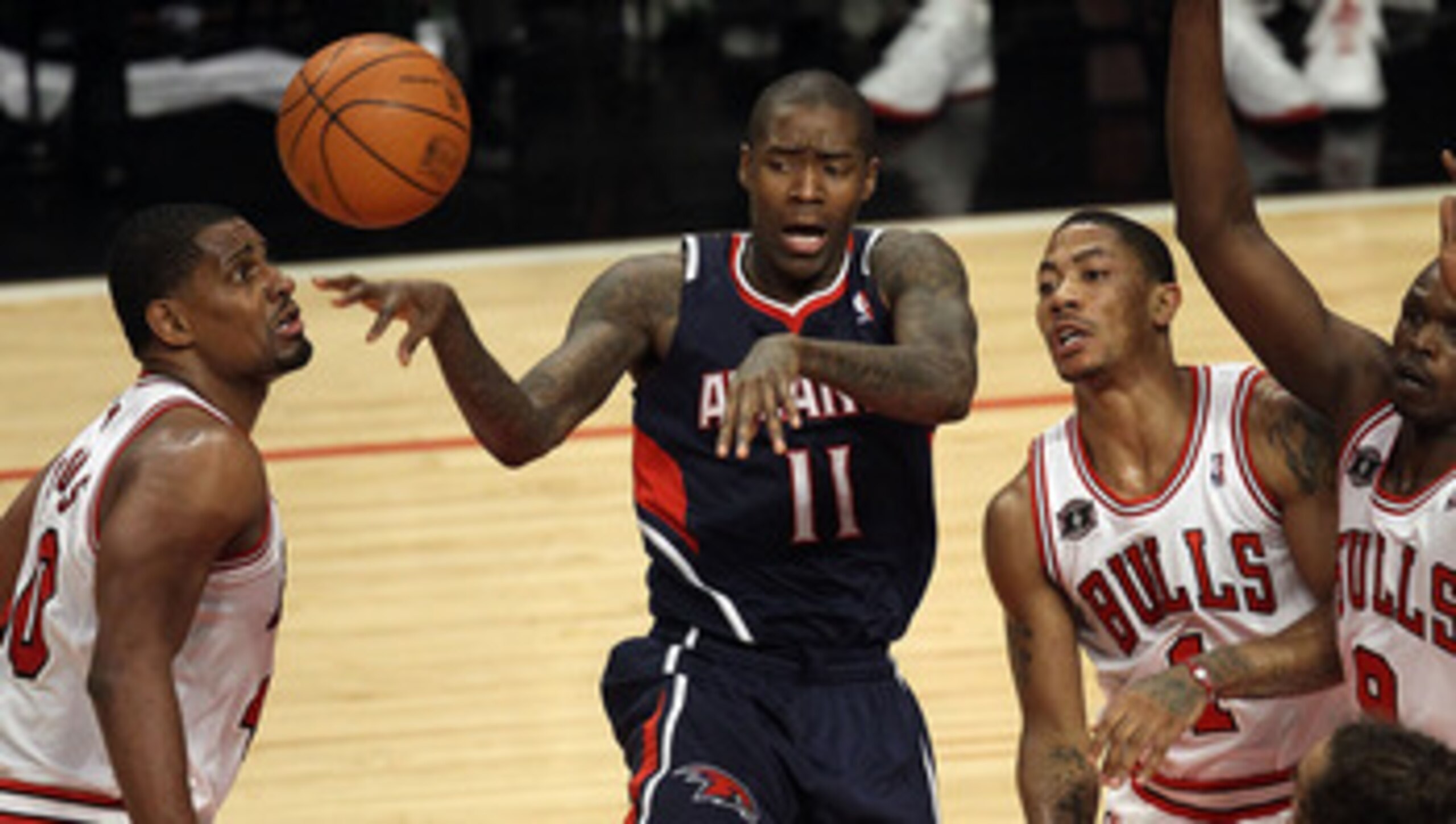
The Chicago Bulls and Atlanta Hawks are set to meet for the conference semifinal series starting on Monday. The last time Chicago won a second-round series they won the championship in 1998. For the Hawks, the last time they advanced past the second round it was 1961, when they lost in the NBA Finals.
Needless to say, someone is going to advance from this series, and it's going to be the first time in a while for one of the two teams, but the Hawks are a team that has waited a very long time. Unfortunately for Hawks fans it doesn't look like this group will break that trend this year.
I looked at SynergyScout to handle the second part of my analysis of what the series might look like. They track every play of every NBA game and chart what type of play it was and whether it was successful or not. In this article I'll be looking at what types of plays each team likes to run and how successful the other team is at defending them.
I also averaged the different play types and how the teams performed against one another in the regular season. The numbers following the teams in the slides are the average points per play on that play type from the three regular-season games.
This should give some idea of how the series will turn out.
Click here to read the first part of the series breaking down the player matchups.
Isolation
1 of 9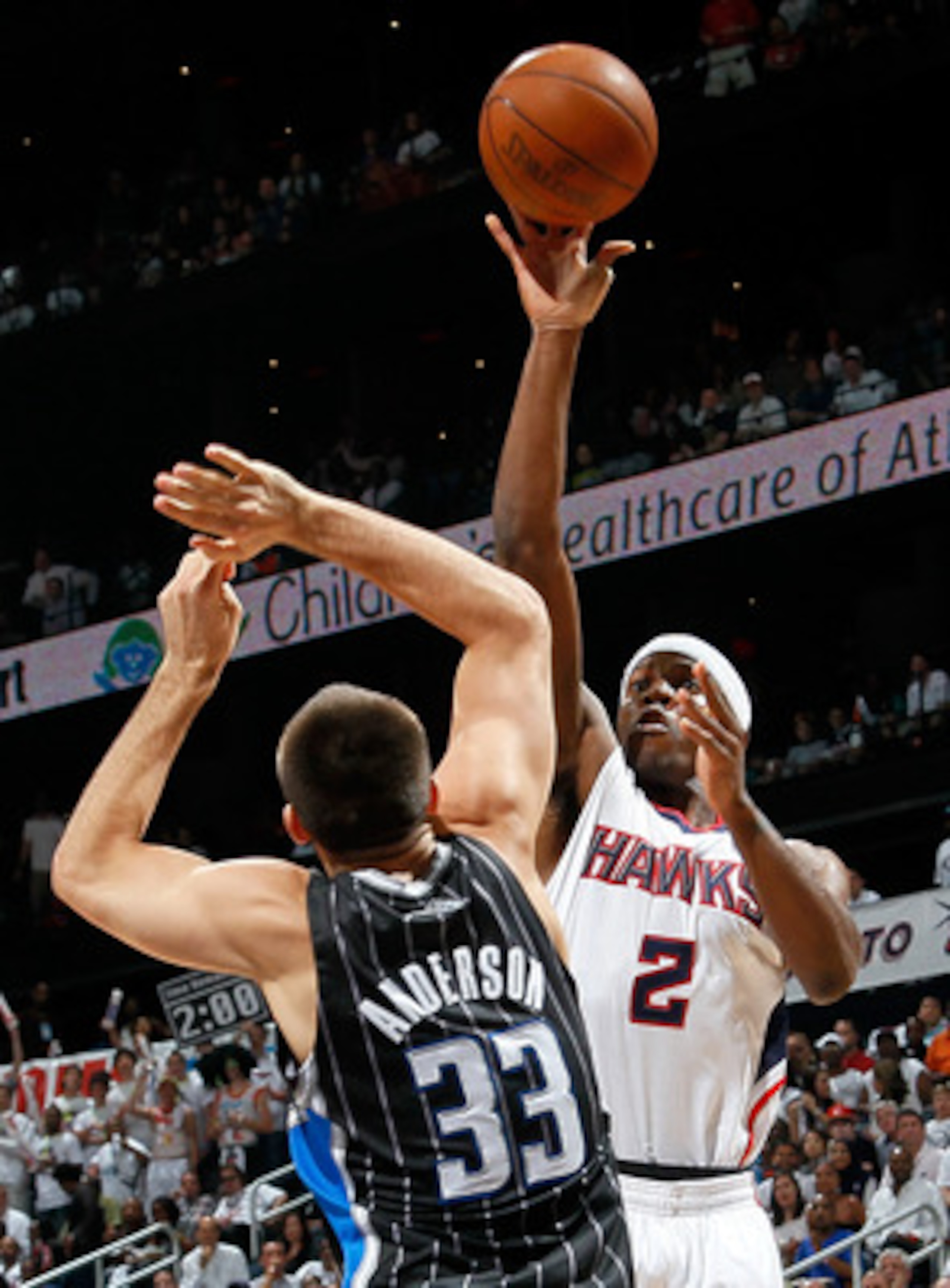
Atlanta: 0.52 PPP
The Hawks—particularly Joe Johnson—have a penchant for the isolation play. That's not a good thing since they aren't very good at it. They run isolation 13.8 percent of the time and when they run it Joe Johnson has the ball 35.8 percent of the time.
The problem is that the Hawks only average 0.81 points per play (PPP) out of isolation, and only 0.79 PPP when "Iso-Joe" is running it. That makes Atlanta 20th in the league.
What makes it more troubling is that Chicago is particularly adept at defending the isolation. Defensively the Bulls are the best in the league against isolation yielding only 0.73 PPP. The person defending Johnson will be Keith Bogans, who only gives up 0.73 PPP as well.
The Hawks are not likely to find much success running the isolation against the Bulls. A heavy reliance on Johnson does not bear favorably for Atlanta either.
Chicago: 1.14 PPP
The Bulls run the isolation better than any team in the NBA. If you're assuming that has something to do with Derrick Rose you'd be assuming correctly. Chicago averages 0.92 PPP in isolation. When Rose runs the isolation he averages 1.09, which leads all NBA players with significant playing time.
Couple that with the fact that unlike Chicago, Atlanta is not very good at defending in isolation, ranking 21st in the NBA with 0.87 PPP. That's not even the worst news. The worst news is that the Hawks aren't likely to play anywhere near that well with Kirk Hinrich, the best option to guard Rose, possibly out for the series.
The Bulls don't typically run the isolation as often as Atlanta—only 9.2 percent of the time—but they may be looking to go at Hinrich's backup, Jeff Teague, who has a reputation of taking risks and as such, getting burned. He's averaged a respectable 0.75 PPP against in defending the isolation, but bear in mind the majority of those plays were against backups, not Derrick Rose. With Chicago being so good in isolation and Atlanta being a bad team getting worse, it's not a stretch.
What could be potentially disconcerting to the Hawks is that Teague fouls 14.8 percent of the time when guarding isolation plays. Having their only true point guard get in foul trouble would not bode well for Atlanta.
Atlanta's defense is not equipped to handle Derrick Rose in isolation and that's really not good. In late-game situations there could be some severe limitations, particularly without Hinrich.
Pick-and-Roll, Ball-Handler
2 of 9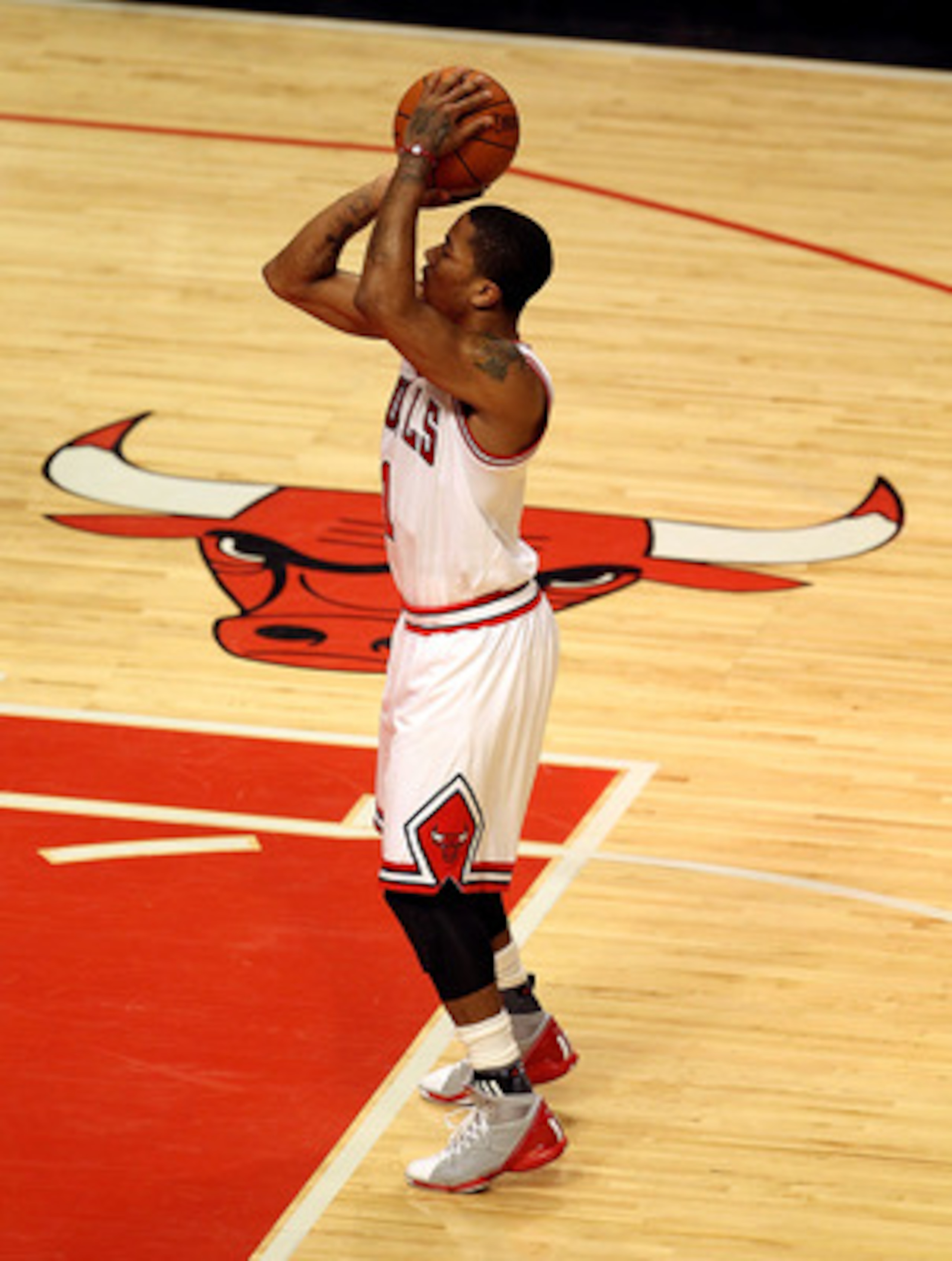
Atlanta: 0.56 PPP
In the first and third games the Bulls absolutely shut down the ball-handler when the Hawks ran the pick-and-roll, yielding only 0.33 and 0.40 PPP respectively, however in the second matchup the Hawks found a measure of success, getting 0.92 PPP.
Both teams favor the ball-handler in the pick-and-roll and are fairly adept at it. Atlanta ranks ninth in the NBA with 0.83 PPP. Its favorite ball-handler to run it is Jamal Crawford, who handles the ball 40 percent of the time when they run the play. Crawford is slightly more effective with 0.84 PPP.
Defensively though the Bulls defend that play well, ranking fourth in the NBA while giving up only 0.77 points per play. Due to the Hinrich injury it's hard to know where Crawford will be playing most of his minutes, but he could be guarded by Rose (0.77), Bogans (0.87), Brewer (0.75) or Watson (0.80).
Most likely Rose will be taking the responsibility the majority of the time, and Rose is an underrated pick-and-roll defender who fights hard through picks. By design Bulls defending the ball-handler on the pick-and-roll go under the screen rather than over it. They would rather give up the outside shot than the layup because it's a lower-percentage shot.
This could actually favor Crawford as he's a good shooter from 16-23 feet making 45 percent of his shots. If there's an area Atlanta could exploit it would be that. At least in theory it seems good but with Rose on the court in the previous three games, Crawford only managed 12 points per 36 minutes, down from his 16.9 season average.
A hot Crawford could make Atlanta's chances of pulling out an upset significantly higher.
Chicago: 0.61 PPP
The 0.64 for the Bulls as the season average is due to something of an anomaly. In the first game between the teams the Bulls ran 12 plays and scored on none of them. It seems one of those things you can just chalk up to a bad game. In the other two games they averaged 0.92 PPP.
On the season Chicago is slightly better at running the pick-and-roll with the ball-handler keeping the ball. The Bulls rank eighth in the NBA with 0.84 PPP. That's how much Atlanta gives up on the play, though that could change with Jeff Teague running the point.
Derrick Rose far and away is the main man running the pick-and-roll, taking the ball 70.9 percent of the time they run the play and scoring 0.87 PPP. Teague is not particularly effective guarding it either, surrendering 0.82 PPP and most of that against backup-quality opposition.
Here it's not so much that Teague tends to foul as this is an area where Rose tends to draw a lot of fouls. He gets to the line 13.9 percent of the time when handling the ball on the pick-and-roll. It's not unlikely that there will be a lot of the scene pictured above in the upcoming series.
The Bulls are 27-7 when Rose takes at least eight free-throw attempts. It's hard to deduce a way where the Hawks can stop Rose without sending him to the line. When he gets to the line he makes 87 percent of his shots from the stripe.
Derrick Rose can win games from the free-throw line. He also wins games if you don't send him there. The Hawks are in trouble. The thing that they lack that Indiana has is a long and fast wing defender that can double-team Rose. Josh Smith is a very nice defender but he doesn't have anything close to the quicks needed to guard Rose.
Admittedly, I haven't watch Atlanta extensively. Maybe they have the next Scottie Pippen sitting on their bench and I just don't know about it. Barring some long, super-fast, elite defender though, Atlanta is going to give up some points to Derrick Rose.
Pick-and-Roll, Roll Man
3 of 9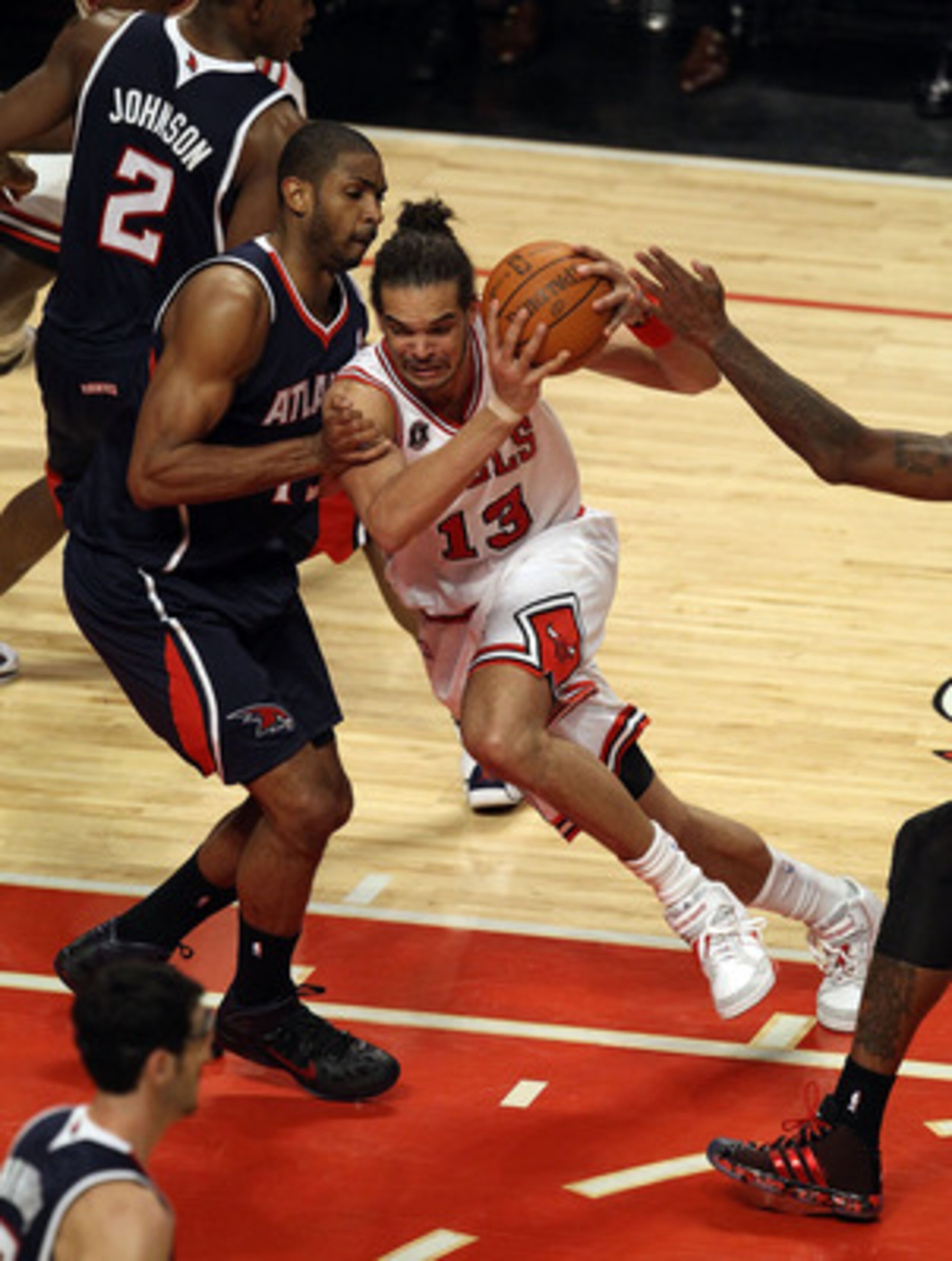
Atlanta: 1.36 PPP
Atlanta has been successful in running the pick-and-roll to the roll man against the Bulls, though the Hawks haven't run the play that often. They've gone to the roll man a total of 15 times in the three games against the Bulls, scoring 19 points in the process. It remains to be seen whether they could sustain that level of success if they kept going to it.
On the course of the season they haven't gone to the roll man that often either, just 434 times. They've averaged 1.02 PPP doing so, which is 11th best in the NBA. Chicago counters with the league's best defense at stopping the roll man in the NBA giving up only 0.89 PPP on the season.
When they have gone to him, their best roll man is Al Horford, who scores 1.09 PPP, which is outstanding. Using him as the roll man is the play they run most often for him, and I don't understand why they don't go to him more.
Joakim Noah will be the primary Bulls player guarding him, as Jason Collins is about as much of an offensive threat as Boozer is a defensive presence, and Noah is a far better defensive player than Boozer. Noah is the second-best defender among all NBA players in guarding the pick-and-roll surrendering only 0.59 PPP.
This highlights one of the reason reasons this matchup favors the Bulls so heavily. What the Hawks do well the Bulls defend exceptionally well. What the Bulls do offensively exceptionally well the Hawks defend average at best and more often, poorly.
Chicago: 1.00 PPP
The Bulls have been less effective running the roll man against the Hawks, but it's not an integral part of their offense, as they go to it only five percent of the time on the season.
When they do run it they tend to go to Boozer as their roll man, and Boozer scores 0.88 PPP in that "role" (Get it...roll vs. role?). The Bulls were probably hopping for better than that when they signed him. That's how much Al Horford, who will likely be defending him, allows so it's not a surprise that it's roughly what the Bulls averaged in the three regular-season games.
On the season going to the roll man Chicago scores 0.89 PPP, which ranks dead last. Atlanta is only the 19th-best team at stopping it giving up 1.02 PPP. This play is not important to the Bulls offensive scheme, but this, along with running Boozer in the post, will likely draw a lot of attention from media and fans if Boozer struggles, which it's likely he will.

Post Up
4 of 9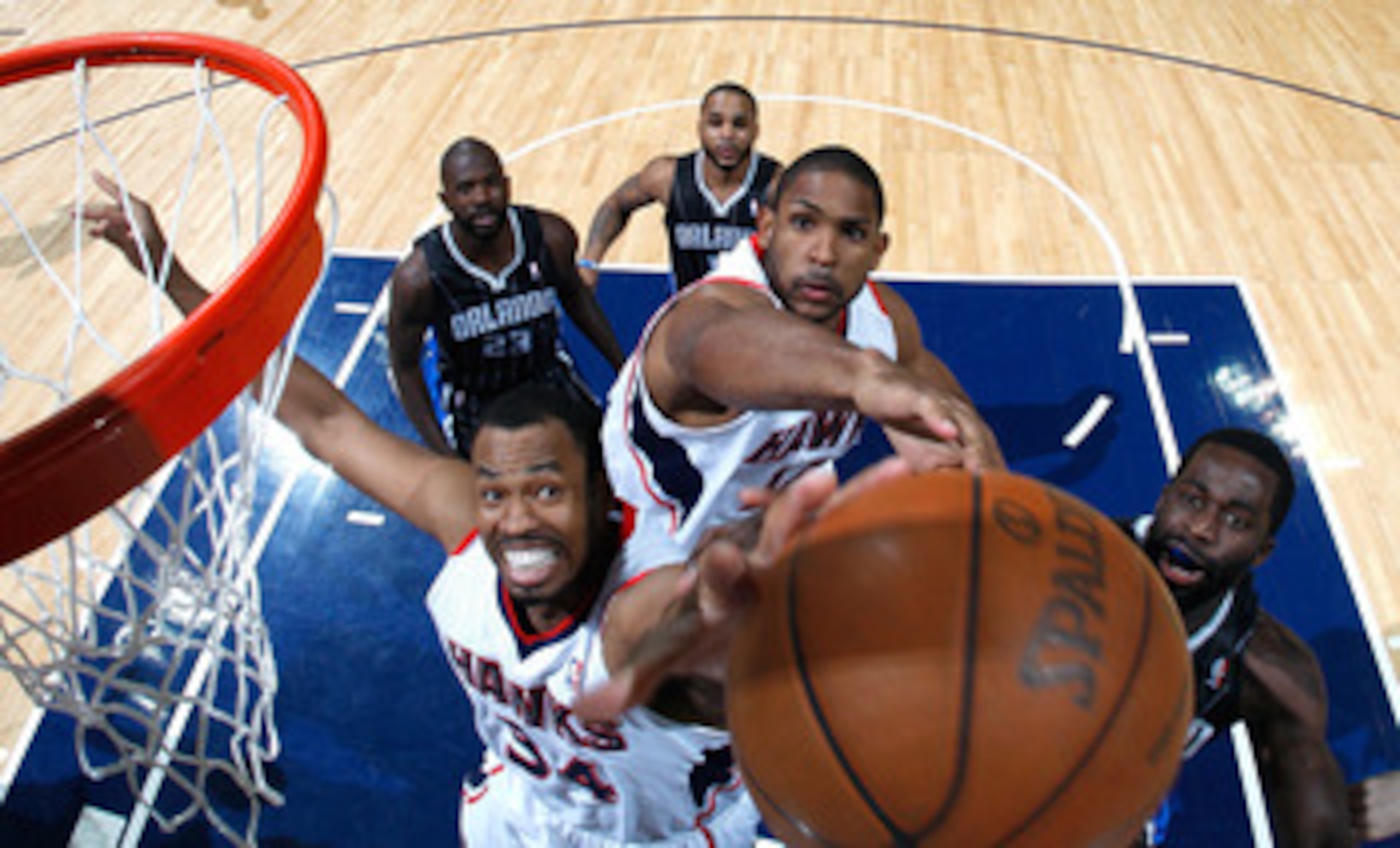
Atlanta: 0.95 PPP
The Hawks post up 12.4 percent of the time scoring 0.86 PPP when they do, which is good for a mediocre 17th in the NBA. Defensively Chicago is once again one of the better teams defending the play, giving up only 0.85 PPP in the paint.
It's not just that the Bulls don't give up a lot of points though—they don't give up a lot of plays. Only 841 post-up plays have been run on the Bulls this season (including postseason games). Part of the reason the Bulls defense is so effective is that they make it hard to work the ball into the post.
The bulk of the Hawks post plays come from Al Horford, who scores 0.84 PPP and Josh Smith, 0.78. They would be guarded by Joakim Noah, who gives up 0.90 PPP and Luol Deng, who yields a meager 0.72 PPP respectively.
Herein lies the Hawks' best opportunity. When Atlanta has gotten the ball to Horford there he's been extremely successful, scoring on 8-of-11 attempts. The problem is that in three games they've gotten him the ball in the paint only 11 times.
To a large degree that's due to the design of the defense again. The whole system is designed to keep the ball out of the paint. Noah will extend to provide help defense, which makes it easier for opponents to score in the post, but only if they get the ball there.
If Horford starts to go off, and Boozer isn't producing in kind, both of which are likely to happen, look for a lot of minutes from Taj Gibson, who is the Bulls' best post defender. With Gibson on the court Horford has only managed 12.4 points per 36 minutes and 44 percent shooting.
Chicago: 0.21 PPP
The Bulls don't run a lot of post plays. In fact post plays only make up 6.6 percent of their total plays, which makes sense since they aren't very good at it, ranking 22nd at 0.82 PPP. Their primary player in the post is Carlos Boozer, who averages 0.88 PPP. and accounts for 57 percent of their plays in the post.
Horford will likely be defending him and is an excellent post defender giving up only 0.78 PPP. Using this series to establish Boozer could be problematic for the Bulls. Hopefully they can get more than 0.21 points per play though.
Regardless, it won't be essential to winning. Even if the Bulls are winning, once again, if Boozer is slumping, expect this to raise a lot controversy in Chicago since this is what Boozer is being paid more than any other Bull to do.
Spot Up
5 of 9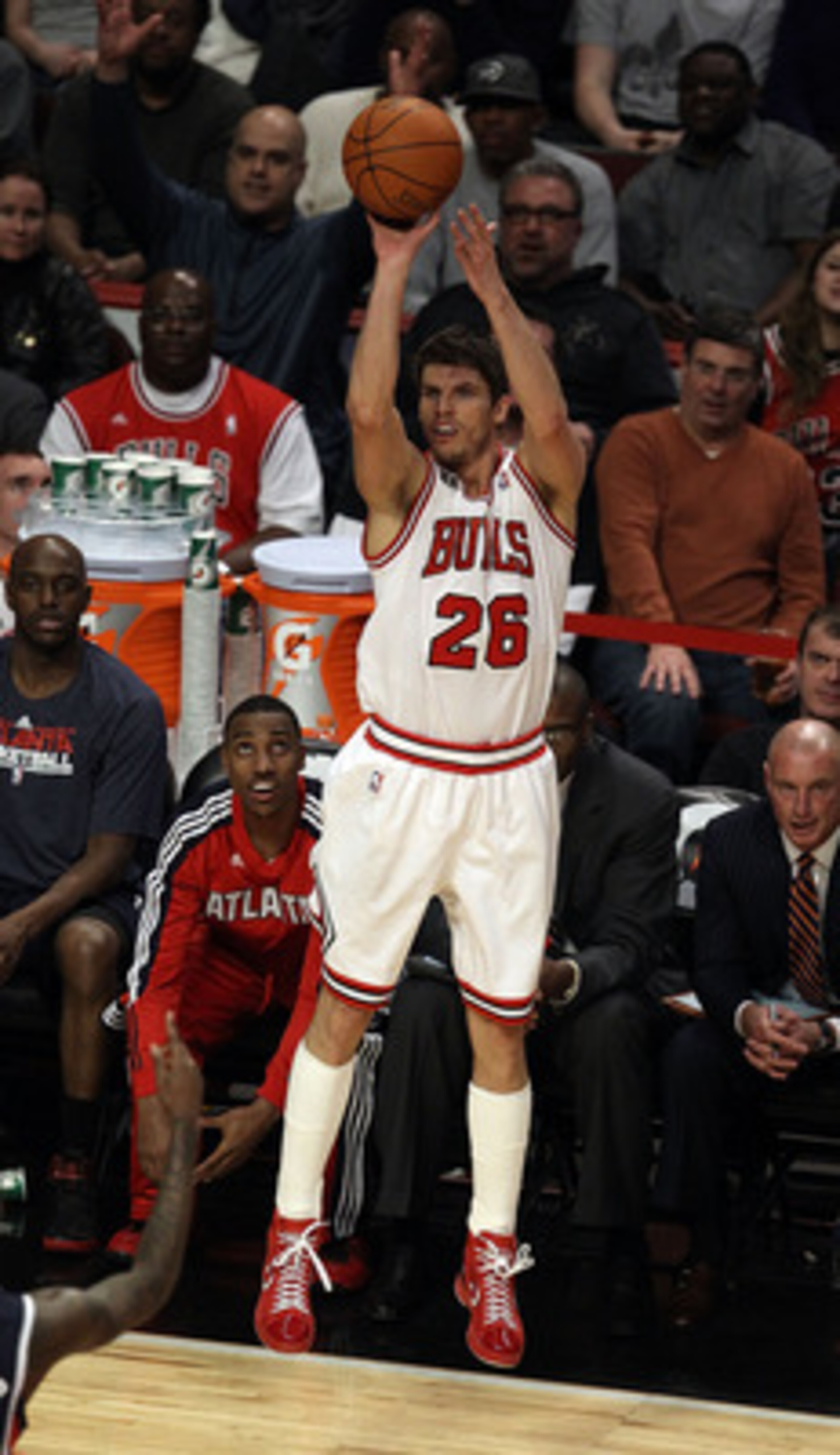
Atlanta: 1.17 PPP
Atlanta runs plays for spot-ups 22.1 percent of the time and averages 1.0 points per play when doing so. The Hawks rank 13th in the NBA. Once again Chicago is the best at guarding against that play. (Starting to get the idea of why Chicago is the best defensive team in the league?)
Jamal Crawford is the best spot-up shooter Atlanta has scoring 1.14 PPP in those situations. Crawford, Horford, Johnson and Smith combine for 55 percent of the Hawks' spot-up shooting and average 1.02 PPP as a unit.
Defensively the Bulls are going to be leaning on Derrick Rose, who uses his seven-foot wingspan and 40" vertical to aid him in being one of the best in the NBA at defending the jump shot. He yields only 0.82 PPP, which makes him one of the premier players at defending the jumper. Look for Rose to be asked to defend Crawford should he start heating up.
With Rose on the court in the previous matchups Crawford has averaged only 12.0 points per play and shot only 39 percent.
Atlanta's other shooter is Joe Johnson and Bogans has been extremely effective on him, holding him to just 3-of-15 shooting and an eFG percentage of 0.233.
The Bulls will also be depending on Luol Deng (0.90), and Joakim Noah (0.97) to defend the spot-up jumper against Smith and Horford respectively.
Chicago: 1.16 PPP
The Bulls run the spot 20.2 percent of the time and score 0.95 PPP, which is slightly below average at 18th in the NBA. Atlanta is fifth best defensively in guarding the spot-up at 0.94 PPP. The Bulls' best shooter is Kyle Korver, who scores 1.12 PPP.
In a somewhat surprising twist, when Korver and Crawford are on the court at the same time, Korver has fared much better, scoring 15.7 points per 36 minutes while Crawford has been held to 6.5. Korver also shoots 60 percent to Crawford's 30 percent. Probably the best explanation for this is the 39-minute sample size.
Another key matchup here will be Josh Smith on Luol Deng. Smith is highly effective guarding the spot-up at only 0.82 PPP. Deng has averaged 1.29 PPP in the three games against Atlanta.
On the season he averages 0.99 PPP. With it being unlikely that Boozer is going to have a great series it will be critical for the Bulls to have Deng playing well. If Smith can shut down Deng, that could tip the scales towards Atlanta.
Other Bulls who are likely to spot up are Rose, Deng and Bogans. With Korver, the Bulls foursome scores a slightly better 1.04 points and accounts for 60 percent of the Bulls spot-up shooting.
Defensively the Hawks will also be relying on Joe Johnson (1.03), Crawford (1.14) and Teague (1.01).
Off Screens
6 of 9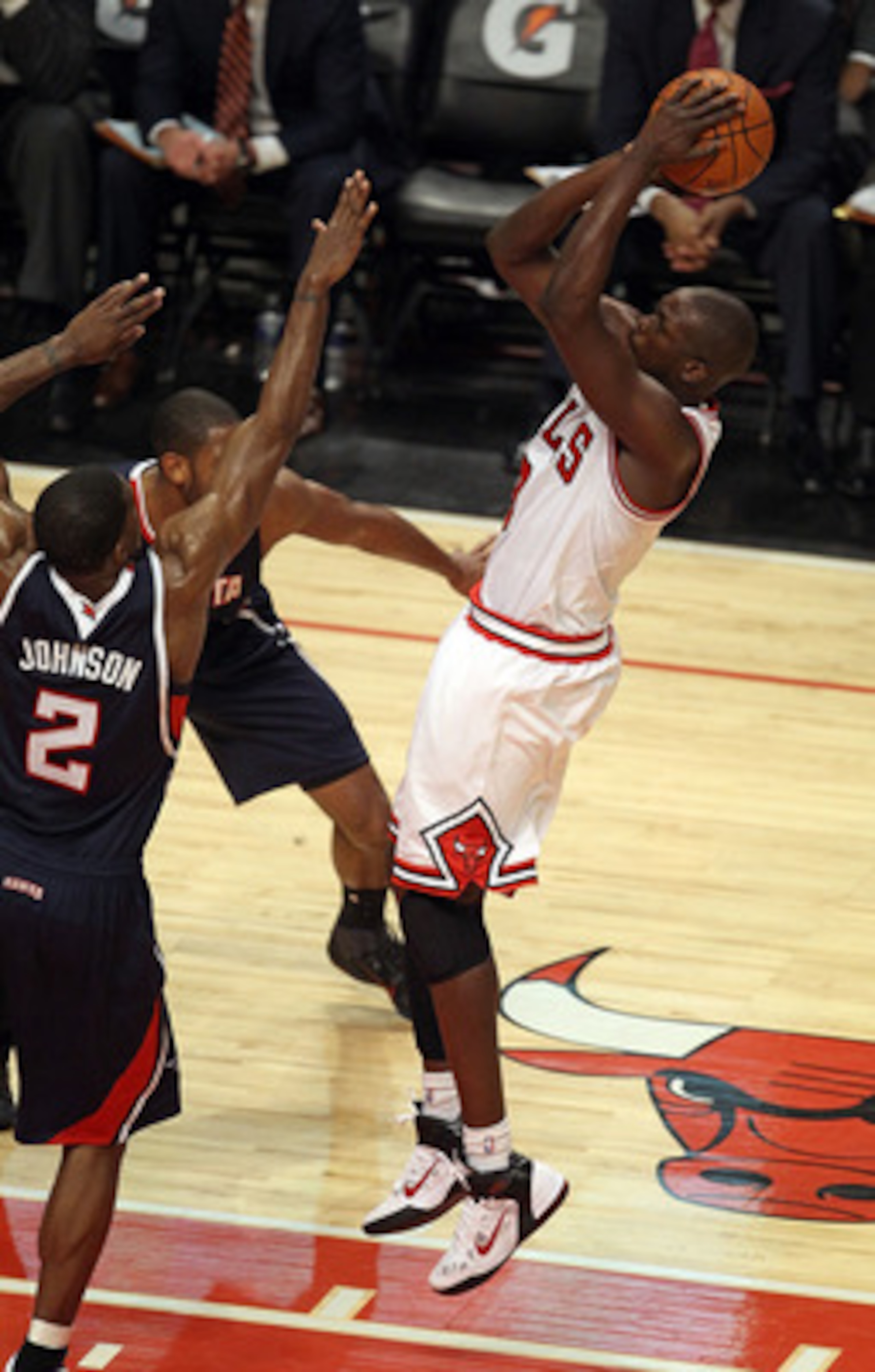
Atlanta: 0.57 PPP
Atlanta, normally effective off screens, has really struggled against Chicago on those plays. Normally the Hawks are fourth best in the NBA with 0.98 PPP but they have been almost shutout against the Bulls, who are fifth best defending the play at 0.83 PPP.
Atlanta most frequently goes to Joe Johnson on the play, who scores 0.97 PPP when coming off the screen. Bogans is a good defender in that regard, averaging just 0.83 PPP against guarding off the screen.
Atlanta rarely runs the play though, as it accounts for just 4.1 percent of the Hawks offensive plays. While it may be that they should simply be going to Johnson off screens more often, it's more likely that defenses don't defend it because Atlanta just doesn't run it very often.
Chicago: 1.00 PPP
Chicago uses screen plays slightly more often than the Hawks do but it's not a significant part of the Bulls offense either. They run the play just 6.1 percent of the time and are 16th in the NBA with 0.87 PPP while doing so. Atlanta tends to defend it reasonably well giving up 0.89 PPP, which is 13th in the league.
The Bulls really like to use Kyle Korver in that capacity. He accounts for almost half of the screen plays the Bulls have run this year, and 36 percent of the plays run for Korver. He scores 0.92 PPP off screens. During the postseason Korver has been used mostly as a shooting guard so it's likely he'll be guarded by Jamal Crawford, who is not very good at defending the play, giving up 0.93 PPP.
(Incidentally, normally with Korver you don't think of great defense, but surprisingly he only yields 0.66 PPP off screens, so if he ends up needing to defend Johnson it could be a matchup in Chicago's favor.)
The Bulls also like to use Deng off screens, and Deng is not nearly as effective, scoring only 0.76 PPP. Deng will be guarded by Smith, who does not defend the play well giving up 1.1 PPP.
For the most part the only time to really pay attention to this is when Korver is on the court. He's been effective with it, particularly when defenses are clogging the lane. When he hits the shots it starts to open up the floor and create space for Rose to penetrate.
Cut
7 of 9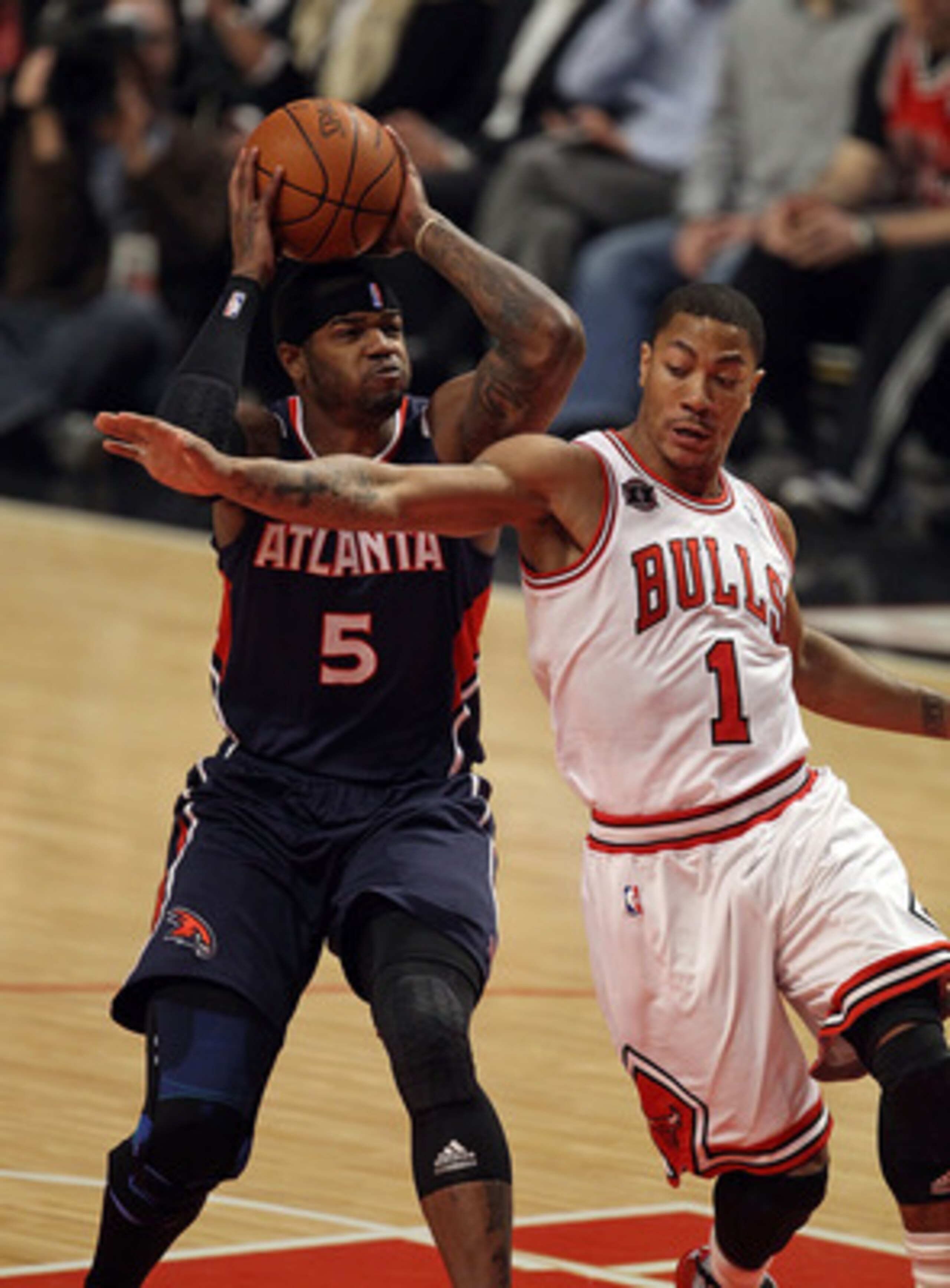
Atlanta: 0.83 PPP
Atlanta cuts slightly above average, ranking 13th in the NBA at 1.23 PPP, but the Hawks only run it 7.1 percent of the time. Just like everything else, Chicago defends this play well too, ranking fifth with only 1.19 PPP.
Here the Hawks like to employ Smith, who is very effective when cutting, scoring 1.43 PPP. Synergy doesn't assign defensive responsibilities to cutting players, probably because it would be too difficult and subjective to determine. However, it's likely that Deng will be guarding him.
Chicago: 1.41 PPP
Chicago cuts slightly below average, ranking 17th in the NBA at 1.21 PPP, but because Atlanta is 27th in the NBA defending it—giving up a whopping 1.3 PPP—the Bulls have exploited that in their previous contests and have averaged 1.41 with the play going to the cutter about 11 times per game.
This is part of the secret of the Bulls' colossal success against Atlanta. The Hawks defense is just not nearly as cohesive as Chicago's and, as a result, between the cuts and the penetration from Rose, the defense breaks down and opens up everything else.
Noah (1.30 PPP), Deng (1.21) and Boozer (1.20) account for about two-thirds of the plays where the Bulls go to a cutting player. All three are effective that way. This could be the best way for the Bulls to get Boozer involved.
Offensive Rebounds
8 of 9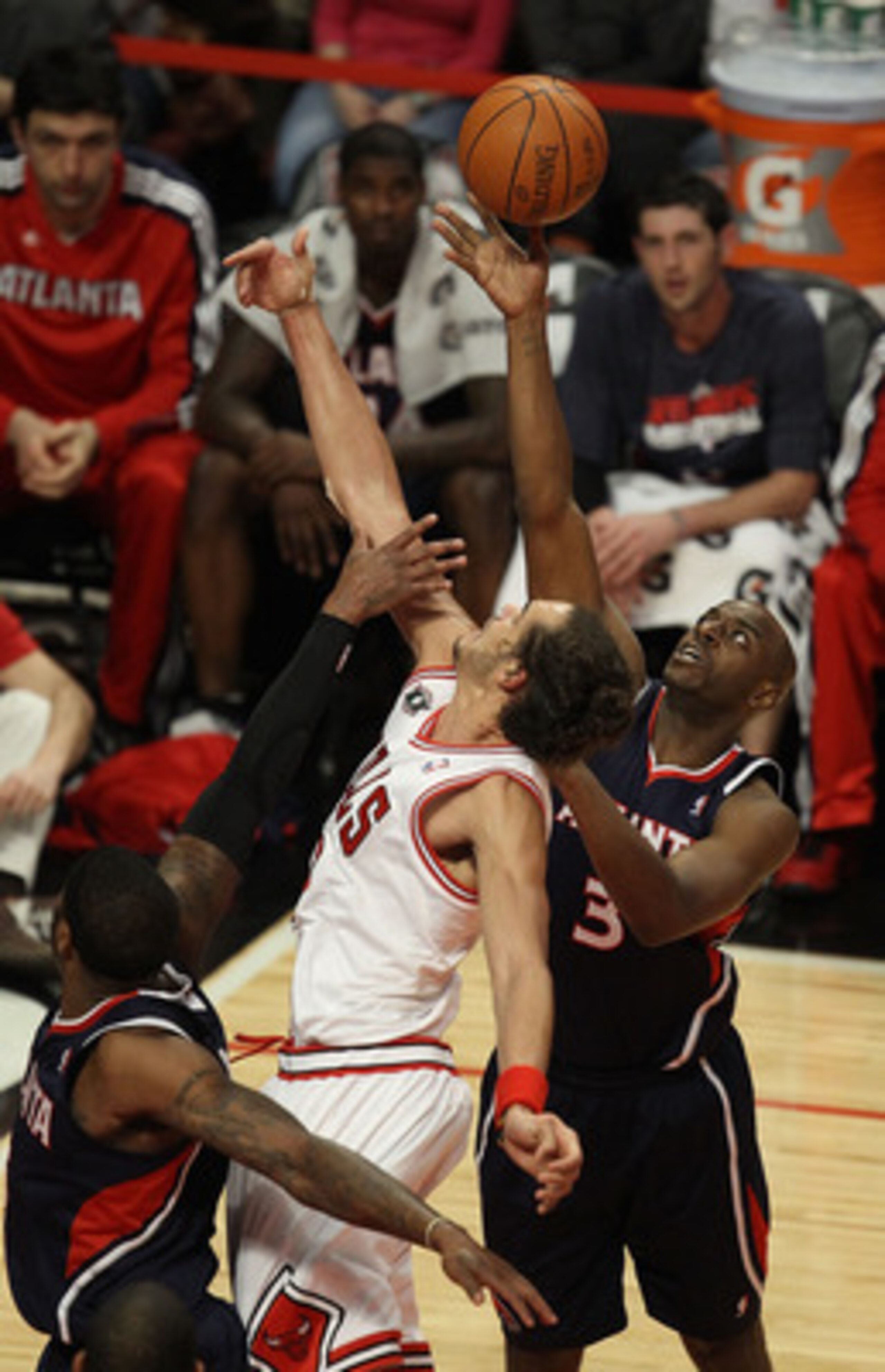
Atlanta: 1.54 PPP, 6.7 PPG
Since offensive rebounds aren't so much plays you run as opportunities you capitalize on, I'm putting the number of points, as well as the number of points per play here.
Offensive rebounds are one of the huge factors that can change a game. In essence, every offensive rebound is an extra possession. Effectively every offensive rebound has roughly the same effect as the team raising its field-goal percentage by one percent.
On the season they score 1.16 PPP off of offensive rebounds, which ranks third in the NBA in terms of points per play, but that can be a bit misleading for a few reasons. Firstly, it shouldn't be confused with all second-chance points. If a player tips out the ball and a new play is set, it's not considered a "play" by synergy.
Of course they still count all offensive rebounds, but for their purposes of play-tracking they are only counting offensive rebounds in this light as when the player who gets the rebound tries to score the ball without passing it back out. When it gets passed out it's tracked as whatever play is run from that point forward.
Secondly, these plays are unique in that they are a matter of opportunity other than necessity. What I mean by that is the goal of every possession is to shoot, therefore every possession results in a shot or a turnover. Then the next team has its possession and the teams take turns. Both teams have roughly the same number of possessions per game, though there can be mild exceptions if one team ends one quarter and starts the next with the ball.
Offensive rebounds are like a free possession. The first play concluded and failed, but now you get to run a second play with the same possession. So, if a team has 10 offensive rebounds and scores 0.95 points per play that's nine or 10 "free" points they get off of those "free possessions." While all possessions are even, and technically offensive rebounds extend a possession, effectively they are extra possessions in that they give you that chance to run the extra play.
Because of this the points per play here is not nearly as important as the number of plays. Atlanta does very well when it gets that extra play, but the Hawks aren't very good at getting it. They are 29th in the NBA in offensive rebounds per game in the regular season and they are last among all remaining playoff teams.
Chicago: 1.40 PPP, 7.96 PPG
On the other hand Chicago is very good both at getting offensive rebounds and scoring the ball with them. The Bulls average 1.12 PPP, good for eighth, and they also are sixth in the NBA in total offensive rebounds, as well as third in offensive rebound rate. This in spite of the fact that they were missing one of their two best rebounders through two-thirds of the season.
This is going to be a crucial aspect of the series for Atlanta. If all other aspects of the game are equal, then Atlanta is going to have some major problems trying to keep up with Chicago, as the Bulls would run 2.5 extra plays due to their offensive RPG average during the regular season.
If they average the 5.5 more offensive rebounds per game they did during the two teams' first-round series, then it's going to be impossible. Chicago is already a more efficient offense and a better defense. If the Bulls are running more plays too, then Atlanta won't have any chance to win.
Because of this it is absolutely imperative that Horford, Atlanta's best offensive rebounder, stay out of foul trouble. That means he is not the guy you want taking a lot of fouls if Rose is getting into the lane. If Horford is spending too much time on the bench there is no way that Atlanta can win a game against Chicago. Horford was almost exclusively the reason why Atlanta was able to beat the Bulls once this season.
Transition
9 of 9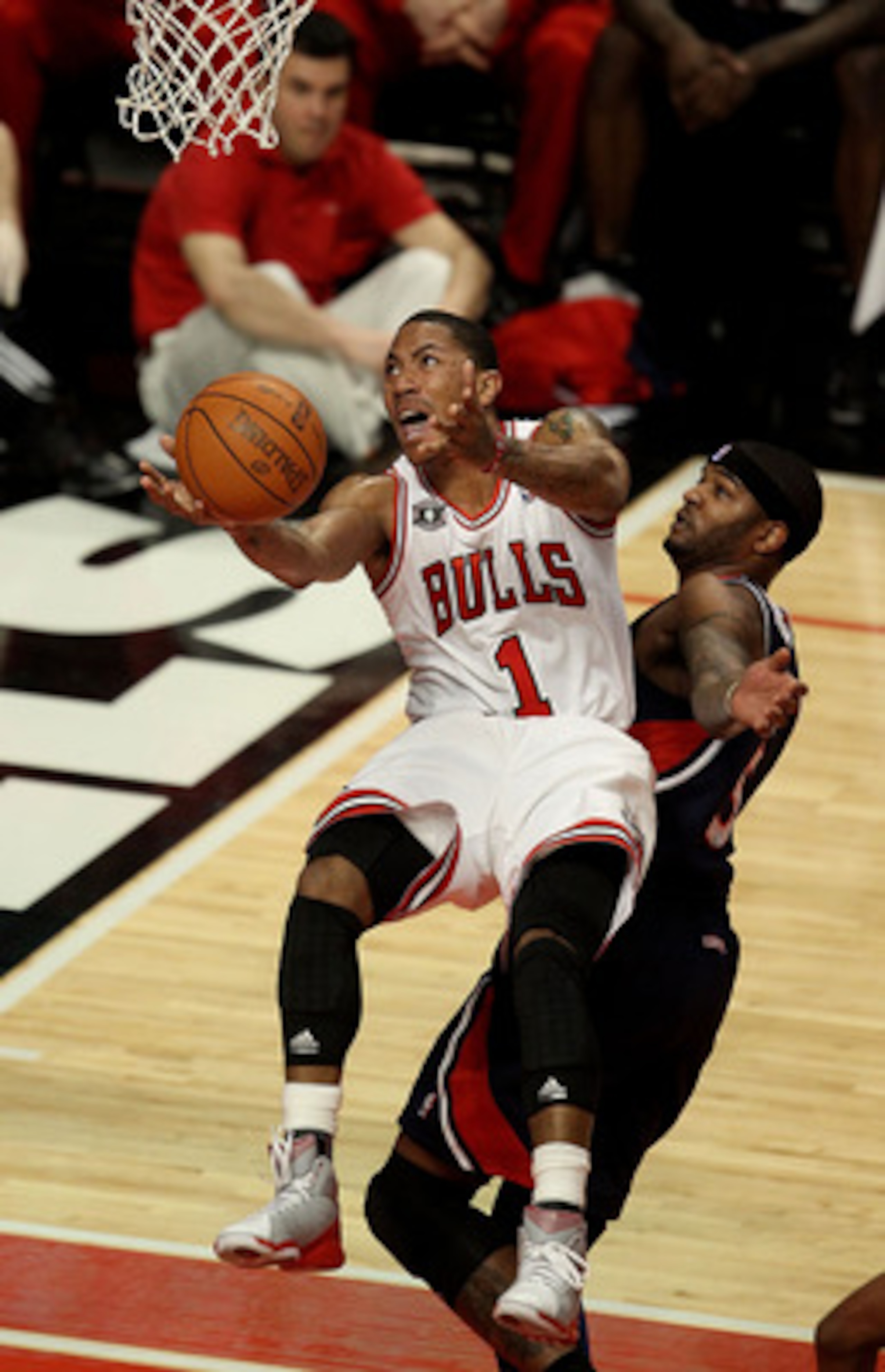
Turnovers and transition points go almost hand in hand. Turnovers are in some ways the opposite of offensive rebounds (and you thought that would be defensive rebounds!) What I mean by this is that while offensive rebounds gain you that "free" play, turnovers are, in a sense, a wasted play.
You could say that the goal of every possession is to score, but that's a bit prodigious, as everyone knows you aren't going to score on every possession. The more accurate way of defining the goal of a possession is to attempt to score.
Obviously you'd rather make a shot than miss a shot, but the objective is to get a shot because you'll never score if you never shoot. You can win a game missing field goals, but you aren't going to win not attempting them. In other words the goal of the possession is to run a play.
A turnover then fails to accomplish that objective. It fails to execute a play. Some might argue that a turnover is the same as a missed field goal. Not true.
You can get a rebound off a missed field goal. You can draw a foul on a missed field-goal attempt. You can't get anything off a turnover. Ergo a turnover is a wasted play, i.e., the opposite of an offensive rebound (and a forced turnover if you want to go in that direction).
This is important because Atlanta is pretty bad with the turnover game. Defensively the Hawks give up 1.18 PPP in transition, but again, like offensive rebounds, it's not so much about how many points per play there are as how many plays there are. Since transition points are easier than those in a set offense it's a double whammy. On the one hand it's the points lost by turning it over and on the other it's the points the other team scores.
Atlanta is out-scored by about 1.5 points per game in transition. Chicago on the other hand out-scores its opponents by 2.1 points per game in transition. That's a difference of 3.6 points per game.
Add to that the 3.5 more points that Chicago scores off of offensive rebounds and essentially you have Chicago starting with a five-point head start because of extra plays. Both teams actually have the same average points per play (0.94) but Chicago has a far more efficient offense because of offensive rebounds and turnovers.
Atlanta is not all that turnover prone. The Hawks rank ninth in the league, but they don't force many turnovers themselves, ranking second-to-last in turnovers forced. Chicago is 15th, which isn't great, but it's better than 29th.
This is another reason that I'm having trouble seeing Atlanta win, or being able to force the same kind of series that Indiana did. The Pacers were extremely disruptive in their series, deflecting passes, getting in lanes and generally just causing chaos.
Over the season series it's been Chicago disrupting Atlanta's defense, penetrating in the lane, breaking down the perimeter, opening up lanes and generally leaving Atlanta looking lost.
If Atlanta can stay cohesive and become a disruptive force when Chicago has the ball it could turn the tables. I'm not saying that it's impossible, but it isn't consistent with the way the Hawks have played through the season.
This will be something to keep an eye on though. It's pretty much a given that the Hawks are going to end up settling for jump shots and with Joe Johnson and Jamal Crawford they could get hot. Horford will get them some points in the paint. Atlanta's offense will be held in check but not shut down. They'll score about 90 points per night. Atlanta's offense and Chicago's defense tend to be consistent so we won't see a lot of change there.
Where the games will be won or lost is on the other side of the court and who disrupts whom. Based on the regular-season games and the general tendencies of each team, that battle should go to Chicago, but if Atlanta can win it, then it has the shot at the upset.
My guess is that the Hawks are able to do that for one game...maybe two. Expect Chicago to win in five or six.



.jpg?w=2560 "Chiefs, Steelers Eye WR Trades")



.jpg?w=2560 "Latest Peyton-Colts Rumors")