
Ranking the 10 Biggest NBA Playoff Choke Jobs Since 2000
No one does reality TV better than sports.
Come-from-behind victories, underdog stories and unexpected results happen often. They keep fans on their toes, especially in the NBA—and especially recently, when the three-pointer has become a great equalizer.
On the other end of those feel-good moments, though, is a losing team. And, as you're likely aware, if that team was supposed to win—whether at the outset of a series or at some critical moment—the loss may go down as a "choke."
Since 2000, we've seen some significant examples of this.
To determine the biggest, a number of factors were considered, including the team's regular-season success, odds at winning the given series, win probability within specific games and the level of talent on each team, just to name a few.
But of course, as is the case with any list based on subjectivity, a few that spring to your mind may be absent. If that's the case, make your argument in the comments.
Otherwise, remember these key playoff moments from the last 20 years with us.
10. 2008-09 Cleveland Cavaliers
1 of 10
The 2008-09 Cleveland Cavaliers not only led the NBA in simple rating system (SRS combines strength of schedule with point differential) that season, but they also posted the eighth-best mark since 1999-00.
They also led the league in wins (66) and points allowed per game (91.4). They were third in points allowed per 100 possessions and fourth in points scored per 100 possessions.
Individually, LeBron James posted the best single-season box plus/minus in NBA history. He averaged 28.4 points, 7.6 rebounds, 7.2 assists, 1.7 steals and 1.1 blocks per game, with a 59.1 true shooting percentage that was nearly five points above the league average.
In the playoffs, they cruised past the Detroit Pistons and Atlanta Hawks in eight games. They didn't lose a single postseason contest until Game 1 of the Eastern Conference Finals against the Orlando Magic. And of course, they lost that series in six games.
Now, lest this be confused as blame heading toward LeBron, he averaged 38.5 points, 8.3 rebounds and 8.0 assists over those six games.
"You need a total team effort to win," Orlando's Rashard Lewis said after the series. "LeBron's a great player, but at the same time, you need more than one guy. You need five guys. You need guys coming off the bench."
The rest of the Cavaliers simply weren't good enough.
In the regular season, the Magic's 108.3 points per 100 possessions ranked ninth in the NBA. Cleveland allowed them to score 113.1 points per 100 possessions in the Eastern Conference Finals.
Dwight Howard did whatever he wanted inside. Orlando, thanks in large part to Lewis and Mickael Pietrus, made 20 more threes than the Cavs.
For one of the best defenses in the league and a team boasting the MVP to lose in six to the No. 3 seed was more than a letdown.
But this team isn't higher on the list because looking at these rosters in hindsight makes the result less surprising.
9. 2017-18 Toronto Raptors
2 of 10
Nearly 10 years later, LeBron was on the other end of the spectrum, knocking off the Eastern Conference's top team by SRS.
The Toronto Raptors went 59-23 in 2017-18, securing the East's top seed with one of the league's deepest rosters.
They had 10 players with at least 1,000 minutes and an above-replacement-level box plus/minus. They had five of the 54 players in the league that season with 1,000-plus minutes and a two-plus box plus/minus.
Statistically, this should've been the year the Raptors got past LeBron. He didn't have Kyrie Irving anymore. The Cavaliers were 29th in the NBA in defense in the regular season. Toronto was second in offense.
Not only did the Raptors lose in the second round to LeBron's Cavs, but they also got rolled. In a four-game sweep, Cleveland outscored Toronto by 56 points.
Had Kyle Lowry, DeMar DeRozan and Toronto put up more of a fight, as one might expect from a No. 1 seed, they might've been spared inclusion here.
For whatever reason (perhaps that Kawhi Leonard wasn't there yet), they couldn't get out of LeBron's seemingly iron grip.
As is often the case in the NBA, this loss seems to have served as fuel, though. Sure, Kawhi was in Toronto and Kevin Durant missed most of the Finals for the Golden State Warriors, but many of the Raptors who prevailed in 2018-19 experienced this heartache.
8. 2003-04 Los Angeles Lakers
3 of 10
The 2003-04 Detroit Pistons are often held up as the team from recent history that won a title without a star. But Ben Wallace had already won two Defensive Player of the Year awards and was named an All-Star that season. And Chauncey Billups was in the top 25 in offensive box plus/minus.
Having said that, few gave them a shot to beat Shaquille O'Neal, Kobe Bryant and a powerhouse Los Angeles Lakers squad that had also added Karl Malone and Gary Payton.
"That doesn't bother us," Billups said of the nonbelievers at the time. "Because we're ready to shock the world."
That's exactly what the Pistons did, easily dispatching the Lakers in five games and effectively ending L.A.'s Shaq-and-Kobe era.
Detroit deserves the lion's share of the credit for this win, but one can't help but think a bit still falls on the shoulders of the Lakers' superstars.
Kobe shot 38.1 percent from the field and 17.4 percent from three while posting an average game score of 11.6 that paled in comparison to the 18.1 he put up in the regular season. Malone and Payton combined to shoot 17-of-52 from the field in the series. Every Laker not named Shaq combined to shoot 35.5 percent.
"They just flat-out beat us in everything," Shaq said after the series, per Chris Broussard, then of the New York Times.
He and Kobe are both arguably top-15 players all-time. And though the 32-year-old big man was probably nearing the end of his prime, both were at least near the peak of their powers.
Injuries and off-court issues aside, they had the talent to win the 2004 Finals. They just couldn't come together with anywhere near the same purpose Detroit had.

7. 1999-2000 Portland Trail Blazers
4 of 10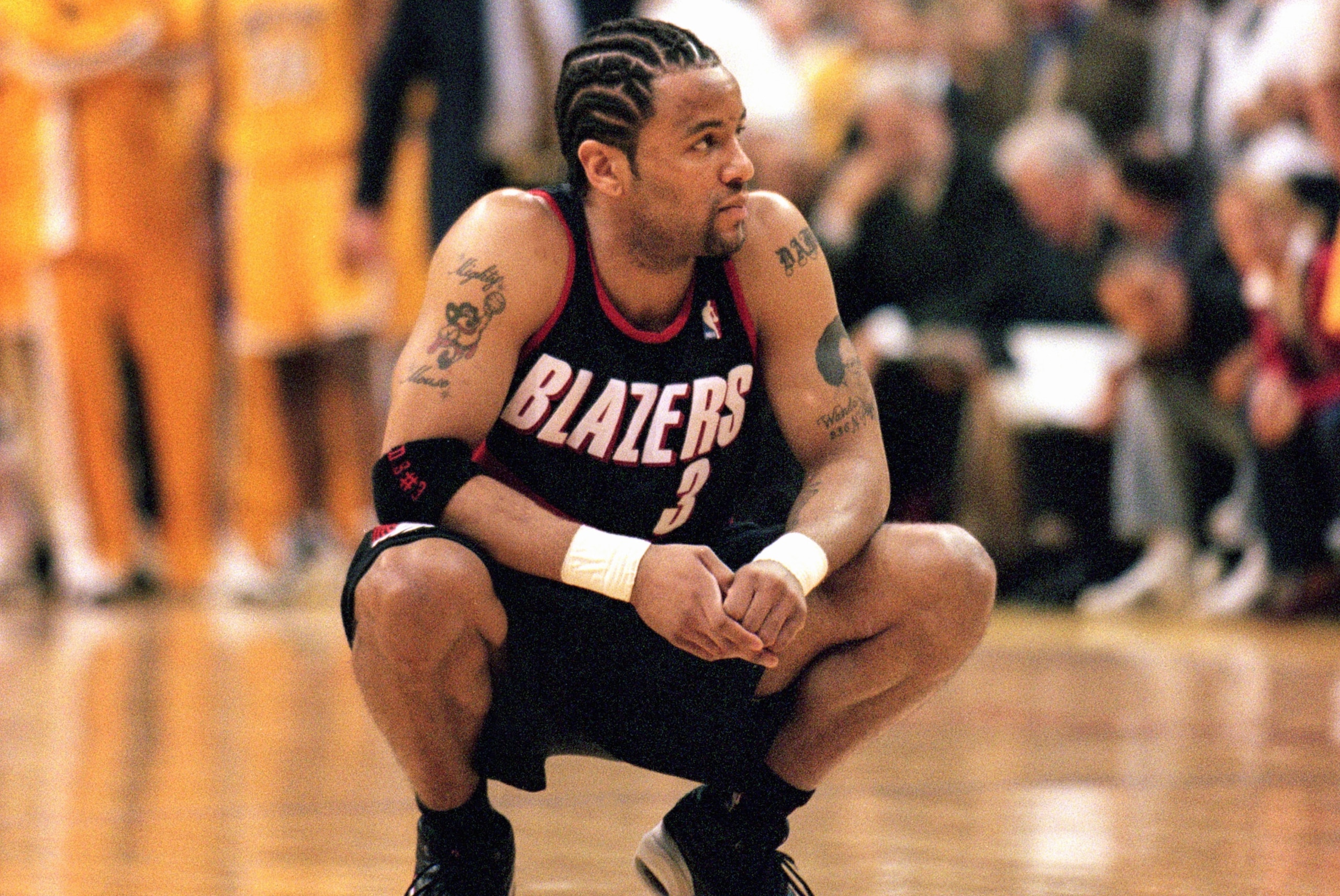
Four years earlier, Shaq and Kobe found themselves in a much different position.
At the outset of what would become a threepeat, the Lakers were down 16 points near the end of the third quarter of Game 7 of the Western Conference Finals.
L.A. had the league's best SRS that season, but its star duo still hadn't broken through for a title. And the Portland Trail Blazers had the Lakers on the ropes.
When Scottie Pippen hit a three with 20 seconds left in the third quarter, Portland's win probability was 96.1 percent, according to Inpredictable. Shaq was just 2-of-6 from the field for nine points.
Then, the Blazers collapsed.
Over the remaining 12:20, the Lakers outscored Portland 34-13. Shaq went 3-of-3 from the field, doubling his point total for the game and finishing with 18. And he threw down the alley-oop pass from Kobe that may have given us the most iconic image of their partnership.
Had the Blazers, who had one of the deepest, most balanced rosters in the league and were second in SRS that season, been able to string just a few stops together in the middle of that run, they would've had a good shot at the title.
The Indiana Pacers—the Eastern Conference representative that year—were strong, but Portland boasted peak (or near-peak) versions of Rasheed Wallace, Steve Smith and Damon Stoudamire, along with elder statesmen Scottie Pippen, Arvydas Sabonis and Detlef Schrempf.
Their chemistry was among the league's best, they shot the three well (though not as well as Indiana) and defended at a much higher level than the Pacers.
They just needed to protect a 96.1 percent chance to win that Game 7.
6. 2012-13 San Antonio Spurs
5 of 10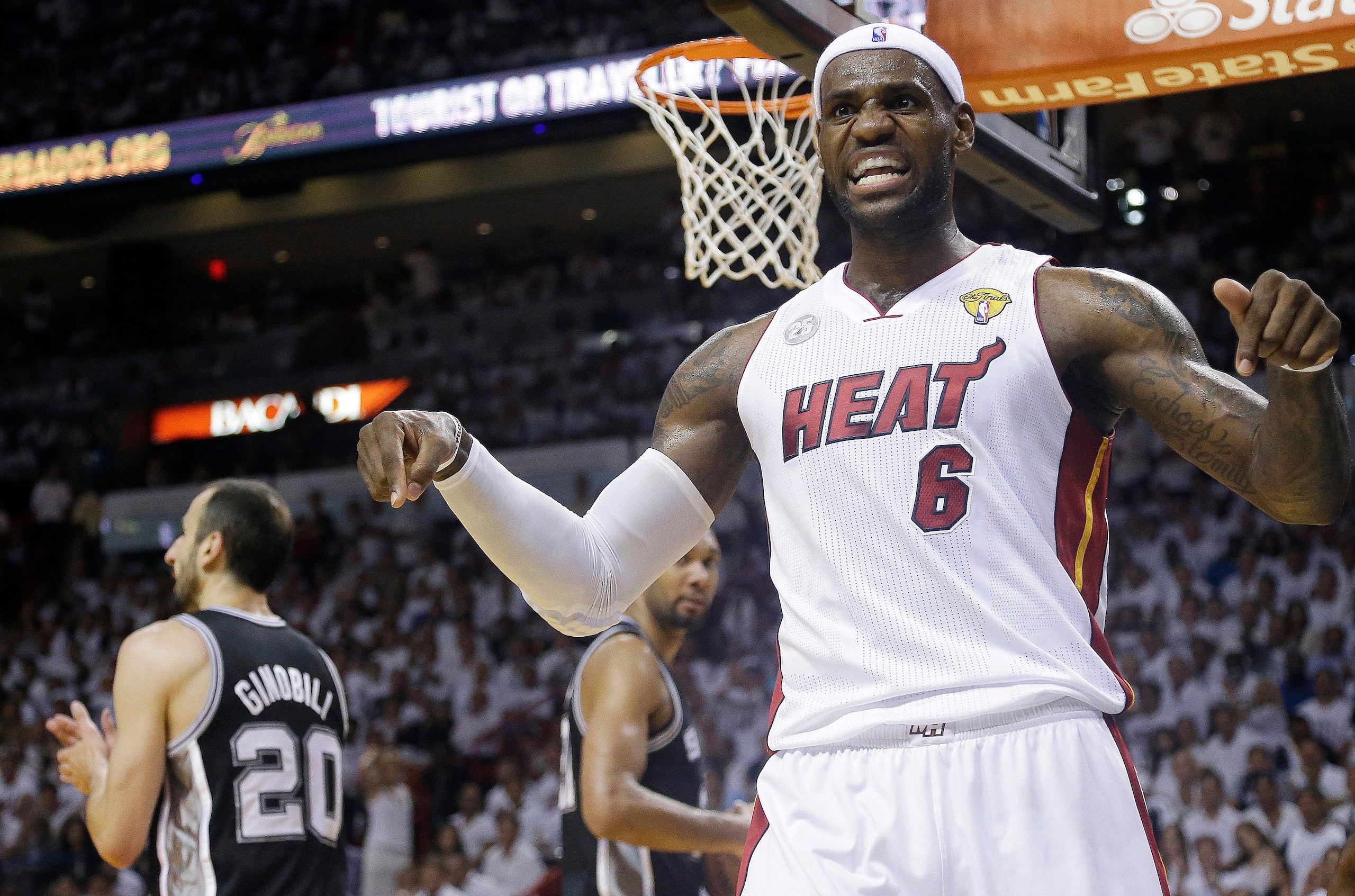
Game 6 of the 2013 NBA Finals was all over the place. Toward the end of the third quarter, the San Antonio Spurs—who led the series 3-2—led the Miami Heat by 12 and had a 92 percent win probability. By the 1:53 mark of the fourth quarter, Miami had erased that lead, established its own three-point cushion and flipped the probability to 84.3 percent in its favor.
The probability was never as severe as it was when LeBron missed a three with 23 seconds left, though. At that moment, Inpredictable's model gave the Spurs, who were up 94-89, a 99.3 percent chance to win the game and secure the title.
"Jalen Rose and I watched NBA officials wheel the Larry O'Brien Trophy into the runway to our right," Bill Simmons wrote for Grantland. "It couldn't have been farther than 15 feet from us. We watched security guards assume positions around the court, and we watched Heat employees hastily sticking up yellow rope around the courtside seats."
But after that LeBron miss, Mike Miller secured an offensive rebound and kicked it back out to LeBron, who drilled his next chance and cut the lead to two.
Still, the Spurs had a chance to ice the game. Kawhi Leonard went to the line on the next possession with a shot to extend the lead to four. He missed the first free throw. In between attempts, Boris Diaw entered the game for Tim Duncan. When Kawhi hit the second, that win probability sat at 90.8 percent.
When LeBron missed another three on the ensuing possession, it climbed to 97.5 percent. All San Antonio had to do was secure the rebound after that miss. Unfortunately, TD wasn't on the floor to help with that.
Spurs coach Gregg Popovich explained to Tom Orsborn of the San Antonio Express-News:
"On the last possession, we were switching at the 3-point line to take away the three, and Boris Diaw has a little more speed than Tim Duncan, so it makes sense to have him out there reading at the 3-point line. Unfortunately, we had two guys (Diaw and guard Tony Parker) that went to LeBron and didn't switch with [Chris] Bosh, and he went right to the hole. He's the guy who got the rebound, so it has nothing to do with Duncan."
If Duncan had been in the game, would that defensive miscommunication have been as likely? You have to think the chances Bosh would secure the rebound would be at least a bit more of a question with one of the greatest defenders of all time in action. But he wasn't. And Bosh did get the board.
Ray Allen, of course, deserves a ton of credit for drilling the contested three he took after catching Bosh's kick-out, but San Antonio had multiple chances to wipe out that opportunity before it even presented itself.
Of course, this is another moment that precedes triumph. Like Toronto, the Spurs came back the next season with a deeper focus and desire for redemption. They got it when they walloped the Heat in the 2014 Finals.
5. 2017-18 Houston Rockets
6 of 10
In a stretch when many teams seemingly told themselves, "Let's just wait out the Golden State Warriors dynasty and then go for it afterward," the Houston Rockets deserve credit for at least trying to upend the juggernaut.
In 2017-18, Chris Paul's first season in Houston, the Rockets led the league in SRS. James Harden was the MVP. And when he played with CP3, the team was plus-12.5 points per 100 possessions (98th percentile).
In the playoffs, they made quick work of the Minnesota Timberwolves and Utah Jazz, eliminating both in five games. Then, they went toe-to-toe with the Warriors.
Calling their loss in seven games a "choke job" probably feels extreme. Even with all their regular-season success, only three of ESPN's 22 experts picked the Rockets to advance. But this inclusion is less about the totality of the series—as it was for the previously detailed teams—and more about what happened in that Game 7.
That season, Houston led the NBA in threes per 100 possessions (15.6) and had a three-point percentage that matched the league average.
In Game 7, the Rockets missed an NBA-playoff record 27 consecutive attempts from deep. They finished the game 7-of-44 from downtown and lost 101-92. The headlines said it all:
Of course, the unaddressed elephant in this room is that CP3 was injured and didn't play in this deciding game, but Houston still got a whopping 46 uncontested field-goal attempts. They only made 13 of them.
There's no doubt Paul would've helped, but he can't will shots into the basket for teammates (though he may be closer to that superpower than most point guards).
4. 2014-15 Los Angeles Clippers
7 of 10
In 2014-15, the Los Angeles Clippers were second in SRS, trailing only the eventual-champion Warriors.
In the nearly 4,000 possessions CP3, Blake Griffin and DeAndre Jordan shared the floor, L.A. was a staggering plus-16.6 points per 100 possessions (99th percentile).
Then, in the postseason, they took a 3-1 lead over the Rockets in the second round. After a Rockets blowout in Game 5, the Clippers looked ready to close out the series in six.
When Harden missed a layup with 2:17 left in the third quarter, Houston was down 19 and L.A.'s win probability peaked at 97.7 percent. Harden, Houston's leading scorer, exited the game less than a minute later. He didn't return until there was 1:01 left in the fourth quarter. By then, Houston was up nine.
In what was basically a full quarter without Harden, the Clippers were outscored 40-13. Josh Smith, who averaged 12.4 points and shot 31.6 percent from three that regular season, scored 13 points and went 3-of-4 from deep in those minutes. Corey Brewer, who averaged 11.5 points and shot 26.8 percent from three that season, scored 14 points and went 2-of-3 from three in that stretch.
But even with those out-of-body offensive experiences, it may have been their work on the other end that really spurred the comeback.
Tim Cato wrote for SB Nation:
"The overlooked part of Josh Smith and Corey Brewer saving the day is that they were equally good on the defensive end. Brewer is sometimes too risky a defender, constantly putting him out of position while gambling for steals, while Smith is prone to mental lapses. But both are very capable of being excellent on that end when dialed in. On Thursday, they helped skewer the Clippers on both ends of the floor."
As good as Smith and Brewer were, though, it's impossible to give the Clippers a pass on this. They were up 19 with a quarter to play. In the fourth, they went 0-of-6 on shots that the nearest defender was six-plus feet away. They were 4-of-22 overall in that frame.
At no point did it look like they'd be able to stem the tide Houston was riding. In the end, bewilderment appeared to be all the Lob City Clippers could offer. And with momentum firmly in the Rockets' grasp, they went on to win Game 7.
3. 2010-11 Miami Heat
8 of 10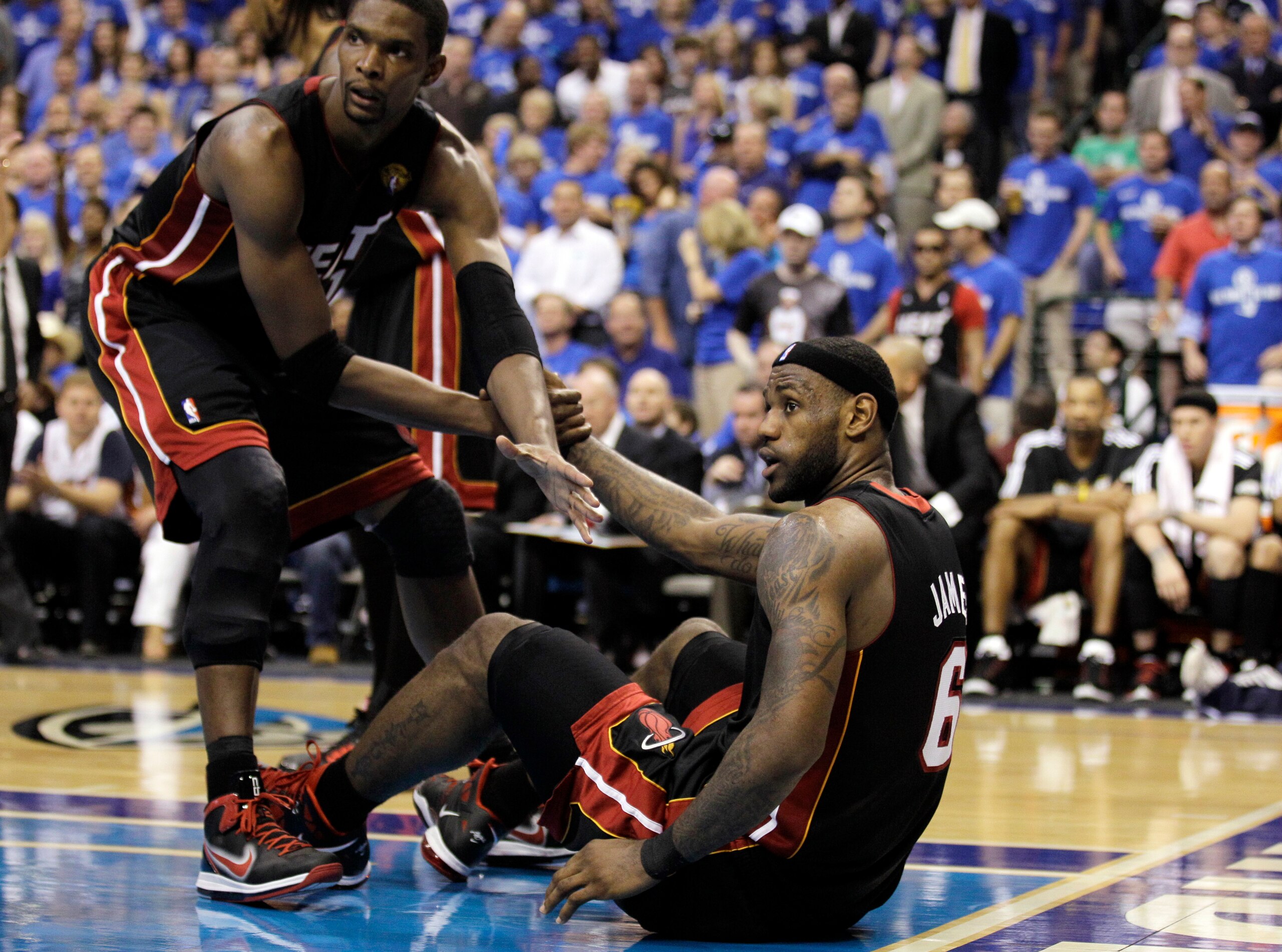
The 2010-11 campaign was the first in which LeBron, Dwyane Wade and Bosh were together on the Miami Heat.
The regular season went just fine. They entered as the favorites to win the title. They were 58-24 and finished with the league's best SRS. And the Big Three combined to average 70.9 points per game.
The postseason started swimmingly too. They knocked off the Philadelphia 76ers, Boston Celtics and Chicago Bulls in fairly rapid succession. Each series lasted five games. Then, they met Dirk Nowitzki and the Dallas Mavericks in the Finals.
Of the 22 experts polled by ESPN, 15 picked Miami. To many, this looked like it would be one last formality before the official crowning of LeBron. But the Mavs had other ideas.
Their defense deserves plenty of credit, but we can't ignore LeBron's struggles. His 13.7 average game score wasn't even close to the 21.7 he posted in the regular season. In fact, LeBron had never posted an average game score that low in any season, not even his rookie campaign.
His basic per-game averages of 17.8 points, 7.2 rebounds and 6.8 assists with a 54.1 true shooting percentage would've been fine for most players, but they were woefully short of what Miami needed from its top scorer on the biggest stage of the season.
Wade did what he could to pick up the slack, averaging 26.5 points and 5.2 assists per game, but it wasn't close to enough.
After the recently formed Heatles seized a 2-1 series lead, the Mavericks mostly cruised, winning three straight and giving LeBron the final humbling he may have needed to reach the top in 2012.
2. 2006-07 Dallas Mavericks
9 of 10
Dirk was given a bitter pill four years earlier. After losing a heartbreaking 2006 Finals to Wade and the Heat, the Mavericks came back and won an NBA-best 67 games in 2006-07.
Dallas was second in the league in SRS, and Dirk won the league's MVP award after averaging 24.6 points, 8.9 rebounds and 3.4 assists per game, with a 12.5 net-rating swing.
The Warriors, meanwhile, were 42-40 in the regular season. They didn't boast a single All-Star that year. Their team leader in box plus/minus, Baron Davis, was 27th in the NBA (Nowitzki was first). Dallas had three players in the top 30 (Jason Terry and Josh Howard were the other two).
There was no way the Mavericks could lose this series. Except they did, making this Warriors team just the third No. 8 in NBA history to knock off the top seed in the first round.
"This is unbelievable," Jason Richardson said after the series, per Tim Kawakami of the Mercury News. "This is a dream come true. You always imagine stuff like this happening—we’re in the second round; it’s what you want for yourself, for your fans, for the franchise."
Richardson, Davis and Stephen Jackson torched the Mavs, combining to average 67.3 points, but it was the work of the entire team on the other end that really decided this series.
Golden State played a physical, in-your-face brand of defense on Dirk, holding him to 19.7 points per game and a 50.9 true shooting percentage.
Like LeBron and Miami in 2011, losing that much production from Dirk simply wasn't something Dallas could recover from.
The eventual 2011 Finals MVP had to wait much longer for redemption than LeBron did, but this moment undoubtedly contributed to his drive over the ensuing seasons.
1. 2015-16 Golden State Warriors
10 of 10
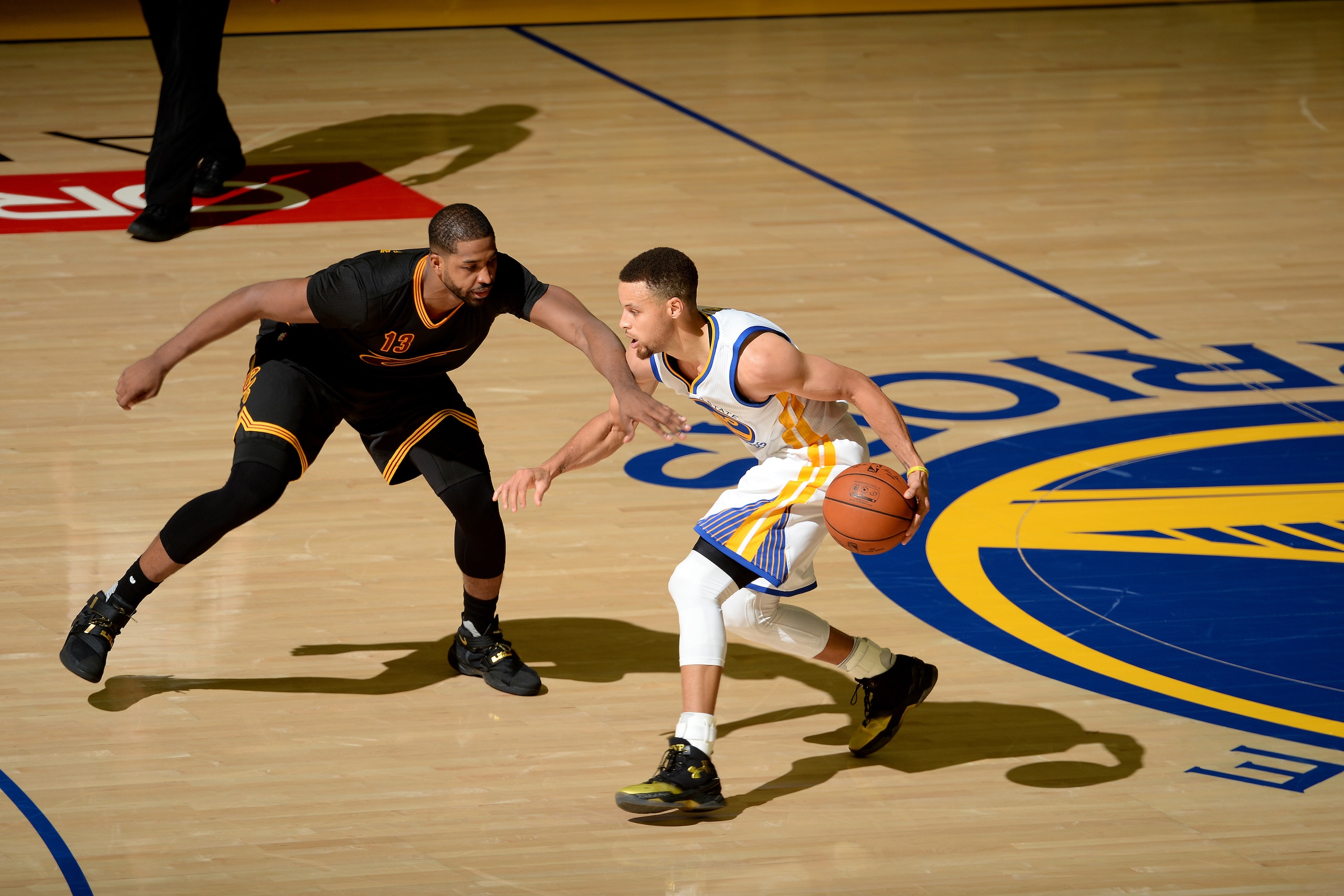
No one in NBA history won more regular-season games than the 73-9 Warriors of 2015-16. Their 10.38 SRS ranks eighth all-time. They were led by the only unanimous MVP in league history, Stephen Curry, who also happened to post the best single-season offensive box plus/minus of all time that season.
Before the Finals, 22 of the 29 experts ESPN asked to predict the 2016 Finals picked Golden State. And after the Warriors took a 3-1 series lead, those predictions were looking pretty good.
At the start of Game 5, Inpredictable gave Golden State a 68.5 percent shot to win the series and secure a second straight title, even without defensive linchpin Draymond Green, who had been suspended for his swipe at LeBron in Game 4.
Cleveland, of course, staved off elimination in that one. Still, the Warriors had two more games to close out the Cavs, including a Game 7 at home in which they once again started with a 68.5 percent win probability. In the fourth quarter of that one, Golden State peaked at 79.4 percent win probability.
Then, one of the greatest offensive teams in league history failed to score a single point for the final 4:39 of a Finals-deciding game. Their inability to offer any counter to the determined Cavaliers made them not only the league's only 73-win team, but also the league's only team to forfeit a 3-1 lead in the Finals.

.jpg?w=2560 "AD Trolls Bears WR on IG 😂")
.jpg?w=2560 "Buzz: MHJ Hired Agents for Trade")
.jpg?w=2560 "Viral Dan Campbell Presser 💙")
.jpg?w=2560 "Report: Steelers WR to Miss 'Weeks'")
.jpg?w=2560 "Cam Ward Says He's Not A Loser")