
Every NBA Team's MVP This Season
With almost six weeks left in the 2019-20 NBA season, it's nearly time to start thinking about leaguewide awards.
As is the case most years, decisions on many of them will come down to the last few games in mid-April. But on a team-by-team basis, most narratives have been etched into stone for a while now. By and large, it's much easier to crown one specific club's Most Improved Player or Rookie of the Year.
With this in mind, we've focused on each team's MVP from the 2019-20 season.
Now, some liberties have been taken with the "P" in MVP, as we've generalized it from "Player" to "Person(s)" to recognize a select few non-players who have played an especially important role for their teams this year. But generally, this attempts to recognize that sweet combination of on-court performance and off-court presence.
Let's dig in.
Atlanta Hawks: Trae Young
1 of 30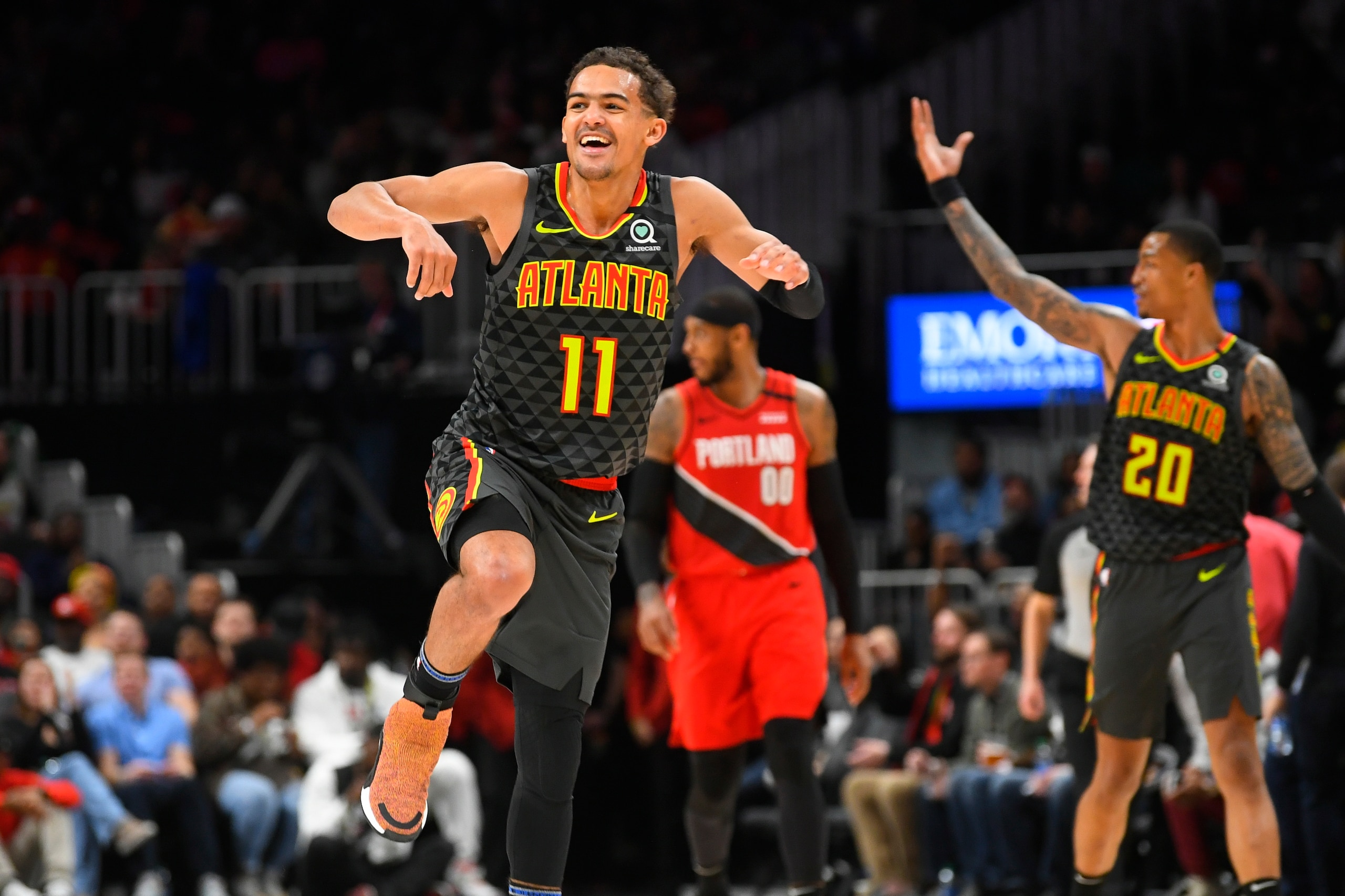
Were you expecting John Collins or De'Andre Hunter?
Even the most ardent Young supporters couldn't have predicted All-Star starter status within two years, but he's just been that good this year. His 29.8 points and 9.4 assists per game have only been matched by Oscar Robertson, Tiny Archibald and Russell Westbrook, and his combination of volume shooting and efficiency has only been matched by some of the most lethal shooters alive.
At just 21 years of age, the former Oklahoma Sooner is already scary good.
Young's individual stats make a compelling case on their own, but he really puts the "V" in MVP with on/off numbers. Atlanta isn't a great team with him on the floor, but it absolutely craters without him. The team's minus-12.3 net rating without him would be the worst mark in the NBA by a country mile.
Obviously, it makes sense for a team to be worse without its best player, but imagine what the Hawks will look like when either their incumbent young players develop or they bring in experienced veterans who can immediately boost Young and the team around him. Then, Atlanta will really start rocking.
Boston Celtics: Jayson Tatum
2 of 30
It's been a two-horse race for much of this year, but Kemba Walker's recent knee injury, coupled with Tatum's absolute dominance over the last month, makes this an easy choice.
After a frustrating sophomore campaign, Tatum opened the 2019-20 season looking like his rookie-year playoff self, which was enough to make his first All-Star team. Perhaps not coincidentally, he's been one of the best players in the NBA since getting that nod.
Since Jan. 30, he's averaging 29.8 points, 7.8 rebounds and 3.1 assists on 49.4 percent overall shooting and 46.9 percent three-point shooting. Over that same period, Boston has gone 10-3 with wins over the Los Angeles Clippers, Utah Jazz, Philadelphia Sixers and Oklahoma City Thunder.
Not only is Tatum an elite scorer, but he also happens to be 17th in ESPN's defensive real-plus minus. Finally, Boston may have its counter to Giannis Antetokounmpo.
It was a little surprising when Celtics general manager Danny Ainge said he would have picked Tatum first overall in 2017 when Markelle Fultz was the consensus top prospect in that draft. But once again, Ainge has been proved correct. If Tatum keeps playing this way, he'll be a perennial MVP candidate.
Brooklyn Nets: Spencer Dinwiddie
3 of 30
Though not the most efficient 20-point-per-game scorer, Spencer Dinwiddie does too much for the Brooklyn Nets to be ignored.
Continuing his trend of improving each year, Dinwiddie took the early-season absences of Kyrie Irving and Caris LeVert as a cue to lead, and he did so admirably. Over a 30-game stretch from November 8 to January 10, the guard averaged 24.5 points, 6.8 assists and 3.4 rebounds per game, and though Brooklyn was 14-16 in that time, he was one of three players on the roster to record a positive net rating through those 30 games. He remains one of four healthy Nets to have a positive on/off-court swing.
The limits of Dinwiddie's ability to run an offense full time have been evident. He's never been a great three-point shooter and turns the ball over more (2.7 per game) with increased usage (29.5 USG). But for the best version of Brooklyn, he'll get to revert to the sixth-man role he has historically thrived in.
With both Irving (shoulder) and Kevin Durant (Achilles) back to full strength next season, they'll need somebody like Dinwiddie to run the team in five-minute nightly increments to pace themselves.

Charlotte Hornets: Devonte' Graham
4 of 30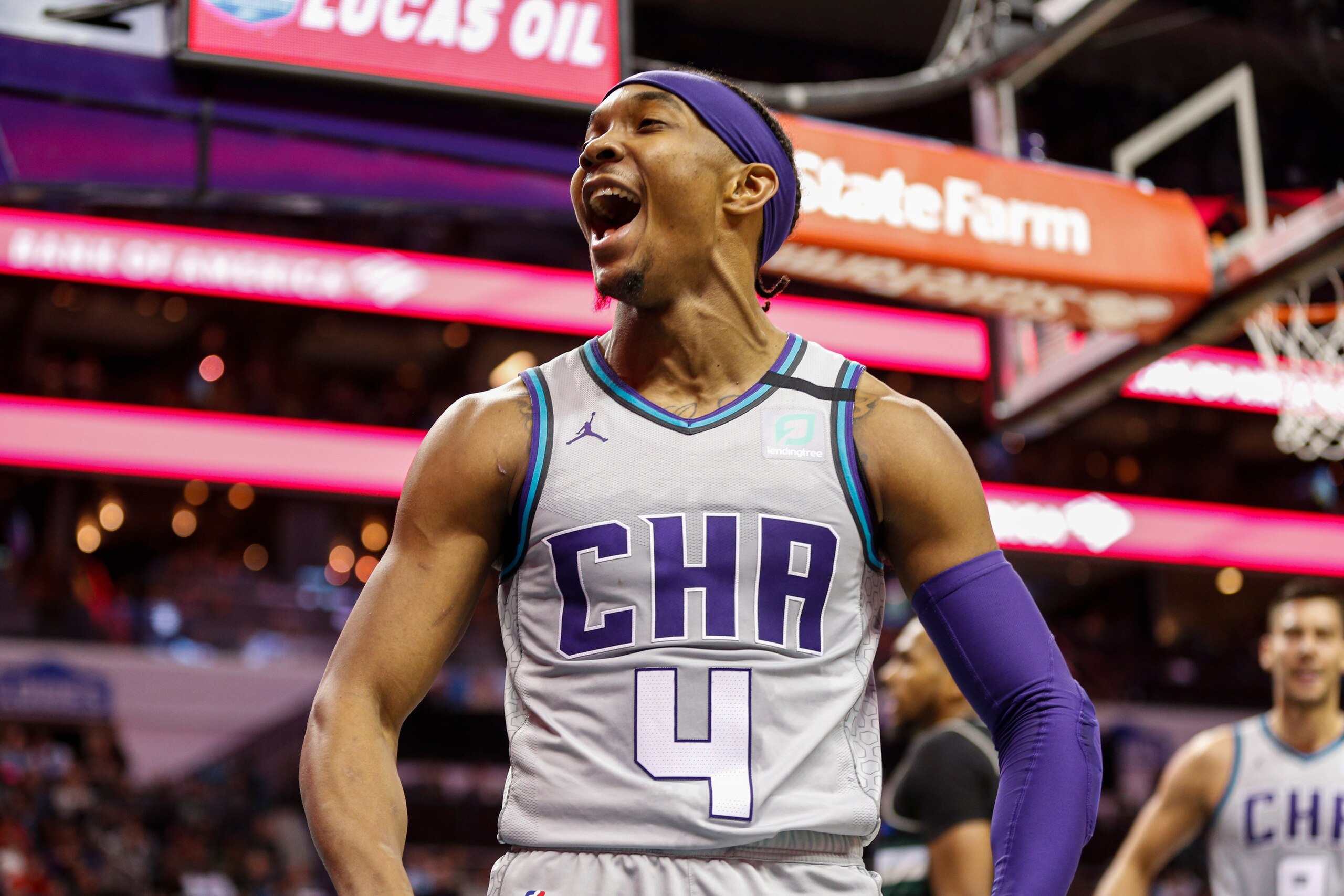
Though Devonte' Graham has lost his shooting touch in the New Year, he's remained a vital part of the Charlotte Hornets' minor overachievement this season.
Expected to take a major step back after losing Kemba Walker via free agency, the Hornets have been respectable throughout much of 2019-20—in large part thanks to Graham's improvement. After playing 676 minutes in his rookie year, the Kansas alum quickly wrestled the lead guard designation away from prized free-agent signing Terry Rozier and has easily outplayed him since.
Graham has been one of the league's best passers, and Charlotte is almost eight points per 100 possessions better with him on the court, a mark that leads the team (min. 500 minutes).
Yes, after his dynamite first six weeks, opponents seem to have figured out Graham as a scorer, as he's shooting just 35.1 percent from the field since December 1. But 2018's 34th pick was never expected to lead an NBA offense, and he's done that.
These recent struggles will likely only motivate Graham more in the coming offseason, so don't be surprised if he becomes entrenched as an NBA starting point guard in 2020-21.
Chicago Bulls: Zach LaVine
5 of 30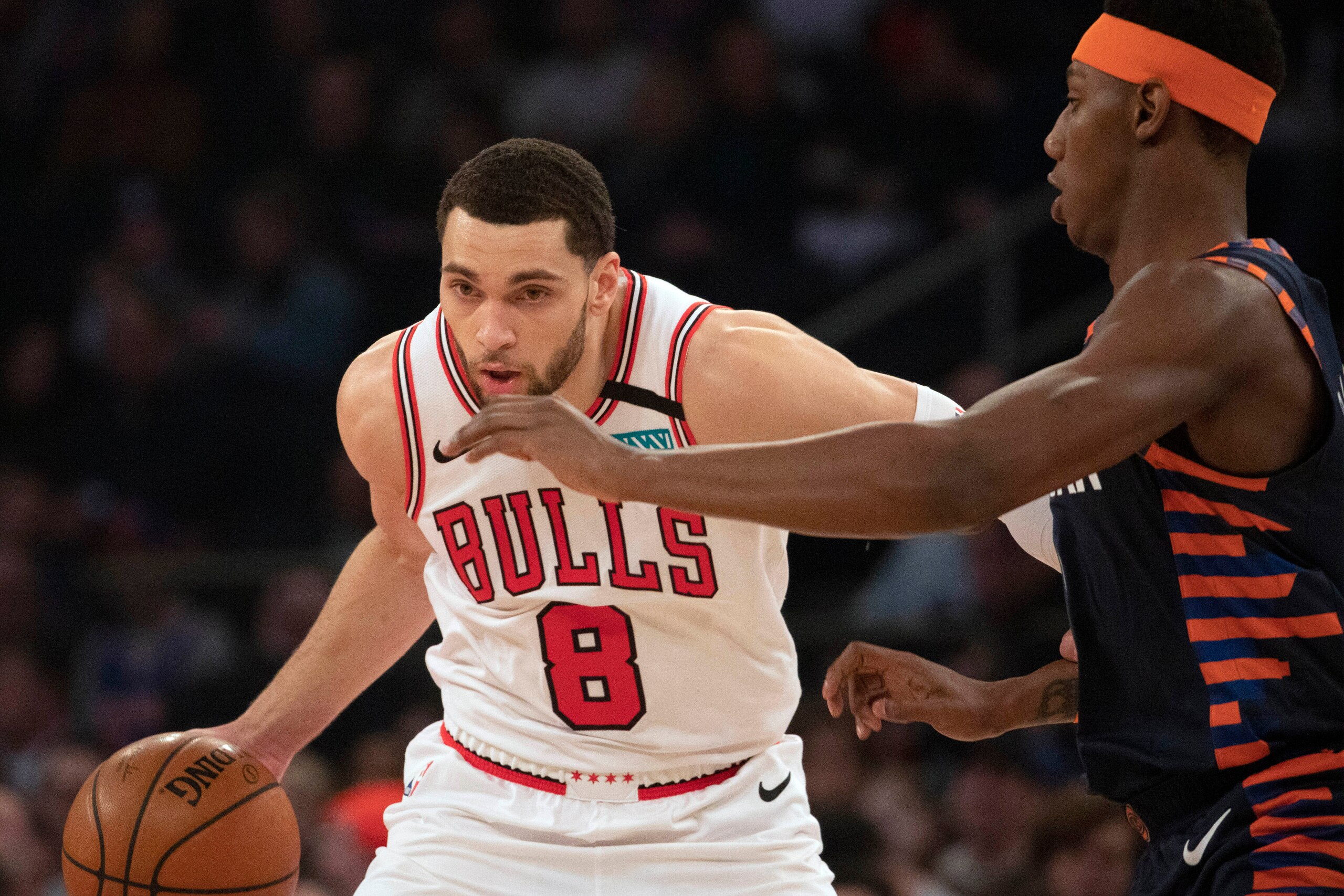
LaVine is often aggravating to watch on offense and has been defense-averse through his entire pro career, but there's no denying he's been the Chicago Bulls' MVP this year.
This competition likely would have been more competitive had Lauri Markkanen and Wendell Carter Jr. stayed healthy. But nevertheless, LaVine's offensive production has been excellent.
He's averaging a career high in points and rebounds per game while recording a near-career-best 52.6 effective field-goal percentage. And though LaVine can sometimes play with a selfish style, he has steadily improved as a playmaker, and his 4.2 assists per game and 21.8 assist percentage are solid for an ostensibly off-ball guard.
And yes, LaVine remains a bad defender (encouraging DRPM score aside), but he can offset his generally lackadaisical nature there with some truly brilliant offensive performances.
While many Bulls fans might be frustrated that the front office is seemingly constructing the team around LaVine, those times when he explodes for 40-plus points make that inclination understandable. If he can marry that high ceiling with consistently selfless play, then Chicago might return to basketball relevance in due time.
Cleveland Cavaliers: Kevin Love
6 of 30
Though Collin Sexton has been much-improved after a worrisome first year, he remains too much of an eyesore on defense to lock down this award—especially when Kevin Love has remained effective despite never-ending rumors about his relationship with the Cleveland Cavaliers.
Yes, Love is not even the same caliber of player who helped win the 2015-16 title, let alone the Minnesota version of himself. But that doesn't mean he's no longer useful.
Love remains great at all the things at which he's always excelled, albeit in diminished circumstances. He's an elite rebounder, grabbing 9.6 boards per game on a team with Tristan Thompson and now Andre Drummond. He can pass better than most big men with 3.1 assists per game and the occasional outlet pass to make everyone wistful. He's even a 37.4 percent three-point shooter, squarely above-average from range.
Of course, the downsides are creeping up with more regularity.
Love now spends a lot more time standing beyond the arc and waiting for the ball. But the skill set he still possesses remains valuable in the right setting. Though Cleveland hasn't been that for him the past two years, he's nevertheless done his best.
Dallas Mavericks: Luka Doncic
7 of 30
With one MVP under his belt and another possibly on the way, Giannis Antetokounmpo seems a logical successor to LeBron James as the face of the NBA. But Luka Doncic is right there with him.
Despite several nagging injuries, Doncic has been a top-10 player. He's recorded 13 triple-doubles this season, averaged one in 14 November games and leads the most efficient offense in NBA history by offensive rating. Yes, the Mavericks sit above the superteam Golden State Warriors, the Michael Jordan-era Chicago Bulls and any Boston Celtics or Los Angeles Lakers team, and 21-year old Luka is leading the way.
Doncic has been inconsistent when playing through an injury. In his first game back from a sprained ankle in February, he put up 33 points, 12 rebounds and eight assists. Four outings later, however, he was 0-of-6 from three and grabbed just four boards in a loss to Miami.
But again, he's only 21. If he's this good now, how will anybody stop him in five years?
Provided Dallas continues to operate intelligently and Kristaps Porzingis remains an effective second banana, the Mavericks are going to be a threat in the West for a long, long time.
Denver Nuggets: Nikola Jokic
8 of 30
After a troubling first 20 games that saw some alarming shooting statistics, Nikola Jokic has been as beautifully unorthodox as ever. With 12 triple-doubles this season and eight games of at least 30 points, the big man has resumed his role as the conductor of one of the league's most interesting offenses.
For the second year in a row, the Nuggets have dealt with numerous injuries and performance-related issues. Gary Harris has struggled all year, Jamal Murray and Paul Millsap have both missed significant time with injuries, and former lottery pick Michael Porter Jr. has been getting his first NBA minutes. A team with a less confident leader would probably crumble given so much upheaval, but Jokic has made sense of it all.
At 41-19, Denver hasn't lost more than three games in a row all year, and nearly every defeat has come at the hands of a team in or around the playoff picture.
With the Western Conference as strong as it is, you can't blame Denver if it fails to improve on its conference-semifinal appearance last season. But with Jokic at the helm, nearly all things seem possible.
Detroit Pistons: Derrick Rose
9 of 30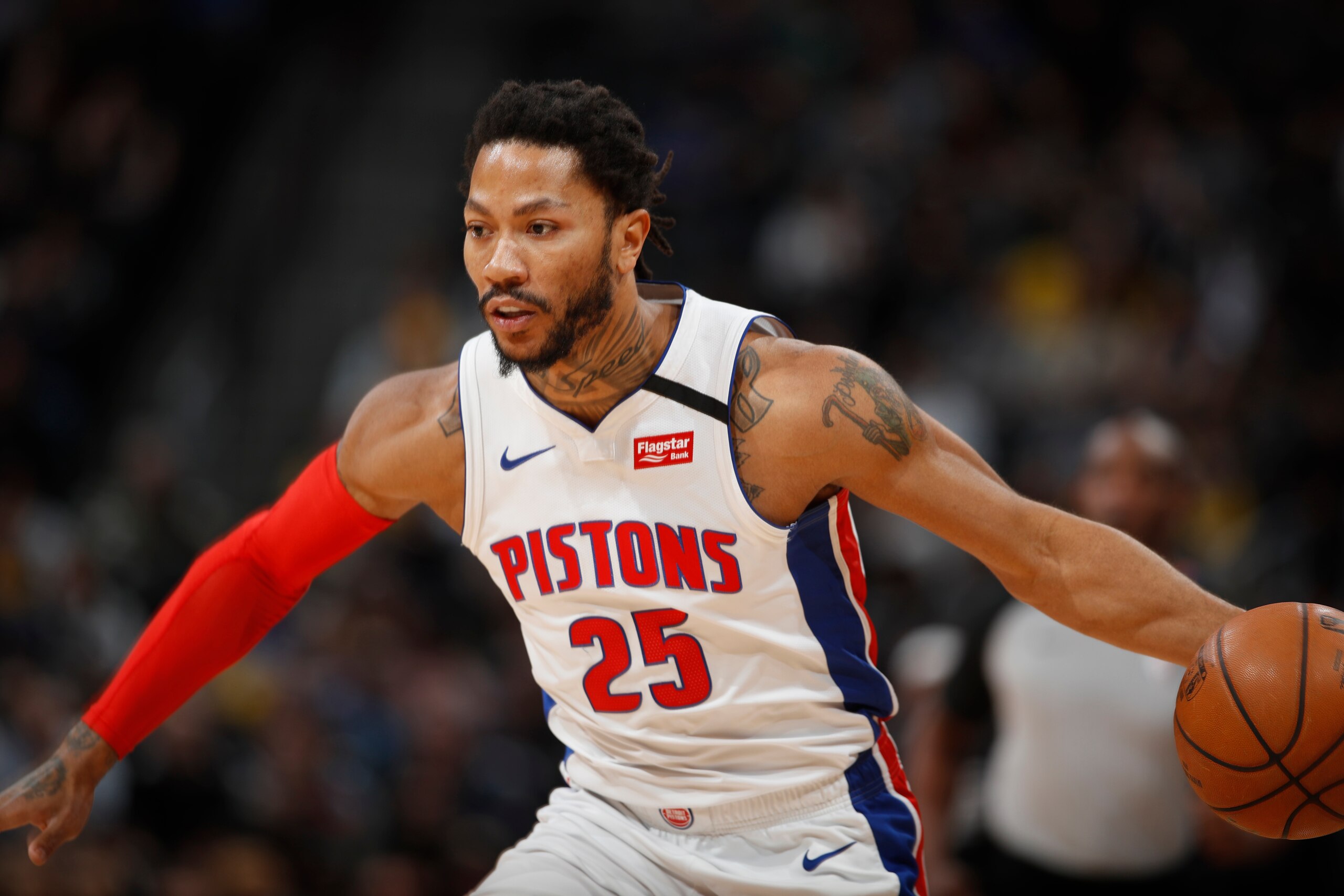
Welcome back to basketball relevance, Derrick Rose.
Now, basketball relevance only means so much when you're playing for the 20-42 Detroit Pistons, but the point remains. Rose hasn't been this good since before his first ACL tear.
After starting the 2018-19 campaign out red-hot for the Minnesota Timberwolves and tailing off as the year progressed, Rose has been great all season for the Pistons, who have sorely needed his production.
The point guard is recording a career-best 52.0 effective field-goal percentage and a 37.3 assist percentage, a top-10 mark in the whole league. He's also seemingly married his trademark explosiveness with more basketball intelligence, placing as both an elite isolation scorer and an above-average pick-and-roll player.
This version of Rose can't launch the Pistons into contention. Despite all that exciting information above, he's still clearly diminished and remains a pretty bad defender.
But there's a reason the Los Angeles Lakers came calling around the trade deadline. The 31-year-old has more than proved his worth as a useful player this year and would be an excellent spark-plug sixth man for any number of needy playoff-caliber teams in the coming seasons.
Golden State Warriors: Eric Paschall
10 of 30
Draymond Green is the most talented Warrior and, strangely, either Marquese Chriss or Damion Lee may be having the best season on the team. But on a narrative basis, this award goes to Paschall.
After Klay Thompson's and Stephen Curry's injuries, Golden State was left with nearly zero players capable of creating offense. Well, on paper, at least. Soon after Curry went down with a broken hand, Paschall emerged.
Though never known as a shot creator at Villanova, Paschall became a good one in his rookie year. He ranks in the 71st percentile among isolation scorers, ahead of Donovan Mitchell, Devin Booker and LeBron James.
With Curry and Thompson on their way back and Andrew Wiggins in the fold, the rookie likely won't need to do much one-on-one scoring for the foreseeable future. But it's yet another testament to Golden State's developmental system that he was able to hone that skill in less than a season.
Perhaps with a year under his belt, Paschall will be able to focus on his defense and decision-making, two of his most attractive qualities in college and attributes the Warriors will require in their efforts to return to the mountaintop.
Houston Rockets: Daryl Morey
11 of 30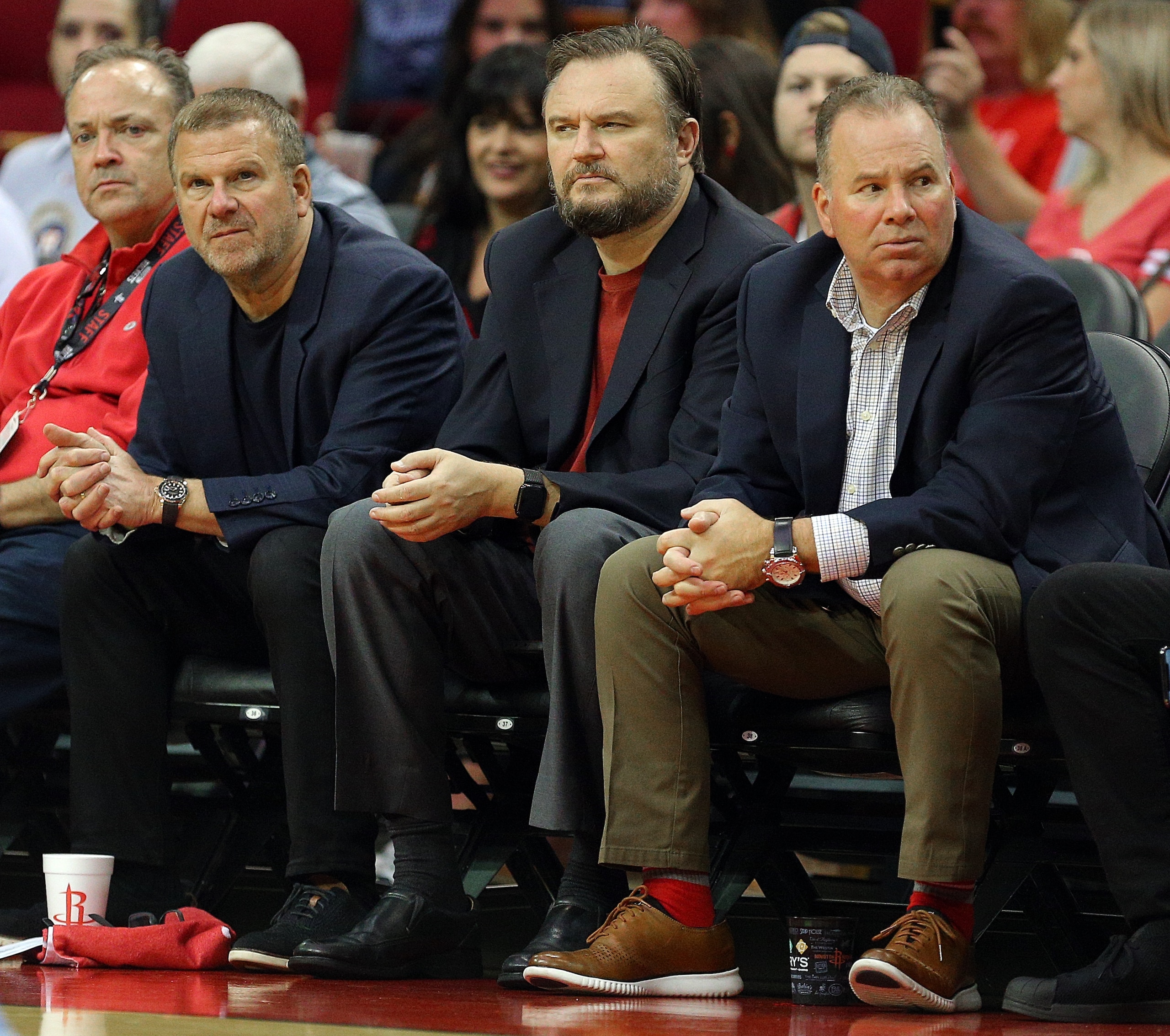
The first few months of this Rockets season saw historic play from James Harden, even by his increasingly lofty standards, and a struggle to integrate Russell Westbrook. However, when the Beard began to slump in January, Westbrook caught fire.
Before our very eyes, one of the theoretical questions dogging this team was playing out. Could these two ball-dominant players not just co-exist but also be the best versions of themselves simultaneously?
The reason Morey is the Rockets' MVP this season is that he has seemingly discovered just the way to unlock both their ceilings. By trading Clint Capela and making P.J. Tucker the team's full-time center, Morey opened up the paint for Westbrook to make his aggressive drives to the rim and also implicitly gave Harden permission to continue firing away.
Nine games into this new style, Houston is 7-2 with some impressive wins behind it, and it looks as ready to make a title run as it ever has in the Harden era. Without Morey taking one of his trademark home-run swings, we might still be wondering if the Rockets could put it together instead of mentally previewing a second-round battle with the Los Angeles Clippers or Los Angeles Lakers.
Indiana Pacers: Domantas Sabonis
12 of 30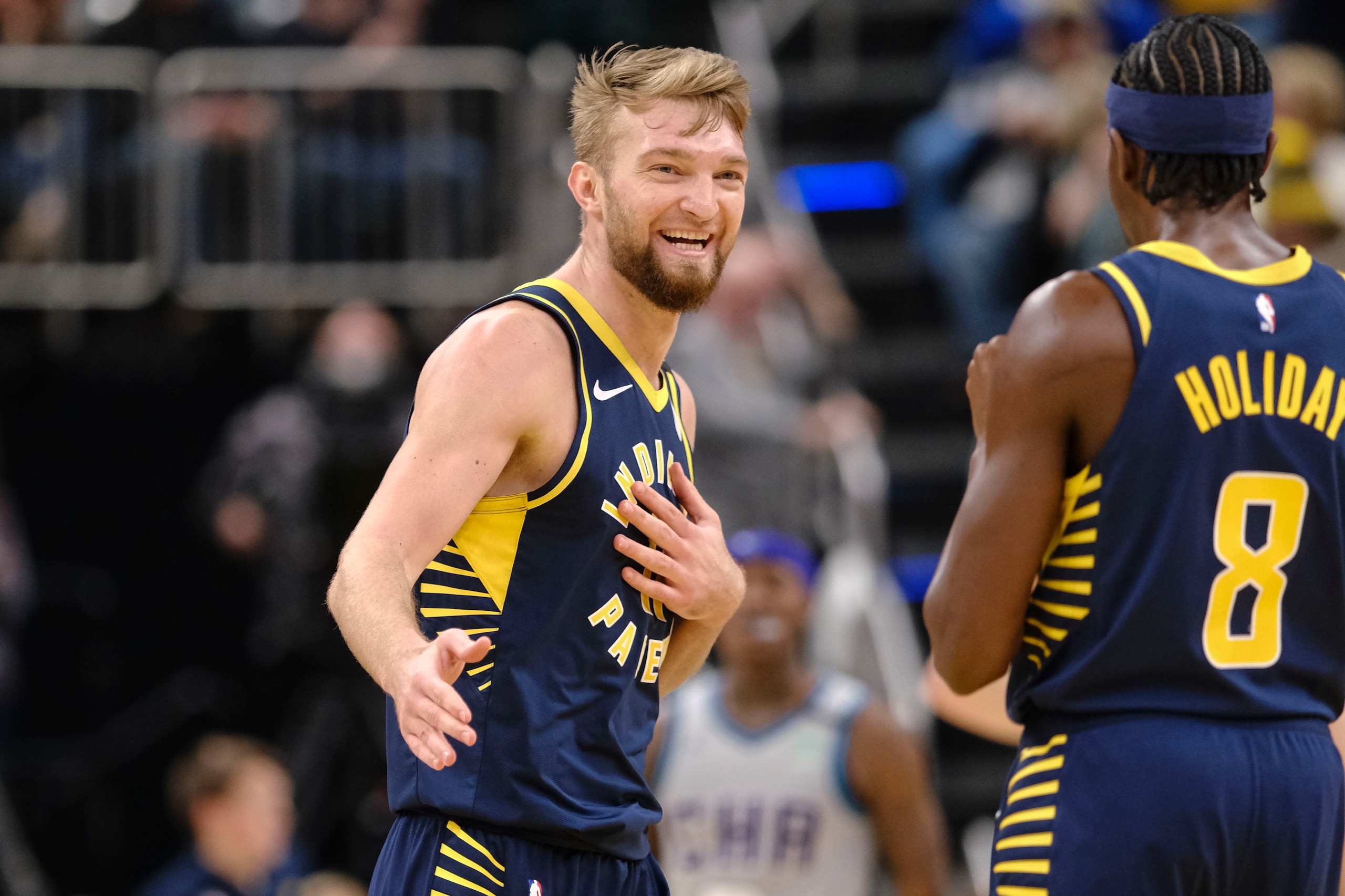
It wasn't so long ago that Domantas Sabonis' future in Indiana was uncertain. After the Pacers drafted Georgian center Goga Bitadze in the first round, it seemed like they would be keeping either Sabonis or Myles Turner.
Well, if Indiana was ever going to pick just one of its two prized big men, it's now clear which one should stay.
While Turner appears to have stagnated, Sabonis has emerged as a genuine star. He's averaging 18.4 points, 12.5 rebounds and 4.9 assists per game, a line matched only by Giannis Antetokounmpo, and along with Joel Embiid, Nikola Jokic and others is bringing the paint-bound big man into the 21st century.
In many ways, Sabonis is the modern-day version of prime Pau Gasol: big men who run the offense through the paint and high post, and leverage defensive attention into open shots for teammates.
With Victor Oladipo slowly but surely shaking the rust off, it will be interesting to see how Sabonis adapts to a smaller role. But given the expanded skill set he showed as a leading man this year, he'll now likely succeed in any capacity.
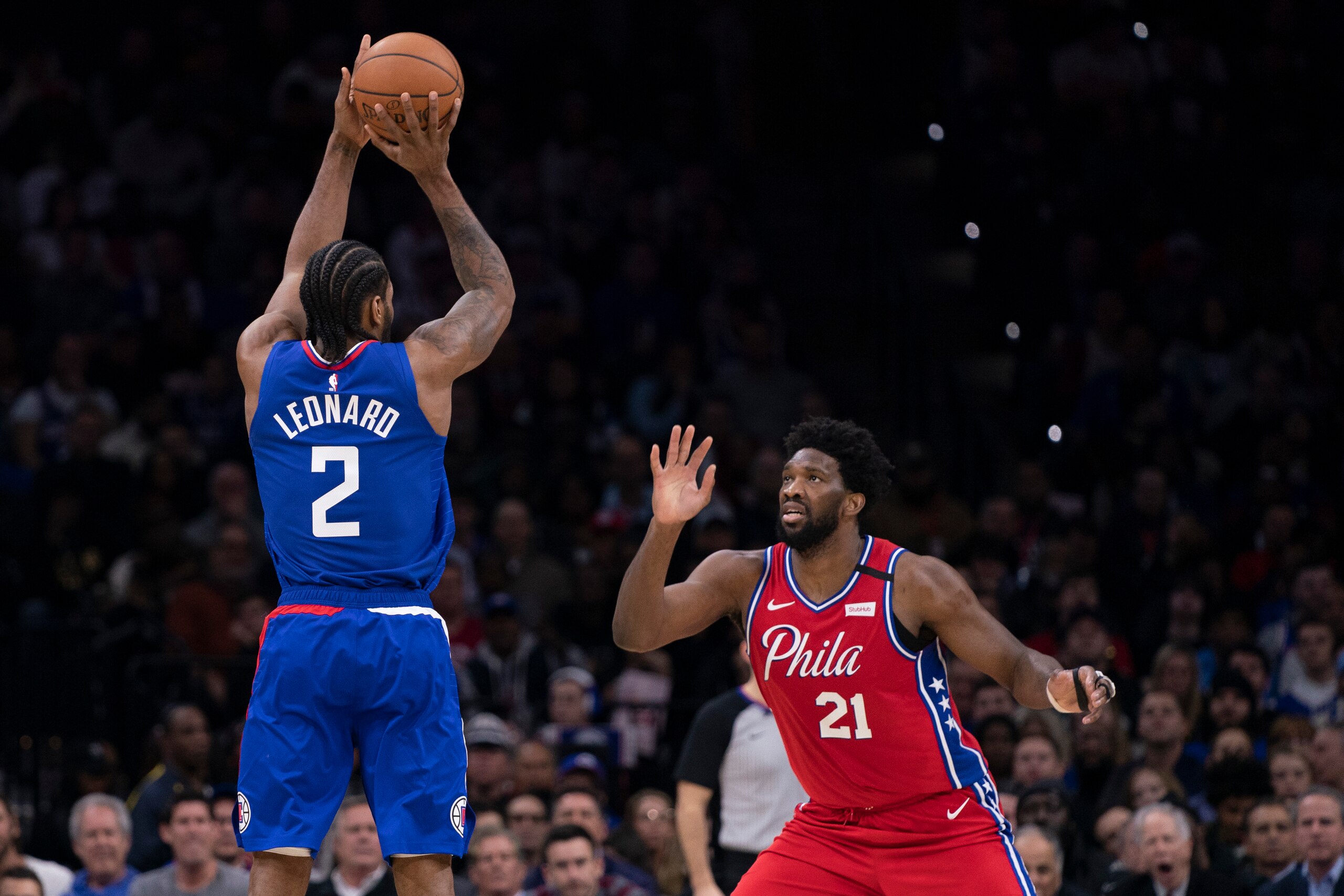
Los Angeles Clippers: Kawhi Leonard
13 of 30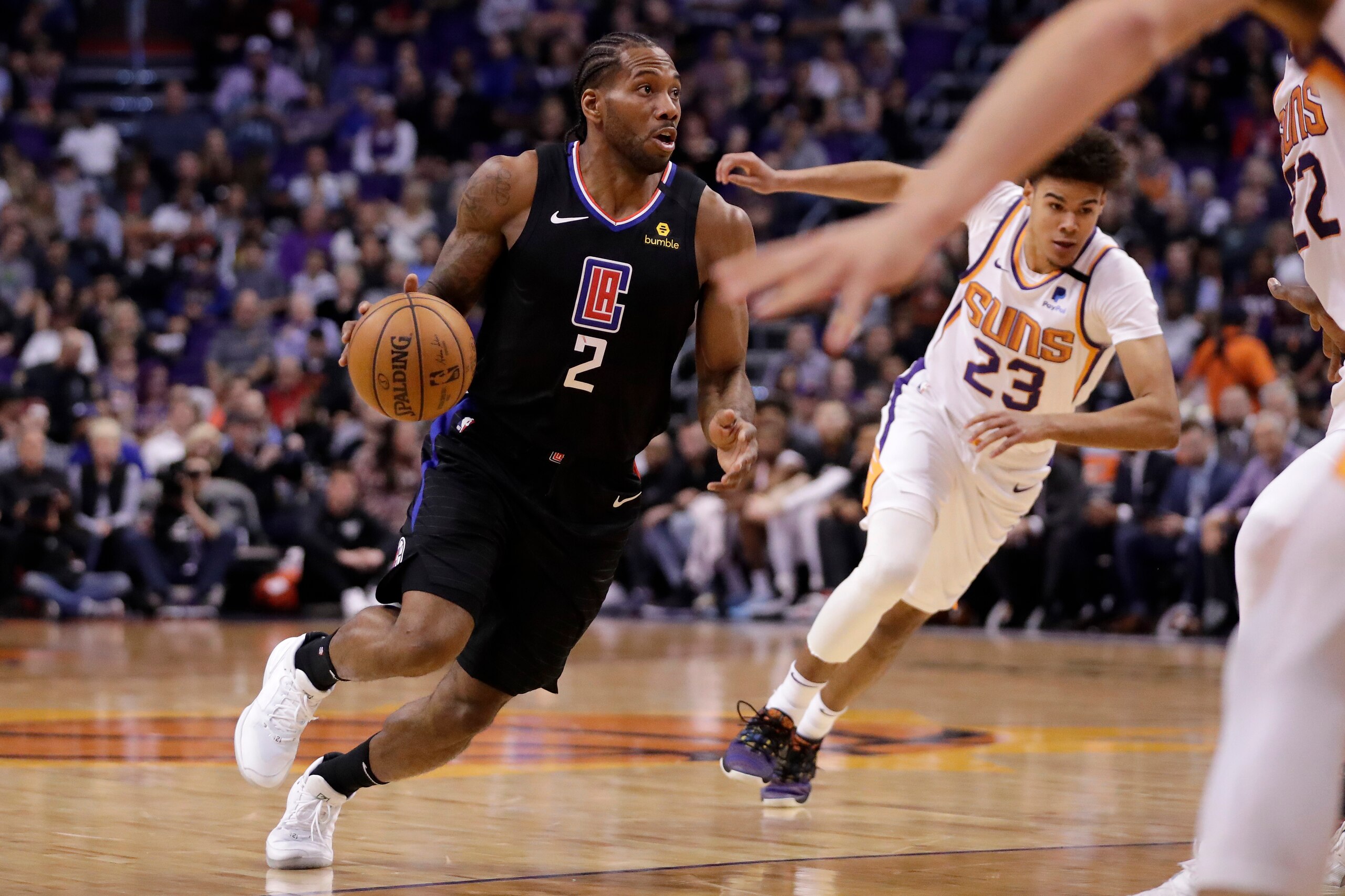
Kawhi Leonard has sat out 13 games this year. But Paul George has missed even more time, so the Klaw takes the trophy this year.
If that sounded half-hearted, it's not because of Kawhi's play. Though worse in nearly every efficiency-related statistic from last year, Leonard has more or less been himself when on the floor for the Clippers. He's essentially erased the one glaring semi-weakness in his skill set by averaging 5.2 assists per game, and he is scoring the ball at a career-best clip, as well.
Most notably, however, Kawhi has been excellent in many of the Clippers' most important games this year, specifically in two wins over the Los Angeles Lakers in which he's averaged 32.5 points and shot 55.3 percent from the floor.
Given his two Finals MVP trophies, Kawhi's understanding of big moments should be old hat by now. But considering the number of injuries and the amount of roster turnover up and down the Clippers' roster, it's comforting for them to know that, at the very least, he'll be able to show up when necessary.
And because Kawhi is Kawhi, his efforts might just be enough to take them deep into the playoffs.
Los Angeles Lakers: LeBron James
14 of 30
We don't need to overexplain these things, right?
Seventeen years in, LeBron James remains one of the best players in the NBA. He's shooting below 50 percent from the field for the first time in five seasons, but it's a fairly minor downtick at 49.6 percent. Plus, everything else is working just fine.
LeBron can still dunk on anybody, he's leading the league in assists by a healthy margin (posting a career-high average in the process), and he's recorded 13 triple-doubles. Oh, and he's a top-10 defender in the league, per DRPM.
That's right. LeBron is trying again on defense.
Sure, he's not the six-time All-Defensive member he once was on every play of every game. But considering the way he used to visibly jog around the court on defense, this year has seen a welcome spike in effort.
Anthony Davis has had an excellent season and was deservedly named an All-Star starter. But here, he's just like the rest of us, genuflecting to the King once more.
Memphis Grizzlies: Ja Morant
15 of 30
With Zion Williamson hurt for the better portion of the season, Ja Morant basically just had to make a highlight-reel play every so often to win Rookie of the Year. And while the youngster is on his way to collecting that award, he actually earned it.
Morant has the holy trinity of endorsements already: counting stats, analytics and opposing players.
At 17.7 points, 7.0 assists and 3.4 rebounds per game on 49.2 percent shooting, the guard has proved up to the challenge of pro ball. On an advanced-stats basis, Morant is a positive contributor in RPM, and the Grizzlies are 3.4 points per 100 possessions better when he's on the court.
In addition, everybody from LeBron James to Damian Lillard to former President Barack Obama seems to love how he plays, which has to be a great feeling if you're an up-and-coming star.
Memphis has been struggling of late with losses in five of its last six games and a tough schedule still ahead. But under Morant's guidance, this might be the last year the Grizzlies have to sit out of the postseason for a while.
Miami Heat: Jimmy Butler
16 of 30
Despite leading the Heat with 20.5 points per game, Jimmy Butler has, frankly, not been a very impressive scorer this year. He's making just 24.3 percent of his threes, and his 47.3 effective field goal percentage is the worst mark he's posted since the 2013-14 season.
But it's a testament to the well-roundedness of Butler's game that he remains essential to Miami's championship hopes.
In the absence of a consistent jumper, Butler has focused his intensity nearly everywhere else on the floor, becoming one of just three players this year to average 6.8 rebounds, 6.2 assists and 1.7 steals per game. Heat head coach Erik Spoelstra has taken note of Butler's willingness to adapt, citing his status as a max player because of his attitude during shooting slumps, not hot stretches.
After years of searching for a team that would appreciate his brand of old-school intensity, Butler seems to have found nirvana. Despite a fairly bland roster on paper, the Heat are on the precipice of something special and would be nowhere close to their current situation without him.
Milwaukee Bucks: Giannis Antetokounmpo
17 of 30
If a player is in line to receive a second consecutive league MVP award, it logically follows that he'd also be the MVP of his own team.
Giannis Antetokounmpo's second straight historic season has been covered ad nauseam, so we don't need to go too deep into it here. But as incredible as it may sound, you can't really overstate how astounding he is on a night-to-night basis.
Giannis is shooting an astonishing 77.2 percent from within three feet of the basket and 62.7 percent overall from two-point range, two figures that should be nearly impossible for any player who does more than dunk.
He's also been working on that pesky jumper, making 31.6 percent of his threes on a career-high 4.7 attempts per game. Yes, that's not even an average mark, but Giannis has been steadily improving from behind the arc for years now.
Oh, and let's not forget that he also ranks third in DRPM.
If he continues improving that shot, there will be no room to criticize the Greek Freak in good faith. He's truly the real deal.
Minnesota Timberwolves: Karl-Anthony Towns
18 of 30
Karl-Anthony Towns has missed about 40 percent of this season, but who are you going to volunteer instead? Jordan McLaughlin?
After putting on a brave face through the Jimmy Butler saga and generally seeming like an upbeat guy through the first four years of his career, Towns has been mostly downcast this season. Given that the Wolves have had losing streaks of five, 11 and 13 games, KAT's frustration is completely understandable.
But the reason to bring this up here is that despite how he may be feeling internally, Towns has continued to be deadly for Minnesota.
Despite a lack of talent around him, the big man is posting career highs in points (26.5) and assists (4.4) per game. In addition, he is quietly becoming one of the league's elite shooters, making 41.2 percent of his threes on 7.9 attempts per game.
Despite often sharing the floor with Jarrett Culver and Josh Okogie, the 24-year old Towns has remained one of the best centers (and players) in the league. Once he gets healthy and starts forming chemistry with All-Star point guard and friend D'Angelo Russell, imagine how destructive he might become.
New Orleans Pelicans: Brandon Ingram
19 of 30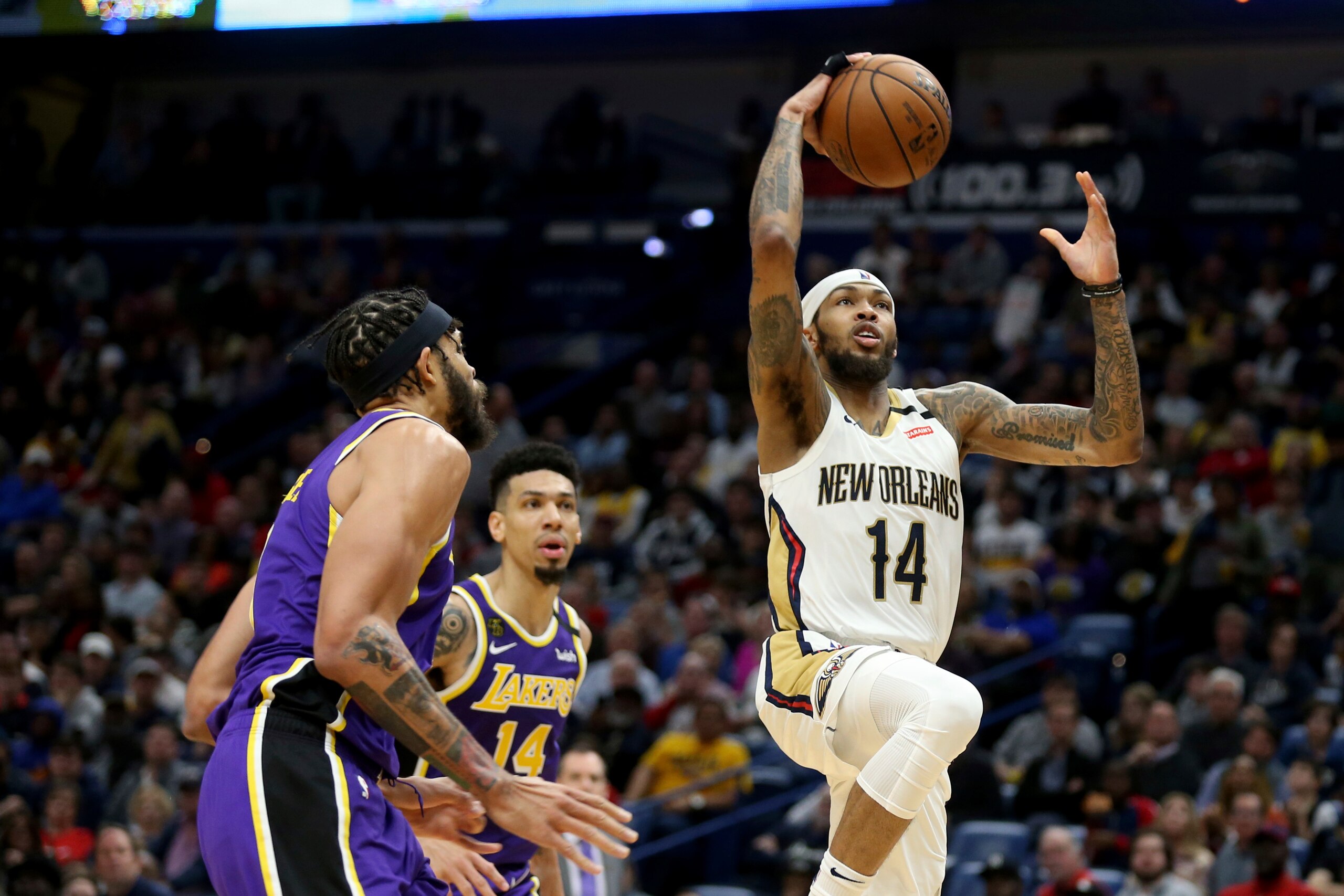
After three years struggling to find his place in the league, Brandon Ingram has emerged as a player worthy of the second overall pick.
For much of last year, Ingram seemed marginalized by LeBron James. But toward the end of the campaign, something seemed to click. He averaged 27.8 points, 7.5 rebounds and 2.5 assists on 57.0 percent shooting from the field and 52.9 percent three-point shooting in six post-All-Star Weekend games before being shut down with a blood-clot issue.
Given all the hullabaloo surrounding the Pelicans plus that potential health scare, it would have been understandable for Ingram to start slow this year. Thankfully, the opposite was true as he shot 51.0 percent from the field in five October games to set the tone and has continued to be excellent through a 6-22 start, the integration of Zion Williamson and much more, all culminating in a first All-Star appearance.
Zion receives much of the focus surrounding New Orleans' future core. But with Ingram by his side, the Pelicans will be a serious threat as long as the two of them stick around.
New York Knicks: Mitchell Robinson
20 of 30
It's difficult to find anybody on the New York Knicks worth the designation of "most valuable." But considering Mitchell Robinson recently received "MVP" chants at the Garden, he's as good an option as any.
Barring when RJ Barrett plays like he did against the Rockets on Monday (27 points), the 21-year-old Robinson is the best young player on the team and one of the few reasons for Knicks fans to maintain excitement. Despite the presence of few playmakers on New York's roster, the big man leads the NBA with a 71.6 true shooting percentage and maintains a sterling 8.0 block percentage, which ranks third.
Going into the 2018 draft, there were concerns about his on-court awareness, and that remains the case. Sometimes, Robinson looks primed to enter the Hassan Whiteside school of Blocking Everything In Sight Even When It May Hurt His Team. But on the Knicks, that free-for-all quality is far from unique to him.
Considering the kind of production he's been able to wring out of this situation, it will be exciting to see Robinson on a competitive team someday.
Oklahoma City Thunder: Chris Paul
21 of 30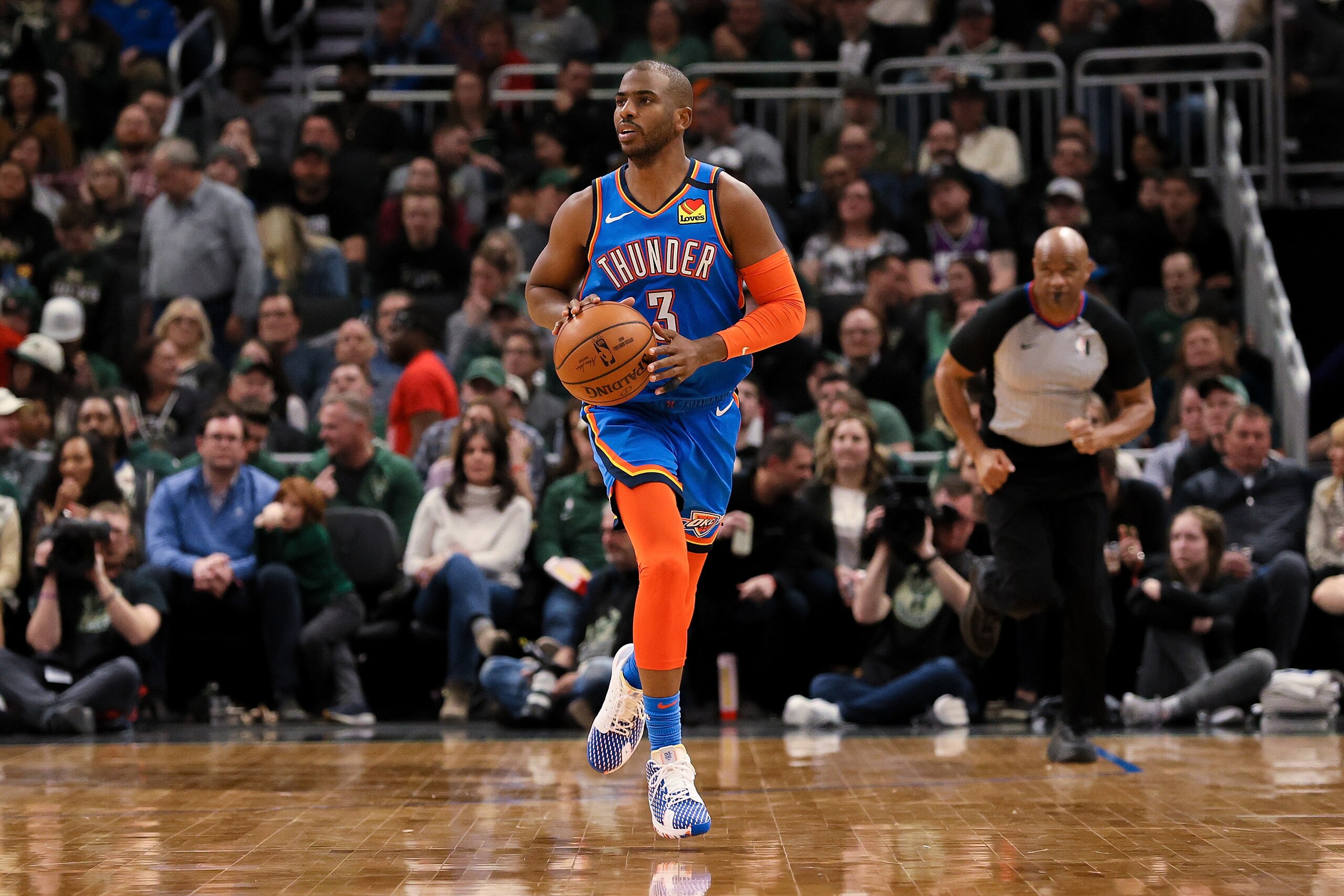
The Thunder have been one of this season's most surprising stories, and it's thanks in large part to Chris Paul.
After a tumultuous tenure in Houston marred by an ill-timed injury and bickering with James Harden, Paul's move to Oklahoma City was largely seen as temporary. However, he seemingly heard all those comments and, in response, has delivered his best season in years.
Instead of forcing his way out of Oklahoma City, Paul has become the elder statesman for this young Thunder club, and his new teammates seem to love him for it. Their burgeoning chemistry has been clear as Paul, Shai Gilgeous-Alexander and Dennis Schroder make up one of the deadliest trios in the NBA, and unheralded young players like Luguentz Dort have gotten major confidence boosts from the Point God.
It doesn't hurt that Paul himself is still excellent and has been arguably the best clutch player in the league this year.
Under Paul's guidance, the Thunder have gone from a likely lottery team to a potential top-five seed. If they continue defying expectations like this, look out for an early playoff upset in the West.
Orlando Magic: Nikola Vucevic
22 of 30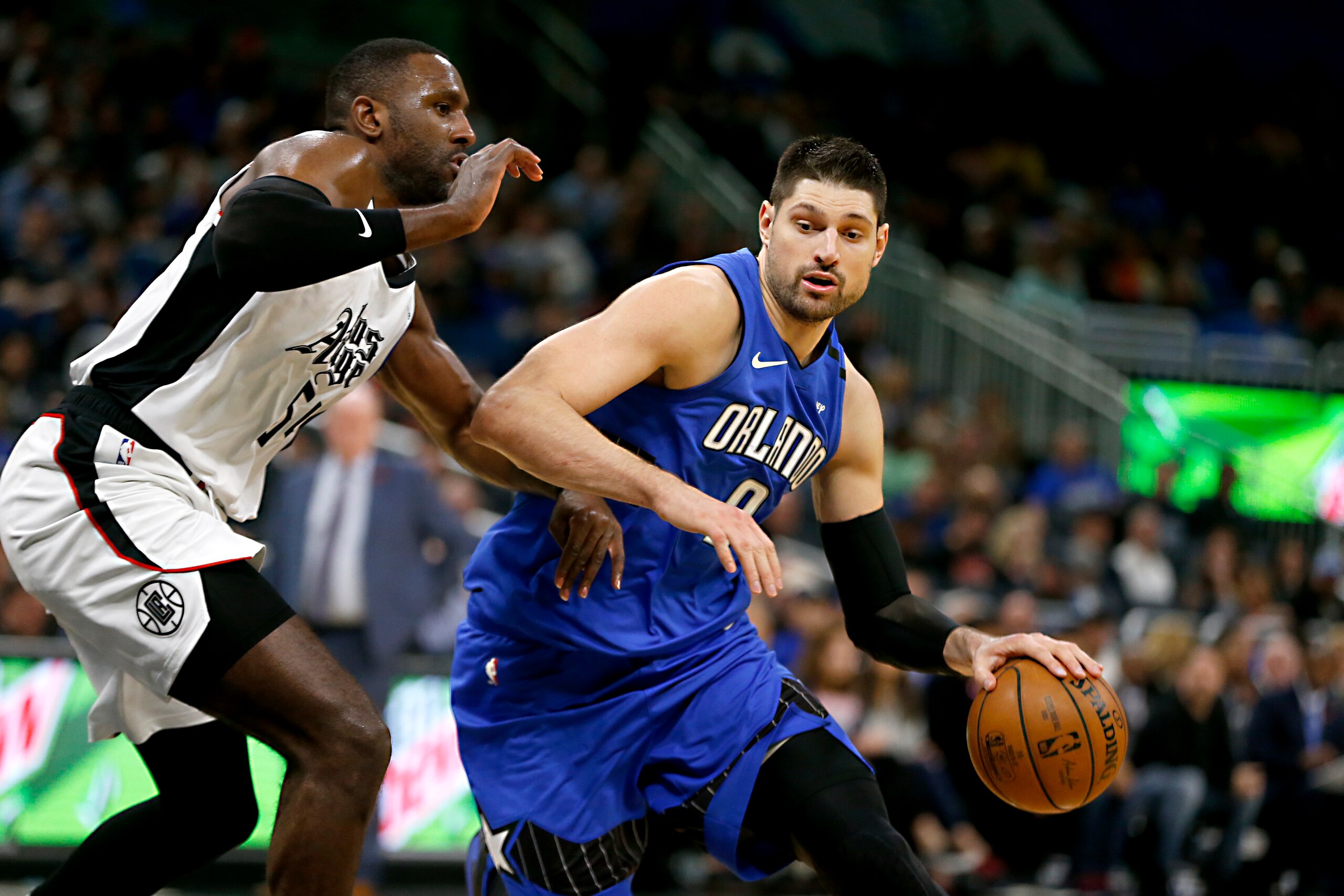
He wasn't good enough to earn a second consecutive All-Star berth, but Nikola Vucevic remains the heartbeat of the Orlando Magic.
After last season's career year, he has mostly reverted to his usual levels of semi-stardom with some nice exceptions.
Though his elite shooting has declined, his playmaking improvements have continued into 2019-20, and he's coupled that with the best assist-to-turnover ratio of his career. He's not much of a ball-handler just yet, but being a secondary playmaking hub from the paint has proved successful thus far, so maybe a Nikola Jokic-like role is the next step.
Vucevic also remains analytics-friendly. He's one of eight centers with positive marks in both ORPM and DRPM, and he boasts the team's best offensive rating. With their center on the court, the Magic's normally anemic offense improves by 6.2 points per 100 possessions.
With Orlando currently boasting a top-eight defense in the NBA, even a small offensive improvement could be the difference between getting walked over by the Milwaukee Bucks and potentially winning a game or two against the Toronto Raptors or Boston Celtics.
Philadelphia 76ers: Joel Embiid
23 of 30
Whether he's having fun or not, Joel Embiid has been his usual dominant self for Philly this year.
Despite so many other members of the Sixers disappointing, Embiid remains arguably the best center in the NBA. His counting stats have declined slightly from last year, but most players in the league would be thrilled to average 23.3 points, 11.8 rebounds and 3.1 assists on a 51.2 effective field-goal percentage.
And besides, that minor decrease seems to be in favor of making a bigger team-wide impact. Embiid ranks fourth among centers in RPM, has the best net rating on the Sixers and also boasts the biggest positive net rating swing on the team.
The one catch is his performance against top-tier opponents.
Despite the Sixers boasting wins over every other contender in both conferences, he has struggled against several of them, particularly the Boston Celtics, Milwaukee Bucks and Toronto Raptors. Seeing as those are arguably the three best teams in the Eastern Conference, one of the most important questions facing Philly this postseason will be his effectiveness against the sport's best.
If he can be himself, however, the sky is the limit for this team.
Phoenix Suns: Devin Booker
24 of 30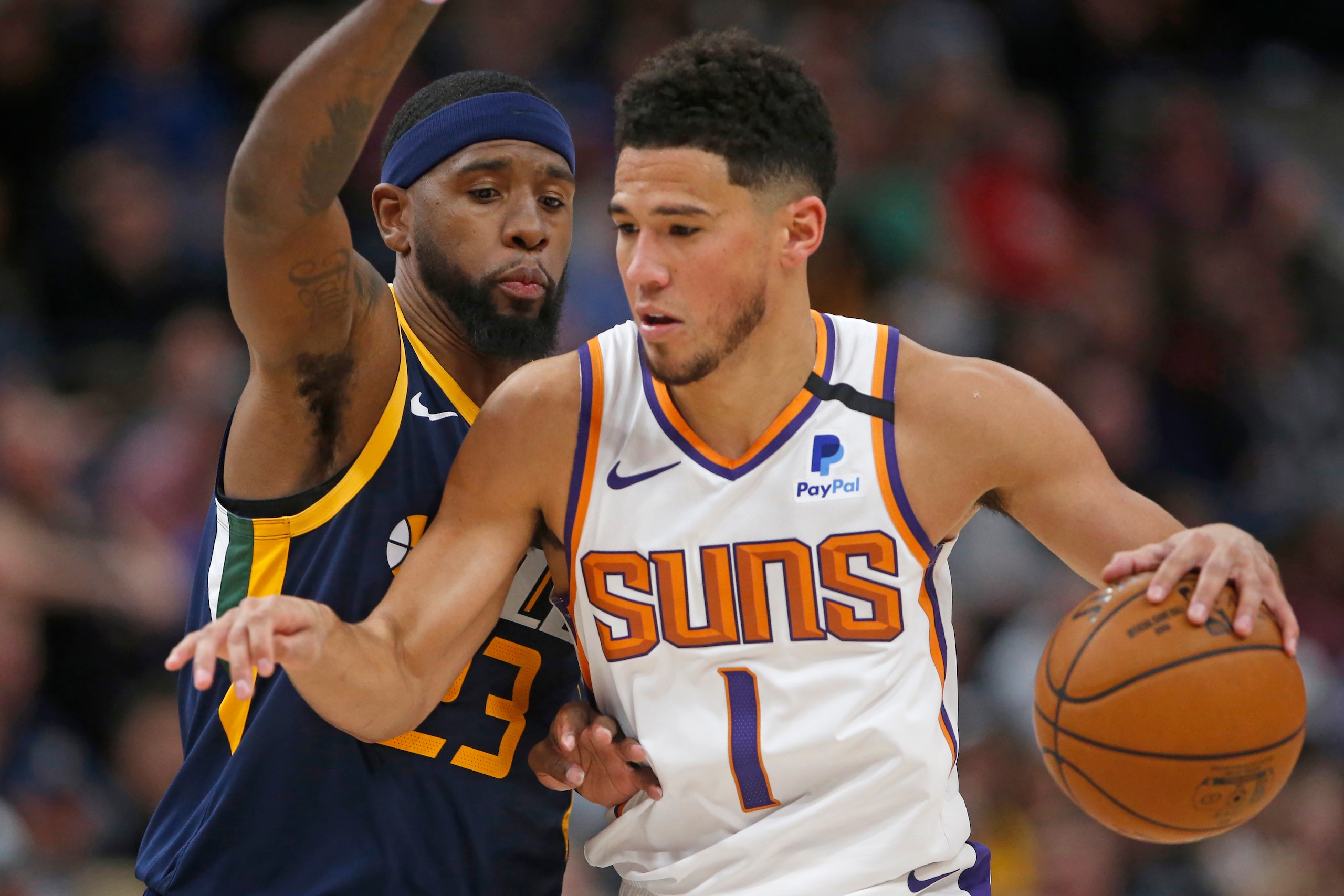
After he seemed fed up with yet another 20-win season, the Suns tried to appease Devin Booker by signing point guard Ricky Rubio and bringing in shooters like Cameron Johnson and Frank Kaminsky. It's unclear whether those transactions were the direct catalysts to Booker's huge improvement, but what caused his leap is fairly immaterial.
The fact is, after years of talking like one, Booker is finally playing like a star.
The presence of other playmakers like Rubio has led to Booker's lowest usage rate in three years, and he seems to be relishing this new role. His 48.8/35.9/91.9 shooting splits are unmatched this season, and he's remained an effective passer. Booker didn't make the All-Star Game on the first try, but history won't remember that he was an injury replacement, especially if he's selected for additional ones.
Booker isn't perfect. He remains frustrating on defense and has actually posted the worst turnover percentage of his career. But after four disappointing seasons in Phoenix, he could have stagnated out of boredom or something worse.
It's exciting for the Suns' future that he didn't.
Portland Trail Blazers: Damian Lillard
25 of 30
Every time Portland has been counted out during Lillard's time with the franchise, he's lifted it up. After the team's four other starters departed in 2015, Lillard led the Blazers to the second round. Following a sweep at the hands of the New Orleans Pelicans in 2018, Dame brought Portland to the Western Conference Finals one season later.
This year has been a bit more trying.
The Blazers are on pace to miss the playoffs for the first time in seven years and have often barely had enough healthy players to field a full rotation. But right on schedule, Lillard has somehow leveled up once again, averaging 29.5 points on a 55.6 effective field-goal percentage—by far the best figure of his career.
Portland faces a tough road toward late-April basketball while it competes with exciting young teams like the Memphis Grizzlies and New Orleans Pelicans for the final slot in the West. But it'll receive a boost Wednesday, as Dame is scheduled to return to action after he missed the last six games with a groin injury.
If we've learned anything from previous Blazers seasons, it's to never underestimate a team with Lillard.
Sacramento Kings: Harrison Barnes
26 of 30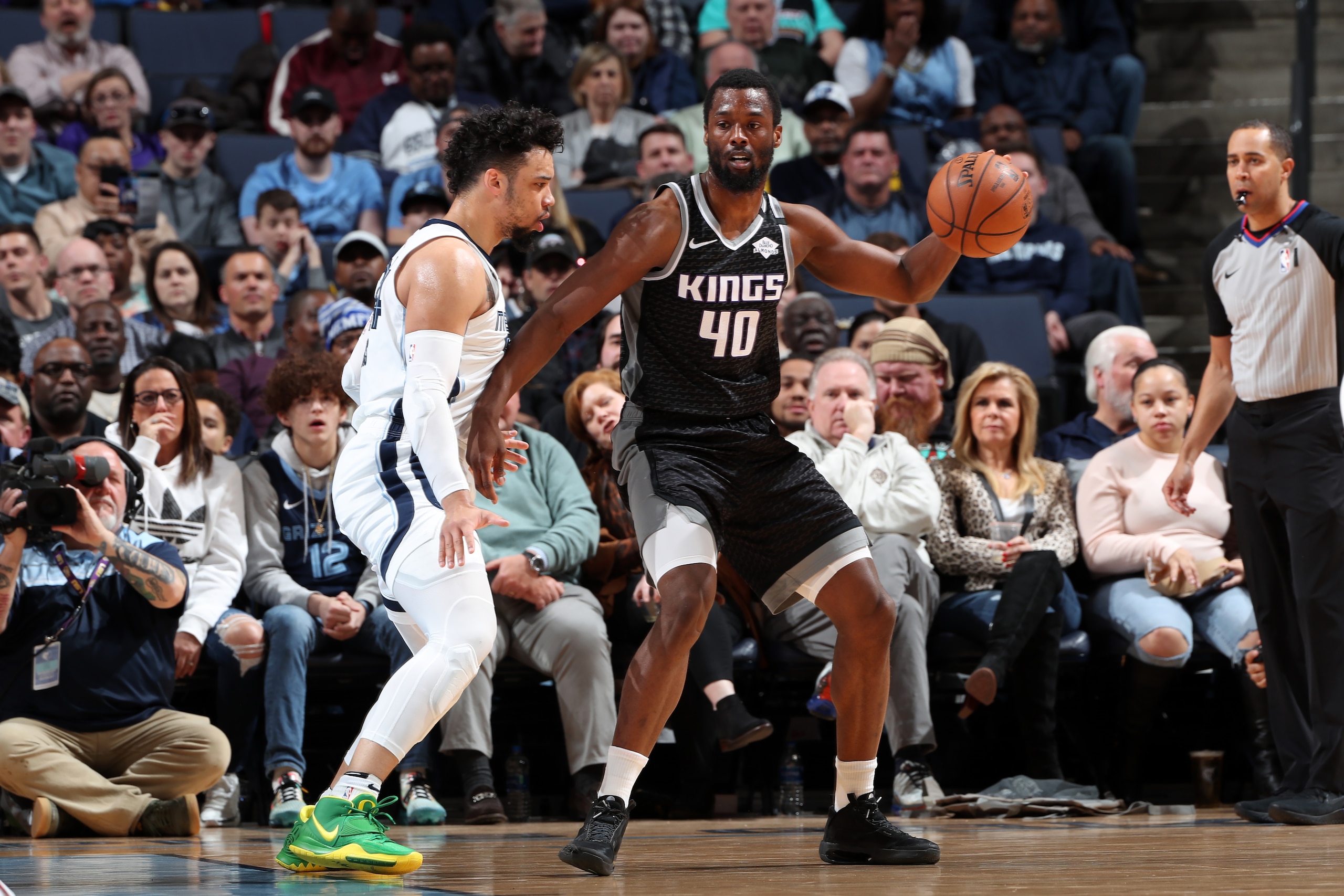
There are three obvious additional candidates for this award, but two of them (De'Aaron Fox and Richaun Holmes) have missed significant time while the third (Buddy Hield) hasn't made as positive a team-wide impact as expected.
However, that doesn't mean Barnes, one of the least starry selections on this list, is a mere consolation prize.
The veteran hasn't suddenly become Kevin Durant reincarnated or even made a distinct leap as a player. But his consistency has been necessary for a young Kings team that started behind the eight ball thanks to an early-season injury to Fox. Barnes has notably improved as a playmaker while recording his best shooting season since leaving Golden State four years ago.
He's also got the second-best on/off split among contributing Kings and the third-best net rating.
After a few years struggling to find a role, Barnes seems to have found comfort, filling the same kind of complementary void he did for the title-winning Warriors.
Barnes stated he would not shave his beard until the Kings either achieved a .500 record or the regular season ended. Since the vow became public on Feb. 12, Sacramento is 5-2, and he's shooting nearly 50 percent from the floor.
If a less positive outcome had occurred, we might accuse Barnes of being unreasonable. But he's walking the walk.
San Antonio Spurs: LaMarcus Aldridge
27 of 30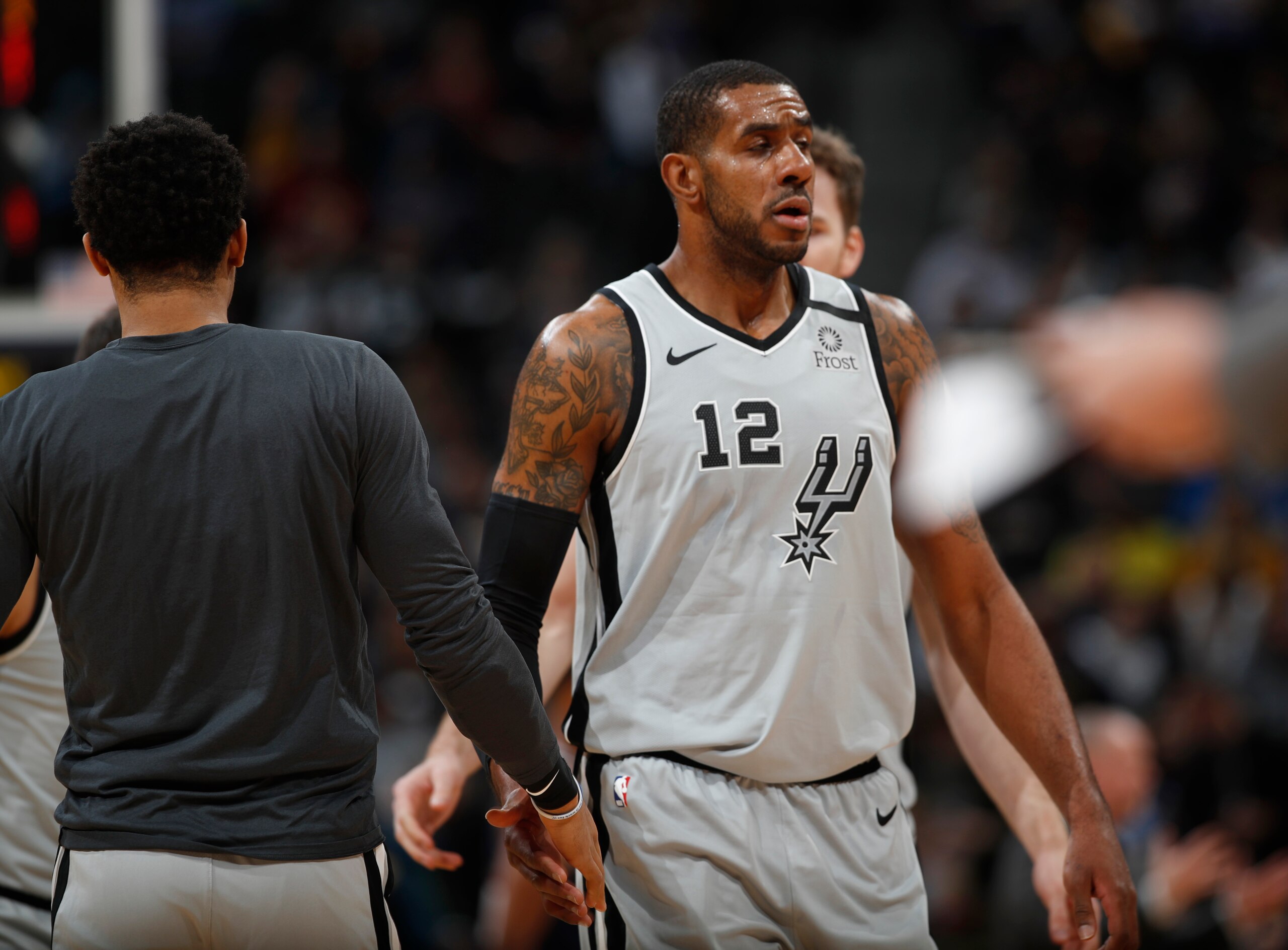
LaMarcus Aldridge's 2019-20 campaign is a reminder to all of us to stop being stubborn and embrace positive change.
After years of being one of the NBA's preeminent mid-range specialists, Aldridge has slowly but surely started to come around on the benefits of the long-range jumper. He's taking 2.9 three-pointers per game, which is paltry for 2020 but nearly doubles his previous career best, and he's making 39.2 percent of them. As a result, the big man is recording a 53.4 effective field-goal percentage, the best of his career.
At 34 years old, Aldridge is on the back nine of his career. But this late investment in three-pointers could provide a tiny rejuvenation and make him a more threatening scorer once again.
Thanks to an uncharacteristically poor defensive season and a competitive race for the eighth seed headlined by teams with bigger stars, the Spurs' vaunted 22-year streak of making the playoffs seems likely to end, officially marking the end of an era that truly halted when Kawhi Leonard demanded a trade.
But with Aldridge suddenly becoming a marksman, the team may at least stay competitive until head coach Gregg Popovich retires.
Toronto Raptors: Pascal Siakam
28 of 30
After Kawhi Leonard departed, the big question surrounding the Raptors was whether Pascal Siakam could become Toronto's offensive fulcrum. Well, six months and an All-Star start later, the answer is clear.
Though Siakam has mildly tailed off in each successive month following a brilliant first six weeks, he remains vitally important to the Raptors. Though significantly worse than last year from an efficiency perspective, the big man has remained an above-average shooter and a solid playmaker. In addition, he has one of the best net ratings and on/off splits on the team.
However, though Siakam's offensive development these past two seasons has earned deserved plaudits, he really makes his money on defense. The Cameroonian ranks 40th in the league in DRPM, and his length and motor make him an excellent matchup for Giannis Antetokounmpo, Ben Simmons and Jayson Tatum, among others.
Siakam has clearly felt the weight of leading an offense this year, so whether he'll be able to keep this up in the playoffs is in question. But if we've learned anything from him or the Raptors these past two seasons, it's to never count them out.
Utah Jazz: Rudy Gobert
29 of 30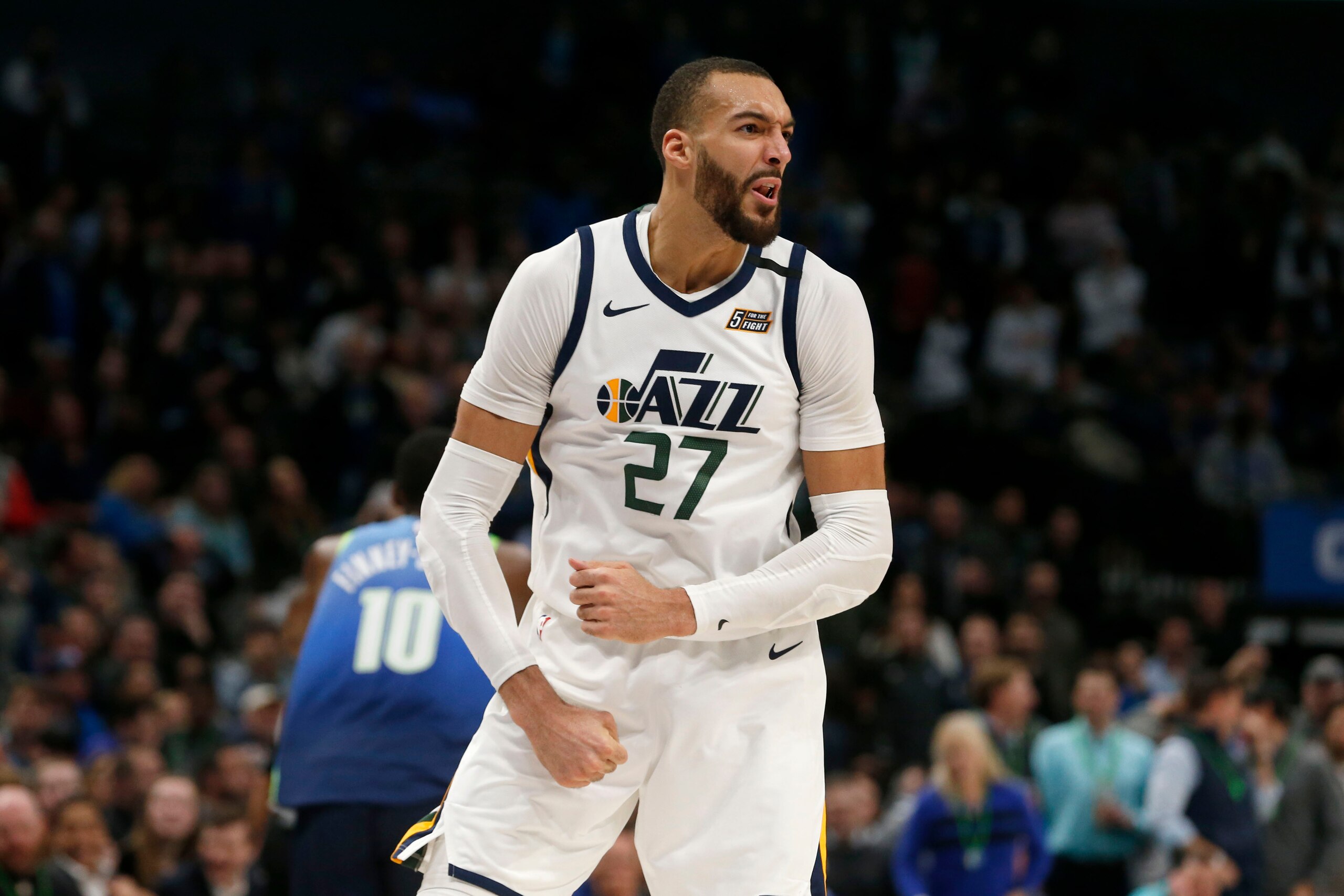
Last season, Rudy Gobert was openly disappointed at being snubbed from the All-Star team. Say what you will about his priorities, but that clearly lit a fire under the Frenchman because he's been at his best all year.
The 27-year old has a nearly perfect statistical profile.
Gobert led the league in both field-goal percentage and effective field-goal percentage last season at 66.9 percent and has improved from there this year, shooting 69.2 percent from the field. He leads the Jazz in win shares by a healthy margin. He's an excellent pick-and-roll player. He's got the best net rating and on/off splits of any Utah rotation member.
Oh, and he tops the NBA in DRPM and is likely to win a third straight Defensive Player of the Year award, which has only been done by Dwight Howard.
Utah has had its fair share of peaks and valleys this season, but the one thing that's been consistent through it all is Gobert. Right on schedule, he's playing the best basketball of his career.
If he keeps it up, the Jazz are a threat to beat anybody.
Washington Wizards: Bradley Beal
30 of 30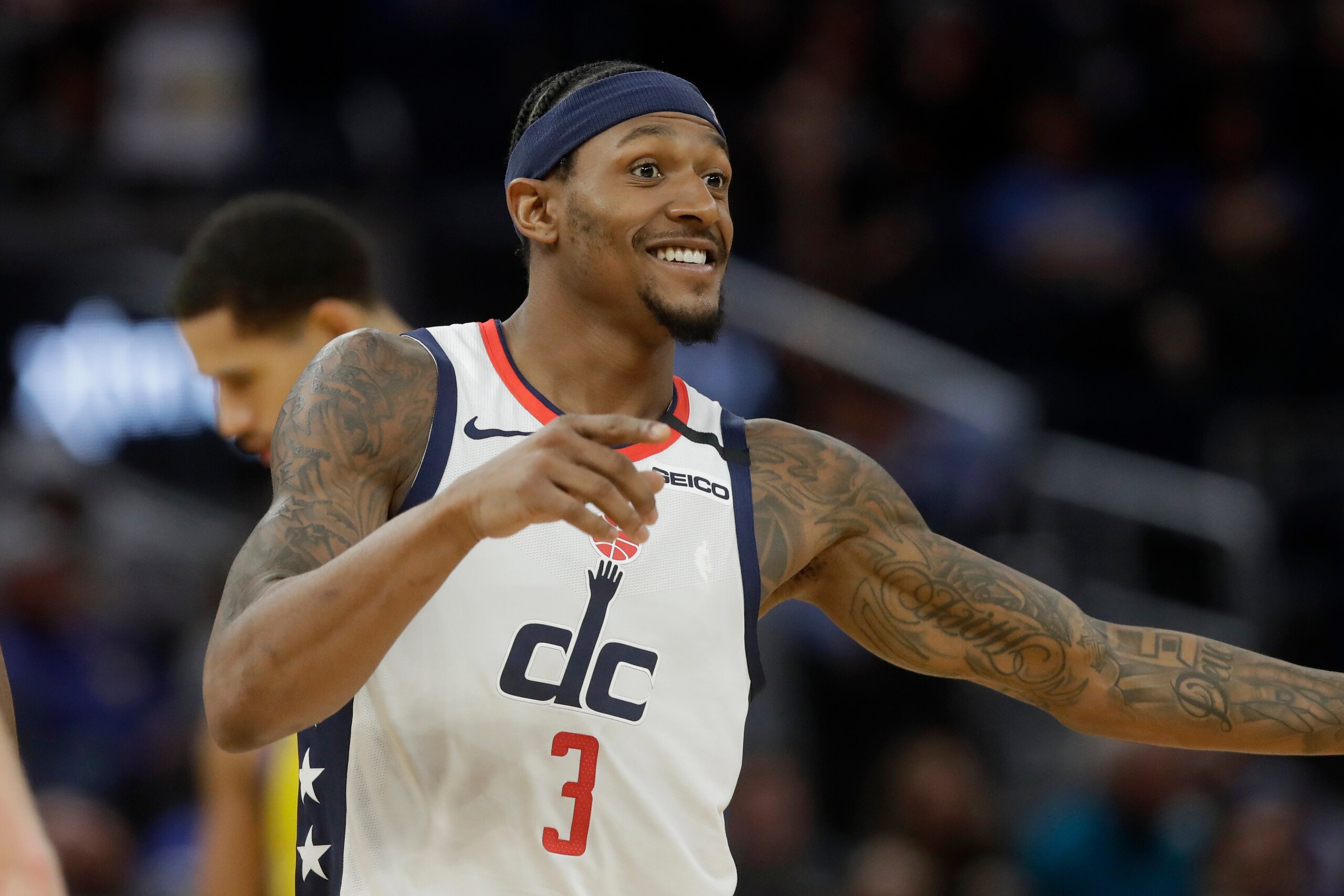
Bradley Beal has been the worst defender in the NBA this season, per DRPM, and the Wizards may be better with him off the court. But let's be realistic here. Without his offensive contributions, Washington might be jostling for high lottery position right about now.
No other lead scorer's offensive burden approaches the one Beal carries. Considering that, he has been miraculous.
He's not having his most efficient scoring season to date, but he has continued to improve as a playmaker, averaging a career-best 6.1 assists. He's also making a career-best 84.4 percent of his free throws.
Additionally, since the start of 2020, the shooting guard has become a scoring machine, averaging 33.9 points and 5.3 assists while shooting 48.4 percent from the field and 38.0 percent from three.
Considering his historically bad defense and the team around him, it makes sense that Beal was denied a third All-Star Game appearance. But it's still hard to overlook performances like this one against one of the best defenses in NBA history.
If John Wall is even half of what he used to be next season while returning from his torn Achilles, Washington might be in business once again.
All stats courtesy of NBA.com, Basketball Reference or ESPN unless otherwise noted.
.jpg?w=2560 "Grading WWE Raw 🔠")
.png?w=2560 "Allen's BRUTAL 1H Stats 🫤")
.jpg?w=2560 "Monday Night Raw Blog 🔴")