

Boston Celtics' Top Offseason Priorities: How to Keep Kyrie, Land Anthony Davis

The campaign that could have been never came to be for the Boston Celtics.
Despite—or maybe because of—adding healthy versions of Kyrie Irving and Gordon Hayward to a core that traveled to last year's Eastern Conference Finals without them, the Shamrocks suffered their earliest playoff exit in three years.
While arguably as talented as any team in the conference, Boston's whole never matched the sum of its parts. Perhaps this was a case of too many cooks in the kitchen, as Irving and Hayward slotted alongside Al Horford and a slew of youngsters seemingly ticketed for stardom during last year's playoff run: Jayson Tatum and Terry Rozier.
TOP NEWS
Jokic says booing fans not welcome in Denver
Worst NBA Predictions 🫣

Power Ranking Every NBA Team's Starting Lineup 🔢
The chemistry concerns spawned a ceaseless stream of chatter. They also became a fascinating way to frame the upcoming summer, which could potentially rocket the Celtics closer to contention or shift the franchise's entire focus further into the future.
Is Irving staying? Should the Celtics want him to stay? Is a certain single-browed superstar bound for Beantown? Might the organization pivot its plan of attack around the 25-and-under trio of Tatum, Brown and Rozier?
As a sage former tenant of TD Garden once exclaimed, anything is possible.
Setting the Stage
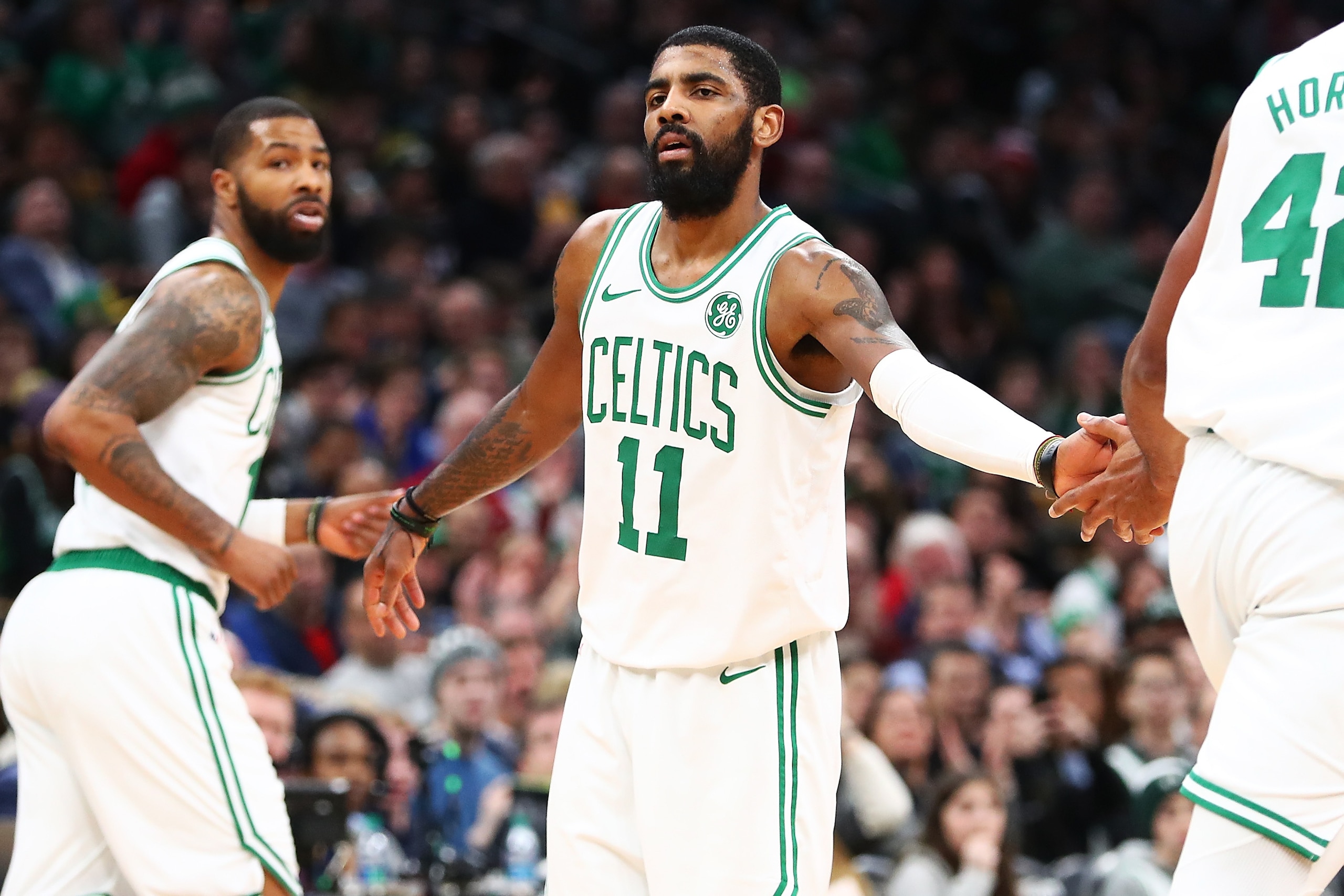
The Celtics enter the summer living a double life.
By salary and stature, they have all the makings of a win-now powerhouse. Bring back Irving and Horford—both of whom hold player options north of $21 million—and Boston has three recent All-Stars, including Hayward, who will enter 2019-20 between the ages of 27 and 33.
It'll cost a fortune to do so. Horford's option is $30.1 million, and a max deal for Irving would cost roughly $190 million over the next five seasons. But teams pay exorbitant sums in hopes of having a roster like this. Even with the clunk chemistry, this was a 49-win team and conference semifinalist. Just imagine the possibilities should coaching savant Brad Stevens crack this puzzle.
But dissect a different portion of the roster, and you'd swear a youth movement was imminent.
Tatum is the blue-chipper, a 21-year-old former No. 3 pick with an age-defying arsenal. Brown, another No. 3 selection, doesn't appear far behind when he can spread his wings far enough to flash his well-rounded scoring skills. And while Rozier has rarely looked the part of a future Big Three member, it's OK to admit you bought into the Scary Terry craze.
We all did.
Now, take that up-and-coming nucleus and add to it a small army of draft assets. Depending on how the pingpong balls bounce, Boston could have as many as four first-rounders in the upcoming draft, including two in the lottery—the Memphis Grizzlies' (top-eight protected) and Sacramento Kings' (top-one protected) picks.
Some might see this duality as a gift from the basketball gods, allowing the C's to contend for titles now and well into the future. Others may feel they'll eventually have to choose a side, quite possibly this summer given Irving's free agency and a possible asset-consolidating deal for Anthony Davis.
Priority No. 1: The Brow Blockbuster
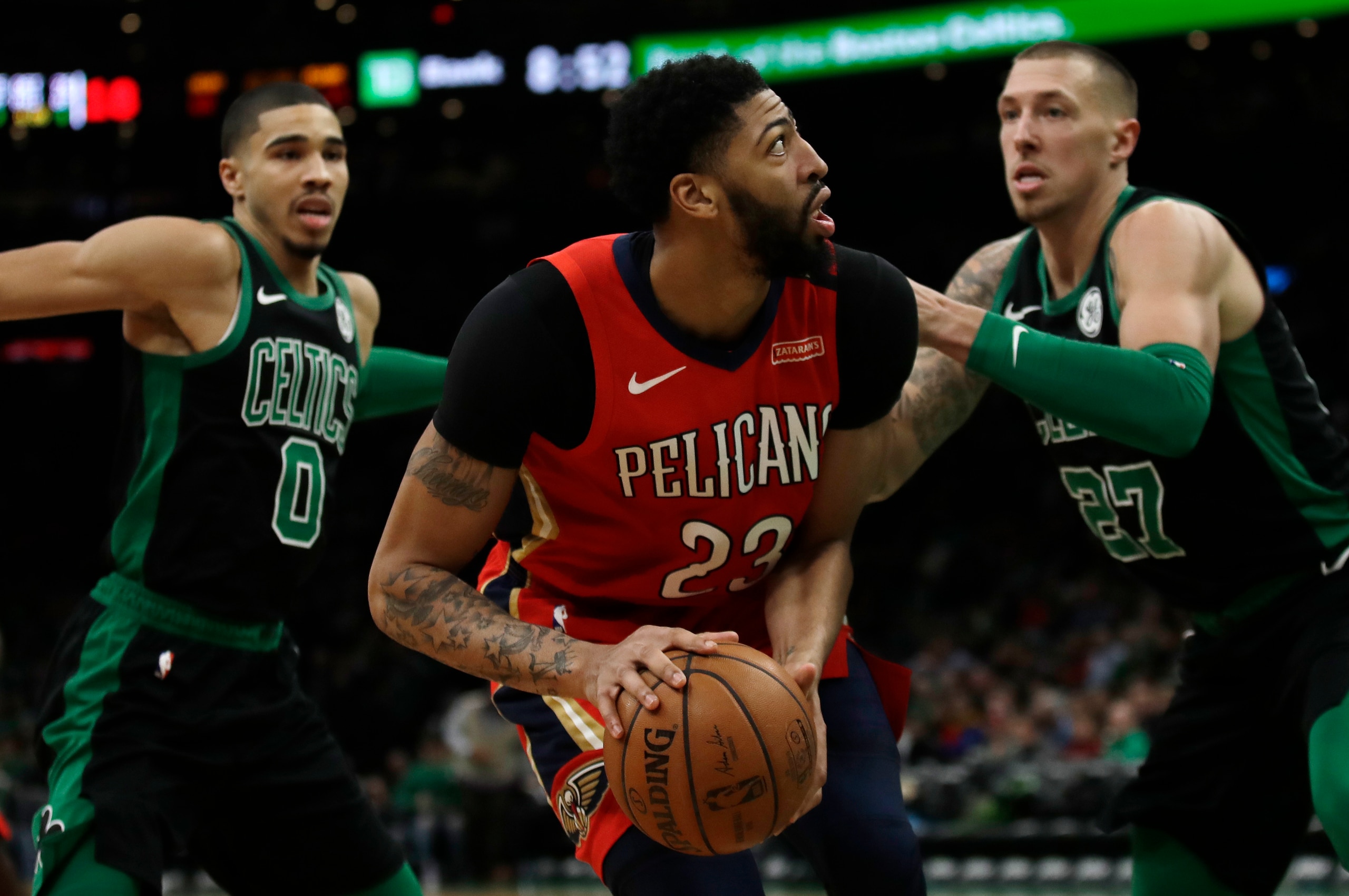
If it feels like a Davis deal has been bandied about for years, that's because it has.
And why wouldn't it be?
The 26-year-old is the definition of a fortune-changer. (Don't hold the failures of the New Orleans Pelicans' front office against him, folks.) He's already authored the seventh-most seasons averaging at least 20 points, 10 rebounds and two blocks in NBA history (six). His 27.4 career player efficiency rating places him behind Michael Jordan, LeBron James and no one else.
This is where it's worth mentioning we probably haven't even seen Davis at his best yet. He has completed just seven big-league campaigns to date and only made 70-plus appearances in two.
Acquire AD, and Boston will have indisputably reshaped the entire basketball landscape.
"Any trade over the next year involving Davis might be the single most important trade of an NBA veteran since the Lakers acquired Kareem Abdul-Jabbar from Milwaukee in 1975," ESPN's Zach Lowe wrote in December.
For a quick history reminder, Abdul-Jabbar went on to win five titles in L.A. So yeah, this is kind of a big deal.
The possible payoff is rich enough to dismiss concerns of not making Davis' initial list of preferred destinations or the fact his dad isn't the biggest fan of the franchise. The question then becomes a matter of compensation. It's unclear if the Celtics would let Tatum go and unclear if the New Orleans Pelicans would accept an offer without him.
Find the answer to those two questions, and you'll discover the legitimacy of the nonstop Davis-to-Boston discussions.
Priority No. 2: The Uncle Drew Dilemma
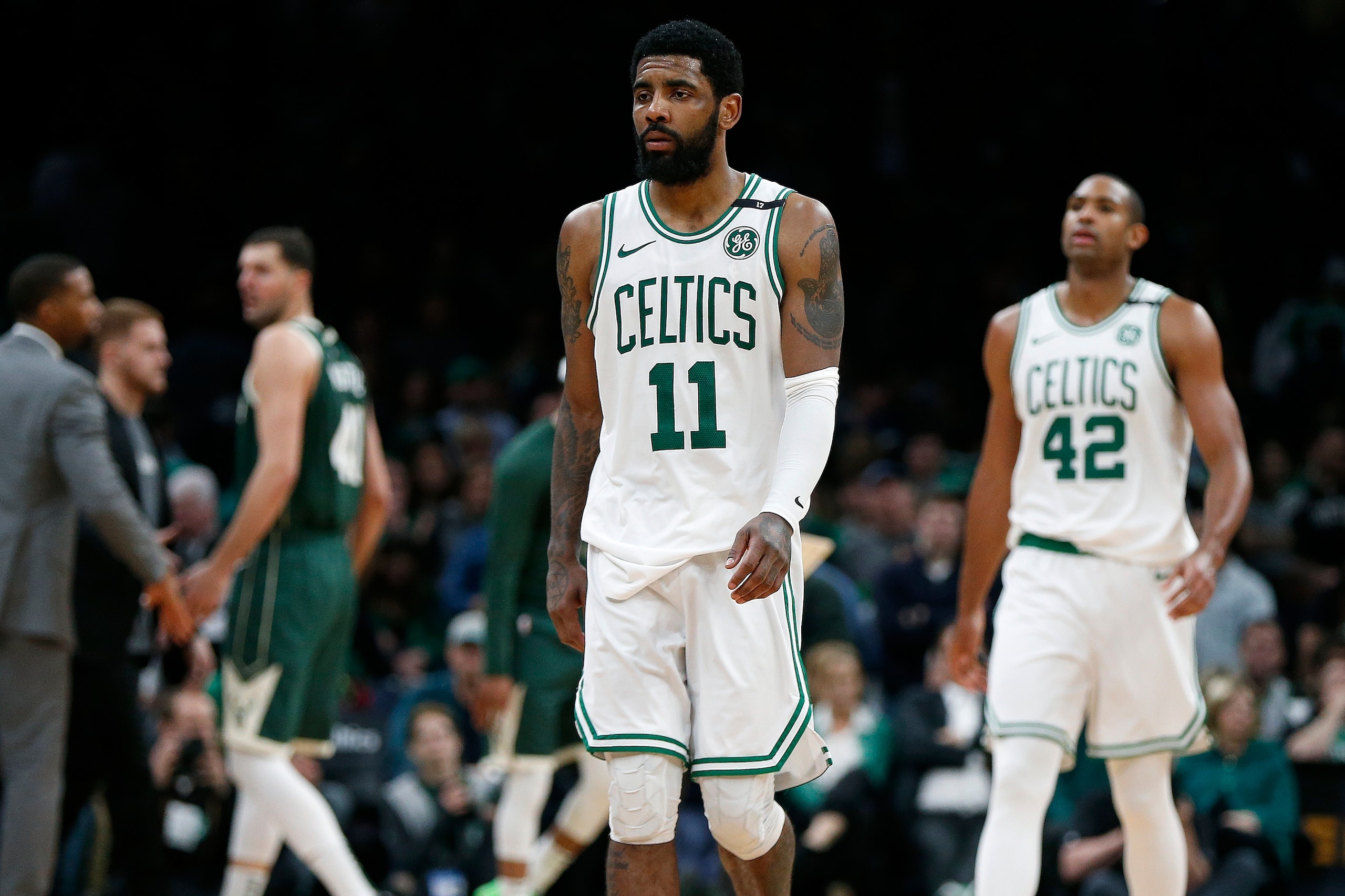
If Irving is already in Boston, shouldn't the team leader in points, assists, minutes per game and All-Star honors be the first priority?
Clearly, we don't think so.
At this point, it's fair to wonder if both Irving and the Celtics might view his future as a package deal with Davis'. In other words, if AD isn't coming, maybe a divorce from Uncle Drew is best for all involved.
Look at the route his second season with the Celtics has taken. Roller coasters don't even run through this many extremes.
In October, Irving declared, "If you guys will have me back, I plan on re-signing here." By February, his tone had changed all the way to "I don't owe anybody s--t" and "Ask me July 1." And finally, after a third straight flop in the conference semis—the worst shooting funk of his playoff career—he offered a simple, "Who cares?"
Yikes.
Maybe a Davis deal would change the dynamics. In February, league sources told The Ringer's Kevin O'Connor they believed Irving would stay if Davis came aboard, and that by rostering Irving, the C's would up their odds of getting a long-term commitment from Davis.
Would that make a new Irving pact a marriage of convenience? Perhaps. But if each side is getting something it wants—Irving the chance to play with a close friend/superstar, Boston the chance to have the Association's next great duo—wouldn't that justify any awkwardness in media sessions or the locker room?
But if Davis isn't coming, is the relationship with Irving worth trying to repair?
ESPN's Jalen Rose believes not only that Irving is "done in Boston," but also that his "teammates will help him pack." Given Irving's disappearing act in the conference semis—19 points per game on 30.1 percent shooting over the final four outings—maybe Rose is on to something.
Multiple league executives told Bleacher Report's Eric Pincus that Irving could bolt for the Brooklyn Nets or New York Knicks (possibly with Kevin Durant), and the Los Angeles Lakers loom as a possible landing spot given Irving's reconnection with former championship running mate LeBron James.
If Irving leaves, Boston might already have his replacement in Rozier (a restricted free agent), plus it has all those picks as either trade capital or a means of increasing roster depth. The 2019-20 Celtics probably won't be better without Irving, but future versions might with extra touches available to accelerate the youngsters' development.
Draft Targets
While the Celtics could put one—or all—of their incoming picks in play for a major deal, they'll have options if they keep them to expand their prospect collection.
Tuesday's draft lottery will determine the official order, but for now, Tankathon.com has the C's selecting 14th (via Sacramento), 20th (via the Los Angeles Clippers) and 22nd, with Memphis keeping its pick (which might be preferred since this class isn't deep and the pick protection reduces next year before disappearing in 2021).
Boston's wealth of win-now talent might push the team toward plug-and-play prospects, or maybe it emboldens the front office to make a risk-reward gamble. If the C's make and keep multiple selections, it's probably best to play both sides of the coin.
On the safer side, North Carolina's Cameron Johnson and Gonzaga's Brandon Clarke might top the list as opening-night contributors available when Boston is on the clock. The 23-year-old Johnson is a lethal long-range shooter who buried 96 threes at a 45.7 percent clip last season. The 22-year-old Clarke is an undersized big (6'8", 215 lbs) with the modern combination of rim-running and defensive versatility.
Later high-floor options could include Tennessee's Grant Williams (a skilled inside-the-arc scorer), Virginia's Ty Jerome (a combo guard who can shoot and distribute) or Washington's Matisse Thybulle (maybe the best defender in this draft).
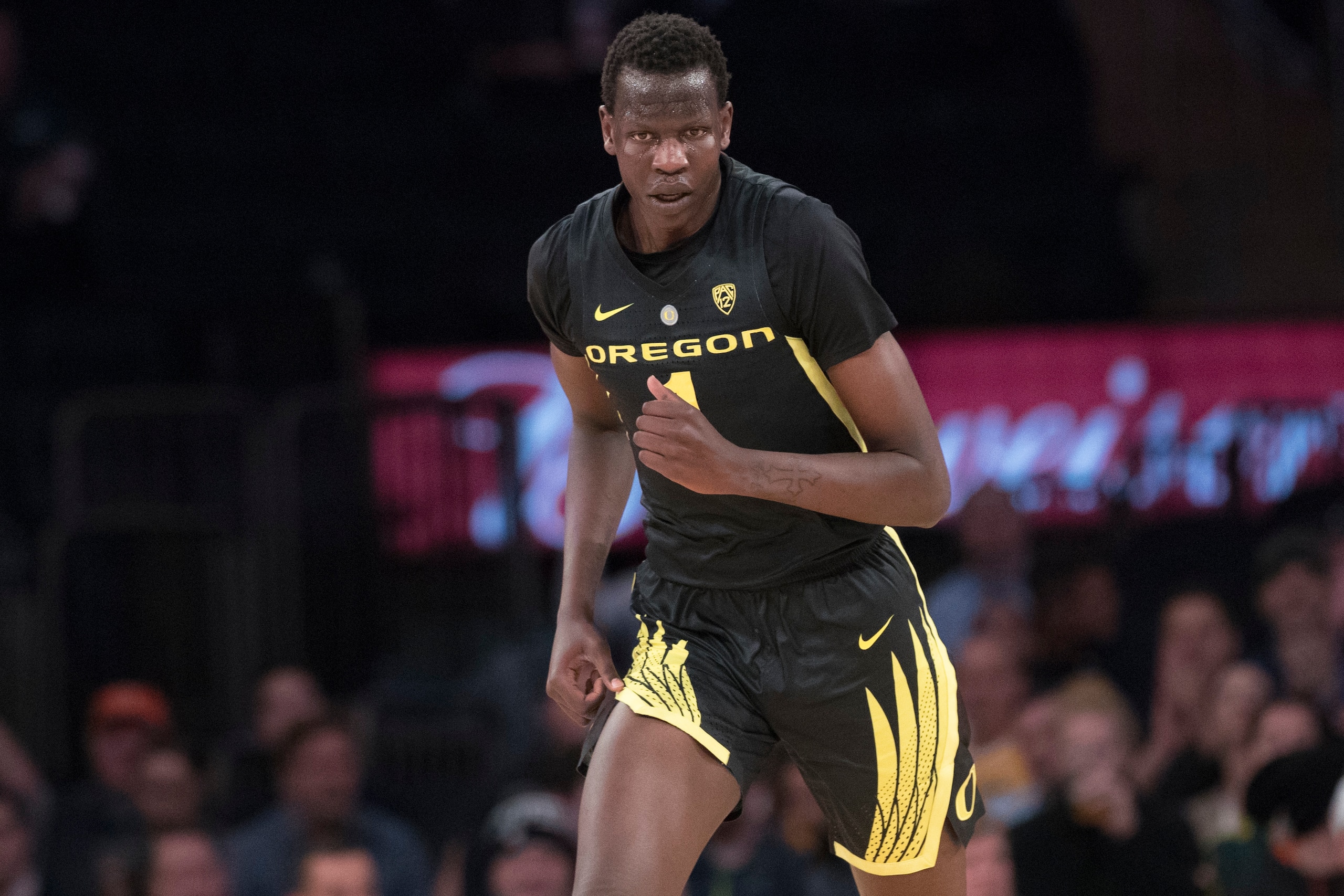
If the C's opt for upside, Oregon's Bol Bol and (the country) Georgia's Goga Bitadze offer as much as anyone in their draft range.
Bol, son of the late Manute Bol, offers a fascinating blend of size, shooting and post scoring. He stands 7'2" with a massive 7'8" wingspan and still flashed an elite shooting touch in limited action with the Ducks. He hit 52.0 percent of his threes and 75.7 percent of his free throws, albeit over only nine games since his campaign was cut short by a stress fracture in his foot.
Bitadze posted per-36-minute Euroleague averages of 18.4 points, 9.7 rebounds and 3.5 blocks. The 6'11" center has hinted he could become another jumbo-sized shooter, although he's most comfortable in the post.
Finding the right defensive fit for both Bol and Bitadze could be tricky, though, as they struggle with lateral mobility.
Other high-ceiling choices could include France's Sekou Doumbouya (an 18-year-old with tons of physical tools), North Carolina's Nassir Little (a blue-chip prospect who's as explosive as they come) or Iowa State's Talen Horton-Tucker (a guard with a 7'1" wingspan and flashes of high-level shot-creation).
Free-Agency Targets
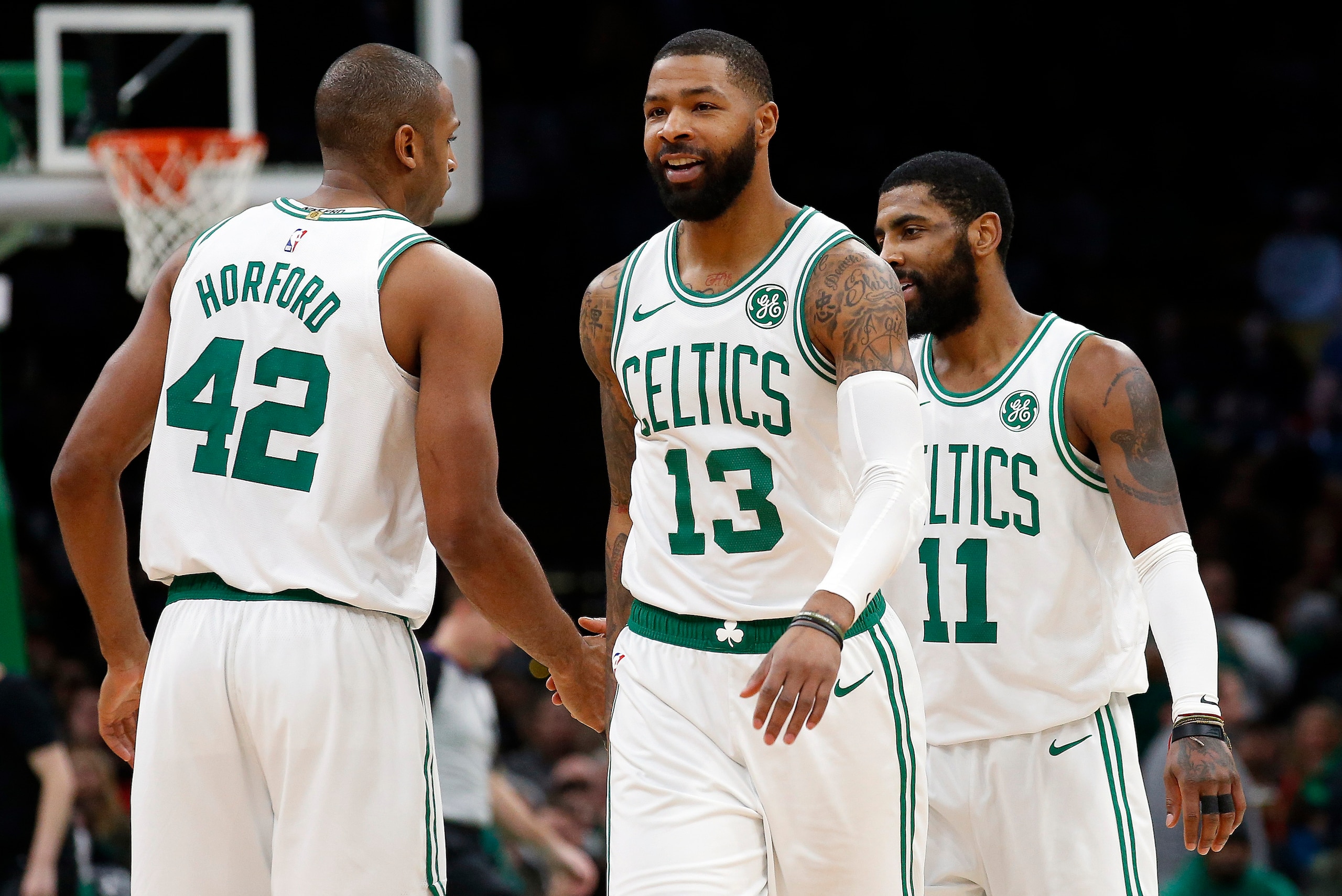
Depending on different options, the Celtics could send a small army into free agency. Horford and Irving are the headliners, but Rozier (restricted), Marcus Morris, Aron Baynes (player option), Daniel Theis (restricted) and Semi Ojeleye (non-guaranteed salary) might all need new deals.
Boston, then, could work exclusively on its home front given its glut of free agents and lack of cap space.
The point guard spot should be an either/or proposition with Irving and Rozier. Keeping one makes sense. Retaining both would be costly and unnecessary.
Horford is the most obvious keeper on the roster, although the finances must be figured out. Picking up his massive option seems the easy choice, but he might be open to ditching it for a longer deal with a smaller annual salary.
Morris is interesting. The 29-year-old had his best shooting season as a pro (56.8 true shooting percentage), defends multiple positions, adds toughness to the team and sometimes pops as a support scorer.
He's also never had even an average PER in eight NBA seasons and only twice produced a positive box plus/minus. This campaign also wasn't a fiery shooting display, but rather a couple of hot months. Once the calendar flipped to 2019, he shot just 40.5 percent (32.4 from three) the rest of the way.
He's worth bringing back at a reasonable rate, but that number is probably lower than fans think given possible luxury-tax implications. Same goes for Baynes, who's worth rostering but might be capably replaced by Robert Williams III or an incoming rookie.
Should the Shamrocks uncover enough coins in their couch cushions to go shopping for external bargains, they could target a backup point guard, a sharpshooter or a rim protector. Names such as Elfrid Payton, Ish Smith, Wayne Ellington, Darius Miller, Garrett Temple and Tyson Chandler might all make sense and fit the budget.
Nostalgic fans might covet a reunion with Isaiah Thomas or even Rajon Rondo, but the former has barely played in two seasons and the latter could land outside Boston's price range.
Statistics courtesy of Basketball Reference and NBA.com. Salary information via Basketball Insiders.
Zach Buckley covers the NBA for Bleacher Report. Follow him on Twitter: @ZachBuckleyNBA.

.jpg?w=2560 "Mahomes Told Teammate to Leave Meeting")
.jpg?w=2560 "🚨 Week 8 AP Top 25 Poll")

.jpg?w=2560 "Baker Gets Glove From Rays 🧤")
.jpg?w=2560 "Steelers Roll Saints in Paris")
.jpg?w=2560 "NFL investigating Eagles")
.jpg?w=2560 "Updates from EVERY Game")
.jpg?w=2560 "5 Teams Eyeing Jonathan Taylor")