


NBA free agency is a transformational time for a few fortunate franchises and a massive disappointment for many.
We're not purposely bursting any optimistic bubbles; we're just talking raw numbers. There are far more teams that hope to snag a savior (or saviors) than there are actual difference-makers.
That's the purpose of building a big board in advance. Simple mathematics say you're unlikely to get your first choice, so you better be prepared for plans B, C and D.
Luckily for any prognosticating front offices, we've already got the ball rolling. What follows is a look at every team's realistic big board for 2019 free agency.
Atlanta Hawks
1 of 30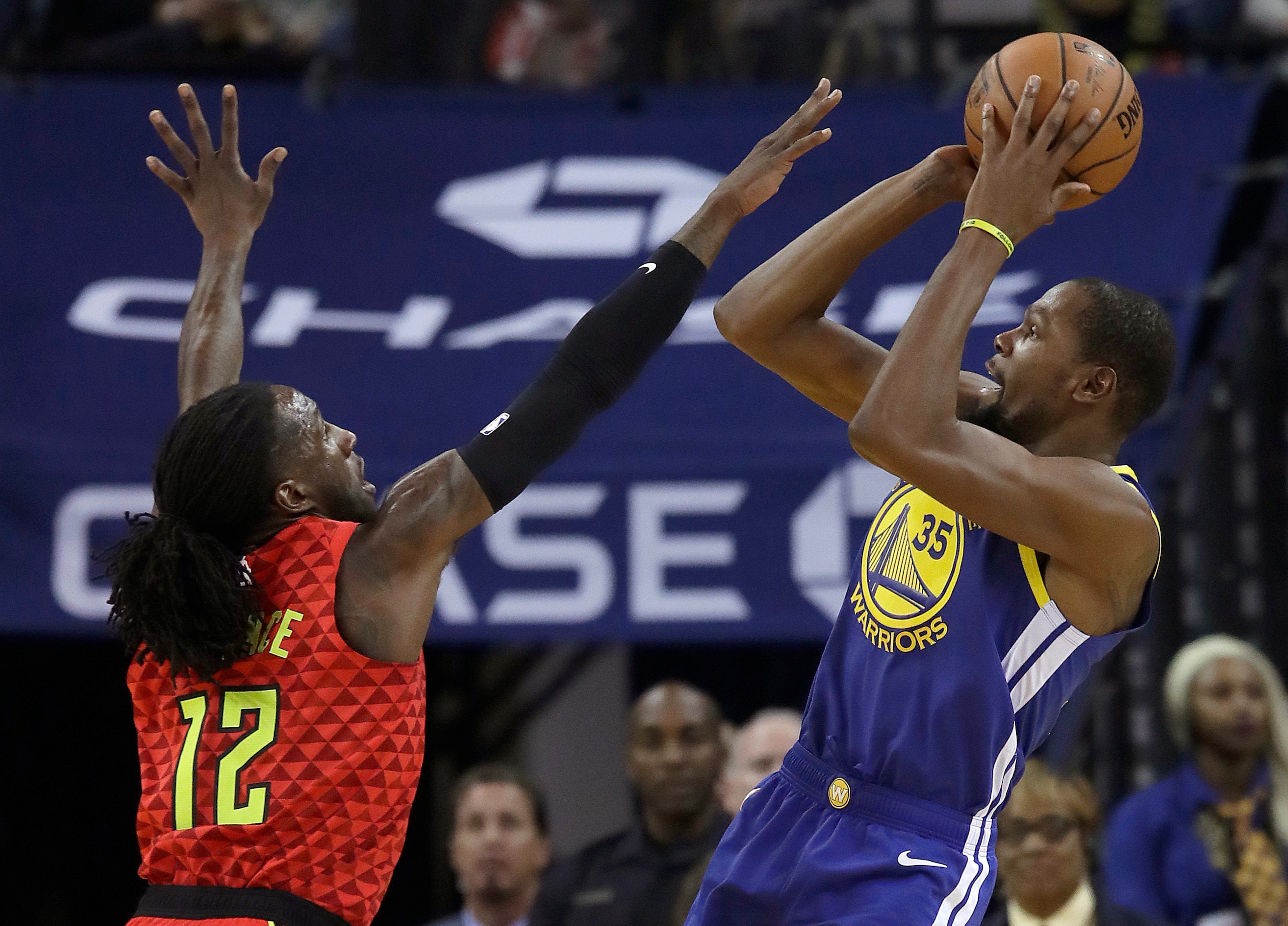
Target A: Kevin Durant
Much like when Trae Young senses a sliver of space, the Atlanta Hawks are ready to shoot their shot.
"The Hawks are so bullish on the development of Young, fellow rookie Kevin Huerter and second-year big man John Collins that they want to explore even the biggest and boldest of offseason plans," a source told Sam Amick of The Athletic.
This might be the longest of long shots, but maybe Durant gets so hyper-focused on building his legacy that the idea of latching on with a rebuilder intrigues him. Plus, Atlanta's recruiting pitch includes a superstar second half from Young (24.7 points, 9.2 assists per game), a sniper in Huerter, a human pogo stick in Collins and a potential coach on the rise in Lloyd Pierce.
Again, it probably isn't the pitch that sways Durant, but there might be more for him to consider than you'd think.
Target B: Khris Middleton
Chances are if Atlanta lands a big-ticket item this summer, it'll come from the second tier. There, Middleton looks like the best buy for the Hawks as a do-it-all defender with the offensive chops to handle different stints as the primary scorer, a complementary shooter and a secondary playmaker.
He's a souped-up version of what Atlanta envisioned for Kent Bazemore and Taurean Prince. He might not be the biggest name on the market, but he's been a top-25 scorer since the start of 2017-18 and made his All-Star debut in February.
Target C: Nikola Vucevic
Atlanta probably wants to leave this summer with a difference-maker and a frontcourt complement to Collins. Vooch comes closest to scratching both itches.
A contract-year breakout at age 28 warrants some skepticism, but he'd been laying the groundwork as a skilled scorer with expanding range and an improved passer beforehand. Collins' ideal running mate is a better shot-blocker than Vucevic (career 0.9 per game), but the latter's emergence as a long-range shooter (36.4 percent) would give the former a wider runway.
Target D: Brook Lopez
If spacing and rim protecting are the biggest requirements for Collins' frontcourt partner, then Lopez brings both to the table. It's just that he's on the wrong side of 30 and doesn't have the defensive versatility to fit into the "Golden State Warriors of the East" blueprint.
Boston Celtics
2 of 30
Target A: Kyrie Irving
Irving's personal roller coaster to free agency has included everything from a firm commitment to return to saying nothing's been decided. Clearly, the All-Star point guard has plenty to think about between now and July.
But that's not the case with the Boston Celtics. Team president Danny Ainge told SI.com's Chris Mannix that "yes" the team wants Irving to return and "no" nothing has made the franchise rethink that position.
It's a no-brainer on Boston's behalf. His on-court impact is enormous, especially at the offensive end. There, the Celtics have been elite with him (112.8 offensive rating, would have ranked fifth) and anemic without (105.1, would be 29th).
He paced the Celtics in both points and assists, and neither category was particularly close. It's the same story in the postseason, where the Shamrocks are playing for a third straight trip to the conference finals. Losing him would devastate the current roster and potentially dash any dreams of getting a long-term commitment from Anthony Davis, assuming the club wins The Brow sweepstakes this summer.
Target B: Al Horford
Horford is a half-step behind Irving in terms of importance to the franchise's future.
The big man is a jack of all trades and a master of several. He can dominate inside and out at either end of the floor. His statistical profile shows zero weaknesses. Advanced categories could not be bigger fans of his game. Both ESPN's real plus-minus (17th) and box plus/minus (15th) treat Boston's big man as a top-20 talent overall.
He's more of a 1b than a No. 2 in terms of priorities, and Boston should be quick to act if he declines his $30.1 million player option in search of a longer deal.
Target C: Patrick Beverley
The Celtics are probably losing one point guard this summer, whether it's Irving or Terry Rozier (restricted). The defense-first, playoff-tested Beverley would be a dream get for either a high-minute reserve role behind Irving or as Rozier's competition for a starting spot.
Brooklyn Nets
3 of 30
Target A: Kevin Durant
This was a culture-changing campaign for the Brooklyn Nets, and several sources told SNY's Anthony Puccio the team's turnaround will resonate with this summer's top free agents. If Durant wants a change of scenery, Brooklyn has a major market, an improving young nucleus and a development-focused coaching staff to entice him.
"The process we went through this year ... it's going to attract free agents," general manager Sean Marks said, per Puccio. "People are going to want to play here. They're going to want to play for Kenny [Atkinson], they're going to want to play in Brooklyn, they're going to play for this ownership group. We have a lot of things going for us."
The Nets could maneuver to double-max-contract cap space, meaning Durant could handpick a running mate. As a bonus, Brooklyn already has a close connection in 24-year-old swingman Caris LeVert, who referred to Durant as "like a big brother," per Puccio.
If Durant has his sights set on the Big Apple, the Nets can present the city's strongest on-court sales pitch.
Target B: Kawhi Leonard
How's this for a consolation prize? The Durant-Leonard debate is a 1a-1b discussion, and the Nets will have zero issues with putting the full-court press on both superstar swingmen. Leonard's recent durability issues are likely what tilts the conversation slightly in Durant's favor.
But Leonard would be equally brilliant for Brooklyn. The 27-year-old just pumped in personal bests of 26.6 points and 7.3 rebounds per game, and he already has a pair of Defensive Player of the Year awards in his trophy case. When healthy, he might be the Association's most complete two-way player.
Target C: Kyrie Irving
No offense to D'Angelo Russell, but Irving tops the team's point guard wish list because he has a higher ceiling and floor. For each of the past three seasons, Irving has averaged at least 23 points and five assists per game while shooting 40-plus percent from three. Stephen Curry is the only player to match that.
While the Nets would gladly take Irving as their solo summer splash, he would ideally come as a package deal with Durant or Leonard. Irving is a really good focal point, but as an All-Star sidekick, he's about as good as it gets.
Target D: D'Angelo Russell
It's a good thing Russell has already learned about the business side of basketball, because this summer may provide another harsh reminder.
The 23-year-old engineered a full-fledged breakout, averaging multiple career highs and making his initial All-Star appearance. But since Brooklyn can add an elite player or two, Russell is either a back-burner option to return or even a possible sacrifice to chase a greater goal.
Target E: Nikola Mirotic
If the Nets don't add a pair of stars this summer, they'll have money to rain on their supporting cast. Mirotic could be all kinds of fun under Atkinson as a 6'10", quantity-plus-quality marksman.

Charlotte Hornets
4 of 30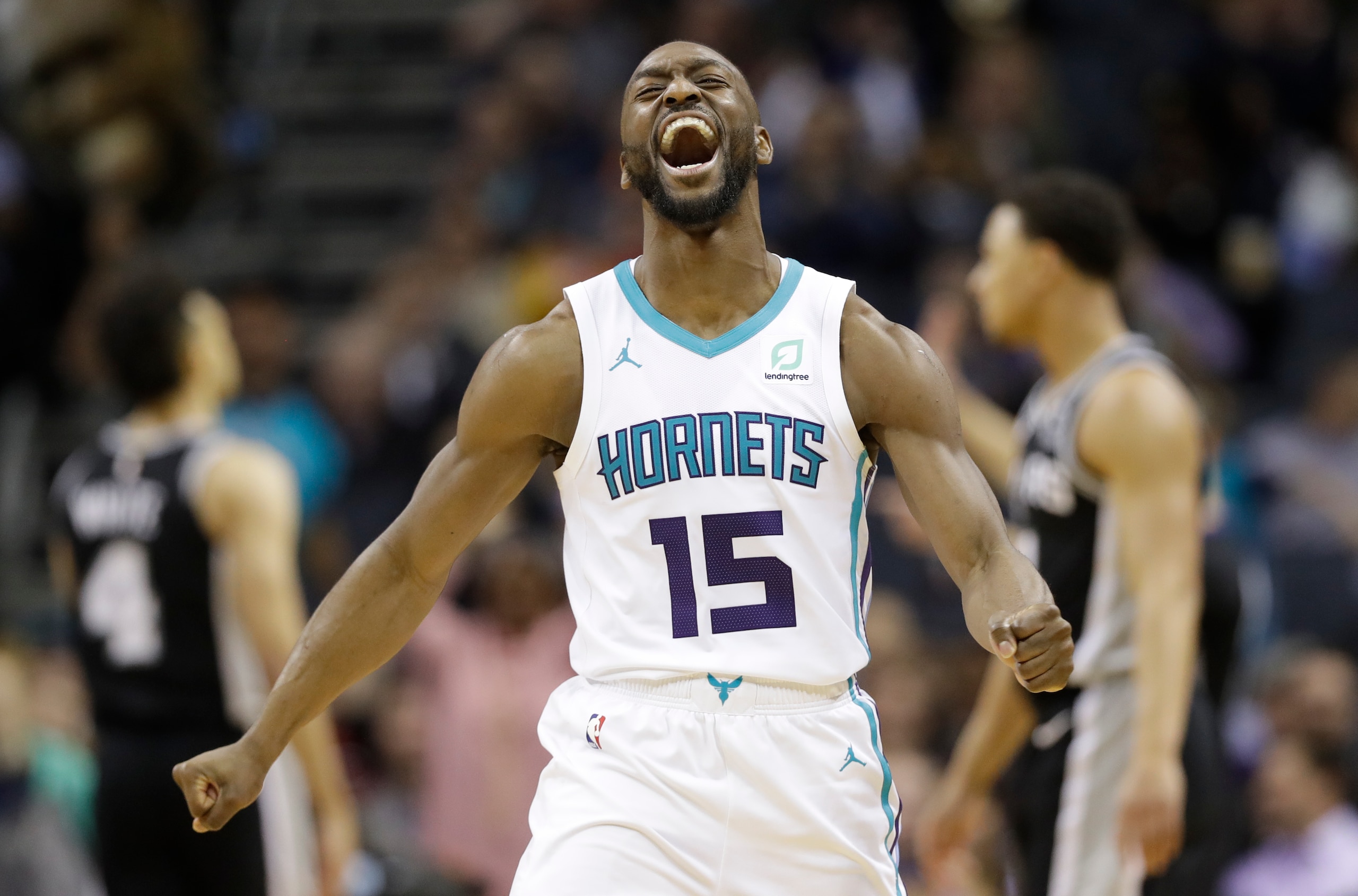
Target A: Kemba Walker
After spending much of his prime alongside overpaid, underperforming players, Walker could opt to search for the nearest exit. The Charlotte Hornets are surely hoping he doesn't.
"I think this is a place that he wants to be, and we'll do everything that we can to bring him back here," Hornets general manager Mitch Kupchak said, per Steve Reed of the Associated Press.
Moving forward with Walker won't be easy. The bloated financial books need another year before they start clearing up, and even then, Charlotte has never been a free-agent destination. The roster is also short on high-potential prospects, and it's likely to add only another late lottery pick this June.
But moving forward without Walker could cause this organization to crumble. At the least, it's probably staring down a yearslong rebuild without its one recognizable face.
Target B: Jeremy Lamb
If you're trying to convince Walker to stay, you better not lose grip on his top scoring teammate from this past season.
Granted, it's possible Lamb's mini-breakthrough (15.3 points, 5.5 rebounds) was the latest contract-year mirage. But the Hornets don't have the scoring depth to dismiss the possibility it's something greater.
Lamb, the 12th overall pick in 2012, was once a high-pedigree prospect, and his physical tools have always impressed. If he's a late-bloomer, he's one of the few in-house options still capable of nudging this group forward.
Target C: JaMychal Green
The Hornets need more shooting and defensive versatility in the frontcourt. Green isn't perfect in either area—he doesn't launch with much volume, and he can have trouble guarding quicker players—but he might be the best option for Charlotte's tight budget.
Chicago Bulls
5 of 30
Target A: Ricky Rubio
Unless the Chicago Bulls exit the draft with a blue-chip point guard—they must decide whether that description fits anyone other than Ja Morant—their free-agent focus almost starts and stops with this position. Kris Dunn is their only lead guard with a guaranteed contract for next season, and it's tough to tell how confident they are (or even should be) in him as the leader of this offense.
Nearly any competent starter makes sense, but Rubio stands out among the realistic options. His pass-first tendency would sufficiently feed all of Chicago's scorers, and his defensive activity might perk up a unit that finished just 25th at that end.
"Rubio ... might be an ideal fit, a good defender and passer who doesn't need many shots," Sporting News' Sean Deveney wrote. "Look for the team to gauge his interest in coming to the Bulls."
Target B: Malcolm Brogdon
The 26-year-old Brogdon is almost perfect for Chicago. He doesn't dominate the ball (fourth among Milwaukee Bucks regulars in usage rate), is an uber-efficient scorer when he looks to shoot (50.5/42.6/92.8) and defends multiple positions.
But he's not quite the table-setter Chicago needs after it finished 25th in assist percentage. Plus, because he's a restricted free agent on a top-shelf contender, an offer sheet might need to be overinflated for the Bucks to decline to match.
Target C: Terry Rozier
Who, exactly, is Rozier? Is he Scary Terry, the terrifying stat-sheet-filler who starred in Boston's run to the 2018 Eastern Conference Finals? Because that version wouldn't have trouble piquing the interest of the Bulls' brass.
Or is he the player who has yet to shoot 40 percent from the field through four NBA seasons? Because a limited shooter who also isn't much of a distributor sounds like a hard pass.
Target D: Patrick Beverley
Beverley is a Chicago native who defends as if he's guarding a sacred artifact and is a 38 percent career three-point shooter. So, why is he the fourth option? Because the soon-to-be 31-year-old might be outside the team's timeline, and he's the least proven passer on this list.
Target E: Derrick Rose
Apologies to anyone who's hoping for a homecoming tale fit for Hollywood, but it seems Rose's return would only happen if Chicago misfires on multiple targets first. He'll have suitors after a bounce-back season, but the Bulls probably aren't looking to add another shoot-first guard with defensive deficiencies.
Cleveland Cavaliers
6 of 30
Target A: David Nwaba
The Cleveland Cavaliers lack both the cap space and the cachet to look outside the organization, so that moves the defensive-minded Nwaba to the top of the list.
Cleveland can control the situation by extending him a $1.9 million qualifying offer, which seems obvious. While injuries limited his first season in Northeast Ohio, he still displayed the toughness and tenacity that make him such an effective defensive presence on the perimeter.
His offense needs work, but that should be reflected in his price. If the Cavs want to be competitive in the near(ish) future, they'll want players like him.
Target B: Nik Stauskas
This is roster-building on a budget, folks.
Stauskas' stock has fallen almost from the minute the Sacramento Kings selected him eighth overall in 2014. His most notable NBA moment might be a closed-captioning error, and he's finished each of his five NBA seasons with negative box plus/minus marks on both offense and defense.
But he can shoot from distance (37.4 percent the past three years), and Cleveland could use more floor-spacers as it attempts to widen the attack lanes for Collin Sexton.
Target C: Timothe Luwawu-Cabarrot
If Cleveland wants to take a minimum flier, Luwawu-Cabarrot could be worth a look. The 2016 first-rounder (24th overall) offers length, athleticism and sporadic shot-making. His first three seasons—spread across three teams—weren't particularly interesting, but there are worse ways to use a roster spot than seeing if the 6'6", 210-pounder can figure things out.
Dallas Mavericks
7 of 30
Target A: Kristaps Porzingis
Emboldened by the historic start to Luka Doncic's career, the Dallas Mavericks made their first move toward rejoining the championship race by acquiring Porzingis from the New York Knicks in January. Now, the Mavs must pay him to make sure the anchors of their post-Dirk Nowitzki design remain in place for years.
"Hopefully he'll be a Maverick for the next 20 years," Mavs owner Mark Cuban said of Porzingis, per ESPN.com's Tim MacMahon.
The last time we saw a healthy Porzingis, he put together an unprecedented combination of scoring, shot-blocking and three-point sniping. He's a 7'3" big man with range and handles; that's about as hard to find as someone with the 20-year-old Doncic's blend of youth, polish, size (6'7", 218 lbs) and playmaking potential.
Dallas is, as per usual, dreaming extraordinarily big this summer. But getting a long-term agreement with Porzingis is the first step of making those dreams a reality.
Target B: Kemba Walker
The ideal Mavs addition is probably younger, less ball-dominant and sturdier at the defensive end than the 28-year-old Walker. But if they want a star, this might be the best they can do.
"Kemba is probably the best player who I'd say is in play, and I think the Mavs will get both a real audience with and chance to court him," Marc Stein of the New York Times said on the Ben & Skin Show (via SportsDayDFW.com).
While the concerns with Walker are valid, so are the possible rewards. He could ease pressure on their younger stars by leading the offense, but he's a sharp enough outside shooter (37.7 percent the past four seasons) to retain value away from the ball. He's as hungry for team success as the Mavs are, and his efficiency should have growth potential if he upgrades his supporting cast.
Target C: Khris Middleton
Assuming Dallas is restricted to second-tier shopping, Middleton should crack its short list of top targets. This roster needs defense, athleticism and shooting, and he brings all of the above.
Target D: D'Angelo Russell
Russell doesn't have Walker's All-Star track record, but the skills are similar, and at 23 years old, he's on the same timeline as Doncic and Porzingis.
Target E: Anthony Tolliver
The Mavs eyed him at the trade deadline, and they could circle back in free agency for frontcourt spacing.
Denver Nuggets
8 of 30
Target A: Jimmy Butler
The Denver Nuggets could essentially run it back next year by picking up Paul Millsap's $30 million team option. But if they decline that deal and find a taker for Mason Plumlee or Will Barton, then Denver could come close enough to max room to potentially lure an elite.
Butler would be incredible. He'd tighten the team's perimeter defense. He'd add another element to this closing attack, forcing teams to choose between his isolations or Jamal Murray-Nikola Jokic pick-and-rolls. His no-nonsense (and no-filter) style might also accelerate the maturation of this young, talented roster.
With Jokic operating as the offensive fulcrum, Butler could team with Murray (and maybe eventually Michael Porter Jr.) as high-level scoring sidekicks. That could make this seventh-ranked attack even more potent, and head coach Michael Malone would surely appreciate Butler's relentless approach to basketball's less glamorous end.
Target B: Tobias Harris
This could function as a swap from Millsap to Harris, making the Nuggets younger and more offensively explosive at the 4 spot.
While Millsap's production has trended down for a few years, Harris' has been in a state of near-perpetual growth. The 26-year-old has only once failed to increase his scoring output from the previous season. He's become an elite marksman (339 triples at a 40.5 percent clip the past two campaigns) and gradually grown as a distributor.
Target C: Mike Muscala
If Denver opts against doing anything dramatic, it should explore a cheaper way of improving its interior depth. Muscala would increase this group's ability to stretch out opposing defenses.
Detroit Pistons
9 of 30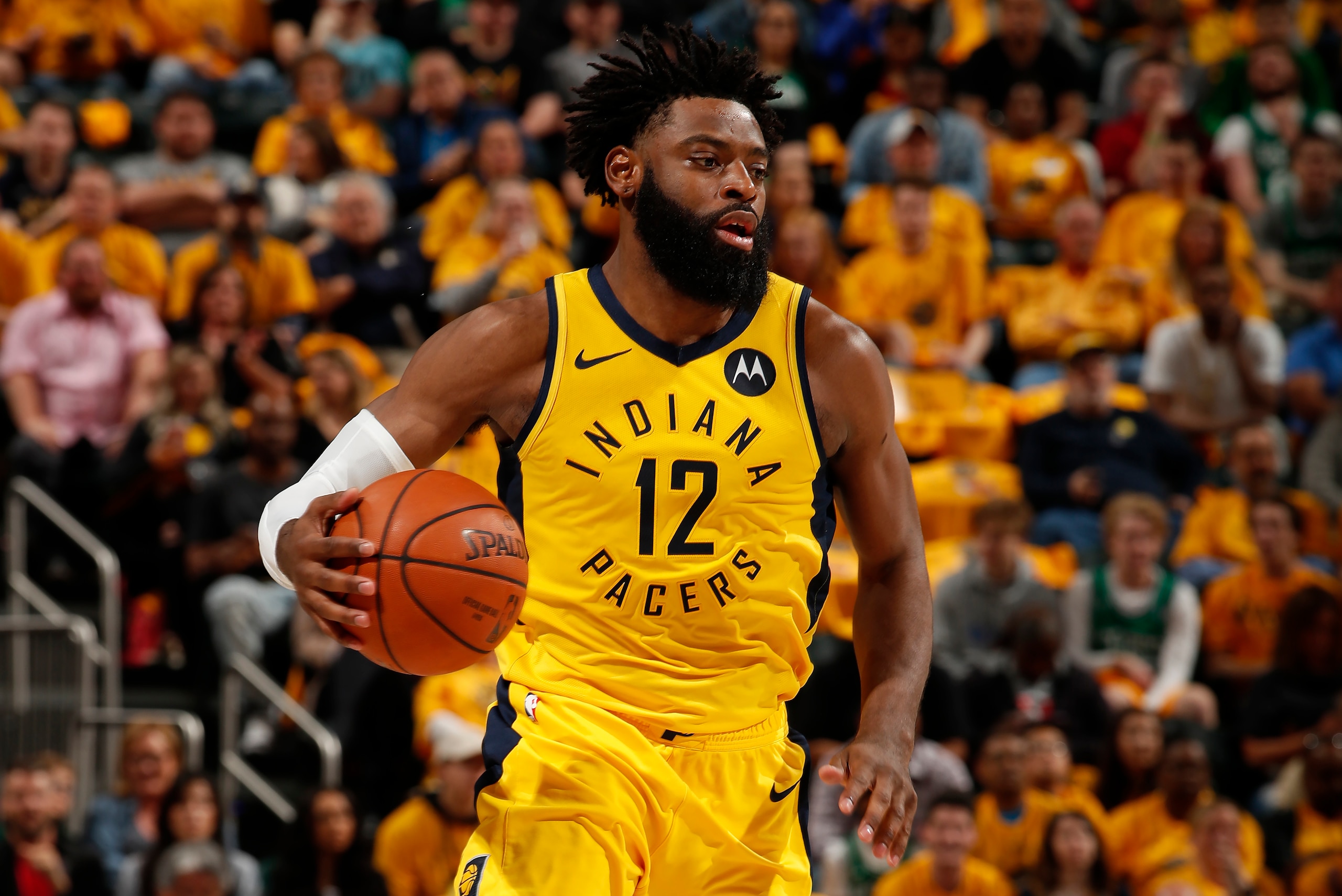
Target A: Tyreke Evans
Could Evans end the Detroit Pistons' search for a starting small forward? Given the price range—ESPN.com's Bobby Marks doesn't think the Pistons will use more than $5.7 million of their mid-level exception—the 2009-10 Rookie of the Year might have as good a chance as anyone.
He's had more downs than ups over his 10-year career, but the hope is you pay the decreased rate for those downs and get a bargain year of the ups. That's how it went for the Memphis Grizzlies in 2017, who gave Evans a one-year, $3.3 million deal and watched him erupt for 19.4 points, 5.2 assists and 5.1 rebounds per night.
Evans, of course, couldn't match that production for the Indiana Pacers, so he's again hitting the open market with his stock on the slide. The Pistons should hope that's their gain, as they have clear needs for his handles, playmaking, shooting and size (6'6", 220 lbs) along the wings.
Target B: David Nwaba
It isn't often the Pistons find a team in worse financial shape than them, but the Cavs could be one of the exceptions. And maybe that helps Detroit sneak Nwaba out of Ohio on a slightly inflated-but-still-reasonable offer sheet.
Match his defense with Luke Kennard's shooting, and maybe the Pistons can flesh out a functional wing group. But Nwaba's own lack of shooting limits his appeal.
Target C: Elfrid Payton
The Pistons need a backup behind Reggie Jackson and maybe a replacement for him in the near future. Rather than keep 30-year-old Ish Smith around, Detroit should take a long look at the 25-year-old Payton, who was one of only six players to average 10 points, seven assists and five rebounds per game in 2018-19.
Golden State Warriors
10 of 30
Target A: Kevin Durant
The Golden State Warriors took home world titles in both of Durant's first two seasons, with the four-time scoring champ pocketing a Finals MVP award each time. He has been the perfect addition to their system as a spot-up sniper, better-than-advertised distributor and across-the-board sniper. He's also been the player best equipped to step outside that system for efficient isolation attacks and defensive disruptions.
"He's the most skilled basketball player on earth," Warriors coach Steve Kerr said, per Sporting News' Joe Morgan. "He's one of the most skilled basketball players to ever play the game. There's never been anyone like him."
Perhaps viewed as a luxury upon his 2016 arrival, Durant became essential to the Dubs almost immediately. While his exit wouldn't cause the organization to crumble, it wouldn't be prohibitive championship favorites anymore.
As a 7-foot shooter with an advanced hoops IQ, he should age more gracefully than most. In other words, if the 30-year-old is open to a lengthy contract, Golden State would give him the biggest one.
Target B: Klay Thompson
Even if the Warriors had their own basketball laboratory, they'd struggle to build a better backcourt mate for Stephen Curry than Thompson. Between his defensive versatility and lethal long-range touch (career 41.9 percent, 13th-highest in NBA history), Thompson is perfect for the Warriors.
Luckily, he thinks they're perfect for him, too. He doesn't just want to stick around this summer; if he has his way, he'll never leave.
Target C: DeMarcus Cousins
After an Achilles tear torched his market last summer, Cousins took just a one-year, $5.3 million deal with the Dubs. Considering he'll head into this offseason coming off a torn quadriceps muscle, is it possible his market is again depressed to the point Golden State could fit him into the budget?
That seems unlikely.
"He'll be the Lakers' or the Knicks' consolation prize," a Western Conference executive told Bleacher Report's Ken Berger.
Still, it doesn't seem like the Warriors should be ruled out. No one can be more careful in terms of his rest and recovery, and no one can offer him more media attention (assuming KD doesn't bolt for a major market). Given Golden State's deficiencies with size and depth, you'd assume it would welcome Cousins back if it could.
Target D: Wayne Ellington
The Dubs are light on knockdown shooters beyond their top-scoring trio, making Ellington a logical target if the 31-year-old is ready to go ring-chasing. He's one of only 16 players with at least 500 triples since the start of 2016-17, and he converted those looks at a 38.2 percent clip.
Houston Rockets
11 of 30
Target A: Trevor Ariza
After they watched Ariza walk at the start of 2018 free agency, the Houston Rockets spent the rest of the summer and most of the season scouring for Ariza types. Bringing back the real thing could help Houston regain its two-way balance after the team tumbled down the defensive efficiency rankings without him (from seventh to 18th).
Not to mention, he had fully embraced the three-pointer-or-bust offensive mantra of Rockets role players. Over his four-year tenure with the team, he fired up the fifth-most triples despite sitting just 63rd in total shots.
He wasn't the same player after he left. They weren't the same team without him. A reunion would be sensible for both sides, provided they can make the money work.
Target B: Danuel House
Of all the attempted Ariza replacements, House may have fared the best. He was never shy to launch (6.5 three-point attempts per 36 minutes) and usually found his mark when he did (41.6 percent). He also showed the ability to switch defensive assignments, attack aggressive closeouts off the dribble and juice this transition attack.
The 25-year-old looks like a keeper, although the financials could get tricky. The Rockets only have his non-Bird rights, so matching offer sheets above the minimum will force them to eat into their mid-level exception. But if the money works, Houston would be better off paying him and committing to his development than seeing what's left of Iman Shumpert, DeMarre Carroll or Wilson Chandler.
Target C: Austin Rivers
The best James Harden complements are a little less ball-dominant and a little more active from distance than Rivers. But if the price is right, his ignitable shooting and shot-creating can breathe life into this bench.
Indiana Pacers
12 of 30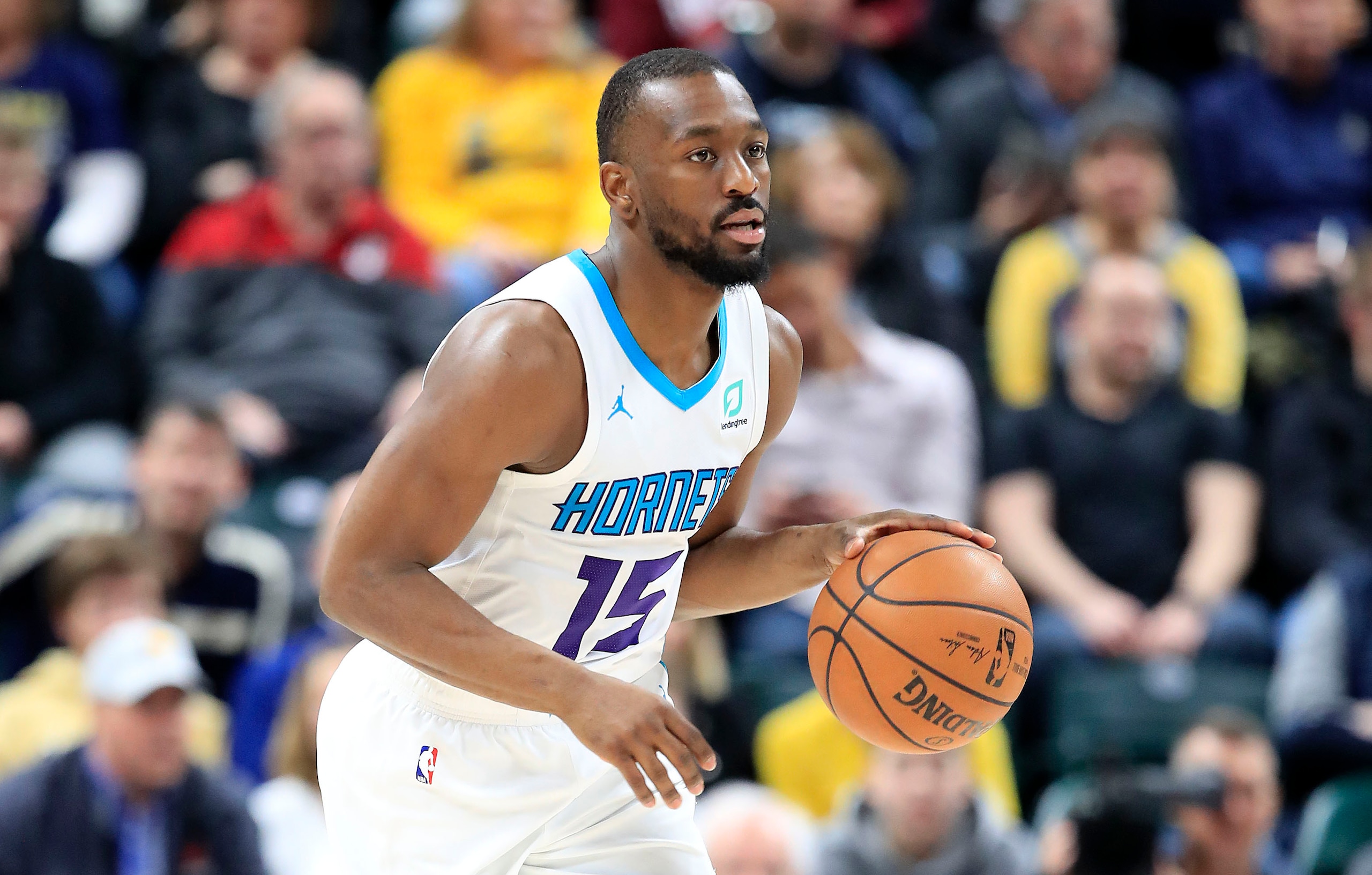
Target A: Kemba Walker
The post-Paul George Indiana Pacers are under more of a time crunch than most might think. Victor Oladipo just celebrated his 27th birthday, meaning he's either approaching his prime or already in the middle of it. That puts the Circle City on the clock to quickly construct a contender around him.
He needs an All-Star-caliber running mate, especially when it comes to self-sufficient scoring.
"We need some creation," Pacers president of basketball operations Kevin Pritchard told reporters. "We need a guy who can break down a defense. And shot-making is always going to be paramount, but it's more paramount than it's ever been before."
Walker, a three-time All-Star, ranked 12th in points per game and 26th in assists. He was an 82nd percentile finisher on isolations and owns a 37.7 percent three-point conversion rate for the past four seasons. He probably best meets Indy's preferences, at least among players who could consider this club their next home.
Target B: Bojan Bogdanovic
There wouldn't figure to be much growth potential with Bogdanovic, but then again the 30-year-old just obliterated his previous career-best scoring average by 3.7 points per game. Maybe that's why Pritchard plans to have "extensive talks" with the skilled swingman.
Bogdanvoic was stretched a bit thin after he took on a featured role following Oladipo's season-ending knee injury in January, but the former thrives in a complementary role. He's a lethal long-range shooter (career 38.9 percent), a savvy off-ball mover and someone who can create shots in a pinch.
Target C: Al-Farouq Aminu
Indy's desire to find more shooting could lead the club away from Thaddeus Young and toward Aminu. Both players fill similar roles as veteran leaders who bring toughness, defensive versatility and high motors to the mix, but Aminu has been the superior distance shooter by both volume and efficiency.
Target D: Terrence Ross
If the market holds skepticism surrounding Ross' contract-year climb, maybe the 28-year-old will be cheaper than his numbers say he should be (15.1 points and 2.7 threes per game). The Pacers should be one of the clubs that are most willing to gamble, given their need for floor-spacing and non-Oladipo scoring.
Los Angeles Clippers
13 of 30
Target A: Kevin Durant
The Los Angeles Clippers have a path to two max-contract slots and grand designs on using them to ink both Durant and Leonard.
While Leonard seems the more obtainable of the two, Durant is the apple of every offseason buyer's eye. Only five players—including Clippers consultant Jerry West—averaged more points for their career than Durant's 27.0, and only eight can top his career 25.2 PER.
L.A. could go from making do without a true featured scorer to rostering one of the best ever. It's the type of transformational move that could get the Clippers all the way into the championship race.
Target B: Kawhi Leonard
It's a testament to Durant's all-galaxy talents that Leonard isn't atop this list. The latter might be as obvious as any offseason target can get. He's a California native and, as of January, is the owner of a $13.3 million palatial California estate.
Oh yeah, he's absurdly skilled, too.
He might be the best perimeter defender we've seen since Scottie Pippen, and during this playoff run, Leonard looks like a three-point-splashing version of Michael Jordan.
Through nine postseason contests, Leonard is averaging 32.3 points, 7.7 rebounds and 3.4 assists while shooting a ridiculous 58.7 percent from the field and 50.0 percent from outside.
Target C: Jimmy Butler
There aren't many players who could make Butler seem like a consolation prize, but Durant and Leonard are among the exceptions. In other words, the Clippers probably aren't calling Butler unless they're turned down by one or both of their initial targets.
Still, L.A.'s other team could do a lot worse than nabbing a relentless, physical defender who also supplies roughly 19 points and four assists per night.
Target D: Khris Middleton
Could there be a more appropriate face for the cinder-block-on-their-shoulder Clippers? Middleton is a 2012 second-round pick who was thrown into a trade after his rookie deal and then blossomed into a three-and-D ace, a 20-point scorer and finally an NBA All-Star.
He'd be a seamless addition to the locker room and would make this pesky bunch even harder to handle on both ends.
Target E: Patrick Beverley
If the Clippers don't dump all of their funds into free-agent splashes, they should find a way to bring back Beverley. He gave this group a fiery, fearless identity, and he's easy to build around as a willing passer, capable shooter and suffocating stopper.
Los Angeles Lakers
14 of 30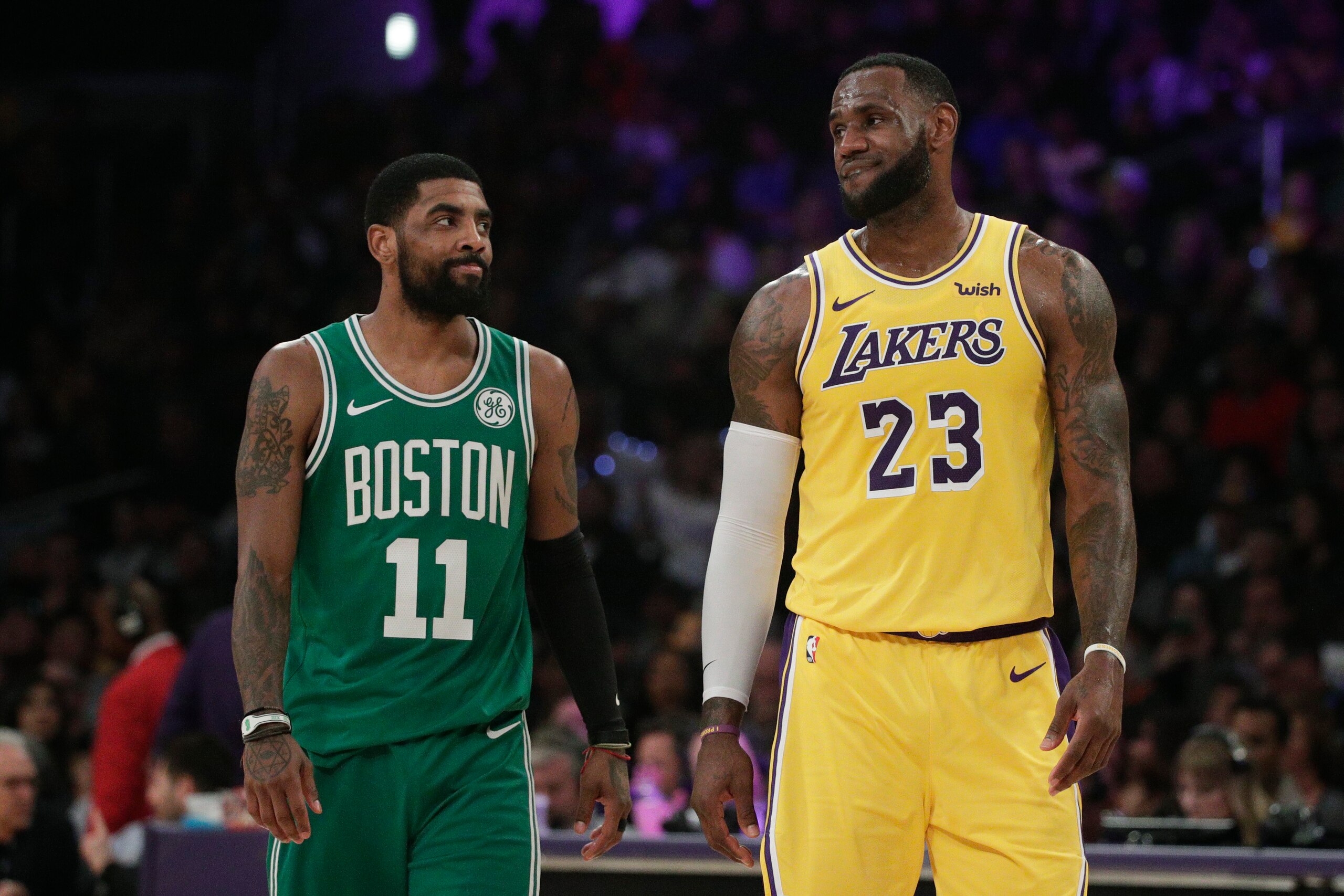
Target A: Kyrie Irving
Irving teamed with LeBron James to claim a world title before. Does it seem that far-fetched the talented twosome could find a way to make it work again with the Los Angeles Lakers?
Uncle Drew dazzles in a sidekick role. He can carry the offense whenever needed, and when he moves off the ball, he does so as a career 39.0 percent three-point shooter. He has enough off-the-dribble shake to free himself inside a phone booth, and he's cool enough in the clutch to author one of the biggest shots in recent NBA history.
While Irving previously tired of playing with LeBron, the two have since reconnected and dapped each other like teammates the last time they met. If the Lakers could officially bring them back together, they'd have the two key ingredients for a proven championship recipe.
Target B: Kawhi Leonard
So, all of those California connections to the Clippers? Yeah, they're the same ones that potentially link Leonard to the Lakers this summer.
He looks like what James might create if he could build the perfect running mate. Leonard can dominate offensively on or off the ball, and his activity at the opposite end could compensate for James' inconsistent effort there.
Target C: Kevin Durant
In terms of talent and fit, Durant should probably be the first priority. Then again, James' old training partner called the environment around playing with the King "toxic" due to the overwhelming amount of media attention, per B/R's Ric Bucher.
The Lakers would obviously welcome Durant if he wants to go there, but it's a long enough shot that they might want to initially put their free-agency focus elsewhere.
Target D: Kemba Walker
Most of what applies to Irving rings true with Walker, save for the shared-experience part. But Walker is a slightly less-rich-person's version of Irving in that he can create shots for himself and others, thrive as a spot-up sniper and cash in crunch-time buckets.
Target E: Nikola Vucevic
Something probably went wrong with the Lakers' offseason if they're prioritizing Vucevic, but as a scoring center with three-point range and a pinch of playmaking, he fits the player type James has succeeded with in the past.
Memphis Grizzlies
15 of 30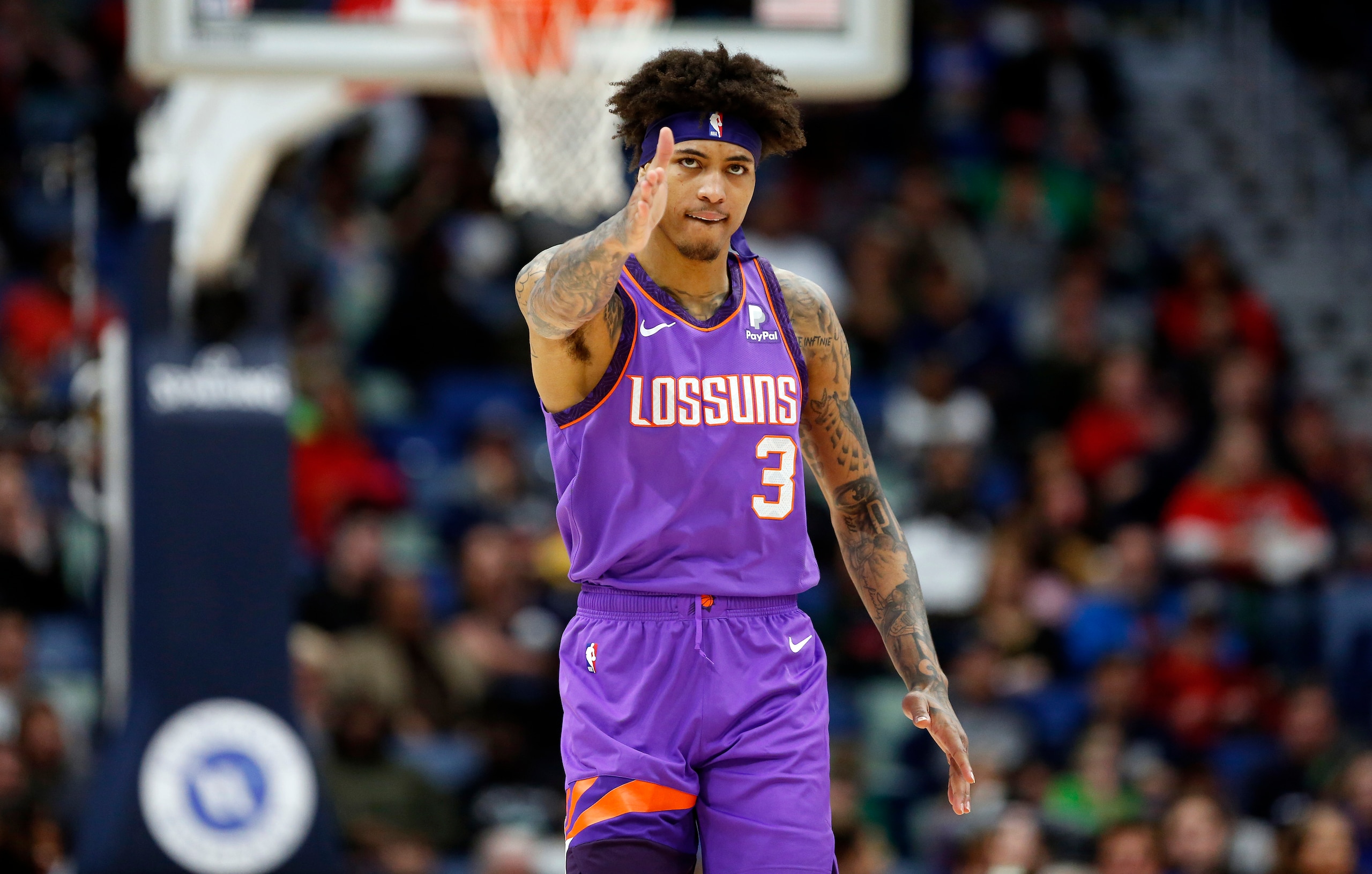
Target A: Kelly Oubre Jr.
As per usual, the Memphis Grizzlies are wing shopping. But with their future in the hands of 19-year-old Jaren Jackson Jr., Memphis will want a younger wing it can keep around for the long haul.
The 23-year-old Oubre might be the best available option, although it might be tricky to fit him into the budget without a cap-clearing Mike Conley trade. Memphis tried to get Oubre this past season, only for talks to disintegrate over a miscommunication regarding a pair of Brooks (Dillon and MarShon). The Grizzlies should be even more interested now with their focus shifting forward amid a front-office restructuring.
The 6'7", 205-pound Oubre isn't perfect. His three-point shooting comes and goes, and he underwhelms as a shot-creator. But he is long, effortlessly athletic, malleable on the defensive end and a weapon in the open court. Plus, he's young enough for a team to assume he has several stories to go before he approaches his ceiling.
Target B: Delon Wright
The Grizzlies made Wright a primary part of their return package for former franchise face Marc Gasol, which likely indicates a desire to bring the 6'5" lead guard back from restricted free agency.
He's a streaky shooter (at best), and since he's 27, that probably won't change. But his age also gives his established strengths some security, meaning his slashing, playmaking and multipositional defending are all reliable parts of his repertoire.
If Memphis moves away from Conley, Wright could be a roster lock regardless what happens on draft night. But even if Conley stays, Wright is probably worth keeping around in a featured reserve role.
Target C: Stanley Johnson
Four seasons into his NBA career, Johnson is still waiting for his first double-digit player efficiency rating (league average is 15, by the way). But if you squint hard, you might see enough in the 2015 top-10 pick to think he could function as a store-brand Oubre.
If nothing else, Johnson would address needs for athleticism and defensive versatility on the perimeter.
Target D: Jordan Bell
Potentially available for small money after a disappointing sophomore season, the 24-year-old still projects as an interesting long-term frontcourt partner for Jackson. That twosome would cover tons of defensive real estate, and Memphis could leverage Jackson's shooting ability to give the bouncy Bell extra room on his rim runs.
Depending on how they manage their incumbent roster, they may have access to their biannual and mid-level free-agency exceptions to bid on Bell.
Miami Heat
16 of 30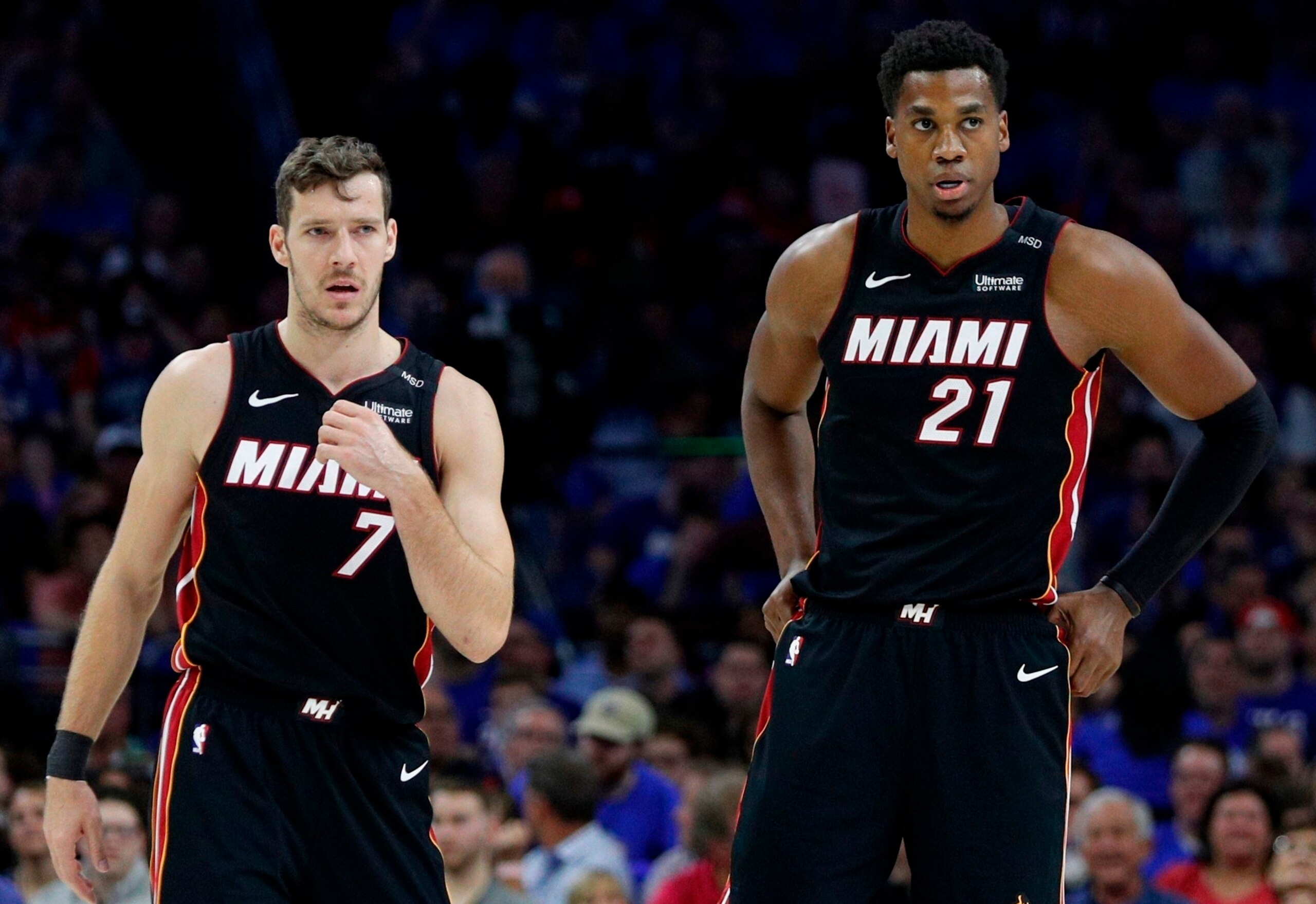
Target A: Goran Dragic
While both Dragic and Hassan Whiteside hold player options for next season, the former might be the only one who could still have a future in South Florida if he declines it.
The Dwyane Wade-less Miami Heat are desperate for scoring and shot-creating, and in the Dragon's last two healthy seasons, he's delivered 18.8 points and 5.3 assists per game. Dragic is also a good enough perimeter shooter (career 36.3 percent) to play off the ball should the Heat want their younger players to spread their wings.
It feels unlikely Dragic would leave his $19.2 million option on the table, but he says he hasn't decided. He's worth having around, either at his inflated current rate or a more reasonable annual salary on a longer deal.
Target B: Darius Miller
Miami is in the market for more shooting, but it might only have minimum deals to work with. But maybe that's enough to land Miller, a sniping specialist who's more good than great at his craft (36.5 percent this past season).
He looked better in 2017-18—perhaps not coincidentally when the New Orleans Pelicans fielded a more formidable roster. If the Heat could get that Darius Miller—147 threes at a 41.1 percent clip—for cheap, they might have one of the summer's better bargains.
Target C: T.J. McConnell
No matter what happens with Dragic, Miami might want another floor general to stash. McConnell's hustle and hard work could catch the eye of Heat coach Erik Spoelstra, and the franchise should have the funds to give chase.
Milwaukee Bucks
17 of 30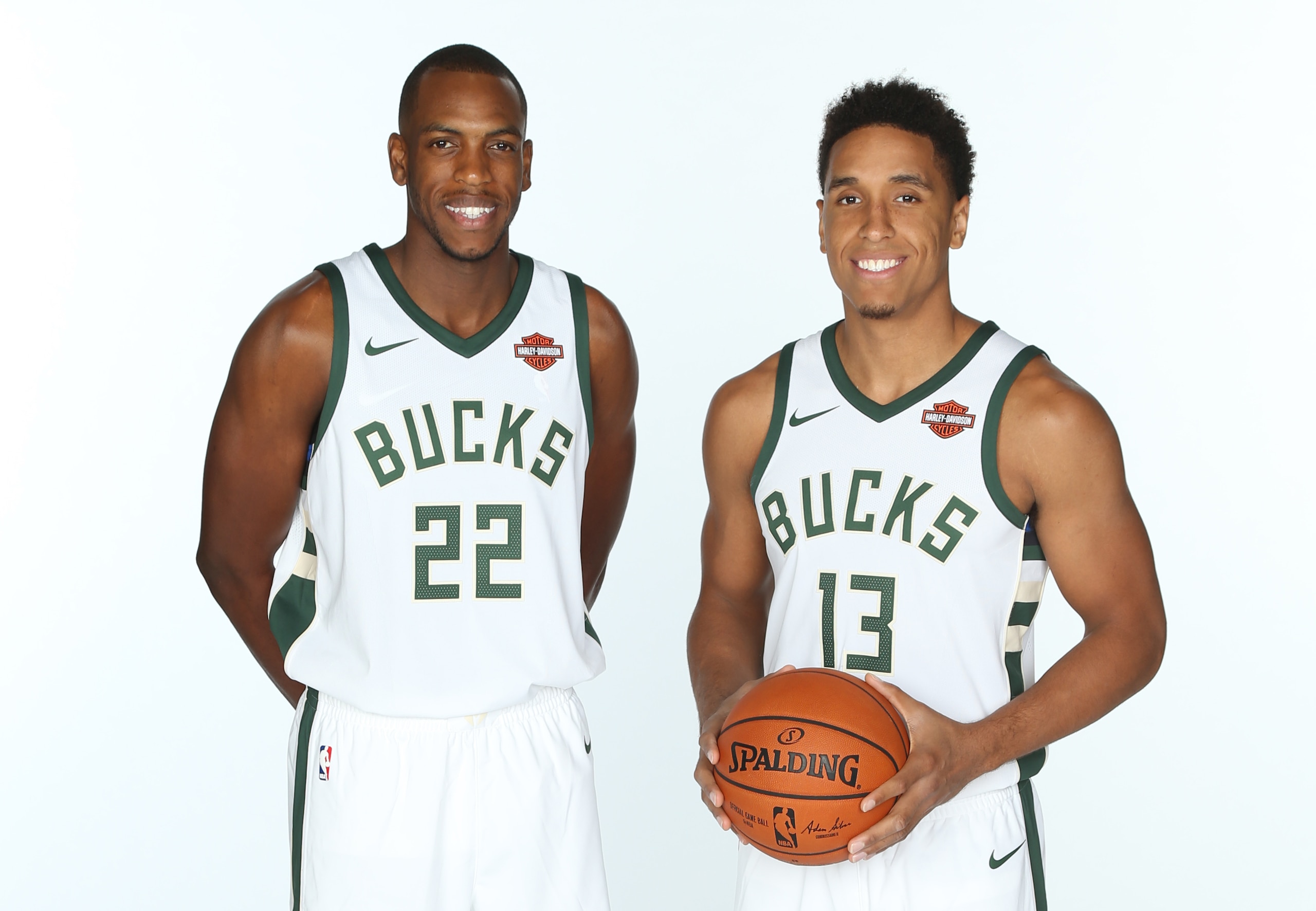
Target A: Khris Middleton
Congrats on the breakout season, Milwaukee Bucks! Now, prepare to literally pay for all this success.
Middleton is the first of several high-profile Bucks free agents, and he's the most critical to keep. Milwaukee must constantly prove capable of contending while it has Giannis Antetokounmpo, so it can't think twice about pinching pennies on a contract for its only other All-Star.
Maybe Middleton isn't a superstar, but he doesn't have to be. With Antetokounmpo directing the deer, Middleton can get in where he fits in. Sometimes, that means moving to the spotlight and throwing knockout blows at the opposition. Usually, it requires adapting as only a sidekick can, knowing where and when the superstar needs support.
Middleton might be Milwaukee's best volume-plus-efficiency shooter, and he's the top choice for non-Greek Freak scoring and perimeter defense. Even if Middleton's contract comes in a tad higher than his career trajectory says it should, that's an easy decision for the Bucks if it increases Antetokounmpo's confidence in them.
Target B: Malcolm Brogdon
Bucks coach Mike Budenholzer seems obsessed with shooting. Brogdon provides it at a more efficient level than most. While few were paying attention, the combo guard posted a pristine 50.5/42.6/92.8 shooting line.
His glue-guy game helps cover any shortcomings on a nightly basis, and his versatility extends to both ends of the floor. Unless the bidding on his restricted free agency gets out of control, the Bucks will match any offers.
Target C: Brook Lopez
Antetokounmpo paced Milwaukee's regulars with a plus-10.1 on-court net differential this season. Lopez landed one spot beneath at plus-7.0.
His three-point shooting gives this offense maximum spacing, and his paint protection helps mask any defensive leaks. As long as he doesn't price his way out of town, he's worth bringing back to the starting five.
Minnesota Timberwolves
18 of 30
Target A: Nikola Mirotic
The Minnesota Timberwolves are perpetually searching for perimeter shooting, and that won't easily be found given their cap constraints. But if they're willing to spend the full $9.2 million mid-level exception, maybe that's enough for Mirotic, who's sort of a more polished version of Dario Saric with more defensive resistance and three-point volume.
Mirotic might not be a knockdown splasher (career 35.9 percent), but he fires up so many that even maintaining middling efficiency gives him sufficient perimeter potency. And when he has elite scoring threats around him—like he would with Karl-Anthony Towns—Mirotic can torch inattentive defenses as a 38.2 percent finisher on catch-and-shoot threes.
He's more than a shooter, though. He's a crafty off-ball cutter, and he can transform into a punishing post scorer when smaller guards switch onto him. The 6'10" Mirotic is one of those right-place, right-time players who usually finds a way to be around the basketball.
Minnesota could use Mirotic to both complement Towns and buy the 25-year-old Saric a touch more developmental time.
Target B: Derrick Rose
Rose's free agency will be fascinating. He looked washed up in recent years—irreparably harmed by the knee injuries that popped up shortly after his MVP breakout in 2010-11. But then he somehow delivered his most efficient season since then in 2018-19, averaging 18.0 points and 4.3 assists per game while shooting 48.2 percent from the field and 37.0 percent from downtown.
Did Rose really regain his touch? Or did his past success cause everyone to overvalue a 51-game sample that was solid but not spectacular?
Maybe it was a mirage, but the Wolves are hurting enough for non-Towns scoring options that they should probably pay the price to find out.
Target C: Tyus Jones
Jones is one of two Minnesota point guards headed to free agency. The only floor general officially on next year's roster is Jeff Teague, who predictably pounced on his $19 million player option.
Teague will turn 31 in June. Rose's 31st birthday looms in October. Even if the Timberwolves keep both, there's an obvious need for a long-term point guard. The 22-year-old Jones, a top-30 point guard by ESPN's real plus-minus, is a good enough decision-maker to fill that void.
New Orleans Pelicans
19 of 30
Target A: Terry Rozier
Not to burst David Griffin's bubble of optimism, but no, we don't see any way the New Orleans Pelicans' new executive vice president of basketball operations can change Anthony Davis' desire for a ticket out of town. What we can't tell, though, is how seriously Griffin will consider cashing in his second-best trade chip, Jrue Holiday.
But with or without Holiday, the Pelicans have a clear opening for a plug-and-play point guard. That should get the 25-year-old Rozier firmly on the radar, and his addition would work as either an attempt to compete sooner than later or as a central piece of a rebuilding project.
The switch-flip Rozier orchestrated in last year's playoffs is tough to forget, especially for a club eager to upgrade from Elfrid Payton. Rozier's track record raises a few questions, but the only time he's had an opportunity as substantial as the one he'd get in New Orleans, he starred on the game's biggest stage.
Target B: Bojan Bogdanovic
Even if the Pelicans deal Davis, that doesn't guarantee they will head to the bottom of the standings. The return package will be substantial, and maybe it would yield more win-now talent than people expect.
If New Orleans is aiming at a competitive 2019-20 campaign, it'll want Bogdanovic to be a part of it. The slick-shooting swingman could stop the revolving door at small forward and elevate this offense with loads of spacing and complementary scoring.
Target C: Julius Randle
While set in different seasons, Randle's career highs include 21.4 points, 10.2 rebounds and 3.6 assists per game. That's solid stat-sheet saturation for anyone, let alone a 24-year-old who's previously flashed the abilities of initiating offense and defending multiple positions.
There are enough holes in his game to keep him from being an automatic keeper, but Randle's combination of production and potential is awfully attractive.
Target D: DeMarcus Cousins
Pipe-dream? Perhaps, but Cousins had issues with former Pelicans executive Dell Demps, not the team itself. Boogie was beloved in the Big Easy, and maybe he'd get the medical help he needs since New Orleans poached top trainer Aaron Nelson from the Phoenix Suns.
Target E: Derrick Rose
The one-time league MVP could scratch an itch for scoring, fill a void at point guard and help at the ticket gate for a team that likely will be reeling from Davis' loss. Maybe Rose would even leave a few dollars on the table for a chance to work with Nelson.
New York Knicks
20 of 30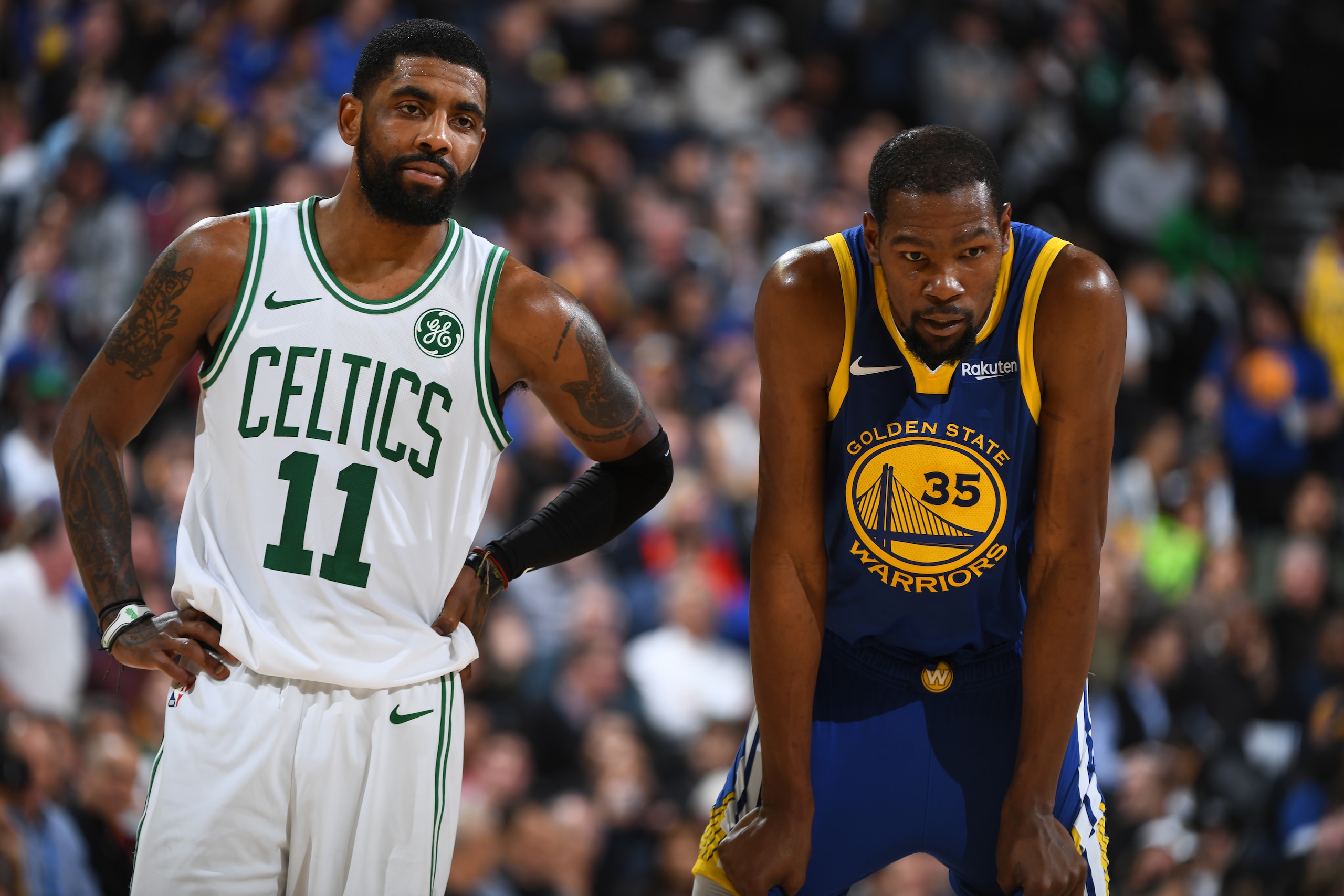
Co-Targets A/B: Kevin Durant and Kyrie Irving
The New York Knicks traded Kristaps Porzingis, a 7'3" unicorn, in January, and their best returning asset might've been the ability to create a pair of max-contract slots. Why? Because the 'Bockers are dreaming of a Durant-Irving pairing, per The Athletic's Frank Isola.
It's basically a Broadway reproduction of the Durant-Stephen Curry pairing. Durant can reprise his role of destroyer of all defensive systems. Irving can take the Curry role but add a pinch more isolation offense and perhaps a better flair for the dramatic.
Durant and Irving are already "best friends," so you'd think that bond would help the two play nice. While they're close enough in age to compete for a championship now, the 27-year-old Irving is just enough younger than the 30-year-old Durant to help extend their title window past the latter's prime.
There are other package deals who could make the Knicks relevant, dangerous and national-TV regulars. But the Durant-Irving duo seems the surest way to get back on the championship path.
Target C: Kawhi Leonard
It's not outside the realm of possibility that Leonard proves a better free-agency investment than either of the top two targets. If you can live with a possible health-maintenance plan, then he can return No. 1 scoring with elite efficiency and be a stopper in almost any situation.
Target D: Kemba Walker
He's from the Bronx. He's comfortable cooking at Madison Square Garden. He's a better scorer and table-setter than anyone the roster has. Ideally, he'd join the Knicks as Robin to either Durant or Leonard's Batman, but Walker might work a few miracles on his own.
Oklahoma City Thunder
21 of 30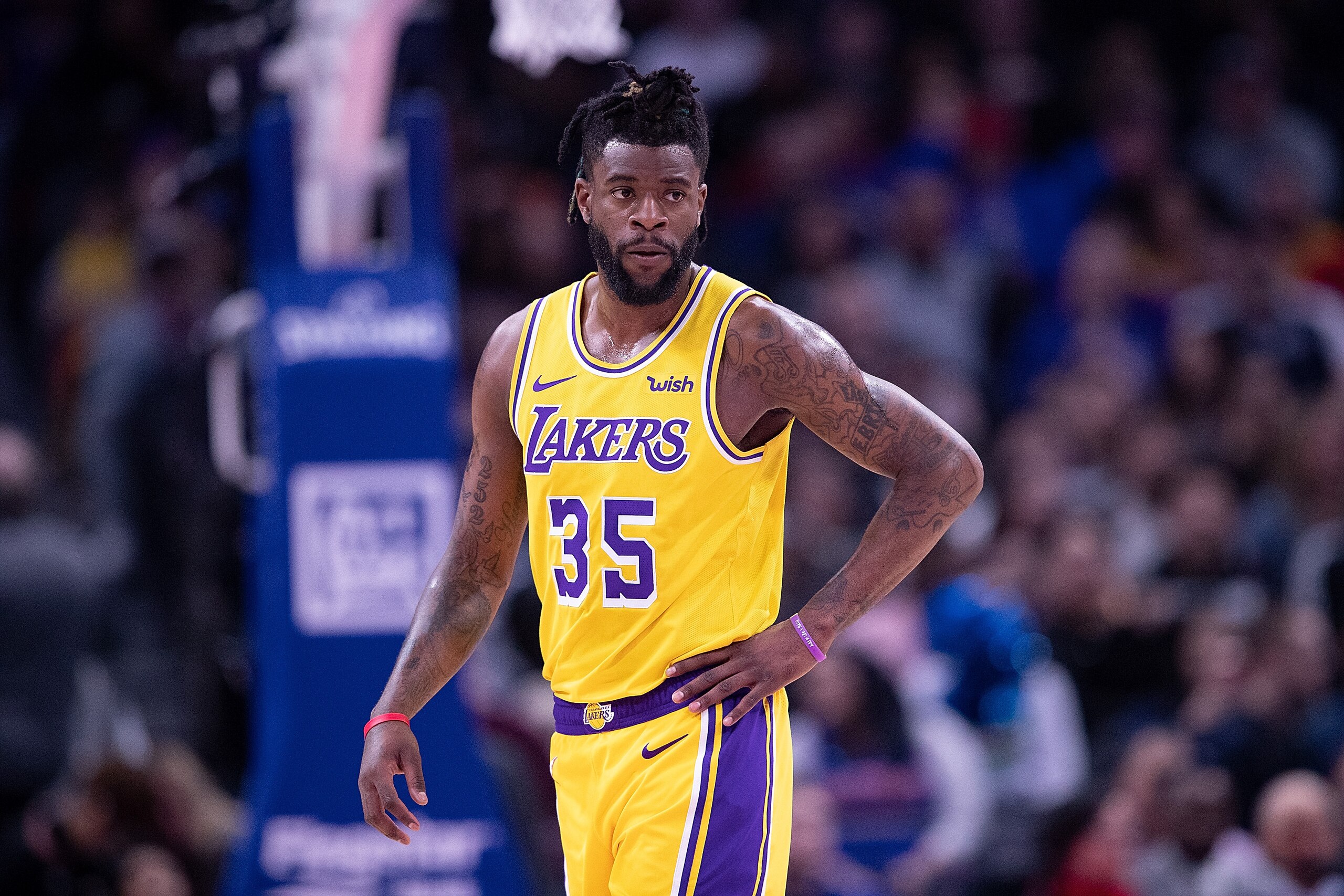
Target A: Reggie Bullock
Stop us if you've heard this before, but the Oklahoma City Thunder could use more shooting. You might think a team with a center who doesn't take any threes (Steven Adams) and a point guard who doesn't make many (Russell Westbrook) would have packed itself to the brim with spacers, but nope. Paul George is their only player who made at least two triples per game and one of only two who topped 37 percent from distance.
The question becomes: How much can OKC—and wants to—spend to address this issue? Bullock, a 28-year-old who only emerged as a rotation regular in 2017-18, wouldn't break most banks. But if he costs the $5.7 million taxpayer mid-level exception, ESPN.com's Bobby Marks notes the total hit to the Thunder would be a whopping $24 million.
Maybe that's worth it. It's not like the Thunder have a ton of time to build around George (29) and Westbrook (30). Plus, Bullock provides both a sure shot from distance (career 39.2 percent) and an ability to manufacture offense off the bounce.
Target B: Wayne Ellington
If you're sensing a theme, you should. This summer is all about shooting in the Sooner State, and Ellington offers some of the most accurate you'll find. The 31-year-old is one of only seven snipers to average at least two threes and shoot them at a 37-plus-percent clip in each of the last three seasons.
Ellington is a specialist to the core, and his defense can be problematic if he's logging major minutes. That said, his repeatable form and textbook footwork make him an asset on scripted plays to generate threes—plays that theoretically ease the burden on Westbrook and George to create.
Target C: Wesley Matthews
Matthews, 32, is the oldest of these three and not quite as accurate from distance. But he's probably the best defender, which potentially matters a lot if that's where the Thunder plan to form their identity.
Orlando Magic
22 of 30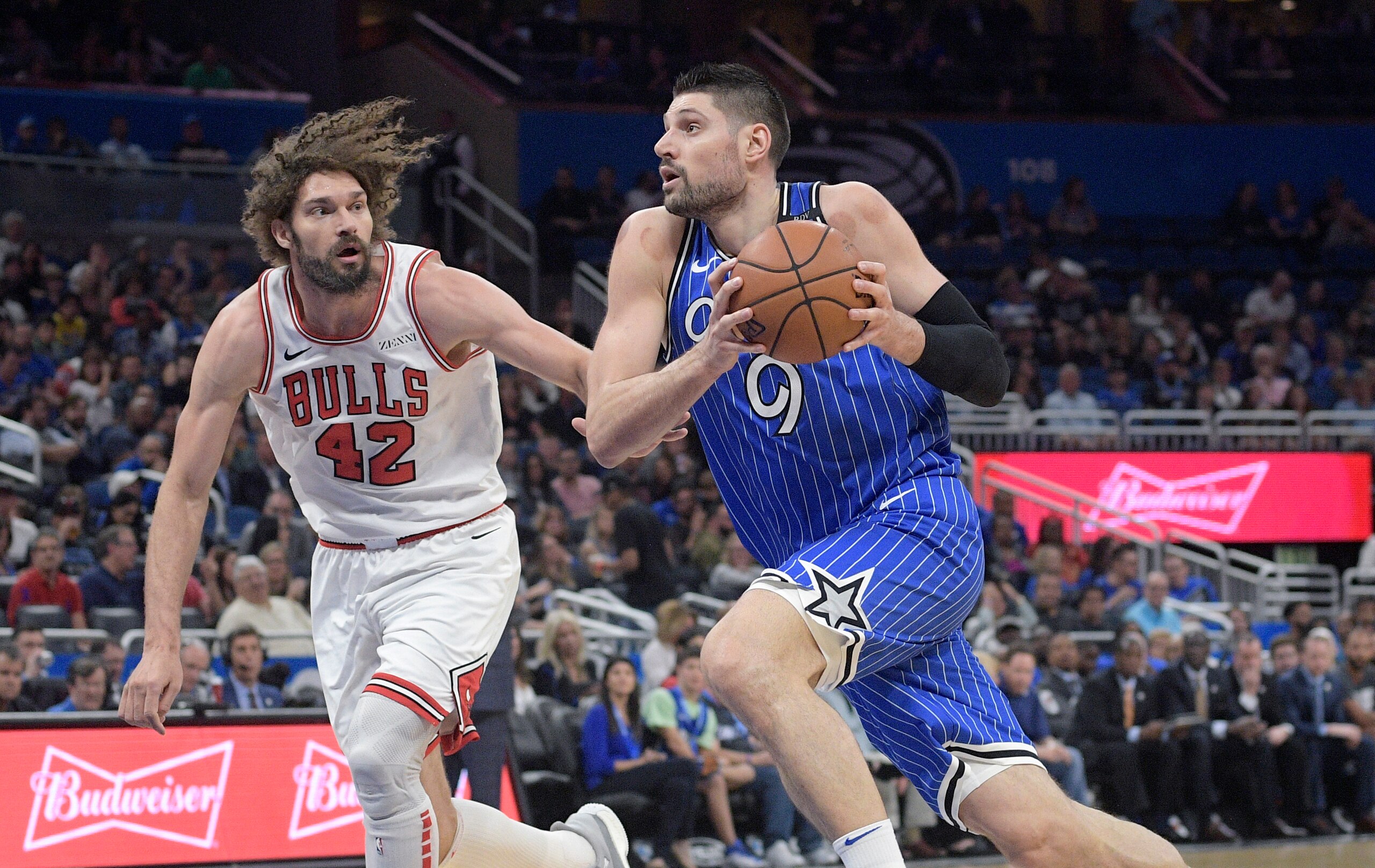
Target A: Nikola Vucevic
If not for Vooch's 2018-19 breakout, the Orlando Magic would still be waiting for their first post-Dwight Howard All-Star and playoff berth—and the team traded the latter in August 2012. That should effectively secure Vucevic's future in Orlando—provided he's looking to stay.
"Bringing Vooch back is a priority," Magic president of basketball operations Jeff Weltman said, per Roy Parry of the Orlando Sentinel. "That being said, Vooch is going to have a lot of teams who will make him a priority for them, too. ... Hopefully we can get something done."
To be clear, there's risk with Vucevic. He won't become a bust, but he might not be as good as he looked last season (much like his first seven years in the league). And if he's not, he could eventually become an obstacle in the development of blue-chip prospects Mohamed Bamba and Jonathan Isaac.
But those are risks worth taking. Paying Vucevic not only gives the Magic a superbly skilled big man, but it also sends the message that this franchise rewards All-Star production and team success.
Target B: Terrence Ross
As long as the Magic are in a giving mood, why not reward their springy sixth man who had a career campaign as a scorer (15.1 points per game) and shooter (2.7 threes per night, 38.3 percent)?
Ross had never been that productive before, but his next contract should reflect that. More importantly, the Magic can re-sign him without using an exception, and they'd get no real salary relief by letting him walk.
Target C: Darren Collison
Collison isn't exciting, but neither is point guard shopping with only the mid-level exception available. He might be a shade more helpful than D.J. Augustin, and hopefully the two vets aren't more than bridge to Markelle Fultz, anyway.
Philadelphia 76ers
23 of 30
Target A: Jimmy Butler
The Philadelphia 76ers were fine in mid-November, coming off a 52-win season and eager to see what was next for their talented young tandem of Joel Embiid and Ben Simmons. Their willingness to rock that boat with a blockbuster deal for a disgruntled Butler—who was in the process of destroying another young team's locker room—showed how much they believed in his talent and their own.
Nearly six months later, the swap seems like a stroke of genius. Butler has given Philly a ferocious perimeter defender and a fearless finisher in crunch time.
The Sixers look as dangerous as any team in the East. While Embiid is the biggest reason for that, Butler is probably No. 2. It'd be tough for the Sixers to let him walk after they gave up a lot to get him and grew with him during the season, even if this roster might get absurdly expensive in a hurry.
Target B: Tobias Harris
The Butler swap was such a success that the Sixers essentially repeated it at the February trade deadline. They gave up a small army of future assets to acquire the Clippers' then-leading scorer, but Harris seemed like the perfect addition as a player who could both take over as a scorer or support someone else as a spacer.
The transition hasn't been seamless, but there's been plenty more good than bad. His counting categories haven't always shown it, but he has tried to blend his talents to best fit his new team.
While this is always subject to change, Sixers owner Josh Harris said they're ready to take a big financial hit to keep this group together.
"We gave up a lot to get Tobias and Jimmy on our team," Harris told ESPN.com's Jackie MacMullan. "We think they're exceptional talents. We're going to try to keep them. We know we are going to have to pay these guys in an appropriate way."
Target C: JJ Redick
If Philly busts open the piggy banks for Butler and Harris, why not do the same with Redick? On a team that can struggle with spacing, Redick's flamethrower (career 41.3 percent from three) has become an integral part of this attack.
Target D: Wayne Ellington
With or without Redick, the Sixers need more marksmen. Ellington, a native of nearby Wynnewood, Pennsylvania, is a natural target, especially if he's amenable to a hometown discount.
Phoenix Suns
24 of 30
Target A: D'Angelo Russell
The Phoenix Suns opened this past season with Isaiah Canaan as their starting point guard, and they closed it with Elie Okobo manning the position. The point guard search, as you might have guessed, is ongoing.
If the Suns can't solve it on draft night—what up, Ja Morant?—they should make a serious push for Russell, a 23-year-old All-Star who happens to be good friends with Devin Booker. The latter hasn't had many reasons for excitement through four years in the desert, but it sounds like snagging Russell would do the trick.
"I would love to play with him," Booker said, per Newsday's Greg Logan. "He makes people around him better. He's a dynamic player. He has the utmost confidence in himself that I don't think will change ever. That's why we have the relationship that we do."
If you put Russell and Booker in the same backcourt, the Suns will have a pair of three-level scorers who can also find shots for their teammates. With Deandre Ayton manning the middle and some combination of Mikal Bridges, Josh Jackson, T.J. Warren and/or Kelly Oubre Jr. potentially filling the forward spots, Phoenix might have the backbone of a full-fledged contender.
Target B: Kelly Oubre Jr.
Can't have the Valley Boyz without Oubre, right?
Only Oubre can explain how a 63-loss squad could get a nickname, but his energy proved just as helpful to the Suns as his length, athleticism, defense and rebounding. It'd help if his outside shot ever came around, but he averaged 16.9 points while shooting just 32.5 percent from three in 40 games with Phoenix.
The 23-year-old's youth and physical tools could endear him to several suitors, but it would probably take a ton of cash to pry the restricted free agent out of Phoenix.
Target C: Terry Rozier
The Suns previously deemed Rozier worthy of sacrificing a first-round pick. Surely, they think he's worth an early-a.m. call in free agency, although he might need to wait for their Russell pursuit.
Portland Trail Blazers
25 of 30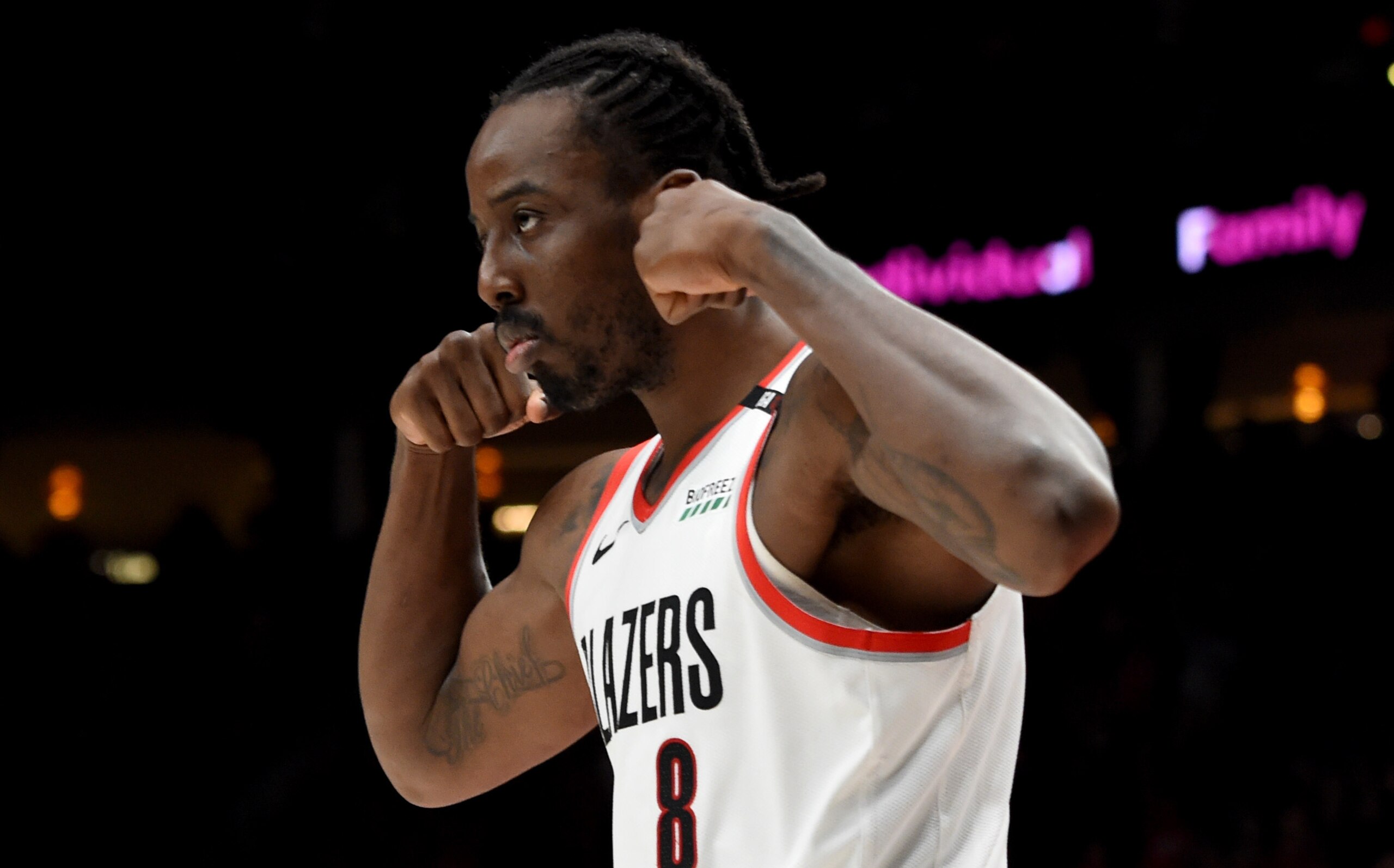
Target A: Al-Farouq Aminu
If there's a way to make the undersized, offense-driven backcourt combo of Damian Lillard and CJ McCollum work, it probably involves rostering plenty of players like Aminu.
It's not just that the malleable swingman stands as perhaps the Portland Trail Blazers' most important defender. Or that the threat of his outside shot widens the attack lanes for the 6'3" Lillard and 6'3" McCollum. Or that minor improvements in his off-the-bounce arsenal have made him harder to stop and easier to entrust with major minutes.
More than all of the above, it's about Aminu's willingness to buy completely into his role and let Lillard and McCollum steer the ship. Aminu rarely strays outside his designated lane, so Portland almost always knows what to expect from "Chief."
After letting locker room favorite Ed Davis depart last summer, the Blazers can't risk losing another mainstay, so they better start searching through the couch cushions for a way to cover Aminu's cost.
Target B: Rodney Hood
The Blazers probably don't have the budget room to make this work, but if they did, they'd be smart to keep Hood.
Having elite scorers like Lillard and McCollum protects Portland from being exposed by Hood's volatility, but the lack of other top point producers means the Blazers can easily ride Hood's hot hand when he's feeling it. Already these playoffs, he's had one game where he played fewer than 13 minutes and took only two shots and another in which he logged more than 23 while finishing third on the team with 19 points.
He might be the best shot-creator not named Lillard or McCollum, and his outside stroke is good enough for him to suit up alongside one or both. The fit is right, so long as the money is.
Target C: Anthony Tolliver
Any chance Tolliver could be had for minimal money? If so, he'd increase this offense's flexibility as a shooter who can play all three frontcourt positions.
Sacramento Kings
26 of 30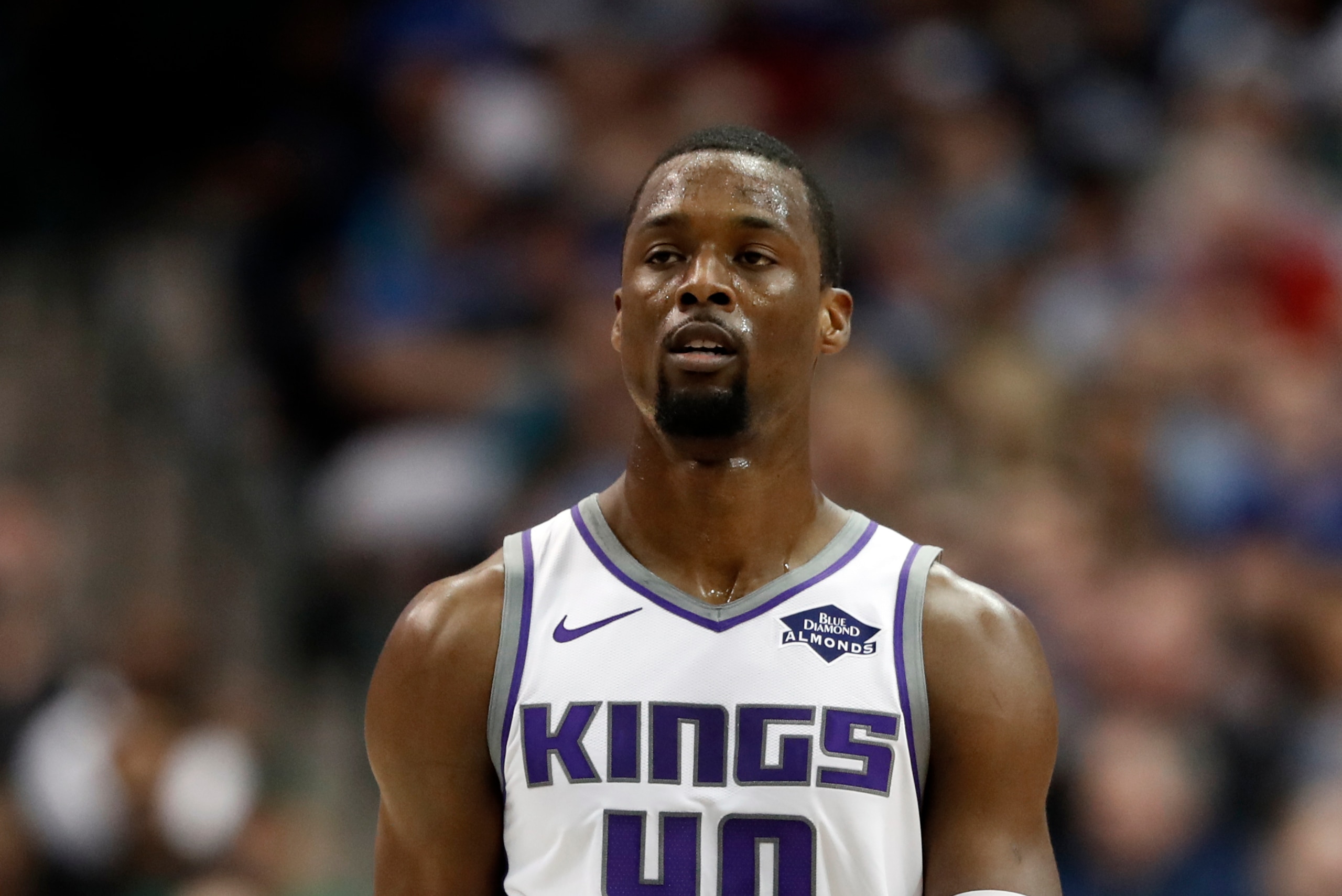
Target A: Harrison Barnes
The Sacramento Kings invested much of their cap space early by dealing for Barnes at the deadline. Should he decline his $25.1 million player option, the first order of business probably entails getting his commitment on a longer contract with a smaller annual salary.
The 6'8" Barnes is the big forward this defense needed to contend with the Kevin Durants and Kawhi Leonards of the world. Barnes is also a weapon in the open court and a sneaky-good spacer (39.5 percent from three this past season), both of which make it smart to slot him alongside De'Aaron Fox.
Barnes isn't quite a star-level scorer, but this roster doesn't ask him to be one. As long as his next contract takes that into account, the Kings might want to lock him up while they can.
Target B: Nikola Vucevic
If the Kings covet a big-ticket item, Vooch is likely the best available.
He can play the uptempo, spread-out style that new Kings coach Luke Walton wants. Vucevic can also power this team through scoring droughts by punishing defenders in the post or dissecting them from distance. His increasing effectiveness as a passer should help bring Sacramento's young pieces together.
There could be some long-term concerns about sticking Vucevic in the paths of Marvin Bagley III and Harry Giles III, but for now, there should be enough frontcourt minutes to go around.
Target C: Emmanuel Mudiay
With both Yogi Ferrell and Frank Mason III holding non-guaranteed deals for next season, Sacramento could be in the market for a new backup point guard. Mudiay isn't much of a shooter, but his athleticism and court vision would help the Kings keep the accelerator floored, even while Fox sits.
Target D: Willie Cauley-Stein
The Kings should be extra cautious about not overpaying Cauley-Stein, but if his market collapses—not a stretch in this environment given his offensive limitations—he's worth holding onto as insurance and a possible trade chip.
San Antonio Spurs
27 of 30
Target A: Rudy Gay
The San Antonio Spurs don't have much wiggle room or many roster spots to fill, making Gay's upcoming free agency their obvious priority.
The 32-year-old is more than two years removed from his Achilles tear, and while he lost some scoring volume in his move to the Alamo City, he's as efficient as ever. Last season was his first above 50 percent from the field (50.4) and 40 from three (40.2).
The Spurs will want to keep what scoring they have, especially if they plan to trot out a starting backcourt of Dejounte Murray and Derrick White. Gay is the only one of San Antonio's five double-digit scorers not under contract for next season.
Target B: Garrett Temple
After losing Danny Green in the Leonard deal, the Spurs never found their three-and-D replacement. Temple is their low-cost attempt to do so, with the hope he can rediscover his form after a disappointing 2018-19 season (34.1 percent from three, his lowest conversion rate in five years).
But if he lands above 37 percent, as he did the previous two seasons, he'll suddenly be an asset as both a floor spacer and versatile backcourt defender. While San Antonio has no shortage of interesting youngsters along the wings, Temple could help mentor those players and contribute to this core built around DeMar DeRozan and LaMarcus Aldridge.
Target C: Thabo Sefolosha
While not great in either area, Sefolosha would help with concerns surrounding the team's three-point shooting and wing defense.
Toronto Raptors
28 of 30
Target A: Kawhi Leonard
This is what the Toronto Raptors' entire 2018-19 season comes down to, isn't it?
They knew Leonard had an uncertain future when they traded for him last summer—losing DeRozan, who was then the franchise face, in the process. They knew Leonard was no guarantee to re-sign when they doubled down on their commitment to the current core by trading for Marc Gasol at the February deadline.
They deduced any risks associated with Leonard's impending free agency were dwarfed by the potential on-court rewards. They've looked like geniuses since, with Leonard having scored at least 25 points on 54-plus percent shooting in eight of the team's nine playoff games.
"That man is Kobe," Raptors wing Norman Powell said, per Bruce Arthur of the Toronto Star. "He's a superstar, man. He gets after it. He doesn't care who's in front of him, he knows what he's worth, he knows what he can do ... superstars in the league, Kevin Durant, James Harden, he's up with those guys."
It's not a stretch to say Toronto's fate rests in Leonard's massive mitts. If he sticks around this summer, the Raptors will likely remain committed to this core. But if he goes, there could be an exodus of high-priced veterans coming out of the north.
Target B: Danny Green
While he was used to help make the money match in last summer's Leonard blockbuster, Green quickly showed he's far more than salary-filler. After three down shooting seasons, he suddenly got his groove all the way back, hitting 46.5 percent from the field and a personal-best 45.5 percent from three.
Father Time could sneak up on the 31-year-old any moment, but for now he remains one of the league's best three-and-D options.
Target C: Wilson Chandler
If winning is the focus for Chandler's age-32 season, maybe he'd consider a discounted deal with the Raptors and add to their collection of long-limbed, rangy wing defenders.
Utah Jazz
29 of 30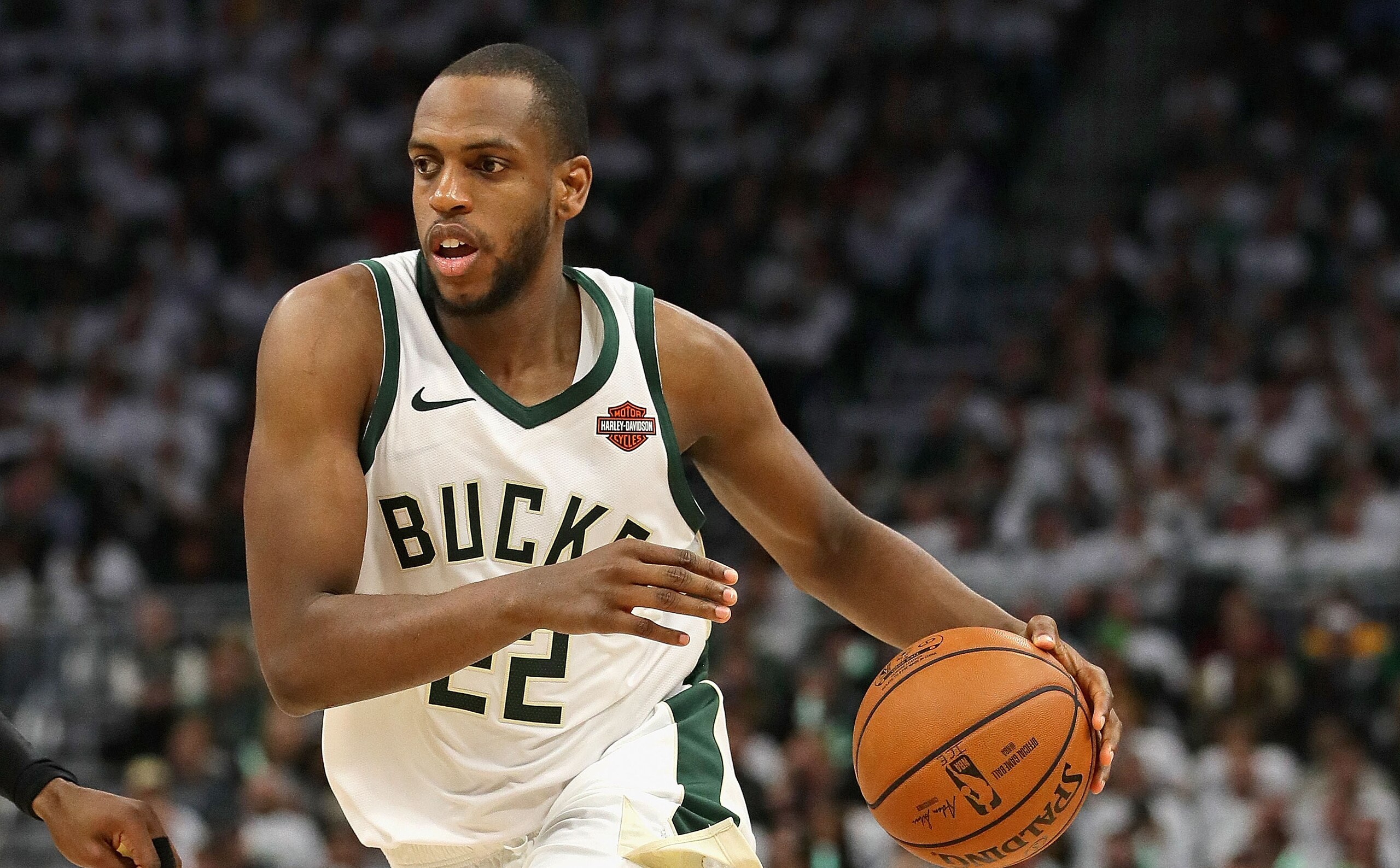
Target A: Khris Middleton
He'd be the best third wheel alongside Donovan Mitchell and Rudy Gobert, and he can create his own offense, find shots for others and defend. Take the elites out of the equation, and doesn't Middleton become the best option for the Utah Jazz?
Mitchell wouldn't need to change to accommodate Middleton, but the latter would allow the former to become a more discerning attacker. Middleton's shooting touch would keep the floor spaced for Mitchell-Gobert pick-and-rolls, and Middleton has the on-ball creativity to run those plays himself.
Middleton's defensive versatility is what makes him the target and not, say, Kemba Walker, who could be exploited in a small backcourt with Mitchell.
Target B: Malcolm Brogdon
Brogdon lacks some offensive ingenuity, but he could accentuate parts of Mitchell's game and make them better.
Mitchell's drive-and-kicks would have another high-level recipient with Brogdon, a 40-plus percent three-point shooter in two of his first three seasons. Brogdon could also help Mitchell save some energy at the defensive end by taking on the toughest assignment. Plus, Brogdon's intelligence and selflessness help him make those extra passes that turn good looks into great ones.
Target C: Patrick Beverley
Putting Beverley at the head of Quin Snyder's defense almost isn't fair. Moving from Ricky Rubio to Beverley would rob the Jazz of some passing, but if Mitchell is running most of the offense anyway, Beverley's superior outside shooting could be the better complement.
Washington Wizards
30 of 30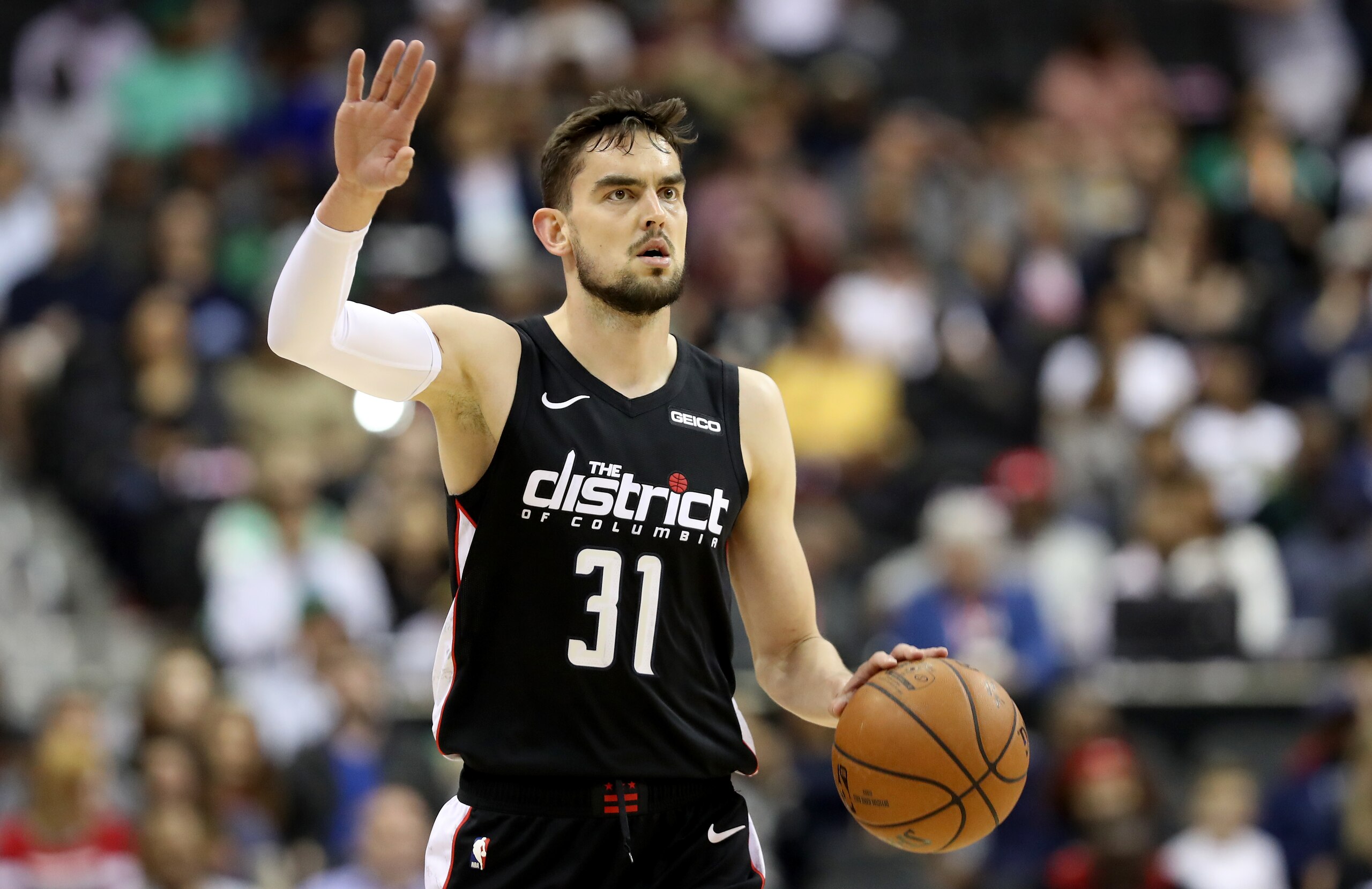
Target A: Tomas Satoransky
The Washington Wizards needed more playmakers before John Wall ruptured his Achilles. If keeping Satoransky didn't top the list before, it's an obvious first choice now.
At 6'7", 210 pounds, Satoransky can steer the offense as a jumbo-sized lead guard. He started 45 games in relief of the injured Wall, averaging 11.0 points, 6.6 assists and 4.6 rebounds in those contests. He also put together an impressive 50.1/42.2/80.5 slash over the past two seasons.
Considering he's a restricted free agent, the Wizards would have no excuses for letting him go, save for a problematically priced offer sheet.
Target B: Bobby Portis
The Wizards are cash-strapped as usual, so they'll do most of their offseason shopping in house. Portis should factor heavily into those plans after he hit the ground running following a February deal to the District.
The 6'11", 250-pounder brings scoring, shooting, rebounding, toughness and energy to either frontcourt spot. He started 22 of his 28 games with the Wizards, engineering seven 20-point outbursts, four of which also featured double-digit boards.
Target C: Thomas Bryant
It's tough to tell what the future holds for Bryant, which is actually one of the top reasons to keep him around. When a 6'11", 21-year-old center posts per-36-minute averages of 18.2 points, 10.9 rebounds, 1.6 blocks and 0.8 threes, rebuilders don't have a choice beyond bringing them back to see what the next chapter holds.
Statistics courtesy of Basketball Reference and NBA.com. Salary information obtained via Basketball Insiders.
Zach Buckley covers the NBA for Bleacher Report. Follow him on Twitter: @ZachBuckleyNBA.

.jpg?w=2560 "Mahomes Told Teammate to Leave Meeting")
.jpg?w=2560 "🚨 Week 8 AP Top 25 Poll")
.jpg?w=2560 "Baker Gets Glove From Rays 🧤")
.jpg?w=2560 "Steelers Roll Saints in Paris")
.jpg?w=2560 "5 Teams Eyeing Jonathan Taylor")
.jpg?w=2560 "NFL investigating Eagles")
.jpg?w=2560 "Updates from EVERY Game")