How NBA's Salary-Cap Increases Will Affect 2019 and 2020 Offseasons
Nothing will ever come close to matching the NBA's salary-cap eruption from 2016. That $24-plus million leap was unprecedented, and it will remain unparalleled.
But after a few seasons' worth of minor upticks, the league is now projecting some meaningful bumps ahead of the 2019-20 and 2020-21 campaigns, according to The Athletic's Shams Charania:
TOP NEWS

Buzz: Bron Chopper Part of Deal 🚁

MJ Makes Record-Setting Donation 🙌
Shams: KAT, Hart Could Be Trade Names
Next summer's projections represent a $7.1 million spike over this year's cap figure. The jump prior to 2020-21 will be even larger, checking in at $9 million.
Early forecasts can change, and these ballpark figures are not unexpected. The NBA has been waiting on this extra bump. But now that it's here in semi-official form, the potential repercussions are being brought into clearer view.
Ain't No Party Like a Max-Contract Party
No-brainer max-contract candidates were hard to come by this past summer. Kevin Durant, Nikola Jokic and Chris Paul were never going to leave their respective franchises, which left the field to duke it out over Paul George and LeBron James. (R.I.P. to DeMarcus Cousins' max-contract stock.)
That finite pool of superstar cachet jibed with the open market. Fewer than 10 teams had access to max money. A deeper free-agent class would have been met with underwhelming player movement and/or a deluge of short-term agreements.
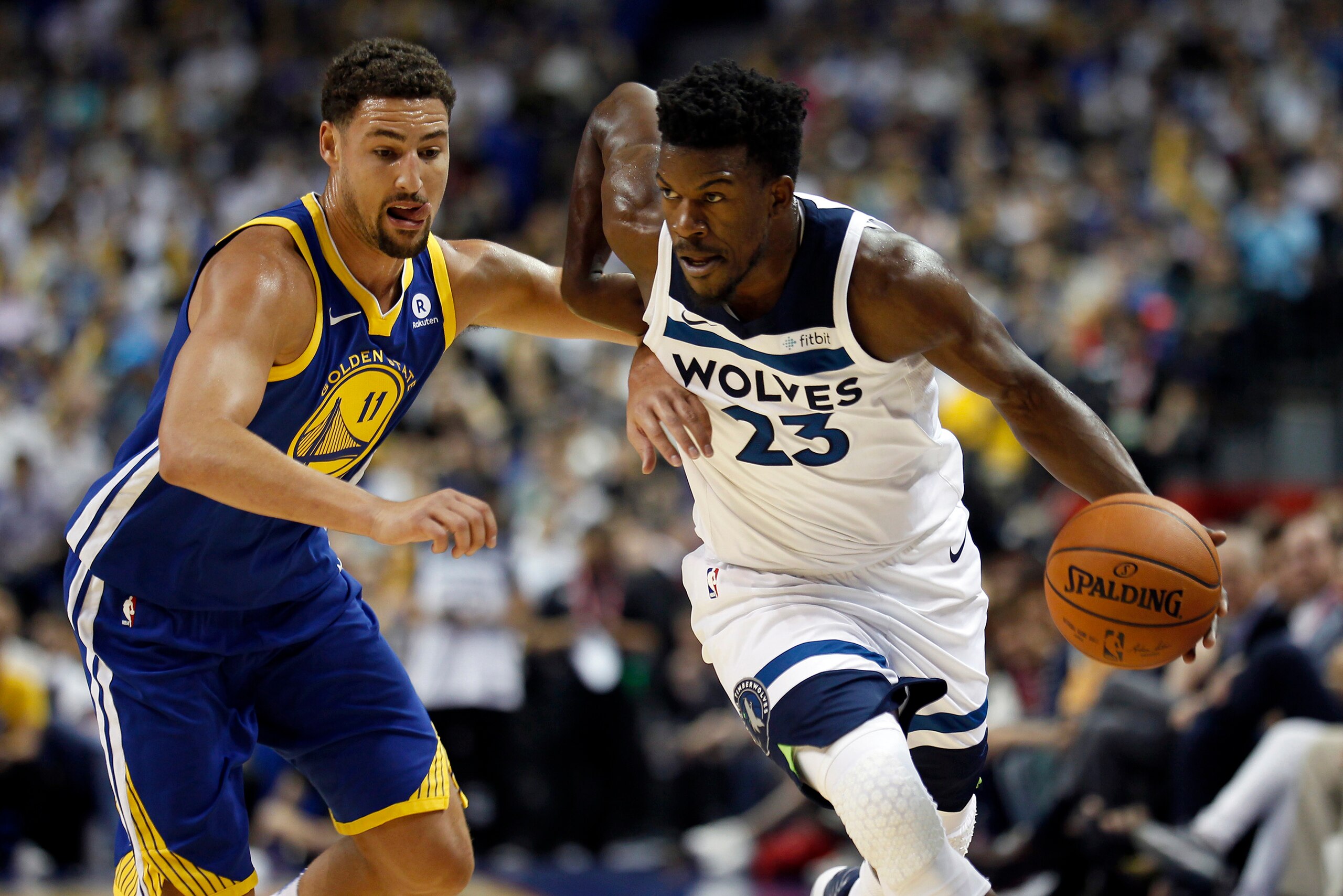
This coming year's collection of marquee names is incomparably deeper. Just look at the list of prospective names: Durant (player option), Jimmy Butler (player option), Al Horford (player option), Kyrie Irving (player option), Kawhi Leonard (player option), Klay Thompson and Kemba Walker.
Potential forays into restricted free agency from Kristaps Porzingis, Karl-Anthony Towns and D'Angelo Russell could get interesting as well. Beyond them, there will be near-max candidates in Eric Bledsoe, Khris Middleton (player option) and Tobias Harris. Feel free to throw in Boogie, Marc Gasol (player option) or DeAndre Jordan, too.
None of these players—including the non-megastars—will struggle to cobble together ambitious markets. About one-third of the league will wake up on July 1, 2019 with max space or a feasible path to creating it:
- Atlanta Hawks
- Brooklyn Nets
- Chicago Bulls
- Dallas Mavericks
- Indiana Pacers
- Los Angeles Clippers
- Los Angeles Lakers
- Philadelphia 76ers
- Sacramento Kings
- Utah Jazz
More than a few squads, meanwhile, will have the means to crash this party.
Waiving and stretching Joakim Noah fast-tracks the New York Knicks toward max money. The Denver Nuggets can get there if they decline Paul Millsap's team option and grease the wheels of a Mason Plumlee salary dump.
Even the New Orleans Pelicans can come close to entering 2019's jamboree. If Julius Randle declines his player option and they include the sweeteners necessary to lop off Solomon Hill's expiring deal, they can tip-toe their way to max(ish) territory.
Things are liable to get wild anytime nearly half of the Association's teams approach this much breathing room. Bidding wars for non-max players may ensue. Other teams without cap space will have more salary-dumping options at their disposal. Most of all, superstars get to weigh the best basketball fits versus the glitziest markets.
Overnight Superteams

In many cases, it takes superstars to get superstars. A team with an incumbent A-lister and cap space is traditionally far more appealing than the suitor with money to burn but no star power to spare.
Next summer figures to be an exception for a few well-positioned organizations. Though the NBA isn't staring down the barrel of a reprise of the 2010-11 Miami Heat, the top names will have the option of sussing out a mutual landing spot. And two of those destinations just so happen to fall among the league's most magnetic markets:
- Brooklyn Nets: Renouncing all of their own free agents gives them a shot at chiseling out more than $60 million in room. Parting ways with all three of Russell, Spencer Dinwiddie and Rondae Hollis-Jefferson (restricted) is a tall order that runs counter to general manager Sean Marks' gradual heroics, but the Nets are on the map. They made Butler's preferred list of trade spots, per ESPN.com's Adrian Wojnarowski, and the All-NBA wing is apparently serious about teaming up with Irving, according to ESPN.com's Zach Lowe.
- Dallas Mavericks: If Harrison Barnes declines his player option in search of a longer-term pact (unlikely), the Mavericks will have buddy-cop maxes within their sights. That, plus Luka Doncic and Dennis Smith Jr., is a pretty darn good sales pitch.
- Los Angeles Clippers: The Clippers are also on Butler's radar, but they should be in no rush to move assets for his services. They have an even easier path to dual maxes. Renouncing all of their own free agents while waiving Avery Bradley gets them comfortably past the $50 million marker, and they have a ton of movable deals from there—namely, Montrezl Harrell and Lou Williams—they could offload to reach $70 million or more.
- Sacramento Kings: Laugh if you must, but the Kings will be flush with cap space next summer. Renouncing all of their own free agents, including Willie Cauley-Stein (restricted), and playing around with their army of nonguarantees sets the stage for almost $70 million in spending power.
How much of an impact this quartet—specifically the Nets and Clippers—will have on the market remains unclear. If nothing else, they broaden the scope of options for the league's biggest names, which puts a smidge of extra pressure on any team touting one max spot.
Some of the effects may already be at play following Butler's trade request. As Woj wrote, Butler "had once imagined playing for the Los Angeles Lakers, but LeBron James' arrival as the franchise's cornerstone made it less appealing for Butler in the prime of his career."
Other headliners might feel the same way with so many alternatives from which to choose. And if the allure of joining forces with another star on the Clippers or Nets is a genuine threat, it makes the opportunity to trade for someone like Butler before he reaches the open market that much more valuable.
Breaking Up the Warriors
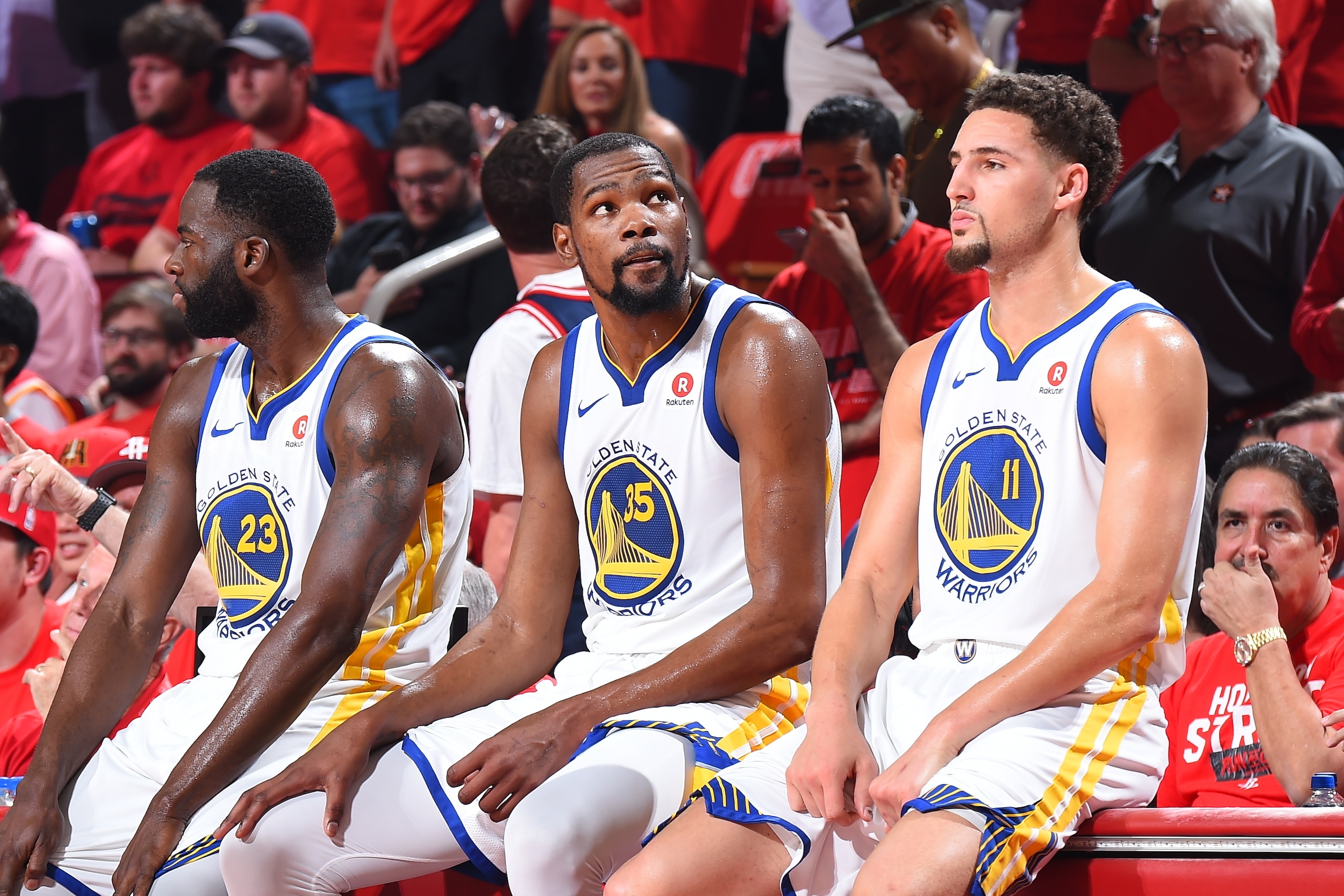
Anyone hoping the latest cap projections would expedite the Golden State Warriors' demise is bound to be disappointed. Nothing has changed on that front relative to next summer.
Paying max money for both Durant and Thompson assures the Warriors of a payroll that blows past $160 million. Use that figure as a baseline, and they're facing a repeater tax bill of around $105 million.
Golden State won't flinch at that number entering 2019-20—not with its new arena, Chase Center, set to open and a dynasty on the line. Even the most frugal franchises can be convinced to stomach steep operating costs for a season before reassessing the situation one year later, and Warriors ownership, with discounts from Durant in mind, hasn't exactly pinched pennies during this historic run.
Proponents of championship parity must wait for 2020 at the absolute earliest for Golden State's demise. Draymond Green is ticketed for free agency that summer, and he rightfully doesn't seem like the type to shell out discounts to billionaires. At that point, the Warriors would have to reconcile paying max deals to Durant, Green, Thompson and Stephen Curry, which would run more than $155 million before taxes.
Perhaps that figure wouldn't scare the Warriors, either. Both Andre Iguodala and Shaun Livingston will be off the books by 2020-21. Subbing in cheaper placeholders could buy them another year or two. Then again, maybe it won't. As The Athletic's Danny Leroux explained last summer:
"The youngest, Draymond Green, will turn 31 before the start of those [2021] playoffs. That season would be ownership's fourth consecutive year of paying the luxury tax and second dealing with the repeater tax. Stable financial footing in the Chase Center will help, and this team could still be competitive enough to justify that level of spending, but a clear-eyed vision of that future is helpful—especially since most, likely all, of that All-Star quartet will still have more years under contract beyond 2020-2021 if they choose to stay."
Golden State's run could land outside of its control. One of its stars could get the itch to lead his own team. Some people close to Durant have already painted him as an eventual goner, per Lowe. It won't matter how invested the Warriors are in keeping their core together if he, Green or Thompson decide to tackle a challenge outside the comfy confines of this current dynasty.
Either way, Golden State's calculus hasn't changed. This team won't meets its maker before 2020-21 unless Durant is driven to go it alone elsewhere.
A Summer to Remember in 2020?

Mentally and physically and emotionally prepare yourself for a hyperactive summer in 2020.
Yes, there will be the usual hullaballoo. Will Durant be entering free agency yet again? What will Green do? Oh my God, LeBron is one year out from free agency again? Will Gordon Hayward decline his player option? Will the San Antonio Spurs still be good enough to parlay their cap space into an impact addition? Will the Toronto Raptors be looking to start over, or will they, having re-signed Leonard in 2019, be bent on bringing back Kyle Lowry and signing another star?
Will Anthony Davis still be on the Pelicans? Will contract-year Giannis Antetokounmpo be thinking about requesting a trade? How about contract-year Damian Lillard?
All this buzz and more will have the NBA on tilt. But 2020 is doubly significant because it should be the first summer in which many teams escape their overpriced investments from 2016.
Ryan Anderson, Kent Bazemore, Bismack Biyombo, Allen Crabbe, Ian Mahinmi, Timofey Mozgov, Joakim Noah, Evan Turner and many more are slated to come off the ledger. Some will be waived (sup, Jo?) or traded (howdy, Baze!) before then.
Overall, though, the summer of 2020 will serve as the light at the end of a four-year tunnel for more than a few teams. For many, such as the Trail Blazers, it will be their first real opportunity to drum up flexibility since the fateful salary-cap explosion in 2016.
Combine that with what currently projects as another $9 million spike, and 2020 free agency stands to be one hell of an adventure.
Unless otherwise noted, stats courtesy of NBA.com or Basketball Reference. Salary and cap-hold information via Basketball Insiders and RealGM.
Dan Favale covers the NBA for Bleacher Report. Follow him on Twitter (@danfavale) and listen to his Hardwood Knocks podcast, co-hosted by B/R's Andrew Bailey.


.jpg?w=2560 "2 NFL Officials Suspended")
.jpg?w=2560 "Mahomes' Wife Trolls Kubiak 💀")
.jpg?w=2560 "Love's Body Already 'Tired'")