Don't Scoff at Nick Foles, He's in the Perfect Offense to Pull Super Bowl Upset

It isn't often that a quarterback goes from almost retiring to possibly leading his team to a Super Bowl win, but that's the exact situation Nick Foles finds himself in this week.
Some already know Foles' story, but here's a brief synopsis: After the Eagles selected him with a third-round pick in 2012, Foles stepped in for an injured Michael Vick for six starts in his rookie campaign. After the Eagles parted ways with Andy Reid and hired Chip Kelly as their new head coach, Foles had a season for the ages in 2013.
In Kelly's offense, Foles completed 64 percent of his passes, threw 27 touchdowns to just two interceptions and tied the NFL single-game record with seven touchdown passes against the Oakland Raiders. He also led the league in touchdown percentage (8.5 percent), yards per attempt (9.1), yards per completion (14.2) and quarterback rating (119.2).
.jpg?w=2560 "Rams Raiders Football")

.jpg?w=2560 "Steelers Saints Football")
Unfortunately, Foles was not able to maintain that pace. The following season, he suffered a broken collarbone against the Houston Texans in Week 9, and Philadelphia traded him to the St. Louis Rams in March 2015. He regressed further in the Rams' limited offense, and he requested his release in 2016 after the team selected Jared Goff with the first overall pick.
At that point, Foles was wondering whether it was time to move on from the NFL, according to Reuben Frank of NBC Sports Philadelphia. But he stuck with the game, and after a one-year stint with the Chiefs in 2016, he signed a two-year deal with the Eagles in March 2017. He then became the Eagles' starting quarterback when Carson Wentz suffered a torn ACL in Week 14.
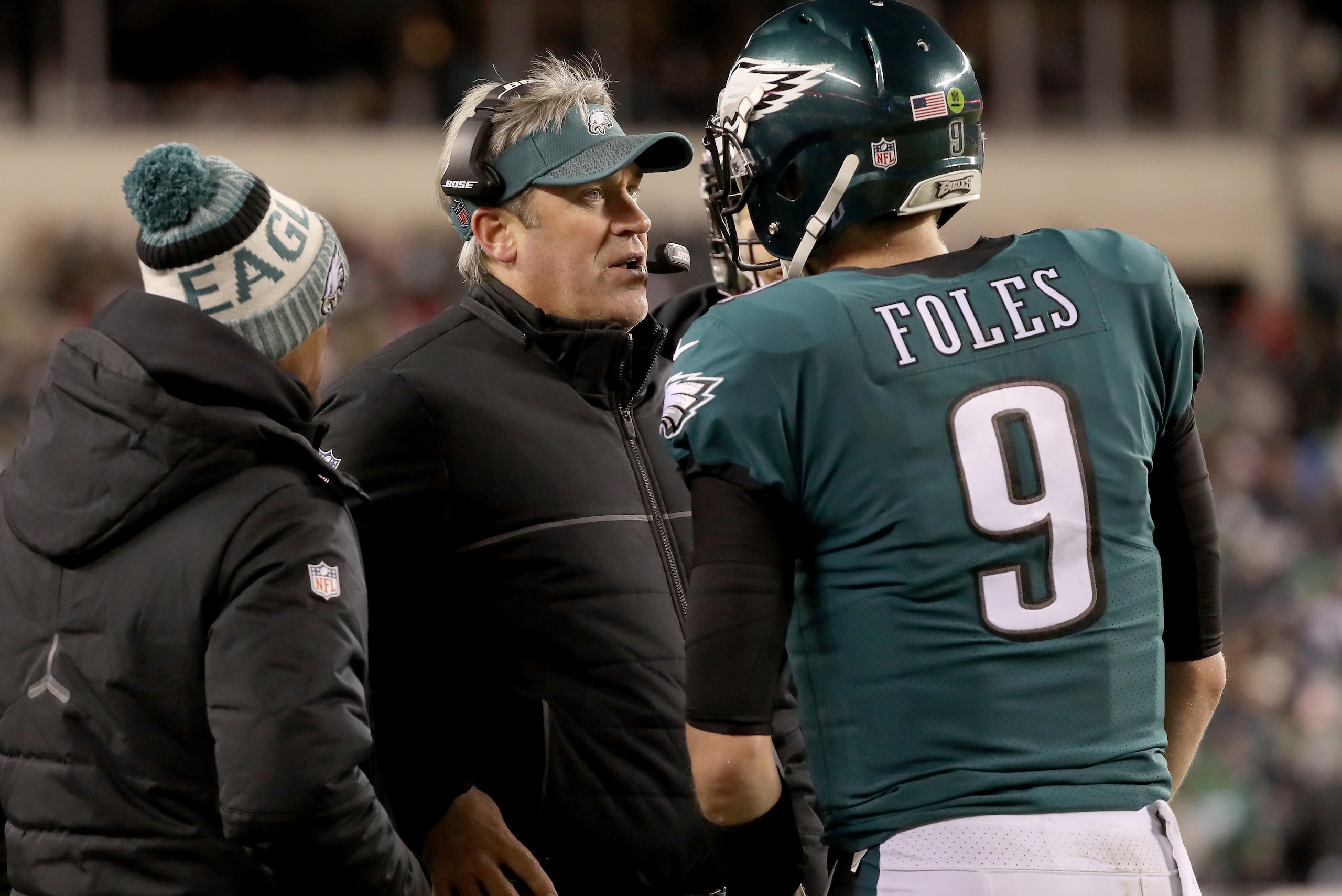
Under head coach Doug Pederson and offensive coordinator Frank Reich, Foles has undone many of the limitations that bedeviled him after his lone Pro Bowl season. Never great under pressure or when asked to process multiple reads, Foles found success under Kelly when he was allowed to be an early-in-the-down passer. In other words, when he was given a defined open read and could find his receivers in free space.
It took a while for everything to come together this season. Foles completed just 54.6 percent of his passes in December as a starter, but in the divisional round against the Atlanta Falcons and in the NFC Championship Game against the Minnesota Vikings, he upped that completion rate to 77.8 percent. He also threw three touchdown passes against a Vikings defense that had been one of the best in the league through the regular season, which makes him an enormous X-factor for an Eagles team eyeing a Super Bowl upset.
Foles has played reasonably well and has stayed within himself, but the main reason for his recent success is a coaching staff that understood the importance of schematic creativity and fitting their game plans to their quarterback. Pederson and Reich scrapped certain aspects of their offense in the switch from Wentz to Foles, which is what any astute coaching staff would do. You can only fit players to your system so much before things start to break from the pressure of a bad fit.
One of the primary strategic weapons in the Eagles' current offense is the oft-discussed run-pass option (RPO). In Philly's offense, an RPO allows Foles to adjust his strategy after the snap based on the movement of an unblocked defender. There's an element of read-option here, but the RPO allows for more diverse passing concepts than the simple short stuff found in most basic option offenses. It also works for quarterbacks who aren't mobile, such as Foles. The idea is not for Foles to take off running; it's to give him the flexibility to pass or run based on the scope of the defense.
When asked about the RPO this week, Patriots safety Devin McCourty and Eagles defensive coordinator Jim Schwartz each said the same thing—it forces you to defend the length and width of the field on every play. Defenses can't commit to one thing or the other since the offense is proactive, forcing the defense to be reactive. That isn't a position any defense likes to find itself in.
"It's a run, but it's also a pass if the quarterback decides to throw it and read it," McCourty said. "Very tough defensively, because every guy has a job and a role on our defense, and you have to do that. If you play the run when you're supposed to be playing the pass and they throw it, that's going to be a big gain. If you play the pass and they run it, that hurts you, too. We can't have guys doing things that don't fit the defense."
Schwartz has defended against his team's palette of RPOs in practice every week, which gives him a unique perspective.
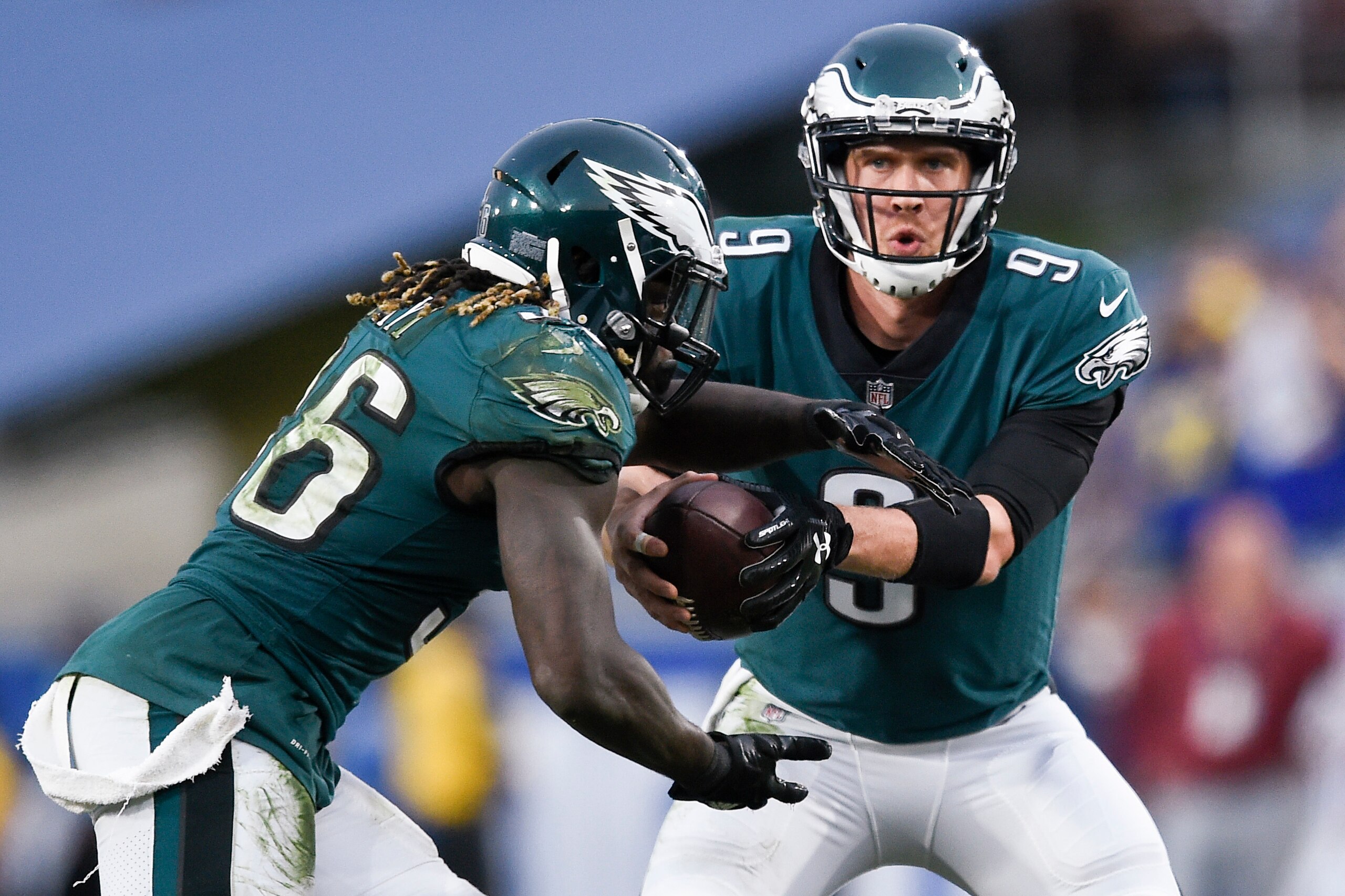
"You can just never have a good call," Schwartz said. "You can have a defense that's great against the run, and they have a run called, and the quarterback pulls the ball and throws it. So, it really takes away the play-calling a little bit from the defense. If you have something that's really good against the pass, and the quarterback sees it, he can just hand the ball off. If you have something that makes it very difficult to run the ball, he can keep the ball and end up throwing it. It's just another layer—you add the RPO along with read-option stuff; it's made it really difficult for defenses. You have to have multidimensional players, and you have to be sound straight across the board. You have to defend the width of the field and the length of the field, run and pass, on every single play."
Foles gets big pass plays off RPOs at times, but for a true indicator of how much they put a defense on its heels, let's look at Philly's first offensive play against the Vikings in the NFC Championship Game.
There's 10:14 left in the first quarter, and this is an 11-yard pass to receiver Nelson Agholor, who's running a crossing route from left to right. Vikings safety Harrison Smith (No. 22), one of the best defenders in the NFL—he placed first overall in our NFL1000 player rankings for strong safeties—is reading a run to the defensive left side. Smith is ready to defend to that side if Foles hands the ball to running back Jay Ajayi, and if it's a normal play-fake to that side, he won't be out of place. If it's a quick pass to Ajayi, he's right where he needs to be.
The problem for Smith is everything that happens after the snap.
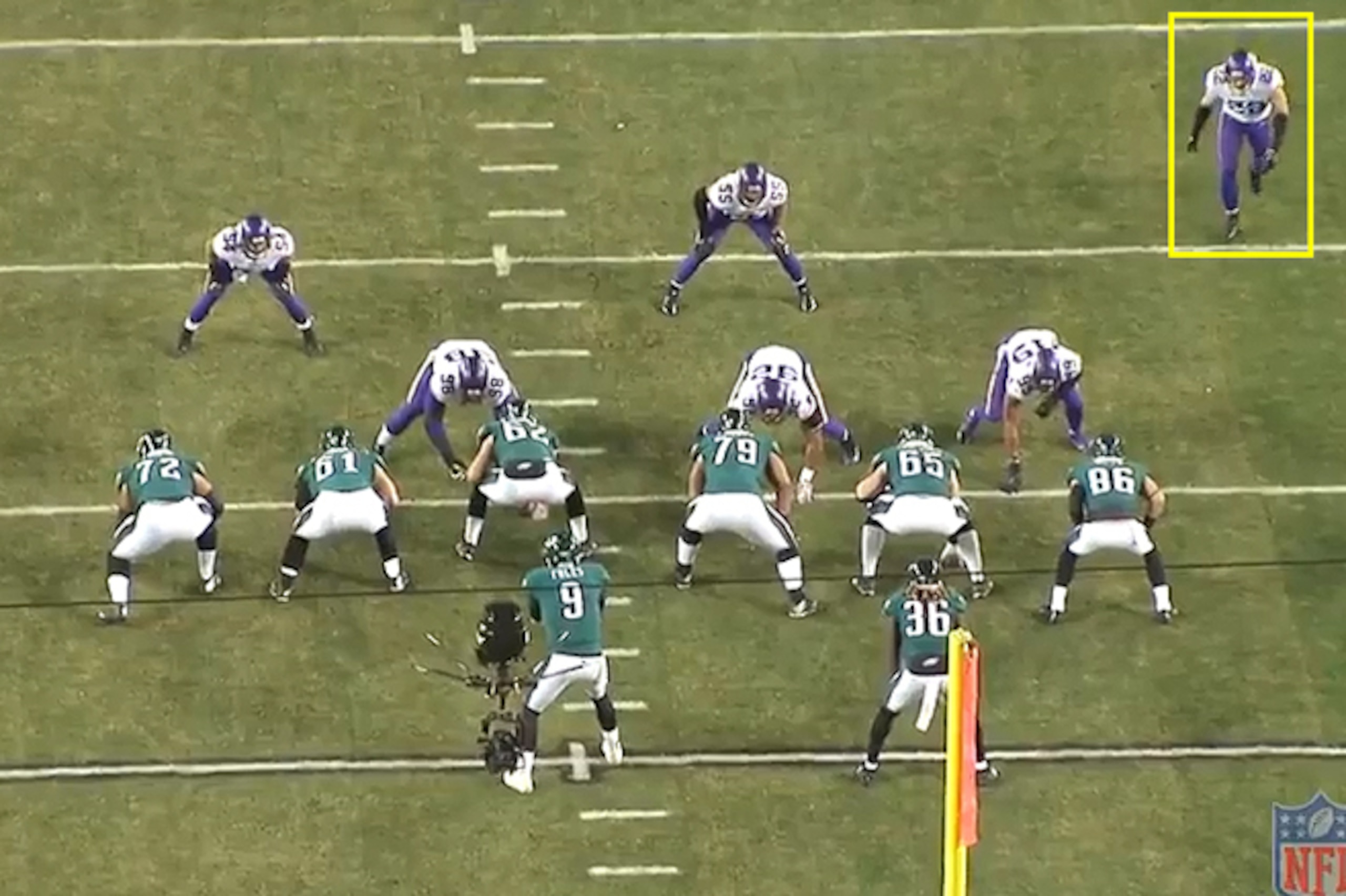
One of the reasons the Eagles' RPO concepts are so effective is that their blockers frequently fire out in run-action—run-blocking to get the linebackers to bite to the side of the slide, so to speak. On this play, Philly's offensive line slides to the left, and Minnesota linebackers Anthony Barr (No. 55) and Eric Kendricks (No. 54) quickly bite to the defensive right side. When Foles fakes the counter to that side, the linebackers are committed, causing them to sacrifice intermediate middle coverage. This is great news for Agholor, who's now running his crossing route in free space with cornerback Terence Newman (No. 23) following behind.
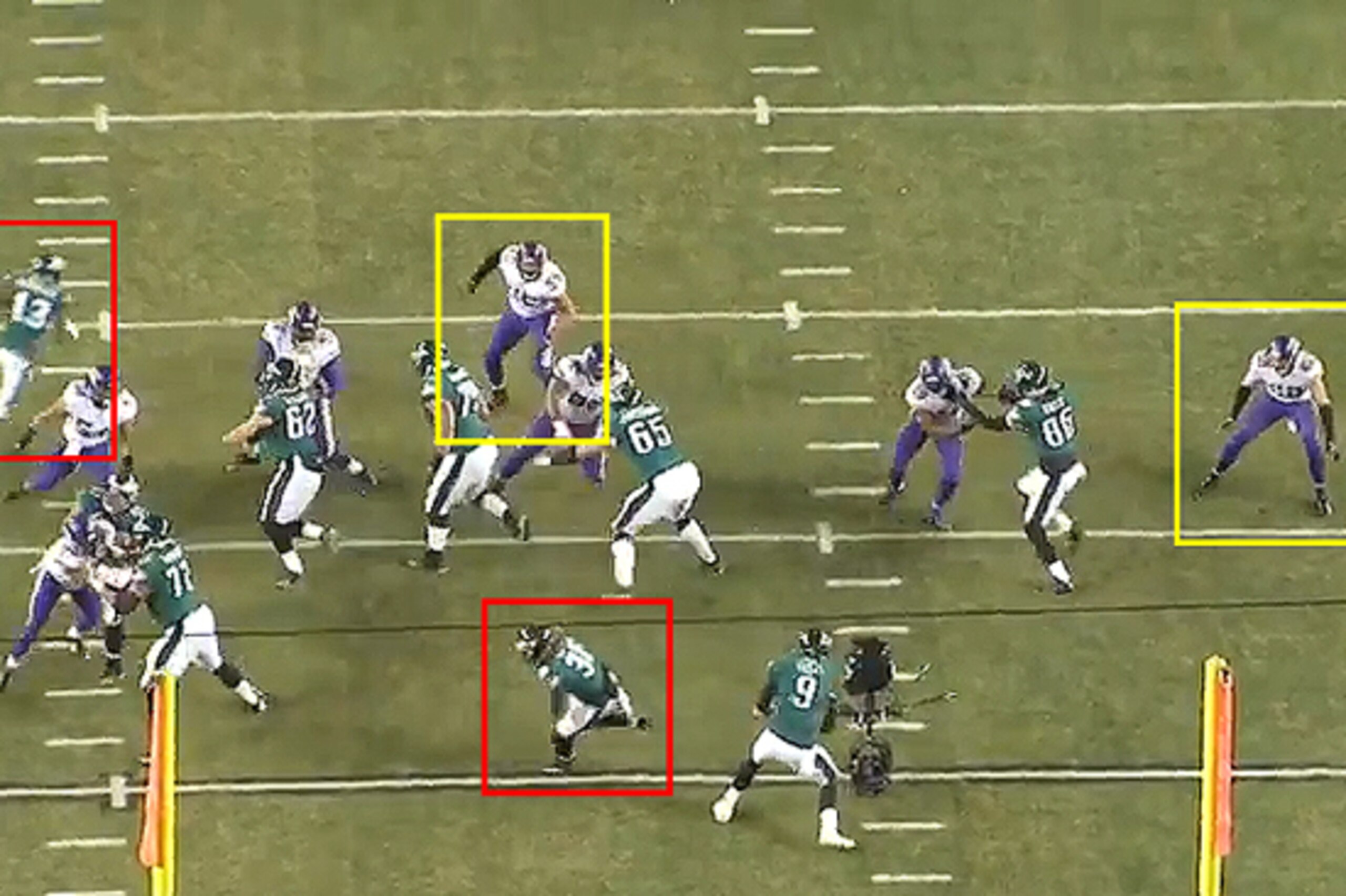
Smith is in a serious bind here because he also bit on the run fake. He now isn't in a position to help Newman cover Agholor because he can't backpedal quickly enough. He also isn't in a position to help downfield coverage on receiver Torrey Smith (No. 82), who's running upfield and taking cornerback Trae Waynes and safety Andrew Sendejo upfield with him.
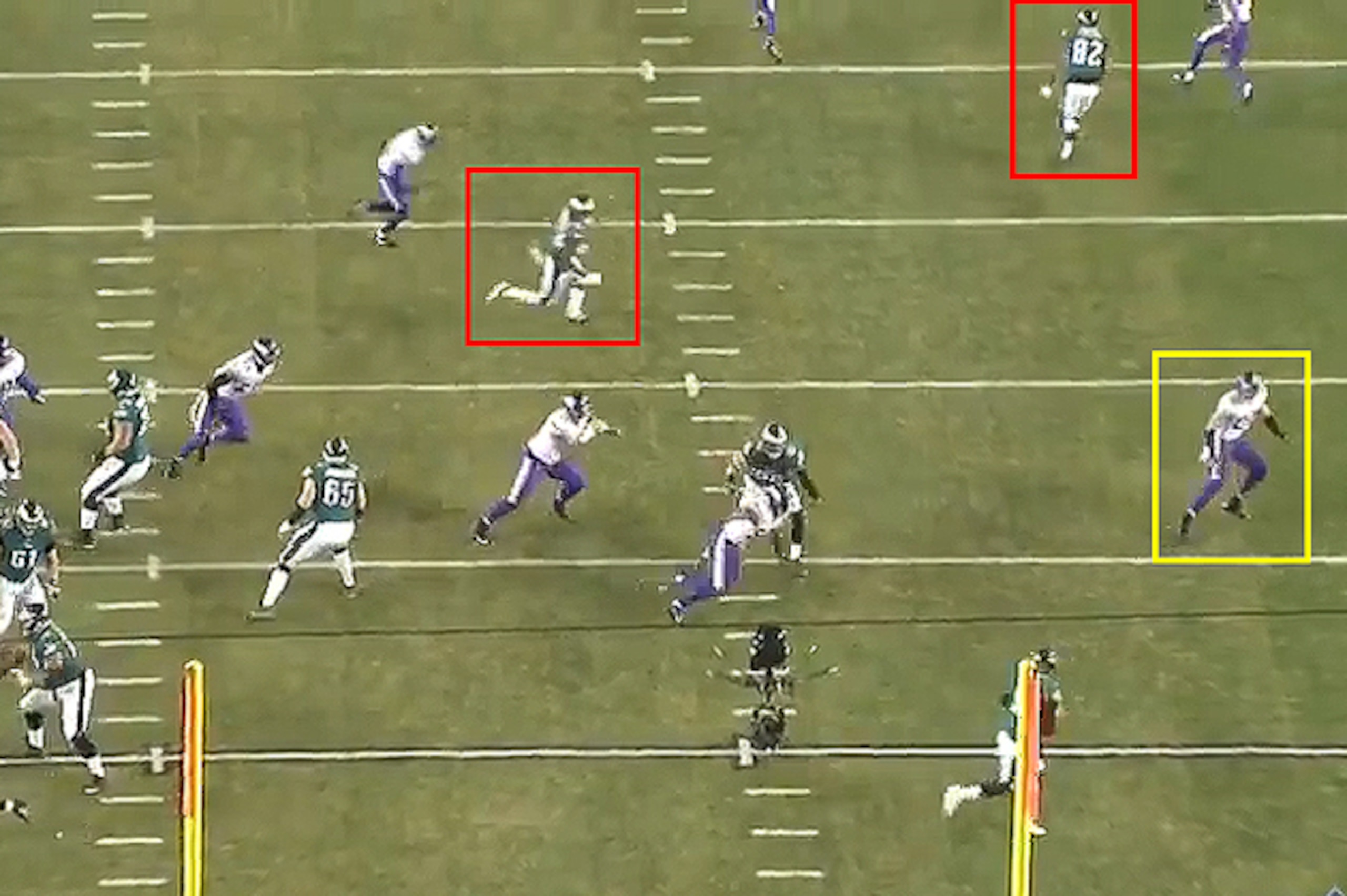
The only thing left for Smith to do is to spy on Foles in case he runs, which he doesn't do. Instead, Foles gets the quick and easy completion that has been schemed up for him.
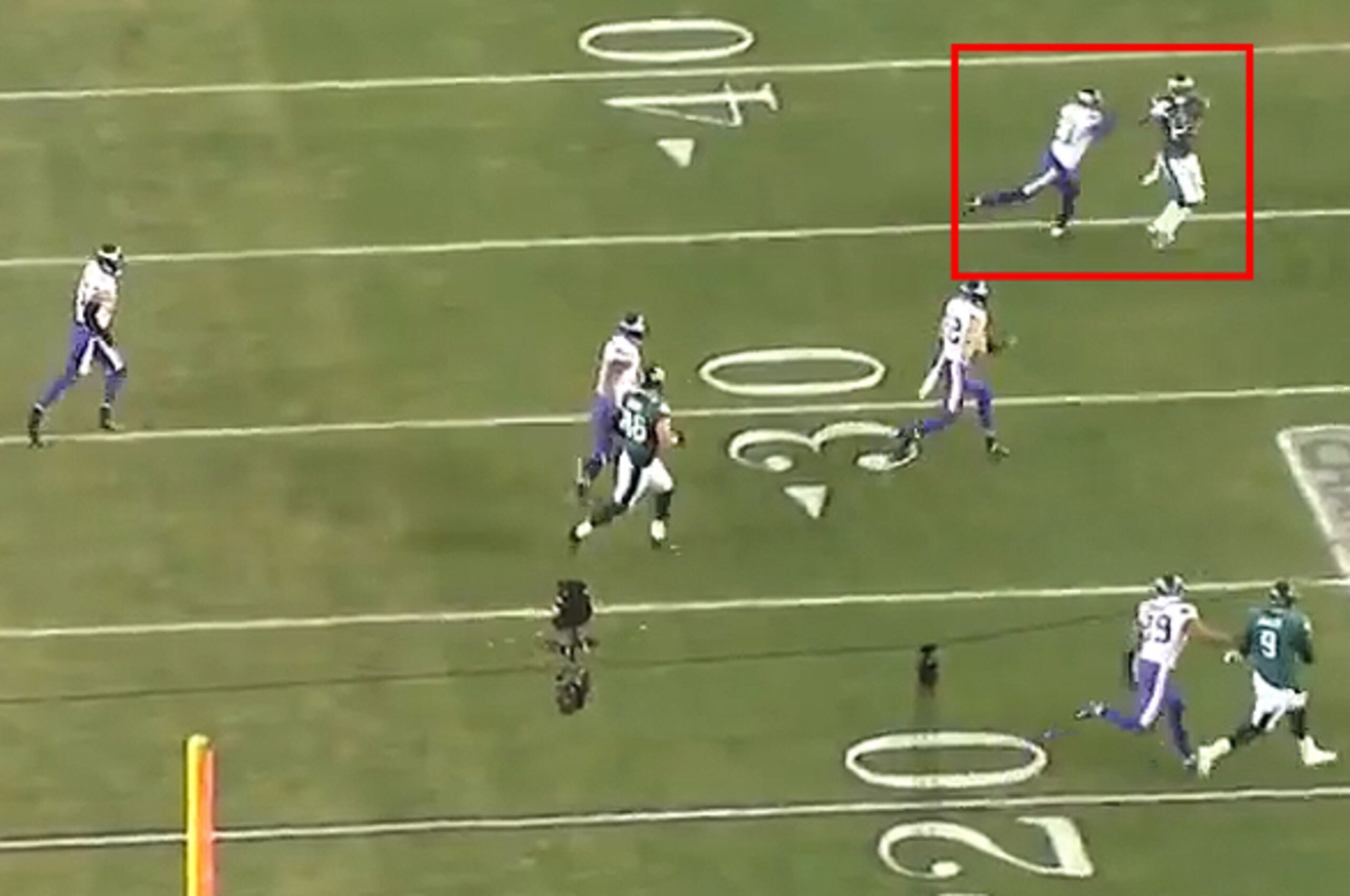
According to Pro Football Focus' charting, the Eagles have run more RPOs than any other NFL team this season—207 of them, to be exact, for a total of 981 yards. There is the occasional big play to be had from them, though the Eagles use them more as an adjunct to their run/pass balance in the short to intermediate zones.
"I just think the RPO game is a unique way to put stress on different defenders," Reich said this week. "Usually, the stress you're trying to put on a defender [at the line of scrimmage] is to push them around. In the RPO game, sometimes that involves not blocking a defender, and putting stress on him, like, 'Why is no one blocking me? What am I supposed to do? Should I run after the ball-carrier, or should I stand here and try to guard the receiver who's coming into this area?' That's some of the uniqueness of the RPO game, and when you get a quarterback who can read that unblocked defender quickly and deliver the ball with accuracy at different arm angles, it can be a very dangerous weapon."
It's specifically dangerous against the Patriots, who have allowed 5.6 yards per play when facing RPOs, per NFL.com's Dan Hanzus, the league's fifth-highest total this season. The Jacksonville Jaguars put Bill Belichick's defense to the test with them, adding in some nifty downfield blocking to more rudimentary passing concepts.
It's never wise to guess what the Patriots will do to counter any particular strategy, as Belichick is so attuned to week-to-week matchups, and his team has never played to type. Man-to-man coverage should help to negate the passing component of the RPO, though. Foles can scan the entire field and react well to his reads if given time, but if he's hurried, he's more likely to throw the ball away or inaccurately than he is to make an amazing throw under duress.
Here's the problem with that, though—this Eagles offense is built around more than a few RPOs. Pederson and Reich have also invested schematically in the straight passing game, where Foles can simply drop back from the shotgun, pistol or under center expecting to throw the ball. Here again, Foles' coaches have done an estimable job in scheming his receivers open.
In the Eagles' passing game, you'll see many different things designed to give Foles a favorable read, not unlike what Kyle Shanahan did with the Atlanta Falcons in 2016. Shanahan was a firm believer in pre-snap motion not only to help the quarterback decipher whether he was facing man or zone defense by the way the defenders moved, but to create formational advantages from the snap.
That is where the Patriots could run into trouble if they play man defense to snuff out the passing components of the RPO. The Eagles run a ton of "man-beaters" designed specifically to gain the edge against coverage that follows aggressively. On one play, like a simple running back screen, a defense might also see sweep motion from a receiver (most likely Agholor) and mesh routes in which two receivers cross each other at linebacker depth. Foles winds up with multiple potential openings on nearly every pass play.
As McCourty concluded when speaking about the offense he'll face Sunday, "You just have to read your keys and see what the play is. You can't just be out there guessing."
When asked about the specter of the RPO, Patriots defensive coordinator Matt Patricia brought it back to the overall offensive philosophy, and why it's so hard to defend.
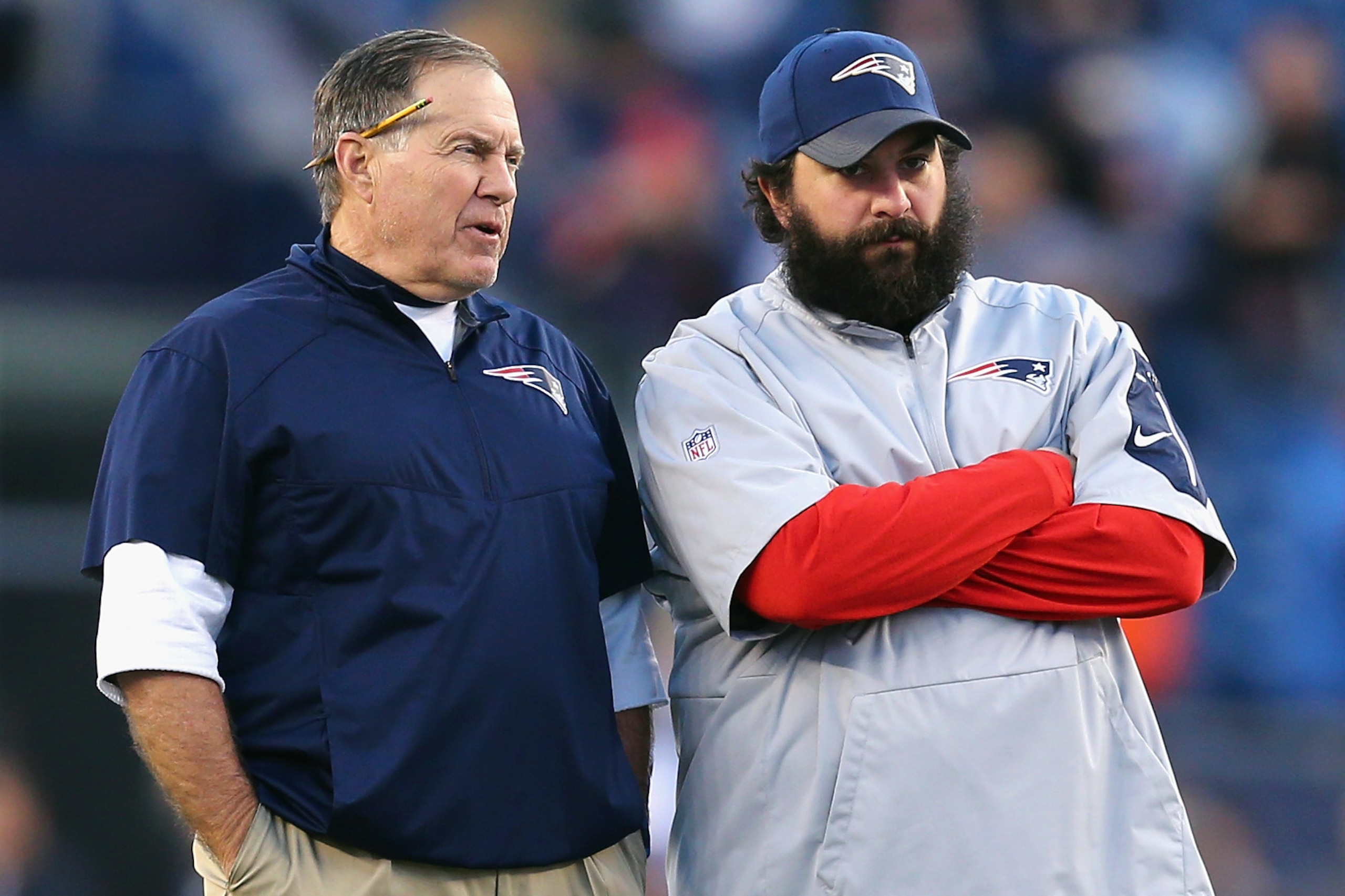
"The RPO is a small part of what they do," Patricia said. "They do a lot, so you have to read your keys and be disciplined and handle all of it, because it is going to change based on the down and distance and situation. We've got to defend everything they do, not one specific thing. It's the combination that makes them so successful. They do a great job of understanding what you're in defensively and putting their guys in position.
"They run great routes, and they do a good job of what I'll call 'taking the profit'—if someone is open right now, they're going to get the ball out quick and let them run. As much as they can get the ball in the hands of their skill players in space and allow them to make plays, that's what they're going to do."
This is the challenge for Nick Foles—to go up against the greatest football mind of his generation in Belichick and use his custom-designed offense to create situational wins against a defense that will be expertly designed to take away everything favorable.
It's an exceedingly tall order, but perhaps not too much for a guy who almost took himself out of the NFL before finding one more fair chance.
.jpg?w=2560 "Cowboys Packers Football")



.jpg?w=2560 "🚨 Week 8 AP Top 25 Poll")