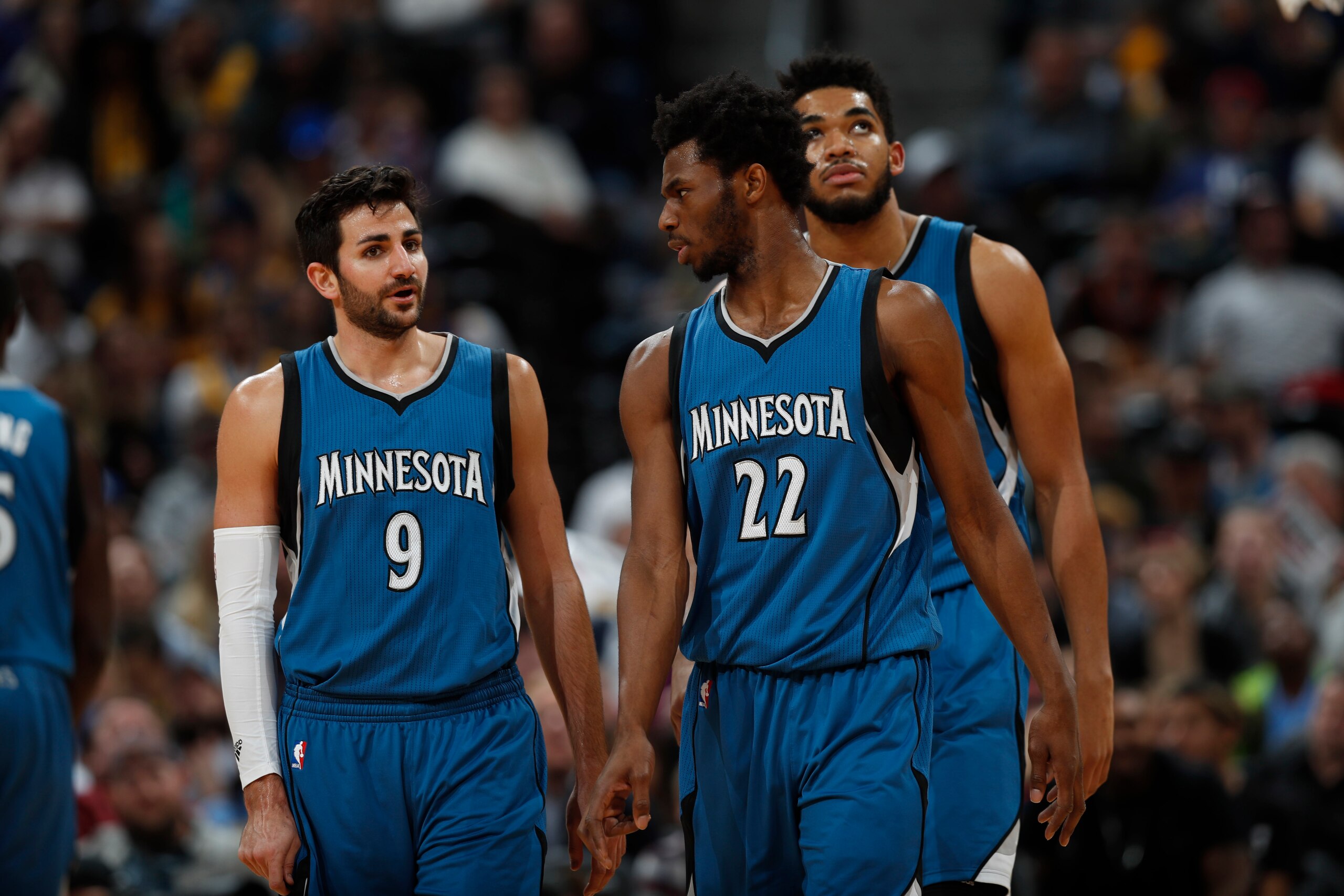


For a team that hasn’t sniffed the NBA playoffs since 2004 and finished 10 games shy of a top-eight spot this past season, the Minnesota Timberwolves can feel good about how they’re positioned at the 2017 draft. They don’t have any glaring positional needs to address this summer, be it on draft day or during free agency in July.
They’re already loaded with young talent, between Karl-Anthony Towns and Andrew Wiggins on the cusp of greatness, Zach LaVine on the mend from a torn ACL and Kris Dunn on the rise. They have solid veterans locked into reasonable contracts at point guard (Ricky Rubio) and power forward (Gorgui Dieng).
Minnesota can comfortably take the best prospect available. At No. 7 in this year’s draft, the team should have more than a few enticing options. Here’s a look at five ways the Wolves could use their latest lottery pick come Thursday, starting with the best option and listing the rest in descending order.
Plan A: A Sharpshooter at Guard
1 of 5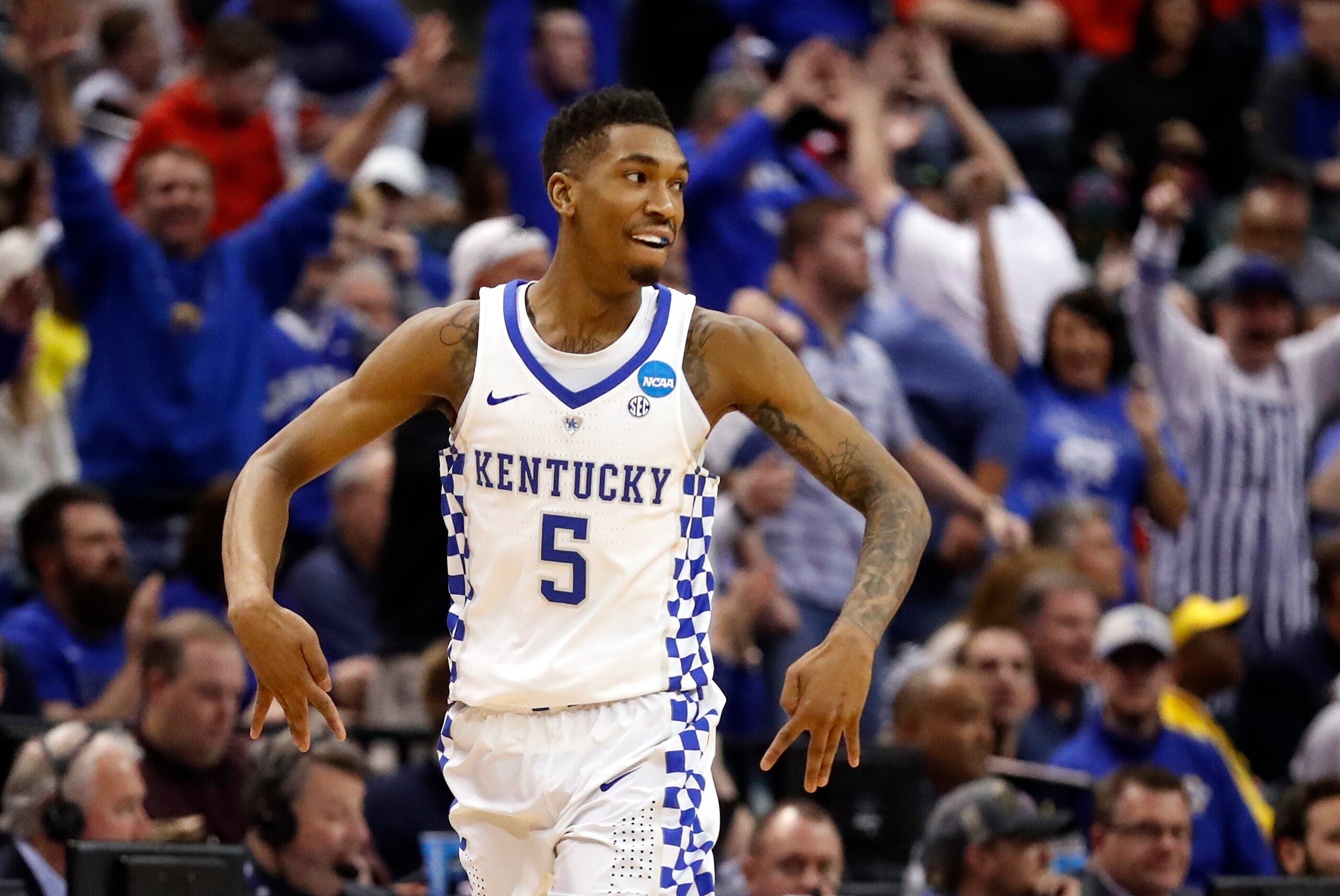
Minnesota managed to build a top-10 offense last season despite finishing dead-last in three-point makes (7.3 per game) and attempts (21.0 per game).
That dichotomy was partly the product of personnel. The Wolves had just one player (Zach LaVine) who averaged more than four triple attempts a night and squeezed plenty of offense out of the largely inside-the-arc duo of Andrew Wiggins and Karl-Anthony Towns, who combined for 48.7 points per game.
That those two were able to thrive without much in the way of floor-spacing shooters, especially after Zach LaVine injured his knee, is a testament to their scoring talent. But for Minnesota to maximize its soon-to-be-All-Stars, it will need players with strokes pretty enough to pull defenders farther out and effective enough to warrant kickout passes from Wiggins, Towns and Ricky Rubio.
Malik Monk looks like the most lethal such weapon in this year’s draft. He drained nearly 40 percent of his threes and dropped 20 points or more 19 times during his 38 games at Kentucky.
The Wolves could also look at Luke Kennard. The Duke product has been shooting up draft boards of late, thanks to an outside stroke that helped him knock down 43.8 percent of his threes as a sophomore in Durham.
While LaVine is rehabbing his knee, either Monk or Kennard could help soak up minutes at the off-guard spot. Once LaVine returns, the Wolves could slide their newest young guard into a reserve role, with Monk in particular looking like the second coming of Lou Williams.
Plan B: Lauri Markkanen, Power Forward/Center, Arizona
2 of 5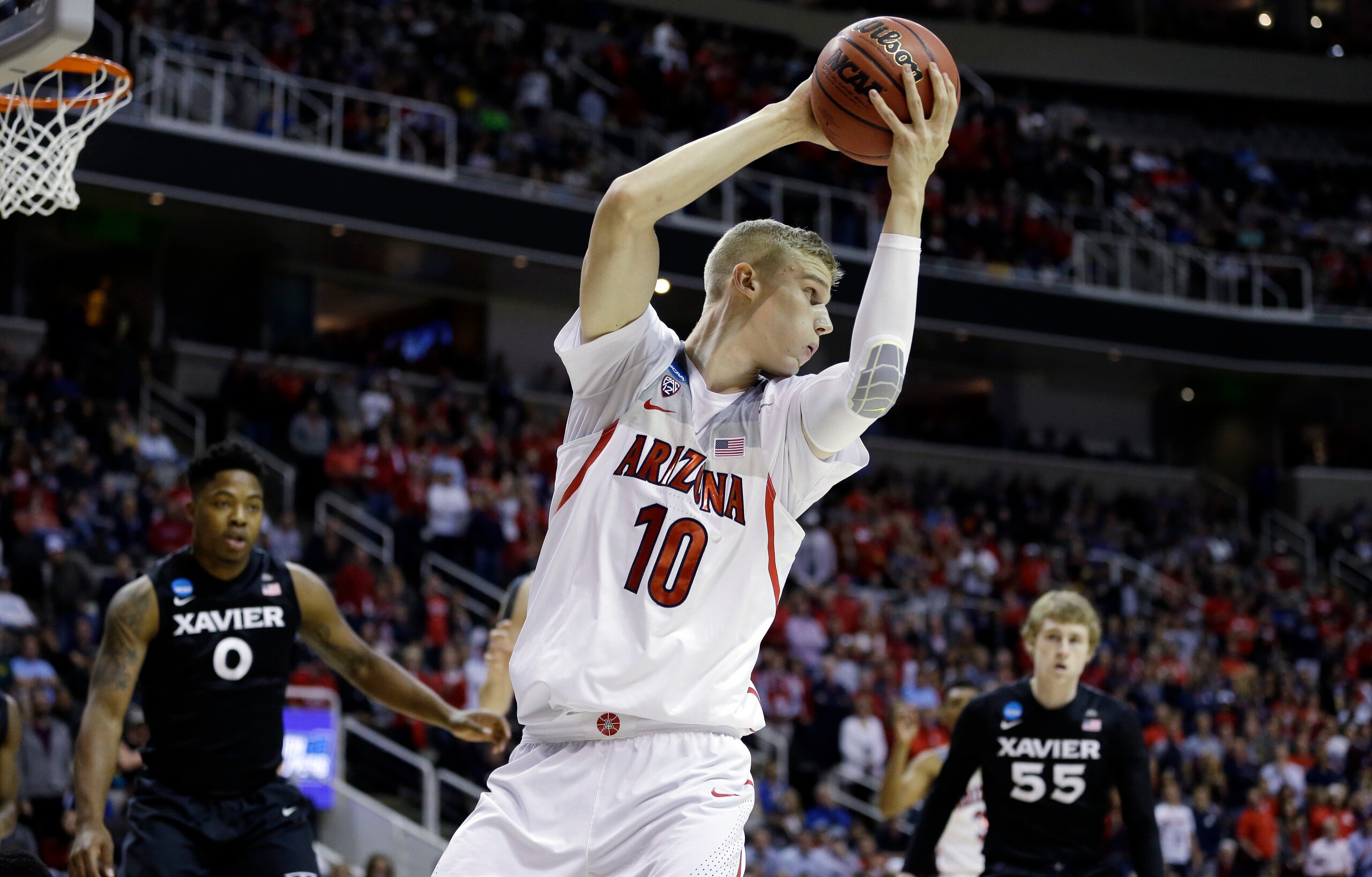
Gorgui Dieng has done well to stretch his shooting range. This past season, he shot no worse than 43.4 percent from every range inside the arc, per Basketball Reference, and hit 16-of-43 (37.2 percent) of his attempts from beyond it.
Where Dieng, 27, is just now finding his footing as a perimeter threat, Lauri Markkanen, at the age of 20, is already plenty comfortable on that part of the floor. During his lone season at Arizona, the 7-footer from Finland fired off 4.4 three-pointers per game, draining 42.3 percent of them.
The concern for Markkanen is much closer to the hoop. Despite his height, he didn’t dominate inside in college. According to Sports Reference, he grabbed just 14.0 percent of available rebounds and blocked a mere 1.8 percent of opponent two-point tries while he was on the floor.
Granted, some of Markkanen’s slack on the boards had to do with his spending time away from the glass. In Minnesota, he won’t have to anchor the middle of Tom Thibodeau’s defense while Towns or Dieng is on the floor. Then again, staying in front of smaller, quicker forwards might not be in the cards for Markkanen, either.
That being said, his combination of shooting and all-around offensive skill could help to supercharge Minnesota’s attack. If Markkanen can adapt to Thibs’ demands on defense, he’ll have his opportunities to shine thanks to his picturesque shot.
Plan C: Jonathan Isaac, Forward, Florida State
3 of 5
Why would the Wolves, who already have Wiggins entrenched on the wing, go for Jonathan Isaac?
For one, Isaac isn’t strictly a small forward. At 6’11” with a 7’1.25” wingspan, he has the frame to play power forward and even some center in small-ish lineups, assuming he’s able to pack on weight in the coming years.
Isaac’s defensive versatility is what will get him on the court early in his career under head coach Tom Thibodeau. He has the length, athleticism and foot speed to guard just about every position on the floor, if not yet the sheer strength to stop grown men in their tracks.
Skill-wise, Isaac has shown he can handle the ball well enough to play the 3 and score efficiently inside the arc (59.3 percent on twos in college). He wasn’t a sharpshooter in school, per se, but his stroke isn’t broken. His output in Tallahassee (34.8 percent on 2.8 three-point attempts per game) portends a potential uptick once he adjusts to NBA range.
The most pressing concern for Isaac, as far as Minnesota is concerned? His readiness to contribute. He may be the biggest project among this year’s top prospects. The Wolves, meanwhile, are trying to (finally) win now with the talent they have on hand.
Finding opportunities for Isaac to develop amid that milieu might be a stretch.



Plan D: Best Available Point Guard
4 of 5
The depth chart suggests point guard is the last position to target.
The Wolves acquired Duke’s Tyus Jones in the first round two years ago and added Providence’s Kris Dunn with the No. 5 pick last year. Those selections both came with Ricky Rubio, who has two years and $29.2 million left on his deal, already entrenched as the team’s top floor general.
But that stack of floor generals might not be as deep as it seems. Rumors about Rubio’s future have swirled around the Land of 10,000 Lakes since Thibs arrived and have yet to relent. According to DallasBasketball.com’s Mike Fisher, the Mavericks have discussed internally the possibility of going after Rubio.
Dunn, meanwhile, performed underwhelmingly as a rookie. And Jones, who’s shown some shooting ability (35.6 percent from three in 2016-17), may be better suited to backup duty over the long run.
It just so happens that the top of this year’s draft is loaded with enticing players at the point. Minnesota is well out of range for Markelle Fultz and Lonzo Ball and probably won’t get a crack at Kentucky’s De’Aaron Fox, either. But North Carolina State’s Dennis Smith Jr. and French teenager Frank Ntilikina could both be available.
If the Wolves aren’t comfortable with Rubio and aren’t convinced that Dunn and Jones can be the future—and don’t feel an urgent need to address another position in this draft—they could do much worse than pick from among a promising point guard crop.
Plan E: Trade the Pick
5 of 5
In truth, if the Wolves break their postseason drought next season, it won’t likely be because of whomever they would or could draft at No. 7. What this team needs, beyond just time for its young stars to develop together, is veteran talent.
The pick could come in handy as a trade chip if Minnesota chooses to use it as such. Last year, the Wolves’ lottery spot at No. 5 was bandied about in trade rumors involving Chicago’s Jimmy Butler. Perhaps this year’s selection, in a much stronger draft, will carry more weight in negotiations.
Minnesota, though, need not deal away such a valuable pick in exchange for role players. The Wolves can clear upward of $20 million cap room to spend on midtier free agents this summer.
But if the right trade for an impact player emerges, the Wolves could use the seventh pick to grease the skids for another key piece to arrive in the Gopher State. That will depend on how Thibodeau balances his priorities, between helping his team compete now and setting it up for an even brighter future down the line.
All stats via NBA.com and Basketball Reference unless otherwise noted.
Josh Martin covers the NBA for Bleacher Report. Follow him on Twitter, Instagram and Facebook and listen to his Hollywood Hoops podcast with B/R Lakers lead writer Eric Pincus.


.jpg?w=2560 "Raiders Could Start Mendoza")
.jpg?w=2560 "Rodgers Iced Out on Plane 💎")
.jpg?w=2560 "🚨 Week 8 AP Top 25 Poll")
