

Warriors Clearly Loaded for Title Defense, but Uncomfortable Decisions Loom
As the Golden State Warriors paraded through the streets of Oakland, with their "Quickie" shirts, cigars and signed toasters in tow, there was no shortage of reasons to celebrate.
They finished off the best playoff run (16-1) the sport had ever witnessed. They avenged the Finals loss from a year ago. They established the dawn of a new NBA dynasty.
But it's on that last point where team executives will soon turn their undivided attention.



For a team as loaded as the Warriors, myriad questions still abound. There are free agents to woo, payroll to plan for, contingencies to consider.
Let's start at the top.

Who's back, for sure? Klay Thompson is signed for two more seasons. Draymond Green has three more on his contract. Patrick McCaw, a high-upside, second-round pick who made a couple of critical plays in the deciding Game 5, has just one year left on his initial deal, but he'll be in Oakland at least through the 2017-18 season.
Little-used backups Kevon Looney (one more year) and Damian Jones (two) also have time remaining on their rookie-scale deals. More importantly, they'll be cheap. That matters a lot.
That's five players for certain. Now let's consider Kevin Durant and Stephen Curry. Though technically free agents, they are as good as any earthly certainty to agree to terms on respective new deals as soon as free agency opens July 1.
Curry will get his super-max contract and make around $205 million over the next five seasons. Durant will opt out of his player option and likely sign a new deal using his non-Bird rights, meaning he'll make some $31 million next season. To sign a max deal, the Warriors would have to dip into their cap space, as they did this season to sign him, and that would have a devastating domino effect on bringing back any number of players.
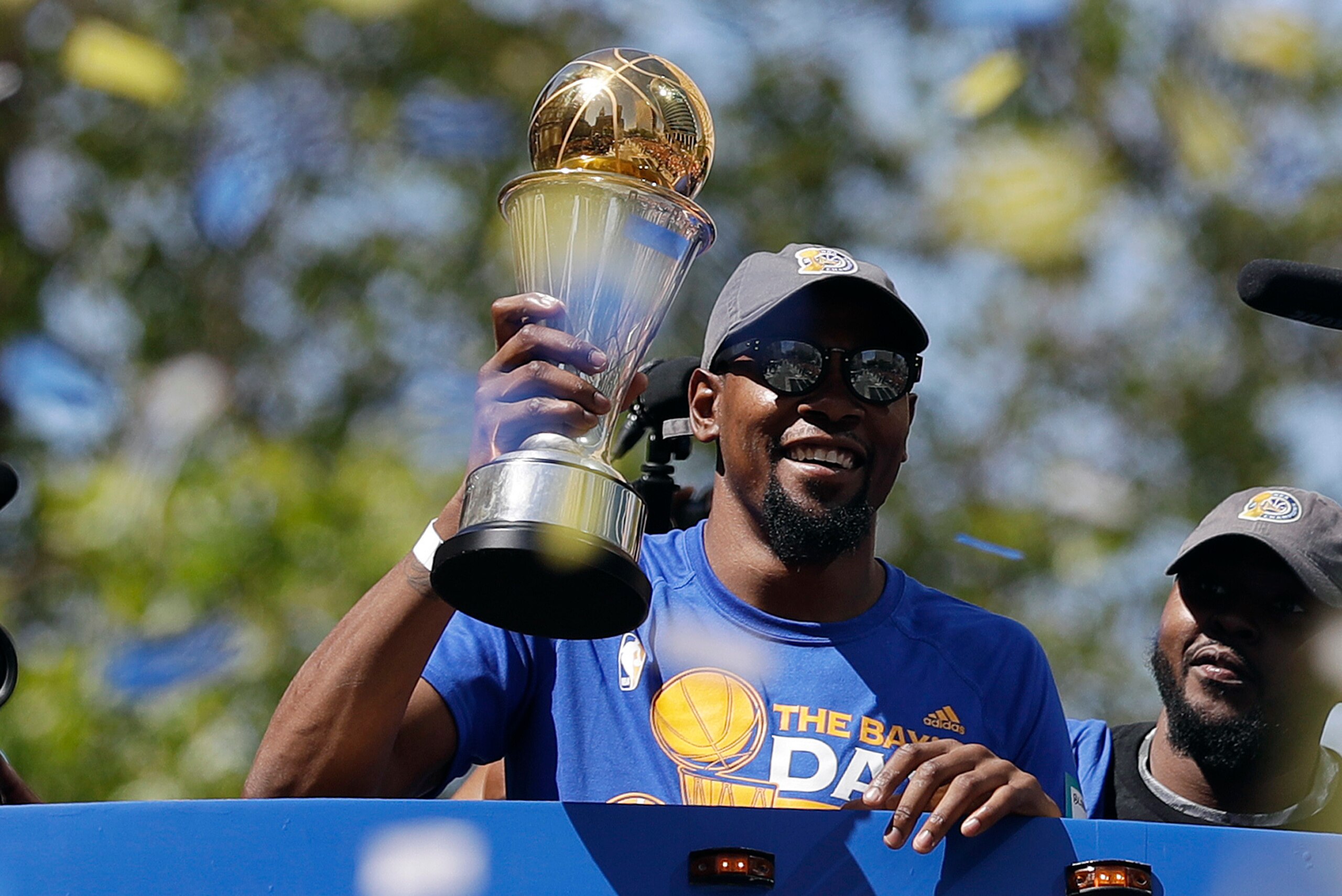
Once Curry and Durant officially sign, team owners Joe Lacob and Peter Guber can breathe a lot easier knowing that at least Curry, Durant and Green will be around to form an elite team that will open the spanking-new Chase Center in San Francisco with the 2019-20 season. (It's not farfetched that Thompson will also be re-signed in time for the opening, but the financial cost to Lacob and Guber, especially factoring in the cap and a potential repeater tax penalty, would be massive.)
This is where the most interesting questions surround the Warriors—the ones that hinge most on the wisdom of people like general manager Bob Myers and other top executives such as Larry Harris and Kirk Lacob, and it largely has to do with those residing farther down the bench.
Let's glance at the Warriors roster—aside from the core four—as it stands heading into summer. (Player ages have been updated one year to reflect 2017-18 season.)
| Andre Iguodala | 34 | Likely to re-sign |
| Patrick McCaw | 22 | Under contract |
| Kevon Looney | 22 | Under contract |
| Damian Jones | 22 | Under contract |
| David West | 37 | Possible re-sign |
| JaVale McGee | 30 | Possible re-sign |
| Ian Clark | 27 | Likely gone |
| Shaun Livingston | 32 | Likely gone |
| Zaza Pachulia | 34 | Likely gone |
| Matt Barnes | 38 | Toss-up |
| James Michael McAdoo | 25 | Toss-up |
The Warriors' deep roster has been a hallmark of the Lacob era. After winning a title two years ago, they brought back what was essentially the same roster and won a record 73 regular-season games.
That all changed last summer with the arrival of Durant. The bench had to be rebuilt. A longtime veteran had to play for the minimum. A reclamation project had to pan out just right.
Even in what was commonly viewed inside the walls of the team's practice facility as a "year one" proposition, the Warriors (thanks to Myers' down-roster acquisitions) played as deeply as any team in the league, embodying the ethos of "strength in numbers" that head coach Steve Kerr has championed.
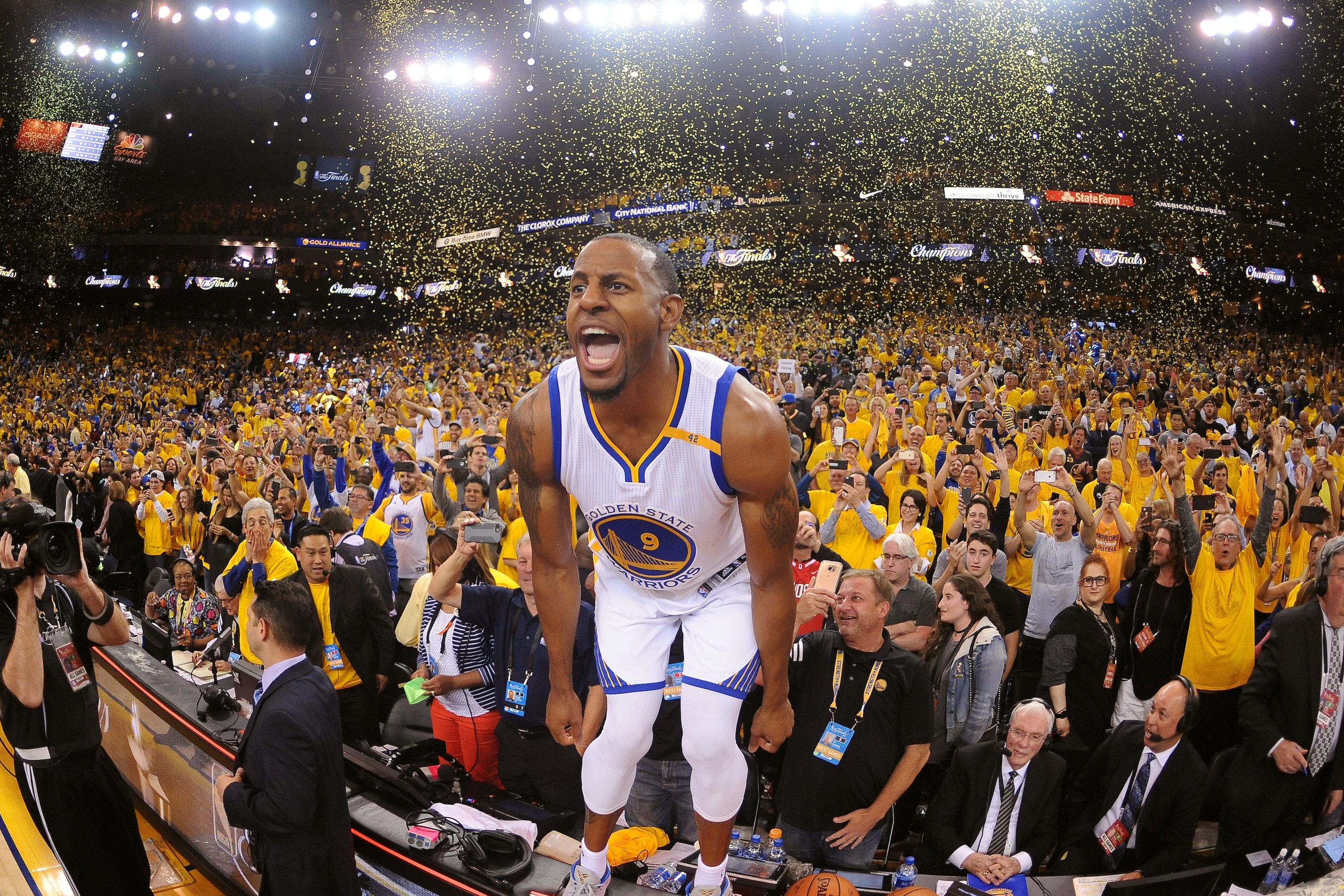
Andre Iguodala, who accepted a bench role when Kerr came in and was rewarded with a Finals MVP, is a free agent but likely to re-sign. The question will be how much Iguodala (who is well-entrenched in the Bay Area tech scene and no doubt makes significant income from such investments) elects to sign for. Expect a three-year deal in the $50 million range. That's still a bit undermarket for what he could get elsewhere, but it's hard to see him finishing out his career in any other market.
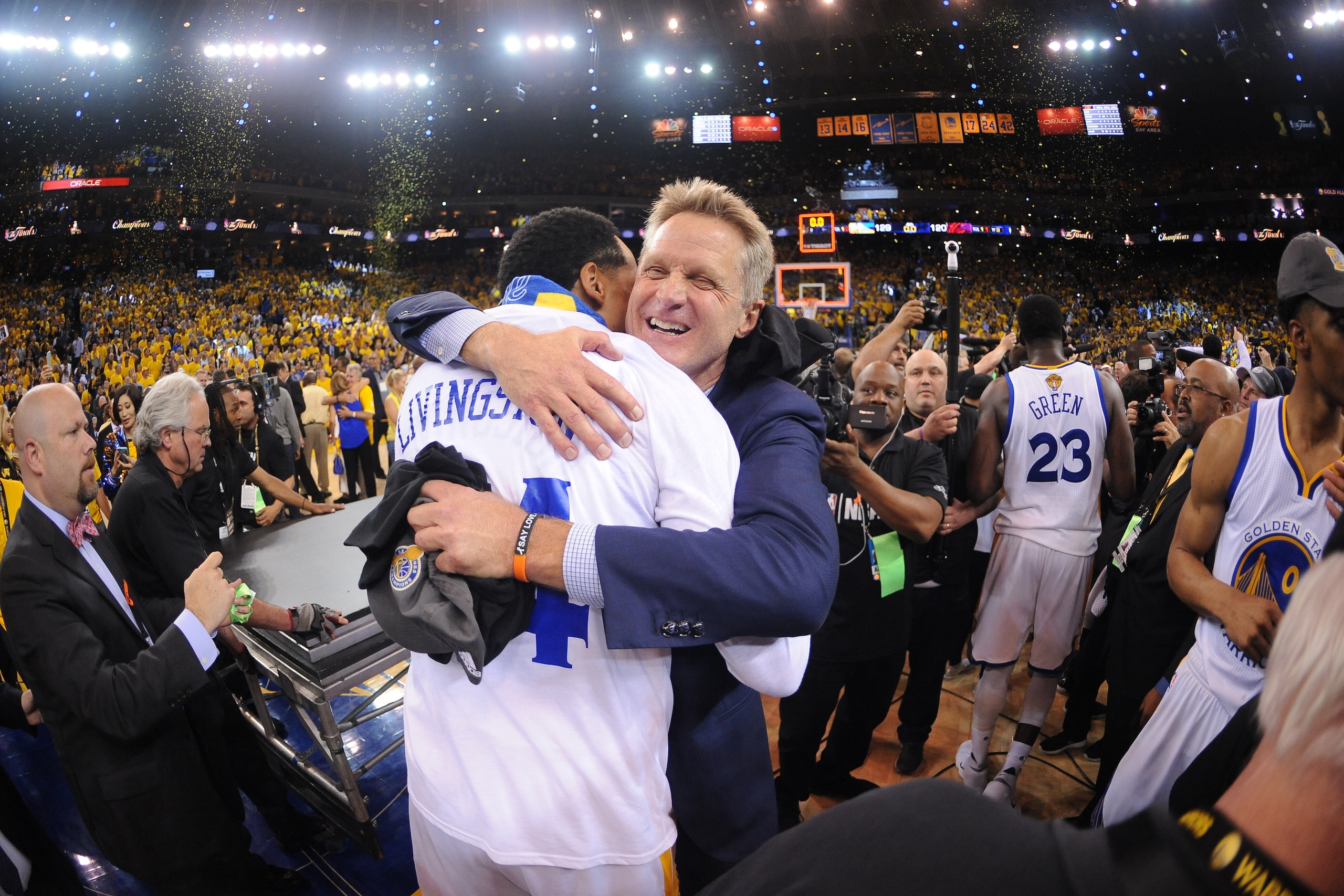
It's a different situation for Shaun Livingston, another second-unit stalwart hitting free agency.
He's arguably the most reliable and important backup point guard in the NBA. At 6'7", he has length for days. His mid-range jumper is about as automatic as any go-to move in the league. He has experience, having just wrapped up his 12th professional season. Livingston is quiet, easygoing, competitive and the consummate teammate.
What Livingston doesn't do is space the floor—he was 1-of-3 on three-pointers in the regular season—and that deficiency can be amplified at times in Kerr's motion-reliant lineup, which is so devastating in its ability to stretch the floor regardless of position. To have a point guard who can't shoot threes is an immediate, obvious target for opposing defenses.
It would be gutting to lose Livingston, but they may not have the payroll space to keep him, just as someone else may come along with an offer he can't refuse.
Ian Clark, who showed tremendous growth this season as an offensive-minded backup to Thompson, may also have played his way out of Oakland. With career highs this past season in just about every category—most notably a 37.4 percent mark on threes—Clark made just a smidge over $1 million and is in line for a sizable raise.
It's easy to see someone throwing, say, four years and $42 million at the 26-year-old guard. Clark's defense isn't great and he's only 6'3", but his shot improvement is undeniable, and he's a positive locker room guy. If Clark departs, the Warriors will hope that McCaw (who is five years younger and 6'7") can fill the void.
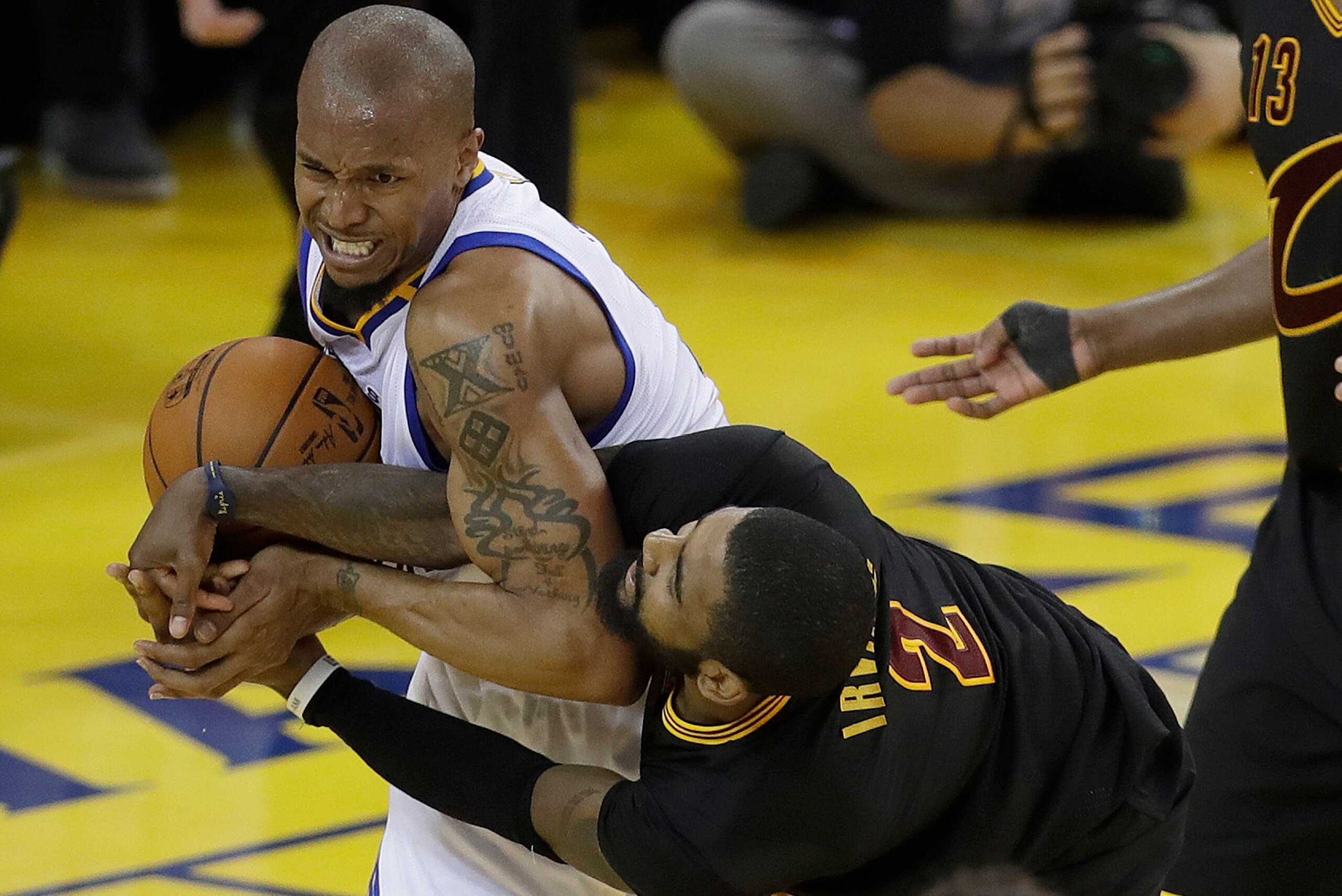
Then there's the hodgepodge of bigs: starter Zaza Pachulia and backups David West and JaVale McGee. Collectively, that trio earned less than $6 million this past season, and the Warriors will be hard-pressed to find that same level of production at the same cost, especially if they bring back more than one of the group.
West turned down many millions to join the Warriors in the hope of earning a ring, and it's easy to see him doing something similar to stay, although someone may dazzle him with two years and $16 million. With his leadership and solid play, especially late in the playoffs, it's not impossible to see someone shelling out one last time for the 36-year-old's services.
There were many points throughout this season, especially in the spring, where it looked like McGee had played himself into a ridiculous contract—something in the three-year, $36 million range. Between his height and athleticism and newfound team-first attitude, all of his progress seemed to point toward a huge payday next season.
But to hear Kerr and other Warriors speak glowingly in the days since the title run was completed, the chances of McGee's return to Oakland feel higher than ever, even if it's for a significantly undermarket value.
The truth is McGee has to battle through bouts of asthma that limit him to five- to six-minute stretches of playing time. He doesn't match up well versus many opponents (he didn't play at all in Game 5 against Cleveland). And he can rack up fouls in a blink.
Still, the Warriors love having him around. You can argue this is the only environment that would allow him to thrive in such a way, and it's in both player and team's interests to find common ground on a new deal. It looks like McGee—a veritable Warriors folk hero at this point—sticks around on a two-year deal.

Pachulia is likely gone. His athleticism is far below what the Warriors need, and his debatably reckless play on Kawhi Leonard in the conference finals served as an unnecessary distraction. It's not unreasonable to see him agreeing to a new deal, but the Warriors may believe they can attract another veteran big who can start, eat up 16 minutes a night and exhibit some modicum of jumping ability. Nene is an intriguing possibility, as is 30-year-old Roy Hibbert, if the team wants another full-on reclamation project.
Matt Barnes and James Michael McAdoo are clear toss-ups to return. They're end-of-the-bench guys who can play garbage-time minutes and spell certain starters in case of sudden foul trouble. McAdoo is an undervalued rebounder, and Barnes can be streaky on outside shots, but there are likely other free agents who can be had for the same price and provide a little more dependability.
Especially in the likely event of Livingston, Clark and Barnes all leaving, the Warriors will be looking to restock with solid backup wings who have height, can space the floor, play competently in motion-style actions and won't disrupt the locker room harmony the club so readily protects. Free agents like Luke Babbitt and Anthony Morrow could fit that mold.
But no matter who Golden State loses, there'll be no shortage of available players hoping to get a few minutes of Myers' attention in a sit-down.
Even though the team doesn't have a pick in next week's draft—the Warriors' first-rounder goes to Utah to complete the three-way sign-and-trade in 2013 that brought Iguodala to the Warriors from Denver—there's a strong chance they may buy their way into the second round, as they did last year with Milwaukee, paying $2.4 million for the draft rights to McCaw.
As usual with this club, its margin for error is immensely comfortable. The Warriors just need a few fresh faces that are eager and motivated to keep this run of dominance going and they'll be off and running toward their third title in four years.
It's good to beat the king.
Erik Malinowski covers the Warriors for B/R. His book, Betaball: How Silicon Valley and Science Built One of the Greatest Basketball Teams in History, will be published in October. Follow him on Twitter: @erikmal.

.jpg?w=2560 "Raiders Could Start Mendoza")
.jpg?w=2560 "Rodgers Iced Out on Plane 💎")
.jpg?w=2560 "🚨 Week 8 AP Top 25 Poll")