

NFL1000: New York Jets 2017 NFL Draft Preview
After a 10-6 season in 2015, the hope for the New York Jets was that the franchise could vault into postseason contention in 2016 for the first time since the early days of the Rex Ryan era.
And then, everything that could go wrong did. Darrelle Revis showed up out of shape and had a disastrous season, on and off the field. Quarterback Ryan Fitzpatrick, who threw 31 touchdown passes in 2015, threw just 12 in 2016. Brandon Marshall, one year after leading the NFL in touchdown catches with 14, caught three scores and brought in only 46.1 percent of his targets. The schemes put forth by head coach Todd Bowles and defensive coordinator Kacy Rodgers seemed to benefit no one and particularly hurt the efficiency and effectiveness of a defensive line flush with talent. The offensive line and secondary, formerly team strengths, fell apart in the harsh light of the season.
There's a lot to fix here, and it doesn't look like a one-year project. Marshall, Fitzpatrick, Revis and center Nick Mangold—once all franchise cornerstones, at least in the short term—are off the roster. General manager Mike Maccagnan has the sixth pick in the draft as a result of his team's 5-11 mark, and he could realistically go in several different directions. Cornerback is a desperate need. The offensive line needs a lot of help. The tight end position, de-emphasized under former offensive coordinator Chan Gailey, needs a boost.
Most of all, the Jets are lost at the quarterback position, and this is their own doing. Bryce Petty and Christian Hackenberg seem like huge draft misses, and signing Josh McCown as a bridge starter seems like after-the-fact desperation. Even if Maccagnan does take a quarterback high, what part of his track record would lead anyone to assume the Jets' vetting process at the position will lead to long-term success?
It would seem the Jets are in major rebuilding mode, to whatever degree Maccagnan and his staff decide to acknowledge that publicly. The problem with rebuilding plans is the need for sound architecture before the process begins. At this point, the Jets seem to be left with a set of half-finished plans.
Methodology
1 of 19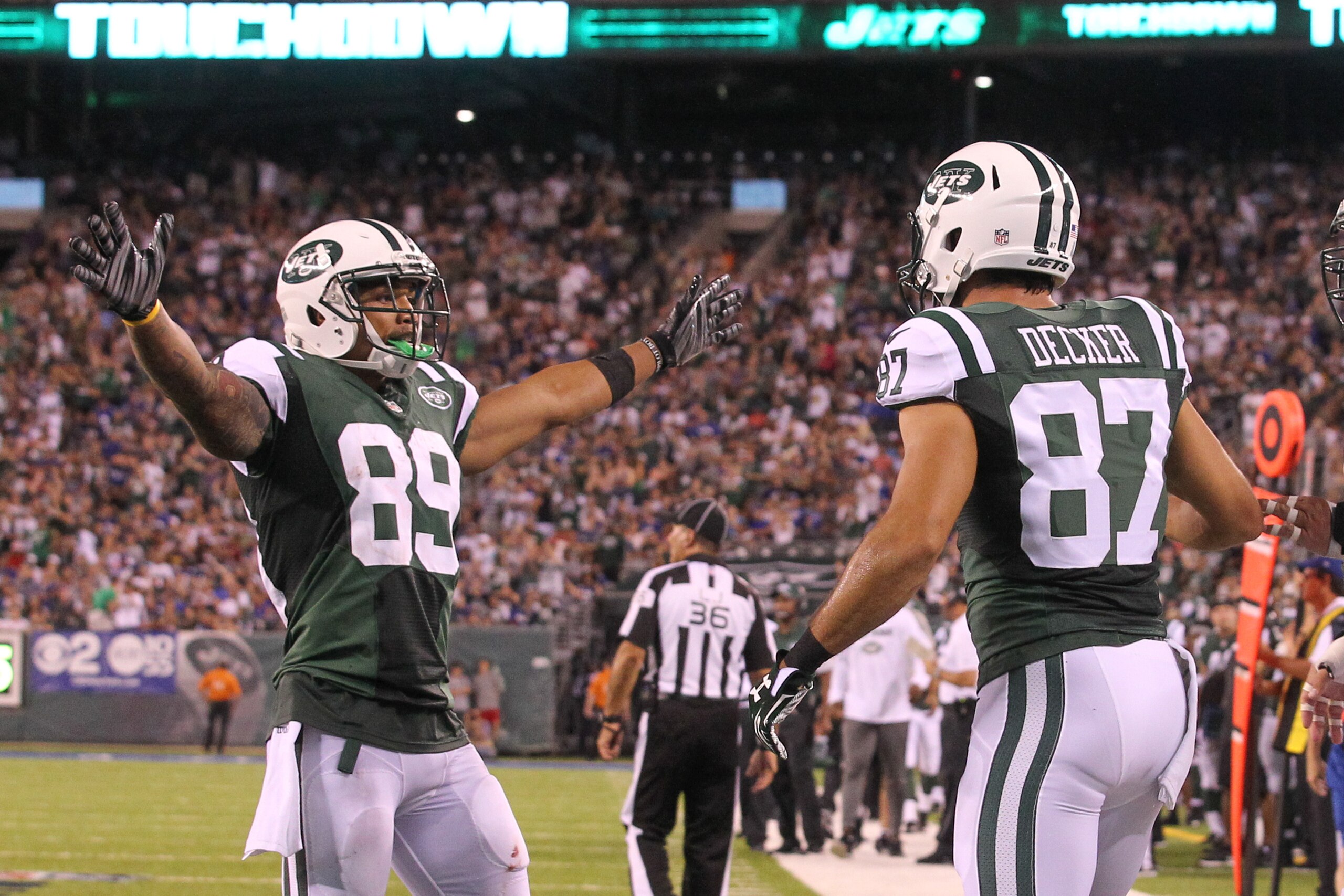
The NFL1000 team of scouts graded a series of important attributes for every player in their positional review. Using a scale starting at zero and going up to anywhere from five to 50 based on the position and the attribute, our scouts graded each player based on their own expertise and countless hours of tape review over the years. Our evaluators had specific positional assignments based on their proven fields of expertise.
- Doug Farrar: Lead scout/quarterbacks
- John Middlekauff: Running backs/fullbacks
- Marcus Mosher: Wide receivers/tight ends
- Mark Schofield: Wide receivers/tight ends
- Duke Manyweather: Offensive tackles
- Ethan Young: Offensive guards
- Joe Goodberry: AFC defensive ends
- Justis Mosqueda: NFC defensive ends
- Charles McDonald: Defensive tackles
- Zach Kruse: 3-4 outside linebackers
- Derrik Klassen: 4-3 outside linebackers
- Jerod Brown: Inside linebackers
- Kyle Posey: Cornerbacks
- Ian Wharton: Cornerbacks
- Mark Bullock: Safeties
- Chuck Zodda: Special teams
Each corresponding position slide was written by the assigned scout.
Quarterback
2 of 19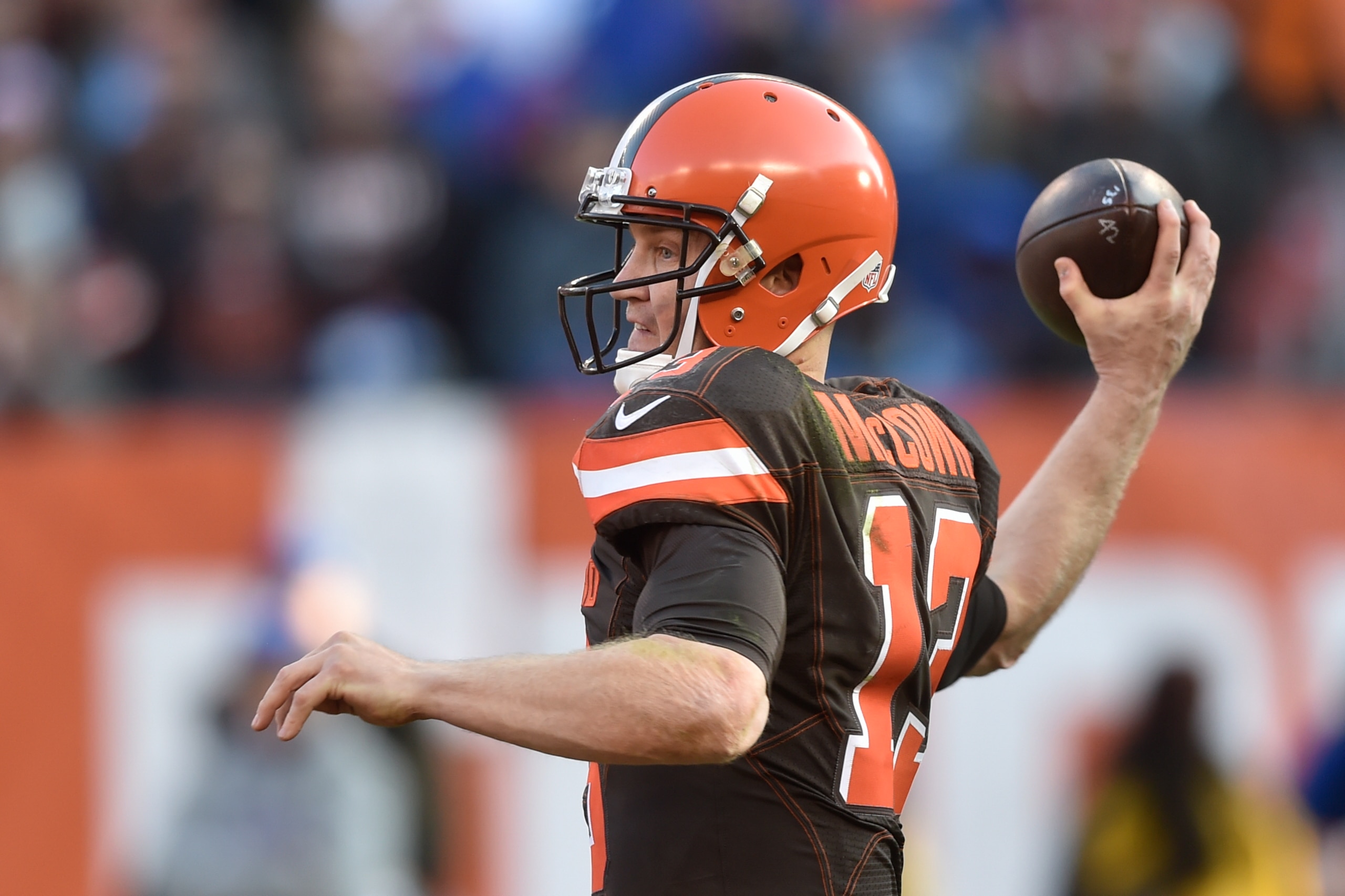
Scheme: West Coast/Power
Starter: Josh McCown
NFL1000 Scores: Did not have enough snaps to qualify
The Jets voided the last year of Ryan Fitzpatrick's contract after he turned into a pumpkin in 2016 and then signed another unspectacular quarterback who turns into a pumpkin every other year. McCown had upscale seasons for his talent with the Bears in 2013 and Browns in 2015 but followed those seasons with clear regressions. Playing in spot duty for a Browns team that had no clear answer at quarterback last season, he threw two interceptions in each of his first three games, and injuries were a constant concern. The plan seems to be that McCown will compete with Bryce Petty and Christian Hackenberg for the starting job, a competition he should be able to ace, but what comes after that is anybody’s guess.
Backup: Bryce Petty
NFL1000 Scores: Did not have enough snaps to qualify
Petty got his first regular-season game action in November after Fitzpatrick got hurt. For the most part, he validated the concerns of those who questioned his ability to read NFL defenses after the time he spent in Baylor's schematic hothouse. His accuracy was suspect when he wasn't making first-read open throws. Petty does have potential to succeed as a backup in a simplified offense, but expecting any more than that in the short term is pure folly.
Backup: Christian Hackenberg
NFL1000 Scores: Did not have enough snaps to qualify
The Jets' second-round pick in 2016, Hackenberg looked awful in his two preseason games and didn't throw a pass in-season. He'll have to overcome serious accuracy and decision-making issues to ever succeed in the NFL.
Team Need: 10/10
Potential Draft Fits: Mitchell Trubisky (North Carolina), DeShone Kizer (Notre Dame), Davis Webb (Cal)
Running Back
3 of 19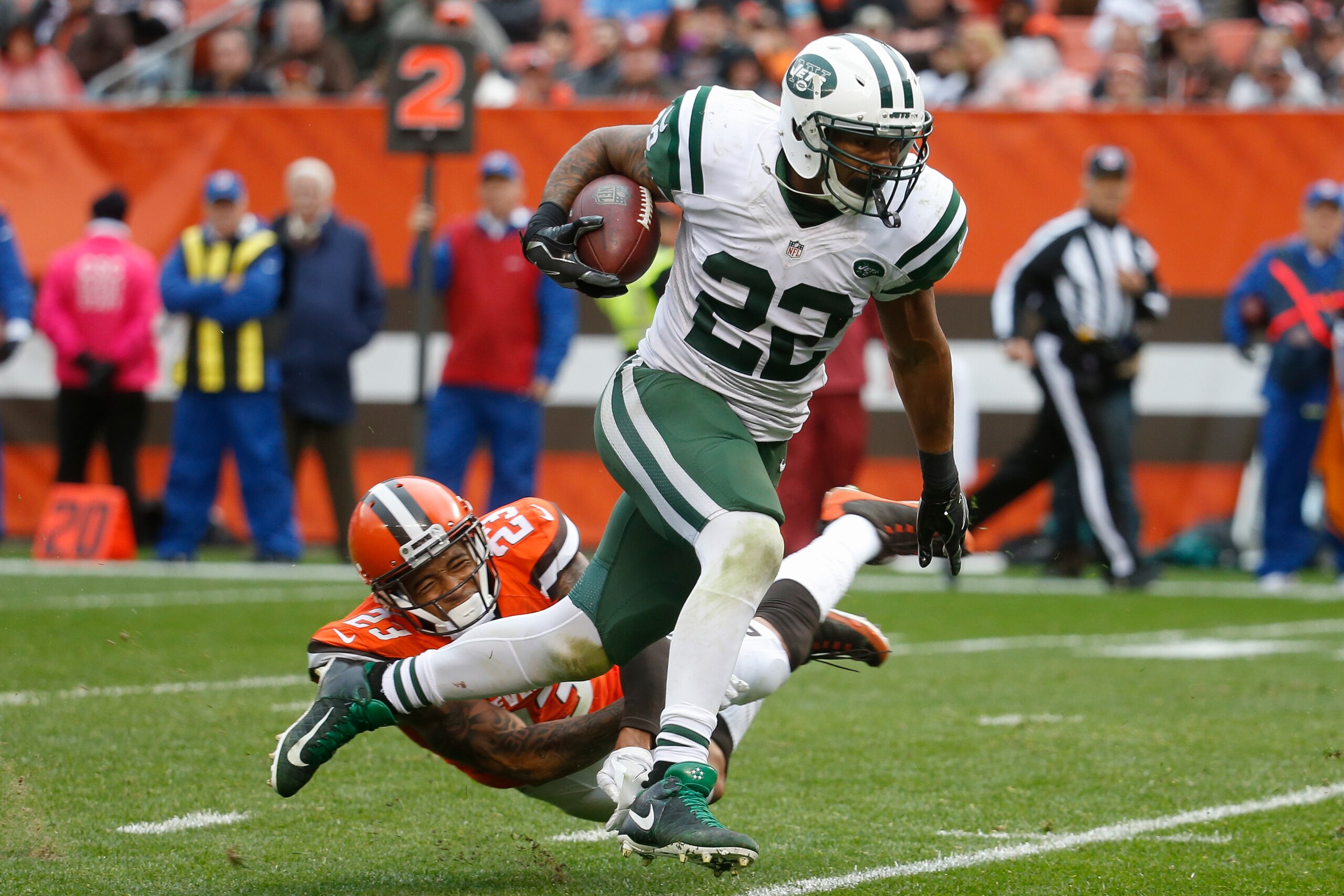
Scheme: West Coast/Power
Starter: Matt Forte
NFL1000 Scores: 70.1/100
NFL1000 Position Rank: 43/82
Matt Forte was a big offseason signing for the Jets in 2016 but turned out to be a disappointing acquisition. He missed multiple games with injuries and only averaged 3.7 yards per carry, his lowest since 2009. While the Forte signing didn't go as planned, he still had seven rushing touchdowns and 30 catches.
Forte still has great vision and patience, but some of his burst has diminished with age. He can function outside the tackles because of his natural ability to let blockers locate but lacks the speed now to really hit it upfield. In the passing game Forte is still excellent. He's a great route-runner who has a feel for getting open on defenders and the natural hands if the ball is even close to him. Forte is a very good screen player and is stout as a pass-blocker. Overall, Forte's best days are behind him, and the Jets need to pray he has a little bit left in the tank.
Backup: Bilal Powell
NFL1000 Scores: 71.1/100
NFL1000 Position Rank: 32/82
Bilal Powell had a breakout season in 2016 in his sixth year in the NFL. He has spent his entire career with the Jets but has never been the full-time starter. With Forte on the shelf with an injury, Powell started four games and was productive. He became a complete running back, averaging 5.5 yards per carry and adding 58 catches.
Powell is a violent inside runner—a one-cut, downhill pounder who looks to lower his shoulder on contact. He keeps his feet moving once engaged and has the quickness to get by defenders at the second level. With his combo of patience and speed, he is a productive outside runner. In the passing game he really excels. Powell has natural hands and can operate in the flat and option routes, plus he has the instincts to create separation against defenders. He is also a very physical player in pass protection. Overall, Powell's role should continue to increase, especially if Forte's career arrow keeps pointing down.
Backup: Brandon Burks
NFL1000 Scores: Did not have enough snaps to qualify
Brandon Burks spent time on the Packers and Jets practice squads in 2016. He played in one game in Week 17 and had two carries. Burks is a long shot to make the team in 2017.
Team Need: 8/10
Potential Draft Fits: Leonard Fournette (LSU), Christian McCaffrey (Stanford), Joe Mixon (Oklahoma)
.jpg?w=2560 "Colts Football")
.jpg?w=2560 "Chiefs Giants Football")
.jpg?w=2560 "Titans Colts Football")
Fullback
4 of 19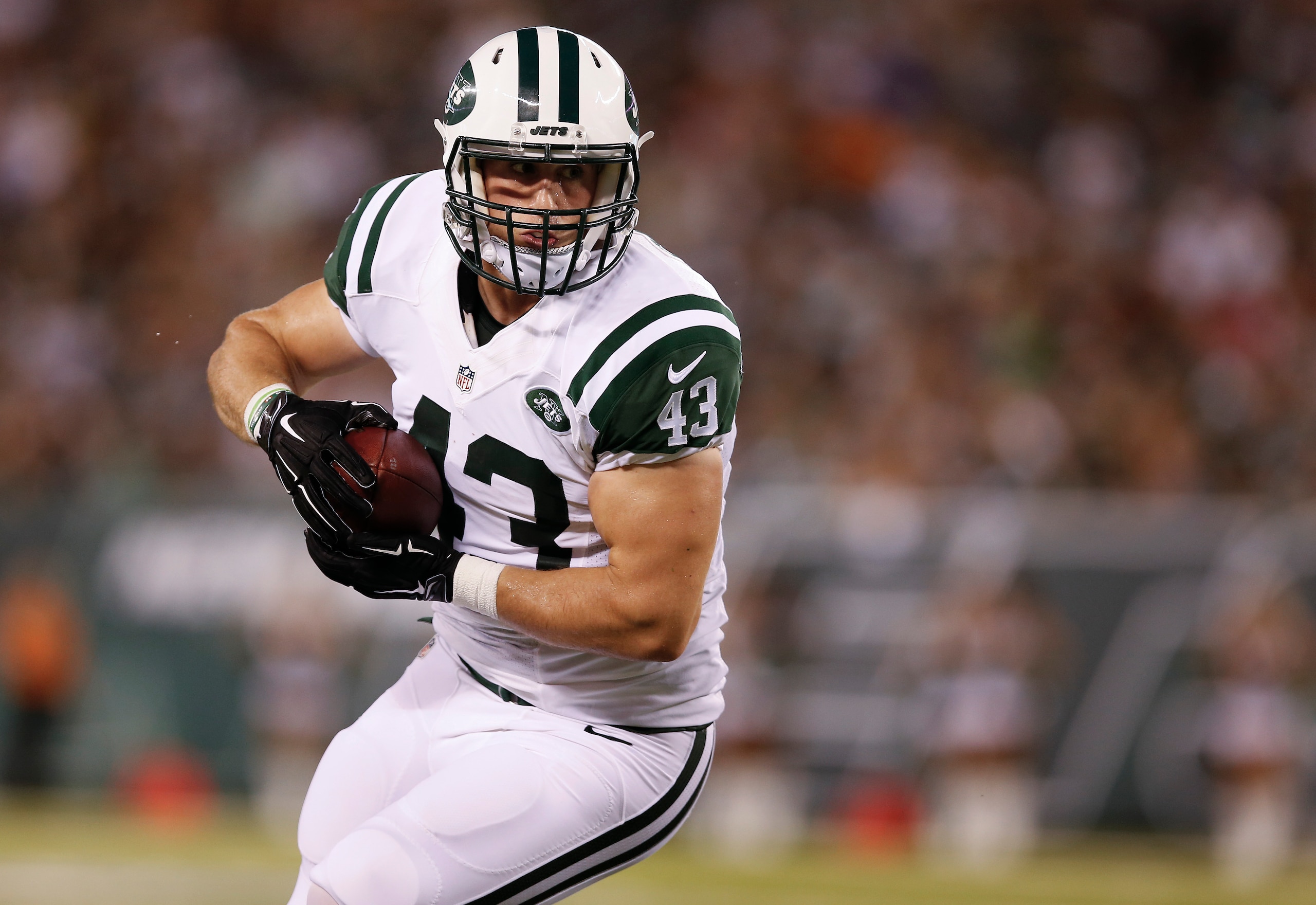
Scheme: West Coast/Power
Starter: Julian Howsare
NFL1000 Scores: Did not have enough snaps to qualify
Julian Howsare has bounced around on practice squads the last several years. The Jets have not featured a fullback in their offense in the past, so Howsare should use training camp as an audition for other teams.
Team Need: 0/10
Potential Draft Fits: None
Wide Receiver
5 of 19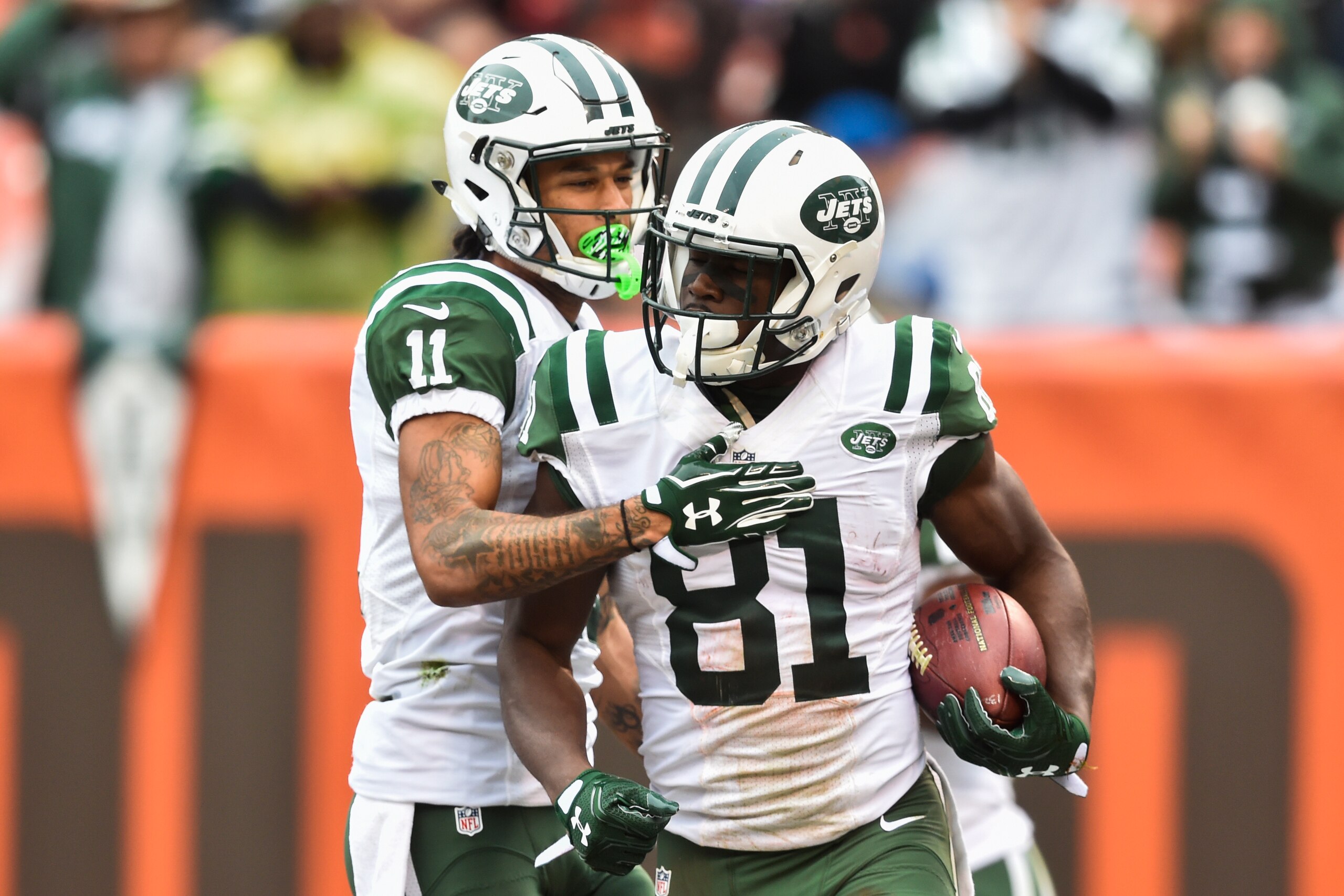
Scheme: Hybrid—West Coast
Starter: Eric Decker
NFL1000 Scores: Did not have enough snaps to qualify
With the departure of Brandon Marshall across town to the New York Giants, Eric Decker steps into the role of premier wide receiver in the Jets' arsenal. The former Bronco saw action in only the first three games of the Jets' 2016 season, and during that time he caught nine passes for 194 yards and two touchdowns. But a shoulder injury caused him to be placed on injured reserve and miss the final 13 games of New York's season.
When healthy, Decker fits the mold of an X receiver in New York's offense who can also slide into the Z spot. With John Morton's arrival from New Orleans to run the Jets offense, expect New York to take on more of a West Coast flavor in 2017. Morton is a branch off the Jim Harbaugh/Sean Payton offensive coaching tree and spent the last two seasons in the NFC South under Payton. Decker should fit well with this offense and see a lot of targets in the upcoming season.
Starter: Quincy Enunwa
NFL1000 Scores: 68.9/100
NFL1000 Position Rankings: 27/155
With the injury to Decker, an opportunity arose for Quincy Enunwa, and the third-year player out of Nebraska made the most of his chance. He caught 58 passes for 857 yards and four touchdowns, all of which stand as career highs for the former Cornhusker. He snagged seven passes in the season opener against the Bengals, getting his season off to a hot start. He caught more than four passes in five straight games to start the season before cooling off a bit in the middle of the year.
Enunwa is a fairly complete receiver and was effective last year working both underneath on slants and crossing routes, as well as on the outside on deeper out and comeback routes. Enunwa truly stood out as a blocker, and his grade last season put him in the top five of all wide receivers in that category for the NFL1000 project. With Marshall now wearing grey and blue and Decker coming back from injury, Enunwa is likely a focus for the Jets passing game for the near future.
Starter: Robby Anderson
NFL1000 Scores: 64.2/100
NFL1000 Position Ranking: 82/155
Another player who took on more of a role for the Jets last season was Robby Anderson, a rookie out of Temple. Known for his pure speed, Anderson caught 42 passes for 587 yards and two touchdowns last year and showed an ability to stretch the field vertically with the afterburners. But Anderson is more than a speed demon, and his ability at the catch point on contested throws is an underrated part of his game at the WR position. His combination of size (6'3", 190 lbs) and quickness makes him a versatile receiver who can align at X, Z or even in the slot. He is a player to keep an eye on for a potential breakout season.
Backup: Charone Peake
NFL1000 Scores: 61.0/100
NFL1000 Position Ranking: 120/155
Charone Peake, a seventh-round draft choice out of Clemson, saw limited action for the Jets last season. Peake appeared in 15 games for New York, including one start against the Dolphins in Week 9, but caught only 19 passes for 186 yards. He notched his first NFL touchdown in Week 4 against the Seahawks, scooping up a Ryan Fitzpatrick fumble and advancing it 40 yards for the score.
As a receiver, Peake is effective on shorter routes, such as slants, as well as some deeper routes, particularly post or Bang-8 routes. His size (6'2", 209 lbs) allows him to use his frame on these plays, shielding defenders from the football. With the return of Decker and the emergence of Enunwa and Anderson, Peake likely serves as the fourth receiver for the Jets, but his size and versatility makes him a good roster option, and he fits well in Morton's offensive scheme.
Backup: Jalin Marshall
NFL1000 Scores: 63.1/100
NFL1000 Position Ranking: 95/155
Marshall was an undrafted rookie out of Ohio State with the potential to run speed routes outside and in the slot. Primarily a reserve slot receiver for the Jets in 2016, Marshall has an uncertain future with the team.
In March, it was announced that he was suspended four games for a violation of the league’s policy on performance-enhancing drugs. His ability as a return man is what may save his roster spot, but he’ll need a strong preseason to solidify it.
Backup: Devin Smith
NFL1000 Scores: Did not have enough snaps to qualify
The Jets inexplicably selected Smith in the second round of the 2015 draft despite the fact that his Ohio State tape showed a player who could do little more than go very fast in a straight line. He's been hampered by injuries and developmental concerns, but he should see the field in 2017, if only for the coaching staff to evaluate if there's enough potential to keep going with him on the receiver depth chart.
Team Need: 4/10
Potential Draft Fits: JuJu Smith-Schuster (USC), Carlos Henderson (Louisiana Tech), Zay Jones (East Carolina)
Tight End
6 of 19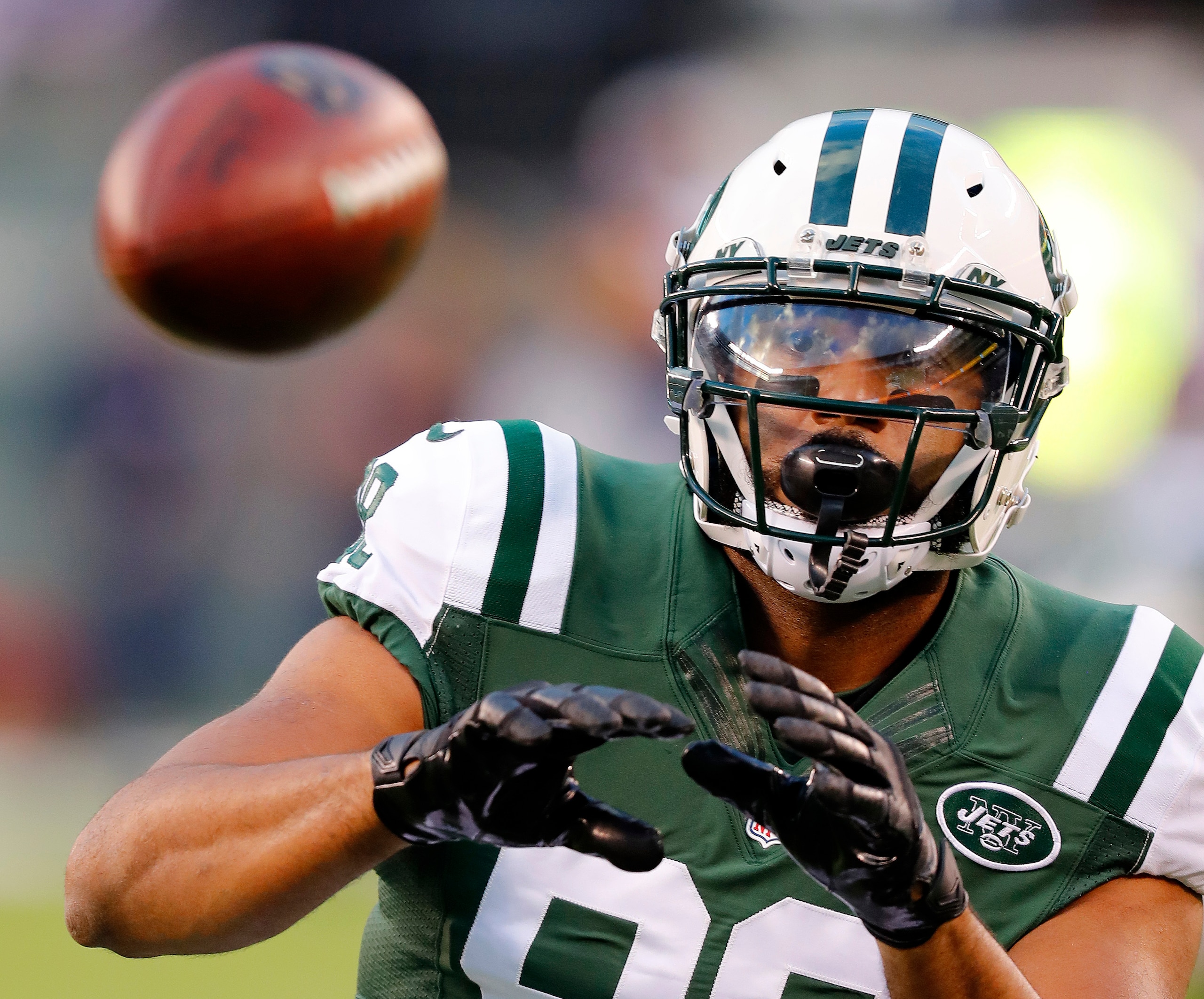
Scheme: Hybrid—West Coast
Starter: Brandon Bostick
NFL1000 Scores: 59.5/100
NFL1000 Position Ranking: 69/96
Injuries also hit the tight end position for the Jets last season, forcing the offense to rely on Brandon Bostick. The reserve tight end is best utilized as a blocker in 11 or 12 situations or as an extra blocker in jumbo formations. He was used sparingly in the passing game this past season, catching eight passes on 11 targets for only 63 yards. Bostick lined up primarily as an in-line tight end but also in the wing and as a fullback on some running plays. He was very effective at chipping edge-rushers before releasing to the flat, so he provides help in pass protection. As a run-blocker Bostick is effective, grading above average in that category this past season.
Given his skill set, Bostick is best served in a role as the second or third tight end on the roster.
Starter: Braedon Bowman
NFL1000 Scores: Did not have enough snaps to qualify
Signed off waivers from the Jacksonville Jaguars, Bowman was expected to serve in a reserve role for the Jets last season. He appeared in three games for New York but suffered a torn ACL and was placed on injured reserve in October.
When healthy, Bowman is another depth player at the position with the ability to block effectively in the run game (in both zone or gap schemes) and to serve as a checkdown option in the passing game, particularly in routes toward the sideline or in the flat.
Backup: Austin Seferian-Jenkins
NFL1000 Scores: 63.8/100
NFL1000 Position Ranking: 36/96
After he was arrested for driving under the influence on Sept. 23, 2016, Austin Seferian-Jenkins was released by the Tampa Bay Buccaneers that day. This was his second DUI arrest; his first came in college as a member of the Washington Huskies. With the injuries at the TE position, the Jets signed Seferian-Jenkins off waivers, and he appeared in seven games for New York, catching 10 passes for 110 yards.
He showed glimpses of his promise and ability last season and has the talent and skills to be an effective weapon in the passing game. He can get separation on routes underneath against linebackers, as well as deeper routes such as seam routes or post patterns. But he will miss the first two games of the 2017 season as a result of the DUI arrest.
Backup: Eric Tomlinson
NFL1000 Scores: 59.3/100
NFL1000 Position Ranking: 72/96
The final tight end on the roster, Eric Tomlinson, saw action in only seven games last season and never saw a target or notched a reception. He was used exclusively as a blocker, and while he was effective in that role, his ability to contribute in the passing game is limited.
Team Need: 7/10
Potential Draft Fits: O.J. Howard (Alabama), David Njoku (Miami), Gerald Everett (South Alabama), Jake Butt (Michigan), Evan Engram (Mississippi), Bucky Hodges (Virginia Tech)
Left Tackle
7 of 19
Scheme: Zone
Starter: Kelvin Beachum
NFL1000 Scores: 71.1/100
NFL1000 Position Rank: 29/40
Kelvin Beachum was not featured in our NFL1000 piece ranking the top left tackles in free agency since Jacksonville didn't make a decision about his option until after publication, but Beachum's signing with the New York Jets may be one of the more underrated free-agent inkings out there.
Beachum is a player who isn't particularly great at anything, but he does a few things well enough to provide the Jets with a solid starter at left tackle, a position that was in limbo with the retirement of D'Brickashaw Ferguson last offseason.
The Jets missed on the signing of often-injured Ryan Clady, and left tackle became a revolving door in 2016; the same could be said for right tackle.
Beachum will have his limitations when facing defenders that possess elite traits, but he has proved he can have success against a great deal of the league's edge defenders and gives New York an adequate starting option at left tackle.
Backup: Ben Ijalana
NFL1000 Scores: 69.0/100
NFL1000 Position Rank (35/40)
Ben Ijalana started 13 games for the New York Jets in 2016 and played significant snaps at both left tackle and right tackle.
As his NFL1000 scores and rankings indicate, Ijalana was more effective as a right tackle.
Ijalana was a free agent this offseason and re-signed with New York. He provides veteran depth that can swing to both tackle spots.
Backup: Donald Hawkins
NFL1000 Scores: Did not have enough snaps to qualify.
Donald Hawkins enters his fourth season in the NFL since going undrafted in 2014 and can already be considered a "journeyman" as the Jets become his seventh team. Hawkins spent 2016 with the Carolina Panthers and even saw time on their active roster. Although it is unclear what level of competition Hawkins will provide, at the very least he figures to add depth at left tackle.
Team Need: 0/10
Potential Draft Fits: None. Could consider bringing camp competition with undrafted free agents
Right Tackle
8 of 19
Scheme: Zone
Starter: Brandon Shell
NFL1000 Scores: Did not have enough snaps to qualify
Brandon Shell started at right tackle the last three games of the 2016 season for the New York Jets and showed enough, in my opinion, to have the Jets organization optimistic about his future development.
In three games as a starter, Shell didn't surrender a sack, a hit or a pressure. Pass protection is a strong area of the fifth-round draft pick's skill set, but he must continue to develop his strength at the point of attack and hand usage in the running game.
The battle between Shell and Brent Qvale will be one to keep an eye on, and Shell's ability in pass protection and overall upside give him the edge.
Backup: Brent Qvale
NFL1000 Scores: 68.2/100
NFL1000 Position Ranking: 33/38
Brent Qvale saw significant time starting at right tackle and right guard in 2016, his first major game action since entering the league in 2014.
Qvale hangs his hat on being a physical run-blocker who will also take chances using physicality in pass protection, which has gotten him into trouble.
Qvale's extensive game action would ideally make him the early lead to man the right tackle spot in 2017 if the season were to start today, but he will face very stiff competition from Brandon Shell, who flashed loads of promise late in the season.
At minimum, Qvale provides New York with position flexibility.
Team Need: 3/10
Potential Draft Fits: None. Could consider bringing camp competition with undrafted free agents.
Offensive Guard
9 of 19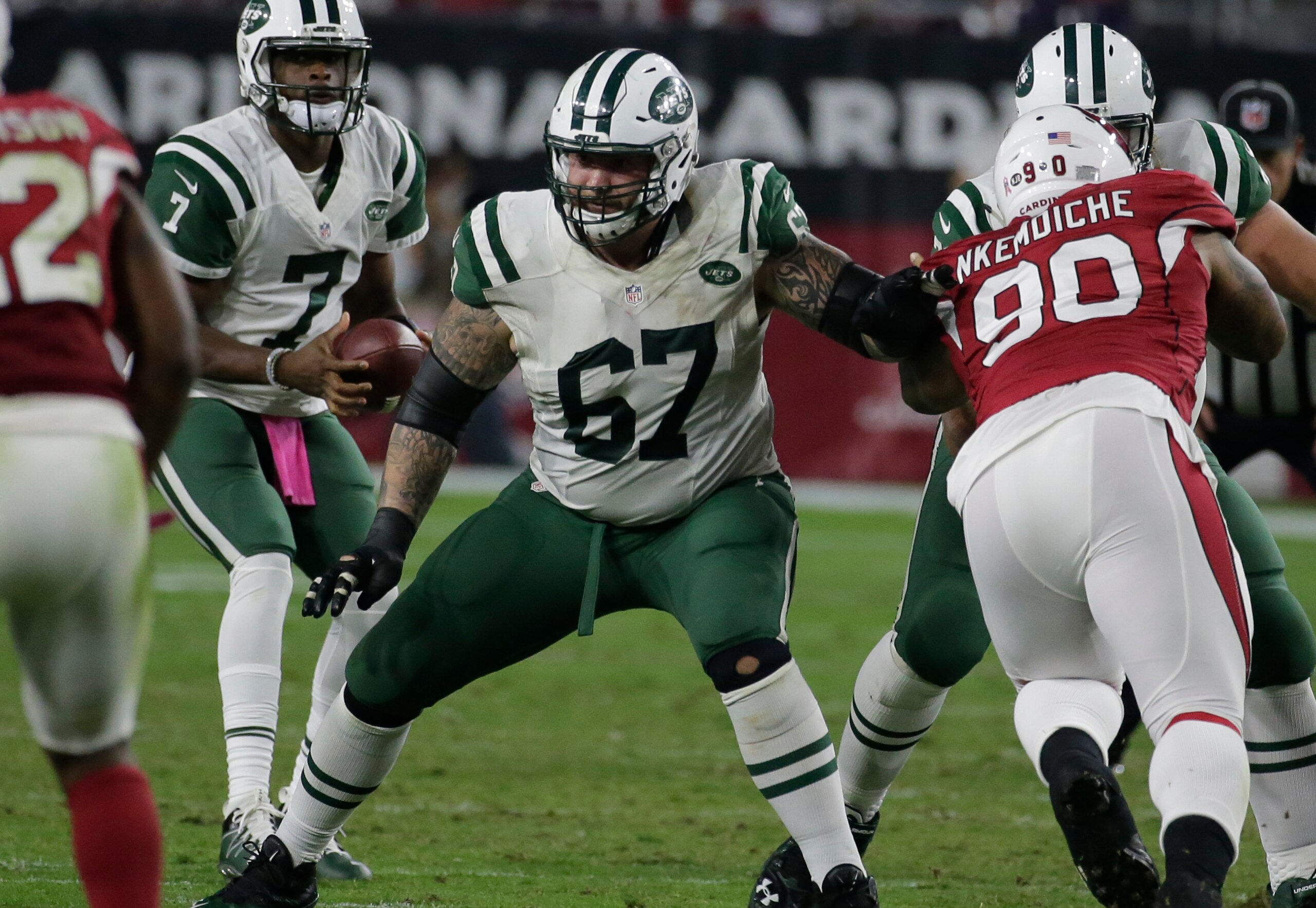
Scheme: Zone Flex
Starter: James Carpenter
NFL1000 Scores: 70.4/100
NFL1000 Position Rank: 31/78
James Carpenter was somewhat of a first-round bust for the Seattle Seahawks, but Jets OL coach Steve Marshall has helped turn him into a solid starter on the left side. He's easily the best offensive lineman on the Jets roster, although that is admittedly a low bar to cross. Injuries have started to pile up for Carpenter in recent years, so that is something to keep an eye on, but he has done an impressive job of staying on the field and battling through them. There are only a few guards around who can sustain blocks and hold off bull rushes when not at 100 percent health, and Carpenter has shown he is one of them.
Starter: Brian Winters
NFL1000 Scores: 68.5/100
NFL1000 Position Rank: 53/78
When bringing up the name Brian Winters, the first thing that comes to mind is how he set the guard contract market out of whack this offseason, not his play on the field. That should tell you all you need to know. Winters is the definition of a serviceable starter, and his lack of physicality in the run game will likely limit him to that tier of player going forward.
Backup: Dakota Dozier
NFL1000 Scores: Did not have enough snaps to qualify
We haven't seen a ton of Dozier in games so far, so not much to go on here, but from what we have seen, his technique needs work. That said, he fits what the Jets look for on the left side—physical rocks that win with play strength.
Team Need: 2/10
Potential Draft Fits: Jessamen Dunker (Tennessee State), Damien Mama (USC)
Center
10 of 19
Scheme: Zone Flex
Starter: Wesley Johnson
NFL1000 Scores: 69.0/100
NFL1000 Position Rank: 23/38
Wesley Johnson is a player I am very intrigued to watch more of this year. Largely unproven still, he did a solid job in relief of Nick Mangold last year, especially in pass protection. He has the play strength to develop in the run game as well, but he needs to get more comfortable disengaging on time and finding his target on the second level. I would give him a year before investing in a center in the top half of the draft, given his intriguing tape and all the Jets' other needs.
Backup: Jonotthan Harrison
NFL1000 Scores: Did not have enough snaps to qualify
A solid interior depth option, Harrison has the experience at guard and center to make him the first guy off the bench for the Jets on the offensive line. Harrison is another player who wins with power, but until he stops coming out of his stance delayed, he is going to have a hard time getting in place to generate vertical leverage, which is where he wins.
Team Need: 4/10
Potential Draft Fits: Kyle Fuller (Baylor), Erik Austell (Charleston Southern)
Defensive End
11 of 19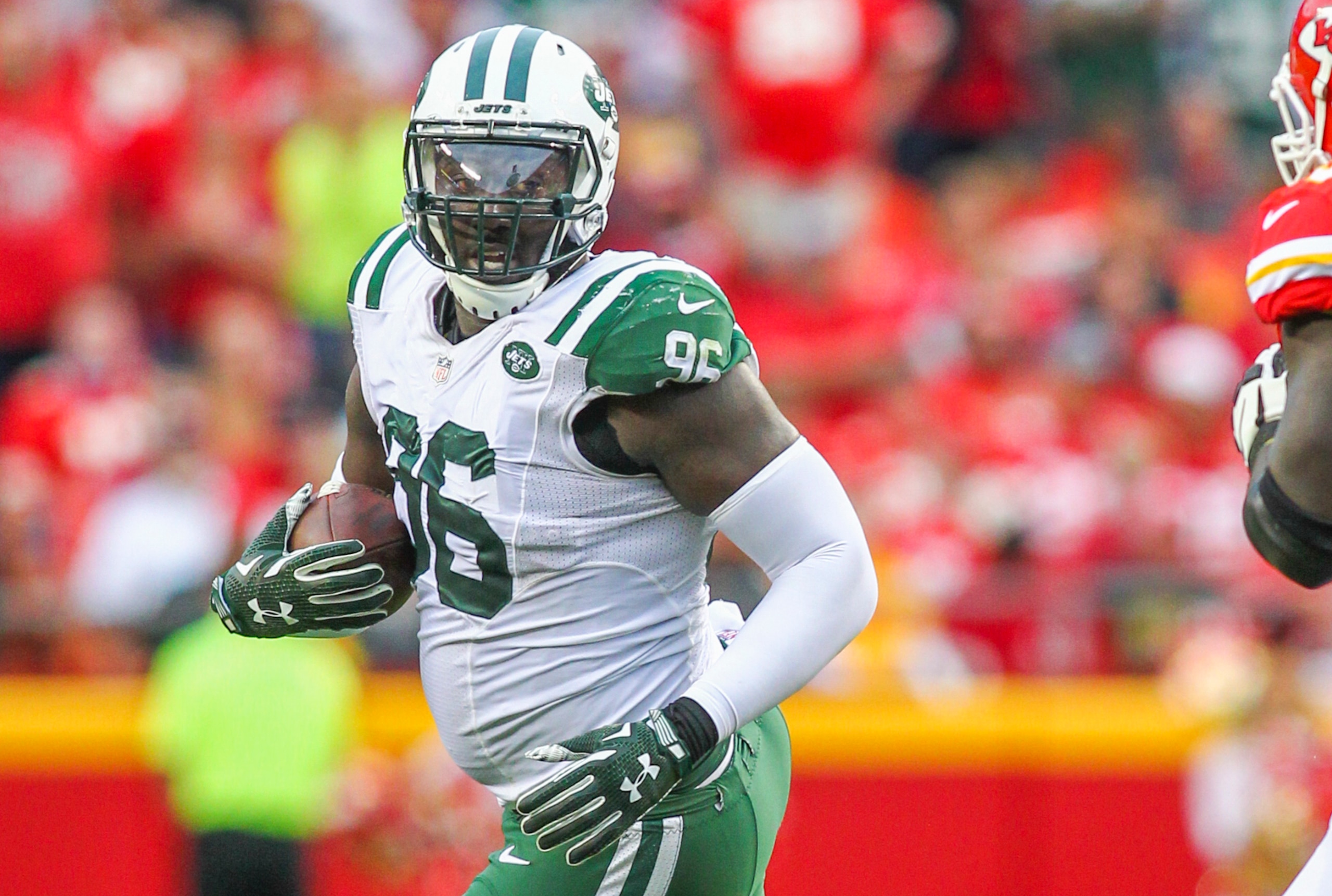
Scheme: 3-4 Hybrid
Starter: Muhammad Wilkerson
NFL1000 Score: 70.2/100
NFL1000 Position Rank: 4/53 (Graded at 65.1, 40th out of 68, when lined up at 4-3 DE)
Wilkerson, like almost everyone on the Jets, had a down year in 2016. After he posted 12 sacks in 2015, Wilkerson's total dropped to 4.5 sacks in 2016. He still flashed the ability, length and pass-rushing skill, but when the entire defense looked out of place, Wilkerson was often part of that mix as the Jets couldn't decide what kind of defense they should be.
Starter: Sheldon Richardson
NFL1000 Score: 65.5/100
NFL1000 Position Rank: 37/68
Richardson may have been one of the most miscast players of the 2016 season. Playing weak-side defensive end in a 4-3 defense asked too much of him at times, but when allowed to kick inside and rush the passer, Richardson showed he could still be a solid player. His statistical totals dropped, and he only ended up with 1.5 sacks on the season. Richardson continues to be talked about in trade rumors as we get closer to the draft, per Connor Hughes of NJ.com.
Backup: Lorenzo Mauldin
NFL1000 Score: 63.0
NFL1000 4-3 DE Rank: 58/68
Mauldin alternated between outside linebacker and defensive end in the Jets' hybrid defensive fronts, and he was one player who wasn't adversely affected by the team's unnecessary positional creativity. At 6'4" and 252 pounds, he's equally adept at outside linebacker and end, and he has the ability to bring consistent pressure, especially in sub-packages.
Backup: Mike Pennel
NFL1000 Score: 61.8/100
NFL1000 Position Rank: 33/53
Only playing 103 snaps for the Packers last year, Pennel continues to be a career backup. As the Jets figure out their defensive identity and the future of Sheldon Richardson, Pennel's job could fluctuate from role player to inactive on game days.
Team Need: 5/10
Potential Draft Fits: Jaleel Johnson (Iowa), Eddie Vanderdoes (UCLA)
Defensive Tackle
12 of 19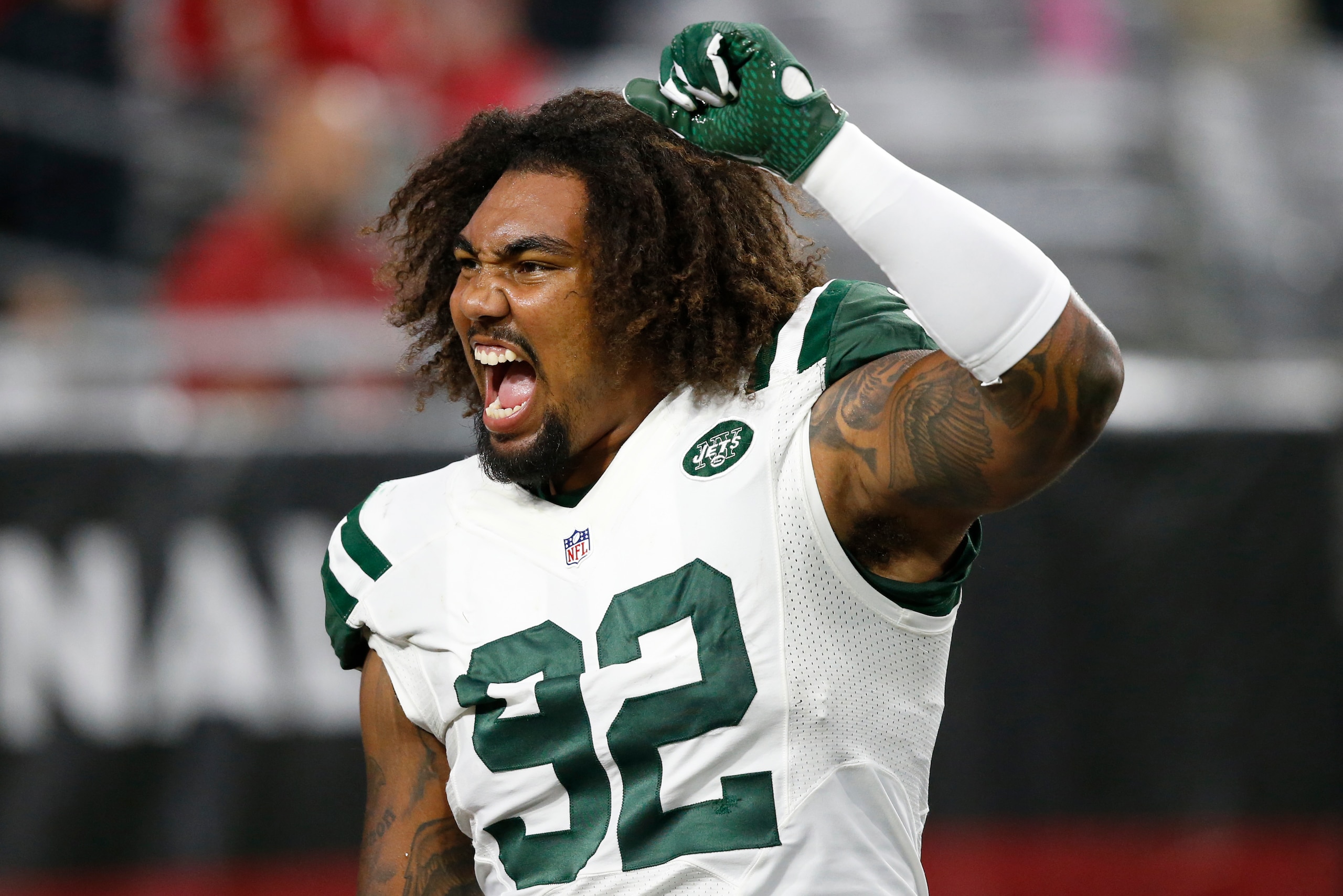
Scheme: Hybrid 3-4
Starter: Leonard Williams
NFL1000 Scores: 72.4/100
NFL1000 Position Rank: 9/99
Upon Leonard Williams' selection in 2015, many believed the pick to be redundant, seeing as the Jets already had Damon Harrison, Muhammad Wilkerson and Sheldon Richardson at the time. Williams ended up being the heir to Harrison's starting position as Harrison left in free agency following the 2015 season.
In a starting role, Williams exploded last season. He isn't the twitchiest interior lineman, but he plays with great leverage, power and instincts. Williams is always gravitating toward the ball, and he has the play strength to get to his spots in order to clog rushing lanes. As a pass-rusher, he isn't an agile, quick rusher, but he has monstrous strength and technique that allows him to work into the quarterback's lap. Williams is one of the best young linemen the NFL has to showcase.
Backup: Steve McLendon
NFL1000 Scores: 67.5/100
NFL1000 Position Rank: 24/99
Steve McLendon is a classic run-stuffer. Though he does not provide much value as a pass-rusher other than pushing the pocket a bit, McLendon is a top-notch run defender, especially for a rotational player. He allows the Jets defense the luxury of resting players on run downs, if need be, without losing quality run defense. With two years still left on his contract, there is no immediate need to look for McLendon's replacement, nor is there reason to replace McLendon. The Jets could try to get someone who is a bit more well-rounded, but that is far from a pressing issue for them.
Backup: Deon Simon
NFL1000 Scores: 61.7/100
NFL1000 Position Rank: 61/99
A seventh-round pick two years ago, Deon Simon is a replacement-level player. Simon provides fine depth for the Jets, but he isn't particularly valuable. He is a baseline run defender who is more a speed bump than a brick wall for running backs. When rushing the passer, Simon shows off enough strength and hustle to be a decent depth player, but he isn't a true disruptor by any means. With as many holes as the Jets have on their roster, providing competition for Simon isn't crucial, but it is a possibility.
Team Need: 1/10
Potential Draft Fits: None. Could consider bringing camp competition with undrafted free agents.
Outside Linebacker
13 of 19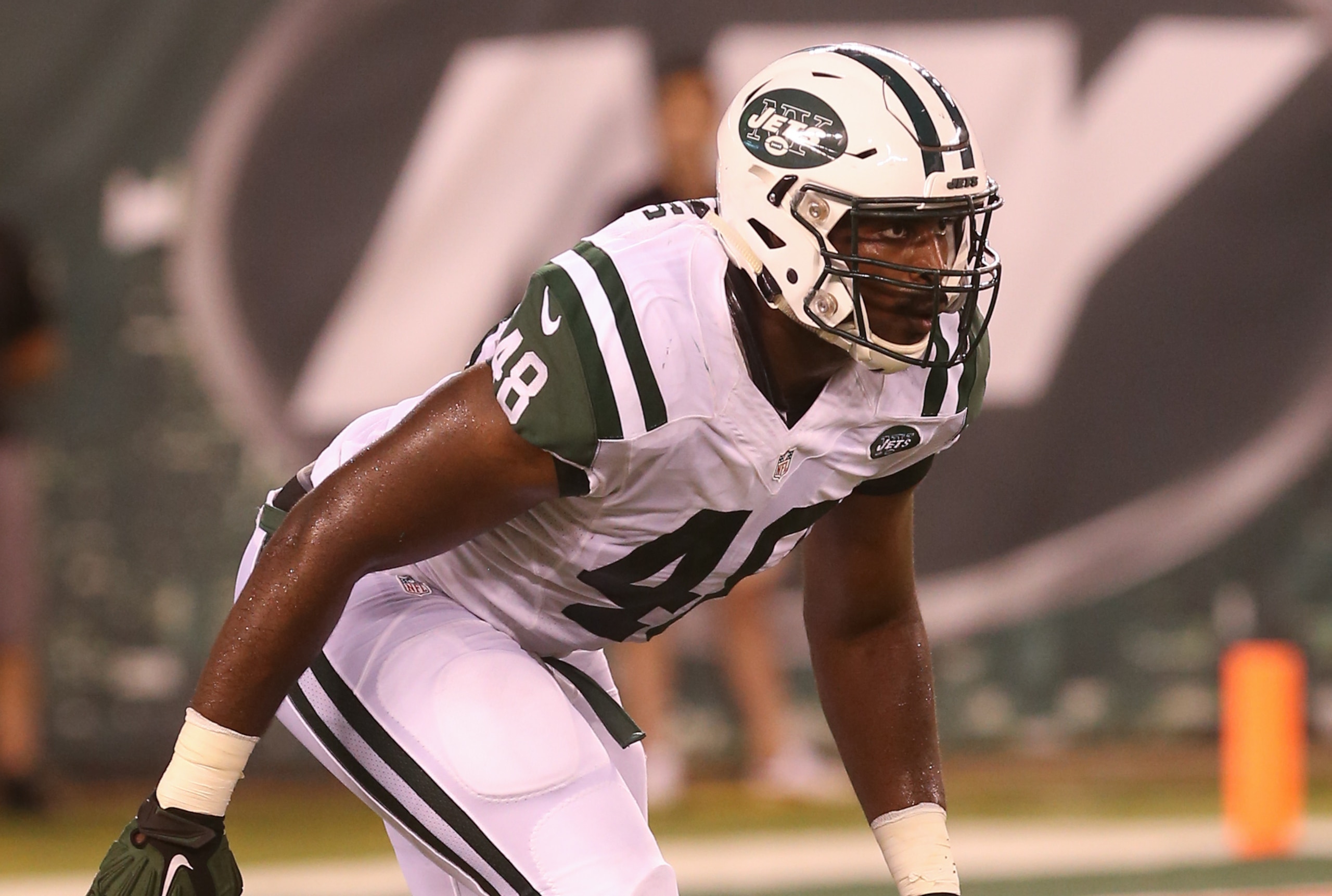
Scheme: Hybrid/3-4
Starter: Jordan Jenkins
NFL1000 Scores: 62/100
NFL1000 4-3 OLB Rank: 24/46 (Graded at 4-3 OLB)
Jordan Jenkins was a rookie contributor at linebacker for the Jets defense. While fellow rookie Darron Lee played a more traditional linebacker spot, Jenkins played rolled down near the line of scrimmage. He was quietly impressive and proved to be a versatile piece for the Jets. Jenkins could contain the edge in run defense, provide an ounce of pass rushing from the edge and even handle coverage responsibilities in the flats. More than anything else, he was a facilitator who allowed the rest of the Jets defense to be flexible and more free-flowing. Jenkins is no superstar, but he is a great supplemental piece to that defense.
Team Need: 9/10
Potential Draft Fits: Takkarist McKinley (UCLA), Tim Williams (Alabama), Carl Lawson (Auburn)
Inside Linebacker
14 of 19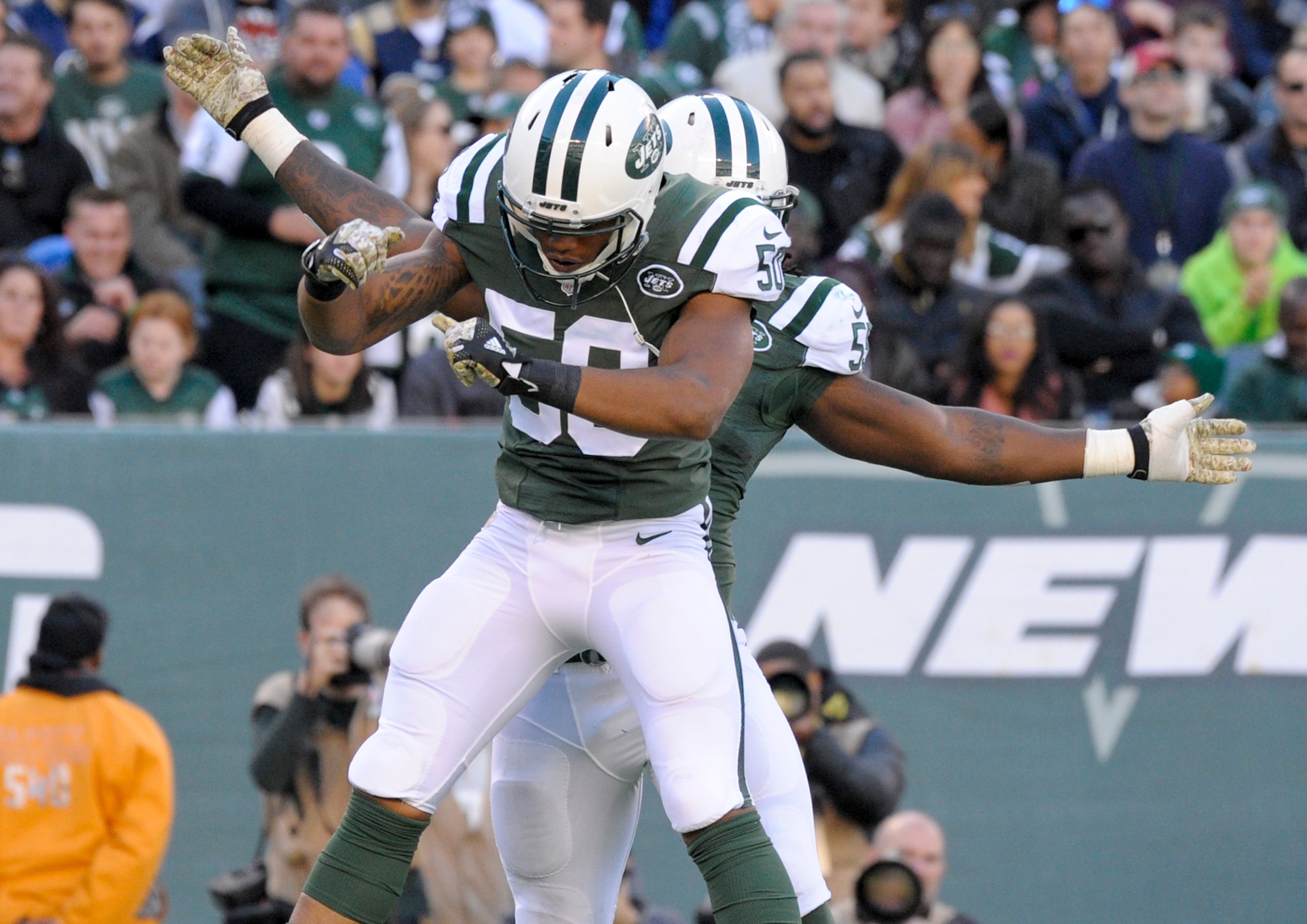
Scheme: Hybrid/3-4
Starter: Darron Lee
NFL1000 Scores: 63.6/100
NFL1000 Position Rank: 20/46 (Graded as a 4-3 OLB )
For a first-round pick, Darron Lee wasn't quite what the Jets were hoping for, but he showed promise as a rookie. After being largely up and down for a majority of the season, Lee finished the year on a high note. He looked to finally bring consistency to his game, primarily as a run defender. Lee is a rangy, athletic linebacker who showed signs of being an above-average run defender and consistent tackler moving forward. That being said, he needs to find comfort in coverage. He often looked out of place and had a handful of miserable showings as a pass defender. If Lee can continue the upward trend he had at the end of his rookie year, the Jets will have scored a quality young linebacker.
Starter: David Harris
NFL1000 Scores: 69.2/100
NFL1000 ILB Rank: 35/65
David Harris is a solid middle linebacker who has the veteran experience to mentor Darron Lee as he becomes an above-average starter in the NFL. Harris is a 10-year veteran with the mental processing skills to compete against any team in the NFL. While his athleticism is on the decline, he still plays the passion and aggression necessary as a run-stuffing middle linebacker. The tandem of Harris and Lee make up one of the more intriguing pairs of an experienced player and a young, developing stud.
Backup: Jeff Luc
NFL1000 Scores: Did not have enough snaps to qualify
Luc is little more than a backup and special teams player for the New York Jets moving forward. He's a throwback to the old-school thumper at inside linebacker that is largely irrelevant in the today's NFL. Luc doesn't have the fluidity or athleticism to routinely compete in coverage or as a sideline-to-sideline defender. He'll have to fight for an immediate backup position and may be on the edge of the roster late in the summer.
Team Need: 7/10
Potential Draft Fits: Alex Anzalone (Florida), Anthony Walker Jr. (Northwestern)
Cornerback
15 of 19
Scheme: Cover 1 and Cover 4
Starter: Morris Claiborne
NFL1000 Scores: 69.3/100
NFL1000 Position Ranking: 19/133
It's unfortunate Claiborne missed the second half of the season because he was well on his way to having the best season of his career since his rookie year. He was healthy, and it showed. Claiborne had five passes defensed in seven games. He was finally looking like a first-round pick. Claiborne should thrive in the Jets scheme if healthy, as he excels when he's at the line of scrimmage and is a very willing tackler. I hope he stays healthy after his talent flashed last year.
Starter: Buster Skrine
NFL1000 Scores: 63.6/100
NFL1000 Position Ranking: 57/133
Skrine is probably best suited as a slot corner where he can let his quickness and speed take over. He is mostly replaceable, however. He only had three games where he scored better than average. For a guy who can run like he can, he sure did get beat a lot. Skrine is still only 27 years old and plays a valuable position. At this point he's shown he is what he is. He doesn't really make plays on the ball. The Jets should look to upgrade.
Nickel: Marcus Williams
NFL1000 Scores: 63/100
NFL1000 Position Ranking: 64/133
The Jets had a couple of young corners who were right there with Skrine last year. Williams had more on-ball production with six passes defensed and a pair of interceptions. Williams didn't have the peaks of Skrine, but there weren't the valleys either. Williams isn't a guy with a high ceiling, but he is the type that could be a valuable contributor in a nickel or dime package. He'll get a chance to compete for the third or fourth spot this year. If New York is looking for more steady play, he might be the best option on the roster.
Team Need: 8/10
Potential Draft Fits: Cordrea Tankersley (Clemson), Quincy Wilson (Florida), Sidney Jones (Washington), Marshon Lattimore (Ohio State), Tre'Davious White (LSU)
Free Safety
16 of 19
Scheme: Cover 1 and Cover 4
Starter: Marcus Gilchrist
NFL1000 Scores: 70.8/100
NFL1000 Position Rank: 26/50
In Gilchrist, the Jets have a serviceable, versatile starter who is relatively reliable at free safety. Todd Bowles likes to switch between aggressive blitzes with man coverage behind it and a safer quarters coverage scheme. Gilchrist can play single high when Bowles sends blitzes but also slide over to a quarters coverage role, which can at times become man coverage for the safety against a tight end or slot receiver. While he's not a spectacular player who excels in either role, he is comfortable in both. He is, however, coming off a torn patellar tendon later in the season. The Jets could upgrade from Gilchrist, especially if they have doubts over his injury, but if they believe he'll be back healthy, they could look to address other needs first.
Backup: Doug Middleton
NFL1000 Scores: Did not have enough snaps to qualify
Middleton went undrafted last year but caught on with the Jets, where he saw a few snaps in the last few games of the season. He didn't show anything in those games to suggest he was ready to challenge for a starting spot and will likely face competition in training camp to make the roster. He'll have an advantage of being in the system for a year and having seen some snaps on the field, but he'll likely need to contribute on special teams to earn a roster spot.
Team Need: 6/10
Potential Draft Fits: Malik Hooker (Ohio State), Obi Melifonwu (Connecticut), Marcus Williams (Utah), Eddie Jackson (Alabama)
Strong Safety
17 of 19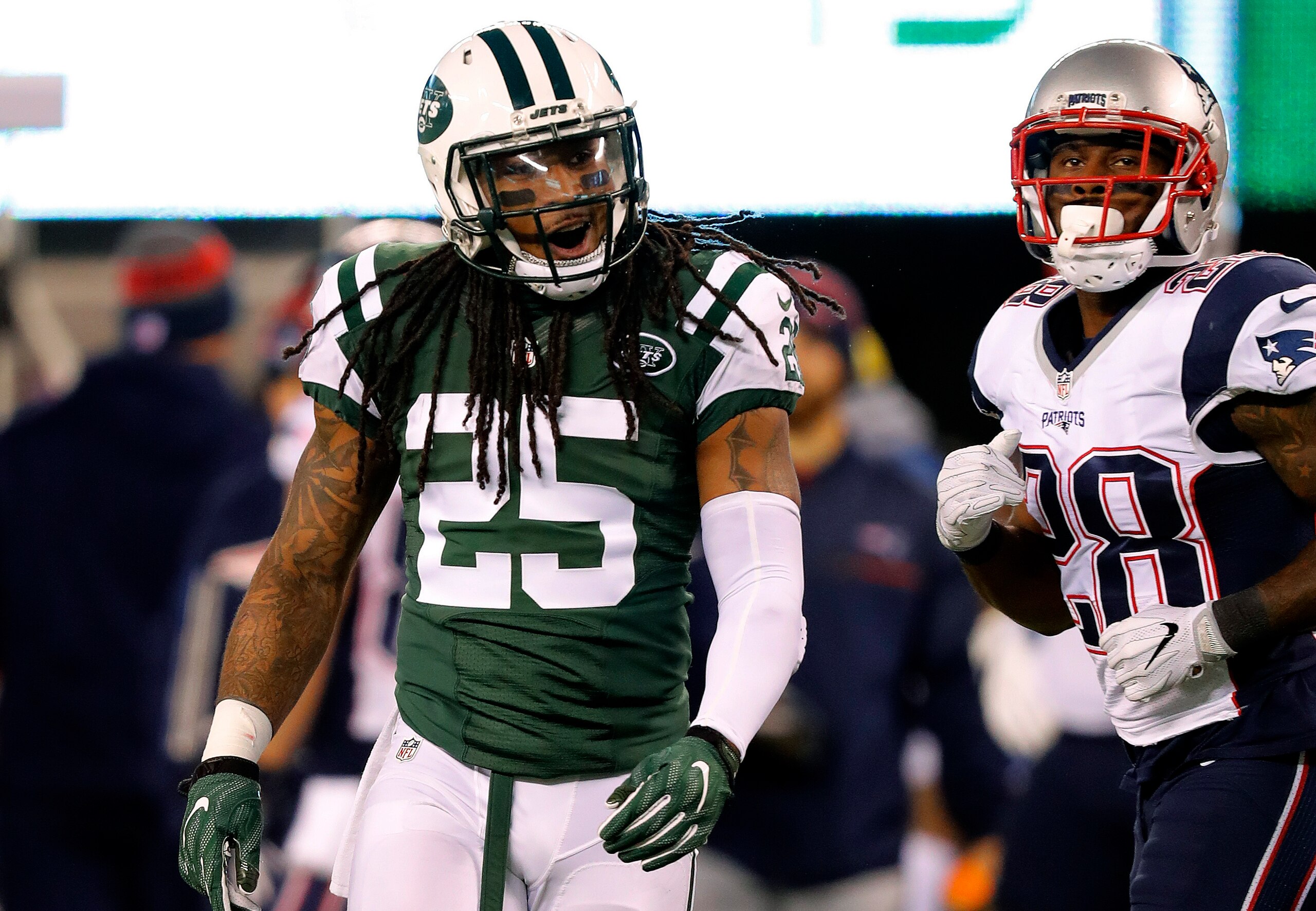
Scheme: Cover 1 and Cover 4
Starter: Calvin Pryor
NFL1000 Scores: 69.2/100
NFL1000 Position Rank: 43/53
The 2014 first-round pick out of Louisville hasn't been able to live up to the expectations of a first-rounder. He was seen as a box safety who could be a strong run defender and solid in zone. But Pryor hasn't been able to produce what the Jets hoped they'd get when they drafted him. Getting to the ball-carrier isn't necessarily the problem for Pryor—it's tackling him. There were a number of times this season where Pryor had an opportunity to make a tackle and keep the gain to a minimum, but he missed because of a bad angle or poor tackling form from going for a big hit. Down the stretch, it appeared Pryor was about to get benched before Gilchrist suffered an injury.
Backup: Rontez Miles
NFL1000 Scores: 69.6/100
NFL1000 Position Rank: 39/53
Miles has worked his way up from undrafted in 2013 to primary backup for the Jets. He split time at both strong and free safety, filling in for Pryor and Gilchrist whenever needed, but looked more comfortable in the box at strong safety. He did have some notable hits that brought some energy to the Jets defense but also had a few struggles in coverage. If he can continue to develop the way he has, he should be in position to challenge Pryor for the starting spot in training camp.
Team Need: 5/10
Potential Draft Fits: Jamal Adams (LSU), Budda Baker (Washington), Josh Jones (NC State)
Kicker
18 of 19
Starter: Chandler Catanzaro
NFL1000 Scores: 66.3/100
NFL1000 Position Rank: 25/34
With Nick Folk's departure during the free-agency period, the New York Jets turn to either Chandler Catanzaro, brought in from the Cardinals after his release, or Ross Martin, who the team tried out during the preseason in 2016.
I give Martin a slight edge in this race at this point, as the Jets are familiar with him from his time spent with the team last year and thought highly enough of him to bring him back for a second go-round. Martin has clean mechanics but showed some struggles during game action during last year's preseason, though he was lights-out during practice throughout that time. He will have to prove he can compete when all eyes are on him, but he has the talent to do so.
Catanzaro, on the other hand, was one of the most promising young kickers in the league heading into 2016 but saw his season derailed by a late-season mechanical collapse that caused all kinds of issues in Weeks 14 and 15. He seemed to right the ship somewhat heading into the last two weeks, but the Cardinals decided to move on. Catanzaro is a high-upside acquisition; when he is at his peak, he is a top-10 kicker in the NFL. The real question is whether he can overcome the mental hurdles that led to his struggles last season. This is the most interesting kicker battle of 2017, but Martin likely has the edge since it's his second summer with the Jets.
Team Need: 4/10
Potential Draft Fits: None
Punter
19 of 19
Punter: Lachlan Edwards
NFL1000 Scores: 60.9/100
NFL1000 Position Rank: 33/34
2016 was Edwards' first year in the NFL, and the rookie struggled to show the consistency required at this level of play. He graded out over 70 in only his Week 1 performance and showed the need for an adjustment period to the NFL game. The big concern with Edwards is how likely he is to reach his ceiling. He regularly generates above-average hang time, but the issues in his game lie in his ability to place the ball both horizontally and vertically down the field, as he does not show adequate touch at this point. Edwards had similar issues in college, so this is not a new development, and he will need to show he can address these questions in the next couple of years.
Overall, Edwards is probably safe heading into the 2017 season, as punters can take time to develop and adjust to the NFL game, but he needs to show improvement to continue to remain on an NFL roster beyond this year. He has the leg to be a quality NFL punter, but he needs to refine the more intricate parts of his game to reach that level.
Team Need: 4/10
Potential Draft Fits: None
Advanced stats and snap counts via Pro Football Focus.
.jpg?w=2560)
.jpg?w=2560 "Cardinals Giants Football")







