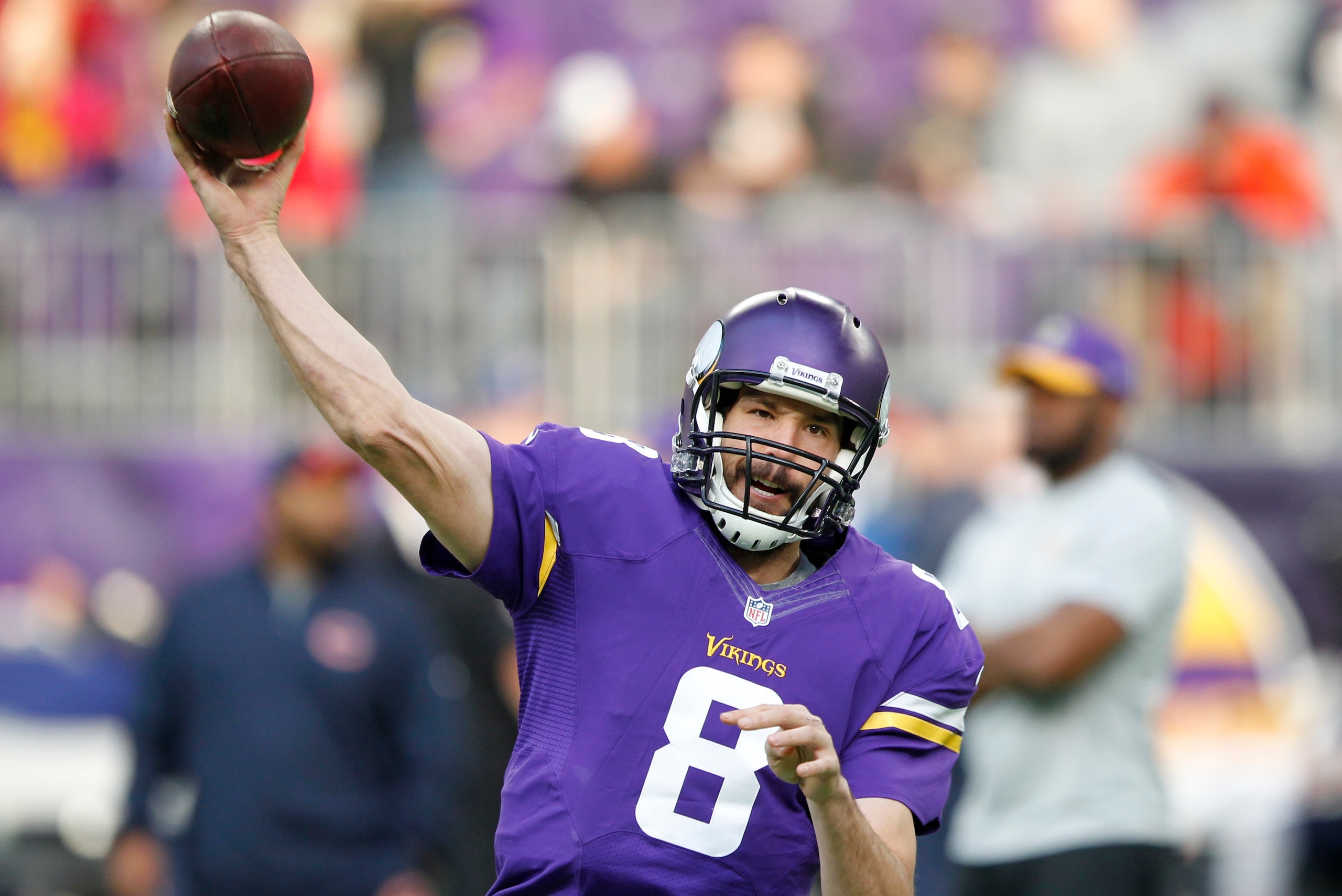

NFL1000: Minnesota Vikings 2017 NFL Draft Preview
In 2016, the Minnesota Vikings rebounded from two major hits that would have wiped out franchises with lesser leadership. Quarterback Teddy Bridgewater suffered a brutal knee injury in August that put his career in doubt, and running back Adrian Peterson suffered his own knee injury that basically made him a non-factor after Week 2.
General manager Rick Spielman and head coach Mike Zimmer weren't going down without a fight, though—they got on the phone with the Eagles and traded their 2017 first-round pick and 2018 fourth-round pick for quarterback Sam Bradford, and made do at running back with Jerick McKinnon and Matt Asiata.
The resulting 8-8 record would be a disappointment under other circumstances, following the team's 11-5 mark in 2015, but Zimmer enjoyed a ton of well-deserved praise for keeping the team together, and Spielman made a gutsy move that paid off with the Bradford trade.
The first overall pick in the 2010 draft, Bradford had always struggled with consistency and injury issues, but he thrived in Minnesota despite a midseason change in offensive coordinators from Norv Turner to Pat Shurmur. Shurmur was Bradford's offensive coordinator in 2010 in St. Louis when Bradford won AP Offensive Rookie of the Year, so the two men were able to hit the ground running. Bradford showed his uncanny deep accuracy at times and completed 71.6 percent of his passes despite playing behind an offensive line that was probably the league's worst.
Receivers Adam Thielen and Stefon Diggs worked well with Bradford; Thielen came out of nowhere as a fine deep threat. And to replace Peterson, the Vikings signed former Raiders running back Latavius Murray, a versatile player who can add to the offense in a lot of ways.
Still, that offense won't really get on track until the line is fixed. Left tackle Matt Kalil, the biggest liability, went off to join his brother Ryan with the Carolina Panthers. Guard Brandon Fusco and tackle Andre Smith moved on, and tackles Riley Reiff and Mike Remmers were acquired. Neither is a top-five player, but both will provide huge upgrades in run- and pass-blocking—especially the underrated Remmers. Adding another guard in the draft to pair with Alex Boone would be an important part of the Vikings' offensive line reformation.
And if that happens, there's no reason to think that Zimmer's team couldn't take the NFC North. They have a great young defense, a quarterback who is in the right system, and they're clearly addressing their biggest issue from 2016. The future for the Vikings looks far more encouraging than the recent past.
Methodology
1 of 18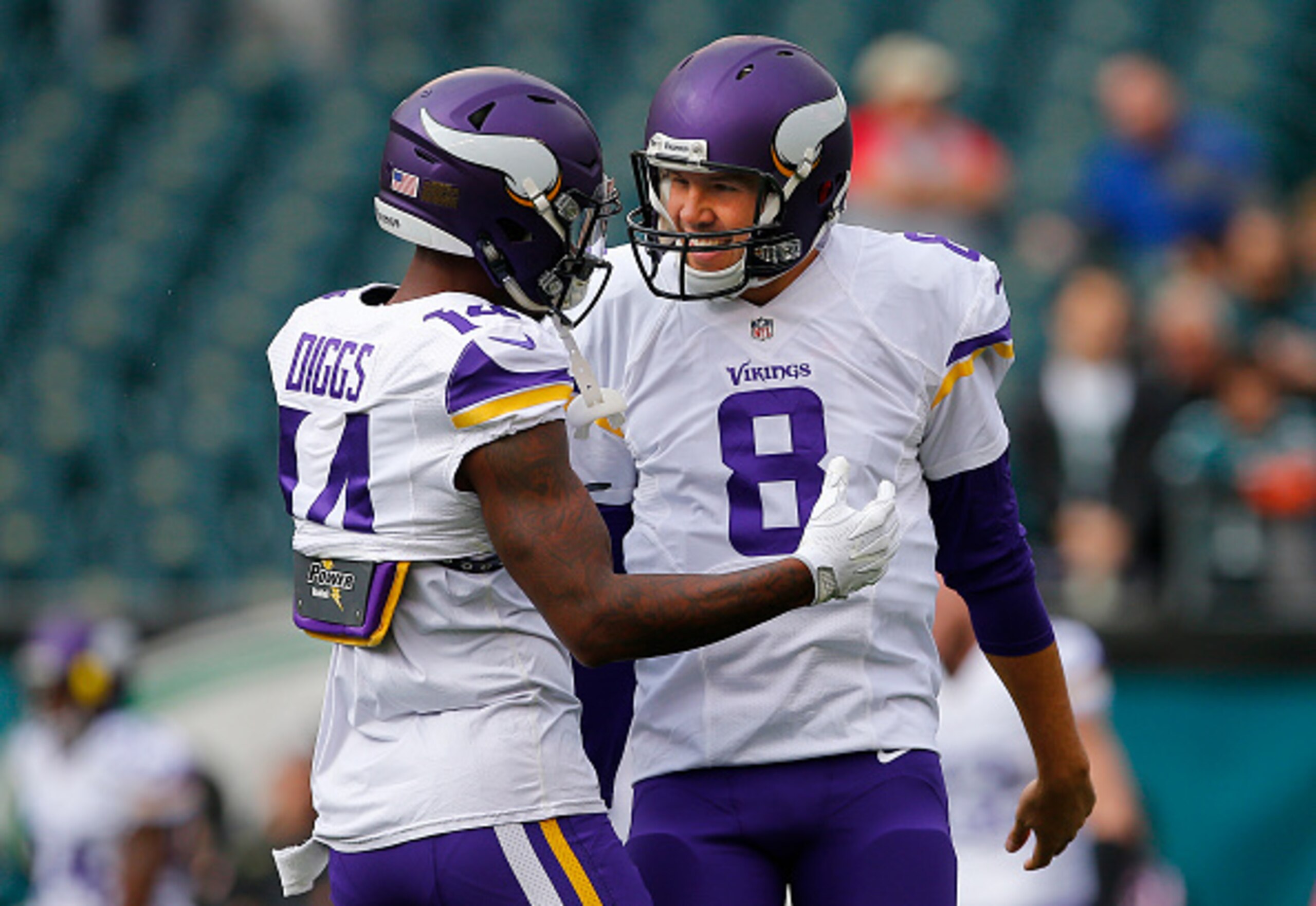
The NFL1000 team of scouts graded a series of important attributes for every player in their positional review. Using a scale starting at zero and going up to anywhere from five to 50 based on the position and the attribute, our scouts graded each player based on their own expertise and countless hours of tape review over the years. Our evaluators had specific positional assignments based on their proven fields of expertise.
- Doug Farrar: Lead scout/quarterbacks
- John Middlekauff: Running backs/fullbacks
- Marcus Mosher: Wide receivers/tight ends
- Mark Schofield: Wide receivers/tight ends
- Duke Manyweather: Offensive tackles
- Ethan Young: Offensive guards
- Joe Goodberry: AFC defensive ends
- Justis Mosqueda: NFC defensive ends
- Charles McDonald: Defensive tackles
- Zach Kruse: 3-4 outside linebackers
- Derrik Klassen: 4-3 outside linebackers
- Jerod Brown: Inside linebackers
- Kyle Posey: Cornerbacks
- Ian Wharton: Cornerbacks
- Mark Bullock: Safeties
- Chuck Zodda: Special teams
Each corresponding position slide was written by the assigned scout.
Quarterback
2 of 18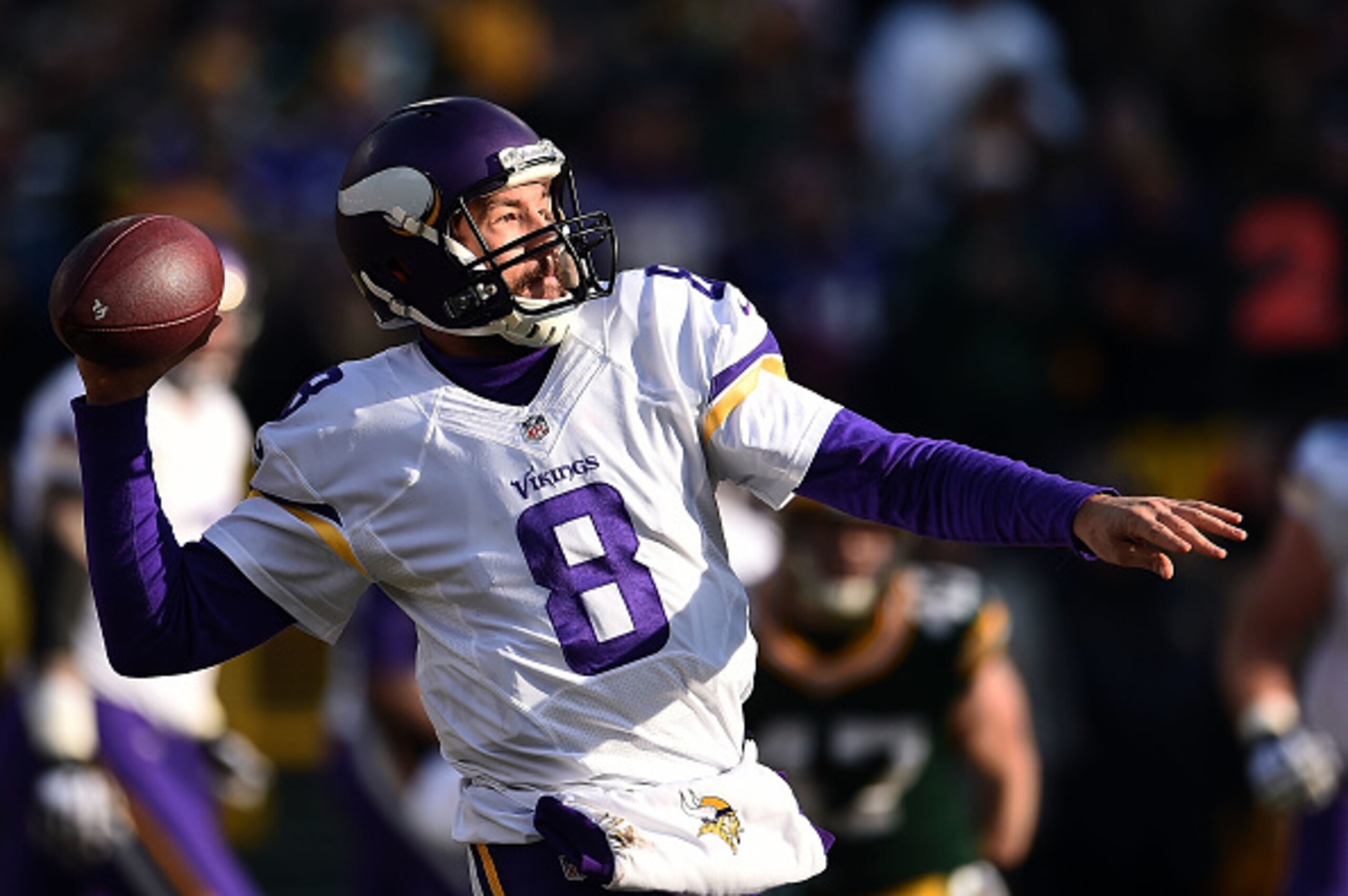
Scheme: West Coast/Zone
Starter: Sam Bradford
NFL1000 Score: 75.8/100
NFL1000 Position Rank: 4/38
Reunited with offensive coordinator Pat Shurmur after Norv Turner's departure, Bradford put together his most efficient season, throwing 20 touchdowns to just five interceptions in a system that featured his scary deep accuracy. In fact, no NFL quarterback was more accurate on passes 20-plus yards in the air than Bradford with his 57.4 percent completion rate, and you can expect more in 2017 now that Adam Thielen has established himself as a deep target.
With the Vikings' moves to upgrade an offensive line that was flat-out awful in pass protection in 2016, Bradford will have more time to scan the field and find his openings. It's not likely that any Mike Zimmer-coached team will ever throw the ball 600 times in a season, but Bradford can indeed author a much more explosive offense.
Backup: Teddy Bridgewater
NFL1000 Scores: Did not have enough snaps to qualify
A video from Bridgewater's Instagram account surfaced this week, apparently showing him throwing in drills and planting on his left leg. That this is a big deal months after the knee injury he suffered last August (dislocated knee, torn ACL, structural damage) is a pretty good indicator of the severity of that injury. Mike Zimmer has said that there's no timetable on Bridgewater's return to the field, and there's no clear indication at this point that he'll ever be able to play pro football at a regular-season level again.
If he is able to return to his previous level of play, the Vikings or another team will be able to avail themselves of a skill set that had improved over two NFL seasons, but it's a waiting game at this point.
Backup: Taylor Heinicke
NFL1000 Scores: Did not have enough snaps to qualify
Heinicke had an amazing collegiate career at Old Dominion, throwing for 16,279 yards and 132 touchdowns there. He's a smaller player with limited physical ability, but a cerebral type.
Team Need: 6/10
Potential Draft Fits: Patrick Mahomes (Texas Tech), Jerod Evans (Virginia Tech)
Running Back
3 of 18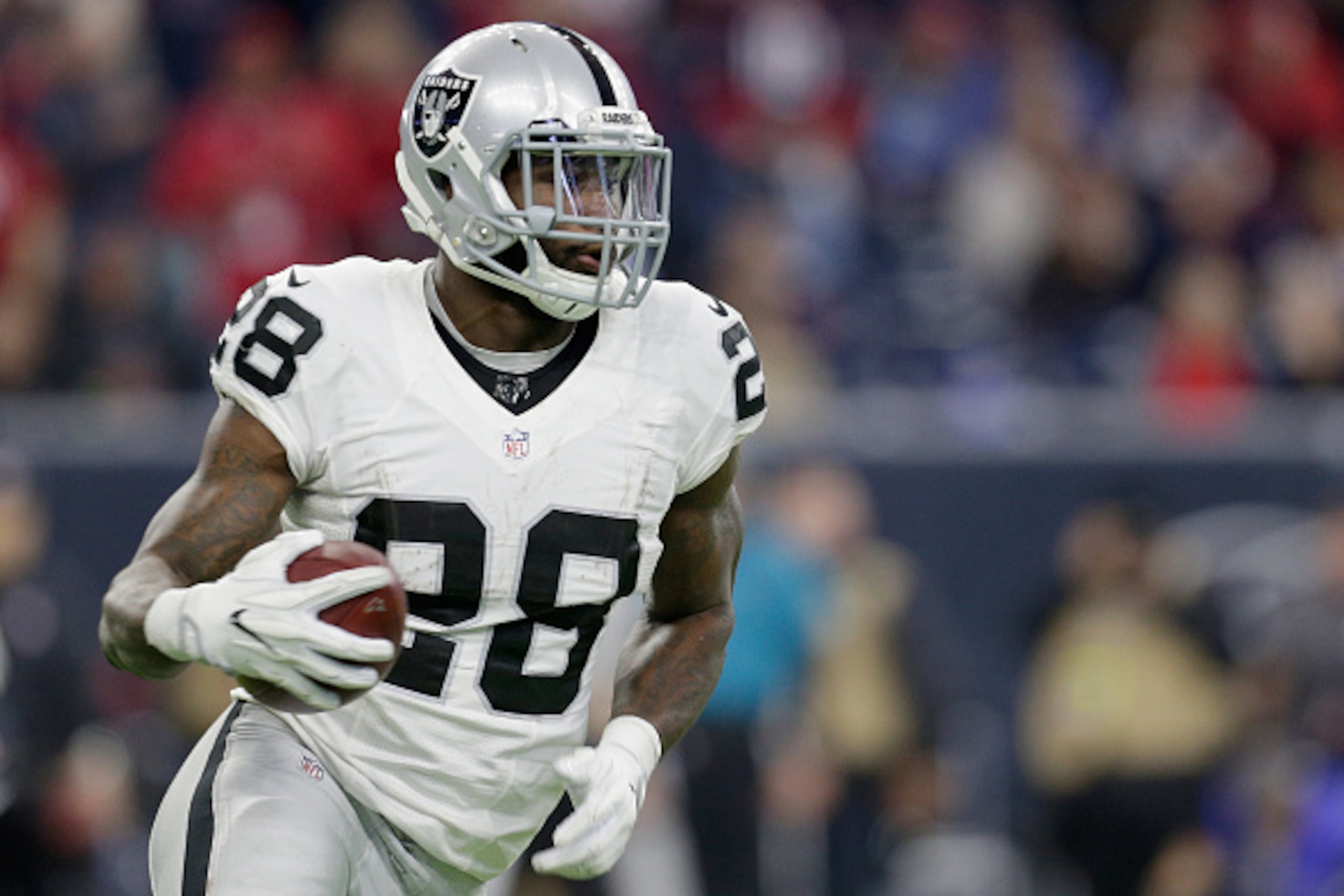
Scheme: West Coast
Starter: Latavius Murray
NFL1000 Scores: 72.4/100
NFL1000 Position Rank: 19/82
The Vikings signed Murray as a free agent after releasing Adrian Peterson, but soon after the ink dried he needed ankle surgery. He is expected to be back by training camp. When healthy, Murray is a very solid starter. He can do everything, but does not do any one thing exceptionally well. One of the taller running backs in the NFL at 6'3", sometimes his size works against him. He does run hard between the tackles, but because of his upright running style he is a big target. He goes down too easily on contact for a big back. He does have good feet and vision, though, which help him as an outside runner.
In the passing game he has average hands; he doesn't make many catches that don't hit him in the hands. He has the speed if there is an opening that can help move the chains, and he's excellent in pass protection. Murray should be a major upgrade over Minnesota's run game in 2016, but it's hard to know how he will look after the ankle surgery.
Backup: Jerick McKinnon
NFL1000 Scores: 69.5/100
NFL1000 Position Rank: 49/82
With Adrian Peterson's injury in 2016, McKinnon was forced to play a lot, and it did not go well. The lifetime backup received seven starts but didn't even average four yards per carry. He is basically just a pass-receiving back who struggles to run the ball between the tackles. He lacks physicality and the ability to break tackles or overpower his opponent. He is OK running outside, but it better be blocked up perfectly. He has good hands and is a solid third down pass-receiving option. The problem is he can't block...at all. Depending on who they draft, McKinnon will need to play a lot better to make the team.
Team Need: 8/10
Potential Draft Fits: Joe Mixon (Oklahoma), Dalvin Cook (Florida State), Leonard Fournette (LSU), D'Onte Foreman (Texas)
.jpg?w=2560 "Colts Football")
.jpg?w=2560 "Chiefs Giants Football")
.jpg?w=2560)
Wide Receiver
4 of 18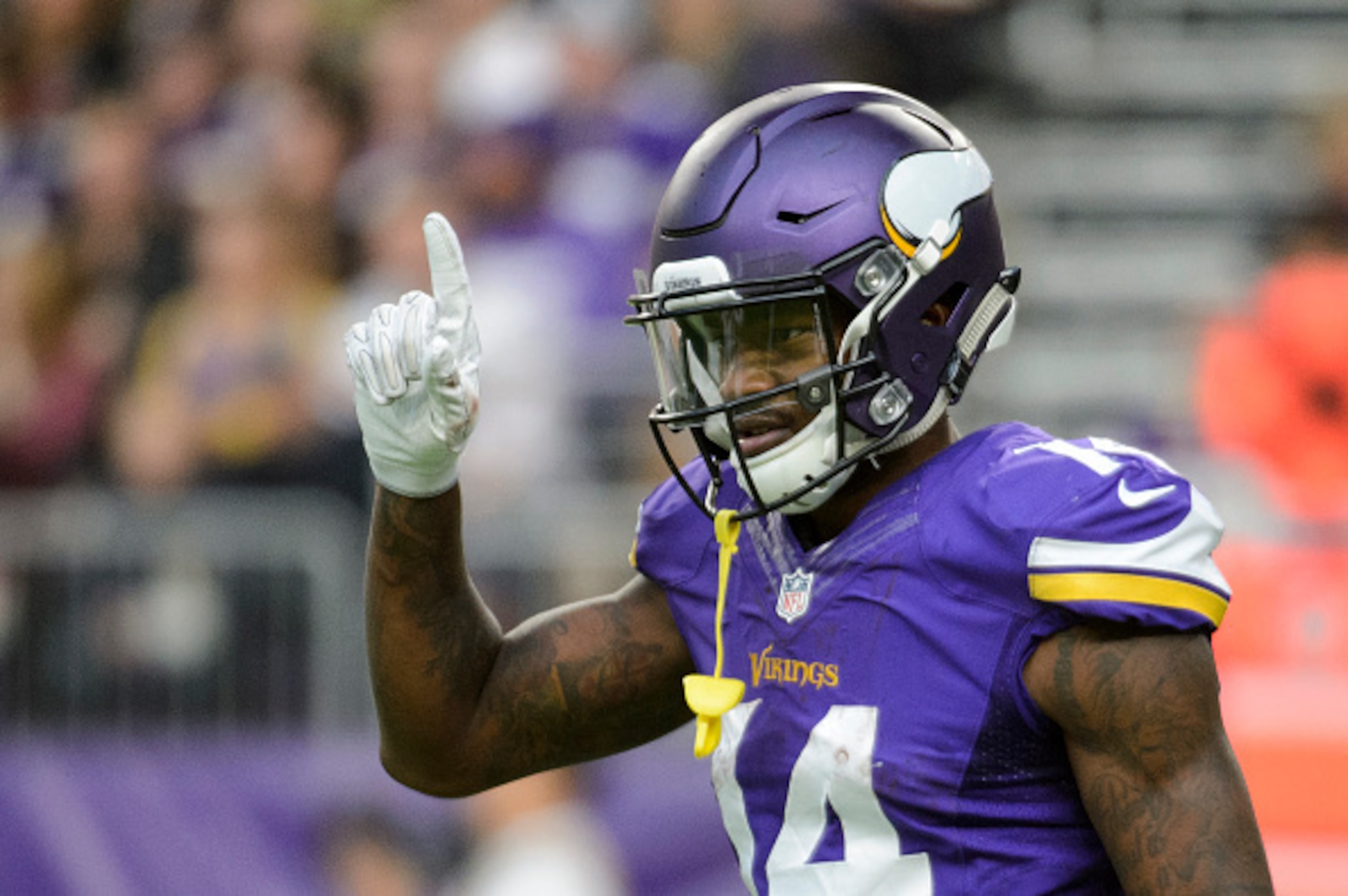
Scheme: West Coast
Starter: Stefon Diggs
NFL1000 Scores: 69.9/100
NFL1000 Position Rank: 17/155
In his second year, Stefon Diggs improved on his rookie stats as he caught 84 passes for 903 yards. Diggs battled nagging injuries that limited him all year, but he was still Minnesota's most reliable receiver. He's not a deep threat, which was proven again in 2016 as his yards per catch dropped to 10.8. He does his best work as an underneath receiver who can play outside or in the slot.
At only 23 years old, Diggs has enormous upside. He separates from defenders with ease and can win in contested areas. He has sure-hands and is dynamic after the catch. However, he lacks the top end speed and size to be an elite No. 1 receiver. If the Vikings could find a true No. 1 receiver to play opposite of him, Diggs would thrive as a Z-receiver in the West Coast offense.
Starter: Adam Thielen
NFL1000 Scores: 66.9/100
NFL1000 Position Rank: 53/155
After a stunning year in which Adam Thielen took over as the Vikings' No. 1 receiver with Diggs nursing injuries, Thielen signed a four-year, $19 million dollar contract this offseason. The 26-year-old emerged as a legit outside threat after he went for 200 yards against the Green Bay Packers in Week 16.
Thielen has the size (6'2") and the speed (4.45-second 40-yard dash) to thrive on the outside. But what makes Thielen successful is his route-running ability, which greatly improved as the season went on. His skill is winning off the line of scrimmage versus press coverage. He can win with his feet and his hands when challenged. Like Diggs, his best role is as a No. 2 receiver who can win as the Z-receiver. However, Thielen's emergence may kick Diggs inside if Laquon Treadwell can prove he can play.
Backup: Laquon Treadwell
NFL1000 Scores: Did not have enough snaps to qualify
After being selected in the first round, Laquon Treadwell was one of the biggest disappointments of the season. He was only active for nine games and caught one pass for 15 yards. He struggled with learning the playbook and dealing with the mental part of being an NFL receiver.
One thing that may help Treadwell going forward is the team's transition to the West Coast offense. With his big body, he's a much better fit as the X-receiver in the West Coast than in his previous role in Norv Turner's Air Coryell offense. Treadwell will be given a chance in training camp to push for a starting role, but it's clear that the Vikings will not hand him a job just because he was a first-round pick.
Backup: Jarius Wright
NFL1000 Scores: Did not have enough snaps to qualify
Wright only appeared in eight games in 2016, catching 11 passes for 67 yards. Health has been a big reason why Wright hasn't been able to stay on the field. He will likely be competing for the fourth receiver spot on the roster, if he's even brought to camp. The Vikings could release him at any time, saving the team $2.6 million. He's a speed receiver who hasn't been able to do much else in the league.
Backup: Moritz Bohringer
NFL1000 Scores: Did not have enough snaps to qualify
Bohringer was signed to a futures contract after being waived before the season began. He spent the year on the Vikings practice squad, learning the position. He is still years away from contributing to any NFL team.
Team Need: 5/10
Potential Draft Fits: Trent Taylor (La Tech), Ryan Switzer (UNC), Cooper Kupp (Eastern Washington)
Tight End
5 of 18
Scheme: West Coast
Starter: Kyle Rudolph
NFL1000 Scores: 69.7/100
NFL1000 Position Rank: 6/96
2016 was Rudolph's best year of his career, as he caught 83 balls for 840 yards and seven touchdowns. With a more traditional and reliable quarterback at the helm, Rudolph showed a receiving talent that has been hidden since being drafted in 2011 out of Notre Dame.
Rudolph is an inline tight end who can do a little bit of everything in the Vikings offense. He graded out as the best blocking tight end in the NFL in 2016. He has no problem handling defenders inline or in space. His hands can be inconsistent at times, but he was one of the best tight ends in the entire NFL in 2016.
Backup: David Morgan
NFL1000 Scores: Did not have enough snaps to qualify
As a sixth-round rookie in 2016, Morgan appeared in 12 games, occupying the role of the team's third tight end. With Rhett Ellison gone, Morgan will likely be the No. 2 tight end in 2017. He's a blocker by trade, and that's how he will get onto the field again next season. He lacks the overall athleticism to be a receiving threat in the NFL, clocking a 5.02-second 40-yard dash at the combine.
Backup: Kyle Carter
NFL1000 Scores: Did not have enough snaps to qualify
Carter is a hybrid WR/TE who was signed by the Vikings after the 2016 draft as an undrafted free agent. He spent the year on the team's practice squad.
Team Need: 5/10
Potential Draft Fits: Evan Engram (Ole Miss), David Njoku (Miami), Jake Butt (Michigan)
Left Tackle
6 of 18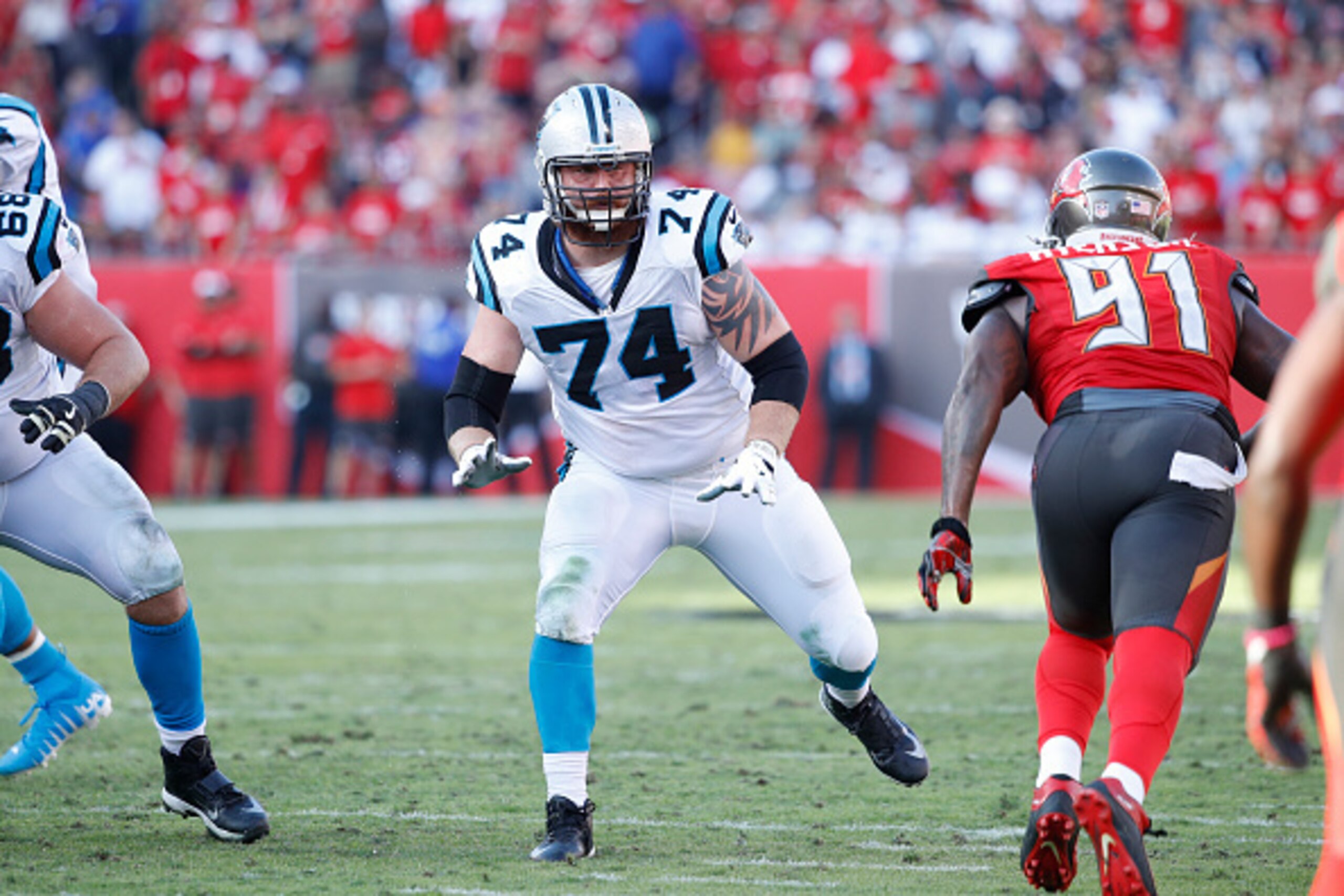
Scheme: Flex
Starter: Mike Remmers
NFL1000 Scores: 72.2/100
NFL1000 Position Rank: 23/40
Minnesota was in dire need of upgrading both offensive tackle spots, and used free agency to address the issue.
Mike Remmers was an undrafted free agent in 2012 and bounced around practice squads before making a stop in Minnesota in 2013. Remmers was released the Vikings but signed by Carolina and would go on to start 37 games for the Panthers.
Remmers may be most remembered for is inability to block Von Miller in Super Bowl 50, a performance he'd probably rather forget, but Remmers proved to be a solid right tackle throughout the course of the 2015 season.
In 2016, Remmers was forced to make the switch to left tackle due to Michael Oher's season-ending concussion, and the transition was not exactly smooth.
Remmers struggled for weeks to execute the proper footwork needed on the left side in both pass protection and in the running game. As the season progressed, so did Remmers' technique for the most part, but Remmers still had his struggles in pass protection, sometimes simply looking outmatched.
Minnesota has options and flexibility at the tackle positions; Remmers has proved to be a solid right tackle, while Riley Reiff spent the first four seasons of his career at left tackle. Both are slotted-starters at the position they've both just spent one season at.
Backup: Rashod Hill
NFL1000 Scores: Did not have enough snaps to qualify
Rashod Hill was an undrafted free agent in 2016, originally signed by Jacksonville where he bounced from the active roster and the practice squad. Hill was eventually signed by Minnesota off of Jacksonville's practice squad late in the season and went on to appear as a reserve tackle for the Vikings in Week 17 against Chicago. Hill played 49 snaps and was solid in both pass protection and as a run blocker. Hill will provide Minnesota with a young quality swing-tackle.
Team Need: 0/10
Potential Draft Fits: None. Could consider bringing camp competition with undrafted free agents.
Right Tackle
7 of 18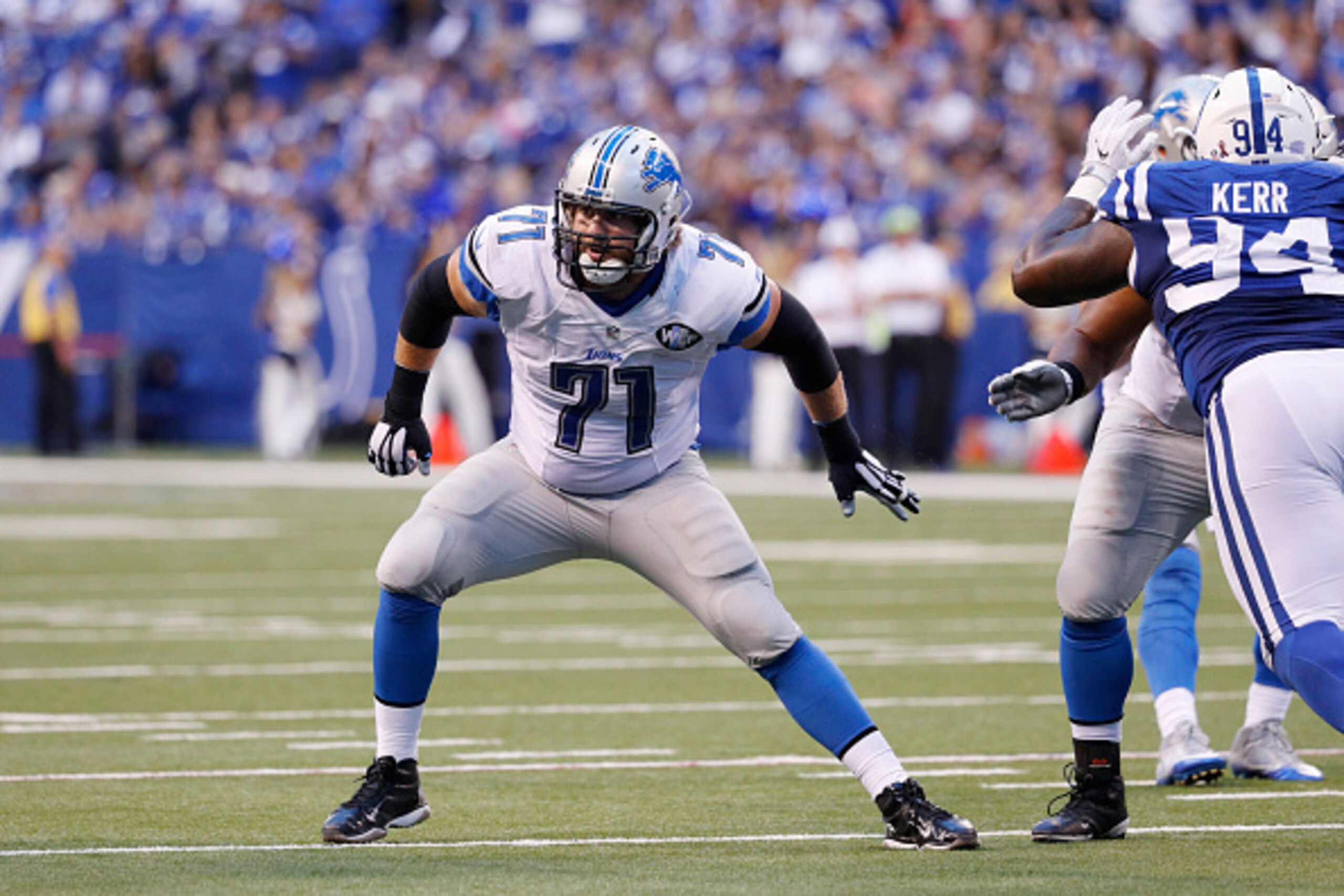
Scheme: Flex
Starter: Riley Reiff
NFL1000 Scores: 75.5/100
NFL1000 Position Rank: 7/38
Riley Reiff was another piece Minnesota added through free agency to upgrade its offensive line.
Reiff made the switch to right tackle in 2016, after spending the previous four seasons as Detroit's left tackle.
Early in the 2016 season, Reiff's transition to right tackle was as smooth as it gets, but injuries took a toll and Reiff's play dropped off, especially in pass protection where he already had limitations.
If a healthy Reiff's early success at right tackle is any indication of what to expect in 2017, the Vikings should come away pleased with their investment.
Team Need: 2/10
Potential Draft Fits: None. Could consider bringing camp competition with undrafted free agents.
Offensive Guard
8 of 18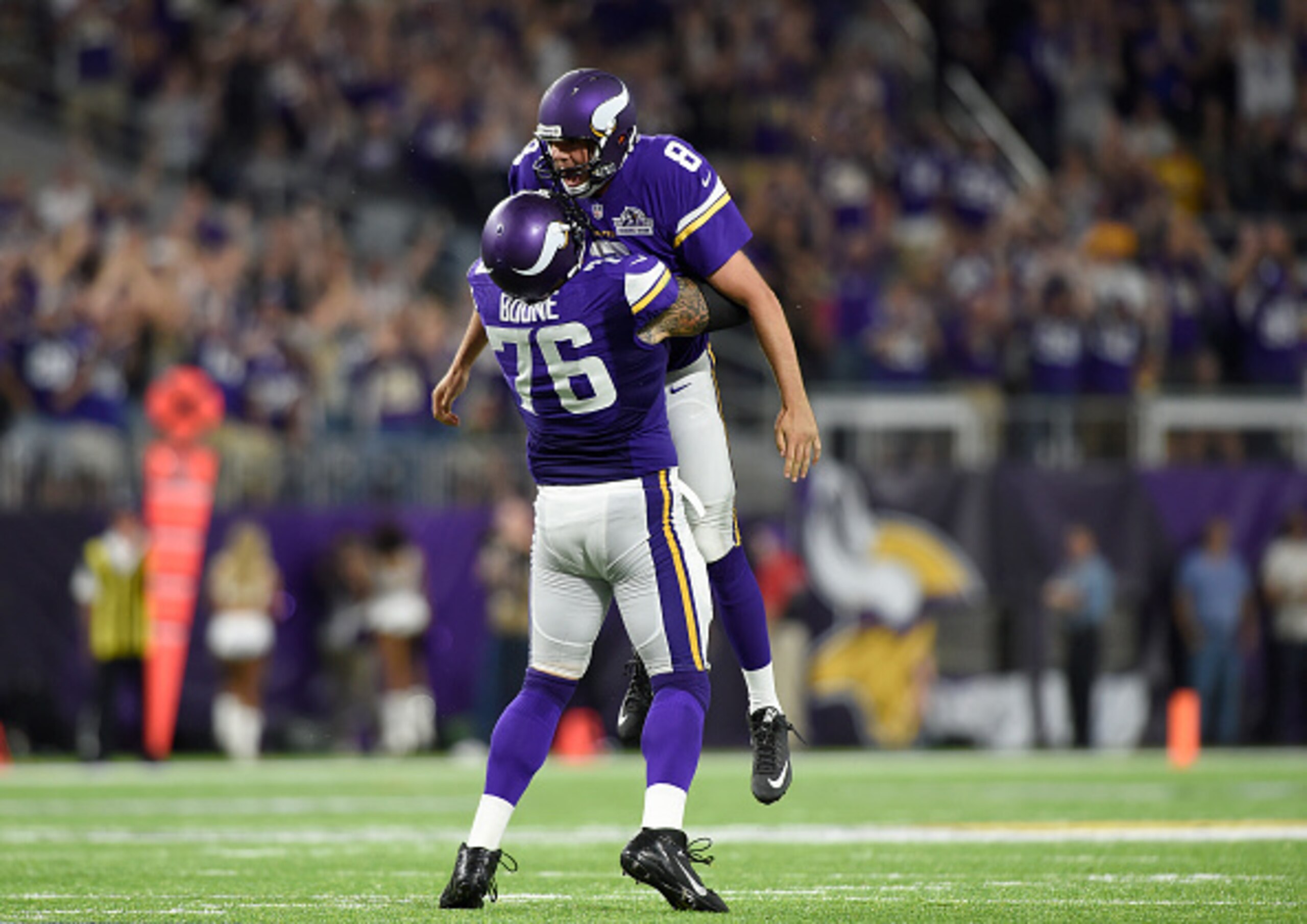
Scheme: Flex
Starter: Alex Boone
NFL1000 Scores: 70.8/100
NFL1000 Position Rank: 30/78
Alex Boone was sort of the rock of the Vikings front last year, and keeping continuity on the interior should be nice given the new faces at tackle. Boone is a player who wins with power and leverage, but his feet aren't rocks either. As he ages his health should be important, as keeping the physical traits will be important as he isn't a technical wizard per se.
Starter: Jeremiah Sirles
NFL1000 Scores: 66.6/100
NFL1000 Position Rank: 37/38 (At Right Tackle)
Jeremiah Sirles is sort of a placeholder here, as this spot is completely up for grabs right now. Willie Beavers and T.J. Clemmings could be candidates to slide inside and compete with Sirles given their power-based skill sets and struggles outside. That said, Sirles put up some respectable tape at guard last year, particularly in pass protection. He struggled at tackle, but he could end up being serviceable if kept inside.
Backup: T.J. Clemmings
NFL1000 Scores: 66.9/100
NFL1000 Position Rank: 37/40 (At Left Tackle)
I tend to think Clemmings has a better chance of moving inside than Beavers from both a trait and rep standpoint. Clemmings has had two years at guard, while Beavers has only had one, and Clemmings has impressive functional strength for a tackle.
Backup: Zac Kerin
NFL1000 Scores: Did not have enough snaps to qualify
Kerin was OK in his two spot starts last year, but he appears to be just a depth option at this point. If a guard is drafted high as a starter, kicking Clemmings back to tackle and rolling with that rookie, Sirles, and Kerin as depth should be plenty.
Team Need: 7/10
Potential Draft Fits: Dorian Johnson (Day 2), Dion Dawkins (Day 2)
Center
9 of 18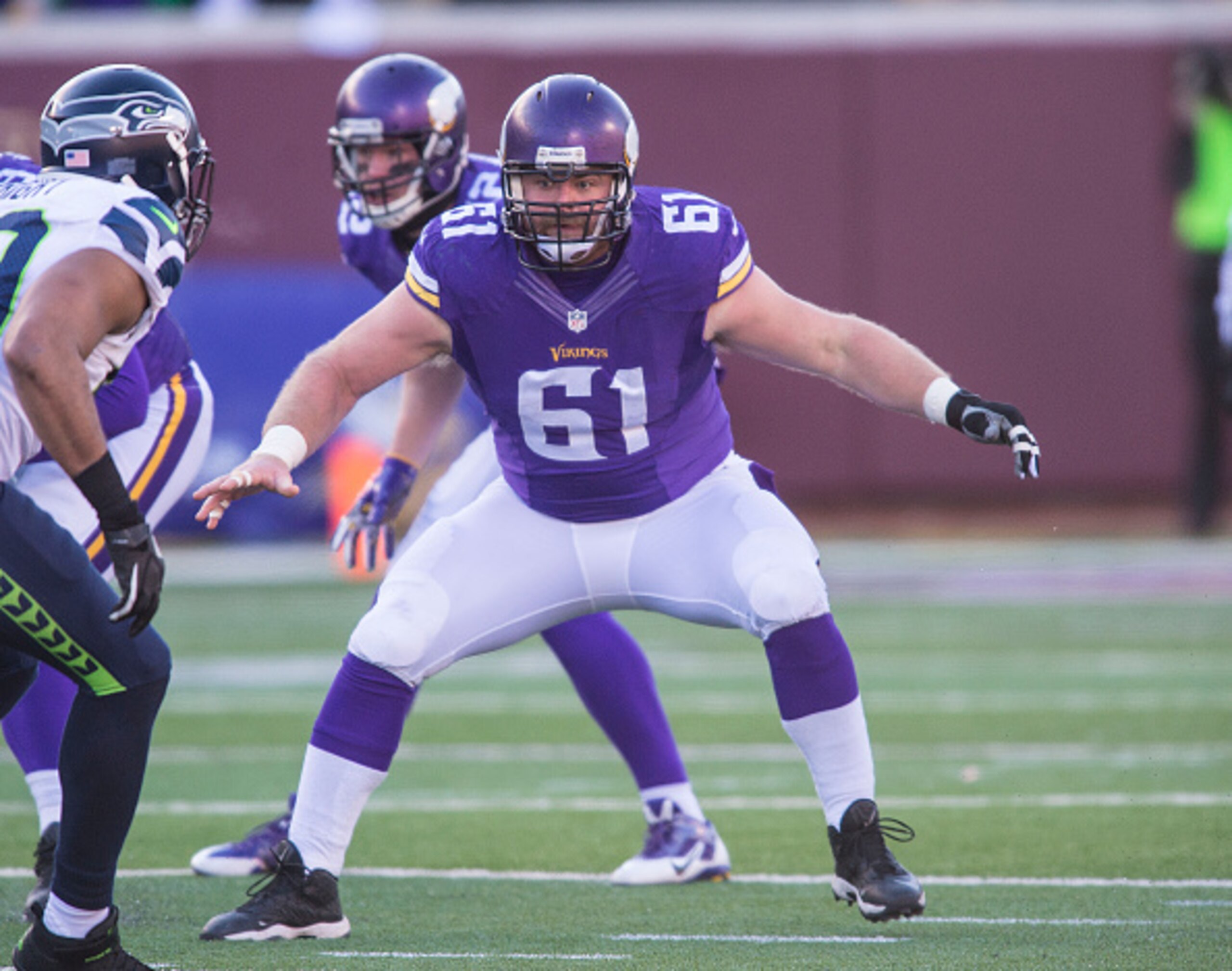
Scheme: Flex
Starter: Joe Berger
NFL1000 Scores: 71.6/100
NFL1000 Position Rank: 9/38
Joe Berger comes to mind when talking about underrated NFL linemen. He's a sturdy and versatile option inside, as he has been successful at guard in the past as well. The value there is that if the Vikings like a center in this draft better than they like the guards available early on, they can draft the center and slide Berger to right guard.
Backup: Nick Easton
NFL1000 Scores: 66.4/100
NFL1000 Position Rank: 34/38
A fluid athlete who is still figuring it out from a technical perspective, Easton didn't perform all that well when called upon last year, but as an undrafted free agent, it would be nice to give him a little more time before throwing him in the fire. That said, there aren't many excuses in year three, and the Vikings should bring in some competitive depth to push Easton in camp.
Team Need: 4/10
Potential Draft Fits: Ethan Pocic (Day 2), J.J. Dielman (Day 2)
Defensive End
10 of 18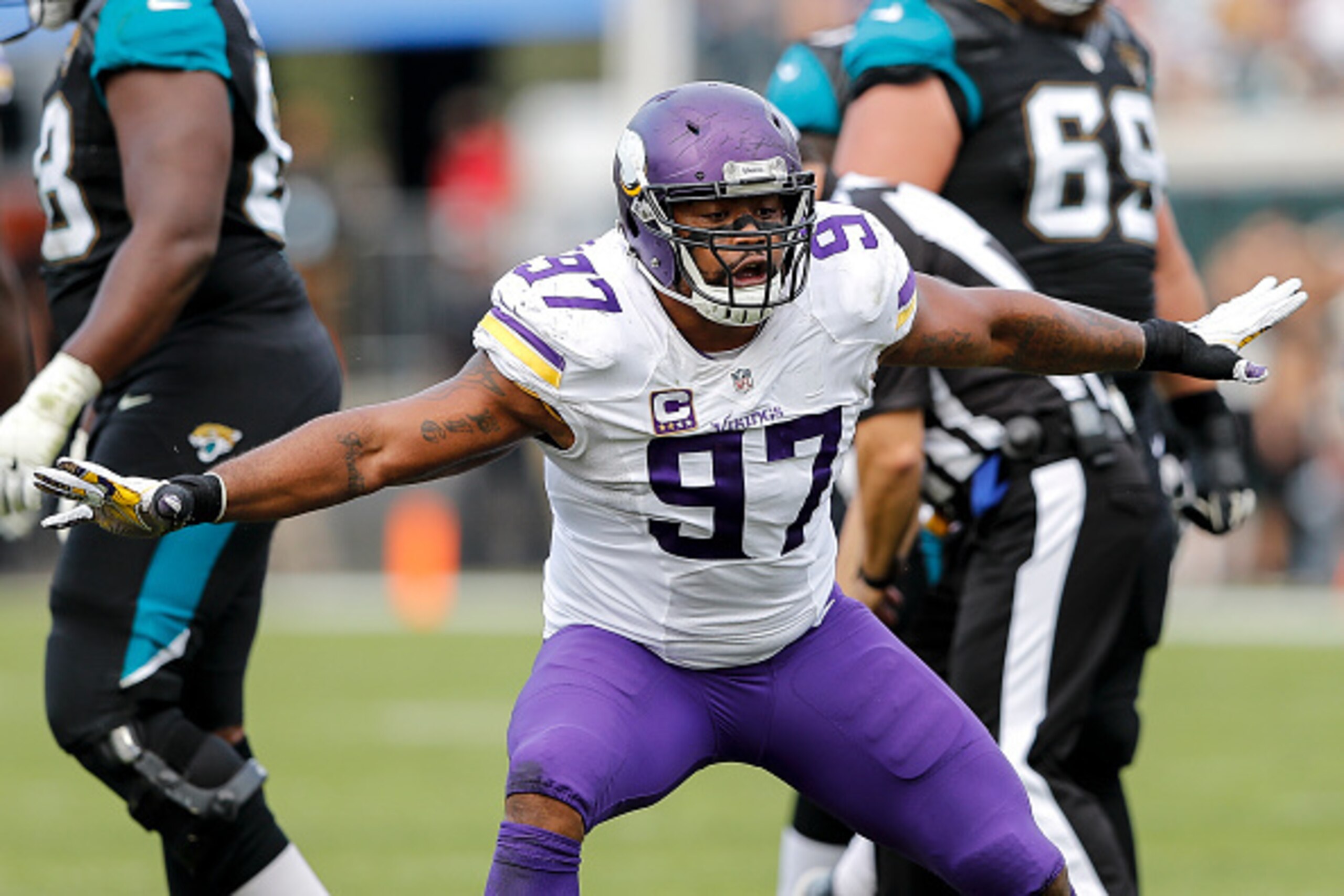
Scheme: 4-3
Starter: Everson Griffen
NFL1000 Scores: 72.4/100
NFL1000 Position Rank: 2/68
While Everson Griffen's sack totals dropped from 12 sacks to 10.5 sacks to eight sacks over the last three seasons, he was still our second-ranked 4-3 defensive end league-wide last season. His quick bursting ability leads to a lot of pressure, which last season didn't result in sacks as the soon-to-be 34-year-old Brian Robinson and 22-year-old Danielle Hunter elevated their combined sack totals from 11 in 2015 to 20 in 2016.
Using a heavy three-man rotation, the Minnesota Vikings' top three defensive ends improved their combined sack total from 21.5 sacks to 28 sacks over the last two years. Pressure can't be measured on paper, but total sacks of a unit can be. If anyone tells you that Griffen, a 29-year-old, is regressing dramatically, they're lying. Griffen has just a $8.2 million cap hit this year, which according to Spotrac ranks him as the 141st player in the NFL. He's does more than enough to warrant long-term stability in Minnesota.
Starter: Brian Robison
NFL1000 Scores: 66.6/100
NFL1000 Position Rank: 23/68
There's hardly anyone who will tell you that Brian Robison is a top-two defensive end on the Vikings roster, but the team seems adamant on keeping him as a starter. Danielle Hunter is a 22-year-old top-100 pick who has 18.5 career sacks to his name as a professional, but Robison has started in 95 of the 96 Vikings games from 2011-2016.
At some point, Minnesota's staff has bought into consistency over production. He's a mid-level defensive end at this point in his career. His dead cap number outweighs his salary hit this year, so it's very unlikely that he's moved this year, and the team only frees up $2.25 million in cap space next year if they move on from him during his contract season of 2018. At the going rate for pass-rushers right now, Robison will probably play out his deal, making him a potential retirement candidate in 2019, as he'd be a 36-year-old in Week 1 of that season.
Backup: Danielle Hunter
NFL1000 Scores: 70.6/100
NFL1000 Position Rank: 8/68
In 2016, Danielle Hunter of the Minnesota Vikings recorded 12.5 sacks, putting him in a three-way tie for third place in the NFL. The players who had as many or more sacks than him were 24-year-old Vic Beasley, 28-year-old Von Miller, 33-year-old Lorenzo Alexander and 26-year-old Markus Golden. If you're talking about young pass-rushers, there's no competition for the 22-year-old Hunter outside of Los Angeles' Joey Bosa.
Hunter is still a rotational player, which makes his production per snap even more impressive, but he's on pace to be an absolute superstar. He has a cap hit under $800,000 in 2017 and under $900,000 in 2018. In 2017 alone, there are 736 players with a cap hit over $1,685,111, Hunter's combined cap hit for the remainder of his contract, per Spotrac. He's one of the more valuable players in the league in terms of talent relative to contract.
Backup: Stephen Weatherly
NFL1000 Scores: Did not have enough snaps to qualify
Stephen Weatherly was drafted in the seventh round by the Minnesota Vikings last season out of Vanderbilt. He wasn't considered a top-150 prospect by many, but he had an impressive times in the 40-yard-dash (4.61 seconds at the combine) and three-cone-drill (7.07 seconds at his pro day, according to NFL Draft Scout) for his size (6'5", 265 pounds), which generally is a sign of a premier pass-rusher.
The Vikings draft freak athletes at end and tackle, and it has gone well for them as a franchise. Weatherly didn't make the 53-man roster, but he was a practice-squad player for the better part of the first three months of the 2016 season for Minnesota. He was finally called up to the active roster in Week 12, but he was only an active player on game day in Week 14 and Week 17. He made one tackle as a rookie, but the Vikings have their eyes on him.
Datone Jones, a former first-round pick who was signed after playing out his rookie contract with the division rival Green Bay Packers, could be considered a hybrid end. All indications, though, seem to be that his one-year "prove it" deal will be spent mostly competing as a three-technique player, a spot he was never really able to play in Green Bay because Day 3 selection Mike Daniels broke out in that role for the Packers.
Weatherly hasn't proven much in the NFL, as the Vikings see more of him in one practice than the public has seen in him since the preseason, but Minnesota must think enough of him to have him gradually move up the depth chart in-season. He's probably a roster bubble player again in 2017, but if the Vikings don't add another body, it's easy to assume that they'll keep him as the team's fourth defensive end, as they have to at least fill out a two-deep on the depth chart.
Team Need: 0/10
Potential Draft Fits: None
Defensive Tackle
11 of 18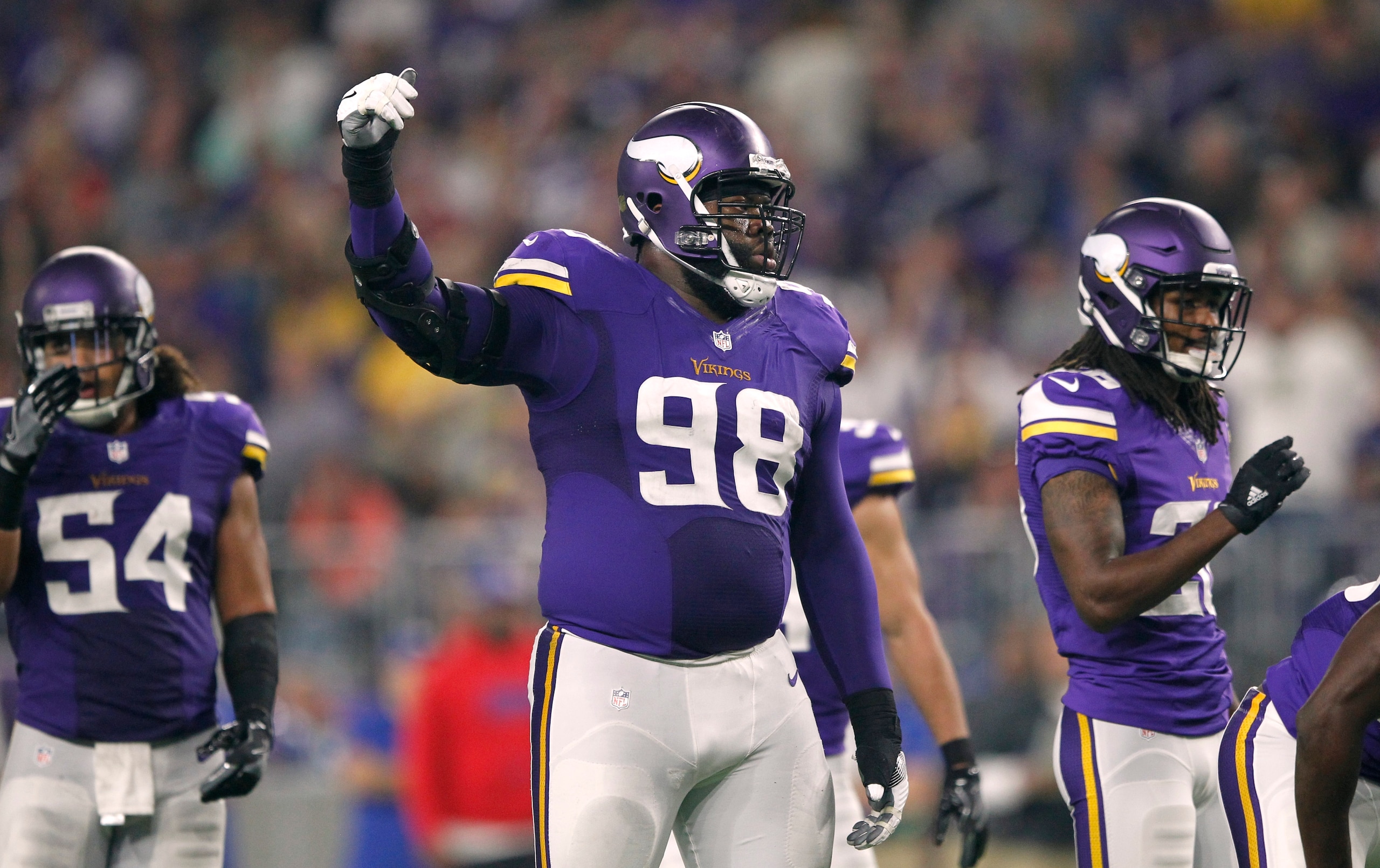
Scheme: 4-3
Starter: Linval Joseph
NFL1000 Scores: 70.9/100
NFL1000 Position Rank: 15/99
Linval Joseph had another stellar season for the Minnesota Vikings, where he was arguably one of the best nose tackles in all of football. He was a stalwart versus the run while offering better pass rush than someone his size usually does. Since coming over from the New York Giants in 2014, Joseph has been an integral part of their run defense. When he's not on the field, the Vikings run defense tends to fall apart. It would be wise for the Vikings to find a penetrator to pair with him in the 2017 NFL draft.
Backup: Tom Johnson
NFL1000 Scores: 65.6/100
NFL1000 Position Rank: 34/99
Tom Johnson is a bit of a one-trick pony, but his trick is valuable and he does it well. Johnson is one of the more efficient pass-rushers you'll see from three-technique, but he does tend to get buried versus the run. Ideally, Johnson is the third defensive tackle in a rotation behind two sturdier defensive tackles who provide solid run support. Due to Sharrif Floyd's injury last season, Johnson was forced to take on a heavier role, and he was a disappointment for the Vikings run defense.
Backup: Shamar Stephen
NFL1000 Scores: 58.7/100
NFL1000 Position Rank: 88/99
Sharrif Floyd's injury forced Shamar Stephen to take on a decently size workload for the 2016 season. He struggled mightily in both run support and pass rush. If the Vikings can find a new starting defensive tackle to pair with Linval Joseph, Stephen's subpar play will be less of an issue.
Backup: Sharrif Floyd
NFL1000 Scores: Insufficient Games Scored
Sharrif Floyd is an immensely talented defensive tackle who has had major trouble staying healthy throughout his professional career. After suffering complications during knee surgery earlier in the season, his career might be over. Hopefully Floyd is able to bounce back and play this season; he's the penetrator versus the run that the Vikings sorely missed last year.
Team Need: 7/10
Potential Draft Fits: Jaleel Johnson (Iowa), Dalvin Tomlinson (Alabama), Malik McDowell (Michigan State)
Outside Linebacker
12 of 18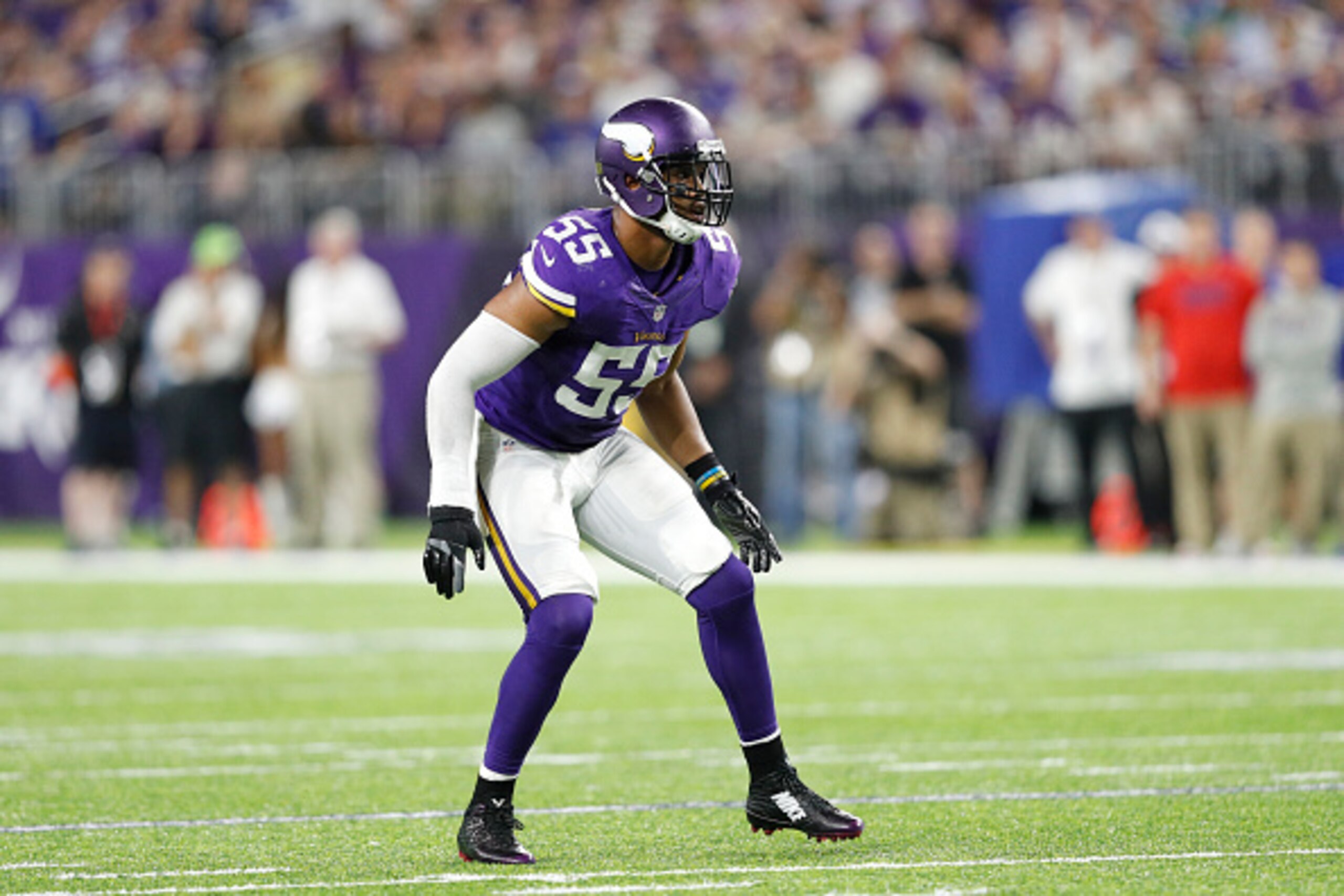
Scheme: 4-3
Starter: Anthony Barr
NFL1000 Scores: 68.4/100
NFL1000 Position Rank: 9/46
Barr had one of the most unexpected 2016 seasons. There was speculation that Barr's drop off was a result of undisclosed injuries, but the degree of truth to those claims is up in the air. In 2016, Barr's play style was much less aggressive and more feeble than it had been in the past. Barr had made a career out of being aggressive, fast and strong enough to hold his own, but he was not that player in 2016.
Barr's struggles were more than likely an aberration. It was clear that he still understood what his assignments were and how to execute them, he just wasn't acting on his instincts the way he normally would. Barr played too well early on in his career to believe 2016 is the beginning of some odd decline. Barr will be fine moving forward.
Backup: Emmanuel Lamur
NFL1000 Scores: Did not have enough snaps to qualify
Aside from special teams, Emmanuel Lamur saw the field sparingly last season. The Vikings signed Lamur last offseason in order to bolster the depth and linebacker. Luckily, Lamur's services were seldom necessary, but he could have been serviceable as a run defender if he had been called upon. Lamur has decent recognition skills and strength that make him a solid run defender. However, Lamur is strictly a run defender, and one who will likely get outran at the second level. Lamur will be a free agent after 2017, so it would make sense for the Vikings to get ahead of the problem and draft a linebacker now to replace Lamur in the near future.
Backup: Edmond Robinson
NFL1000 Scores: Did not have enough snaps to qualify
Edmond Robinson did not play a single defensive snap in 2016. Even as a special teamer, Robinson did not play on the majority of snaps. The Vikings drafted Robinson at the end of the seventh round of the 2015 NFL draft, and he has rarely seen the field since. Robinson is an expendable piece. The Vikings should be looking for someone to fill his spot on the roster.
Team Need: 7/10
Potential Draft Fits: Duke Riley (LSU), Jordan Evans (Oklahoma), Paul Magloire Jr. (Arizona)
Inside Linebacker
13 of 18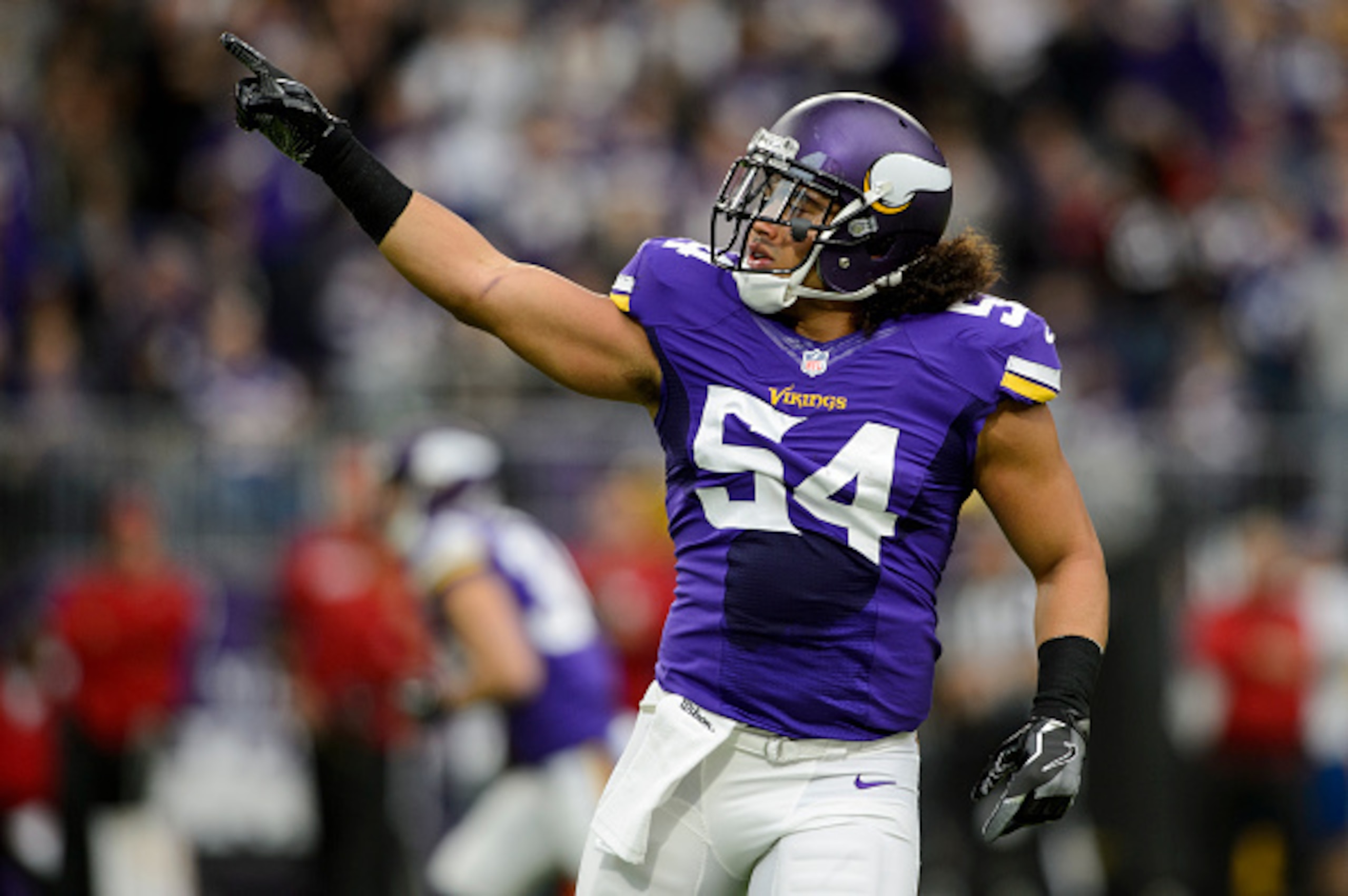
Scheme: 4-3
Starter: Eric Kendricks
NFL1000 Scores: 73.7/100
NFL1000 Position Rank: 7/65
Eric Kendricks began the 2016 season looking like one of the best inside linebackers in football. As a result, the Minnesota Vikings defense was impressive and seemed poised to carry the team deep through the playoffs. After a hot start, the team as a whole regressed and the play of the defense took a step back. Kendricks battled nagging injuries throughout the season but, when healthy, showed elite athleticism in all phases.
The Vikings have a guaranteed starter as long as Kendricks is on the roster and healthy. Kendricks' body type and playing style are perfectly suited for today's NFL. He has enough thickness and aggressiveness to defend the run but shows above-average athleticism in coverage. As an overall player, few combine the skills into a total package as well as Kendricks. He stands out on film and sits in the top tier of inside 'backers while looking like the best in the league on some weeks.
Kendricks' best trait is his ability to secure tackles on the edge. While players like Kiko Alonso receive unnecessary praise for being quick defenders to the edge, Kendricks plays the edge run with intensity and technique that strings runs sideways and for no gain. The Vikings won't be looking to replace Kendricks anytime soon, and if they're interested in linebackers in the draft, it would likely be late-round selections to build depth on the team.
Backup: Kentrell Brothers
NFL1000 Scores: Did not have enough snaps to qualify
Kentrell Brothers is entering his second season after being selected in the fifth round of the 2016 NFL draft. Brothers was seen as undersized coming out of Missouri as an outside linebacker, but he's penciled in to back up Kendricks for the Vikings next season.
Brothers plays with above-average mental processing and recognition skills that few inside linebackers have when entering the league. He'll have to continually rely on that intellectual advantage because he's physically average. He lacks the requisite fast-twitch muscles to fire his lower body into motion, often rolling into movement. As a backup, the Minnesota Vikings should feel comfortable with playing Brothers in a pinch, but he's far from a guaranteed starter and won't push Kendricks for playing time at all. He'll have to play every special teams, but he's the perfect combination of young and cheap.
Team Need: 2/10
Potential Draft Fits: Ben Boulware (Clemson), Hardy Nickerson (Illinois)
Cornerback
14 of 18
Scheme: Cover 3 and Cover 4
Starter: Xavier Rhodes
NFL1000 Scores: 71.5/100
NFL1000 Position Rank: 11/133
2016 was Xavier Rhodes' best season yet, and it wasn't only in terms of turnovers forced, with a career-high five interceptions. He also cut his penalties committed down to a more reasonable eight, as opposed to the double-digit totals he had in previous seasons. Rhodes has become one of the more consistent corners in the league and is firmly in the discussion as one of the elite game-changers at the position. Turning 29 before the season, though, Rhodes' athletic window is smaller than might be expected. The Vikings' varied scheme and excellent surrounding cast should ensure that any drop-off in the coming years is mitigated, as seen with Rhodes' fellow starter, Terence Newman.
Starter: Terence Newman
NFL1000 Scores: 63.9/100
NFL1000 Position Rank: 53/133
What Terence Newman has accomplished by continuing his career into his age-38 season is nothing short of extraordinary. While most corners experience noticeable decline by 31, Newman's still chugging along as a productive off-ball corner who can occasionally slide inside to the slot and limit receivers after the catch. Newman isn't a turn-and-run threat, which is where he benefits from the scheme, but that's to the Vikings' credit. There's no reason to be too concerned with Newman at this point, especially with Trae Waynes sitting in the wings and capable of rotating in with Newman to keep him fresh.
Slot: Trae Waynes
NFL1000 Scores: 64.2/100
NFL1000 Position Rank: 50/133
Trae Waynes started 2016 on fire, posting above-average grades in each of his first five weeks before the Week 6 bye. After that, he was more up-and-down, moving in and out of the lineup to rotate with Newman and Mackensie Alexander due to injuries and matchups. Waynes as a whole played well for a second-year corner, with reason to believe he's going to continue his upward trend. The one thing Waynes must absolutely improve upon is avoiding penalties, as he was called for seven last year. He's still too handsy when he gets beat. His ceiling is significant if he can cut those down.
Team Need: None. Could consider bringing camp competition with undrafted free agents.
Potential Draft Fits: Jalen Myrick (Minnesota), Jeremy Cutrer (Middle Tennessee State), Brandon Howard (Houston)
Free Safety
15 of 18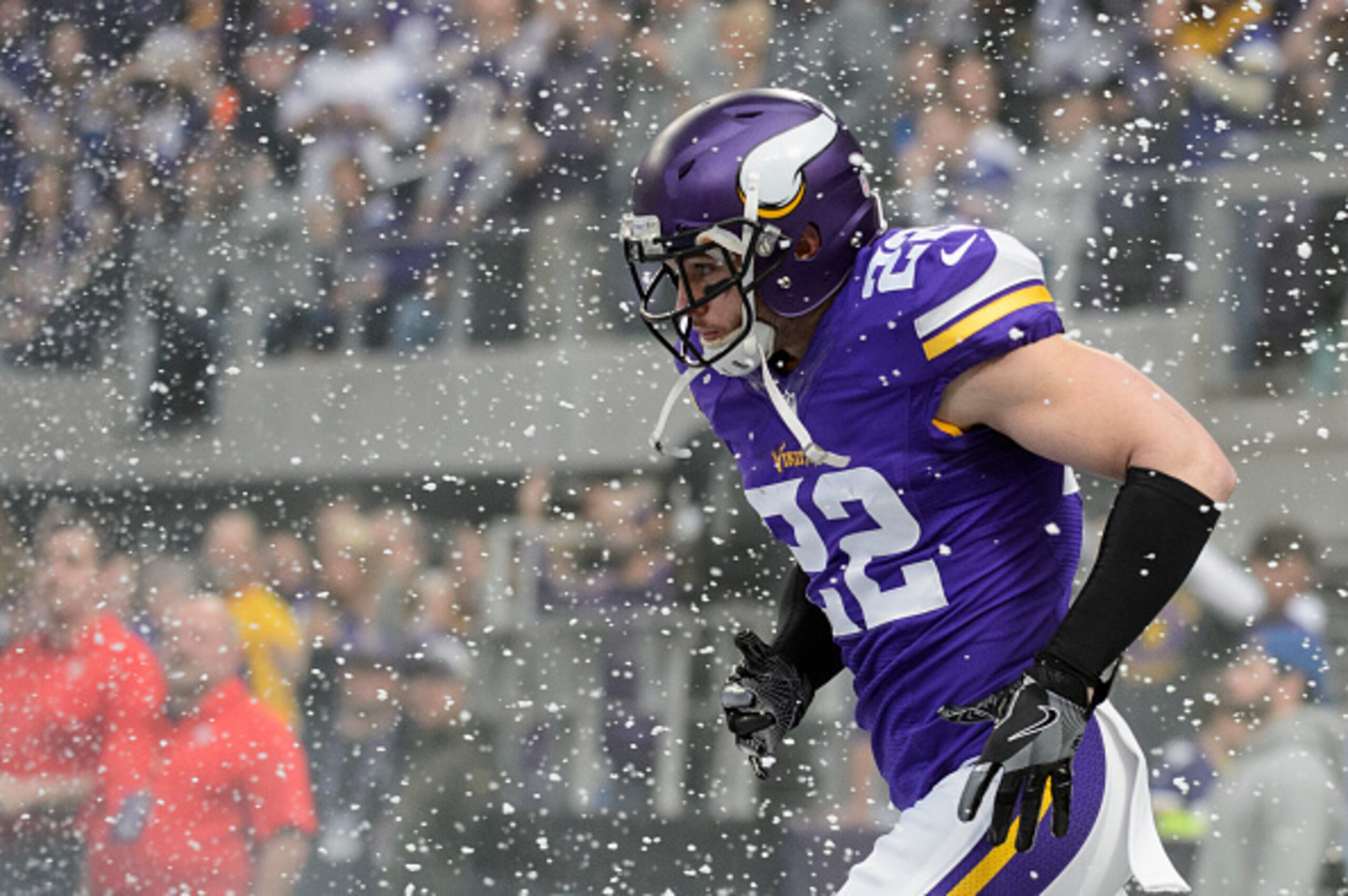
Scheme: Cover 3 and Cover 4
Starter: Harrison Smith
NFL1000 Scores: 76.6/100
NFL1000 Position Rank: 2/50
Smith is about as versatile as any free safety in the NFL. Mike Zimmer makes the most of that versatility, using him in a variety of different roles. On one play, Smith could be the deep third defender. On the next, he might line up in the A-gap as part of Zimmer's double A-gap blitz schemes, where he could be part of the blitz or be expected to drop back in coverage to undercut receivers and surprise the quarterback. He truly does it all and was second only to Devin McCourty in terms of his overall grade on the season.
Backup: Anthony Harris
NFL1000 Scores: Did not have enough snaps to qualify
Harris was undrafted in 2015 but has worked his way up the depth chart while developing in the background. He was the primary backup safety this year after Antone Exum missed the season on injured reserve. When he did see the field, he didn't look exposed or intimidated, though he did have a few mistakes as every young player does. He'll be challenged by Exum returning from injury, which should generate some healthy competition for the backup spot.
Backup: Antone Exum
NFL1000 Scores: Did not have enough snaps to qualify
A sixth-round pick of the 2014 draft, Exum was developing as a backup while contributing on special teams in his first two years in the league. He was expected to challenge Andrew Sendejo for a starting role opposite Smith going into training camp last season. Unfortunately, he suffered a leg injury in preseason and was waived hurt before going unclaimed and reverting to the Vikings' IR list. He'll now have to work his way back from injury and start the battle up the depth chart again.
Team Need: 0/10
Potential Draft Fits: No immediate need, could consider bringing camp competition with undrafted free agents.
Strong Safety
16 of 18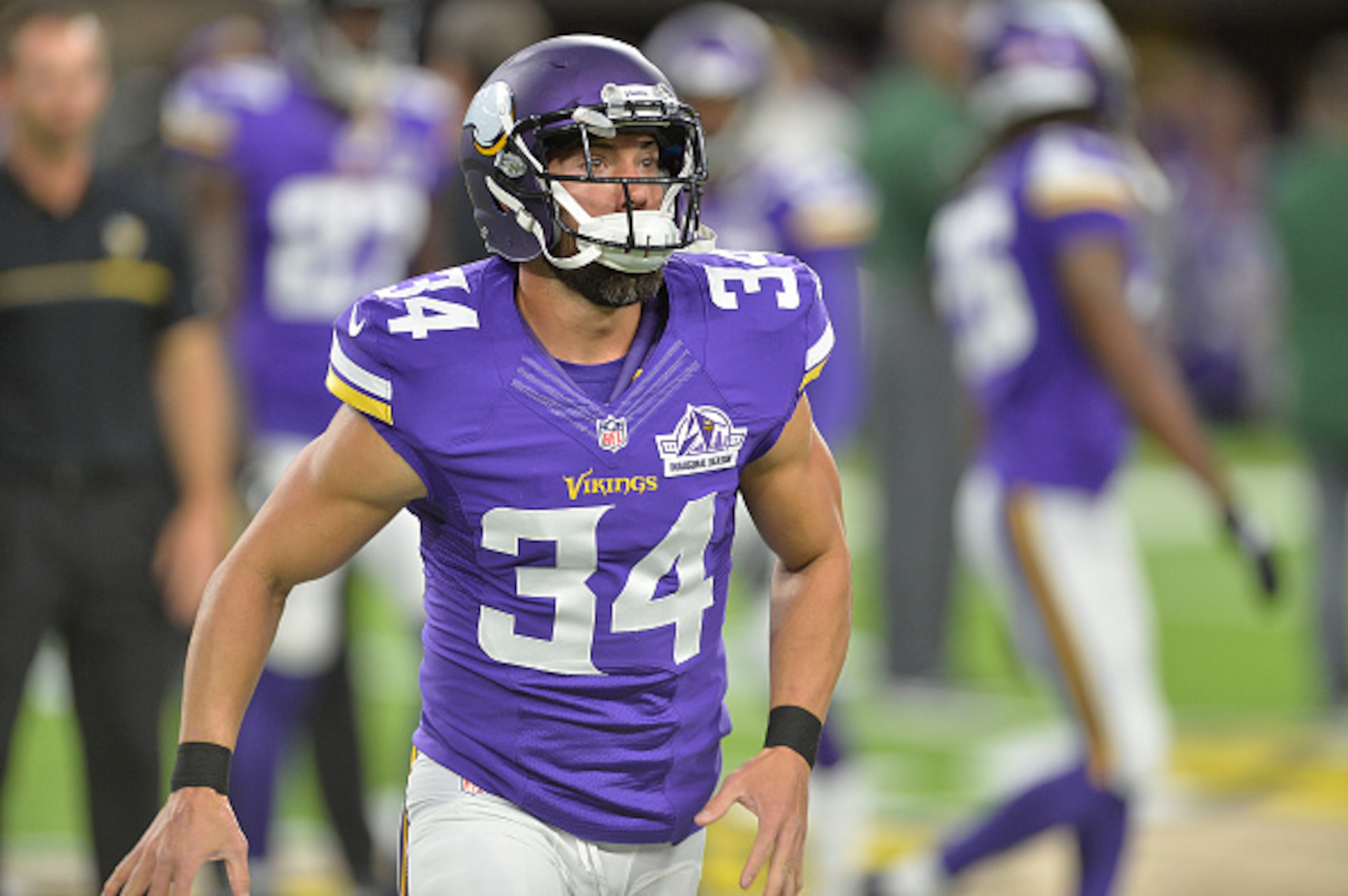
Scheme: Cover 3 and Cover 4
Starter: Andrew Sendejo
NFL1000 Scores: 72.5/100
NFL1000 SS Rank: 18/53
Sendejo is one of the most underrated and underappreciated safeties in the league. The Vikings ask Harrison Smith to do a variety of things at free safety, whether that's lining up in the box on run plays or playing deep-safety on traditional passing downs, Smith is asked to be a Swiss Army knife in the Vikings defense. To enable him to do that, he needs a reliable safety partner who can fulfill the opposite role to Smith, whatever that may be from play to play. Sendejo does just that. He's a solid run defender when he plays in the box but is equally adept at shifting to the deep middle third when the Vikings roll Smith up into the box. Without the flexibility of Sendejo, the Vikings wouldn't be able to use Smith in quite as many ways as they do. While Smith rightly grabs all the attention, Sendejo quietly goes about his job to keep the defense balanced.
Backup: Jayron Kearse
NFL1000 Scores: Did not have enough snaps to qualify
Kearse was drafted by the Vikings in the seventh round last year. The team had hoped it could stash him as a bac up as he developed, but he was forced into action early in the season as injuries struck the secondary. He played about how a seventh-round rookie would be expected to play. He had some struggles, although he wasn't an absolute disaster. He clearly needs time to develop, and having seen the field in his rookie year, he should have a better feel for the NFL game going into his second year. The Vikings have found some good talent at safety from the late round or undrafted players, and Kearse certainly is worth taking the time to develop.
Team Need: 1/10
Potential Draft Fits: No immediate need, could consider bringing camp competition with undrafted free agents.
Kicker
17 of 18
Starter: Kai Forbath
NFL1000 Scores: 68.1/100
NFL1000 Position Rank: 13/34
Forbath came into a situation very much in flux in Minnesota and provided some stability at the kicking position after the release of Blair Walsh. Walsh, who had an outstanding rookie year in 2012 but could not bounce back from a key playoff miss against the Seattle Seahawks in 2015-16, was released after Week 10, with Forbath filling in until the end of the season.
While Forbath's lack of leg strength is a long-term issue, he is likely the starter heading into the fall, simply because continuity is needed at a position that lacked that trait over the first half of 2016. Forbath is not the answer for the next 10 years, but he is likely the answer for the upcoming season, though there could be a camp leg or two brought in for competition.
Team Need: 4/10
Potential Draft Fits: None
Punter
18 of 18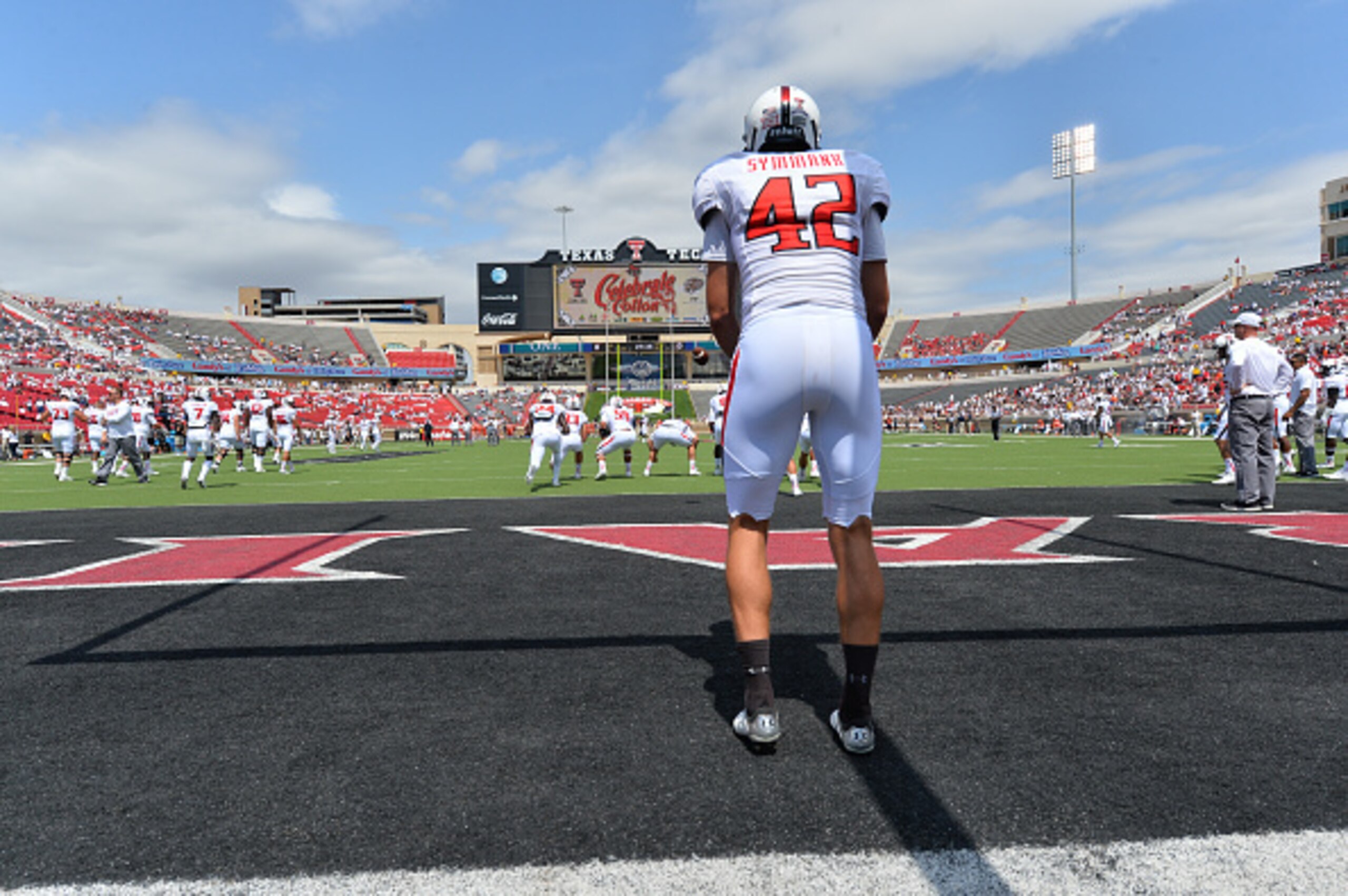
Punter: Taylor Symmank
NFL1000 Scores: Did not have enough snaps to qualify
The Vikings lost Jeff Locke to free agency, as the veteran punter signed with the Indianapolis Colts to replace Pat McAfee. Currently, the only punter left on the roster is Taylor Symmank, a 24-year old undrafted free agent out of Texas Tech, who has yet to punt in an NFL game. Symmank was signed in January of this year, so he has been in the facility for the Vikings for the past two months, but he is largely unknown, despite having a decent career at Texas Tech.
It's hard to imagine the Vikings not bringing in competition during or after the draft, and they are a prime candidate to take one of the top punters this year, with Austin Rehkow being a likely choice. Symmank can be cut with no cap hit, so unless the team is dead-set on going into the season with him, there's virtually no downside to bringing in another punter to see who comes out on top. The only real question is whether the Vikings want to use draft capital to do so, but with no financial outlay to cutting Symmank, a draft pick seems likely here.
Team Need: 8/10
Potential Draft Fits: Austin Rehkow (Idaho)
.jpg?w=2560 "Cardinals Giants Football")
.jpg?w=2560 "Commanders 49ers Football")








