

NFL1000: Green Bay Packers 2017 NFL Draft Preview
The Green Bay Packers will be in decent shape as long as Aaron Rodgers is their quarterback—they've had double-digit wins in every season since 2009 when Rodgers has started at least 10 games—but the last few seasons have been an object lesson in the idea that it takes more than one of the best quarterbacks in NFL history if you want to win a Super Bowl.
Green Bay has lost two of the last three NFC Championship Games and hasn't won the biggest game since the 2010 season. Rodgers turns 34 in December, and one wonders how many seasons the Packers have left to give that a shot with No. 12 under center.
In 2016, the issues were obvious: A serious lack of depth at the running back position forced the Packers to try out former receiver Ty Montgomery at running back, misses in the draft have depleted the defense over the last few seasons, and head coach Mike McCarthy's unimaginative passing game has made things more difficult for the offense—and Rodgers—than they need to be.
It all came home to roost in the NFC Championship Game, where the Packers were blown out by the Falcons in a game that was over by halftime. It was Green Bay's defense that allowed 31 points before Rodgers was able to put a single point on the board, and the 44-21 defeat, with three garbage-time touchdowns that made the game look closer than it actually was, put a bow on the Packers' draft imperatives.
Obviously, the team needs a ton of help at cornerback, and it's a fortunate turn that the 2017 draft class is stacked in that direction. McCarthy seems determined to make Montgomery more of a factor in the run game, but with Eddie Lacy off to Seattle, a little depth wouldn't hurt. Guard T.J. Lang's free-agency move to Detroit also puts a need there—Lang was Green Bay's best offensive lineman last season.
None of this is to say the Packers are falling away from Super Bowl contention—more that, with Rodgers still in his glory years, the franchise needs to do a better job of assembling the car around its incredibly powerful engine.
Methodology
1 of 19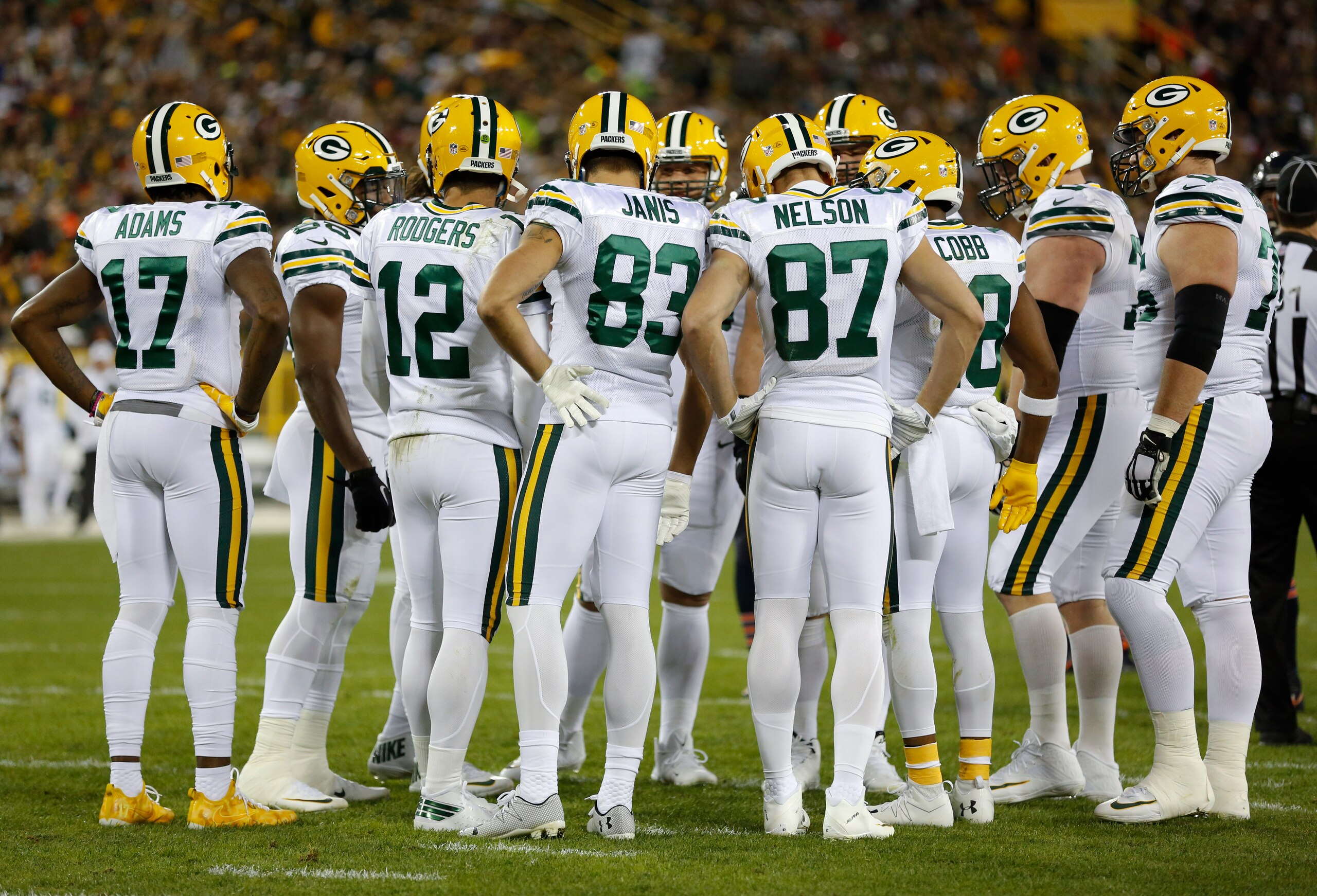
The NFL1000 team of scouts graded a series of important attributes for every player in their positional review. Using a scale starting at 0 and going up to anywhere from five to 50 based on the position and the attribute, our scouts graded each player based on their own expertise and countless hours of tape review over the years. Our evaluators had specific positional assignments based on their proven fields of expertise.
- Doug Farrar: Lead scout/quarterbacks
- John Middlekauff: Running backs/fullbacks
- Marcus Mosher: Wide receivers/tight ends
- Mark Schofield: Wide receivers/tight ends
- Duke Manyweather: Offensive tackles
- Ethan Young: Offensive guards
- Joe Goodberry: AFC defensive ends
- Justis Mosqueda: NFC defensive ends
- Charles McDonald: Defensive tackles
- Zach Kruse: 3-4 outside linebackers
- Derrik Klassen: 4-3 outside linebackers
- Jerod Brown: Inside linebackers
- Kyle Posey: Cornerbacks
- Ian Wharton: Cornerbacks
- Mark Bullock: Safeties
- Chuck Zodda: Special teams
Each corresponding position slide was written by the assigned scout.
Quarterback
2 of 19
Scheme: West Coast/Zone
Starter: Aaron Rodgers
NFL1000 Score: 81.5/100
NFL1000 Position Rank: 1/38
It was another stellar season for the best quarterback in the business, as Rodgers increased his attempts, completions, touchdown-to-interception ratio and yards per attempt in 2016 over 2015. Given the fact that head coach Mike McCarthy does little for his quarterback in the way of easy routes, Rodgers' recently displayed ability to improvise outside of structure and still keep the offense going is an underrated asset. In a fully developed offense, he'd put up video game numbers, but even with a stagnant scheme and little in the way of a run game, he's able to do things other NFL quarterbacks only dream of doing.
Enjoy Rodgers while he's at his best—it's unlikely you'll see another quarterback with his combination of intellect, mobility and scary deep accuracy for a good long time.
Backup: Brett Hundley
NFL1000 Scores: Did not have enough snaps to qualify
Injuries stopped the mobile UCLA alum from making the same sort of splash in the 2016 preseason that he did in 2015, when he put up a 129.7 quarterback rating and threw seven touchdowns to one interception. He completed just two of 10 passes in mop-up duty in the 2016 regular season, but there's enough potential here for the Packers to continue to develop him.
Backup: Joe Callahan
NFL1000 Scores: Did not have enough snaps to qualify
The undrafted rookie from Wesley had a decent preseason for the Packers, throwing three touchdowns to no picks. He's a smaller player with a decent arm and a bit of potential to grow in an NFL offense.
Team Need: 4/10
Potential Draft Fits: Nathan Peterman (Pitt)
Running Back
3 of 19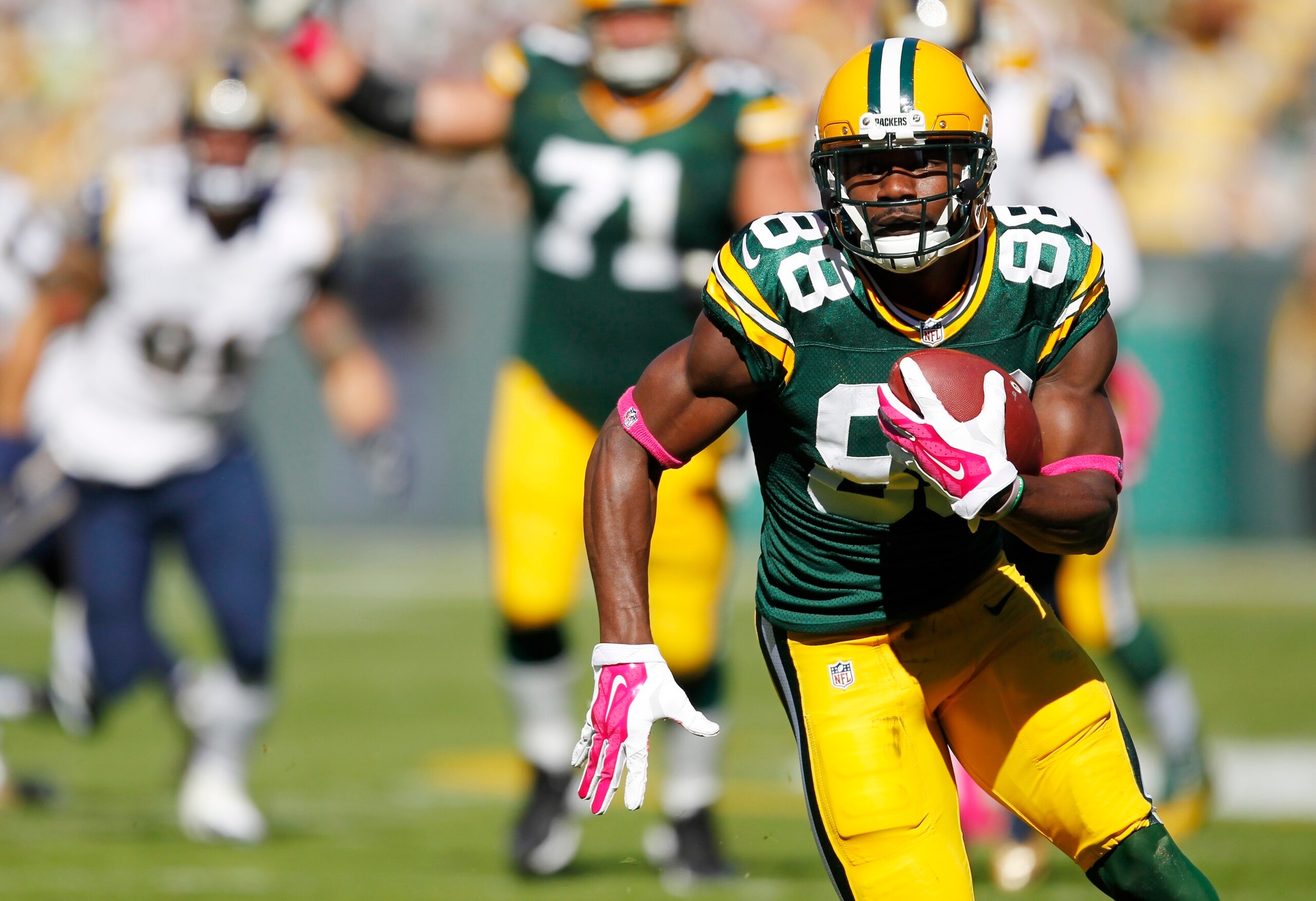
Scheme: West Coast/Zone
Starter: Ty Montgomery
NFL1000 Scores: 72.2/100
NFL1000 Position Rank: 22/82
Ty Montgomery went from wide receiver to starting running back seemingly overnight and now finds himself atop the depth chart entering the 2017 season. Montgomery made a seamless transition and looks to have a bright future at the position.
He averaged 5.9 yards per carry in 77 attempts, which is remarkable for a position switch. Montgomery has natural running back instincts. He possesses the vision, patience and explosive qualities NFL coaches look for in a back. As an inside runner, he has no problem getting downhill and looking to get vertical. He can make guys miss in one-on-one situations and has the power to break soft arm tackles. As an outside runner, his speed comes into play because he has the burst to beat defenders to the edge.
In the passing game is where he really excels. He can run every route expected out of the backfield and also flex out wide in different formations. Linebackers and safeties have no chance to cover him in space. Montgomery has very good hands, and once he has the ball he can make plays. He is already one of the best pass-catching backs in the NFL. The Packers coaching staff will need to develop him as a pass protector, but toughness will not be an issue. If he can stay healthy, he will be a very productive starter for Green Bay.
Backup: Christine Michael
NFL1000 Scores: 70.9/100
NFL1000 Position Rank: 35/82
Christine Michael had his best and most productive season of his career in 2016. He ran for 583 yards and seven touchdowns between Seattle and Green Bay. While Michael has never lived up to the draft billing of a second-round pick, he has carved out a role as a 53-man-roster player.
He is a solid inside runner with good short-area quickness. He has the feet to make a guy miss in space. If he does get by the first defender, Michael has big-play potential. He's not an ideal outside runner, but this isn't an area the Packers asked him to contribute in. He is solid in the passing game, running underneath routes, working as the checkdown option and keeping the chains moving. His roster spot should be safe unless they draft a player high.
Team Need: 7/10
Potential Draft Fits: Dalvin Cook (Florida State), Christian McCaffrey (Stanford), Joe Mixon (Oklahoma) Jamaal Williams (BYU)
.jpg?w=2560 "Colts Football")
.jpg?w=2560 "Chiefs Giants Football")
.jpg?w=2560 "Titans Colts Football")
Fullback
4 of 19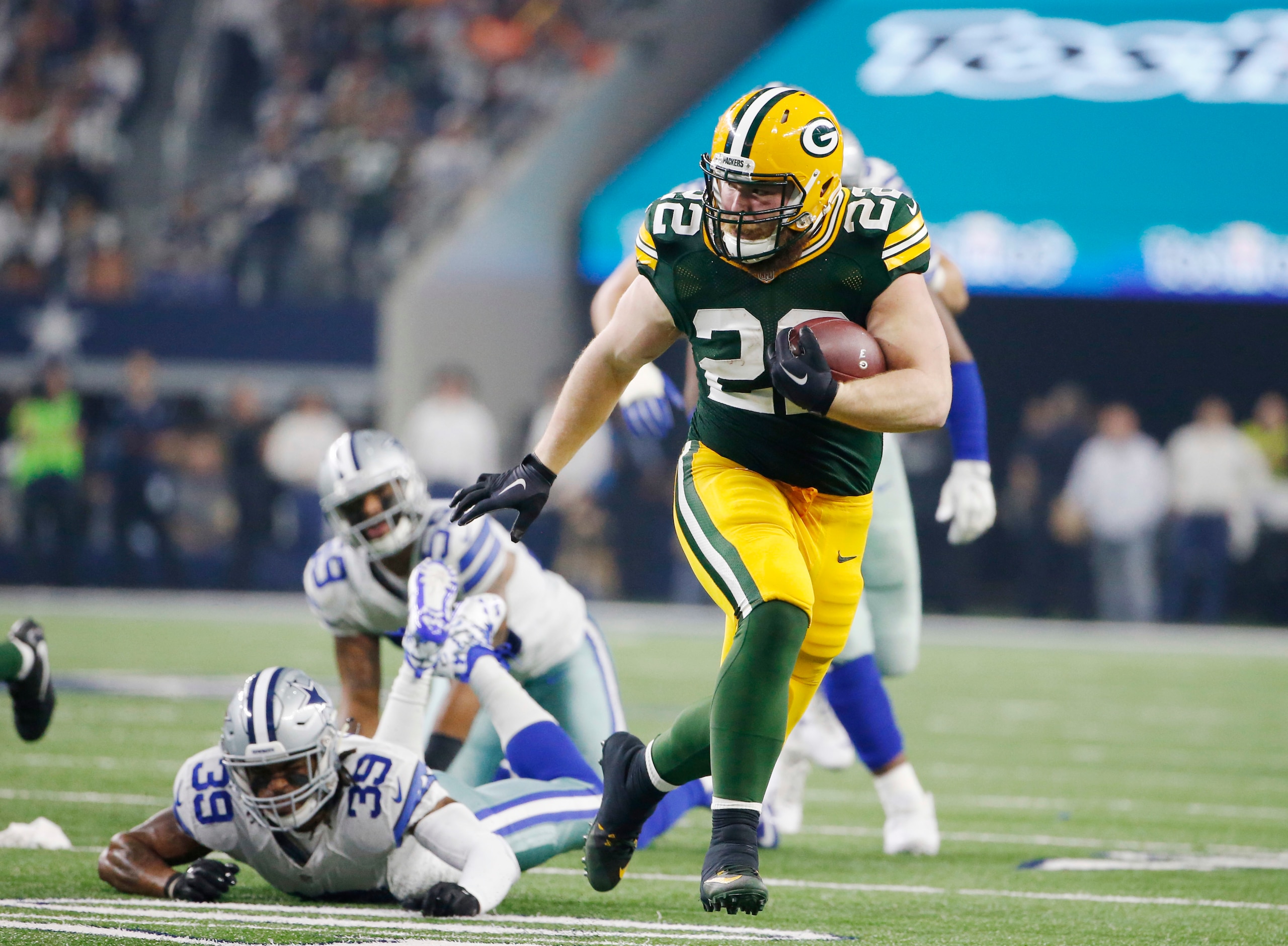
Scheme: West Coast/Zone
Starter: Aaron Ripkowski
NFL1000 Scores: 73.4/100
NFL1000 Position Rank: 3/20
The Packers moved on from longtime fan favorite John Kuhn and stumbled into a better version in Aaron Ripkowski. He started eight games and was a major contributor for the Packers offense, playing 30 percent of the offensive snaps. Ripkowski can do it all as a fullback. As a lead blocker, he is very physical and can sustain once he is engaged. He has the athletic ability to adjust on the fly and still find the defender.
As a runner, his role really expanded as the season progressed. He's a natural downhill runner who is powerful and can drag defenders on contact. He has really good feet for a fullback and can operate for short periods of time as a singleback. He does not play a big role in the passing game but is very good in pass protection. Linebackers cannot go through him because he is so strong and stout. Ripkowski should be the Packers' starting fullback for years to come.
Team Need: 1/10
Potential Draft Fits: None
Wide Receiver
5 of 19
Scheme: West Coast
Starter: Jordy Nelson
NFL1000 Scores: 71.1/100
NFL1000 Position Rank: 12/155
Returning from a torn ACL, Jordy Nelson won the NFL's Comeback Player of the Year honors in 2016. He scored the second-most touchdowns of his career (14) and finished with more than 1,200 yards for the fourth time in his nine-year career. Nelson was able to pick right up where he left off in 2014.
Nelson doesn't have elite quickness or speed, but he's such a reliable target for Aaron Rodgers against any type of coverage. Nelson knows how to win off the line of scrimmage and possesses some of the best body control in the league. He knows how to work on the boundary and separate at the last second to create space.
As fantastic as he was in 2016, he seemed to tail off at the end of the year. He's still Rodgers' favorite target, and that will allow him to be productive again in 2017 at age 32. The Packers will eventually need to draft his replacement on the outside, but Nelson has a few quality years left in Green Bay.
Starter: Davante Adams
NFL1000 Scores: 67.6/100
NFL1000 Position Rank: 42/155
Adams became a full-time starter in 2016 after struggling in his first two years in the NFL. The third-year receiver out of Fresno State barely missed 1,000 receiving yards (997) but scored a career-high 12 times in 2016. In the first two years of his career, he struggled with the playbook, and you could see he was overthinking every move he made. But in 2016 his confidence was restored, and he was an important part of the Packers' late-season run.
What 2016 showed was that Adams does have talent. There are still parts of his game that need cleaning up, such as the maddening concentration drops and his ability to read coverages. But he can get open fairly easily and has the explosion to make plays after the catch. At just 24 years old, Adams has a bright future ahead of him.
Starter: Randall Cobb
NFL1000 Scores: 67.3/100
NFL1000 Position Rank:: 45/155
After a breakout season in 2014, Randall Cobb signed a four-year, $40 million contract. Since signing his contract, Cobb's play has fallen off in large part due to injuries that have limited him. In the past two seasons, he's failed to crack 900 receiving yards in each and has only scored 10 total touchdowns after scoring 12 in 2014.
Cobb turns 27 this year and needs to play drastically better in 2017 to stay in Green Bay. He's the 15th-highest-paid receiver in the league, but he's just a slot receiver for the Packers. Injuries hurt him in 2016 as he lacked explosiveness. He wasn't making plays after the catch and was no longer a dynamic weapon on offense. Instead, he looked like a plodding slot receiver. 2017 will be a big year for Randall Cobb, as he needs to show that he still has the burst to be an elite weapon out of the slot.
Backup: Geronimo Allison
NFL1000 Scores: Did not have enough snaps to qualify
As an undrafted free agent out of Illinois, Geronimo Allison caught 12 passes for 202 yards in his rookie year. Allison surpassed hype machine Jeff Janis on the depth chart and proved he has a future on the Packers offense going forward. His lack of speed will always limit him, but there's a chance he could develop into the Packers' third receiver down the road.
Backup: Jeff Janis
NFL1000 Scores: Did not have enough snaps to qualify
Despite all of the athleticism and offseason hype, Jeff Janis has failed to record 100 receiving yards in a season in his first three years of the NFL. He's not likely to develop into anything more than a special teams player throughout his career.
Team Need: 5/10
Potential Draft Fits: Zay Jones (East Carolina), Chad Hansen (Cal), JuJu Smith-Schuster (USC)
Tight End
6 of 19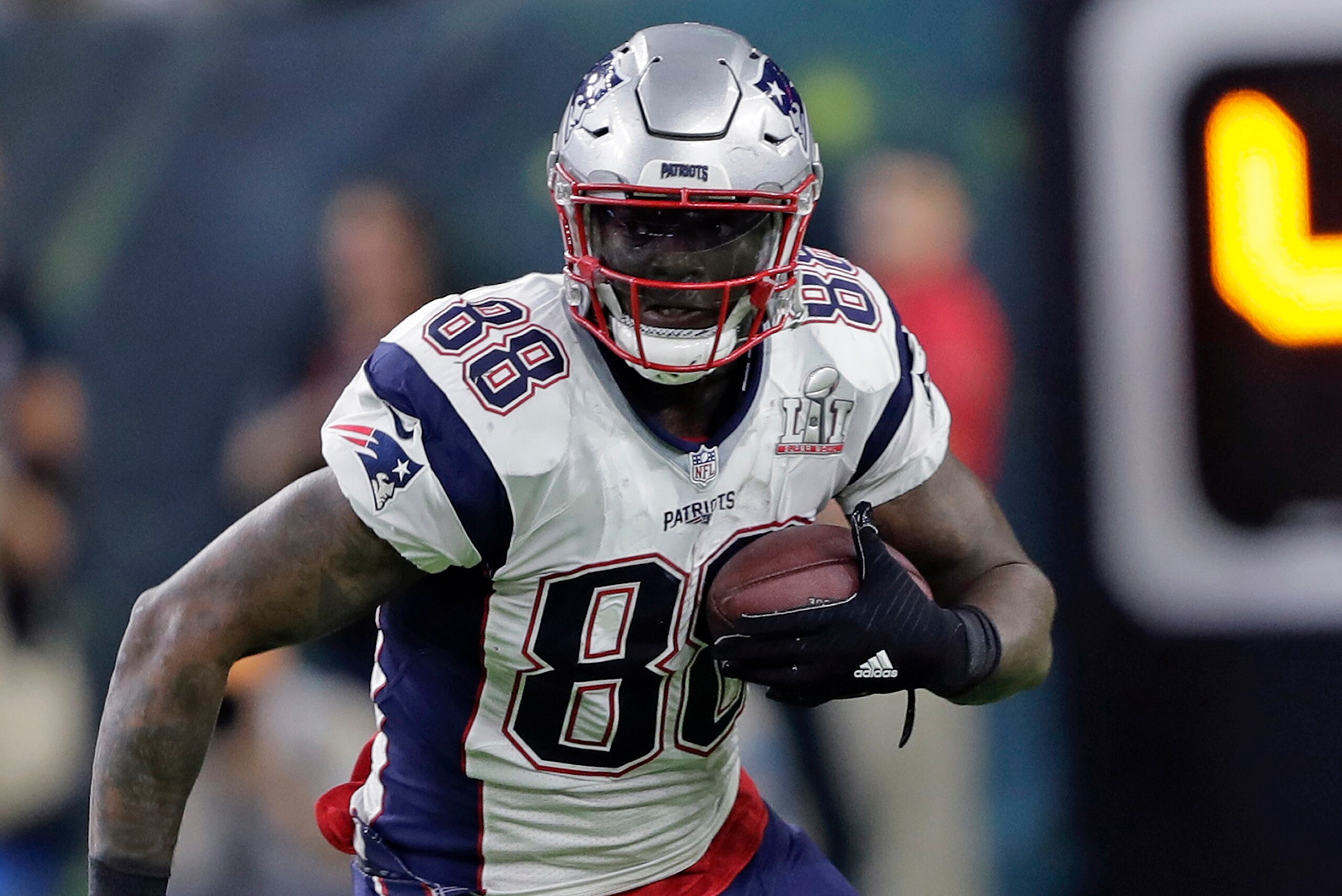
Scheme: West Coast
Starter: Martellus Bennett
NFL1000 Scores: 68.9/100
NFL1000 Position Rank: 7/96
Despite being hampered by injuries for the most of the year, Martellus Bennett was a top-10 tight end for the 2016 season. He's one of the best blocking tight ends in the league, which allows him to line up anywhere across the formation. That flexibility allows offenses to locate mismatches and exploit them with Bennett's athleticism.
In Green Bay, Bennett should have immediate success with Aaron Rodgers because of the route diversity he has. He can run any route out of the slot, out wide or in-line. That versatility will be key in the Packers offense. Now that he's a No. 1 tight end again, expect Bennett to put up massive numbers with Rodgers.
Backup: Lance Kendricks
NFL1000 Scores: 65.1/100
NFL1000 Position Rank: 27/96
Lance Kendricks joined the Packers this offseason to be the team's No. 2 tight end behind Martellus Bennett. He's an average blocker and decent out of the slot in the short to intermediate parts of the field. Kendricks is a much better fit as a No. 2 tight end and should contribute right away in 2017.
Backup: Richard Rodgers
NFL1000 Scores: 63.5/100
NFL1000 Position Rank: 38/96:
Rodgers has played in every game since being drafted in 2014 in the third round. With the signings of Martellus Bennett and Lance Kendricks, Rodgers will become a role player and a key special teams player for the team in 2017. He's not likely to see many targets as the team's third tight end. However, he does provide quality depth and has three years of experience.
Team Need: 2/10
Potential Draft Fits: Evan Engram (Ole Miss), David Njoku (Miami), Gerald Everett (South Alabama)
Left Tackle
7 of 19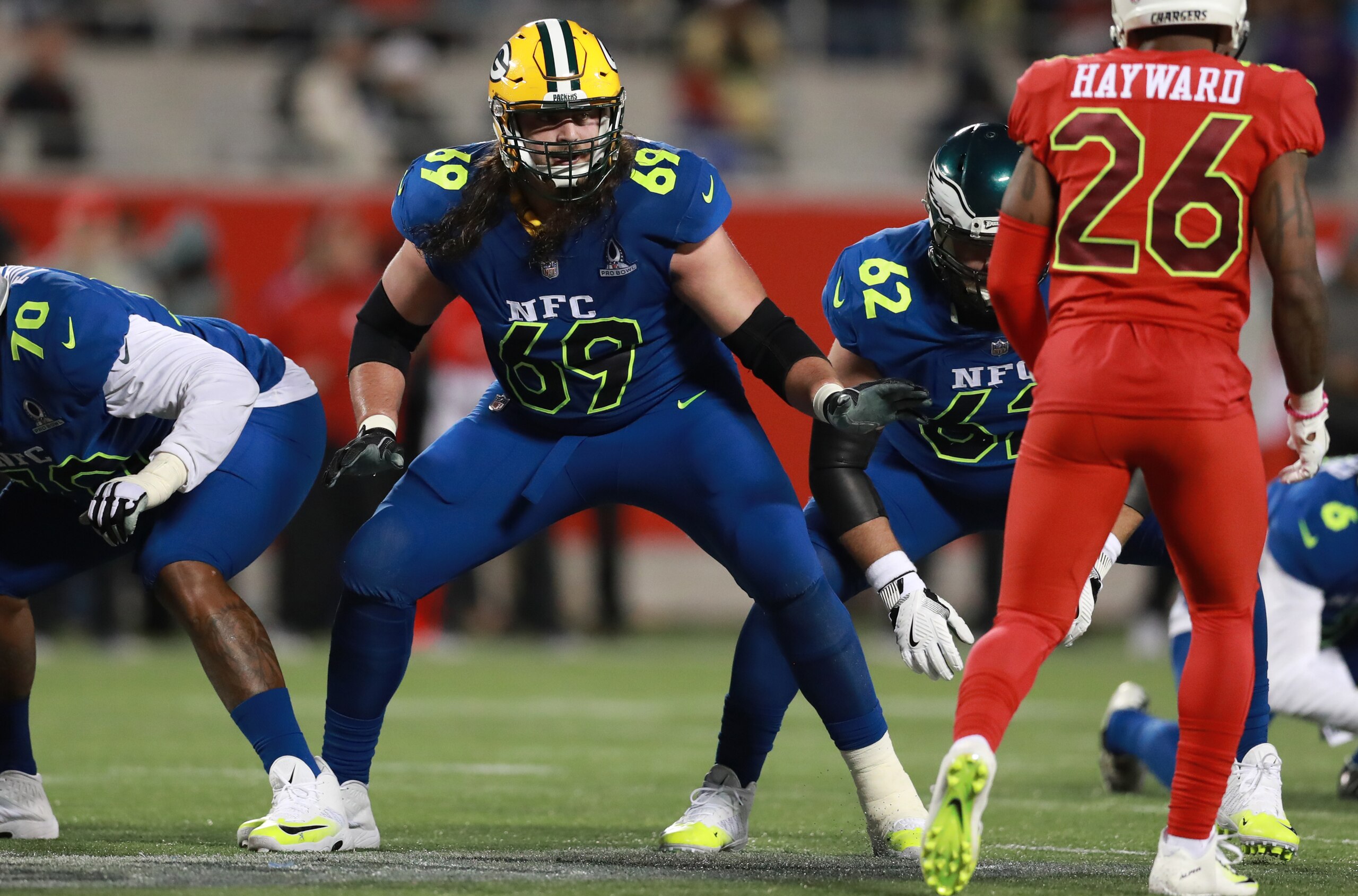
Scheme: Zone
Starter: David Bakhtiari
NFL1000 Scores: 79.9/100
NFL1000 Position Rank: 4/40
In 2016, Green Bay's David Bakhtiari emerged as an elite left tackle who excelled in pass protection. In 16 regular-season games and three playoff games, Bakhtiari only surrendered four sacks and 23 quarterback hurries. That earned him NFL1000's highest overall pass protection score (20.4) among offensive linemen in a Green Bay offense that became heavily pass-oriented.
Bakhtiari was not a one-trick pony. The fourth-year man out of Colorado also had success as a run-blocker consistently. The NFC offensive tackle landscape is loaded, but Bakhtiari's excellent play earned him designation as a first alternate to the Pro Bowl.
Backup: Jason Spriggs
NFL1000 Scores: Did not have enough snaps to qualify
Green Bay selected Jason Spriggs in the second round of the 2016 draft, and many figured he'd push both David Bakhtiari and Bryan Bulaga for one of the starting tackle spots. That did not come close to happening. Both veterans continued to perform at a high level and distanced themselves from the rookie, who struggled to execute a large array of critical techniques.
Spriggs ended up starting two games for Green Bay, both at right guard, but he did not have enough snaps to qualify for an overall NFL1000 score.
Team Need: 0/10
Potential Draft Fits: None
Right Tackle
8 of 19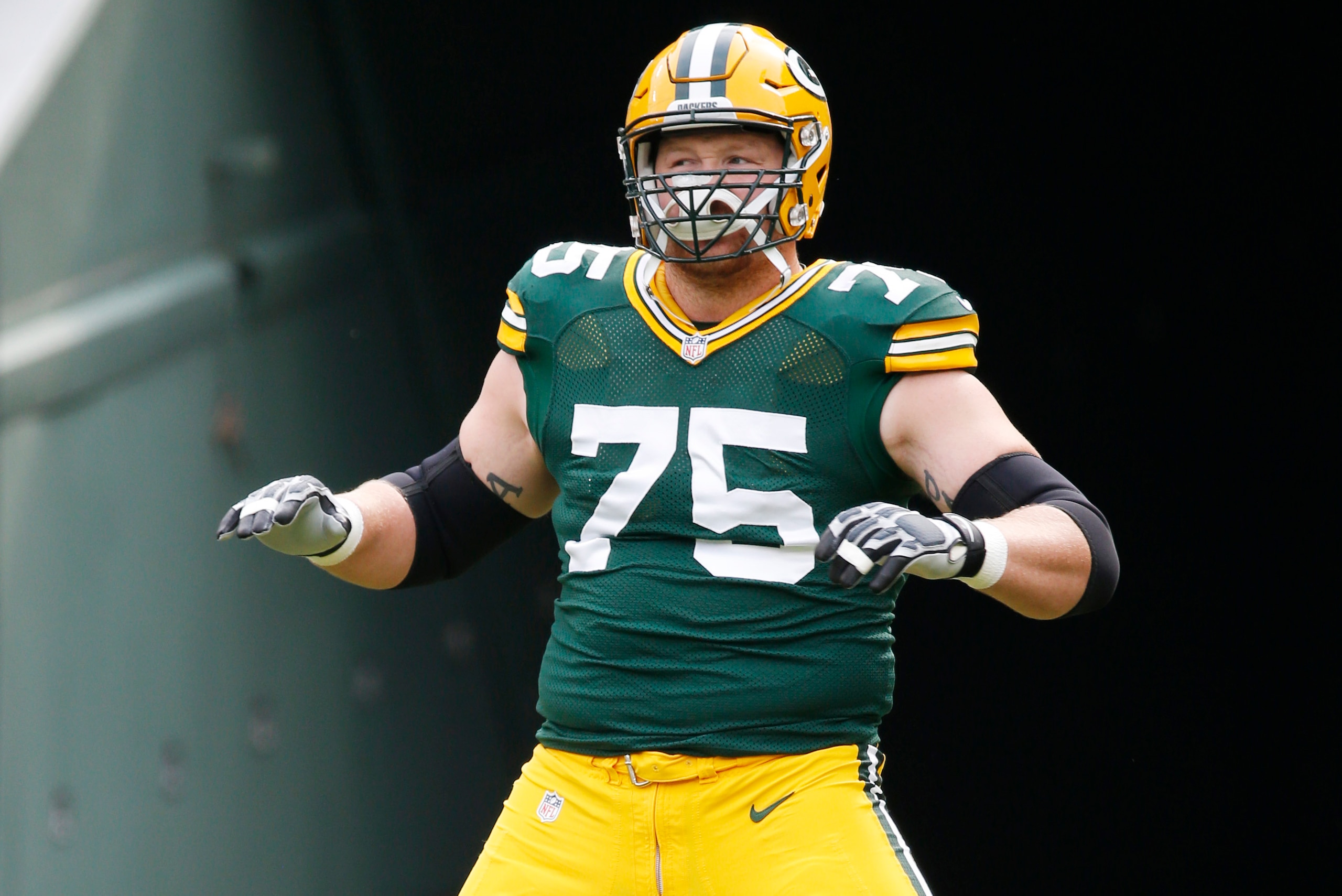
Scheme: Zone
Starter: Bryan Bulaga
NFL1000 Scores: 78.7/100
NFL1000 Position Rank: 2/38
Bryan Bulaga had his best season as a pro in 2016. The seventh-year man out of Iowa stayed fairly healthy, which he had struggled to do much of his career. In a recent episode of the Block 'Em Up podcast, Bulaga attributed his ability to stay on the field to getting leaner and playing between 305-308 pounds in 2016 versus upward of 320 pounds in past years. Bulaga's newfound conditioning paid huge dividends in his pass protection as he consistently showed top-end range and the ability to mirror many of the NFL's premier pass-rushers.
Bulaga ranked as our second-highest-graded right tackle behind Philadelphia's Lane Johnson, but Bulaga was our highest-graded right tackle who played all 16 regular-season games, and I believed he should have been selected to the All-Pro team based on the new position format.
Team Need: 0/10
Potential Draft Fits: None
Offensive Guard
9 of 19
Scheme: Zone
Starter: Lane Taylor
NFL1000 Scores: 70.4/100
NFL1000 Ranks: 33/78
What a difference a year can make on a depth chart. After being loaded on the interior 365 days ago, Green Bay now finds itself needing to address the guard position.
Lane Taylor held his own as a starter last year but was clearly a step down from the elite play of Josh Sitton. That said, his lateral agility fits this zone-heavy scheme well, and he should continue to develop in his second year as a starter.
Starter: Jason Spriggs
NFL1000 Scores: Did not have enough snaps to qualify
I really like Jason Spriggs, but he should not be deployed inside. He is a finesse-style player at tackle, and asking him to hold up hat on hat against NFL defensive tackles is not going to work. If another starter-level lineman isn't brought in, kicking one of the Pro Bowl tackles inside and playing Spriggs outside would fit better for the whole group. It may seem like a waste to move a talented tackle like Bryan Bulaga to guard, but if Spriggs is one of their best five starters, he shouldn't be used inside.
Backup: Don Barclay
NFL1000 Scores: Did not have enough snaps to qualify
The Packers recently brought back Don Barclay, and he will likely compete for the right guard job if no changes are made. He struggled in limited reps last year, but he's a better fit inside than Spriggs.
Backup: Kyle Murphy
NFL1000 Scores: Did not have enough snaps to qualify
Kyle Murphy is the dark horse in all this, and the tackle from Stanford could fight for the right guard spot as well. His skill set isn't perfect for guard, but it's better than Spriggs', even though he isn't the same level of player. I see Murphy as the best swing option the Packers have, and he'll make an impact as the sixth OL in wake of injury.
Team Need: 7/10 (but easily solved with position conversion)
Potential Draft Fits: Will Holden (Vanderbilt), Conor McDermott (UCLA)
Center
10 of 19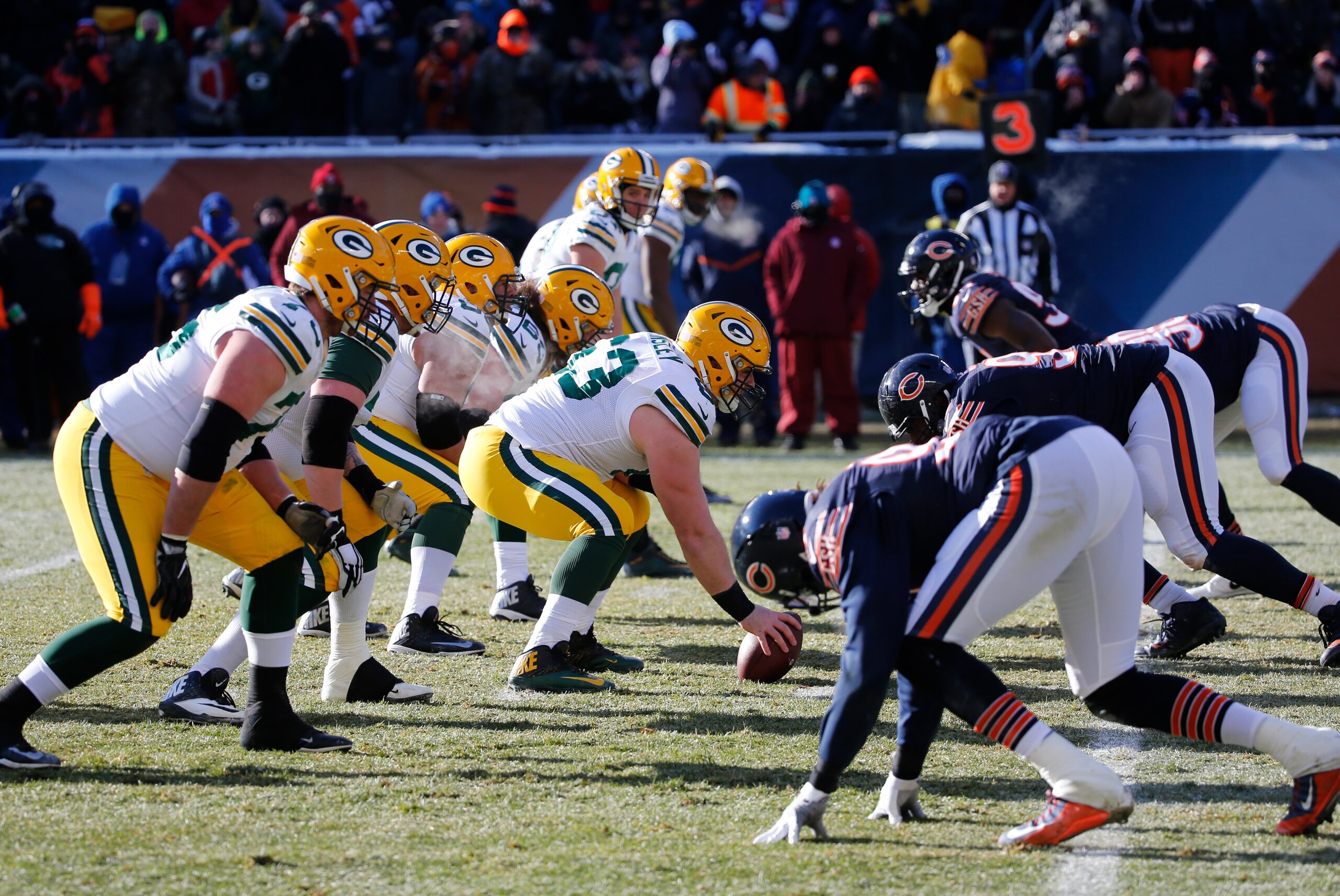
Scheme: Zone
Starter: Corey Linsley
NFL1000 Scores: 70.8/100
NFL1000 Rank: 16/38
With JC Tretter gone, the center job is fully Corey Linsley's. The biggest question is whether Linsley can make it through 16 games healthy, and drafting a component center for depth may be prudent. That said, this center class lacks depth, and Green Bay may be better served to bring in a veteran with playing experience.
Team Need: 3/10
Potential Draft Fits: J.J. Dielman (Utah), Cameron Tom (Southern Miss)
Defensive End
11 of 19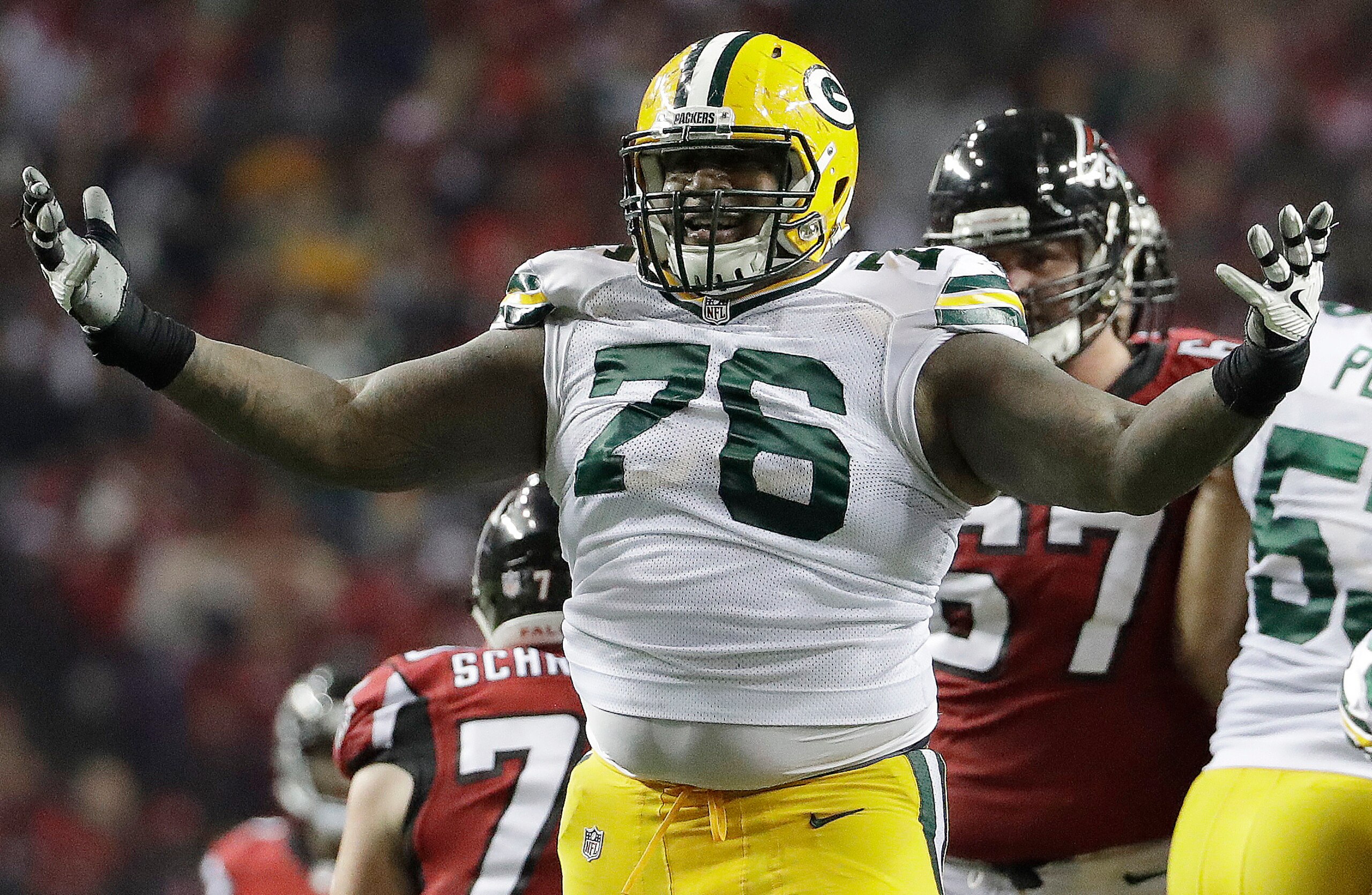
Scheme: 3-4
Starter: Mike Daniels
NFL1000 Scores: 70.3/100
NFL1000 Position Rank: 3/53
Green Bay had some issues with defensive line depth in 2016. The loss of base end Josh Boyd to career-ending injury just three years into his Packers run really set the team back. Since the 2016 season started, the team has since lost Mike Pennel to the New York Jets and Letroy Guion to suspension. Both players were nickel defensive tackles but nose tackles in base looks.
On top of that, Julius Peppers and Datone Jones, who at times played left defensive end in pressure situations, also left in free agency to the Carolina Panthers and NFC North rival Minnesota Vikings respectively. That left Green Bay with two functional bodies at the defensive end position in Mike Daniels and Dean Lowry, a second-year Day 3 selection, up until a few weeks ago.
Luckily for the Packers, Daniels is a prime 3-technique player who should make a Pro Bowl sooner than later. In the defensive front seven, it's hard to make the case that there's a better player on the roster than Daniels, who signed a very team-friendly deal of $41 million over four years. In terms of guaranteed money, Daniels is the 113th-highest-paid defender in the NFL. Green Bay doesn't want to move past him anytime soon.
Starter: Ricky Jean Francois
NFL1000 Scores: 62.8/100
NFL1000 Position Rank: 20/53
Ricky Jean Francois had a worse NFL1000 grade last season than Dean Lowry, who is listed a backup, but Jean Francois was an every-down player for the Washington Redskins. Lowry was used in a more ideal role as a pressure end, which better suits his skill set. Jean Francois is an early-down player, signifying a starter, while Lowry is a specialist.
Jean Francois doesn't bring much to the table as a pass-rusher, but Green Bay only had two bodies on the defensive line in Mike Daniels and Kenny Clark who have proved they can play base defense until Letroy Guion is done serving his suspension.
Washington released Jean Francois in a surprising move, which Pro Football Talk's Mike Florio believes might have stemmed from his talk about the dysfunctional organization. Washington's apparent pettiness led general manager Ted Thompson to sign a street free agent who doesn't impact the compensatory pick system? Checks out.
Backup: Dean Lowry
NFL1000 Scores: 64.1/100
NFL1000 Position Rank: 20/53
Dean Lowry is a fine pressure specialist for his massive 6'6", 296-pound frame. With Datone Jones and Julius Peppers gone, expect to see a lot more of Lowry in 2017, potentially as a stand-up player. With that being said, if he's in the game as a three-point run defender, he may have problems. He'll still be a 22-year-old at the time of the draft, but he was our sixth-ranked rookie 3-4 defensive end last season.
In a few years, Lowry may be a functional starter, but today isn't a few years. He's a high-end specialist at the moment. One injury that vaults him into a starting role could lead to trouble for a team with just one nose tackle for the first four weeks of the season at the moment.
Backup: Christian Ringo
NFL1000 Scores: Did not have enough snaps to qualify
There are two defensive line names at the end of the Packers roster with Christian Ringo and Brian Price. Neither of them has played significantly, though, and only Ringo was drafted. In two years, Ringo has been active for just eight of 32 possible games. As a 25-year-old, he has two career tackles. He's Mike Daniels' backup as an under tackle, but Daniels has been the team's most played defensive lineman for three straight years.
With Ricky Jean Francois in town in a nickel-heavy defense where there's really only one "3-4 defensive end" type along with a "3-4 nose tackle" type on the defensive interior, Jean Francois will likely be the man to give Daniels a breather in most looks. Ringo is a roster bubble body, and if Green Bay adds enough bodies, he may be a practice squad player.
Price, who isn't worth a write-up at this point in his career, is a question mark, as he hasn't even played as often as Ringo.
Team Need: 8/10
Potential Draft Fits: Chris Wormley (Michigan), Eddie Vanderdoes (UCLA), Jeremiah Ledbetter (Arkansas)
Defensive Tackle
12 of 19
Scheme: 3-4
Starter: Kenny Clark
NFL1000 Scores: 65.9/100
Defensive Tackle Rank: 32/99
Kenny Clark's playing time was sporadic early in the season, but he was up to the task every time he was inserted into the lineup. As the season wore on, Clark was one of the few bright spots on a porous Green Bay defense. His run defense was stellar. Even though he was undersized for the nose tackle position, his upper-echelon athleticism allowed him to be a force week in and week out. He was particularly impressive versus Atlanta's Alex Mack in the NFC Championship Game.
Backup: Letroy Guion
NFL1000 Scores: 63.4/100
Defensive Tackle Rank: 47/99
As far as 3-4 teams go, the Packers arguably have the best pairing of nose tackles in the entire league. Guion is an above-average run stuffer who can occasionally take advantage of weaker offensive linemen in pass-rush situations. Considering the state of Green Bay's linebacker and defensive back play, nose tackle is far down on the list of needs for the Packers.
Team Need: 4/10
Potential Draft Fits: Eddie Vanderdoes (UCLA), DeAngelo Brown (Louisville)
Outside Linebacker
13 of 19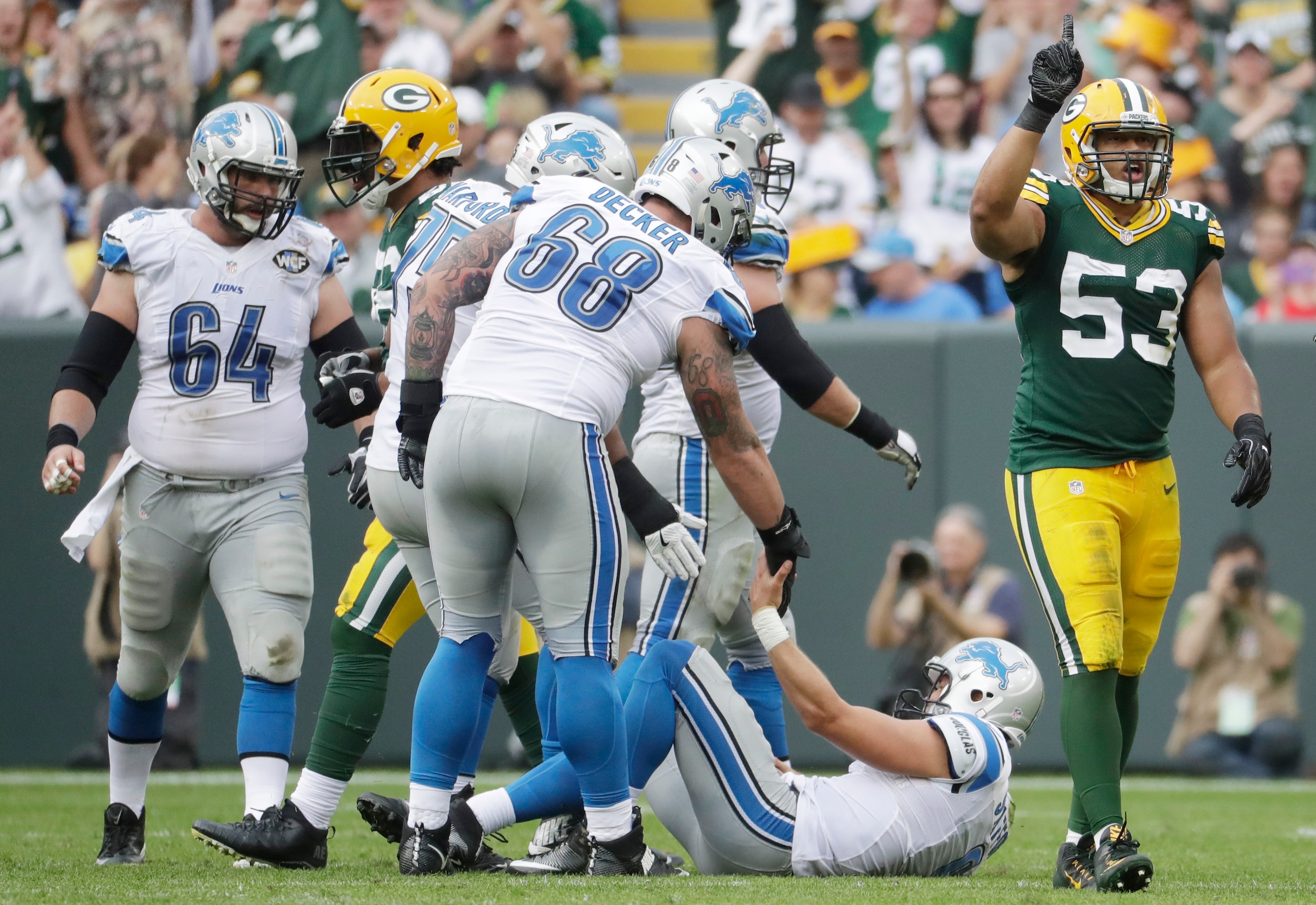
Scheme: 3-4
Starter: Nick Perry
NFL1000 Scores: 72.4/100
NFL1000 Position Rank: 7/65
A career plagued by injury finally got on the right track in 2016. Not only did Perry produce a career-high 11 sacks, but he also finished as NFL1000's third-best 3-4 outside linebacker against the run. His all-around game is built on power, violent hands and surprising athleticism at his size. The Packers smartly re-signed Perry to a five-year deal before he could get away in free agency. His new $60 million deal should heighten expectations for Green Bay's ascending edge rusher.
Starter: Clay Matthews
NFL1000 Scores: 68.8/100
NFL1000 Position Rank: 25/65
The Packers need more from Matthews, who had just five sacks in 12 games last season. He battled through lingering hamstring and shoulder injuries and also played snaps at inside linebacker, but his impact at edge-rusher wasn't enough. Chronic lower body injuries have sapped some of Matthews' burst, and he became a non-factor once he hurt his shoulder on a big block from Eagles lineman Allen Barbre in November.
The Packers need him healthy and productive next season, especially with Julius Peppers and Datone Jones no longer on the roster. Matthews is signed through the 2018 season, but his contract runs out of guaranteed money after next year.
Backup: Jayrone Elliott
NFL1000 Scores: 64.8/100
NFL1000 Position Rank: 43/65
A former undrafted free agent, Elliott has occasionally flashed playmaking ability as a rotational edge-rusher for the Packers. He now needs to develop consistency to earn more snaps on defense behind Green Bay's starters. Elliott has the athleticism and size to be a capable rusher, but his biggest contributions in the NFL have come on special teams. He'll get his chance to play a bigger role in 2017, but the Packers are likely to add another edge-rusher in the draft to compete with Elliott and Kyler Fackrell behind Perry and Matthews.
Team Need: 7/10
Potential Draft Fits: T.J. Watt (Wisconsin), Takkarist McKinley (UCLA), Jordan Willis (Kansas State), Tyus Bowser (Houston)
Inside Linebacker
14 of 19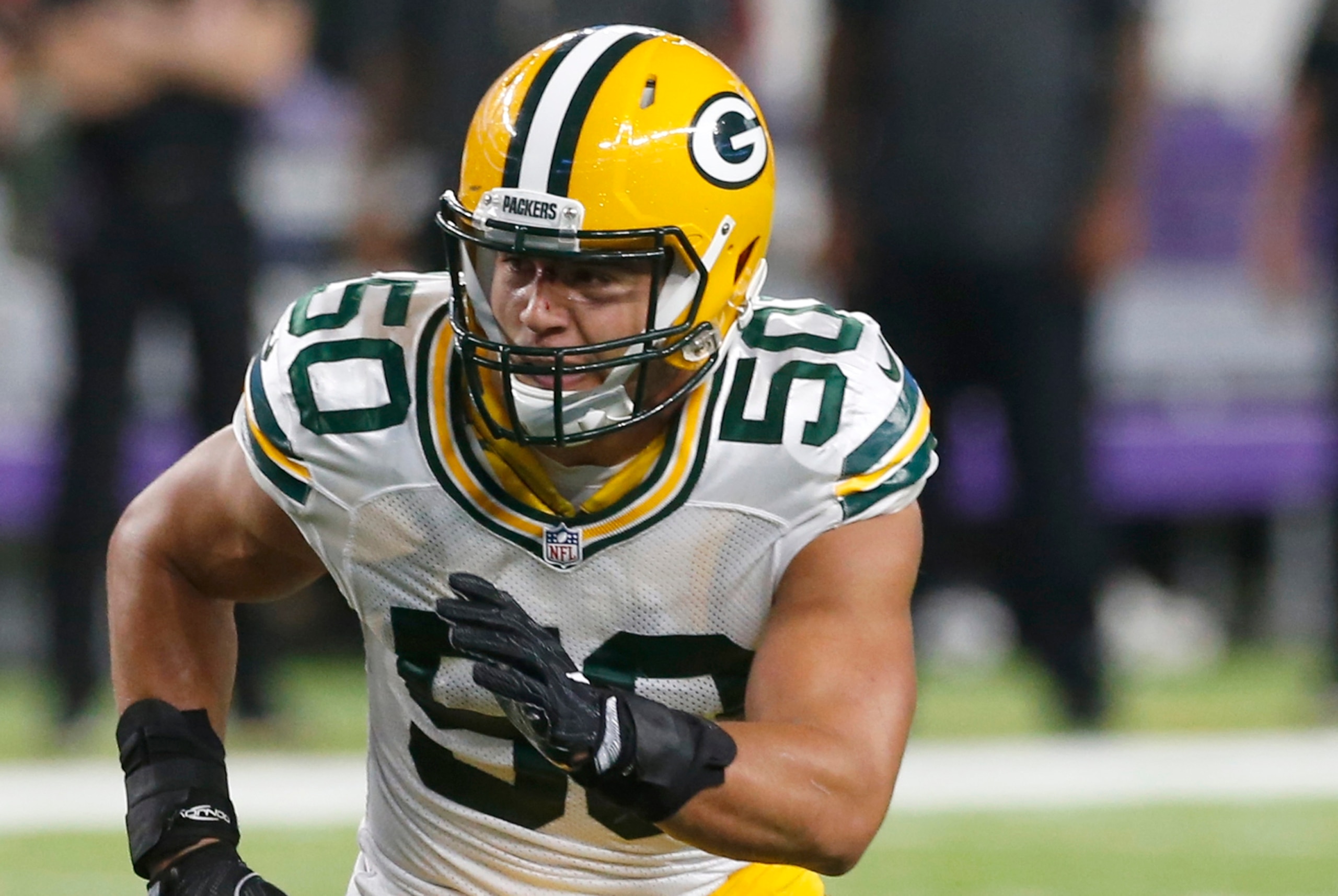
Scheme: 3-4
Starter: Blake Martinez
NFL1000 Scores: 68.7/100
NFL1000 Position Rank: 40/65
Blake Martinez is entering his second season and is worth monitoring. He's got the requisite physicality and athleticism to play inside linebacker but will have to continue developing mental processing skills. On any given play, Martinez can flash as a run defender or in coverage. Conversely, he can be exploited often.
Martinez had an up-and-down year in terms of on-field production and availability. He suffered from multiple odd injuries, including a cut on his nose that became significantly more problematic than expected. All told, he still managed to meet rookie expectations and should be expected to make serious strides heading into his sophomore season.
The Green Bay Packers can't afford to give up on Martinez yet, and there's no need to. As long as he's on a rookie contract, he's a fantastic player to start given the combination of his ability and price tag. The Packers can look to upgrade at other positions and, at the most, could begin to consider inside linebacker a need as they enter Day 3 of the draft.
Starter: Jake Ryan
NFL1000 Scores: 69.3/100
NFL1000 Position Rank: 33/65
Jake Ryan is inconsistent with his technique and rarely managed to show anything above average play. He's a fringe starter who can maintain the status quo but will never be any type of weapon or eraser on defense. Ryan's tape showed a player who can compete at a high level intermittently but can't be relied upon to lead this Green Bay defense.
Replacing Ryan isn't the highest need on the Packers' list, but finding a player to compete and push Ryan to either get better or get out isn't unrealistic. The Packers can roll with Ryan for another year but shouldn't expect anything other than manageable backup-level quality in play.
Backup: Joe Thomas
NFL1000 Scores: 68.1/100
NFL1000 Position Rank: 44/65
Thomas could've been listed as a starter as well, as all three inside linebackers rotated quite a bit in 2016. Injuries, performance and opponent tendencies created a carousel among the three. Thomas began the season as the third-down linebacker, most often used in coverage.
After Martinez's injury, Thomas was inserted into the starting lineup and played more or less the same. Thomas lacks any technical refinement in defending the inside run and would be considered a weak link in most front sevens in the NFL. Fortunately, he plays with enthusiasm and excitement that often overcomes his physical limitations in run support. He isn't the biggest, but he hits hard and shows a propensity for destroying running backs in pass protection when blitzing.
Team Need: 3/10
Potential Draft Fits: Jalen Reeves-Maybin (Tennessee), Harvey Langi (BYU)
Cornerback
15 of 19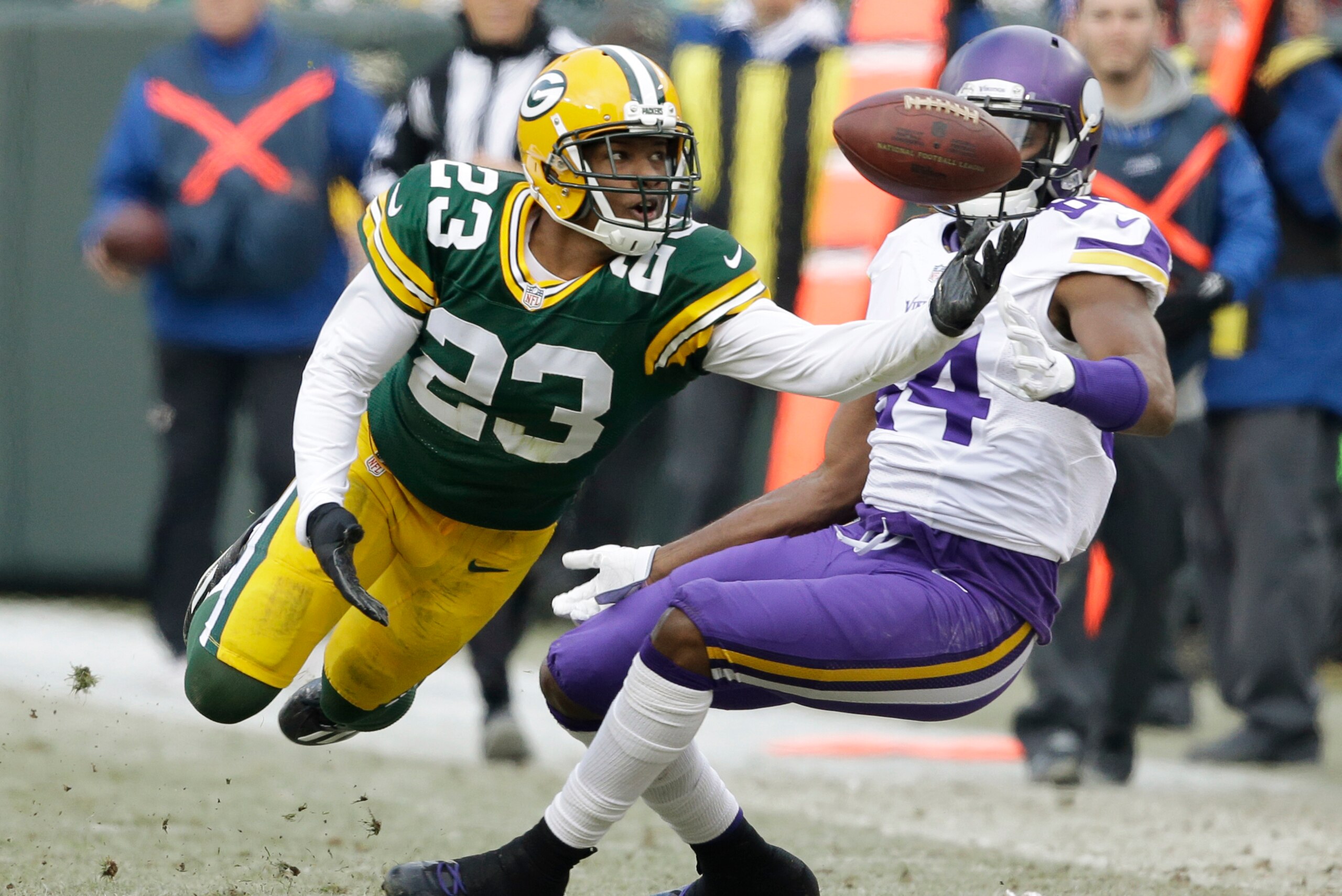
Scheme: Cover 4
Starter: Damarious Randall
NFL1000 Scores: 62.6/100
NFL1000 Position Rank: 78/192
Despite a promising rookie season for Damarious Randall, the training wheels came off in 2016 and exposed the versatile cornerback. Randall missed some time with injury in the middle of the season, but his development was stagnant throughout the year regardless. He graded as a below-average starter in nine of the 13 games he played enough snaps in to earn a grade.
His reaction time when playing off the line of scrimmage must improve, as he's prone to giving too much cushion and allowing easy underneath completions. Even when he plays man, Randall's not quick or efficient enough to mirror receivers consistently, and better athletes got the best of him with relative ease. His best fit going back to Arizona State was as a slot safety, though the Packers need him to be a boundary corner. Either the team must improve its personnel or Randall must significantly get better.
Starter: Davon House
NFL1000 Scores: 58.8/100
NFL1000 Position Rank: 123/192
A free-agent bust for the Jacksonville Jaguars, Davon House returned to the Green Bay Packers on a one-year deal to rehabilitate his value. House was a successful rotational corner for the Packers in his previous tenure and will challenge Ladarius Gunter for the starting role in 2017. With Gunter's limited physical traits, House should be the favorite to win that camp battle. House is able to play inside and out and is consistently average in terms of his coverage ability.
What hurts House is that he struggles to locate the football and force incompletions and turnovers. He lost his spot in Jacksonville early in 2016 as the team spun out of control, but House can help provide depth this season, ideally handing the keys over to a rookie at some point and moving into more of a nickel and dime package player.
Starter/Rotation: Ladarius Gunter
NFL1000 Scores: 59.3/100
NFL1000 Position Rank: 102/133
House’s main competition for the starting boundary job is the incumbent, Ladarius Gunter. Gunter’s limited athleticism is a glaring weakness that will be difficult to overcome, and it showed on nearly a weekly basis last season. In 19 games, Gunter graded as an average or better starter just five times. That’s simply not the type of player who can be a reliable starter on a team with championship aspirations. Either Randall will have to become a masterful technician to overcome his physical profile, or the Packers will need to prioritize adding a better option than Gunter.
Slot: Quinten Rollins
NFL1000 Scores: 56.4/100
NFL1000 Position Rank: 150/192
Like Randall, Quinten Rollins struggled in his sophomore campaign and also missed time due to an injury. While each looked better in a smaller role as rookies, and their respective injuries are something to consider, it should be a concern that both were well below average compared to their peers.
Rollins has the skill set to play inside and be a solid nickel option with his physicality and quick change of direction as primary strengths. But he played slower this past year, and his ball awareness wasn't at the same level. His sudden drop-off could cost him a starting slot position if the Packers find a quality corner on the board in the first two rounds. Competition must be added to help this otherwise abysmal unit.
Team Need: 9/10
Potential Draft Fits: Tre'Davious White (LSU), Marlon Humphrey (Alabama), Kevin King (Washington), Ahkello Witherspoon (Colorado), Gareon Conley (Ohio State)
Free Safety
16 of 19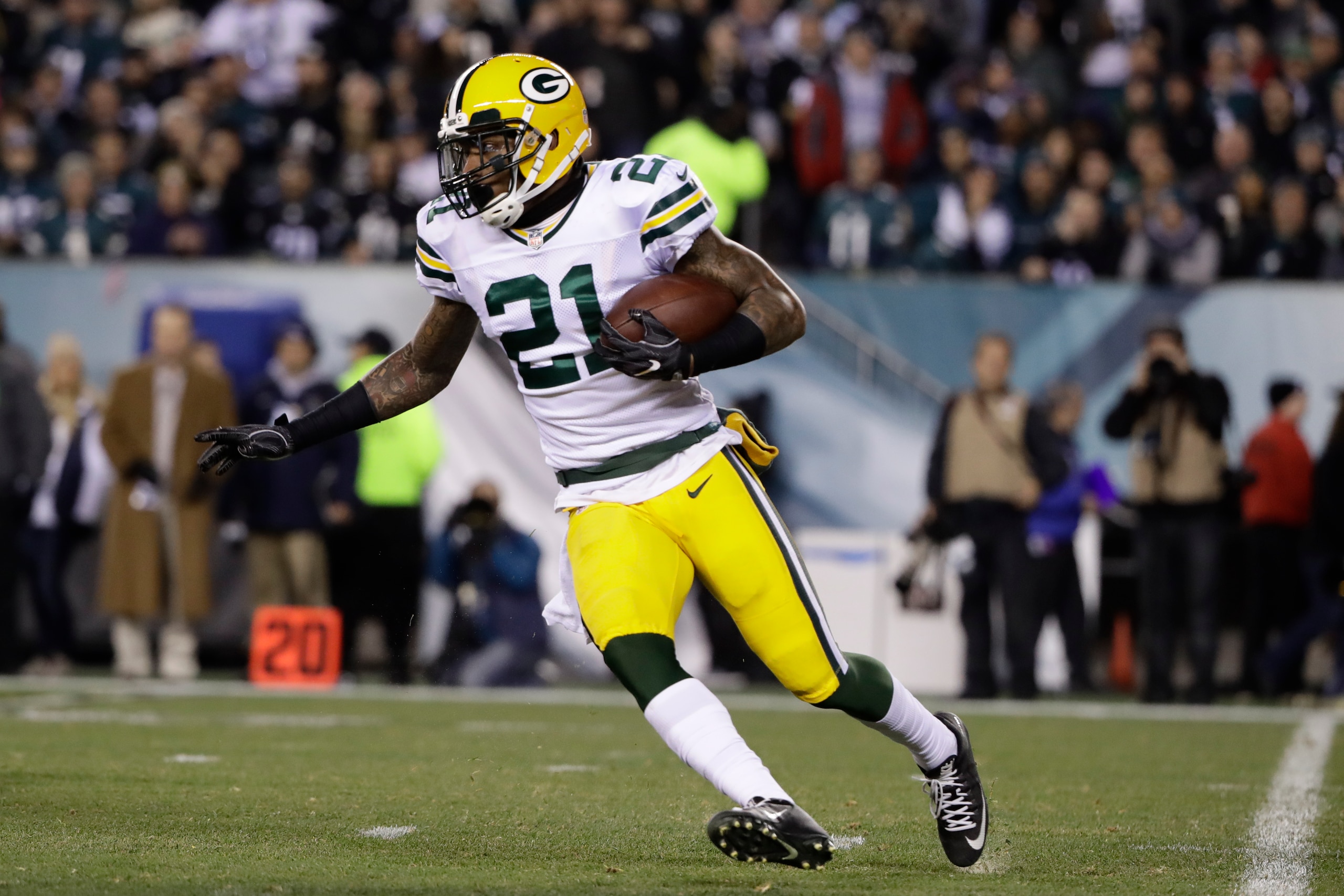
Scheme: Pattern-match Cover 4
Starter: Ha Ha Clinton-Dix
NFL1000 Scores: 74.4/100
NFL1000 Position Rank: 6/50
Clinton-Dix has developed into one of the better free safeties in the league. While he doesn't have the elite range of Earl Thomas or Rodney McLeod, he has solid range and good instincts in coverage. He understands route combinations and how the opposing offense will try to attack certain looks. He is a little passive against the run and rarely plays in the box unless he's being sent on a blitz.
He can get juked out when working down to try to tackle a ball-carrier, which can expose him as a tackler at times. But his game is all about his ability in coverage, which is where he excels. He's a strong last line of defense in coverage, always staying on top of deep shots and taking them away. He ended the year with five interceptions but should have had more after coming close to a couple of others.
Backup: Kentrell Brice
NFL1000 Scores: 69.6/100
NFL1000 Position Rank: 32/50
For an undrafted free agent to play over 300 snaps is a huge bonus to any team. The Packers desperately needed depth in the secondary after injuries at corner forced Micah Hyde to shift to slot corner for the majority of the season. Brice became the primary backup safety, entering the field in dime sub-packages as the second deep safety alongside Clinton-Dix and freeing up Morgan Burnett to play closer to the line of scrimmage as the dime linebacker.
Brice wasn't always spectacular and had some ups and downs, as all rookies do, but he showed potential and tools to work with going forward. He displayed good range when asked to play as the single deep safety, and his instincts as part of a two-deep safety coverage were solid. It'll be worth watching to see how he develops this season.
Team Need: 2/10
Potential Draft Fits: UDFA for competition, but no immediate need
Strong Safety
17 of 19
Scheme: Pattern-match Cover 4
Starter: Morgan Burnett
NFL1000 Scores: 73.9/100
NFL1000 Position Rank: 11/53
While Burnett narrowly missed out on a place in the top 10 strong safeties, he still had an excellent season, and it could be easily argued he deserves to be in that top 10. He does a lot for the Packers, playing strong safety in the base defense, which is fairly complex on its own.
That position within the Packers system could have him playing deep half, a deep quarter, man against a tight end or slot receiver or in the box to defend the run. But on third down and in obvious passing situations, Burnett shifts down to dime linebacker, where he matches up against both tight ends and running backs, plays underneath zones, reads route combinations in pattern-matching and trap schemes, and still has to support the run. There's a lot on his plate, and he does it all to a high level.
Team Need: 5/10
Potential Draft Fits: Jabrill Peppers (Michigan), Budda Baker (Washington), Marcus Maye (Florida), Lorenzo Jerome (St. Francis)
Kicker
18 of 19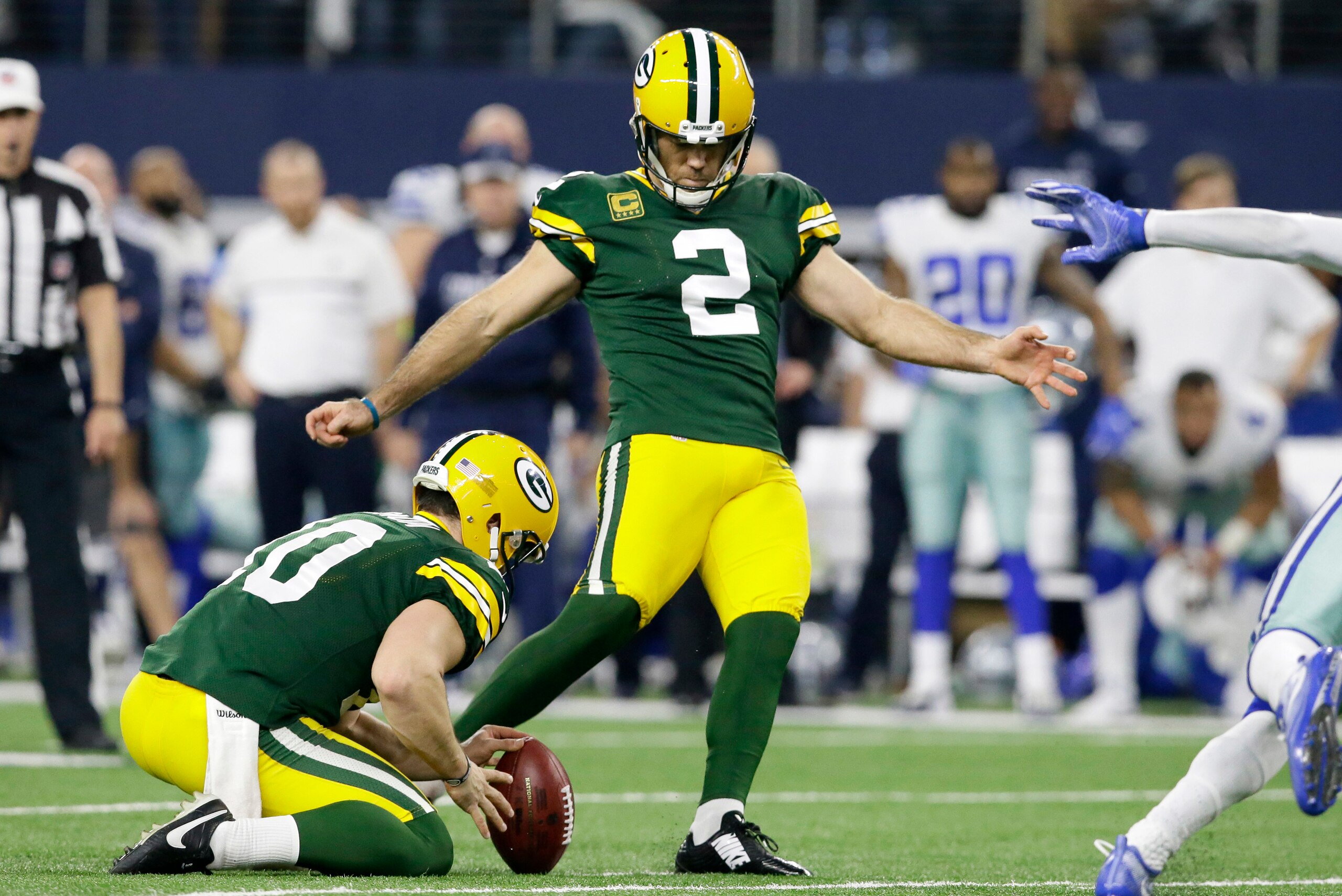
Starter: Mason Crosby
NFL1000 Scores: 67.6/100
NFL1000 Position Rank: 18/38
Crosby's 2016 regular season was an up-and-down battle, with eight games where he graded out higher than 70 and three games where he graded out below 60. All in all, it put him firmly in the middle of the pack, but as Crosby showed in the divisional-round battle against the Dallas Cowboys, he has the pure talent to go toe to toe with the best kickers in the NFL when he is dialed in.
The issue with Crosby has always been whether he can dial into that natural ability on a regular basis. Early in his career, he was one of the most inconsistent kickers in the NFL, but he has been much improved over the past four years, with only one season below 82 percent accuracy on field goals and none below 80 percent. He is the answer for Green Bay for the near future, but the question is whether he can use his playoff performance as a springboard.
Team Need: 2/10
Potential Draft Fits: None
Punter
19 of 19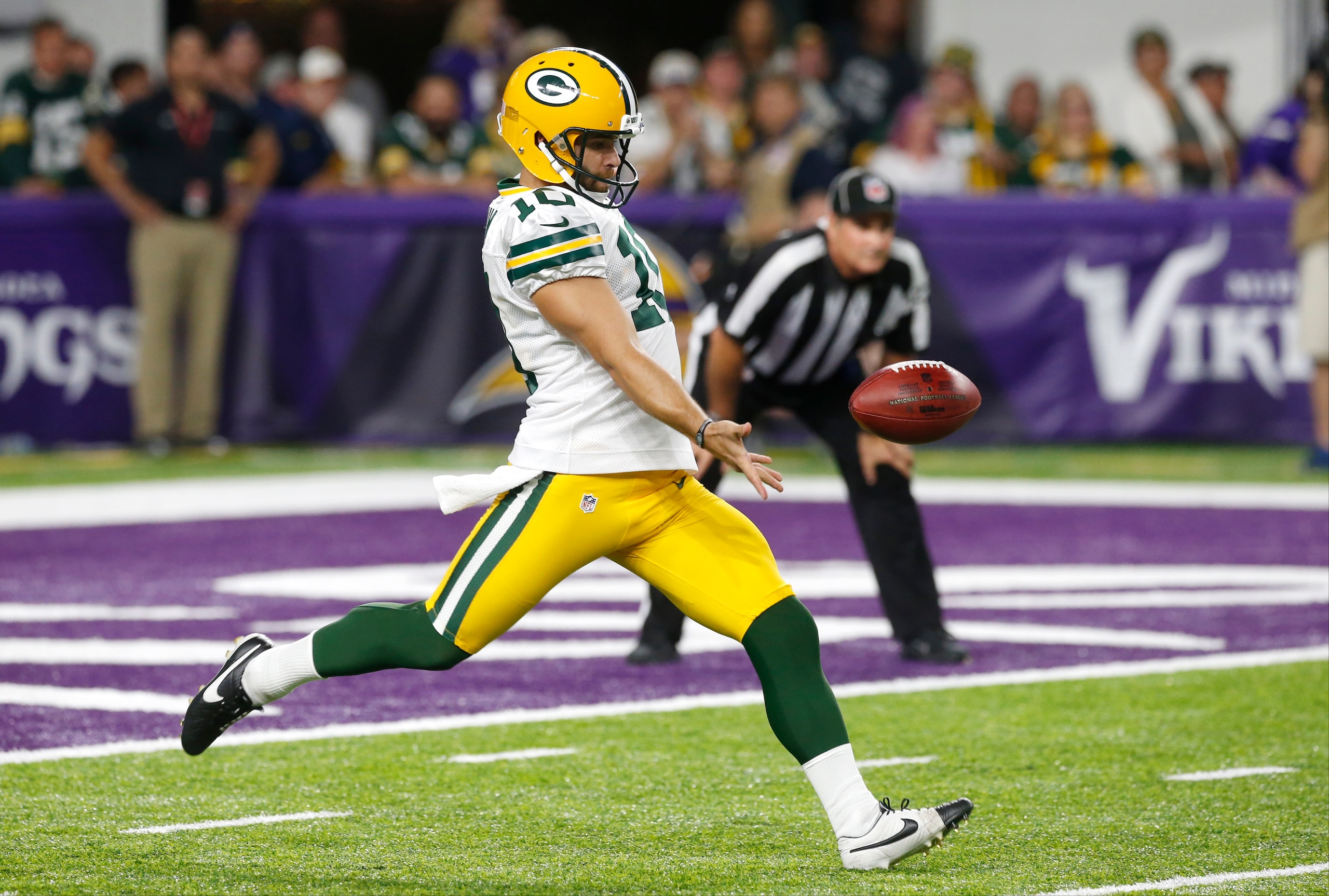
Punter: Jacob Schum
NFL1000 Scores: 64.8/100
NFL1000 Position Rank: 24/38
The Packers moved on from Tim Masthay prior to the 2016 season, replacing him with Jacob Schum. Masthay had been one of the worst-performing punters in the league over the prior two seasons, so Schum was expected to be an upgrade on special teams for Green Bay.
Schum is roughly average from hang-time and directional perspectives, but he is a below-average punter in terms of distance control, especially generating power out of his own end. While Green Bay's offense is typically good enough that it can afford to cut corners in terms of requiring power from its punter, Schum is not the long-term answer at this position for the Packers. It's hard to imagine Green Bay will use a draft pick on a punter, but if it finds a good one in the undrafted ranks, this could be an open competition throughout the summer.
Team Need: 5/10
Potential Draft Fits: Toby Baker, Arkansas
Advanced stats and snap counts via Pro Football Focus.
.jpg?w=2560)
.jpg?w=2560 "Cardinals Giants Football")







