

Warriors, Cavaliers Renew Rivalry with New Looks and New Faces
OAKLAND, Calif. — LeBron James says it's not a rivalry.
Everyone else—from Stephen Curry and Klay Thompson to Tyronn Lue, his own coach—might well disagree.
Regardless of where you fall on this issue of semantics, it's an inarguable certainty that the Golden State Warriors and Cleveland Cavaliers are the league's most dynamic pairing and a near-guarantee every time out to deliver on their innate promise.

They are, without a doubt, the NBA's two best teams. Their showdown at Quickens Loans Arena on Christmas Day had drama to spare and was undecided right down to the final seconds, as the Cavs pulled off a 14-point fourth-quarter comeback to win, 109-108, in their first matchup since Game 7 of the NBA Finals last June.
Now, the two superpowers meet again on Monday night in Oakland. The Warriors (34-6) have the best record in the league. The Cavs (29-10) have the best record in the East.
Something, once again, will have to give.
But to these teams, it's still just one night over the course of a grueling 82-game slog meant to put them into a position to get back to the Finals for a third straight year. In that sense, this game means a lot to the Cavs, who figure to be in a slightly tighter battle for the No. 1 seed in the East compared to their counterparts in the West.
The Warriors, though, have the more compelling case for "The Team That Needs This More," considering their memorable collapses during both the Finals and on Christmas. And if they're victorious, they'll reach the season's midway on pace for exactly 70 wins—not a stated goal for this year's squad, but a sign that preseason concerns about meshing Kevin Durant into their system were, on some level, overblown.
That doesn't mean Golden State isn't still experimenting with how to produce the most capable and efficient offense head coach Steve Kerr can muster. Some variation of the word "experiment" from the lips of Kerr, Curry or Durant has become a common postgame refrain as of late.
In real terms, this has been a 40-game case study on how to best implement perhaps the game's most dynamic two-way player into what was already the most explosive offense of modern times. The result has been astonishing—Durant has played the most efficient ball of his career, while Curry is putting up numbers similar to his MVP year of 2015—but they are still tinkering and fine-tuning.
"I think whether you win or lose this game, you feel the same about yourself as you did coming in," Draymond Green said after Sunday's practice. "It's still, what, Game 41? Still 41 more to go after this."
In a way, that Christmas collapse was a turning point for this Warriors team. It was after that heartbreaking loss that Curry uncharacteristically made some rather pointed statements to the media about his usage and a desire to play more pick-and-roll, especially with Durant.
Since then, it's become a more visible part of Kerr's schemes. When it's done right—when Durant positions himself for the screen and allows Curry room to maneuver and the mismatches fall into place—it's near-unstoppable, a steroidal version of the Curry-Green pick-and-roll that devastated defenses time and again a year ago en route to 73 regular-season wins.
Against the Sacramento Kings last week, it resulted in an easy Durant drive-and-slam.
Against the Miami Heat, Curry was rewarded with an easy three above the arc.
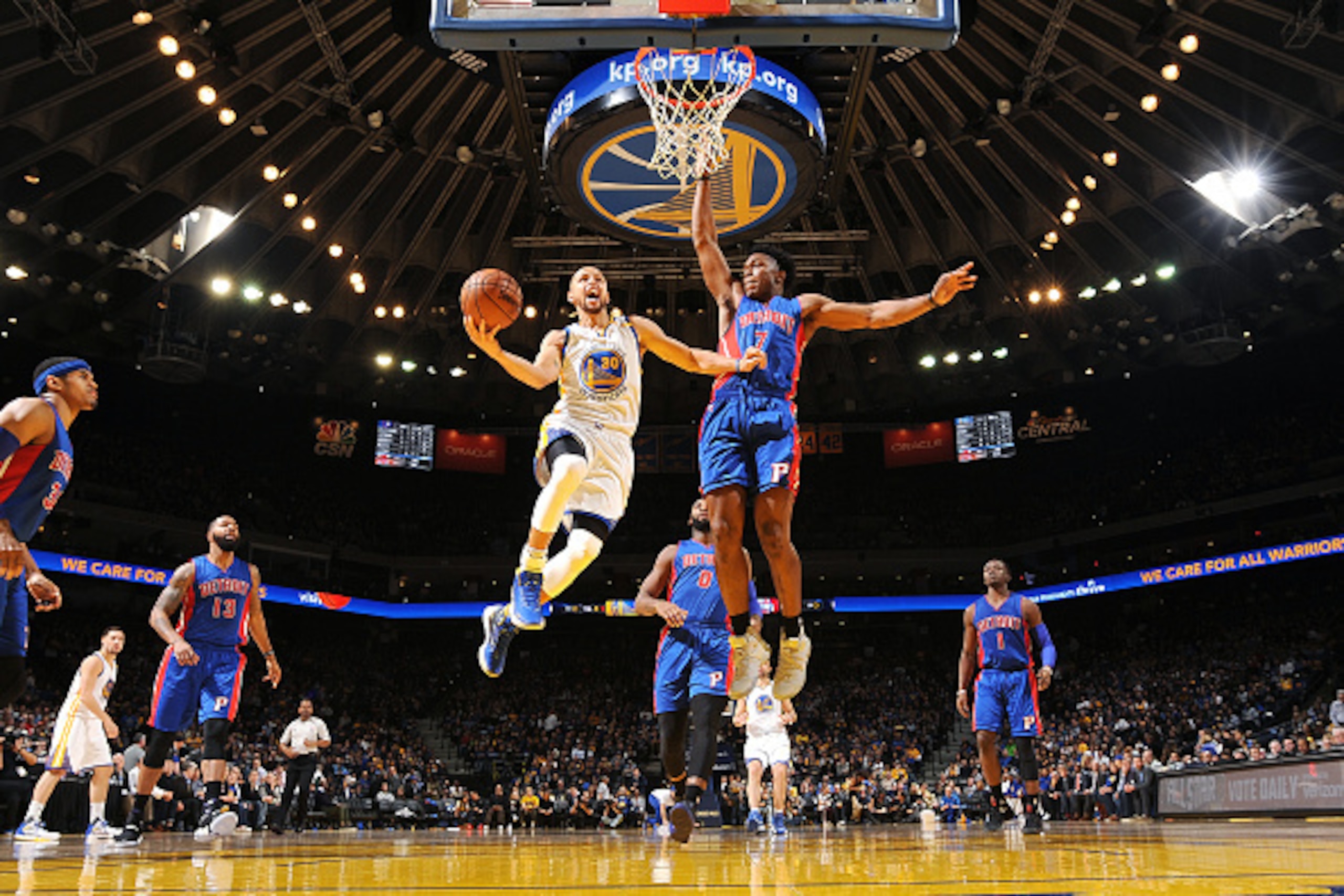
And they can always go back to the 1-3 pick-and-roll with Green as yet another option. With the kind of mobility Curry was lacking in the Finals, he can now blow by defenders and drive to the rim, even in a late-shot clock situation, just as he did against the Detroit Pistons last week.
Golden State's transition game might be where the Warriors (third in the NBA, as they were last season) stand to enjoy the biggest improvement, especially as Durant gets more comfortable.
One play in particular against the Heat conveyed what Warriors management envisioned when it courted him last July: Durant running the break with options to pull up, pass off to Curry, catch Green cutting to the rim or (as in this case) opt for Thompson alone in the weak-side corner. Another easy three for a team that produces plenty of them.
The Cavs, to their credit, can more than hold their own in transition—LeBron, leading all high-use players at 1.37 points per possession in transition, is as automatic as they come—and now they've got a new weapon in their arsenal.
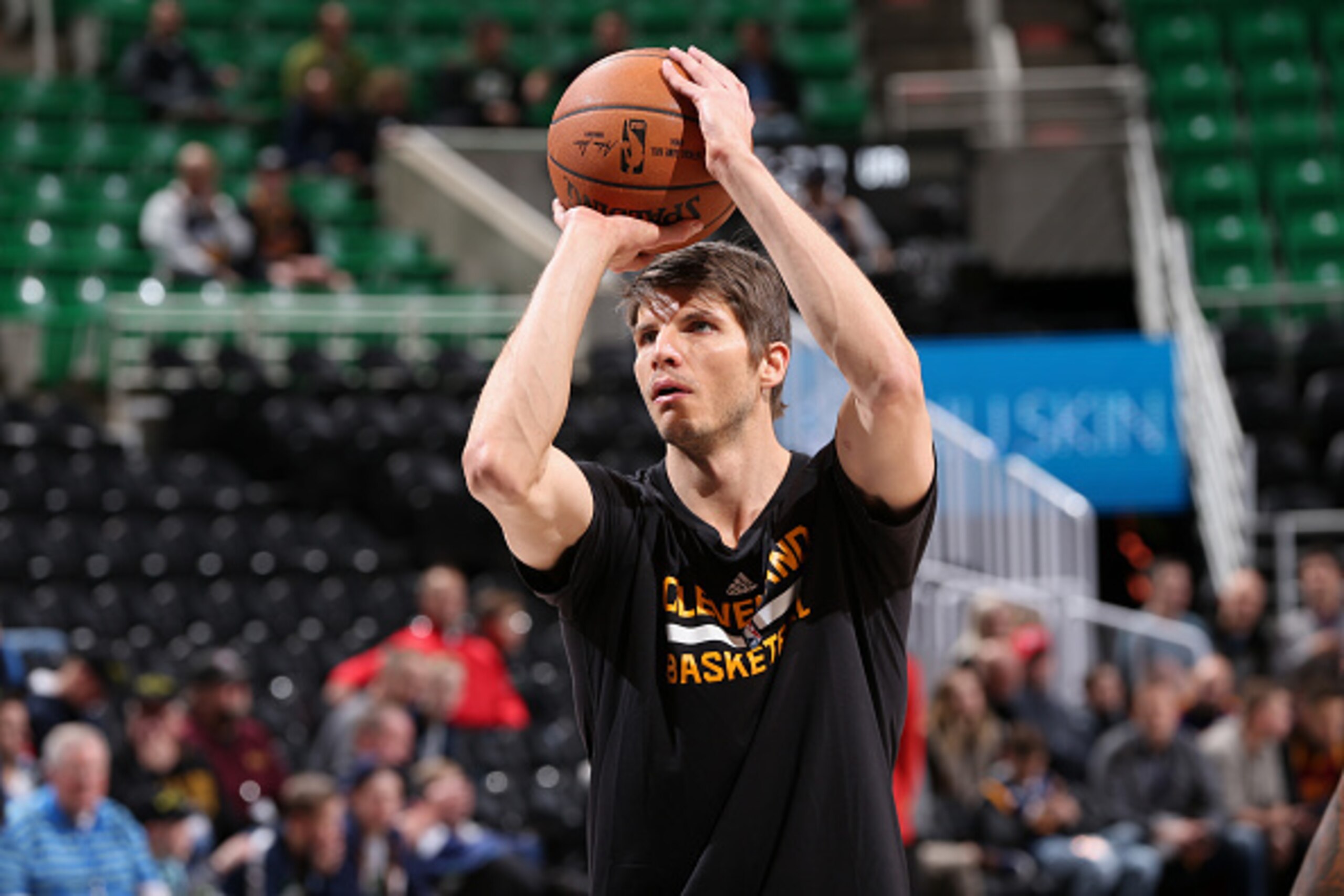
Kyle Korver, acquired from the Atlanta Hawks two weeks after the Christmas Day matchup, figures to only improve a three-point attack form that ranks second in makes, second in attempts and third in three-point percentage, mere fractions of a point ahead of Golden State.
Lue finally got to unleash Korver against the Kings on Saturday night. As the newest Cavalier sank 4-of-6 from long range, it was a reminder of the kind of offensive oomph J.R. Smith (likely out until late March) used to provide off the bench.
If Korver and James can develop the chemistry where James can simply catch him coming off a curl and Korver feels confident enough to pull the trigger, that's yet another threat the Warriors need to account for.
And when those mid-ranges can turn into easy corner threes, the math starts to work in Cleveland's favor.
Kerr expects Lue to use Korver coming off screens, similar to how Atlanta got him involved in the offense. "You have to pay close attention to him because he's a great shooter," said Kerr of Korver, who, in 2010, broke the Warriors' coach's single-season NBA record for best three-point percentage.
Korver doesn't have to set any records on Monday, but any threes would be welcomed, since Cleveland will need to score in bunches to stay with Golden State's historically high-octane offense. And given the Cavs' disinclination to switch on defense, combined with a relatively short bench, they must stay out of foul trouble and be as efficient as possible when handling the ball.
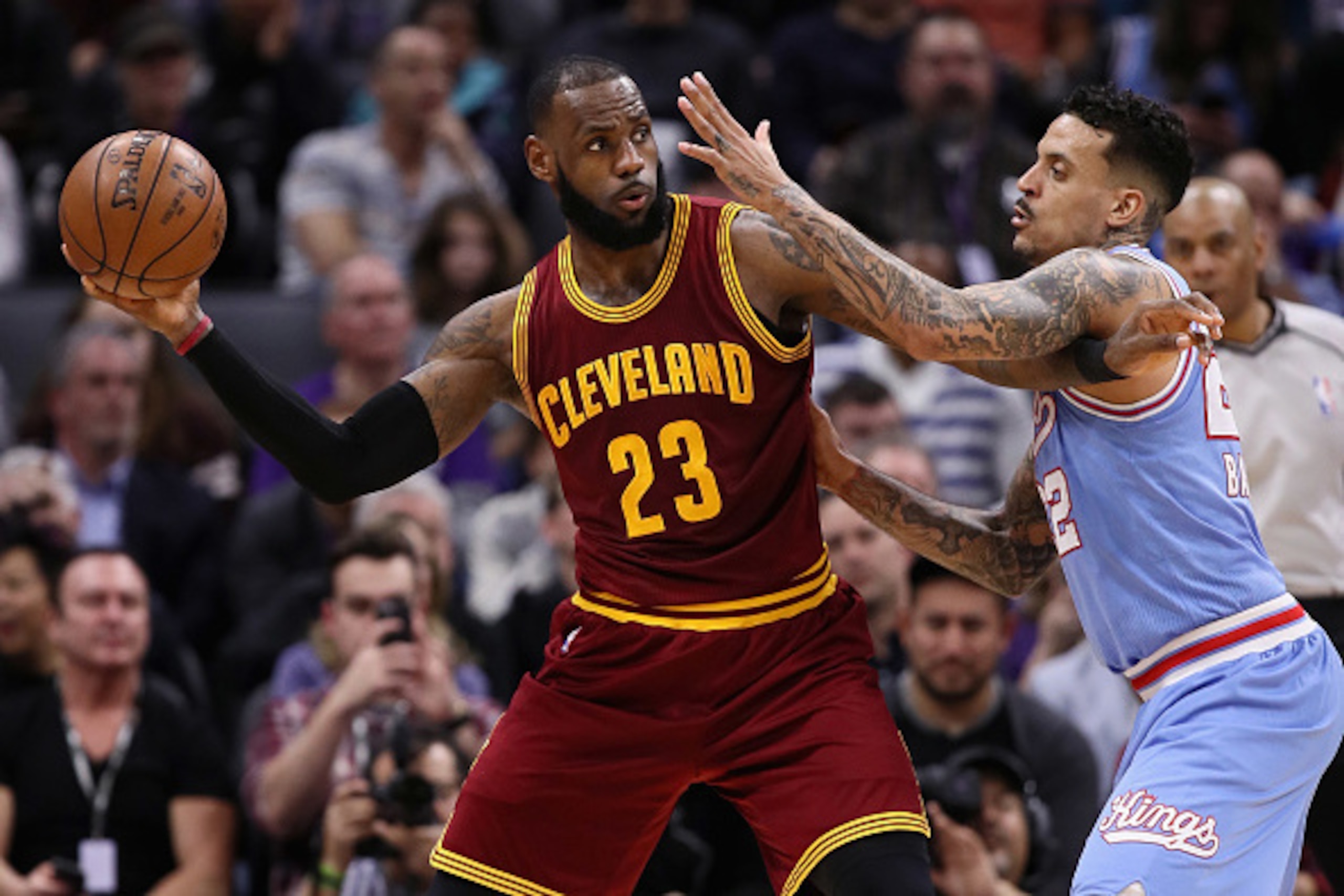
Still, Korver's arrival doesn't figure to give Cleveland any decisive advantages.
Golden State has had three full days of rest heading into the game, which comes at the tail-end of a three-week Bay Area home stand, while the Cavs are wrapping up a six-game road trip that has seen them traverse the entire country, from Brooklyn to Berkeley. As a result, Cleveland is a pedestrian 6-4 over its past 10 games. Korver readily admits he's still scrambling to figure out how to play within Lue's system.
And the Warriors are tied for the best home record in the NBA (18-3).
Throw in the memory of last June's 3-1 collapse still swimming in the darker parts of their minds, and the Warriors are not lacking for any motivation.
The refrain for the past two days from the Warriors' practice facility has been to keep things simple. Kerr, Curry and Durant all stressed, at one time or another, the need to keep things basic and not commit turnovers at critical times.
"For us, when we get in trouble," Curry said Sunday, "as coach would say, we don't have a purpose to what we're doing."
He was describing those bad late-game habits when they play tentatively on their heels and nobody seems to know where they need to be and when. It's what plagued the Warriors in June. It's what plagued them in the fourth quarter on Christmas in Cleveland.
And maybe it doesn't technically matter if it plagues them again Monday night in Oakland—again, this being just one game out of 82—but Golden State would rather put a stop to this kind of play before the games again start to count for something much more.
Erik Malinowski is the Golden State Warriors lead writer for B/R. Quotes are obtained firsthand unless otherwise noted. You can follow him on Twitter at @erikmal. All stats via NBA.com/Stats and are accurate through Jan. 14, 2017.
.jpg?w=2560 "49ers LB Suspended for Headbutt")
.jpg?w=2560 "Buzz: MHJ Hired Agents for Trade")
.jpg?w=2560 "AD Trolls Bears WR on IG 😂")
.jpg?w=2560 "Report: Steelers WR to Miss 'Weeks'")