

Best College Football Players from Every State
Football has had its share of issues in the past few years, but there’s no question it remains our national sport. Even with concerns about concussions, scandals and ratings declines, the gridiron game overtook baseball as our national pastime long ago and shows few signs of relinquishing its status.
Football draws fans in from coast to coast, from Washington to South Beach. It is an all-encompassing obsession from youth ball to the NFL, with many fans spending entire weekends soaking in football. And no version connects with fans on a local and national basis like college football. The college game has teams at all levels across America, and 48 states have either FBS or FCS teams (Alaska and Vermont are the only exceptions).
With the postseason about to kick into gear, it’s an excellent time to find the best player in every state. So that’s what we’re doing. We took a dive into the 2016 season and picked the top player within each state’s borders, using stats and overall value to their team as factors. Check out our picks, divided by geographical region.
Honorable Mention
1 of 8
Texas A&M DE Myles Garrett
Texas A&M had a disappointing end to 2016, but defensive end Myles Garrett remains one of the nation’s best players. The talented pass-rusher was a first-team All-American, per the Associated Press, and was tough for opposing offensive linemen to stop, piling up 8.5 sacks and 15.0 tackles for loss.
Alabama QB Jalen Hurts
It was something of a surprise when Jalen Hurts, a true freshman, emerged as Alabama’s starting quarterback. But he hasn’t looked much like a freshman this season. The Crimson Tide have a keeper. Hurts has played like a veteran, leading an uptempo scheme and making plays in multiple ways. He has thrown for 2,592 yards with 22 touchdowns and nine interceptions and rushed for 841 yards and 12 scores as the Tide’s No. 2 rusher. He’ll be key in the Tide’s pursuit of another national championship.
Stanford RB Christian McCaffrey
After setting the NCAA single-season record for all-purpose yards in 2015, nagging injuries kept Christian McCaffrey from reaching those heights this fall. But he was still pretty darn good. McCaffrey rushed for 1,603 yards and 13 touchdowns and added 37 catches for 310 yards and three scores. He finished the regular season on a high with five consecutive 100-yard rushing games, including a pair of 200-yard games against Cal and Rice.
San Diego State RB Donnel Pumphrey
Donnel Pumphrey has been the “best player you haven’t heard about” for several years. But if you still don’t know the San Diego State senior tailback, you aren’t paying attention. Pumphrey helped carry the Aztecs to another Mountain West title, rushing for 2,018 yards with 16 touchdowns. He also has a chance to break the NCAA’s career rushing record in the Las Vegas Bowl vs. Houston. Not bad, huh?
Atlantic Coast
2 of 8
Delaware
Delaware football has seen better days. The Blue Hens struggled to a 4-7 record this fall, firing coach Dave Brock at midseason and replacing him with Richmond’s Danny Rocco. Rocco will inherit some solid pieces, including linebacker Charles Bell. Bell was all over the field for the Blue Hens, making 94.0 tackles and 11.5 tackles for loss and adding a quarterback sack, an interception and a fumble recovery.
Florida
Was there a bigger Heisman Trophy snub than Dalvin Cook? It’s hard to imagine one. The Florida State junior tailback might not have done enough to win the Heisman, but he should have been invited to New York. Cook was his typical explosive self, rushing for 1,620 yards and 18 touchdowns on the ground and adding 30 catches for 426 yards with a receiving touchdown. Cook was Florida State’s best player and one of the nation’s best overall.
Maryland
Navy made a surprising run to the AAC title game. As usual, the Midshipmen’s flexbone offense played an outsized role. The man who made it go? Senior quarterback Will Worth. Worth was excellent in his only season as a starter, throwing for 1,397 yards with eight touchdowns and three interceptions and serving as Navy’s leading rusher with 1,198 yards and 25 scores on the ground. He’ll miss the rest of the season with a foot injury, but he made a huge impact in his limited time in the spotlight.
North Carolina
North Carolina fell short of a repeat in the ACC Coastal Division, going 8-4, but the Tar Heels had a seamless transition at quarterback with junior Mitch Trubisky. Trubisky was very good as Marquise Williams’ replacement, throwing for 3,468 yards with 28 touchdowns and just four interceptions while adding 270 rushing yards and five touchdowns on the ground. He had three consecutive 400-yard passing games, including a 405-yard effort in the Heels’ 37-35 upset at Florida State.
South Carolina
One year after becoming the first college football player to pass for 4,000 yards and rush for 1,000 in the same year, Clemson quarterback Deshaun Watson’s stats were down slightly. But not much. Entering the College Football Playoff, Watson has thrown for 3,914 yards with 37 touchdowns against 15 interceptions and added 529 rushing yards and six scores on the ground. The Heisman Trophy runner-up is still one of college football’s most exciting players, and he’ll lead the Tigers’ charge for their first national title since 1981. That’s pretty impressive.
Virginia
Justin Fuente brought new ideas and new blood to Virginia Tech, and it’s appropriate that his first recruit led the way. Jerod Evans took over as the Hokies’ quarterback and was very good, throwing for 3,309 yards with 27 touchdowns against seven interceptions. He was also Tech’s leading rusher, going for 759 yards and 10 touchdowns. Tech won the ACC Coastal and pushed Clemson hard in the ACC title game, and the arrow is only pointing up for Evans and his teammates.
Midwest
3 of 8
Illinois
Northwestern slipped in 2016, going from 10-3 to 6-6 and squeezing into a bowl game. But tailback Justin Jackson was very, very good. He rushed for 1,300 yards with 12 touchdowns. And when the Wildcats needed him the most, Jackson was on his game. He rushed for 173 yards and three scores as Northwestern clinched postseason eligibility with a 42-21 rout of Illinois in the regular-season finale.
Indiana
Notre Dame’s 2016 season was a disappointment. The Fighting Irish went from No. 10 nationally to a 4-8 overall record. But quarterback DeShone Kizer was a huge success. After fending off Malik Zaire for the starting role, Kizer flashed dual-threat skills, throwing for 2,925 yards with 26 touchdowns against nine interceptions and adding 472 rushing yards and eight scores. His declaration for the NFL draft will leave a hole in the Irish’s offense.
Iowa
Iowa slipped a bit from 2015’s 12-2 mark, but the Hawkeyes still managed an 8-4 record and an Outback Bowl bid vs. Florida. The Hawks are glad cornerback Desmond King came back for his senior season. The 2015 Jim Thorpe Award winner made 53 tackles, seven pass breakups and two interceptions, earning second-team All-America honors from the Associated Press. He was also a prolific kick and punt returner and a cornerstone of Iowa’s success.
Kansas
Kansas State was a very competitive 8-4 this season, and ageless coach Bill Snyder can credit his defense. That defense was led by senior defensive end Jordan Willis, who was the Big 12 Defensive Player of the Year, per the Associated Press and coaches. Willis is a fearsome pass-rusher who made 11.5 sacks and 16.5 tackles for loss. He was a handful for opposing offensive lines to stop on every down.
Michigan
Michigan wound up just short of the College Football Playoff, but at 10-2, Jim Harbaugh’s second season in Ann Arbor has been a big success. The Wolverines dominated with talented players, none more than redshirt sophomore linebacker Jabrill Peppers. Peppers, a Heisman Trophy finalist, won the Paul Hornung Award, which honors the nation’s most versatile player. He finished with 72 tackles, 16 tackles for loss and four sacks, averaging 14.8 yards per punt return (fourth-best nationally) with a touchdown and adding 167 rushing yards and three touchdowns on 27 carries. He played 933 total snaps and 15 positions for the Wolverines.
After Peppers was named Michigan's MVP, Harbaugh had high praise for him, per Mark Snyder of the Detroit Free Press:
"You all know what he's done for our football team, the many positions that he plays. But the things that we've asked him to do defensively, the things that we've asked him to do offensively, the things we've asked him to do special teams.
It's mind-boggling that he does it all and does it so very well, at the highest level. I consider him the ultimate team player. There are many practices ignited by the way Jabrill Peppers practices. Many games ignited and turned in our favor the way Jabrill Peppers plays. He's honest. I love that about him. He is an honest guy. He will pat a teammate on the back if they deserve to be patted on the back. He will tell them to pick it up if they need to pick it up. He always does it with example and an encouraging word. I can't say enough about him. He will be a tremendous pro football player.
"
Minnesota
Tracy Claeys’ first full season as Minnesota’s head coach was a success. The Gophers finished 8-4 and earned a Holiday Bowl bid. They leaned on a solid running game, led by tailback Rodney Smith. Smith paced Minnesota with 1,084 rushing yards and 15 touchdowns and was a huge factor in a solid season.
Missouri
Barry Odom’s first season at Missouri was frustrating as the Tigers finished 4-8 and out of a bowl game. But he did have several highlights on defense, including senior cornerback Aarion Penton, a first-team All-SEC coaches’ selection. Penton ranked in the top 10 nationally in passes defended and interceptions, defending 17 with five picks. He also had 43 tackles and garnered the most interceptions by a Mizzou player since 2007.
Nebraska
Nebraska went 9-3 and contended for the Big Ten West title until the final weekend, and an improved defense was a huge factor. Senior safety Nathan Gerry was a leader of that defense. Gerry is a hard hitter who was a second-team All-Big Ten selection, per league media. He had 74 tackles and seven tackles for loss and was a factor in pass defense, making four interceptions and having eight pass breakups.
North Dakota
North Dakota State’s dynasty just keeps rolling. The Bison are two wins from their sixth consecutive FCS national title, and even own a win at FBS foe Iowa. It’s a team effort, and senior linebacker MJ Stumpf exemplifies that. Stumpf leads the Bison with 79 tackles and also has 12.0 tackles for loss, 2.5 sacks and two interceptions. NDSU’s opponents know just how good Stumpf is.
Ohio
Ohio State had a 2016 to remember, and it isn’t over yet. A young Buckeyes team went 11-1 and made the College Football Playoff, and will face off against Clemson on New Year’s Eve in the Fiesta Bowl. While the young, talented team gelled quite nicely, veteran leadership from quarterback J.T. Barrett held it together. Finally the unquestioned starter, Barrett threw for 2,428 yards with 24 touchdowns against five interceptions and added 847 rushing yards and nine scores on the ground. He was just what Urban Meyer needed this fall.
Oklahoma
Oklahoma fell just short of the College Football Playoff, but the Sooners had another great season, finishing 10-2 and winning another Big 12 title. The leader of OU’s charge? Quarterback Baker Mayfield. Mayfield threw for 3,669 yards with 38 touchdowns against eight interceptions, forming a powerful partnership with fellow Heisman Trophy finalist Dede Westbrook. Mayfield didn’t take home the stiff-arm trophy this year, but he’ll be a leading candidate in 2017.
South Dakota
South Dakota State has nothing to be ashamed of in 2016. The Jackrabbits fell last week in the FCS quarterfinals, but did so at the hands of North Dakota State, which is on pace for its sixth consecutive national title. Sophomore quarterback Taryn Christion was the 2016 Missouri Valley Football Conference Offensive Player of the Year. He passed for a program-record 3,714 yards with 30 touchdowns. The sky is the limit for Christion.
West Virginia
West Virginia had its best season as a Big 12 member, going 10-2 with an improved defense. The biggest factor? Senior cornerback Rasul Douglas. Douglas’ eight interceptions tied for the national lead, and he added 62 tackles, seven pass breakups, three tackles for loss and a forced fumble.
Wisconsin
Wisconsin was one of the nation’s biggest surprises. Picked for the middle of the Big Ten West, the Badgers went 10-3 and won the West before being edged by Penn State in the league title game. Senior tailback Corey Clement finally lived up to his potential, rushing for 1,304 yards and 14 touchdowns and finishing the season with five consecutive 100-yard rushing games.


_0.png?w=2560)
Mountain West
4 of 8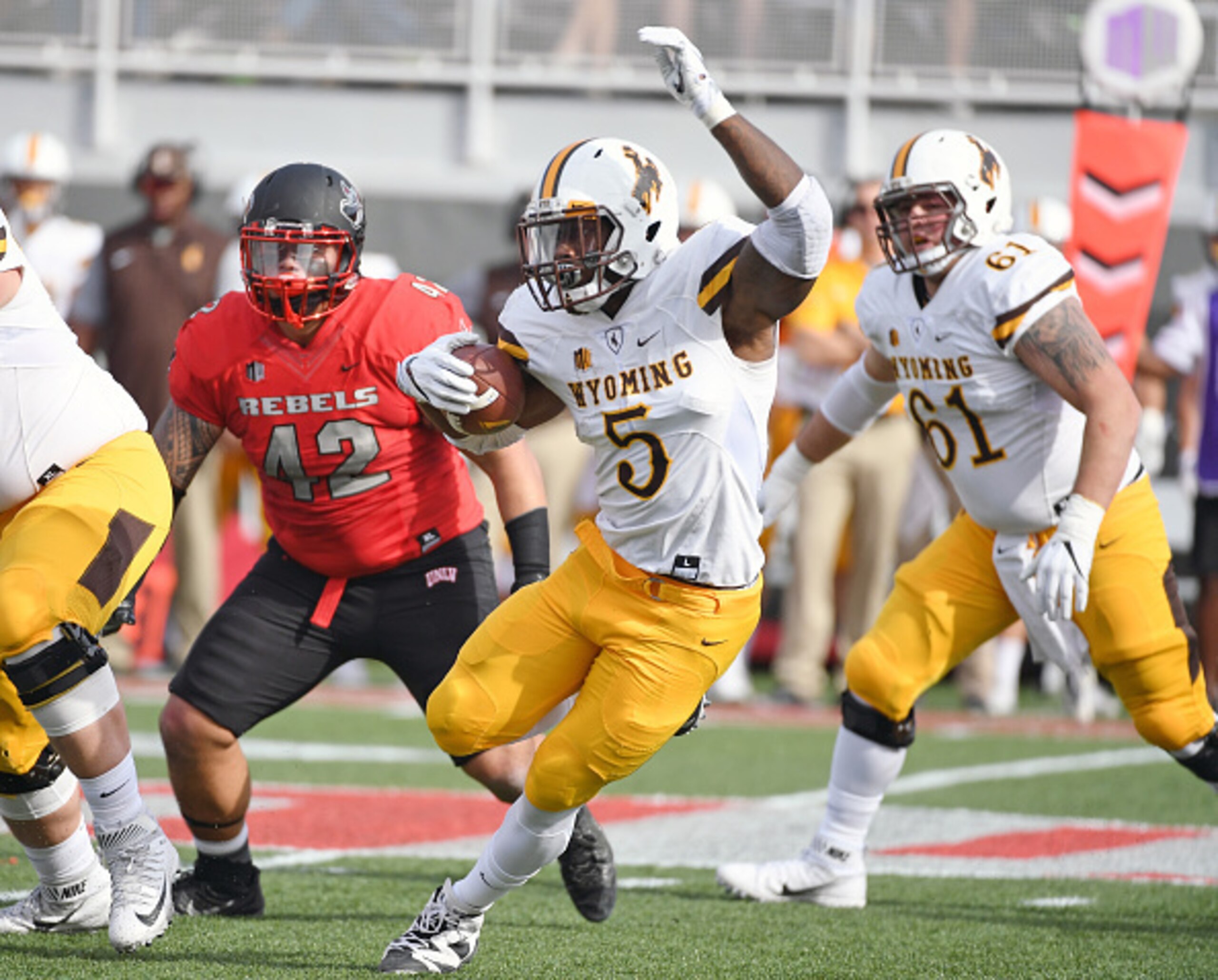
Idaho
Boise State had another excellent 10-win season, although the Broncos fell short of the Mountain West title game. Tailback Jeremy McNichols was outstanding. He rushed for 1,663 yards and 23 touchdowns and was always a big play waiting to happen, even if he flew a little under college football’s radar.
Montana
Montana has a solid football tradition, although the state had some average gridiron play this fall. Montana was the state’s best team at 6-5, and the Grizzlies’ best player was senior defensive end Caleb Kidder. Kidder battled through illness and injury, putting up 11.0 tackles for loss and 5.5 sacks while switching from defensive tackle.
Utah
Utah put together another solid 8-4 season, staying in contention for a Pac-12 title until the final two weeks of the season. The Utes couldn’t have done it without tailback Joe Williams. The senior “retired" for four games but returned as one of the nation’s most productive backs, rushing for 1,185 yards and nine touchdowns. His 332-yard, four-touchdown effort against UCLA was one of the best games for any college tailback this season.
Wyoming
Craig Bohl led a renaissance in Laramie this fall, leading Wyoming to an 8-5 record and the Mountain West title game. A key part of that turnaround? Tailback Brian Hill. The workhorse back carried 321 times for 1,767 yards and 21 touchdowns, rolling up nine 100-yard games. He was Wyoming’s clear MVP and an offensive centerpiece.
Northeast
5 of 8
Connecticut
Following a bowl appearance in 2015, UConn slipped badly this fall, regressing to 3-9. However, receiver Noel Thomas was a standout. He had his best season as a senior, making 100 catches for 1,179 yards and three touchdowns. Despite the dark season in Storrs, Thomas shined as one of the AAC’s top receivers.
Maine
Maine operates out of the football spotlight, but players like Micah Wright are exciting to watch. The sophomore receiver was a first-team All-CAA selection, making 44 catches for 688 yards with seven touchdowns. He also led the CAA in punt return average, averaging 11.1 yards per return with a 67-yard score against William and Mary.
Massachusetts
Boston College was much improved this season, recovering from a disastrous 3-9 record to claw out a 6-6 mark and a trip to the Quick Lane Bowl against Maryland. Steve Addazio can thank his defense, which leads the ACC and is No. 8 nationally with 310.6 yards allowed per game. The star of that unit? Junior defensive end Harold Landry. Landry was a pass-rush terror with 15.0 sacks (tied for the national lead) and 20.5 tackles for loss. He is a second-team All-American, per the Associated Press and Walter Camp, and is clearly the commonwealth’s best player.
New Jersey
Suggesting Chris Ash’s first season as Rutgers head coach was rough is an understatement. The Scarlet Knights finished 2-10 and were outscored by Michigan, Michigan State, Penn State and Ohio State by a combined 224-0, losing their final nine games. They had no first-, second- or third-team All-Big Ten selections by coaches or media. Sophomore Blessuan Austin gave Ash something to build on. The honorable-mention media selection had 41 tackles, 14 pass breakups, a sack and a fumble recovery. Hey, it’s a start, right?
New York
Dino Babers gave Syracuse a jolt of energy with his fast-paced offensive scheme, and in doing so he uncovered a gem in receiver Amba Etta-Tawo. The Maryland graduate transfer had a breakout season as a senior, catching 94 passes for 1,482 yards and 14 touchdowns. He was a perfect fit for Babers’ offense. The only regret is that they didn’t pair up sooner.
Pennsylvania
Penn State enjoyed a return to football glory in 2016, riding to an improbable Big Ten championship. While quarterback Trace McSorley played a big role, the engine of the offense was tailback Saquon Barkley. Barkley was consistently solid for the Nittany Lions, building on a good freshman season and rushing for 1,302 yards with 16 touchdowns. He had four 100-yard rushing games and a pair of 200-yard games and rushed with power and speed as one of the nation’s top tailbacks.
Rhode Island
Rhode Island had a miserable year, finishing 2-9, but junior tailback Harold Cooper was worth watching. The versatile back made his mark as a kick returner, averaging 25.3 yards per return and returning a pair of kicks for scores (98 and 99 yards). He also led the Rams with 512 rushing yards and three touchdowns.
New Hampshire
New Hampshire had a solid season, once again making the FCS playoffs. The Wildcats were keyed by senior cornerback Casey DeAndrade, a first-team All-CAA selection for the third consecutive season. He had 57 tackles, nine pass breakups and two interceptions and also served as UNH’s kick and punt returner, making third-team All-CAA as a punt returner while averaging 7.3 yards per return.
Pacific Coast
6 of 8
California
California is loaded with talented players, but it’s hard to pick against Southern California cornerback Adoree’ Jackson as its best player. Jackson is one of the nation’s most versatile all-around players, a consensus All-American and the winner of the Jim Thorpe Award, given to the nation’s top defensive back. He was the Pac-12 Defensive Player of the Year and a first-team All-Pac 12 pick as a corner and return specialist. He made 51 tackles, 11 pass breakups and four interceptions while returning two kicks for a touchdown and catching a 52-yard score as a receiver. He’s all-around impressive.
Hawaii
Hawaii had a turnaround season under new coach Nick Rolovich, going 6-7 and making the hometown Hawaii Bowl. A big factor? Receiver Marcus Kemp. Kemp made 70 catches for 1,036 yards and seven touchdowns, ranking fourth in the Mountain West while averaging 5.4 receptions per game.
Oregon
Let’s face facts. It wasn’t a great season for college football in Oregon. Oregon slipped to 4-8, and coach Mark Helfrich was fired after the Ducks allowed 41.4 points per game, No. 124 nationally. But there were bright spots, like linebacker Troy Dye. The freshman was Oregon’s defensive MVP after making a team-leading 91.0 tackles, 13.0 tackles for loss and 6.5 sacks. He’s a major building block for new coach Willie Taggart.
Washington
Washington went from 7-6 to the College Football Playoff against Alabama, an impressive rise. There are many reasons why, but the play of sophomore quarterback Jake Browning has been vital. He followed a good freshman season (2,955 yards, 16 touchdowns, 10 interceptions) with an excellent 2016. He has thrown for 3,280 yards with 42 touchdowns against seven interceptions, including a pair of six-touchdown games against Cal and Oregon. Browning has been one of the nation’s top quarterbacks and best players.
Southeast
7 of 8
Alabama
Last winter, Alabama defensive end Jonathan Allen passed on a likely early-round NFL draft selection to return to Tuscaloosa and improve his draft stock while chasing another national title. Smart move. The senior defensive end has emerged as one of the nation’s best pass-rushers and one of its best players overall. Allen mixes power and speed and has 56.0 tackles, 13.0 tackles for loss and 8.5 sacks for the No. 1 Crimson Tide, the favorite to win the College Football Playoff.
Arkansas
Entering 2016, Arkansas needed a talented tailback to step forward after a pair of 1,000-yard rushers left for the NFL. Bret Bielema’s offense found it in Rawleigh Williams III. One year after his season ended due to a scary neck injury, Williams was a workhorse in the Razorback backfield, rushing for 1,326 yards with 12 touchdowns, including seven 100-yard rushing efforts.
Georgia
After a highly disappointing 3-9 season in 2015, Georgia Tech needed a better effort from senior quarterback Justin Thomas this fall. The Yellow Jackets finished 8-4, and Thomas’ improvement was a major storyline. He threw for 1,454 yards with eight touchdowns against two interceptions and added 562 yards and five scores on the ground. He ran the flexbone option well, and the Jackets thrived.
Kentucky
Entering 2016, Lamar Jackson was pegged as one of college football’s biggest breakout candidates. He broke out, and then some. Jackson emerged as the game’s most exciting player on an every-down basis. He threw for 3,390 yards with 30 touchdowns against nine interceptions and was also Louisville’s leading rusher with 1,538 yards and 21 touchdowns. His Heisman Trophy win was well-deserved. Now what will the sophomore do for an encore?
Louisiana
Following the end of the regular season, LSU lost Leonard Fournette, as expected, to the NFL draft. But the Tigers won’t miss the powerful tailback that much next fall. Fournette missed five games with leg injuries, and Derrius Guice took advantage, authoring a breakout season. Guice rushed for 1,249 yards and 14 touchdowns, including an amazing 285-yard, four-touchdown gashing of Texas A&M in the regular-season finale. He’ll be a key building block for Ed Orgeron’s first full season in Baton Rouge.
Mississippi
It was a lost season for Ole Miss. The Rebels slipped from 10-3 to 5-7 and missed a bowl game, with star quarterback Chad Kelly’s year ending prematurely due to a torn ACL. But tight end Evan Engram was a shining light. He was one of the nation’s top tight ends, catching 65 passes for 926 yards and eight touchdowns. His NFL stock is only rising, as a tight end or a receiver.
Tennessee
Tennessee’s 2016 became one of college football’s biggest letdowns. Following a 5-0 start, the Volunteers faded down the stretch to an 8-4 record and wound up in the Music City Bowl. Ouch. You can’t blame junior defensive end Derek Barnett, though. Barnett was exceptional, piling up 50 tackles, 18 tackles for loss, 12 sacks (which leads the SEC), three pass breakups and two forced fumbles. It would be a surprise if he returned for his final season of college football at this rate.
Southwest
8 of 8
Arizona
It was a down year for football in Arizona. Arizona and Arizona State combined to finish 8-17, and neither made a bowl game. How bad was it? The state’s best player is a kicker. Arizona State’s Zane Gonzalez is a consensus All-American and the winner of the Lou Groza Award, given to college football’s top kicker. He made 14 field goals from 40-plus yards, and seven of nine from 50-plus, the second-most ever by an FBS kicker.
Colorado
Colorado broke through in 2016 under Mike MacIntyre, finishing 10-2 and making the Pac-12 title game. The Buffaloes’ exceptional defense led the way, and senior safety Tedric Thompson was a rock. His seven interceptions tied for third-most in the FBS, and he had 18 pass breakups while defending 25 passes. In the pass-happy Pac-12, those are very good numbers.
Nevada
Nevada suffered through a down season, going 5-7, which led to the departure of coach Brian Polian. But you can’t blame tailback James Butler. Butler was one of the Mountain West Conference’s best all-around players, averaging 143.1 yards per game from scrimmage. He rushed for 1,336 yards and added 381 yards on 37 receptions. He finished with 15 total touchdowns and made impacts all over the field.
New Mexico
Bob Davie is doing nice work at New Mexico. The former Notre Dame coach has the Lobos bowl-eligible again at 8-4 and has done so with a powerful run offense. The leader? Senior Teriyon Gipson. He finished as New Mexico’s leading rusher, rushing for 1,209 yards and 12 scores despite missing two games with injury. He had six 100-yard games and a 217-yard effort against Wyoming in the regular-season finale.
Texas
Texas is a noted hotbed for football at all levels, with rival college recruiters making a home in the Lone Star State to plumb its ample talent base. Charlie Strong’s third season at Texas, the state’s premier program, was one he’ll never forget: The Longhorns finished 5-7 and Strong was fired, replaced by Houston’s Tom Herman. But tailback D’Onta Foreman did all he could to keep Strong employed. He had an incredible junior season, rushing for 2,028 yards and 15 touchdowns and winning the Doak Walker Award as the nation’s top back. Alas, Foreman is gone, too. He declared for the NFL draft following Herman’s hiring.

.jpg?w=2560 "NFL investigating 2 referees for separate viral exchanges")
.jpg?w=2560 "Report: Chiefs Contact Hill's Agent")
.jpg?w=2560 "OBJ Calls Out Giants After Release")
.jpg?w=2560 "Tyreek makes another cryptic post amid Chiefs rumors")

.jpg?w=2560 "Greenlaw Talks Payton Exchange")
