

Biggest Flight Risks of the 2017 NBA Restricted Free-Agent Class
Flight risks are not a staple of NBA restricted free agency.
Fourth-year extensions limit the pool of available talent, and incumbent teams have the right to match any offer for those who reach the semi-open market. Anyone with supreme value more often than not stays put, while those who leave are normally fringe fliers who don't incite strong reactions.
A new salary-cap era has changed things, though, even if only slightly.
Contract demands are relative to a booming climate, but it's more expensive to retain talent. Surprise maxes and back-loaded deals (see: Miami Heat matching Tyler Johnson last summer) loom large, forcing teams to make tough decisions.
Those who enter restricted free agency are almost fair game by default.
Certain players are still locks to stick with their current teams, even after failing to procure an extension. But the field of maybes, patented flight risks, virtual goners and everything in between is tastier than ever.
Let's find out where the biggest names of the 2017 restricted-free-agency class—apologies to the Aaron Harrisons and Nicolas Laprovittolas of this summer—land on that scale.
Refresher on Signed Extensions (Guaranteed Money)
1 of 7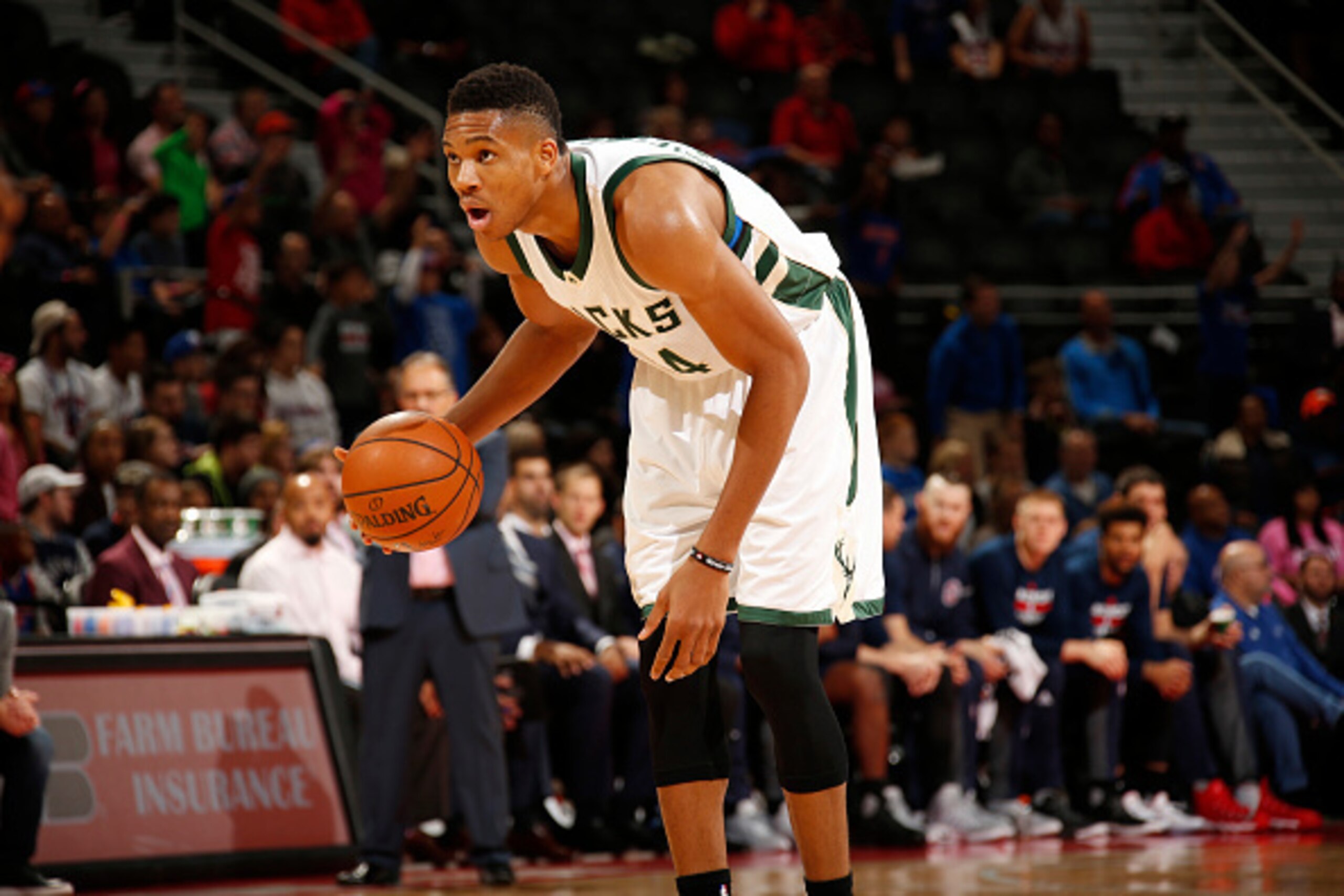
Steven Adams, Oklahoma City Thunder: Four years, $100 million
Giannis Antetokounmpo, Milwaukee Bucks: Four years, $100 million
Gorgui Dieng, Minnesota Timberwolves: Four years, $62.8 million
Rudy Gobert, Utah Jazz: Four years, $94 million
C.J. McCollum, Portland Trail Blazers: Four years, $106.6 million
Victor Oladipo, Oklahoma City Thunder: Four years, $84 million
Dennis Schroder, Atlanta Hawks: Four years, $62 million
Cody Zeller, Charlotte Hornets: Four years, $55.6 million
Definitely Not Going Anywhere
2 of 7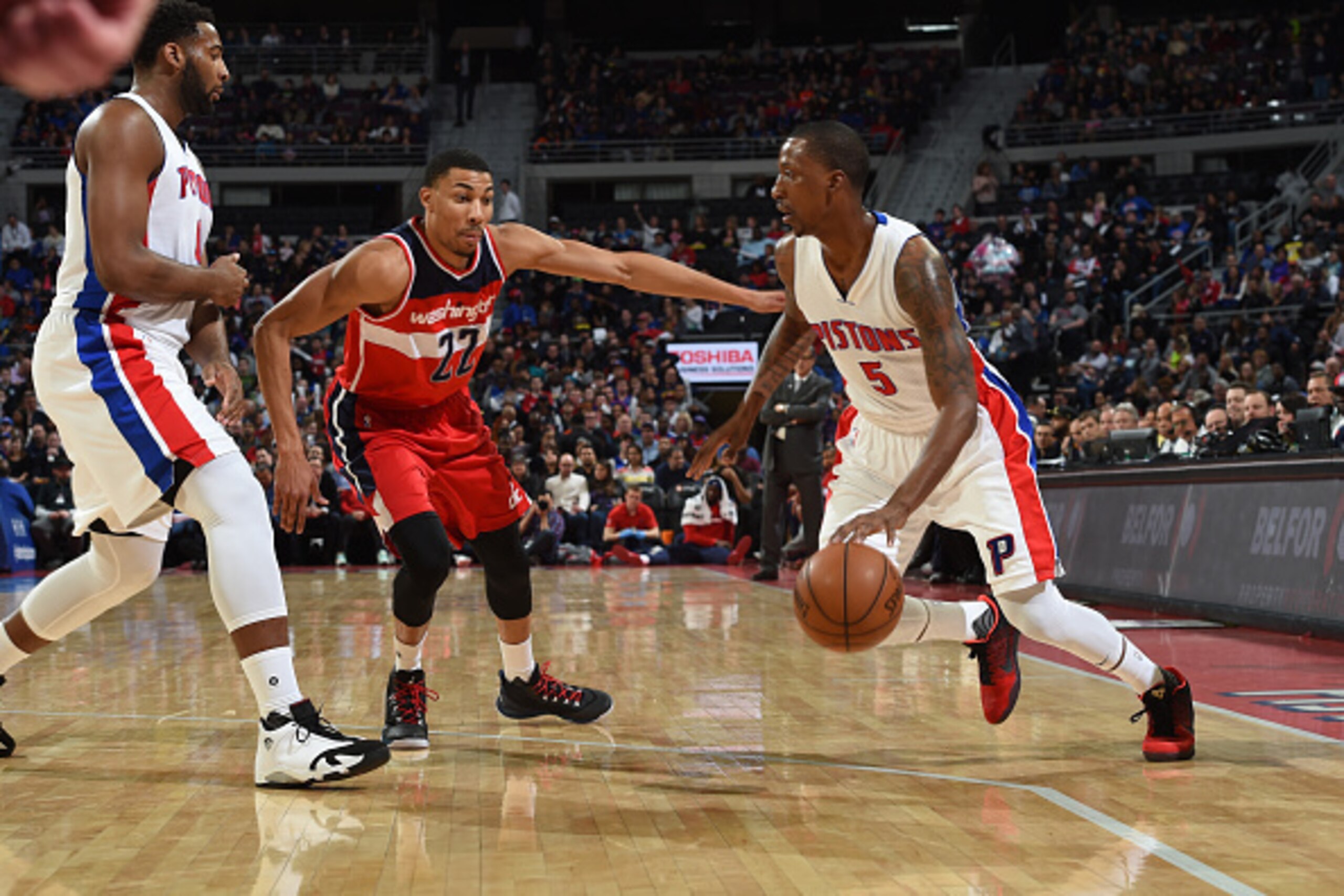
Kentavious Caldwell-Pope, Detroit Pistons
Kentavious Caldwell-Pope was never going to sign an extension with the Detroit Pistons. He was looking for more than $20 million annually, according to the Detroit Free Press' Vince Ellis, and the Pistons had no incentive to increase his cap hit before this summer if they weren't getting a discount.
Detroit won't have much, if any, cap space. But Caldwell-Pope's hit will be around $9.2 million until he signs a new deal—a big difference from $20 million-plus. The Pistons can still match any offer he receives and, in the interim, will have a slightly easier path to more spending power.
Caldwell-Pope is too important to Detroit's defensive schemes and has improved his three-point accuracy a great deal.
"He's the guy that leads our defense," head coach Stan Van Gundy said, per MLive.com's Aaron McMann. "He's the guy who is our consistently high-energy player."
There's no way the Pistons will let him walk when they have the power to keep him, without compensation.
Nikola Mirotic, Chicago Bulls
Nikola Mirotic's sub-30-percent three-point clip isn't doing his formality status any favors. But he's one of the few theoretical floor-spacers the Chicago Bulls employ—Dwyane Wade's unsustainable 42.9 percent rate notwithstanding.
Taj Gibson will be an unrestricted free agent, and Cristiano Felicio is slated to join Mirotic in restricted free agency.
The Bulls are high on Bobby Portis, and Doug McDermott can play some 4, but they don't have nearly enough depth to justify cutting Mirotic's soon-to-be costly cord.
Otto Porter, Washington Wizards
Otto Porter finds himself in the same situation as Caldwell-Pope: If the price was right, the Washington Wizards would have extended him. But it wasn't, per CSN Mid-Atlantic's J. Michael, so the team is keeping its options open.
Not that the Wizards have many choices; Barring a midseason trade, they are going to re-sign Porter. His three-point percentage is in the toilet, his defensive effort wavers and Kelly Oubre Jr. might be the long-term solution at the 3 if he ever learns how to defend, but Washington can't just cut bait with a top-three prospect.
Porter also shouldn't be nearly as expensive to retain as Bradley Beal (five years, $127.2 million). His cap hold will be $12 million until he pens a new contract, which gives Washington some breathing room to try to flesh out the rest of its roster.
We're Half-Sure They'll Be Back
3 of 7
Tim Hardaway Jr., Atlanta Hawks
Tim Hardaway Jr. hasn't been an above-average three-point shooter since he was a rookie. He is not a dangerous passer on the move.
He has been great for the Atlanta Hawks defensively this season, but that's a first.
The idea of Hardaway as a three-and-D weapon, though, lives on. Some team, amid another cap spike, will pay him for his defensive improvement alone. With both Kyle Korver and Thabo Sefolosha over 30 and ticketed for free agency, Atlanta will most likely be that team.
Bojan Bogdanovic, Brooklyn Nets
At 27, Bojan Bogdanovic doesn't factor into the Brooklyn Nets' big-picture plan, and the notion of investing substantial money in his short-term future isn't particularly appealing, either.
But is the new, ever-resourceful, asset-seeking Nets regime about to dump a proven scorer who's beginning to play harder on defense for nothing? Nope.
Bogdanovic will meander in and out of trade rumors, right beside Brook Lopez, up until the deadline. If the Nets don't move him, it's a safe bet they'll bring him back and figure the rest out later.
Cristiano Felicio, Chicago Bulls
Cristiano Felicio still doesn't see a ton of playing time in Chicago, but he gets more minutes than Portis. Unless the Bulls are smitten by an indefinite Robin Lopez-Portis combination, they'll pay to keep Felicio's defensive intensity and quasi-floor spacing.
After all, Felicio figures to be cheaper to re-sign than Taj Gibson.
James McAdoo, Golden State Warriors
Andre Iguodala and/or Shaun Livingston, both unrestricted free agents, could become cap casualties in the Golden State Warriors' post-Kevin Durant signing era. James Michael McAdoois is no different.
Bit-part players who won't tip the financial scales one way or the other should technically be fine, and head coach Steve Kerr's random soft spot for McAdoo has to help. But the Warriors must account for Stephen Curry's max deal, in addition to a slight bump for Durant (player option), so any sizable offer thrown McAdoo's way could price him out of blue and gold.


We Have No Idea, It Could Go Either Way
4 of 7
Reggie Bullock, Detroit Pistons
"I don't look at it as a necessity, but we would like to get something done. We like both guys; we'd like to have them around long-term. But it has to be something obviously that works for both sides." That was Van Gundy, once again per McMann, riffing on the futures of Reggie Bullock and Caldwell-Pope prior to the extension deadline.
Yes, the Pistons apparently value Bullock as a long-term piece. Who knew?
Bullock did shoot better than 40 percent from three last season, but he has fewer minutes to his career resume than sophomore teammate Stanley Johnson. He has yet to make a cameo in 2016-17 due to back spasms, and there's no clear path to additional playing time with Marcus Morris, Caldwell-Pope and Johnson in the fold.
Van Gundy values shooters, and the Pistons still don't rank in the top half of three-point marksmanship. With little cap flexibility in the coming years, it's easy to see them paying Bullock rotation-player money to be an emergency spacer.
And yet, the Pistons' payroll will soar past $115 million next season if they retain Caldwell-Pope—dangerously high territory for a mid-end playoff squad. It feels equally likely that Bullock's shooting in 2015-16 will earn him an offer sheet Detroit elects not to match.
Trey Burke, Washington Wizards
Trey Burke hasn't found an NBA niche—an ever-present peril for undersized point guards who don't shoot first, pass later. He flamed out of the Utah Jazz's plans and will never see consistent burn in Washington as John Wall's backup.
Will Burke simply sign his $4.6 million qualifying offer if the Wizards extend it? Should he test the restricted free-agency waters? Is there an offer Washington would match to keep him? Will the team decline his qualifying offer and let him become an unrestricted free agent?
Everything is in play. Short of Burke returning on that qualifying offer, his stay with the Wizards feels temporary. But we can't be remotely sure.
Michael Carter-Williams, Chicago Bulls
Michael Carter-Williams is long and quick, lending merit to the hope that he may one day become a plus on both ends of the floor. And the Bulls, as luck would have it, don't have their point guard of the future on the roster.
Rajon Rondo is an offensive wash and has a non-guaranteed salary for 2017-18. Neither Jerian Grant nor Isaiah Canaan is about to win a permanent job.
Chicago will give Carter-Williams an opportunity to hammer out a role beyond 2016-17 once he returns from a bruised left knee and sprained left wrist. Until then, assuming his market isn't flush with surprise max-offer sheets in July, it's tough to say how his restricted free agency will shake out.
Joe Ingles, Utah Jazz
Why wouldn't the Utah Jazz hold on to an above-average three-point sniper who plays his butt off on the defensive end? Dollars and cents, that's why.
Gordon Hayward (player option) and George Hill are headed for free agency. Dante Exum and Rodney Hood will be extension-eligible. Derrick Favors is booked for free agency in 2018 but could pen an extension before then. Rudy Gobert recently inked a nine-figure deal.
Utah's nucleus is about to get real expensive, real quick. And while that doesn't mean Ingles will prove too costly, his future with the Jazz hinges on the (projected) price of those around him.
If You Don't Need or Want 'Em, Set 'Em Free
5 of 7
Joffrey Lauvergne, Oklahoma City Thunder
Joffrey Lauvergne, formerly of the Denver Nuggets, was a sneaky-good pickup for the Oklahoma City Thunder. He is big, has long-two range and protects the rim like an imposing-but-lead-footed Steven Adams.
But the Thunder just gave Adams, who plays Lauvergne's best position, a $100 million extension. Between him and Enes Kanter, they have $40.4 million committed to next year's center rotation.
Paying what it will cost to keep Lauvergne would be overkill—especially with rookie Domantas Sabonis soaking up time at the 5.
Bet on Oklahoma City turning Lauvergne loose unless it opts to dump Kanter.
Alex Len, Phoenix Suns
Rule of thumb dictates that you don't send a top-five pick packing out of his rookie-scale deal. Alex Len's case with the the Phoenix Suns is special, though.
Phoenix's most-used lineups feature four shooters or a bouncy Marquese Chriss at the 4. Len is left to jostle for minutes at the 5 with Dragan Bender and Tyson Chandler, but he doesn't have Bender's shooting or Chriss' defensive pop and won't survive at power forward.
The Suns must choose between Chandler and Len if they're going to maintain their current style of play. Len is more than 10 years Chandler's junior but could end up costing more per year. Even if he's cheaper and the Suns send Chandler elsewhere, Len will only be warming a 5-spot that eventually gets passed on to Bender.
Nerlens Noel, Philadelphia 76ers
Nerlens Noel won't get the chance to reach restricted free agency as a member of the Philadelphia 76ers if the front office is smart.
Sources categorized him to ESPN.com's Marc Stein as "very available" in trade talks, which is no surprise. The Sixers have a glut of bigs in the Joel Embiid-Jahlil-Okafor-Noel tricycle. Playing any of them at the 4 is implausible and becomes virtually impossible once Ben Simmons joins a fray that includes Richaun Holmes, Ersan Ilyasova and Dario Saric.
It's all counterproductive to building up Noel's value upon his return from left knee surgery. He can defend either frontcourt position, is a twitchy fortress at the rim and jumps passing lanes like a guard, but the Sixers don't have the spacing to develop him as a rim-runner.
Plenty of other teams do. Few of them, however, will fork over top-tier assets for the right to pay him big money this summer. On the flip side, if the Sixers don't sell low, that big-money offer sheet is still coming. They could match and try trading him later, but that pigeonholes them to this unending state of transition.
In the event Noel or Okafor doesn't get moved by next July, there's a real chance the former becomes too expensive to remain part of Philly's frontcourt excess.
Tony Snell, Milwaukee
Playing for the Milwaukee Bucks doesn't look good on Tony Snell. His three-point shooting, one of his scant NBA-ready skills, has taken a nosedive within a clogged offense, and he's more of a defensive liability than Michael Beasley.
Snell shouldn't break the bank in July, and cheap reserves are necessary novelties this side of the cap boom. Milwaukee just doesn't need him.
Khris Middleton will be healthy by next season, Rashad Vaughn is coming around as a spot-up assassin and rookie Malcolm Brogdon, at 6'5", is a defensive whiz at the 2 and 3. Snell's place in Milwaukee's future, despite playing starter minutes now, doesn't exist.
We're Going to Be Expensive: Part 1
6 of 7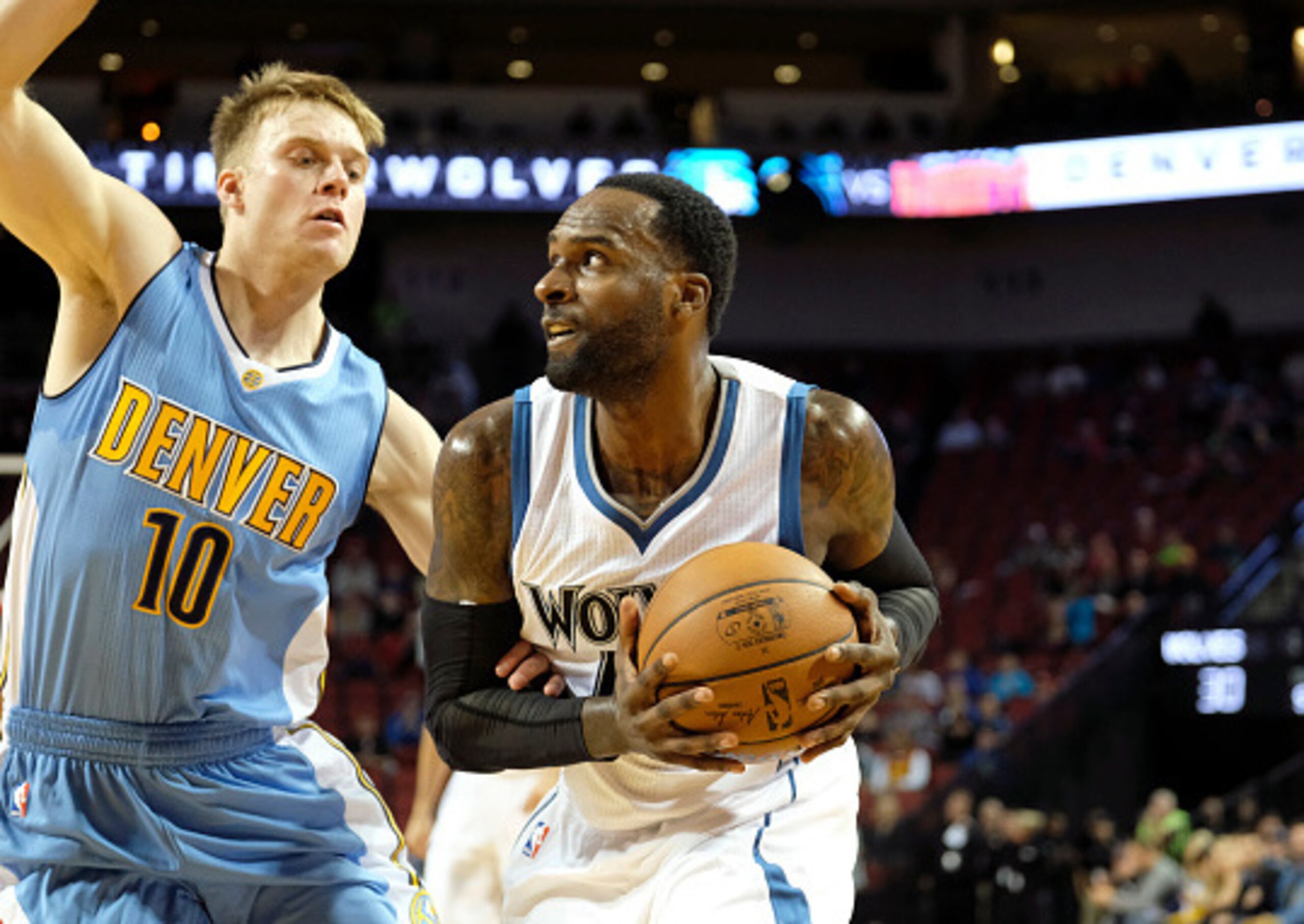
JaMychal Green, Memphis Grizzlies
JaMychal Green is about to get two-syllable paid. The Memphis Grizzlies deemed his offensive arsenal expansive enough to give the starting nod over Zach Randolph, and he doesn't get killed when guarding playmaking 4s. On a team that generates more wide-open looks from downtown, you can easily see him earning a "playmaking 4" label of his own.
This is a problem for the Grizzlies.
They have more than $91 million in guaranteed contracts on the books for next season, and Randolph will be due a new contract himself. Some of their best lineups down the road should also feature Chandler Parsons at power forward, and there will be bigger holes to fill on the wings with Tony Allen and Vince Carter coming off the books.
Shabazz Muhammad, Minnesota Timberwolves
Shabazz Muhammad would be the ideal second-unit spark plug if he kept his head up when driving, posting up and doing just about anything else. His value as a scorer is nevertheless undeniable. He can back down players much bigger than himself from the elbows, doesn't shy from contact and is draining more than 40 percent of his threes on a limited number of attempts.
Keeping Muhammad will probably prove pricey for the Minnesota Timberwolves. Zach LaVine and Andrew Wiggins are max-extension candidates this summer, and they already paid Gorgui Dieng. Karl-Anthony Towns' inevitable max extension is right around the corner, too (2018).
Investing in more established talent is the bigger priority for a Timberwolves squad thus far wilting under postseason expectations. Muhammad does't fall under that umbrella and will be on the outside looking in at Minnesota's core once he's due for a raise.
Jonathon Simmons, San Antonio Spurs
It's Boban Marjanovic all over again. The 7'3" Serbian Autobot landed a three-year, $21 million deal from Detroit that the San Antonio Spurs decided not to match. This was after he played all of 508 minutes—most of them in garbage time—as a rookie.
Jonathon Simmons is no rookie and assumes a far more prominent role than Marjanovic—which doesn't bode well for San Antonio.
Simmons is a work in progress on offense, but he mixes decent off-the-bounce playmaking with raw explosion. If his three-point efficiency rises back above 30 percent, he enters ultra-pricey three-and-D territory.
Might he accept a discount to stick with the Spurs, as Danny Green did in 2015? Sure, but the thought of paying him Danny Green money ($10 million per year) is harrowing—if only because, failing extravagant salary dumps, it kills this summer's Chris Paul-to-San Antonio dream.
We're Going to Be Expensive: Part 2
7 of 7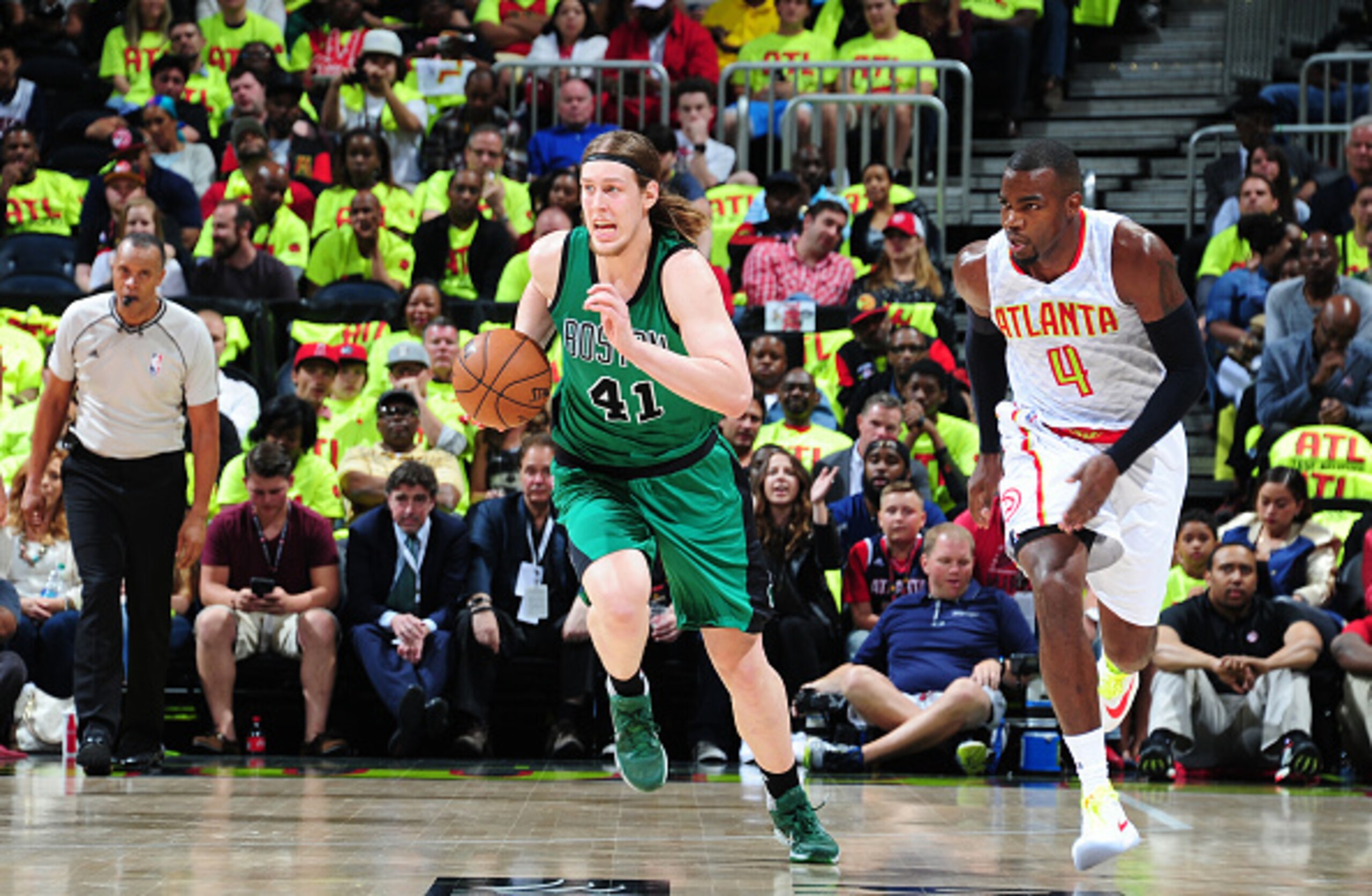
Andre Roberson, Oklahoma City Thunder
Andre Roberson must have at least a slight case of the "sadz" after Victor Oladipo, Russell Westbrook and Adams all received extensions. But Oklahoma City needed to delay a decision on his future for the faintest flexibility.
Roberson's cap hold will sit under $5.5 million until he signs an offer sheet, so the Thunder get to work with a much lower number entering free agency. But they won't have cap space after handing out those other extensions, and there's a strong possibility Roberson's next deal will slingshot them into luxury-tax territory.
Journeying into the luxury tax isn't the Thunder's style and poses more risks than usual with Westbrook set for free agency in 2018 (player option). Roberson is their best perimeter defender, and his three-point percentage, while still unimpressive, has improved every season. But his bag of not-quite-three-and-D tricks can be replicated by someone who isn't in line for an eight-figure salary.
Ben McLemore, Sacramento Kings
The Sacramento Kings have been trying to trade Ben McLemore for more than a year, according to NBA.com's David Aldridge, and are running out of time to find a workable deal.
McLemore's outside touch has never come close to rivaling Ray Allen's, as many once expected, but he gets the job done on wide-open looks and is more comfortable with putting the ball on the floor.
Suitors with cash to burn, crafty point guards and/or the ability to cover up for McLemore's spotty defense won't hesitate to open their check books. So if the Kings don't move him soon, they may not have the financial gall to keep him later.
Mason Plumlee, Portland Trail Blazers
Mason Plumlee just works for the Portland Trail Blazers. He is part of a starting five that's pummeling its opponents and, as Evans Clinchy explained for Blazer's Edge ahead of this season, remains one of the most undervalued offensive weapons at his position:
"He's never been a lethal scorer around the basket - per basketball-reference shooting data, he's a 63.1 percent shooter from inside of 3 feet, just a hair above the league average of 62.4 percent - but he's nonetheless a lethal player because he can create for others. What Plumlee lacks in pure scoring ability, he makes up with instincts. He's able to see the floor and quickly make good decisions. He scores when defenses let him and finds shooters when they're available.
This ability makes him a potent weapon for the Blazers on rim rolls, at the elbow and even in post-up situations. Even though he's only an OK scorer, he's more of a multi-dimensional player than he lets on.
"
Is this someone the Blazers can afford to set free? Still, Plumlee isn't someone they can necessarily afford to keep.
Portland has more than $129 million in guaranteed salary on its books for 2017-18. Around $16.3 million of that is committed to Ed Davis and Meyers Leonard, and that number climbs to $24 million if Festus Ezeli isn't waived.
Plumlee's next deal threatens to drag that collective cap hit closer to $40 million—a cumulative expense the Blazers cannot foot if they're not working off a Western Conference Finals appearance. Someone will need to be traded, or Plumlee's good as gone.
Kelly Olynyk, Boston Celtics
Kelly Olynyk is averaging more than 14 absences per year. He already has six missed games under his belt this season. And he's barely seen 20 minutes per game for his career.
This doesn't sound like someone tracking toward a huge payday. You could almost see Olynyk being forced to take a one-year deal, a la Jared Sullinger in Toronto, to try reinventing his value.
But Olynyk is a 7-footer who holds his own at the rim and shot better than 37 percent from deep through his first three seasons. He is going to see huge offer sheets if he stays healthy.
The Boston Celtics can manufacture max space with Olynyk's $7.7 million roster hold and go over the cap to re-sign him after spending elsewhere, but they're already in bed with Al Horford. If they don't view Olynyk as Horford's frontcourt partner of the future, there's no sense paying him starter money to be a placeholder trade chip.
Stats courtesy of Basketball-Reference.com and NBA.com and are accurate leading into Thursday's games. Salary information via Basketball Insiders.
Dan Favale covers the NBA for Bleacher Report. Follow him on Twitter: @danfavale.

.jpg?w=2560 "OBJ Calls Out Giants After Release")
.jpg?w=2560 "Rap: Lions, LaPorta End Contract Talks")

.jpg?w=2560 "Report: Baker May Miss Up to 6 Weeks")
