

Team USA's Flawed Style Plenty Enough for Gold; Olympics All-Tournament Team

Team USA played the perfect version of its imperfect game Sunday, securing a gold medal at the 2016 Rio Summer Olympics with a 96-66 dismantling of Serbia.
Kevin Durant, Paul George and DeMarcus Cousins were keys in executing the trademarked-yet-flawed recipe that was on display throughout the United States' time in Rio.

TOP NEWS

J-Dub Suffers Gruesome Leg Injury
Mazzulla on Tatum-Brown Drama

Blockbuster Trade Idea To Shake Up the East
Stagnant (as usual), lacking urgency (of course) and unable to defend with Carmelo Anthony and Kyrie Irving on the floor (again), Team USA stumbled early. Whether it was the failure to meet the moment or the mind-numbing predictability of America's lackluster start, the result was familiar frustration.
As was the case in so many U.S. games, the off-kilter first few minutes made you want to look away, as CBS Sports' Matt Moore expressed:
"Win or lose, let us never speak of this Team USA again.
— Hardwood Paroxysm (@HPbasketball) August 21, 2016"
Assuredness of victory is the flip side of Team USA's Rio calling card. In a way, knowing wins were imminent made the ho-hum starts harder to endure: The ugliness was self-inflicted, the lineup shortcomings obvious and annoying. It was as though the U.S. insisted on making things hard for itself.
Reliably, it eventually made things look easy.
George checked in and locked down, ratcheting up the defensive intensity and helping create transition chaos—an absolute necessity for an otherwise gummed-up offense. His immediate, game-altering impact has been so consistent that NBA analyst Nate Duncan lamented George's first rest before it even happened:
Kyle Lowry followed George's lead, diving on the floor repeatedly.
Cousins physically overwhelmed Serbia's entire front line, crashing the glass and bullying his way to 13 points and 15 rebounds during only 17 minutes.
Durant went supernova, scoring 24 of his 30 points in the first half. His deep triples and unstoppable in-between game turned ghastly isolation possessions into works of art. By himself, KD shoved the game into foregone-conclusion territory, as Jared Wade of FanSided noted:
Ever so briefly, the U.S. channeled a glimpse of what everyone has been wishing for. On its final possession of the first half, Klay Thompson brought the ball up the floor after a steal and found George on the left wing. From there, a sequence of just two dribbles and five tic-tac-toe passes resulted in an uncontested trey for KD.
Durant's fifth triple of the half gave the U.S. a 52-29 lead, effectively ending the game with 20 minutes left to play.
That was the exception, though.
Save for the 35 minutes of consistently stifling defense, Team USA never smoothed its rough edges, running back the same game plan that led to too-close victories over Australia, France and Serbia in group play. There weren't many adjustments in the gold-medal game—other than head coach Mike Krzyzewski riding Durant for the entire first half and trusting George for long stretches (his plus/minus of plus-37 was right there with KD's team-high plus-38).
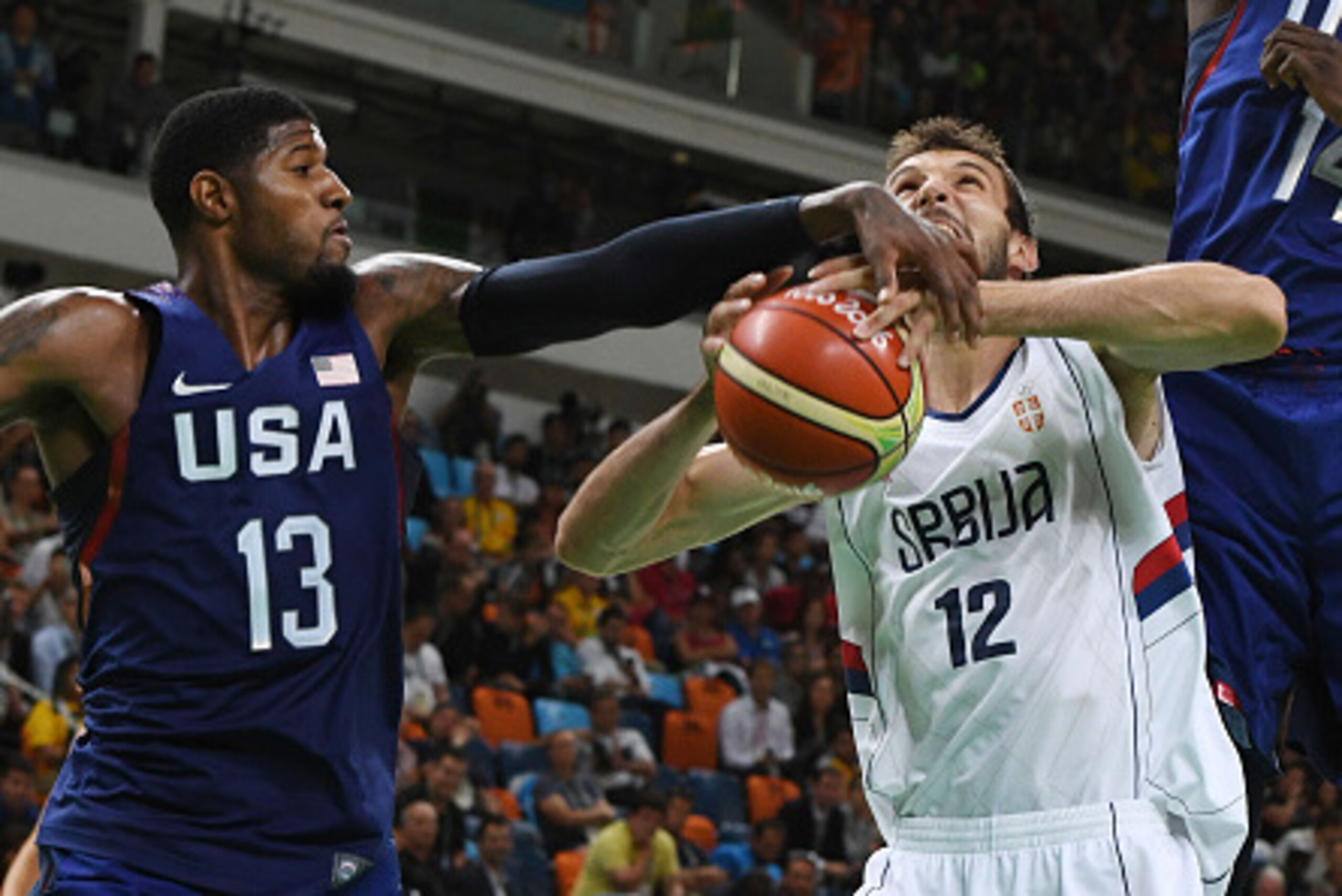
America rode its superior talent to the win.
In lieu of the continuity and chemistry other international squads had, this was always going to be the best way—even if it was often hard to watch.
Team USA never became the team we wanted, which is a bizarre thing to say about a club that led a gold-medal game by almost 50 points. The ball didn't hop, the offense-defense balance mostly eluded Coach K's rotations, the style was mostly unappealing and success generally depended on individual talent—not always the most fun in a team game that looks best with communication and flow.
But the U.S. became the best version of its flawed self, which was more than enough for an undefeated run to gold. The 2016 version of Team USA wasn't the best or the worst. But it was the prettiest mess we'll get for a while.
Olympic Men's Basketball All-Tournament Team
Backcourt First Team
Mantas Kalnietis, Lithuania

Lithuania finished third in Group B, and the lasting impression from its abbreviated run in Rio will probably be Jonas Valanciunas' underwhelming performance. What we should remember is Mantas Kalnietis tearing it up as his team's lone bright spot.
The natural shooting guard, nudged into primary ball-handler duties, averaged 18 points on 60.6 percent shooting while leading the tournament with 7.5 assists per game.
He did his part and then some, according to Hoop magazine's Josh Eberley:
Patty Mills, Australia
Patty Mills' Olympic efficiency wound up wanting, partly because he cratered with a 1-of-9 effort from three-point range during the semifinals against Serbia. He rebounded with a team-high 30 points in the Aussies' loss to Spain during the bronze-medal game Sunday, finishing with an average of 21.3 points (which ranked second in Rio) on 47.3 percent shooting. Mills also hit 34.4 percent of his 8.7 three-point attempts per game.
His value to Australia's freewheeling, rhythmic offense was greater than his numbers. Mills' mad dashes around triple screens and sneaky flares to the corner tied defenses in knots and ratcheted up the pace of half-court sets to a level that forced countless breakdowns. The back cuts and slick passes that defined the Aussie attack were largely due to Mills' frantic sprints around the floor.
Frontcourt First Team
Bojan Bogdanovic, Croatia
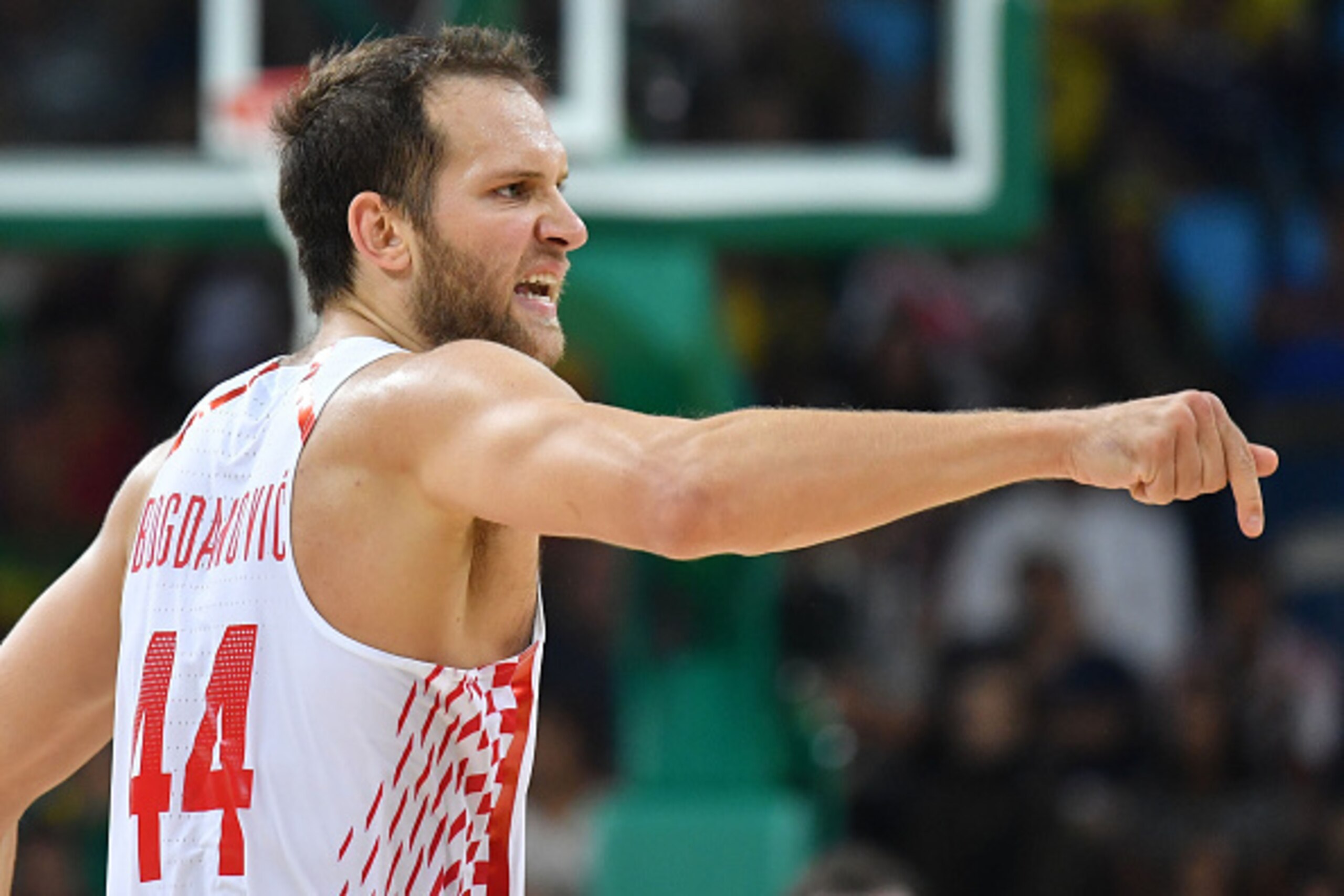
Bojan Bogdanovic was the most prolific scorer in the tournament, averaging 25.3 points per game on 50.6 percent shooting in six contests for Croatia. Nobody better illustrated the production spike that can accompany a role change. A bit player at small forward for the lowly Brooklyn Nets, Bogdanovic beasted as a go-to option.
Kevin Durant, USA
Team USA's most important offensive player, Durant should have gotten more looks. Maybe he would have if the U.S. offense hadn't depended so heavily on isolation sets and transition chances. That worked out fine for him in the gold-medal game, though.
His 19.4 points per game ranked fifth in Rio, and his game-opening surges were often all that kept Team USA from falling behind in first quarters. Also, he's Kevin Durant—of course he makes the first team.
Pau Gasol, Spain
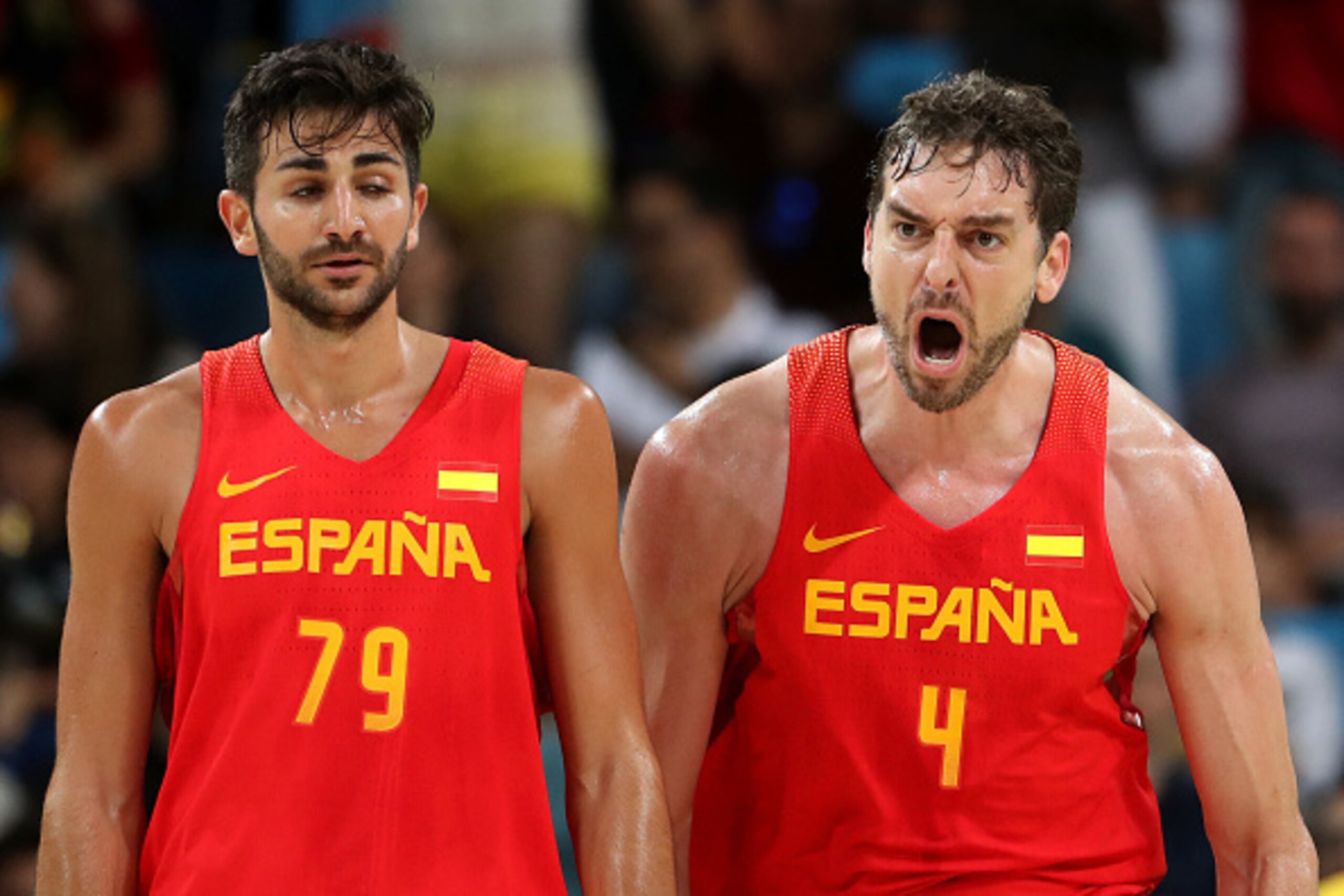
Though his team only took home a bronze medal, Pau Gasol would deserve tournament MVP honors if there were such a thing. If not for his reliable interior scoring and remarkably effective three-point shooting—he hit 52.2 percent from distance, and his pick-and-pop game terrorized bigger defenders who didn't want to venture out to the arc—Spain wouldn't have medaled.
Spain wouldn't have medaled if Australia hadn't gotten the bum end of a call during the critical final seconds of the bronze-medal game, but a questionable call doesn't belong on an all-tournament team.
Backcourt Second Team
Milos Teodosic, Serbia
Milos Teodosic never defended and didn't shoot the ball consistently, but he may have been the best passer in the Olympics. He posted 5.4 assists per game, which ranked fifth, and he didn't scrimp on the highlight feeds.
The 29-year-old CSKA Moscow guard was integral in controlling an offense that helped Serbia advance deeper than anyone would have expected.
Kyle Lowry, USA
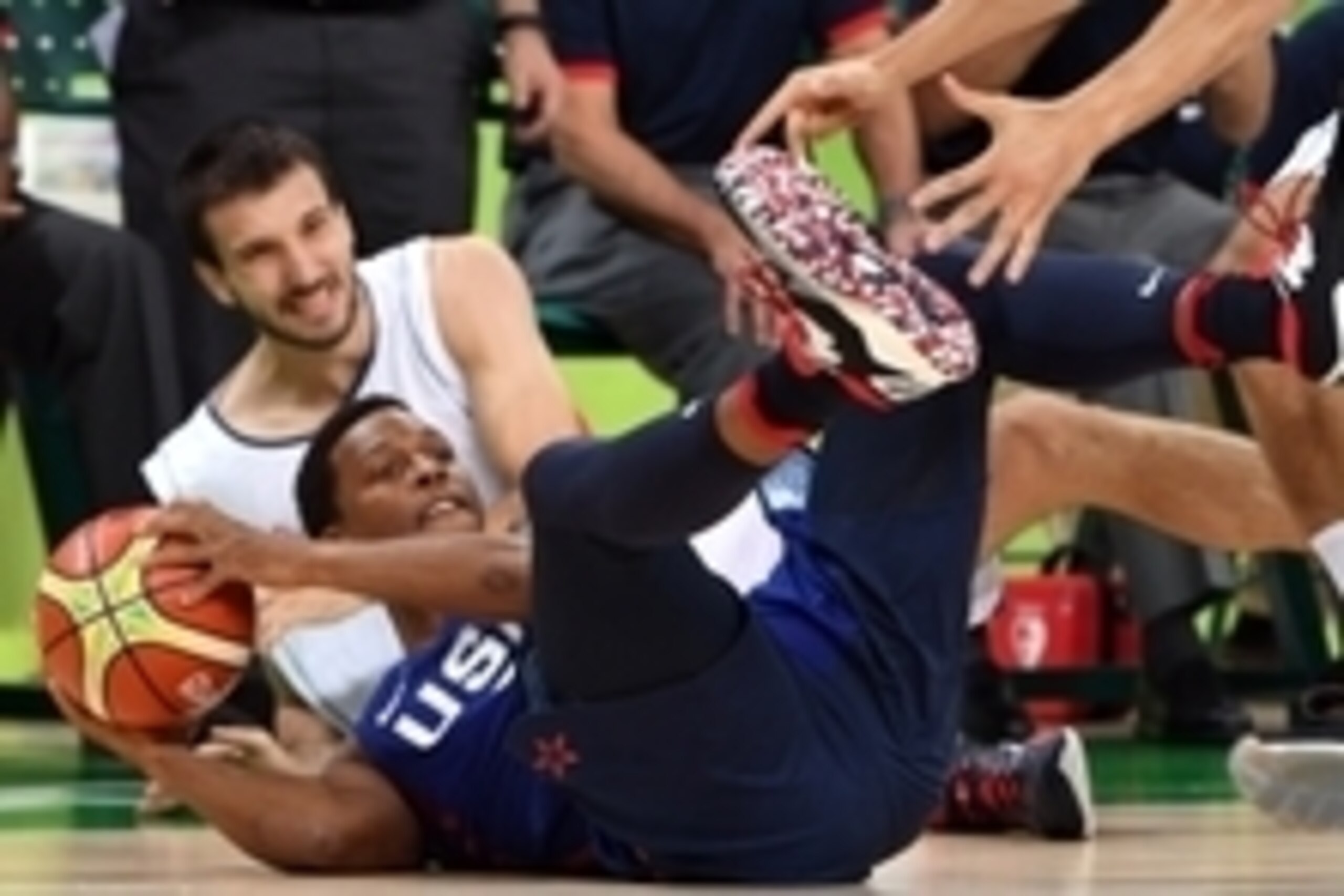
Kyle Lowry's placement here may be controversial since he never started and didn't have a statistically productive tournament. But some portion of the credit George received for changing Team USA's attitude also belongs to its backup point guard.
Lowry stood in to take charges, led the team in floor burns and did what he could to move the ball. His intensity and self-sacrifice were vital, and it's only right to feature as many players as possible from the lone undefeated participant.
Frontcourt Second Team
Andrew Bogut, Australia
That Spain victory snapshot? Reverse that and amplify it by 1,000, and you have a sense of what Andrew Bogut and Australia are feeling after finishing fourth.
Bogut played better in the early part of the tournament than at any point in his 2015-16 season for the Golden State Warriors, whipping the ball around as an offensive fulcrum, policing the lane and even looking for his own shot (unheard of for most of his NBA career). He fought back from bone bruises in his knee to suit up for Australia and played brilliantly before fading in the medal rounds.
Paul George, USA
Durant was the focal point for the U.S., but Paul George might have been the team's most important player. When the Americans occasionally channeled the elusive soul-sapping defensive intensity that should have defined their run from the start, George was often responsible for doing so.
Inverting the score-only sixth-man norm, George's contributions off the bench came on D. He single-handedly shifted the tone of a half-dozen games, wreaking havoc on the perimeter with shutdown one-on-one stops and collapsing passing lanes with his length.
Miroslav Raduljica, Serbia

Partly for the majestic beard, partly for a punishing dunk on Dario Saric's head and partly for averaging 14.8 points per game, Miroslav Raduljica earns the final nod on the all-tournament team.
Stats courtesy of FIBA.com.

.jpg?w=2560)


.jpg?w=2560 "Latest Peyton-Colts Rumors")

.jpg?w=2560 "Landing Spots for Trade Candidates 📍")
.jpg?w=2560 "Ugly Jets Scoring Stat 😳")