
The All-CFB Head Coaches Team Based on Their Playing Careers
The old phrase "those who can't do, teach" is often applied to sports. If someone who loves the game can't quite cut it on the field, he or she should switch over to the coaching side.
These college football head coaches made sure that saying didn't apply to them.
While a large portion of coaches who are currently in charge of FBS programs either played at small schools or rode the bench for bigger programs, several of them had impressive playing careers at the college level and even broke through to the professional ranks.
Here, we present a hypothetical first-team offense and first-team defense—plus a handful of notable second-stringers—made up solely of current FBS head coaches, based on their playing careers. Those who received all-conference or All-American honors and national awards in college got high marks for selection, and multiyear starters who had careers in the NFL were among the best of the best.
Some positions, such as quarterback and defensive back, have plenty of head coaches in their ranks. Others, such as linemen and running backs, were tougher to find. That led to some creative starting lineups for both sides of the ball, but the end result is a team filled with hardworking coaches from all levels of college football.
Notable Second-Stringers
1 of 23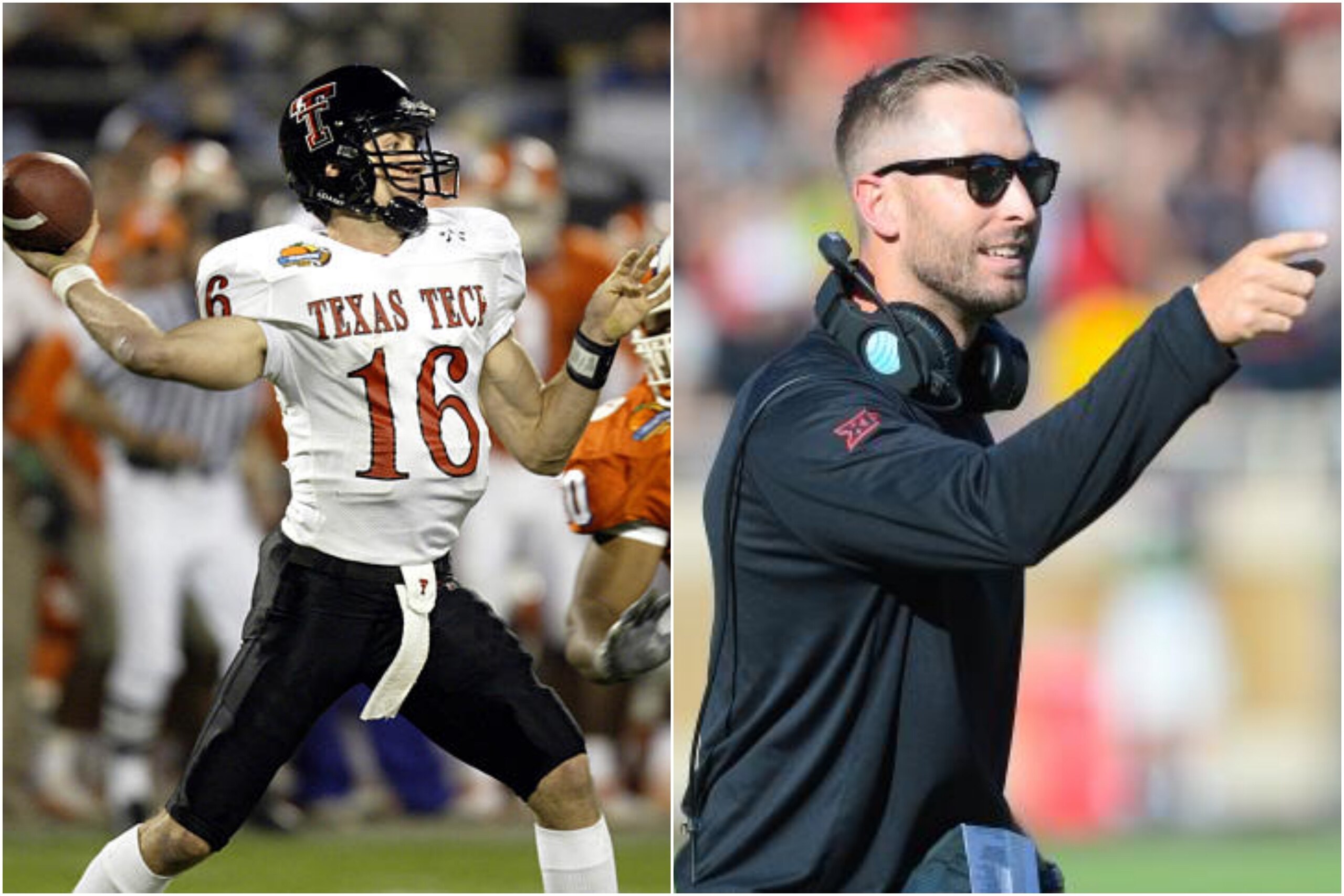
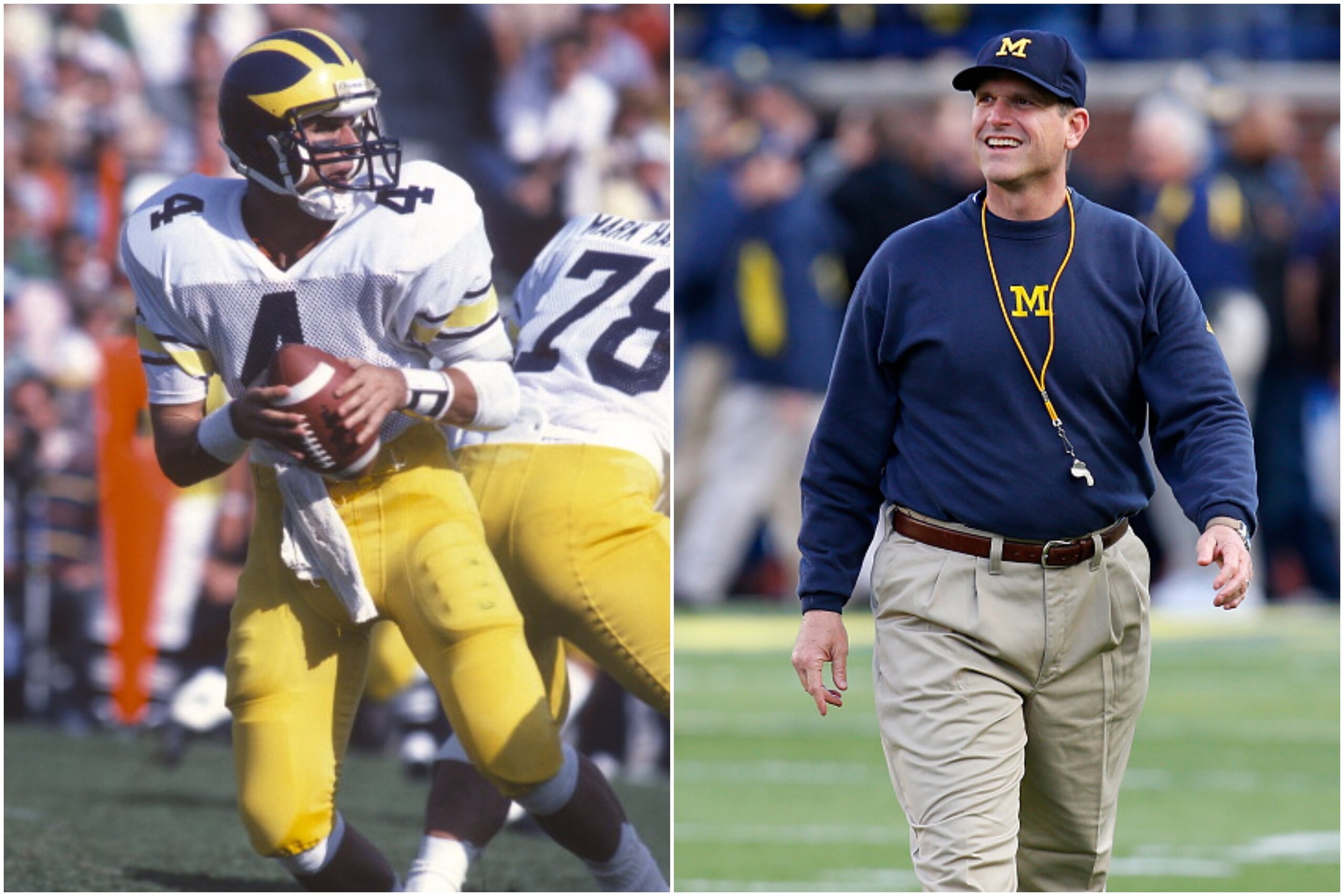
QB Kliff Kingsbury: Texas Tech's current head coach was a record-smashing quarterback for the Red Raiders under Mike Leach. He passed for 95 touchdowns and more than 12,000 yards during his career. Although UCF head coach Scott Frost has a claim to this backup quarterback spot, Frost didn't smash nearly 60 school, conference and national records like Kingsbury did before his stints in the NFL and CFL.
FB Seth Littrell: A star fullback at Oklahoma, North Texas head coach Seth Littrell rushed for 715 yards and 11 touchdowns in four seasons with the Sooners. In his senior season of 2000, he was a team captain, and he helped pave the way for a national championship.
WR David Shaw: The current Stanford head coach was a three-sport athlete at his alma mater, grabbing 58 passes for 685 yards and five touchdowns as a wide receiver for four seasons. David Shaw played on Stanford's 1992 team, which was a co-champion of the Pac-10 and finished in the Top 10 nationally.
OL Gary Andersen: Gary Andersen started his college football career at Ricks College—which is now BYU-Idaho—and was a two-time All-American center there. Andersen then transferred to Utah, where he played two seasons for the Utes.
OL Kevin Wilson: Indiana head coach Kevin Wilson went to North Carolina as a walk-on interior lineman and later earned a scholarship from the Tar Heels. The North Carolina native played in four bowl games with the Tar Heels before immediately jumping into the coaching profession.
DL Charlie Partridge: Florida Atlantic's head man came from Drake, which has produced quite a few future head coaches over the years. He was an NSCA All-American with the Bulldogs and a team captain before transferring to Iowa State.
LB Bob Diaco: UConn head coach Bob Diaco, known for his trademark stingy defense, played linebacker at Iowa and was an excellent one from 1992 to 1995. He was a two-year starter for the Hawkeyes, earned a pair of All-Big Ten honors and finished his career with 334 tackles.
LB Barry Odom: New Missouri head coach Barry Odom knows what it's like to play excellent defense for the Tigers. Odom had 362 tackles in four seasons as a linebacker—1996 to 1999—at Missouri and helped lead the Tigers to bowl games in 1997 and 1998 after a long postseason drought.
DB Bronco Mendenhall: Virginia's new head coach started his playing days in JUCO, where he was an All-American safety for national champion Snow College in Utah. He then transferred to Oregon State and was a team captain for the Beavers as a senior.
DB Will Muschamp: The South Carolina head coach played safety at SEC East rival Georgia, where he walked on and later became a team captain. Former Georgia coach Ray Goff described Muschamp, the player, to Brandon Marcello, then of AL.com, as "very intense" and someone who will "knock your jockstrap off."
Quarterback: Jim Harbaugh
2 of 23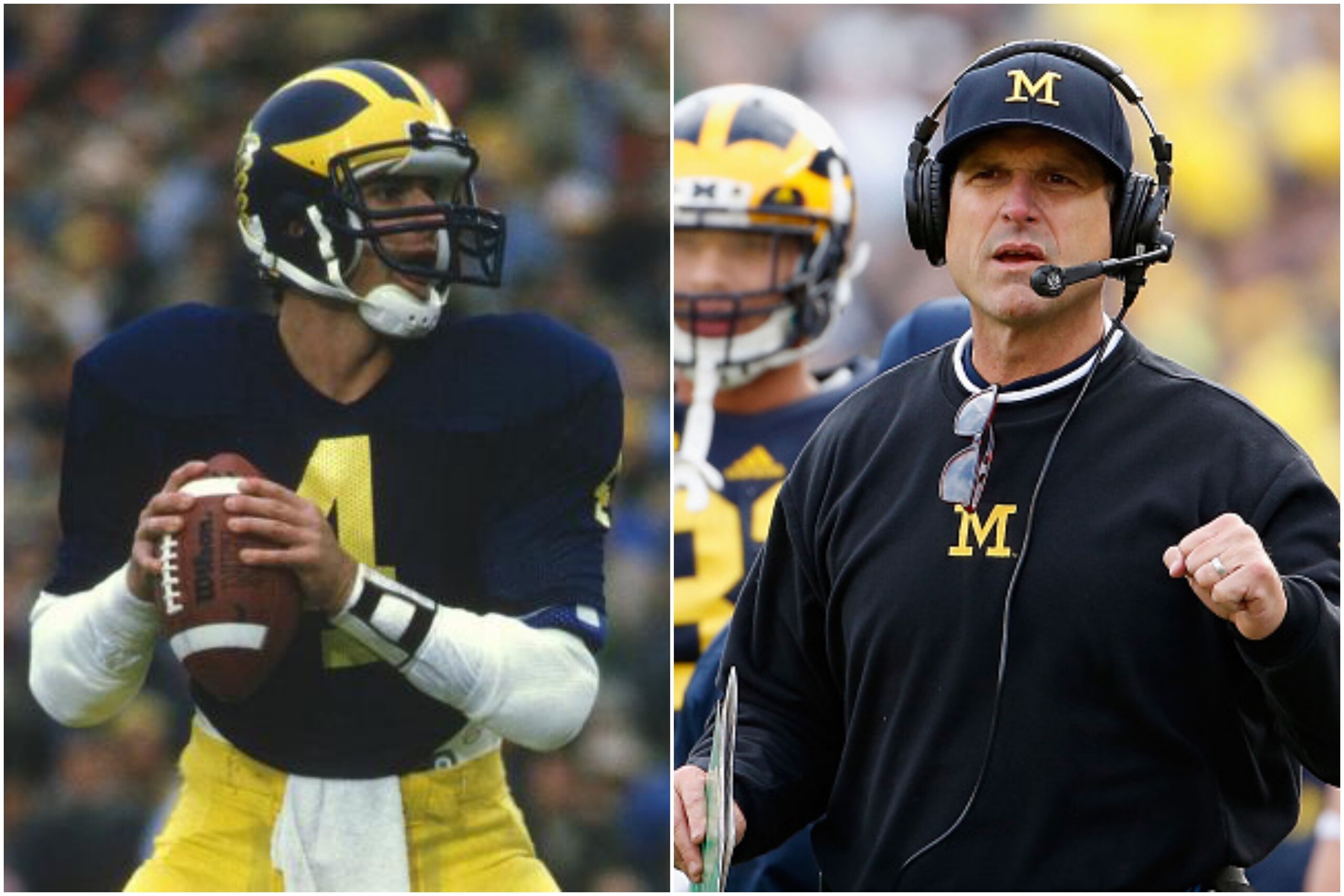
The quarterback is the face of the team, so it's only natural that the face of this all-coaches team is the face of this current college football offseason.
Michigan's Jim Harbaugh had the best overall playing career of any current FBS head coach. After an injury-shortened sophomore season as Michigan's starting quarterback in 1984, Harbaugh led the nation in passer efficiency in the Wolverines' 10-1-1 campaign. He threw for 18 touchdowns and just six interceptions as Michigan finished the season at No. 2 in the country.
The next year, Harbaugh was the Big Ten Player of the Year and finished third in Heisman Trophy voting. He went 21-3-1 in those two seasons as a full-time starting quarterback, and his final career passer efficiency mark of 145.6 was an all-time NCAA record for a dozen seasons.
The Chicago Bears selected Harbaugh late in the first round of the 1987 NFL draft, and he won AFC Player of the Year, NFL Comeback Player of the Year and Pro Bowl honors in 1995 by taking the Indianapolis Colts to the conference title game. He played for 15 seasons in the NFL and started 140 times in his career.
Running Back: Dino Babers
3 of 23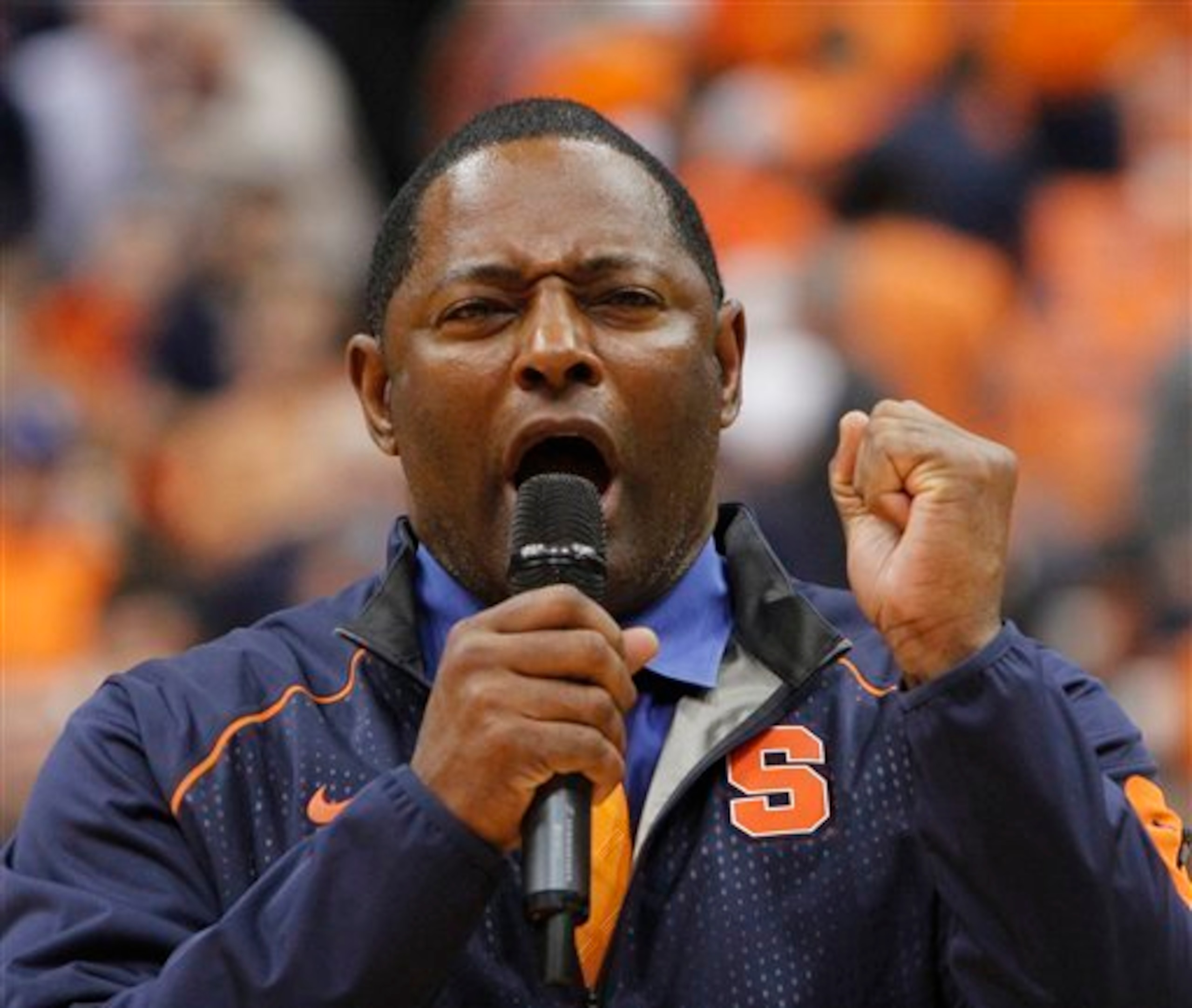
Not a lot of FBS head coaches spent their playing days carrying the football, but it was one of the best skills for the versatile Dino Babers during his career at Hawaii.
The Bowling Green-turned-Syracuse head coach started at three different positions for the Rainbow Warriors from 1980 to 1983—outside linebacker, strong safety and running back. In his senior season, Babers led Hawaii in rushing and was a special teams captain.
"He was a just-trying-to-make-the-team kind of guy," former Hawaii head coach Dick Tomey said of Babers, per Stephen Bailey of Syracuse.com. "But you really don't find many outstanding coaches who were great players because they really don't understand how to make normal players great, and that's what coaching is about."
Babers would go on to play one year in the Canadian Football League before starting his coaching career as a graduate assistant at his alma mater. Although he also played defense in college, the former Hawaii running back has always been an offensive guy at heart, as evidenced by his uptempo system.


_0.png?w=2560)
Fullback: Frank Solich
4 of 23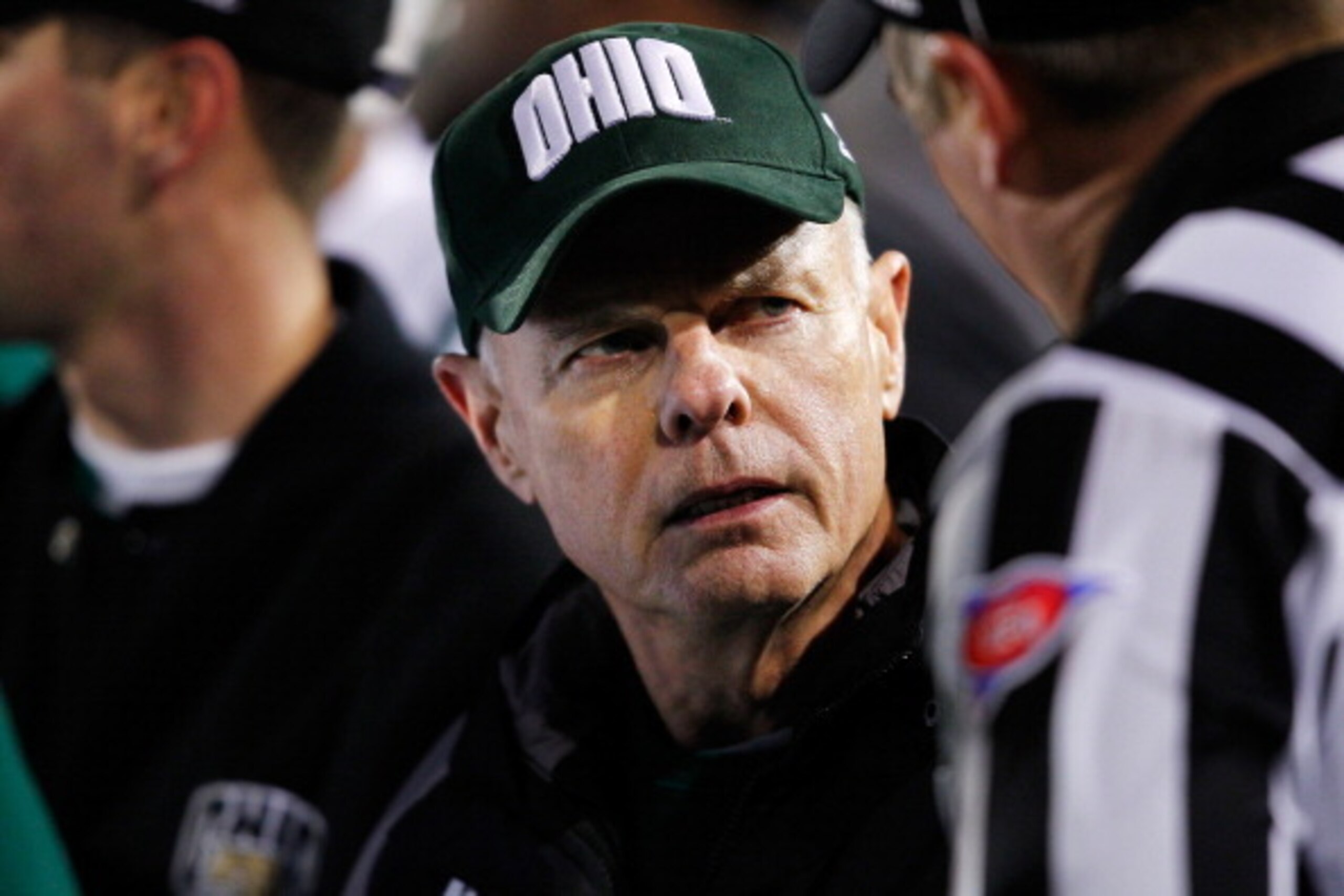
One of the most veteran head coaches in the game started his college football career as a highly effective fullback for three straight Top 10 and Big Eight title-winning teams at Nebraska.
Ohio head coach Frank Solich was recruited by Bob Devaney, and he rushed for 444 yards and four touchdowns in 1964. The next season, Solich averaged 5.4 yards per carry and 17.2 yards per reception for a Huskers team that went 10-1 with a lone loss to eventual Associated Press national champion Alabama.
During Nebraska's Week 2 win over Air Force that season, Solich became the first player in the program's storied history to rush for more than 200 yards in a single game. The following week, he was immortalized by landing on the cover of Sports Illustrated. Solich won All-Big Eight honors at fullback in 1965 and was inducted into the program's football Hall of Fame in 1992.
In this hypothetical all-coaches offense, Solich would play an interesting role. With one quarterback, one running back and three wide receivers—who will be coming up next—Solich would be a sort of lead-blocking H-back/tight end in a modern spread system who could also line up for handoffs. The player version of Solich would bring a hard-nosed, old-school edge.
Wide Receiver: Scottie Montgomery
5 of 23
First-time head coach Scottie Montgomery arrived at East Carolina this offseason from his offensive coordinator post at Duke, where he was a fantastic wide receiver before a short stint at the professional level.
Montgomery led Duke in receiving for three straight seasons and also was tops in the ACC in punt-return yardage in 1997. Duke named him the team MVP in 1998 and 1999, when he averaged well over 13 yards per catch and scored 10 touchdowns from scrimmage.
According to ECU, he broke Duke's single-season record for all-purpose yards as a senior and had two of the best single-game yardage performances in school history that season. Only College Football Hall of Fame inductee Clarkston Hines has more career receptions in Duke history.
Before starting his coaching career with the Blue Devils in 2005, Montgomery played for four seasons in the NFL with the Denver Broncos and the Oakland Raiders, catching 16 passes for 160 yards and a touchdown. He played in the Arena Football League for the Georgia Force in 2005 before hanging up his cleats for good.
Wide Receiver: P.J. Fleck
6 of 23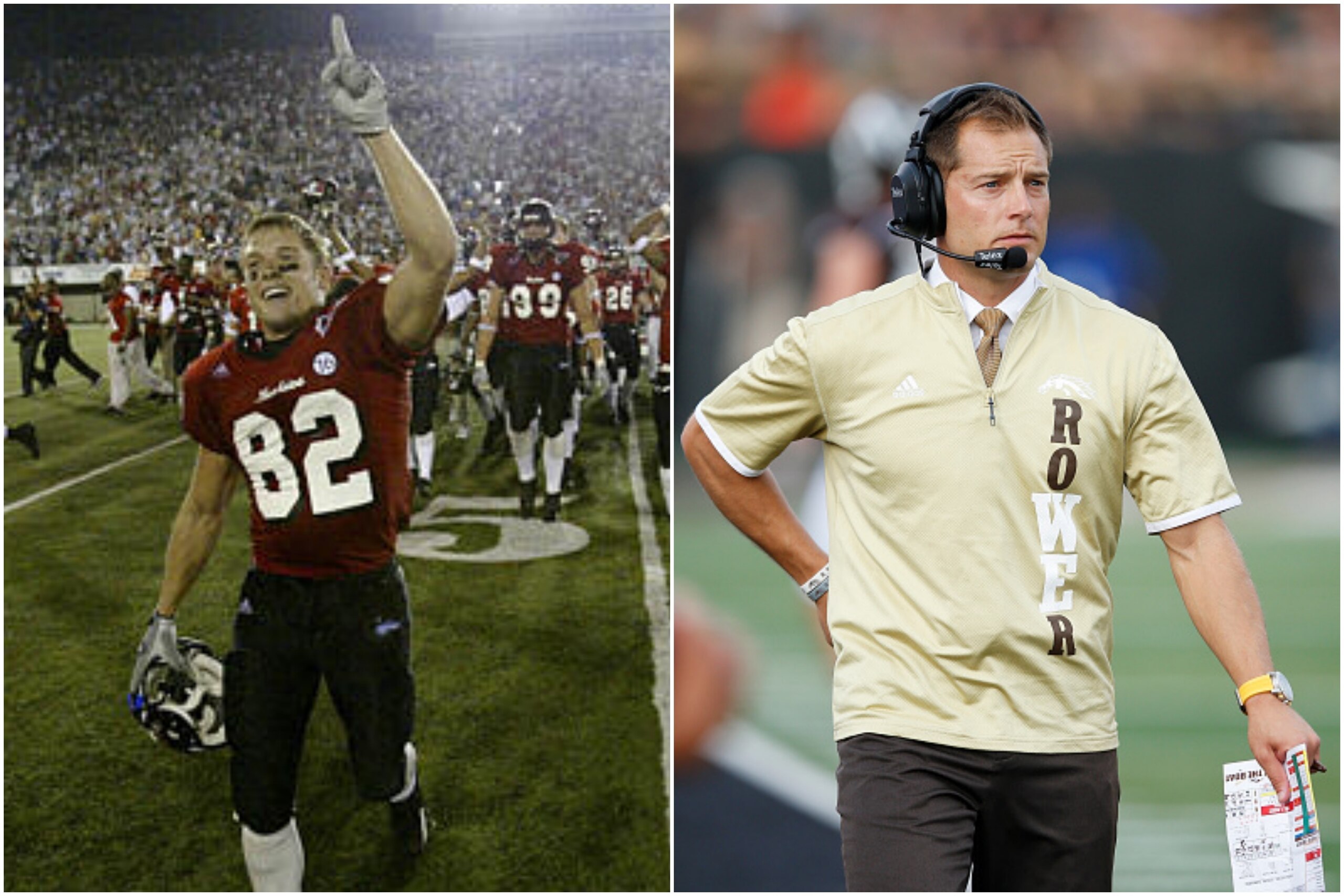
The infinitely energetic, boat-rowing mastermind of Western Michigan's recent turnaround, P.J. Fleck was one of the top players in a similar resurgence at fellow MAC school Northern Illinois back in the early 2000s.
Fleck started his career as a special teams weapon for Northern Illinois, leading the MAC in punt returns as a freshman in 1999. In 2001, he broke out as a wide receiver with 59 receptions for 732 yards and five touchdowns for the Huskies.
After suffering a season-ending injury early in the 2002 campaign, Fleck returned for NIU's 10-2 campaign in 2003, which featured upset wins over ranked foes Maryland and Alabama. Fleck was named National Player of the Week that season after a 234-yard performance against Ohio, and he finished his first-team All-MAC campaign with 1,028 yards and the school's career record for punt returns.
Fleck went on to play two seasons as a reserve wide receiver for the San Francisco 49ers, where his only in-game action consisted of a 10-yard punt return. He then turned his attentions to coaching, starting as a graduate assistant at Ohio State and later landing his first head coaching job at the age of 33.
Wide Receiver: Joey Jones
7 of 23
Before starting a college football program from scratch at South Alabama, Joey Jones was a prized wide receiver for legendary head coach Bear Bryant's last few Alabama Crimson Tide teams.
Jones played at Alabama from 1980 to 1983 and racked up 13 career receiving touchdowns, which ranks tied for fifth all time for the Crimson Tide with Julio Jones—no relation, though. Joey Jones had his best season in Bryant's final year as Alabama head coach, compiling 502 yards and six touchdowns on just 20 receptions in 1982.
"That preparation is not only from the mental standpoint but the physical standpoint and the spiritual standpoint," Jones said about playing for Bryant, per Mike Herndon of AL.com. "I think as a whole person [when] you're going into a game, you've got to be whole in these three areas. When I say 'spiritual,' I mean that fighting spirit, the will to win, that emotional level you've got to bring."
Jones, who was an All-SEC receiver as a senior, played three seasons for the in-state Birmingham Stallions of the USFL before a single season with the NFL's Atlanta Falcons in 1986. He had seven receptions for 141 yards and a touchdown that year for Atlanta.
Tackle: David Bailiff
8 of 23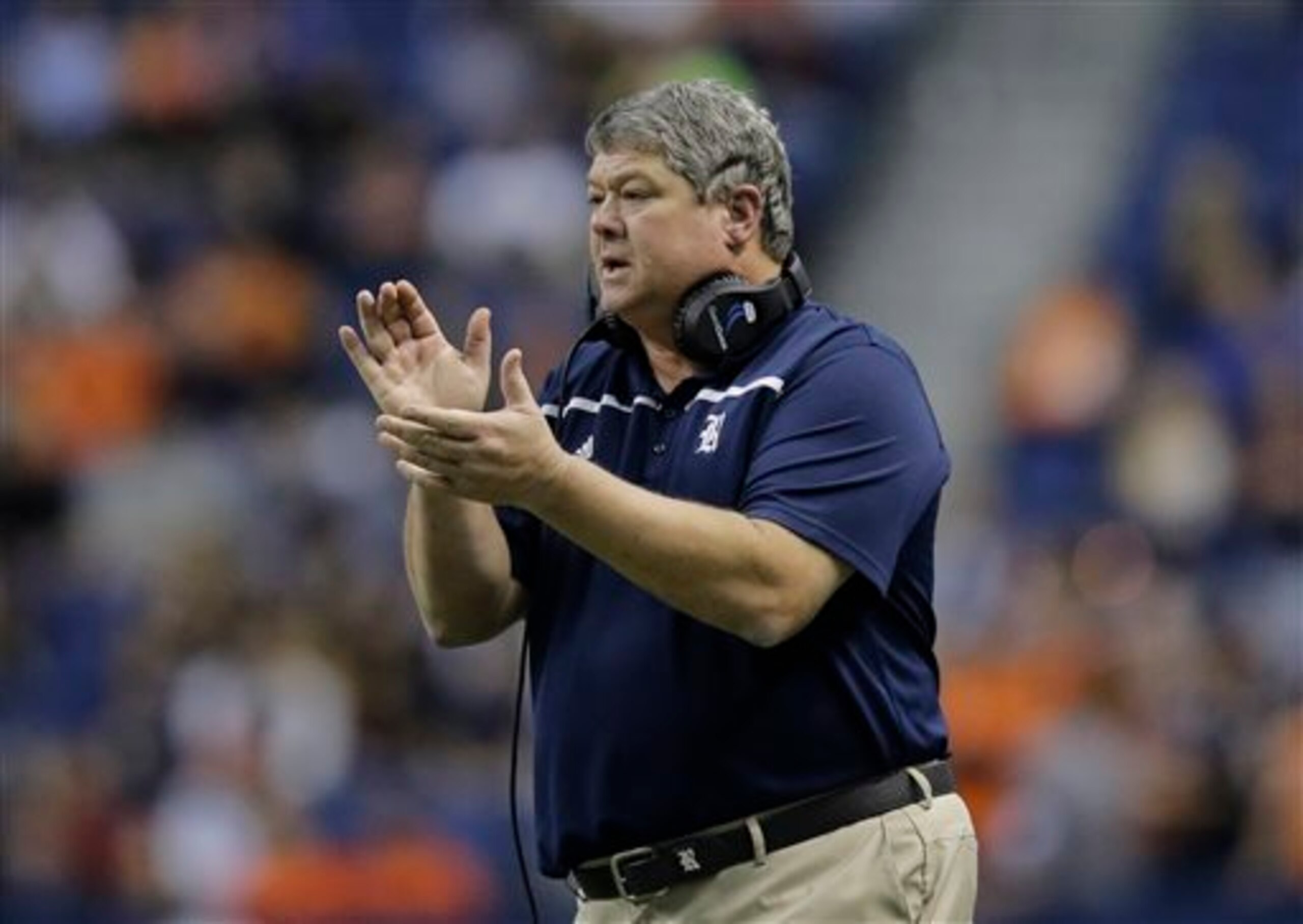
Not many college football head coaches competed in the trenches during their playing careers, and only a select few lined up at tackle.
Rice head coach David Bailiff, though, was an anchor on the outside of the line from 1977 to 1980 at Southwest Texas State, which is now known as Texas State in the FBS.
Southwest Texas State played Division II ball back when Bailiff was on campus, and he was a top offensive lineman in the Lone Star Conference. According to Rice, he was All-Lone Star and an honorable mention on the Division II All-American team as a senior.
Bailiff returned to Southwest Texas State as an assistant coach in 1988, and he would later become the head coach of his alma mater in 2004. He reached the Division I-AA semifinal in his second season with the Bobcats before arriving at Rice, where he's entering his 10th season in charge.
Guard: Les Miles
9 of 23
Les Miles is one of the most well-known head coaches in college football, and he played for one of the game's all-time greats during his days as an offensive lineman at Michigan.
Miles played for two seasons under Bo Schembechler, and the Wolverines won the Big Ten title in both campaigns. According to a 2010 story from Thayer Evans, then of Fox Sports, Miles grew up a fan of Ohio State but switched to the Maize and Blue after a fierce recruiting battle:
"Miles was so undersized for an offensive guard that he doesn’t know if he’d even recruit himself now. But he made up for it with quick feet and toughness. He was recruited by Indiana, Purdue and Notre Dame, but was most interested in fierce rivals Michigan and Ohio State.
Growing up, he had been a fan of Ohio State and legendary coach Woody Hayes, but his allegiance started to shift to Michigan in 1969 when Bo Schembechler led the Wolverines over the top-ranked Buckeyes in one of the greatest upsets in college football history.
"
Miles took what he learned as a two-year lineman under Schembechler and became an offensive line coach at both Colorado and Michigan for a dozen seasons. After stops at Oklahoma State and the Dallas Cowboys, Miles landed at LSU, where he's made great line play a high priority for over a decade.
Center: Rod Carey
10 of 23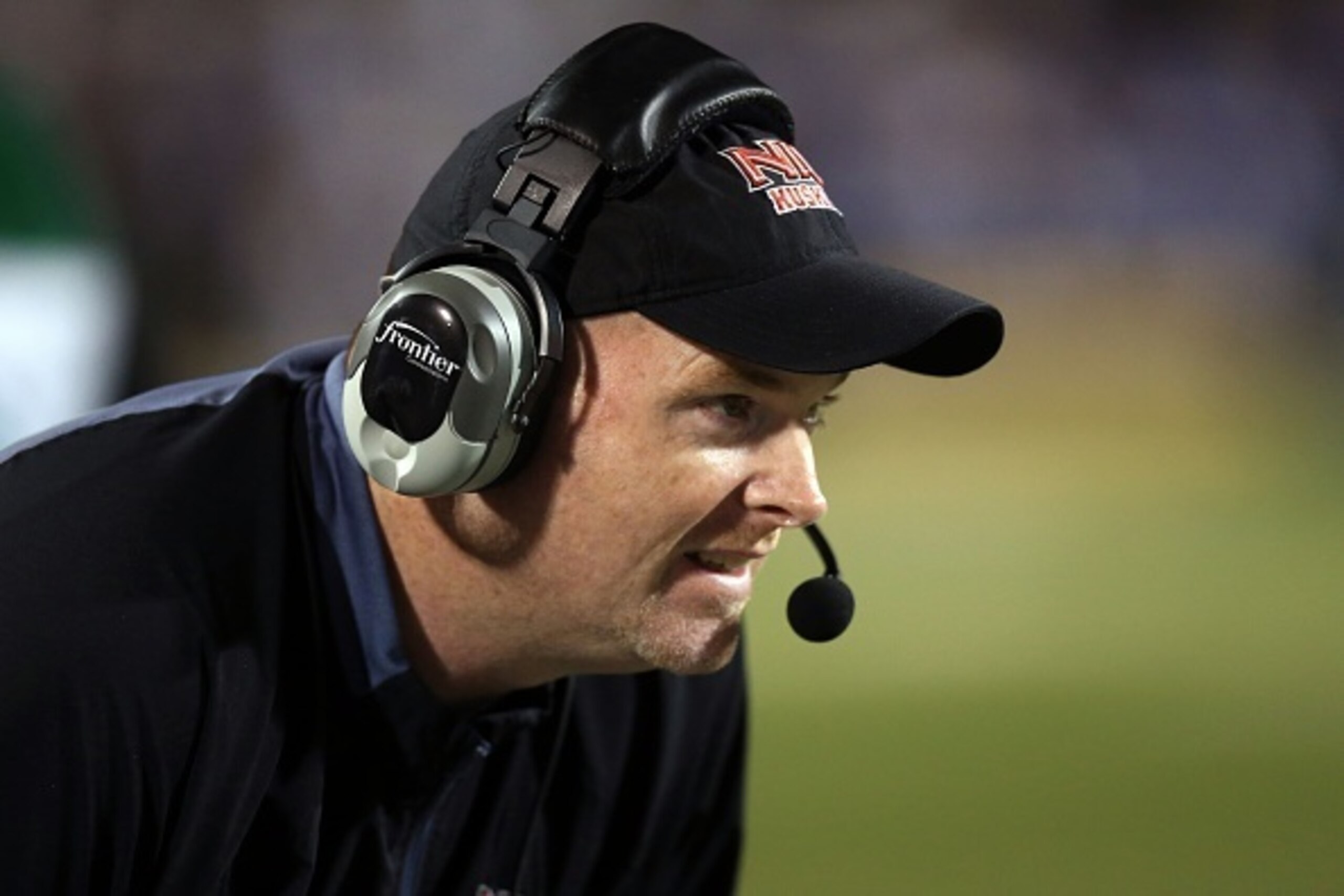
Rod Carey broke into coaching as an offensive line specialist, which is something he learned all about during his time as a standout center for Indiana in the early 1990s.
Carey started at center for the Hoosiers from 1991 to 1993, and he was a team captain in his senior season. He also was named Indiana's offensive MVP for that campaign under head coach Bill Mallory, who led the Northern Illinois program before making the move to Bloomington, Indiana.
"I had the greatest respect for Rod as a player," Mallory told NIU's team website. "He had everything you want to see in a person and in a coach. ... He is a quality person, a great character individual, a good people person and a caring individual, the qualities you like to see."
Carey coached offensive line at four schools and three different levels of college football—including Illinois State in 2007 and the University of North Dakota for three seasons—before taking over as head coach for the Northern Illinois Huskies in 2012. He's the perfect type of "second quarterback" to lead the offensive line on this all-coaches squad.
Guard: Sean Kugler
11 of 23
UTEP head coach Sean Kugler is leading his alma mater, where he played offensive guard for four seasons for the Miners. During his college days at El Paso, his offensive line coach was none other than current Kansas City Chiefs head coach Andy Reid.
Kugler did well under Reid's tutelage, as he started for the Miners in their 1988 campaign that finished with 10 victories—the most in school history. UTEP made it to the Independence Bowl that season, snapping a 21-year streak of seasons without a postseason berth.
Kugler joined the Pittsburgh Steelers as an undrafted free agent for the 1989 season, but he didn't make it out of training camp with the team thanks to a concussion. He started at guard for the Sacramento Surge of the World League of American Football—the league later known as NFL Europe—in 1991.
After Kugler's senior season, the Miners wouldn't return to a bowl game until 2000, when Kugler was back at UTEP coaching the offensive line. He later coached offensive line for Boise State, the Detroit Lions, the Buffalo Bills and the Pittsburgh Steelers before coming back to UTEP as head coach in 2013.
Tackle: Steve Addazio
12 of 23
Boston College Eagles head coach Steve Addazio was a two-way dude on the line for Central Connecticut State, where he started for all four of his seasons.
Although he played for a small Division II school at the time, Addazio found a way to grab attention as a member of the Blue Devils. He snapped up tryout invites from the New England Patriots, the USFL's Jacksonville Bulls and the CFL's Ottawa Roughriders.
Addazio could've landed on either side of the line on this team, but offense was his specialty. He coached on that side of the ball exclusively during his stops at Syracuse, Notre Dame, Indiana and Florida. During his time with the Gators, Addazio coached Maurkice and Mike Pouncey, who both became first-round NFL draft picks in 2010 and 2011, respectively.
The former every-week starter for Central Connecticut State later took the head coaching position at Temple in 2011 before making his move to Boston College in 2013. Addazio would bring a lot of energy and tenacity on the edge to this team.
Defensive End: Matt Campbell
13 of 23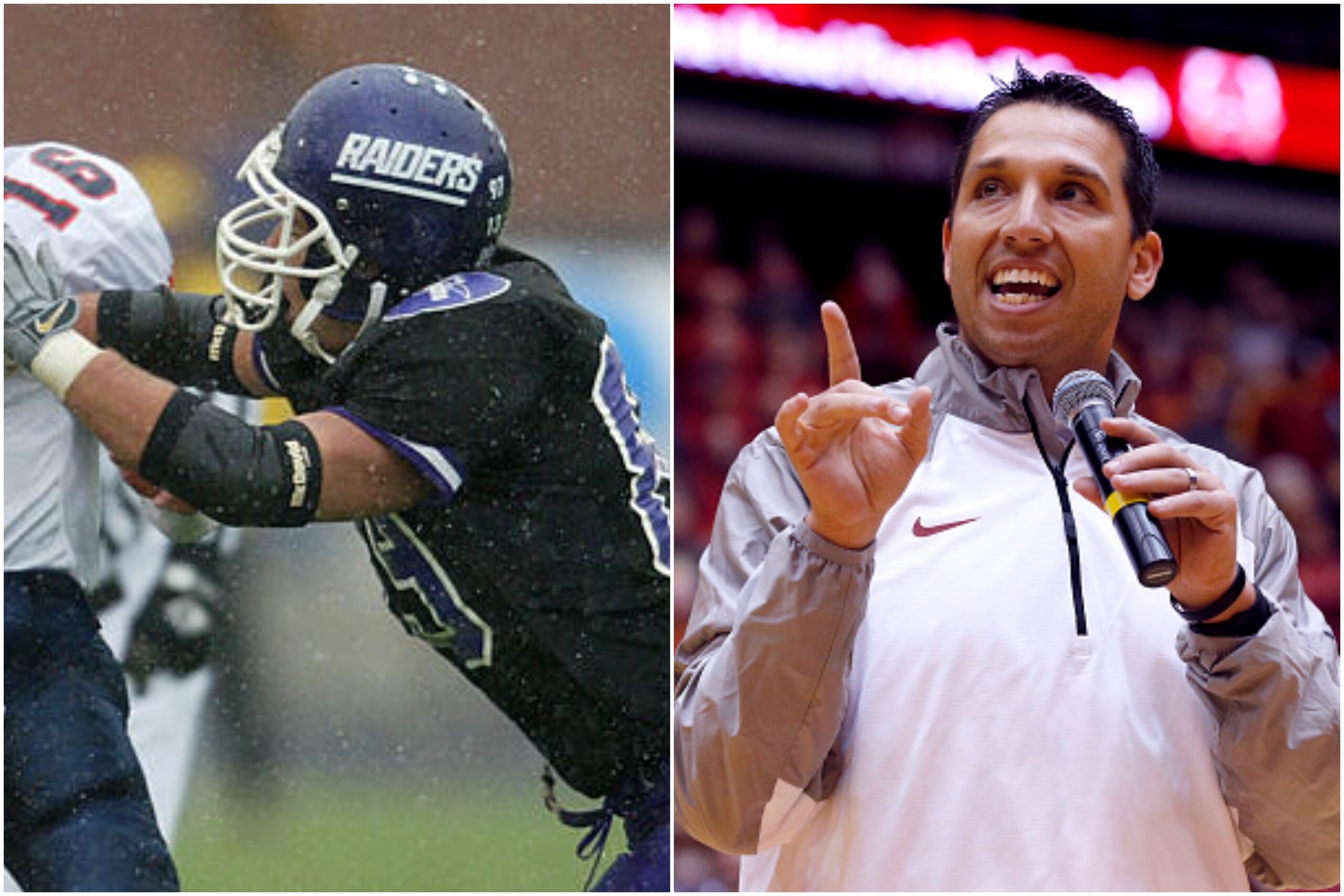
Switching from offense to defense, here's another small-school standout who is now a head coach at a power-conference program. Iowa State head coach Matt Campbell started his college career at Pittsburgh, but he made a name for himself at Division III powerhouse Mount Union.
Campbell went to Pittsburgh to play tight end but decided to transfer to Mount Union in his home state of Ohio after just one season. At Mount Union, Campbell was a standout defensive end, winning three Division III national championships in four seasons and only losing a single game there.
On the defensive line, Campbell was excellent at attacking the opposing backfield. According to Iowa State, he finished his Mount Union career with 207 tackles, 49 tackles for loss and 22 sacks. He was a two-time Division III All-American and a two-time Ohio Athletic Conference Defensive Lineman of the Year.
Although he became an offensive-minded coach later on life, Campbell tore it up on the defensive side of the ball for the Purple Raiders, where he would serve as offensive coordinator for two seasons before making his move to the MAC.
Defensive Tackle: Bret Bielema
14 of 23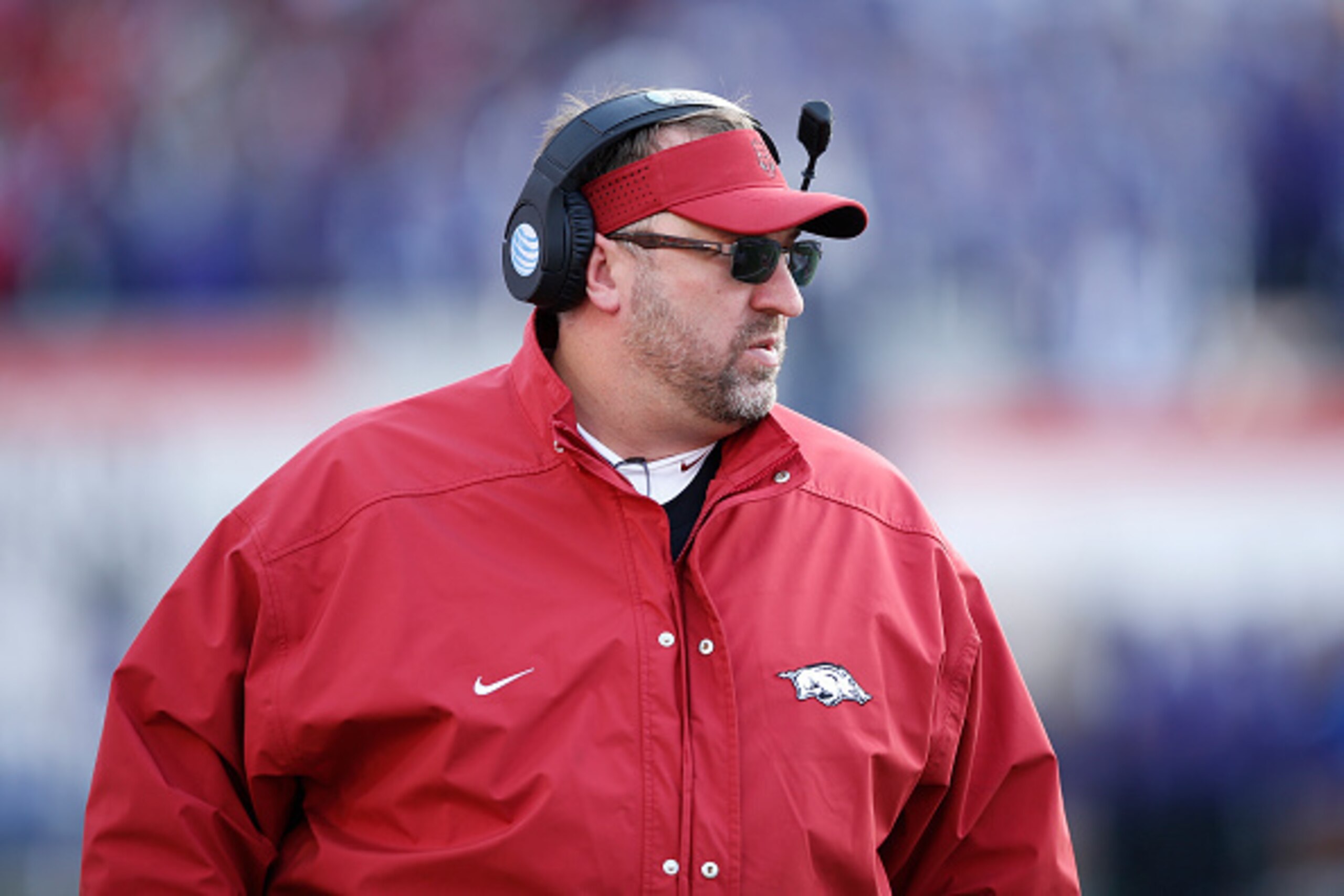
Who better to anchor an all-coaches defensive line than the head coach who has made excellent play in the trenches one of his calling cards?
Arkansas head coach Bret Bielema's college career had humble beginnings, as he walked on at Iowa in 1989 after breaking his leg as a senior in high school. The defensive tackle quickly earned a scholarship from head coach Hayden Fry after his first season, played on a Big Ten title team and worked his way up to co-captain by his senior year.
Bielema even has a tattoo of the Iowa "Tiger Hawk" logo, which he got during his impressive college career. He had 11 career starts at nose guard, 83 tackles—23 of them for loss—and a pair of sacks for the Hawkeyes. Not bad for someone who could've taken a wrestling scholarship out of high school instead of hitting the gridiron.
After signing with the Seattle Seahawks out of college and later playing a season with the Arena Football League's Milwaukee Mustangs, Bielema jumped into coaching at his alma mater. He was a defensive assistant at Iowa, Kansas State and Wisconsin before taking over as the Badgers' head coach in 2006 and making a high-profile move to the SEC for the 2013 season.
Defensive End: D.J. Durkin
15 of 23
One of college football's newest head men spent his playing days terrorizing offenses off the edge in the MAC, which has proved to be a true cradle of coaching for the rest of the country.
Maryland head coach D.J. Durkin played his college ball from 1997 to 2000 at Bowling Green, where he was a starter at both defensive end and outside linebacker. Because of the shortage of head coaches who once played across the defensive front, we'll stick Durkin in here as a pass-rushing end. According to his bio at Michigan, the Wolverines' former coordinator had 131 tackles with 28 of them for a loss in his 33 career starts.
Durkin was known for his incredible motor as a defensive end with the Falcons. His former teammate Brandon Hicks told Chuck Culpepper of the Washington Post he would pass conditioning drills at Bowling Green by telling himself to stay within 10 yards of the front-running Durkin.
That energy translated well to the coaching circuit, as Durkin went from Bowling Green defensive line coach to head coach at Maryland in a little more than a decade. He'll bring the heat anywhere.
Linebacker: Pat Fitzgerald
16 of 23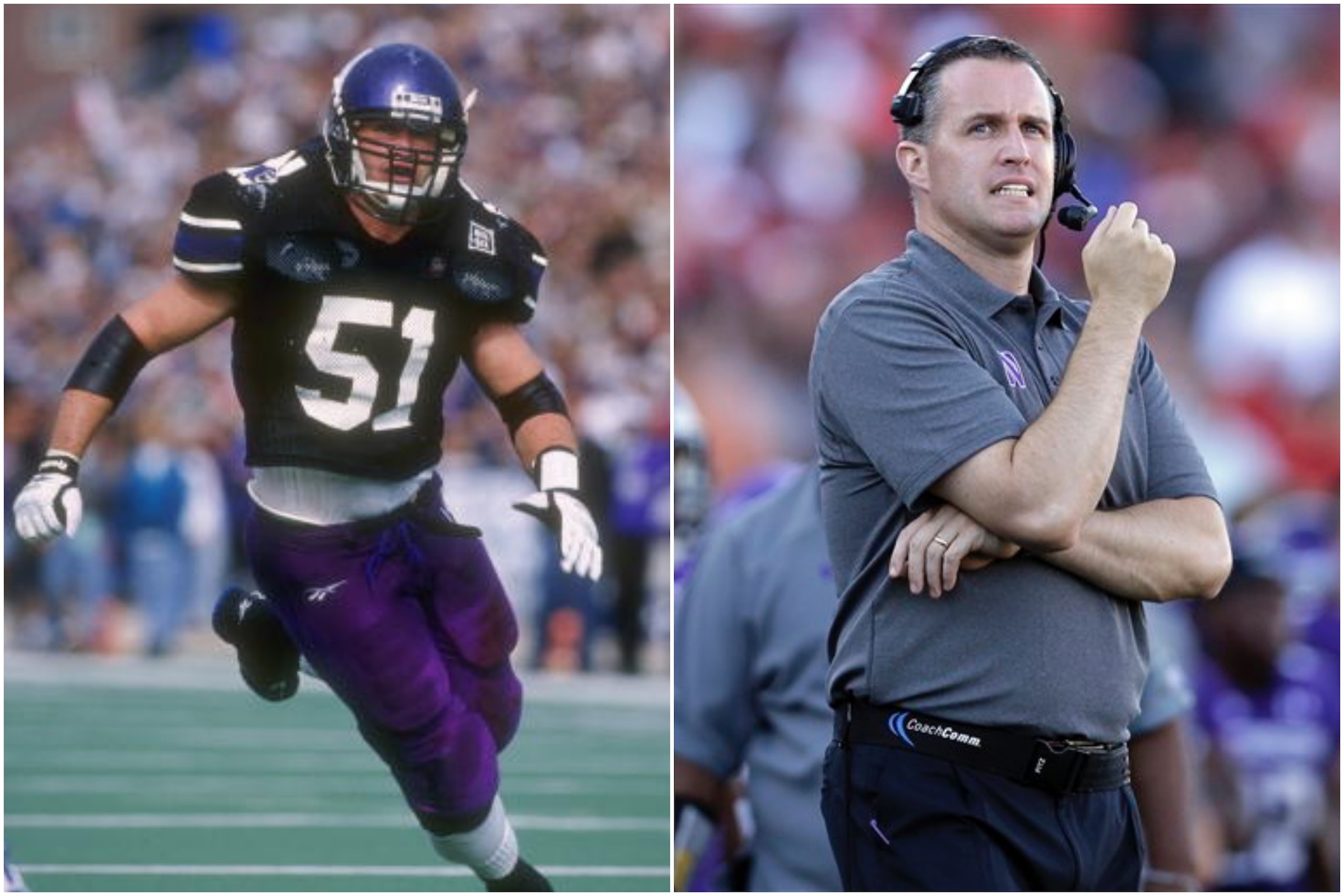
Michigan's Jim Harbaugh might have had the longest and most prolific football career among college head coaches, but Big Ten counterpart Pat Fitzgerald arguably had the best tenure as a collegiate player.
Fitzgerald was a star linebacker at Northwestern, where he now coaches, from 1993 to 1996. In 1995, Fitzgerald led a Northwestern defense that was tops in the country as the Wildcats won the Big Ten title and went to the Rose Bowl. A broken leg kept Fitzgerald from playing against USC in Pasadena, California, but he came back and pulled off a nearly identical season in 1996.
That year, Fitzgerald won his second consecutive Nagurski Trophy, Bednarik Award and Big Ten Defensive Player of the Year award. He was a consensus All-American yet again and finished his career with 299 tackles, 20 tackles for loss, five forced fumbles and three interceptions.
Undrafted out of Northwestern, Fitzgerald never played in the NFL and went into coaching. He's restored the tradition of stifling defense with the Wildcats, who made them their head coach in 2006 after the death of Randy Walker.
Linebacker: Kyle Whittingham
17 of 23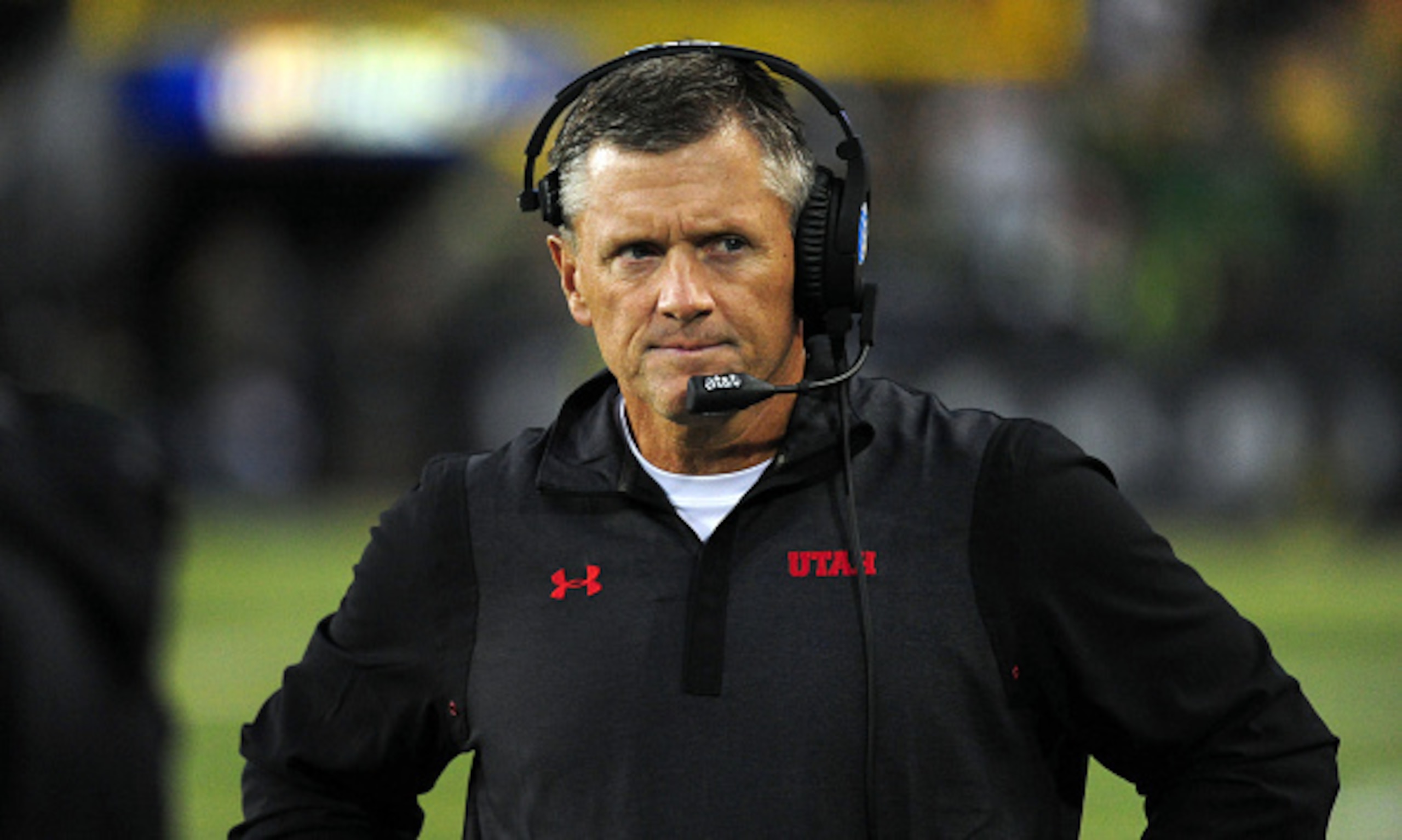
Head coach Kyle Whittingham has been a coach of some kind at Utah since 1994, but his college football career started on the other side of the Holy War at hated rival Brigham Young University.
Whittingham was a force at linebacker during his playing days for the Cougars from 1979 to 1981 after starting out as a running back. According to Utah, Whittingham played in the first four Holiday Bowls and was the Defensive MVP of the 1981 edition, which was a tight victory for BYU over Washington State.
That 1981 season was a huge one for Whittingham, who was named first-team All-WAC and the WAC Defensive Player of the Year for the 11-2 BYU squad. Whittingham was the leader on a defense that held five different opponents to single digits in scoring.
Whittingham bounced around on the professional ranks after graduating from BYU, playing linebacker for both the Denver Gold and the New Orleans Breakers of the USFL in 1983 and 1984. He finished his playing days in 1987 as a replacement squad member of the NFL's Los Angeles Rams.
Linebacker: Kevin Sumlin
18 of 23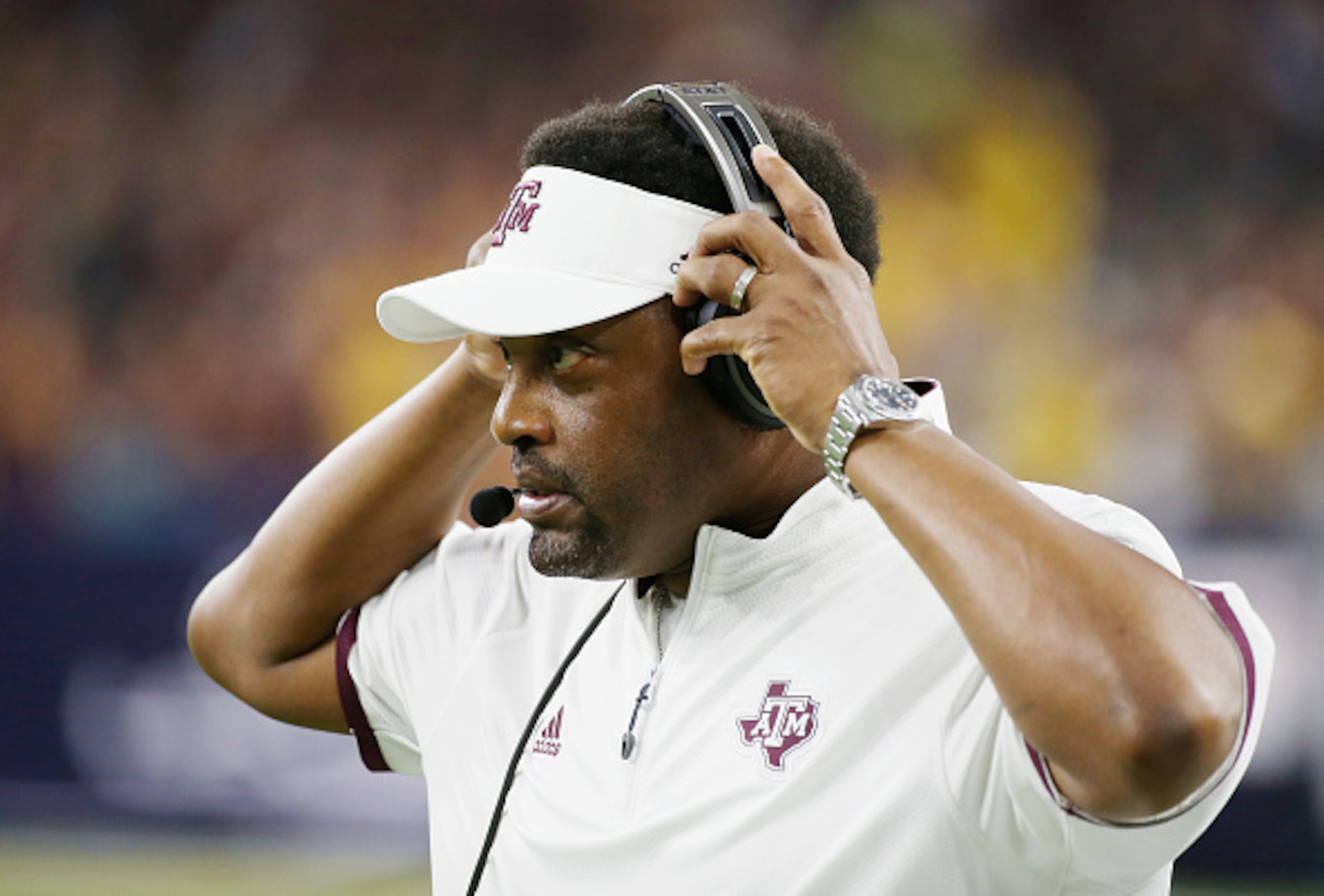
While Texas A&M head coach Kevin Sumlin is known for his offensive prowess these days, he spent his playing days trying to slow down attacks for the Purdue Boilermakers.
Sumlin started his career as a walk-on, but he ended up starting all four seasons at linebacker for Purdue from 1983 to 1986. His 375 career tackles at Purdue, which went to the Peach Bowl during his time on campus, rank seventh all-time in school history. Sumlin had 114 of them in his senior season alone.
"I didn't think walk-ons had much of a chance to really play," Sumlin's late father, William, told Brent Zwerneman of the Houston Chronicle in 2013. "But he stuck with it, and we were proud to see him get in the spring game that year. After the game, a kid came over to Kevin and asked him for his autograph."
Sumlin switched to offense early in his coaching career, leading wide receivers for most of his tenures at Wyoming, Minnesota, Purdue, Texas A&M and Oklahoma. He became known as an offensive guru as a head coach at Houston, but his roots in football are all about taking down ball-carriers.
Cornerback: Brad Lambert
19 of 23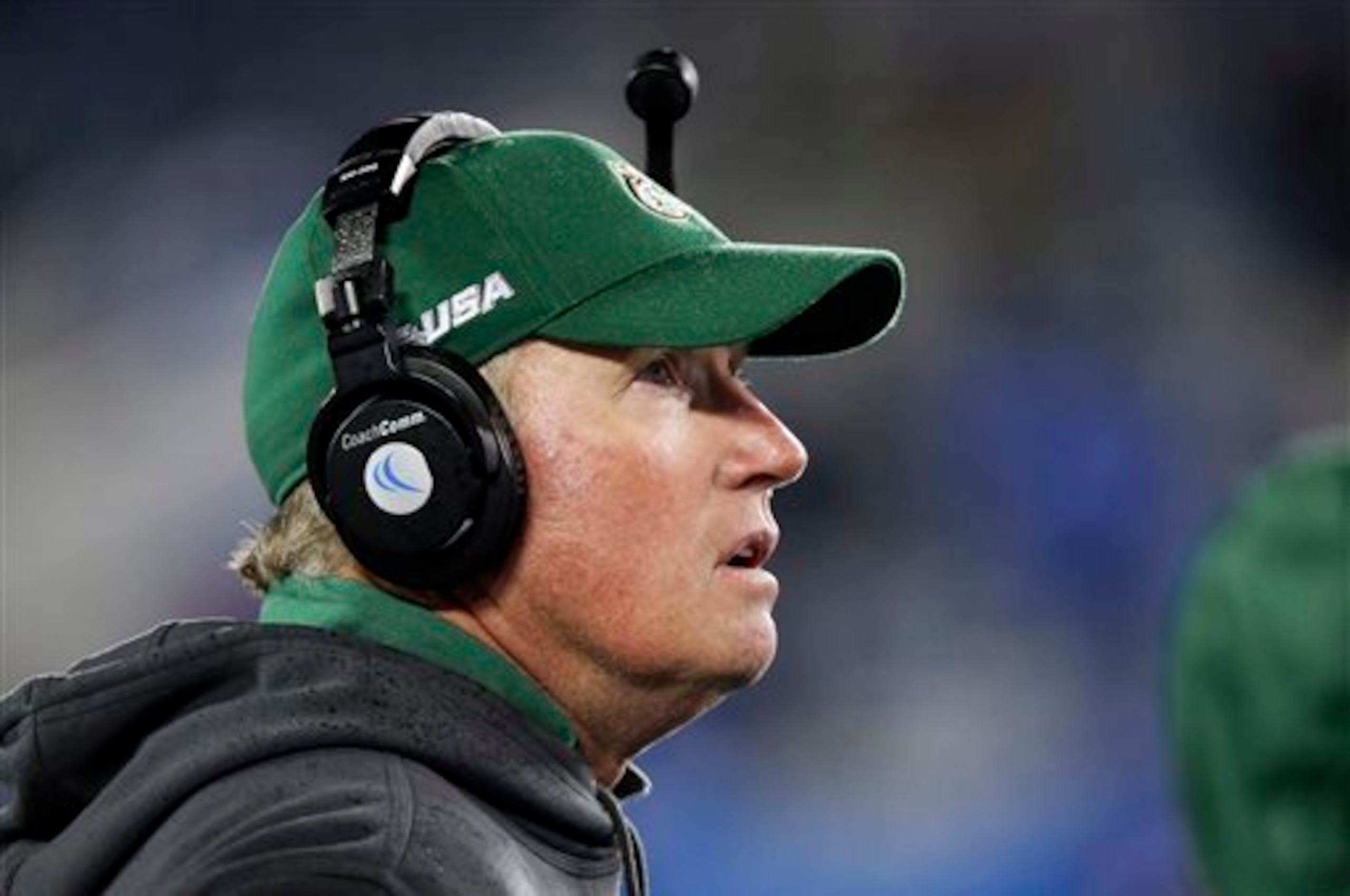
Because of the large number of current FBS head coaches who played in the secondary back in the day, this hypothetical team is going to have to line up in a 3-3-5 stack. Locking down one of those spots in the secondary is a relatively unknown FBS head man, the Charlotte 49ers' Brad Lambert.
But Lambert could ball during his playing days. From 1983 to 1986, he was an ace cornerback and a special teams weapon at Kansas State.
In 1984, Lambert picked off four passes and took three of them back for touchdowns, making him the nation's best in both pick-sixes and interception return yardage. He was named a second-team All-Big Eight for his highlight-heavy season.
Lambert then turned his defensive back prowess into a solid coaching career in which he has led strong units at Marshall, Georgia and Wake Forest. He left the Demon Deacons in 2011 to help start the Charlotte program, which began play in 2013 as a member of the FCS.
Cornerback: Paul Haynes
20 of 23
As he heads into a crucial 2016 season, head coach Paul Haynes is looking for several of his Kent State players to produce at the level he did for the Golden Flashes from 1987 to 1991.
Haynes, like many other current FBS head coaches, started his college career as a walk-on. But as a freshman in 1987—a winning season for Kent State—Haynes commanded attention for the Golden Flashes by leading the team with three interceptions. He became a fixture of the Kent State secondary after that, racking up a ridiculous 440 tackles during his collegiate career.
The cornerback who was nicknamed "Ice" at Kent State missed an entire season because of a knee injury but still battled back to become a two-time All-MAC selection.
Haynes has been a defensive assistant at several levels, including stints at Division II Ferris State all the way up to the NFL's Jacksonville Jaguars. The former Michigan State, Ohio State and Arkansas assistant took over at his alma mater in 2013, and he'll be eyeing a much-needed breakthrough this fall.
Safety: Kirby Smart
21 of 23
Former Alabama defensive coordinator Kirby Smart is now the head coach at his alma mater of Georgia, where he was a star safety for four seasons under Ray Goff and Jim Donnan.
Smart's calling card was interceptions, as he picked off 13 passes in four years with the Bulldogs. He led the team in picks in both his junior and senior seasons, and his career count is fifth all-time in Georgia history. Smart was a first-team All-SEC selection as a senior after starring with future NFL great Champ Bailey in the Bulldogs secondary.
"I think that's why so many people are excited to see Kirby back," Donnan told Chris Low of ESPN.com last month. "He's helped bring a lot of the Georgia people together. He's been able to jump right in because he does know so many people, and they know him. He knows what needs to be done here and knows what a championship program looks like."
Smart was an undrafted free-agent signing for the Indianapolis Colts in 1999 but never got past training camp with the team. He immediately went to work as a graduate assistant for Donnan at Georgia, which kick-started an excellent career of coaching defenses all across the South.
Safety: Lovie Smith
22 of 23
High-quality football followed new Illinois head coach Lovie Smith from a young age, as he was an all-state selection on three straight state championship teams in Big Sandy, Texas. In Smith's senior season, Big Sandy outscored its opponents 823-15 for the year, with Lovie leading the way on the now-legendary defense.
Smith continued to star on the football field after moving to defensive back at Tulsa, where he was named the Missouri Conference's newcomer of the year in 1976. He was an all-conference pick the next three seasons and was a two-time All-American for the Golden Hurricane.
"Anybody that has ever been around Lovie knew there was something special about him," former Tulsa head coach Bill Blankenship told John Klein of the Tulsa World. "I came to Tulsa in the same recruiting class with Lovie, and we spent our time here together. ... He just had something that set him apart. He seemed to know and understand everything."
Smith went into coaching after graduation from Tulsa, returning to Big Sandy as its defensive coordinator. Twenty-four years later, he became the head coach the NFL's Chicago Bears.
Safety: Bob Stoops
23 of 23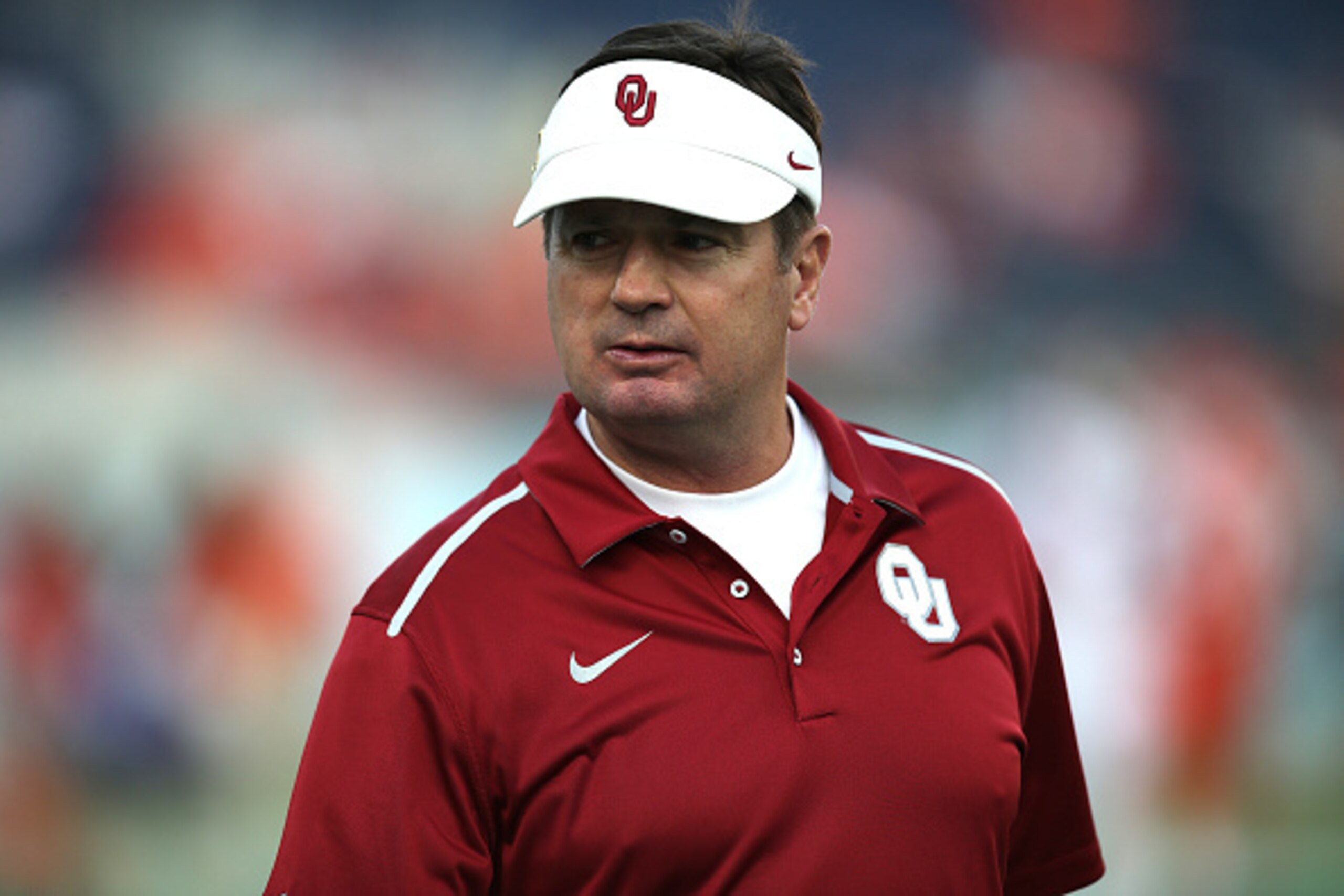
The members of the famous Stoops college football family all played defensive back at Iowa during their time there, but Oklahoma head coach Bob Stoops had the best career of them all.
Stoops started for all four of his seasons as a safety at Iowa from 1979 to 1982, picking off 10 passes during that timespan. Under Hayden Fry, Stoops became a two-time All-Big Ten performer and was a team MVP as a senior. Current Iowa head coach Kirk Ferentz was one of the assistant coaches over Stoops at Iowa.
"Bob was a skinny free safety when I got to Iowa in 1981," Ferentz said, per Iowa's website. "That team had a great attitude. Bob was a big part of that. He was a junior that year but truly one of the leaders on the defense. You can tell he was a coach's kid. He was really smart, very tough, tenacious player."
Stoops didn't play football past Iowa, as he jumped right into coaching with a job as a graduate assistant under Fry with the Hawkeyes. He would go on to coach defensive backs at Kansas State during its remarkable program turnaround and lead the defense at Florida before taking over as Oklahoma's head coach in 1999.
All historical stats courtesy of Sports-Reference.com unless otherwise noted.
Justin Ferguson is a National College Football Analyst at Bleacher Report. You can follow him on Twitter @JFergusonBR.

.jpg?w=2560 "NFL investigating 2 referees for separate viral exchanges")
.jpg?w=2560 "Report: Chiefs Contact Hill's Agent")
.jpg?w=2560 "OBJ Calls Out Giants 😳")
.jpg?w=2560 "Tyreek makes another cryptic post amid Chiefs rumors")