With Unshakable Resiliency, Kyle Lowry and DeMar DeRozan Can Shock the Cavs
TORONTO — Twenty thousand seats line the Air Canada Centre, but they are empty. The high-definition scoreboard is dark, the speakers silent.
On game nights, the arena is packed and booming, a cauldron of happy chaos and national pride. But sometimes DeMar DeRozan craves the silence.
So last Friday—with his Toronto Raptors trailing 2-0 in the Eastern Conference Finals, their season on the line—DeRozan arranged a late-night shooting session. Just DeRozan, a few friends and an assistant coach in a near-empty arena.
TOP NEWS

J-Dub Suffers Gruesome Injury
Mazzulla Weighs In on Brown-Tatum Drama

Blockbuster Trade Idea To Shake Up the East
He did the same late Sunday, on the eve of Game 4.
"It eases my mind, more than anything," DeRozan told B/R on Monday night, after leading Toronto to a second straight victory and a 2-2 tie with the Cleveland Cavaliers.
"When you love to do something, you just want to do it," DeRozan said. "And you feel more comfortable when you're in this gym shooting and there's not 20,000 people here. It kind of makes else easier when it is 20,000 people in here, because they don't know you was in here the night before, at 1 o'clock in the morning, working on what you love to do."
It's possible DeRozan has never loved the job more—or that his dedication has ever been more critical.
His scoring propelled the Raptors to their first conference finals, and has pushed them—improbably—within two wins of the franchise’s first NBA Finals appearance.
The Cavaliers, who host Game 5 on Wednesday, remain the favorites in this series, as fragile as they may now appear. They have the bigger stars, the deeper roster, the more extensive experience.
But it's no longer crazy to envision a championship series decided north of the border. Or to envision DeRozan and backcourt mate Kyle Lowry leading this paradigm shift, despite their own shaky reputations.
It took the Raptors seven games to dispatch the Indiana Pacers in the first round and another seven to knock out the badly depleted Miami Heat, all while DeRozan and Lowry drifted in and out of focus. There might not be a more confounding pair of All-Stars in the league.
Some nights, the Raptors' guards are brilliant—combining for 63 points to close out the Heat and 67 points in Game 4 of this series—and some nights they disappear entirely, making everyone wonder how Toronto even made it this far.
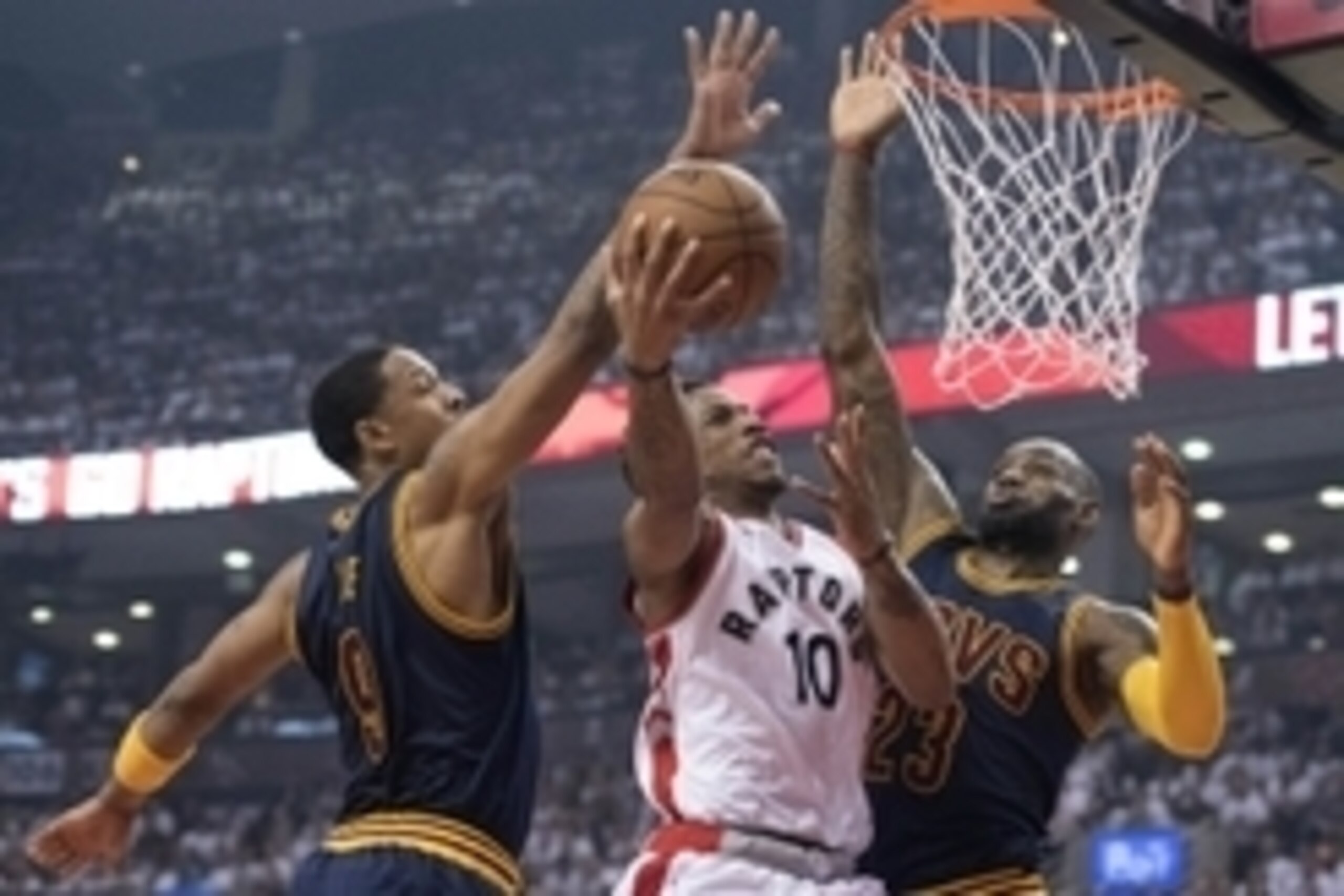
DeRozan shot 10-of-37 in the first two games of the postseason and was benched for the fourth quarter of Game 2 against Indiana. He’s broken the 30-point plateau five times in these playoffs—including the last two games against Cleveland—and he’s failed to top double digits in three games.
When DeRozan is at his best—all silky drives and smooth pull-up jumpers—he looks like a national treasure. At his worst, the jump shot wavers, the confidence flags and his game turns as clunky as a Nickelback album. Lowry has been just as unpredictable.
"One thing about us," DeRozan said, "we can take the bad with the good any day. It’s life, man."
Monday was a good night, with Lowry and DeRozan each breaking the 30-point mark while shooting better than 60 percent. That made them the first teammates to do so in a conference finals game since the Phoenix Suns' Charles Barkley and Dan Majerle in 1993, per ESPN Stats & Info.
"I think some games we haven’t shot the ball well, and we just continue to go back and understand the work," Lowry said.
For DeRozan, the work starts at 11 p.m., sometimes later, on that empty Air Canada Centre floor. Some nights, he’s joined by assistant coach Rex Kalamian. Some nights, he's alone.
The late-night shooting sessions have been a staple of DeRozan's routine, but they have taken on added importance this postseason. He badly jammed the thumb on his right (shooting) hand in Game 1 of the second round and has been dealing with pain and awkwardness ever since.
The lasting image of that series was DeRozan, sitting and wincing on the bench during timeouts, while Alex McKechnie, the Raptors' director of sports science, tightly wrapped the thumb with a red shoelace—a means of momentarily pushing out the swelling.
Still, DeRozan's shooting suffered, and pundits wondered all over again if the Raptors' star was simply shrinking under the pressure of the moment.
A closer inspection reveals the truth: DeRozan has been protecting the thumb ever since, using his left hand to rebound whenever possible, to reach and catch and do anything other than shoot. He still has difficulty gripping the ball with his right hand.
"I just had to deal with the pain tolerance, because it was tough," DeRozan told B/R. "It's easier to play with other things banged up. But when it's your hand, which controls your shooting, it just took me a while to get the pain tolerance, get to accepting it the way I wanted to, and just being comfortable with it."
DeRozan said he hasn’t altered his shooting stroke to compensate—"just moreso understanding when you pass or you catch the ball a certain way, or a certain move you do, you’re going to feel the pain more this way."
Repetition creates comfort, and so those solitary shooting sessions have become a form of rehab as well as a meditative exercise—"my calm before the storm," DeRozan said.
Something has worked. DeRozan is shooting 52.4 percent from the field in this series, going 26-of-47 in the two home games, despite being hounded for long stretches by LeBron James. Lowry also caught his stride at home, going 21-of-33 over the last two games.
The two seem perfectly matched, a pair of happy underdogs who delight in defying expectations.
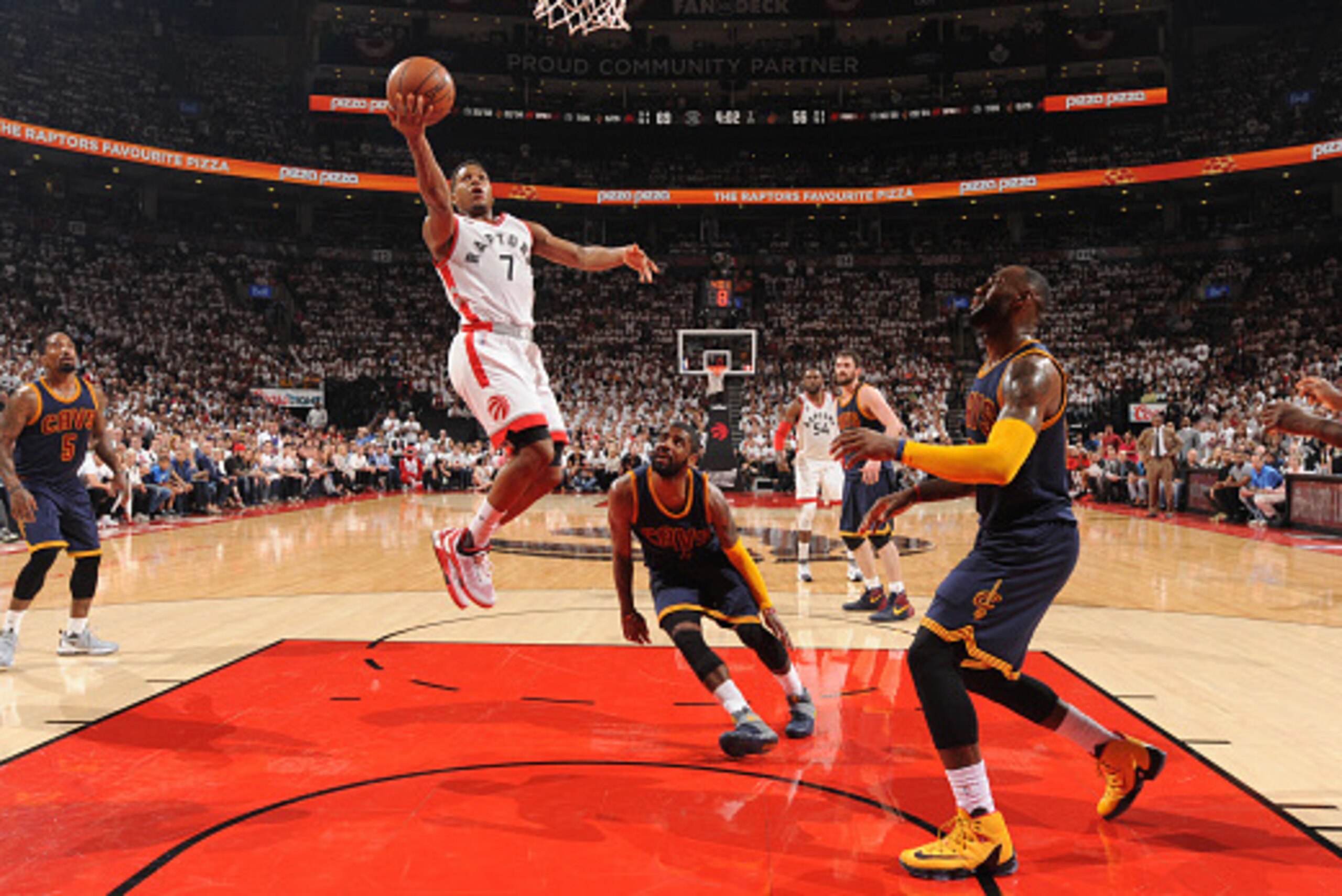
"Both of them have been questioned the five years I've been here," head coach Dwane Casey told B/R. "They've always bounced back. I think it's just something in their DNA. They're resilient. They're tougher than people give them credit for."
Casey added, "I never lost faith in them."
The Raptors have been underestimated, sure, but they are easy to underestimate.
DeRozan isn't a physical freak, like James or Kevin Durant. Lowry doesn’t breath fire like Russell Westbrook or shoot magic from his fingertips like Stephen Curry.
If you ranked the stars still playing this spring, the Raptors' guards would be eighth and ninth—and that's not an insult, just a basic fact. Curry, James and Durant have MVP trophies; Westbrook and Draymond Green are evolutionary forces; Klay Thompson is among the all-time greatest shooters; and Kyrie Irving is just splendidly gifted. (Where Kevin Love ranks might depend on the day.)
Yet here are the Raptors, still without star center Jonas Valanciunas, still playing in late May, threatening to end James' five-year streak of Finals appearances. Toronto is 4-3 against Cleveland, counting regular-season games, and suddenly an upset doesn’t seem so ridiculous.
The Cavaliers will unleash the pyrotechnics Wednesday and crank up the artificial noise beyond reason, but the Raptors are assured of this much: There will be one more game back home and one more night of quiet solitude in between—just a man, a ball and 20,000 empty seats.
Howard Beck covers the NBA for Bleacher Report and is a co-host of NBA Sunday Tip, 11am-1pm ET, on SiriusXM Bleacher Report radio. Follow him on Twitter, @HowardBeck.



.jpg?w=2560 "Latest Peyton-Colts Rumors")
.jpg?w=2560 "Ugly Jets Scoring Stat 😳")

.jpg?w=2560 "Landing Spots for Trade Candidates 📍")