8 Most Overpaid Coaches in College Football Today
College football is big business. You knew that already, but if you want proof, just look at the salaries pulled down by head coaches across the nation. Thanks to lucrative television deals fueled by conference realignment, college programs are as flush with cash as they’ve ever been.
Last fall, 16 coaches across the nation made at least $4 million, according to USA Today. All seven SEC West coaches made at least $3.96 million, with Alabama’s Nick Saban topping the division (and the nation) at $7.1 million.
Some coaches, like Saban, have earned that hefty paycheck. For others, there are questions about whether their results match the figure on their direct-deposit slip that arrives at the bank every two weeks.
In other words, they’re overpaid.
Here’s a look at eight of the most overpaid coaches in the Football Bowl Subdivision. These are coaches who simply haven’t won enough to justify their salaries, especially compared to others in their salary bracket.
Agree? Disagree? Let us know in the comment section.
Steve Addazio, Boston College
1 of 8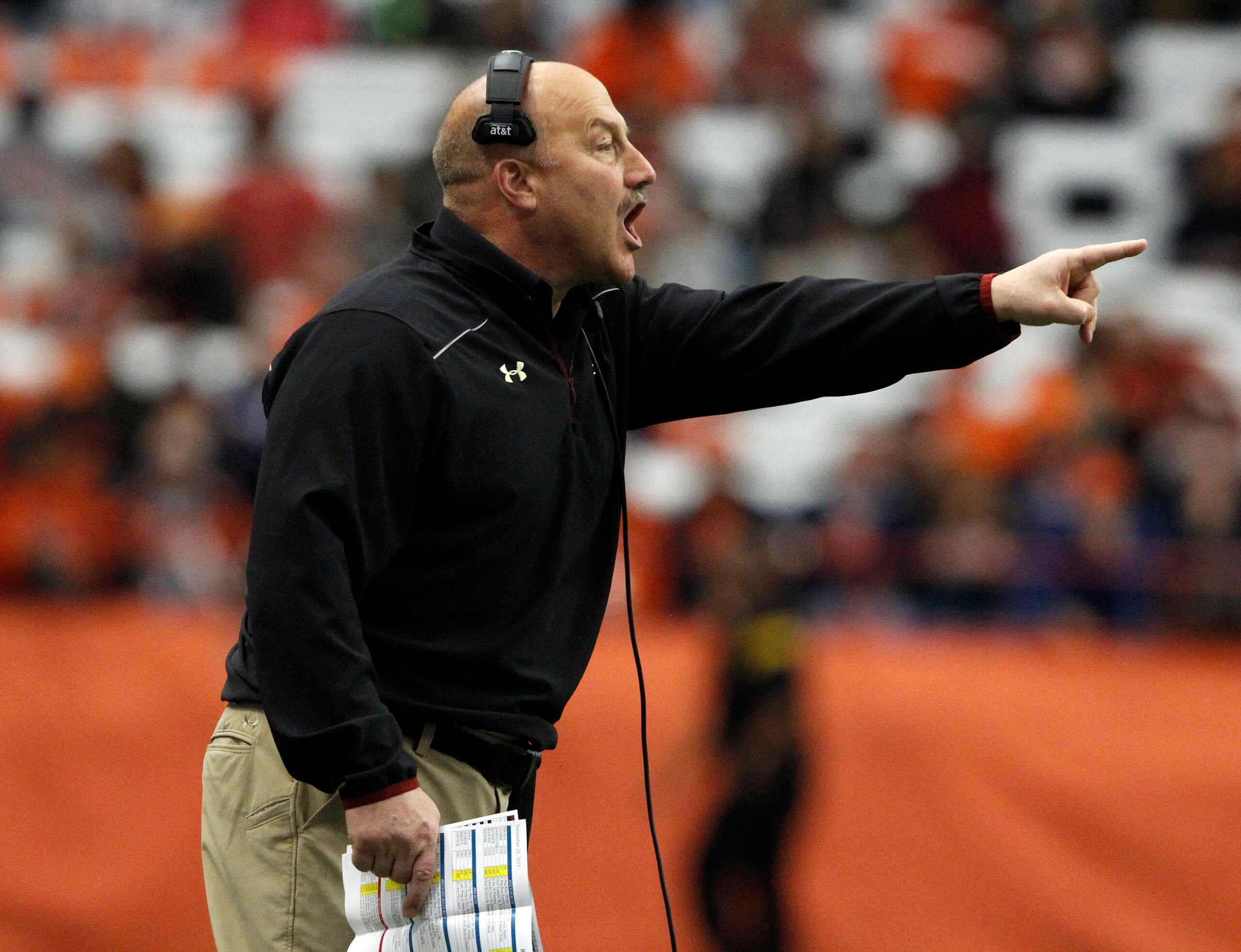
Steve Addazio might seem like an odd addition on this list. After all, the Boston College head coach's salary ranked No. 41 among FBS head coaches in 2015, making $2.6 million. But if you were unlucky enough to see the Eagles last fall, you might understand this better.
Following a pair of 7-6 seasons under Addazio, the Eagles’ wings were clipped in 2015. They went winless in the ACC and finished 3-9 overall. Consider this: Addazio made more than Stanford’s David Shaw (who has won three Pac-12 titles in four seasons), Northwestern’s Pat Fitzgerald, Duke’s David Cutcliffe and North Carolina’s Larry Fedora last fall.
Does that sound like someone who earned his salary in 2015? Of course not.
James Franklin, Penn State
2 of 8
In three seasons at Vanderbilt, James Franklin proved that he can, in fact, coach. The Commodores have traditionally been one of college football’s true doormats, but Franklin did something few others have done in Nashville: win.
He took Vanderbilt to three bowls in three seasons as head coach, and won nine games in each of his last two seasons, finishing with a 24-15 record. That earned him a shot at leading a troubled Penn State program that was still recovering from the Jerry Sandusky sexual abuse scandal and former head coach Bill O’Brien’s decision to leave for the NFL’s Houston Texans after just two seasons in State College.
Franklin’s Vandy success has yet to translate to Penn State. The Nittany Lions are 14-12 overall and 6-10 in Big Ten play under his watch. Last fall, he made $4.4 million, putting him No. 8 nationally—ahead of national title-winning coaches in Les Miles and Steve Spurrier. That’s lofty territory, and it’s hard to say that huge salary is justified, at least right now.
Kliff Kingsbury, Texas Tech
3 of 8
Around Lubbock, Texas, Kliff Kingsbury is something of a golden boy. Kingsbury excelled in Mike Leach’s wide-open offense as the Red Raiders quarterback, throwing for 12,429 yards and 95 touchdowns from 1999-2002.
Following a five-year pro career, he made a quick rise up the collegiate coaching ranks, getting hired as head coach of his alma mater at the age of 33. Kingsbury is handsomely paid (he made $3.1 million last fall, No. 31 nationally), but it’s hard to say that he’s given Tech officials a good return on their investment.
Kingsbury is just 19-19 overall and 10-17 in Big 12 games as Tech's head coach. Following an 8-5 debut season in 2013, the Red Raiders are 11-14 under his watch, including a 4-8 mark in 2014. Last fall, he made more than far more established coaches like Bill Snyder, Paul Johnson, Frank Beamer and his mentor, Leach. Kingsbury clearly has potential, but he has yet to deliver on it as the Red Raiders’ leader.
.png?w=2560)

Gus Malzahn, Auburn
4 of 8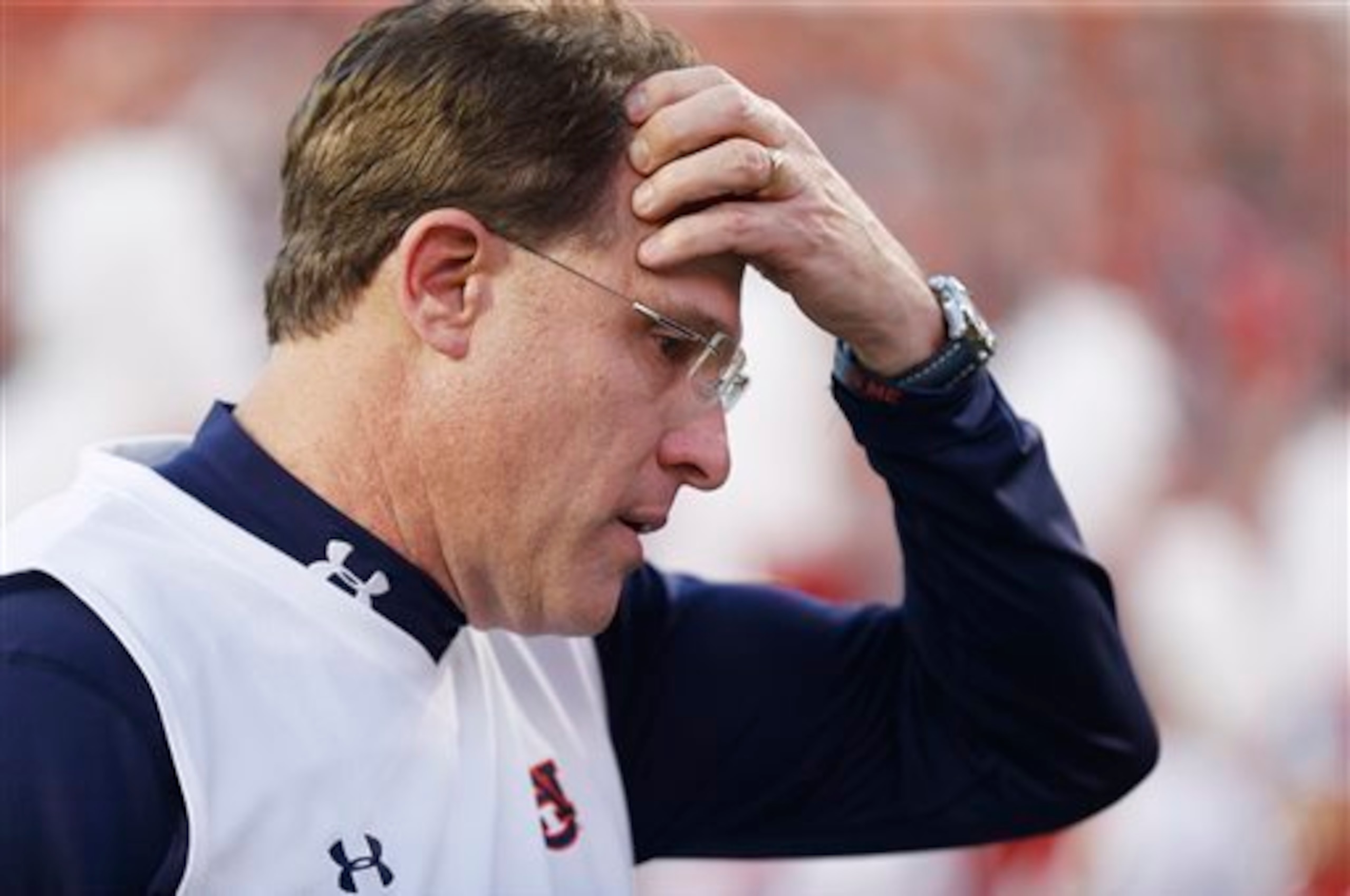
Gus Malzahn was once the guy who could do no wrong at Auburn. His hurry-up, no-huddle offense, combined with Cam Newton’s considerable talents, carried the Tigers to the 2011 BCS National Championship Game with Malzahn calling the plays as offensive coordinator. Following a one-year stint as Arkansas State's head coach, he returned to the Plains to take over a team that had just gone winless in SEC play under Gene Chizik.
He authored a huge turnaround, going 12-2 in his first season and finishing as national runner-up following a last-second title-game loss to Florida State. Since then, however, some of the bloom has come off Malzahn’s rosy stock. He made $4.1 million last fall, but that hardly seems like a bargain.
Over the last two seasons, Auburn is just 15-11 and 6-10 in SEC play. Last fall, the Tigers squeaked into the Birmingham Bowl at 7-6, including an overtime win over FCS foe Jacksonville State. Malzahn told ESPN.com's Chris Low that he needs to be more of a hands-on coach and less of a CEO:
"I probably tried to be too much of a CEO last season. My teams have taken on my personality in the past, and I think we sort of had four or five different personalities last year, all the different coaches' personalities. That's on me. That's my fault. You live and learn, and I learned the hard way last year.
"
Entering his fourth season as AU head coach, Malzahn must win more to justify his significant salary.
Chris Petersen, Washington
5 of 8
When Washington hired Chris Petersen three years ago, it was hailed as a big win for the Huskies program. It’s easy to understand why. Petersen won—and won big—in eight seasons at Boise State, going 92-12. That includes seven seasons of at least 10 wins and a pair of unbeaten seasons (2006, 2009), which makes it a bit easier to justify a $3.4 million annual salary.
However, his results with Washington have been less than impressive. The Huskies are 15-12 in two seasons under Petersen’s watch, going 8-6 in 2014 and 7-6 last fall. They’re 8-10 in Pac-12 play as well. Washington returns a talented roster led by quarterback Jake Browning and running back Myles Gaskin, which means Petersen could quiet some of his critics. So far, however, he hasn’t earned his lofty status.
Bobby Petrino, Louisville
6 of 8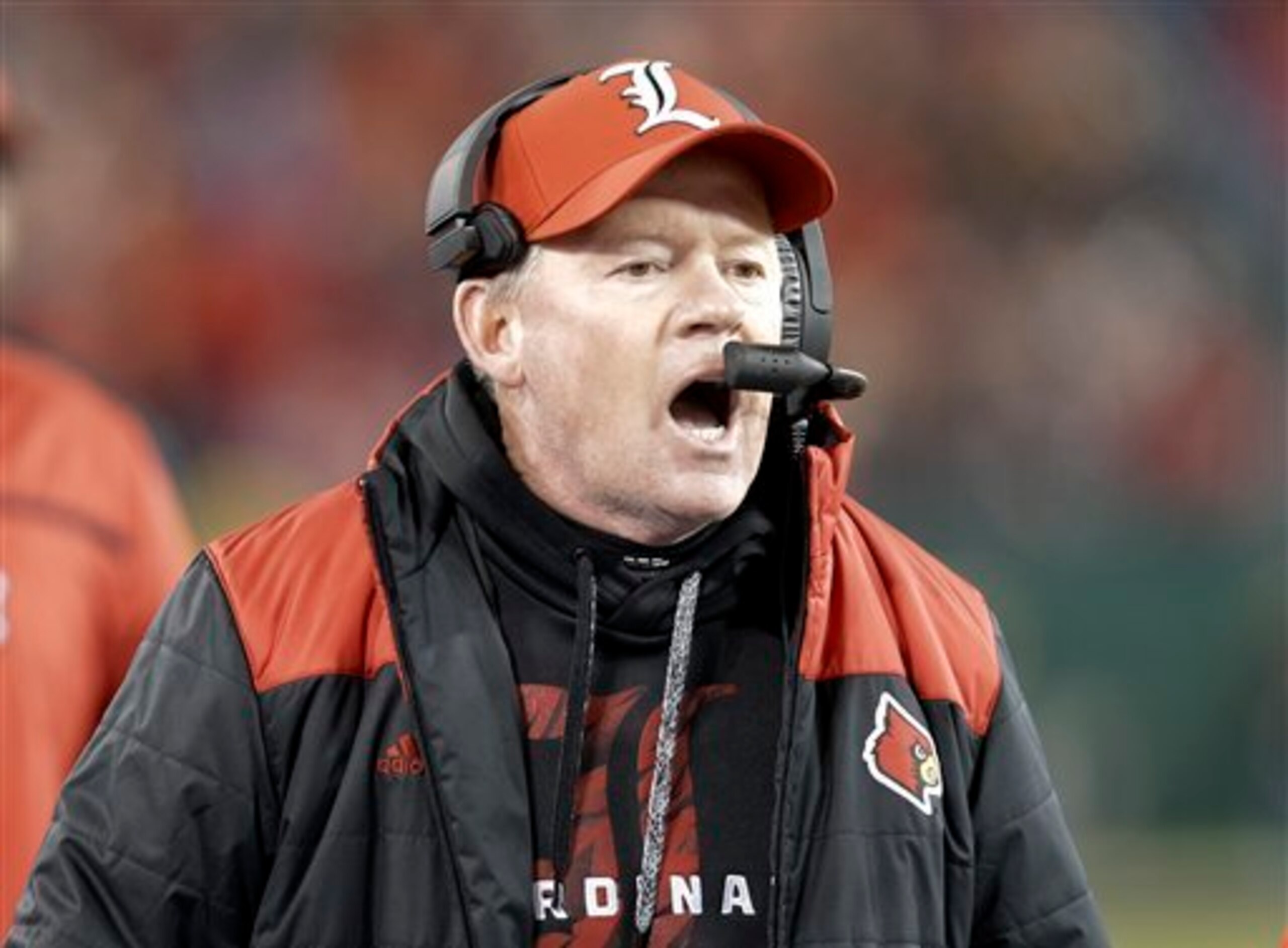
The second time around at Louisville has been good to Bobby Petrino. The much-traveled coach has the Cardinals on solid footing in the tough ACC Atlantic Division. In two seasons under Petrino, Louisville is 17-9 and 10-6 in ACC play. That’s deserving of a solid contract, but the deal that UL officials gave him Thursday is a bit surprising.
Petrino agreed to a seven-year, $30.6 million contract extension that averages $4.4 million per season beginning in 2017, according to WDRB.com's Eric Crawford. That is a significant bump from the $3 million that he earned in 2015, and Petrino is now the third-highest-paid coach in the ACC behind Florida State’s Jimbo Fisher ($5.2 million) and Clemson’s Dabo Swinney (who agreed to an extension of his own this week, bumping his pay to $5 million annually).
Now, Petrino is a solid coach with a pair of league titles from his first stint at Louisville. But last fall, his new salary would have ranked No. 10 nationally. Is the third-best coach in the ACC Atlantic worth that? Probably not.
Charlie Strong, Texas
7 of 8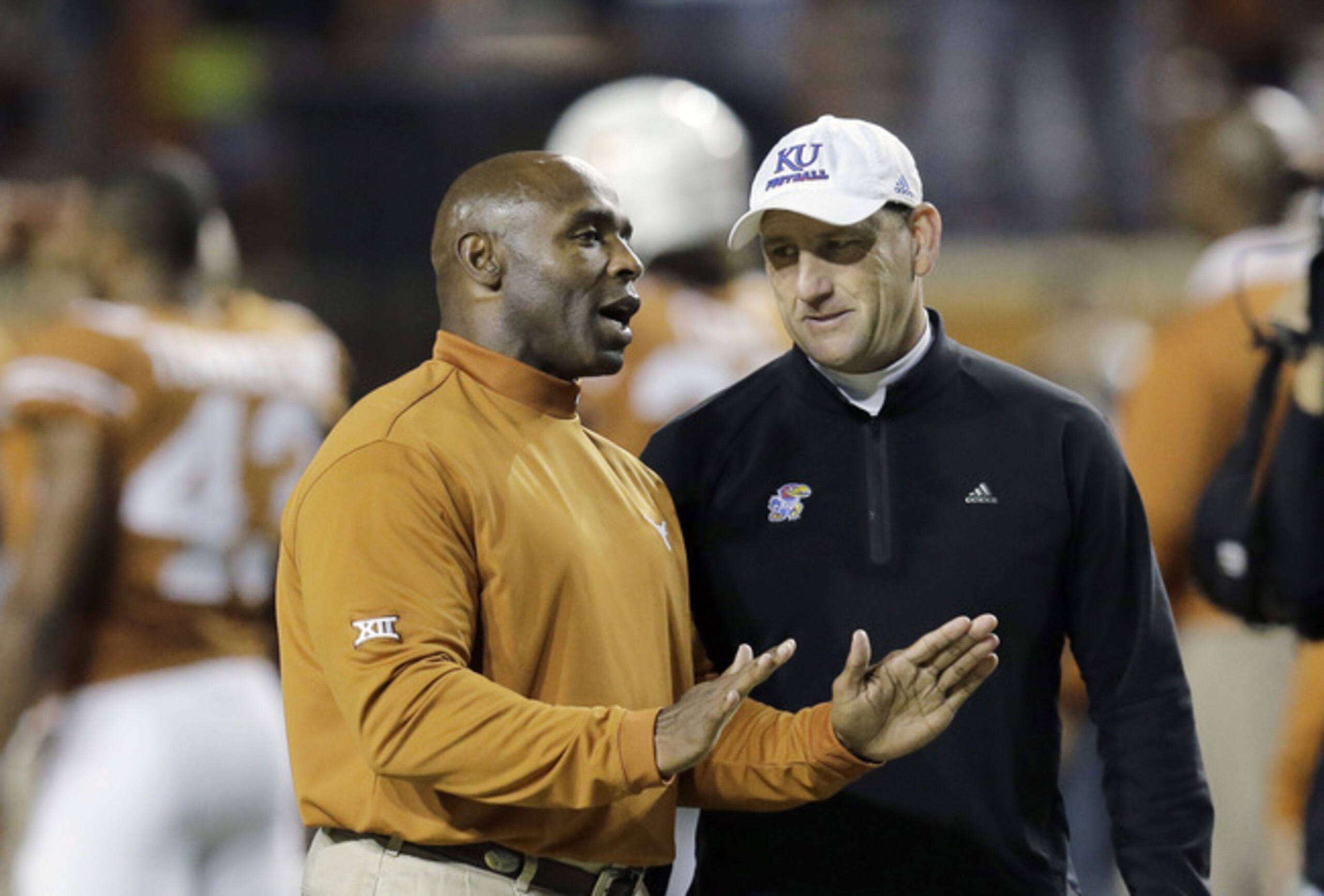
Everything is bigger at Texas, including the resources. So when Charlie Strong was hired to turn around the Longhorns’ floundering program three years ago, he was given a significant contract. Last fall, Strong earned $5.1 million, No. 6 nationally among FBS coaches.
Has he earned it? Not quite. In two years under Strong, Texas is 11-14 with a 6-7 mark in 2014 and 5-7 last fall. The Longhorns are 9-9 in Big 12 play and missed postseason play last season. Former head coach Mack Brown left Strong a rebuilding job, but most Texas fans expected more progress by now—especially for $5 million-plus per season.
Kevin Sumlin, Texas A&M
8 of 8
Four years ago, Texas A&M entered the SEC with a bang. Behind first-year coach Kevin Sumlin and previously unheralded quarterback Johnny Manziel, the Aggies won at Alabama and finished 11-2 and ranked No. 5 nationally. Manziel won the Heisman Trophy and followed it up with a 9-4 record in 2013.
Sumlin was rewarded with a contract extension following the 2013 season that pushed his pay to $5 million annually. But it appears that Manziel took the magic with him when he left for the NFL. A&M is just 16-10 since, with a 7-9 mark and sixth- and fifth-place finishes, respectively, in the SEC West. The Aggies are just 4-9 against Top 25 teams over the past two seasons.
Following last season’s 8-5 finish, a pair of blue-chip quarterback recruits, Kyle Allen and Kyler Murray, transferred, and Sumlin parted ways with offensive coordinator Jake Spavital. A&M enters a crucial 2016 season with Oklahoma graduate transfer Trevor Knight at quarterback. Sumlin has yet to earn his increased salary, and if he doesn’t start doing so soon, he could be in big trouble.
Unless otherwise noted, all salaries are from the USA Today survey.
.png?w=2560)



.jpg?w=2560 "Latest Peyton-Colts Rumors")