
Pro Player Comparisons for College Football's Top 25 Stars
We're a little more than one week away from the 2016 NFL draft, when the best college players in the country get started on their pro careers. In the lead-up to the draft, every prospect ends up getting compared to a current or former NFL player as a way of projecting what he'll be like at the next level.
These comparisons aren't limited just to outgoing college stars, though. Those still in school are regularly compared to NFL standouts who have similar skill sets, physical attributes or styles of play. It's by no means an exact science since every player is unique in his own way; then again, most projections are firmly rooted in guesswork.
Using Bleacher Report's list of top college football players entering spring practice, we've come up with comparisons for the 25 best. They're listed alphabetically rather than by their overall ranking.
Jamal Adams, S, LSU
1 of 25
Pro comparison: Tyrann Mathieu, Arizona Cardinals
Jamal Adams came to LSU as the No. 2-rated high school safety in the country, but as a true freshman, he spent most of his time playing nickel corner or on special teams. Regardless of the position, though, he showed off his knack for hard hits.
Last season saw Adams take over a starting safety spot and dominate, leading the Tigers in interceptions (four) while notching 67 tackles, six pass breakups and five tackles for loss. Now a junior, the 6'1", 211-pounder is rated by NFLDraftScout.com as the top strong safety in the 2018 NFL draft, though he's likely to come out for 2017.
And that's when the Honey Badger comparisons will start, and not just because both players honed their skills at LSU. Mathieu was a cornerback who converted to safety in Arizona, where he played for his first two years before moving back to corner in 2015.
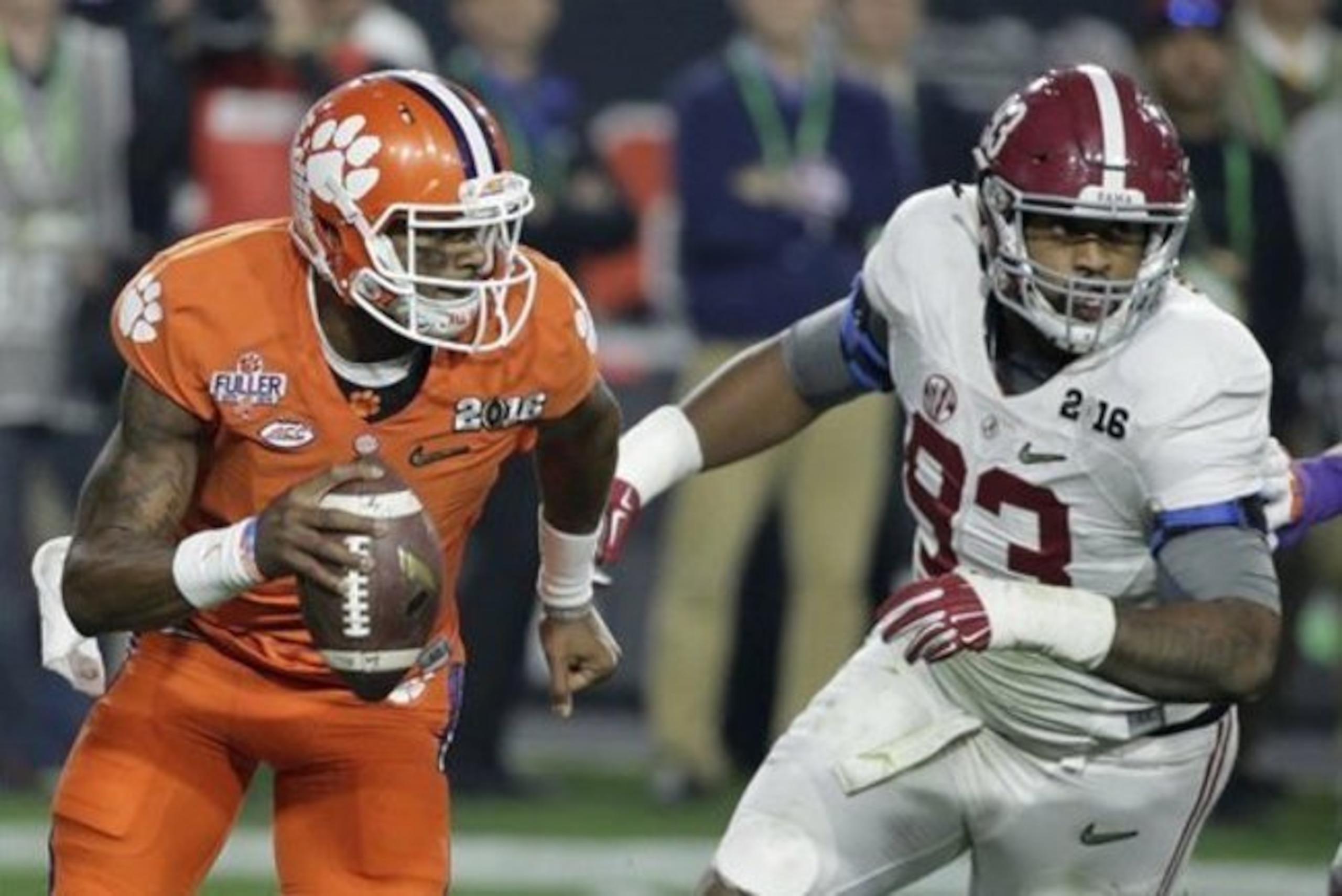
Jonathan Allen, DE, Alabama
2 of 25
Pro comparison: Jared Allen (retired)
A lot can happen between high school and the end of a college career, but Jonathan Allen isn't different from the monster of a defensive end he was in Virginia. He's added muscle to his 6'3" frame—which is now sitting at 294 pounds—but otherwise, the Alabama senior is the same imposing force on the line that he was in his teenage years.
In that respect, there's no need to adjust Allen's pro comparison we made three years ago.
Before coming to the Crimson Tide in 2013, Bleacher Report's Full Ride recruiting unit described his "tenacious play and playmaking ability" as similar to that of Jared Allen. Part of this was due to Jonathan Allen's ability to handle the run and the pass, which got even better at Alabama. He led the Tide in sacks (12) and tackles for loss (14.5) in 2015.
Jared Allen had 136 sacks in 12 NFL seasons, and he was no slouch against the run, either.
J.T. Barrett, QB, Ohio State
3 of 25
Pro comparison: Tyrod Taylor, Buffalo Bills
J.T. Barrett was included on our list of top players a year ago, and at that time, we compared him to the Kansas City Chiefs' Alex Smith. That was partly because Smith was the most successful Urban Meyer-coached NFL passer and because he was a similar player when he was at Utah, though not as much anymore.
A year later, Barrett is still very much the same mobile quarterback, one who is just as dangerous with his legs as his arm, but now that Taylor had a breakthrough season in Buffalo, he becomes a better comparison.
"When you watch each of them play, you will see that they get rid of it quickly and distribute the ball really well," former OSU quarterback Stanley Jackson told BTN.com.
Taylor threw for 3,035 yards and 20 touchdowns on 63.7 percent passing along with posting 568 rushing yards and four scores in 2015. Barrett had similar numbers as a redshirt freshman in 2014, and though he played less this past season, he maintained the same kind of accuracy (63.3 percent) and continued to drive defenses crazy on the ground.
.png?w=2560)

Quin Blanding, S, Virginia
4 of 25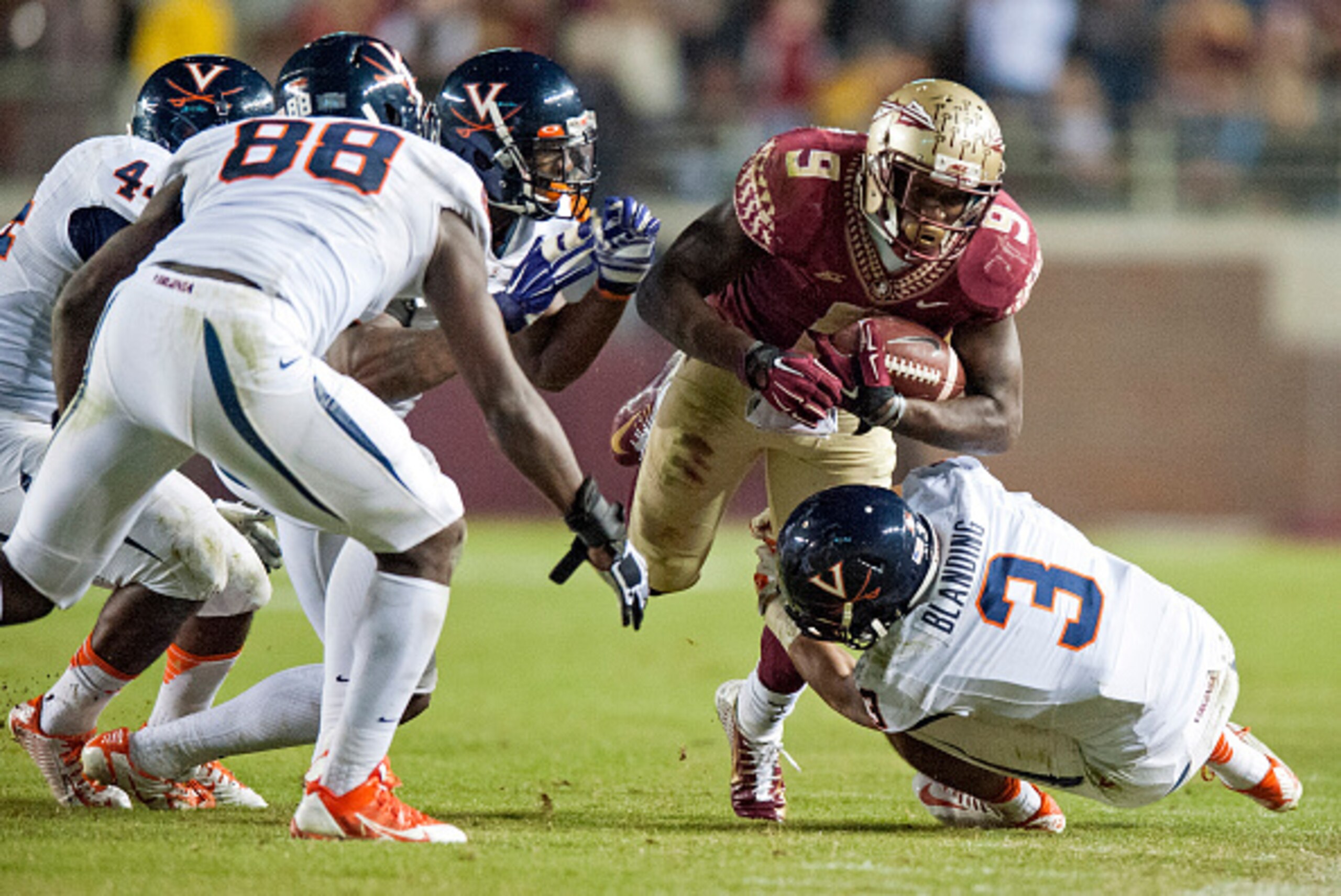
Pro comparison: Brian Dawkins (retired)
Having a defensive back among a team's leading tacklers is usually the mark of a struggling front seven. But for Quin Blanding, it has allowed him to prepare for a job at the next level where he figures to be just as involved at the line of scrimmage as in the secondary.
In two seasons with a struggling Virginia team, the 6'2", 205-pound Blanding has recorded 238 tackles, with 128 of them of the solo variety. He's only had 3.5 tackles for loss, though, because he's been too valuable on the back line, where he's intercepted four passes and had nine pass breakups in two years, but the instincts to sniff out the ball are evident.
Dawkins was the same way during his 16-year NFL career, which ended in 2011. He spent most of it at safety, though his tackle and pass-defending numbers showed a willingness to go all over the field to make the play.
Nick Chubb, RB, Georgia
5 of 25
Pro comparison: Todd Gurley, Los Angeles Rams
When Nick Chubb suffered a major knee injury last October, which ended his sophomore season, Georgia fans cringed at the images and wondered if their team's running backs were cursed. That's because it had been less than a year since the previous Bulldogs star rusher, Gurley, had blown out his knee and was lost for the season.
Though Chubb didn't play in Georgia's spring game Saturday or go at full speed during workouts, reports out of Athens are that his rehab is going quite well—coach Kirby Smart said he's been "overachieving"—and he's on track to play this fall, per Rivals. If that happens, Chubb will have that season to get himself back up to speed before what's likely a jump to the NFL for the 2017 draft.
And then he'd be continuing on the path Gurley has taken since his knee injury in November 2013, which included going in the first round of the 2015 NFL draft and then rushing for 1,106 yards as a rookie.
The injury similarity and their time as teammates aren't the only things that unite Chubb and Gurley. The 5'10", 220-pound Chubb is a little smaller than the 6'1", 226-pound Gurley, but he runs just as hard, and his desire to get back as quickly as possible is also a shared trait.
Dalvin Cook, RB, Florida State
6 of 25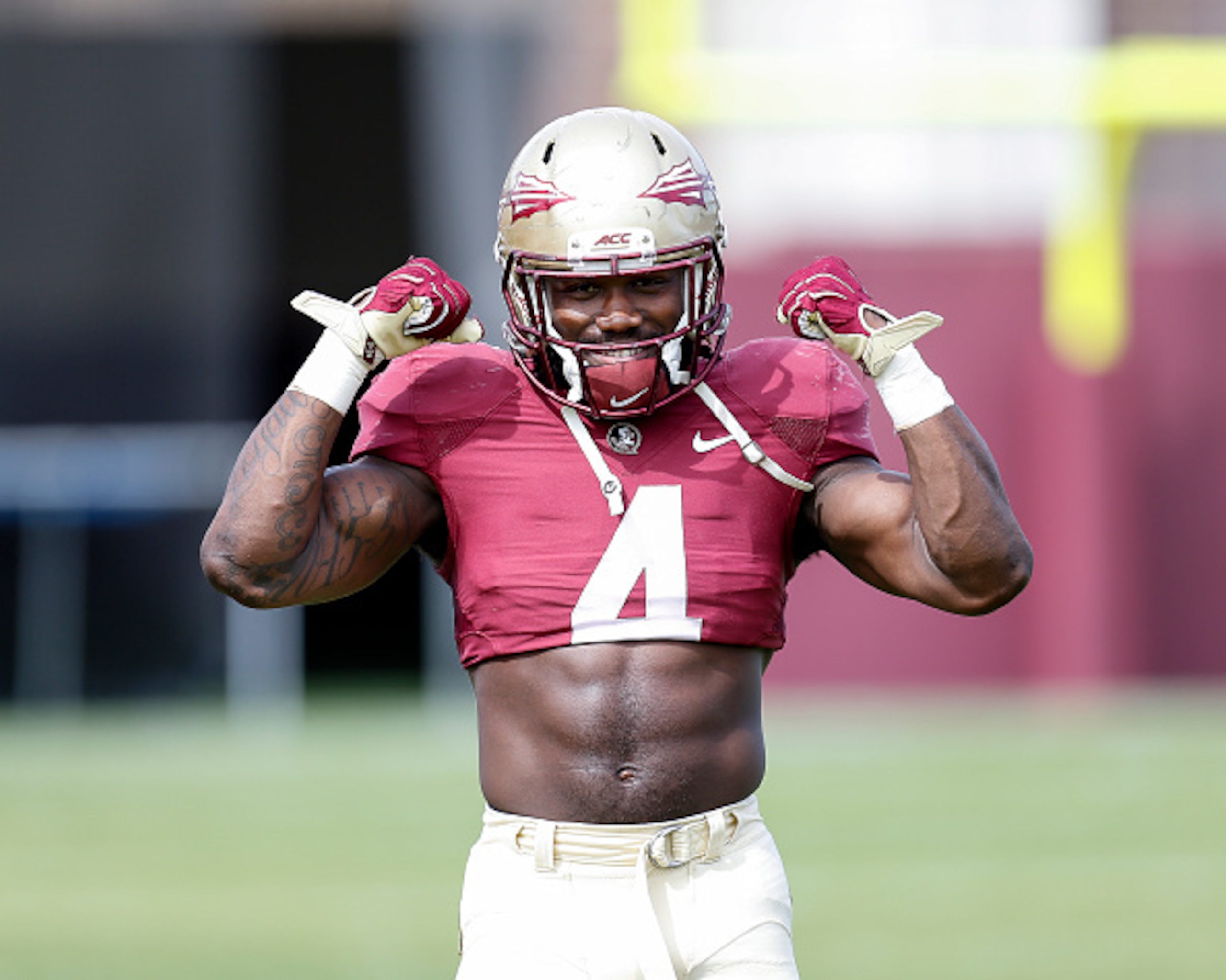
Pro comparison: Jamaal Charles, Kansas City Chiefs
A bum hamstring impacted Dalvin Cook at times last season, and this spring, he needed shoulder surgery to clean up issues related to a torn labrum he suffered soon after he enrolled at Florida State in 2014. Despite those ailments, Cook is the first Florida State rusher to have consecutive 1,000-yard seasons, is coming off a school-record 1,691 yards in 2015 and is on pace to be the Seminoles' all-time rushing leader by the end of his junior year.
In much the same way, Charles is Kansas City's career rushing champ with 7,220 yards despite a pair of season-ending knee injuries in 2011 and 2015. When not hurt, he has regularly been among the best running backs in the NFL, with five 1,000-yard seasons and the best yards-per-carry average (5.5) of any active rusher.
Cook considers himself to be like Charles and Le'Veon Bell of the Pittsburgh Steelers, because those are players who "run with patience...just know when to do things at the right time," per Robert Judin of Campus Insiders.
Though he's fast enough to run around defenders and has the strength to muscle through, Cook takes his time and waits for holes or run lanes to develop and then turns on the motor.
Leonard Fournette, RB, LSU
7 of 25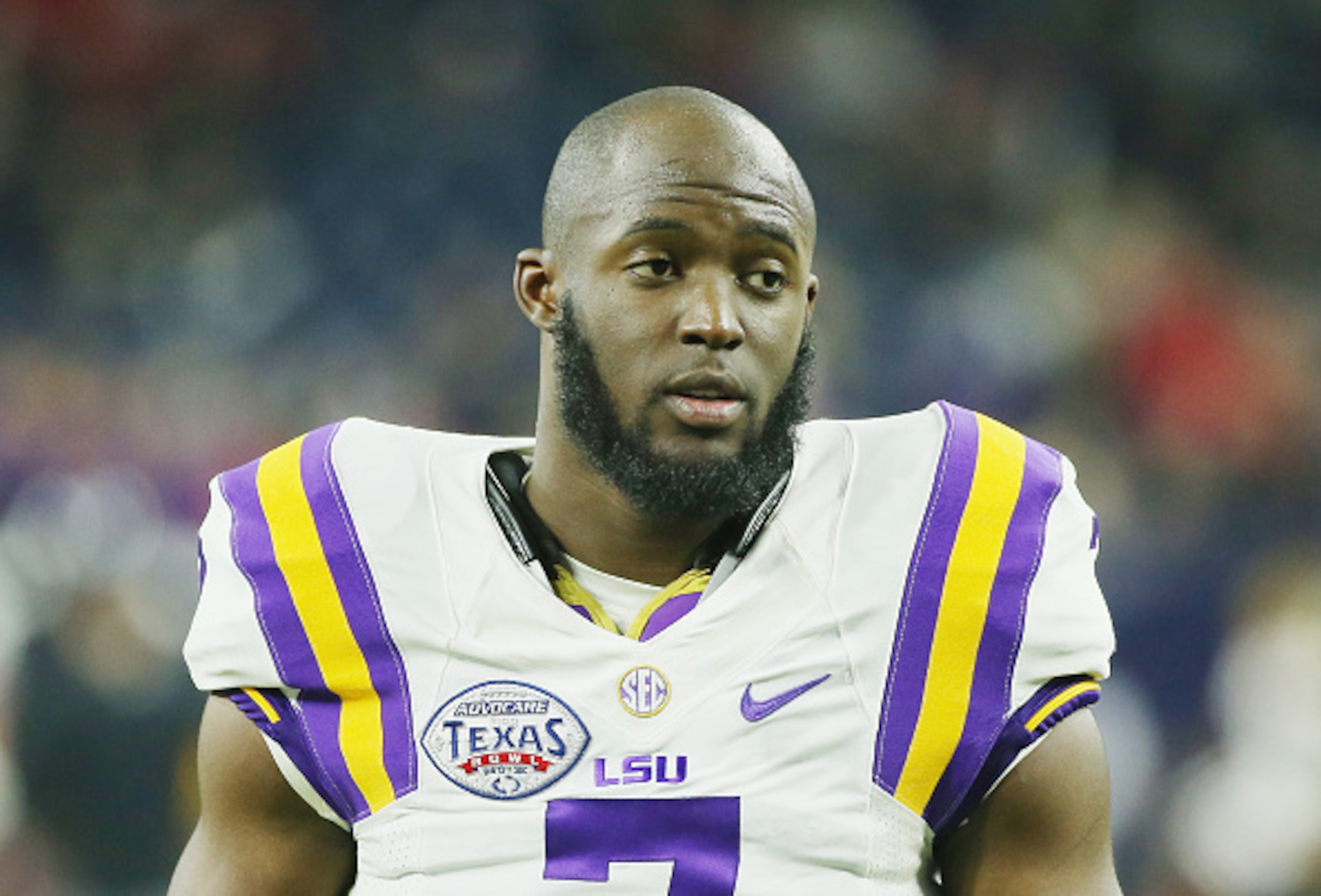
Pro comparison: Adrian Peterson, Minnesota Vikings
Every year, a college player gets anointed as the poster child of why the NFL should alter its eligibility rules to allow elite underclassmen a chance to enter the draft instead of waiting for after their junior year. Leonard Fournette has basically cornered the market on leading this movement with his play in college, with his sophomore season only adding to the debate.
"Fournette should be able to enter the NFL draft next spring because he will be 21 when the 2016 NFL season begins," Gary Washburn of the Boston Globe wrote in October.
No rules changes are in the works, so young studs like Fournette have to continue to wait three years to turn pro. But that doesn't affect comparing them to current or former pros, and it's been a common theme to contrast Fournette to Peterson in many ways. And not just because Peterson's junior year at Oklahoma ended up getting cut short because of injury, one of the many reasons used to justify why Fournette should have been eligible for the 2016 draft.
Peterson actually had his best year in college as a freshman, while Fournette was brought along slowly at first before he hit his stride toward the end of 2014 and then went full bore in 2015 with a school-record 1,953 yards. Both have lived and died by a physical style, one that encourages contact instead of avoiding it.
Royce Freeman, RB, Oregon
8 of 25
Pro comparison: Jonathan Stewart, Carolina Panthers
Gary Campbell has been Oregon's running backs coach for 33 years, during which time he's worked with pretty much every standout rusher the Ducks have produced. He might have sounded optimistic in 2014 when he told Tyson Alger of the Oregonian that then-freshman Royce Freeman was "a Jonathan Stewart kind of guy" and one who was "mature physically and mentally," but those words still ring true now.
The 5'11", 230-pound Freeman ran for a school-record 1,836 yards last season, after he became the first Oregon freshman to top the 1,000-yard mark in 2014. Stewart, who had 2,891 yards in his Ducks career from 2005 to 2007, didn't hit 1,000 yards in a season until his junior year despite coming in as the most heralded rushing recruit in school history.
The 5'10", 235-pound Stewart has carved out a decent NFL career, one that's been entirely with one team and has had its ups and downs. In 2015, he had his second-highest rushing output (989 yards) and added 218 yards in three postseason games, including the Super Bowl.
Myles Garrett, DE, Texas A&M
9 of 25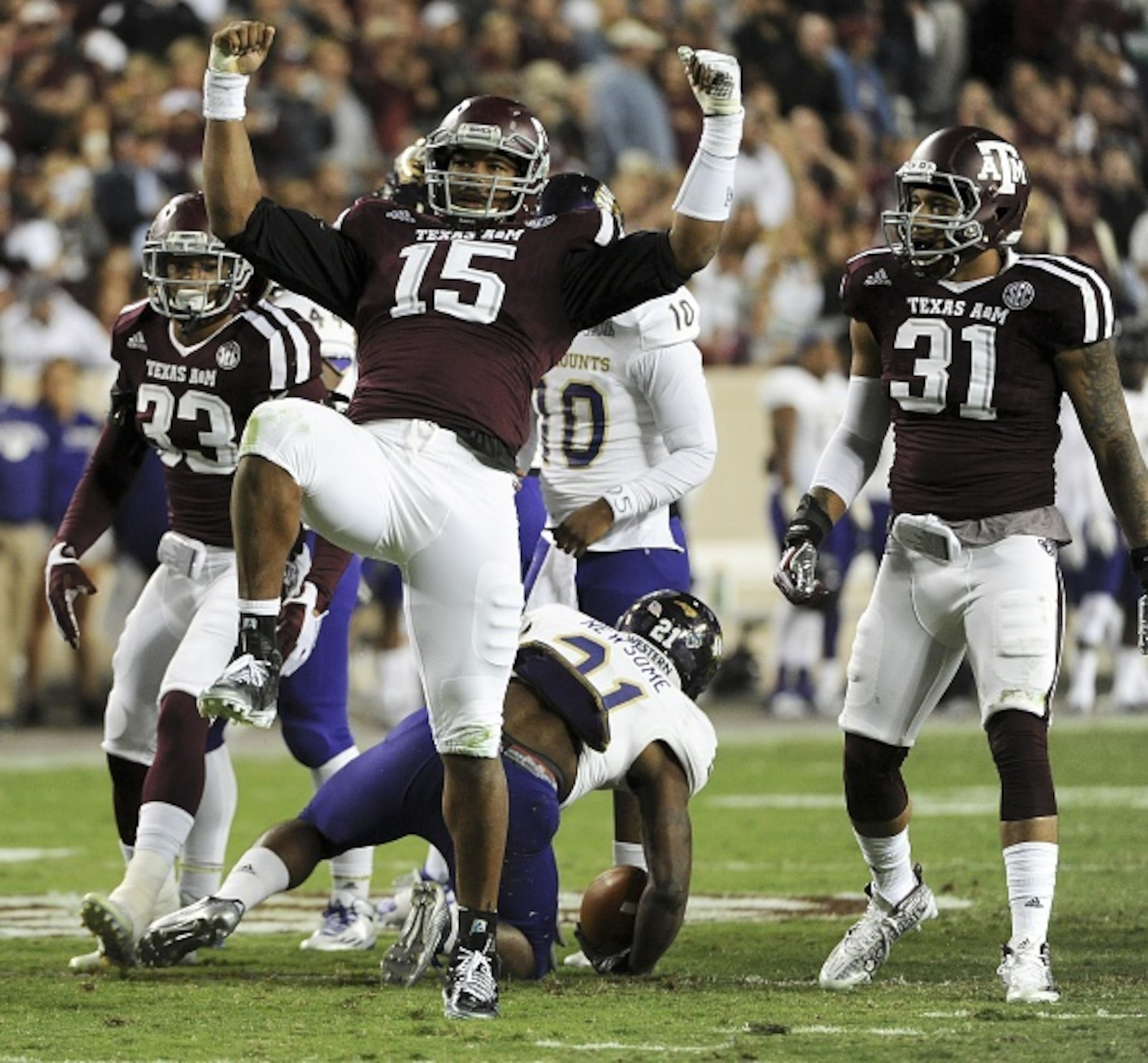
Pro comparison: Jadeveon Clowney, Houston Texans
A reminder about comparing college players to those in the NFL: It's about their style of play, physical makeup and skills, and not necessarily their performance at the next level. That's why Clowney is still the best comparison to Myles Garrett even though Clowney hasn't yet shown what's he is capable of in the pros due to a rash of injuries.
The Garrett-Clowney comparisons have been going since Garrett's freshman year, when his 11.5 sacks broke Clowney's SEC record for a first-year player. The 6'5", 255-pound Garrett had 12.5 sacks in 2015 along with 19.5 tackles for loss, showing an improvement against the run that even furthers the similarities between him and the former South Carolina star.
He hasn't knocked a running back's helmet off in the backfield, like Clowney did against Michigan in the 2013 Outback Bowl, but Garrett's hits have been just as punishing to opponents.
Charles Harris, DE, Missouri
10 of 25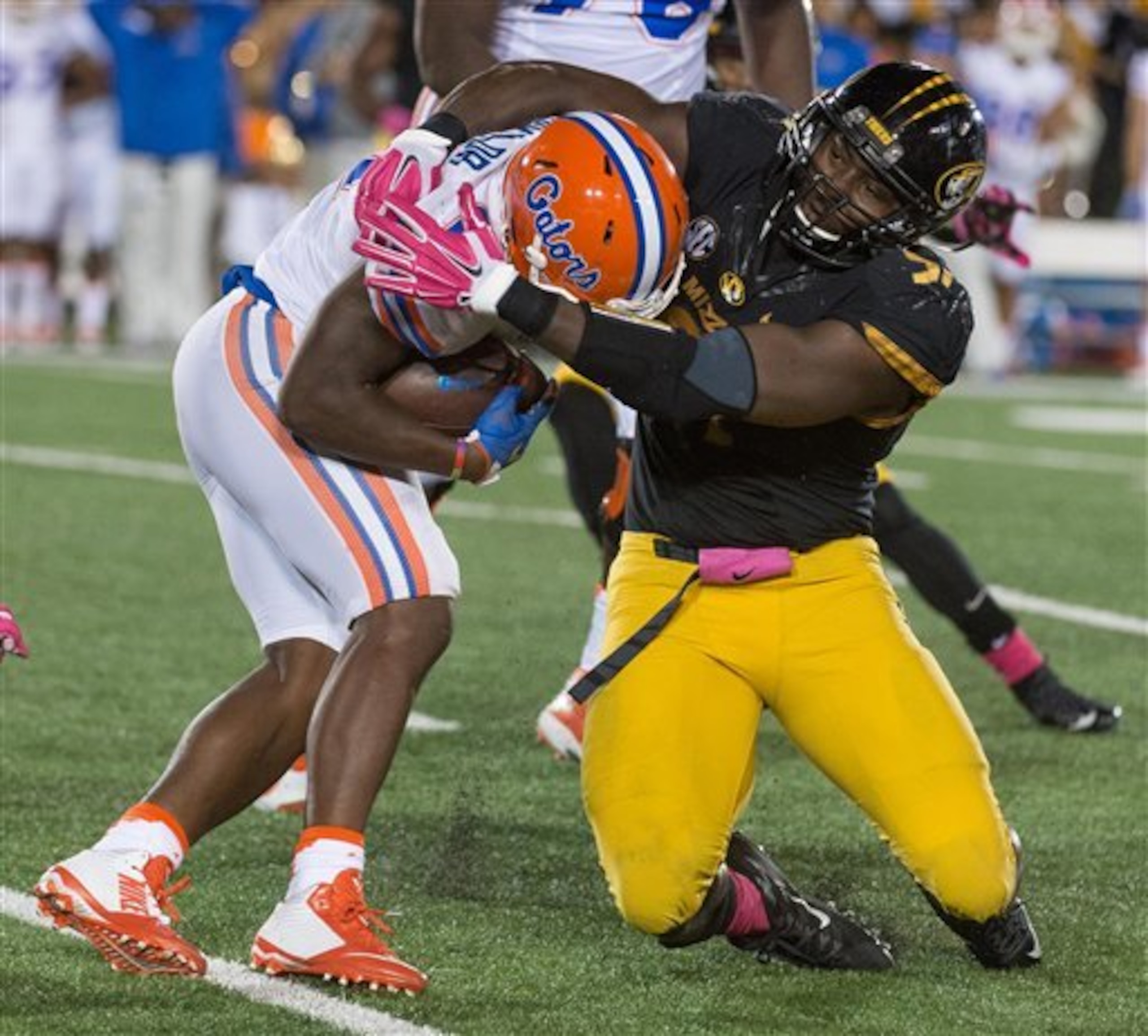
Pro comparison: Vic Beasley, Atlanta Falcons
It might sound like run-of-the-mill hyperbole when NFL.com's Ben Fennell recently referred to Charles Harris as the "next great Missouri edge-rush prospect," but there's a real lineage at that position. During Gary Pinkel's 15-year tenure of coaching the Tigers, they had eight defensive ends taken in the NFL draft, including five in the last three years.
But rather than go the easy route and compare the 6'3", 255-pound Harris to one of his Mizzou predecessors—former Cincinnati and San Francisco standout Justin Smith would have been the pick—we're going with a contemporary from another school that's getting known for producing defensive line talent.
Beasley, who played at Clemson from 2011 to 2014, began as a pass-rushing specialist but eventually morphed into an every-down player who had 22 sacks and 40 tackles for loss in his final two college seasons. Last year as an NFL rookie, he had four sacks in mostly a reserve role for the Atlanta Falcons, but he's expected to have a larger role this fall.
Harris' first season as a full-time starter was in 2015 as a redshirt sophomore, when he had seven sacks and 18.5 tackles for loss.
Adoree' Jackson, CB, USC
11 of 25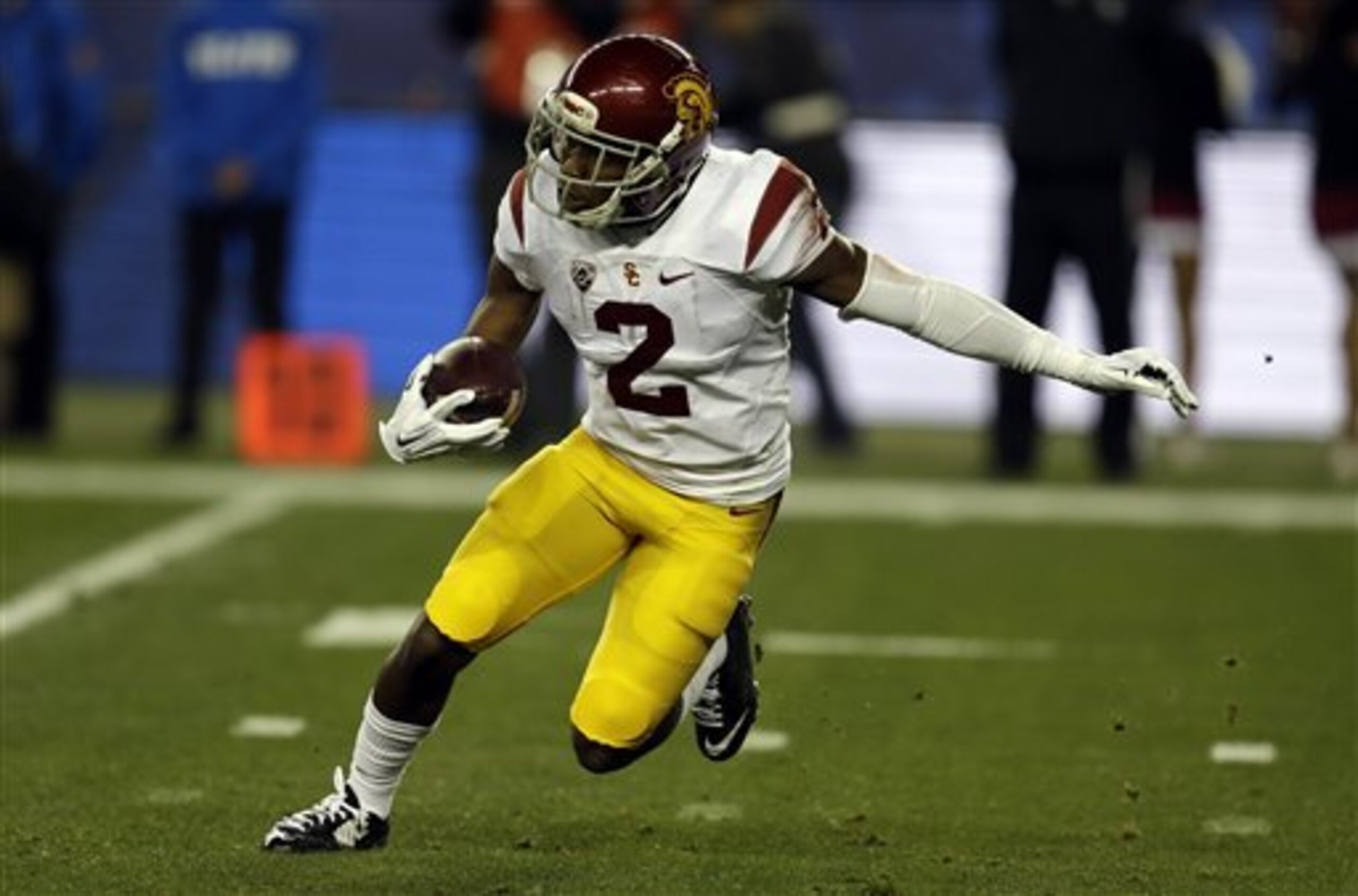
Pro comparison: Devin Hester, Atlanta Falcons
It's pointless to try to project which of the many positions Adoree' Jackson plays will be his focus in the NFL or to assume he'll have the chance to line up at cornerback and wide receiver as well as handle special teams. So much will depend on who ends up drafting him, most likely in 2017, and where that team sees him as most valuable.
But just knowing Jackson is capable of handling all three roles—sometimes in the same game—makes the comparisons to multi-threat NFL veteran Hester quite natural.
Hester hasn't played much defense in the pros, but he was drafted by the Chicago Bears as a cornerback in 2006 and quickly became more valuable on special teams and eventually offense. The 5'11", 185-pound Jackson has managed to maintain equal value in all three areas through his first two college seasons, during which he's scored touchdowns on punt and kickoff returns, on receptions and on an interception.
Desmond King, CB, Iowa
12 of 25
Pro comparison: Chris Harris Jr., Denver Broncos
Though he was given what he calls a "favorable" draft evaluation, per Chad Leistikow of the Des Moines Register, Desmond King opted not to turn pro after a junior year in which he intercepted eight passes and won the Jim Thorpe Award, given to the nation's top defensive back. Among other things, that meant having to pass on an expensive watch that was part of the Thorpe prize.
"There's a better chance I can have another (Rolex) this year coming up," King told Leistikow. "That's the goal, to be perfect at everything I do and see what happens."
It's unclear how much more King's draft stock can improve unless he has another monster year, though the extra seasoning can't hurt. His NFL contemporary, Harris, had his best college year as a senior at Kansas in 2010 but still went undrafted, only to play his way into a starting job he's held since 2012.
King's eight picks in 2015 were impressive, but so were his 13 pass breakups. According to Pro Football Focus, he allowed only three touchdowns thrown his way.
Christian Kirk, WR, Texas A&M
13 of 25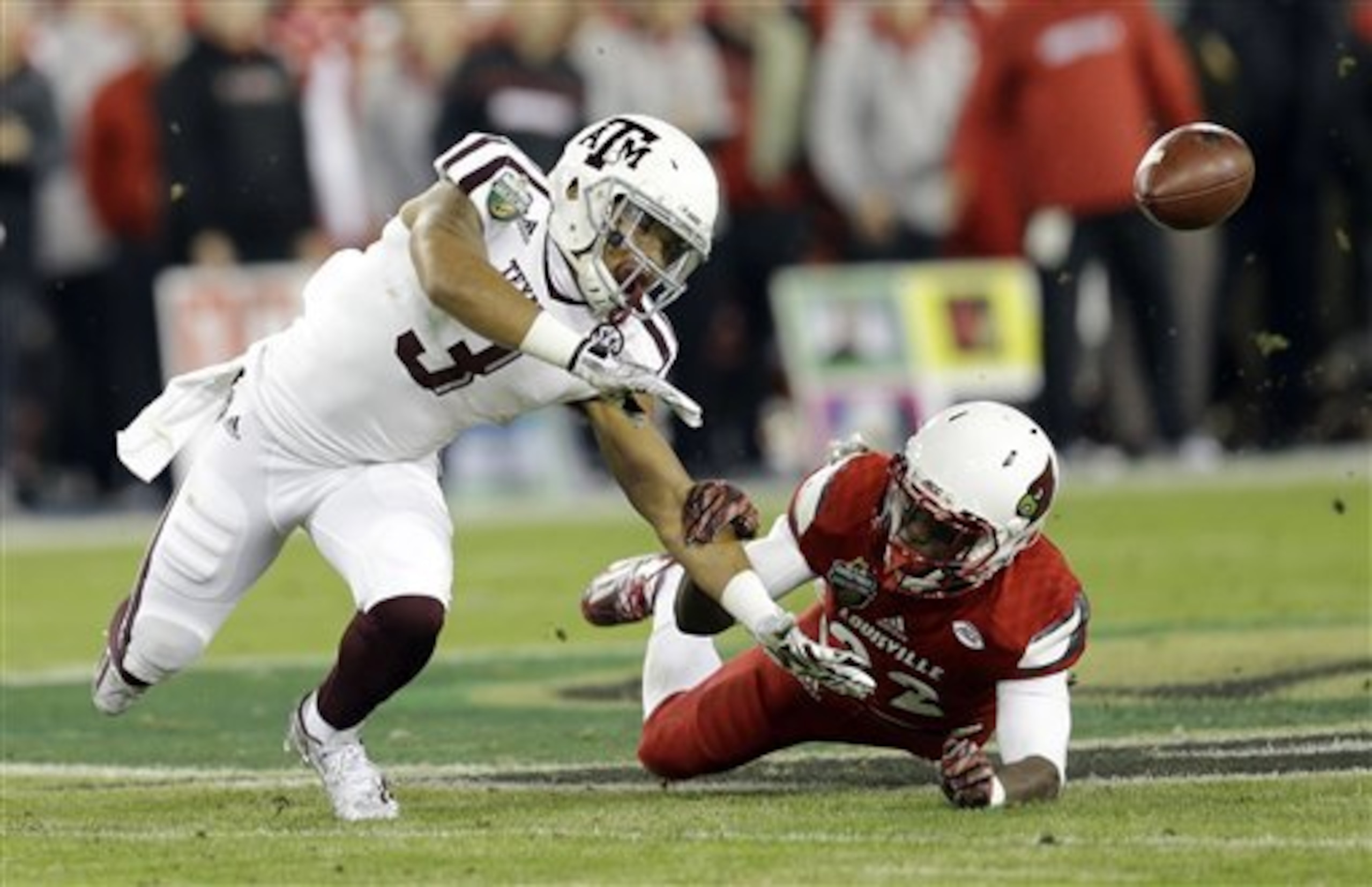
Pro comparison: Jarvis Landry, Miami Dolphins
While Texas A&M's offense as a whole fizzled out down the stretch in 2015, Christian Kirk seemed to just get stronger. His freshman season provides a heck of a baseline, and if that's just the start, then he's unlikely to remain in college beyond 2017.
The same couldn't be said for Landry during his time at LSU. He was only lightly used as a freshman in 2011, not breaking through until the following season and then continuing his rise all the way to being a second-round draft pick in 2013. The climb has continued in the pros, with Landry catching 110 passes and ranking second in all-purpose yards last season.
Landry wasn't used much as a return man in college, but that's been a key part of his value with Miami. The 5'11", 200-pound Kirk handled most punts and kickoffs while also being A&M's No. 1 receiving target in his first year, and that figures to continue in 2016 and beyond.
Jourdan Lewis, CB, Michigan
14 of 25
Pro comparison: Aaron Colvin, Jacksonville Jaguars
What Jourdan Lewis lacks in size (5'10", 175 lbs), he makes up for in performance. During his three years at Michigan, he's intercepted four passes and recorded 28 pass breakups, including 20 in 2015 when Pro Football Focus graded him as the top cornerback in the nation. With him putting opponents' best receivers on an island, the Wolverines had the No. 3 pass defense in FBS last year.
Lewis will need to continue to show he can play bigger than he is in order to rise up draft boards for 2017, as NFLDraftScout.com has him as the fourth-best corner among the senior class, but he'd likely fall behind some draft-eligible juniors as well.
There aren't many undersized corners who are succeeding in the NFL, though Colvin (6'0", 194 lbs) has fared well in his first two pro seasons. The former Oklahoma defensive back ended up being a fourth-round pick in 2014 despite tearing his ACL in the Senior Bowl, but in his second year, he went on to start 15 games for the Jaguars.
Baker Mayfield, QB, Oklahoma
15 of 25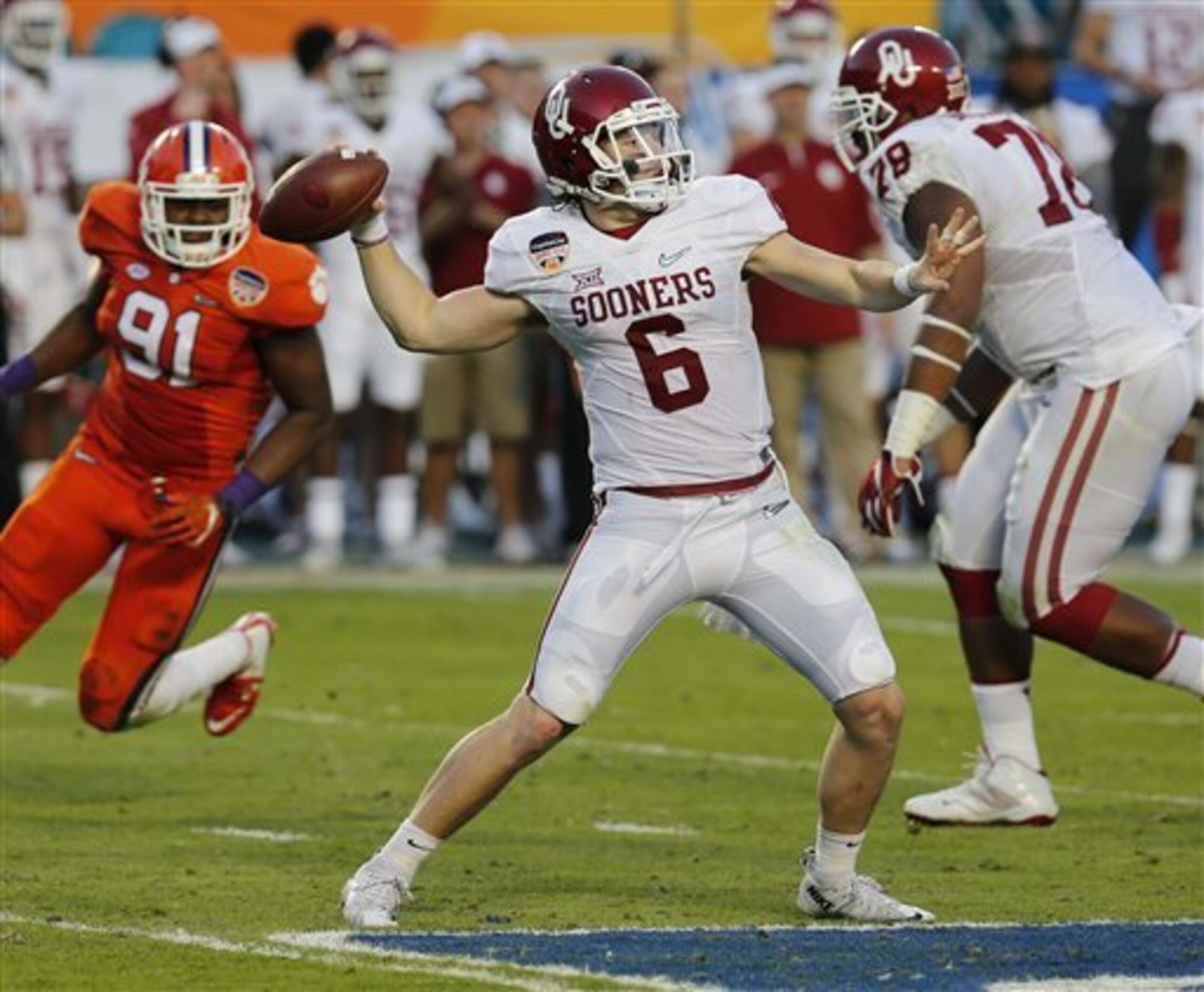
Pro comparison: Brett Favre (retired)
A nasty breakup with Texas Tech after his freshman year in 2013 has made it so Baker Mayfield is entering his senior season despite having sat out the 2014 campaign, per NCAA transfer rules. He could have turned pro after his strong 2015 campaign with Oklahoma, though that never seemed like a possibility for a quarterback who is quite hard to fit into a description type.
Mayfield threw for 3,700 yards and 36 touchdowns while completing 68.1 percent of his passes, though Oklahoma's version of the Air Raid made for great throwing conditions. He had a pair of standout running backs in Samaje Perine and Joe Mixon to work with, and with defenses needing to be concerned about the ground game, this opened up the field for Mayfield to spread the ball around with ease.
He also ran for 405 yards and seven touchdowns, though most of that came via scrambling and not designed carries. His propensity to take off or extend plays with his legs also led to getting knocked out of a pair of games because of head injuries.
Numbers and performance aside, though, what makes the 6'1", 212-pound Mayfield similar to Favre is his fearlessness and willingness to take chances. That only resulted in seven interceptions on 395 pass attempts last year, but many of his plays had a gunslinger feel to them.
Christian McCaffrey, RB, Stanford
16 of 25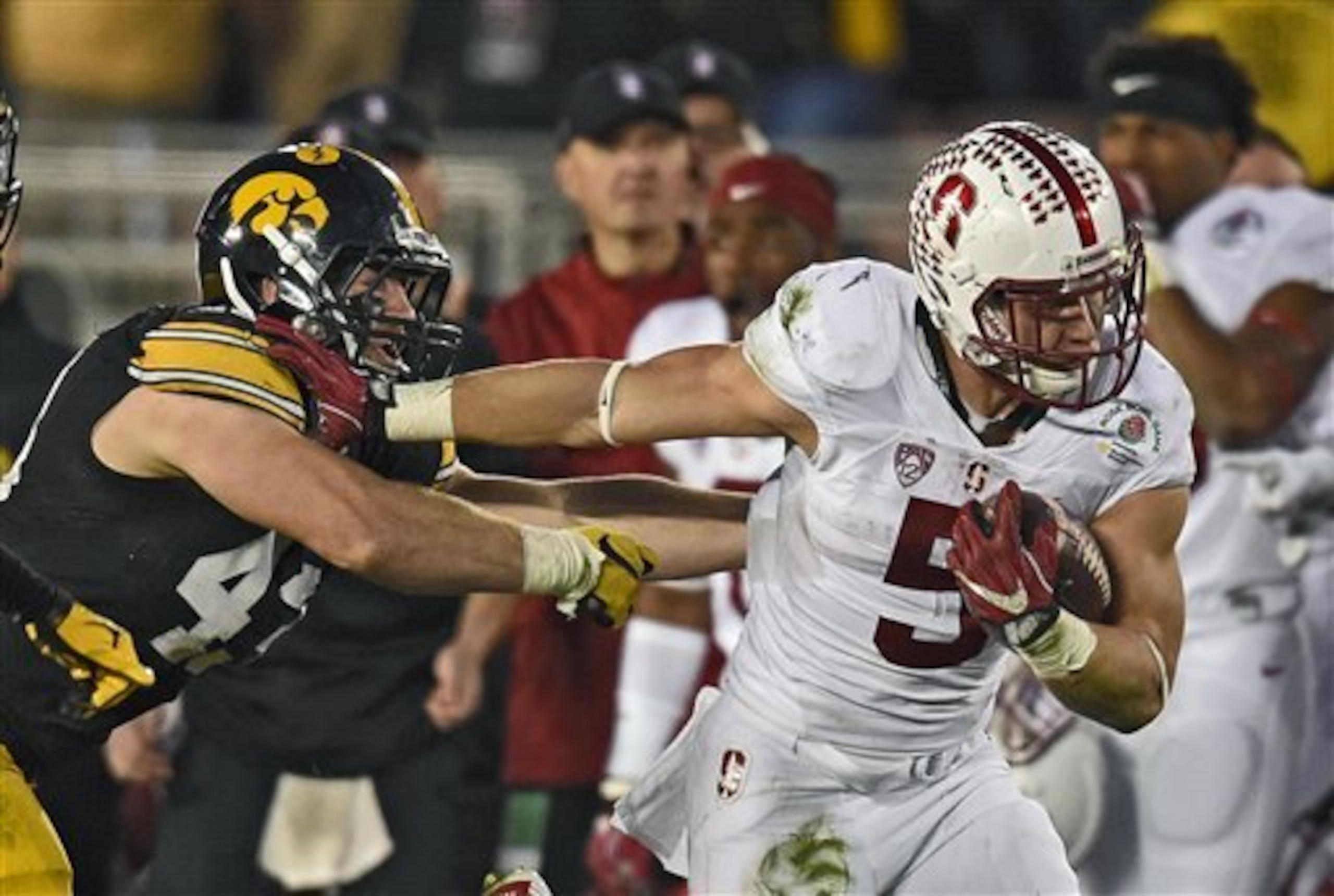
Pro comparison: Reggie Bush, San Francisco 49ers
Christian McCaffrey finished second in the Heisman Trophy voting in 2015, the best finish by a non-quarterback from the Pac-12 since Stanford running back Toby Gerhart was runner-up to Alabama's Mark Ingram in 2009. That's about where comparing those two Cardinal ball-carriers comes to an end since Gerhart was almost exclusively a rusher and McCaffrey is the FBS single-season all-purpose yardage king.
It makes much more sense to compare McCaffrey to his conference's last non-quarterback Heisman winner, since Bush was the Pac-12 all-purpose record holder with 2,890 yards in 2005 before McCaffrey put up 3,864 yards last year.
Never mind that McCaffrey had 434 touches and Bush needed just 283; they both did it in every manner possible, and each could be counted on no matter what was asked.
"McCaffrey can be the workhorse who grinds out carry after carry out of the backfield, and he also can win games with his big-play ability in special teams and in the passing game," Bleacher Report's Justin Ferguson wrote.
Jabrill Peppers, LB, Michigan
17 of 25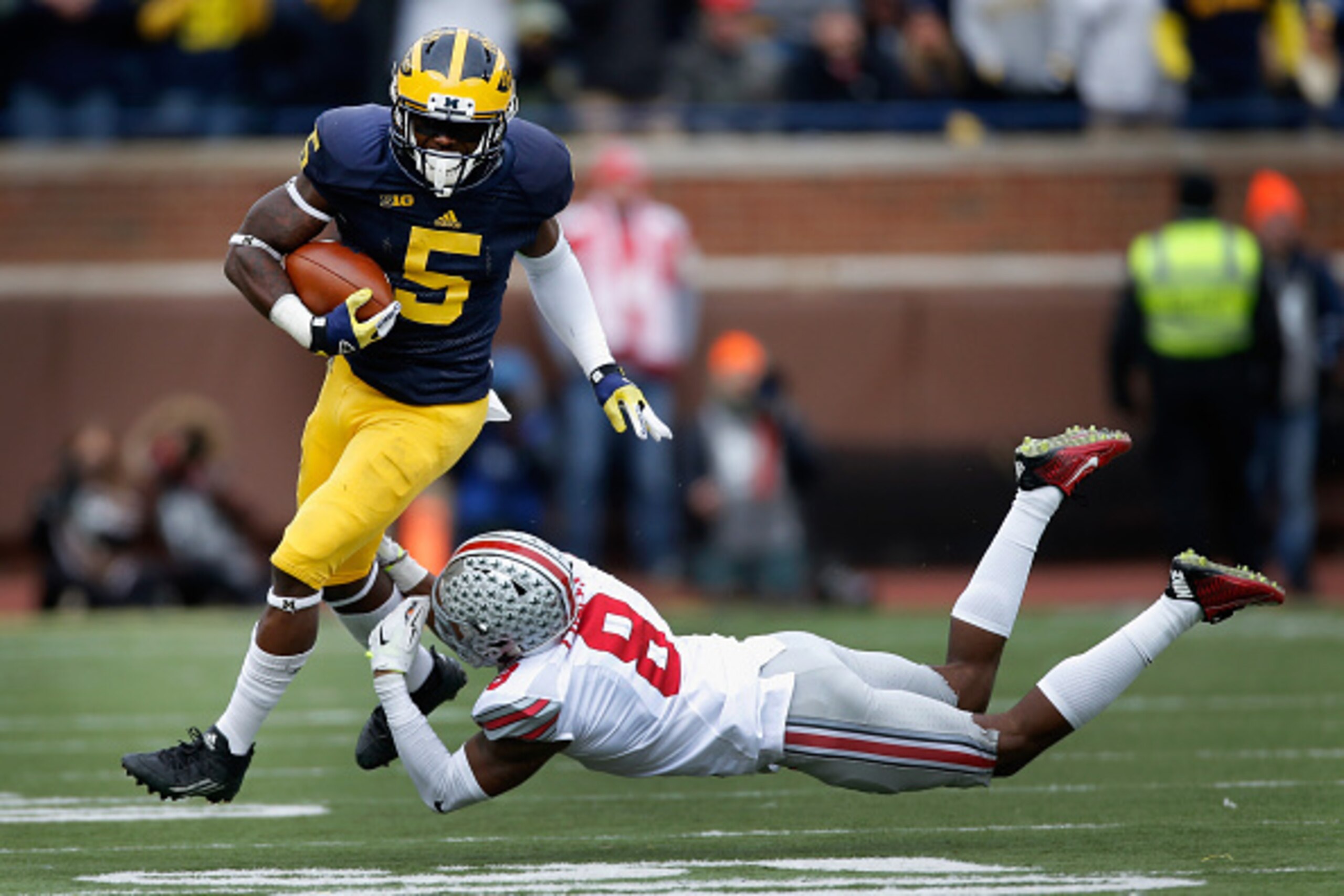
Pro comparison: Deone Bucannon, Arizona Cardinals
Jabrill Peppers' athleticism is such that Michigan continues to move him around in hopes of finding where he works best. In addition to handling some returns and getting looks on offense, Peppers is now looking at being a linebacker in his third college season after starting off as a safety and also working at cornerback.
He's essentially going down the same route Bucannon has since entering the NFL in 2014, though his path has begun in college. Bucannon was a four-year starter at safety for Washington State, but most of his time with Arizona has been in the box rather than in the secondary. At 6'1" and 208 pounds, he's by far one of the smallest pro linebackers, but 90 tackles and three forced fumbles in 2015 indicates that hasn't been an issue.
Peppers was also listed at 6'1" and 208 pounds this spring when new Michigan defensive coordinator Don Brown moved him up a line for his redshirt sophomore season.
"I think he's picked up the linebacker pieces pretty well as well," Brown told ESPN.com's Dan Murphy.
Samaje Perine, RB, Oklahoma
18 of 25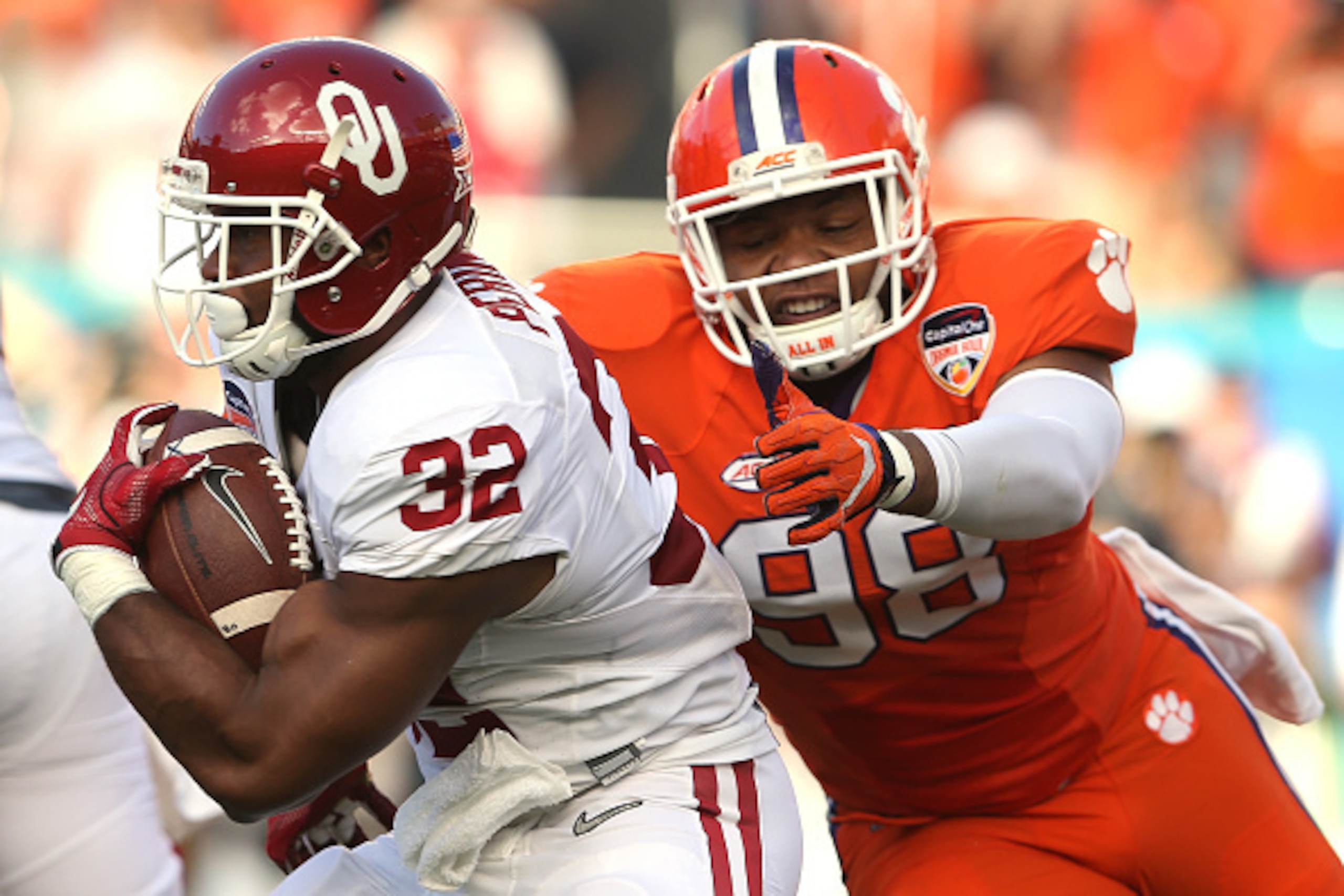
Pro comparison: Marshawn Lynch (retired)
Samaje Perine's most famous college performance is the one that put him in the record books, when as a true freshman in 2014, he ran for 427 yards and five touchdowns against Kansas. A review of the game film shows he was rarely touched in that game, which is counter to how the majority of his career at Oklahoma has gone.
When you're 5'10", 234 pounds and strong enough to blow through most tackles, there's no need to try to avoid contact. Somehow, he managed to avoid missing any games to this point despite taking so many hits, though an ankle injury suffered in December's Orange Bowl did require offseason surgery.
Perine's "get out of my way or you'll be sorry" style doesn't have a fancy name like Lynch's "Beast Mode," but it's similar. Lynch made a name for himself in nine NFL seasons thanks to his fearless drive, and Perine has shown the same fire in gaining 3,062 yards in two years.
Jalen Reeves-Maybin, LB, Tennessee
19 of 25
Pro comparison: Malcolm Smith, Oakland Raiders
A high-volume tackler who is strong at taking down players in the open field, Jalen Reeves-Maybin figures to benefit from another season in college after opting not to turn pro after his junior year. Getting to work with noted defensive coordinator Bob Shoop, whom Tennessee recently hired from Penn State, can only add to his chances of making it in the NFL.
A two-year starter at weak-side linebacker who saw some time in the secondary early in his career, Reeves-Maybin is built more like a safety at 6'0" and 225 pounds, but his instincts are too good to be wasted that far from the line of scrimmage. He's had eight sacks and 25 tackles for loss the last two years.
Reeves-Maybin might need to bide his time at the next level until he can work his way into the lineup, much like Smith did with the Seattle Seahawks before eventually becoming a full-time starter in 2015 with Oakland.
Cam Robinson, OL, Alabama
20 of 25
Pro comparison: Jason Peters, Philadelphia Eagles
From the moment he hit the field for Alabama in 2014, starting at left tackle as a true freshman, it was clear Cam Robinson was going to be in the NFL very soon. Bleacher Report NFL Draft Expert Matt Miller, who prefers not to focus too much on players until they're draft-eligible, couldn't resist just a few weeks into Robinson's college career.
"Robinson...is a future top-10 pick if his play and health hold up for two more seasons," Miller wrote.
Fast-forward to his junior season, and even before the 2016 NFL draft is held, Robinson is already ninth on WalterFootball.com's 2017 mock draft and the first offensive lineman taken.
At 6'6" and 326 pounds, Robinson has had an NFL frame for years, but it's his athleticism that really makes him stand out and line up favorably with the 12-year vet Peters. The biggest difference, though, is Peters went undrafted out of Arkansas in 2004.
Seth Russell, QB, Baylor
21 of 25
Pro comparison: Geno Smith, New York Jets
Seth Russell will have to contend with the belief that he's a product of Baylor's system when he's up for the 2017 NFL draft, though if not for a neck injury last October, his coach thinks those questions would have been popping up this spring.
"If he'd played out last year, we probably wouldn't have him," Art Briles said of his 6'3", 220-pound quarterback, per ESPN.com's Max Olson.
We'll never know since the need to repair a fractured bone in Russell's neck cut his redshirt junior year short. He returned to practice this spring and is on pace to compete for his old starting job this fall, but even if he puts up numbers similar to what he did in seven games in 2015 (2,104 yards, 29 touchdowns and six rushing scores), he'll remain a big question mark.
Smith had some of the same concerns about his game coming out of West Virginia, where he was part of a wide-open offense that enabled him to churn out big stats. His pro performance hasn't matched what he did in college, though the potential remains.
JuJu Smith-Schuster, WR, USC
22 of 25
Pro comparison: Dez Bryant, Dallas Cowboys
If the ultimate goal for a wide receiver is to be both a reliable target and a big-play threat, JuJu Smith-Schuster is setting himself up well for the next level. After a productive freshman year as USC's No. 2 option, in 2015 he made a huge leap with 89 catches for 1,454 yards and 10 touchdowns.
Breaking down the stats further, SB Nation's Bill Connelly noted that Smith-Schuster was the most explosive and efficient receiver in FBS last year based on catch rate, target rate, yards per catch and yards per target. Connelly's database doesn't go back to the previous decade, but if it did, it would probably have rated Bryant just as well when he was at Oklahoma State from 2007 to 2009.
Bryant is 23rd among active NFL wideouts in yards per catch (14.1), and before missing the first half of the 2015 season, he logged three straight seasons with at least 88 receptions, 1,200 yards and 12 TDs.
USC is breaking in a new quarterback this season, and whoever that is will no doubt turn to Smith-Schuster for both the clutch catches and the big plays.
Anthony Walker, LB, Northwestern
23 of 25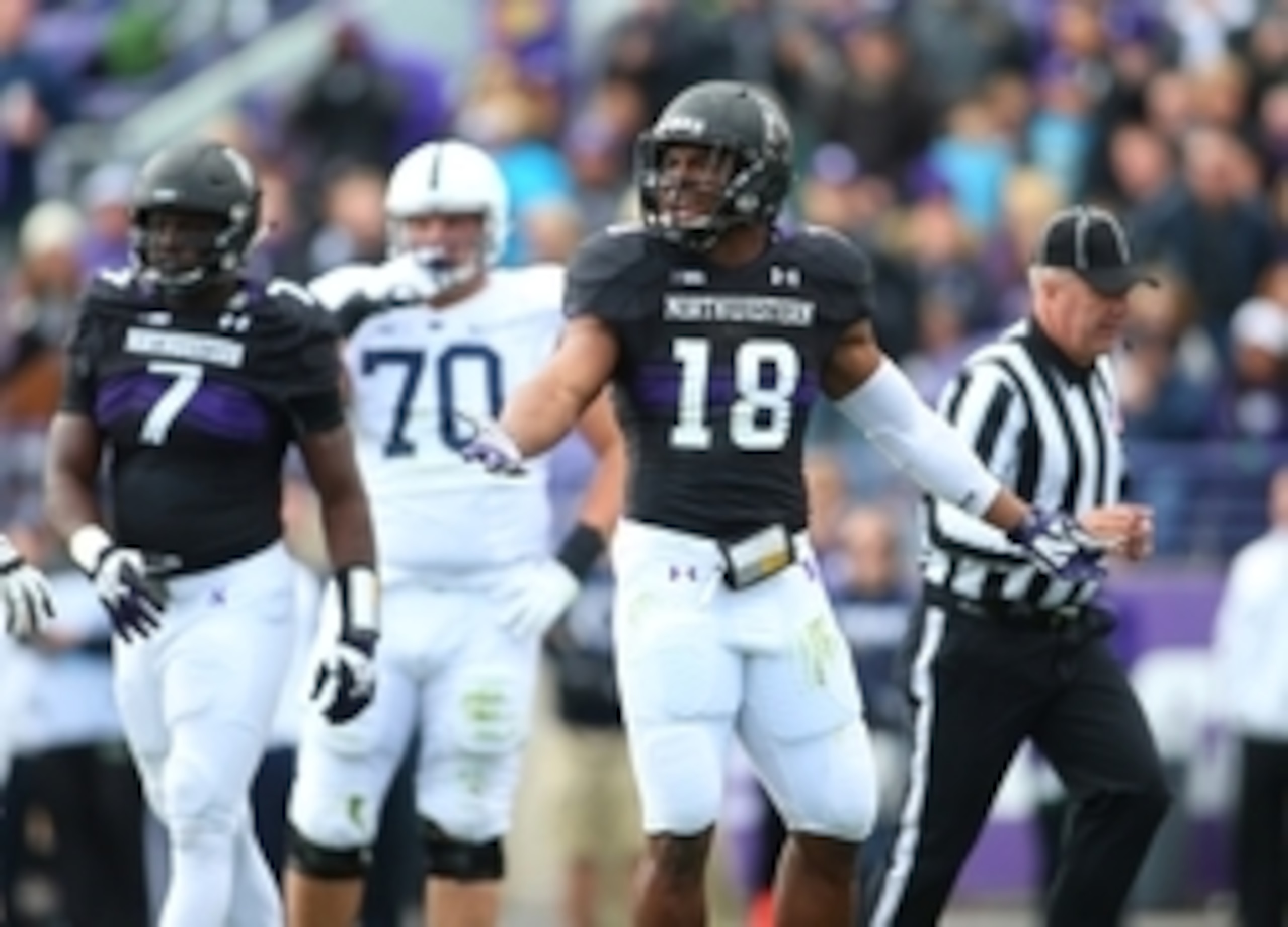
Pro comparison: NaVorro Bowman, San Francisco 49ers
Anthony Walker is entering his fourth year at the college level but just his third of competition, having sat out 2013 as a redshirt. Last season was when he broke through, with 120 tackles, 20.5 tackles for loss, one interception and two fumble returns.
Whether the 6'1”, 235-pound Walker enters the 2017 NFL draft or uses up all his eligibility will likely depend on whether he continues to develop and improve this fall. Another big year will make him an enticing pro prospect, one similar to Bowman when he left Penn State as a junior after the 2009 season.
Bowman, a third-round pick, had a big sophomore year and then matched it as a junior and continued to rise once he got into the NFL. A major knee injury that wiped out his 2014 season has had some impact, but he returned last year to post the third 100-tackle season of his career.
Walker compares favorably to Bowman because of his performance against the run, with 16.5 of his 20.5 tackles for loss coming on run plays.
Greg Ward Jr., QB, Houston
24 of 25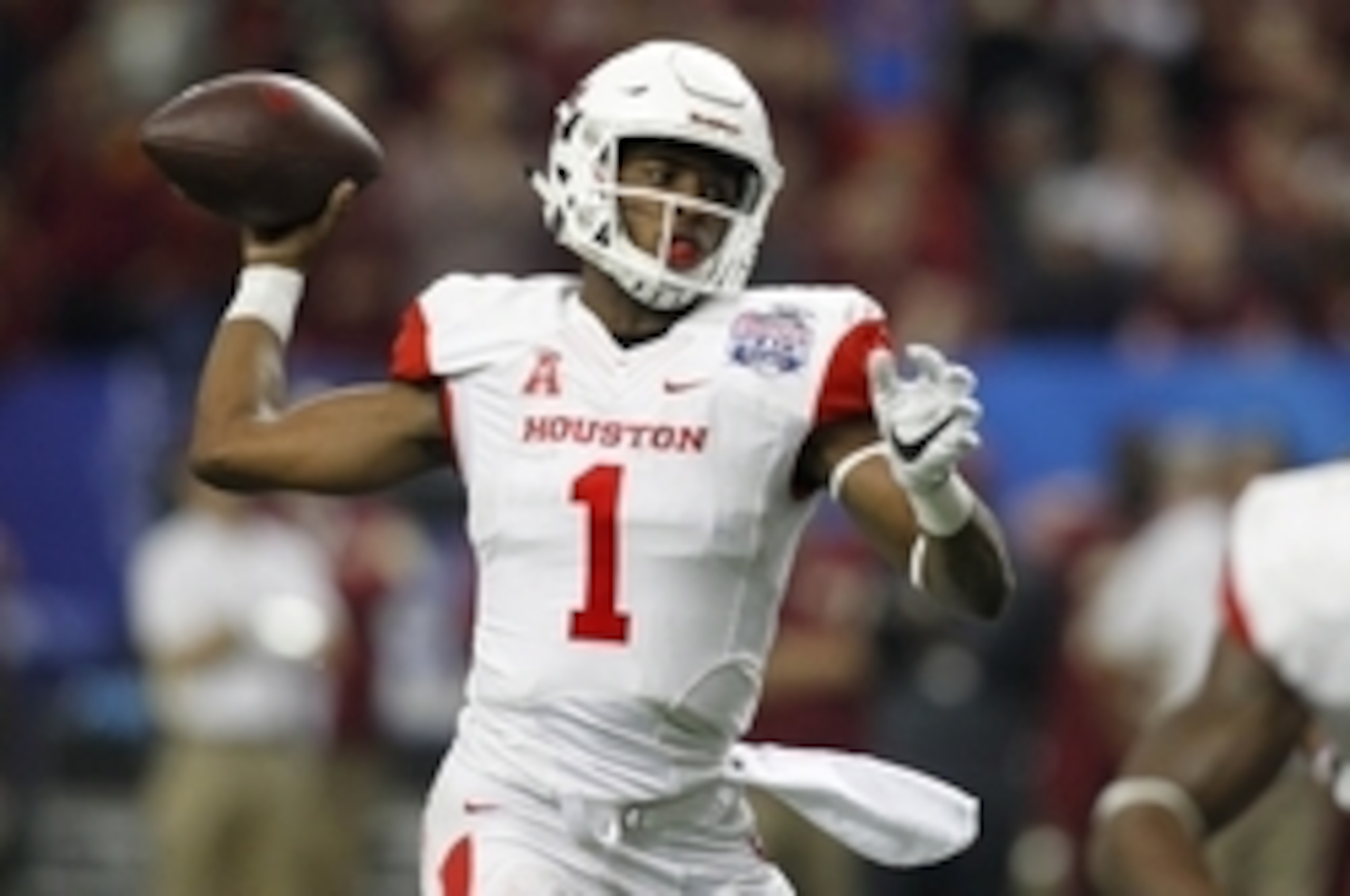
Pro comparison: Denard Robinson, Jacksonville Jaguars
The only quarterback in FBS who ran for more yards last season than Greg Ward was Navy's Keenan Reynolds, but that was in a triple-option offense that rarely threw the ball. Ward's 1,114 rushing yards and 21 touchdowns came in addition to 2,827 passing yards, 17 TD passes and a strong 67 percent completion rate.
His dual-threat capabilities are unquestioned and were a big reason Houston went 13-1 and knocked off Florida State in the Peach Bowl. But much like a lot of mobile quarterbacks, particularly those who are 5'11” and 185 pounds, Ward's future in the NFL will probably come at another position.
NFL Draft Scout ranked him as the No. 15 running back in the senior class, and that's certainly a way he could go. He could also end up playing wide receiver since before becoming the Cougars' full-time QB midway through 2014 he had 25 receptions in his first season-and-a-half.
Or he could be both, much like what Robinson has been for Jacksonville after getting drafted in the fifth round in 2013. He had more than 6,200 passing yards and nearly 4,500 rushing yards at Michigan, but at 5'11”, he wasn't the right size for today's NFL quarterback position.
Deshaun Watson, QB, Clemson
25 of 25
Pro comparison: Russell Wilson, Seattle Seahawks
If he grows four inches and adds 50 pounds before his arrival in the NFL (most likely in 2017), then there's no denying who Deshaun Watson would compare to: He'd be Cam Newton 2.0. But the 6'2”, 210-pound Watson appears to be done growing, so to find someone a little more comparable in size requires heading to the Pacific Northwest.
Watson is bigger than Wilson, who is 5'11” and 203 pounds, but when they're in action, you can brush aside the size difference when you see how similar their movements and composure are.
"College football's version of Russell Wilson" is how WalterFootball.com described Watson, its pick for the No. 1 pick in 2017.
Watson has completely moved past the knee injury that cut short his freshman season, and in 2015, he became the first player in FBS history with 4,000 passing yards and 1,000 rushing yards. Wilson never had more than 435 rushing yards in any college season, but in four years in the NFL, he's averaged nearly 40 rushing yards per game, mostly as a scrambler.
Designed runs are more part of Watson's game, though that might not be the case depending on which NFL team he joins.
Statistics courtesy of CFBStats.com or Sports-Reference.com, unless otherwise noted. Recruiting information courtesy of 247Sports, unless otherwise noted.
Follow Brian J. Pedersen on Twitter at @realBJP.
.png?w=2560)



.jpg?w=2560 "Latest Peyton-Colts Rumors")