
B/R MMA Waxes Poetic over Its Favorite Rematches of All Time
A good rematch is something special, but it doesn't come with a set formula for being great and/or memorable.
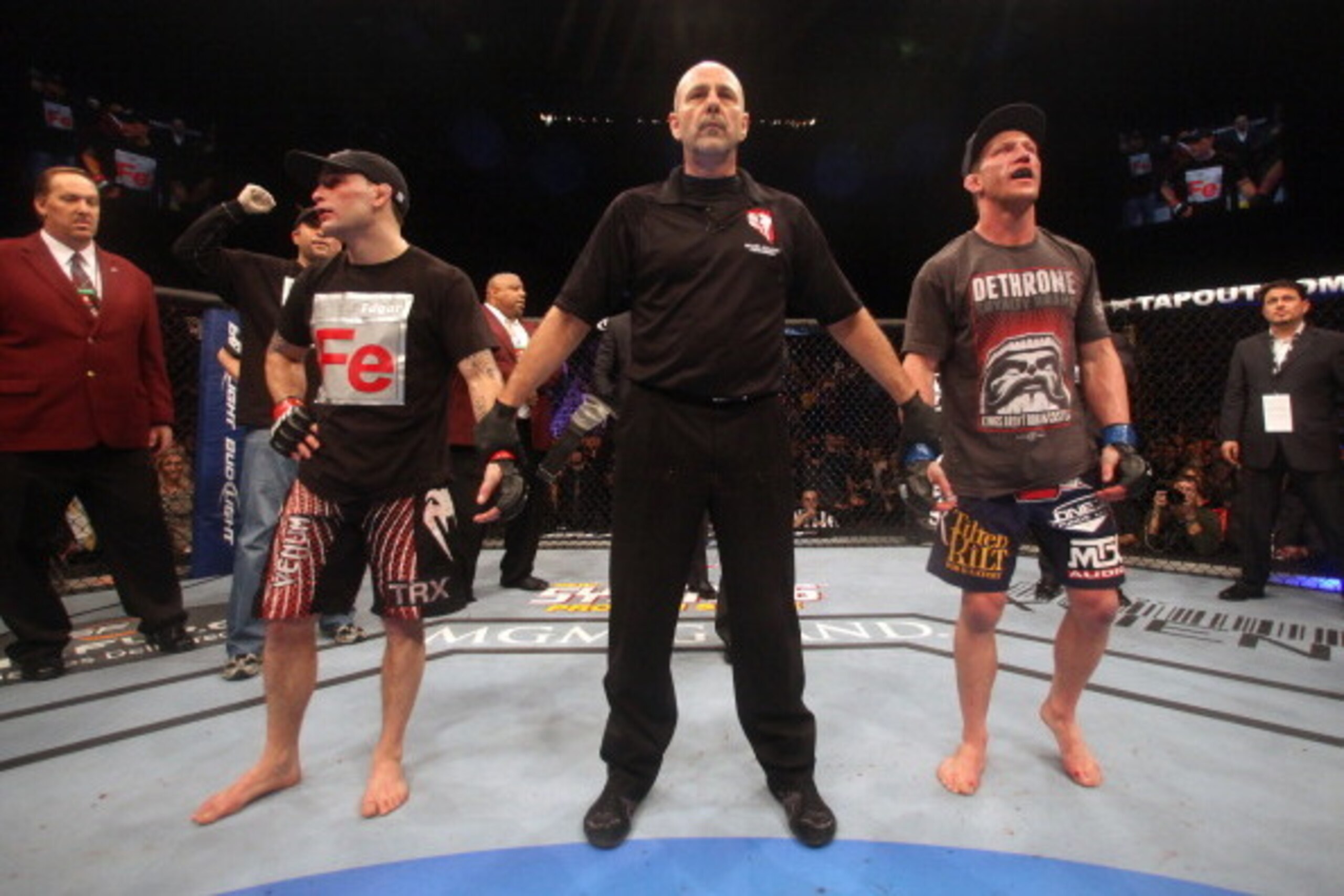
Take UFC 200 for example. The promotion just booked two rematches in the form of Nate Diaz vs. Conor McGregor and Jose Aldo vs. Frankie Edgar. Both rematches are different animals.
The first is an immediate rematch that's being booked because the first fight was a high-action affair between two marketable fighters. Oh, and because it sold a ridiculous amount of pay-per-views and the UFC is banking that the rematch will too.
The second is a rematch of Aldo and Edgar's 2013 title fight that saw the then-champ Aldo edge out Edgar in a close decision. This booking has more to do with the state of affairs in the featherweight division.
The aforementioned McGregor, the champ, is holding up the featherweight division with his obsession to avenge his loss to Diaz. So Aldo and Edgar will fight for the interim belt. Either McGregor will face the winner in a few months, or, if he vacates his belt, the winner will be promoted to the outright champ.
Fans reacted to the news of Diaz vs. McGregor with mixed emotions. A vocal majority wanted to see McGregor vs. Edgar in a featherweight title fight. And nobody was specifically clamoring for Aldo vs. Edgar, but it makes sense, given the circumstances.
Perhaps the fights will be letdowns. Or they may deliver in ways we couldn't have expected and become part of MMA lore as two of the best rematches of all time.
A good story can give a rematch deeper meaning and more anticipation leading into the bout. A rematch can also be special because the action on display captures our attention in a way that makes us take pause. Whatever the reason, rematches play a pivotal role in combat sports.
Rematches can connect with fans on a more personal level than any singular fight can. There is a deeper engagement involved that generates excitement.
Fighters can build their legacies through rematches and trilogies.
When two peers step inside the cage or ring to do battle on multiple occasions, there is a sense that magic is happening. Sometimes, that magic is realized through a back-and-forth battle or occasionally through an individual performance that stands by itself.
Over the years, MMA has given us many outstanding rematches. Picking our favorites was no easy task. After careful consideration, here are the favorite rematches of the Bleacher Report MMA staff.
Pride Final Conflict: Fedor Emelianenko vs. Antonio Rodrigo Nogueira
1 of 16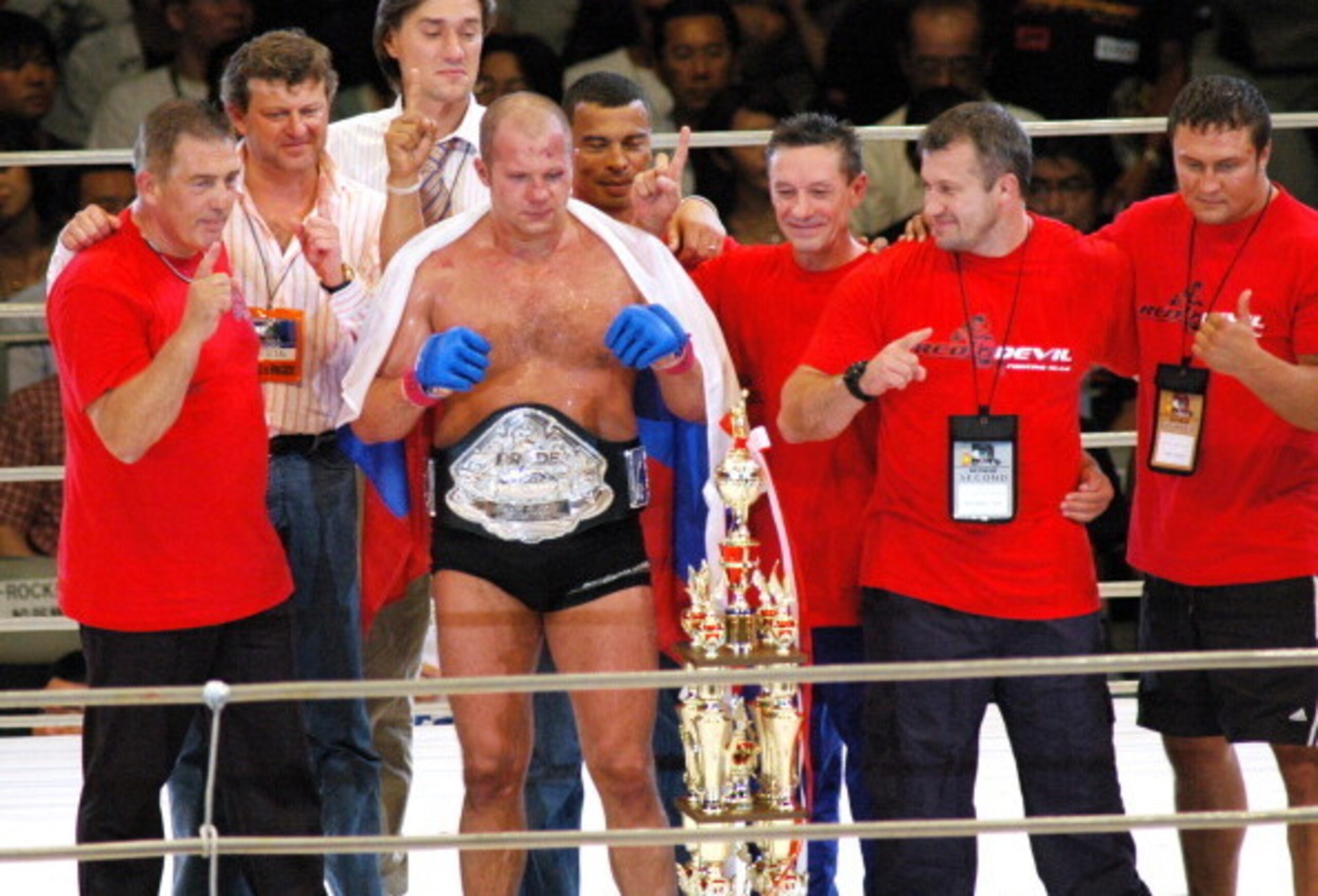
It's no wonder this rematch was as fully hyped as it was. Even the fighters were amped. Years after the lights died down and everyone was ostensibly safe in ostensible retirement, Fedor Emelianenko and Antonio Rodrigo Nogueira each, in separate interviews, called the other man his toughest opponent.
Emelianenko took the original in March 2003 by unanimous decision, a decision that also handed him the Pride heavyweight belt. It was a grappling chess match, with Nogueira's jiu-jitsu and guard losing out to Emelianenko's judo and ground-and-pound. Even so, Big Nog made more hay against the heavyweight GOAT than just anybody else.
The rematch was about as widely anticipated as an MMA fight in Japan in 2004 could be. Likewise, the ending—a no-contest due to a sudden accidental head-butt from Fedor—was also just about as disappointing as it could have been. But it didn't come before Nogueira showed more active grappling than appeared at times to swing momentum his way.
Fedor went on to win the rematch of the rematch by decision five months later in what was largely and oddly a stand-up battle. Despite the brilliance and will on display in all three matches, the head-butt might have provided the trilogy's most iconic visual sound bite.
UFC 52: Matt Hughes vs. Frank Trigg
2 of 16
Look, I’ll tell you everything I remember about going to see Matt Hughes-Frank Trigg II at the MGM Grand in Las Vegas on April 16, 2005. Know in advance, however, that my memory is notoriously terrible, so some of this might be stuff I just made up after the fact as part of the fever dream that was this entire UFC 52 weekend.
I remember getting a media credential, but that—likely because the UFC correctly sniffed me out as a small-timer—I wasn’t assigned a seat on press row. Instead, I got a seat in the arena’s lower bowl, which initially bummed me out but turned out to be the best possible outcome.
Before Trigg and Hughes made the walk to the cage, the UFC played a hype vignette on the big screens in the MGM. It included Trigg saying something like, “I’m a better fighter than he is, I’m a better person than he is, I have a better family than he does…” and then a cut to a close-up of Hughes just letting out an audible, exasperated sigh. It's still one of my favorite UFC hype videos ever. But that also might have been for their first fight in November 2003, I don’t know.
Since I was watching live and from a distance, some of the intricacies of the fight's action were initially lost on me. I didn’t know until later that Trigg zinged Hughes with a low blow, that the referee missed it and that Trigg took advantage to floor Hughes with a barrage of punches.
At the time, I only knew that it seemed as though Trigg was on the verge of winning a fight that nobody thought he was going to win and taking the welterweight title from Hughes. That shock was redirected and refocused as Hughes battled back from sure defeat and worked his way off the mat.
In the moment where Hughes scooped Trigg off his feet with a double-leg, every single person in the arena got out of their chairs and caught their breath at once.
It was as if time stopped for an instant. More than 14,000 people rising in unison in a single OMG moment. A collective gasp. The sudden absence of sound.
Then Hughes carried Trigg across the cage—as helpless as a baby—and slammed him on the mat, and the place erupted into absolute bedlam. A few moments later, Hughes had retained his title via rear-naked choke, but it's those few seconds where he scooped Trigg up and slung him over his shoulder that I’ll remember for the rest of my days.
It was so amazing that Randy Couture (at the time my favorite fighter) and Chuck Liddell also rematched in the next fight for the light heavyweight title in one of the biggest fights in UFC history.
I don’t remember anything about it.
Not a thing.
All I remember is Hughes-Trigg II.
UFC 52 and 57: Randy Couture vs. Chuck Liddell
3 of 16
I will keep things at UFC 52 for just a moment to talk about its main event. I wasn't there live as Mr. Dundas was that evening, but sitting in the confines of my living room, I was still blown away by the event.
It was my first MMA pay-per-view purchase. Not because I was a new fan. No, I still recall my father's longtime friend introducing us to Royce Gracie in the summer of 1994. This was my first PPV because of the hype that built following The Ultimate Fighter. It was an important event for the organization.
Liddell had gotten beaten and outworked in classic Couture fashion during their first meeting, but The Iceman" was still the company's most popular fighter
Couture is one of the sport's most tactical fighters, and he knew he had to get inside and make Liddell work. This would give Liddell his opening to end the fight.
Liddell's victory was not shocking but ousting then-champion Couture in just two minutes, six seconds was something truly special. He landed one of his trademark punches and put Couture to the mat. It was the crowning jewel of the event as the face of the UFC wore gold for the first time.
Couture would get his rematch, but Liddell would once again shut off the lights. Couture would take off his gloves and retire after the loss (although it wouldn't stick). These fights, UFC 52 specifically, helped solidify the UFC's breakout after the success of The Ultimate Fighter.

UFC 65 and 79: Matt Hughes vs. Georges St-Pierre
4 of 16
After suffering the first loss of his career to Matt Hughes at UFC 50 in October 2004, Georges St-Pierre strung together six straight victories before earning another crack at the welterweight title. Second chances are not uncommon for top-level fighters, but St-Pierre vs. Hughes II was distinct, not only because of the outcome, but because of St-Pierre’s evolution in the buildup to the fight.
St-Pierre spoke at length about his mental maturation. He claimed he hadn’t been ready the first time he fought Hughes. There was a certain transparency to his words that humanized him, a feat not all cagefighters are able to accomplish. When St-Pierre begged UFC President Dana White for a title shot after defeating Sean Sherk, he put on display his incredible passion and drive. When he entered the Octagon to famously tell the champ that he was “not impressed by [his] performance,” he showed fans that he was ready to take on Hughes.
The development of St-Pierre as a person and character turned the bout from dominant champion versus hopeful contender to icon versus icon. It piqued the interest of fans, especially here in Canada, where I recall that friends of mine, otherwise indifferent to or unfamiliar with the sport, suddenly felt invested.
St-Pierre’s in-Octagon development made the fight at UFC 65 in November 2006 a classic. It wasn’t an epic battle. It was a one-sided affair, with St-Pierre emerging from the Octagon as the new champion and burgeoning star.
Of course, St-Pierre lost his next bout to Matt Serra, and of course Hughes was too talented to just fade into the welterweight scenery. So the pair hooked em’ up again, a little over a year later.
St-Pierre vs. Hughes III was less memorable. Partly because the outcome was less in doubt. For St-Pierre it was simply a steppingstone to another title.
While it can be difficult to pinpoint the moment an athlete becomes a star, St-Pierre vs. Hughes II was huge for GSP and, in consequence, the sport. The fight’s impact on the UFC’s growth in Canada cannot be overstated.
UFC 71: Chuck Liddell vs. Rampage Jackson
5 of 16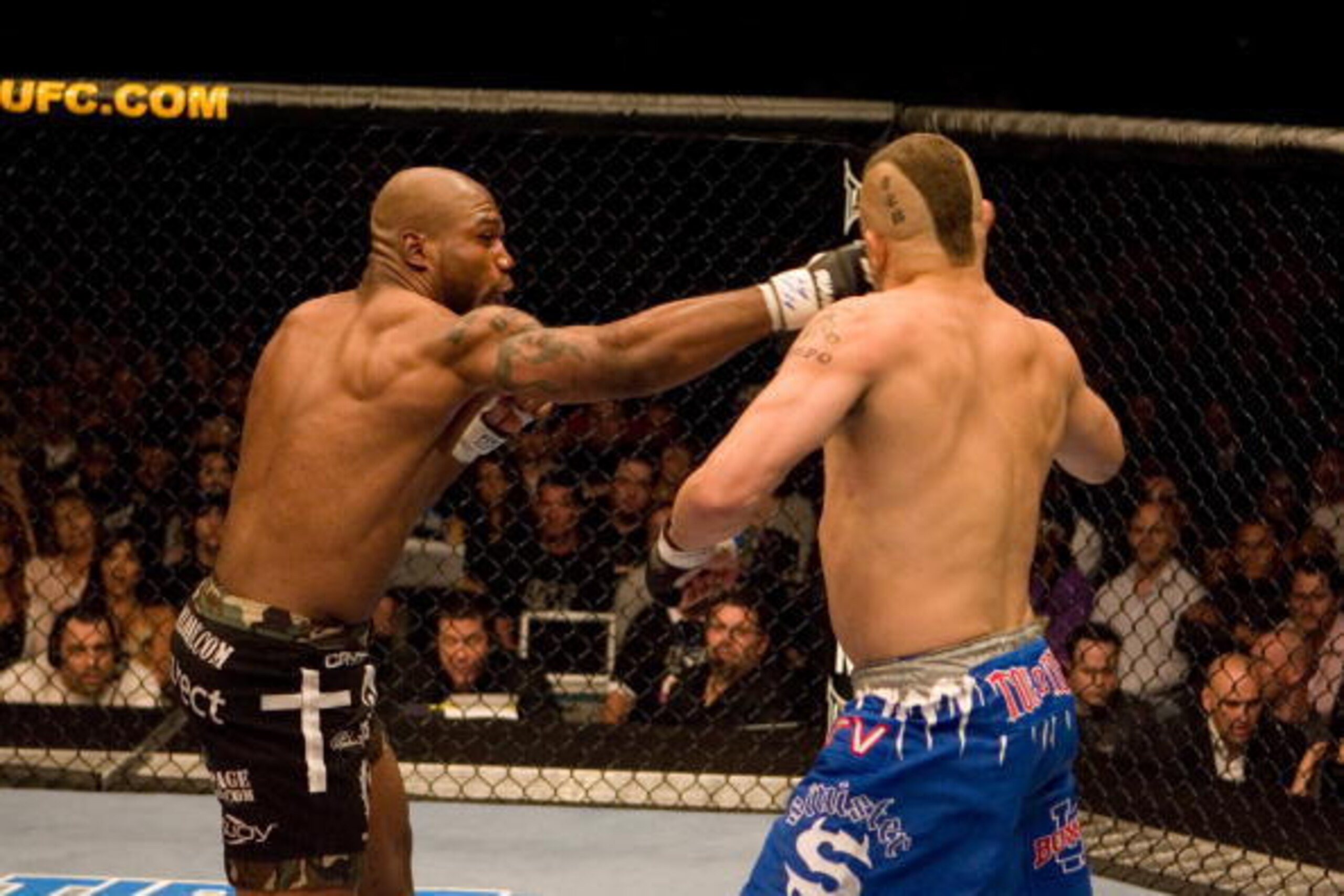
As the UFC grew, there was one rematch that most hardcore MMA fans were clamoring to see. It was Quinton "Rampage" Jackson vs. Chuck Liddell. We just didn't know if we ever would see it.
Liddell and Jackson met in Pride. Dana White and the UFC entered Liddell into Pride's light heavyweight, or middleweight as it was known in that company, grand prix in 2003. Liddell was expected to make a deep run, but Jackson upset the UFC star in dominant fashion.
The shots to Liddell's body made sickening thuds, and eventually his corner stopped the fight. Jackson had defended Pride's honor and made the UFC's hot light heavyweight star look inferior. Over three years later, Rampage made his UFC debut while Liddell was the king of the sport.
I was a fan of both men, but I had a stronger connection to Rampage at the time and recall boasting to all my friends that he was the man who would take the gold. As casual fans, they didn't believe it. Liddell was the poster child and the heavy-handed savior who would knock out anyone.
What no one expected was a clean, first-round KO.
Liddell got aggressive, and Rampage uncorked a violent right hook flush to the jaw. Liddell fell, Rampage cleaned up his work, and "Big" John McCarthy called a stop to the bout. I jumped up from my couch and ran outside in uncontrollable glee.
One of the most memorable portions, for me, was Randy Couture and Joe Rogan on the call during the replay. Couture pinpointed exactly why McCarthy stopped the fight and illustrated why it was a good stoppage, and Rogan's affirmation when he saw Liddell go flat was the stamp the viewer needed to see it wasn't an unjust stoppage.
Rampage dethroned Liddell again, and the UFC's money division at the time continued to wow us all.
UFC 77: Anderson Silva vs. Rich Franklin
6 of 16
The rematch between Anderson Silva and Rich Franklin at UFC 77 in October 2007 may not seem like one that should make a list of this caliber. Silva absolutely destroyed then-champion Franklin in their first fight at UFC 64, taking both his belt and a piece of his fighting soul. Few, if any, gave Franklin a chance at withstanding The Spider.
The emotional stakes were ratcheted up in that Franklin had requested the rematch be in his hometown of Cincinnati. The expression "go big or go home" took on new meaning. Unfortunately for Franklin, in the end, Part II would go no better—the pain and suffering were only dragged out longer. Like the first fight, the second ended with Silva's knees smashing into the defenseless face of Franklin.
What made this rematch so memorable is that it firmly established Silva as an absolute savage.
His thai plum became the most dangerous weapon in the cage. It sunk in in a visceral way that Silva was truly something special, something the sport had never seen. He'd go on to win 11 fights in a row, including scraps at light heavyweight where he chopped up the likes of Forrest Griffin and Stephan Bonnar.
Silva jump-started his UFC reign of terror with one rematch. And, ironically, his reign came to a screeching halt with another (versus Chris Weidman). The slaughterhouse that is MMA waits for no man. Eventually, the great Silva succumbed. But all of those knees he landed against Franklin can never be unfelt.
UFC 83: Matt Serra vs. Georges St-Pierre
7 of 16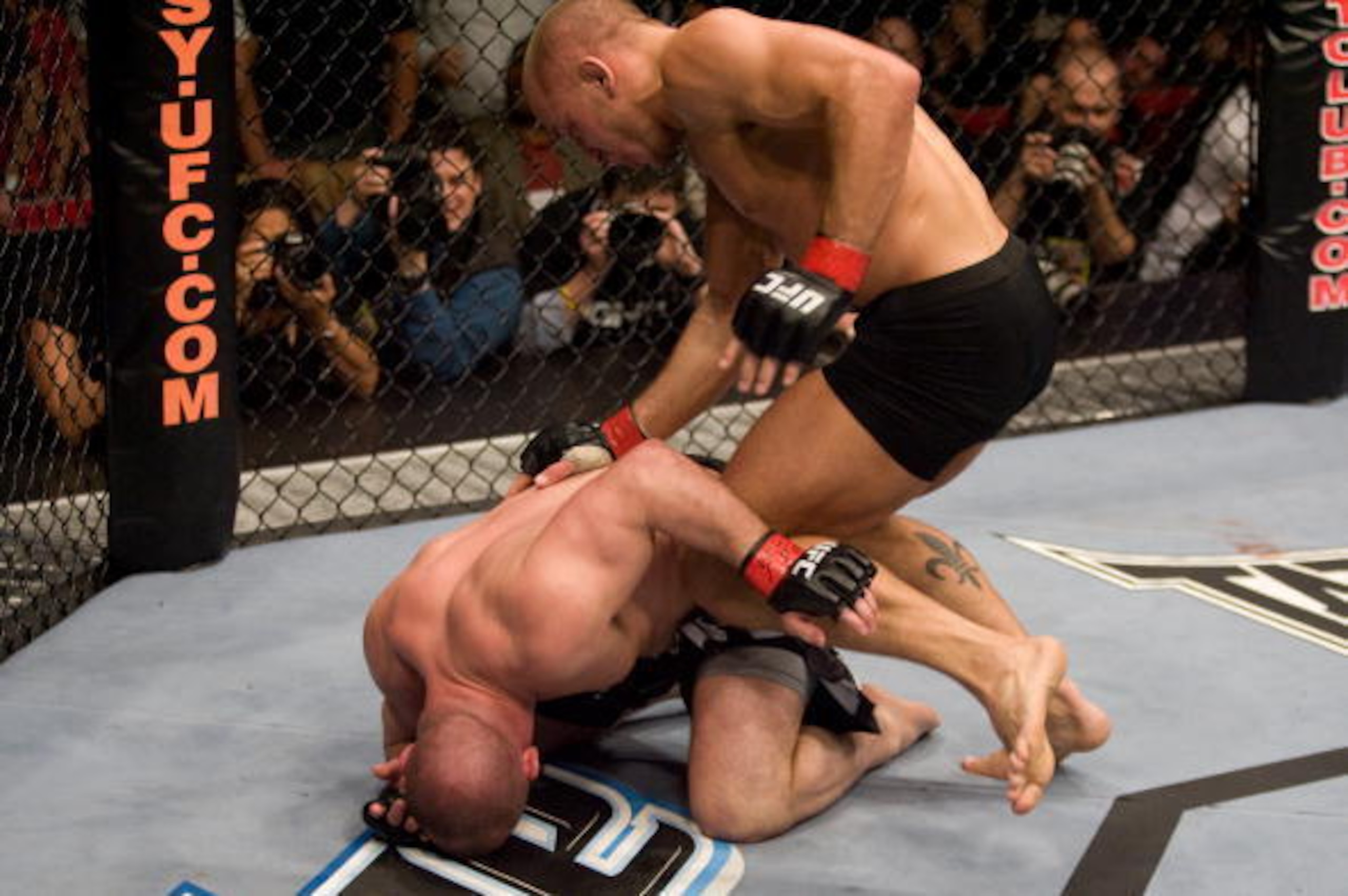
When Matt Serra knocked out Georges St-Pierre in the spring of 2007, the fight world momentarily lost its equilibrium. With St-Pierre arriving as the sport's anointed superstar and Serra serving as a journeyman facing astronomical odds, the result was nearly incomprehensible.
The impact of the result changed the UFC forever, because it forced St-Pierre to adopt a new style that, while more conservative, led to overwhelming dominance and growing star power. He would get to showcase that when the two rematched nearly a year later.
In a case of perfect synchronicity, by the time the duo were set to face off again, the time was finally ripe for the UFC to invade Canada. As the UFC charged up north for the first time, GSP's countrymen united behind him, selling out Montreal's Bell Centre and breaking the then-North American attendance record with 21,390 fans.
With the expectation of St-Pierre recapturing the belt heavy in the air, the arena was on fire from the opening preliminary bouts. With the completion of every match, the fans just got louder. It went from excited anticipation to straight-on hysteria when St-Pierre finally made his walk to the cage; the fan decibels rose so high that cage announcer Bruce Buffer could not be heard above them. In a decade of covering MMA, it remains the loudest crowd I have ever heard.
The match was not particularly competitive or compelling athletically; St-Pierre took Serra down within the opening five seconds and dominated for almost every moment thereafter until stopping him with knees to the body with 15 seconds left in the second round. To the assembled, that didn't matter a bit. They were there to watch a coronation.
And anyway, its importance went way past the match as a sporting contest. It established Canada as a key market for MMA, re-established St-Pierre as both a champion and a pivotal figure in the sport's growth, and marked the start of a legendary streak from one of the sport's all-time greats.
UFC 94: Georges St-Pierre vs. BJ Penn
8 of 16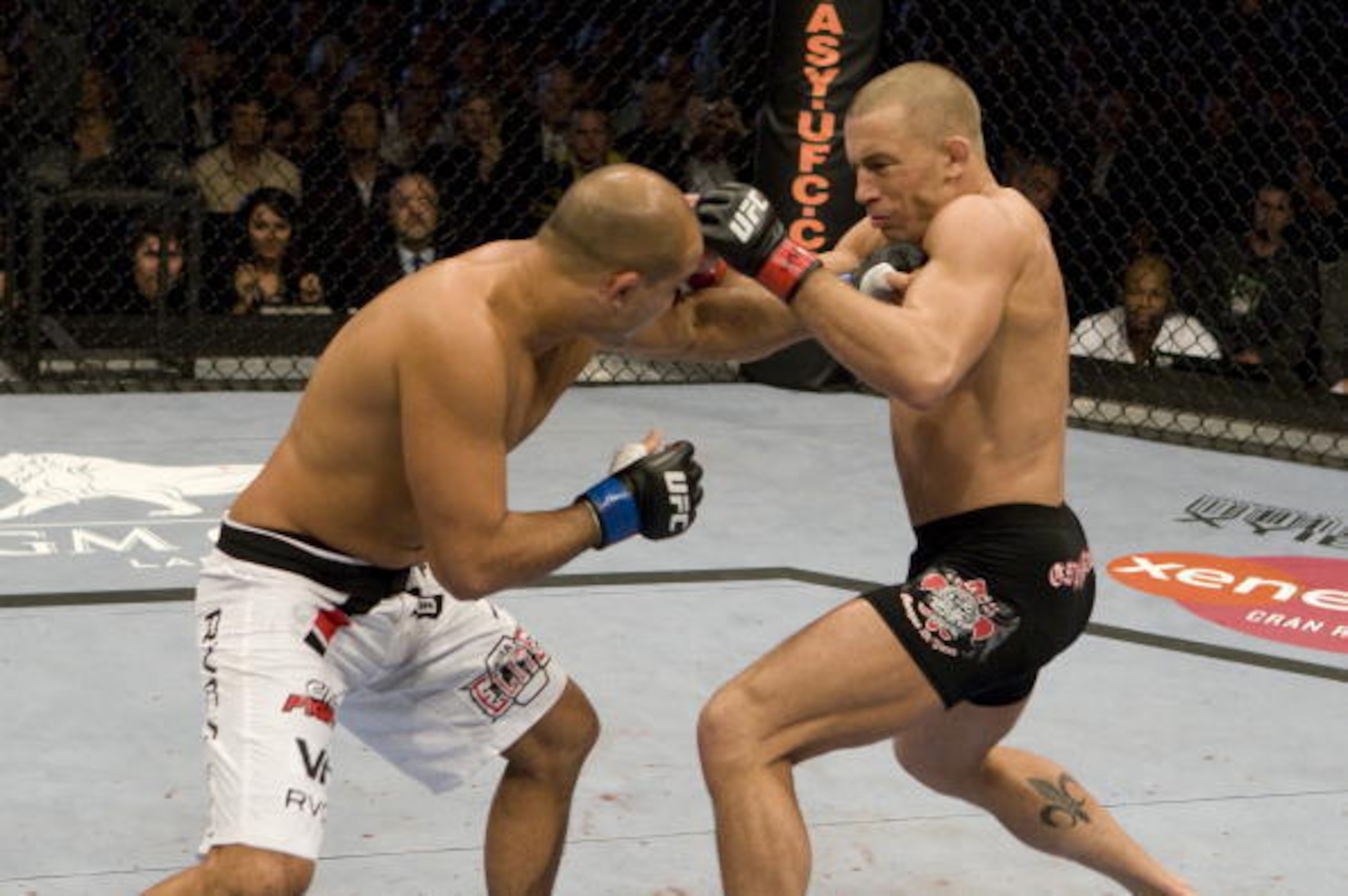
There was an energy inside the MGM Grand Garden Arena that only a true megafight can produce. Two men, both proud champions, faced each other across the UFC's iconic steel Octagon. Just 30 feet separated the men, who were among the most legendary martial artists of their lifetimes.
In the arena, thousands of fans on each side engaged in a duel of their own. The Hawaiians, loud and faintly dangerous, sounded off in favor of local hero BJ Penn, the UFC's lightweight champion. Equally boisterous were the Canadians who were present to see their nation's greatest athlete since Wayne Gretzky secure his place among his sport's historical elite.
Almost three years earlier at UFC 58 the two had met in a back-and-forth thriller so close that three judges couldn't agree on a winner. This time, the only controversy centered on the Vaseline on GSP's chest. Of the result, there could be no doubt. After 20 minutes of fighting, Penn's team decided discretion was the better part of valor.
Penn quit on his stool, but there was no hint of cowardice or derisive catcalls from the crowd. At 27, in the prime of his fighting career, there was simply no stopping St-Pierre. Between two relative equals, the 15-pound weight difference turned out to be an insurmountable gap. That Penn was willing to try was enough to make it one of the most memorable fights I've ever attended.
UFC 100: Brock Lesnar vs. Frank Mir
9 of 16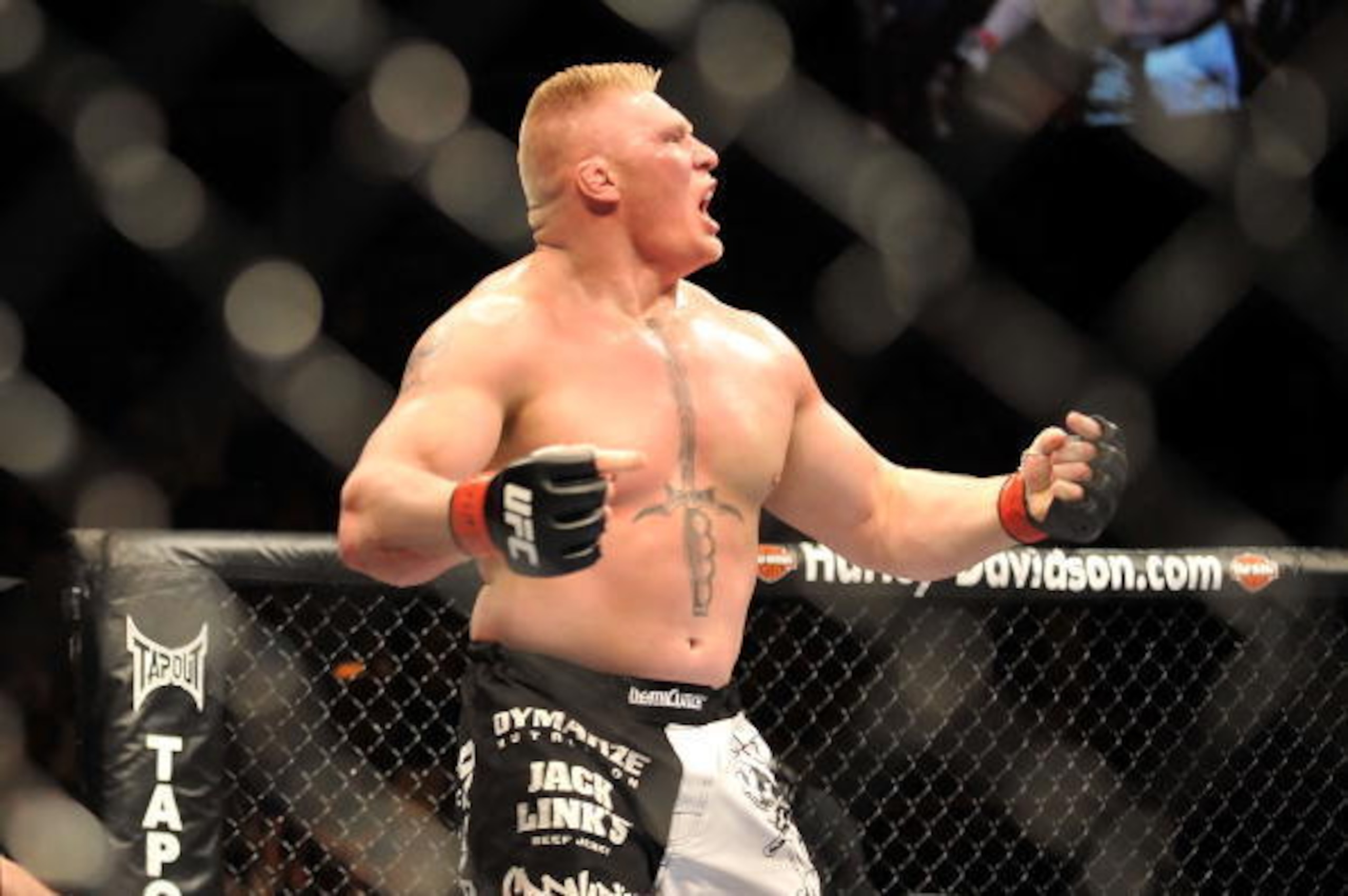
Brock Lesnar will forever be MMA's biggest a flash in the pan. Fifty years from now armchair, historians will scan his 5-3 record and wonder who was this middling fighter with such a short-lived career. They'll also discover MMA's first true PPV juggernaut, whose reign back in 2009 and 2010 is just now being challenged by Ronda Rousey and Conor McGregor.
When Lesnar and Frank Mir met in a rematch at UFC 100 in July 2009, it was a spectacle of unequaled measure. The bad blood between them boiled so that eight months removed from the fight, Mir said in a radio interview that he hated Lesnar, he wanted to break his neck in the ring and wished for Lesnar to be the first person who dies due to Octagon-related injuries.
Their first fight at UFC 81 set the stage.
Lesnar was 1-0 coming in against a former heavyweight champ in Mir. The fight was going to go one of two ways: The hulking Lesnar was either going to maul his opponent, or Mir was going to submit the former collegiate wrestling champ. Both things happened. The first minute of action was all Lesnar as he suffocated Mir at every turn. When a questionable referee stoppage reset the action, a possessed Lesnar stormed out, looking to finish things in a hurry, and in his reckless abandon, he gave Mir the opening he needed to catch the big man in a kneebar.
The rematch was completely one-sided.
Painfully so. Lesnar systematically broke Mir down, rendering him a bloody pulp. When it was over and Mir was a lifeless heap, the Las Vegas crowed booed Lesnar (Mir is a local), who answered them with two extended middle fingers. Lesnar's post-fight speech alone was must-see TV. The whole thing, from the pre-fight buildup to the post-fight fallout, was a veritable scene-and-a-half.
UFC 125 and 136: Frankie Edgar vs. Gray Maynard
10 of 16
Frankie Edgar and Gray Maynard are almost universally remembered as having one of the top MMA trilogies ever. If we are being honest, their second and third fights almost function as a single bout fought over two nights, designed to determine the best lightweight on the planet at that moment in time.
It's hard to remember now, but few were excited by the prospect of an Edgar-Maynard rematch when it was first set for UFC 125 on New Year's Day 2011. At the time, Maynard had won eight in a row in the UFC, but seven straight were by decision. Edgar had a similar streak, going to the judges' scorecards in six of seven fights, including a loss to Maynard about three years prior.
So no one had any indication of what was to come, an explosive nail-biter that saw Maynard knock Edgar down three times in the first round, putting himself on the brink of the lightweight championship repeatedly. But soon the legend of Edgar was born, as he refused to quit, somehow surviving the continued assaults.
Somehow, as time wore on, he emerged the fresher of the two and regained momentum. When the judges' scores were read after the final bell, they were even-steven.
The next fight at UFC 136 started out nearly identically, with Maynard flooring Edgar again and trying to pound out a finish, only to see Edgar survive, then recover, then wrest away the momentum. But this time, Edgar found a final booster tank within, crushing Maynard with a barrage of uppercuts before finishing him with ground strikes.
While those nine rounds weren't a true rematch, we only left with one meaningful result, that Edgar was—at least by a hair—the tougher of two incredibly tough men.
UFC 148: Anderson Silva vs. Chael Sonnen
11 of 16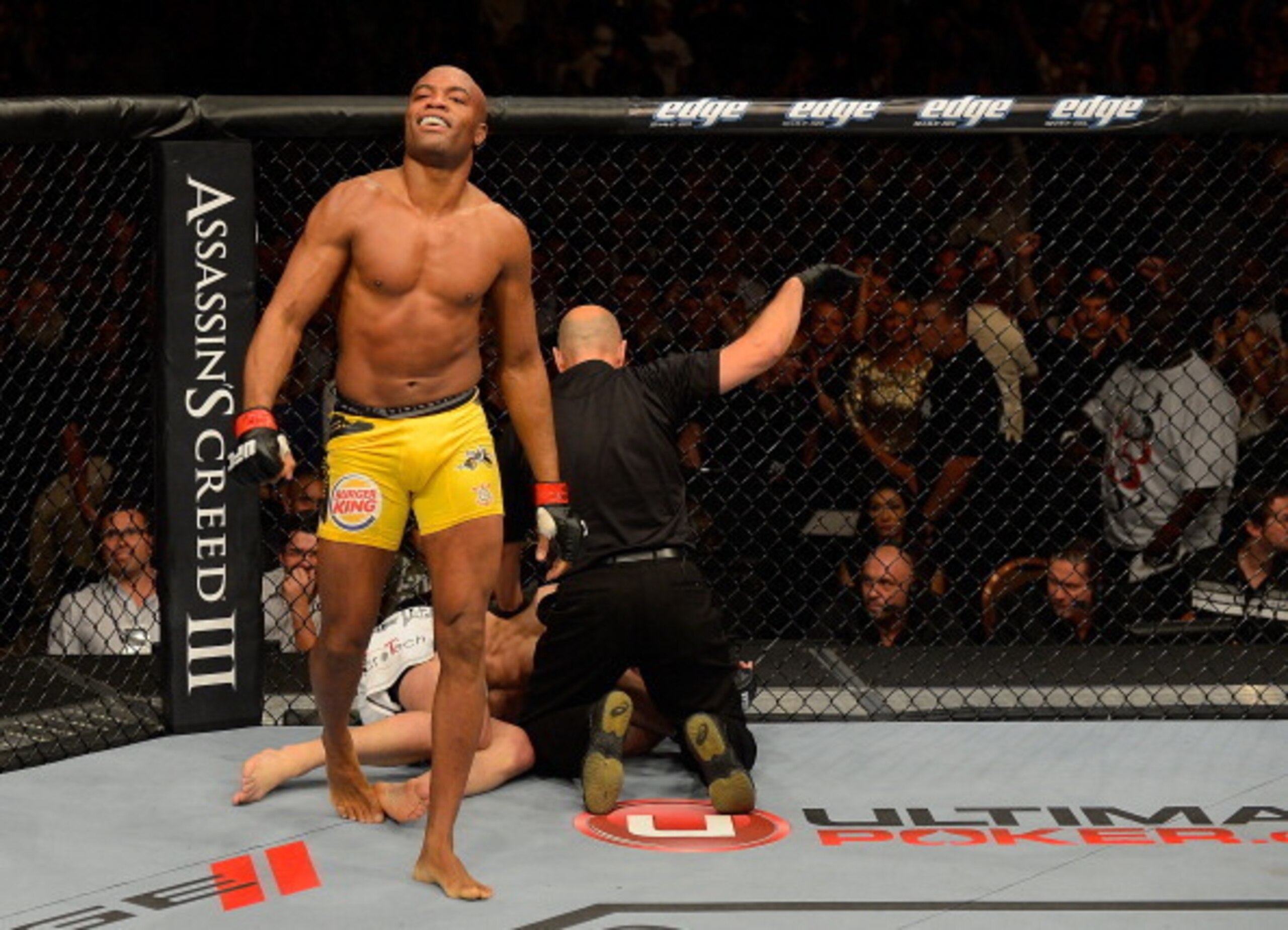
Before 2010, MMA rivalries just weren't built on the microphone. There were feuds and smack talk, sure, but things rarely got more intense or creative than a shouting match over an offensive T-shirt. Heck, McGregor Era fans would likely be shocked to learn that the most devastating verbal beatdown for years came from Georges St-Pierre, who simply said he "was not impressed" with Matt Hughes' win over BJ Penn at UFC 63 (which was preceded by a hug and followed by a handshake).
Then came Anderson Silva vs. Chael Sonnen. At face value, the fight should have been a box office dud. Silva was the most boring champion in the UFC at the time, coming off yawn-inducing wins over Patrick Cote, Thales Leites and Demian Maia. His drawing power was the worst of any reigning champion at the time. Sonnen, meanwhile, had failed to jell with fans because of his wrestling-focused style and lack of finishing skills.
Sonnen, though, wasn't content in simply having a title fight. This was his moment in the spotlight, and he was going to make the most of it, damn it.
While Sonnen, in the past, had been a straight shooter when it came to discussing his opponents, he went into full-on 1980s professional wrestling theatrics with Silva. Their fight at UFC 117 wouldn't break in Sonnen's favor, with Sonnen dominating the first four rounds before getting submitted by a triangle choke in the final frame.
But the story didn't end there.
Sonnen would be suspended for 12 months due to a high testosterone-to-epitestosterone level, and rather than quietly serve out his suspension and risk his newfound fame, he upped the ante. He set his sights onto other Brazilian mixed martial artists such as Silva's friend Lyoto Machida and his mentor, Antonio Rodrigo Nogueira, before eventually returning and once again becoming the top contender, facing Silva in a rematch at UFC 148.
The fight itself was disappointing, ending in controversy due to a number of illegal techniques used by Silva. It didn't matter, though. The game was changed as soon as the tickets sold out. Sonnen demonstrated beyond a doubt how important selling oneself was to fans and how much of a difference smack talk made at the box office.
UFC 146 and UFC 155: Junior Dos Santos vs. Cain Velasquez
12 of 16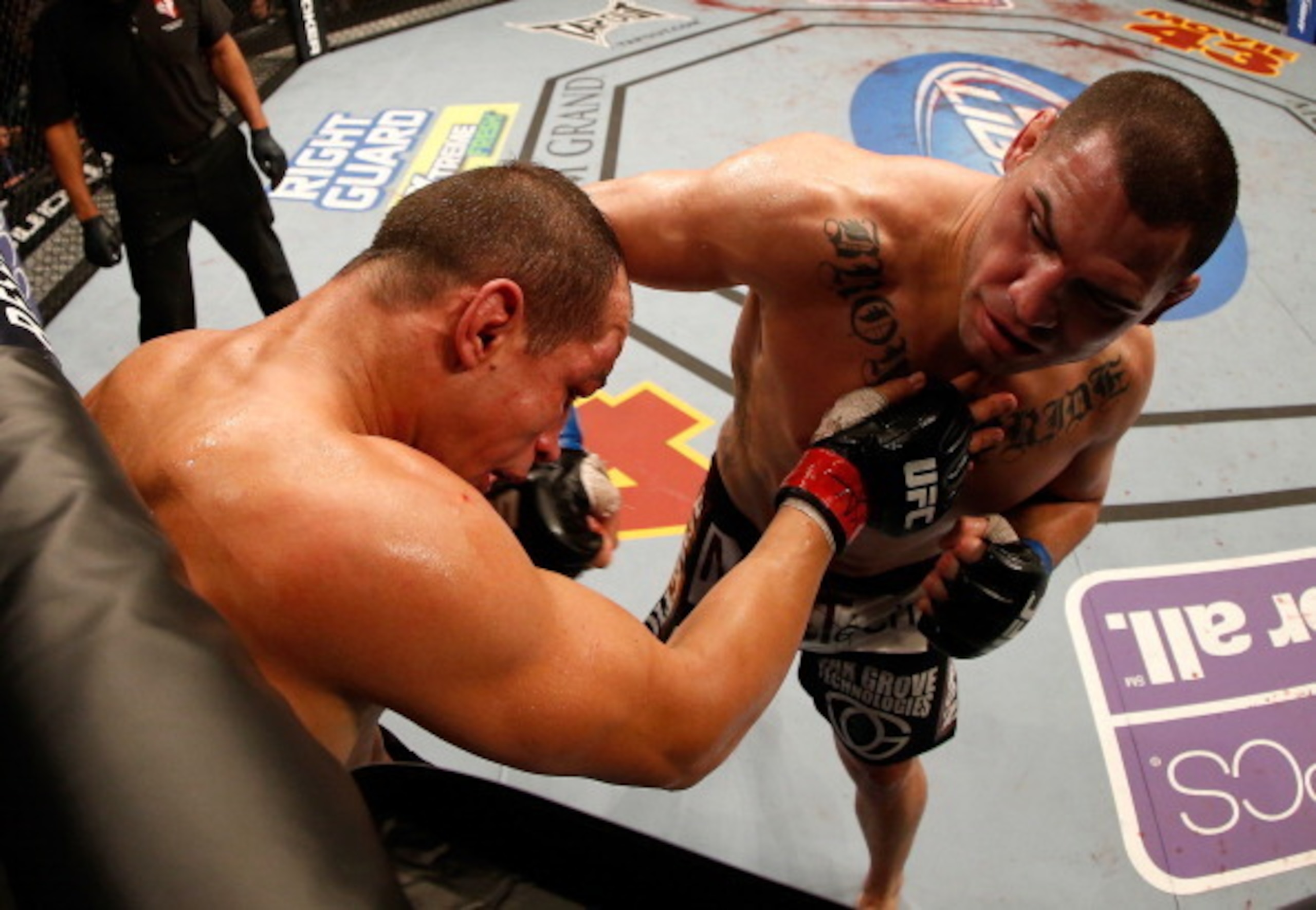
It took challenger Junior dos Santos only 64 seconds to knock out Cain Velasquez when the two men met for the heavyweight title in the main event of the UFC's first offering on Fox in November 2011.
It's hard to overstate the historical importance and the what-might-have-beens that emanate outward from Dos Santos' thunderous overhand. Back in November 2011, Velasquez was coming off a dominant win over Brock Lesnar, the biggest draw in the history of the promotion. Moreover, the Mexican-American Velasquez offered a way into a huge audience of combat sports fans for the UFC. With 8.8 million people tuning in for the main event, the first show on Fox was a potential superstar moment for the champion in his inaugural title defense.
Dos Santos's stunning knockout ended any chance of Velasquez becoming the potential crossover superstar to lead the brand into a brave new market. The Brazilian knocked out Frank Mir in shockingly easy fashion to defend his title the next May, while Velasquez turned Antonio Silva's face into a geyser of blood at the same event. The stage was set for the two men to meet again in December 2012 at UFC 146.
Once again, the rematch represented a story of what might have been. Dos Santos had just become the second Brazilian fighter, after Anderson Silva, to be sponsored by Nike. He had a fan-friendly style and a record of brutal knockouts. Stardom beckoned.
As in their first meeting, it wasn't to be, though this time it was Dos Santos who came up short. Where Velasquez ate a single huge punch in 2011, the Brazilian absorbed hundreds on his way to a one-sided loss to the once and future king of the division.
The two men were destined to meet once more, after Velasquez demolished Antonio Silva for a second time and Dos Santos knocked out Mark Hunt on the same UFC 160 card the next May. The third bout was every bit as lopsided as their second meeting, and this time, the Brazilian didn't reach the end of the 25-minute distance.
Neither fighter has been the same since. Repeated injuries have robbed Velasquez of his prime years before losing his title to Fabricio Werdum, while Dos Santos too has suffered injuries and split a pair of fights. Their trilogy serves as a reminder of just how close fighters might come to reaching elusive stardom, and just how many things have to go right to get there.
UFC 164: Benson Henderson vs. Anthony Pettis
13 of 16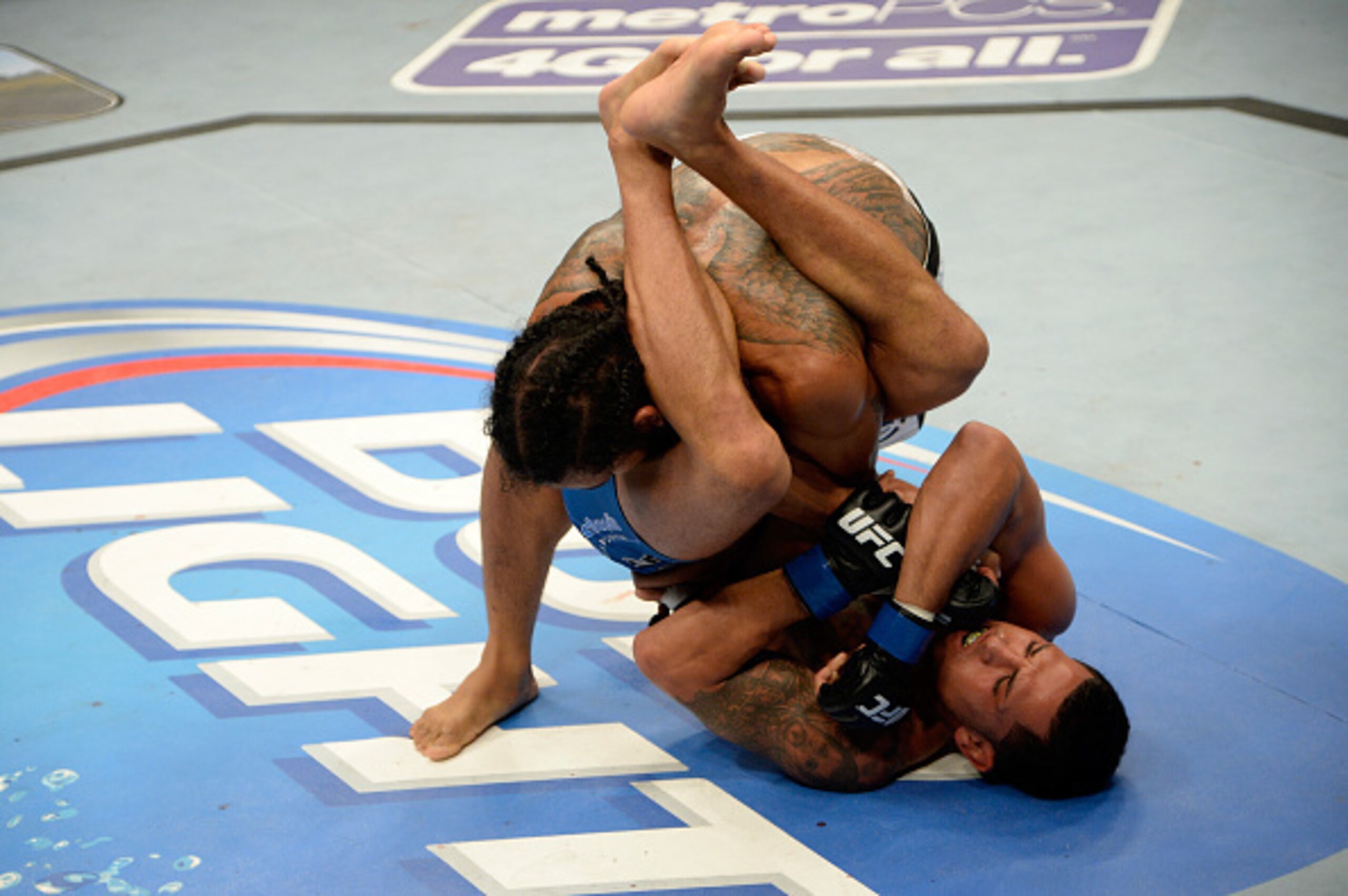
The first fight between Benson Henderson and Anthony Pettis in December 2010 was a barnburner of epic proportions. It was the last fight on the last card in the illustrious history of World Extreme Cagefighting, an organization whose blue cage had played host to violent and entertaining mayhem of the finest order for years beforehand, and the lightweight title fight between Henderson and Pettis topped them all.
With one minute left and the fight on the line, Pettis leaped into the air, jumped off the cage and kicked Henderson in the head. It was the culminating moment of an incredible fight, and it was poised to launch Pettis into superstardom with a UFC title shot.
That never happened. Two weeks later, Gray Maynard and Frankie Edgar battled to a draw at UFC 125, necessitating a rematch. Rather than wait for the winner, Pettis fought Clay Guida and lost a grinding decision.
In the meantime, Henderson put in work. He beat Mark Bocek handily and then dominated the red-hot Jim Miller in a one-sided beating. Guida fell to Henderson in November, setting up the former WEC champion for a shot at Frankie Edgar and the UFC belt.
Henderson took the title and defended it three times before Pettis finally got back on track. The Milwaukee native won a razor-thin decision over Jeremy Stephens and then knocked out Joe Lauzon with a shin to the dome before pulverizing Donald Cerrone's liver to secure a shot at the belt that had belonged to Henderson for 18 months.
The fight in August 2013 was somewhat anticlimactic. Henderson tried to grind Pettis against the fence, but when Pettis broke free, he landed a vicious series of body kicks that had Henderson reeling. The champion shot for a desperation takedown, and in the ensuing exchange on the mat, Pettis secured a tight armbar. Henderson verbally tapped, and it took a moment for the confused Milwaukee crowd to catch onto the fact that Pettis had won. Submitting the champion in front of the hometown crowd seemed to be the culmination of Pettis' delayed rise to stardom.
Henderson was an unappreciated champion remembered more for questionable decisions than his undeniable skills in the cage, while Pettis's injury history and long layoffs have left him just shy of the top of the sport. Their two meetings, however, produced an all-time great fight and a fantastic moment in front of Pettis' Milwaukee crowd.
Bellator 106: Michael Chandler vs. Eddie Alvarez
14 of 16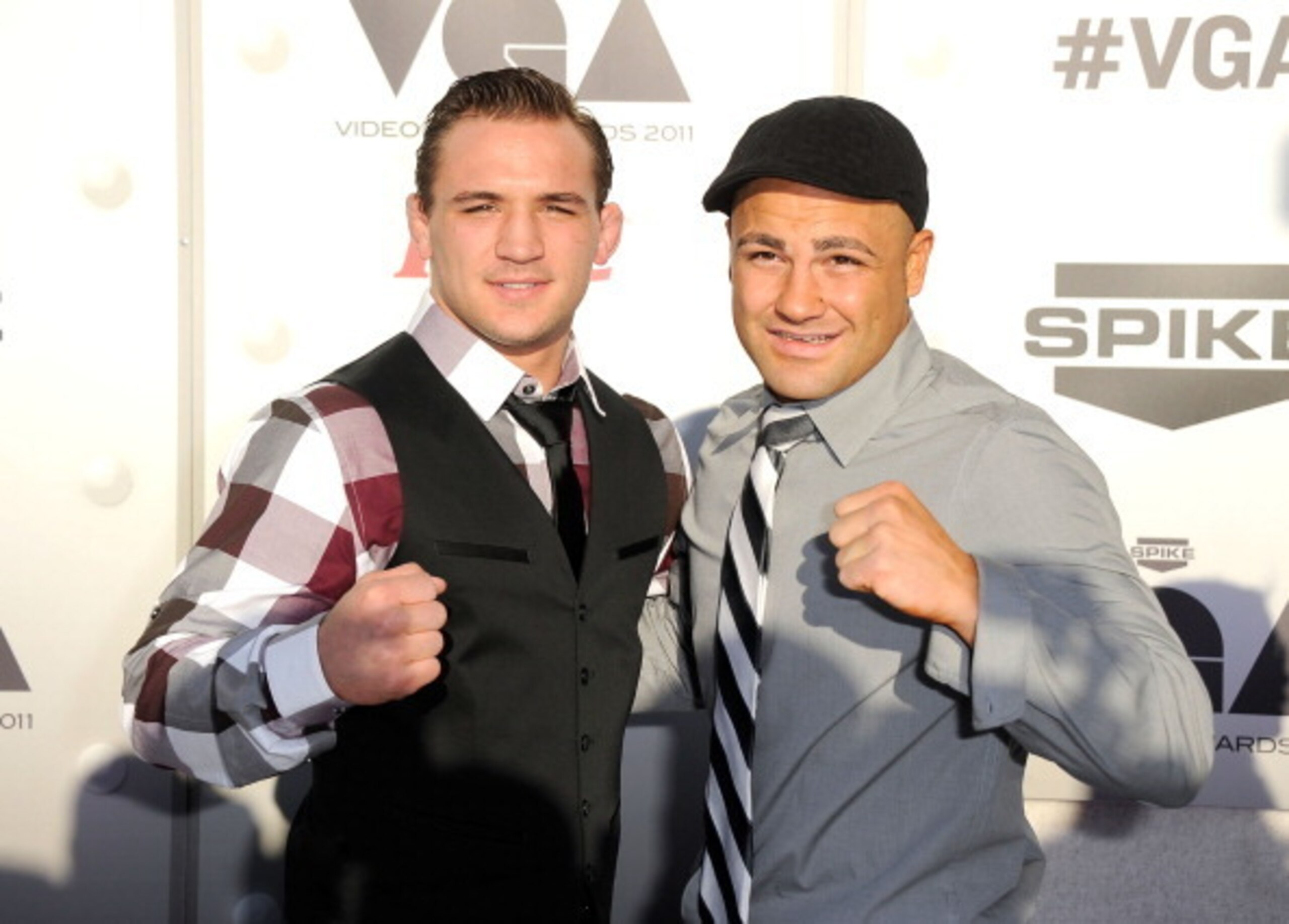
Eddie Alvarez has accomplished a great deal in MMA, but to this point his career has been defined by his rivalry with Michael Chandler. In 2012, Alvarez fulfilled his contract with Bellator MMA by defeating Patricky Freire and was expected to follow fellow former Bellator champion Hector Lombard to the UFC. It felt, at the time, like a happy ending to an exceptionally strong run in an exciting new promotion.
The Bjorn Rebney-led promotion, however, was not all that keen on letting one of its top stars walk out of the promotion just weeks before its massive jump from MTV2 to Spike TV and matched the UFC's contract offer, an odd move by a company unable to offer the pay-per-view incentives included in the UFC's deal.
This led to an ugly legal battle that would be settled seven months later with an awkward ultimatum. Alvarez would face Bellator's poster boy (and the man who took his lightweight title two years earlier), Michael Chandler, in the company's biggest show to date. If he won, his contract with Bellator would be extended and he would be forced into a rubber match with Chandler. If he lost, he would hit the free-agent marketplace as damaged goods.
That hung heavy over the buildup to Bellator 106 and turned an already exciting matchup into must-watch television. Anyone who tuned in was given a treat.
Chandler worked his size advantage and superior wrestling. Alvarez used his veteran savvy to find opportunities to utilize his superior boxing.
After five electrifying rounds, Alvarez edged out Chandler and became the two-time Bellator lightweight champion. The rubber match would be booked for Bellator 120 shortly a few months later but would never come to pass. Alvarez withdrew from the fight due to a concussion suffered in training. Rebney would be ousted from Bellator and replaced with Scott Coker, who unceremoniously allowed Alvarez to join the UFC.
The rest, as they say, is history.
UFC 189: Robbie Lawler vs. Rory MacDonald
15 of 16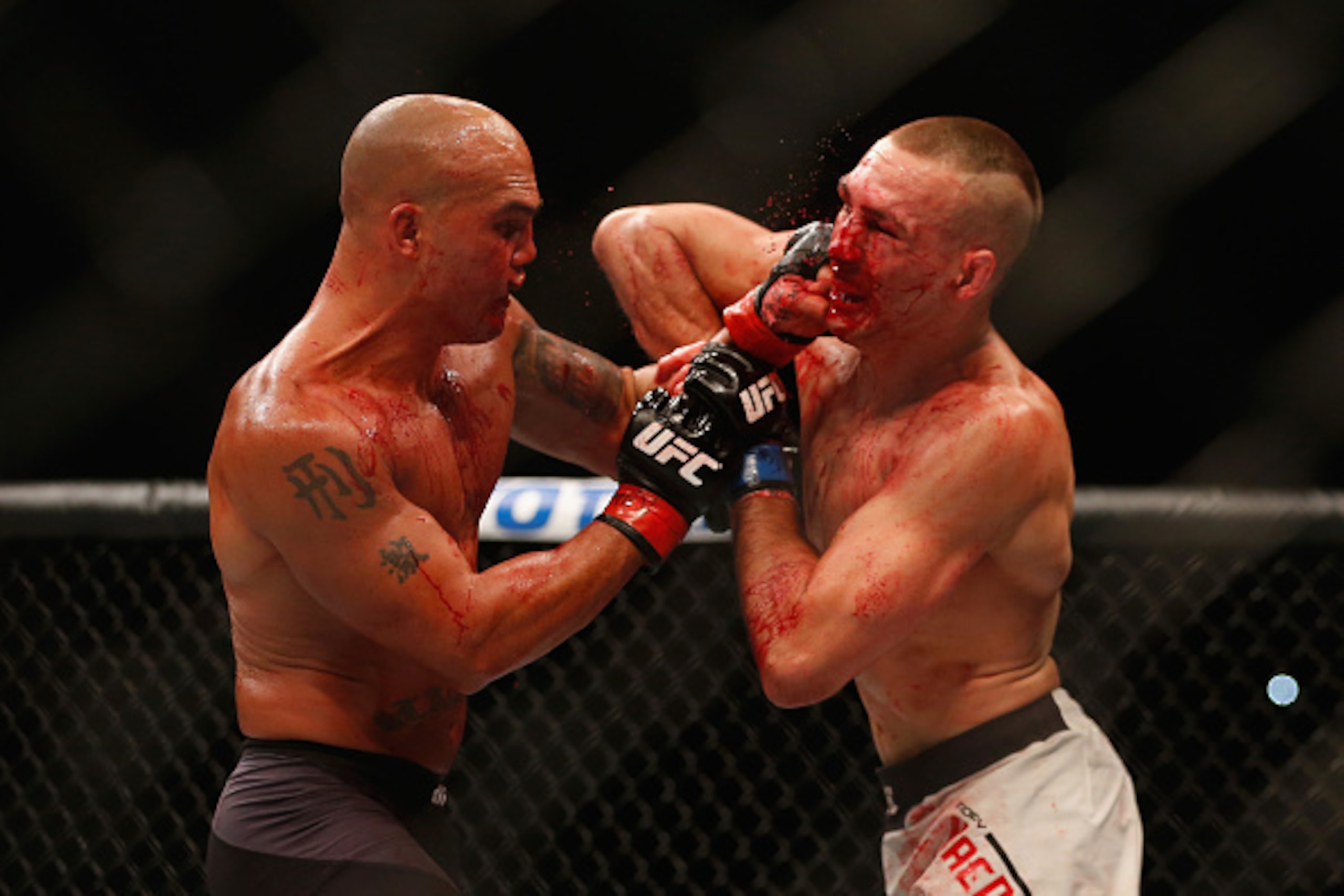
People may forget that Lawler and MacDonald's UFC 189 classic was, in fact, a rematch.
And hey, that's OK. It's understandable that the four-plus rounds of exquisite violence in the return bout would overshadow anything that came before it.
The original did have its drama. Lawler, still considered a powerful but underperforming journeyman, had yet to embark on the mid-career resurgence that ultimately led him to the UFC welterweight title. MacDonald, meanwhile, was a 15-1 24-year-old and the heir apparent to the throne of then-champ and training partner Georges St-Pierre.
Lawler took a surprise split decision in November 2013 that ultimately paved the way for the rematch. We all know how that went, with Lawler taking a slow-but-white-hot-burning TKO in the final round to complete one of the best fights in UFC history.
Bellator 149: Royce Gracie vs. Ken Shamrock
16 of 16
Not everyone was excited at the prospect of a third bout between UFC Hall of Famers Royce Gracie and Ken Shamrock. Their first two fights, after all, exist in a different time and place, in the bad old days before rules, regulations and corporate sponsors dampened MMA's outlaw spirit. An era when we called the sport NHB, short for "no holds barred," and watched a small group of brave pioneers reinvent the martial arts.
Their first fight, the highlight of UFC 1, lasted less than one minute. A long-awaited rematch two years later, the UFC's first superfight between homegrown stars, was a 36-minute torture session, at least for the viewer. The two had so much respect for each other that both were paralyzed into inactivity. The action was so tepid that a single punch by Shamrock became a thing of legend.
And yet, when Bellator announced a third fight in February, I knew I had to be there. Sure, the two were a combined 100 years old. And, yes, both were 20 years removed from their primes. But there is something special about MMA's pioneers that draws me like a moth to a flame.
Gracie and Shamrock had faced the unknown with courage, literally creating a sport as they went. There was no promise of riches, and glory existed only within the small community of true believers. These were men who, in their hearts, believed they were the baddest men on the planet. And they were willing to put it to the test inside a steel cage when no one knew what the consequences might be.
That kind of fire isn't extinguished by age alone. Whether 30 or 50, Shamrock and Gracie are warriors born and bred. And that's something worth paying tribute to.
.jpg?w=2560 "Cowboys Texans Football")
.jpg?w=2560 "Browns Jaguars Football")