

Lessons Learned from 2nd Year of the College Football Playoff
The first two games of the College Football Playoff might have been disappointing for neutral fans and television executives, but on Monday night in Glendale, Arizona, the second-ever CFP National Championship Game between the Alabama Crimson Tide and the Clemson Tigers gave the 2015 season the thrilling finale it deserved.
The back-and-forth title clash between the nation's two best teams was a smashing success for a system that had somewhat of a sophomore slump.
Two semifinals that were virtually over by the fourth quarter on a day of low TV ratings made some worry about Clemson and Alabama's duel in the desert.
But it was an excellent national championship game, and now it's time to reflect on Year 2 of the College Football Playoff as Alabama and its massive fanbase celebrate another title coming to Tuscaloosa, Alabama.
Here are five lessons learned from this year's playoff, from conference politics to scheduling conflicts to the title game itself.
There Isn't a Single Dominant Conference
1 of 5
The Southeastern Conference ended its grueling national championship drought of two entire seasons in the Arizona desert Monday night when Alabama held up its first national title since the 2012 campaign.
While the Tide's victory might spark another streak for the conference, it's easy to see that the balance of power in college football isn't what it used to be when the SEC was winning seven straight BCS National Championship Games.
Just look at last season's playoff compared to this one. Teams from the Big Ten and the Pac-12 squared off in the national title game last year, while the SEC's and the Atlantic Coast Conference's representatives fell in the semifinals. The Big 12 wasn't invited to the party.
One year later, the SEC and the ACC champions played for the title. The Big Ten, home of the defending champion, lost in the semifinal round. The Big 12 made the cut, while the Pac-12 was left on the outside.
While the SEC made a strong case that it's still the best conference in football this bowl season, it doesn't have a monopoly on the title picture.
Clemson and Florida State should be perennial contenders in a rapidly improving ACC. Oklahoma rejoined the new-school Texas powers in the Big 12 hunt this year. The Big Ten had more playoff contenders this season than any other conference. Stanford is locked in with the rest of the powerhouse names in the tough Pac-12.
The improvement from the rest of the Power Five conferences, combined with the creation of the College Football Playoff, will make for some wide-open, exciting title races for years to come.
No matter if you chant your conference's initials or roll your eyes at the very notion of it, that championship-level balance is what fans of college football should want to see.
For Now, No Conference Title Game Works for the Big 12
2 of 5
Last season, the Big 12 was left out of the College Football Playoff, and not having an official outright conference champion hurt the 10-team conference.
This time around, the Big 12 was able to get into the four-team field without having a conference championship game like the rest of the Power Five. Even with a loss to 5-7 Texas, Oklahoma basically had a playoff berth sealed by conference championship weekend.
The lack of a title game didn't hurt the Big 12 this time around, but that doesn't mean there won't be changes on the horizon for the conference.
"We need to continue to watch the landscape," Big 12 Commissioner Bob Bowlsby said, per Andy Staples of Sports Illustrated. "We’re a little smaller. We don’t have a championship game. We do have a round robin... we want to see the pieces of the puzzle before we make those decisions."
Bowlsby points to the all-important "13th data point" that could hurt Big 12 teams in the future. Oklahoma was at No. 3 heading into conference championship weekend, but Michigan State jumped the Sooners to No. 5 after winning its 13th game of the season—the Big Ten Football Championship Game.
This year, that meant Oklahoma avoided eventual national champion Alabama. But the missing 13th game could become a real disadvantage in the future for the Big 12 when it comes to seeding or just making the playoff again.
According to Jon Solomon of CBS Sports, the Big 12's current push is for conference title game deregulation to pass at the 2016 NCAA Convention this week. That would allow the 10-team conference to have a title game at the end of the season.
If that doesn't work—the Big Ten is trying to prevent the vote from passing with an amendment—expansion might be the way to go for a conference that seems happy standing pat at 10. So keep your phone on you, Houston.
The New Year's Eve Experiment Was a Disaster
3 of 5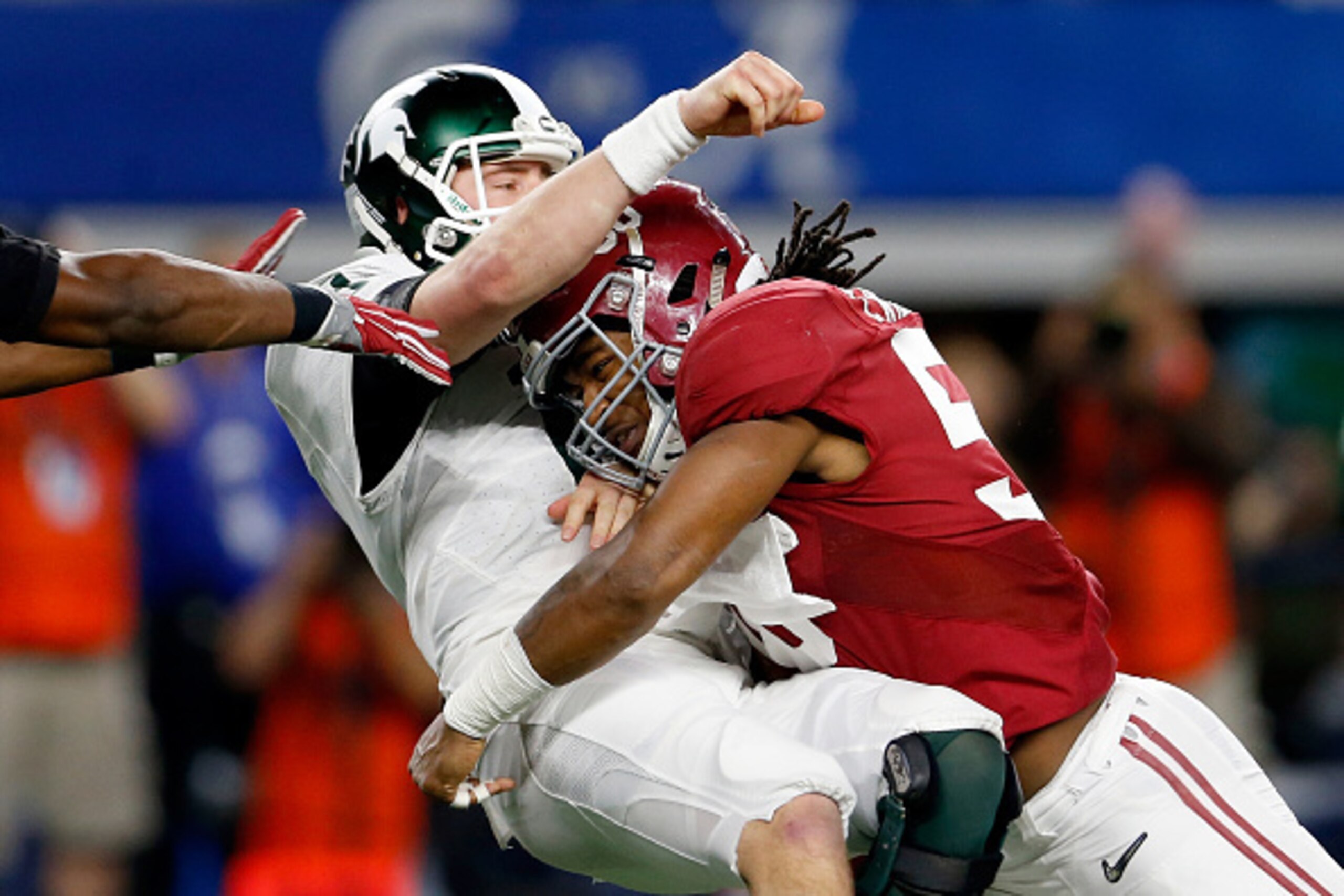
This time last year, Bleacher Report colleague Brian Pedersen wrote one of the main lessons learned from the first playoff was that New Year's Day was made for playoff football.
This year, the system didn't give us that, and it was highly problematic.
CFP Executive Director Bill Hancock proclaimed last year that having the semifinals on Dec. 31 instead of Jan. 1—something that is scheduled to happen in seven of the next 10 years—would "absolutely change New Year's Eve in this country."
Sorry, Bill, but the change that came this New Year's Eve was one in the wrong direction. TV ratings for the two semifinals were down a combined 34.4 percent from last season, and ESPN reportedly is in line to pay $20 million to advertisers in make-goods from the viewership nosedive.
The way the two semifinals turned out most likely had something to do with the low numbers. But the two games turning into second-half routs aren't solely to blame. The Orange Bowl kicked off at 4:10 p.m. ET on New Year's Eve, when many people were wrapping up their last work day of the year.
Weekday afternoon bowl games can be fun—looking at you, Miami Beach Bowl—but they're not practical for most of the country, especially for one of the three biggest games of the year. The prime-time Cotton Bowl didn't get much better ratings as it came on one of the planet's biggest nights for social events.
But the powers that be for the Rose Bowl and the Sugar Bowl are stubborn with their New Year's Day-only time slots. So the plan is for New Year's Eve semifinals on the years when those two games aren't in the final four structure.
According to Nancy Armour of USA Today, Hancock said decisions on future semifinals won't be based on one year. This will have to be a lesson the playoff power brokers learn the hard way.
.jpg?w=2560 "AP Poll Top Five Week 9")

The Push for Expansion Isn't Slowing Down
4 of 5
The four-team system isn't going anywhere. Bleacher Report's Barrett Sallee has written enough articles covering that already.
But that's not going to stop some from wondering if that's the best way to determine the national champion.
No. 6 Stanford, the lone power-conference champion to be shut out of the four-team field, made a strong statement in the Rose Bowl by routing No. 5 Iowa 45-16. The Cardinal were arguably playing some of the best football in the country toward the end of the season.
Stanford head coach David Shaw was vocal about his desire for an expanded playoff in his postgame press conference, per Bleacher Report's Bryan Fischer:
"David Shaw wants Bama (in an eight team playoff). pic.twitter.com/uQF6WpLsEH
— Bryan Fischer (@BryanDFischer) January 2, 2016"
Ohio State staked a claim, too, with its solid Fiesta Bowl victory over Notre Dame. The Buckeyes only lost one game in the regular season, when the coaching staff seemingly forgot it had Ezekiel Elliott on the sidelines.
"Ohio State showed enough in win [sic] against Michigan and Notre Dame to make you believe it could've taken a pretty good shot at either Alabama or Clemson in an expanded playoff field," Bill Bender of Sporting News wrote. "Don't think for a second that won't be the conversation in Columbus until next fall."
While the four-team system produced a fantastic championship game this season, a couple of fan bases—and some more fans across the country—will feel like their teams deserved a shot at the title. Don't expect that to go away in future editions of the playoff.
Championship Teams Need Great Defense
5 of 5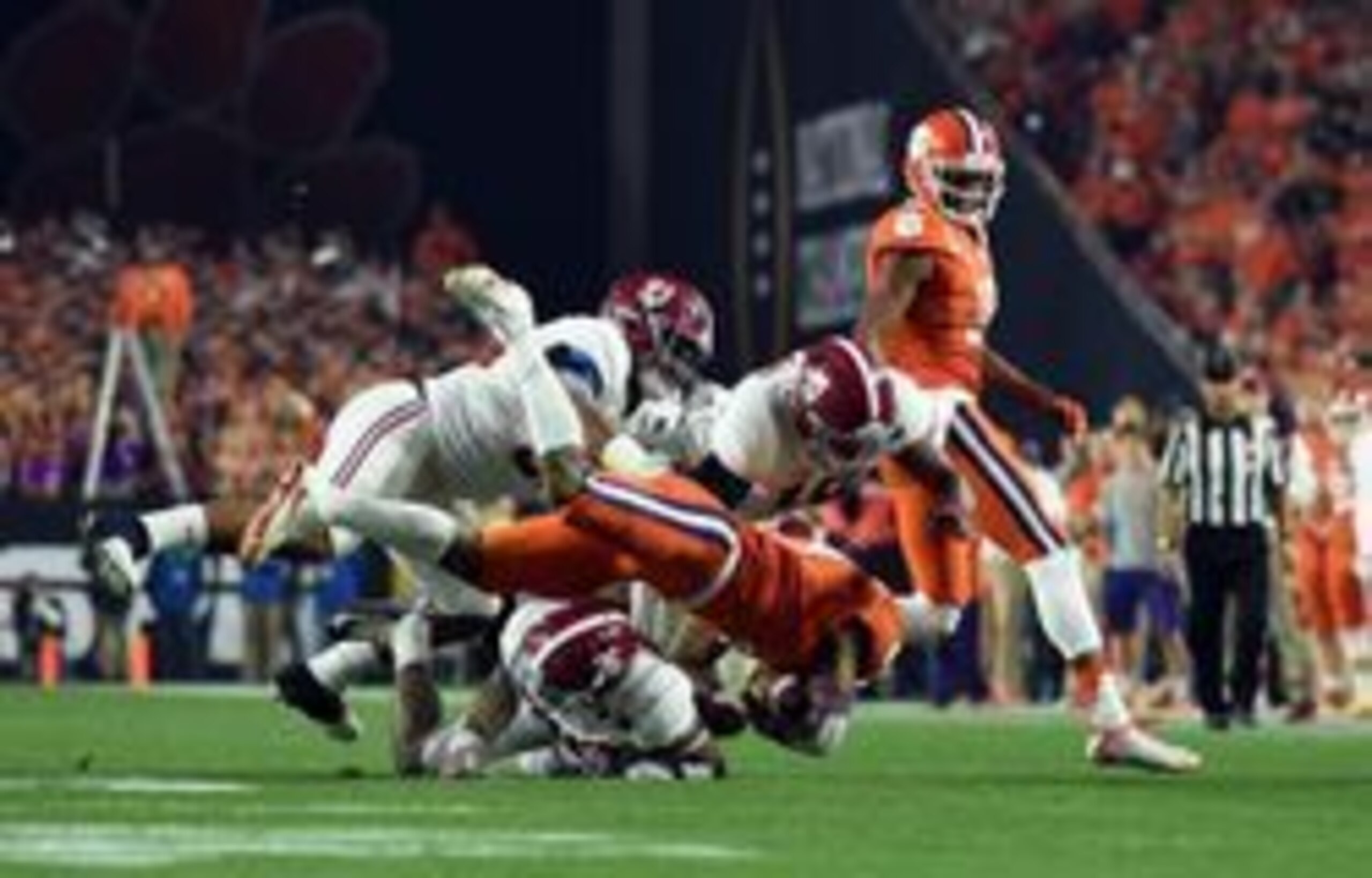
The track meet of a high-scoring fourth quarter in Monday night's national championship game was a perfect representation of how much offense has taken over modern college football.
But the two teams lighting up the scoreboard and stuffing the stat sheet in the final stanza of the season wouldn't have been there without their elite defenses.
As Brandon Marcello of AL.com noted last week, 10 of the previous 11 national champions have been ranked inside the top 10 nationally in overall defense. The only outlier was the Cam Newton-led Auburn team of 2010:
"10 of last 11 national champs will have defenses ranked in top 20 -- and most were top 10. Auburn was 60th in 2010 season.
— Brandon Marcello (@bmarcello) January 5, 2016"
Even with the yardage explosion in Glendale, both Alabama and Clemson finished in the top 10 of total defense for the 2015 season.
Alabama's defense, filled to the brim with highly touted pro prospects and 5-star backups, paved the way for the national championship run when its offense wasn't playing at its full potential in the regular season.
Clemson's defense, led by its own ferocious front seven and a stingy secondary, was the difference-maker in several key games in their outstanding campaign.
In the semifinals, the teams that the Tide and the Tigers dispatched had defensive shortcomings that they were able to exploit. Oklahoma allowed more than 300 rushing yards to Clemson, while Michigan State's struggling secondary was picked apart by Alabama quarterback Jake Coker in a career performance.
Although its defense didn't play up to its elite standards from beginning to end on Monday, Alabama still made enough stops—especially in the second and third quarters—to come out on top. Defense might not single-handedly win championships these days, but it's something the winners need to have.
Justin Ferguson is a college football writer at Bleacher Report. You can follow him on Twitter @JFergusonBR.
.jpg?w=2560)
.jpg?w=2560 "Colts Texans Football")

.jpg?w=2560 "Rodgers Iced Out on Plane 💎")
.jpg?w=2560 "Raiders Could Start Mendoza")

.jpg?w=2560 "Packers Safety Slams Refs 🤬")
.jpg?w=2560 "Lamar Being Out Shocked Ravens")
.jpg?w=2560 "Mahomes Told Teammate to Leave Meeting")

