


The NBA championship race isn't closed, but it isn't exactly wide open, either.
With the 2015-16 campaign inching toward the halfway point, it's getting easier to separate the contenders from the pretenders. The things that might keep each of those contenders from reaching their ultimate goal are also becoming clear.
Before discussing where things might go wrong, we have to set the playing field first. All contenders had to clear two marks topped by at least each of the last 19 champions (as far back as NBA.com's advanced statistics go): a .600-plus winning percentage and a top-10 net efficiency rating.
If you think there's a contender missing from this list, there's a performance-based reason they didn't make the cut.
As for the seven teams that did, each has at least one area that needs strengthening. That might be as specific as an individual player or as broad as an entire unit or an element of the game.
The potential remedies are just as different. Some may need to seek external help in trades or free agency. Others might just need patience to get typical contributors back on track, or they need a wider rotation to make better use of their internal assets.
With such little separation among the NBA's elite, teams have to be at their absolute best. Shoring up these problem areas could get them there.
Chicago Bulls: Wing Help
1 of 7
Under first-year skipper Fred Hoiberg, the Chicago Bulls look strikingly similar to when they played under Tom Thibodeau's watch. The defense remains among the league's best (fifth in efficiency), while the offense is still stuck in the bottom half (24th).
Consistency has been particularly problematic for this attack. Jimmy Butler has been a steady production source (22.0 points, 4.1 assists per game), but the rest of the roster has traveled through peaks and valleys.
Hoiberg is still figuring out what he has in his crowded frontcourt and how to split minutes among five deserving players. The entire hoops world is still deciphering the new Derrick Rose, who's mostly managed to avoid injuries but only sporadically shows star power.
The Bulls must iron out both of those issues if they are going to be full-fledged contenders. But at least those situations are littered with upside. Chicago's quandary at small forward looks bleak, especially the longer it takes Mike Dunleavy to make his 2015-16 debut.
Tony Snell has more downs than ups, and his 37.2 field-goal percentage is a new career worst. Nikola Mirotic gets pushed beyond his athletic limit when he suits up at the 3, and the sophomore hasn't been very effective regardless of where he's played (39.2 percent shooting).
The Bulls likely need to look outside the organization for help, and they might have the trade ammo to do it. According to Yahoo's Adrian Wojnarowski, (h/t CBS Sports' Ananth Pandian), "the Bulls are very determined to add a talented wing player" and might be open to moving Joakim Noah or Taj Gibson to find one.
Cleveland Cavaliers: The King's Backup
2 of 7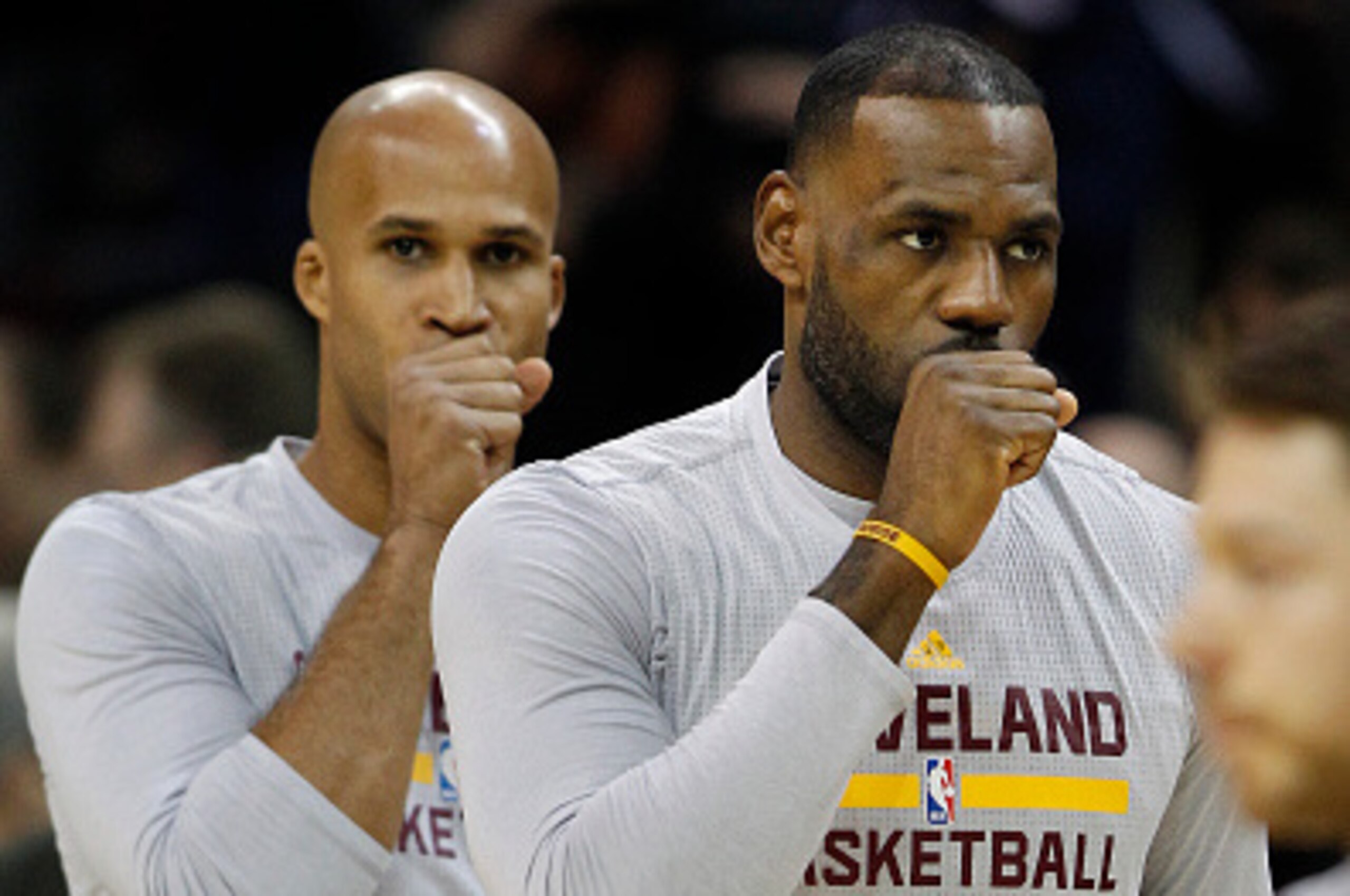
The Cleveland Cavaliers have tried to protect LeBron James the best they can.
They've have a pair of All-Star scorers alongside him to help ease his offensive burden (Kyrie Irving and Kevin Love). They've put a bruising 7-footer underneath to help wall off the rim (Timofey Mozgov). They've dotted the perimeter with snipers (or potential snipers, at least) and littered their roster with scrappy hustlers (Tristan Thompson, Matthew Dellavedova and Anderson Varejao).
All of that makes James' life easier when he's on the court. But what about when he's not? Well, the Cavs go from world-beaters (plus-11.9 points per 100 possessions; would be third overall) to bottom-feeders (minus-9.4; would be 28th).
Granted, going from James to any reserve will inevitably feel like skydiving without a parachute. But his current understudies are failing to reach even tempered expectations. Richard Jefferson is sporting a career-worst 8.7 player efficiency rating, worlds beneath the league-average mark of 15.0. James Jones is converting less than 38 percent of his field goals—for the third time in four seasons.
Making matters worse, James needs help now more than ever. He's 31 years old and already finds himself 50th among the NBA's all-time minutes leaders (36,913, which doesn't include the 7,561 he's logged during the postseason). Not to mention, these are labor-intensive minutes—his 33.2 usage percentage is the highest it's been since 2009-10.
Cleveland has to find better options behind him, both to protect itself against injury and potentially avoid the colossal collapses when he checks out.
Golden State Warriors: Bolstered Bench
3 of 7
It's tough to nitpick a 33-2 team, let alone one that's crushing opponents by an average of 12.0 points per game. But the defending champion Golden State Warriors aren't (quite) perfect.
In fact, they've looked far from it whenever Stephen Curry takes a breather. When the reigning MVP isn't on the floor, the Dubs are outscored by 5.5 points per 100 possessions—a massive 28.7 point plummet per 100 possessions from how they fare with him.
And this issue isn't unique to the sharpshooting chef. Golden State is 28.8 points worse per 100 possessions when it doesn't have Draymond Green, 15.6 worse without "Splash Brother" Klay Thompson and 4.7 worse when Harrison Barnes takes a seat.
"The Warriors have been lacquered with so much praise, it's OK to point out the piece of lint on their shoulder," wrote Bay Area News Group's Marcus Thompson II. "The Warriors bench has been kind of a mess."
The simple solution for stand-in coach Luke Walton has been to lean more on his big guns. Curry, Thompson, Barnes, and Green are all averaging more minutes than they did last season. That clearly hasn't been an issue yet, but the Dubs didn't enter this season eyeing December domination.
They aren't bereft of internal options, but they've found little second-team stability outside the likes of Andre Iguodala, Festus Ezeli and Shaun Livingston.
Leandro Barbosa has battled a shoulder sprain and allowed opponents to shoot 2.4 points higher than their average. Marreese Speights' offense has disappeared (36.7 percent shooting). Brandon Rush has been shuttled into a shooting-specialist's role. Ian Clark is still carving his niche. And minutes only come sporadically for James Michael McAdoo and Jason Thompson.
Weaknesses shouldn't be so easy to spot on a team this dominant, but this one's hard to miss.



Los Angeles Clippers: (More) 2nd-Team Upgrades
4 of 7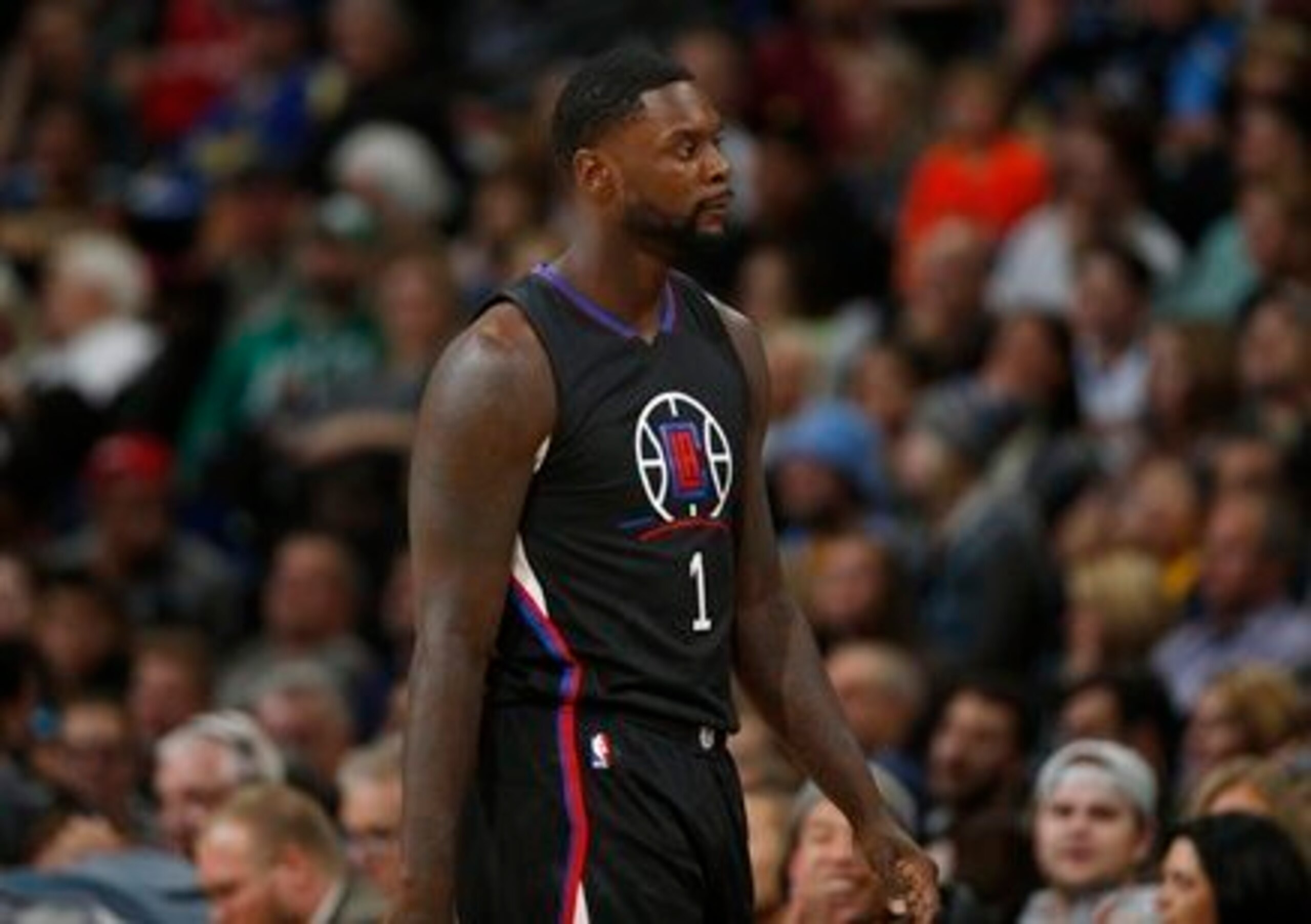
New year, (some) new personnel, same story.
The Los Angeles Clippers' starting five looks good enough for title contention. But the bench doesn't have the bodies to support a lengthy playoff run.
"They continue to face the same glaring lack of depth that's dogged them throughout the Chris Paul era," wrote Bleacher Report's Dan Favale, "which after doing so much over the summer to strengthen the second-string corps, is pretty damning."
The Clippers have reeled off seven consecutive victories as of Thursday, but their rotation remains in flux. There are five sub-40 percent shooters among their top 12 in minutes played. Lance Stephenson has gone from the starting lineup to completely out of the rotation. Josh Smith spent the first seven weeks searching for his spot and the last three weeks finding it on the bench.
L.A.'s substitute backcourt features a pair of shoot-first guards, neither of whom owns a PER north of 12 (Austin Rivers, 10.5, and Jamal Crawford, 11.8). There's also 38-year-old Pablo Prigioni, who isn't scaring any defenses with a 37.1 field-goal percentage (or a 30.4 three-point percentage). Journeyman Cole Aldrich has emerged as the Clippers' best option behind DeAndre Jordan, which says a ton about their collection.
No matter the category, this grades out as a subpar-to-worse reserve unit: 18th in scoring (33.8 points), 28th in rebounds (13.2), 20th in assists (6.7), 28th in field-goal percentage (40.8) and 26th from three (30.3), per HoopsStats.com. The Clippers need to find better insurance behind their top-shelf starters.
Miami Heat: 3-Point Shooting
5 of 7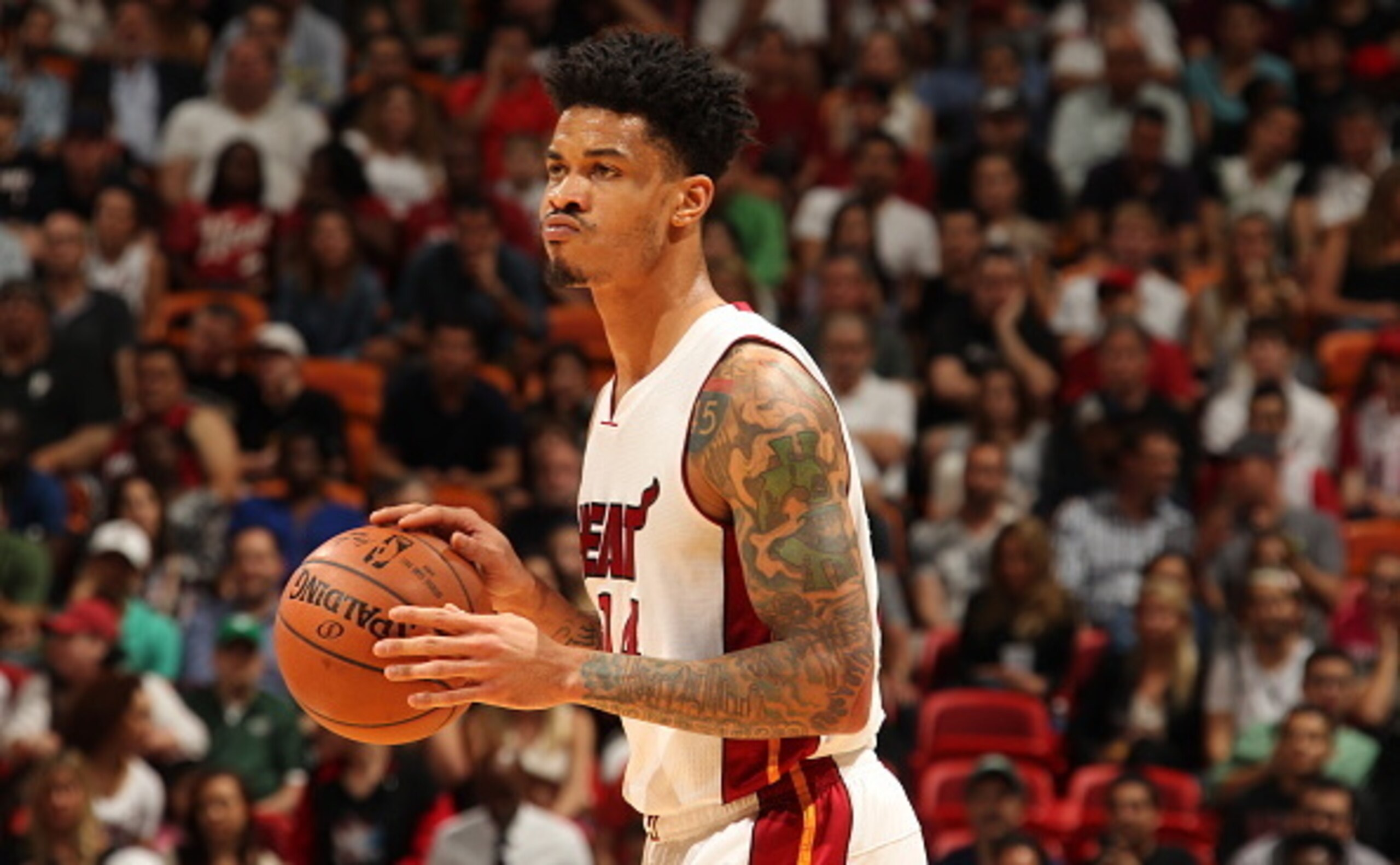
Think about how harmful a crowded paint can be for the Miami Heat.
That means no driving room for Dwyane Wade and Goran Dragic. No place for Hassan Whiteside to explode out of his screen. Too much congestion for Chris Bosh to get a post-up chance or Luol Deng and Justise Winslow to flash their sixth sense for off-ball slashing.
It essentially erases just about everything the Heat like to do offensively. And it's a nightly issue they have to cope with, since their three-point attack lacks both the volume (6.6 triples per game, 26th) and efficiency (32.8 percent, 24th) needed to pull defenses away from the basket.
Between Miami's sixth-rated defense and wealth of inside-the-arc scoring options, this group seems to have just enough to compete with the NBA's elite. But the Heat have zero margin for error if they can't uncover a serviceable supply of outside shooting.
"Not having three-point shooters is like not having a passing game and trying to overcome a large deficit in football," wrote the Sun Sentinel's Ira Winderman. "The Heat's fullback approach makes it all the more difficult in such situations."
Miami plays two 40 percent three-point shooters: Bosh, who is simultaneously enjoying his most active and accurate year from deep, and Tyler Johnson, who isn't very high in the offensive pecking order. There are only three other 30-percent shooters among the regulars: Dragic, Gerald Green, whose quick trigger is an issue when he isn't hitting, and Deng, who does a lot of things better than he shoots the three.
Either the Heat need a few of their gunners to catch fire (and stay that way), or they'll have to take a creative approach in finding outside marksmen for cheap.
Oklahoma City Thunder: Shooting Guard
6 of 7
Chances are any lineup that starts with Russell Westbrook and Kevin Durant will wind up being a dominant one.
Case in point: When those two share the floor, the Oklahoma City Thunder trounce opponents by 18.0 points per 100 possessions. Add Serge Ibaka's unicorn skill set of shot-blocking and outside shooting to the mix, and that number grows to plus-19.2.
It almost doesn't matter who else is getting burn. The Thunder are plus-16.3 when Steven Adams joins the trio; plus-29.0 when Enes Kanter gets the call. They're a plus-23.3 when the ball-dominant Dion Waiters forms the quartet; plus-27.5 when it's shooting specialist Anthony Morrow.
That can make it easy to mask a weak link, but the Thunder's is still hard to overlook. For all the talent they deploy at the 1, 3, 4 and 5 spots, the 2 stands out like an eyesore. Their shooting guards have contributed the fifth-fewest points (16.5 per game) and second-fewest assists (2.4) in the league, per HoopsStats.com.
Starter Andre Roberson is a defensive pest, but his inability to hit from outside (27.8 percent) shrinks OKC's offensive end. Morrow can help spread the floor, but that's the extent of his contributions. Waiters is a ball-stopper, and his shoot-first (and shoot-second) tendency is tough to fathom, given the quality of scoring options surrounding him.
None of these puzzle pieces is ideal. The combined force of Westbrook and Durant is great enough to squeeze a square peg through a round hole, but imagine how much better the final product would be if all the pieces fit properly.
San Antonio Spurs: Getting Danny Green Going
7 of 7
There is picking nits, and then there's trying to find something wrong with this season's San Antonio Spurs. While their record doesn't look quite as good as Golden State's, the Spurs have been every bit as dominant.
They have both the top-ranked defense and No. 3 offense. They're second in true shooting percentage, second in rebounding percentage and third in assist percentage. They're so loaded with talent that LaMarcus Aldridge is their second-best scorer (and Tony Parker is third in line), and Tim Duncan is, statistically speaking, just one of the guys.
If Danny Green was having a typical year, it might be impossible to pinpoint San Antonio's problem area. But the two-way swingman's shooting struggles are easily the Spurs' biggest concern.
His accuracy rates have plummeted. A 42.3 percent three-point shooter over the past four seasons, he's now converting just 32.9 percent of his long-range looks. It's the seventh-lowest percentage among the 38 players to attempt at least 160 triples.
"He's being defended very tough this year," Patty Mills said, per Tom Orsborn of the San Antonio Express-News. "People are aware where he is on the court, closing out to contest the shot a lot more than they used to."
No matter what's happening, the Spurs need Green to find his way out of this slump.
His length (6'6" with a 6'10" wingspan) and activity make him an integral piece of San Antonio's perimeter defense. And he's perhaps the only player capable of leading this team in both three-point makes and percentage.
History says it's only a matter of time before he rips the lid off the rim. But until that time comes, his wayward shooting will stand as the Spurs' primary issue.
Unless otherwise noted, statistics used courtesy of Basketball-Reference.com and NBA.com and current through games played Jan. 7.

.jpg?w=2560 "Raiders Could Start Mendoza")

.jpg?w=2560 "Rodgers Iced Out on Plane 💎")
.jpg?w=2560 "🚨 Week 8 AP Top 25 Poll")
.jpg?w=2560 "Fantasy Waiver Wire Stars 🤩")
.jpg?w=2560 "Packers Safety Slams Refs 🤬")
