
Grading 1st-Year College Football Coaches' 2015 Seasons
So far, the 2015 college football coaching carousel hasn’t been as wild as expected. While at least 21 FBS programs will change head coaches, the wild domino effect of coaches hopping to different jobs never really materialized.
For the moment, we’re down to three FBS openings (BYU, Louisiana-Monroe and Tulane), with 18 jobs filled. While many are rushing to judge the new hires, it’s important to let them have a little time on the job and then check back in.
That’s what we’re doing with the Class of 2015. Last fall, 15 teams took the field with new head coaches, and with only one regular-season game (Army-Navy), the 2015 regular season is all but over. It’s an excellent time to look back at the new head coaches and see just how they did, from Oregon State's Gary Andersen to UNLV's Tony Sanchez.
Hint: Some had more successful seasons than others. Coaches are listed alphabetically by school, and they’ve been assigned letter grades based on their programs' records and how their new teams improved or regressed from 2014.
Buffalo Coach Lance Leipold
1 of 15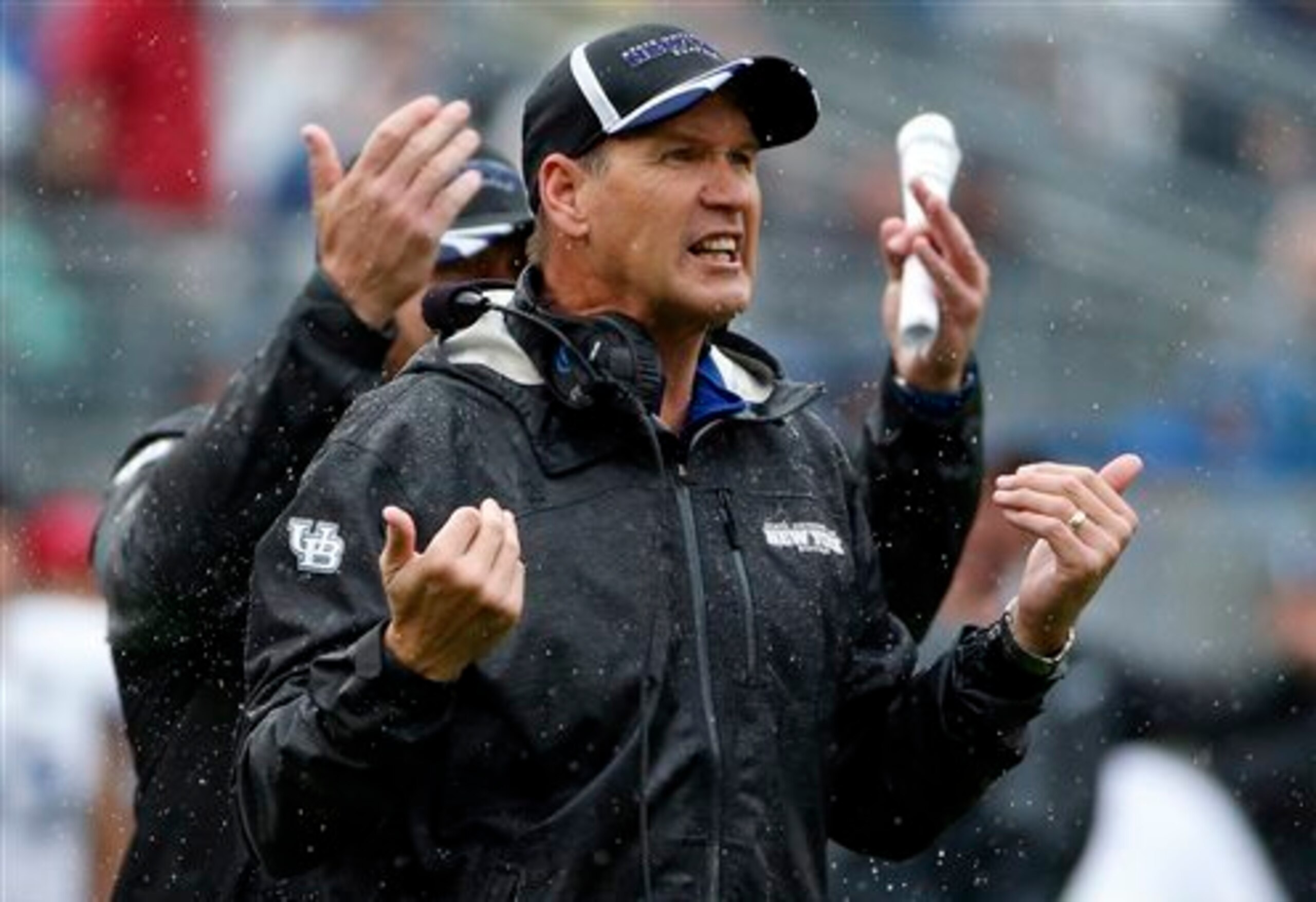
When Buffalo hired Lance Leipold, it took a bit of risk. Leipold had enjoyed tremendous success at Division III Wisconsin-Whitewater, winning 109 games and six national titles in eight seasons. But he had never spent time as an on-field assistant at the FBS level.
The Bulls needed some stability, and Leipold did provide that in his first season as an FBS coach. In fact, Buffalo finished with the exact same 5-7 record as it did in 2014. Leipold lost more games in one season (seven) than he did in eight years at UWW (six).
Buffalo was very close to a bowl bid, losing three games by six points or fewer, including a 28-22 decision to eventual MAC champion Bowling Green. It’s understandable that Leipold would have a bit of a learning curve at this level, and hopefully Buffalo gives it to him.
Grade: C
Central Michigan Coach John Bonamego
2 of 15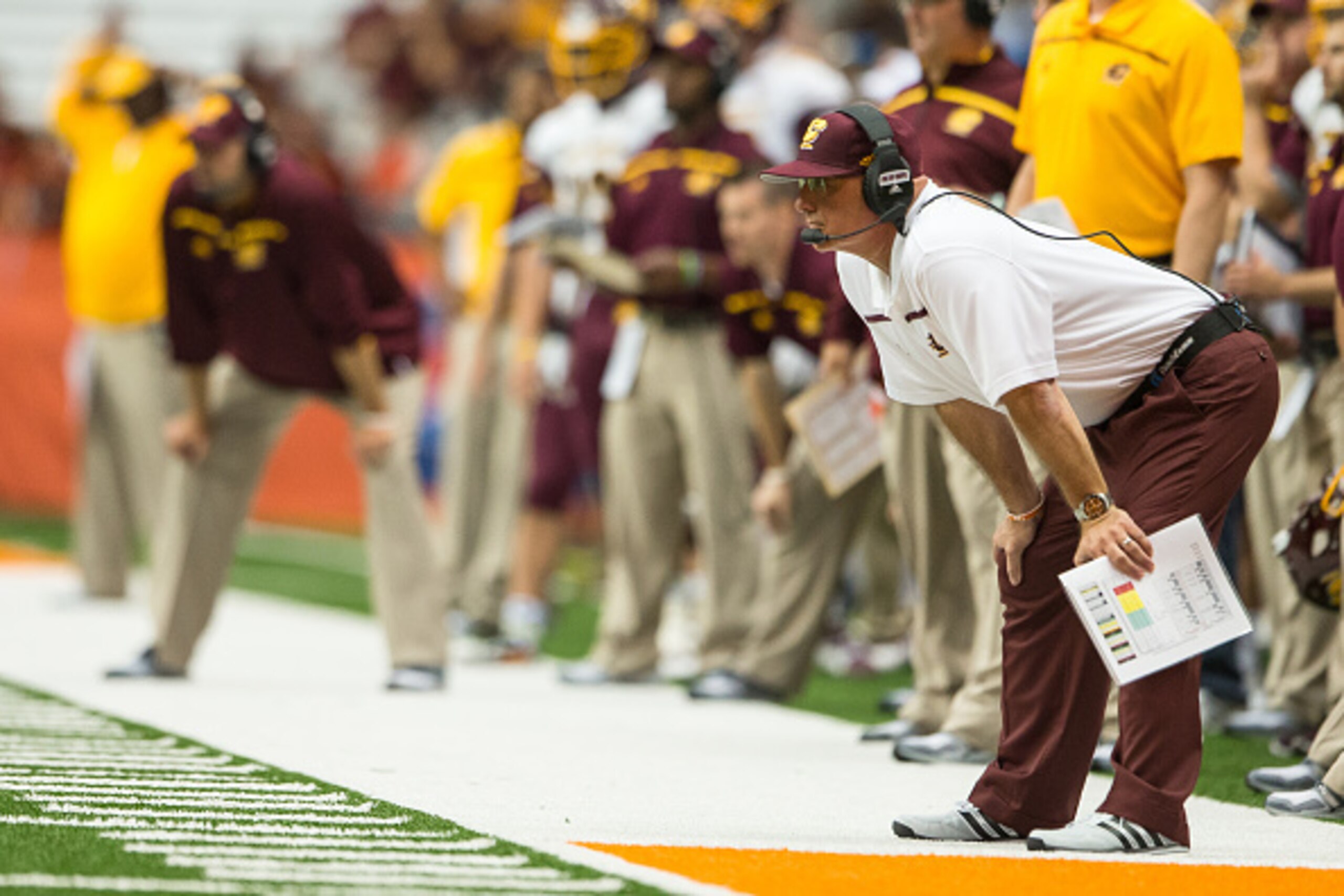
Central Michigan was left in a bit of a lurch after Dan Enos left to become Arkansas’ offensive coordinator in late January, two weeks before national signing day. Replacement John Bonamego was hardly a well-known or inspiring hire, but he did a solid job in his first season.
Under Bonamego’s watch, the Chippewas are back in a bowl game with a 7-5 record for the second consecutive season. They’ll face a 5-7 Minnesota team in the Quick Lane Bowl.
CMU actually finished in a four-way tie for the Mid-American Conference West Division title and lost by a combined seven points to co-champions Toledo and Western Michigan. Quarterback Cooper Rush threw for 3,703 yards with 25 touchdowns and 10 interceptions as one of the MAC’s top passers. It was a solid start to the Bonamego era at Central Michigan.
Grade: B
Colorado State Coach Mike Bobo
3 of 15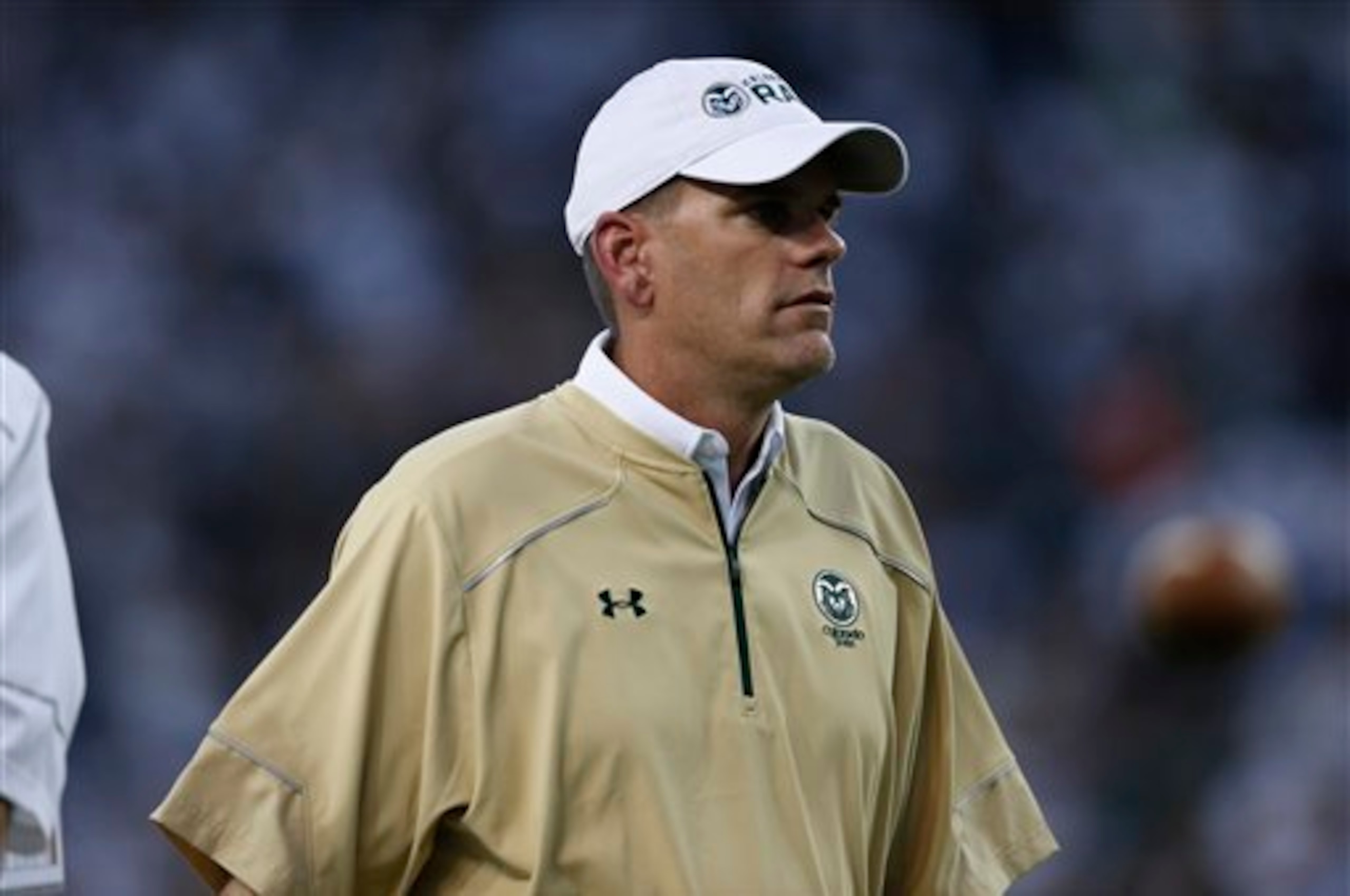
When Jim McElwain left for Florida following a 10-win season, Colorado State went back to the SEC coordinator well, plucking Georgia offensive coordinator Mike Bobo as its new head coach. The Rams took an expected step back this season, going from 10-3 to 7-5 after losing star quarterback Garrett Grayson to graduation.
They’ll still play in a bowl game, facing off against fellow Mountain West team Nevada in the new Arizona Bowl. Three of the Rams’ five losses came by 15-plus points, including a 41-10 whipping vs. Boise State and a 41-17 loss at San Diego State’s hands, but they did defeat MWC West champion Air Force.
If Bobo can build on this season, he’ll likely find himself following McElwain’s path out of Fort Collins, Colorado, sooner rather than later.
Grade: B
.jpg?w=2560 "AP Poll Top Five Week 9")
_0.png?w=2560 "CFB Top 25")
Florida Coach Jim McElwain
4 of 15
When Florida hired Jim McElwain, it didn’t exactly raise a lot of eyebrows nationally. McElwain, a Nick Saban acolyte, had turned around Colorado State, building a 10-win team in three seasons, but Florida was supposed to be a different animal, right?
Guess not. The Gators, a 7-5 team in Will Muschamp’s final season, are 10-3 with an SEC East championship in McElwain’s first season. The Gators suffered an ugly two-game losing streak to end the season, falling 27-2 to Florida State and 29-15 to Alabama in the SEC title game, but the team clearly overachieved.
The offense was inconsistent at best, especially after losing starting quarterback Will Grier at midseason to a one-year NCAA suspension after a positive test for performance-enhancing drugs, but the defense had teeth. The Gators allowed 16.5 points per game, No. 8 nationally. There’s work ahead to return the program to the heights achieved by Urban Meyer and Co., but this was a darn good start.
Grade: A-
Houston Coach Tom Herman
5 of 15
With a brand-new stadium and an underachieving roster, Houston seemed like a bit of a sleeping giant. Tom Herman’s first season as the Cougars’ head coach brought that giant to life. Houston was a smashing success. The Cougars are 12-1, the American Athletic Conference champions and earned the “Group of Five” bid to the New Year’s Six bowl games, which means a Peach Bowl date with Florida State on New Year's Eve.
Houston’s only loss came to UConn, and Herman’s offensive system translated perfectly with dynamic quarterback Greg Ward Jr. Houston averages 40.6 points per game, No. 13 nationally, and its 239.5 rushing yards per game also rank No. 13.
Herman quickly became one of the hottest names on the coaching carousel but agreed to stay at Houston at least for now thanks to an upgraded contract that will pay him $3 million annually, per USA Today. The only question is, how long can Houston keep him around? Here’s guessing the Cougars will see plenty of success as long as he hangs around in H-Town.
Grade: A
Kansas Coach David Beaty
6 of 15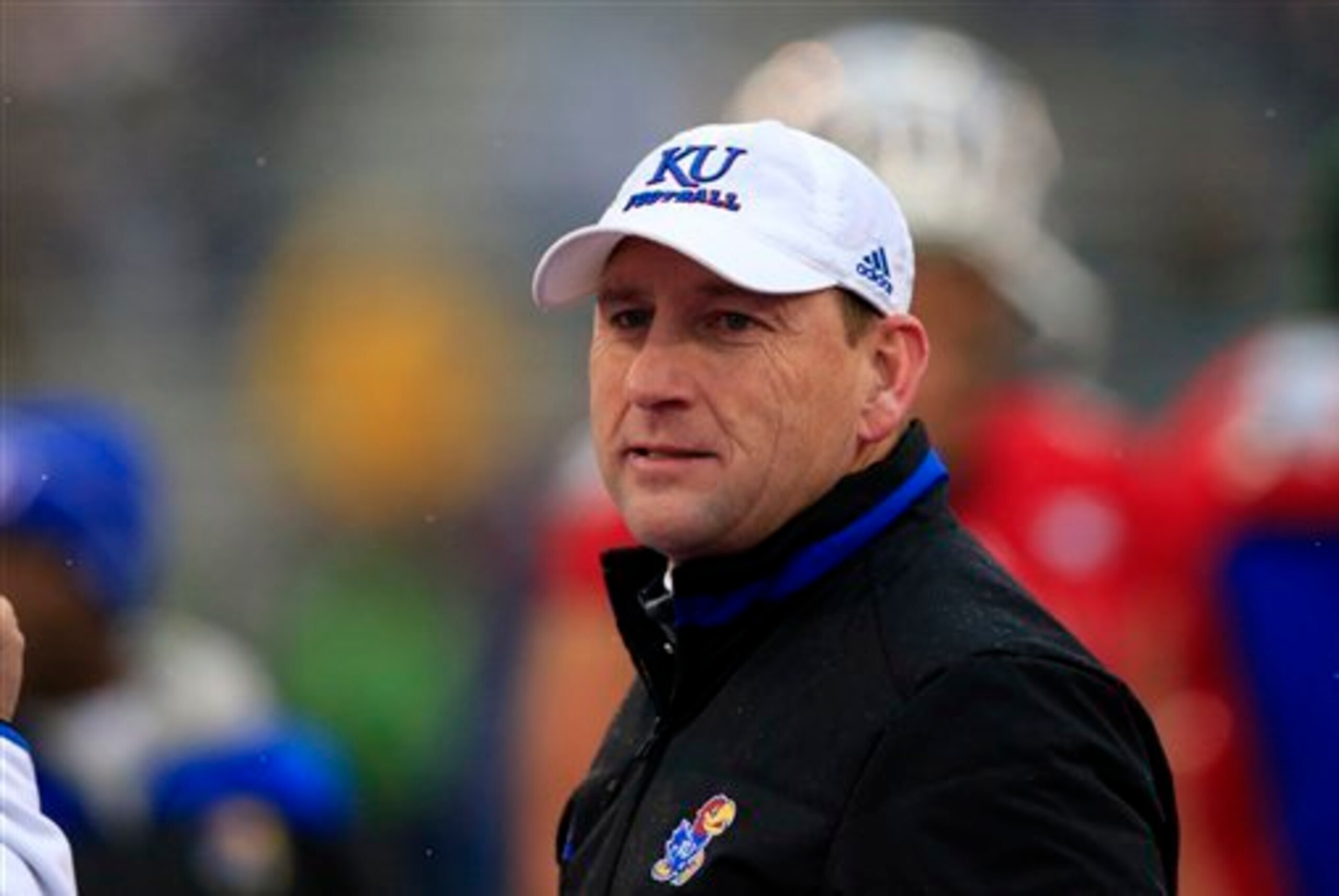
When David Beaty was hired by Kansas, he walked into one of the nation’s toughest situations. Charlie Weis’ disastrous tenure fueled by an ill-advised reliance on junior college players left Beaty one of the thinnest rosters in FBS.
It showed too. The Jayhawks finished 0-12, joining Central Florida as the only winless teams in FBS, and will enter 2016 on a 15-game losing streak. Kansas scored only 17.9 points per game, No. 123 nationally, and allowed 46.1 points per game, dead last among FBS programs. In short, Beaty has a lot of work to do even if the roster he inherited didn’t do him any favors.
Grade: D-
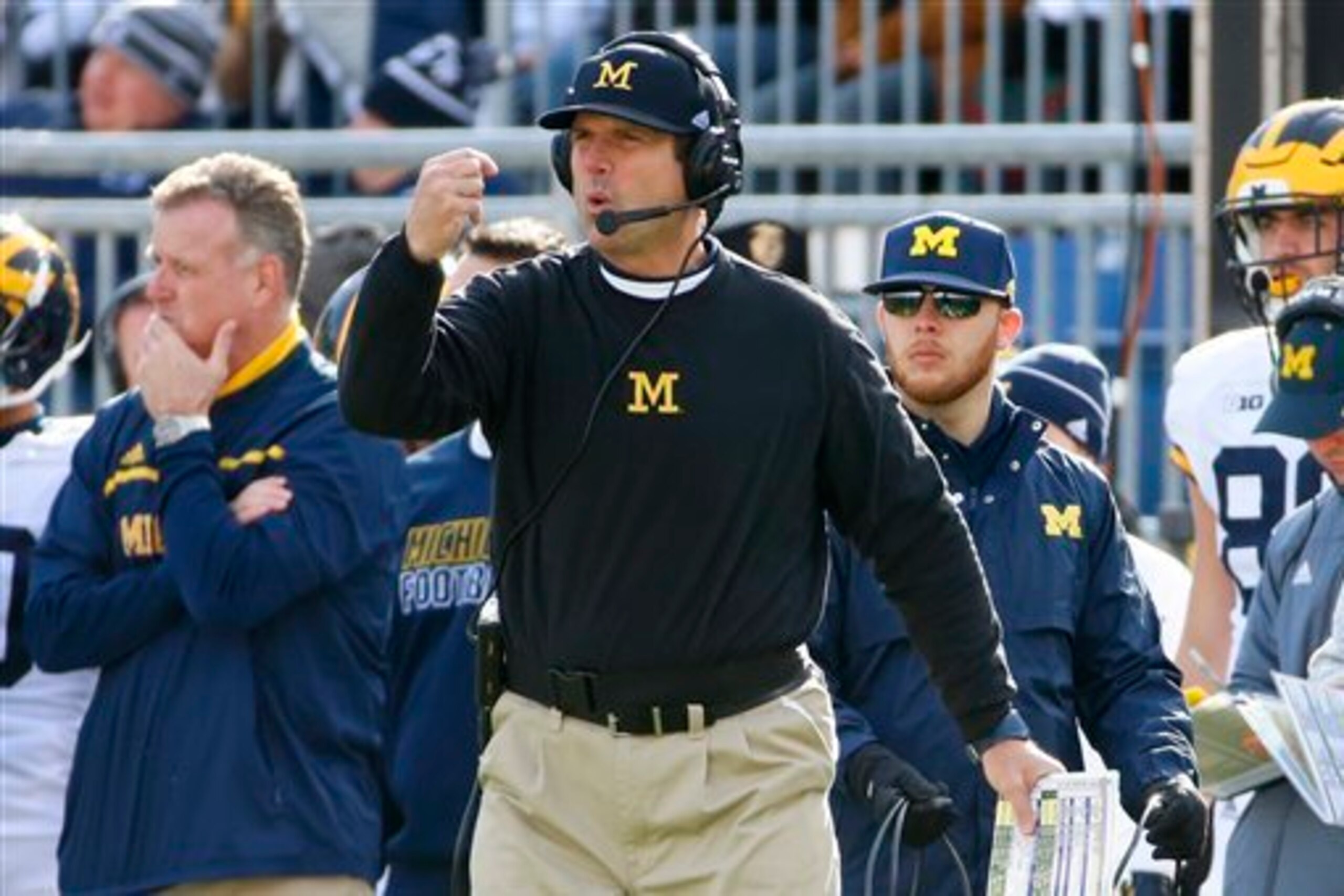
Michigan Coach Jim Harbaugh
7 of 15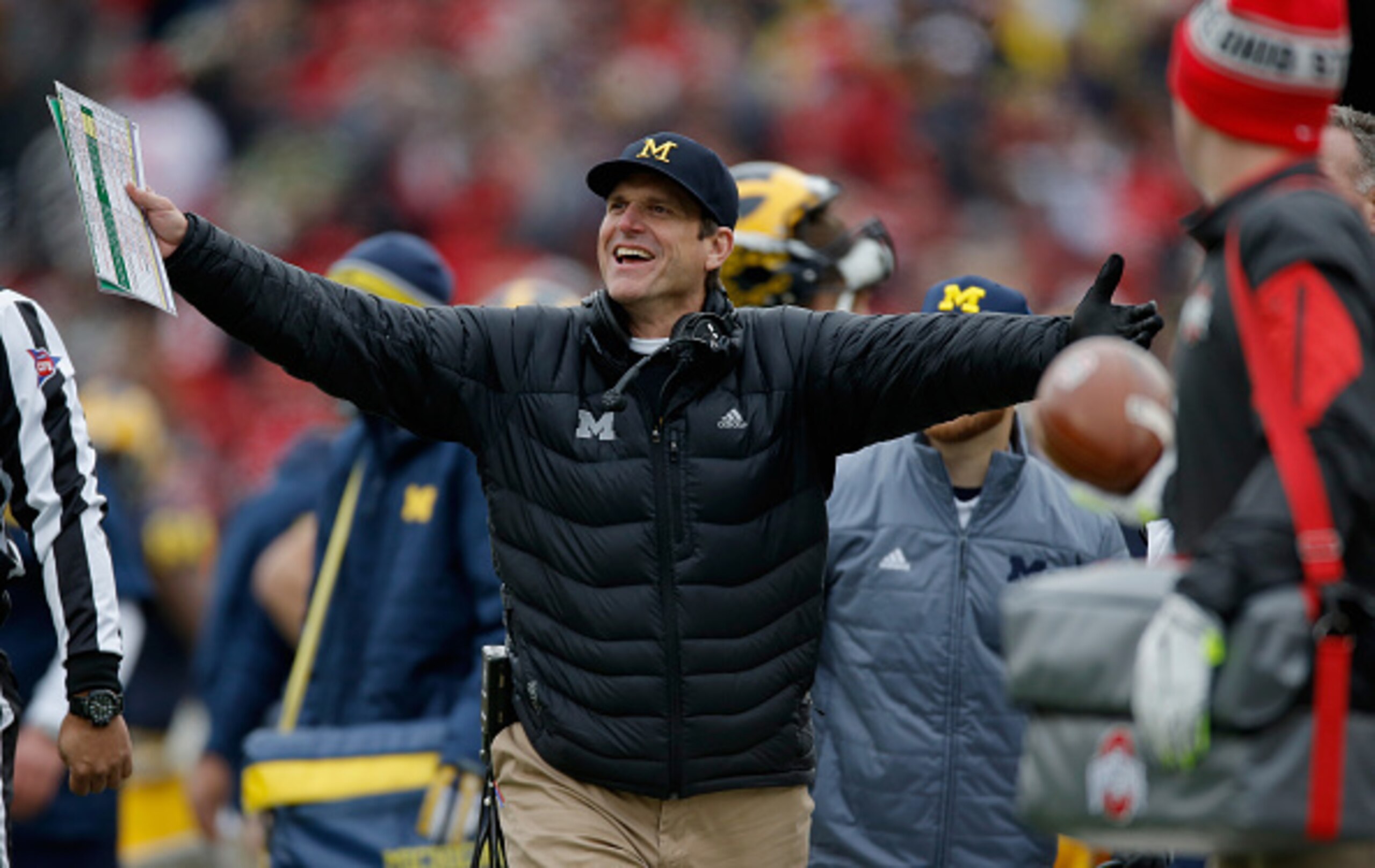
It was almost impossible to escape Jim Harbaugh last spring and summer. Every move he made as the prodigal son returning home to Ann Arbor to turn around Michigan football was scrutinized ad nauseam, and unless you were a Wolverine fan, it was easy to get Harbaugh fatigue.
Well, as his first season stalking Michigan Stadium’s sidelines draws to a close, it’s fair to say Harbaugh lived up to the hype. A Wolverine team that was 5-7 and rather moribund at the end of Brady Hoke’s tenure has fresh life. Michigan finished the regular season 9-3 and will take on Florida in the Citrus Bowl on New Year's Day.
Senior Desmond Morgan told MLive.com's Nick Baumgardner that Harbaugh changed the culture by letting everyone know that no job was safe.
"Whoever played the year before didn't matter. As a senior coming back, a fifth-year guy, you didn't know if you were guaranteed a spot on the team. He basically said coming into spring ball that spring ball's a tryout. Especially for guys coming back and hoping for a fifth year. So that put a lot of pressure on us. I went into every practice thinking 'I've got to earn a spot on this team still.'
"
The Wolverines were in contention for the Big Ten East title until the final week of the season, and while they suffered a blowout loss at rival Ohio State’s hands, only a bizarre final-play blocked-punt touchdown kept them from upsetting Big Ten champion and College Football Playoff qualifier Michigan State.
Michigan has an excellent defense that allows 17.2 points per game, No. 11 nationally, and a capable offense led by graduate transfer quarterback Jake Rudock. While the rushing offense (152.7 yards per game, No. 92 nationally) needs work, this is a very solid start for Year 1 of Michigan’s Harbaugh era.
Grade: A-
Nebraska Coach Mike Riley
8 of 15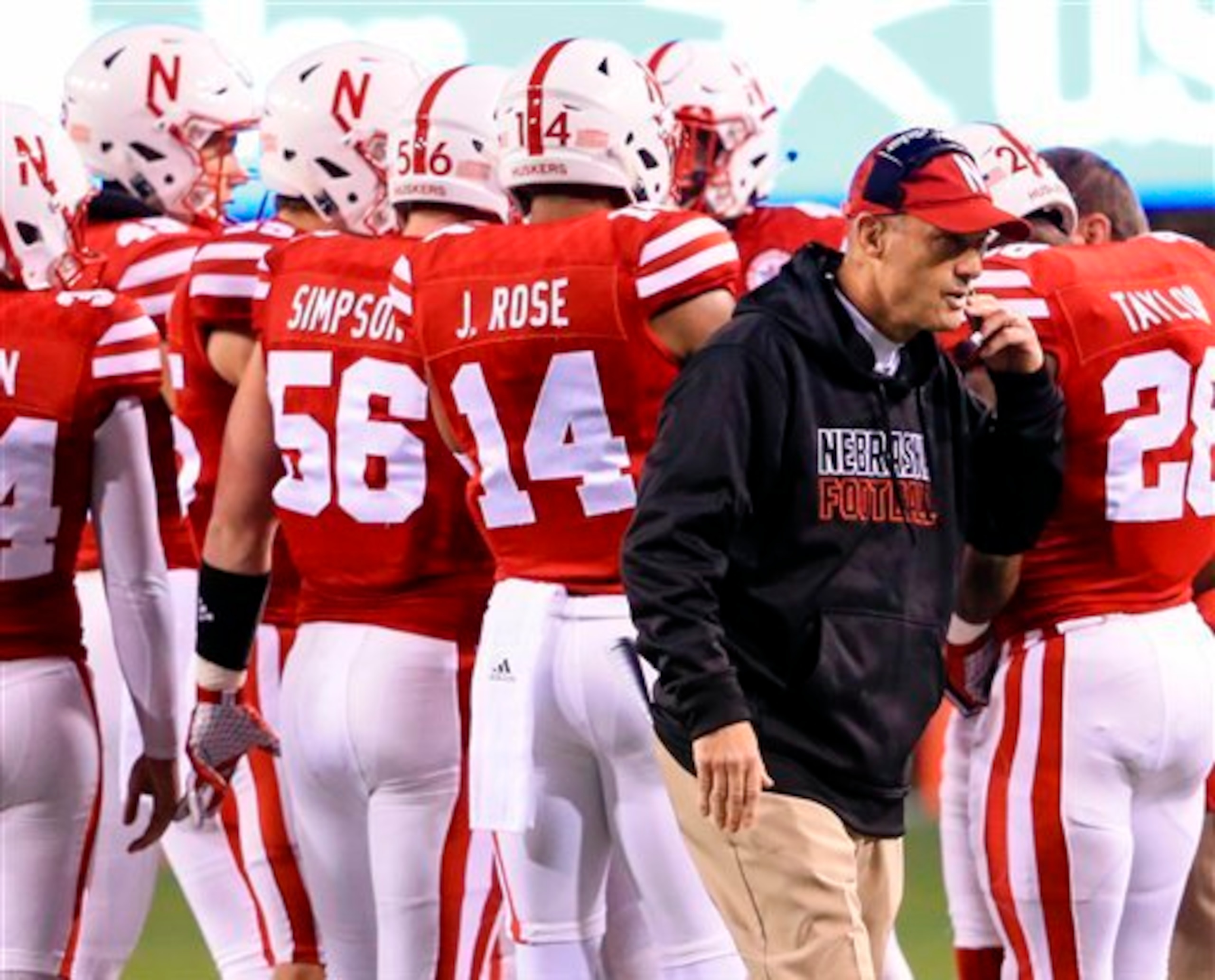
When Mike Riley jumped from Oregon State to Nebraska, the move was a bit of a head-scratcher. Riley was 61 years old at the time, ensconced in Corvallis and hadn’t lit the Pac-12 on fire, going 58-63 in league play. A year later, the move looks just as strange.
The Cornhuskers are 5-7 and only avoided missing a bowl for the third time since 1969 because there weren’t enough six-wins teams to fill out the 40 postseason games. As is, they’ll get the “reward” of facing a UCLA team that had a disappointing finish of its own in the Foster Farms Bowl on Dec. 26.
Nebraska lost five games by five points or fewer and also lost to a woeful 2-10 Purdue team. Quarterback Tommy Armstrong Jr. looked like a poor fit in Riley’s pro-style system, throwing 21 touchdowns against 16 interceptions. It’s early, but Riley looks like an equally bad fit in Lincoln.
Grade: D
Oregon State Coach Gary Andersen
9 of 15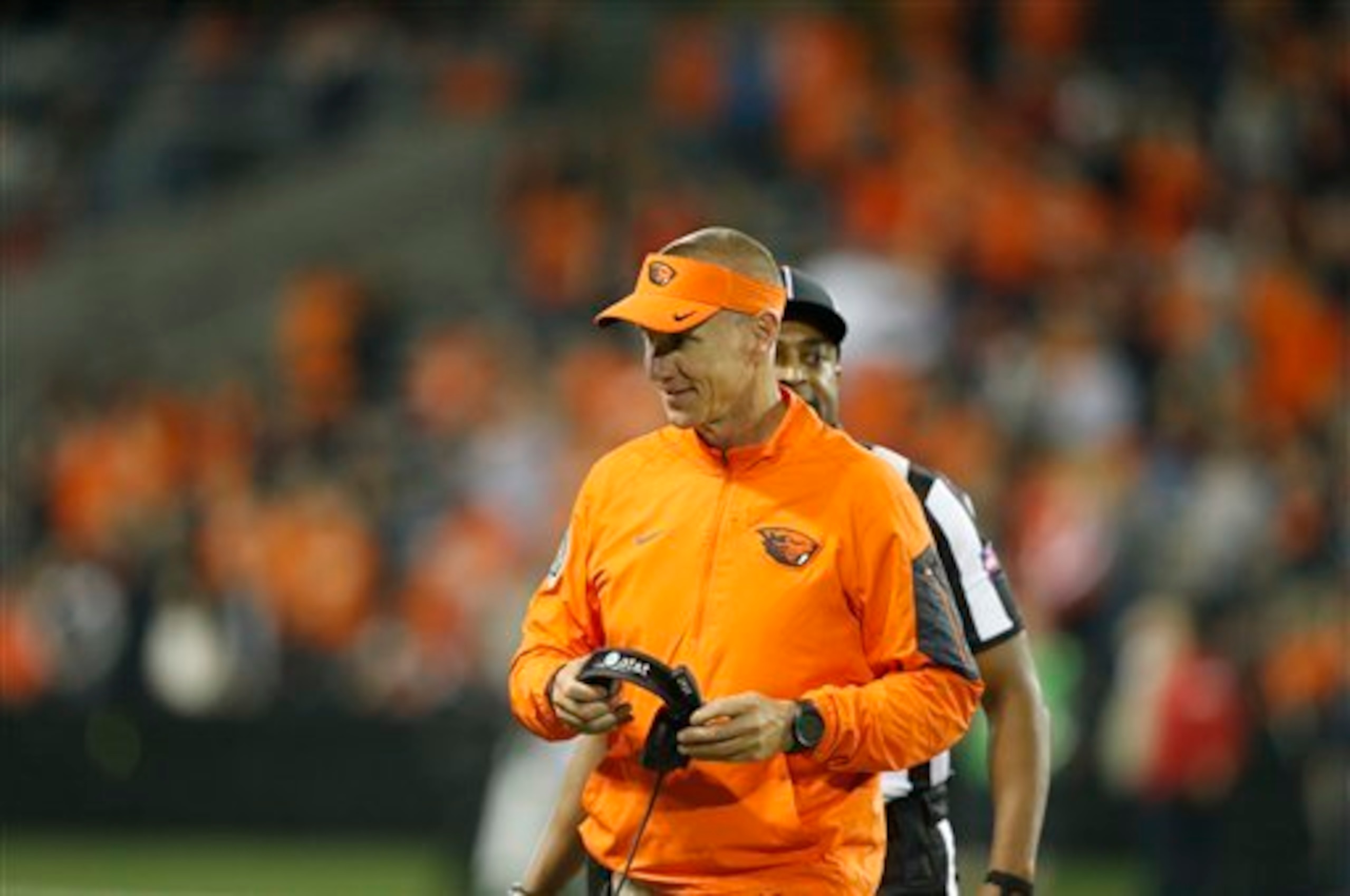
One of the most surprising moves of the 2014-15 college coaching carousel came when Oregon State hired Gary Andersen away from Wisconsin after just two seasons to replace Mike Riley, who had bolted to Nebraska.
Andersen is a West Coast guy, and the move centered around a comfort factor. But his honeymoon in Corvallis is likely already over. The Beavers regressed badly from 2014’s 5-7 record. Following a 2-1 start, Oregon State lost its final nine games to finish 2-10, including an 0-9 record in Pac-12 play.
The Beavers yielded at least 52 points in each of their last three games and allowed 37 points per game on the season, No. 115 nationally. Their passing offense was equally bad. Oregon State QBs finished the season with 10 touchdowns against 11 interceptions and finished No. 116 nationally in passing yardage. Andersen will need to show big improvement next year, or his seat could get hot in a hurry.
Grade: D
Pitt Coach Pat Narduzzi
10 of 15
When Pittsburgh hired Pat Narduzzi, the Panthers got a badly needed jolt of stability. Narduzzi was the program’s fifth coach in seven years, and unlike some previous occupants of the head coach’s office, he appears to want to be in Pittsburgh.
It showed in this season’s results. The Panthers improved from 6-7 to 8-4 and were a serious contender for the ACC Coastal Division title even after losing ACC Player of the Year James Conner to a season-ending knee injury (he was recently diagnosed with a treatable form of Hodgkin lymphoma).
The Panthers weren’t flashy, but they put together a solid product and gave Narduzzi a great base to build his Pitt career with. A Military Bowl win over Navy would help that process along even more.
Grade: B+
SMU Coach Chad Morris
11 of 15
Chad Morris’ arrival at SMU was hailed as one of the best hires of the 2014-15 coaching cycle. Morris was one of the nation’s most heralded assistants as Clemson offensive coordinator, and his hurry-up, no-huddle system played a big role in the Tigers’ rise to national prominence.
But we might have underestimated just how big the hole June Jones left him to dig out from really was. The Mustangs finished 2-10, improving by just one win from 2014’s 1-11 record. SMU’s offense was more competitive, averaging 29.7 points per game, but its defense was putrid.
The Mustangs yielded 60 points in two of their last three games, including a 63-0 rout at Memphis’ hands, and allowed 45.7 points per game, No. 127 nationally. Morris’ system can score, but he’ll need to do some serious defensive recruiting to make SMU competitive again.
Grade: D+
Troy Coach Neal Brown
12 of 15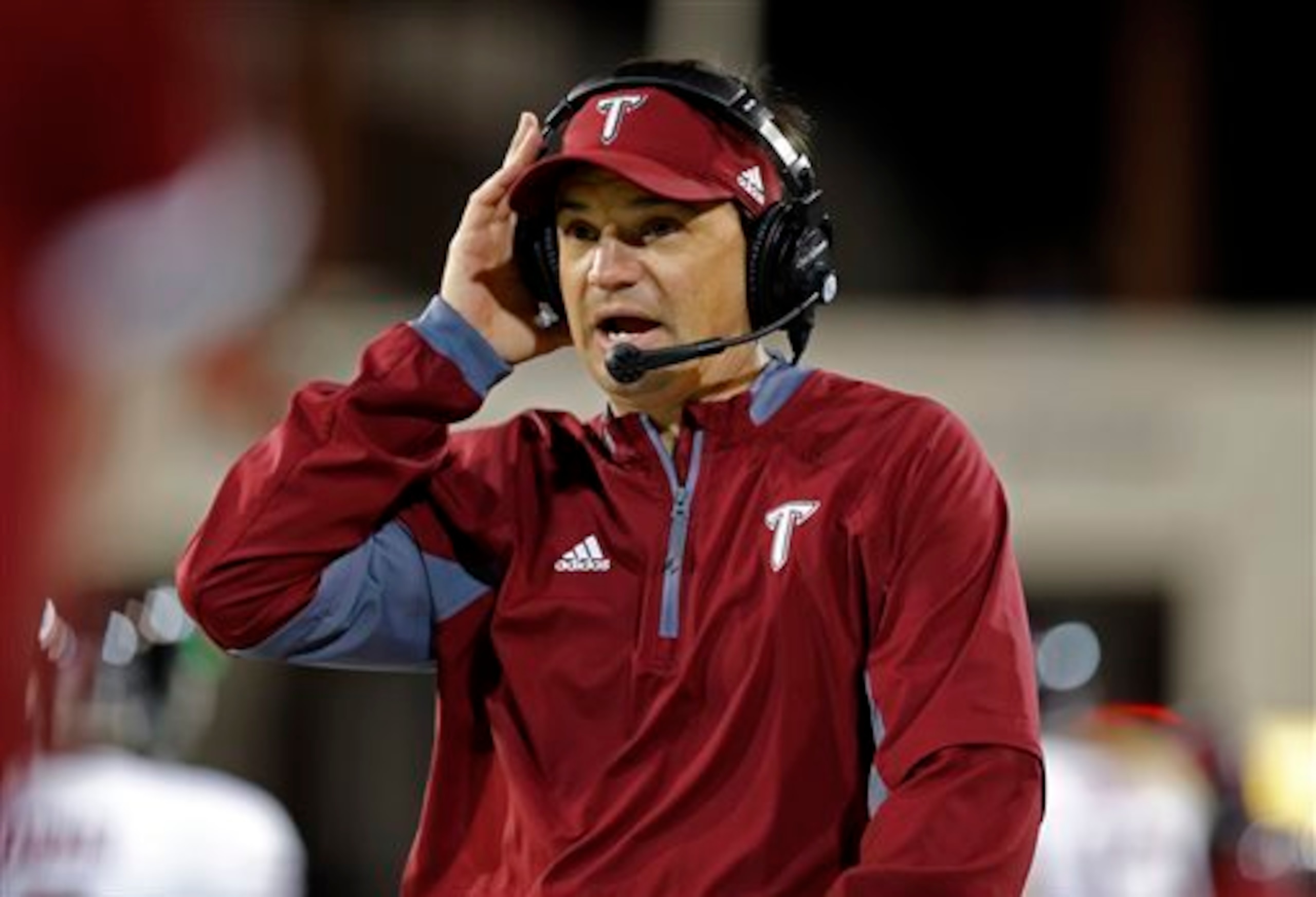
When veteran coach Larry Blakeney retired, Troy turned to fresh blood for a turnaround. At 34, Kentucky offensive coordinator Neal Brown (now 35) began the season as the second-youngest head coach in the FBS ranks. If his first season is any indication, Brown will need a bit of a learning curve.
The Trojans finished 4-8, one game better than in Blakeney’s final season.
They were largely noncompetitive against good competition but did put a big scare into 10-win Appalachian State before falling 44-41. Troy allowed 28.3 points per game, No. 79 nationally, and boasted the nation’s No. 118 rushing attack.
Brown will need a little more time and some better talent on hand to get this program turned around.
Grade: C
Tulsa Coach Philip Montgomery
13 of 15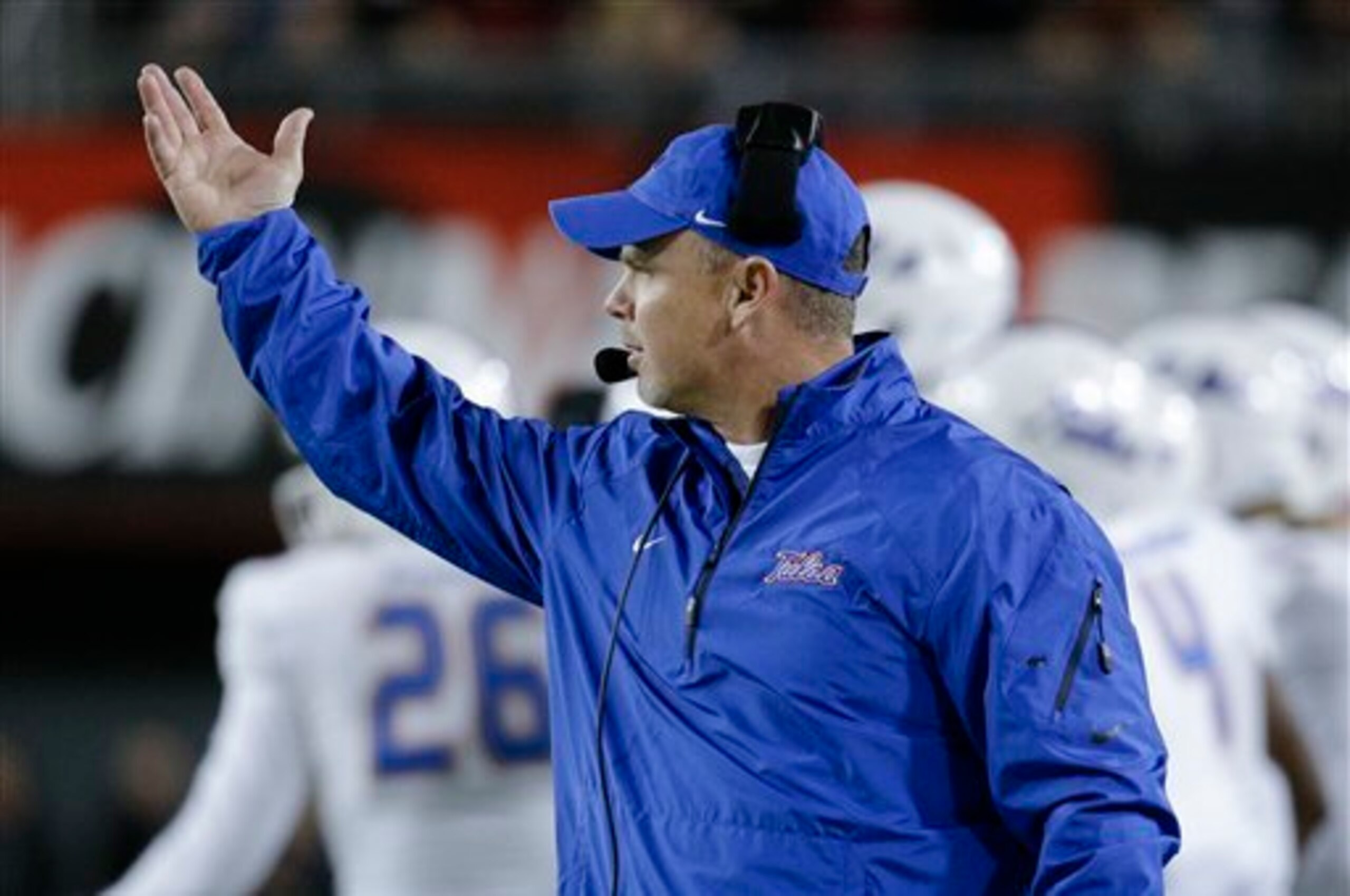
Tulsa’s hire of Baylor offensive coordinator Philip Montgomery was intriguing. While the Golden Hurricane had a strong tradition, the program had fallen on hard times, winning a total of five games in 2013 and 2014 combined.
Montgomery’s first season gave reason for optimism. Tulsa is 6-6 and made a bowl game, heading to the Independence Bowl to face off against Virginia Tech in legendary coach Frank Beamer’s final game as head coach.
While Tulsa’s defense was awful, allowing 38.6 points per game (No. 120 nationally), Montgomery’s offense took immediate root. The Golden Hurricane put up 329.8 passing yards per game, No. 11 nationally, and 35.9 points per game, No. 27 nationally. Quarterback Dane Evans threw for 3,958 yards.
It was a huge step in the right direction in the tough American Athletic Conference. While the defense must improve, Montgomery showed he can coach.
Grade: B
UNLV Coach Tony Sanchez
14 of 15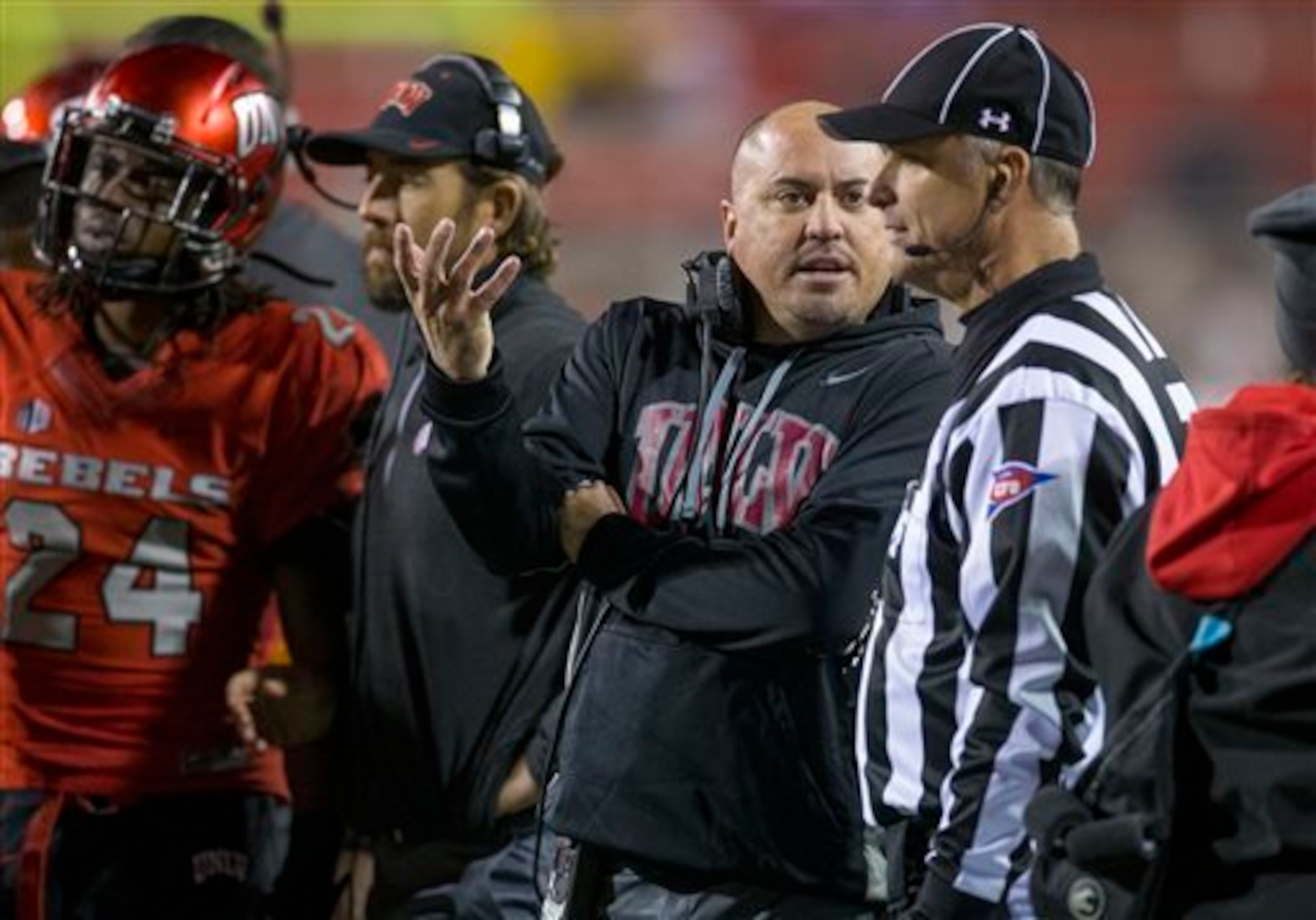
UNLV needed a spark. The Rebels are in an environment that isn’t conducive to consistent success; they entered 2015 with at least 10 losses in six of their last nine seasons. So while hiring a coach straight from the high school ranks would be surprising at some programs, it was a gamble worth taking at UNLV.
Tony Sanchez enjoyed tremendous success at Las Vegas’ Bishop Gorman High School, and UNLV loved his energetic approach. And the Rebels did show incremental progress in his first season. UNLV improved from 2-11 to 3-9 against a tough slate that included nonconference foes Northern Illinois, UCLA and Michigan.
They defeated in-state rival and bowl team Nevada and showed the ability to score points consistently. It’s a good start for Sanchez.
Grade: C+
Wisconsin Coach Paul Chryst
15 of 15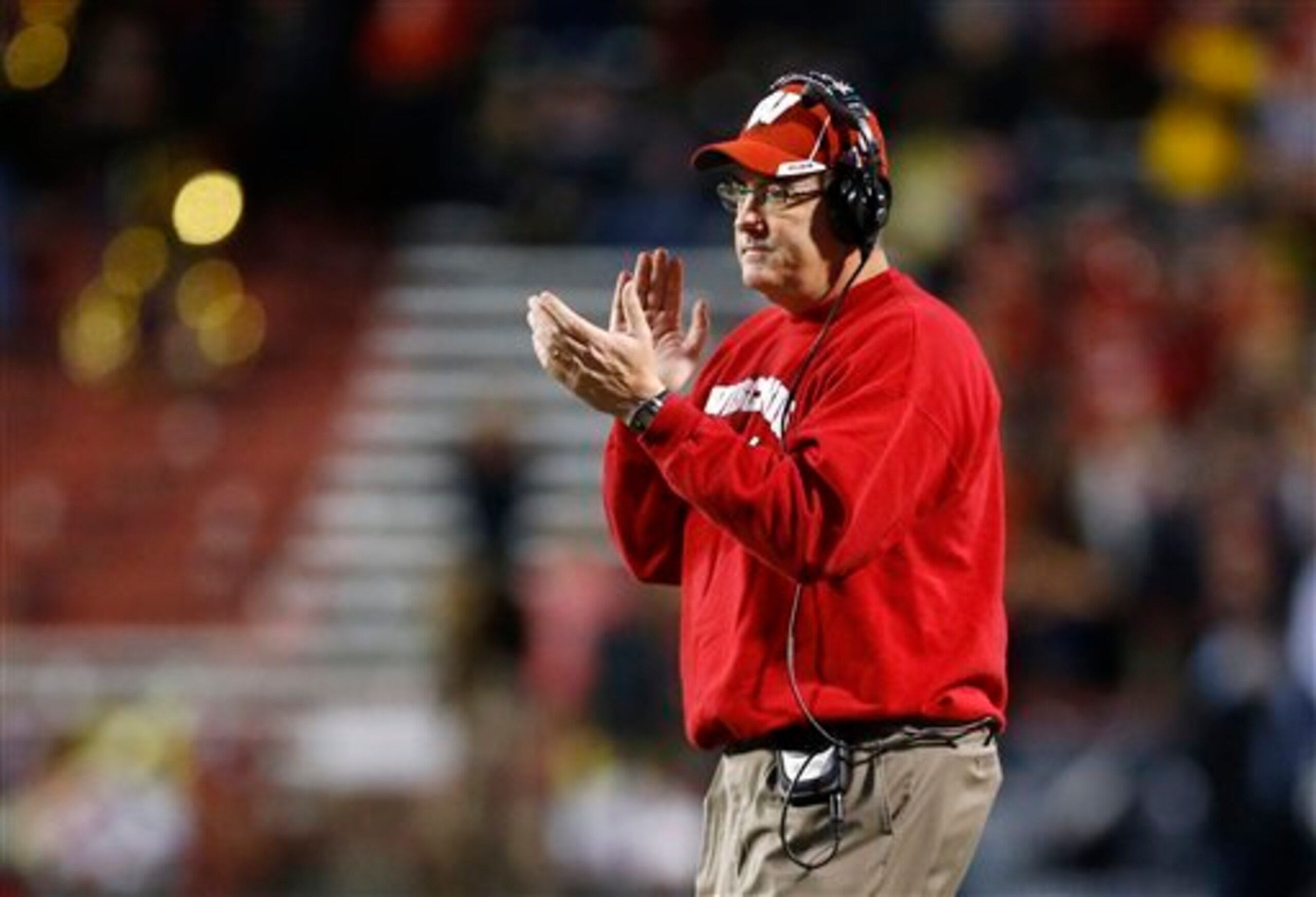
When Gary Andersen bolted for Oregon State after two seasons, Paul Chryst was a natural choice for Wisconsin. Chryst was a Madison, Wisconsin, native, a Wisconsin alum and an assistant on Barry Alvarez’s and Bret Bielema’s staffs.
Year 1 of Chryst’s UW tenure looked a lot like classic Badger teams of old. With expected starting tailback Corey Clement missing virtually the entire season with injuries, Wisconsin struggled on the ground, averaging 148.1 rushing yards per game, No. 97 nationally. But the defense was stout, allowing 13.1 points per game, best nationally.
Wisconsin is 9-3, but two of its losses came to teams currently ranked in the Top Five nationally in Alabama and Iowa. With a Holiday Bowl win over Southern California, another 10-win season will be in the books. That’s a pretty good year, for starters.
Grade: B+
.jpg?w=2560)
.png?w=2560)


.jpg?w=2560 "Raiders Could Start Mendoza")

.jpg?w=2560 "Rodgers Iced Out on Plane 💎")