

2015 NBA Rookie Class Has Chance to Be Better Than Storied 2003 Draft
In July 2013, more than a year before he would make his NBA debut, Andrew Wiggins was preparing for a one-season layover at Kansas—his status as the nation's top professional prospect secure, his career trajectory mapped out in the image of LeBron James.
Wiggins, truthfully, was never supposed to be the next LeBron. Bleacher Report's Jonathan Wasserman pumped the brakes on that particular brand of sensationalized thinking before Wiggins ever reached college.
Still, both James and Wiggins entered the national consciousness before their 18th birthdays. The comparisons were impossible to ignore.
TOP NEWS

LeBron's Special Helicopter Deal

MJ Makes Record-Setting Donation 🙌
Collins on Brooks Scuffle 👀
But as Wiggins' freshman season unfolded, the 2014 draft class became less about him and more about its star-studded depth.
Jabari Parker was the next Carmelo Anthony. Joel Embiid was the modern-day Hakeem Olajuwon. Aaron Gordon was the second coming of Blake Griffin. Noah Vonleh was the generational twin of Chris Bosh.
It all added up to the most anticipated prospect pageant in recent memory—an affair fated to rival the significance of the storied 2003 draft that yielded Anthony, Bosh, James and Dwyane Wade, among others, and nine total All-Stars.
Less than two years have passed since the cast of the 2014 selection process, led by Wiggins, transitioned into the NBA, leaving the headlining youngsters with plenty of time to carve career paths. But the hype surrounding that crew began subsiding even before NBA Commissioner Adam Silver started naming names and has since been entirely eclipsed by a less likely contender: the 2015 rookie class.
This current batch of newcomers didn't enter the league to as much fanfare as the faces of 2014, and the comparisons to 2003's epic pool of talent exist in short supply, but the early returns are telling.
The 2015 rookie class is what 2014's was not, and it has every opportunity to become what 2003's has been.
Potent Depth

Certain rookie harvests are star-heavy. Others are impressively deep.
This year's is both.
Potential cornerstones dominate the top 10 picks, with many of them making immediate contributions for above-average teams.
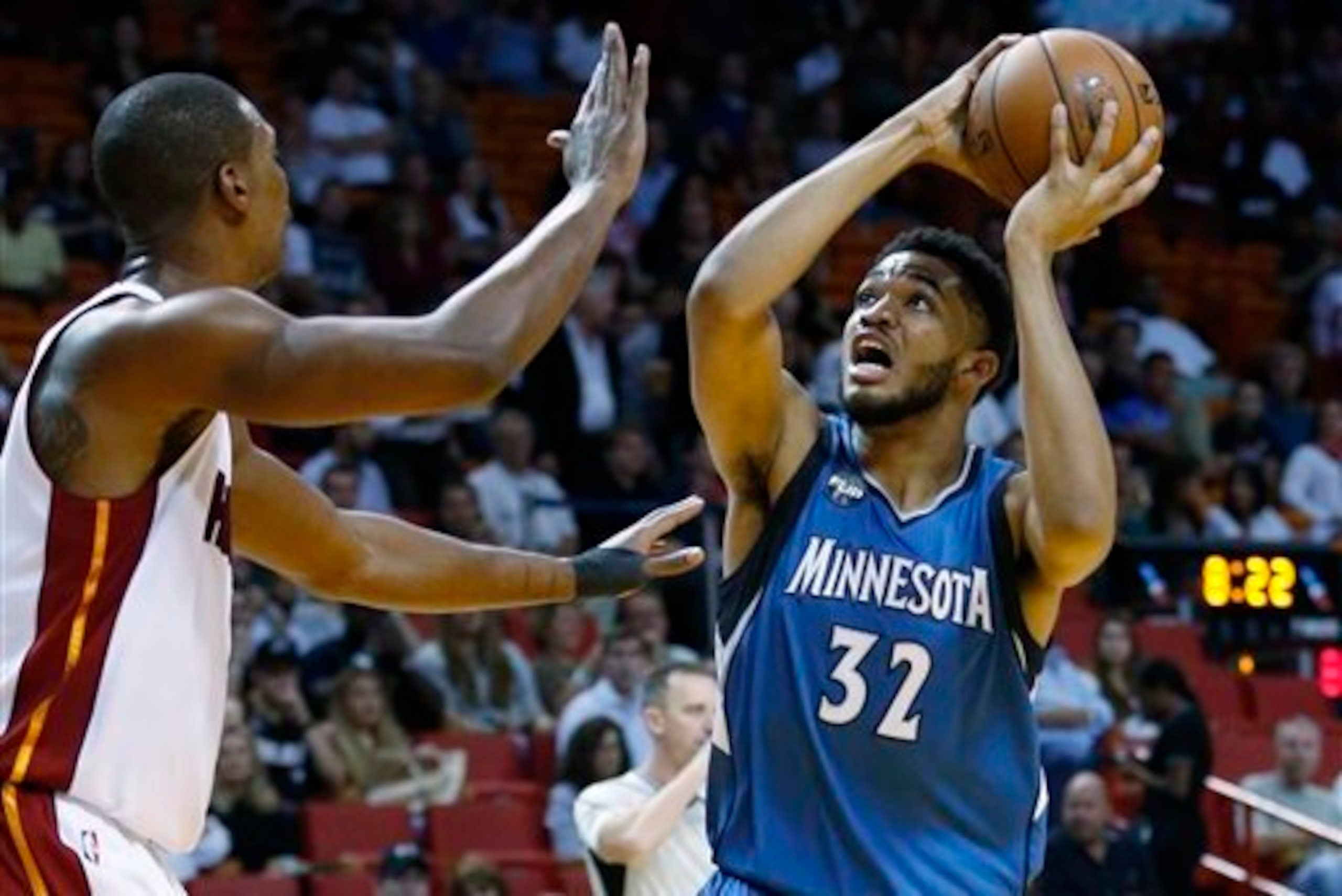
Karl-Anthony Towns, who went first overall, already leads the Minnesota Timberwolves in win shares. He is far more polished than expected on the offensive end, with an unfathomably quick release for someone of his size and length, and his defensive box plus/minus (DBPM)—which gauges how much better the average team's defense is per 100 possessions with a specific player on the floor—is higher than celebrated defenders such as Anthony Davis, Marc Gasol and James.
Some, like ESPN.com's David Thorpe, have been inclined to drum up his celebrity since Game 1—or, to be more exact, Game 3:
Should Towns' numbers hold, he will be just the fourth rookie to average 18 points, 12 rebounds and 2.5 blocks per 36 minutes and the only one to do so in more than two decades. His company? Hall of Famers Hakeem Olajuwon and Ralph Sampson and eventual Hall of Famer Shaquille O'Neal.
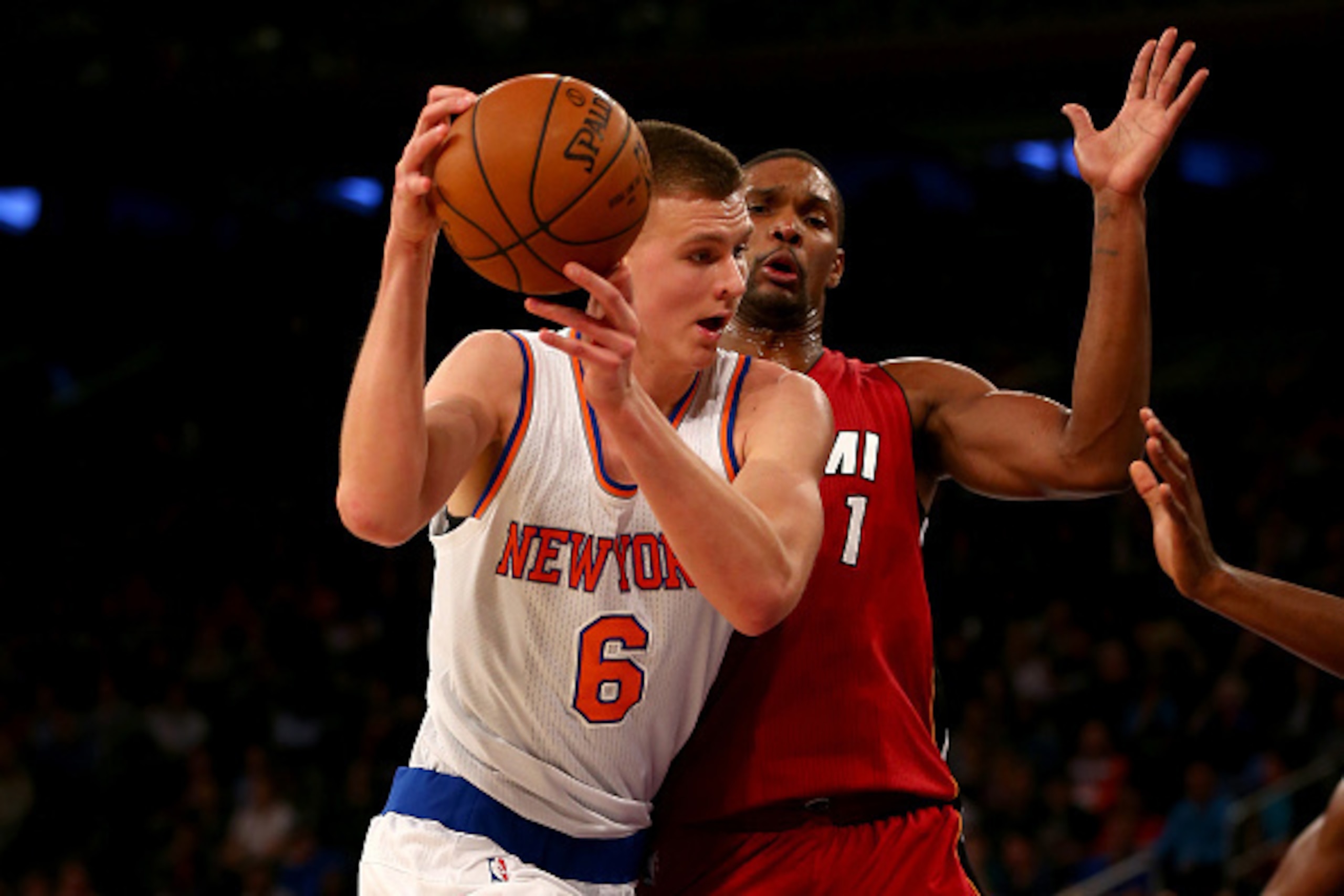
Kristaps Porzingis, the fourth overall pick, has been almost equally impressive for the New York Knicks. He is flashing a bit of everything on the offensive end—though his outside touch and handles are works in progress—and continues to gain attention for his superior defensive IQ. He has the best net rating of any Knicks player not named Cleanthony Early and, like Towns, is a per-36-minute dynamo.
Only one rookie age 20 or younger, aside from Towns, has ever cleared 17 points, 11 rebounds and two blocks per 36 minutes: Shaq.
Put in simpler terms, per Hardwood Paroxysm's David Vertsberger:
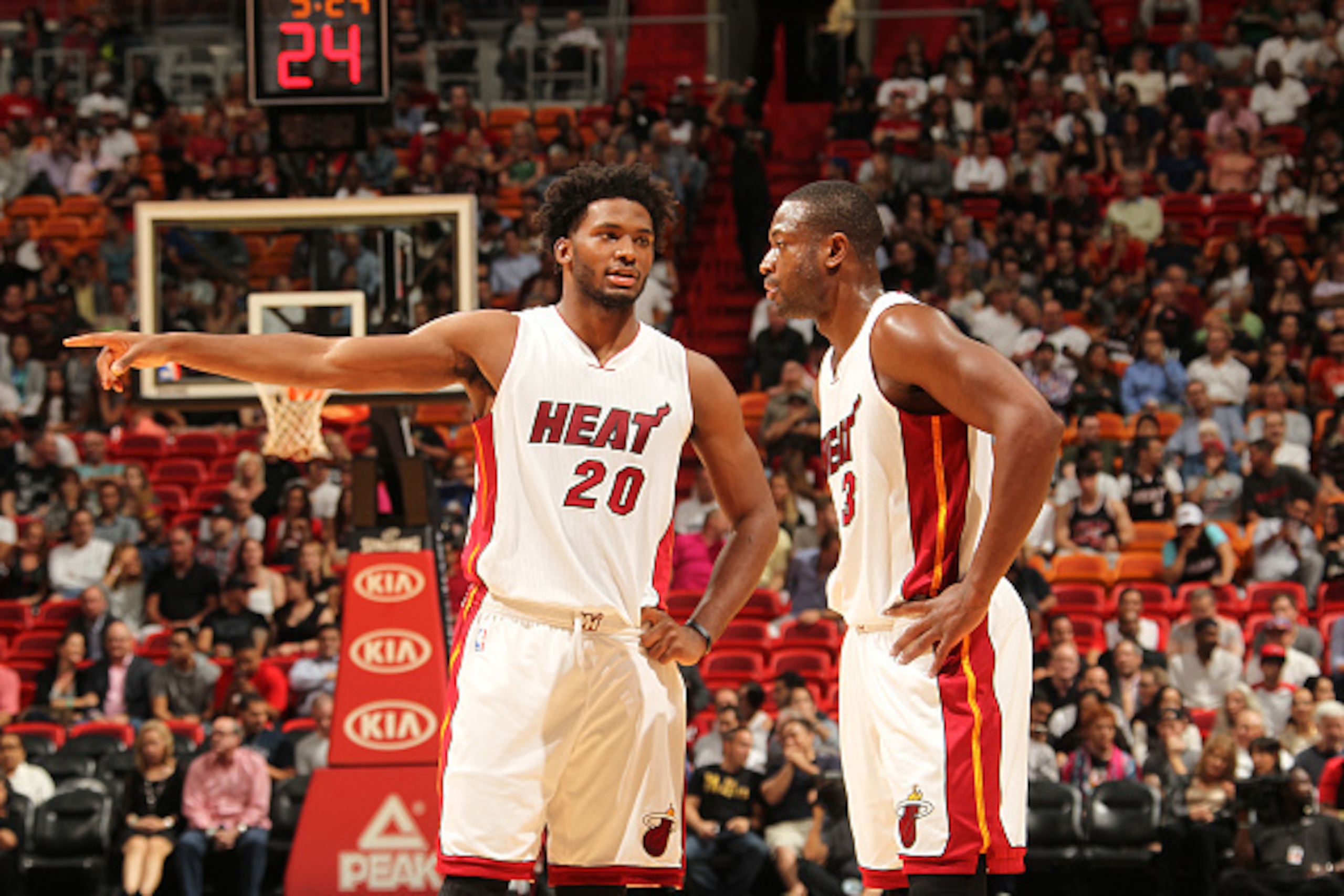
Justise Winslow's star doesn't jump out in typical box-score fashion, but it's still there, shining brightly. The Miami Heat scooped him up—stole him, really—with the 10th pick, and he's rewarded them with lockdown defense.
Head coach Erik Spoelstra is already slotting him against some of the Association's most tried and true scorers, and Winslow continues to hold his own. As CBS Sports' Matt Moore noted, that's not surprising when you pay attention:
Opponents are shooting under 40 percent against Winslow overall and worse than 30 percent from deep, and the Heat play like the league's best defense when he's on the floor. He is a consistent "attack mode" and jumper away from mimicking Jimmy Butler.
Stanley Johnson, who the Detroit Pistons selected at No. 8, has the look of an unfinished Kawhi Leonard. He's still trying to make the right defensive reads when guarding ball-handlers, but he's a spot-up-shooting wizard, and the Pistons' starting five becomes an absolute terror when Johnson subs in for Ersan Ilyasova, outscoring opponents by 20-plus points per 100 possessions.
Emmanuel Mudiay, taken seventh by the Denver Nuggets, is struggling to master the learning curve of a starting point guard. But Denver's offense is measurably better when he's steering the ship, and his playmaking out of pick-and-rolls is deadly, according to Synergy Sports:
John Wall comparisons are, overall, not unwarranted. Mudiay is on track to become the first rookie since Wall to average 14 points, seven assists and one steal per 36 minutes.
Jahlil Okafor's early goings must be taken with a metric ton of salt. The third overall pick's turnover rate is unreasonably high, his shooting percentages beyond three feet of the basket induce vomiting, and, well, he plays for the Philadelphia 76ers.
And because he plays for the Sixers, he's allotted unprecedented volume; he's in play to record the highest-ever usage rate for a rookie big man. Even so, his post moves are straight fire, and his per-36-minute splits are right in line with those of Towns.
None of which is to say every top-10 selection is thriving or that each prospect will eventually be recognized as a superstar.
Willie Cauley-Stein, whom the Sacramento Kings grabbed at No. 6, remains a shot-swallowing monster but looks like an unrefined version of DeAndre Jordan on offense. Frank Kaminsky, the ninth selection, is draining threes at a 46-plus percent clip but barely cracks the Charlotte Hornets rotation.
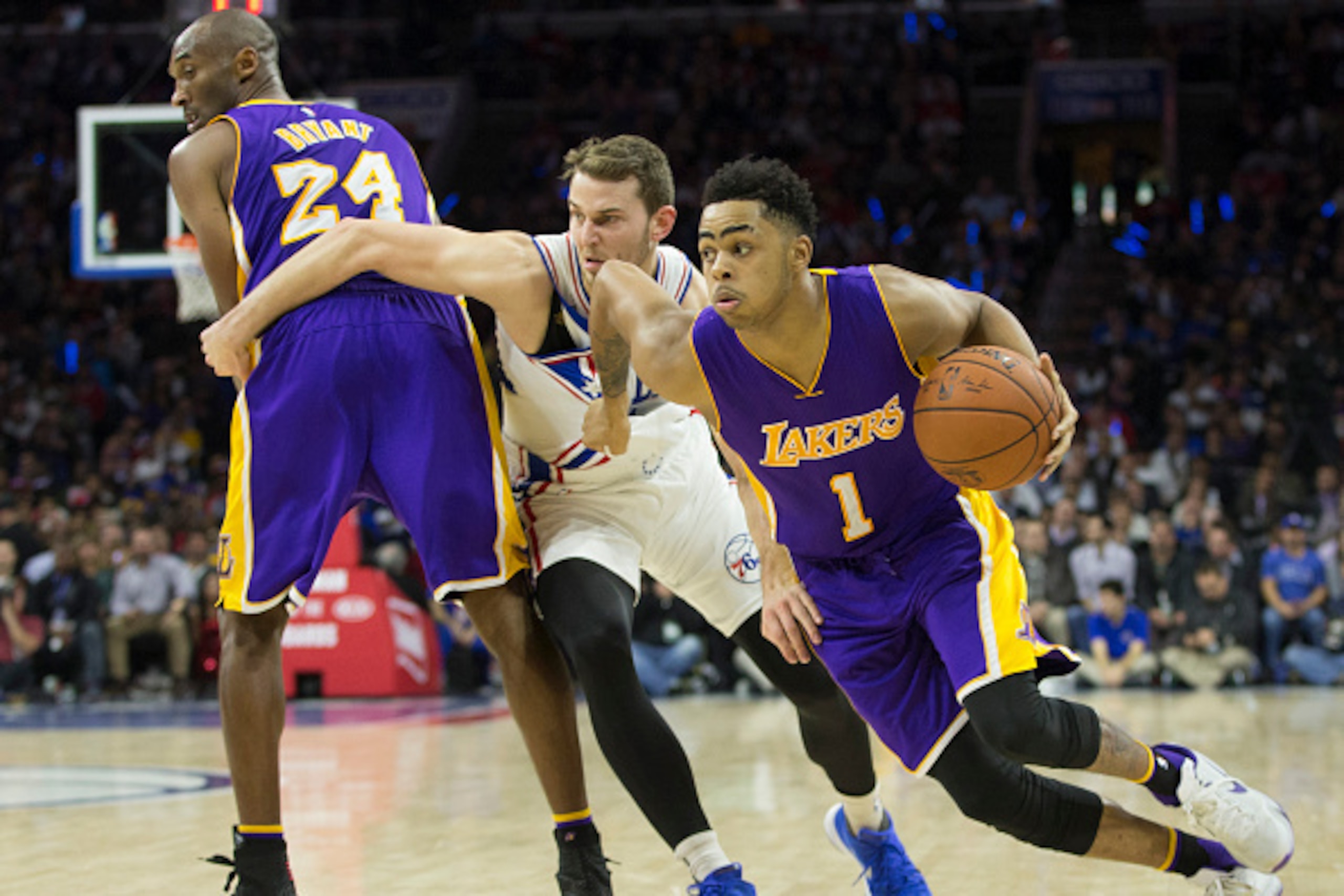
Fifth overall pick Mario Hezonja is all but buried beneath the Orlando Magic's pile of wings and seeing less than 13 minutes per game. D'Angelo Russell looks lost for a top-two prospect. He has proved effective at draining triples off the catch, but his shooting percentages are shaky overall as he struggles to find his place within a pre-post Kobe Bryant Los Angeles Lakers offense.
Still, for the most part, the cream of the rookie crop has been great. And unlike in 2003, when you almost immediately knew Darko Milicic (No. 2), T.J. Ford (No. 8), Mike Sweetney (No. 9) and Jarvis Hayes (No. 10) had no business being taken in the top 10, there isn't a neophyte who already looks completely overmatched or entirely out of place.
The Battle of 2003 vs. 2015
Unless you know someone with a working time machine that will let the 2003 version of James, Anthony, Wade, Bosh, et al. square off against this year's newbies, there is no way to pit the two classes against each other.
We do, however, have some initial data to help diminish the impossibility.
By combining DPBM and offensive box plus/minus (OBPM, the brother of DBPM) and then factoring in how many possessions a player is on the floor for, we're able to see how many more total points the "rook" in question adds to the average team, as compared to an average player.
Below you'll see the average total of points added per 36 minutes from every top-10 pick in 2003 charted against the performance of rookies selected within the top 10 this past June. The average for every top-10 pick from last year's rookie class is included for additional perspective (h/t Bleacher Report's Adam Fromal):
Each of the rookie classes collectively made the average team worse when in the game, which is to be expected. Struggling to have a positive impact is like a rite of passage when you're new to something. Incoming talent needs time to adjust and develop and hit its stride.
But it's nevertheless encouraging that, while still in the red, this year's top-10 prospects are within a stone's throw of the fellas from 2003 and significantly outpacing those from 2014.
And they're not even done yet.
There is plenty of basketball left to play this season, and the top guns from the 2015 draft are already distinguishing themselves on an individual level and challenging the on-court impact of a fabled 2003 rookie species.
Just think of where they could be by campaign's end, when they're deeper into their development and presumably more comfortable in their NBA skin.
A Lasting Impression
Right now, the revered clique of 2003 remains the standard. They are what this year's group aspires to be.
And to reach, let alone surpass, the historical clout that James' posse has earned, the current class will need more than a glittery gaggle of top-10 prospects.
Top-heavy prestige works. Anthony, Bosh, James and Wade—four of the first five selections from 2003—helped define their draft. All of them are future Hall of Famers and the first names that spring to mind when reflecting upon that 2003 class.
But middle-rung and low-end picks turned impact players also helped make that rookie contingent appealing.
David West was taken 18th overall. Boris Diaw went at No. 21. Leandro Barbosa was selected at No. 28. Josh Howard came in at No. 29. Mo Williams at No. 47. Kyle Korver at No. 51.
Will we look back at 2015's middle-class picks as fondly? Did the Indiana Pacers and Phoenix Suns find late-lottery diamonds in Myles Turner (No. 11) and Devin Booker (No. 13)? Have the New York Knicks and Brooklyn Nets found starting-caliber talent in Jerian Grant (No. 19) and Rondae Hollis-Jefferson (No. 23)? Did the San Antonio Spurs and Golden State Warriors nab end-of-the-round beasts in Nikola Milutinov (No. 26) and Kevon Looney (No. 30)? Might the Sixers' undrafted T.J. McConnell be the next Mo Williams?
We don't know. For now, there are only first impressions. And the NBA's freshest newcomers are leaving a darn good one.
"I mean, people were kind of saying the past drafts, and no disrespect to everyone that were in those drafts, but they were saying they were kind of down years," said Bosh, per the Washington Post's Tim Bontemps. "You can see the excitement with the guys coming in with this class, and they're living up to it."
It's too early to crown the cast of 2015 as kings of the recent rookie ranks. But it's not too soon to accept what's becoming abundantly and glaringly obvious.
For more than a decade, the rookies from 2003, now practiced and prepared veterans, have been awaiting a legitimate challenger to their throne.
And the class of 2015 is it.
Stats courtesy of Basketball-Reference.com and NBA.com unless otherwise cited and are accurate as of Dec. 2.
Dan Favale covers the NBA for Bleacher Report. Follow him on Twitter @danfavale.

.jpg?w=2560 "Grading WWE Raw 🔠")


.jpg?w=2560 "2 NFL Officials Suspended")
.jpg?w=2560 "Viral Rams Coach Vid 🖕")