

For Championship-or-Bust Lakers, Current Drought Feels Familiar
The 2015-16 NBA season is barely old enough to fit in a complete Master Cleanse, and already doom and gloom has descended upon the Los Angeles Lakers.
For this proud franchise, with its 60 playoff appearances, 16 championship banners and 21 Hall of Famers, there is no settling for the fifth seed or winning a playoff series or two. There is only all or nothing at all—or, for this year's edition, not many wins at all.
So when there's even a musk of mediocrity flowing through the noses of those watching L.A.'s woes—as there is whenever the Lakers are short of title contention—disappointment is quick to follow. And when a cloud of that stench rolls in, as it has so far this season? Well, the locals don't know how to react.
TOP NEWS

LeBron's Special Helicopter Deal

MJ Makes Record-Setting Donation 🙌
Shams: KAT, Hart Could Be Trade Names
Like when the Staples Center faithful turned to boo birds at the end of the Lakers' 120-109 loss to the Denver Nuggets on Tuesday. Or, after the game, when Magic Johnson, franchise legend and self-appointed voice of the people, took to Twitter to break the bad news of an 0-4 start to Laker Nation:
Not that this wasn't obvious to anyone who's watched the Lakers' latest hodgepodge of neophytes, aging legends and prime-age players in search of Act II.
For one, they're second in the league in three-point attempts per game but converting just 28.3 percent of them, courtesy of not-so-sparkling marks from Lou Williams (17.9 percent on 5.6 attempts per game), Ryan Kelly (12.5 percent on two attempts), rookie D'Angelo Russell (30.4 percent on 4.6 attempts) and, of course, Kobe Bryant (21.1 percent on 7.6 attempts), whose poor shooting has already gotten the Internet treatment:
On the other end, L.A.'s offered about as much resistance to opposing offenses, as outlined via NBA.com's defensive rating, as a matador would to an angry, hard-charging bull—and, apparently, far less than its players have to one another on the sideline.
"We were losing the game, and guys weren't happy," head coach Byron Scott said after the loss to Denver (via the Orange County Register's Bill Oram). "So a few guys discussed it in a very angry way. If they just sat on the bench and discussed it with a smile on their face, I would have been much more concerned."
How, then, should Lakers fans react, with a third consecutive season of sorrow staring them in the face?
"Freak out," Bryant advised. "It's good for the soul."
And at whom, pray tell, should they freak out? Perhaps Jim Buss, the Lakers' executive vice president of basketball operations and the progeny of the late Dr. Jerry Buss voted Most Likely to Be Mistaken for an Ice Road Trucker?
In an interview with USA Today's Sam Amick during L.A.'s training camp in Hawaii, Buss pointed to the team's storied past to make sense of its unfortunate present and uncertain future.
"We've gone through this (rebuilding) before," he said. "We went through, what 10 years without winning a championship or anything? Sedale Threatt, and those days—Smush Parker and Chris Mihm. You have to do it until you make the right move."
Read between the lines, and you'll spot the same way of thinking that's guided the Purple and Gold for decades: A team's life cycle is binary. It's either competing for championships or rebuilding, winning it all or working its way toward the next Larry O'Brien Trophy, riding the brilliance of its latest superstar or searching for the next one.
L.A.'s Recent Rebuilds
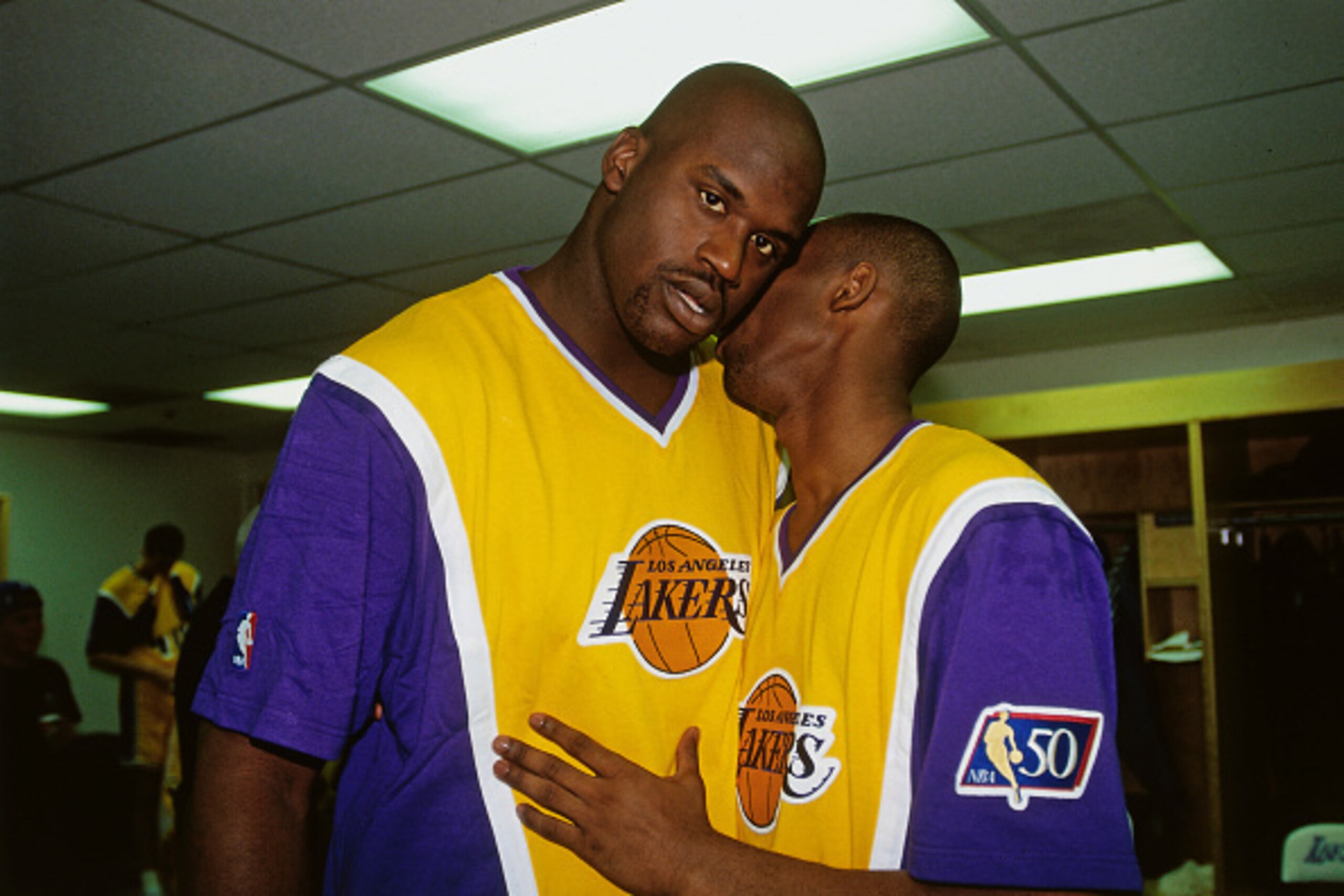
The Lakers went six seasons between the end of the Kobe-Shaq three-peat and the first of Bryant's back-to-back titles with Pau Gasol, Lamar Odom and Co. after O'Neal was traded to the Miami Heat in 2004.
In that stretch, L.A. lunged into the lottery in 2005, a year after fading in the NBA Finals against the Detroit Pistons, lost to Steve Nash's Phoenix Suns in consecutive first-round series and collected the chips it needed to bet big on another dynastic run.
The Shaq-to-Miami trade brought Odom and Caron Butler (among others) into the fold. Come the summer of '05, the Lakers added Andrew Bynum with the No. 10 pick and packaged Butler and Chucky Atkins in a deal for Kwame Brown and Laron Profit.
Two-and-a-half years later, with L.A. starting to turn the corner, Bynum went down. Buss and Mitch Kupchak pulled the trigger on a blockbuster trade for Gasol, with Brown, Javaris Crittenton, Aaron McKie, two draft picks and the rights to Marc Gasol headed back to the Memphis Grizzlies.
And voila! The Lakers were contenders again, streaking their way to three straight Finals and winning two.
That down period looks like a blip on the radar compared to the sad stretch in Lakers history known to most as the '90s.
That decade began promisingly enough. Two years after Kareem Abdul-Jabbar hung up his goggles for good, and one year after Pat Riley stepped down and skipped town, Magic, with Vlade Divac and Elden Campbell, guided a handful of Showtimers to the 1991 Finals, where they fell to Michael Jordan's Chicago Bulls in five games.
Magic's Lakers never got another shot at Jordan's Bulls. On Nov. 7, 1991, Johnson announced to the world that he had contracted HIV and would be retiring from the NBA.
His untimely departure sent the Lakers into a tailspin—relative to their historic success in the 1980s, which included five 60-win seasons, eight Finals appearances and five championships)—from which they were slow to recover.
The team employed five different coaches, cycled through a slew of good-but-not-great players and went without an All-Star in three of four seasons before real hope for more banners arrived.
In the summer of 1996, general manager Jerry West traded for Bryant's rights on draft day and signed O'Neal away from the Orlando Magic.
It was another four seasons before the Lakers began their three-peat in 2000. But five years after Johnson's shocking—and shockingly abrupt—exit, the pieces were in place to contend for the crown.
Mini Miseries, from Minnesota to California
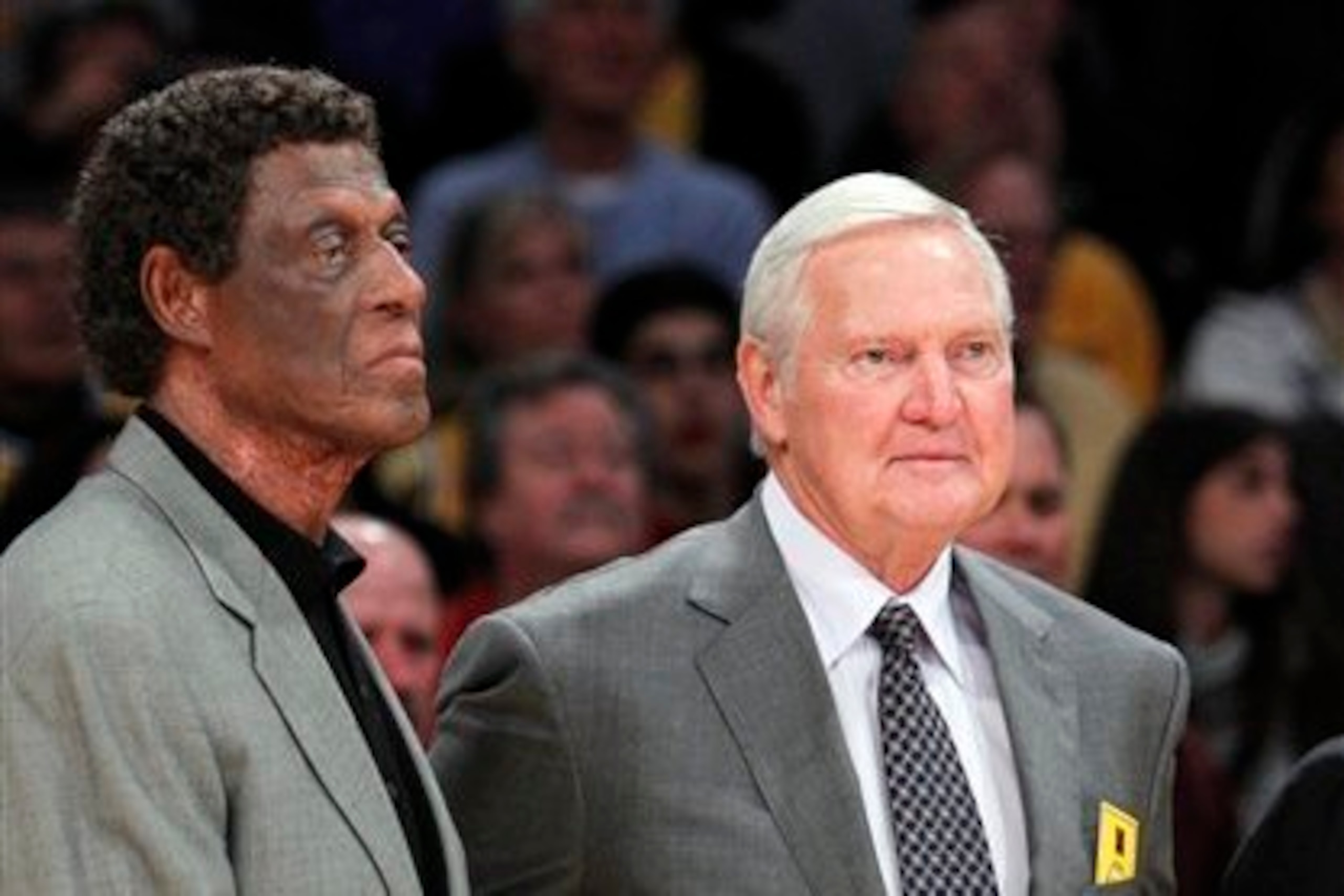
This pattern of Lakers lore extends all the way to Minneapolis. The team's run of five titles in six seasons came and went with George Mikan. Once the NBA's first great big man stepped away, the Lakers' win totals shrank and their playoff runs shortened. By 1957-58, they'd slipped to 19 victories—still the fewest in franchise history.
Out of that calamity came the No. 1 pick in the 1958 NBA draft, which the Lakers spent on Elgin Baylor. They were back in the Finals the following year but lost to Bill Russell's Boston Celtics and failed to win a majority of their regular-season games until 1961-62.
By then, the team had moved to L.A. while West, a sweet-shooting swingman out of West Virginia, had come into his own as a 30-point scorer and one of the game's great young stars. Between 1962 and 1972, Baylor and West propelled the Lakers to eight Finals.
Baylor, though, suffered a career-ending knee injury before West and Wilt Chamberlain took the Lakers to their first championship in L.A. in 1972. The following year, the latter two returned to the championship series, only to fall to the New York Knicks in five games before walking away from the game.
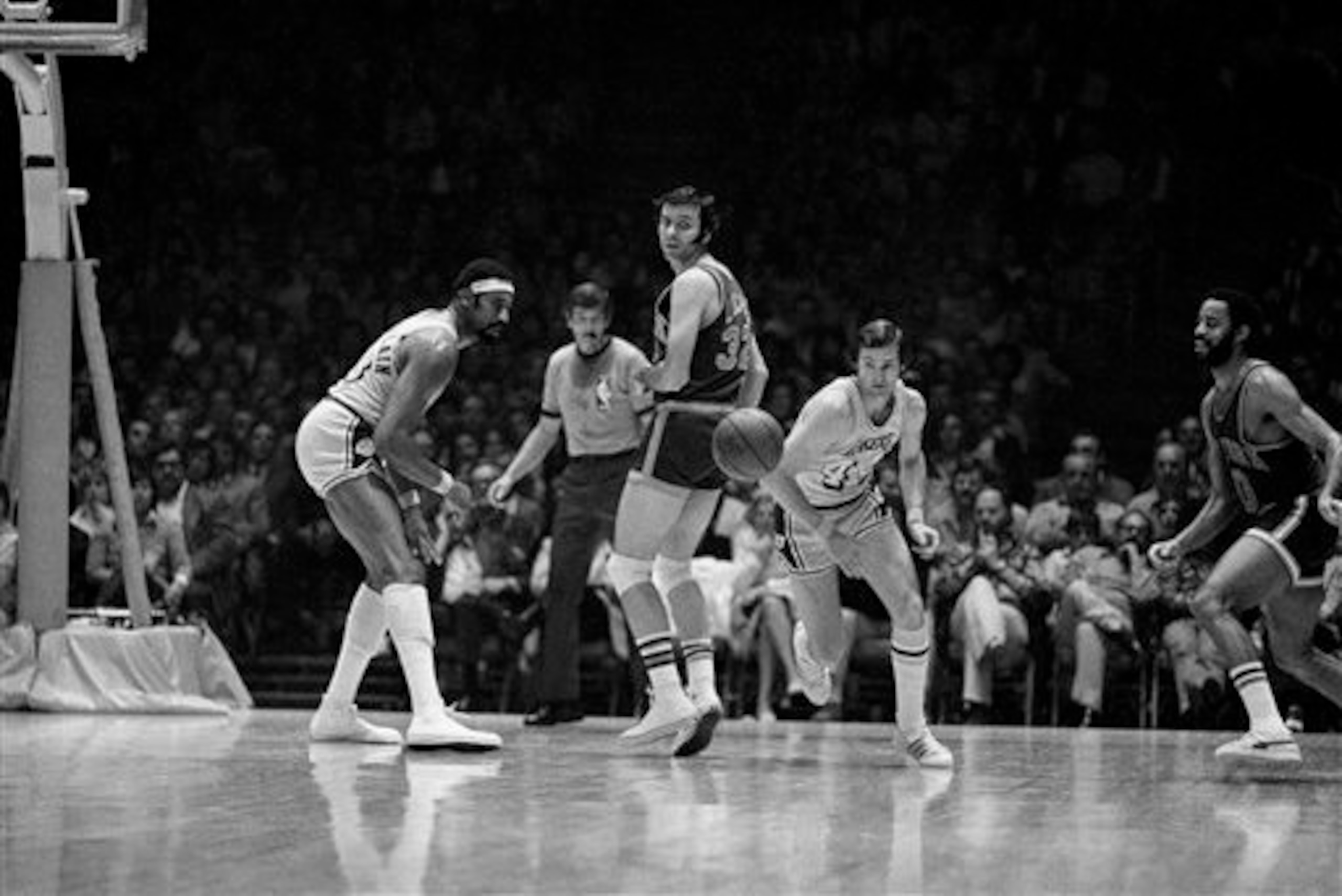
What came next? You guessed it. Another chunk of time spent wandering in the wilderness. In 1975, Abdul-Jabbar agitated his way from the Milwaukee Bucks to L.A., which gave the Lakers a new captain for their once wayward ship.
But even in his prime Abdul-Jabbar, who won MVP trophies in 1976 and 1977, couldn't take the Lakers back to the top on his own. He needed a new sidekick and, in 1979, got one courtesy of a transaction from the previous era.
Gail Goodrich, a star guard for the Lakers in the mid-1960s and early 1970s, signed with the New Orleans Jazz in 1976. As compensation, the Jazz forked over three first-round picks and a second-rounder, with the Lakers sending back a first and a second of their own.
One of the Jazz's first-rounders wound up being the No. 1 pick in 1979. L.A.'s choice? Magic. Or, to folks who are newer to the NBA, that guy who periodically trades barbs with Jim Buss.
Those two have become caricatures of competing forces within Lakerdom: Magic is the face of the team's glorious past and the voice of its frustrated fans; Buss is the long-haired heir to Dr. Jerry's throne, a real-life Mr. Deeds charged with maintaining his father's legacy through stormy seas.
Under Construction
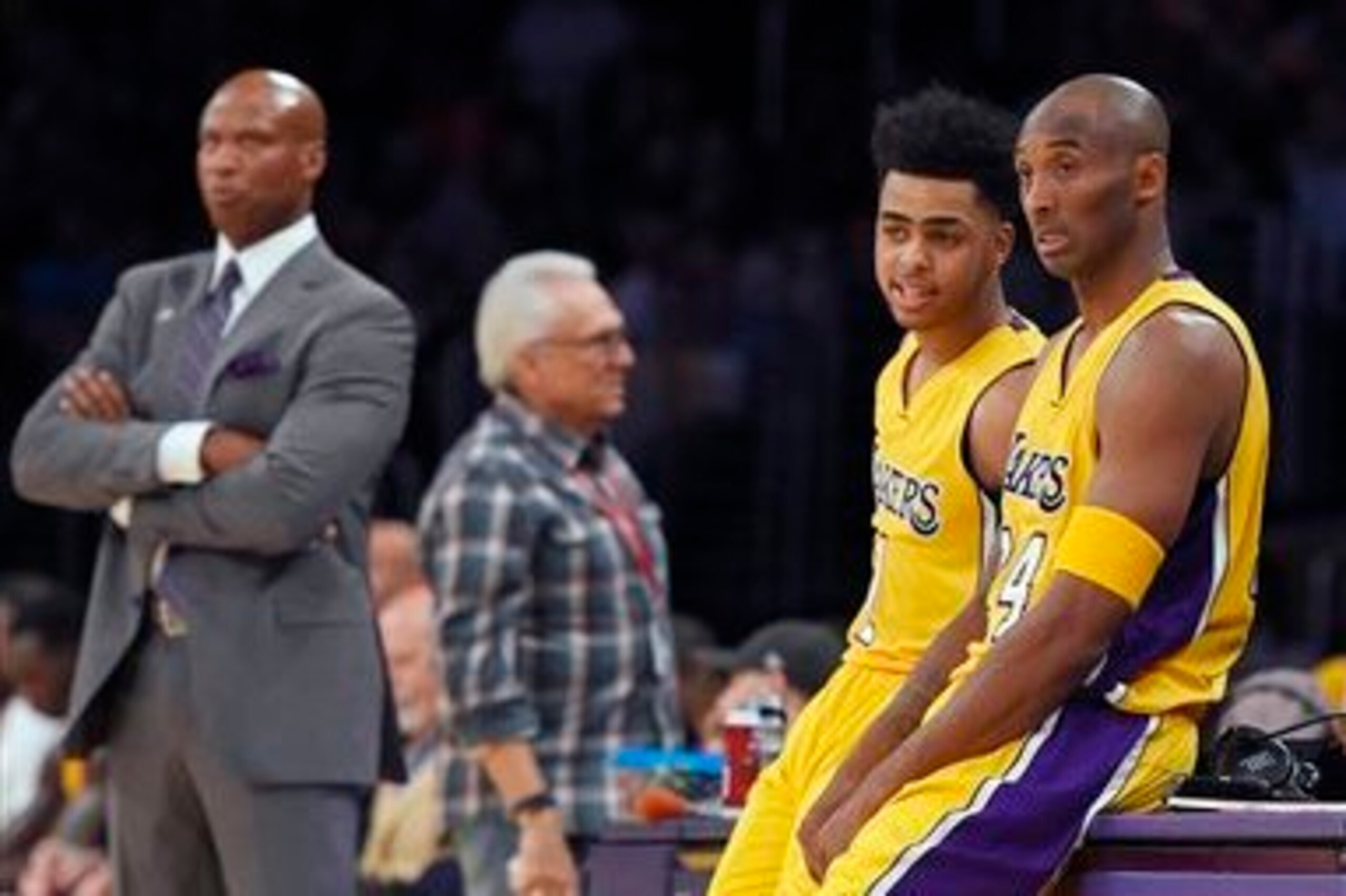
For both Johnson and Buss, there's hope to be found in what the Lakers have on hand, even if the team doesn't paint a pretty picture in the present.
Jordan Clarkson, an All-Rookie first-teamer last season, looks like he's ready to take that next step on the heels of a productive summer. Julius Randle is making up for lost time, averaging 14 points and eight rebounds in his first action since breaking his leg in the 2014-15 season opener.
And Buss sees big things coming for Russell, the 19-year-old who was selected with the No. 2 pick in the 2015 draft.
"I think he might be something special," he told USA Today. "And if he is, then that's what I'm talking about. Somebody special is going to want to play with someone special, and then the dominoes fall. So, yeah, I'm extremely confident."
He might want to temper expectations in the wake of Russell's slow start (10 points and 2.2 assists per game, 40 percent shooting) and Scott's priorities.
"I'm not always thinking about necessarily developing them," Scott said prior to the Lakers' first extended road trip of the season (via ESPN.com's Baxter Holmes). "I'm always thinking about trying to win. I'm always thinking about trying to win. The development part comes secondary to that, but in practice and everything is where you really work on the development part."
It doesn't help that Scott seems to favor featuring the struggling 37-year-old Bryant over letting the youngsters play through their mistakes. As Bleacher Report's Kevin Ding wrote after the Lakers fell to 0-3 with a loss to the Dallas Mavericks on Sunday:
"Byron Scott is far too regimented about sticking with his preplanned rotation. He subbed out Julius Randle in the first half and D'Angelo Russell in the second half when they were clearly rolling Sunday night. But when Bryant is playing poorly and taking bad shots, Scott wouldn't dream of pulling Bryant to send him a message stressing the need to play the right way.
"
In time, Bryant will step away from the court for good, be it when his contract comes due in 2016 or, perhaps, some time after that. Whenever the end comes for the Mamba, the Lakers can start planning for and working toward a brighter future.
The bridge to that next era has already been rockier than any the Lakers have crossed. Last season, the team set franchise nadirs for losses (61) and winning percentage (.256). By the end of 2015-16, it could be staring down the organization's first non-playoff three-peat.
Even then, the Lakers won't be completely out of the woods. Their 2016 first-round pick, part of the cost of bringing Steve Nash to L.A. in 2012, will belong to the Philadelphia 76ers if it lands outside the top three. If that selection goes to the City of Brotherly Love, the Lakers will then owe their 2018 first-rounder to the Orlando Magic as the final piece of the deal in which they acquired Dwight Howard in 2012.
These obstacles, along with the club's current youth movement and Bryant's continued struggles, could make this rebuild both the franchise's longest and its most painful. But if history is any guide, the Lakers will find their next star and get back to their winning ways—and their fans, Johnson included, can get back to cheering.
Josh Martin covers the NBA for Bleacher Report. Follow him on Twitter.

.jpg?w=2560 "Grading WWE Raw 🔠")

.jpg?w=2560 "Viral Rams Coach Vid 🖕")

.jpg?w=2560 "Injury-stricken Seahawks signing veteran RB")
.jpg?w=2560 "Bijan's INSANE 1st Half 🤩")