Restricted free agency is, by design, inherently easy for the NBA's teams to navigate.
Or at least it used to be.
Leverage traditionally lies with incumbent squads during the restricted free-agency process. They cannot only offer the most money, but they can offer it a full year before any other suitor, as part of a contract extension following the third year of a first-round pick's rookie-scale deal.


That's why, in the past, most high-end players rarely reached restricted free agency. They jumped at the chance to secure their first lucrative payday. And if they didn't, electing instead to field sales pitches from other teams that following summer, their current employer had the right to match any offer they received.
But as the Nov. 2 deadline for extensions nears, the Association's impending salary-cap eruption has shifted bargaining power, if not totally in the direction of players, then to the middle of the table, putting both sides on equal footing.
The Restricted Free-Agent Paradox
Next season's salary cap is projected to reach at least $89 million, up from $70 million this year. Player salaries will explode right along with teams' spending power, as some of the offseason's extensions will show.
Anthony Davis re-upped with the New Orleans Pelicans for $145 million over the next five years. Damian Lillard put pen to paper on a five-year, $120 million extension with the Portland Trail Blazers.
Those numbers jump off the page, even though we're talking about superstars—players who don't so much have a market worth as they do a defined price tag of "As much as we're allowed to pay them."
What happens when players have more opaque values? Teams try to lock them up early, much like the Pelicans and Blazers did with Davis and Lillard, but with the primary goal of getting them to sign at what will, in most cases, be deemed below-market costs.
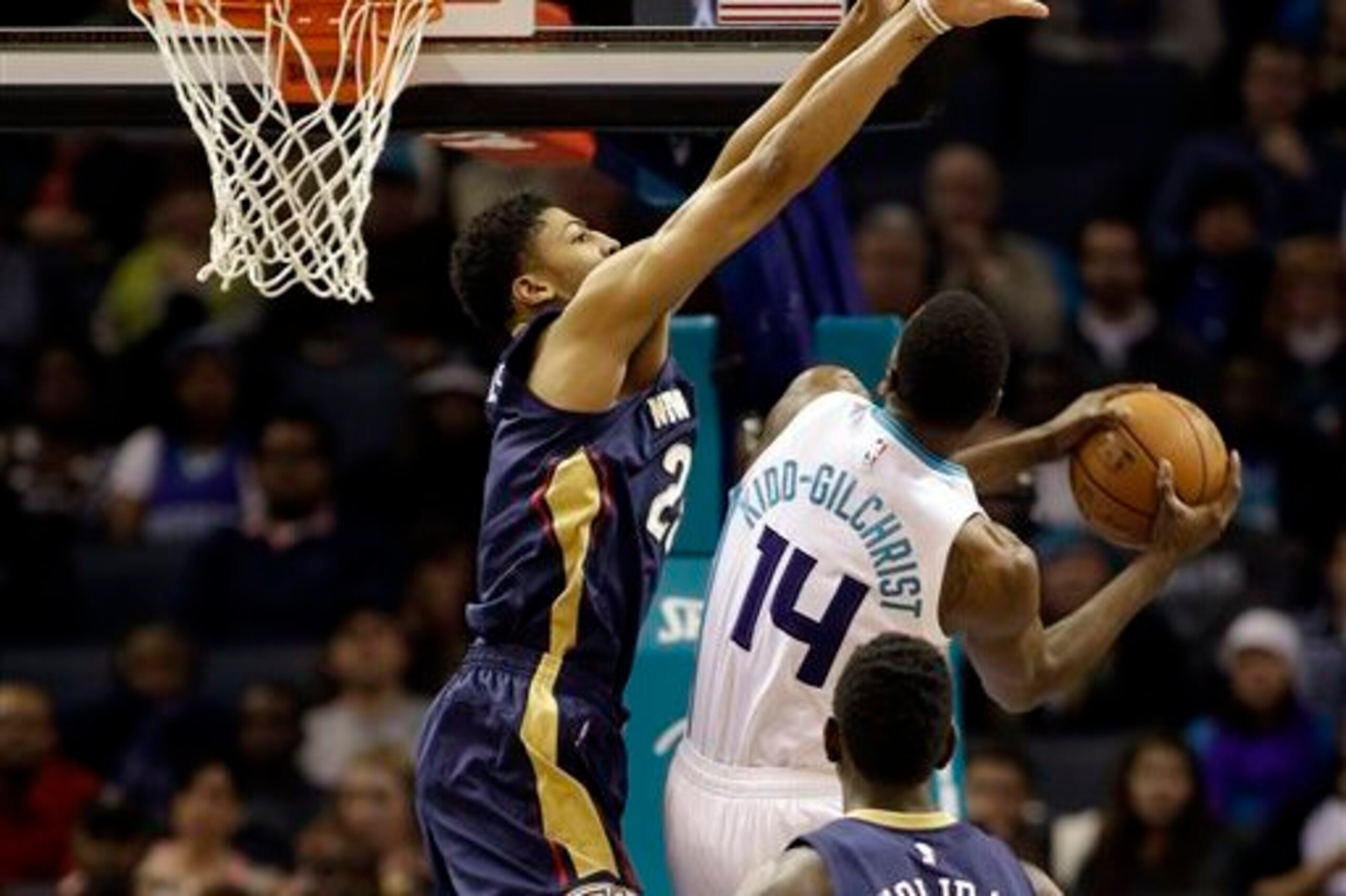
Michael Kidd-Gilchrist agreed to a four-year, $52 million deal with the Charlotte Hornets. Though he's on the shelf following shoulder surgery, the going rate for lockdown perimeter defenders is much higher these days.

DeMarre Carroll received $60 million from the Toronto Raptors, while Wesley Matthews grabbed $70 million from the Dallas Mavericks. Both are better shooters than Kidd-Gilchrist, but he's the grittier defender, and his $13 million salary in 2017-18 will barely eat up 12 percent of Charlotte's cap.
Identical logic is behind the Raptors' decision to throw four years and $64 million at Jonas Valanciunas. As a plodding big man who struggles to pass and defend, his value isn't as pronounced as, say, Davis', but Toronto is assuming he would have fetched an average salary greater than $16 million had he reached the semi-open market.
Yet, other players will bet on themselves for the same reason teams aim to hammer out extensions and eschew the restricted free-agency process: money.
Death to Bargains
Jimmy Butler turned down the Chicago Bulls' four-year, $44 million play last season and, after earning Most Improved Player honors for 2014-15, was rewarded with a five-year, $90 million contract over the summer.
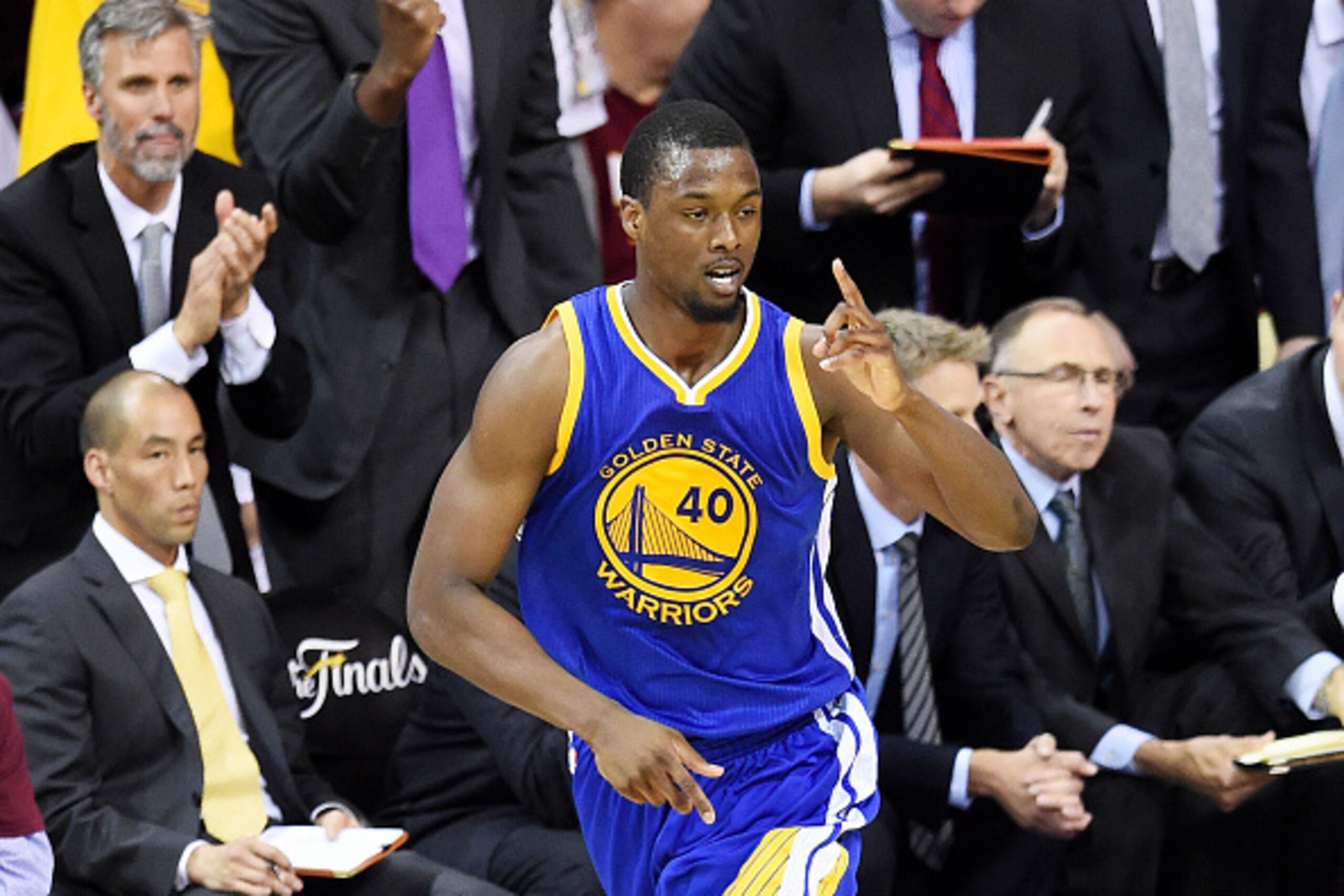
Harrison Barnes is taking the exact same approach now. Having already rejected a four-year, $64 million offer, he and the Golden State Warriors have tabled talks indefinitely, ensuring he becomes a restricted free agent this coming July, according to ESPN.com's Ethan Sherwood Strauss.
"We still can match any offer," Warriors general manager Bob Myers said of Barnes' contract situation, per Strauss. "We can do five years. It puts us in a maybe stronger position."
Maybe.
The right to swoop in and match any offer Barnes gets is, at its heart, a strength. But the Warriors' initial offer would have made him the third-highest paid player on the team for 2016-17.
How much higher are they willing to go? When they have almost $75 million in guaranteed salary on the books for next season? When that number could climb above $87 million before factoring in Barnes' return?
When offering any more could, and in all likelihood will, make Barnes Golden State's absolute highest paid player? (For perspective, consider Stephen Curry, the reigning MVP, will earn $12.1 million in the final year of his rookie extension.)
This isn't going to be like years past, when outside suitors would shy away from dangling offer sheets to restricted free agents out of fear of tying up precious cap space in players they wouldn't actually land. The salary-cap boom promises most of the league ample wiggle room—flexibility that permits, if not compels teams to be more generous and aggressive in their oft-fruitless pursuits of restricted free agents.
On top of that, the unrestricted crop of talent isn't all it was once cracked up to be. Superstars like LaMarcus Aldridge, Marc Gasol, DeAndre Jordan and Kevin Love signed long-term pacts instead of exploring the open market in 2016. LeBron James and Dwyane Wade are exceptions, but they're not going anywhere.
"We're going to have a lot of teams with room," former Brooklyn Nets assistant general manager Bobby Marks told Bleacher Report over the offseason. "A lot of teams did their homework this summer. And I'm concerned there's not enough good players out there to reward them with big-time contracts that we might be seeing."
Mike Conley, Kevin Durant and Al Horford make up most—probably all—of the superstar depth. After them, there are the consolation prizes.
Fringe stars in Nicolas Batum and DeMar DeRozan (player option). Older heads already north of 30 in Luol Deng, Al Jefferson and Joakim Noah. Injury-prone names in Eric Gordon and Deron Williams (player option). Those on decline in Roy Hibbert and Rajon Rondo.
Even these less-appealing ranks will be cycled through quickly and expensively. The amount of coin that will be tossed around cannot be overstated.
Some team will gladly offer Barnes more money, most likely a max deal. The same goes for Bradley Beal of the Washington Wizards. Lavish paydays will even be bestowed upon Terrence Jones and Donatas Motiejunas (Houston Rockets), Terrence Ross (Raptors) and Dion Waiters (Oklahoma City Thunder).
A New Waiting Game

Complicating matters still is the fact that the San Antonio Spurs' approach to Kawhi Leonard's restricted free agency last summer is becoming commonplace.
Rather than signing him to an extension and letting his new salary count against their cap leading into free agency, the Spurs waited. Leonard's cap hit remained roughly half of what he would eventually get, and San Antonio was free to use that additional plasticity as part of its courtship of Aldridge.
The Detroit Pistons are traveling down that path with fourth-year center Andre Drummond. He was in line for a five-year extension worth around $120 million, but by delaying his payday, Drummond is giving coach and president Stan Van Gundy an opportunity to work free-agency magic, per ESPN.com's Brian Windhorst:
"The move will allow the Pistons to enter free agency with nearly $13 million in additional salary-cap space next summer than if Drummond had signed a max contract extension now. It's a mechanism that will allow the Pistons to sign other players and then use their Bird rights to sign Drummond. Had Drummond agreed to the extension now, the Pistons would have to include the new salary on their books going into free agency.
"
The Wizards are doing the same with Beal. He wants a max contract, according to the Sporting News' Sean Deveney, and they're not willing to give him one until after free agency has sorted itself out.
Beal's cap hit for this summer stands at $14.7 million. A max extension would carry it past $20 million.

Rockets general manager Daryl Morey is doing the same in Houston, albeit under different circumstances. He won't be talking turkey with the extension-eligible Jones and Motiejunas, according to Yahoo Sports' Shams Charania, which makes a ton of sense if the Rockets plan on wedging their way into the Durant sweepstakes.
Both Jones and Motiejunas, as floor-spacing bigs with a rim-protecting foundation, could command average annual salaries of $12 million or more. Their combined cap hits until they get those deals, though, doesn't even total $12 million.
In the meantime, as these players and/or teams operate in good faith, other admirers around the league could sling enticing offers this summer that force the hands of any parties involved.
Drummond might have an understanding with Detroit, but will Beal wait around for Washington to finish with Durant? Might a team that knows it won't be in play for the 2013-14 MVP conjure up some early offer sheets for Jones, Motiejunas or Waiters? Will we see more dollars-packed short-term deals, like the one Dallas crafted for Chandler Parsons in 2014, increasing the risk of matching for incumbent teams?
Paying For Uncertainty
All this financial posturing is further compounded by teams not yet having a concrete grasp of what these players can become.
"Adding to the uncertainty: Team higher-ups still don’t have a good feel for what exactly these players are," Zach Lowe wrote for Grantland. "That’s always true to some degree; these guys are only three years into careers that often start before they turn 20. But the mystery is heightened with this group."
Restricted free agents—unlike most unrestricted free agents, who have been in the league for more than a half-decade—aren't paid for what they can do or what they've done. They're compensated for what they might do in the future.
Just as paying aging veterans poses the risk of ebbing production, doling out stacks of cash to relatively young players presents the possibility of investing in someone who never reaches his ceiling.
That, of course, has always been the danger of restricted free agency, for both incumbent and outside teams alike. It's just that the financial stakes have never been as high as they're about to be.
Where matching any eventual bids might have once been a reflexive act, it's instead a more intricate decision now that the new salary-cap climate threatens to put even more distance between a player's market value and what his team is actually willing to pay.
Salary information via Basketball Insiders.
Dan Favale covers the NBA for Bleacher Report. Follow him on Twitter, @danfavale.

.jpg?w=2560 "NBA Gambling Charges")

.jpg?w=2560 "Jonathan Taylor Landing Spots")
.jpg?w=2560 "NFL House in Paris Closes for Protests (AP)")

.jpg?w=2560 "Trevon Diggs Cut by Seahawks")