What Have Analytics Taught Us About the Original 50 Greatest Players of All Time
When the NBA's 50th Anniversary All-Time Team was selected just prior to the start of the 1996-97 season, we simply didn't know as much as we do now.
Like them, love them or hate them, you can't reasonably deny that analytics have increased our understanding of basketball and the players who take to the hardwood. They've helped bring the value of efficiency to the forefront of discussions, shown the impact of defense and even sparked trends like the influx of corner threes in the early 2000s.
Do they show everything? Of course not. But even when talking about the players who took to the court in decades that ended long ago, they're helped give us information about their games.
With so much more applicable knowledge at our fingertips, we can go back and analyze the 50 selections the panel made in '96. Not every single one of them was correct.
Here, we're interested in the players who were strangely included and wrongfully excluded, using numbers to dig into information we didn't fully understand or have readily available back in 1996.
Strange Inclusion: Bill Sharman
1 of 6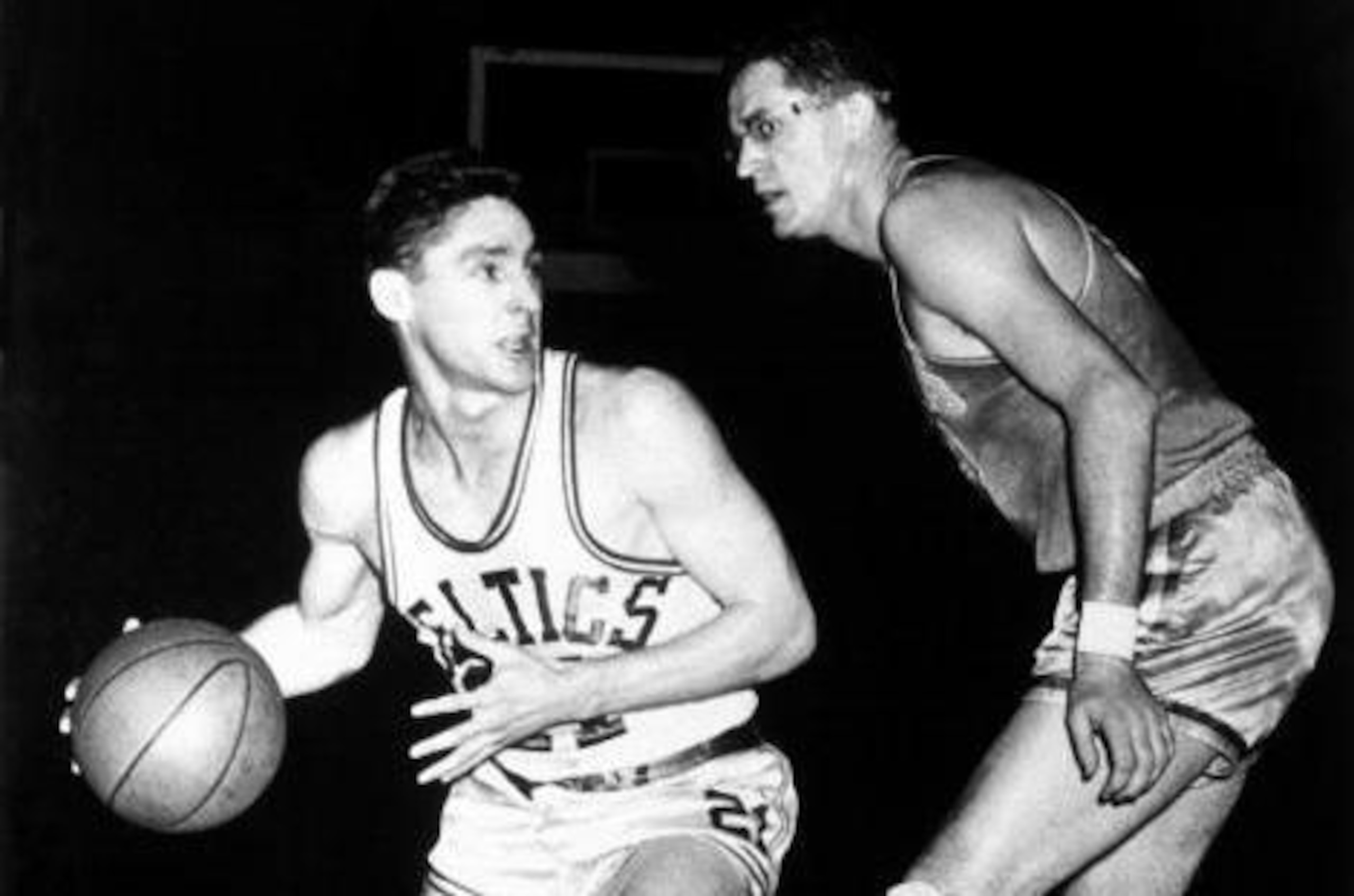
As good as Bill Sharman might have been for the Boston Celtics throughout his stellar NBA career—particularly at the charity stripe, where he knocked down 88.3 percent of his lifetime attempts and led the league in percentage seven times—much of his legacy revolves around his success in the playoffs.
The 2-guard entered the league as a second-round selection out of Southern California in the 1950 NBA draft. He'd spend just a single year with the Washington Capitols before he was selected by the Fort Wayne Pistons in the 1951 dispersal draft and subsequently traded to the C's for Chuck Share.
From that point forward, he'd make the playoffs during every season of his career, winning four rings alongside Bill Russell and the rest of the stacked Beantown bunch. The problem is, that's a bit misleading.
When I looked at the top 100 playoff performers of all time, Sharman checked in at a respectable 85th—directly behind Rick Barry, Tayshaun Prince and Kevin Durant. But the reason was largely the success of his team, not necessarily his own individual contributions.
Those rankings were constructed with two parts: an advancement bonus, which gave players boosts as they advanced deeper into the postseason and was scaled to account for minutes played, and an individual component, which accounted for both quality of play and volume by measuring appearances and average game score. Here's how Sharman ranked in each of the two portions:
- Advancement Bonus: No. 35 all time, directly between Paul Silas and Dwyane Wade
- Individual Component: No. 146 all time, directly between John Starks and Peja Stojakovic
That's a huge disparity, and it indicates that Sharman's legacy is due in large part to the success of his team. Mind you, that's a team that rostered Bill Russell, Bob Cousy, Tom Heinsohn, Sam Jones and Frank Ramsey, among others.
Plus, it was easier to advance deep into the playoffs during the late 1950s/early 1960s and maintain a dynasty.
As Bleacher Report's Grant Hughes wrote while looking at some NBA records that need to be treated with a bit less reverence:
"The fact of the matter is that the absence of a salary cap made it easy for a team to get better once it was already the best. [Red] Auerbach and the Celtics didn't face the attrition modern winners do. If they won a ring and a key piece wanted more money, there was no reason for him to go elsewhere to get it.
"
Take away the titles (or even treat them without quite as much weight), and you're looking at an entirely different player. In fact, that's a player who, during his entire career—which spanned from 1950 to 1961—had the No. 18 scoring average, No. 179 rebounding average and No. 46 assist average with just enough all-around play to rank 30th in player efficiency rating.
In other words, strip away the mythologized rings, and it's a lot tougher to justify top-50 status.
Wrongful Exclusion: Dominique Wilkins
2 of 6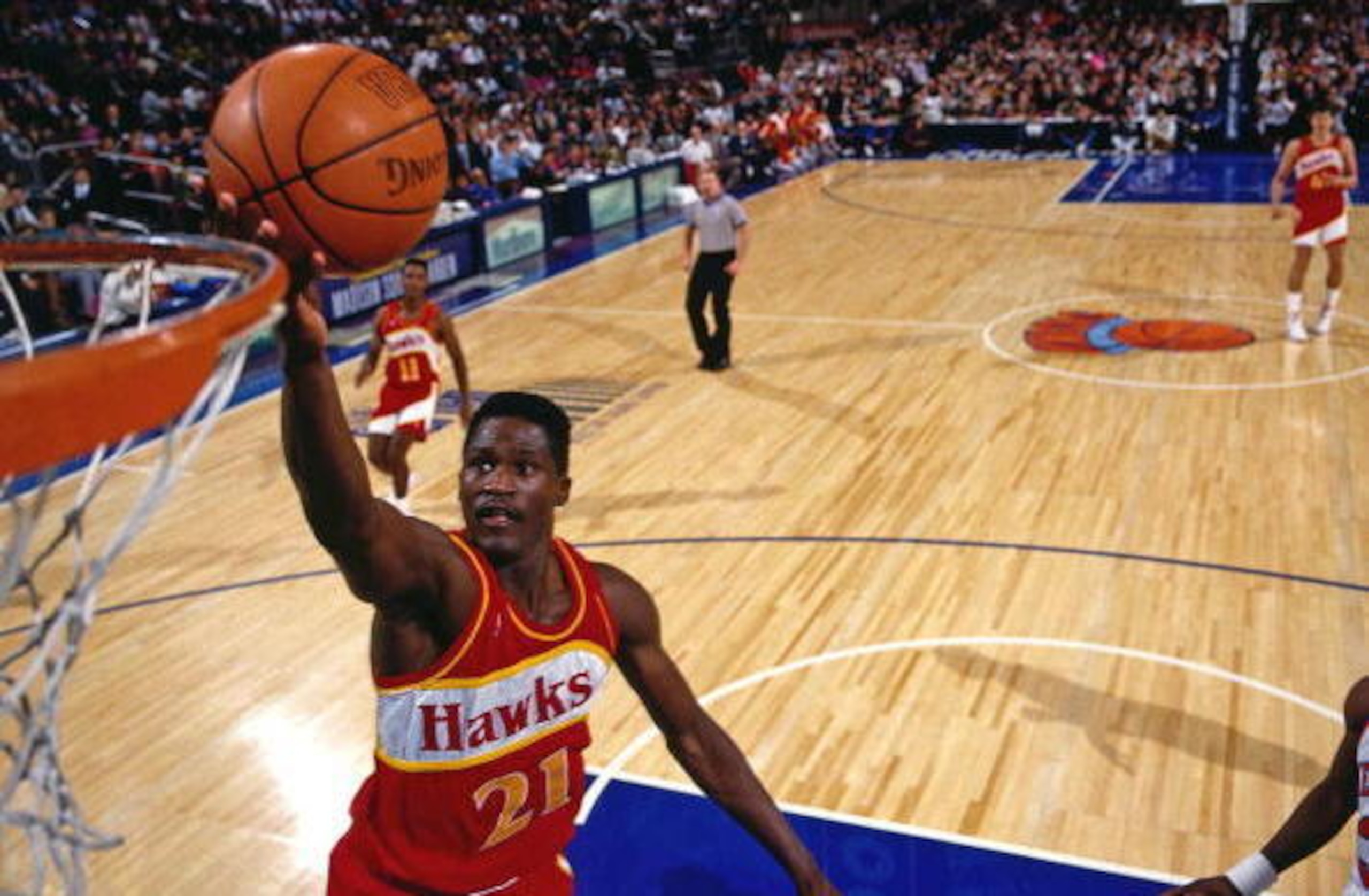
Though Dominique Wilkins' NBA career wasn't quite finished when the panel determined its top 50, that shouldn't matter.
He'd already finished up his tenure with the Atlanta Hawks, and other active players still managed to work their way into the club. Charles Barkley, Clyde Drexler, Patrick Ewing, Michael Jordan, Karl Malone, Hakeem Olajuwon, Shaquille O'Neal, Robert Parish, Scottie Pippen, David Robinson and John Stockton literally made up 22 percent of the selections, and all of them were still under contract.
Prior to the start of the 1996-97 season—which Wilkins spent with the San Antonio Spurs—he'd already scored a staggering 25,389 points during his Hall of Fame career.
Though he's since fallen to No. 12 on the NBA's career scoring leaderboard and should be passed by—at least—Tim Duncan during the 2015-16 campaign, he trailed only a handful of legends when the panel cast its ballots. Just Kareem Abdul-Jabbar, Wilt Chamberlain, Moses Malone, Elvin Hayes, Jordan and Oscar Robertson were ahead, and that's hardly something to be ashamed of.
However, even that doesn't totally underscore how good Wilkins was on the offensive end. Even if the voters reasonably held his lack of defensive ability against him and presumably sniffed at his complete lack of postseason success, the high-flying highlight machine was still just that strong at helping his team put up points.
Offensive box plus/minus (OBPM) didn't exist at the time, but it does now. Measuring how many points per 100 possessions better an average team's offense is with the player in question on the court instead of a league-average offensive player, it surely would've helped Wilkins' case. Heading into the 1996-97 season, the legendary Hawks' 3.4 career OBPM trailed the lifetime mark earned by just 17 players throughout all of NBA history, looking at those who logged at least 100 appearances.
Just for the sake of argument, let's pretend that the average NBA minute contains two possessions. If that's the case, we can use the definition of OBPM to estimate that Wilkins would've added 2,574.5 points to an average offense during the 37,861 minutes he'd logged up through 1996. At that point in NBA history, only 10 players would've been more beneficial.
Excluding a player who was that stellar on offense is just nonsensical, especially since analytics in that era had not fully explained how bad Wilkins often was on the defensive end.
Strange Inclusion: Billy Cunningham
3 of 6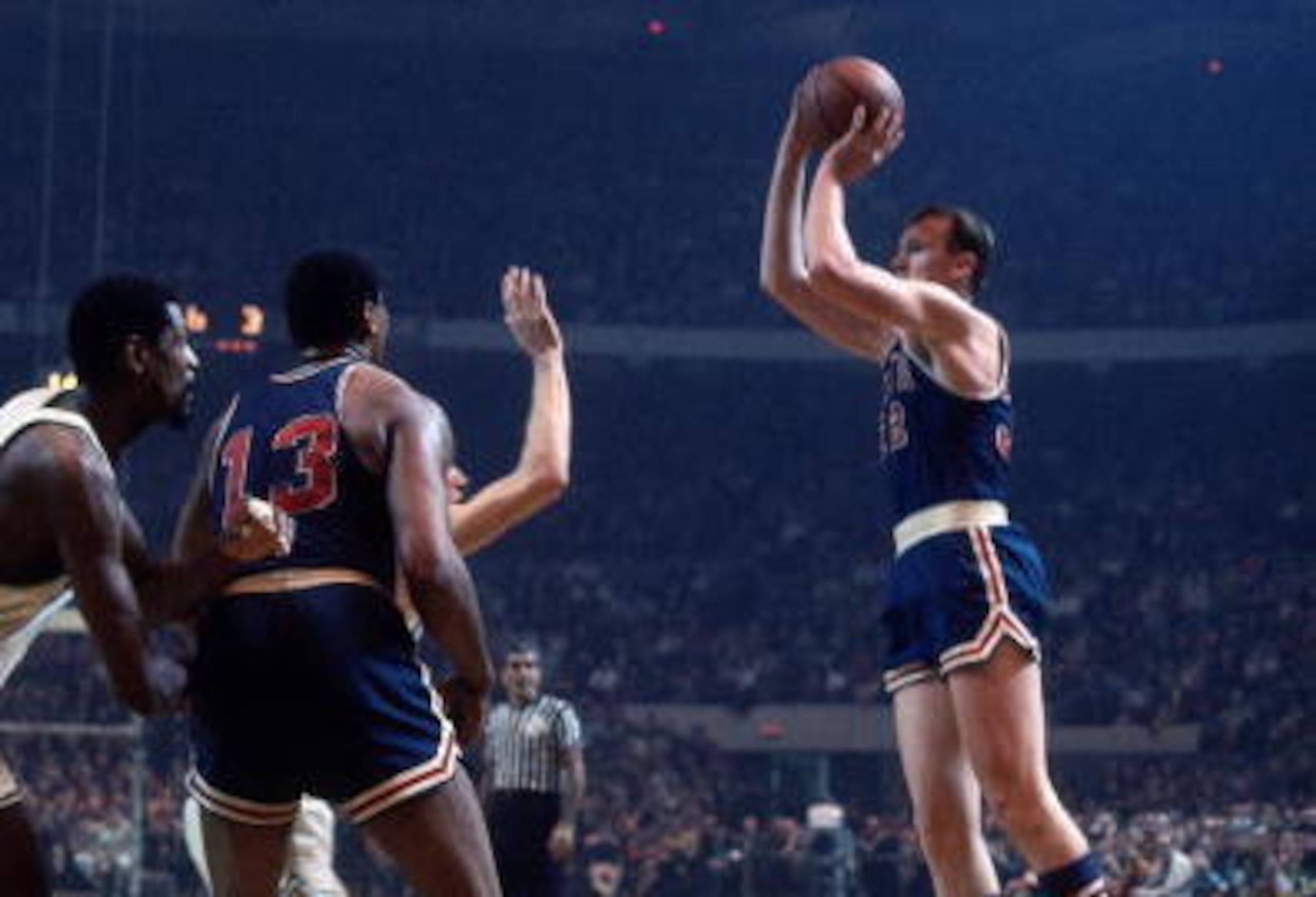
Even if you include the two seasons Billy Cunningham spent playing for the ABA's Carolina Cougars, he only logged a grand total of 770 appearances during his professional basketball career. Though he was dominant at North Carolina and made the All-Star team during his first ABA season, that's hardly enough to overcome the lack of longstanding impact at the NBA level.
Had Cunningham avoided suffering a non-contact knee injury that ended his career after his age-32 season, this would've been completely irrelevant. But that's the lot "the Kangaroo Kid" drew, and voters knew it: His career ended 20 years before the top 50 were selected.
When he retired, Cunningham had earned 78.6 career win shares—15.4 of which came during his two stints with the Cougars. That's not an inordinately impressive total, and it actually left him ranked at No. 81 on 1996's historical leaderboard.
He did lead his team in win shares twice—once with the 1969-70 Philadelphia 76ers, and again two years later with the same organization. But if the quality of the teams he played for is factored in as his entire professional tenure is analyzed, Cunningham again loses a bit of his luster. Let's turn to Career Contributions—a basic metric described below that I developed while working on Bleacher Report's Legends 100 series during the 2014 offseason:
"Win shares are supposed to be an approximation of how many wins a player provided to his team during a given season, so dividing win shares by team wins should give an estimate of the percentage of value that player was responsible for. Multiplying that by how successful a team was that year (based on TeamRtng+, a combination of DRtng+ and ORtng+) accounts for both a player's value and the strength of the team he was contributing to.
Career Contributions sums a player's scores for every season of his career, showing how much value he provided during his NBA life.
"
Prior to last season, 238 different players had paced their squad in win shares during at least one season. One hundred eighty-four of them had earned more lifetime career contributions than Cunningham, and the former Sixers standout isn't aided too much when we factor out the brevity of his career.
When looking at career contributions per season, Cunningham still falls just outside the top 100, ranking No. 102 and fitting in right behind Carlos Boozer, Maurice Stokes, Otis Thorpe and Bob Boozer, none of whom were anointed top-50 players in 1996.
Had he played longer, he could've justified this inclusion. But as it stands with what we know now: Cunningham simply wasn't valuable enough to overcome the short nature of his professional career.


Wrongful Exclusion: Adrian Dantley
4 of 6
Let's turn back to OBPM and the corresponding estimate of how many points a player would've added to an average offense during his entire career.
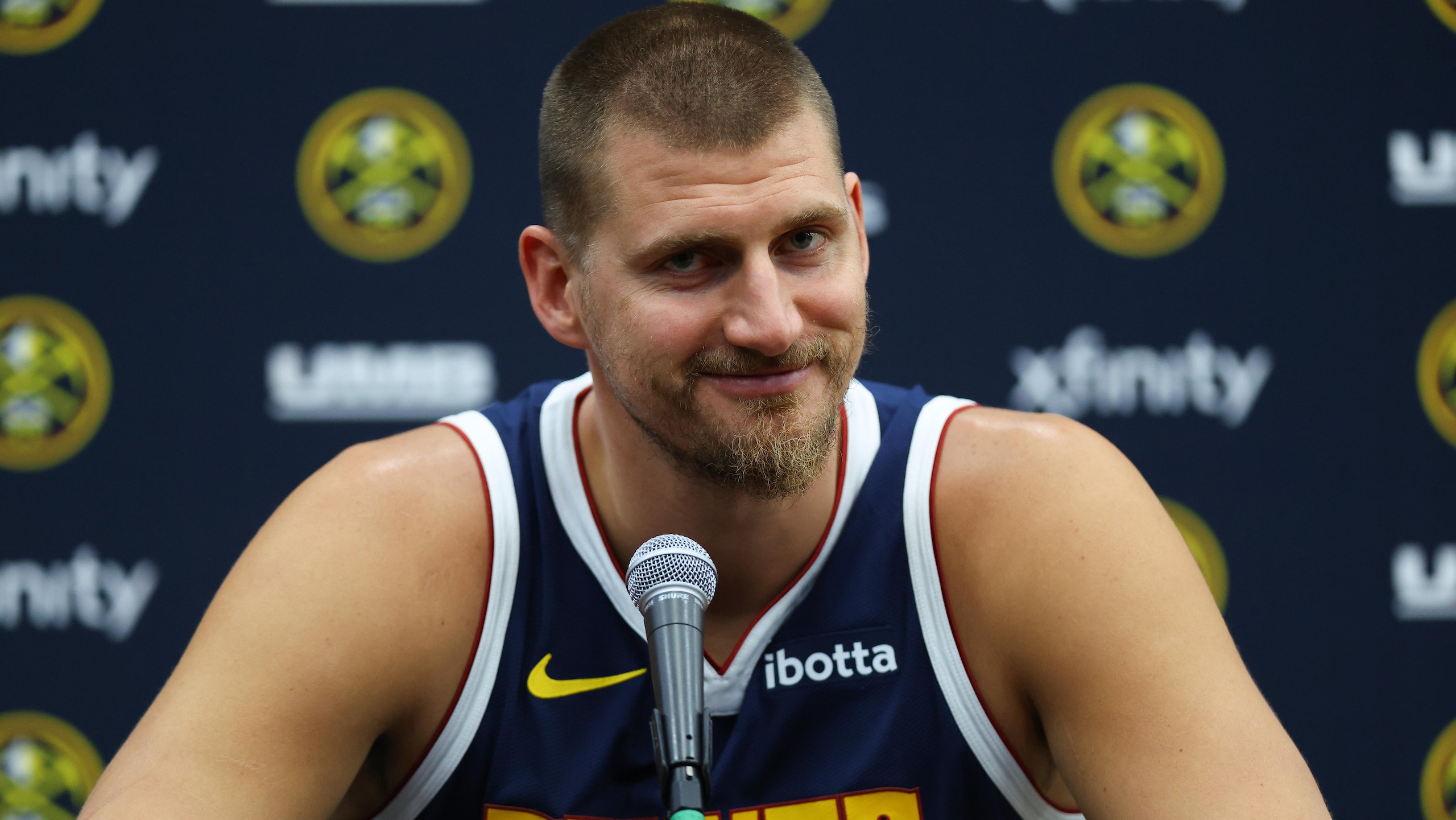
Adrian Dantley's career mark is a scorching 4.5, thanks to him leading the league in the category five times during the 1980s. For perspective, that's better than the career number produced by all but 11 players in NBA history (among those with 100 or more games to their credit), and LeBron James (7.3 OBPM), Chris Paul (6.8), Stephen Curry (5.7), James Harden (5.0), Kobe Bryant (4.6) and Kyrie Irving (4.6) weren't exactly on the radar in 1996.
Using the same analysis employed to make a case for Dominique Wilkins, let's look at where Dantley's estimated points added would've landed him on an all-time leaderboard back in 1996:
- Michael Jordan: 5,232.96 points added
- Charles Barkley: 4,192.92
- Magic Johnson: 3,789.93
- Kareem Abdul-Jabbar: 3,327.81
- Larry Bird: 3,237.64
- Clyde Drexler: 3,155.76
- Adrian Dantley: 3,073.59
- John Stockton: 3,064.69
- Reggie Miller: 2,750.4
- Karl Malone: 2,575.93
For those of you keeping track at home, that means Dantley was the only member of the top 10 who didn't hear his name called out by the 1996 panel.
Career Contributions also treat him quite well, as he ranks behind only Wilt Chamberlain and Neil Johnston in the amount earned per season throughout all of NBA history. Look at the sum of what was racked up throughout his professional life, and he falls behind just Kareem Abdul-Jabbar.
So, why doesn't Dantley get more respect? Why isn't he mentioned in the same breath as other legends, included in the club we're talking about throughout this article or remembered fondly by younger generations?
In the past, there simply wasn't the same level of appreciation for ridiculous levels of efficiency that exists today. It didn't matter nearly as much in 1996 that Dantley and Abdul-Jabbar were the only players to post at least 10 seasons averaging 20 points with a true shooting percentage above 60, or that just seven other stars had done so at least three times. It was far more irrelevant that only he, Michael Jordan, Abdul-Jabbar and Karl Malone qualified when you raised the scoring threshold to 30 points per game.
But it does now, and Dantley is getting bumped up accordingly.
Strange Inclusion: Earl Monroe
5 of 6
"Before the arrival of 'Magic' Johnson there was another 'Magic' -- 'Black Magic,' also known as 'Earl the Pearl,'" NBA.com wrote in its description of the legendary guard. "He was Earl Monroe, a dazzling ballhandler and one-on-one virtuoso who made crowds gasp with his slashing drives to the hoop."
If flash and pizzazz mattered, Earl Monroe absolutely belonged in the top 50. He was one of the most entertaining players of all time, bringing his playground flair with him to the NBA when the Baltimore Bullets drafted him second overall in 1967. It shouldn't be any surprise that he credited a one-on-one game for forging his identity in a 2013 New York Post profile with Quincy Troupe:
"Monroe developed his singular playing style on the playgrounds and believes a victory in a one-on-one game with another local legend established his bona fides as the top basketball player in Philadelphia.
'That win not only gave me a lot of satisfaction but also gave me a reputation to protect,' he writes, calling that game the 'turning point' in his basketball life.
"
Sadly, there wasn't quite as much substance to Monroe's game as the flair might lead you to believe.
The guard averaged 18.8 points per game during his professional career, but that scoring output was only accompanied by 3.0 rebounds and 3.9 assists during the average contest. He also fails to stand out when we add efficiency into the equation, primarily because he stopped attacking the basket after joining the New York Knicks and saw his free-throw attempts decline dramatically.
Throughout his entire career, Monroe posted a 51.7 true shooting percentage, and when his time in the NBA came to an end in 1980, 64 different players had lifetime averages of at least 18 points per game. He was one of them, but problematically, his true shooting percentage ranked No. 40 among that exclusive group.
If you're going to be a scoring specialist, you simply need to be efficient. And that's exactly the type of role Monroe filled, especially after he became a significant defensive liability during the tail end of his career. Defensive box plus/minus (DBPM) records only date back to the start of the 1973-74 campaign, and they show that he was worse than a league-average stopper during each of his last seven seasons.
Monroe was massively entertaining, to be sure. But so too was almost every other great player throughout NBA history. Ahead-of-its-time flashiness and some relatively inefficient scoring chops shouldn't be enough to get into the 50-man club.
During my Legends 100 series—which admittedly looks at modern players in addition to those relevant to the 1996 selection process—Monroe registered as the No. 21 shooting guard and failed to gain inclusion in the overall top 100, much less the top 50.
Wrongful Exclusion: Artis Gilmore
6 of 6
When you're a massive 7'2" center with 240 pounds working to your advantage, it's a bit easier to shoot over the top of a defender's outstretched arms and find nothing but net. Artis Gilmore was a master of positioning and accuracy, working his way to an advantageous spot and then just refusing to miss.
No player in league history has a higher field-goal percentage, since Gilmore knocked down a mind-numbing 59.9 percent of his shots during the NBA portion of his career. His effective field-goal percentage also registers as the No. 1 mark of all-time, even though he went just 1-of-13 from beyond the arc. When you factor in his 71.3 percent shooting from the stripe, his true shooting percentage is also the best in league history.
And it's not like Gilmore was benefitting from a small role. He averaged 17.1 points per game during his NBA career.
Basically, he was a master of efficiency, even if that didn't win over voters in 1996.
Nor did his defensive ability or time in the ABA, for that matter. Gilmore's size also worked to his advantage on the less glamorous end, where he racked up 36.6 win shares during his NBA playing days. Throw in the ABA contributions—he paced that league in defensive win shares during each of his first four professional seasons with the Kentucky Colonels—and that number grows all the way to 75.5. Throughout all of basketball history, only 10 players have accumulated more.
His ability to contest shots was spectacular, but his shot-blocking was potentially unsurpassed. Hubie Brown claimed as much for ESPN.com when celebrating Gilmore's delayed induction into the Hall of Fame:
"One thing Gilmore should never be considered second in is shot-blocking. Rick Barry claims that Gilmore is the greatest shot-blocker he ever played against. And remember, Barry played against all the great shot blockers expect for probably Bill Russell. He's played against Chamberlain, Kareem Abdul-Jabaar, you name it. So for him to say that really means something.
"
Still, it shouldn't actually be too surprising that Gilmore needed to wait 17 years to earn his Hall of Fame induction.
After all, efficiency and interior defensive prowess were the staples of his game, and it's a fairly recent development that we've been able to measure those aspects properly.
All stats, unless otherwise indicated, come from Basketball-Reference.com and my own personal databases.
Adam Fromal covers the NBA for Bleacher Report. Follow him on Twitter:@fromal09.

.jpg?w=2560 "OBJ Calls Out Giants After Release")



.jpg?w=2560 "Rap: Lions, LaPorta End Contract Talks")