Power Ranking Every Current Opening College Football Head-Coaching Job
We're only now getting through the halfway point of the 2015 college football season and already there are seven Football Bowl Subdivision jobs available. Just imagine what December will be like.
But before we get into the coaching silly season, let's look at what is open as well as the advantages and disadvantages for each. Some jobs, like USC, are clearly in the top echelon of the sport. Others are a bit more muddled together. Recruiting grounds, money, administrative support, expectations and ability to win are all things that can close or widen gaps between jobs.
That, and fit. Never underestimate what that can do for a head coach's job security.
How good (or bad) are college football's open jobs right now? We power rank them in the following slides.
7. North Texas
1 of 7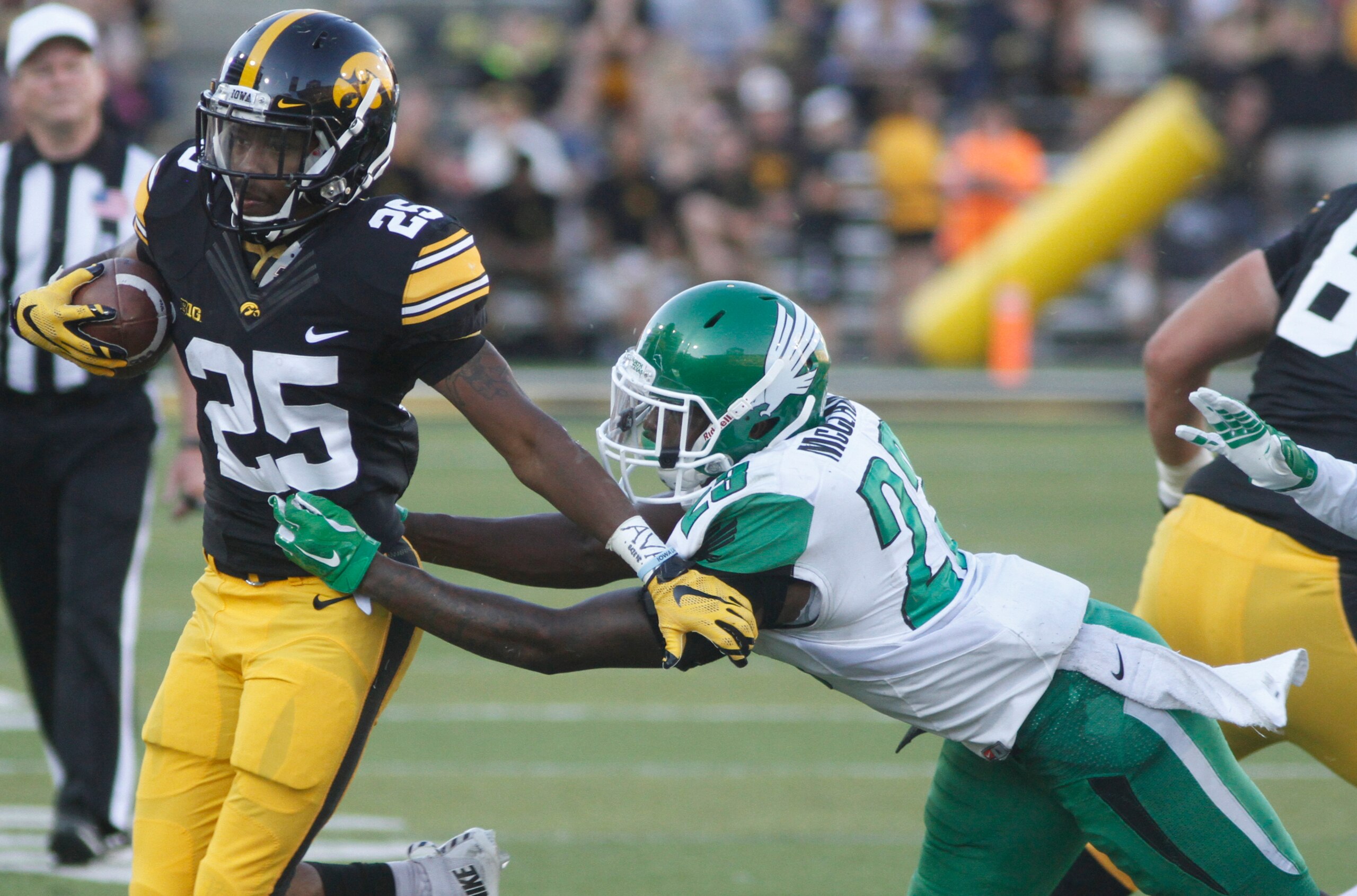
North Texas may be a definitive seventh on this list, but it actually isn't a bad job. In fact, there's no reason why a program with arguably the nicest facilities in Conference USA located near one of the best recruiting pools in Texas, if not the country, can't at least sustain some level of success.
Yet, when you add up the end of the Darrell Dickey era with the Todd Dodge and Dan McCarney stints, the Mean Green have had a hell of a decade with just one winning season.
The university has made a commitment to football in a way it hasn't before and the fanbase, while largely flaky, has shown flashes that it wants to get behind the program. That should be enough to package and sell to a coach looking for his big break.
Ultimately, North Texas needs two things: an offensive mind—you can't rank 108th in total offense while playing in C-USA—and a solid recruiter who can go head-to-head with the likes of first-year coaches Chad Morris (SMU) and Tom Herman (Houston).
Getting things turned around won't be an easy task—everyone wants to recruit Texas and a combination of bad hires/bad fits set the program back big time—but it's achievable.
6. Illinois
2 of 7
Classifying Illinois as a tough place to win might not be entirely accurate; rather, it's a place with a limited ceiling. Its last bowl appearance was in 2014, but the Illini haven't had a winning season since 2011. Looking back, the '08 Rose Bowl appearance is that much more incredible.
Playing in the more winnable Big Ten West helps and Illinois is a step above Indiana and Purdue, as Matt Brown of Sports on Earth wrote earlier this month. However, it's a tough place to sell unless you have an ace recruiter. The last time Illinois was pulling in blue-chip talent was in 2007 and '08 during the Ron Zook era.
Since head coach Tim Beckman was let go before the season began, Illinois can take its time in finding a suitable candidate. Bowling Green coach Dino Babers and Memphis coach Justin Fuente could potentially hold out for better jobs, but they should at least be on the radar.
For all anyone knows, interim coach Bill Cubit could be the man for the job. He had some success at Western Michigan and has led the Illini to a 4-3 record, with two of those losses being competitive. A bowl game this year is still achievable.
5. Maryland
3 of 7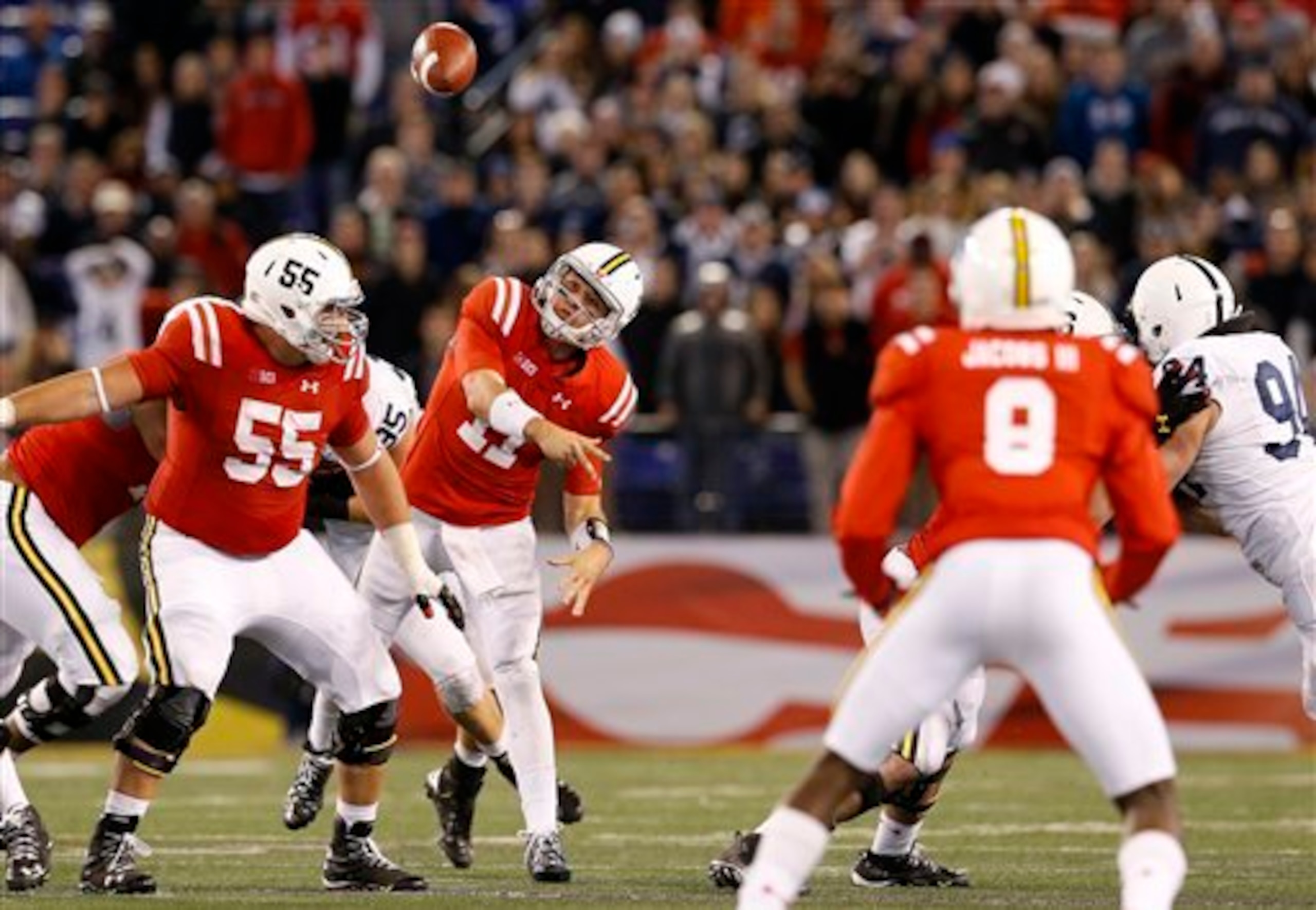
There's not much separating Maryland from Illinois other than its Under Armour cash flow and a better natural recruiting ground. There are players in the D.C./Maryland/Virginia/Eastern Pennsylvania area and you can grab a recruit like Stefon Diggs, who became a Terrapin in 2012.
However, Maryland is stuck in the less-enviable Big Ten East, where it has to play Ohio State and Michigan and Michigan State and Penn State every season. You could have one of the better coaches in college football and, in a good year, go 2-2 against those teams.
What Maryland needs more than anything is a coach with a personality and an knack for the exciting. (No, Philadelphia Eagles coach Chip Kelly is not the guy.) Nothing against Randy Edsall, who is a good coach, but anointing him as the successor to Ralph Friedgen four years ago was underwhelming.
And that's not just some random opinion. Those are the thoughts of athletic director Kevin Anderson. “I can tell you that I believe that if we look at football today, the fans want exciting, wide-open offense,” Anderson said earlier this month after firing Edsall (via Daniel Martin, CSNMidAtlantic.com).
Maryland can get that.
.jpg?w=2560)
4. Central Florida
4 of 7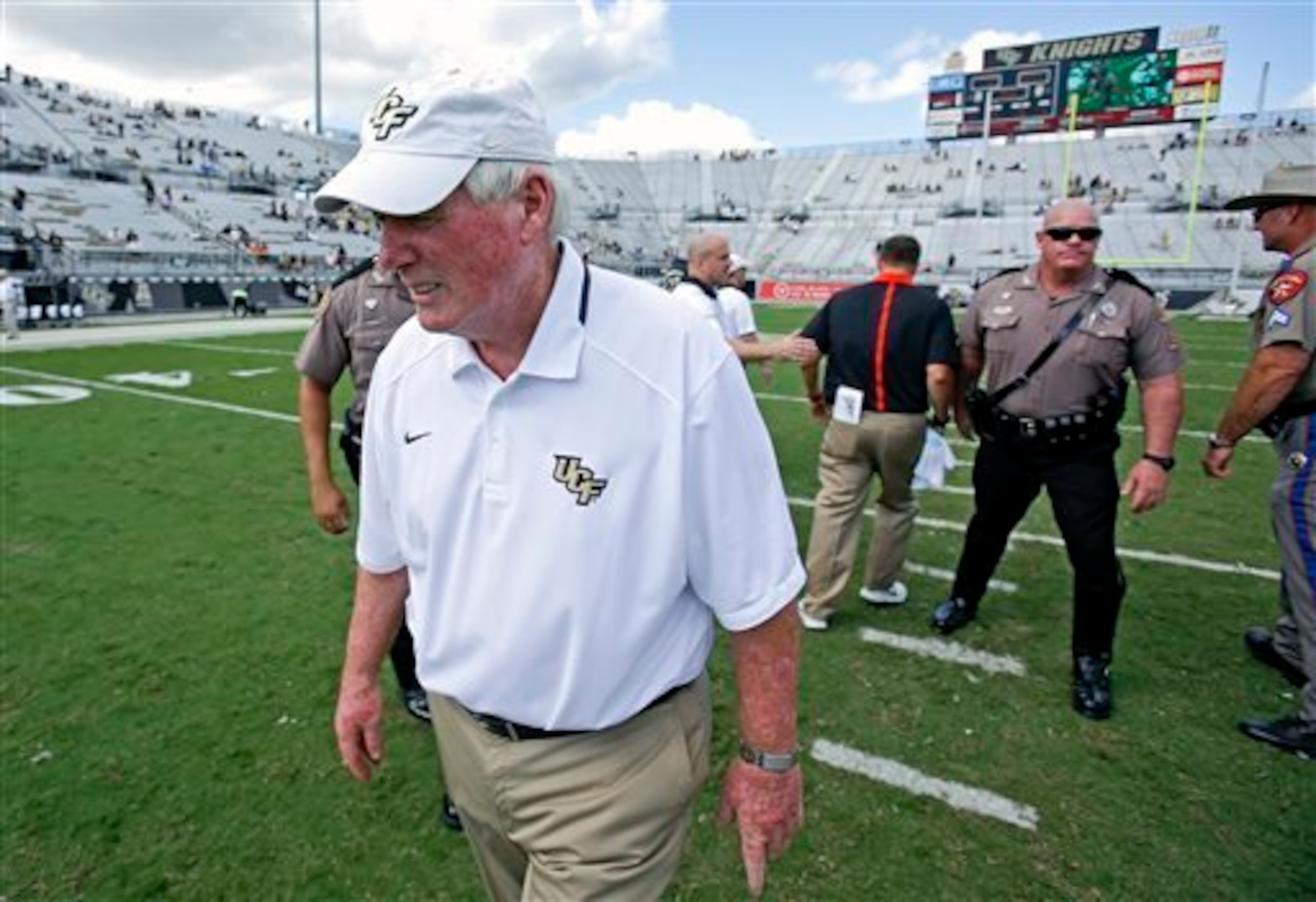
Ranking Central Florida above Maryland might seem like a stretch to some. After all, the Terps are set for life in a Power 5 conference with more money than you could ever imagine. The term "sleeping giant" is synonymous with Maryland football.
But UCF has that potential, too. A lot of potential. It's located in Orlando, so recruiting, while more competitive state-wide, is naturally better. The university has a fairly new stadium and a giant student enrollment (more than 52,000 undergrads, per Delece Smith-Barrow of the U.S. News World-Report) which will lead to more alumni and dollars down the road.
The Knights have also had a more recent string of success. In 2013-14, UCF went 12-1 and beat Baylor in the Fiesta Bowl. As far as Group of 5 conferences go, the American Athletic Conference is surging, but it's still winnable.
The biggest question for UCF finding a new coach is money. According to Steve Berkowitz of USA Today, recently retired coach George O'Leary is set to make $1.89 million this year. That's not terribly lower than what Edsall was making at Maryland. However, the school will pay him $200,000 a year until 2020.
3. Miami (FL)
5 of 7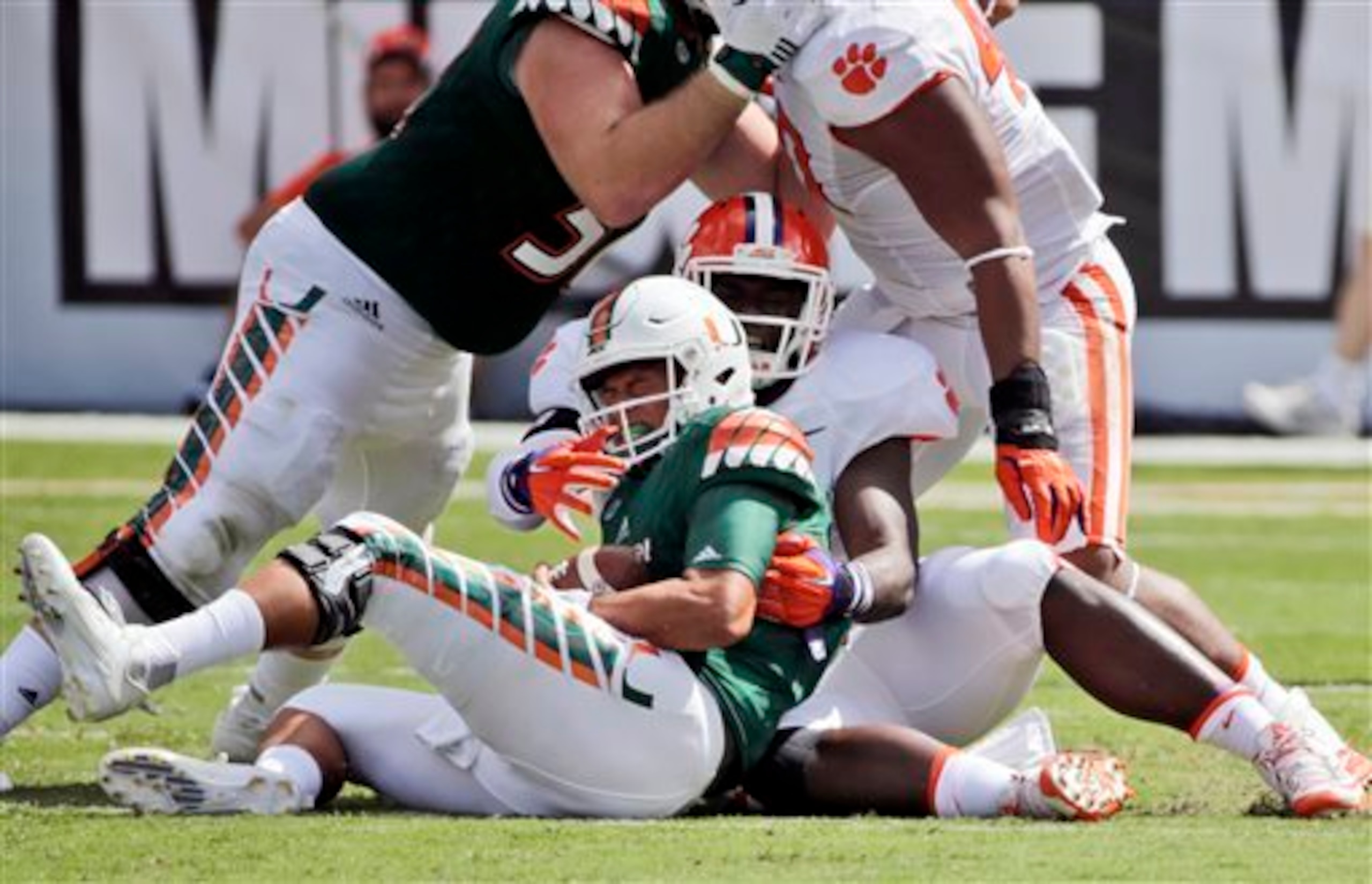
The biggest things holding Miami back from being No. 2, or even No. 1, are support, from both an administration and fanbase perspective, and money. In a way, perhaps those two things go hand-in-hand.
The recruiting perks almost go without saying. In a talent-rich state for football, Miami and the surrounding Miami-Dade county area is as good as it gets.
But if Miami really wants to land a top-flight coach, it'll have to pony up—and not just in base salary, either. (For the record, USA Today's coaching database reported recently fired coach Al Golden made just over $2.5 million.) Investing in facilities, recruiting budgets—counter-intuitive given the location—and everything in between to compete with the likes of Florida and Florida State, let alone the Alabamas and LSUs of the college football world, takes funding.
The question is whether Miami is not just ready, but capable of making that commitment on top of its buyout to Golden. The Hurricanes shouldn't be bad like they were this year, but there's been a never-ending quest to get back to the days of "The U." That takes money and the right coach with the right fit.
Even then, its new coach may not be around forever. As ESPN personalty Bomani Jones tweeted, since 1970 no coach has stayed at Miami longer than six years.
2. South Carolina
6 of 7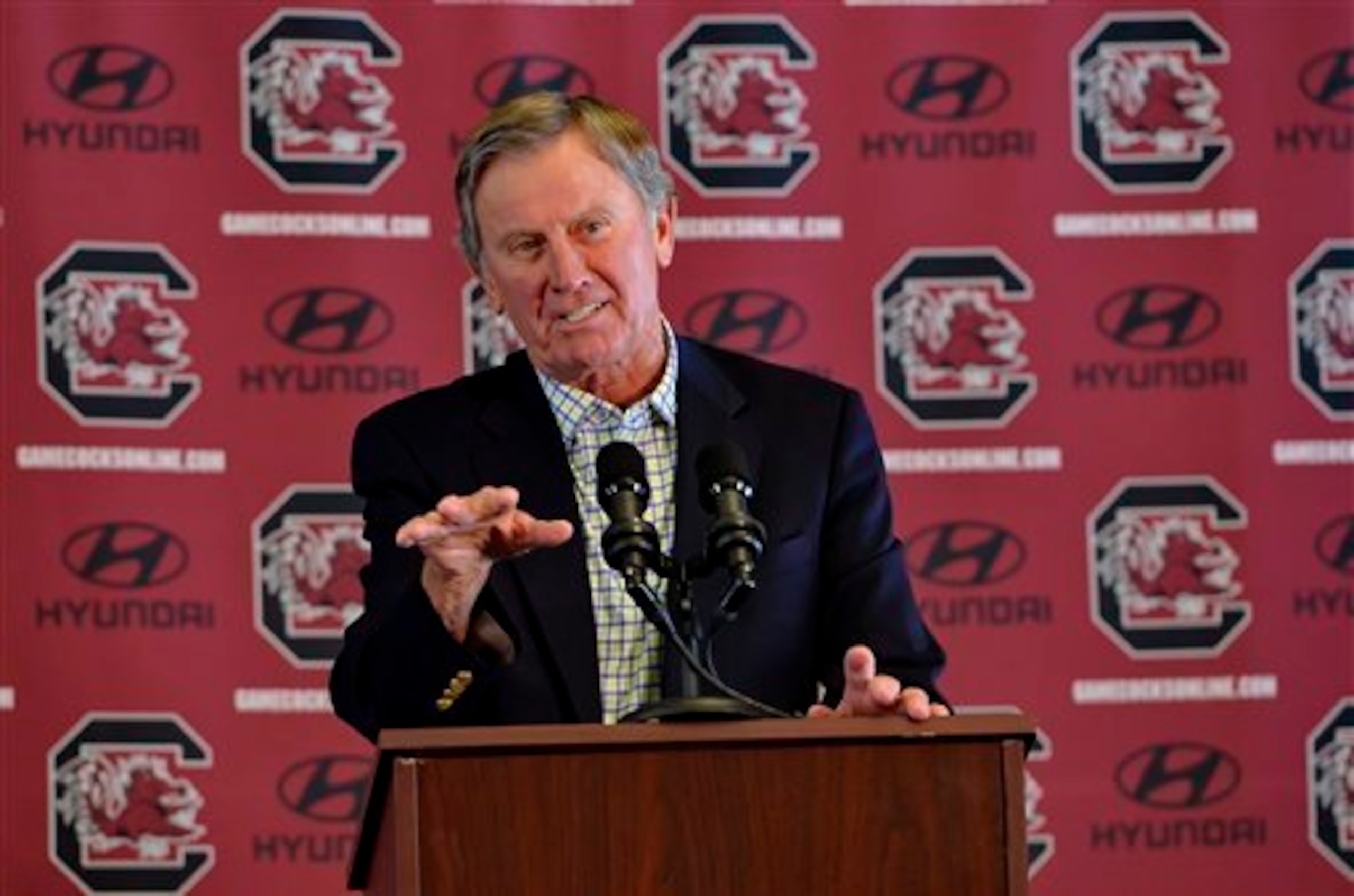
Now we're starting to really get into it. If Miami was able to shell out more for a coach, it'd be at least No. 2 because of the potential. South Carolina, on the other hand, may have experienced its golden years under former coach Steve Spurrier. From 2010-13, the Gamecocks won 42 games.
(For that matter, Spurrier is not just a South Carolina legend, but a college football one. How'd you like to be the guy after the guy?)
Dan Wolken of USA Today correctly pointed out there are only so many wins to go around each year. Florida, Georgia and Tennessee all have the capability of winning big. Still, Spurrier proved wins aren't impossible to come by in Columbia. The ceiling there isn't that low.
For now, the SEC East is wide open enough that a new coach—or maybe interim Shawn Elliott—could come in and, with a new energy, get the Gamecocks back to Atlanta for an SEC championship appearance from time to time.
Ultimately, there are two threats to South Carolina's long-term success: the rise of Dabo Swinney and Clemson, and Georgia, if/when that job becomes available.
1. USC
7 of 7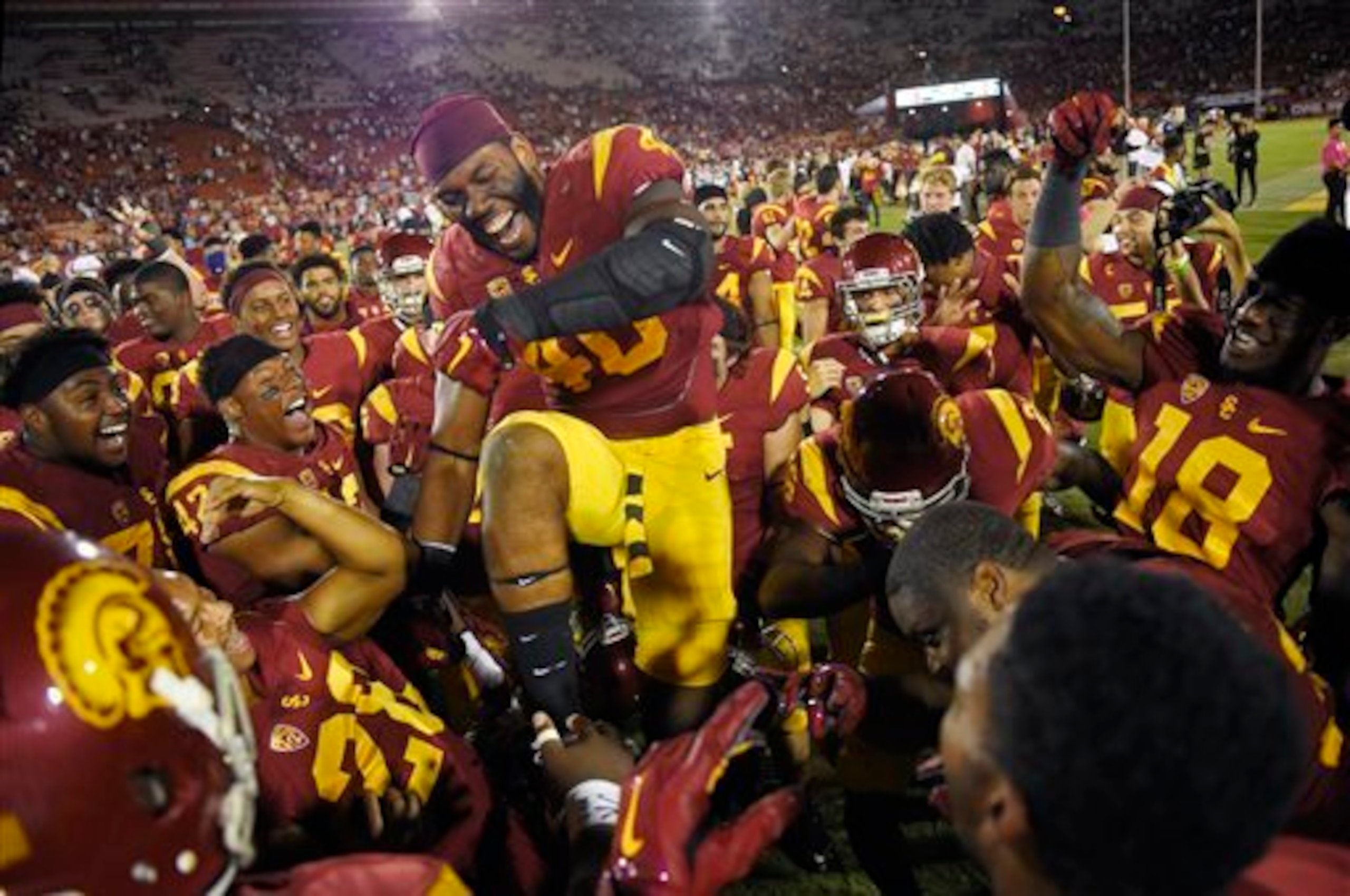
This is as clear-cut as it gets. From one USC to another, the Trojans have the best opening in college football. That may change if Alabama or Ohio State or Texas somehow becomes available—hypothetically speaking, of course.
Recruiting? USC recruits itself. Money? The program has it and athletic director Pat Haden, for as embattled as he's been, did a good job of investing in facilities. A national brand capable of at least inquiring about any coach it wants? Yep, USC has that, too.
What the program doesn't have is stability. Ultimately, that's what it needs. Seniors within the program have been through a lot with the revolving door of head coaches and interim coaches. The final months of the Steve Sarkisian era were marred by off-field, personal problems. Additionally, only now is USC moving past its hard-hitting NCAA sanctions.
All of these things can be overcome, however. In in the darkest of times, the Trojan program was able to recruit top-notch talent. And, as this team showed against Utah in Week 8, the talent doesn't always match the record.
Tradition is nice, but USC is programmed to win. That's what new coaches want. That's why USC is the best job available in college football.
Ben Kercheval is a lead writer for college football. All quotes cited unless obtained firsthand.


.jpg?w=2560 "Jonathan Taylor Landing Spots")
.jpg?w=2560 "NFL House in Paris Closes for Protests (AP)")
.jpg?w=2560 "Trevon Diggs Cut by Seahawks")