The NBA preseason isn't meaningless. It might be long and perhaps a bit deceptive at times. And the overall goal is, in fact, to get through it without encountering any injury issues.
But the games are important. There are starting jobs up for grabs and roster spots on the line. The league standings might not officially move, but there are clear winners and losers nonetheless.
Preseason statistics aren't always the most trustworthy, which is why they're far from the only measure used to populate this list.
The winners played well, but they also gained something: moving up the rotation, earning more minutes or building confidence after a lengthy layoff. The losers were at the other end of the spectrum. Not only did they make some ghastly entries in the box score, but their struggles carried tangible costs: blown opportunities to expand their roles or, in some cases, lost jobs.
It's always tempting to write off all preseason activity as inconsequential. But good luck explaining that to 2015's biggest victors and losers.
Winner: John Jenkins, Dallas Mavericks
1 of 10
For the price of the veteran's minimum, the Dallas Mavericks threw John Jenkins an NBA life preserver over the offseason. Only the first season of the three-year deal carried a full guarantee, and even inking that pact didn't solidify his spot on the roster.
The Mavs have more contracts than job openings, and Jenkins seemed like he'd be fighting for his basketball life. The former first-round pick of the Atlanta Hawks came to Dallas nearly two years removed from relevance. Injuries, defensive deficiencies and overcrowded wings all contributed to his disappearing act; after making 61 appearances as a rookie in 2012-13, he played just 37 games over the past two seasons combined.
But armed with a career .451/.375/.849 shooting slash and an obvious knack for scoring (14.6 points per 36 minutes), he joined the Mavericks with bigger plans than simply securing a job.
"I came here competing for minutes," Jenkins said, per ESPN.com's Tim MacMahon. "I knew if I played my game, I wouldn't be in any discussion about making the team. ... I'm coming for minutes."
And minutes should be waiting for him. While his three-point shot hasn't cooperated yet (27.5 percent), it's about the only part of his game that isn't clicking. He's putting up 20.8 points per game, a mark cleared only by All-Stars Damian Lillard, Kyle Lowry and Anthony Davis. Jenkins also looks comfortable creating off the bounce, drilling pull-up jumpers and finding his way into the paint.
Dallas needs some perimeter punch. All three of its projected starters around the arc are recovering from injuries: Deron Williams, Wesley Matthews and Chandler Parsons. Jenkins, who once seemed bound for the end of the bench, could provide that spark in a consistent role.
Loser: Bryce Cotton, Free Agent
2 of 10
In February, the Utah Jazz saw something in Bryce Cotton to warrant giving him a D-League promotion and a 10-day contract. By mid-March, the franchise liked the 6'1" point guard enough to give him a partially guaranteed three-year contract.
Jazz coach Quin Snyder said Cotton "just fits what we want to do," per Aaron Falk of the Salt Lake Tribune. Depending on the night, Cotton impressed with his pesky defense, playmaking ability and outside shot. He paced Utah's summer-league squad in minutes (26.0), points (16.8) and assists (4.0).
When the Jazz lost starting point guard Dante Exum to a torn ACL, Cotton looked assured of a roster spot and possibly much more. His only competition for playing time was Trey Burke (a career 37.4 percent shooter) and international import Raul Neto. Opportunity was knocking loudly, and Cotton seemed ready to answer it.
But he never could. In two preseason outings, he misfired on 15 of his 19 field-goal attempts and all four of his three-point tries. This came on the heels of a summer-league run where he shot just 37.5 percent. The Jazz opted to waive him, and those ghastly low conversion rates likely sealed his fate.
"Cotton's accurate shooting, in theory, was his ticket to the NBA," wrote KSL.com's Andy Larsen. "He's not going to be an above-average passer or defender, but when he shoots that poorly, there just aren't any reasons to keep him on an NBA roster."
Cotton's energy and ability could help him open a different NBA door down the line. But it will take some time to get over letting this opportunity slip away.
Winner: Trey Burke, Utah Jazz
3 of 10
There's a flip side to Cotton's sad story. Trey Burke, who's produced two disappointing campaigns since being the ninth overall pick in 2013, is now compiling efficient stat lines.
More scorer than setup man, he struggled to handle either role effectively or consistently over his first two seasons. Since joining the league, he owns the third-worst true shooting percentage of anyone averaging 30-plus minutes (46.3). He's also ranked outside the top 35 point guards in ESPN's real plus-minus during both years (39th as a rookie, 54th as a sophomore).
He looked like a different player this preseason. He led the Jazz in total points with 92, and he sat out one game to rest. He found shots within the offensive flow, allowing him to connect on exactly half of his field goals and 43.5 percent of his triples.
That doesn't mean Burke will take over Exum's vacated starting spot. Snyder played Neto with his opening group during the Jazz's preseason finale, and they could stick with that look to get more size, passing and defense into the first five.
But that's fine for Burke; his scoring mentality works best in a sixth-man spot, anyway. He's impressed his coach enough that he'll have a featured role no matter where he begins his nights.
"He's been one of our better players throughout the preseason," Snyder said, per Aaron Falk of the Salt Lake Tribune. "He's been focused, he's defended."
Burke has quieted his critics—as much as one can during the exhibition season—and perhaps set the stage for a breakout year.


Loser: Perry Jones III, Boston Celtics
4 of 10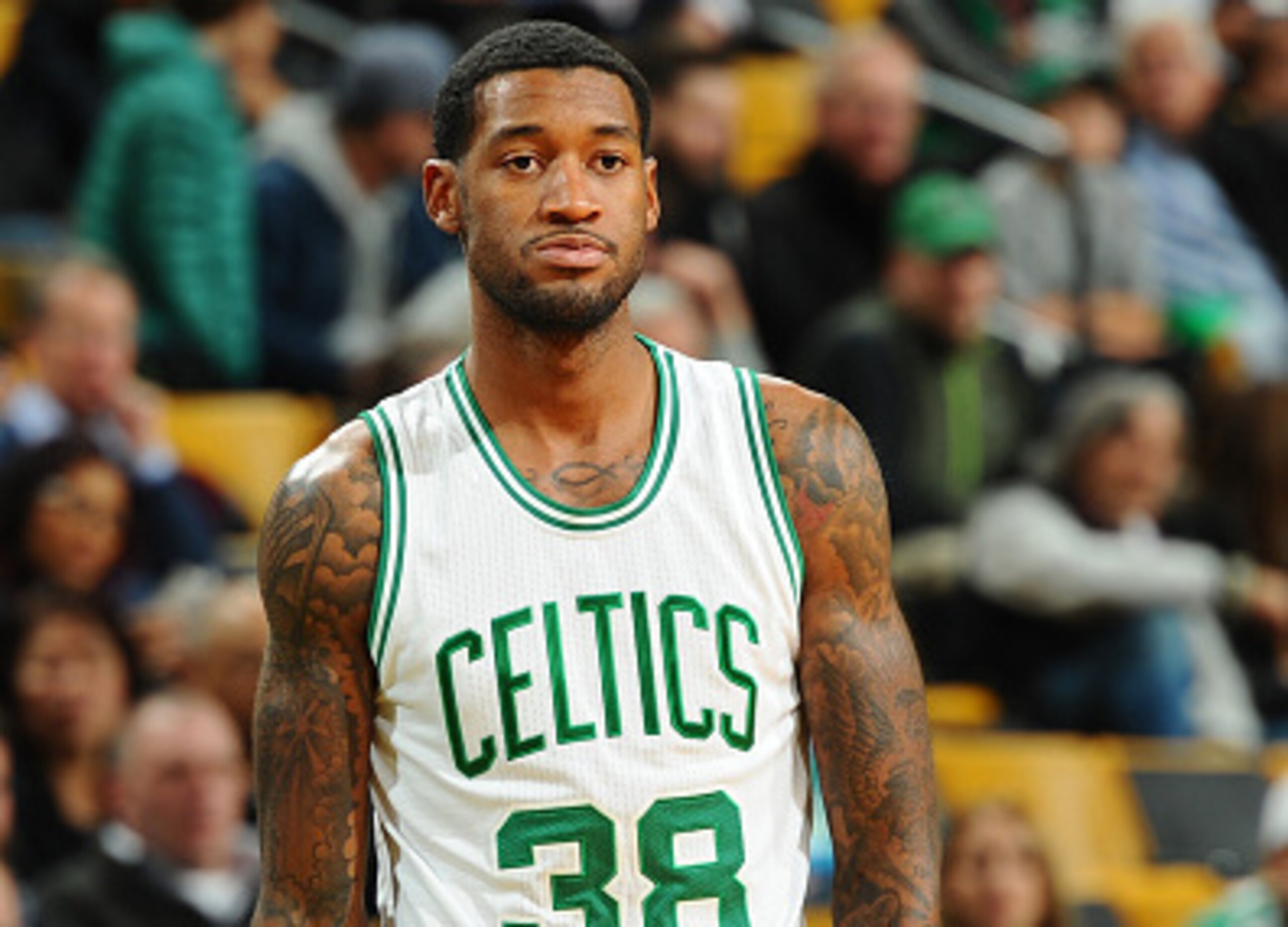
Perry Jones III has natural gifts that are seldom seen outside of the video game realm. As Bleacher Report's Jonathan Wasserman wrote for NBADraft.net in 2012, Jones has "unparalleled athleticism, fluidity and mobility for a 6'11" prospect" and "excellent ball-handling skills." To put it simply, Jones has a guard's game in a 6'11", 235-pound frame. At some point, that combination should form something dominant.
He didn't see the floor often enough to find his rhythm during three seasons with the superstar-laden Oklahoma City Thunder. Buried behind the likes of Kevin Durant and Serge Ibaka, Jones played in only 143 of a possible 246 games and averaged just 11.7 minutes when he did.
An offseason trade to the Boston Celtics was supposed to change his fortune. It put him under the guidance of skipper Brad Stevens, arguably the league's brightest young coach. It surrounded Jones with a supporting cast that, while deep, lacked star power at the top and athleticism up front. If he was ever going to capitalize on his gargantuan potential, this seemed like the time to do it.
But Jones remains as mysterious as ever, still intriguing in theory but underwhelming in reality. He's made four appearances for the Celtics, logged 28 minutes, scored seven points, grabbed five rebounds and committed five fouls. He has, by his own admission, struggled to separate himself from the other players competing for a roster spot.
"I just wasn't doing too well in practice, overthinking in practice and just not playing basketball," he said, per Adam Himmelsbach of the Boston Globe. "Just being too afraid to make mistakes, and that caused me to make more mistakes and things like that in practice. But my effort was always there. It’s just that my performance wasn’t what I wanted it to be."
Jones could soon find out it wasn't what he needed it to be to extend his stay in Boston. The Celtics have 16 players holding guaranteed contracts, one more than they can carry into the regular season.
Winner: Nikola Jokic, Denver Nuggets
5 of 10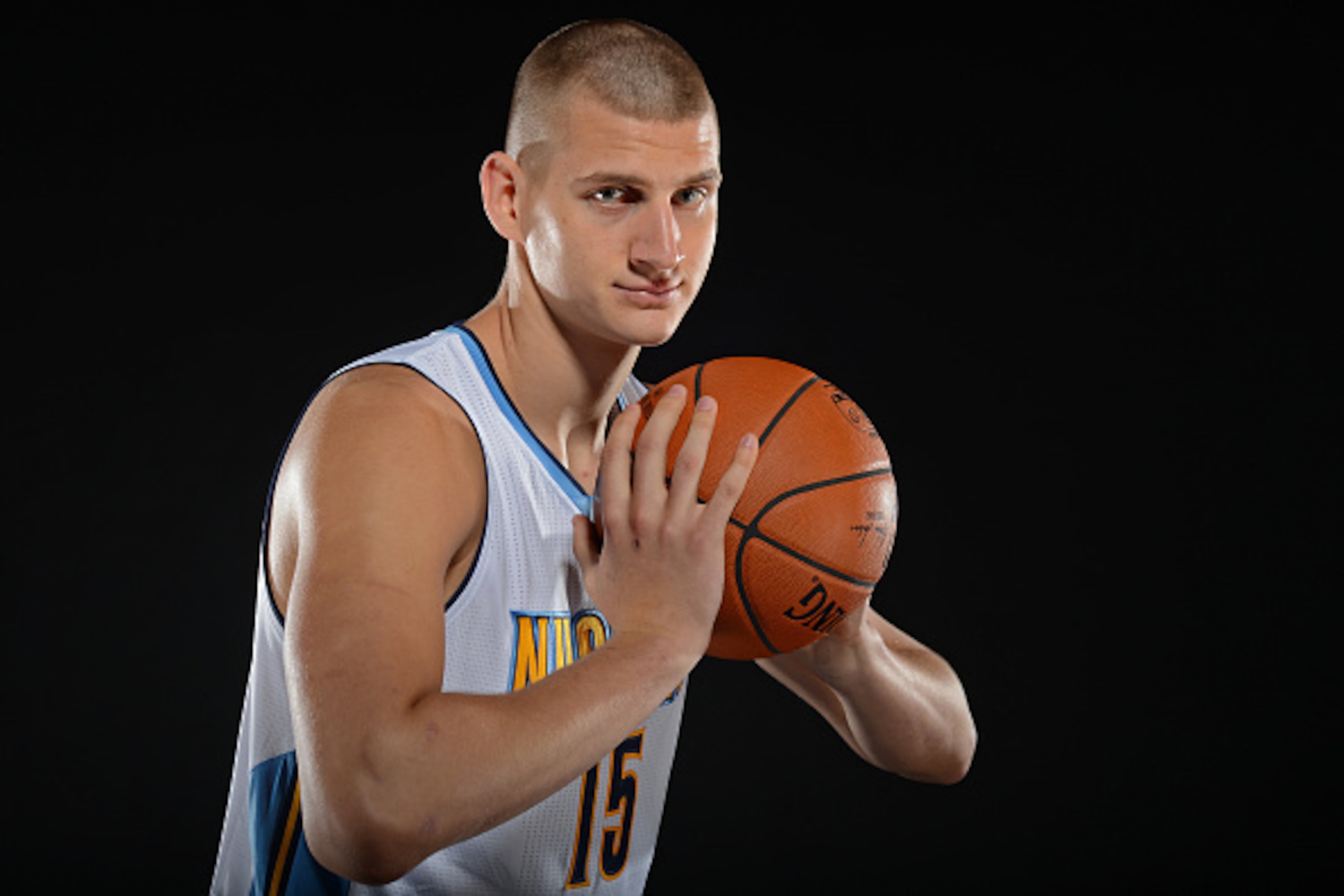
Denver Nuggets rookie big man Nikola Jokic stands 6'11" tall and tips the scales at 253 pounds. He couldn't make a quiet entrance if he tried.
Still, it's jarring to see how simple the game has come to him during his first taste of NBA action. Drafted 41st in 2014 and left overseas for a final round of seasoning, the 20-year-old bulldozed his preseason competition. He averaged 11.7 points, 5.3 rebounds and 1.1 steals in only 21.8 minutes a night, while converting an absurd 73.3 percent of his field-goal attempts.
"Jokic happens to sport a terrific big-man body with a strong yet mobile 250-pound frame," wrote Bleacher Report's Jonathan Wasserman. "... His efficiency and production aren't sustainable, but it seems pretty obvious a regular NBA role awaits."
That's what puts Jokic among the preseason's biggest winners.
His role looked uncertain entering training camp. Despite coming off a 52-loss season, the Nuggets are surprisingly deep in the frontcourt. The center spot alone can be manned by no fewer than five players, including FIBA Basketball World Cup gold medalist Kenneth Faried and 2014-15 All-Rookie second-teamer Jusuf Nurkic.
Jokic needed an opportunity to prove his worth. Nurkic's rehab from patellar tendon surgery created one, and Jokic seized his chance. It's hard to tell what will happen once Nurkic returns, but it's even harder to imagine Jokic being banished to the end of the bench. He can thank his eye-opening preseason performance for that.
Loser: Tim Hardaway Jr, Atlanta Hawks
6 of 10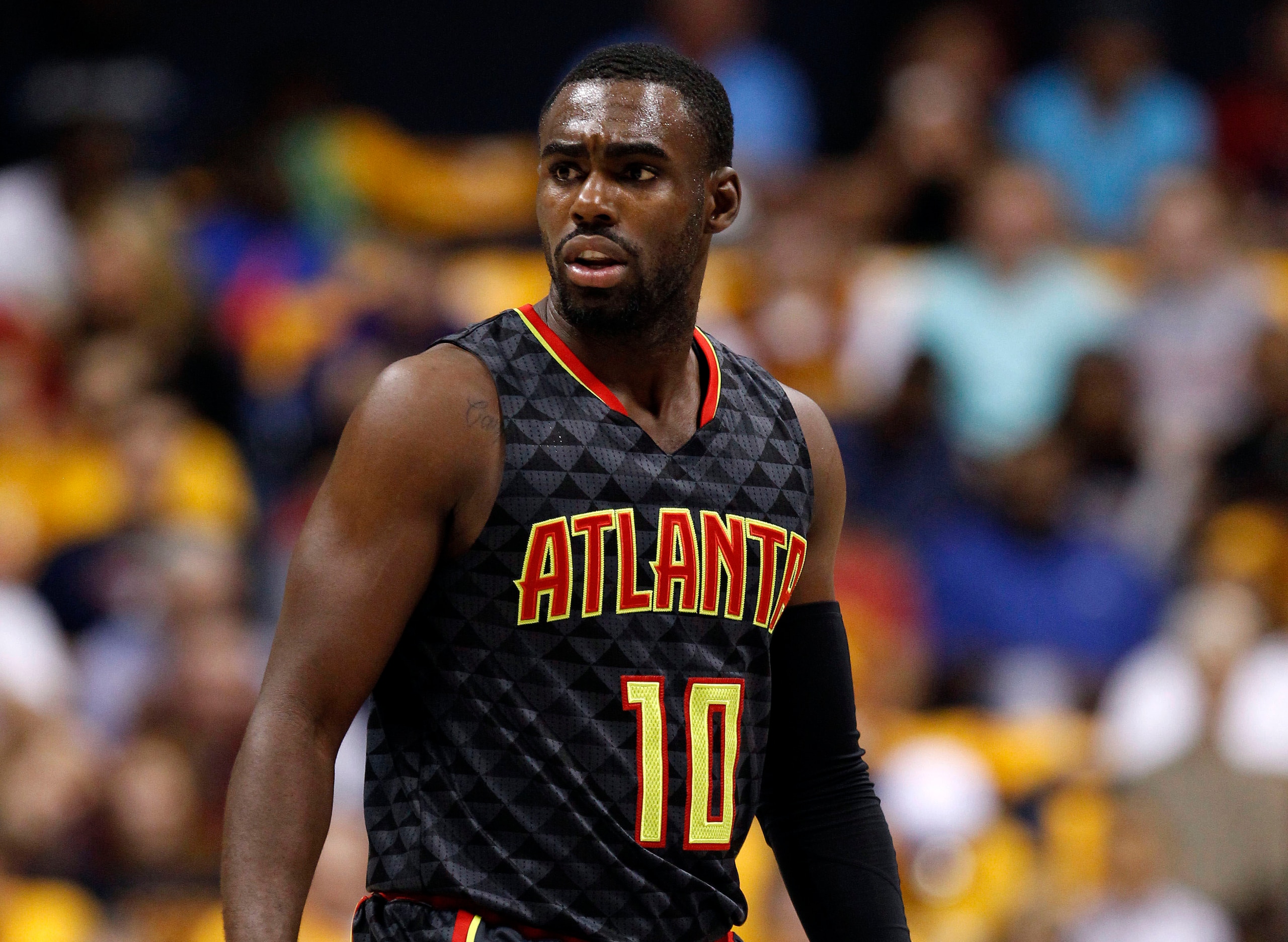
Tim Hardaway Jr's first two NBA seasons produced a decent number of points, little else of substance and a handful of questions about his future. But the Atlanta Hawks saw something in him they liked enough to willingly part with a first-round pick.
It's too early for the Hawks to feel buyer's remorse. Hardaway is only 23 years old, so his best basketball should be well ahead of him. And he's already shown he can add value with his athleticism and three-point shot.
With a strong preseason, he had a chance to move out of an instant-offense specialist role. The Hawks need a new perimeter starter with DeMarre Carroll gone, and none of the other candidates had a pedigree like Hardaway's. Thabo Sefolosha is on the wrong side of 30 and still recovering from a broken leg. Kent Bazemore has never held more than a part-time role, and Justin Holiday hasn't even done that.
The stars were aligned for Hardaway, but his game has been grounded from the opening tip.
He shot 1-of-5 from the field during his Hawks' debut, and his accuracy has only slightly improved since. He's shooting 25.7 percent overall and 25.0 percent from three through six games, while averaging 4.5 points in 17.3 minutes. And if he's not lighting the lamp, he lacks the versatility to help out in other areas.
To make matters worse, his competition is pushing him down the pecking order. Sefolosha has gotten his feet wet this preseason and could be ready to roll once the actual campaign starts. And Bazemore has capitalized on his opening, combining disruptive defense and energetic play with 54.8 percent shooting.
Winner: Gerald Green, Miami Heat
7 of 10
There's no denying the talent level possessed by bouncy Miami Heat swingman Gerald Green. There's also no getting around the fact that most NBA clubs feel his negatives outweigh the positives.
That's not an opinion; it's an observation. Since being selected with the 18th overall pick in the 2005 draft, Green has suited up for eight different teams, plus spent time in the D-League, Russia and China. When the Heat snagged him this summer, he came for the clearance rate of the veteran's minimum.
Through seven preseason games, guess who's leading the Heat in scoring. It's not any member of their vaunted starting five. It's not six-time All-Star Amar'e Stoudemire, who landed in South Beach with his own minimum deal in hand. It's not lottery pick Justise Winslow, tabbed by league executives as this past draft's biggest steal.
It's Green, who's averaging 16.9 points, shooting 41.2 percent from distance and—get this—turning just as many heads for his defensive effort as his incendiary offense.
"He can score. You put him in situations where he has some space, he's ignitable," Heat coach Erik Spoelstra said, per Tim Reynolds of the Associated Press. "But he's been very committed to the other side of the floor and what we expect on that side of the floor."
Striking that two-way balance is key, because offensive eruptions alone won't keep him in Spoelstra's good graces. (Just ask Michael Beasley.) But Green's performance should entrench him in this rotation. The Heat need his shooting and athleticism, so long as he's willing to play both ends.
Loser: Frank Kaminsky, Charlotte Hornets
8 of 10
It's never fair to expect an NBA rookie to make a seamless transition to the big stage. But who ever said professional sports had to be fair?
The Charlotte Hornets need Frank Kaminsky to be somewhere between good and great...like right now. The simple fact he's on the roster shows that this franchise is focused far more on the present than the future. They turned down an offer of four first-round picks from the Boston Celtics to get him, sources told Grantland's Zach Lowe. They also passed on higher-ceiling prospects like Justise Winslow and Myles Turner.
The Hornets got whom they wanted, and that's important. But even more critical is seeing a substantial return sooner rather than later on their investment in a player who will turn 23 before season's end.
Kaminsky is on his own race against time, and significant floor time is the only thing that might be able to accelerate this process. But even with the organization's hopes behind him, he still needs to earn his minutes. To put this politely, that's not close to what happened this preseason.
Over eight preseason games, he averaged only 7.5 points on 35.1 percent shooting. His limited athleticism was hard to overlook, as the 7-footer shot just 35.7 percent inside the paint. He had three blocks in 157 minutes and had more turnovers (10) than assists (nine).
If Charlotte wanted instant gratification from Kaminsky, the team will have to get it from a reserve role. Cody Zeller earned the starting power forward spot by shooting 60.6 percent from the field and hitting 4-of-6 from outside.
Winner: Kevin Durant, Oklahoma City Thunder
9 of 10
Kevin Durant could see this coming. While the rest of us wondered how he'd respond to a season nearly wiped out (save for 27 Durant-like outings) by three foot surgeries, he said to expect business as usual.
"I'm still the best player in the world," he declared during a promotional trip to Spain, as captured by Ruptly TV.
It sounded bolder than it was. During his last healthy season, he waltzed to the MVP award by pacing the league in points (32.0 per game), player efficiency rating (29.8) and total win shares (19.2). As long as his foot cooperated, why wouldn't he rejoin the NBA's elite?
Don't put too much thought into that question, because Durant has already answered it—as much as he can before the games actually count, at least. He averaged 18.6 points in only 24.8 minutes per game, hitting 59.3 percent of his field goals and 57.1 percent of his threes. Over his final two outings, when he shouldered close to a normal workload, he piled up 52 points in 60 minutes and shot 69.0 percent.
As encouraging as the numbers looked, the way he tallied them was even better. Frankly, he played like himself, someone near (or at) the top of the game's current greats.
"He flashed the whole arsenal: the step-backs, the hard drives through contact, the deep 3s, the pull-ups..." wrote ESPN.com's Royce Young. "It's an understatement to say Durant is a man on a mission this season. ... With the injuries, he was somewhat forgotten last season and wants to make sure everyone knows he's very much still here."
A healthy KD is a win for the Oklahoma City Thunder, their fans and basketball junkies as a whole. But it has to be reassuring for him to post these numbers, even if he knew they were en route.
Loser: Jimmer Fredette, Free Agent
10 of 10
It wasn't quite a match made in heaven for the San Antonio Spurs and Jimmer Fredette, but hopes were high that their system could jump-start the former lottery pick's stalled career.
"I think I fit in well with the team," Fredette told ESPN.com's Michael C. Wright in early October. "... I think I fit in well with their system being able to shoot the basketball, try to make the right play and give up a good shot for a great shot. I think that's kind of the m.o."
That sounded like an Alamo City-approved quote. And Fredette's three-point cannon (career 38.1 percent) looked ready for Gregg Popovich's free-flowing offense.
But Fredette didn't have much of a chance to leave a good impression, suiting up just twice for a total of 26 minutes. What he was able to show was nothing good: 2-of-10 shooting, 0-of-3 from deep, three turnovers against two assists. The Spurs were outscored by 25 points during those 26 minutes.
San Antonio had seen enough and waived him after his two outings. The 10th overall pick from 2011 is now searching for his fifth team in five years. An anonymous assistant who reportedly worked with Fredette said he won't find it unless he changes his attitude.
"Jimmer thinks everybody is stupid," the assistant told Yahoo Sports' Michael Lee. "He thinks everybody needs to come and just turn over their offense and let him shoot it anytime he wants. That's not how the league works."
Fredette's 6'2" frame and limited athleticism are probably more damaging than anything. He has the second-worst career defensive rating since he joined the league (minimum 3,000 minutes), and he's never shown the playmaking ability needed to run the point.
The Spurs knew all of that and still gave him a look to try to get a long-range sniper for cheap. But he shot his way out of a job and could be waiting a while for his next chance.
Unless otherwise noted, statistics used courtesy of Basketball-Reference.com and NBA.com.



.jpg?w=2560 "Jonathan Taylor Landing Spots")
.jpg?w=2560 "NFL House in Paris Closes for Protests (AP)")

.jpg?w=2560 "Trevon Diggs Cut by Seahawks")