It all comes down to this. After looking at the best players at each position over the last few weeks, the B/R MLB 300 is now ready for its final act: putting everyone together on the same list.
If you're just now joining the B/R MLB 300, the idea was to rank the top players for the 2016 season based on their 2015 form. This essentially meant looking at each player's skill set and determining whether their performance was made to last. To keep everything in order, each player was subjected to a scoring system that added up to either 80 points (DHs and relievers) or 100 points (everyone else).
If you missed any of the position-by-position breakdowns, you'll find these links helpful:
- Sept. 21: Top 20 Catchers
- Sept. 23: Top 25 First Basemen
- Sept. 24: Top 25 Second Basemen
- Sept. 25: Top 25 Shortstops
- Sept. 28: Top 25 Third Basemen
- Sept. 30: Top 25 Center Fielders
- Oct. 1: Top 40 Corner Outfielders
- Oct. 2: Top 5 Designated Hitters
- Oct. 5: Top 80 Starting Pitchers
- Oct. 6: Top 30 Relief Pitchers
Now that all the individual positional rankings are taken care of, we can put our top 300 players all onto one list, counting down from Mr. Irrelevant at No. 300 to the game's top player at No. 1.
Don't worry, you won't have to wade through 300 individual slides to get to the top player. Only the top 25 players get their own slides. For player No. 300 to No. 26, it's 25 to a slide.
Now, please note quite a few players ended up with the same score. To resolve these ties, we gave priority to the player we would pick if we only got the chance to choose one.
You may now start the show.
Notes on Stats, Links and Sources
1 of 37
Putting together these rankings did require some good, old-fashioned video scouting. But for the most part, it involved digging deep into baseball's treasure chest of statistics.
The primary sources for these numbers were Baseball-Reference.com, FanGraphs, Brooks Baseball, Baseball Prospectus and Baseball Savant. The various links you'll find throughout will take you to relevant data on these sites. Clicking on them is not mandatory. They're there for your pleasure.
As for the statistics that were used, some of them you may recognize. For those you don't, you can find explanations in the individual positional rankings slideshows.
Also note that not all of the statistics referenced within are current through the end of the 2015 season. Some are a few weeks short of being 100 percent up to date and will be marked as such.
Now then. Let's get started.
300-276: Paulsen-Peterson
2 of 37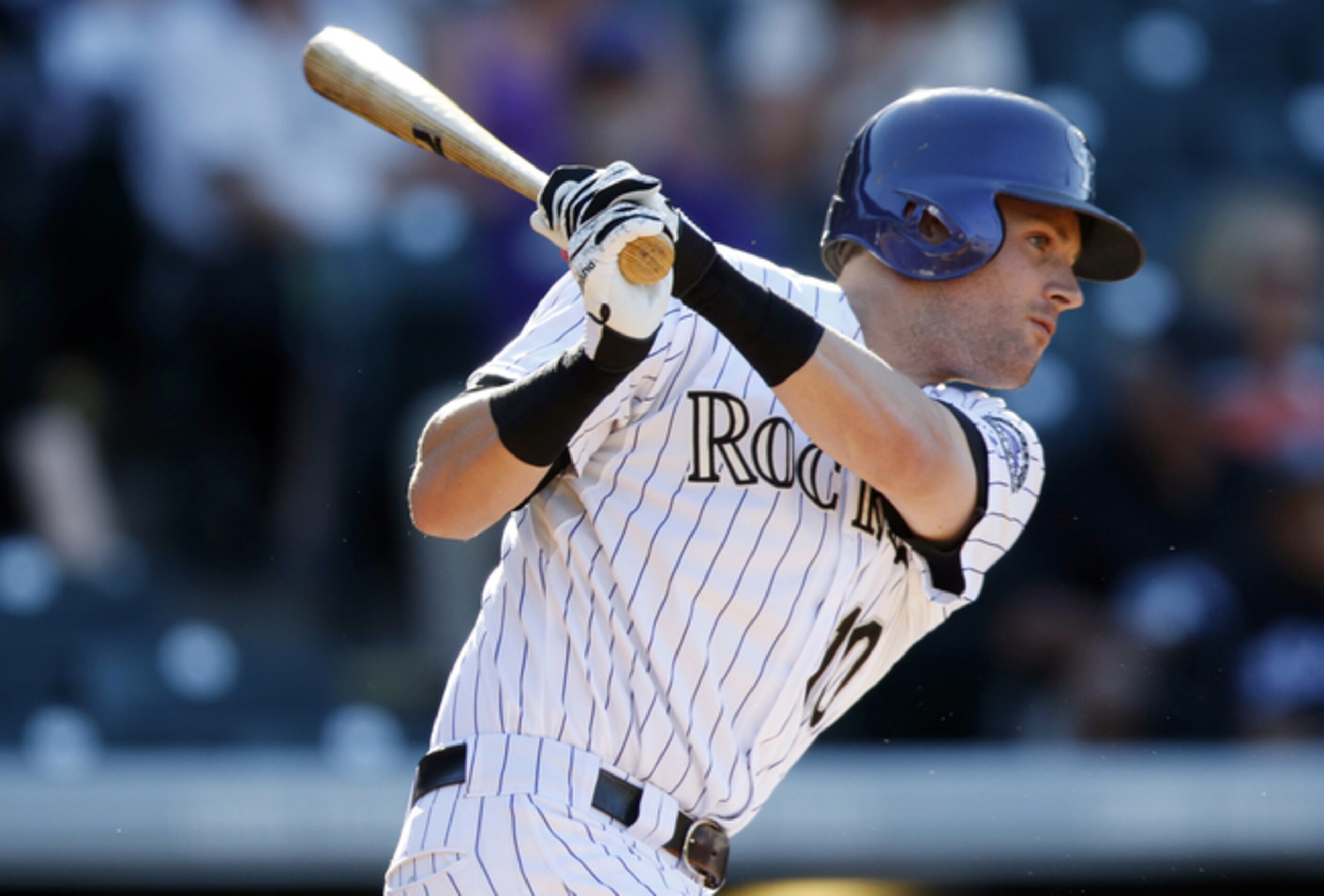
300. Ben Paulsen, 1B, Colorado Rockies
Nobody's going to mistake Paulsen for a truly special talent at first base anytime soon, as he doesn't do any one thing particularly well. He does, however, offer talents that are at least playable on offense and defense.
299. Nick Castellanos, 3B, Detroit Tigers
If there's something worth getting excited about where Castellanos is concerned, it's his potential to be a solid power hitter. But between his subpar hitting, baserunning and fielding, it's becoming harder to see him turning into a truly well-rounded third baseman.
298. Jose Reyes, SS, Colorado Rockies
It's been a rough year for Reyes, and all signs point to it being the beginning of the end for him. But even though his bat and glove are compromised, he still has enough offensive talent to qualify as a playable shortstop. Once you get past the top guys at the position, that's about the best you can ask for.
297. Justin Smoak, 1B, Toronto Blue Jays
By now, it's pretty clear Smoak isn't going to become the superstar he was once promised to become. Nonetheless, he has turned a corner in 2015. His bat isn't as full of holes as it usually is, and there's plenty to like about how he's been driving the ball.
296. David Freese, 3B, Los Angeles Angels
Freese still packs a solid bat for a third basemen, and there are indeed worse defenders than him at the position. But he also appears to be fading from the solid player he once was, so his time as one of the more dependable third basemen in the league is running short.
295. Wilmer Flores, SS, New York Mets
In addition to subpar defense, Flores' bat has plenty of holes and would be best served in a platoon role. But the 24-year-old does boast good power for the position, and that's a redeeming quality since there isn't much power to be found at short.
294. Mike Napoli, 1B, Texas Rangers
Thanks to solid power production and defense at first base, Napoli's 2015 season hasn't been the disaster it seemed to be while he was in Boston. But because serious question marks have sprung up around his bat, his status as a reliable everyday first baseman is very much in limbo.
293. Erick Aybar, SS, Los Angeles Angels
Aybar can still get it done on defense, and that's no small compliment given the demands of the position. But it sure looks like age has gotten hold of the 31-year-old's hitting and baserunning, rendering him a lesser player than he once was.
292. Anthony Gose, CF, Detroit Tigers
It's unclear whether Gose can be an everyday player, as it looks like the Tigers have the right idea sitting him against left-handers. In addition, his defense hasn't been good enough to force their hand. He does pack a solid bat for a center fielder, though, and 2015 is likely to be his worst defensive showing.
291. Brett Lawrie, 3B, Oakland Athletics
Lawrie's athleticism continues to make him a tantalizing player, and he looks even more so when he shows off his solid raw power. But he's still having issues putting all the pieces together, resulting in a player who's considerably less than the sum of his parts.
290. Asdrubal Cabrera, SS, Tampa Bay Rays
Cabrera offers little to get excited about in the athleticism department, and the offensive turnaround he's enjoyed this season doesn't pass the smell test. But the power in his bat hasn't run dry yet, and that ensures him at least one solid source of value.
289. Mark Canha, 1B, Oakland Athletics
One gets the sense that Canha has overachieved at the dish in his first season of regular action, particularly where his power is concerned. But his bat is at least playable, and it comes with strong baserunning and capable defense.
288. Pedro Alvarez, 1B, Pittsburgh Pirates
Due to his inconsistent hitting and downright poor defense at first base, it can sometimes be hard to justify Alvarez's playing time. It's a good thing, then, that he still offers more than enough power to earn his keep as a regular.
287. Nick Markakis, RF, Atlanta Braves
Markakis' power, speed and defense are not what they once were, rendering him a decidedly one-dimensional player. The one dimension he has is a good one, however, as he's turned himself into one of the more advanced hitters in the National League.
286. Freddy Galvis, SS, Philadelphia Phillies
Despite what are good numbers by his standards, Galvis is no threat with a bat. But he's shown he can do good work on the bases, and he's capable of being a better defender than the metrics show.
285. Juan Uribe, 3B, New York Mets
It's hard to have too much faith in what's left in Uribe's bat, but at least it's dying a slow death. And in the meantime, he can still pick it at the hot corner.
284. Brad Ziegler, RP, Arizona Diamondbacks
In a league full of hard throwers with all sorts of electric secondary pitches, Ziegler is hardly the sexiest reliever under the sun. But by aiming low, lower and lower still, he racks up plenty of ground balls and, in general, is one of the hardest relievers to hit.
283. Yovani Gallardo, SP, Texas Rangers
Because his strikeout rate continued its descent and his practice of largely avoiding the zone led to an 8.6 BB%, it was no surprise Gallardo's outings started getting shaky in the second half of the year. But it's also no surprise he was generally good at picking up ground balls and avoiding hard contact, and that'll happen when you combine just a bit of wildness with an increasingly diverse pitch mix.
282. Cesar Hernandez, 2B, PHI Phillies
Hernandez isn't exactly the most exciting heir for Chase Utley the Phillies could have found, but they also could have done worse. Though his power is nonexistent and his defense is subpar, he packs a capable bat and enough speed to do damage on the basepaths.
281. Denard Span, CF, WAS Nationals
After getting banged up so bad in 2015, exactly what Span is going to be capable of moving forward is a good question. But at the least, he can be expected to show off the same advanced approach that's made him one of the league's better leadoff hitters in recent years.
280. Joe Mauer, 1B, Minnesota Twins
Watch Mauer play, and you'll still see a hitter who can put on a clinic with the bat. But without the ability to make consistent hard contact, run the bases well or play particularly strong defense, that's about the extent of his impact these days.
279. Mark Lowe, RP, Toronto Blue Jays
Lowe's career seemed finished in 2013 and 2014, but he was born again in 2015. Whether he can maintain the mid-90s velocity that made it all possible is a question mark, but he's undeniably back on the map among his fellow relievers.
278. Francisco Rodriguez, RP, MIL Brewers
Rodriguez's peak years are pretty far in the past by now, but he's still kicking. For that, he can thank his transformation into more of a control-oriented pitcher, albeit one who still has a killer changeup.
277. Alex Wood, SP, Los Angeles Dodgers
It's hard not to wonder if there's a correlation between Wood's lower release point and his general loss of effectiveness, as he can't control the ball or miss bats as well as he used to. It's a good thing, then, that his general deceptiveness and sinker-happy attack are at least keeping the ground balls coming and doing just enough to get him through six innings on a regular basis.
276. Jace Peterson, 2B, Atlanta Braves
Peterson's first full season hasn't been pretty, but he's constructed a solid foundation to build upon. Though power will likely always elude him, the goods are there for him to turn into a solid hitter who provides additional value on the bases and on defense.
275-251: Alonso-Ramos
3 of 37
275. Yonder Alonso, 1B, San Diego Padres
Alonso is likely the least powerful everyday first baseman in the majors, which is a problem that stands out relative to the demands of the position. As such, it's a good thing he's a capable hitter and defender.
274. Austin Jackson, CF, Chicago Cubs
It's clear that Jackson's best days are behind him, as he's no longer the impact two-way player he once was. But with his bat still clinging to life and his defense still very much playable, he hasn't run out of time as a useful player.
273. Luis Valbuena, 3B, Houston Astros
There's nothing pretty about Valbuena's approach at the plate, which has been made worse in 2015 by somewhat frequent at-bats against left-handers. But he can hit for power, and he's continued to show solid defensive versatility.
272. Keone Kela, RP, Texas Rangers
Kela wasn't on many radars coming into the year, but he did more than enough to establish himself as one of the game's more talented setup men. Through his combination of solid control and an arsenal highlighted by a nasty curveball, he's made himself into a tough customer for opposing hitters late in games.
271. Jonathan Papelbon, RP, WAS Nationals
Papelbon is far from the overpowering reliever he used to be, but he's continuing to show he can get by on what he has left, thanks to his excellent control. He's still a good guy to have around, provided your superstar hitters run out their pop-ups.
270. Yunel Escobar, 3B, WAS Nationals
Escobar's offensive renaissance can't be written off completely, as he's done his part to become one of the most consistent hitters third base has to offer. But it's hard to count on a repeat performance, and his shortcomings in other aspects of the game highlight how you can only learn so much from batting average.
269. Ryan Goins, 2B, Toronto Blue Jays
Goins' offense is lacking, as he's not going to wow you with his hitting, power or baserunning. But his strong instincts serve him well on defense, where he is good enough.
268. Cameron Maybin, CF, Atlanta Braves
Maybin's second-half slump has squashed a solid comeback season and revealed that he's still a flawed player. But he at least reminded us that he can be a solid regular when he's healthy, as he's capable of good work at the plate and on the basepaths.
267. Andrew Cashner, SP, San Diego Padres
Cashner definitely has a big-time arm capable of generating a whole bunch of velocity, and he proved in 2015 that he can regularly go six innings as long as he can stay healthy. But how he can take the next step is a good question. His stuff moves so much that it's hard for him to have pinpoint command, and at the same time he's nothing special at missing bats and limiting hard contact.
266. Carlos Rodon, SP, Chicago White Sox
Though his control got better as 2015 moved along, Rodon still ended with the highest walk rate among starters with at least 100 innings. But on the bright side, his unstable control helps make his hard fastball and highly GIF-able slider even tougher to hit, as he missed bats and limited solid contact just fine. And with his 6'3", 235-pound frame, he should be able to eat innings despite his lack of efficiency.
265. Ben Revere, LF, Toronto Blue Jays
With Revere, you know what you're getting. He doesn't offer any power, and his defense is at best inconsistent. But because he can get on base and create chaos when there, he's a useful player.
264. Billy Burns, CF, Oakland Athletics
With the sustainability of his solid hitting in doubt, Burns has the look of a speed-only player. On the bright side, he has more than enough of it to burn on the basepaths and in the outfield to cut it as a passable regular.
263. Cody Allen, RP, Cleveland Indians
You can't tell from looking at his 2.99 ERA, but 2015 was Allen's best season to date. Though his improved control in the second half came with increased hittability, on the whole he showed he was capable of solid control of a dangerous arsenal, which indeed tends to be a good recipe for success.
262. Eugenio Suarez, SS, Cincinnati Reds
Suarez is limited by the fact he neither runs the bases nor plays defense as well as his fellow shortstops, with the latter being the bigger issue of the two. So, it's a good thing he packs a solid bat with a decent amount of power.
261. Glen Perkins, RP, Minnesota Twins
Perkins is continuing to get by on his control, which is as good or better than any other reliever's. And it's a good thing he has that control, as he has fairly hittable stuff that affords him few mistakes.
260. Seth Smith, OF, Seattle Mariners
Smith is up there with Andre Ethier among the more reliable left-handed platoon hitters in the league. And though he doesn't look the part, he's really not a bad defender.
259. Andre Ethier, OF, Los Angeles Dodgers
The 2015 season has been a reminder that, contrary to what 2014 suggested, Ethier's actually a pretty good hitter when he's used exclusively against right-handers. Just don't expect much more out of him, as he remains a rather one-dimensional platoon hitter.
258. Matt Holliday, LF, St. Louis Cardinals
Given how old and banged-up he is, it's fair to question what the 35-year-old Holliday can provide in the power and defense departments from here on out. But at least this much is guaranteed: He's going to hit.
257. Jacoby Ellsbury, CF, New York Yankees
Injuries have knocked Ellsbury down a few pegs in 2015, and his immediate future is much murkier as a result. But keep in mind that he was having a good year before the injuries came. So long as he can recover at least a little bit, he'll get back to being a solid player.
256. Carlos Santana, 1B, Cleveland Indians
Thanks to one of the most selective approaches you're going to find anywhere, Santana is still earning his keep as an OBP merchant. He also runs the bases well. But look past that, and all you see is suddenly subpar power and defense, making him a pedestrian overall product.
255. Trevor Rosenthal, RP, St. Louis Cardinals
Rosenthal's huge save totals the last two seasons overstate how good he really is. But even once you ignore those, you still see a pitcher who's no easy matchup, thanks to his electric stuff and his slightly wild style.
254. Brad Miller, SS, Seattle Mariners
It's hard to make heads or tails of where Miller fits defensively, as he's been pushed off shortstop and arguably should stay pushed off shortstop. But he does pack a solid bat with power, and those two things will ensure there's a role for him somewhere.
253. Jonathan Schoop, 2B, Baltimore Orioles
Schoop's ability to make an impact will continue to be limited as long as he has such a wild approach at the plate. But thanks to his powerful stick and strong defense, he's playable.
252. Josh Harrison, 3B/UTIL, Pittsburgh Pirates
Harrison has regressed mightily from his awesome 2014 season, and his thumb injury makes it easy to worry about his power in particular going forward. But he can still handle a bat well enough, and he brings good speed to the basepaths and versatility on defense.
251. A.J. Ramos, RP, Miami Marlins
Ramos is nothing if not unpredictable, but that's as much a strength as it is a weakness. Though he may not always know where the ball is going, it moves so much that his wildness only makes him tougher to hit.


250-226: Parra-Walker
4 of 37
250. Gerardo Parra, OF, Baltimore Orioles
Parra was at his best when he was an elite defender, but it looks like those days have passed him by. He still packs a solid bat, however, and has speed to use on the bases.
249. Jay Bruce, RF, Cincinnati Reds
Bruce still hasn't fully rebounded from his awful 2014, but we shouldn't overlook the parts of his game that have recovered. He has his power back and is a good, if not quite great, defender in right field.
248. Eduardo Rodriguez, SP, Boston Red Sox
With a free-and-easy delivery and an electric fastball, Rodriguez showed he's capable of sharp command and an ability to produce plenty of pop-ups and soft contact in general. His secondary pitches, however, were at best inconsistent. And though he was generally good, there were times when he lived too much in the middle of the zone and got shelled. He has an excellent arm, but his craft needs some honing.
247. Carter Capps, RP, Miami Marlins
Capps may be surprisingly easy to square up, but he's otherwise one of the scariest relievers in all of baseball. By combining both a delivery and raw stuff that explode at the hitter, he allows himself to achieve ridiculous heights of swing-and-miss dominance.
246. Drew Storen, RP, WAS Nationals
Storen's 2015 season definitely didn't end well, as Washington's midsummer trade for Jonathan Papelbon seemed to fry all his circuits. But on the whole, he was even better in 2015 than he was while he was racking up a 1.12 ERA in 2014. With good control of a strong arsenal, he showed he could both miss bats and jam hitters better than the average reliever.
245. Maikel Franco, 3B, Philadelphia Phillies
Some red flags cloud Franco's immediate future, most notably his (likely) unsustainable performance at the dish and subpar defense at third base. But at the least, his power should make him a solid regular at the hot corner.
244. Martin Prado, 3B, Miami Marlins
Prado doesn't rank among the more exciting players in the game, as nothing he does will make you say "wow." But with a solid bat and glove at his disposal, he carves out his share of value as a decent two-way player.
243. Mike Fiers, SP, Houston Astros
As he showcased in his August no-hitter, Fiers gets movement on his pitches that can make them more overpowering than the radar gun would lead one to believe—hence the solid whiff rate and strong ability to induce pop-ups. However, this movement is a double-edged sword. It can sometimes get away from Fiers, leading to walks and a whole bunch of hard contact. With his ups come downs.
242. Roberto Osuna, RP, Toronto Blue Jays
It's largely thanks to Osuna's emergence that all the hand-wringing over the state of Toronto's bullpen dissipated as 2015 moved along. With good control and electric stuff, he should be entrenched as one of the AL's most overpowering relievers for years to come.
241. Ken Giles, RP, Philadelphia Phillies
It wasn't quite as smooth a ride, but Giles showed in 2015 that his 2014 breakthrough was no fluke. He has one of the best fastball-slider combinations of any reliever, and he's going to miss enough bats with it to maintain his spot as one of the league's most dangerous firemen.
240. Kendrys Morales, DH, Kansas City Royals
After a season he'd like to forget in 2014, Morales has rediscovered his stroke in 2015 and retaken his place among the game's more reliable DHs. It's too bad that relative to his peers, he doesn't have much power to offer.
239. Prince Fielder, DH, Texas Rangers
It's to Fielder's credit that he's remade himself in the batter's box, becoming less reliant on power and more reliant on his abilities as a pure hitter. The downside is that the huge power he once had may now be permanently gone.
238. Yangervis Solarte, 3B, San Diego Padres
Solarte may have disappeared from your radar after his time in the spotlight early last season came to a close. But he's still out there, and he's still a solid two-way player thanks to a capable bat and versatile glove.
237. Alcides Escobar, SS, Kansas City Royals
Escobar's bat isn't much to look at, as he's neither an OBP nor a power merchant. But his baserunning and defense have remained assets, even as injury has seemingly slowed him.
236. Daniel Murphy, 2B, New York Mets
This hasn't been the easiest season for Murphy, whose bat and baserunning skills have taken hits while his defense has remained poor. He still has his redeeming qualities at the plate, however, as there's plenty to like about a guy who makes a lot of contact and can hit for some power.
235. Taylor Jungmann, SP, Milwaukee Brewers
Jungmann's inconsistent fastball command could continue to make it difficult for him to avoid walks, and it is indeed somewhat alarming that such a big guy (6'6", 220 lbs) could struggle to maintain his velocity within starts. But because Jungmann is at least armed with a beautiful curveball he trusted more with time, strikeouts and ground balls should continue to be there for him.
234. Joe Ross, SP, WAS Nationals
Ross' slider can give his older brother's (Tyson) a run for its money in the whiff department. But what's even better is that the younger Ross, 22, has smoother mechanics than his brother, 28, leading to superior control. That control isn't exactly pinpoint, however, and it's hard to say Ross will keep getting ground balls from his four-seamer and pop-ups from his slider.
233. Edinson Volquez, SP, Kansas City Royals
Give Volquez the ball, and he's going to give you at least six innings most times out. In a related story, it certainly helps that he's gotten a lot better at finding the zone in the last two years. But he still doesn't have pinpoint command of stuff that's not especially overpowering, leading to a modest ability to miss bats and a slight propensity for solid contact. So, six solid innings is all anyone can count on.
232. Jesse Chavez, SP, Oakland Athletics
Chavez makes the most of what he has, showing hitters three different fastballs that he uses to toy with the edges of the strike zone. For evidence for how befuddling he can be, see his elite pop-up rate. However, Chavez's batted-ball profile makes it clear he doesn't have the stuff to get away with mistakes, and his in-season drop-off in velocity highlights how he doesn't have a good build for the long haul.
231. Jason Castro, C, Houston Astros
Castro's breakthrough in 2013 now looks like an outlier, in large part because his swing has way too many holes in it. But on the bright side, his solid power and excellent framing at least make him playable.
230. Matt Wieters, C, Baltimore Orioles
Wieters has looked like a shell of his old self in the limited action he's seen this year, particularly in the power and defense departments. But don't write him off yet. The bat is still solid, and it's a stretch to call him a liability behind the dish.
229. Jose Iglesias, SS, Detroit Tigers
Iglesias was supposed to be a defensive wizard who wouldn't hit much. Instead, he's turned into a good hitter who can't quite put it all together on defense. Even still, he's earned a place as a decent everyday shortstop.
228. Ian Desmond, SS, WAS Nationals
Desmond has developed some serious issues with his hitting, and you never know what he's going to do on defense despite his impressive tools. But he's still going strong with his blend of power and speed, and that means he can still be decent even if he doesn't regain his forgotten talents.
227. Anthony DeSclafani, SP, Cincinnati Reds
It bodes well for DeSclafani that his K% and BB% both improved in the second half, and he has the overall Zone% and whiff-happy slider to back up both improvements. Now he must work on his hittability, as he surrendered too much hard contact despite getting his share of ground balls and pop-ups. He'll have to overcome that to allow his K/BB potential shine.
226. Taijuan Walker, SP, Seattle Mariners
There's no doubting Walker has an outstanding arm, as he spent 2015 showing off a mid-90s fastball and sharp splitter that helped him miss his share of bats. He also demonstrated an ability to find the zone consistently. Now all he needs to do is work on his command within the zone so he's not so easy to hit hard, and he'll be on his way.
225-201: Happ-Ramos
5 of 37
225. J.A. Happ, SP, Pittsburgh Pirates
With an average fastball in the low 90s and mediocre secondary pitches, suffice it to say Happ doesn't have overpowering stuff. But he did a good job of showing in 2015—particularly toward the end of the year—that strong command of a four-seam fastball with pretty good movement can get you just enough whiffs (10.0 SwStr% in Pittsburgh) and pop-ups to get you through five innings most nights.
224. Trevor Plouffe, 3B, Minnesota Twins
It's hard to get too excited about a guy like Plouffe, as he's not a particularly good hitter or defender. But he at least has a semi-dependable glove and pretty good power for a third baseman, making him a solid everyday option.
223. Hector Rondon, RP, Chicago Cubs
It's disappointing that Rondon doesn't miss more bats with his stuff, but that's the only complaint worth making about his style. With good control and a strong ability to jam hitters, he has what he needs to remain one of the league's better closers.
222. Zack Cozart, SS, Cincinnati Reds
It's doubtful Cozart will be able to pick up where he left off following his knee injury, but this year's improvements shouldn't be for naught. At worst, he should return as a solid power hitter who can also get it done on defense.
221. Marcus Semien, SS, Oakland Athletics
Semien's error-happy defense held him back quite a bit earlier in 2015. But now that the worst of that is behind him, it's become easier to see his future as a good-hitting shortstop with a passable glove.
220. Delino DeShields Jr., CF, Texas Rangers
DeShields has the skills to be a good player, as there's always something intriguing about a speedster with a solid batting eye. But if his rookie season has made anything clear, it's that he needs to work on pretty much everything else.
219. Andrew Heaney, SP, Los Angeles Angels
Heaney showed in 2015 that he's pretty good at keeping the ball down and avoiding walks, and his modest whiff rate undersells a changeup with killer fade and a curveball that was very hard to hit. He remained prone to loud contact, however, at least in part because he lacked the stamina to maintain his velocity within games. He's definitely on the right track, but more work is needed.
218. Didi Gregorius, SS, New York Yankees
Gregorius is going to be a darn good player if he builds on his second-half offensive surge, but that could be a sticking point. He still has the look of a below-average hitter with little power. But his defense is the real deal, and good defense at such a prime position is invaluable.
217. Mitch Moreland, 1B, Texas Rangers
Moreland is the kind of player who's hard to get excited about, but he's also one you'd be glad to have on your side. He can do plenty of damage against right-handed pitching and plays a solid first base.
216. Neil Walker, 2B, Pittsburgh Pirates
Walker doesn't bring much to the table in the baserunning and defensive departments, and that makes it tough for him to stand out relative to his peers. It's a good thing he still has a strong bat for the position, even if it's not as strong as it was in 2013 and 2014.
215. Howie Kendrick, 2B, Los Angeles Dodgers
Kendrick is still one of the more underrated pure hitters in baseball, as he has a little Derek Jeter in him in his aggressive approach and preference for the opposite field. But power has never really been his thing, and age seems to be taking a toll on the 32-year-old's baserunning and defense.
214. Yasiel Puig, RF, Los Angeles Dodgers
Puig's lost season hasn't been a total disaster: He's shown he can be good even when he's struggling. Add in the improved baserunning and his customary strong defense, and you still have a good player.
213. Salvador Perez, C, Kansas City Royals
Perez still offers good power and a consistent presence behind the plate, but his reality is now worse than his reputation. His bat has more holes than a piece of Swiss cheese, and he's really not the defensive wunderkind he's so often portrayed as.
212. Chris Heston, SP, San Francisco Giants
It's hard to ignore the correlation between the drop in Heston's arm slot and his inferior control and general ineffectiveness. But we also shouldn't overlook how Heston demonstrated earlier in the year that he could work the corners with his quietly nasty four-pitch mix, allowing him to miss bats at a solid rate and rack up ground balls. If he can do that over a full season, he's at least a good No. 3.
211. Danny Espinosa, 2B, WAS Nationals
Even though he's made some necessary improvements in 2015, it's still very much a stretch to call Espinosa a good hitter. It's therefore a good thing he offers quality power and baserunning and very good defense, which allow him to serve as a worthwhile part-timer.
210. Erasmo Ramirez, SP, Tampa Bay Rays
Ramirez is an undersized right-hander (5'11", 200 lbs) who came into 2015 with limited starting experience, so it's no surprise he didn't rack up high pitch counts or work deep into games. But after showing strong command of a diverse repertoire that includes a quietly unhittable changeup, it's also no wonder Ramirez showed he can miss bats and limit loud contact. He's a classic Rays hidden gem.
209. Jason Hammel, SP, Chicago Cubs
It's a testament to the quality of Hammel's slider and his control of it that he could make it his primary pitch and gain plenty of whiffs without issuing more walks. Nonetheless, Hammel remained easy to square up, posting one of the league's highest Hard% rates. That's part of the reason why his outings tended to be short. Hence why Hammel can only be as good as a solid mid-rotation type.
208. Jake Marisnick, CF, Houston Astros
Marisnick has proved himself to be a lousy hitter, and it's because of that it's unclear whether he'll be getting any more playing time in the future. But his power and speed allow him to salvage some dignity on offense, and his defense is legit.
207. Billy Hamilton, CF, Cincinnati Reds
Hamilton has been a lousy hitter for a year-and-a-half now, so there's not much point in hoping he can turn things around on that front. But because his amazing speed works so well on the basepaths and on defense, he still manages to be a solid regular.
206. Chris Coghlan, OF, Chicago Cubs
It's easy to lose sight of Coghlan next to all the Cubs' exciting young hitters, but he's pretty good in his own right. He's a solid platoon bat who can provide power and good baserunning.
205. Colby Rasmus, OF, Houston Astros
Don't go expecting Rasmus to hit .300 anytime soon, as that's just not going to happen with his approach. But his solid power, baserunning and defense more than make up for his wildness at the dish.
204. Alex Rodriguez, DH, New York Yankees
How consistent A-Rod is capable of being at the plate is as good a question as any, as he's definitely not the advanced hitter he once was. But if he can at least keep the power coming, he'll continue to make a fine DH.
203. Matt Kemp, RF, San Diego Padres
If you gave up on Kemp in the first half, you're not alone. But he's once again gotten hot and proved he still wields a dangerous bat. Now all he needs to work on is consistency—to better hide the fact he's an offense-only player.
202. Jimmy Nelson, SP, Milwaukee Brewers
Nelson diversified his repertoire in 2015, and one of the casualties of that was his control. He generally has an idea of what he's doing, but so much movement allowed the walks to come easily. The trade-off, however, was a steady diet of whiffs and ground balls that helped turn Nelson into a solid six-inning starter. The next step involves lowering his ERA below 4.00, and it's not hard to see that happening.
201. Wilson Ramos, C, WAS Nationals
There's not a whole lot to like about Ramos' approach at the plate, which needs all sorts of work. But he has better-than-expected pop in his bat and has been very helpful to both Nationals pitchers and Washington's defense as a whole. In short, he's better than you think.
200-176: Hicks-Taylor
6 of 37
200. Aaron Hicks, CF, Minnesota Twins
The Twins have a potential superstar center fielder on their hands in top prospect Byron Buxton, but Hicks has progressed enough this season to put them in a tight spot. Whereas he looked largely like a throwaway player before 2015, he now looks like a center fielder who can be solid on both sides of the ball.
199. Nick Ahmed, SS, Arizona Diamondbacks
Ahmed isn't much of an offensive threat now, nor is he expected to be in the future. But his defense is his calling card, and his first full season has proved it's legit. You're looking at one of the premiere defensive shortstops in the game.
198. Elvis Andrus, SS, Texas Rangers
Andrus' bat just isn't very good anymore. The foundation for good hitting is there, but he can't make it happen. Fortunately, he's at least still capable on the basepaths and on defense.
197. David Robertson, RP, Chicago White Sox
Before anyone asks, yes, Robertson pitched a lot better than his 3.41 ERA in 2015. He may be prone to hard contact, but his strong control and excellent swing-and-miss stuff still make him a tough matchup late in games.
196. Luis Severino, SP, New York Yankees
Severino showed that he can find the strike zone, but his 8.6 BB% and general location pattern highlight a lack of pinpoint command that stems from his funky delivery. The good news is his stuff plays in the majors. He has at least one strong whiff pitch in his changeup, and overall he proved very difficult to square up. Don't call him an ace just yet, but he is on his way to earning that distinction.
195. Yordano Ventura, SP, Kansas City Royals
Ventura took a step back from his rookie year in 2015, but he was better than his 4.08 ERA indicates. His control remains largely hit-or-miss, but with his stuff, it's no surprise he continued to miss bats and eventually began avoiding hard contact like he always deserved alongside his high ground-ball rate. It's become easy to doubt his future as a potential ace, but he's at least a solid mid-rotation guy.
194. Lance McCullers Jr., SP, Houston Astros
McCullers could be worse at finding the strike zone, but his high-effort delivery and the sheer electricity of his stuff could make it tough to improve on his 8.3 BB%. But because his stuff—specifically his curveball and changeup—is indeed so electric, whiffs and soft contact should keep coming naturally for him. If he does happen to find some extra command, watch out.
193. Gio Gonzalez, SP, WAS Nationals
Gonzalez is still unpredictable from a control perspective, which is indeed part of the reason why he struggles to consistently go deep into games. Fortunately, his wildness combined with his strong raw stuff is still making it easy for him to miss bats. And making his sinker his primary fastball helped result in by far the best ground-ball percentage of his career. He's volatile but better than his 3.79 ERA indicates.
192. James Shields, SP, San Diego Padres
With Shields' release point suddenly lower than it was a couple of years ago, his control, velocity and by extension his ability to avoid loud contact have taken steps back. But on the bright side, going with more of a varied pitch mix has helped make him an excellent swing-and-miss artist, and he's still good for at least six innings and 100 pitches when he takes the ball. He's not done as a useful pitcher.
191. Eddie Rosario, LF, Minnesota Twins
Rosario's approach at the plate needs a whole lot of work, but the other elements of his game are pluses. He combines power with speed and excellent defense, which make him a pretty good regular.
190. Blake Swihart, C, Boston Red Sox
Swihart looked out of his depth in the first few months of his major league career, but not anymore. He's looked more and more like a solid hitter seemingly by the day, and he's flashed potential on the basepaths and on defense. Looking forward, he's a guy to watch.
189. Adam Eaton, CF, Chicago White Sox
Eaton's defensive issues bar him from being a great two-way center fielder. But with a solid bat that's developing some power to go with his speed, he's at least a good offensive threat.
188. Stephen Piscotty, OF, St. Louis Cardinals
Excitement over Piscotty's rookie season should be tempered, as he hasn't looked quite as advanced as his numbers suggest. Even still, it's obvious the makings of a good hitter are there, so he's a guy to watch going forward.
187. Nick Hundley, C, Colorado Rockies
A solid player in the past, Hundley has been born again in Colorado. And while playing at Coors Field most certainly helped in 2015, he also helped himself by becoming a different (i.e. better) kind of hitter while making up for his poor framing with good blocking and throwing.
186. Jake Lamb, 3B, Arizona Diamondbacks
The big catch where Lamb is concerned is that he's been spared action against dangerous left-handers. But even accounting for that, he's teased himself to be a solid-hitting third baseman who also features a good glove.
185. Wade Miley, SP, Boston Red Sox
It's hard to get excited about Miley's 4.46 ERA, to be sure, but he pitched better than that throughout 2015. As usual, he kept the ball low and lower, helping to result in a strong ground-ball rate and a shortage of hard contact. There will continue to be times when he pays dearly for being just a little off, but for the most part he's going to provide six solid innings.
184. Kyle Gibson, SP, Minnesota Twins
It's not surprising Gibson couldn't maintain his 2.85 first-half ERA, but his 2015 season was still largely a success. By working almost exclusively just below the strike zone, he maintained his status as a quality ground-ball artist while also turning his slider and changeup into dependable whiff pitches. He's also owed props for being one of surprisingly few qualified starters who averaged 100 pitches per start.
183. Brett Anderson, SP, Los Angeles Dodgers
Anderson is at best a six-inning pitcher, at least in part because he's not at all overpowering. He's one of the worst in MLB at collecting strikeouts. But he at least looks healthy for the first time in years, and he's showing that you don't need stamina or whiffs to get by when you're elite at inducing ground balls and soft contact in general. Welcome him back to the land of the relevant.
182. Tony Watson, RP, Pittsburgh Pirates
Watson doesn't get a whole lot of attention, but he's been one of the better relievers in baseball for a couple of years now. Though he doesn't miss bats as well as some of the big relief arms, he makes control and contact management look elementary.
181. Carson Smith, RP, Seattle Mariners
He did it while flying under the radar, but the 2015 season saw Smith emerge as an elite late-inning reliever. With a nasty sinker-slider combination at his disposal, he showed he can handle control, whiffability and hittability notably better than the average reliever.
180. Ryan Zimmerman, 1B, WAS Nationals
Zimmerman has his limitations, chief among them his inability to stay healthy and his work-in-progress defense at first base. But the good news is that he's not done yet as a hitter, as he still has the goods to get on base and hit for power.
179. Chase Headley, 3B, New York Yankees
Headley's bat has developed some question marks, and these question marks could well become more pronounced with time. But his bat is still solid despite those, and the metrics are overstating the demise of his defense.
178. Jhonny Peralta, SS, St. Louis Cardinals
Peralta hasn't been the same as he was in 2014, when he was quietly one of the best two-way players in the National League. But his bat is still potent by the standards of the position, and his defensive instincts give him staying power with the glove.
177. Dexter Fowler, CF, Chicago Cubs
With Fowler, you know what you're getting at this point. His defense and baserunning are nothing special, but he makes them worthwhile by being a dependable OBP merchant with good power.
176. Michael A. Taylor, CF, WAS Nationals
Taylor has all sorts of issues to figure out with his approach to hitting. But because he can provide a solid mix of power and speed to go with good defense, he need not be an elite hitter to be a useful regular.
175-151: Gregerson-Reddick
7 of 37
175. Luke Gregerson, RP, Houston Astros
Gregerson's lack of electric stuff makes him easy to overlook, but he's not to be underestimated. With strong control of his sinker and slider, he's a lot better at overpowering hitters than you probably think.
174. Koji Uehara, RP, Boston Red Sox
There's no question that we saw Uehara at his very best in 2013, but he showed while he was healthy in 2015 that he's still capable of being one of the most dominant relievers in the game. With outstanding control of his deceptively nasty fastball-splitter combination, he makes many a hitter look silly.
173. Kyle Hendricks, SP, Chicago Cubs
It's easy to not be impressed by his 3.95 ERA, but Hendricks is in the "Better Than You Think" club. He keeps it simple with heavy use of his sinker and changeup, and he has every reason to. His sinker racks up ground balls, and his changeup is one of the best at inducing whiffs. He'll need to prove he can hold his velocity for a full season, but the pieces are there for a solid mid-rotation type.
172. Marco Estrada, SP, Toronto Blue Jays
Estrada's return to form may not look especially trustworthy, but you'd be surprised. The 2015 season saw him do a fine job working away from lefties and righties, allowing him to turn his diving changeup and rising four-seamer into a decent amount of whiffs and medium-depth fly balls. He's hardly an ace by any stretch, but he's turned himself back into a solid mid-rotation type.
171. Rougned Odor, 2B, Texas Rangers
Odor has been born again since his exile to the minor leagues earlier in the year, laying the foundation for a player who could be one of the game's best all-around second basemen. But there are still some improvements that he hast to make between here and there.
170. Kevin Pillar, CF, Toronto Blue Jays
Pillar's bat isn't much to look at, but he's still a viable regular thanks to his legs and defense—particularly the latter, which is truly special.
169. Sergio Romo, RP, San Francisco Giants
His 2.98 ERA may say otherwise, but 2015 was very much a renaissance season for Romo. His drop-off in effectiveness against left-handed batters can't be ignored, as he is indeed a reliever who needs the platoon advantage to succeed. But when a right-handed batter is in the box, he's about as dangerous as any reliever in MLB.
168. Caleb Joseph, C, Baltimore Orioles
Joseph is one of the league's more invisible catchers, at least in part because he shares space with Matt Wieters. But he's not to be underestimated, as he packs a decent bat with solid power and can play well-rounded defense behind the dish.
167. Brandon Phillips, 2B, Cincinnati Reds
It looked in 2014 like Phillips was done as a useful player, but this season has proved otherwise. Though he's still not the all-around dynamo that he used to be, he can still hit for average and further boost his value with his legs and glove.
166. Jackie Bradley Jr., OF, Boston Red Sox
Yes, Bradley is a tough player to figure out. But we can say he looks like a more dangerous hitter than he was a year ago. And after playing elite defense in center field, elite defense should be no problem in right field.
165. Raisel Iglesias, SP, Cincinnati Reds
Iglesias doesn't look like much based on his 4.15 ERA, but he's worth your attention. He has strong control of a diverse arsenal, allowing him to miss bats and avoid hard contact. This might seem too good to be true, but it's not hard to notice that everything he throws has life. One worry is that his mix of electric stuff and funky mechanics could bar him from the efficiency he needs to work deep into games.
164. Lance Lynn, SP, St. Louis Cardinals
Lynn took a step back in 2015, at least in part because a bout with release-point inconsistency made him even more prone to walks. It's therefore to his credit that he was still largely an effective pitcher, using his array of fastballs to miss bats and limit hard contact at passable rates. Provided his health doesn't betray him again, he should return to being a dependable source of six solid innings in 2016.
163. Hunter Pence, RF, San Francisco Giants
When he was healthy, Pence showed he can still hit, hit for power, run and play defense better than the average corner outfielder. All hope is not lost.
162. Carlos Gomez, CF, Houston Astros
Gomez was one of the best all-around players in the majors in 2013 and 2014, but not as much in 2015. His bat has developed some holes, and both his power and speed have seen better days. But his talents aren't dead yet, and he can still put them to good use.
161. Robinson Cano, 2B, Seattle Mariners
The elephant in the room with Cano this season has been the lingering illness that he said sapped his energy. It's a believable story, but it's hard to ignore that many of the symptoms of the decline he's experienced this year first popped up last season. His regression as an offensive and defensive force could just be him getting older.
160. Craig Kimbrel, RP, San Diego Padres
Kimbrel wasn't as overpowering in 2015 as he usually is, but nobody should be worried about him. Though he may not have the most nuanced approach to pitching, his stuff remained as electric (or even more electric) as ever.
159. Andrew Miller, RP, New York Yankees
We tend to scoff at big contracts for relievers, but the Yankees made a good call when they signed Miller for four years and $36 million. Now that he has some control to go with his excellent stuff, he's become one of the most unhittable relievers in the business.
158. Wade Davis, RP, Kansas City Royals
After emerging as the most dominant reliever in MLB in 2014, Davis took more steps back in 2015 than his sparkling 0.94 ERA would lead one to believe. But as he has solid control of a deadly arsenal, rest assured he's still one of the best there is.
157. Adam Lind, 1B, Milwaukee Brewers
Lind is a platoon first baseman all the way, so there's only so much of an impact he can make. But with a strong approach to hitting and dangerous power, he has a place among the game's more prominent platoon players.
156. R.A. Dickey, SP, Toronto Blue Jays
In keeping with more recent affairs, Dickey still bears little resemblance to the guy who dominated his way to a Cy Young Award in 2012. But that's not the same as being irrelevant. His elite pop-up rate and strong overall contact management can vouch his knuckleball is tough to square up. And with his fifth straight 200-inning season under his belt, he's still among the more reliable workhorses in MLB.
155. Jake Odorizzi, SP, Tampa Bay Rays
It's hard to project Odorizzi as a top-of-the-rotation type, but he's established himself as a solid No. 2/3-type starter. He keeps things simple with heavy usage of his four-seamer and splitter, and he works wonders by setting up low splitters with high fastballs and vice versa. He gets his share of whiffs and has proven to be tough to square up. It's hard to see what the next step is, but where he is now is just fine.
154. Adeiny Hechavarria, SS, Miami Marlins
Hechavarria still isn't much of a hitter, and his assorted weaknesses should ensure he stays that way. But there are worse hitters at the position, and few of them can play defense as well as Hechavarria can. He's become the defender he always could have been.
153. Devon Travis, 2B, Toronto Blue Jays
Travis' early-season excellence feels like ancient history by now, and his left-shoulder injury raises doubts as to whether he can be the same player going forward. But it's not hard to see his potential. Though he may not excel at any one thing, he has the look of a second baseman who could do everything well.
152. Mark Melancon, RP, Pittsburgh Pirates
Melancon has been one of the best relievers in baseball for a couple of years now, and he proved in 2015 that he didn't need his usual whiffability to keep getting the job done. With precise control of a nasty cutter and curveball, he's a tough puzzle for hitters to solve.
151. Josh Reddick, RF, Oakland Athletics
He's gone about it very quietly, but this has arguably been Reddick's best season. He's made some tweaks that have resulted in more consistency at the dish, and he still has solid power and a valuable glove and arm.
150-126: Pedroia-Schwarber
8 of 37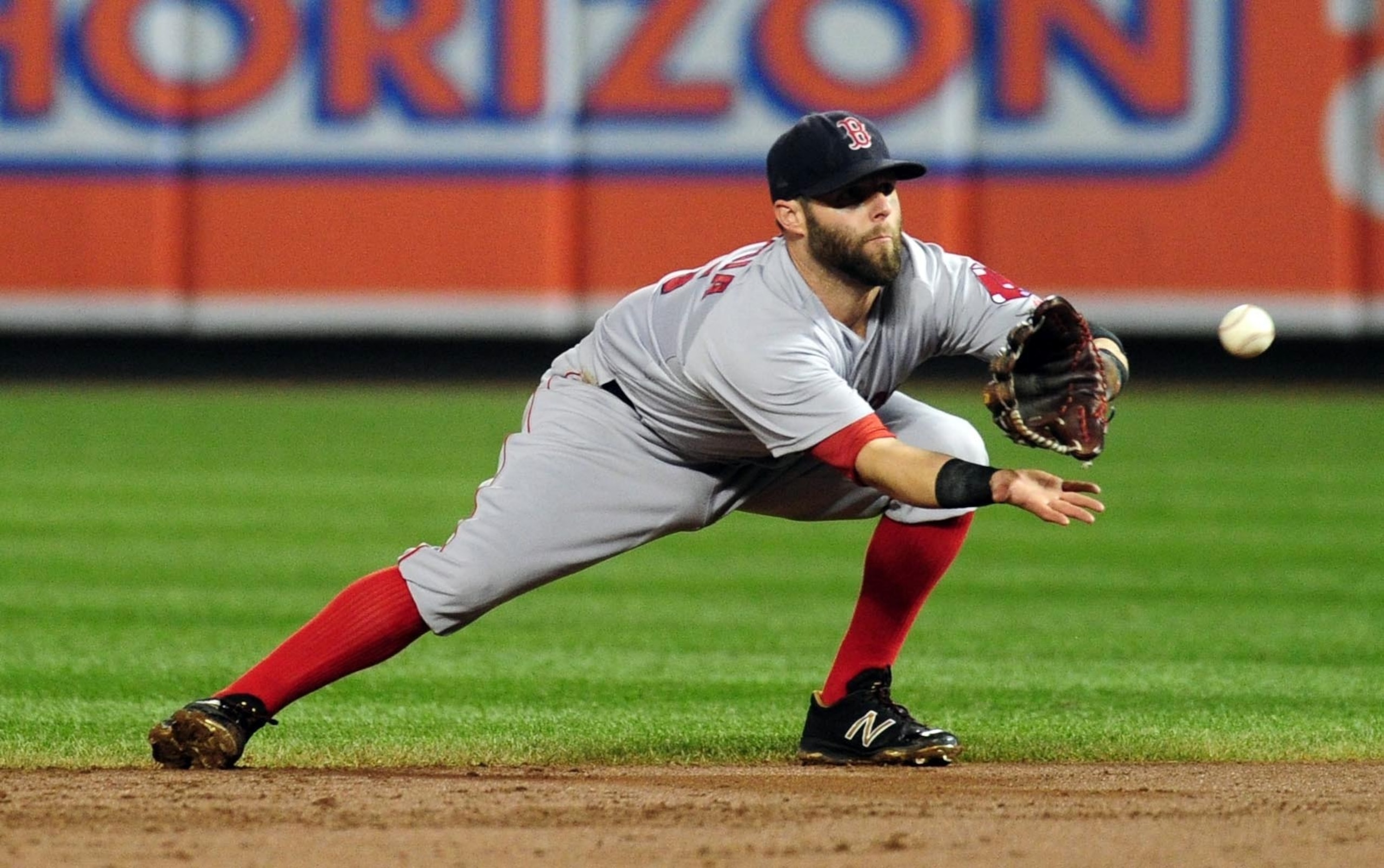
150. Dustin Pedroia, 2B, Boston Red Sox
All signs indicate that Pedroia is into the downswing of his career, as good health continues to elude him and he's now regressing on the basepaths and on defense. But he's not dead yet. He still has the goods to be a capable hitter, and his defense is far from being a lost cause.
149. Albert Pujols, 1B, Los Angeles Angels
Pujols was one of the season's great comeback stories for the majority of 2015, but the passing of time has revealed that his decline from true greatness is still ongoing. Most notably, he's fallen pretty far from his perch as the game's best hitter. But with plenty of power and a good glove still working for him, he hasn't fallen from the ranks of the league's top first basemen just yet.
148. Kole Calhoun, RF, Los Angeles Angels
Calhoun's bat comes with some holes that stand in the way of him turning into a consistent hitter. But thanks to solid power and a pretty good glove, he's an above-average regular.
147. Darren O'Day, RP, Baltimore Orioles
O'Day is another guy who's easy to overlook because of how he doesn't have electric stuff. But in combining a funky delivery with precise command of three different pitches, he can miss bats and limit hard contact about as well as any electric-armed reliever.
146. Bartolo Colon, SP, New York Mets
Baseball's ageless wonder just kept on keeping on in 2015. The 42-year-old Colon's fastball-heavy attack led to the lowest BB% and highest Zone% among qualified starters, and he was once again good for at least six innings pretty much every time he took the ball. The catch continues to be that his effectiveness comes and goes, but being a dependable innings-eater is a good enough talent on its own.
145. Jaime Garcia, SP, St. Louis Cardinals
The catch with Garcia is there's just no telling whether he's going to stay healthy for a full season. But in 2015, he reminded everyone what he's capable of when he is healthy. Though he strayed into hittable areas too often, he had no trouble pounding the zone and using his arsenal of moving pitches to collect ground balls and weak contact in bulk. Hence his 2.43 ERA and the revival of his career.
144. Clay Buchholz, SP, Boston Red Sox
Once again, Buchholz was incapable of making it through a season in one piece. But let's not overlook how dominant he was when healthy. He showed off excellent command of a more unpredictable pitch mix, resulting in a career-best whiff rate and strong contact management that revolved around ground balls. He was one of the AL's top pitchers while he was healthy and may be again.
143. Aaron Nola, SP, Philadelphia Phillies
Though Nola didn't arrive in The Show until July 21, he did enough to tease his potential as at least a solid mid-rotation guy. He proved he could work consistently down in the zone with his four-pitch mix, laying a foundation as a solid whiff artist and an avoider of hard contact. He's on his way to becoming one of the more crafty starters in the big leagues.
142. Derek Norris, C, San Diego Padres
Norris' bat has taken quite a few steps back after it helped put him in the All-Star Game last year, and his overall game looks worse as a result. But the power and (surprisingly) the defense are still there, and don't sleep on his baserunning.
141. Kolten Wong, 2B, St. Louis Cardinals
Wong has the ability to be one of the most well-rounded second basemen in the National League, if not all of baseball. But with his evident growing pains in the batter's box and on defense, it looks like it's not going to happen overnight.
140. Patrick Corbin, SP, AZ Diamondbacks
We'll have to trust that Corbin will be able to go deeper into games in 2016, but for now it's good enough that he made a successful return from Tommy John surgery. He showed an ability to work both sides of the plate, helping to result in a minuscule 4.8 BB%. And though he got tagged for some slightly above-average hard contact, Corbin once again missed bats at a solid rate. If you forgot about him, now's the time to remember him.
139. Mike Leake, SP, San Francisco Giants
Leake continued to do his usual thing in 2015. That unfortunately means being one of the worst in MLB at missing bats, but he makes up for that with excellent command—his 6.3 BB% actually undersells that talent—and an ability to get ground balls. He's not a dominant pitcher, but he remains one of the best bets for (at least) six solid innings MLB has to offer.
138. Michael Conforto, OF, New York Mets
Conforto hasn't been in the majors very long, and that makes it tricky to project his future. But with a bat that seems to contain plenty of thunder and a glove that's at least solid, he has the look of a pretty good regular.
137. Brett Gardner, LF, New York Yankees
Gardner's inability to stay consistent into the second half is frustrating, but that doesn't mean we're not talking about a good player. He's one of the tougher outs in the American League, and he packs a nice mix of power and speed.
136. Christian Yelich, LF, Miami Marlins
Yelich hasn't had the same kind of success he did in 2014, but he hasn't fallen off the face of the earth either. He's shown he can hit for average, run the bases well and play great defense, which make him one of the better all-around left fielders in the league.
135. David Ortiz, DH, Boston Red Sox
Compared to where he was a couple of years ago, Ortiz just isn't his old self when it comes to consistency at the plate. But that doesn't mean he's not still good, and the power is most definitely still there. Big Papi may be pushing 40, but you'd never know it from watching him hit.
134. Shin-Soo Choo, RF, Texas Rangers
Choo isn't the well-rounded player he was in his prime, but he deserves credit for rediscovering his approach at the plate. He's again one of the more advanced hitters you'll find in either league.
133. Nathan Eovaldi, SP, New York Yankees
Before his elbow acted up in early September, Eovaldi was finally starting to translate his tremendous raw talent into results. He started pairing his high-90s heat with his splitter more often in June, and that helped him become a more consistent whiff artist and a downright excellent contact manager. If he gets healthy and uses the same formula in 2016, he could emerge as a top-of-the-rotation type.
132. Welington Castillo, C, AZ Diamondbacks
If Castillo isn't on your radar, you better put him there. He's gone from being a castoff to being one of the most dangerous hitters the catching position has to offer—specifically in regard to his power, which looks legit from several different angles.
131. Justin Verlander, SP, Detroit Tigers
Verlander's absence early in the year makes it clear he's no longer invincible. But apart from that, 2015 looks like a success. In addition to regaining some of his lost velocity, he began working up in the zone with his heat rather than down the middle. Beyond cutting down his BB% to 6.0, this helped revive his whiff rate and his ability to avoid hard contact. He's not all the way back, but he's back enough.
130. Justin Turner, 3B, Los Angeles Dodgers
Turner was quietly one of the most dangerous players in the NL for a while there, but he's had such a tough second half that it's impossible not to worry about him getting back to that status. But even if he does decline across the board, he should still be a quality hitter who can play passable defense.
129. Charlie Blackmon, CF, Colorado Rockies
It's easy to write off Blackmon as a Coors Field product, and to an extent he is. But he's turned himself into a better hitter than the one he used to be, and he rounds out his value with solid power and productive baserunning.
128. Andrelton Simmons, SS, Atlanta Braves
Simmons' main talent is his defense, which is as brilliant as it's ever been. But don't overlook the changes he's made on the offensive side of things. Albeit at the expense of his power, he's turned himself into a much more consistent hitter.
127. Aroldis Chapman, RP, Cincinnati Reds
Without even average control, Chapman can't be called a perfect reliever. But it seems as long as he has his triple-digit heat, he doesn't need to have good control to be totally overwhelming for opposing hitters.
126. Kyle Schwarber, C, Chicago Cubs
The Schwarber love fest that had everyone enthralled has faded a bit, and rightfully so. The holes in his bat have been found, and his future defensive home is a question mark. But if nothing else, everyone can still love his very real potential as an elite power hitter.
125-101: Inciarte-Tulowitzki
9 of 37
125. Ender Inciarte, OF, AZ Diamondbacks
Inciarte is easy to overlook since not many of his skills show up on a stat sheet. But he can hit for average, run the bases well and play superb defense.
124. David Peralta, OF, AZ Diamondbacks
You're looking at one of the most underrated outfielders in MLB, in part because the Diamondbacks haven't been able to find an everyday role for him. But when Peralta does play, he has little trouble punishing right-handers, hitting for both average and power. At the least, he's an elite platoon player.
123. Gregory Polanco, RF, Pittsburgh Pirates
After getting off to a slow start in his first full season, Polanco has come around and shown he can cut it in the big leagues. Going forward, he looks like a solid everyday right fielder.
122. Mark Buehrle, SP, Toronto Blue Jays
Granted, it's possible that Buehrle will decide not to stick around for another season in 2016. But if he does, you can expect to see 200 solid innings built upon elite command and, by extension, strong contact management.
121. Jeff Samardzija, SP, Chicago White Sox
There's no denying that 2015 was a struggle for Samardzija, who just never really got on track. But given that the qualities that made him a good pitcher before remained largely intact, he should be able to make a strong comeback.
120. Michael Pineda, SP, New York Yankees
Because he has excellent stuff and an ability to throw strikes, there are days when Pineda looks like one of the best pitchers in either league. Now all he has to do is work on consistency, which continues to elude him thanks to his disappointing hittability and lack of durability.
119. Brock Holt, UTIL, Boston Red Sox
This will probably be the last year we ever call Holt an All-Star, but don't be too quick to write him off as a guy who was lucky to be there. He has a legit feel for hitting, enough athleticism and instincts to pass as a quality baserunner and is a useful defender at multiple positions. He's a poor man's Ben Zobrist.
118. Francisco Cervelli, C, Pittsburgh Pirates
Cervelli's first season as an everyday catcher has given him a chance to show what he can do with his bat and framing skills, which have both been excellent. But his modest power holds him back, as does his lack of defensive skills outside of his framing.
117. Yadier Molina, C, St. Louis Cardinals
With his bat declining like it is, Molina no longer has a firm place in the discussion of the best all-around catchers in MLB. But because that bat isn't totally dead yet and his defense is still superb, Molina is at least still extremely good.
116. Dellin Betances, RP, New York Yankees
Betances' 2015 season wasn't quite as strong as his 2014 campaign, but there's no question he maintained his place as one of the elite relievers in baseball. Even without particularly good control, his electric fastball-curveball combination once again proved plenty capable of mowing down opposing hitters.
115. Tyson Ross, SP, San Diego Padres
Ross certainly has his shortcomings, but he's still been one of the better pitchers in the National League for two-and-a-half seasons now. That just goes to show how well a guy can hide his flaws when he's tough to hit and even tougher to hit well.
114. Scott Kazmir, SP, Houston Astros
The 3.10 ERA that Kazmir finished with slightly oversells how good he was in 2015. But there's no mistaking that he was good and that he generally has been good for over two years now. He may not be the overpowering pitcher he once was, but he's getting by just fine on his much-improved control and contact management.
113. Randal Grichuk, OF, St. Louis Cardinals
If Grichuk has made anything clear, it's that he has the goods to be a source of major power. How far his abilities extend beyond that is something of a question for now, but his power alone will ensure he remains a productive player.
112. Odubel Herrera, CF, Philadelphia Phillies
It took some time for Herrera to get settled, but he's since taken off and shown what kind of player he can be. That's a guy who can hit well atop the order while providing extra value on the basepaths and on defense, which is pretty good.
111. Kevin Kiermaier, CF, Tampa Bay Rays
Kiermaier's game is all about his defense, which is good enough to a point where a case can be made for him as baseball's best defensive player. Because of that, it's easy to downplay his subpar offensive game.
110. Jung Ho Kang, SS, Pittsburgh Pirates
Kang's rookie season was a tremendous success for the most part, as he showed he could be an impact offensive player with a decent glove. But after the injury, don't be shocked if he's not quite the same player when he returns in 2016.
109. Zach Britton, RP, Baltimore Orioles
After establishing himself as a top-tier reliever in 2014, Britton took the next step in 2015. He improved his control and his whiffability, all while remaining a ground-ball magnet whom seemingly nobody can hit.
108. Jeurys Familia, RP, New York Mets
If Familia is not yet on your radar, he should be. He has some of the nastiest stuff of any reliever in the game and pretty good command of it to boot. As a result, he's turning into one of the game's most overpowering firemen.
107. Brian McCann, C, New York Yankees
McCann looked like he was done as a useful player in 2014, but he's rebounded well in 2015. By calming his approach, launching plenty of fly balls and holding on to some (not quite all) of his defensive skills, he's turned himself back into one of the game's top two-way catchers.
106. Stephen Vogt, C, Oakland Athletics
Vogt looked like a huge breakout star early in 2015, but it didn't take long for reality to set in after that. Even still, he's at least established himself as one of the better offensive threats the catching position has to offer.
105. Joc Pederson, CF, Los Angeles Dodgers
Pederson's star power was rising fast heading into the All-Star break, but his struggles since then have highlighted his limitations as a player. That being said, an athletic center fielder with awesome power and a strong ability to get on base is still a pretty good player.
104. Hisashi Iwakuma, SP, Seattle Mariners
Exactly how durable Iwakuma can be going forward is a good question after the events of the last two seasons. But his talent isn't more in doubt than it was before. He remains one of the best control artists in MLB, and it's largely thanks to that talent that he's generally good at avoiding damage.
103. Collin McHugh, SP, Houston Astros
McHugh has an unusual style of pitching, but he makes it work. He has good control despite throwing so many breaking balls, and it adds up to a decent swing-and-miss ability, very strong contact management and, by extension, quite a few innings.
102. Anthony Rendon, 2B/3B, WAS Nationals
Injuries have knocked down Rendon from baseball's ring of elite players, particularly where his power, baserunning and defense are concerned. But 2015 also hasn't been a total loss. Rendon has demonstrated that he's still an excellent pure hitter, and he should be able to regain at least some of his other talents as he puts this year's injury woes behind him.
101. Troy Tulowitzki, SS, Toronto Blue Jays
This hasn't been Tulowitzki's best year, and it's coming at a time when we can't help but wonder if his prime is behind him. But don't write him off yet. His bat is still potent by shortstop standards, and he can still make it at the position defensively.
100-76: Lucroy-Springer
10 of 37
100. Jonathan Lucroy, C, Milwaukee Brewers
It looks on the surface like Lucroy has suffered a tremendous fall from grace in 2015, and to some extent that is true. But he's still one of the more advanced hitters in the catcher ranks, and he's handled himself reasonably well behind the dish. Don't write him off as broken goods.
99. Wei-Yin Chen, SP, Baltimore Orioles
It's hard to get excited about a pitcher like Chen, as he's not going to dazzle you on any given night. But there is value in consistency, and his excellent command and solid contact management allow him to specialize in that.
98. Addison Russell, SS, Chicago Cubs
Russell has gone through some growing pains in his rookie season, but don't underestimate the foundation he's laid for the future. He's done enough to show he's on his way to becoming one of the game's best two-way shortstops.
97. Logan Forsythe, 2B, Tampa Bay Rays
This is a score that, admittedly, undersells how good Forsythe has been this season, but that's also the point: He's been a little too good relative to his talents. However, the Rays deserve some credit for spotting some underlying talent in Forsythe, and he deserves some, too, for rewarding them for it.
96. Brian Dozier, 2B, Minnesota Twins
Dozier was riding high for a while there, and there's still plenty to like about his power and what he can do on the basepaths and on defense. But his brutal second-half slump works to highlight his fatal flaws at the plate and are a threat to keep him permanently barred from star status going forward.
95. Lucas Duda, 1B, New York Mets
Duda can only be so much of an OBP merchant thanks to the various limitations he has, but his patience and tendency toward hard-hit balls in the air allow him to save face as a true power threat. He's also better than he gets credit for on defense.
94. Freddie Freeman, 1B, Atlanta Braves
You can be forgiven if Atlanta's overwhelming mediocrity has led you to forget about Freeman, but he's still there and still good. Though his wrist injury raises questions about his power, he's still an excellent pure hitter and a strong baserunner and defender to boot.
93. John Lackey, SP, St. Louis Cardinals
Lest you read too much into his 2.69 ERA, Lackey wasn't actually that overpowering in 2015. But if nothing else, he showed that when you combine strong control with a simple arsenal, you don't necessarily need to be overpowering to be efficient.
92. Masahiro Tanaka, SP, New York Yankees
Whether Tanaka can make it through a full season may be a good question, but there's little question he's a really talented pitcher when he is on the mound. Thanks to outstanding command and a strong ability to miss bats, he's liable to dazzle when he takes the ball.
91. Danny Salazar, SP, Cleveland Indians
Salazar's big flaw is that he's not overly difficult to square up, which keeps him short of being truly overpowering. But he's clearly establishing some control to go with his mid-90s heat and his awesome splitter, and he showed in 2015 that he can handle durability just fine.
90. Stephen Strasburg, SP, WAS Nationals
As you might have noticed and/or been told by the Internet, Strasburg isn't the ace he was supposed to become. But while that makes it easy to downplay what he can do, we shouldn't lose sight of the fact that a pitcher who can throw a ton of strikes and miss a ton of bats is a pretty good player.
89. Miguel Sano, DH, Minnesota Twins
Sano hasn't been in the big leagues that long, but he's done more than enough to show he's going to be a dangerous hitter. His plate discipline will ensure he's always working with a strong OBP, and we're only witnessing the beginning of what could be a huge power legacy.
88. Adam Jones, CF, Baltimore Orioles
Jones remains a dangerous power hitter who can play a solid center field, but the cracks of age are starting to show. He's had a harder time making his free-swinging approach work this season, and he's not the same source of value on the basepaths he once was.
87. Adrian Beltre, 3B, Texas Rangers
It's looking like Beltre's prime years are finally in the past, but don't even think about writing him off as a useful player. His bat still has some life left in it, and his defense at the hot corner is elite.
86. Evan Longoria, 3B, Tampa Bay Rays
Longoria isn't the same impact offensive and defensive player he was in his prime, and that's a darn shame. The bright side, however, is that a third baseman who can at least provide above-average offense and defense is still a pretty good player.
85. Miguel Montero, C, Chicago Cubs
Montero is past his peak by now, but one can argue that's allowed him to slip into underrated territory. He still packs a potent bat relative to other catchers and is one of the better receivers you're going to find anywhere in the game.
84. Shelby Miller, SP, Atlanta Braves
Let's put it this way: Miller is very likely the most talented 6-17 pitcher in recent memory. He may not be elite at any one thing, but he showed in 2015 that he can handle good control and solid whiffability while consistently jamming hitters with his fastball-heavy attack.
83. Michael Wacha, SP, St. Louis Cardinals
What Wacha essentially did in 2015 was live up to the promise he showed as a rookie back in 2013, developing into a fine control artist who can miss bats and manipulate contact well. Whether he can be a true No. 1 is a good question, but he's at least a strong No. 2 starter.
82. Ben Zobrist, 2B/UTIL, Kansas City Royals
Zobrist's time as the game's most underappreciated player may be coming to an end, but he's hardly finished as a useful player. He still boasts an excellent approach to hitting and the most versatile glove in the business, and his power and baserunning could be aging worse.
81. Jordan Zimmermann, SP, WAS Nationals
Zimmermann achieved a new level of excellence when he finally started missing bats in 2014, but that skill didn't last into 2015 and may have disappeared for good. It's a good thing, then, that he still has excellent control that gives him the efficiency to produce six solid innings on a regular basis.
80. Jose Fernandez, SP, Miami Marlins
All questions about his durability aside, Fernandez's return to action in 2015 made one thing clear enough: He's still an otherworldly talent. With his mix of control and deadly swing-and-miss stuff, he has the goods to be among the most dominant pitchers in a truly stacked National League.
79. Ryan Braun, RF, Milwaukee Brewers
We'll have to see how Braun recovers from back surgery, but he could still be a good player even if he regresses from his performance this year, which included the rediscovery of some of his old superstar form as a hitter and baserunner.
78. Joe Panik, 2B, San Francisco Giants
Maybe the biggest knock against Panik is that he's something of a boring player, as he doesn't offer big-time power or electric athleticism. But he's proved himself to be an excellent hitter, and that's going to ensure he maintains a place among the league's top second basemen.
77. Eric Hosmer, 1B, Kansas City Royals
The biggest knock against Hosmer is that he packs subpar power for a first baseman, which is a pretty big flaw relative to the demands of the position. It's a good thing he sports a quality bat and glove to go with good baserunning, allowing him to save par as an above-average regular.
76. George Springer, RF, Houston Astros
This is the second year in a row Springer's been held back by injuries, and the fractured wrist gives reason to worry about his power going forward. But he has still developed at the plate and has the power and speed to be one of the game's top all-around corner outfielders.
75-51: Duffy-Marte
11 of 37
75. Matt Duffy, 3B, San Francisco Giants
It may not be the best idea to take Duffy's big breakout at face value, as chances are he's not going to make such a huge impact on offense again. But he's shown he clearly knows how to handle a bat, and he rounds out his value with capable baserunning and defense. So even with pessimistic lenses on, he still looks like a darn fine third baseman.
74. Jose Abreu, 1B, Chicago White Sox
Abreu hasn't been the monstrous offensive presence he was in his Rookie of the Year season in 2014, and his subpar running and fielding make him a decidedly one-note player. But make no mistake: He's still the kind of hitter who would look right at home in the middle of any lineup.
73. Kenley Jansen, RP, Los Angeles Dodgers
There's nothing the least bit complicated about Jansen's style, as all he does is wind up and throw cutters pretty much right down the middle. But his cutter is such a nasty pitch that hitters can't do anything with it anyway, resulting in his status as one of the most well-rounded relievers in MLB.
72. DJ LeMahieu, 2B, Colorado Rockies
This undoubtedly comes off as too high a score for a player who's rarely mentioned as one of the game's top second basemen. But he always could (and still can) play a mean second base, and this season has seen him become a legitimately good hitter who's a quiet terror on the basepaths. That, folks, is a good player.
71. Carlos Martinez, SP, St. Louis Cardinals
It will indeed be interesting to see what Martinez will have after he comes back from his season-ending shoulder injury. But if it's anything like what he showed throughout 2015, National League hitters won't be happy. By missing plenty of bats and plenty of sweet spots, Martinez showed his stuff can play in a starting role.
70. Francisco Liriano, SP, Pittsburgh Pirates
Liriano may not be a lock to eat a whole bunch of innings, but he once again showed in 2015 that he doesn't offer hitters easy at-bats. Between his ability to miss bats and to consistently jam hitters, he remains one of the hardest pitchers to hit.
69. Garrett Richards, SP, Los Angeles Angels
Richards' 3.62 ERA makes it look like he wasn't nearly as nasty in 2015 as he was in his breakout 2014 season (2.61 ERA). But he really was. Though his control was still hit-or-miss, Richards once again proved he's capable of overpowering hitters and working deep into games on his pure stuff alone.
68. Alex Gordon, LF, Kansas City Royals
In light of his age (31) and injury, there's more than a fair chance Gordon has entered the decline phase of his career. But he still has a strong bat and glove, so don't expect him to quietly fade from the ranks of the elite.
67. Jose Quintana, SP, Chicago White Sox
Quintana is far from the most overpowering starter, but there are definitely reasons why he's emerged as such a dependable source of innings over the last few years. His excellent control allows him to be efficient with his pitches, and he's at least good enough at missing bats and managing contact.
66. Mike Moustakas, 3B, Kansas City Royals
Moustakas has played the role of two different hitters this season, and that makes it somewhat difficult to project his future. But there's no question that his bat inspires more confidence than it did before, and it still comes paired with a capable glove. He is indeed a changed player.
65. Kyle Seager, 3B, Seattle Mariners
Seager's defense has slipped a little, but his 2015 season has otherwise been another success. He's made some additional adjustments to turn into an even more well-rounded hitter, and he's kept the power coming at his usual rate.
64. Jose Altuve, 2B, Houston Astros
It's to Altuve's credit that his 2014 season looks like his peak rather than a total outlier. He hasn't been as dangerous at the plate or on the basepaths, but he's still very much a quality hitter who can wreak havoc on the bases and play a solid second base to boot.
63. Mark Teixeira, 1B, New York Yankees
Teixeira ultimately failed to prove that his problem with injuries is behind him, but 2015 is going into the books as a success. He turned back the clock a bit with his approach and power, all while playing a characteristically strong first base.
62. Curtis Granderson, RF, New York Mets
Granderson's subtle adjustments to his approach have made him a much tougher out at the plate, all without robbing him of his usual power. As a bonus, he's also a pretty good right fielder. This is what aging gracefully looks like.
61. Justin Upton, LF, San Diego Padres
It seems like Upton has become a guy who's easy to overlook, but he's still a very good player. He may not dazzle with his approach to hitting or his defense, but he's a good enough hitter with a fine combination of power and speed.
60. Russell Martin, C, Toronto Blue Jays
Martin hasn't turned out to be the all-around catcher dynamo the Blue Jays thought they were getting when they signed him. But as long as his bat is still potent and his defense is at least still respectable, there's a place for him among the game's more talented catchers.
59. Matt Carpenter, 3B, St. Louis Cardinals
This season has seen Carpenter return to his status as one of the NL's more dangerous hitters, as he's combined his awesome discipline with some serious power. As long as he can come anywhere close to repeating this performance in 2016, he'll remain one of the league's top third basemen.
58. Xander Bogaerts, SS, Boston Red Sox
After enduring a brutal 2014 season, Bogaerts has arrived in 2015. He's turned himself into one of the better offensive shortstops in baseball and at least a solid defender. All told, that makes him a legit two-way threat.
57. Dee Gordon, 2B, Miami Marlins
Gordon's 2014 breakout had some cracks in it, but he's largely taken care of those in 2015. Though he doesn't offer much in the way of power, he's turned himself into a legit high-average hitter who's a nightmare on the basepaths and an asset on defense.
56. Adrian Gonzalez, 1B, Los Angeles Dodgers
Gonzalez is still far from the player he was in his prime, but he's made enough adjustments to at least pass as an acceptable substitute. He still hits and does so for power, and he can still get it done around the bag.
55. Todd Frazier, 3B, Cincinnati Reds
It's easy to nitpick Frazier's hitting approach, but it's harder to downplay his status as one of the game's more talented third basemen. Thanks to elite power, good speed and a solid glove, he's one of the better two-way threats at the position.
54. Edwin Encarnacion, 1B, Toronto Blue Jays
Encarnacion is a one-note player, as he's only of use when he's in the batter's box. But when he's there, you're going to see a delightful combination of an advanced approach and some of the most explosive power in the majors.
53. Nelson Cruz, RF, Seattle Mariners
You can count yours truly among the many critics Cruz shut up this season. He has two years in a row of outstanding offensive production, and though he doesn't offer anything in the way of baserunning or defense, he doesn't need to in order to be a valuable player.
52. Jon Lester, SP, Chicago Cubs
Lester's first season with the Cubs wasn't as successful as he probably hoped. But make no mistake: It was still a success. By continuing to show off excellent control, miss bats and, by extension, rack up innings, he was once again one of the game's better starting pitchers.
51. Starling Marte, LF, Pittsburgh Pirates
Marte gets lost in the shuffle next to the big sluggers who play in the corners of the outfield, but he's been one of the best corner outfielders in the league for a couple of years now. And with outstanding defense and a well-rounded offensive game, that should continue.
50-26: Gonzalez-Bryant
12 of 37
50. Carlos Gonzalez, RF, Colorado Rockies
It's possible to criticize Gonzalez's approach to hitting and his diminished speed. But he can still hit for power, and the move to right field is paying off.
49. Yasmani Grandal, C, Los Angeles Dodgers
Grandal has flown a bit under the radar in 2015, but he's carved out a spot as one of the game's more well-rounded catchers. He can hit and do so for power on offense, and his world-class framing allows him to make the grade as a quality defender.
48. Johnny Cueto, SP, Kansas City Royals
Cueto had a tough time in Kansas City, as he all of a sudden struggled to do the things that made him so successful in Cincinnati. But we shouldn't ignore that, on the whole, he had another good season. He's still one of the league's top workhorses and control artists, and his ability to befuddle hitters shouldn't be written off just yet.
47. Brandon Crawford, SS, SF Giants
Crawford's second-half slump has revealed that his hitting hasn't advanced as much as he made it seem in the first half. But his power explosion looks legit, and his defense is once again a huge plus. You are looking at one of the league's top two-way shortstops.
46. Travis d'Arnaud, C, New York Mets
Maybe this comes off as a bit too high for a guy who has played relatively little in 2015, but d'Arnaud's sample size is one of the few things about his season worth complaining about. He's been one of the game's top two-way catchers on a game-to-game basis, and he's played in just enough contests for it to be believable. If he can manage a full season in 2016, watch out.
45. Noah Syndergaard, SP, New York Mets
Syndergaard may be a relative newcomer, but he looks like he very much belongs in the Mets' vaunted starting rotation. He showed in his rookie season that he can handle control, whiffability, hittability and durability, all of which should cement him as a top-of-the-rotation starter in the very near future.
44. Chris Archer, SP, Tampa Bay Rays
Archer still isn't the most polished pitcher under the sun, as his control can be hit-or-miss, and he tends to get stung when hitters make contact. But his control is at least on the right track, and there's no questioning he has some of the nastiest stuff you're going to find anywhere.
43. Jason Kipnis, 2B, Cleveland Indians
After a lost 2014, Kipnis has reminded everyone of how good he can be when he's healthy. Even if his power and speed don't return to peak levels, a healthy Kipnis is a very good hitter who can provide additional value on the basepaths and on defense.
42. Brandon Belt, 1B, San Francisco Giants
Because he's not one of the big boppers at first base, Belt is easy to overlook. But his bat is more potent than many seem to realize, and he pads his value by being a better baserunner and defender than the majority of first basemen. There are few more well-rounded at the position than he is.
41. Michael Brantley, LF, Cleveland Indians
Brantley hasn't put forth the same kind of MVP-level performance he did in 2014, but that's OK. He's still an elite hitter who brings some power and speed to the table. With a package like that, he's a darn good player.
40. J.D. Martinez, RF, Detroit Tigers
Martinez has shown that his big breakout in 2014 was no fluke. He's not the most well-rounded player, but he is decent in right field and provides all sorts of value at the dish.
39. Cole Hamels, SP, Texas Rangers
Hamels isn't the best pitcher in MLB. Far from it, in fact. But he remains both very good and very reliable. There's no aspect of the game he really struggles with, and he remains a consistent innings-eater.
38. Felix Hernandez, SP, Seattle Mariners
Hernandez wasn't nearly as dominant in 2015 as he was in 2014, and there are tangible reasons for that. But with good command of a nasty arsenal of pitches, he showed he can still overwhelm hitters and eat a whole bunch of innings.
37. Sonny Gray, SP, Oakland Athletics
With yet another strong season in 2015 following his big breakout in 2014, there's now no question that Gray is one of the best starting pitchers in baseball. He may not be the best whiff artist, but he's becoming one of the better control guys and is indeed one of the toughest pitchers to square up.
36. Mookie Betts, CF, Boston Red Sox
Betts hasn't shown a single standout skill in his first full season, but he's made it clear that he's the kind of player who's going to be good at everything. Between his hitting, power, baserunning and defense, you're looking at one of the game's top all-around center fielders.
35. Ian Kinsler, 2B, Detroit Tigers
There are some age-related cracks in Kinsler's game, but not enough to fear him falling from the ranks of the game's top second basemen. He might be the best defensive second baseman in the game, and he can still handle a bat as well as almost anyone.
34. Matt Harvey, SP, New York Mets
The narrative of Harvey's 2015 season grew uncomfortable toward the end of the year, but let's not lose sight of the fact that, for the most part, it was a huge success. He had little trouble reclaiming the control and sizzling stuff that made him a rising superstar in 2013, and these things should continue to serve him very well going forward.
33. Gerrit Cole, SP, Pittsburgh Pirates
It may be easier to square up Cole than his awesome raw stuff would have you believe, but that's really the only gripe to make about his pitching. The 2015 season saw him continue to grow as a control and swing-and-miss artist, and he proved he could rack up innings almost as well as anyone.
32. Jason Heyward, RF, St. Louis Cardinals
It's been another ho-hum season for Heyward. His power fails to impress, but he's turned himself into a solid hitter while continuing to provide loads of value on the basepaths and on defense.
31. Carlos Carrasco, SP, Cleveland Indians
He's easy to notice when he's flirting with no-hitters, but in general Carrasco is one of the best hidden gems in all of MLB. He's been one of the more overpowering pitchers in the game for over a year now, and his combination of strong command and electric stuff should allow that to continue.
30. Chris Davis, 1B, Baltimore Orioles
We may never see Davis have another year like he had in 2013, but he's come pretty close with his performance in 2015. His approach has been a lot tighter than it was last season, which has helped him make the most of his explosive raw power. But lest another confuse him for a one-note player, he also plays a pretty good first base.
29. Francisco Lindor, SS, Cleveland Indians
It's possible to downplay how good Lindor has been in his rookie season—but only to an extent. He's shown the potential to be an elite defensive shortstop who will also hit and speed around the bases, a recipe that could soon put him among baseball's elite players.
28. Miguel Cabrera, 1B, Detroit Tigers
There's little question that we're watching the downswing of Cabrera's career, which is most evident in how age and injuries have eroded his once-mighty power. But because that power is still pretty good and Cabrera is still arguably the game's best pure hitter, even the downswing of his career is a sight to behold.
27. Nolan Arenado, 3B, Colorado Rockies
Arenado is certainly not the most advanced hitter you're going to find among the third base ranks, but that's one of few gripes about his game. His awakening as a power hitter looks legit, and he offers solid baserunning and superb defense.
26. Kris Bryant, 3B, Chicago Cubs
Bryant may not be the perfect third baseman, but he's definitely made good on all the preseason hype. He's proven himself to be a special hitting talent with power that's trending toward elite and good enough speed to make him a truly well-rounded offensive threat.
25. David Price, SP, Toronto Blue Jays
13 of 37
Control
David Price finished 2015 with a slightly higher BB% than he's used to at 5.3, but he was really his same old self from a control perspective. He posted his best Zone% in years at 49.3, and by the end of the season he'd established a more consistent release point than he'd had in years. He put that to work pumping plenty of fastballs into the strike zone. And though he did tend to wade down the middle with those, it really doesn't come across in his zone profile how good he is at using different fastballs to give hitters different looks in different locations. Rest assured, he's still one of the best control artists around.
Whiffability
Price also continued to be a strong swing-and-miss pitcher, posting a 25.3 K% and an 11.9 SwStr%. Regaining the velocity he lost in 2014 allowed his fastballs to continue being strong swing-and-miss pitches, but his changeup is still his main meal ticket in the whiff department. It has some of the best arm-side run of any changeup in the majors. Between that and how well Price locates it, it's no wonder it's only earning him more whiffs as the years roll by. With that and his array of deadly fastballs, he should be able to keep the whiffs coming.
Hittability
This is where Price comes up a little short. Thanks to his array of fastballs and his ability to locate and change speeds, one thing he can do pretty well these days is induce pop-ups, as he finished 2015 with a solid 11.0 IFFB%. But he's long since stopped chasing ground balls, and his 17.0 Soft% and 27.7 Hard% reflect how he's just OK at keeping loud contact to a minimum.
Workhorse
In 2015, Price made it three out of five seasons in which he's pitched at least 220 innings. He also continued a pattern of pitching roughly seven innings and averaging easily over 100 pitches per start. He held his velocity fine throughout the year and pretty well within games, too. He may be on the wrong side of 30 now, but he's giving no indication that he's finished as a truly elite workhorse.
Total
There were times in 2013 and 2014 when Price looked human, but such instances were few and far between throughout 2015. He's one of the league's top workhorses and a darn effective one thanks to his elite control and strong ability to miss bats.
24. Jose Bautista, RF, Toronto Blue Jays
14 of 37
Stats current through Sept. 29
Hitting
With a .252 average and .375 OBP, Jose Bautista finds himself in line with his career performance. The latter number stands out, and that points to a patient, disciplined approach at the dish. And though he doesn't hold back on his swings—hence all the hard contact—he's surprisingly good at avoiding whiffs. That's how you become one of the best in MLB at balancing walks and strikeouts. But because Bautista is geared toward hitting the ball in the air to his pull side and ineffective against most low pitches, he's not exactly built to be a high-average hitter.
Power
Bautista aims to hit for power, and his 39 homers and .286 ISO show how well he does just that. When you get over 60 percent of your batted balls in the air with most of them going to your pull side, you're sure to run into lots of long balls. And when you have enough raw power to post high Hard% on fly balls (40.1) and line drives (62.9), you're sure to run into even more dingers. Bautista is nearly 35, so his power should be winding down, but he's shown no indication that this is going to happen.
Baserunning
Though Bautista prefers to jog around the bases, he is quietly a pretty good baserunner. He's stolen eight bags in 10 attempts this season and posted a 51 XBT%, which is in line with his career norm. His speed is another thing that should be declining, but that it's not is a testament to his fitness level. Maybe it's all the jogging in between sprints.
Defense
Bautista is generally rated as a solid defensive right fielder, but he has minus-two DRS and a minus-10.6 UZR this season. He doesn't have the most range despite his athleticism, and his arm hasn't been as much of a weapon as usual, thanks to a shoulder injury. But if recent events are any indication, that's no longer the case. Going forward, he'll at least have that working for him.
Total
Bautista has been lost in Josh Donaldson's shadow in Toronto, but rest assured he's still a great player. He has the perfect approach for getting on base and hitting for power, and he's a better athlete than most guys his age.
23. Carlos Correa, SS, Houston Astros
15 of 37
Stats current through Sept. 23
Hitting
Carlos Correa has showed off his exciting potential with a .278 average and .346 OBP, and for the most part, it's legit. He has an advanced approach that features reasonably consistent contact. And when he does make contact, he has little trouble using the whole field and hitting the ball hard. One red flag is that Correa hasn't proved to be much of a low-ball hitter. That's a problem in this day and age, and his height (6'4") won't make it an easy fix. But even with that, he looks like a really good hitter.
Power
This is where Correa has excelled, hitting 19 homers with a .226 ISO. He hasn't made hitting for power easy by knocking nearly 50 percent of his batted balls on the ground. But with a 40.7 Hard% rate on fly balls and a 56.5 Hard% rate on line drives, he's certainly made the most of what he's put in the air. He's also shown he can drive the ball to all fields. It all adds up to 25- to 30-homer potential, which is elite by shortstop standards.
Baserunning
Correa also offers speed to go with his power. He stole his share of bases in the minors and has kept going with 12 steals in 16 tries in the majors. That signals the potential for 20-25 steals in a full season, and Correa has also impressed with his aggressive baserunning, including a 50 XBT%. This gives him the makings of the top power/speed threat shortstop has to offer.
Defense
Correa's defense has not been great with minus-two DRS and a minus-3.9 UZR, but these numbers undersell what he's working with. He may not cover as much ground as the top shortstops in the league, but he has solid range thanks to his sheer size and a quick first step. Add pretty good hands and elite arm strength, and you have a guy who should be able to play good defense at short for a few years before he inevitably moves to the hot corner.
Total
It looks like the Astros chose wisely when they picked Correa No. 1 overall in 2012. He's already shown potential as the most dangerous all-around offensive threat at the position, and he has the goods to be a quality defender as well.
22. Jacob deGrom, SP, New York Mets
16 of 37
Control
Jacob deGrom showcased good control in 2014, but he was even better in 2015 in posting a 4.9 BB% and a 45.8 Zone%. It helped that he kept his release point up more consistently. And though he could have just tried to blow away hitters with his mid-90s heat, he went for more nuance by working away from lefties and righties. He also had little trouble playing with the corners with his changeup and slider. If this is what he can do after one year of experience, one shudders to think what he could do after two.
Whiffability
DeGrom got even better in this department as well, posting a 26.9 K% and 12.5 SwStr% that ranked him among the league's most unhittable pitchers. He continued to blow away hitters with his four-seamer, which is one of the better swing-and-miss fastballs in the league. But the real key to his whiffability is the reality that his four-seamer is liable to be just one of four swing-and-miss pitches he can feature on a good day. Assuming that remains the case, he'll continue to be a terror for opposing hitters.
Hittability
DeGrom is really more about overpowering hitters than he is about managing contact, but he can handle that aspect of the game as well. For the second straight year, he didn't post a standout GB% (44.2) or IFFB% (8.9) in 2015. But he did outpace the average starter with a 19.4 Soft% and 25.7 Hard%. These figures reflect how the sheer electricity of his stuff allows him to miss the sweet spot, even if he doesn't specialize in getting grounders or pop-ups in the process.
Workhorse
Though deGrom fell shy of 200 innings in 2015, it wasn't for lack of trying. He once again averaged over six innings and 100 pitches per start, and he maintained his velocity throughout the year and within games. Really, the only thing that got in the way of his crossing 200 innings was the Mets stepping in and limiting his workload toward the end. Assuming the training wheels come off in 2016, he should have no issues crossing the 200-inning threshold.
Total
DeGrom came out of nowhere in 2014, but he showed in 2015 that his rise to prominence was no fluke. With strong control and overwhelming stuff, he's established himself as one of the most dominant pitchers in the National League and indeed in all of baseball.
21. Corey Kluber, SP, Cleveland Indians
17 of 37
Control
The outstanding control Corey Kluber showed in 2014 managed to get a little better in 2015, as he finished with a 5.1 BB% and a 46.6 Zone%. He makes things slightly easy on himself with beautiful mechanics and by throwing about 80 percent fastballs, which he doesn't have too much trouble putting in the zone. And while one gripe is that he drifted over the middle a bit too much with his four-seamer and sinker throughout 2015, he went a long way toward making up for that with his command of his cutter and slider. Control isn't Kluber's best talent, but he's better at it than he gets credit for.
Whiffability
It may seem like Kluber wasn't quite as overpowering in 2015, but he was once again an elite whiff artist with a 27.7 K% and 12.9 SwStr%. He maintained good velocity at an average of 92.8 miles per hour and turned his four-seamer into a solid swing-and-miss pitch. But it's still all about his slider and cutter. The former has more lateral movement than any other starter's slider, and the latter might be the best swing-and-miss cutter there is. With those two pitches alone, he can have all the whiffs he wants.
Hittability
This is the department where Kluber actually regressed from 2014 to 2015. His slider and cutter didn't induce ground balls nearly as well as they drew whiffs, resulting in his GB% falling from 48.0 to 42.4. He also watched his IFFB% fall from 11.1 to 7.8 and his Soft% fall from 20.3 to 17.9. The lone bright side was that his Hard% stayed strong at 27.0, reflecting how it was still tough to barrel Kluber's pitches. But even with that being the case, it looked like his 2014 hittability was his ceiling, not his floor.
Workhorse
Kluber may have lost a smidge of effectiveness in 2015, but he kept right on eating innings. He easily crossed the 200-inning plateau, averaging over 100 pitches and just about seven innings per start. One slightly concerning thing, however, is that Kluber's velocity did the opposite of what it did in 2014 by peaking early and fading late. That might have been all his innings over the last two years catching up with him.
Total
It's saying something about how amazing Kluber was in 2014 that he could regress in 2015 and still be one of the game's best pitchers. Maybe this wasn't reflected in his record (8-16) or ERA (3.62), but he definitely continued to look the part of an ace by throwing strikes, missing bats and eating innings with the best of 'em.
20. Yoenis Cespedes, LF/CF, New York Mets
18 of 37
Stats current through Sept. 29
Hitting
With a .291 average and .326 OBP, Yoenis Cespedes is having his most consistent season since he was a rookie in 2012. His approach hasn't changed much, as he's still an aggressive swinger with a mediocre contact rate. But one notable improvement is that he's gone from being a merely good low-ball hitter to an excellent low-ball hitter, and he's no longer hitting everything up in the air. Instead, he's hitting more line drives and ground balls, all while sustaining his ability to make hard contact. Though still far from perfect, he has indeed improved as a hitter.
Power
In addition to becoming more consistent, Cespedes is more powerful. He's hit 35 homers and posted a .252 ISO. That seems backward in a year in which his batted balls in the air have dropped from nearly 70 percent to under 60 percent, but he's made more hard contact on both fly balls and line drives. With a 42.2 Hard% on the former and a 53.5 Hard% on the latter, this is his best season yet. It may well be that he's coming into his prime.
Baserunning
Though Cespedes is fast, his ability to steal bases is average at best. He's swiped only seven in 11 attempts this season, and that's in line with his usual numbers. But he's also posted a 54 XBT%, which is a career-best mark. And despite taking all those extra bases, he's still run into only two outs. He may just be rounding into form in this department as well.
Defense
Cespedes has been one of the best defensive left fielders in MLB for two years in a row now. He owns 14 DRS and a 18.5 UZR. He still seems a little uncertain in reading and tracking some fly balls, but his athleticism allows him to make up for that, and there's no arguing his throwing arm is one of the best in the business.
Total
Cespedes always had the skills to be one of the top players in the majors, and this is the year he's finally put it all together. He's been a reasonably consistent hitter with plenty of power, good speed and an excellent glove and arm.
19. Zack Greinke, SP, Los Angeles Dodgers
19 of 37
Control
For the second year in a row, Zack Greinke was an expert at avoiding walks with just a 4.7 BB%. Also for the second year in a row, he did it with a minuscule Zone% at just 40.6. This is a testament to an extremely simple yet extremely effective pattern of locations. He mainly conducted his business against left-handers by mixing fastballs away and changeups away. Against right-handers, it was fastballs away and sliders away. Simple though his approach was, Greinke gets all the credit in the world for rarely failing to execute it. That goes to show how he's totally in command when he pitches.
Whiffability
Not content to just be an elite control artist, Greinke is also a strong swing-and-miss pitcher, finishing 2015 with a 23.7 K% and a 12.0 SwStr%. The way in which he locates and changes speeds allows his low-90s fastball to play up as a swing-and-miss pitch, but there's no arguing his best weapons are his changeup and slider. There are certainly nastier changeups and sliders out there, but his process of sequencing and locating bought him plenty of whiffs when he put these pitches below the zone. That just goes to show, you need not have an especially electric arm to miss bats.
Hittability
Greinke was tough to hit in 2015, but he was also tough to hit well. His location patterns helped result in a strong GB% at 48.0, and his merely solid 9.3 IFFB% hides the fact that his four-seamer was a pretty reliable go-to pitch for pop-ups. And because he could get ground balls, it's no wonder Greinke outpaced the average pitcher both with his 21.7 Soft% and 26.6 Hard%. Odds are all this represents the best Greinke can be, but it's further evidence for how craftiness can be just as effective as power.
Workhorse
For the first time since his Cy Young season in 2009, Greinke topped 220 innings in making it to exactly 222.2. It's no surprise that he did, as you'd certainly expect a guy with such an absurdly low ERA (1.66) to average roughly seven innings and throw over 100 pitches per start. That's what efficiency and pretty consistent stuff can do for you. But knowing that Greinke will soon be 32 years old with a lot of miles on his arm, we should stop short of assuming he has more 220-plus inning seasons in him.
Total
Here's thinking we're not going to see Greinke post an ERA well south of 2.00 again, but that doesn't mean what he did in 2015 wasn't impressive. He was a good control artist who could miss bats and manipulate contact even before this season, and he took all those talents to another level.
18. Andrew McCutchen, CF, Pittsburgh Pirates
20 of 37
Hitting
Andrew McCutchen got off to a painful (not just figuratively) start, but he's since come around strong enough to be hitting .293 with a .405 OBP. His escalating whiff habit is a slight concern, but it's easily downplayed. He still has a disciplined approach that earns him plenty of free passes, and this season has seen him become a more consistent all-fields hitter who is still up there with Mike Trout among center field's hardest hitters. So all told, Cutch is still Cutch.
Power
McCutchen has once again been a quality power producer with 22 homers and a .197 ISO, and his underlying performance says this actually undersells his power. He's continued to hit over 60 percent of his batted balls in the air and with excellent Hard% rates on fly balls (51.5) and line drives (44.6). And yes, he can still whack the ball in any direction. He's not going to hit 30 homers, but you can keep betting your bottom dollar on around 25 with plenty of doubles on the side.
Baserunning
Unlike the two categories above, McCutchen hasn't been the same threat on the basepaths this season. He's stolen only 11 bags in 16 tries and has posted a pedestrian 29 XBT%. But we can cut him some slack. The knee injury he was dealing with earlier in the year gave him a good excuse to take it easy on the bases. And though that would be a tough thing for an older player to put behind him, he's only turning 29 in October. He should bounce back and be more like his usual self.
Defense
The metrics have tended to go back and forth on McCutchen's defense, and this is another down year. He's produced minus-eight DRS and a minus-4.4 UZR. And in their defense, there are times when he breaks slowly and comes up short on balls that should be catchable. But the metrics also exaggerate. McCutchen remains a smooth route-runner with good closing speed, and some more of the latter may be in store for him in 2016 if he does indeed return 100 percent healthy.
Total
It looked earlier in 2015 like McCutchen was in for a rough season, but that didn't last. His legs may not be what they once were, but he's still an outstanding hitter who should get back to providing good value away from the plate in 2016.
17. Giancarlo Stanton, RF, Miami Marlins
21 of 37
Stats current through Sept. 29
Hitting
A hand injury cut Giancarlo Stanton's season short, but he hit a solid .265 with a .346 OBP while he was healthy. He had a reasonably disciplined approach, but his strikeout rate increased from a career-best mark in 2014. He seemed like he geared his swing toward power, with more fly balls and a higher percentage of batted balls to his pull side. And he made hard contact a staggering 49.7 percent of the time. That combined with his discipline show he's still a capable hitter.
Power
Given that Stanton's hand injury took longer to heal than expected, there has to be some concern about his power going forward. But not that much. This is a guy who hit 27 homers with a .341 ISO in only 74 games. He did that by putting about 65 percent of his batted balls in the air, and he absolutely destroyed both his fly balls (54.8 Hard%) and line drives (81.6 Hard%). Hand injury or no hand injury, there's no question we're talking about one of the most lethal power threats in MLB.
Baserunning
After stealing a career-high 13 bags in 2014, Stanton had a shot to hit double digits again with four steals in six attempts in less than half a season. He moves pretty well for a 6'6", 240-pound behemoth. His 36 XBT% is less impressive, but it's also way off his solid 46 XBT% mark from 2014. Given that he's only 25, there's a chance he could return to a figure more like the latter in 2016.
Defense
Stanton's defense doesn't stand out when juxtaposed with what he can do at the plate, but he posted nine DRS and an 8.4 UZR, which are excellent figures over 74 games. Stanton's not fast, per se, but he has good range thanks to long strides and an ability to read and track fly balls. Add in an above-average arm and you have a very good defender.
Total
It's been a while since we last saw Stanton on the diamond, and that's a shame. But in the games he played, he showed he's still a solid hitter with monstrous power, good legs and an excellent glove. You can and should be looking forward to his return in 2016.
16. Anthony Rizzo, 1B, Chicago Cubs
22 of 37
Stats current through Sept. 21
Hitting
Anthony Rizzo's .286 average and .397 OBP look a lot like the numbers he put up last year, which is obviously a good thing. Mind you, all the beanballs he's graciously accepted have inflated his OBP. In addition, his slight pull tendency and fly-ball habit limit his ability to hit for average. Nonetheless, Rizzo gets credit for remaining reasonably disciplined despite getting little to hit, and he's one of the best at making consistent contact while also making regular hard contact. The HBPs mislead a little, but not too much. Rizzo knows how to hit.
Power
Behold another area where Rizzo is replicating his 2014 season, as his 30 dingers and .244 ISO look awfully familiar. This is partially because he makes the most of both his pull and fly-ball habits, as he has little trouble bombarding straightaway right field. And though the catch is that his Hard% on fly balls is only 36.1, he grants himself quite a bit of doubles power by also being a strong line-drive hitter with a 51.9 Hard% on the liners he hits. His power is quite well-rounded.
Baserunning
Rizzo made it clear earlier in the year that he wanted to be a complete player, so he's stolen some bases this season. Exactly 17 in 23 tries, in fact, which goes to show that he is more athletic than your typical first baseman. But we should stop short of calling him a truly great baserunner. His XBT% is an unspectacular 36, and he's once again made a few too many outs on the basepaths for comfort. Between his caught-stealings and his other outs on the basepaths, those add up to 16.
Defense
With seven DRS and a 1.0 UZR, the metrics are split on what to think of Rizzo's defense. But between the two, it's DRS that has the right idea. Rizzo has a good pair of hands that allow him to play a largely mistake-free first base while helping his fellow infielders with plenty of picks. He also has a bit more range than your typical first baseman, thanks to both quick reactions and his natural athleticism.
Total
Rizzo's big breakthrough in 2014 has proven to be the real deal. He's one of the most well-rounded hitters you're going to find in MLB and completes his value with solid work on the basepaths and on defense.
15. A.J. Pollock, CF Arizona Diamondbacks
23 of 37
Stats current through Sept. 28
Hitting
A.J. Pollock teased in an injury-marred 2014 that he could be a really good hitter, so we shouldn't be too surprised at his .317 average and .367 OBP. He certainly has the look of a good hitter, too, as he mixes solid discipline with consistent contact and strong bat control. He also hits the ball harder than most center fielders, making him almost a total threat. But we say "almost," of course, because he's not perfect. He has a heavy ground-ball habit that could soon get in his way, with a related story being that he's not the best low-ball hitter at a time when low pitches are all the rage.
Power
With 19 homers and a .187 ISO, Pollock is also showing he can be a good power hitter. These numbers look out of place on a guy who hits half his batted balls on the ground, but that's what good efficiency can do. On the balls he puts in the air, Pollock has a solid 40.1 Hard% on fly balls and an even better 46.1 Hard% on line drives. To boot, his power goes to all fields. So while his ground-ball habit does hold his power back, it hardly kills it.
Baserunning
In addition to power, Pollock also has speed. He's stolen 37 bases in 44 tries and has posted a solid 51 XBT% on the side. These numbers make him a complete threat on the basepaths. And yet, whether Pollock can be this productive again is a good question. He's definitely fast, but he's also been getting away with murder on his leads and breaks, catching pitchers napping at a likely unsustainable rate. The scouting report is probably going to get around, which will slow him down.
Defense
As impressive as Pollock's offensive game is, don't overlook his defense. The metrics once again love him, giving him 15 DRS and a 7.1 UZR. And it's fun to watch him rack up these numbers, as he gets quick breaks and makes the most of his speed with good routes. He's also one of those center fielders who is fearless when it comes time to catch the ball. He's not quite Kevin Kiermaier, but he's certainly a member of the tier below the Rays outfielder.
Total
Pollock has largely flown under the radar this season, but here's thinking he would be a super-duper star if he happened to be wearing, say, pinstripes or Dodgers blue. As a guy who can hit for average and power, steal bases and play a killer center field, you better believe he's become one of the game's best players.
14. Madison Bumgarner, SP, San Francisco Giants
24 of 37
Control
Madison Bumgarner joined the ranks of baseball's elite control pitchers in 2014, and he maintained his place among them by posting a 4.5 BB% in 2015. He did this despite only posting a modest 45.3 Zone%, but his walk rate is the more accurate picture of his control. There's a strong dynamic at work with his four-seamer and cutter, as he throws the former up in the zone and the latter down in the zone. That allows him to keep hitters guessing on where he's going in the zone, making opponents easy picks when he throws curves that dive out of the zone. He always had good stuff. Now he's legitimately crafty.
Whiffability
With more strikes tend to come more strikeouts, and Bumgarner is now excelling there, too. He finished 2015 with a career-best 26.9 K% and a career-best 12.5 SwStr%. His deceptive delivery allows his fastballs to play above his low-90s velocity, hence why his four-seamer and cutter are both such strong swing-and-miss pitches. His curveball is also a good whiff pitch, giving him three offerings to go to for whiffs. None of the three truly stands out more than the others, but they're all quite dangerous.
Hittability
Bumgarner's contact management used to revolve around his ability to induce ground balls, but he's strayed from that as he's become a power-oriented pitcher. The good news is that he's now a very reliable pop-up artist, as his 12.1 IFFB% makes it three years in a row he's had an IFFB% in double digits. And overall, his 19.2 Soft% and 27.8 Hard% gave him his best balance between soft and hard contact since 2011. He's no more immune to trouble than the next pitcher when he drifts over the middle, but he's established a pitching style that makes him very tough to square up.
Workhorse
After what he pulled in 2014, most of us were expecting Bumgarner's arm to fall off in 2015. Instead, he made it far past the 200-inning plateau, averaging 104 pitches and nearly seven innings per start along the way. And though his velocity peaked midway through the season, he was about as consistent within games as a pitcher can possibly be. There should be no doubt about it now: He's a beast.
Total
After having his big coming-out party in the 2014 postseason, Bumgarner was able to keep right on dominating throughout 2015. He was always good before, but the last two campaigns have seen him evolve into a dangerous power pitcher with elite control and a tireless arm.
13. Chris Sale, SP, Chicago White Sox
25 of 37
Control
Though he posted a career-low 46.1 Zone%, 2015 was probably Chris Sale's best season yet from a control standpoint. He was more consistent with his release point, helping to lead to a career-best 4.9 BB%. The one gripe we can make is that he's still not particularly fine with his fastball command. He tries to work the edges, but he mostly throws challenge fastballs over the middle. But by at least keeping the ball up, he sets up hitters for his changeup and slider, and he arguably has even better command of those than he does of his fastball.
Whiffability
Meanwhile, Sale just keeps getting more unhittable. He finished 2015 with a 32.1 K% and an elite 14.6 SwStr%, both career bests by plenty. He keeps adding more velocity to his fastball, which has also always had an extreme amount of natural movement. It's no wonder it's now the best swing-and-miss fastball thrown by any starter. Not to be outdone, his changeup and slider are also outstanding swing-and-miss pitches; particularly the former, which is among the best of the best. His slider doesn't quite measure up, but it's also up there. That gives Sale three elite swing-and-miss pitches, which isn't fair.
Hittability
From one perspective, Sale's contact management is a mixed bag. His capacity to induce ground balls and/or pop-ups is at best inconsistent, as was the case in 2015 with a 42.6 GB% and 9.8 IFFB%. But one thing that's been certain the last two years is that he's not liable to be hit hard. With a 21.0 Soft% and 25.3 Hard%, Sale was among the best in both departments in 2015. That goes to show that when you have stuff as electric as his, you need not get ground balls or pop-ups to frequently jam hitters.
Workhorse
By crossing 200 innings in 2015, Sale made it two out of three years in which he's done so. And it's no wonder, as he's generally good for over 100 pitches and nearly seven innings when he takes the ball. But one catch with Sale is that he has a hard time making it through a season without at least one minor injury. Another is that his velocity is still prone to ups and downs both on a month-to-month basis and even on an inning-to-inning basis.
Total
Sale's 3.41 ERA makes it look like he took a major step back in 2015, but he didn't. With strong command of a power arsenal, he continued to overwhelm hitters and gobble up innings with the best of 'em. He remains one of the few true aces in MLB.
12. Lorenzo Cain, CF, Kansas City Royals
26 of 37
Stats current through Sept. 28
Hitting
After taking a big step forward in 2014, Lorenzo Cain's .308 average and .362 OBP highlight how he's progressed further in 2015. He's still an aggressive swinger, but he's become more consistent at making contact. And whereas he relied almost totally on bat control before, he now excels in that area and features a consistent ability to barrel the ball. He still has a hole up in the zone, but overall he's looked the part of a much more confident hitter. And though he may be 29, he's clearly a late-bloomer who just now is coming into his own.
Power
Cain has also emerged as a power source, hitting 16 homers with a .171 ISO. And this hasn't happened by accident. He's gone from being a ground-ball hitter to now hitting about 55 percent of his batted balls in the air, and he's done so with strong efficiency. His Hard% rates on fly balls (43.2) and line drives (46.2) are both north of 40. The downside is that his power doesn't extend far to the right of center field, but that's really the only gripe. Cain's power may be short of elite, but it's solid.
Baserunning
Cain now has power, but he already had speed. After stealing 28 bags in 33 tries last year, he's stolen 28 bags in 34 tries in 2015. Not content to stop there, he's upped his XBT% from 55 to a downright absurd 68. That makes it two years in a row that he's been one of the most active baserunners in MLB. And though you normally worry about guys slowing down as they near 30, that his major league career is still relatively young should allow him to keep going.
Defense
Defense, of course, is another thing we already knew Cain could handle. The metrics have been fans of his for several years now, and the pattern is holding to the tune of 18 DRS and an 11.4 UZR. He often doesn't look like he moves very fast, but his long strides combine with quick jumps and efficient routes to allow him to cover a ton of ground. To boot, he has a solid arm. He's not in Kevin Kiermaier's league, but Cain may well be the best defensive center fielder outside of him.
Total
This time last year, it was easy to see Cain as a speed-and-defense guy who lucked into a .300 average. But not anymore. He's continued to mature as a hitter while maintaining excellent baserunning and defensive production. Now there's no mistaking it: He's one of the very best players in the game.
11. Dallas Keuchel, SP, Houston Astros
27 of 37
Control
Here's something that, by all rights, should not have happened: Dallas Keuchel posted a strong 5.6 BB% in 2015 despite visiting the strike zone less often than any other AL pitcher with a 38.0 Zone%. The left-hander avoids walks by simply being one of the best in the business at merely flirting with the strike zone, enticing umpires and hitters alike with a barrage of arm-side sinkers and glove-side cutters, as well as sliders and changeups that fade in and out of the strike zone. It's not the kind of approach you want to teach little leaguers, but it might be the most fun to watch when it's working.
Whiffability
Because Keuchel's fastball averages just short of 90 miles per hour, you wouldn't peg him as a whiff artist. But it's no accident that he finished with a 23.7 K% and 10.3 SwStr%. He may have a smoke-and-mirrors approach, but his slider and changeup are both capable swing-and-miss pitches. His slider has huge two-plane break, and his changeup benefits from strong arm-side run and about a 10 mph velocity differential from his fastball. Thanks to these two pitches, he can get whiffs with little trouble.
Hittability
Without question, you're looking at the best contact manager in MLB. Thanks to his ultra-ground-bally sinker, Keuchel wrapped 2015 as an elite ground-ball artist with a 61.7 GB%. Thanks in part to his cutter, he was also a top pop-up artist with a 12.0 IFFB%. Elsewhere, his 25.2 Soft% was the best in the AL, and his 21.2 Hard% was the best in either league. When you don't give hitters anything to hit, well, surprise! They don't hit.
Workhorse
After making it to 200 innings in 2014, Keuchel made it past 230 innings in 2015, a testament to both his extreme efficiency and the way in which he maintained his stuff (such as it is) on an inning-by-inning basis. And though he's relatively new to this whole innings-eating thing, it reflects very well on him that this is two years in a row now that he's averaged roughly seven innings and over 100 pitches per start.
Total
Keuchel is far from the most overpowering pitcher in terms of stuff, but you'd never know it from looking at what he can do. The way in which he mixes and matches his stuff buys him plenty of whiffs and an absurd amount of soft contact, allowing him to dominate hitters as well as any power pitcher.
10. Joey Votto, 1B, Cincinnati Reds
28 of 37
Stats current through Sept. 21
Hitting
Oh, the beauty of Joey Votto with healthy legs. That's what we're being reminded of now, as he hits .313 with an absurd .462 OBP. The beating heart of those numbers is, as always, an approach that combines a freakishly acute eye for the strike zone and very few swings and misses. Votto is also maintaining his strong bat control, but the real difference this year is that a pair of healthy legs is allowing him to hit the ball a lot harder. Few first basemen are making better contact than he is. All in all, he's back.
Power
Because Votto does indeed have his legs under him again, it's no surprise to see his power has rebounded, to the tune of 28 homers and a .242 ISO. The main thing standing in the way of his power is that he doesn't sell out for it, hitting fewer than 60 percent of his batted balls in the air and posting a modest 44.6 Hard% rate on line drives. But he doesn't miss when he does want to drive the ball, posting a Hard% rate of 56.4 on fly balls and using the whole field for his attack. In this, too, he's back.
Baserunning
Votto's best baserunning days appear to be behind him, as he owns just a 24 XBT% and has run into a few too many outs on the basepaths. But with 11 steals in 14 tries, he's showing that he's still perfectly willing to steal a base if a pitcher sleeps on him. This will be a hard performance to repeat now that he's 32 years old, but it's yet another example of what he can do with healthy legs.
Defense
The metrics have long considered Votto a strong defender and continue to this year with five DRS and a 5.2 UZR. His status as one of the league's leading scoop artists seemingly has more to do with his instincts and anticipation than the quality of his hands, but those are still good talents to have. His legs' being healthy has also allowed him to regain some range away from the bag, allowing him to be pretty much the whole defensive package once again.
Total
Votto's injury-marred 2014 robbed baseball of one of its great players and made it easy to wonder if he would ever return. But return he has. Votto has shown this year that he's still arguably the game's best pure hitter. He's also shown he can still hit for power, run the bases and play defense with the best of 'em at first base.
9. Max Scherzer, SP, Washington Nationals
29 of 37
Control
Max Scherzer has come an awful long way from the guy who never seemed to know where the ball was going. He finished 2015 with a superb 3.8 BB% and an equally superb 50.4 Zone%, making him one of the league's elite strike-throwers. To boot, there was a method to his madness. Scherzer took to throwing his heater almost exclusively up in the zone, making it easier to change both speeds and eye levels with low sliders and changeups. So beyond being one of the best at pounding the zone, he was also one of the best at getting hitters to expand the zone. Like we said, he's come a long way.
Whiffability
Scherzer didn't just improve his walk rate with his new approach. He also boosted his K% to 30.7 and his SwStr% to an absurd 15.3, figures that put him in the company of Chris Sale and Clayton Kershaw. Of course, it also helped that he added some velocity to his fastball. That and his newfound preference for throwing them up in the zone made his fastball one of the most unhittable in the league. Add in a slider that was already an elite swing-and-miss pitch and a changeup and curveball that are pretty good in their own right, and you get a pitcher who basically throws nothing but swing-and-miss pitches.
Hittability
This is where things get tricky regarding what Scherzer did in 2015, as it was truly a tale of two seasons for his contact management. In the first half, he overwhelmed hitters to the tune of a 14.4 IFFB% while racking up a 22.9 Soft% and 26.8 Hard%. But in the second half, his IFFB% fell to 10.4, his Soft% fell to 18.2 and his Hard% rose to 29.0. He still did well overall, of course, but there's no ignoring that what happened in the second half is more reflective of Scherzer's career track record. He's not terrible at it, but managing contact generally isn't one of his strengths.
Workhorse
Scherzer used to struggle to make it to 200 innings, but 2015 marked his third straight year of at least 214 innings. He's now pretty much a sure thing to go darn close to seven innings and throw over 100 pitches when he takes the ball, and not just because he's more efficient with his pitches. Taking a page out of his old rotation mate Justin Verlander's book, Scherzer threw harder as games progressed in 2015. He's a beast.
Total
Scherzer may have become more hittable as 2015 progressed, but it's hard not to be impressed when focusing on the whole. He assaulted the strike zone like he never had before, and in the process he missed bats and gobbled up innings like never before. He's more of a true ace now than he was even when he signed his $210 million contract.
8. Jake Arrieta, SP, Chicago Cubs
30 of 37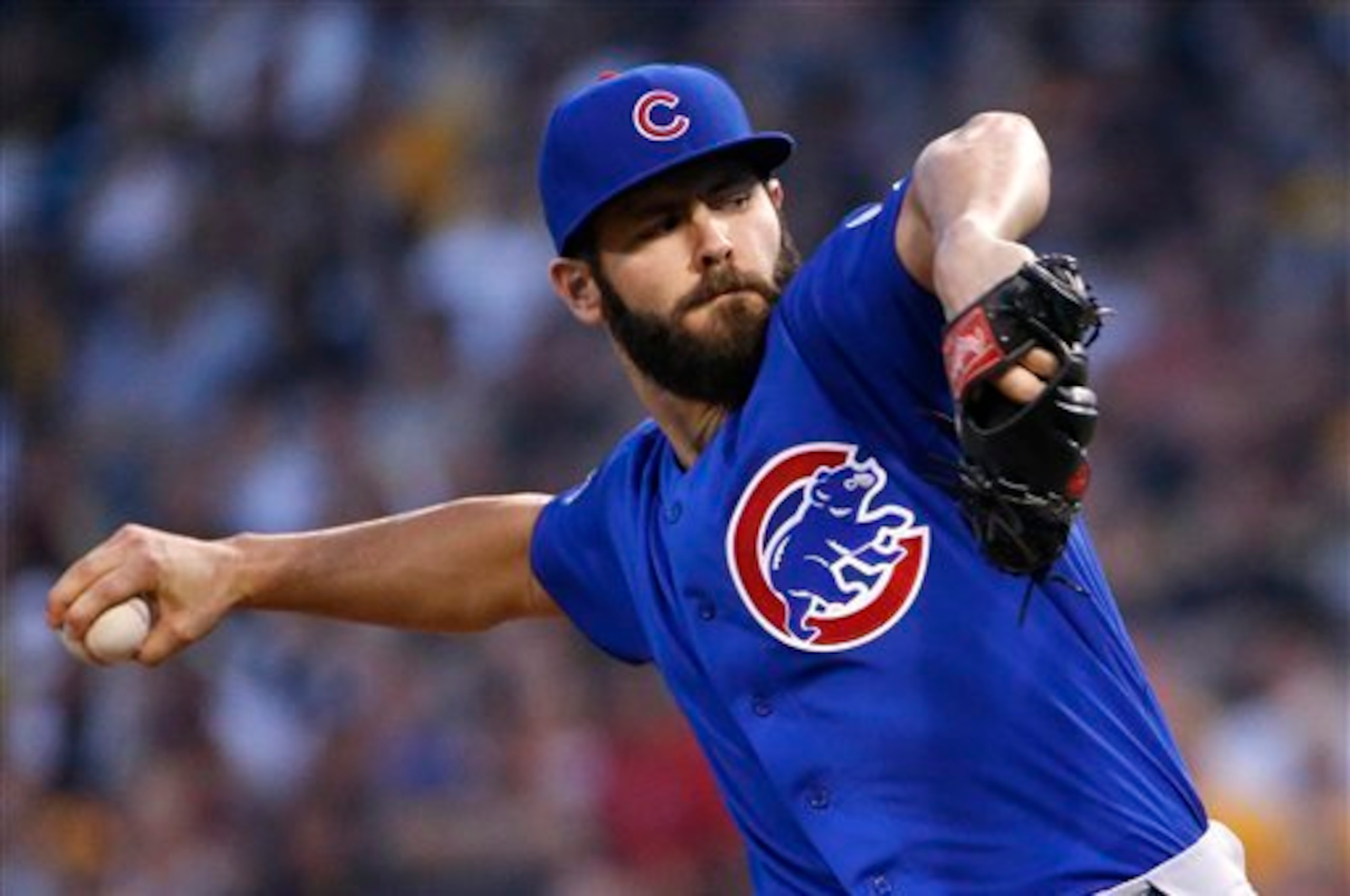
Control
With a 5.5 BB% and 44.6 Zone% to his name, it looks like Jake Arrieta spent 2015 as a good-not-great control artist. But those numbers and even Arrieta's zone profile only provide a hint of how he got by in 2015. He mastered the many movements in his arsenal of pitches, using everything he had to play with the edges of the zones and setting up hitters to further expand the zone. At that, he got to be quite good. Granted, the sheer movement of his pitches means his control can likely only be so good. But even if it doesn't get any better, it's plenty good enough as is.
Whiffability
Arrieta was quietly an excellent strikeout artist in 2014, and he carried that talent over by posting a 27.1 K% in 2015. The downside is that he posted "only" an 11.1 SwStr% on the side, but his K% is a truer representation of how unhittable he was. Everything worked off his mid-90s fastball, but his slider (or cutter, if you prefer) and curveball were his two big swing-and-miss pitches. And certainly, they both looked the part. With such electric stuff at his disposal, he should keep the whiffs and strikeouts coming.
Hittability
Even more so than whiffability, contact management is what Arrieta really got by on in 2015. He posted an elite 56.2 GB%, and he was one of the top soft-contact artists with a 22.9 Soft% and 22.2 Hard%. And as you might have noticed, he got even tougher to square up in the second half, posting a 26.2 Soft% and 20.8 Hard%. All in all, he showed what a pitcher can do with strong command of a totally nasty arsenal.
Workhorse
The 29-year-old Arrieta had never even sniffed 200 innings in any season prior to 2015, but you'd never know it. In crossing the 220-inning plateau this year, he averaged nearly seven innings and over 100 pitches per start. In a related note, he held his velocity just fine both within games and throughout the year. The fact that this was his first time handling a full workload might make you pessimistic about a repeat performance. But knowing that Arrieta is an exceptional pitcher who's also well-built at 6'4" and 225 pounds, it's actually sensible to think he can do this again.
Total
Few seemed to notice Arrieta's breakthrough in 2014, but he certainly had everyone's attention by the end of 2015. And what we all saw was a monster of a pitcher who can hit his spots and overwhelm hitters with some of the deadliest pitches around.
7. Manny Machado, 3B, Baltimore Orioles
31 of 37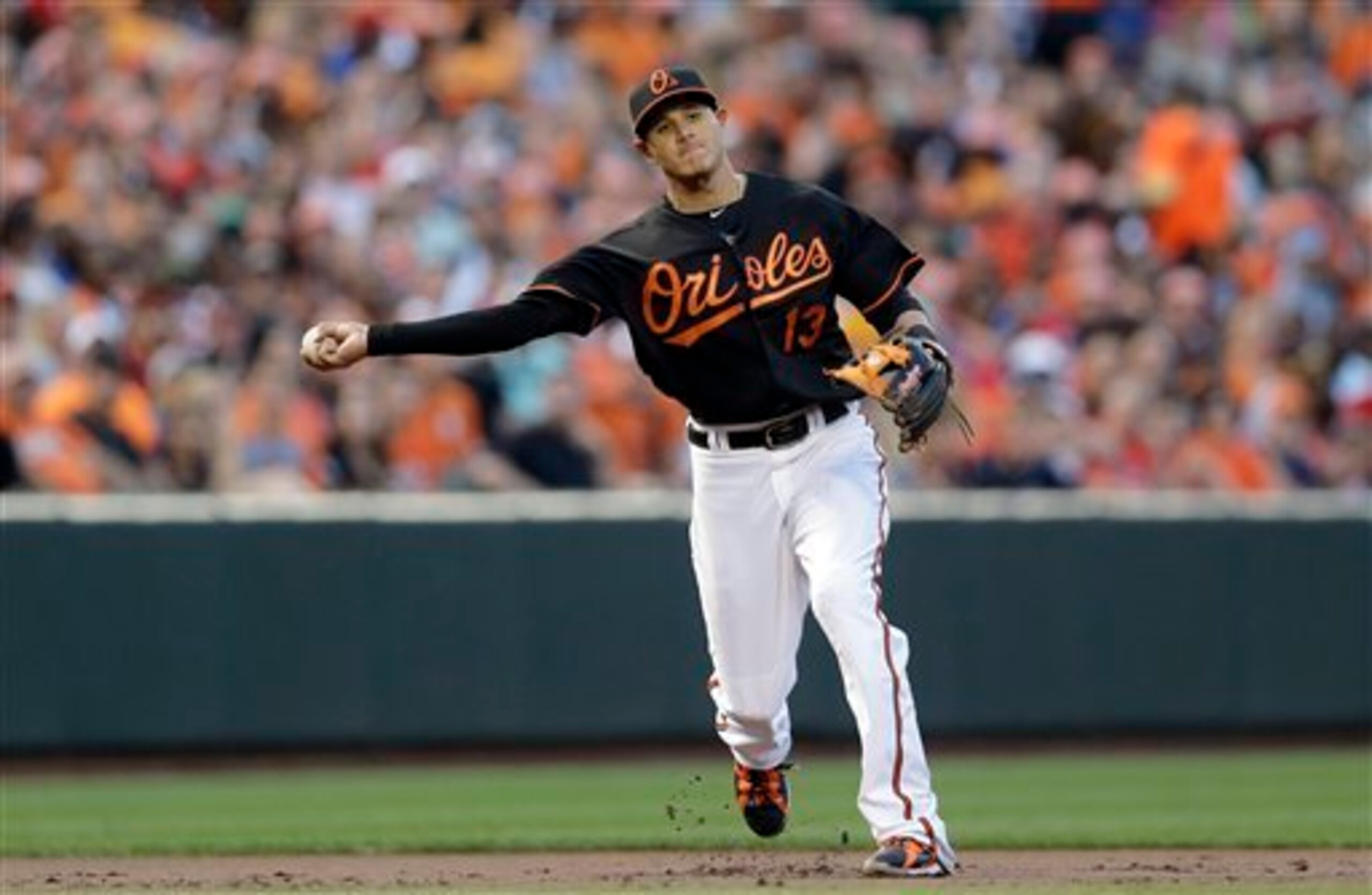
Stats current through Sep. 26
Hitting
Manny Machado has come into his own in 2015, hitting .286 with a .360 OBP. At the heart of his transformation is an approach that's gotten considerably calmer, as it now features excellent discipline and an emphasis on contact. Not surprisingly, one of the major upshots of this has been an increase in hard contact. He's not quite perfect yet, however. Machado's plate coverage is limited beyond the inner two-thirds of the zone, with a related story being that he's regressed with his production to the opposite field. Even still, his hitting is on the up-and-up.
Power
Machado's offensive awakening has also helped his power. He's slugged 30 homers and posted a .201 ISO. He's hit a little over 55 percent of his batted balls in the air, and with solid efficiency to boot. His Hard% rate on fly balls is 39.0, and his Hard% on line drives is even better at 55.6. And though he favors his pull side, he's proven he can apply his power to all fields. One catch is that he gets a boost from Oriole Park at Camden Yards, but that's it. His power is also on the up-and-up.
Baserunning
Machado isn't the fastest third baseman out there, but that hasn't stopped him from becoming more active on the basepaths. He's stolen 17 bases in 25 tries and upped his XBT% to a solid 42. Granted, his lack of efficiency stealing bases could very well result in his toning it down a little going forward. But even if he does, he could still steal double-digit bags while also being aggressive on the basepaths.
Defense
The metrics don't think Machado is matching his incredible defensive performance from 2013, but they like him plenty with 14 DRS and a 10.8 UZR. And the fact is he still has arguably unparalleled skills at third base. His instincts and first-step quickness give him well-above-average range, and his soft hands and rocket arm allow him to make the most of it. He's not completely immune to miscues, mind you, but he makes too many good plays for that to really matter.
Total
Machado was always supposed to turn into a special player, and we've watched it happen this year. He's become a much more advanced, much more powerful hitter, and he has kept on playing superb defense at third base. He's now arguably the game's top third baseman.
6. Josh Donaldson, 3B, Toronto Blue Jays
32 of 37
Stats current through Sept. 26
Hitting
After experiencing some struggles in 2014, Josh Donaldson is hitting like it's 2013 with a .299 average and .373 OBP. It's not the best sign that he's becoming increasingly likely to whiff against slow stuff, nor is it ideal that his plate coverage basically stops at the outer third of the zone. But his impressive discipline does minimize the latter problem, and it's at least as noteworthy that he doesn't give pitchers any safe havens within the strike zone. On a related note, he's only getting better at making loud contact. Donaldson isn't a flawless hitter, but he's definitely good.
Power
This is where Donaldson has really broken out in 2015, slugging 40 homers so far and posting a .276 ISO. He doesn't give himself a ton of chances to drive the ball by hitting just 55 percent of his batted balls in the air, but his efficiency is off the charts. With a 44.8 Hard% on fly balls and a 59.5 Hard% on line drives, he doesn't waste what he puts in the air. And keeping in line with his track record, he's able to apply his raw power to all parts of the yard. Make no mistake: You're looking at a legit power threat in his prime.
Baserunning
Donaldson isn't the most productive baserunner, but he's better than you might think. His 6-for-6 showing in the stolen base department makes it 14-for-14 over the last two years, and his 37 XBT% is close enough to average for government work. And though he's done better than that, the trade-off this year is that he's run into very few outs (3) on the basepaths. So, again, he's better than you think.
Defense
The metrics aren't rating Donaldson's defense as highly as they did in 2014, but they still like him to the tune of nine DRS and a 7.3 UZR. He's definitely capable of filling up a highlight reel, as he combines good instincts with strong athleticism and high energy to make all sorts of tough plays. That, undoubtedly, is what makes his defense worthwhile. The only downside is that he can get excitable and make mistakes, particularly with his throwing accuracy.
Total
Donaldson has been one of the top all-around third basemen in the league for a couple of years now, but this is the year he's really come into his own. He's remained a good hitter and defender, and he has turned himself into an elite power hitter. It's hard to ask for a better third baseman than that.
5. Mike Trout, CF, Los Angeles Angels
33 of 37
Stats current through Sept. 28
Hitting
Reigning AL MVP Mike Trout has rebounded nicely from his "down" year in 2014, as he finds himself hitting .295 with a .397 OBP. He's most notably erased his weakness against high fastballs and in general has looked a lot less like a strictly power-oriented hitter. He's continued to show off excellent discipline with a stronger contact habit than his strikeout rate suggests, and he hasn't relied so much on fly balls. He's hit more line drives while continuing to use the whole field and crushing the ball more often than any other center fielder. Though he never really left, we can still say he's back.
Power
Trout may be acting like less of a power-oriented hitter, but there he is with 40 homers and an absurd .286 ISO anyway. Not that anyone should be surprised, of course. He is still getting over 60 percent of his batted balls in the air, with Hard% rates near 50 on both fly balls (48.4) and line drives (49.5). He can also still make any ballpark look small no matter which direction he hits the ball in. So, yeah.
Baserunning
After swiping 49 bags back in 2012, he's all the way down to 10 in 17 tries this year. If one didn't know any better, one would say he's slowing down as he becomes more and more powerful. But you can watch him run and know that's not the case. His stolen base decline has more to do with his spending a portion of the season not wanting to step on Albert Pujols' toes and because pitchers simply don't take their eyes off him anymore. But we can allow ourselves to believe things could be different in 2016. And in the meantime, Trout is showing with a 65 XBT% that he can at least still handle aggressiveness.
Defense
The metrics still aren't loving Trout as much as they did in his rookie season, but he could be doing worse with a minus-0.3 UZR and five DRS. The latter has the better idea about his defense, and even undersells it. Trout is still one of the top fly-ball fielders in MLB thanks to his quick jumps, generally strong routes and top-notch closing speed. And relative to a couple of years ago, his arm has actually gotten better. The only gripe? As time goes on, Trout seems less interested in risking life and limb to make plays.
Total
Because he's not the same elite baserunner or defender he once was, Trout no longer has a vise grip on the "best player in baseball" label. But we can still call him the best all-around talent in MLB, and there's no question he's the best of the best in center field.
4. Buster Posey, San Francisco Giants
34 of 37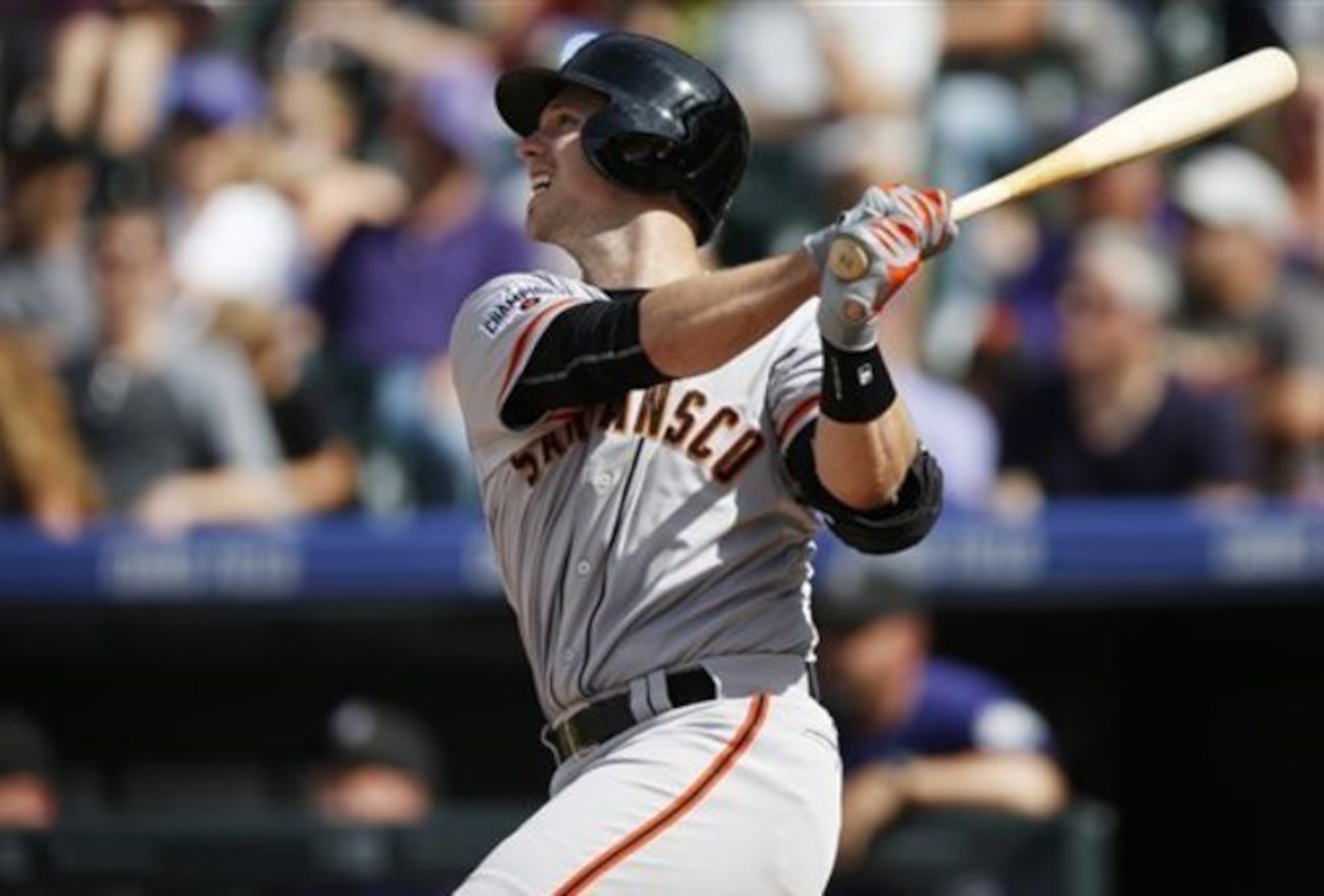
Stats current through Sept. 19
Hitting
Oh, that's just Buster Posey doing his thing with a .327 average and .391 OBP. And how he's gotten there is a master class in hitting. Through an approach that features a strong balance between discipline and contact, he's walked more often than he's struck out. He's also showcased outstanding coverage of the strike zone. And when the ball is in play, he's consistently used the whole field and hit the ball right on the screws. Never mind a great hitting catcher. He's a great hitter, period.
Power
Posey's power production looks like a mixed bag, as his 18 homers are quite good and his .157 ISO is not as impressive. But the latter figure is the more misleading of the two. Over 55 percent of his batted balls are in the air, and his Hard% on fly balls in particular is strong at 44.7. To boot, his power extends to all parts of the field. Rather than a lack of talent on his part, what really holds his power down is AT&T Park's huge dimensions.
Baserunning
Nobody's going to confuse Posey for a fast runner anytime soon, but he's no more hopeless on the basepaths than the next catcher. This season has seen him swipe a couple of bags and post a 29 XBT% that's right in line with his career norm and this list's average.
Defense
Surprised at this? Don't be. Posey is as good as any other catcher at framing, posting an excellent 93.3 Z-Strike% and an excellent 16.7 O-Strike%. He also rates well at blocking pitches, and he's achieved a career-best 37 CS% through strong footwork and what's always been a good arm. We also can't overlook how, when he's not catching, Posey has turned himself into an above-average first baseman. He's not Yadier Molina's equal strictly in terms of catcher defense, but he is in terms of overall value.
Total
Posey is the best catcher in baseball, and it's not all that close. He's still the best hitting catcher the game has to offer, and he's turned himself into MLB's most well-rounded defensive backstop to boot. With all this in mind, you can indeed make a case for him as baseball's best player.
3. Paul Goldschmidt, 1B, Arizona Diamondbacks
35 of 37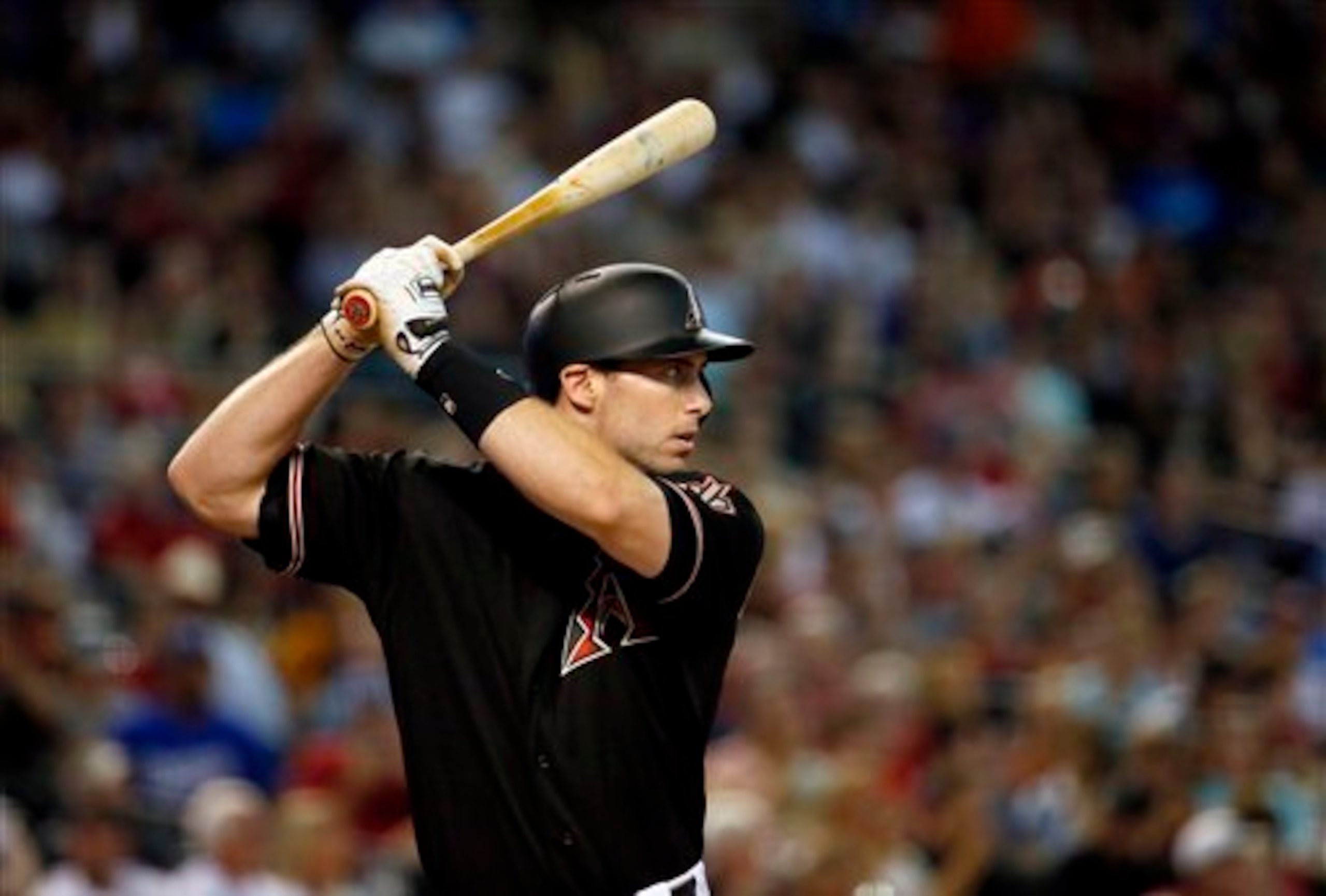
Stats current through Sept. 21
Hitting
Paul Goldschmidt has gone from being very good to being truly elite, hitting .316 with a .435 OBP. There are tangible reasons for this, chief among them career-best discipline and a batted-ball profile that includes a completely unpredictable spray pattern and superb levels of hard contact. Maybe more so than any other hitter, he perfectly blends brawn and brains. Really, the only complaint to make is that he gives pitchers a safe haven on the outer third, doing little in the way of swinging or producing out there.
Power
It's looking like Goldschmidt's power peaked back in 2013, but he's still doing very well with 29 homers and a .239 ISO. His immense raw power has no trouble showing up in games, as his Hard% rates on fly balls (52.9) and line drives (51.7) are both over 50 and he's perfectly capable of spraying well-hit fly balls all over the yard. Like above, there's only one gripe worth making: With less than 60 percent of his batted balls going in the air, Goldschmidt doesn't sell out for power.
Baserunning
While Goldschmidt is only arguably the best hitting first baseman, he's unquestionably the best baserunning first baseman. He's stolen 21 in 26 tries this season and further padded his value on the basepaths with a 45 XBT%. And even despite that extra aggressiveness, he's run into few outs. This is what you get when you combine natural athleticism with a heaping helping of good sense.
Defense
Both UZR (5.8) and DRS (16) approve of Goldschmidt's defense, but the latter is convinced that he's far and away the best defensive first baseman in MLB. That's a reasonable position. Goldschmidt has the hands to be an elite scoop artist, as well as the instincts, quick reactions and athleticism to cover as much or more ground than any other first baseman. So he's the total package here, too.
Total
One can't help but wonder if Goldschmidt would be the game's most celebrated superstar if he played somewhere other than Arizona. He's basically a modern-day Jeff Bagwell, combining an excellent feel for hitting with huge raw power and the athleticism to stand out on the basepaths and on defense. Without question, no first baseman does it all quite like him.
2. Bryce Harper, RF, Washington Nationals
36 of 37
Stats current through Sept. 29
Hitting
Most of us figured Bryce Harper would become a good hitter, but a .334 average and .466 OBP is something else entirely. At the heart of his transformation is an overdue response to pitchers refusing to throw strikes; he's tightened up his discipline and accepted walks. He also took away the outer two-thirds of the strike zone, as no other lefty hitter even comes close to matching his .443 average there. And he's turned into one of MLB's hardest hitters. It would be nice if he made more consistent contact, but his strengths are now way too strong for us to fret over that.
Power
How do 41 homers and a .320 ISO sound? Pretty good, right? Indeed. And those numbers are no joke. Harper has given himself more chances to hit home runs by getting over 60 percent of his batted balls in the air, and then his insane raw power does the rest. All he's done is hit frozen ropes, with booming Hard% on fly balls (49.3) and line drives (56.3). And though he favors his pull side, he's been able to make any part of any yard look small. Bryce Harper, power hitter, has arrived.
Baserunning
It looks like we can rule out Harper ever matching the 18 steals he posted in 2012. After swiping only two bases in four attempts last year, though, he has six in 10 tries this season. His trademark aggressiveness still shows in his 57 XBT%, however, which makes it easier to swallow the nine outs he's run into on the basepaths. If he can cut down that latter figure next, he'll be a true menace on the bases.
Defense
Harper has eight DRS but only a minus-3.2 UZR. The former is more accurate. Harper has always had more than enough athleticism for right field, and he's seemingly improved his reads and routes to the ball in 2015, which results in good range. Then there's his arm, which is among the strongest at the position. He's not quite perfect, but he is one of the top defensive right fielders in the game.
Total
The Harper everyone had been waiting patiently (/sarcasm) for has finally arrived. He is an elite hitter with elite power and a very good glove. Add all that up, and you get arguably baseball's best player.
1. Clayton Kershaw, SP, Los Angeles Dodgers
37 of 37
Control
Clayton Kershaw found a new level of control in 2014, and he didn't back down from it in 2015. He posted a 4.8 BB% and a 49.3 Zone%, both of which put him among the best of the best. Everything works off the left-hander's fastball command, as he's generally good at avoiding the sweet spot in working away from lefties and on the inside edge against righties. Then it's really just a matter of not hanging his slider or curveball, which he's quite good at. There's not much to it, but it works.
Whiffability
No pitcher demonstrated whiffability quite like Kershaw in 2015. In finishing with 301 strikeouts, he posted an MLB-best 33.5 K% and 15.9 SwStr%. Upping his average fastball velocity to 93.6 helped turn his heater into an even bigger swing-and-miss weapon, but it was still all about his slider and curveball. The former was a top-five swing-and-miss pitch among sliders, and the latter was also once again an elite swing-and-miss offering among curves. But then, why listen to me when you can just go look at them?
Hittability
After being maybe the best contact manager in MLB in 2014, Kershaw wasn't quite as good in 2015. But he was still well above average. He continued his renaissance as a ground-ball machine with a 50.0 GB% and continued to get pop-ups at a solid rate with a 9.5 IFFB%. And though he didn't own either category like he did in 2014, he still impressed with a 19.8 Soft% and 25.2 Hard%. So though he took a step back from where he was in 2014, Kershaw still has a place among MLB's top contact managers.
Workhorse
After missing a month and falling just short of 200 innings in 2014, Kershaw once again blew past the 200-inning threshold in 2015. Along the way, he stuck to his usual habit of averaging over seven innings and 100 pitches per start. His efficiency was a factor in that and so was the fact that he maintained his stuff within games about as well as a pitcher possibly can. The same goes for the season in general. All told, he remains perhaps the best workhorse in MLB.
Total
All things considered, 2015 probably wasn't Kershaw's best season. But he was still more dominant than any other pitcher in the game, showing off elite control, unparalleled whiffability and a very strong ability to manage contact on his way to eating a whole bunch of innings. He's the most perfect pitcher in the game today, and that makes him arguably the game's best player.




.jpg?w=2560 "Jonathan Taylor Landing Spots")
.jpg?w=2560 "NFL House in Paris Closes for Protests (AP)")

.jpg?w=2560 "Trevon Diggs Cut by Seahawks")