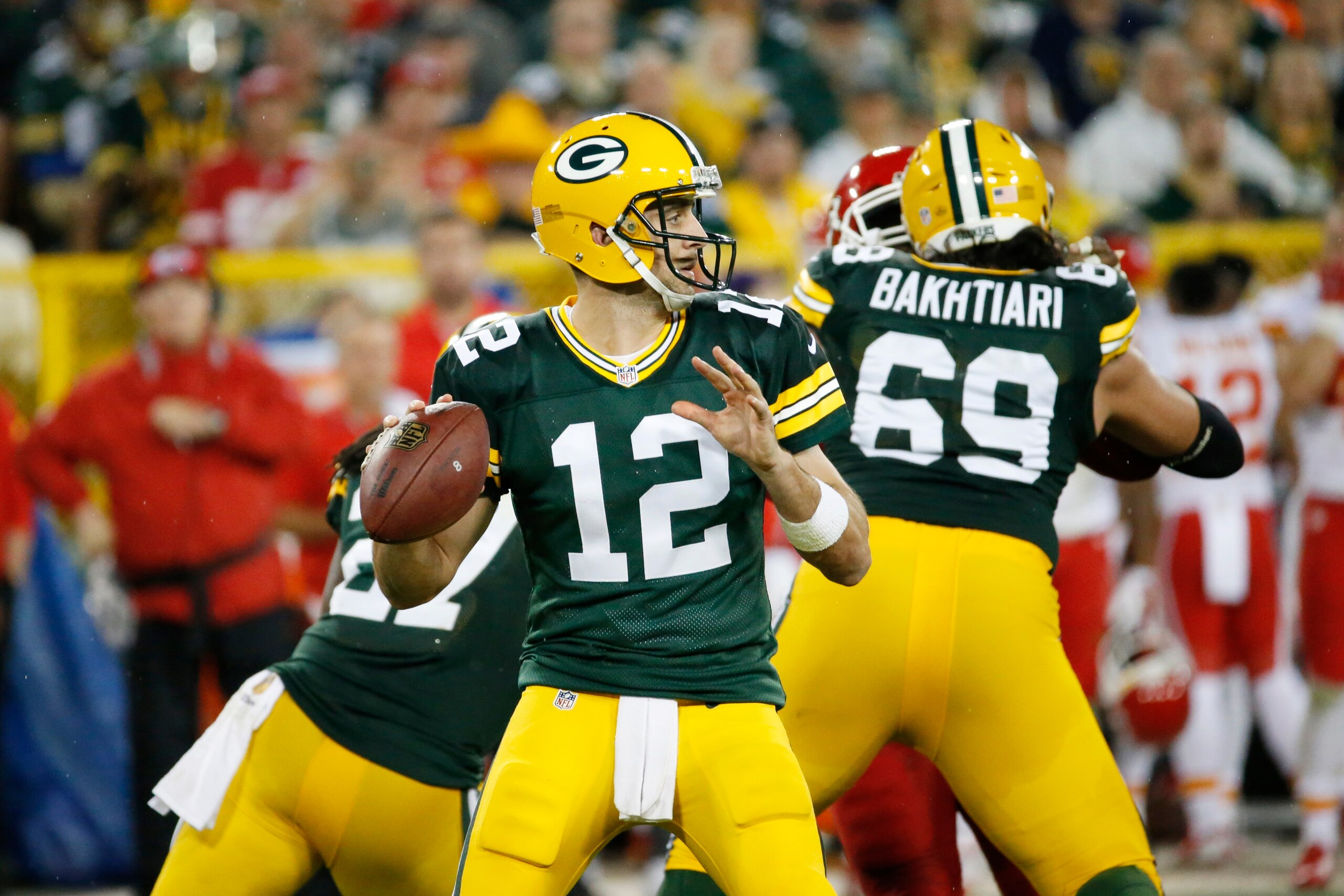


There was little the Green Bay Packers could have improved upon in their decisive 38-28 win over the Kansas City Chiefs on Monday Night Football.
Quarterback Aaron Rodgers had five touchdowns and zero interceptions. Wide receiver Randall Cobb found the end zone three times.
The defense sacked Kansas City quarterback Alex Smith seven times and otherwise brought pressure on him all night. The run defense, in particular, limited rusher Jamaal Charles to 49 yards and continued the improvements it made in Week 2 against Seattle.
Sure, the Packers let off the gas a little toward the end of the game, allowing Charles to score twice in the last 10 minutes. Green Bay also allowed Chiefs wideout Jeremy Maclin 141 receiving yards and let him sneak into the end zone, ending the Chiefs' infamous 21-game streak without a wide receiver scoring a touchdown.
But looking at the big picture, the Packers played a complete game on both sides of the ball, something they have struggled to do in recent seasons. Let's break down five takeaways from Monday's matchup.
The Run Defense Is Not a Fluke; It's for Real
1 of 5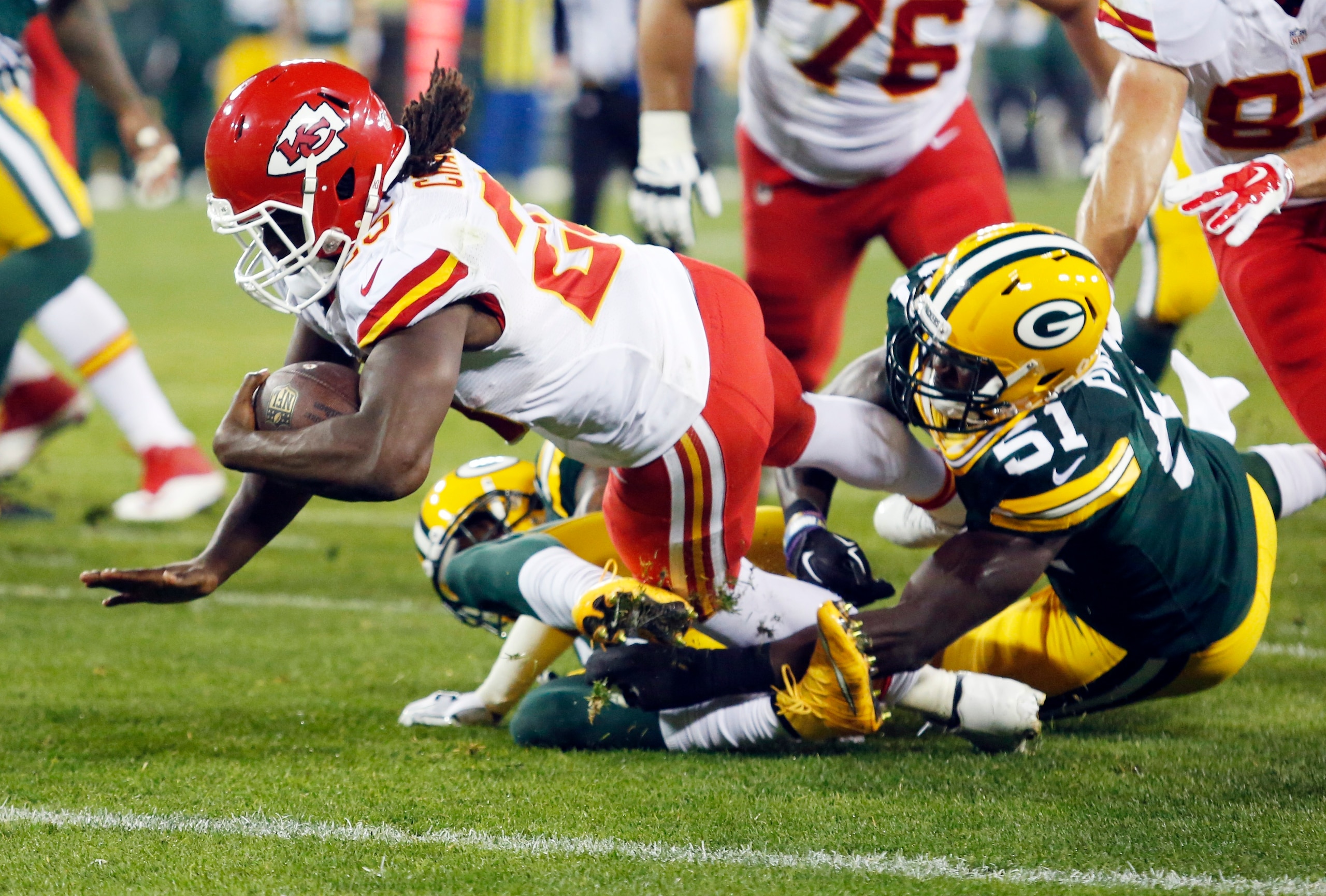
In the first two games of the season, the Packers run defense was two sides of a coin. In Week 1, it was a leaky sieve, allowing Chicago rusher Matt Forte to rush for 141 yards on 24 carries.
In Week 2, however, it was a completely different story, with the run defense holding Seahawks rusher Marshawn Lynch to just 41 yards on 15 carries.
Green Bay faced another of the league's top running backs in Jamaal Charles on Monday night, but Kansas City's halfback had more of a Lynch night than a Forte night against the Packers. On 11 carries, Charles only rushed for 49 yards. He was able to find the end zone three times, but two of those scores came in garbage time.
One relative factor is the strength of the opponents' offensive lines: The Bears' line is much better than the Seahawks' or the Chiefs', and that certainly makes a difference in the abilities of each team's running backs to find lanes.
But that's not to take anything away from the run defense, which has made major strides despite losing inside linebacker Sam Barrington and defensive lineman Josh Boyd for the season and facing Kansas City without strong safety Morgan Burnett (injury) or defensive lineman Letroy Guion (suspension).
If Eddie Lacy's Injury Problems Continue, Packers Can Succeed with RB Committee
2 of 5
Eddie Lacy was listed as probable on the Packers' injury report ahead of the Monday night matchup against the Chiefs and started the game with the first-team offense.
However, Lacy wasn't playing at full strength and head coach Mike McCarthy planned to manage his carries, so the Packers' other halfbacks, James Starks and undrafted rookie Alonzo Harris, got some opportunities.
Starks had 17 carries for 32 yards and a 19-yard reception, and Harris added another two carries for 17 yards. Lacy was limited to 10 carries on the night, a wise move considering his ankle still seemed to be giving him trouble, as he went to the sideline at one point and later returned to the game.
The Packers didn't break any rushing records on Monday night, but they didn't need to. Keeping the threat of the run alive allowed Rodgers to be more successful in the passing game and thus the offense made its big gains through the air.
If Lacy is in full health, he can easily handle 20 carries per game. But until he checks out 100 percent, why not allow Starks and Harris to ease the load and use a committee approach? Given how Green Bay's system is set up, it's an effective option.
Aaron Rodgers' Rushing Attempts Are at an All-Time High
3 of 5
Prior to the start of the 2015 season, the most rushing attempts Aaron Rodgers had per game on average was 4.3, in the 2010-11 season.
After the conclusion of Monday night's Week 3 matchup, Rodgers has been averaging 5.3 rushes per game, a new career high. And that doesn't take into account his improvised scrambling, either, which has helped keep drives alive and even convert third downs.
Aside from one poor decision to dive headfirst in Week 2 against the Seattle Seahawks, Rodgers has been running wisely, sliding when he can't go any further and making sure to protect his body.
So despite it not even being a full season removed from the calf injury that plagued him in 2014 and the subsequent surgery he had, Rodgers' rushes aren't reason for worry. For the most part, they are welcome in that they keep the defense guessing and opponents can't necessarily put all their resources up top, knowing not only could Eddie Lacy make a run for it, but also so could Rodgers.
Of course, Rodgers will never be known as a truly multidimensional quarterback in the way that, say, a Russell Wilson is, but he's gifted in his mobility, and the Packers are realizing that can be an asset.

.jpg?w=2560 "Rams Raiders Football")
'Next Man Up' Mentality Will Propel Packers Offense Through Injuries
4 of 5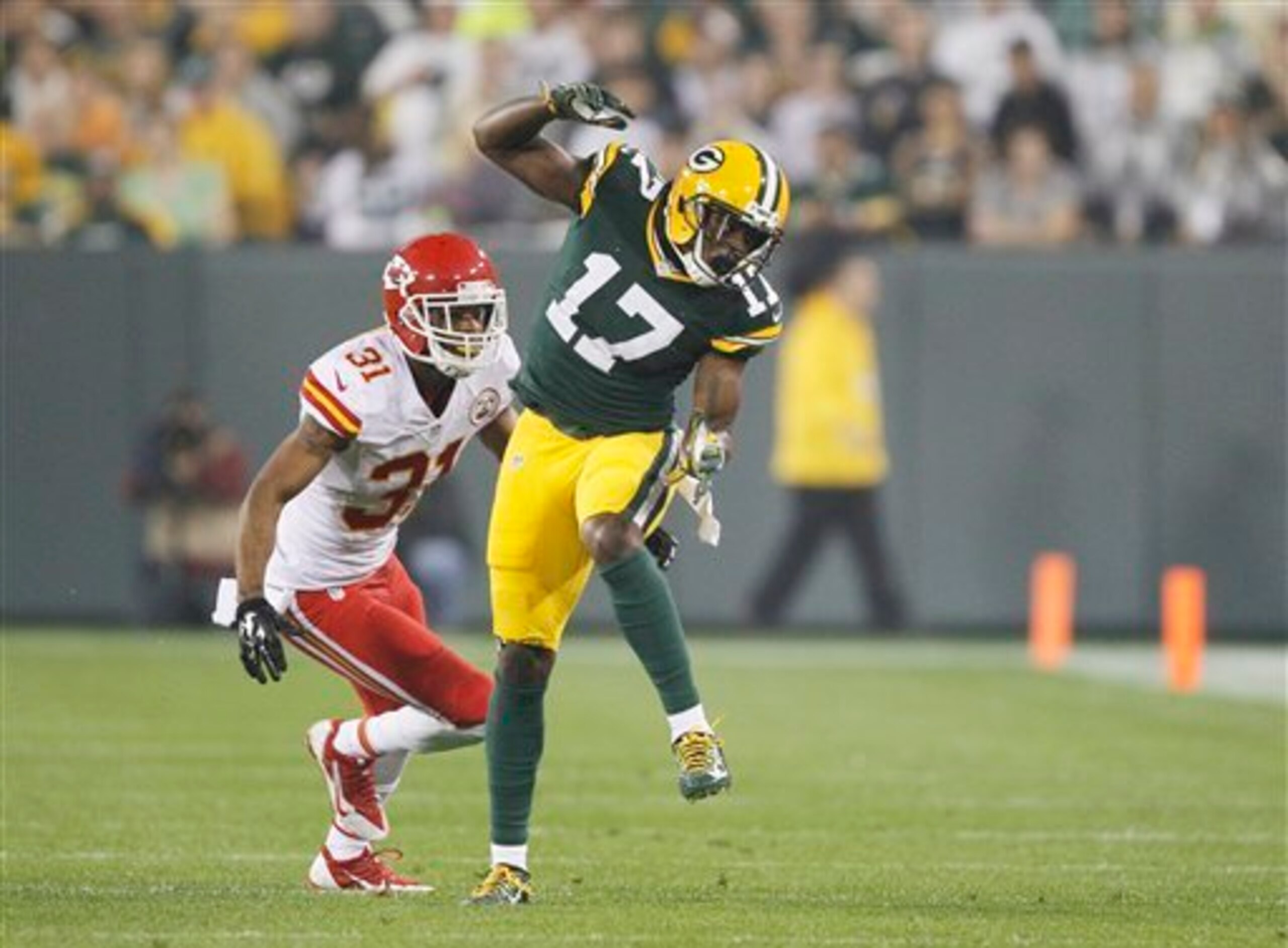
There has to be some sort of breaking point for how many weapons Aaron Rodgers can lose before the offense finally shows signs of suffering for it—and it probably starts and stops with Randall Cobb.
But as the season progresses and the Packers continue to see running backs and pass-catchers exit games with injuries, the offense keeps rolling along.
They began the year without wideout Jordy Nelson. Davante Adams, moving up to the No. 2 wideout in Nelson's absence, exited the Week 2 matchup against the Seattle Seahawks with an ankle injury and didn't make it through the first quarter against the Kansas City Chiefs.
Lacy has been on and off the field, also with an ankle injury. And Monday night, tight end Andrew Quarless exited the game with a knee injury.
But Cobb, James Jones, rookie Ty Montgomery and tight end Richard Rodgers kept the offense moving for Green Bay, as did backup halfback James Starks. Aaron Rodgers completed passes to nine different receivers, while Montgomery proved he can be an asset in the end zone, scoring his first career touchdown (and thus getting his first Lambeau Leap).
As long as this team has Aaron Rodgers lining up under center, it can use a variety of different weapons to get the job done.
Packers Pass Rush Is Becoming One of League's Elite
5 of 5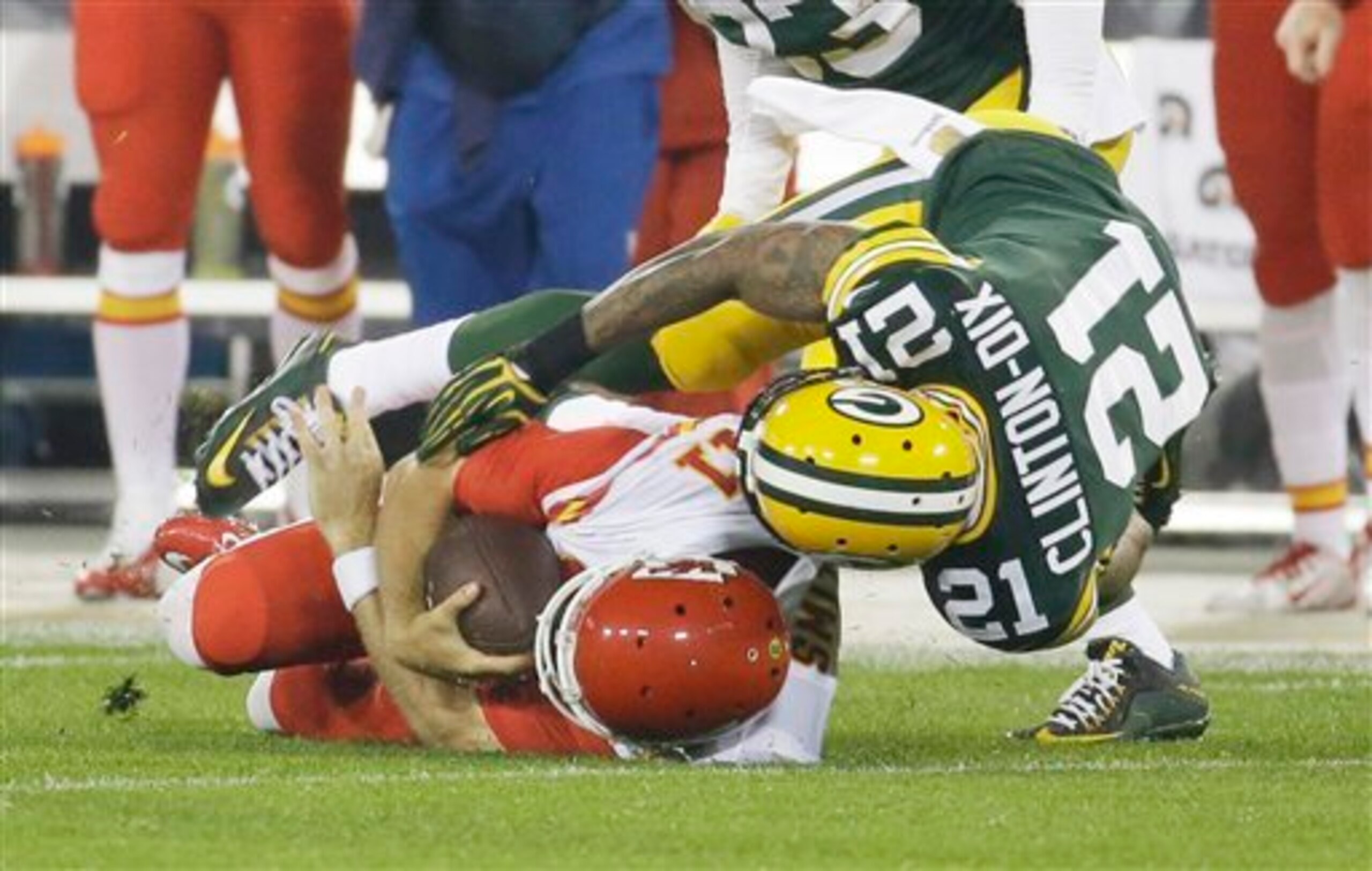
The Green Bay Packers were bringing the pressure all night against Chiefs quarterback Alex Smith, finishing the game with seven sacks shared among six players: Jayrone Elliott, Joe Thomas, Mike Daniels, Clay Matthews, Nick Perry and Mike Neal.
Matthews, who has been spending his time at middle linebacker where he has more responsibility against the run than leeway to rush the passer, led the team with two sacks.
Green Bay's seven sacks on Monday almost doubled its amount to date so far this season, propelling them into the top three among league defenses in total sacks.
The Packers also registered other pressures on Smith: eight quarterback hits and four passes defensed. Cornerback Sam Shields came away with the team's interception on the night.
With Matthews needing to revise his role to help in the middle of the field, it is encouraging to see the rest of Green Bay's pass-rushing corps take the reins and prove that it can terrorize quarterbacks even on snaps when Matthews isn't rushing off the edge.

.jpg?w=2560 "Steelers Saints Football")




.jpg?w=2560 "Big Trade to Shake Up East 💡")