


Close is never quite close enough when it comes to NBA titles.
Sealing the deal can elevate a club to legendary status. Failing to do so can mean the attachment of an unsightly asterisk that follows teams well beyond their final outing.
But greatness should never be defined solely by the presence (or lack) of a championship ring. Historically dominant squads can be undone by untimely injuries, costly miscues (by players, coaches or officials) or unfortunate matchups with slightly better clubs.
We have uncovered (and ranked) the seven best teams to never win the title by examining the key elements typically seen in champions: on-court dominance (regular-season and playoff series wins), two-way statistical success, star power and depth.
For clarity, we have excluded teams that sported crowns during their specific eras. The cores on our list disbanded without ever earning top honors.
The record books don't remember these teams as champions, but we're here to celebrate their greatness.
Honorable Mention: 2012-13 Oklahoma City Thunder
1 of 8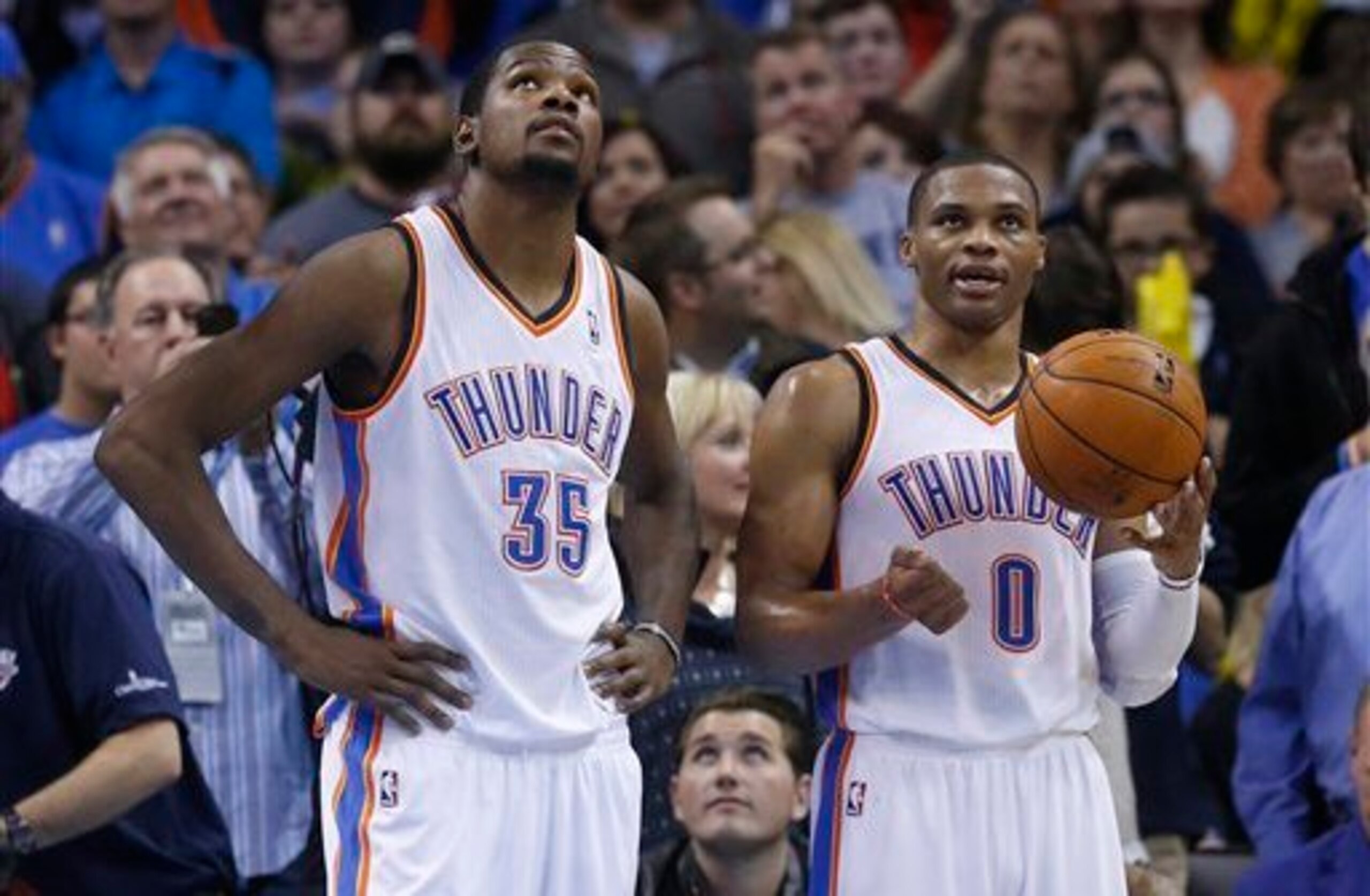
Record: 60-22
Efficiency Ratings (Rankings): 112.4 Offensive Rating (1st), 102.6 Defensive Rating (4th)
Key Figures: Kevin Durant, Russell Westbrook, Serge Ibaka
Key Injuries: Westbrook torn meniscus in Western Conference quarterfinals
What Went Right: Almost everything during the regular season.
Durant and Westbrook dazzled to the total tune of 51.3 points, 13.1 rebounds and 12.0 assists per game. Serge Ibaka converted a career-best 57.3 percent of his field-goal attempts. Thabo Sefolosha and Kevin Martin formed a lethal tandem in James Harden's vacated spot on the perimeter, shooting a combined 42.3 percent from downtown.
The youthful Oklahoma City Thunder had already undergone their baptism by fire during their five-game series loss to the Miami Heat in the 2012 Finals. OKC seemed hyper-focused on exacting some revenge, leading the Western Conference in victories and pacing all teams with an average point differential of plus-9.2.
The Thunder were a two-way machine, built around a pair of soaring stars and a supporting cast that featured both battle-tested vets and lanky, athletic youngsters. They blitzed Harden's Houston Rockets by 29 points in their playoff-opener, then saw their championship hopes dashed the next time out.
What Went Wrong: Westbrook collided with Rockets point guard Patrick Beverley while calling a timeout midway through the second quarter of Game 2 and suffered a season-ending meniscus tear.
Durant willed the Thunder to a six-game series victory, tallying 35.5 points on 51.1 percent shooting, 9.3 rebounds and 5.8 assists over the final four contests. But the scoring forward couldn't work the same magic against the gritty stonewall known as the Memphis Grizzlies in the conference semis, and the Westbrook-less Thunder ran out of steam.
Memphis ousted OKC in five games, and the Thunder haven't found the right championship formula since.
But there is a saving grace here: OKC still has at least one more season to try to follow the Durant-Westbrook-Ibaka trio to a title.
7. 2002-03 Dallas Mavericks
2 of 8
Record: 60-22
Efficiency Ratings (Rankings): 110.7 Offensive Rating (1st), 102.3 Defensive Rating (9th)
Key Figures: Dirk Nowitzki, Steve Nash, Michael Finley
Key Injuries: Nowitzki sprained knee in Western Conference Finals
What Went Right: Offense, offense and something else...Oh, more offense. Plus, 14 consecutive wins to start the season—one shy of the league's record.
The Dallas Mavericks led the league in scoring with 103.0 points per game, 62.1 of which came from the Nowitzki-Nash-Finley trio. Former All-Star Nick Van Exel thrived in his first full season as a sixth man, pumping in 12.5 points and 4.3 assists during his 27.8 minutes per game.
With Nash, Van Exel and then-coach Don Nelson orchestrating the offense, Dallas committed a league-low 11.6 turnovers per game. The Mavs finished second in three-point makes (7.8 per game) and tied for third in long-range accuracy (38.1 percent).
After being knocked out in the second round of the two previous postseasons, the Mavs survived seven-game battles with both the Portland Trail Blazers and Sacramento Kings. Dallas booked its first Western Conference Finals trip since 1988, setting up a showdown with the 60-win San Antonio Spurs.
What Went Wrong: After splitting the first two games in the Alamo City, the Mavs entered the third quarter of Game 3 facing a three-point deficit. That proved to be the least of their worries.
With a little less than eight minutes remaining, Nowitzki's knee buckled during a collision with Manu Ginobili. Nowitzki was carried off the court, diagnosed with a knee sprain and given little hope to return by Nelson.
"We shouldn't take a gamble or a chance on Dirk Nowitzki," Nelson said after the game, via Chris Broussard, then with the New York Times. "I told Dirk that he must feel that he's totally 100 percent for me to play him again in this series, and from the looks of him tonight, that's probably not going to happen."
That didn't happen, Nowitzki never returned and the Mavs were dispatched after six games. Dallas fell in the first round of the 2004 playoffs, and its core broke apart shortly thereafter. Nash signed with the Phoenix Suns that summer, and Finley inked a free-agent pact with San Antonio the following year.
6. 2001-02 Sacramento Kings
3 of 8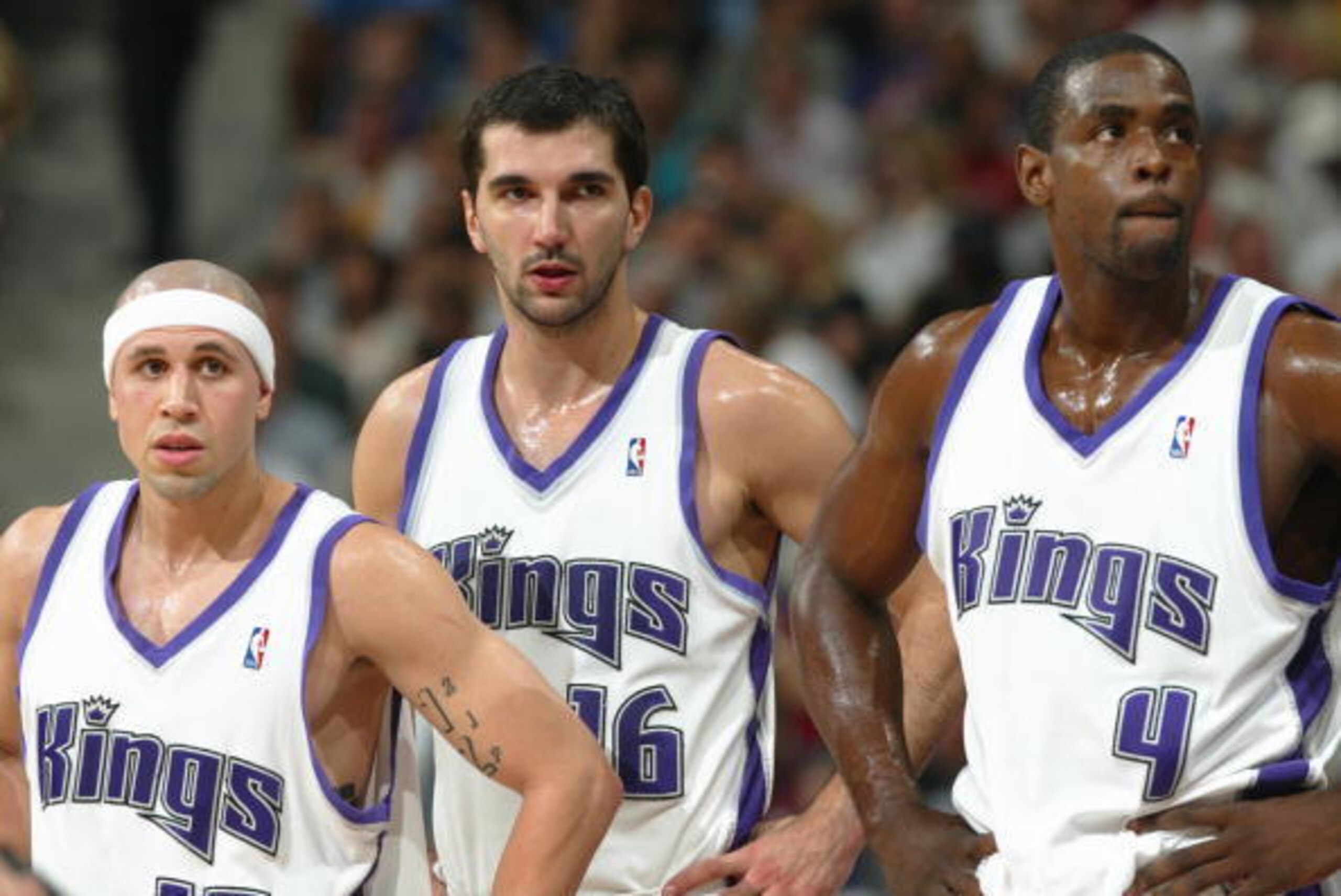
Record: 61-21
Efficiency Ratings (Rankings): 109.0 Offensive Rating (3rd), 101.1 Defensive Rating (6th)
Key Figures: Chris Webber, Peja Stojakovic, Mike Bibby
Key Injuries: Stojakovic missed six playoff games with a sprained ankle.
What Went Right: Aesthetically pleasing offense built around selflessness, vision, constant movement and a wealth of reliable scoring options.
Four different Sacramento Kings averaged at least 3.7 assists that season, including both starting bigs Webber and Vlade Divac. All-Stars Webber and Stojakovic led the team in scoring, but seven different Kings went for double-digit points per game.
The Kings looked like they genuinely enjoyed playing with (and for) one another—because they did.
"The chemistry we had on and off the court was amazing," Divac told Grantland's Jonathan Abrams in 2014. "That was a key of our success, because we were good on the floor, but we had fun off the court, too. It was [an] unbelievable joy to be part of the team."
Sacramento had the NBA's best record and breezed through the first two rounds of the postseason with a 7-2 mark. But a Western Conference Finals showdown with its Pacific Division rival Los Angeles Lakers produced a seven-game series full of nail-biting outcomes, and ultimately, controversy.
What Went Wrong: Both sides of the matchup complained about the officiating. After five games, J.A. Adande, then with the Los Angeles Times, wrote "there's still no way to tell what they're going to call and what they aren't going to call."
But the loudest gripes were heard after Game 6, which the Kings entered with a 3-2 series lead. The Lakers attempted 40 free throws in the contest—27 during the fourth quarter alone—while the Kings only made 25 trips to the charity stripe. Divac and his backup Scot Pollard both fouled out, and Webber was hit with five personal fouls.
The Lakers won Game 6 by the score of 106-102, then closed out the series with a 112-106 victory two nights later. Six of the seven contests were decided by seven points or less.
The Kings haven't advanced that far in the postseason since, and they're currently stuck in a nine-year playoff drought.

5. 2008-09 Cleveland Cavaliers
4 of 8
Record: 66-16
Efficiency Ratings (Rankings): 112.4 Offensive Rating (4th), 102.4 Defensive Rating (3rd)
Key Figures: LeBron James, Mo Williams
Key Injuries: None
What Went Right: LeBron did a lot of LeBron things, Williams provided a needed secondary scoring punch and then-coach Mike Brown had the Cleveland Cavaliers playing suffocating defense.
With an All-Star running mate for James, the Cavs set a franchise record for wins and tied for the 11th-best record in NBA history. James posted a personal-best 31.7 player efficiency rating, which is tied for the second-highest mark ever recorded (minimum 25 games). Williams booked his first All-Star appearance by setting career-highs in points (17.8 per game), PER (17.2) and true shooting percentage (58.8).
The Cavs were top-heavy. Zydrunas Ilgauskas and Delonte West were the only other players to average more than 8.6 points per game. But James helped elevate those around him even while accepting the first MVP award of his career.
"Individual accolades come when team success happens," James said during the award ceremony, via ESPN.com. "You look at those 14 guys over there, I got the award because of them."
Cleveland steamrolled through the early portion of the playoff schedule, sweeping both the Detroit Pistons and Atlanta Hawks in consecutive rounds. But the Orlando Magic presented a different type of challenge in the Eastern Conference Finals.
What Went Wrong: James didn't have enough help, and Cleveland couldn't find any defensive answers for Orlando's inside-out attack.
Despite James' absurd averages of 38.5 points, 8.3 boards and 8.0 dimes, the Cavs crumbled in a six-game series loss. Williams' shot went awry (37.1 percent), Dwight Howard dominated (25.8 points on 65.1 percent shooting) and Orlando cashed in 40.8 percent of its three-point looks.
The Cavs suffered a second-round loss in 2010, and James infamously relocated to South Beach that summer.
4. 1990-91 Portland Trail Blazers
5 of 8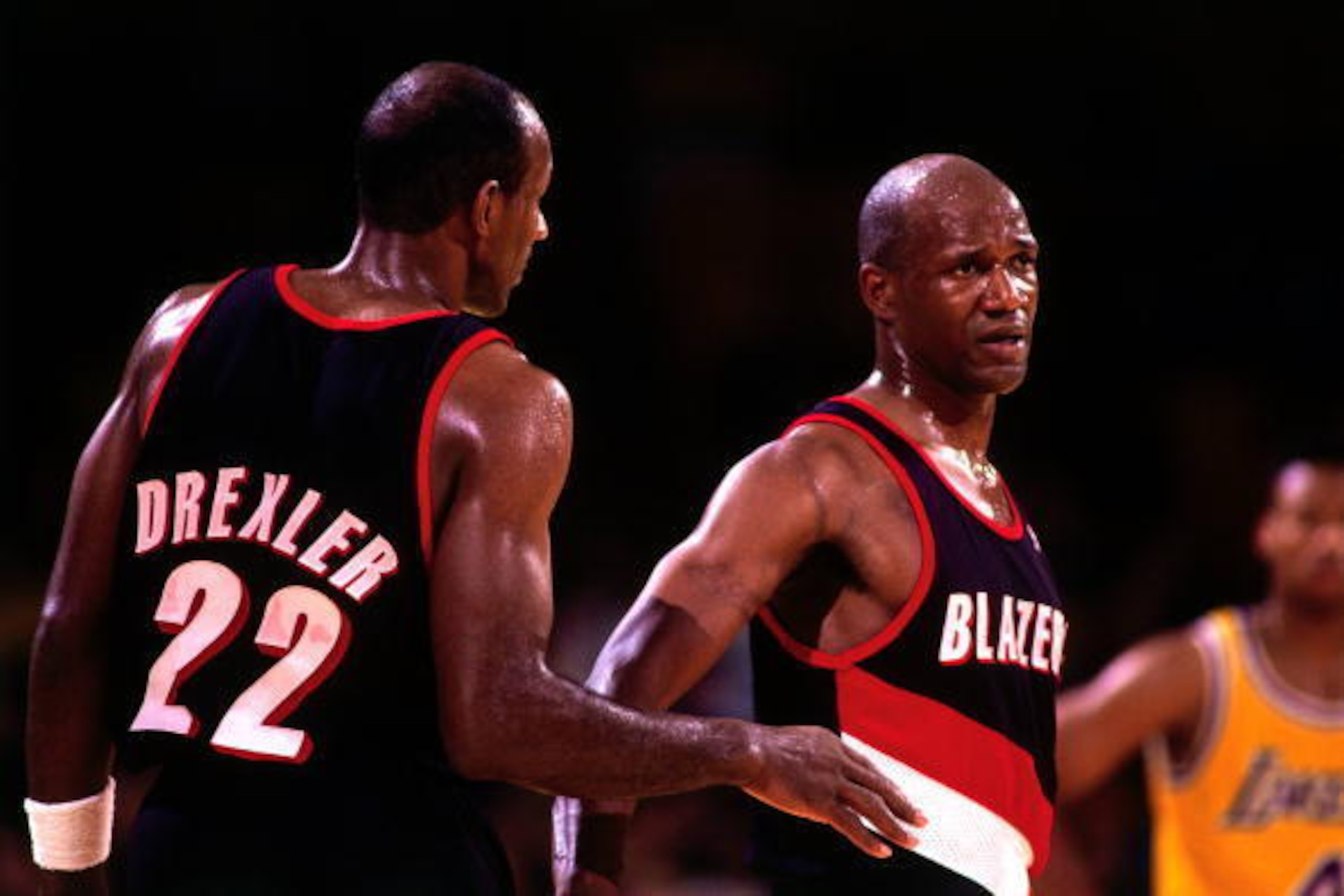
Record: 63-19
Efficiency Ratings (Rankings): 112.8 Offensive Rating (2nd), 104.3 Defensive Rating (3rd)
Key Figures: Clyde Drexler, Terry Porter
Key Injuries: None
What Went Right: The Portland Trail Blazers rode three All-Stars, balance behind them and the sharp coaching mind of Rick Adelman to the league's best record in 1990-91.
Portland had two stars in the backcourt, guards Drexler and Porter, and a third anchoring the interior, center Kevin Duckworth. That trio posted a combined 54.3 points per game, and Portland had four other players put up 11-plus points a night: Jerome Kersey, Buck Williams, Clifford Robinson and Danny Ainge.
The Blazers, who lost in the 1990 NBA Finals to the Detroit Pistons, opened the 1990-91 campaign with 11 straight victories. They only had four losing "streaks" all season: three that lasted two games and one that went four games.
"Nobody solved the Blazers," wrote Blazers Edge's Dave Deckard in July 2011. "It was like playing with a Rubik's Cube that would give you a right cross every time you got close."
Portland survived a five-game scare from the Seattle SuperSonics in the first round, then quickly disposed of the Utah Jazz during the next. But the third-seeded Los Angeles Lakers denied the Blazers a return trip to the championship round.
What Went Wrong: The Blazers gave up home-court advantage with a 111-106 loss in the series opener and never fully recovered.
Portland had uncharacteristic breakdowns on both ends of the floor. Magic Johnson burned the Blazers for 20.7 points, 12.7 assists and 8.0 rebounds per game, while Sam Perkins, Byron Scott and Vlade Divac shot a combined 59.7 percent from the field. Duckworth and Ainge, meanwhile, went just 39-of-104 (37.5 percent) in the series.
The Blazers lost the 1992 NBA Finals to Michael Jordan's Chicago Bulls, and Portland has yet to find its way back to the championship stage.
3. 1995-96 Seattle SuperSonics
6 of 8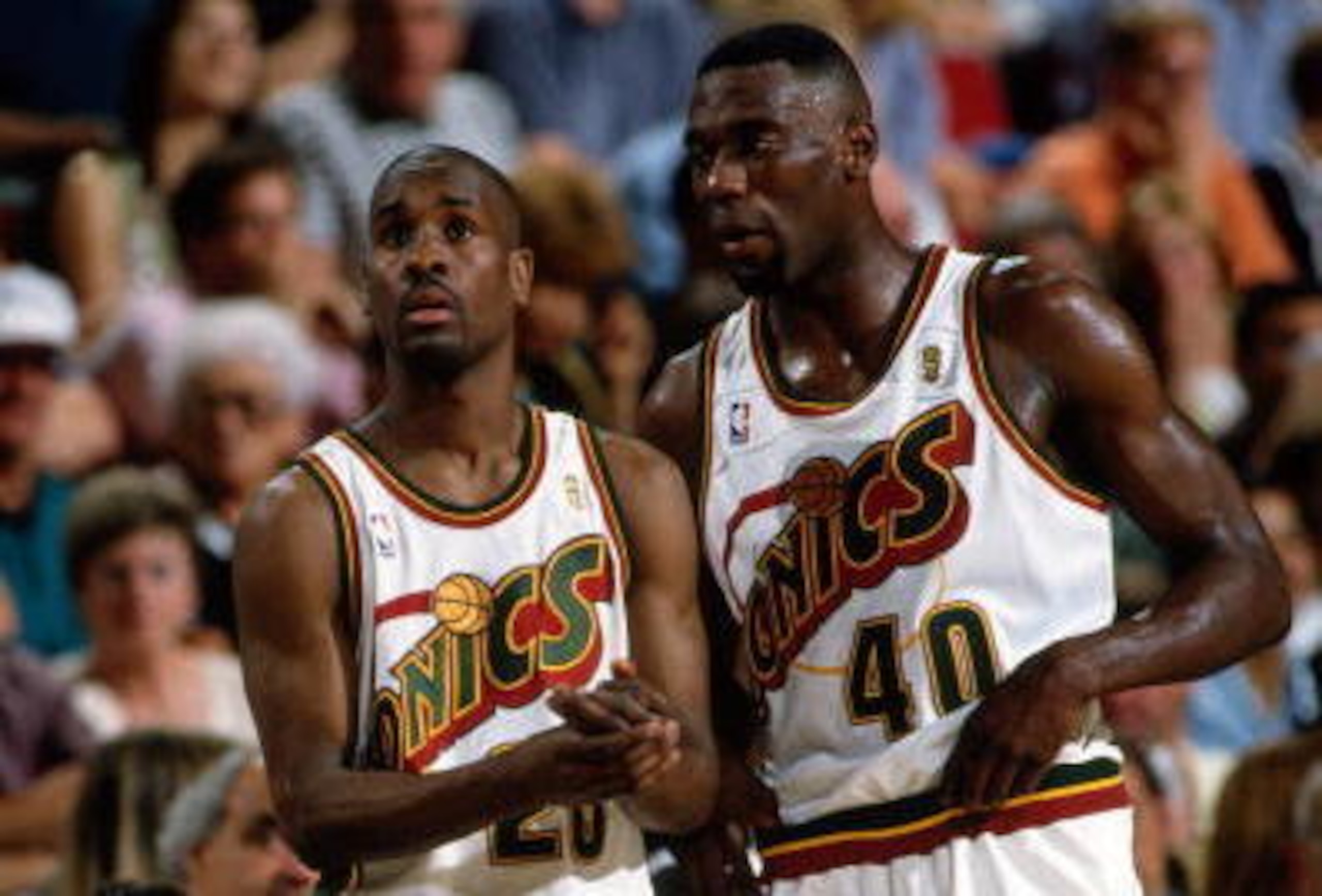
Record: 64-18
Efficiency Ratings (Rankings): 110.3 Offensive Rating (8th), 102.1 Defensive Rating (2nd)
Key Figures: Gary Payton, Shawn Kemp, Detlef Schrempf
Key Injuries: None
What Went Right: They found their signature style and masterfully executing it under the watchful eyes of then-Seattle SuperSonics coach George Karl.
"Nobody played basketball in the '90s like the Sonics. In an era of post-ups, isolations and slowdown styles, the Sonics were frantic," wrote SB Nation's Paul Flannery in March 2014. "...They wanted to turn you over and make you uncomfortable, and when they did, they threw down hammer dunks and alley-ops. Then, they told you about it afterward."
The Sonics followed the lead of All-Stars Kemp (19.6 points on 56.1 percent shooting, 11.4 rebounds) and Payton (19.3 points, 7.5 assists, 2.9 steals). Schrempf shined in a supportive, jack-of-all-trades role. Hersey Hawkins added another scoring threat on the perimeter, and the center minutes were split between floor-spacer Sam Perkins and rim-protector Ervin Johnson.
Seattle could run, gun and slam dunk opponents into submission. The Sonics played razor-sharp defense, which in turn fueled their high-powered transition attack.
They averaged 58.3 victories over the three previous seasons, but they had only advanced past the first round once in that stretch. In 1994, they became the NBA's first No. 1 seed to be dispatched by a No. 8.
But consecutive series wins over the Kings, Houston Rockets and Utah Jazz sent Seattle to its first Finals in more than a decade—and a date with the best regular-season team in NBA history.
What Went Wrong: The 1995-96 season was Michael Jordan's first full campaign after his initial retirement. The Chicago Bulls seemed like they were trying to make up for lost time.
The Bulls reeled off an NBA-record 72 wins and led the league in both offensive and defensive efficiency. Then, they suffered only a single loss in their three-round march through the East.
Chicago claimed the first three games of the Finals, two by double-digit margins. The Sonics rallied to win Games 4 and 5, but the Bulls rolled to a comfortable 87-75 series-clinching triumph in Game 6.
Seattle was knocked out in the conference semis a year later, then Kemp demanded a trade and got his wish. Payton was dealt for a package that included Ray Allen in 2003. The Sonics moved to Oklahoma City and adopted the Thunder nickname in 2008.
2. 1992-93 Phoenix Suns
7 of 8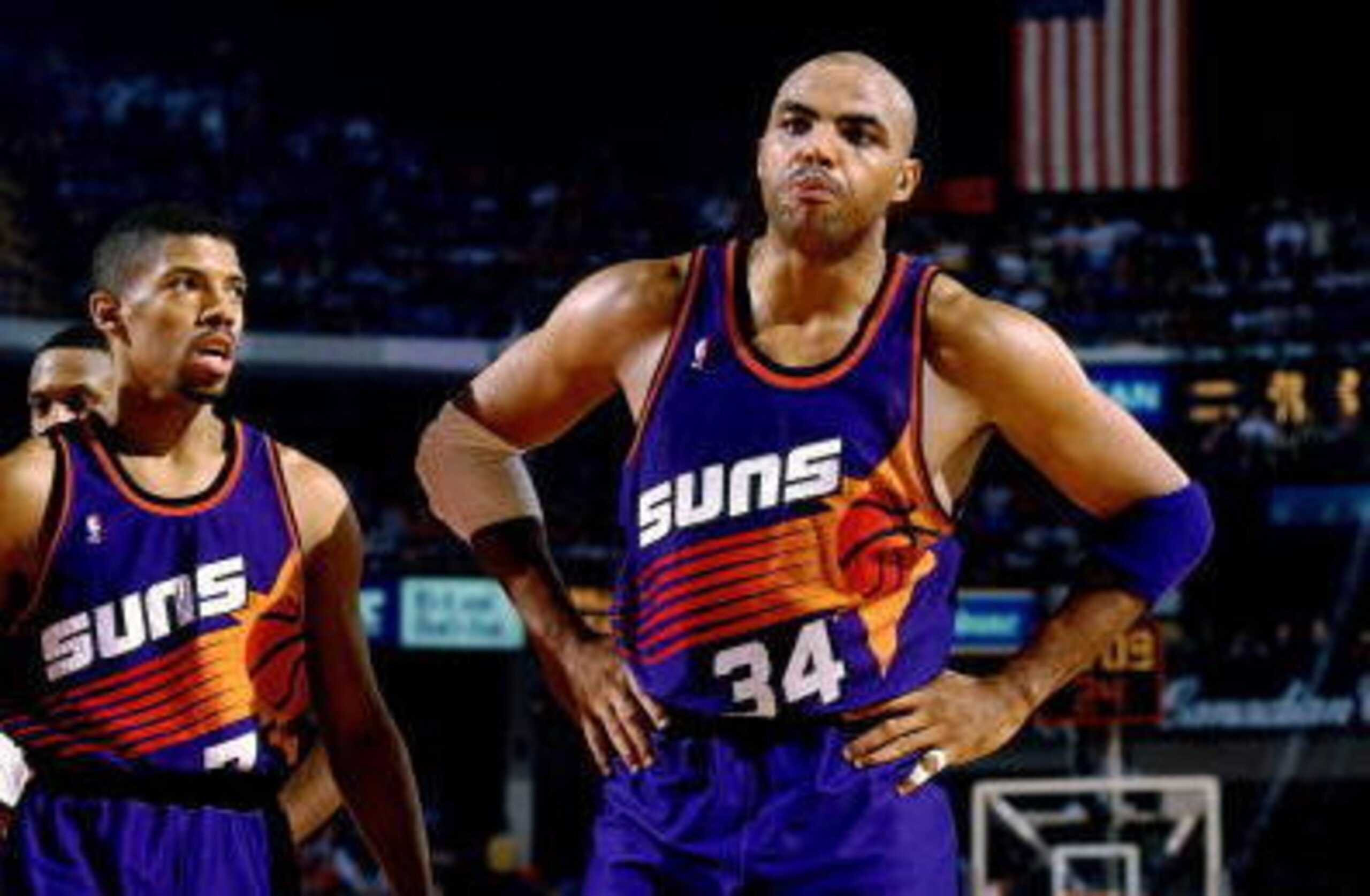
Record: 62-20
Efficiency Ratings (Rankings): 113.3 Offensive Rating (1st), 106.7 Defensive Rating (9th)
Key Figures: Charles Barkley, Kevin Johnson, Dan Majerle
Key Injuries: Cedric Ceballos stress fracture in left foot during Western Conference Finals
What Went Right: The Phoenix Suns traded for Barkley and promptly let him terrorize opponents.
Barkley's first season in the desert produced the first and only MVP award of his Hall of Fame career. He bullied his way to 25.6 points on 52.0 percent shooting, 12.2 rebounds and 5.1 assists per game. Only three players have ever compiled a 25/12/5 line while shooting at least 50 percent: Barkley and fellow Hall of Famers Wilt Chamberlain and Kareem Abdul-Jabbar.
"Chuck is largely responsible for the success we've had," then-Suns coach Paul Westphal told Fastbreak Magazine's Seth Sulka in June 1993. "He's gotten a tremendous amount of help from his teammates, but his attitude and his toughness have been key to our record and our success."
Barkley's supporting cast included fellow All-Star Majerle (16.9 points) and prolific point guard Johnson (16.1 points, 7.8 assists). The Suns could score at will, and they defended well enough to bring championship dreams painfully close to reality.
After escaping the crowded Western Conference, Phoenix had its shot to slay the Windy City dragon.
What Went Wrong: Three words: Michael Jeffrey Jordan.
"I really believed, at that time, I was better than Michael. That changed during this series," Barkley told Sports Illustrated's Jack McCallum in June 2013.
Jordan, who had won titles and Finals MVP awards each of the previous two seasons, was incredible from the opening tip. He powered the Bulls with back-to-back wins in Phoenix to start the series, totaling 73 points, 19 rebounds, 14 assists and seven steals during those outings.
Somehow, that was only the beginning. The Suns took two of the next three games, including a 129-121 triple overtime thriller in Game 3, but they never found a solution to their Jordan problem. He averaged 43.0 points on 50.9 percent shooting (41.7 percent from three), 8.8 rebounds and 6.6 assists over the final four games.
The Bulls closed out the series with a 99-98 victory in Game 6, punctuated by John Paxson's game-winning triple with 3.9 seconds remaining.
Phoenix averaged 57.5 wins over the next two seasons, but by 1996-97, both Barkley and Majerle were gone—along with the team's title hopes.
1. 1996-97 Utah Jazz
8 of 8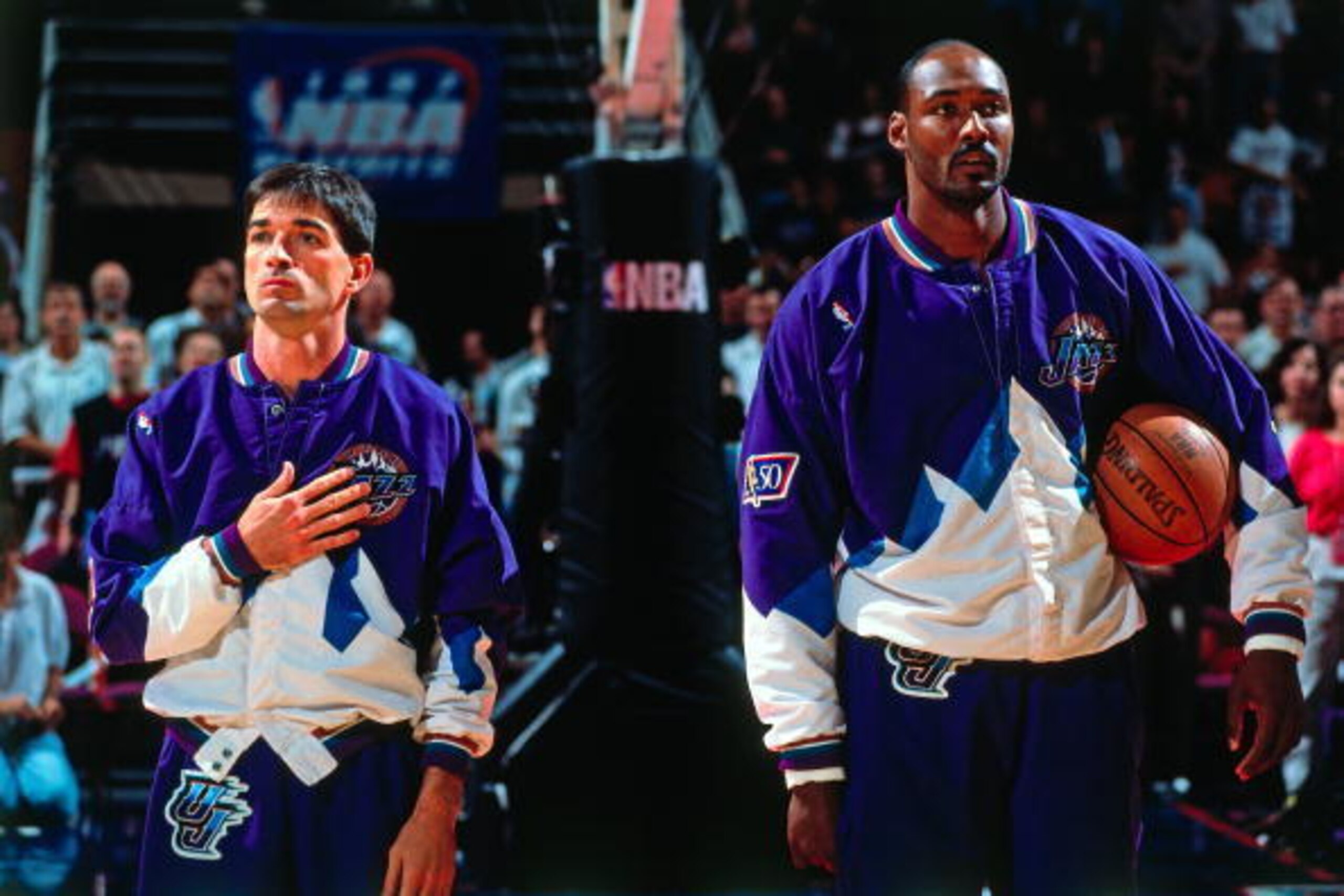
Record: 64-18
Efficiency Ratings (Rankings): 113.6 Offensive Rating (2nd), 104.0 Defensive Rating (9th)
Key Figures: Karl Malone, John Stockton, Jeff Hornacek
Key Injuries: None
What Went Right: Stockton and Malone pick-and-rolls. A ton of them.
The Utah Jazz's two representatives at the 1997 All-Star Game earned that distinction. Malone won the first of his two MVP awards that season by pouring in 27.4 points on 55.0 percent shooting, 9.9 rebounds and 4.5 assists per game. Stockton dropped 10.5 dimes a night, while also contributing 14.4 points on 54.8 percent shooting (42.2 percent from outside).
Utah had a three-point sniper (Hornacek) and stopper (Bryon Russell) on the wings and a 7'2", 280-pound brick wall at the basket (Greg Ostertag). Then-coach Jerry Sloan, who had manned that post since 1988, knew precisely what worked and what didn't with his players.
The Jazz, who had never been to the NBA Finals, paced the Western Conference in wins, and emerged from their half of the playoff bracket with an 11-3 mark. Unfortunately, the 69-win Bulls were waiting for them in the final round.
What Went Wrong: The same thing that plagued a lot of clubs in the 1990s: too much Michael Jordan.
The explosive shooting guard tallied 32.3 points, 7.0 rebounds and 6.0 assists per game during the series. The Jazz couldn't find the offense to match that. Malone shot just 44.3 percent from the field, while Hornacek and Russell converted just 38.5 percent of their field-goal attempts.
Both teams held serve on their home floor through the first four games. But Jordan delivered an epic performance in front of helpless Salt Lake City fans while battling the flu during Game 5. He erupted for 38 points, including 15 in the fourth quarter.
The Bulls escaped with a 90-88 win, then scored a series-clinching 90-86 victory two nights later behind 39 points and 11 rebounds from—who else—Jordan.
The Jazz suffered another six-game loss to Jordan's Bulls in the 1998 Finals. Utah has tallied six total playoff series wins since and has yet to make another Finals appearance.
Unless otherwise noted, statistics used courtesy of Basketball-Reference.com and NBA.com.

.jpg?w=2560 "Mahomes Told Teammate to Leave Meeting")
.jpg?w=2560 "Rodgers Iced Out on Plane 💎")
.jpg?w=2560 "🚨 Week 8 AP Top 25 Poll")


.jpg?w=2560 "Lamar Being Out Shocked Ravens")
.jpg?w=2560 "Raiders Could Start Mendoza")