Remembering Bill Polian's Hall of Fame Career
An NFL general manager wears many hats, but the position's primary responsibility is to serve as an organization's talent maestro.
A finely tuned team hits all of the right notes in each of its disparate areas on its way to winning numerous games during the unending pursuit of a championship. And those notes are orchestrated by the man pulling the strings.
Bill Polian conducted beautiful orchestras at three different stops on his way to becoming one of the most recognizable and successful general managers in NFL history. His prowess of taking downtrodden or even start-up franchises and making them into perennial winners was nothing short of masterful.

.jpg?w=2560 "Commanders Eagles Football")

As such, Polian will be counted among the first three general managers inducted into the Pro Football Hall of Fame thanks to the new special "contributor" category, which was added to the voting process this year. Polian will join Jim Finks, who was inducted in 1995 under the category of team administrator, and the Green Bay Packers' Ron Wolf.
"You almost can't put it into words," Polian said, per the Buffalo News' Tyler Dunne. "The Hall of Fame is not something someone like myself ever envisioned. You're there with people you've revered and looked up to all your life."
The ability to build a successful professional team is truly an art form. Talent evaluation relies as heavily on intuition as its does raw data. This is where Polian excelled.
"Unquestionably one of the greatest talent evaluators the NFL has ever seen," Indianapolis Colts owner Jim Irsay told the Indianapolis Star's Zak Keefer. "Bill is like that old guy at the racetrack with all those crumpled up pieces of paper that just knows how to pick 'em. He just has that knack."
Polian's three stops as a general manager each exemplified the administrator's ability to properly assess talent and lead his teams to previously uncharted territory.
Buffalo Bills (1984-92)
Four Super Bowl losses in four years are often viewed as a negative more than an accomplishment. In reality, those appearances in professional football's biggest game were a testament to just how good the Bills were for an extended period of time.
Polian originally served as the organization's pro personnel director for two seasons before eventually becoming the primary architect of these teams.
The former general manager described his approach once he officially took over in Buffalo prior to the 1986 season and after the team finished 4-28 the previous two seasons, per Dunne:
"Our approach was to put the very best team that we could on the field, to put the past behind us and not be dragged down by it. Not to have that as a legacy that somehow affected us. And most importantly, to put the very best team we could on the field. To be very aggressive in terms of not settling for second best, not making excuses, not allowing atmospheric or outside issues come into play. It was a straightforward, single-minded "let's put the best team we can on the field and let's win."
"
Even before Polian assumed roster responsibilities, the Bills already had three key pieces in place.
Quarterback Jim Kelly finally signed a deal with the Bills prior to the 1986 season after being selected in the first round of the 1983 NFL draft. The team chose Bruce Smith with the No. 1 overall pick in the 1985 draft. Andre Reed was then selected in the fourth round that year. Polian played a part in all of these acquisitions, but it was his next moves that eventually made the team into the AFC's powerhouse franchise during the early 1990s.
The first came when Polian recommended Marv Levy become the team's head coach.
"When I had the opportunity to recommend a coach to [owner Ralph] Wilson, there was no hesitation in my mind it was going to be Marv," Polian told ESPN.com's Mike Rodak. "I knew he was the perfect person for the job."
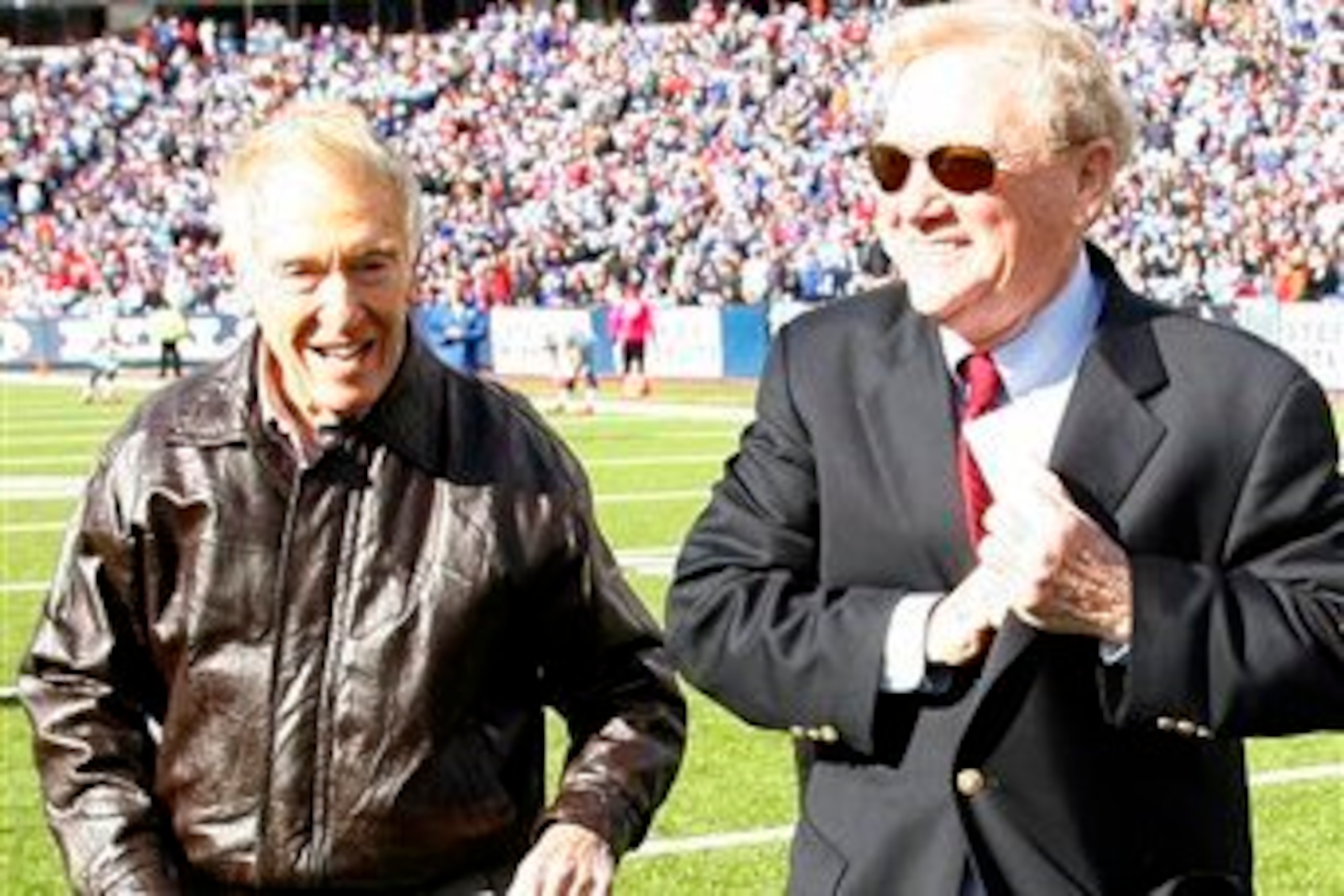
Polian spent five years working with Levy, first with the Kansas City Chiefs and then the USFL's Chicago Blitz, before the general manager was in a position to hire the head coach.
It, obviously, was the right move.
Levy finished his time in Buffalo with a record of 112-70 and became a Hall of Fame inductee in 2001.
The next step became the acquisition of talent to place around Kelly, Smith and Reed. In his first draft as an NFL general manager, Polian selected offensive tackle Will Wolford, who became a staple along the Bills offensive line until 1992. A year later, linebacker Shane Conlan and offensive tackle Howard Ballard were added to the mix. Polian also swung a deal after the draft to acquire the second overall pick in the class, linebacker Cornelius Bennett. The final major piece to the puzzle fell into place once running back Thurman Thomas was selected in the second round of the 1988 draft.
Polian was also the first administrator to implement a "personality test," which players were required to take. This allowed the general manager and his staff to see what personality types best fit certain positions.
| Year | Record | Result |
| 1986 | 4-12 | Fourth in AFC East |
| 1987 | 7-8 | Fourth in AFC East |
| 1988 | 12-4 | Lost in AFC Championship |
| 1989 | 9-7 | Lost in Divisional Playoffs |
| 1990 | 13-3 | Lost in Super Bowl XXV |
| 1991 | 13-3 | Lost in Super Bowl XXVI |
| 1992 | 11-5 | Lost in Super Bowl XXVII |
| Overall | 69-42 |
"He was a craftsman in putting together a team," former Bills safety Mark Kelso told Dunne. "Just masterful. He knew all the right ingredients, the right personalities and talent levels. Everything was calculated with him. He knew the puzzle pieces that fit together and kept tweaking things until he got everybody in the right position."
Of course, not every move worked in Polian's favor, but the general manager laid the foundation that resulted in an unparalleled run from the Bills.
"He had to call a lot of shots," Levy, who will introduce Polian on Saturday, told the Associated Press' Michael Marot. "I think he's the best GM in the history of football."
Before the Bills could make their fourth Super Bowl run, though, Wilson fired his general manager.
"I left a large part of my heart in Buffalo and it's still there," Polian said, per Dunne. "In an emotional sense, a large part of me has never really left."
Carolina Panthers (1995-97)
Polian's stop in Charlotte was sandwiched between his two more recognizable and successful stints with the Bills and the Indianapolis Colts, but the franchise's first general manager set the tone early for the Panthers.
Success doesn't come easy for expansion teams. More often than not, these fledgling programs are set up for failure due to lack of talent provided by the rest of the team and continuity from not playing together.
In order to win at a high rate early in the franchise's history, Polian decided to take a different route. Instead of trying to accumulate young talent and develop it over time, the Panthers went in the opposite direction.
| Year | Record | Result |
| 1995 | 7-9 | Fourth in NFC West |
| 1996 | 12-4 | Lost in NFC Championship |
| 1997 | 7-9 | Second in NFC West |
| Overall | 26-22 |
The expansion Panthers relied heavily on veteran leadership from linebacker Sam Mills, wide receiver Mark Carrier, safety Brett Maxie and Bills castoffs Don Beebe, Frank Reich and Pete Metzelaars.
Polian then added a solid first draft, but he had his first major decision to make at the quarterback position. One that would not be the last of his career.
"Our No. 1 choice was between [Steve] McNair and Kerry Collins," Polian told the Charlotte Observer's Scott Fowler. "We felt like neither guy was the kind of quarterback that would be the first pick in the draft, the Peyton Manning type, but we felt they both would have good careers."
Fate made the decision between the two quarterbacks after Polian decided to trade the No. 1 overall pick to the Cincinnati Bengals, who selected running back Ki-Jana Carter. The Tennessee Titans then chose McNair with the third overall pick, while Collins became Carolina's first-ever draft choice.
Collins didn't work out in the end, but Polian's overall plan did. Carolina finished 7-9 in its first season and was primed to take another step in the franchise's second year.
Further acquisitions of linebacker Kevin Greene, defensive back Eric Davis and tight end Wesley Walls helped expedite the growth of the franchise.
In only their second year of existence, the Panthers finished 12-4 and made it to the AFC Conference Championship Game against the Dallas Cowboys only to lose 30-13. Yet in a remarkably short amount of time, Polian pieced together a roster that was competitive and one step away from a Super Bowl appearance.
After the team took a step back during the 1997 season, opportunity came knocking again when Irsay negotiated a deal to trade for Polian to make him the Colts general manager and president.
Indianapolis Colts (1998-2011)
The course of Polian's career with the Indianapolis Colts hinged on his first major organizational decision: Who would the Colts select No. 1 overall in the 1998 NFL draft, Peyton Manning or Ryan Leaf?
It seems silly now, but this was a legitimate conversation at the time. One in which Polian made the absolute right choice.
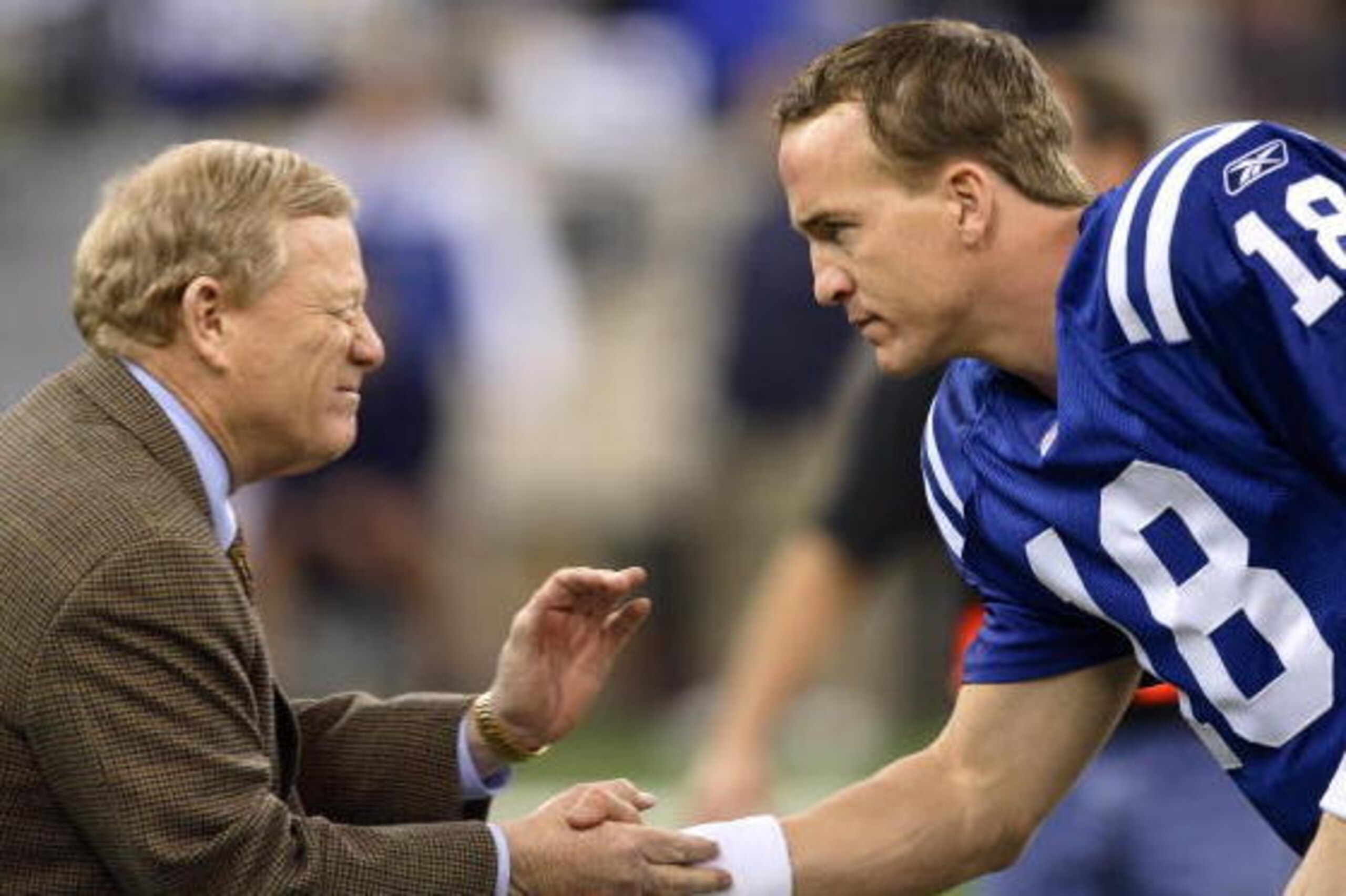
While Polian was leaning toward Manning at the time, it took one final meeting with the quarterback to solidify the decision.
"I just want to leave you with this one thought," he told Polian, per Keefer. "If you draft me, I promise we'll win a championship. And if you don't, I promise I will come back and kick your ass."
Polian admitted once his career as a general manger was finished, "After Peyton said that in my office that day, I told myself, 'There's the exclamation point. That proves exactly what we believed about him. But you have to remember, no one would have predicted Peyton was going to have a Hall of Fame career. No one would have predicted the difficult time Ryan had."
| Year | Record | Result |
| 1998 | 3-13 | Fifth in AFC East |
| 1999 | 13-3 | Lost in Divisional Playoffs |
| 2000 | 10-6 | Lost in Wild Card Playoffs |
| 2001 | 6-10 | Fourth in AFC East |
| 2002 | 10-6 | Lost in Wild Card Playoffs |
| 2003 | 12-4 | Lost in AFC Conference Championship |
| 2004 | 12-4 | Lost in Divisional Playoffs |
| 2005 | 14-2 | Lost in Divisional Playoffs |
| 2006 | 12-4 | Won Super Bowl XLI |
| 2007 | 13-3 | Lost in Divisional Playoffs |
| 2008 | 12-4 | Lost in Wild Card Playoffs |
| 2009 | 14-2 | Lost in Super Bowl XLIV |
| 2010 | 10-6 | Lost in Wild Card Playoffs |
| 2011 | 2-14 | Fourth in AFC South |
| Overall | 143-81 |
Manning's acquisition set the table for the team's success during Polian's 13-year tenure.
Obviously, Hall of Fame-caliber quarterbacks like Kelly and Manning made Polian's life much easier throughout his time as an NFL general manager. When arguably the team's best player also plays quarterback, it sets up everything very nicely.
Kelly was a five-time Pro Bowl selection and named to two All-Pro teams. Manning, meanwhile, was named league MVP four times during his time in Indianapolis. He also went to 11 Pro Bowls and made eight All-Pro teams before he left for the Denver Broncos.
A team, however, must be built around and accentuate these ascendant talents, and this is where Polian continually excelled.
In Indianapolis, Polian built an explosive offense led by Manning and a speedy defense meant to play with the lead and get after the quarterback. The general manager built these units by shirking conventional wisdom.
In 1999, the Colts passed on Heisman Trophy-winning running back Ricky Williams for the lesser-known Edgerrin James. The Miami product led the league in rushing during his first two seasons.
In 2001, Polian decided a wide receiver from Miami was a better overall value than helping the team's defense. Reggie Wayne is now the Colts' all-time leader in games played.
In 2002, a speedy defensive end by the name of Dwight Freeney was supposedly drafted well above his value when the Colts selected him with the 11th overall pick.
In 2003, Polian traded up in the fifth round for a little-known defensive end from Alabama A&M. Robert Mathis is now the Colts' all-time leader in sacks.
In 2004, safety Bob Sanders was considered undersized and unlikely to hold up to the rigors of the NFL. While this proved to be true over the long haul, he became the NFL Defensive Player of the Year in 2007 before his career came to a halt. Polian spent a second-round pick on the Iowa product.
These are the types of moves that define a career...a Hall of Fame career. A Hall of Fame career that culminated in a victory in Super Bowl XLI.
"His Colts stay alone was enough to get him in," Irsay told Keefer. "For our franchise, it will be a huge, huge day. It's very rare you get an executive in the Hall of Fame, ever."
It was simply about using precious draft picks to acquire talent. Polian also displayed a knack for spotting unappreciated and undrafted talent like center Jeff Saturday and linebacker Gary Brackett.
"He was a guy you could play for," Brackett says of Polian. "He was tough. He was fair. And he rewarded guys. He took care of his own. The players in the locker room respected him for that."
Lasting Impact
Relevance is not easy to achieve for an individual, team or organization. Polian accomplished this primary goal at all three of his stops as a general manager.
"You never dream of this," Polian said, per Marot. "But the thing I'm most proud of in all three stops is how well we did, who we did it with, and how we did it."
As the overseer of the Bills, Panthers and Colts, Polian captured six NFL Executive of the Year awards, which still ranks first among his peers.
The general manager experienced success wherever he went. Prior to being appointed general manager at Buffalo and Indianapolis, those teams combined to be 5-27 during the previous season. Polian became a master at rebuilding crestfallen or brand-new franchises eager to establish legitimacy.
Polian can now trade in all of those hats he used to wear as a general manager for a gold Hall of Fame blazer.
Brent Sobleski covers the NFL draft for Bleacher Report. Follow him on Twitter @brentsobleski.
.jpg?w=2560 "Chiefs Dolphins Football")
.jpg?w=2560 "Texans-Mixon Released Football")


.jpg?w=2560 "Love's Body Already 'Tired'")