

Carolina Hurricanes Still Working to Recover from the Collapse of March 2013
If the Carolina Hurricanes and the Washington Capitals are to ever make a rivalry out of their geographic proximity, they will need to play more games like the one on March 14, 2013.
Real rivalries need storylines. The Hurricanes' surprising surge to the top of the then-Southeast Division standings (boasting a 15-9-1 record at this point, more than halfway through the short year), the recent season-ending injury to Cam Ward and the Capitals' slow start to the lockout-shortened season took care of that easily.
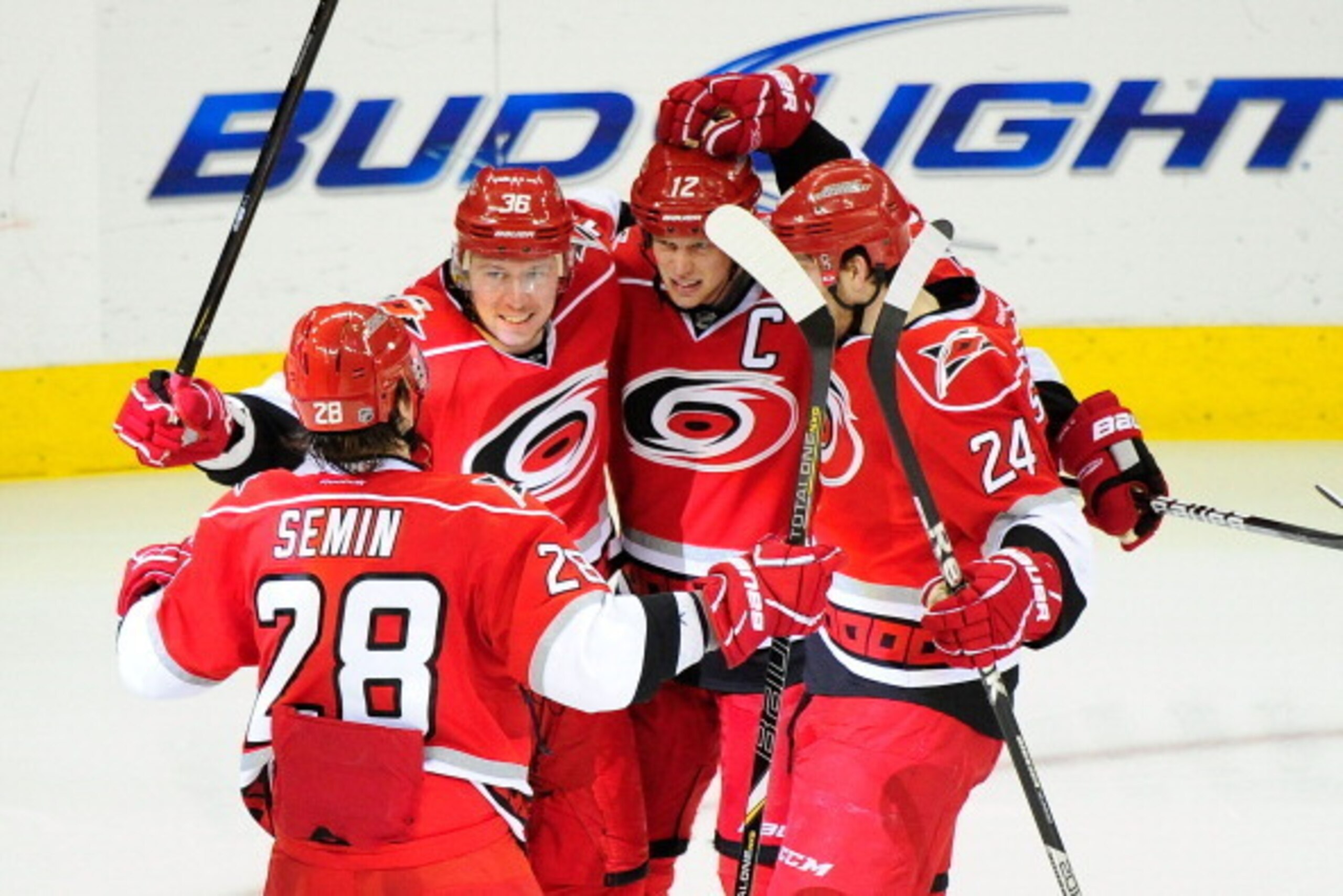
Real rivalries need a sense of betrayal. Alexander Semin's goal less than two minutes into the game, his first against his former team, fulfilled that quickly.
TOP NEWS
Grades For Every Team's Prospect Pool 🔠
Coach Replacements for Tocchet
BS Meter on Latest Trade Rumors 🌡️
Real rivalries need drama. The Capitals' rally from 2-0 down, finished by an Alexander Ovechkin tying goal one minute into the third period, provided it.
Real rivalries need controversy, and the game had that too.
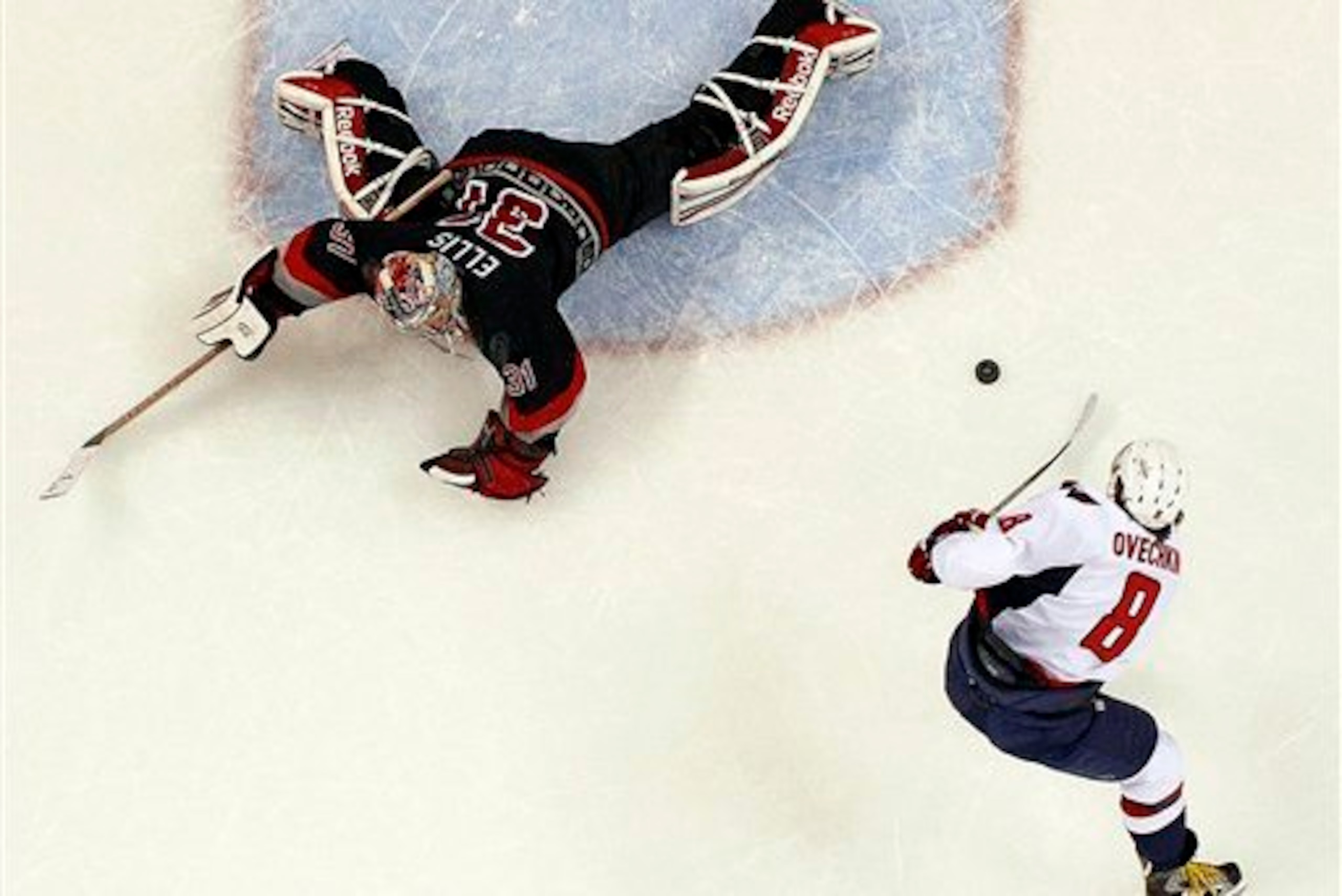
A breakaway move by Ovechkin in the game's closing minutes skidded off the goalpost and stopped dead on the goal line before Capitals forward Mike Ribeiro and 'Canes goalie Dan Ellis located it simultaneously. Fans and announcers thought the puck had been saved; the referees and, eventually, the review war room concluded it had crossed the line.
Real rivalries also need an aura of importance, of significance, of consequence—an aura difficult to achieve in a full 82-game, or even a shortened 48-game, regular season.
Consider this: Since Ribeiro shoved the puck one inch over the goal line and Washington rallied to top Carolina, 3-2, at approximately 9:30 p.m. ET on Thursday, March 14, 2013, the Hurricanes have not won a single game while sporting a true winning record.
That stat can be disproved if one follows the silly Bettman-esque mindset of separating the "OTL" and "L" columns. But losses are losses, and the 'Canes suffered 17 such things in a 19-game stretch beginning on that brisk Thursday evening, turning a small meltdown into a catastrophic one.
Consequence? Check that one off with an extra bold marker.
The 'Canes have never recovered in the two-and-a-half years since.
Neither of the players who scored the 'Canes goals in that contest—Semin and Patrick Dwyer—are still part of the 'Canes team, with Semin being bought out after two disastrous seasons and Dwyer being let go after nine seasons with the organization.
The general manager who brought both players to Raleigh is gone, too. So are the head coach and two of the three assistant coaches who stood behind the bench that night.
The time between the end of the 2009 Eastern Conference Final and the winter of 2012-13 was a lean period in 'Canes history, and the time since the team's March-April meltdown that year and today has proved equally unsuccessful.
Aside from the brief optimism of January 2014, when the 'Canes went 10-4-0 to claim the 8th spot in Eastern Conference for all of four days, the club has never looked viable as even a contender for the playoffs, much less a playoff contender.
The implementation of general manager Ron Francis' long-term vision over the past year has brightened the horizon tremendously, but the outlook for 2015-16 alone appears far from promising.
The team has added not a single new forward to an offense that ranked 27th in the league a season ago, instead opting to leave spots open for the new wave of prospects prepared to overtake the 'Canes in coming half-decade. The plan is clearly for the future rather than the now.
One must wonder how a postseason appearance back in 2012-13, capped by perhaps another unexpectedly deep run á la 2002 and 2009, would have affected the state of the franchise today.
Would a successful campaign from start to finish have lured higher-profile free agents to Carolina? Would the Jiri Tlusty-Eric Staal-Semin trio have become an elite top line for years to come?
Would the experience gained have helped youngsters like Drayson Bowman and Zac Dalpe become NHL regulars instead of failed projects? Would attendance in 2014-15 have been several thousand per game higher than the measly 12,594 the team actually averaged?
Or would the 'Canes have been fooled into thinking that Jim Rutherford remained the long-term answer at the GM position? Would Dan Ellis have been awarded an ill-advised multi-year contract? Would the Jamie McBain-for-Andrej Sekera trade never have happened?
Would the comprehensive rebuilding project at all levels of the organization have been simply delayed a few years?

The final ingredient for a real rivalry is success.
There is a reason why UNC vs. Duke is considered one of the world's greatest rivalries in basketball and is barely relevant in football, why the NBA's Lakers and Celtics (two teams roughly 2,500 miles apart) have such a legendary history, why the Red Wings' biggest rival was the Maple Leafs, then the Avalanche, then the Blackhawks.
It's an ingredient direly missing in one half of the 'Caps-'Canes would-be rivalry. Since 2010, Washington boasts five playoff berths, three division titles (including in 2012-13) and one President's trophy compared to Carolina's zero, zero and zero.
Gaining more success and returning to the NHL's perennial playoff picture is certainly of higher priority to 'Canes management than developing a rivalry with their northern neighbors, with very understandable reason.
Carolina's blown lead back on March 14, 2013, and the losing streak that followed it, likely didn't create a maze of massive holes within the team, but rather—like pouring water into an anthill—just revealed them.
Even if so, however, the team is undoubtedly still waiting for the mound to dry.
Twenty-eight months later, the repercussions of the second half of the 2012-13 season continue to shape the mindset and the path of the Carolina Hurricanes franchise.
Mark Jones has been a Carolina Hurricanes Featured Columnist for Bleacher Report since 2009. Visit his profile to read more or follow him on Twitter.
.jpg?w=2560 "Cam Ward Says He's Not A Loser")
.jpg?w=2560 "🚨 Texans Trade for MHJ")
.jpg?w=2560 "Chargers Fall to 0-5 🤢")
.jpg?w=2560 "Grading MHJ Trade 📝")

.jpg?w=2560 "MHJ Bought Own Jugs Machine")