

Hungarian Grand Prix 2015: Practice Incidents Highlight the Curse of Formula 1
Have you ever noticed how these things never happen in isolation?
Accidents, both serious and spectacular, are rarely one-off occurrences in Formula One and the wider motor-racing spectrum. Several years can pass with only minor brushes with danger as drivers emerge unscathed from near misses and lucky escapes, flips and fireballs.
Yet when this sport—"safe but not safe," as Bernie Ecclestone told Sky Sports—bears its teeth, it bites harder than any and does so in waves, often without warning and in quick succession, leaving its participants startled and vulnerable.
.jpg?w=2560 "49ers Giants Football")

The 1994 San Marino Grand Prix, so often regarded as F1's darkest weekend, was the birthplace of this phenomenon.

Roland Ratzenberger and three-time world champion Ayrton Senna died in consecutive days at the Imola circuit, where Rubens Barrichello was fortunate to escape a heavy impact in qualifying and J.J. Lehto and Pedro Lamy lived to tell the tale of a start-line shunt.
While Imola '94 was a particularly extreme example, these waves have battered motorsport's consciousness with increased frequency over the last six years.
In July 2009, Felipe Massa's life-threatening crash in qualifying for the Hungarian Grand Prix came just six days after Henry Surtees, son of 1964 title winner John Surtees, died in a Formula Two race at Brands Hatch.

Just 24 hours following Massa's incident, a wheel freed itself from Fernando Alonso's car and bounced toward a crash barrier, and thankfully not a spectator grandstand, after a pit-stop blunder by the Renault team.
In October 2011, Marco Simoncelli, the MotoGP rider, lost his life in a race at Sepang seven days after two-time Indianapolis 500 winner Dan Wheldon's fatal crash at the IndyCar season finale at Las Vegas Motor Speedway.

Two years later, former Marussia test driver Maria de Villota succumbed to injuries related a 2012 testing crash, per BBC Sport, four days before sportscar racer Sean Edwards was killed at Queensland Raceway. The following month, Dario Franchitti brought a premature end to his IndyCar career after a violent accident at Houston.
Motorsport's inexplicable habit of creating short, sharp sequences of pain and tragedy has resulted in plenty of introspection in recent years. Are these accidents merely a result of bad luck, or is there something more?
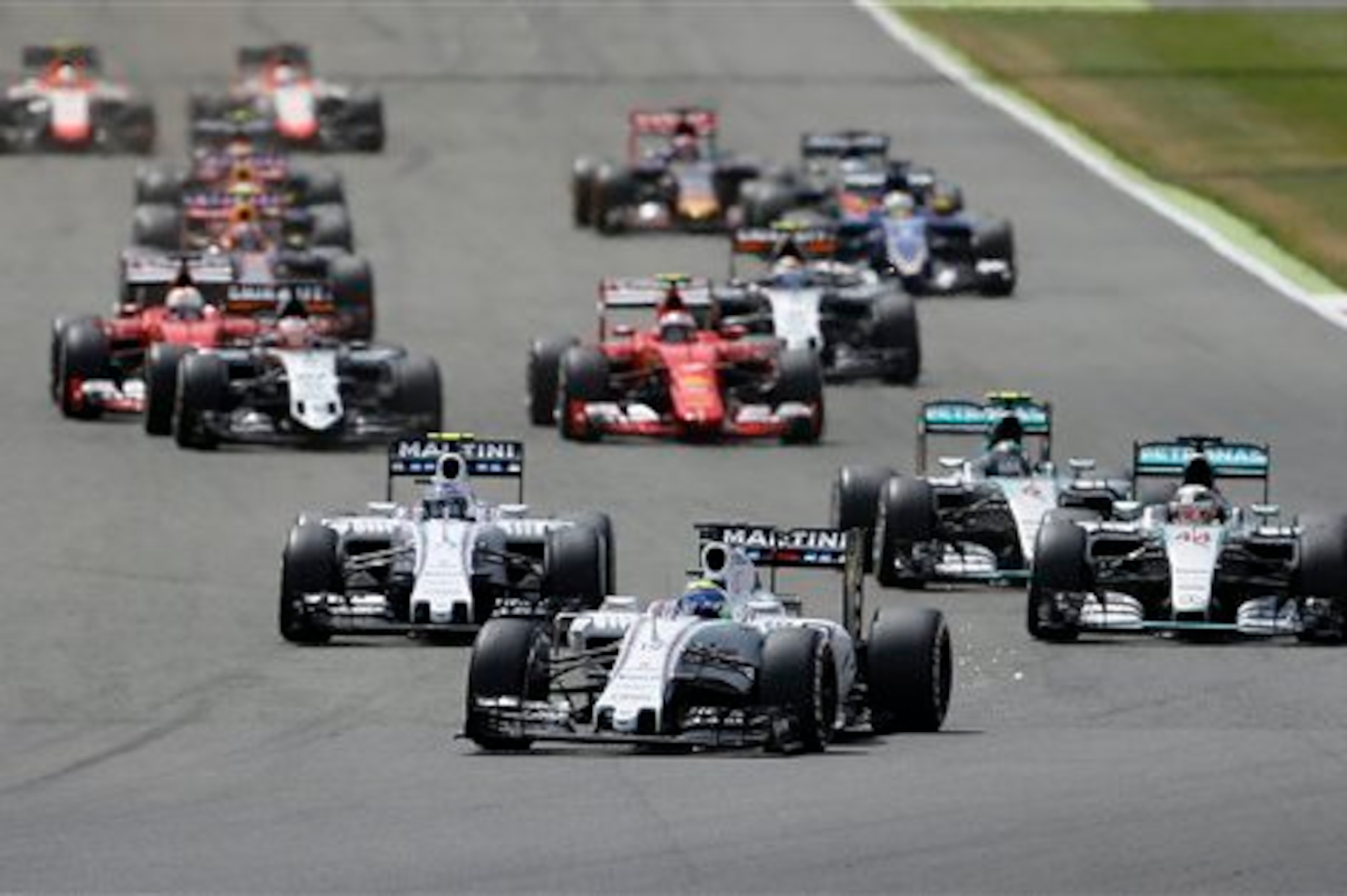
Is this motor racing's own way of reminding us of its danger, its brutality, its savageness? Is the sport's collective psyche in some way tampered and shaken by the disaster, to the point where it unknowingly invites and exposes itself to further strikes?
Or is F1, and all its fellow categories, cursed?
It was a question worth pondering as the paddock reconvened at the Hungaroring for the first grand prix since the death of Jules Bianchi, who never recovered from injuries sustained in last October's Japanese GP.

The Budapest race, the last before F1's traditional mid-season break, represents an opportunity for the drivers—many of whom attended Bianchi's funeral on Tuesday—to return to normality, to eradicate any apprehension regarding their return to the cockpit.
Yet their efforts to do so were made doubly difficult when the first practice session of the weekend was marred by not one but two eerie incidents, the sort that tend to happen when a pit lane is in mourning.
As the 90-minute FP1 session ticked toward its conclusion, the front wing of Kimi Raikkonen's Ferrari effectively fell off as the 2007 world champion ran across the exit-kerb of Turn 12, causing a front-left puncture.
Raikkonen's relatively slow speed at that section of the circuit meant the affect of the failure was minimal—the Finn simply coasted around the final two corners and back to the pit lane—yet the seriousness of such a sudden failure, despite the driver downplaying the incident to ESPN's Will Kent, should not be underestimated.
"After a stuck throttle and failed brakes," former grand prix driver Martin Brundle told Sky Sports' television coverage of the session, "the third-worst thing (to happen in an F1 car) is your front wing breaking because it then tucks underneath and lifts the front off the ground—and you end up with no brakes either."
"Sergio Perez had a lucky escape in #FP1 when he walked away from this: http://t.co/2E2ID6AW3H #HungarianGP #bbcf1 pic.twitter.com/Ie05IY6dWc
— BBC Sport (@BBCSport) July 24, 2015"
Shortly before Raikkonen's dislodged wing came a terrifying accident for Sergio Perez, which saw the Mexican's Force India trip over its front-right wheel and roll on the back straight after sliding across the track on the exit of Turn 11.
The team later confirmed the crash was caused by a "suspension failure"—the rear-right suspension could be seen collapsing as Perez rode the exit-kerb—and the roll resulted "in significant damage to the bodywork, wings and floor."
While Perez made only a brief visit to the medical centre, the incident ended Force India's running for the day as the team sought to "understand the cause of the failure and find a solution," giving the Mexican and team-mate Nico Hulkenberg a free afternoon.
In Thursday's FIA press conference, Perez and Hulkenberg were among six drivers adamant that Bianchi's fate, and the ever-vivid memories of that dreadful afternoon at Suzuka, will have no impact on their approach to racing going forward.
Yet the unnerving, abnormal incidents involving Perez and Raikkonen in practice has only reinforced the idea that the 2015 Hungarian Grand Prix—an event where the on-track action was always bound to be an afterthought—is a race to endure, rather than embrace.
F1's desire to produce excitement has been a recurring theme throughout 2015, but one suspects a straightforward, uneventful race would be welcomed by all this weekend before the teams and drivers disappear for four weeks until the Belgian Grand Prix.
Four weeks to detach from the emotion. Four weeks to rediscover their hunger for the sport. Four weeks spent waiting for the latest wave to calm, for the latest storm to pass.
.jpg?w=2560 "Commanders Vikings Football")
.jpg?w=2560)
.jpg?w=2560 "Dak Addresses 'Dumb' Old Romo Tweet 🤣")

.jpg?w=2560 "Follow Raw As It Happens 👊")