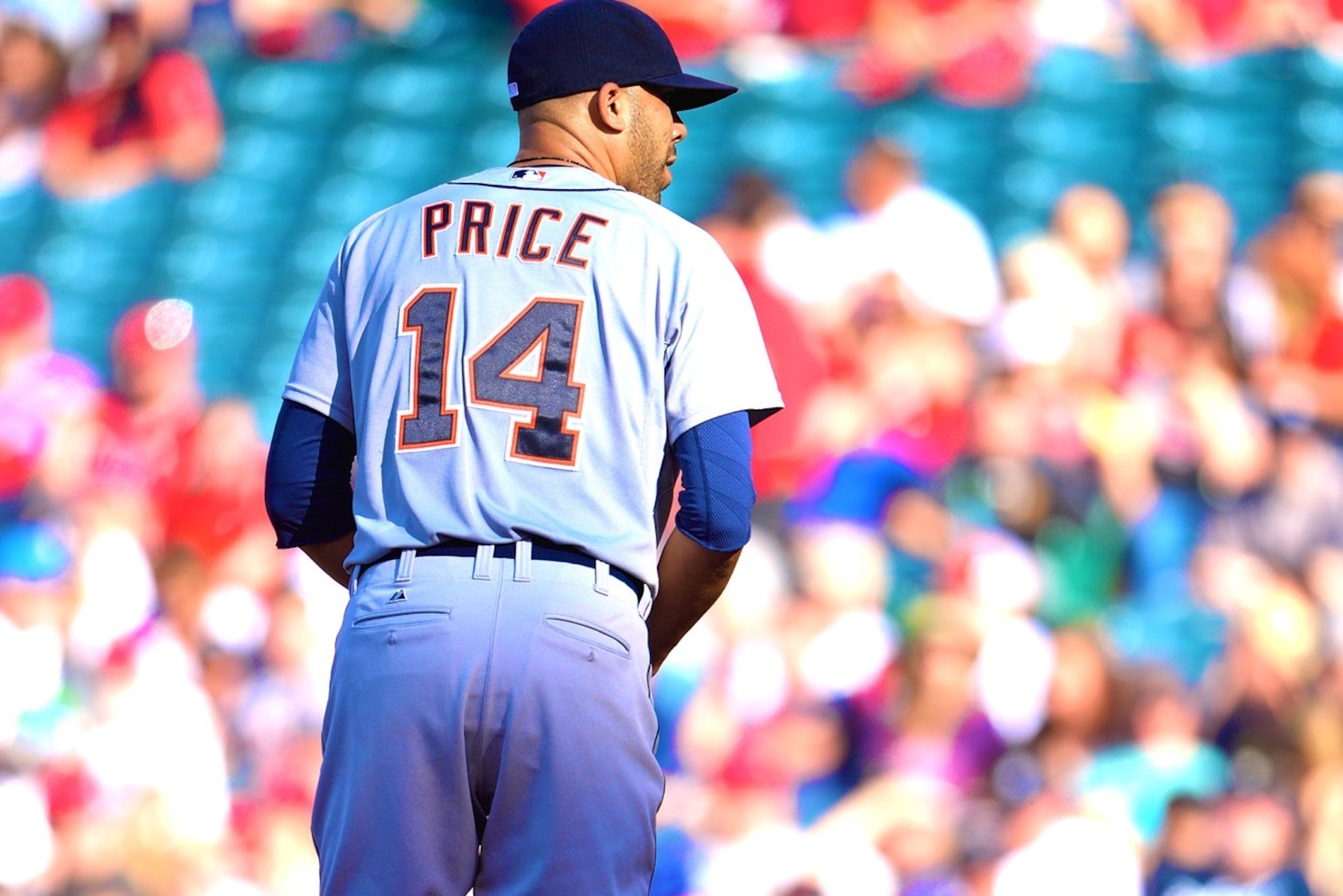

Tigers Must Make Unpopular Decision to Trade David Price, Yoenis Cespedes
Sometimes in baseball, as in life, the right decision is also the painful decision. Just ask the Detroit Tigers.
Pride runs deep for the Tigers, who have won four consecutive division titles and been to the World Series twice since 2006. This is a franchise accustomed to winning.
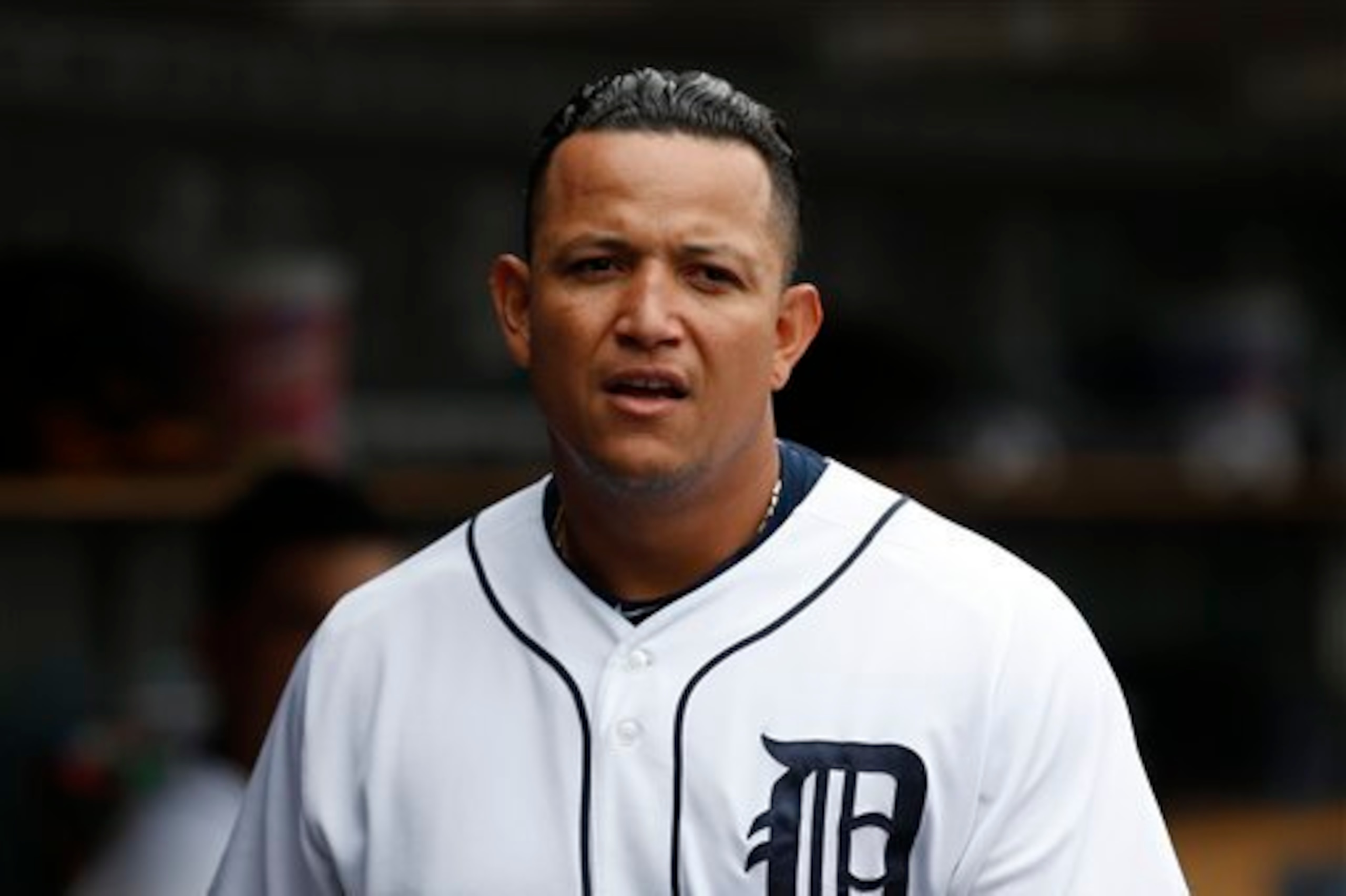
And yet here they sit, 45-46 after a dispiriting 9-3 loss Sunday to the Baltimore Orioles. Sure, Detroit is technically within striking distance, 4.5 games off the pace for the second wild card.
TOP NEWS

Breaking down why Brewers can stop Dodgers 3-peat
.jpg?w=2560)
Trent Grisham Landing Spots 📍

Each Team's Biggest Roster Hole to Fix in Offseason ⚾
Let's get real, though: These Tigers are essentially clawless.
The offense ranks among MLB's best in most major categories, but those stats look hollow with Miguel Cabrera on the disabled list. And the pitching staff owns the second-worst ERA in the American League, ahead of only the last-place Boston Red Sox.
Detroit is a fringe contender at best, staring up at the defending AL champion Kansas City Royals and surprising Minnesota Twins in the American League Central.
As the July 31 trade deadline looms, it's time to make some difficult, necessary decisions.

First, a cold, hard fact: Detroit has the worst farm system in the game, according to Baseball America, ESPN's Keith Law, Bleacher Report's Joel Reuter and, probably, your sweet old grandmother who's never watched an inning of baseball.
It's a barren system, a consensus disaster in dire need of reinforcements.
That's the model in today's MLB: Develop from within, augment via free agency, rinse, repeat. If the Tigers want to resume their winning ways, they'll need an infusion of young, cost-controlled talent.
Fortunately, in a market saturated with would-be buyers, the seller is king. And the Tigers have some intriguing pieces to dangle.
The biggest potential chips—David Price and Yoenis Cespedes—are no strangers to the trade deadline. Both players were dealt last July, and both should yield a bounteous return this season.
Price, of course, was Detroit's headline-grabbing acquisition in 2014. The ace left-hander came over from the Tampa Bay Rays and helped push the Tigers into October, though he lost his only postseason start despite a strong effort.
This season, Price has been typically stellar, posting a 2.32 ERA with 127 strikeouts in 132 innings and making his fifth All-Star appearance.
The only caveat: The 2012 AL Cy Young Award winner is an impending free agent, meaning he'd be a rental for any club that nabbed him.
Cespedes, too, changed hands last July, as the Oakland A's shipped him to Boston in the Jon Lester deal. Then, in December, the Cuban slugger was swapped again, this time to Detroit for sinkerballer Rick Porcello.
Detroit, so far, has gotten the better end of that trade. While Porcello owns an unsightly 5.79 ERA, Cespedes has hit .292 with 13 home runs and an .805 OPS.
Like Price, he'll be a free agent this winter. And also like Price, he'd make a nifty rental for any club seeking an infusion of power—which is to say virtually every club.
The question now is whether Detroit is ready and willing to deal. General manager Dave Dombrowski sounded prepared for any contingency, per Chris Iott of MLive.com:
"My job every day, no matter how I've been throughout my career—long-term, short-term—I always approach it the same way. I always work as hard as I can and do everything I possibly can. You always work with your organization and ownership with whatever their priorities are at a particular time.
It's either to win, or there's been other times in a situation where somebody says—like when I was with the Marlins way back when—'we're going to break this championship team up.' So you always work with your owner in that regard.
"
Translation: Don't ask me. I'll do as I'm told. If it works, great; if not, don't shoot the messenger. Dombrowski, recall, is in the final year of his contract.
The risk is that Detroit misses its chance and fails to cash in on tradable assets, becoming the Philadelphia Phillies of the AL, as Joel Sherman of the New York Post noted:
"Like the Yankees, it is not in this organization's DNA to surrender. Aging Tigers [owner] Mike Ilitch has supported substantial payrolls because he wants to win it all in his lifetime. ...
But in that Tigers stubbornness I see what turned the Phillies from arguably the best five-year run in their history (2008-2012) into a slide that has bottomed out into by far the majors' worst team.
The formula: pay the stars who brought excellence on long-term deals through their injury/production phase plus use the farm system to add more veterans to chase the dream. For Philadelphia, the result has been having hard-to-trade, aging icons and a prospect base not ready to take the baton.
"
It's unfair to draw a straight line between the Tigers and the Phillies, branding both dysfunctional cellar-dwellers with a long, winding road to relevance ahead of them. But if they aren't careful, that could be a disturbing glimpse into the Tigers' future.
Unless, of course, they bite the bullet and do the right thing, painful as it may be.
All statistics current as of July 19 and courtesy of MLB.com unless otherwise noted.

.jpg?w=2560 "Cam Ward Says He's Not A Loser")
.jpg?w=2560 "🚨 Texans Trade for MHJ")
.jpg?w=2560 "Chargers Fall to 0-5 🤢")
.jpg?w=2560 "Grading MHJ Trade 📝")

.jpg?w=2560 "MHJ Bought Own Jugs Machine")