.png?w=2560)


After three days and 257 selections, the 2025 NFL draft has ended. All 32 teams should feel like they've improved, though some should feel better than others.
It's never quite fair to judge prospects before they've even taken an NFL field, and we're not here to predict how the league's newest players will pan out. It's entirely fair, however, to assess how teams navigated the event, addressed needs, maximized value (or not) and matched draft strategies to long-term franchise plans.
That's right: It's time for Bleacher Report's post-draft grades for every team.
Below, you'll find a look at every selection from every franchise with overall class grades based on the aforementioned factors, projected team/scheme fit and any relevant trades.
Since value is subjective, we used the Bleacher Report Scouting Department's final 2025 prospect rankings as a guideline. Teams are listed in alphabetical order.
Round-by-Round Draft Results
1 of 33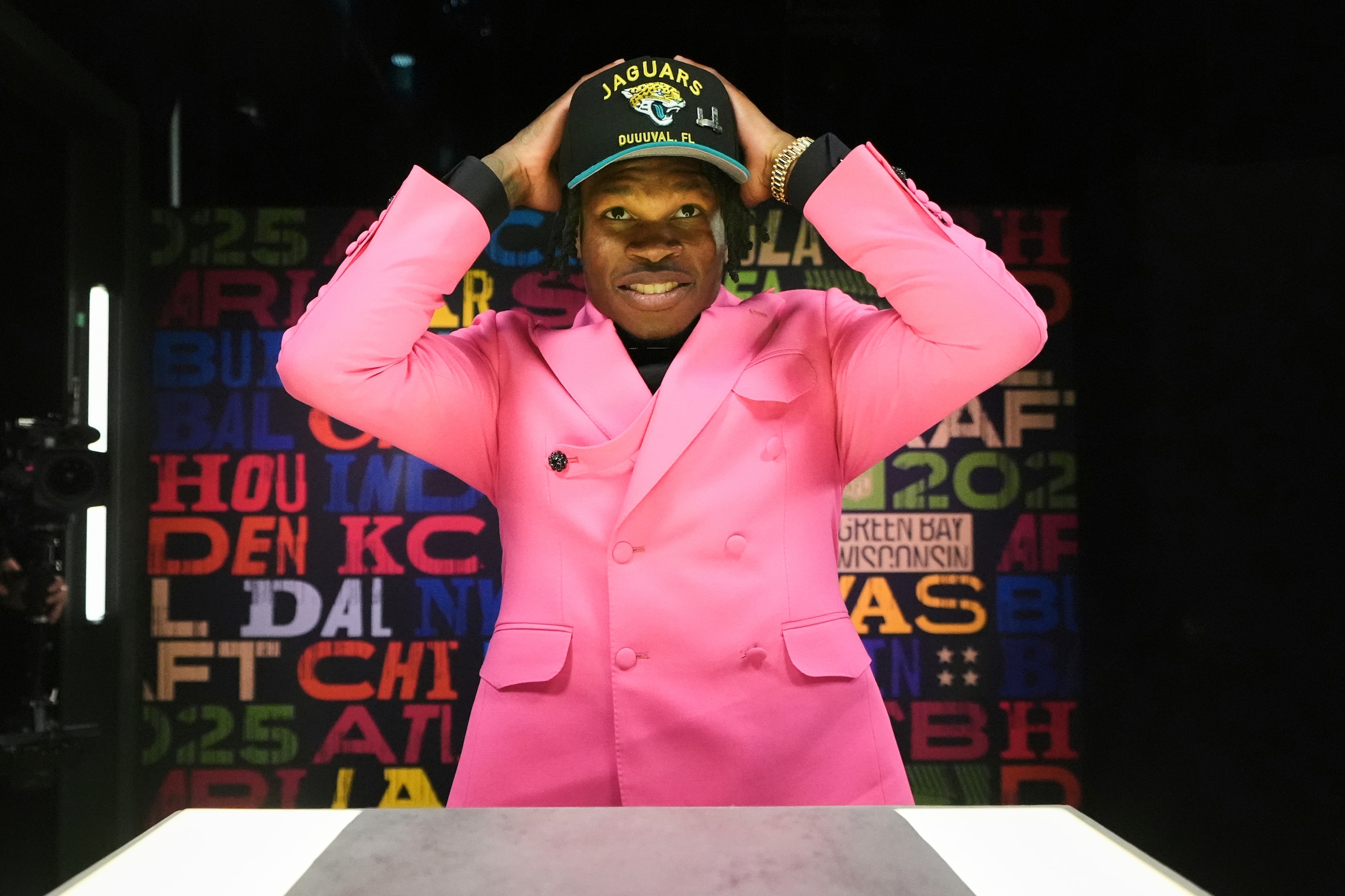
Arizona Cardinals
2 of 33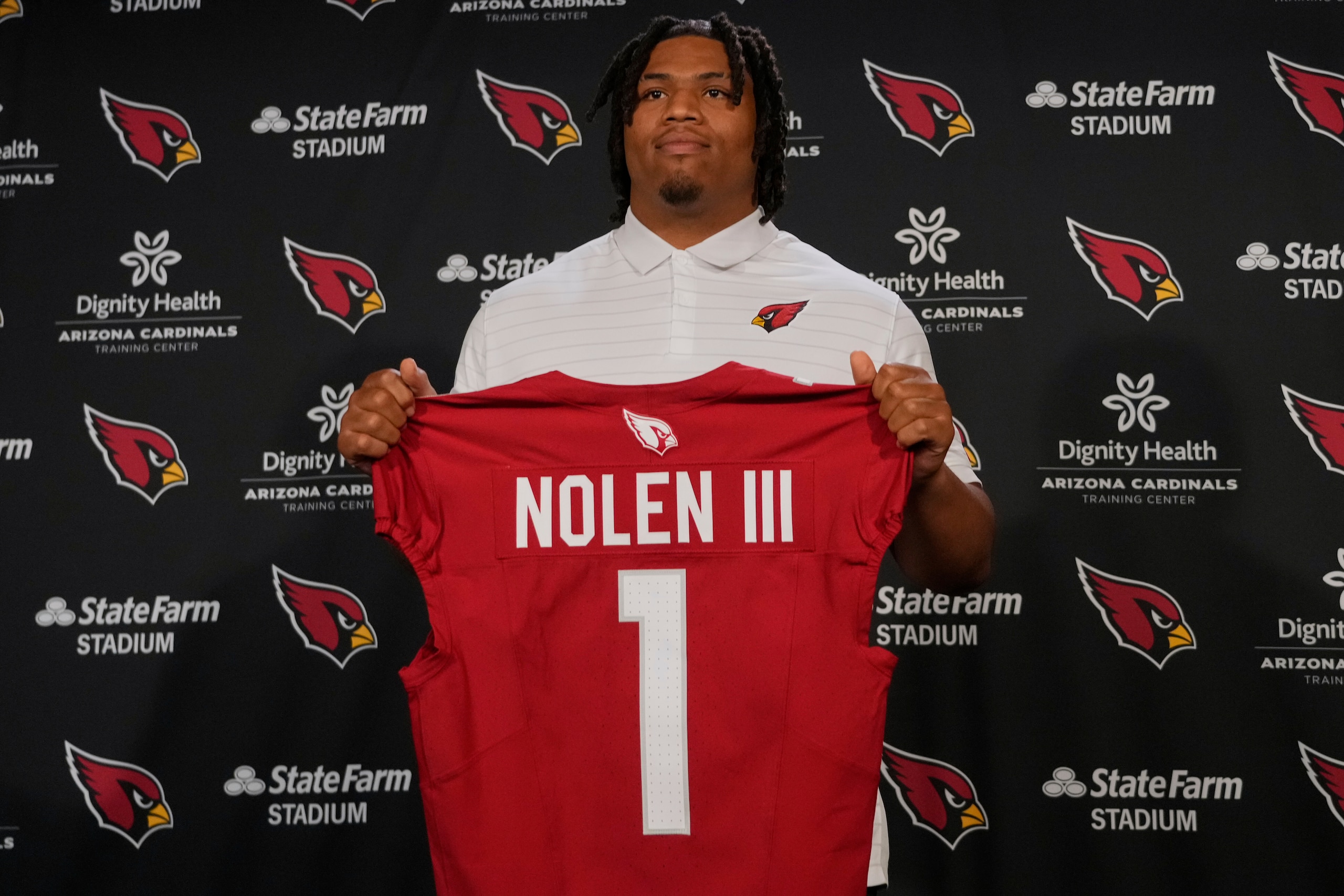
Round 1 (No. 16): DL Walter Nolen, Ole Miss
Round 2 (No. 47): CB Will Johnson, Michigan
Round 3 (No. 78): Edge Jordan Burch, Oregon
Round 4 (No. 115): LB Cody Simon, Ohio State
Round 5 (No. 174): CB Denzel Burke, Ohio State
Round 6 (No. 211): IOL Hayden Conner, Texas
Round 7 (No. 225): S Kitan Crawford, Nevada
The Arizona Cardinals kicked off their draft by taking Mississippi defensive lineman Walter Nolen. While Nolen was widely viewed as a boom-or-bust prospect coming into the draft, he should fit well with what Arizona wants to accomplish defensively.
Nolen's concerns aren't centered around his play on game days.
"Nolen’s practice habits and sense of entitlement have been questioned," Sports Illustrated's Albert Breer wrote on April 23.
The 21-year-old has as much physical upside as any defensive lineman in this class. He can create havoc on the interior, and he can help give head coach Jonathan Gannon the sort of disruptive front he once had as the Philadelphia Eagles defensive coordinator.
Arizona took a flier on Michigan cornerback Will Johnson in Round 2, which, in a vacuum, was a brilliant move. The Cardinals ranked just 21st in net yards allowed per pass attempt last season, and Johnson was the fifth-ranked prospect on the final B/R board.
According to NFL Network's Ian Rapoport, Johnson slid because of long-term concerns about his knee. If his health holds up, though, the Cardinals may have gotten the steal of the early draft.
Gannon got a few more pieces for his defense in the middle rounds, adding Jordan Burch, Denzel Burke and Cody Simon.
It wasn't surprising to see a defensively focused draft from the Cardinals, given Gannon's background. It's fair to wonder, though, if Arizona should have done more to support quarterback Kyler Murray, who has yet to establish himself as a top-tier signal-caller.
Grade: B+
Atlanta Falcons
3 of 33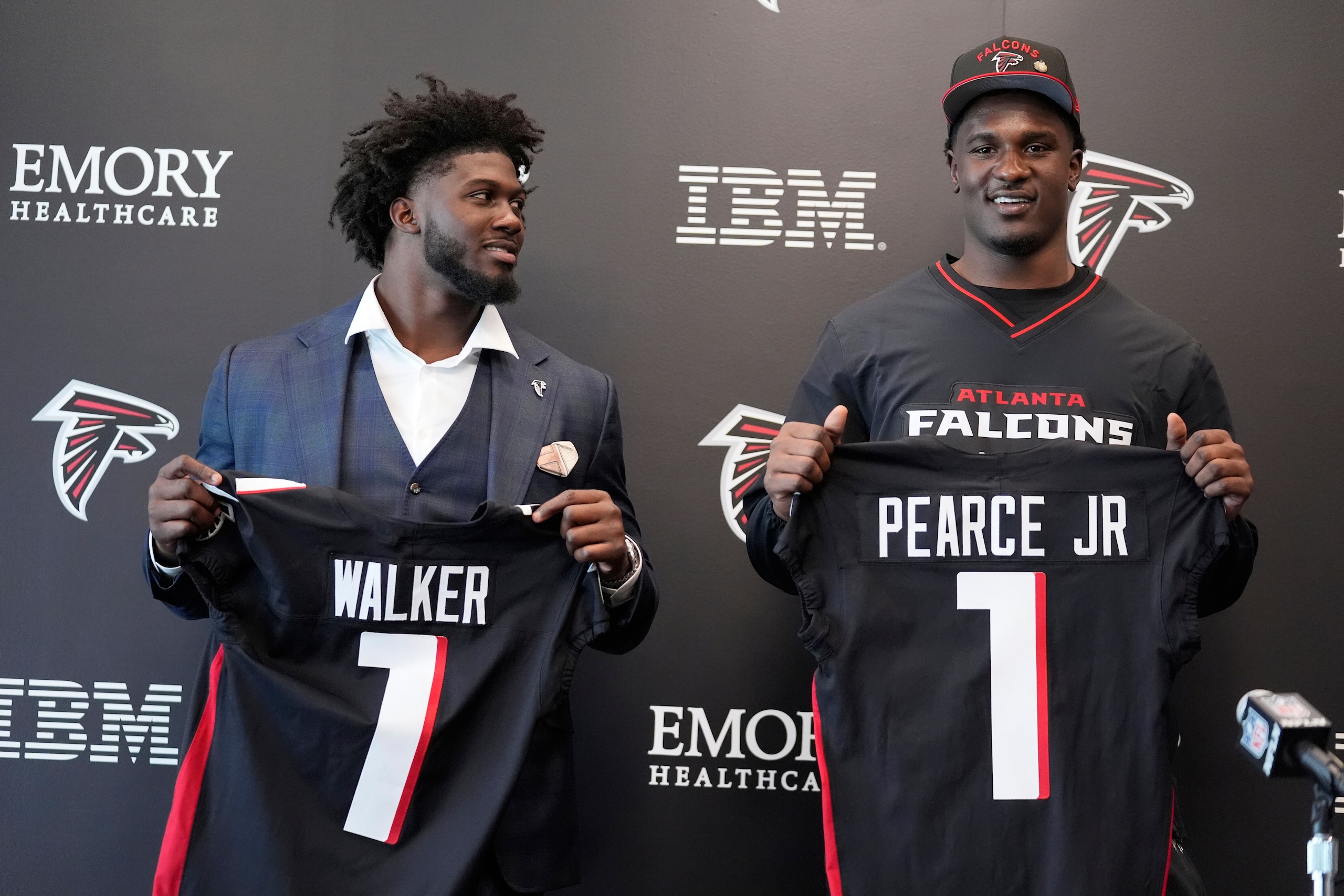
Round 1 (No. 15): LB Jalon Walker, Georgia
Round 1 (No. 26): EDGE James Pearce Jr., Tennessee
Round 3 (No. 96): S Xavier Watts, Notre Dame
Round 4 (No. 118): S Billy Bowman Jr., Oklahoma
Round 7 (No. 218): OT Jack Nelson, Wisconsin
The Atlanta Falcons appear eager to support second-year quarterback Michael Penix Jr. with a vastly improved defense. With their first 2025 draft selection, the Falcons took Georgia linebacker Jalon Walker, arguably the most versatile defender in the class.
Atlanta then traded back into Round 1 for Tennessee pass-rusher James Pearce Jr. Like Walter Nolen, Pearce carries off-field concerns but has an intriguing amount of upside.
"Pearce is seen as a bit edgy, and had a reputation for being divisive in college," Breer wrote on the eve of the draft.
It's worth noting that Pearce was viewed as a candidate to go No. 1 overall a year ago. If he can reach that ceiling, moving up to acquire him will have been worth it. If not, the Falcons will regret sending the 46th and 242nd picks, along with a 2026 first-round selection, to the Los Angeles Rams for the 26th and 101st picks.
Safeties Xavier Watts and Billy Bowman Jr. have the potential to form a very disruptive duo on the back end. Atlanta lacked legitimate difference-makers in its secondary last season. That shouldn't be as much of a concern in 2025.
Adding Watts, specifically, should help mitigate the risk of trading up for Pearce. He was the 27th-ranked overall prospect on the Bleacher Report Scouting Department's final draft board.
With Jessie Bates III still in the mix at safety, the back end of the defense should actually be a team strength in 2025.
Was the move to land Pearce an unnecessary risk? Probably. Is Atlanta's defense, on paper, dramatically better than it was a few days ago? Yes.
Grade: B
.jpg?w=2560 "Saints Giants Football")
.jpg?w=2560 "Cardinals Giants Football")
.jpg?w=2560 "Broncos 49ers Football")
Baltimore Ravens
4 of 33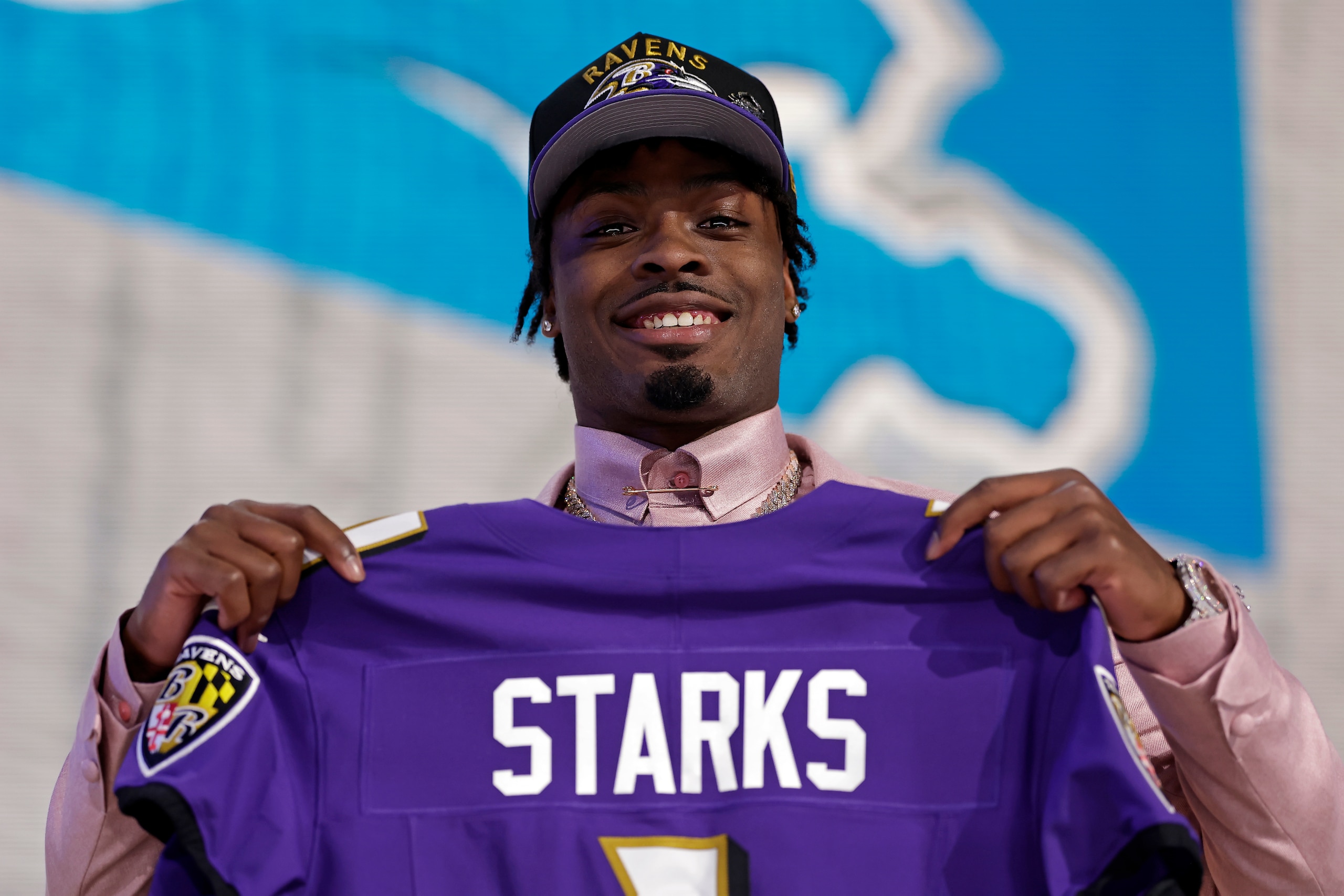
Round 1 (No. 27): S Malaki Starks, Georgia
Round 2 (No. 59): EDGE Mike Green, Marshall
Round 3 (No. 91): OL Emery Jones Jr., LSU
Round 4 (No. 129): LB Teddye Buchanan, California
Round 5 (No. 141): OT Carson Vinson, Alabama A&M
Round 6 (No. 178): CB Bilhal Kone, Western Michigan
Round 6 (No. 186): K Tyler Loop, Arizona
Round 6 (No. 203): WR LaJohntay Wester, Colorado
Round 6 (No. 210): DL Aeneas Peebles, Virginia Tech
Round 6 (No. 212): CB Robert Longerbeam, Rutgers
Round 7 (No. 243): IOL Garrett Dellinger, LSU
While it can't really be considered a draft strategy, the Baltimore Ravens seem to have a knack for allowing talented players at positions of need to fall to them in the first round.
A year ago, it was cornerback Nate Wiggins. Three years ago, it was safety Kyle Hamilton. On Thursday, it was Georgia safety Malaki Starks.
Baltimore's newest defensive back should immediately pair with Hamilton to form one of the league's best young safety duos. Along with free-agent addition Chidobe Awuzie, he should help bolster a secondary that showed growth in 2024 but still finished the year ranked 31st in passing yards allowed.
The Ravens added more help to their pass defense by grabbing Marshall pass-rusher Mike Green late in the second round. The No. 2 edge-rusher on the B/R board could prove to be a massive steal, though other teams may have shied away because Green twice faced sexual assault allegations—once in high school and most recently while at Virginia in 2022, which caused his transfer to Marshall.
Green has never been charged and denies all accusations.
"We understand the severity of what these allegations were, of course," general manager Eric DeCosta said, per ESPN's Jamison Hensley. "But doing our due diligence, we are comfortable with Mike."
Day 3 selections Teddye Buchanan and Carson Vinson figure to provide depth for one of the AFC's more talented rosters. Kicker Tyler Loop may be the eventual heir to longtime special-teams stalwart Justin Tucker.
The Ravens are good at this drafting thing. They had another productive three days over the weekend.
Grade: A
Buffalo Bills
5 of 33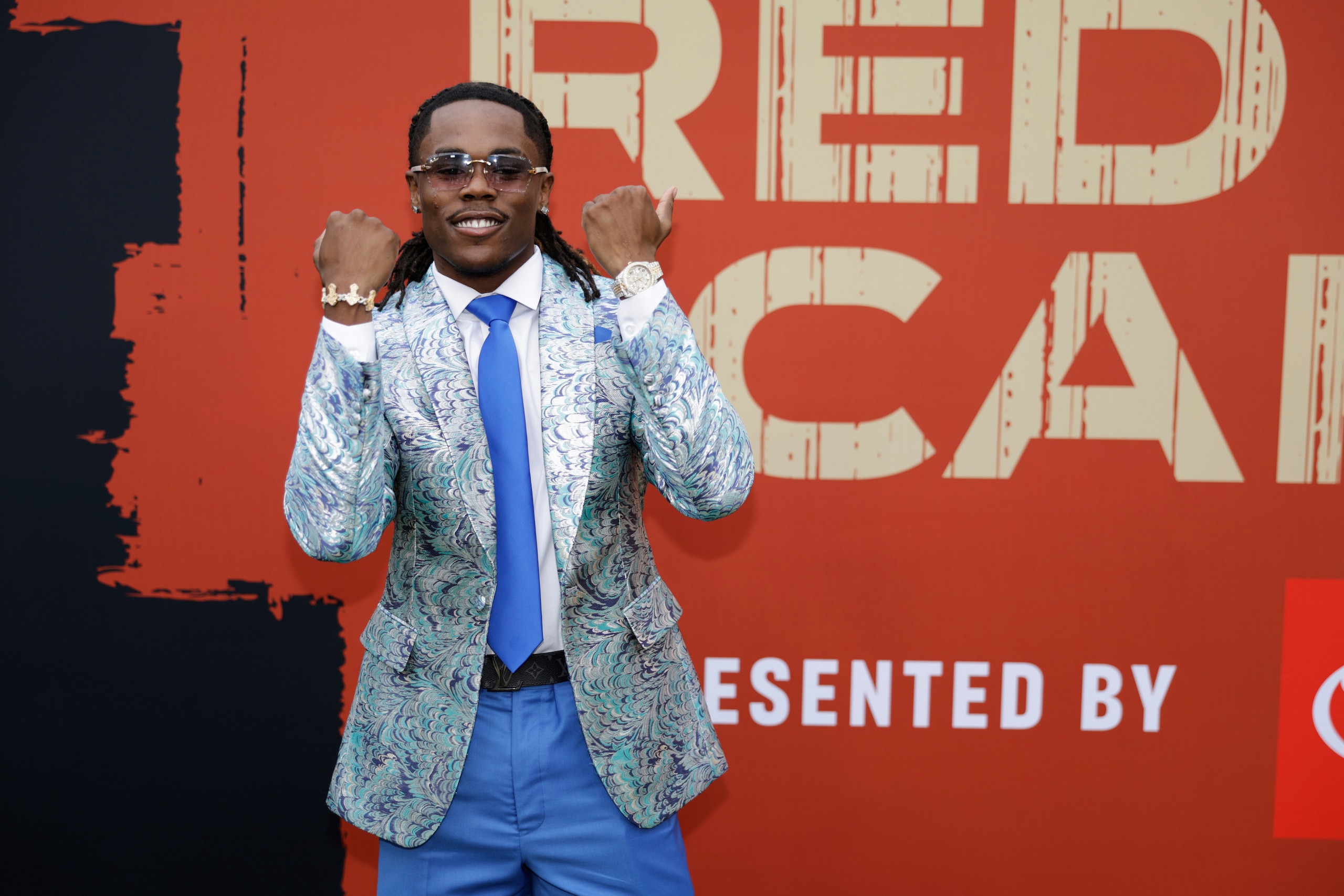
Round 1 (No. 30): CB Maxwell Hairston, Kentucky
Round 2 (No. 41): DL T.J. Sanders, South Carolina
Round 3 (No. 72): EDGE Landon Jackson, Arkansas
Round 4 (No. 109): DL Deone Walker, Kentucky
Round 5 (No. 170): CB Jordan Hancock, Ohio State
Round 5 (No. 173): TE Jackson Hawes, Georgia Tech
Round 6 (No. 177): CB Dorian Strong, Virginia Tech
Round 6 (No. 206): OT Chase Lundt, Connecticut
Round 7 (No. 240): WR Kaden Prather, Maryland
A year after trading out of Day 1, the Buffalo Bills used their first-round selection on Kentucky cornerback Maxwell Hairston. It was a sensible pick that provided sensible value at No. 30.
Hairston, the 34th-ranked prospect on the B/R Scouting Department's final board, has good length (5'11", 183 lbs), solid coverage skills and elite athletic ability. He also has a positive, energetic personality that should instantly resonate with Bills fans.
Taking Hairston at No. 30 was very sensible after Buffalo ranked 24th in passing yards allowed last season. Buffalo made a more aggressive move on Day 2, trading up to No. 41 to snag South Carolina defensive tackle T.J. Sanders.
While Sanders was only the 96th-ranked prospect on the B/R board, it's hard to call his selection a massive reach. Buffalo watched an early run on defensive linemen unfold and decided to go up and get a player they liked and needed.
The Bills ranked just 19th in yards allowed per carry last season. That's a big reason why adding prospects like Landon Jackson and Deone Walker to the defensive front in the middle rounds was logical.
General manager Brandon Beane targeted depth at cornerback and tight end on Day 3, logical choices given Buffalo's defensive needs and offensive identity.
Overall, this was a defensive draft for the Bills, which was largely expected. While Buffalo may still lack a true No. 1 receiver, it can coax enough offense out of Josh Allen, James Cook and a good collection of complementary pass-catchers. Ideally, it'll now have a chance to finally stop Patrick Mahomes and the rival Kansas City Chiefs in the postseason.
Grade: B
Carolina Panthers
6 of 33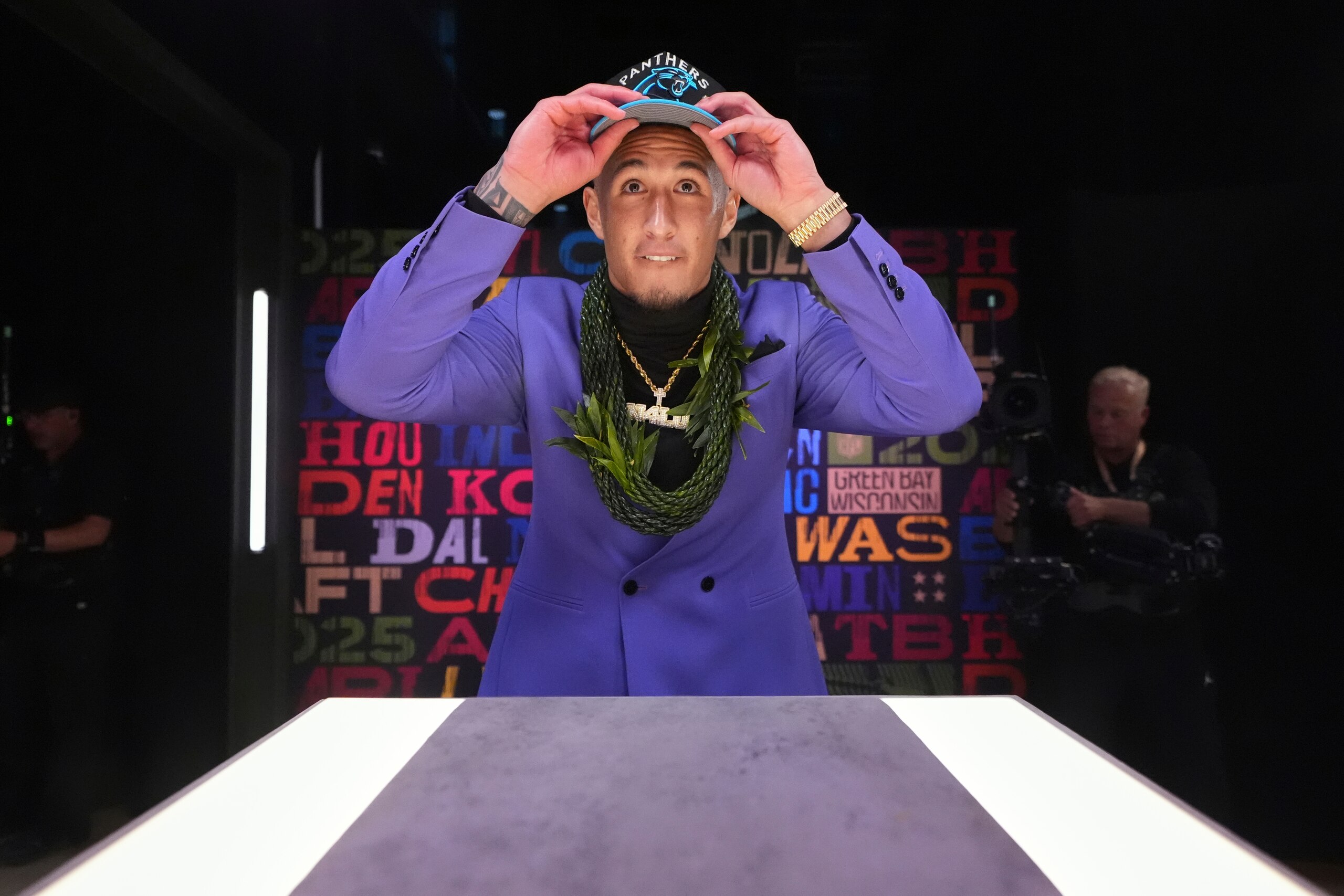
Round 1 (No. 8): WR Tetairoa McMillan, Arizona
Round 2 (No. 51): EDGE Nic Scourton, Texas A&M
Round 3 (No. 77): EDGE Princely Umanmielen, Ole Miss
Round 4 (No. 114): RB Trevor Etienne, Georgia
Round 4 (No. 122): S Lathan Ransom, Ohio State
Round 5 (No. 140): DT Cam Jackson, Florida
Round 5 (No. 163): TE Mitchell Evans, Notre Dame
Round 6 (No. 208): WR Jimmy Horn Jr., Colorado
Some selections just make too much sense. The Carolina Panthers' first pick of the 2025 draft was one of those.
Carolina scooped up Arizona wide receiver Tetairoa McMillan, who should provide an ideal blend of ability, scheme fit and value. The eighth-ranked prospect on the final B/R board, McMillan has the size (6'4", 219 lbs) and ball skills needed to be a true No. 1 receiver for third-year quarterback Bryce Young.
Bleacher Report's Dame Parson favorably compared McMillan to Tampa Bay Buccaneers wide receiver Mike Evans in his predraft scouting profile. Panthers head coach Dave Canales coached Evans two years ago as Tampa's offensive coordinator.
In the second round, the Panthers got a potential difference-maker for their defense. Texas A&M's Nic Scourton has the traits needed to make an immediate impact as a rookie.
"Between his pro-ready body and impressive movement skills, it's easy to see why NFL teams like Scourton," Matt Holder of the B/R Scouting Department wrote.
Carolina added some great depth pieces on Day 3, including safety Lathan Ransom.
"The Carolina Panthers invested heavily in safety Tre’von Moehrig in free agency," Bleacher Report's Brent Sobleski wrote while giving Carolina an "A" grade for the Ransom pick. "Ohio State’s Lathan Ransom could step in immediately as the Panthers’ other starting safety since Nick Scott is currently the squad’s best option."
General manager Dan Morgan addressed his team's biggest defensive needs, grabbed a receiver with No. 1 potential and added another intriguing piece to Carolina's budding backfield.
It was a good three days at the office for a franchise that has hope after Young's late-season emergence in 2024.
Grade: B+
Chicago Bears
7 of 33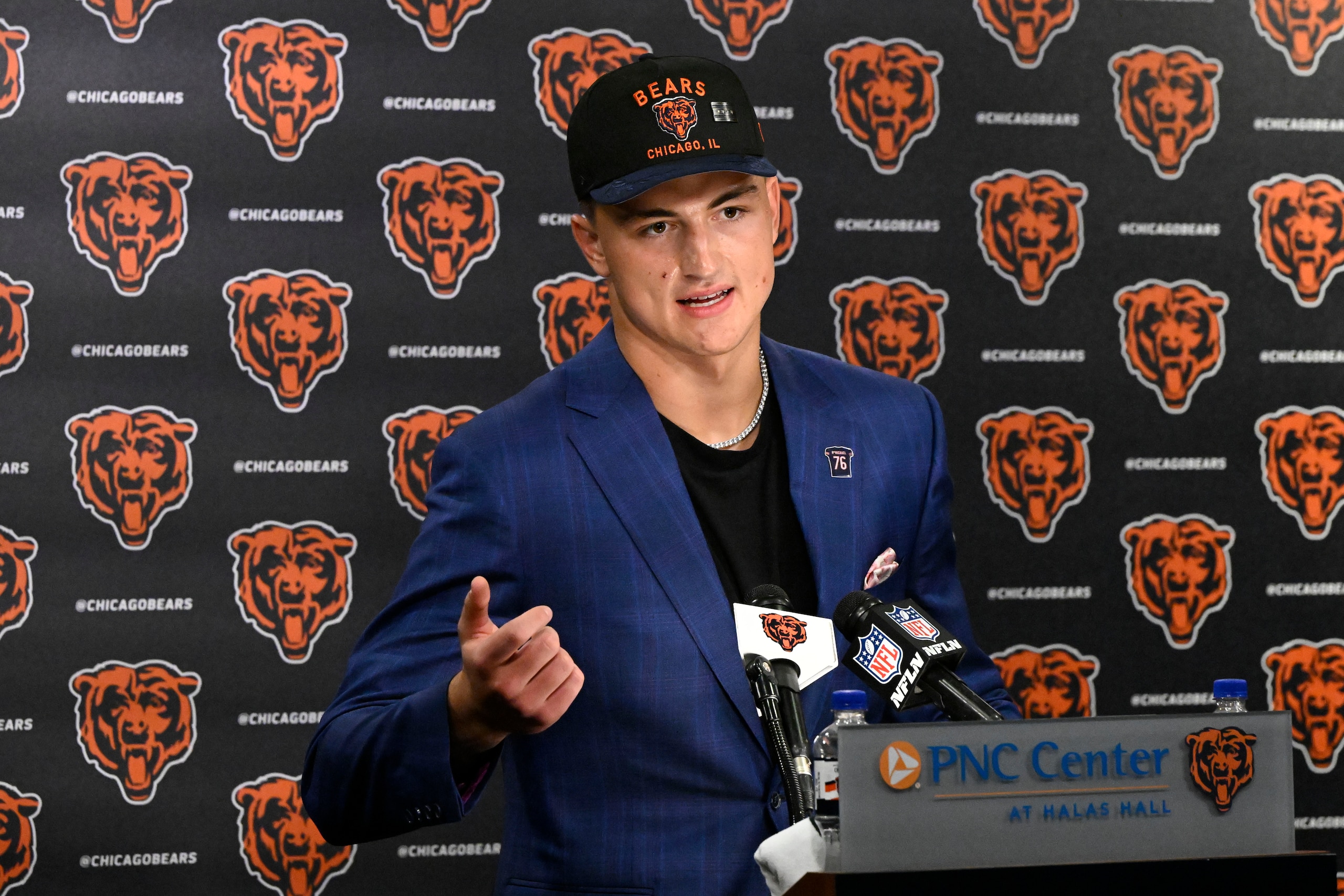
Round 1 (No. 10): TE Colston Loveland, Michigan
Round 2 (No. 39): WR Luther Burden III, Missouri
Round 2 (No. 56): OT Ozzy Trapilo, Boston College
Round 2 (No. 62): DL Shemar Turner, Texas A&M
Round 4 (No. 132): LB Ruben Hyppolite II, Maryland
Round 5 (No. 168): CB Zah Frazier, UTSA
Round 6 (No. 195): G Luke Newman, Michigan State
Round 7 (No. 233): RB Kyle Monangai, Rutgers
In Round 1, the Chicago Bears found themselves a terrific new target for second-year quarterback Caleb Williams. Michigan's Colston Loveland should be a wonderful complement to Cole Kmet and a Sam LaPorta-like playmaker in the offense of new head coach Ben Johnson.
And while, according to ProFootballTalk's Mike Florio, teams were "divided" on whether Loveland or Penn State's Tyler Warren was the top tight end in the 2025 class, the Bleacher Report Scouting Department long favored Chicago's newest star.
"Loveland was the B/R Scouting Department's TE1 throughout the season, not Penn State's Tyler Warren," Brent Sobleski of the B/R Scouting Department wrote on Thursday while giving the Bears an "A" grade for their first-round selection. "The reasoning was simple: Loveland has the same upside as a playmaker, but he's a more well-rounded tight end, particularly when used as a Y-option."
Chicago got another weapon for Williams and Johnson on Day 2, adding Missouri wideout Luther Burden III.
Burden, who tallied 2,263 receiving yards and 21 touchdowns in 38 games at Missouri, should partner with Warren, Kmet, D.J. Moore and Rome Odunze to give the Bears a deep, talented receiving corps.
Chicago also added some Day 2 value by trading back in a deal with Buffalo.
Even after trading down, the Bears got themselves a quality tackle prospect in Boston College's Ozzy Trapilo, who was named the most pro-ready tackle by the Bleacher Report Scouting Department.
Texas A&M defensive lineman Shemar Turner should help address Chicago's 28th-ranked run defense right away. On Day 3, general manager Ryan Poles took a flier on late-riser Ruben Hyppolite II, a solid gamble at that point in the draft.
If Johnson is looking to replicate the success the Detroit Lions have had in recent years—and one can assume that's the plan—the Bears were wise to add pass-catchers and build in the trenches over draft weekend.
Grade: A-
Cincinnati Bengals
8 of 33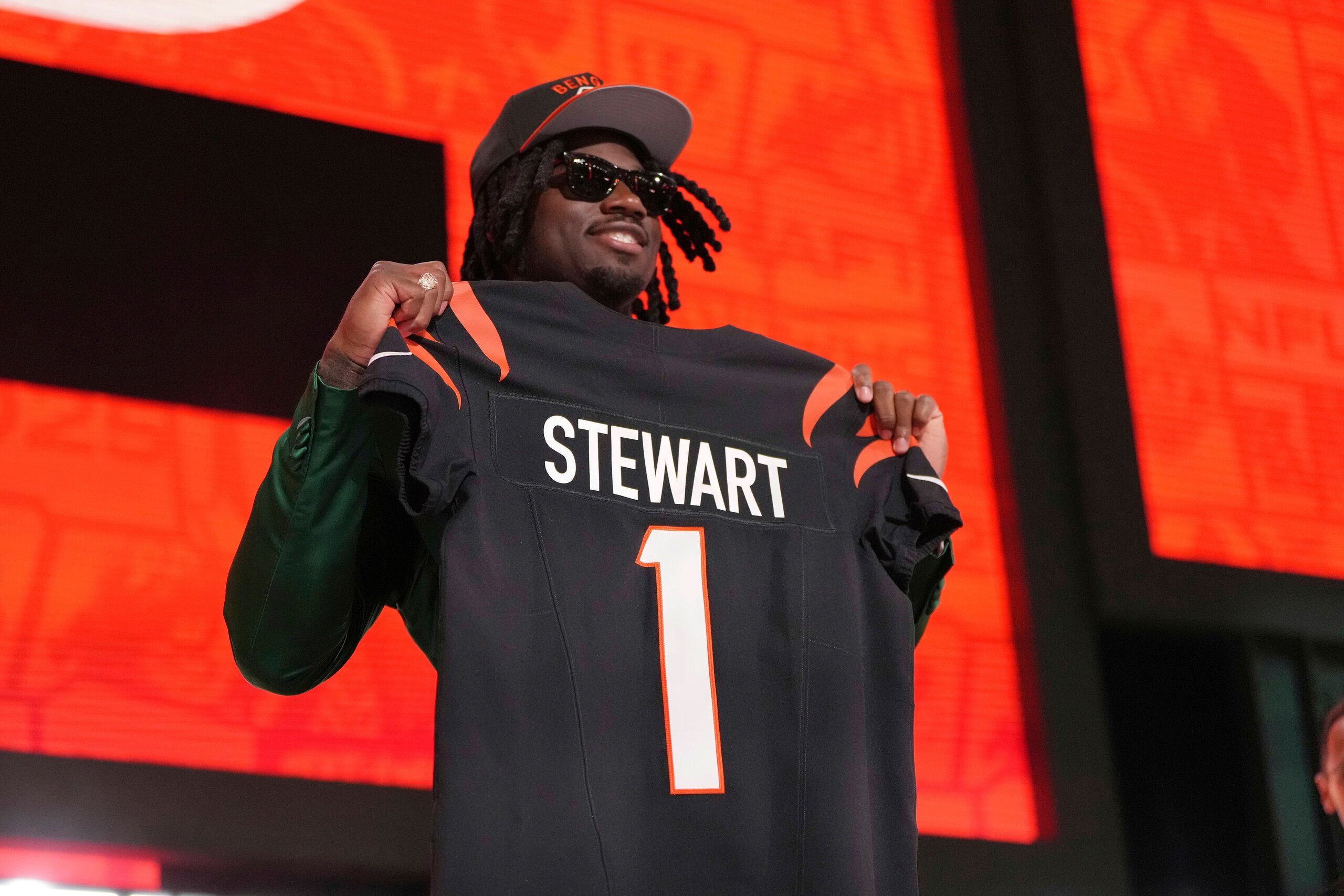
Round 1 (No. 17): EDGE Shemar Stewart, Texas A&M
Round 2 (No. 49): LB Demetrius Knight Jr., South Carolina
Round 3 (No. 81): IOL Dylan Fairchild, Georgia
Round 4 (No. 119): LB Barrett Carter, Clemson
Round 5 (No. 153): IOL Jalen Rivers, Miami
Round 6 (No. 193): RB Tahj Brooks, Texas Tech
The Cincinnati Bengals entered draft weekend needing to find pass-rushing help in a big way. Trey Hendrickson's contract situation remains unresolved, and Sam Hubbard retired earlier in the offseason.
Yet, using the 17th pick on Texas A&M's Shemar Stewart felt like a gamble the Bengals shouldn't have made. Though he was the 17th-ranked player on the Bleacher Report Scouting Department's draft board, Stewart is a massive boom-or-bust prospect.
He has elite physical tools but remains unpolished and had very modest production (4.5 sacks) in college. He'll need to be a better pro than college player for the bet to pay off, and Cincinnati doesn't have a strong track record of developing unfinished prospects.
Addressing Cincinnati's underwhelming offensive line would have been a more sensible move on opening night.
In the second round, the Bengals reached for South Carolina linebacker Demetrius Knight Jr., who was the 89th-ranked prospect on the B/R board. Linebacker was a significant need for Cincinnati, though, especially after Germaine Pratt requested a trade in the early offseason.
Cincinnati took a flier on a second linebacker, Barrett Carter, in Round 4 and added some backfield depth with Tahj Brooks in Round 6.
Overall, the Bengals did address some needs, but they reached a bit too much to do so. They also could have afforded to throw a few more darts at their offensive line—though, at this point, we may have to accept that Cincinnati is content to see Joe Burrow take sacks regularly.
Grade: C
Cleveland Browns
9 of 33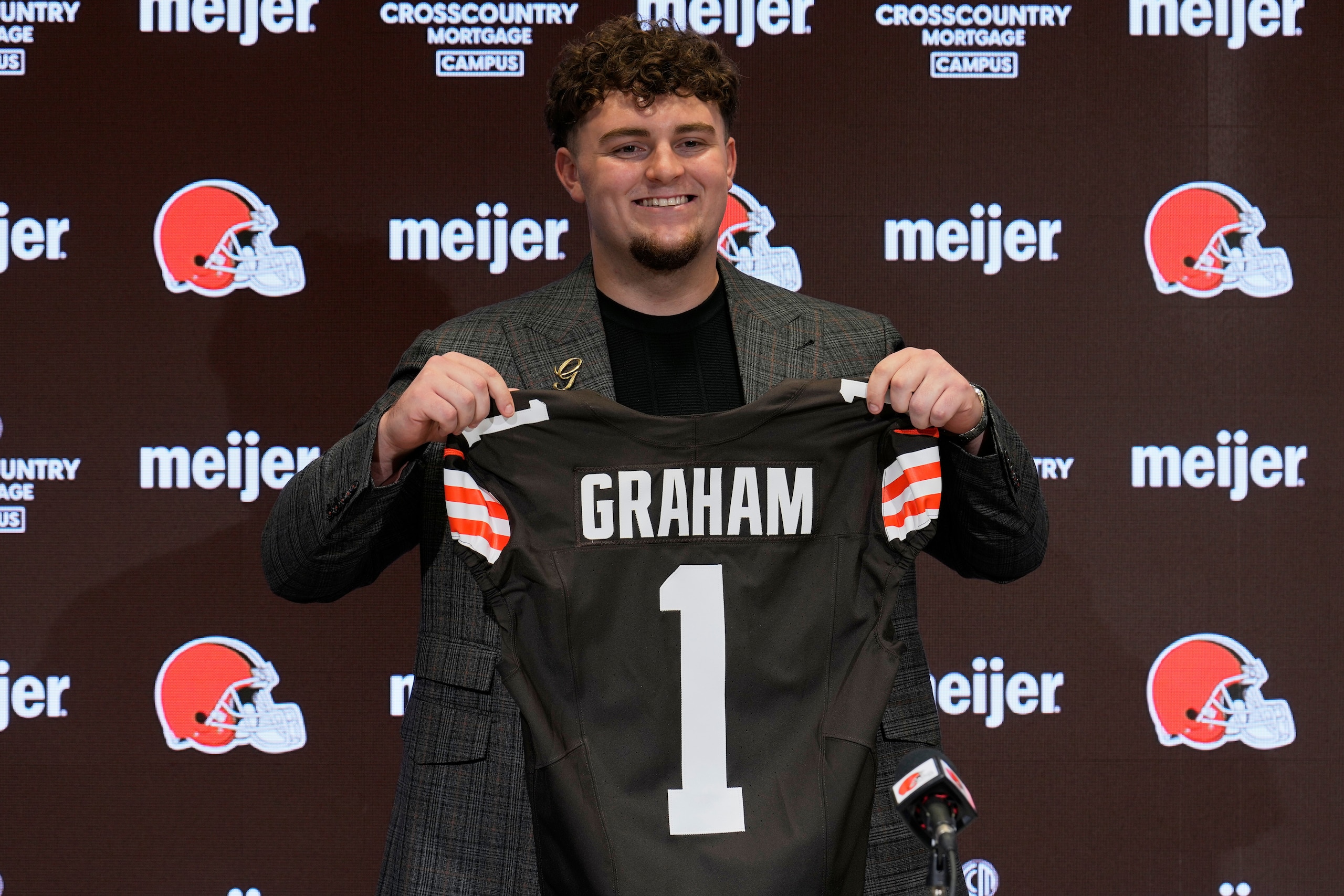
Round 1 (No. 5): DL Mason Graham, Michigan
Round 2 (No. 33): LB Carson Schwesinger, UCLA
Round 2 (No. 36): RB Quinshon Judkins, Ohio State
Round 3 (No. 67): TE Harold Fannin Jr., Bowling Green
Round 3 (No. 94): QB Dillon Gabriel, Oregon
Round 4 (No. 126): RB Dylan Sampson, Tennessee
Round 5 (No. 144): QB Shedeur Sanders, Colorado
Moving forward, the story of the Cleveland Browns' draft will likely be centered around the team stopping Shedeur Sanders' dramatic slide in Round 5, but we'll get to that momentarily.
The Browns were widely expected to take Colorado cornerback and wide receiver Travis Hunter with the second overall pick. Instead, Cleveland provided the first surprise of the event by flipping the pick to the Jacksonville Jaguars.
While Cleveland got excellent value—a top-36 pick and a future first-rounder is quite a haul—to only move down three spots, it passed up the chance to draft the closest person to a "sure thing" there was in this class.
If Hunter becomes a perennial All-Pro at receiver, cornerback or both positions, Thursday's trade may haunt the Browns for the next decade or more. That said, general manager Andrew Berry got some big draft chips in return and a terrific player in Michigan defensive lineman Mason Graham, who was the third-ranked overall prospect on the B/R board.
Cleveland came back for linebacker Carson Schwesinger at the top of Round 2, and that selection felt like much more of a reach. Schwesinger was only the 66th-ranked prospect on the B/R board, though he was arguably the best off-ball linebacker remaining.
With the Browns' second pick on Day 2, the team targeted a starting-caliber running back in Ohio State's Quinshon Judkins. This may also have been a bit of a reach—Judkins was the 55th-ranked prospect on the B/R board—though Cleveland needed a starter and was unlikely to snag Judkins or an equivalent back in Round 3.
Judkins and fourth-round pick Dylan Sampson—who was the 75th-ranked prospect on the B/R board—could give Cleveland one of the league's better young RB duos.
Graham, Schwesinger, Judkins, Sampson and Harold Fannin Jr. all have the potential to be early contributors, which boosts the overall grade for a team that needs young, cheap talent to help navigate the Deshaun Watson debacle. Sanders and Dillon Gabriel, who was drafted two rounds earlier, will compete with Joe Flacco and Kenny Pickett to be Cleveland's starting quarterback—and possible quarterback of the future.
Cleveland's draft strategy regarding Sanders can certainly be questioned. The Browns need a long-term answer at quarterback, and he was the second-ranked QB on the B/R board and a prospect many had mocked to Cleveland at second overall early in the predraft process. Getting a borderline first-round talent in Round 5, however, is a steal under almost any circumstance.
The Browns' roster is much, much stronger than it was a week ago, and there's at least a glimmer of hope for the future.
Grade: B+
Dallas Cowboys
10 of 33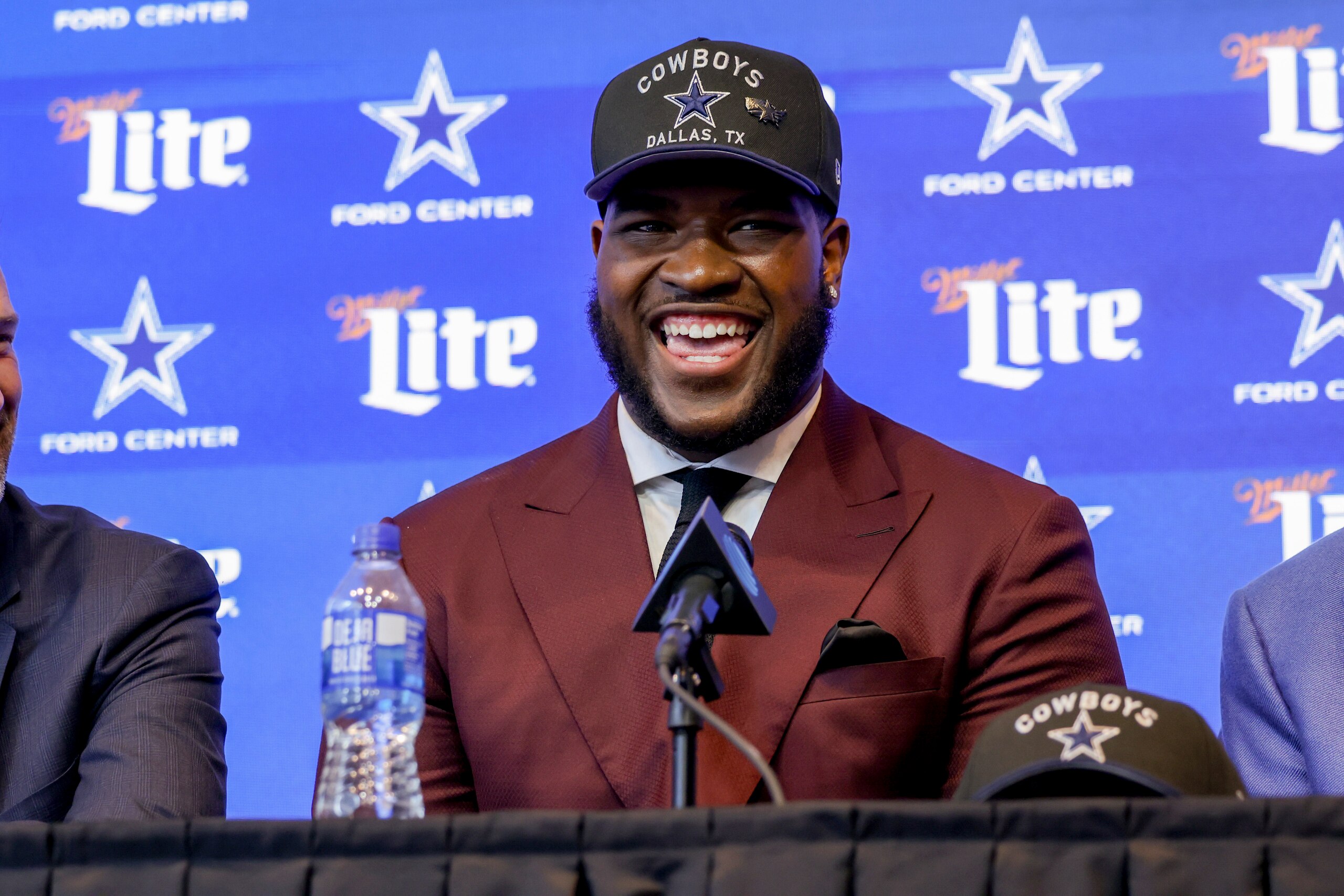
Round 1 (No. 12): IOL Tyler Booker, Alabama
Round 2 (No. 44): Edge Donovan Ezeiruaku, Boston College
Round 3 (No. 76): CB Shavon Revel Jr., East Carolina
Round 5 (No. 149): RB Jaydon Blue, Texas
Round 5 (No. 152): LB Shemar James, Florida
Round 6 (No. 201): OT Ajani Cornelius, Oregon
Round 7 (No. 217): DT Jay Tola, UCLA
Round 7 (No. 239): RB Phil Mafah, Clemson
Round 7 (No. 247): DT Tommy Akingbesote, Maryland
After first-round picks on fairly significant projects in each of the past two years—on defensive tackle Mazi Smith and offensive tackle Tyler Guyton—the Dallas Cowboys went with a more pro-ready prospect on Thursday.
Alabama's Tyler Booker was a two-year starter at guard for Alabama and comes into the NFL with a 6'5", 321-pound frame, a physical play style and an aggressive demeanor.
Booker should be a strong fit for the balanced offense of new head coach Brian Schottenheimer. He won't make fans forget about future Hall of Famer Zack Martin, who retired in the offseason, but he'll help replace him.
Taking Booker, who was the 32nd-ranked prospect on the B/R board, at No. 12 represents a slight reach. It was still a sensible decision by the Cowboys.
Dallas got its developmental prospect early on Day 2, grabbing Boston College pass-rusher Donovan Ezeiruaku.
"He'll be more of a third-down rusher at first and needs to spend more time in the weight room before becoming a complete defender," Matt Holder of the B/R Scouting Department wrote.
Ezeiruaku should, however, contribute early as a situational player.
Dallas waited until the fifth round to add a running back, but Jaydon Blue and Phil Mafah should push Javonte Williams and Miles Sanders for playing time as a rookie. Cornerback Shavon Revel Jr. will provide much-needed depth while Trevon Diggs continues to recover from a significant knee injury.
Overall, the Cowboys did a solid job of adding players who should contribute right away and provide long-term value.
Grade: A
Denver Broncos
11 of 33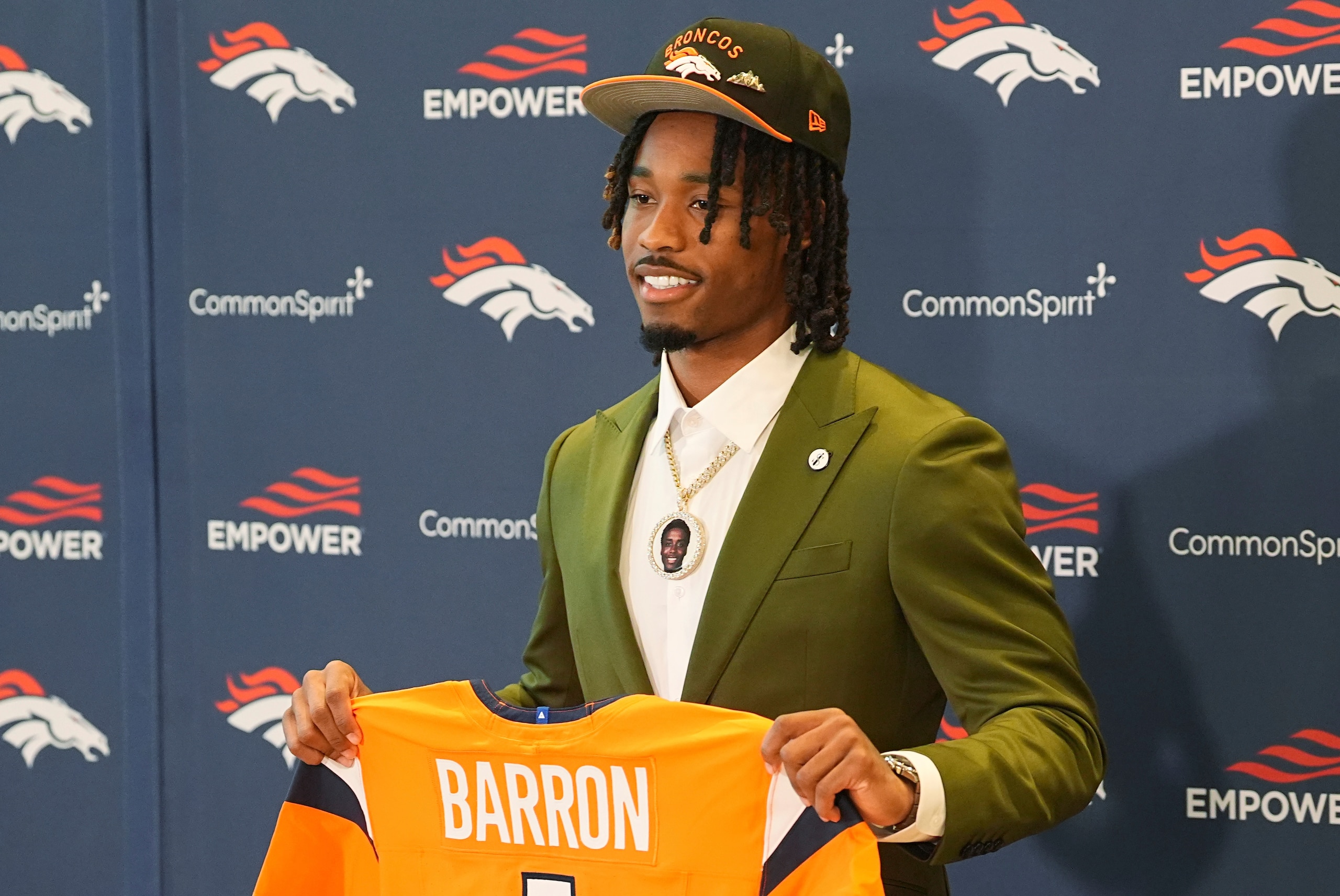
Round 1 (No. 20): CB Jahdae Barron, Texas
Round 2 (No. 60): RB RJ Harvey, UCF
Round 3 (No. 74): WR Pat Bryant, Illinois
Round 3 (No. 101): DL Sai'vion Jones, LSU
Round 4 (No. 134): EDGE Quandarrius Robinson, Alabama
Round 6 (No. 216): P Jeremy Crawshaw, Florida
Round 7 (No. 241): TE Caleb Lohner, Utah
Plenty of folks probably expected the Denver Broncos to target an offensive player on opening night who could help support second-year quarterback Bo Nix. Instead, the Broncos made an equally smart move by adding to their playoff-caliber defense.
Texas cornerback Jahdae Barron may immediately form part of the league's top cornerback duo alongside reigning Defensive Player of the Year Patrick Surtain II.
"His ability to play multiple positions, combined with his high football IQ, physicality, and ball skills, gives him a high ceiling in a variety of defensive schemes," Cory Giddings of the B/R Scouting Department wrote.
Barron, the 12th-ranked prospect on the final B/R board, brought tremendous value at No. 20, even if he'll simply bolster a team strength.
Denver added a complementary receiving back in UCF's RJ Harvey after trading back in the second round.
More defensive help came in the middle rounds, along with a big-bodied receiver in Pat Bryant (6'2", 208 lbs). He should complement pass-catchers Courtland Sutton, Marvin Mims Jr. and Evan Engram in Sean Payton's passing attack.
Sai'vion Jones and Quandarrius Robinson should provide depth along an already talented defensive front.
Denver didn't take a wide receiver early and didn't add a big-name running back like Ashton Jeanty or Omarion Hampton to its offense, so its draft class might fly under the radar. It's a solid group, though, that should help keep the Broncos in the AFC West mix.
Grade: B
Detroit Lions
12 of 33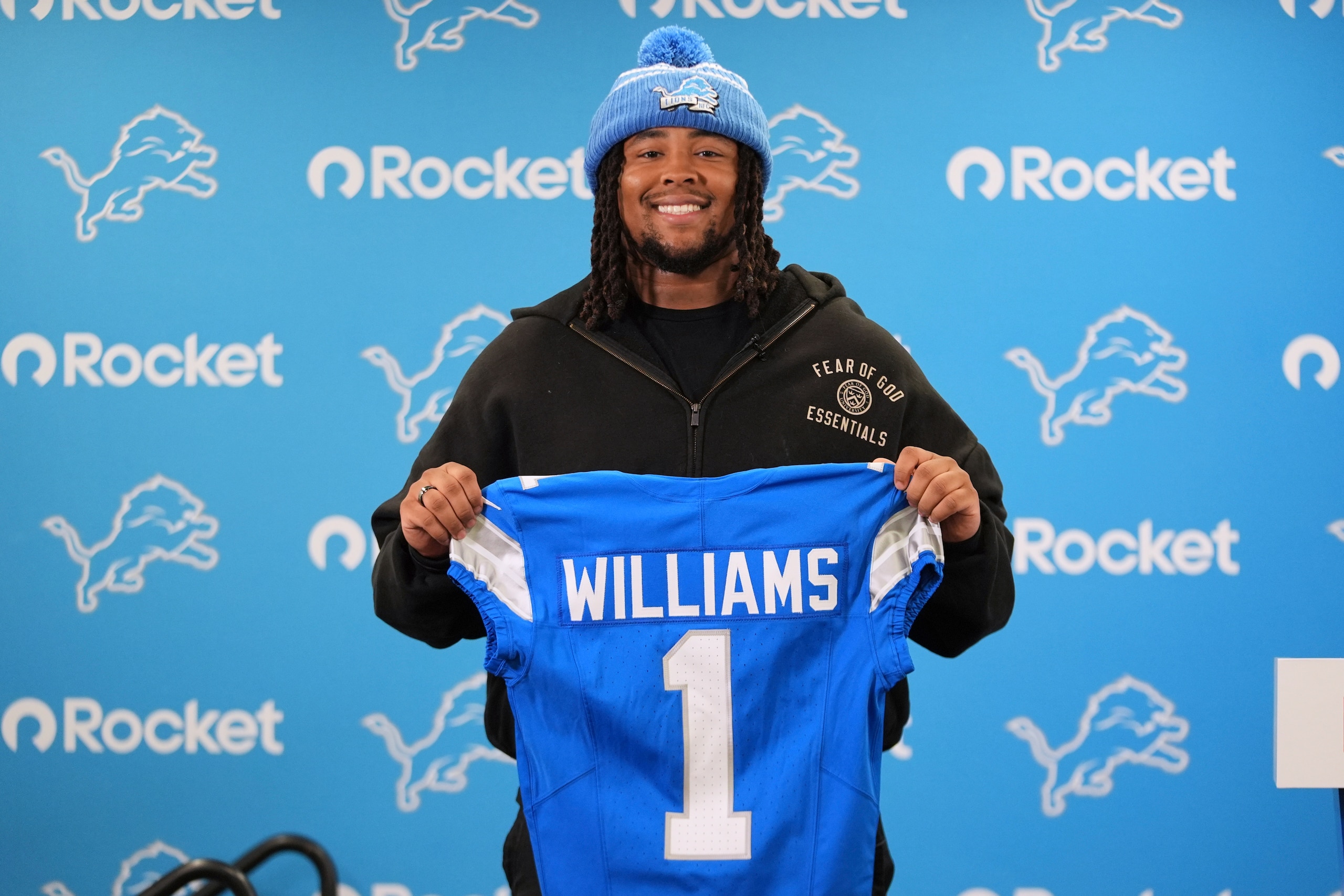
Round 1 (No. 28): DL Tyleik Williams, Ohio State
Round 2 (No. 57): IOL Tate Ratledge, Georgia
Round 3 (No. 70): WR Isaac TeSlaa, Arkansas
Round 5 (No. 171): IOL Miles Frazier, LSU
Round 6 (No. 196): EDGE Ahmed Hassanein, Boise State
Round 7 (No. 230): S Dan Jackson, Georgia
Round 7 (No. 244): WR Dominic Lovett, Georgia
The Detroit Lions' selection of Ohio State defensive lineman Tyleik Williams in the first round probably didn't generate many headlines. Adding an interior defender isn't quite as exciting as adding a game-breaking receiver or dominant edge-defender.
And the Lions have been searching for a complementary sack artist to pair with Aidan Hutchinson.
However, Williams does fit Detroit's defensive identity and needs. The Lions featured a strong defensive front when healthy over the past two years. But standout defensive tackle Alim McNeill is coming off a torn ACL, while free-agent addition D.J. Reader will turn 31 in July.
While Williams was only the 43rd-ranked prospect on the final B/R board, an early run on defensive linemen made his selection sensible at No. 28.
Detroit stayed in the trenches in Round 2, scooping up Georgia interior lineman Tate Ratledge. He was the 50th-ranked overall prospect on the B/R board and a very sensible selection for the Lions.
2024 starting guard Kevin Zeitler departed in free agency.
The Lions got more interior-line depth with Miles Frazier and took fliers on wideout Isaac TeSlaa and edge-rusher Ahmed Hass. Moving up to get TeSlaa came at a cost, though; namely, a pair of 2026 third-round selections.
This was a solid draft for Detroit, though the Lions may not see significant early contributions from their rookie class.
Grade: C+
Green Bay Packers
13 of 33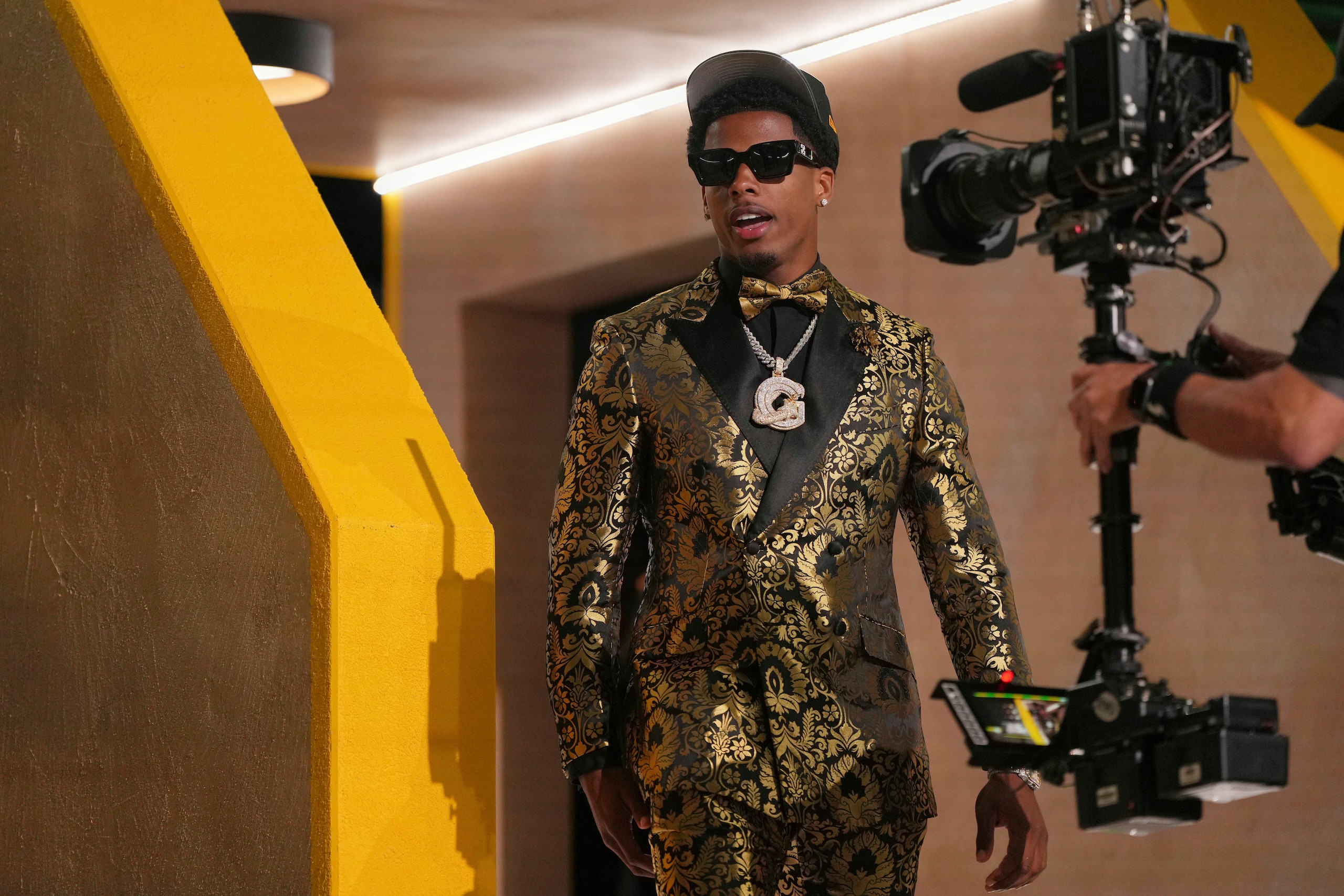
Round 1 (No. 23): WR Matthew Golden, Texas
Round 2 (No. 54): OT Anthony Belton, North Carolina State
Round 3 (No. 87): WR Savion Williams, TCU
Round 4 (No. 124): EDGE Barryn Sorrell, Texas
Round 5 (No. 159): LB Collin Oliver, Oklahoma State
Round 6 (No. 198): DT Warren Brinson, Georgia
Round 7 (No. 237): DB Micah Robinson, Tulane
Round 7 (No. 250): OT John Williams, Cincinnati
The jokes about the Green Bay Packers not valuing wide receivers in the draft can finally end. Green Bay ended its 20-plus-year run of not drafting a receiver in Round 1 by taking Texas' Matthew Golden—and making quite the show of it:
Selecting Golden wasn't about breaking trends, though. It was about finally providing quarterback Jordan Love with a legitimate difference-maker. With an elite combination of size (6'0", 195 lbs) and speed (4.29-second 40-yard dash), Golden will likely replace Christian Watson as Green Bay's de facto No. 1 target.
Watson suffered a torn ACL in January and has never quite emerged as a reliable No. 1 receiver. Golden might not be that either, but he'll certainly add some potency to the Packers' passing attack. Savion Williams will add additional competition to the receiver room and should put some of Green Bay's existing receivers on notice.
In the second round, the Packers may have reached for North Carolina offensive tackle Anthony Belton, who was only the 134th-ranked prospect remaining on the B/R board after Day 1.
Belton should add competition at tackle, though, while edge-rusher Barryn Sorrell will help address the Packers' need for another situational sack specialist.
General manager Brian Gutekunst added some much-needed defensive depth on Day 3, though it was a bit surprising that he didn't target cornerback help early in the draft.
Green Bay may need to see a big jump in passing production for this draft to be considered a success.
Grade: C+
Houston Texans
14 of 33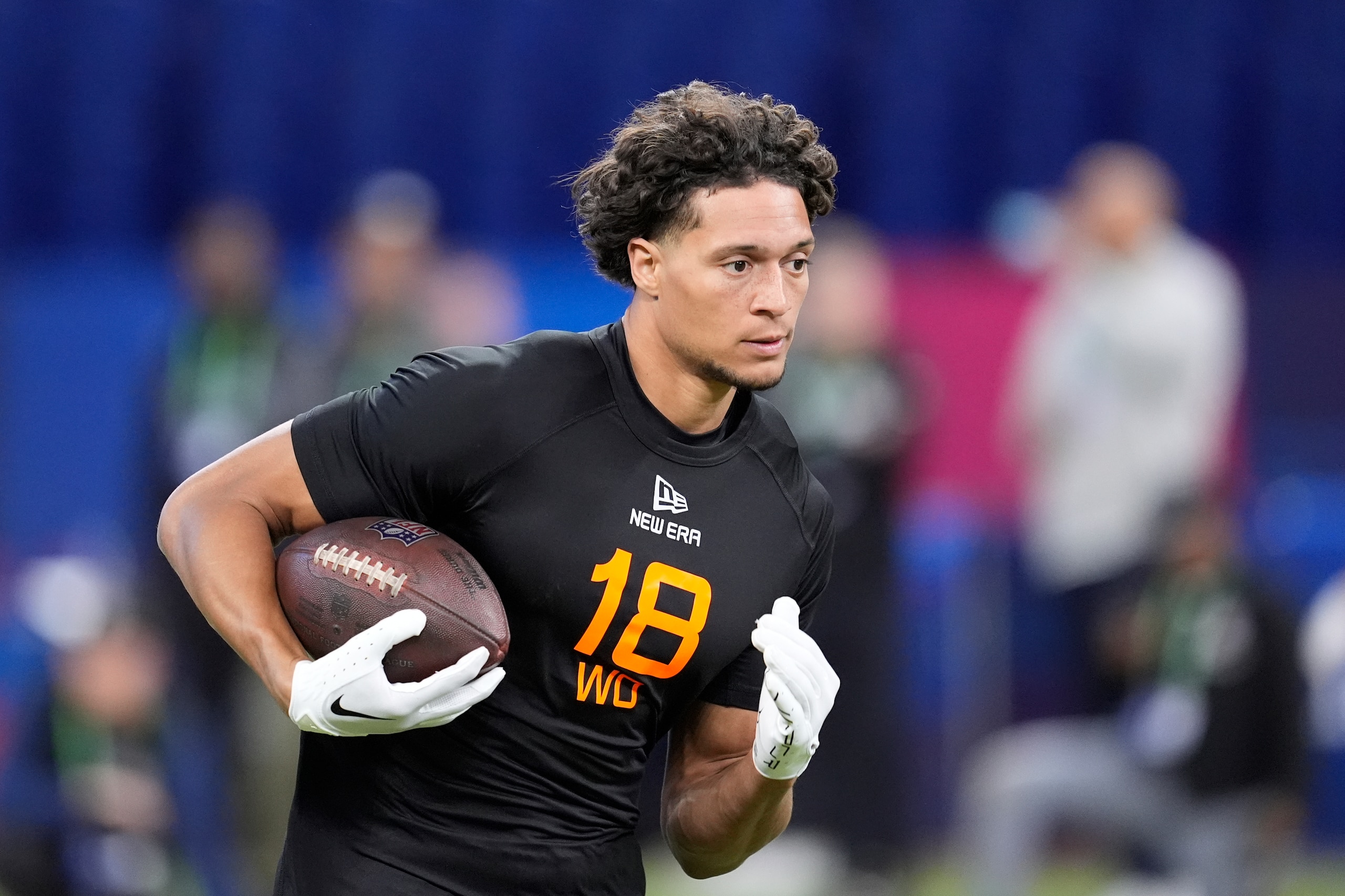
Round 2 (No. 34): WR Jayden Higgins, Iowa State
Round 2 (No. 48): OT Aireontae Ersery, Minnesota
Round 3 (No. 79): WR Jaylin Noel, Iowa State
Round 3 (No. 97): CB Jaylin Smith, USC
Round 4 (No. 116): RB Woody Marks, USC
Round 6 (No. 187): S Jaylen Reed, Penn State
Round 6 (No. 197): QB Graham Mertz, Florida
Round 7 (No. 224): DT Kyonte Hamilton, Rutgers
Round 7 (No. 255): TE Luke Lachey, Iowa
The Houston Texans didn't make a selection on opening night, choosing instead to trade with the New York Giants so that New York could get its quarterback of the future, Jaxson Dart.
General manager Nick Caserio made the move after the Minnesota Vikings picked Ohio State offensive lineman Donovan Jackson at No. 24. In exchange for the 25th pick, Houston got a respectable return.
Houston also got a quality receiver prospect early on Day 2. Iowa State's Jayden Higgins is a big (6'4", 214 lbs) possession receiver who should add a new dynamic to the receiving corps.
Higgins will also help the Texans replace the departed Stefon Diggs and give C.J. Stroud a reliable target as Tank Dell recovers from the devastating knee injury he suffered in Week 16. He and third-round pick—and former teammate—Jaylin Noel should stabilize Houston's receiver depth this season.
The Texans also got themselves a tackle after trading up in Round 2 to secure Minnesota's Aireontae Ersery.
Ersery was the top-ranked tackle remaining on the B/R board after Day 1. He should provide much-needed depth right away and could develop into a long-term starter for the Texans.
It would have been nice to see Houston invest a little more into its offensive line. However, the Texans did a good job of addressing most of its major needs while further building the foundation of a young, dynamic receiving corps that can grow alongside Stroud for the foreseeable future.
Grade: B+
Indianapolis Colts
15 of 33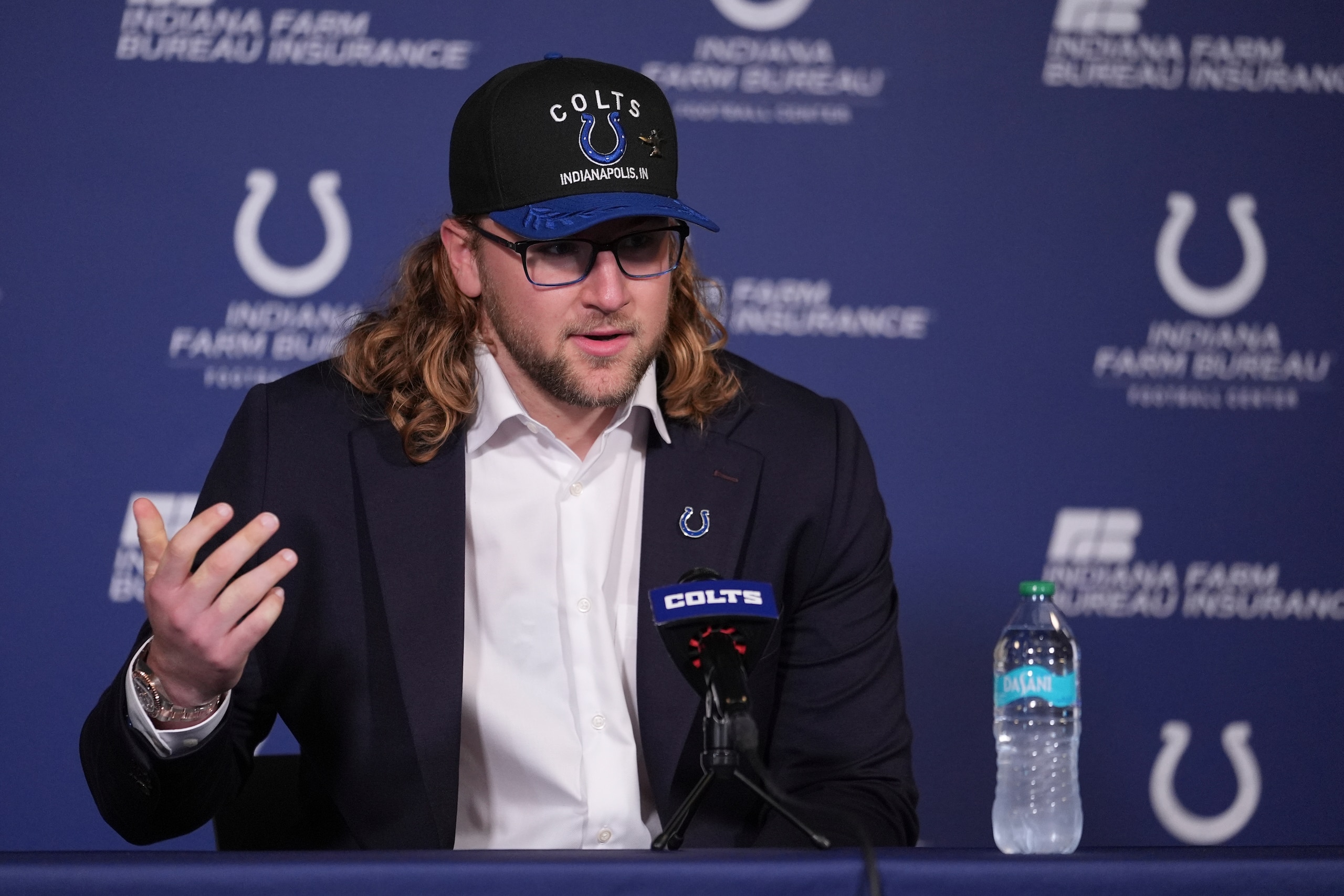
Round 1 (No. 14): TE Tyler Warren, Penn State
Round 2 (No. 45): EDGE JT Tuimoloau, Ohio State
Round 3 (No. 80): CB Justin Walley, Minnesota
Round 4 (No. 127): OT Jalen Travis, Iowa State
Round 5 (No. 151): RB DJ Giddens, Kansas State
Round 6 (No. 189): QB Riley Leonard, Notre Dame
Round 6 (No. 190): DL Tim Smith, Alabama
Round 7 (No. 232): S Hunter Wohler, Wisconsin
The Indianapolis Colts are set to hold a quarterback competition between 2023 fourth overall pick Anthony Richardson and free-agent addition Daniel Jones. The hope, obviously, is for Richardson to finally play up to his draft status and emerge as an above-average signal-caller.
The Colts needed to upgrade their offensive cast this offseason, and they've long needed a dynamic receiving tight end. They landed one in Penn State's Tyler Warren while making one of the most obvious picks of opening night.
Indianapolis was widely expected to take a tight end in Round 1. The B/R Scouting Department paired Michigan's Colston Loveland with the Colts in its final predraft mock, but Loveland went to Chicago at No. 10, leaving Warren as the perfect choice for the Colts at No. 14.
On Day 2, the Colts grabbed Ohio State pass-rusher JT Tuimoloau, who probably would have been a high 2024 draft selection if he hadn't decided to return to college to chase a national championship with the Buckeyes.
Cornerback Justin Walley was probably more of a reach in Round 3. He was the 190th-ranked prospect on the final B/R board.
Day 3 was mostly about depth for the Colts, and that's where they added Notre Dame quarterback Riley Leonard. Leonard probably won't push Richardson or Jones for the starting job, but he can settle in as a long-term backup.
Did Chris Ballard hit on every pick this weekend? Perhaps not, but Warren and Tuimoloau should be instant-impact players.
Grade: B+
Jacksonville Jaguars
16 of 33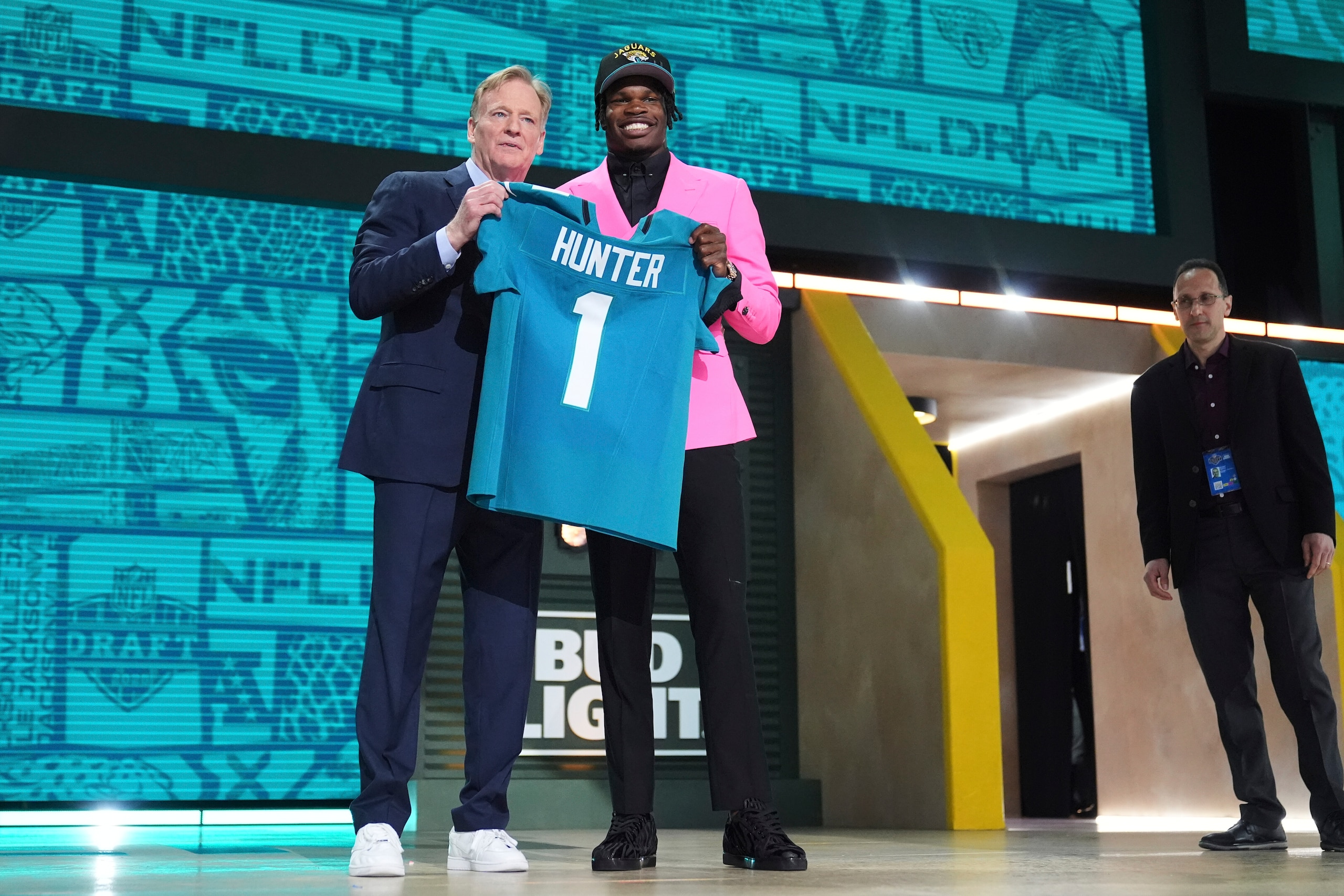
Round 1 (No. 2): WR/CB Travis Hunter, Colorado
Round 3 (No. 88): S Caleb Ransaw, Tulane
Round 3 (No. 89): IOL Wyatt Milum, West Virginia
Round 4 (No. 104): RB Bhayshul Tuten, Virginia Tech
Round 4 (No. 107): LB Jack Kiser, Notre Dame
Round 6 (No. 194): LB Jalen McLeod, Auburn
Round 6 (No. 200): S Rayuan Lane III, Navy
Round 7 (No. 221): IOL Jonah Monheim, USC
Round 7 (No. 236): RB LeQuint Allen Jr., Syracuse
Did the Jaguars give up a lot for Colorado receiver and defensive back Travis Hunter? Yes. Can Hunter change the face of the franchise? Jacksonville seems to think so.
"There are players that you can target and acquire that alter the trajectory of a football team," general manager James Gladstone said on the team's draft show on YouTube (h/t ESPN's Michael DiRocco). "...it's rare to be able to target and prioritize a player who can alter the sport itself. And Travis is somebody that we view has the potential to do that."
If Hunter can be a Pro Bowl talent at both receiver and cornerback—or if, as a wideout, he can simply help Trevor Lawrence play up to his potential—the Jags should be happy with their return on investment. However, it was a steep price.
Jacksonville gave up its second-round pick and a 2026 first-round selection to move up three spots and add a sixth-round pick and a higher fourth-round selection. We'll have to wait to see how Hunter pans out, but, on paper, he addresses two of Jacksonville's biggest predraft needs.
The Jags didn't pick again until late on Day 2 but landed a possible early contributor in safety Caleb Ransaw. Fourth-round pick Bhayshul Tuten should also make an early impact as part of Jacksonville's backfield rotation.
It's clear that Gladstone is willing to take an aggressive approach to team construction, which might be precisely what the Jags need to return to relevance. A solid draft class and a justifiable superstar will certainly help.
Grade: A-
Kansas City Chiefs
17 of 33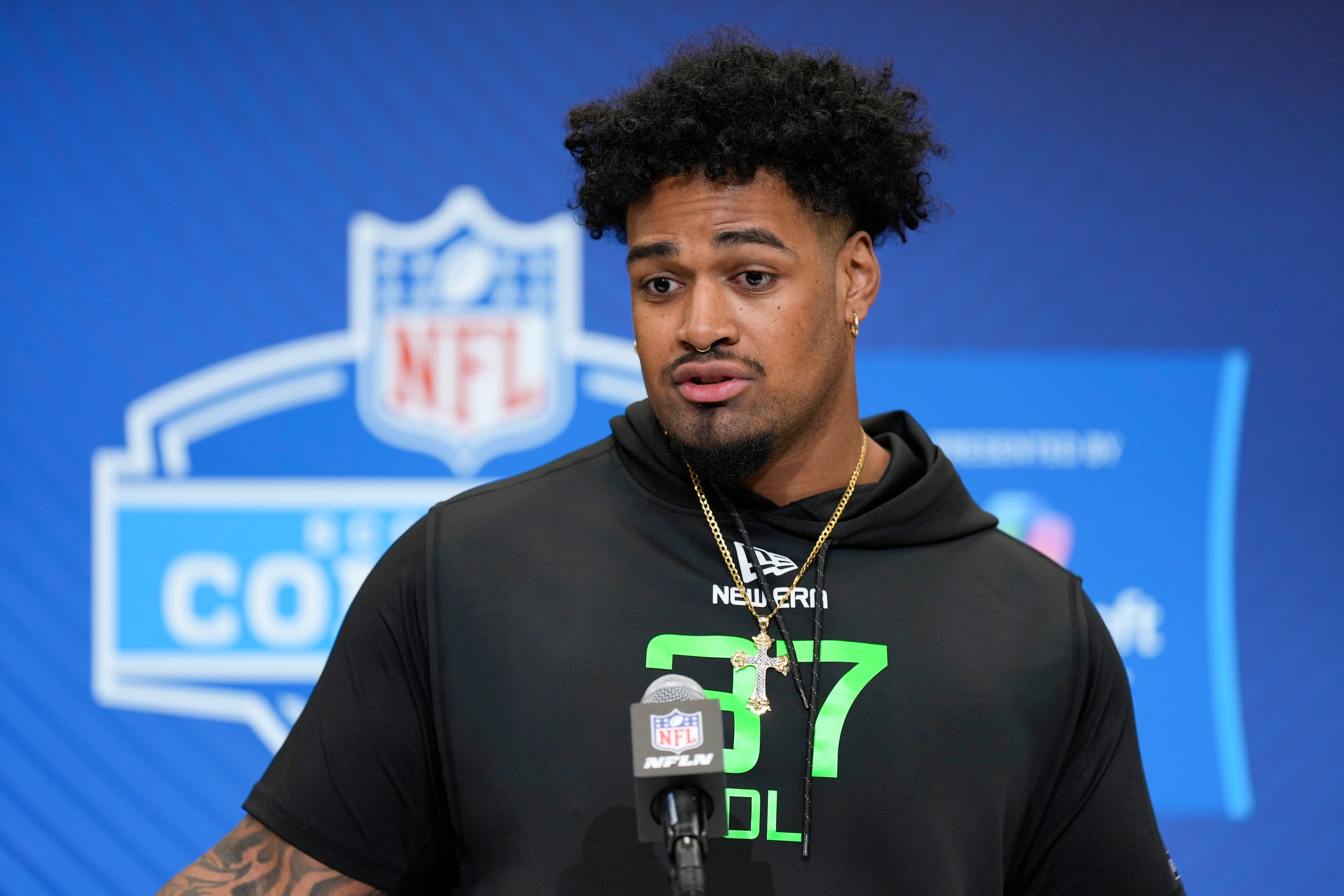
Round 1 (No. 32): OT Josh Simmons, Ohio State
Round 2 (No. 63): DL Omarr Norman-Lott, Tennessee
Round 3 (No. 66): EDGE Ashton Gillotte, Louisville
Round 3 (No. 85): CB Nohl Williams, California
Round 4 (No. 133): WR Jalen Royals, Utah State
Round 5 (No. 156): LB Jeffrey Bassa, Oregon
Round 7 (No. 228): RB Brashard Smith, SMU
The Kansas City Chiefs didn't make waves at the bottom of Round 1, but they certainly got some value.
First, Kansas City traded back one spot to let the Eagles secure Alabama linebacker Jihaad Campbell. The Chiefs pocketed a fifth-round pick in the move and still landed a promising tackle prospect in Josh Simmons at No. 32.
Simmons is coming off a significant knee injury, but the Chiefs were comfortable with his recovery.
"He's in a good place…It's healed well," head coach Andy Reid said, per Matt McMullen of the team's official website.
Offensive line issues were a major problem in 2024, and while Simmons may not supplant free-agent addition Jaylon Moore immediately, he could become Kansas City's long-term solution at left tackle.
General manager Brett Veach deserves credit for the slam-dunk series of moves that led to Simmons in Round 1.
The Chiefs added to their defensive front in Round 2, grabbing Tennessee defensive tackle Omarr Norman-Lott. At 6'2" and 291 pounds, Norman-Lott is just a tad undersized for the interior but should have some early pass-rushing value. Ashton Gillotte and Nohl Williams were also added to the defense on Day 2.
Kansas City finally turned back to the offense in Round 4 and may have gotten a steal in wideout Jalen Royals. The Utah State product caught 21 touchdown passes over the past two seasons and was the 49th-ranked overall prospect on the final B/R board.
Did the Chiefs add a slew of immediate difference-makers? Probably not. However, Veach got some solid value early and late while adding several prospects who can develop into quality contributors down the road.
Grade: B
Las Vegas Raiders
18 of 33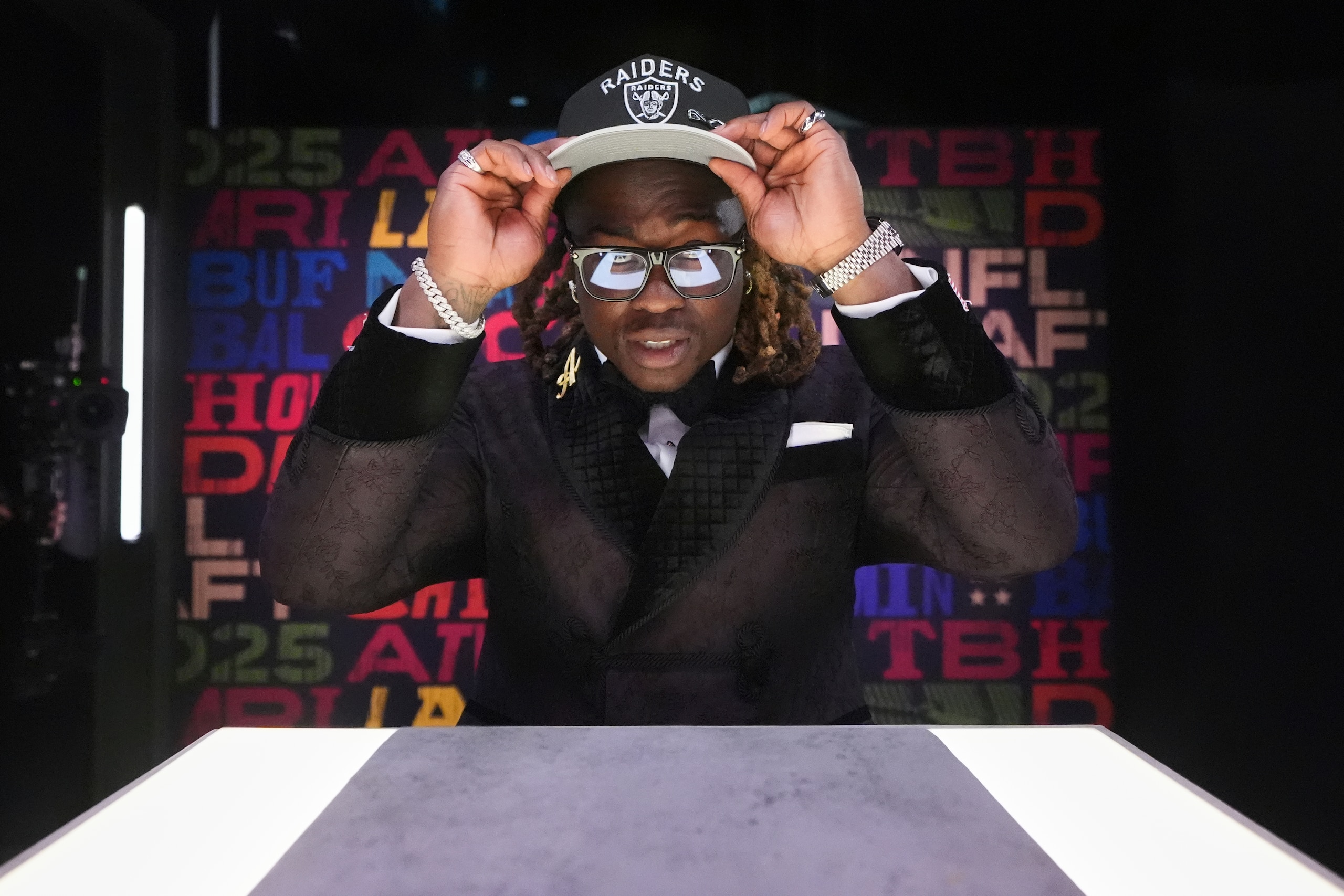
Round 1 (No. 6): RB Ashton Jeanty, Boise State
Round 2 (No. 58): WR Jack Bech, TCU
Round 3 (No. 68): CB Darien Porter, Iowa State
Round 3 (No. 98): IOL Caleb Rogers, Texas Tech
Round 3 (No. 99): OT Charles Grant, William & Mary
Round 4 (No. 108): WR Dont'e Thornton Jr., Tennessee
Round 4 (No. 135): DL Tonka Hemingway, South Carolina
Round 6 (No. 180): DL JJ Pegues, Ole Miss
Round 6 (No. 213): WR Tommy Mellott, Montana State
Round 6 (No. 215): QB Cam Miller, North Dakota State
Round 7 (No. 222): LB Cody Lindenberg, Minnesota
Sometimes teams really do what others expect on draft night. A cursory search of predraft mocks will likely uncover several that paired the Las Vegas Raiders with running back Ashton Jeanty.
Jeanty was still on the board at No. 6, and Las Vegas didn't hesitate to get Pete Carroll his next dominant ball-carrier.
Brent Sobleski of the B/R Scouting Department gave the Raiders an "A" grade for the selection, citing how well Jeanty meshes with what Las Vegas has put in place this offseason.
"Jeanty will immediately take pressure off veteran quarterback Geno Smith, the Raiders' marquee offseason acquisition. He’s truly a special runner and should feast in Chip Kelly’s running back-friendly scheme."
The Raiders traded down twice near the top of Round 2, adding some valuable capital in a draft that was believed to have depth in the middle rounds. They still managed to add another potential playmaker in TCU wide receiver Jack Bech, a physical, reliable possession receiver who should complement the rest of Las Vegas' receiving corps.
Dont'e Thornton Jr. may be more of a project but should add big-play speed to Las Vegas' receiving corps.
Jeanty, Bech, Thornton, Brock Bowers and Jakobi Meyers should form the foundation of a potent multi-faceted offense in 2025.
Darien Porter has the skills needed to be an early contributor in the secondary, while Caleb Rogers and Charles Grant will help solidify the Raiders' offensive line depth.
Las Vegas added some quality defensive depth later in the draft and finally settled on a developmental quarterback in North Dakota State's Cam Miller. However, this draft was all about finding the pieces needed to field a Pete Caroll team—one with a dominant ground game, strong offensive line and physical defense. In that regard, this class looks terrific.
Grade: A+
Los Angeles Chargers
19 of 33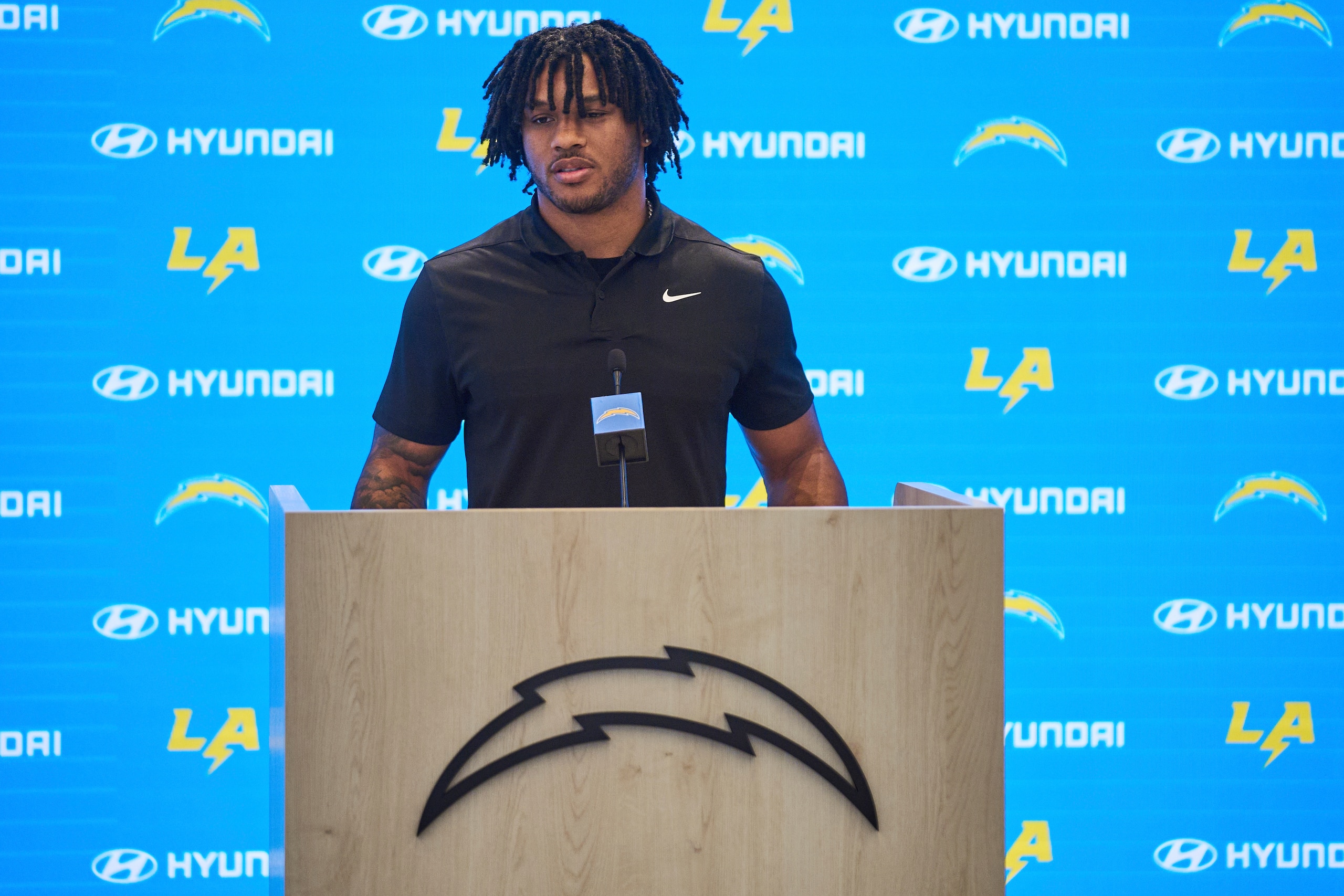
Round 1 (No. 22): RB Omarion Hampton, North Carolina
Round 2 (No. 55): WR Tre Harris, Ole Miss
Round 3 (No. 86): DL Jamaree Caldwell, Oregon
Round 4 (No. 125): EDGE Kyle Kennard, South Carolina
Round 5 (No. 158): WR Keandre Lambert-Smith, Auburn
Round 5 (No. 165): TE Oronde Gadsden II, Syracuse
Round 6 (No. 199): OT Branson Taylor, Pittsburgh
Round 6 (No. 214): S R.J. Mickens, Clemson
Round 7 (No. 256): CB Trikweze Bridges, Florida
Like the Raiders, the Los Angeles Chargers opted for a potential game-changing running back in Round 1. As with Las Vegas' pick, we probably could have seen the Chargers' selection coming.
Head coach Jim Harbaugh loves to lead with the running game, and North Carolina's Omarion Hampton has all the tools needed to be a top-10 or even a top-five running back in the NFL.
Hampton should be a terrific fit for Greg Roman's offense because of his physical, efficient running style and his pass protection—Justin Herbert will love having him in the backfield.
Los Angeles got another weapon for Herbert in Round 2, grabbing Mississippi wide receiver Tre Harris. He was the fourth-ranked receiver on the B/R board and should add both talent and versatility to the Chargers' receiver room.
"He is alignment versatile and can play all three wide receiver positions effectively," Dame Parson of the B/R Scouting Department wrote. "With his route running, strength, and football IQ, Harris projects as a productive starting receiver at the next level."
L.A. also took a flier on Auburn receiver Keandre Lambert-Smith in Round 5. Lambert-Smith is likely to be a developmental project at best, but his 4.37 speed is tough to ignore.
General manager Joe Horitz added depth to the defensive front in the middle rounds, grabbing Jamaree Caldwell and Kyle Kennard. It's clear that Horitz and Harbaugh are on the same page when it comes to building in the trenches.
Grade: B+
Los Angeles Rams
20 of 33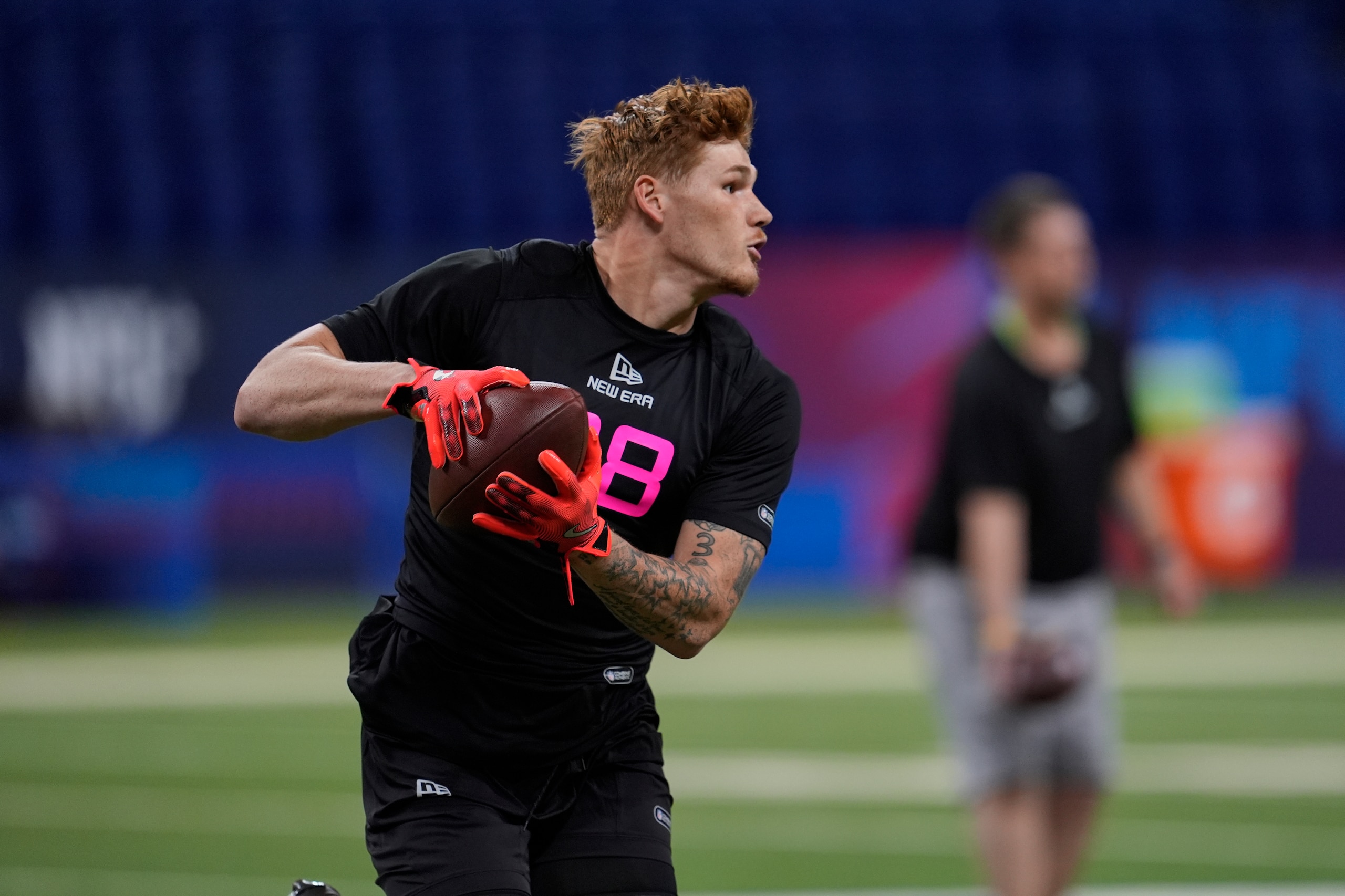
Round 2 (No. 45): TE Terrance Ferguson, Oregon
Round 3 (No. 90): EDGE Josaiah Stewart, Michigan
Round 4 (No. 117): RB Jarquez Hunter, Auburn
Round 5 (No. 148): DT Ty Hamilton, Ohio State
Round 5 (No. 172): LB Chris Paul Jr., Ole Miss
Round 7 (No. 242): WR Konata Mumpfield, Pittsburgh
Well, the Rams' run of being first-round relevant proved to be short-lived. A year ago, general manager Les Snead made Jared Verse the franchise's only first-round selection since 2016. On Thursday, Snead flipped the 26th and 101st picks to the Falcons for the 46th and 242nd picks, along with a 2026 first-rounder.
As head coach Sean McVay said after the fact, this was too much value to pass up.
During L.A.'s first-round drought, the front office became exceptional at finding high-level contributors on Days 2 and 3. The Rams likely felt they'd be getting a second-round talent at No. 26 anyway, so they essentially flipped a third-round pick for a future first.
The Rams made their first selection of 2025 in Round 2, grabbing Oregon tight end Terrance Ferguson. He should provide valuable depth behind Tyler Higbee and should contribute right away as a rotational player.
"He has developmental upside as a blocker and contested-catch target," Dame Parson of the B/R Scouting Department wrote.
While Josaiah Stewart's lack of elite size and physical tools may make him seem like a third-round reach—he was the 160th-ranked prospect on the B/R board—the Rams have shown that they know how to get the most from productive defensive linemen.
Jarquez Hunter should have a chance to contribute to the backfield early, while Ty Hamilton should provide even more depth along the defensive front.
The Rams would have been wise to add a cornerback or an elite off-ball linebacker early, but they navigated the draft fairly successfully, considering they traded their first-round selection.
Grade: B+
Miami Dolphins
21 of 33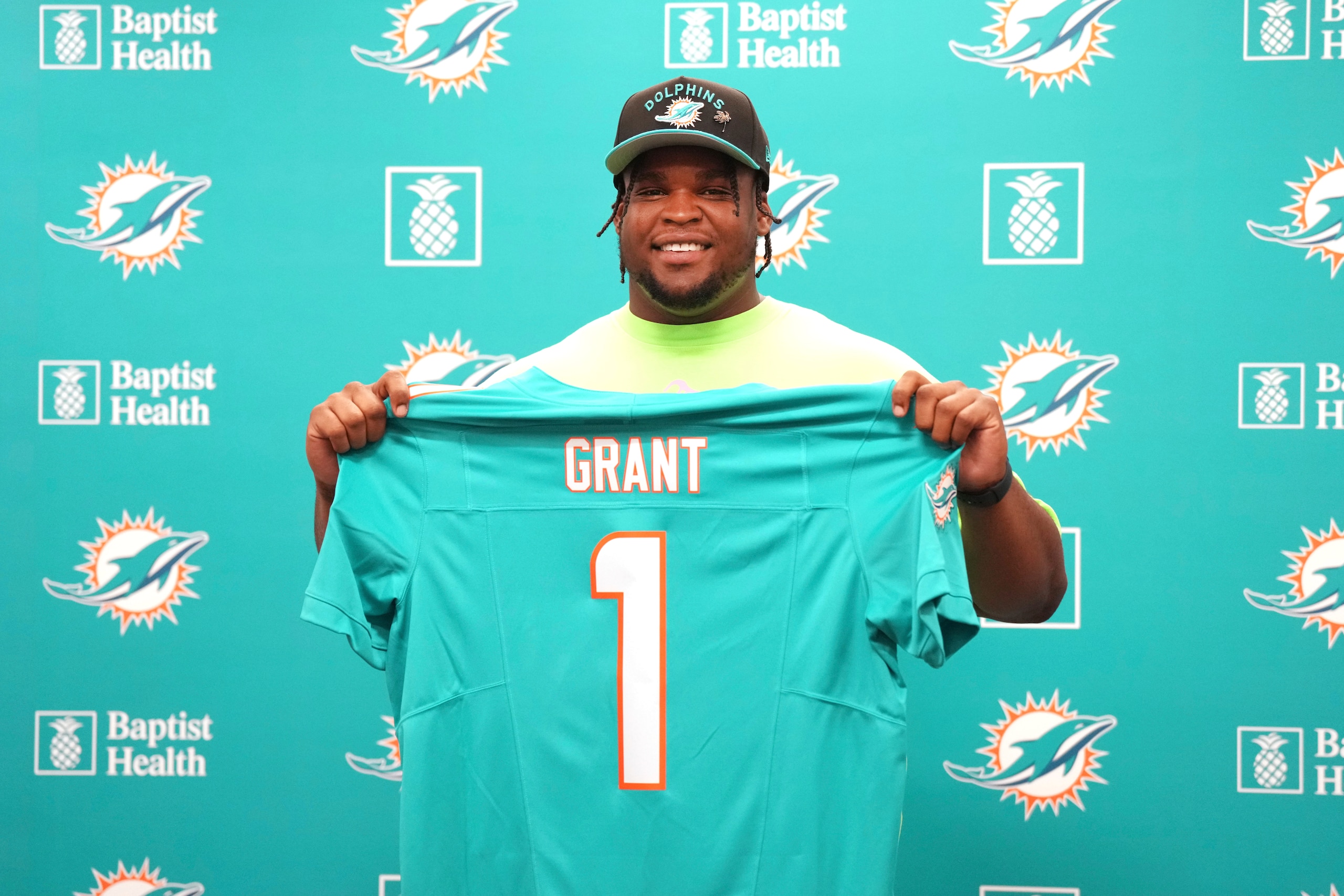
Round 1 (No. 13): DL Kenneth Grant, Michigan
Round 2 (No. 37): IOL Jonah Savaiinaea, Arizona
Round 5 (No. 143): DL Jordan Phillips, Maryland
Round 5 (No. 150): CB Jason Marshall Jr., Florida
Round 5 (No. 155): S Dante Trader Jr., Maryland
Round 6 (No. 179): RB Ollie Gordon II, Oklahoma State
Round 7 (No. 231): QB Quinn Ewers, Texas
Round 7 (No. 253): DL Zeek Biggers, Georgia Tech
The Miami Dolphins kicked off their 2025 draft class with a bit of a reach. While Michigan defensive tackle Kenneth Grant possesses enough upside to justify going in Round 1—he was the 26th-ranked prospect on the final B/R board—he's highly unlikely to be an every-down contributor.
At 6'4" and 331 pounds, Grant projects as more of a space-eating nose tackle than a versatile three-down defender. Miami has needed defensive line help since losing Christian Wilkins in 2024 free agency, but there was better value to be found at No. 13.
Defensive lineman Walter Nolen, tight end Tyler Warren and edge-rusher Shemar Stewart were all rated higher than Grant by the Bleacher Report Scouting Department and drafted after him on opening night.
Miami continued to be aggressive in addressing needs on Day 2. Following a trade with the Raiders, the Dolphins grabbed themselves a guard in Arizona's Jonah Savaiinaea.
Savaiinaea can provide depth at tackle but will likely make a more immediate impact if the Dolphins play him inside.
"Savaiinaea is best suited inside at guard in the NFL, where his starter-level size, square power, and initial quicks can earn him a starting role early in his rookie contract," Brandon Thorn of the B/R Scouting Department wrote.
Trading up for Savaiinaea was smart and may provide a bigger impact this season than the drafting of Grant. However, it's hard to envision Miami getting early contributions from Day 3 selections like Jordan Phillips and Jason Marshall Jr.
Taking a flier on Quinn Ewers was smart, given Tua Tagovailoa's lengthy injury history. Ewers may never develop into a high-level starter, but he can become a long-term backup for the Dolphins—and they could definitely use one.
Overall, though, it's hard to think Miami will make a big 2025 jump because of its draft class.
Grade: C
Minnesota Vikings
22 of 33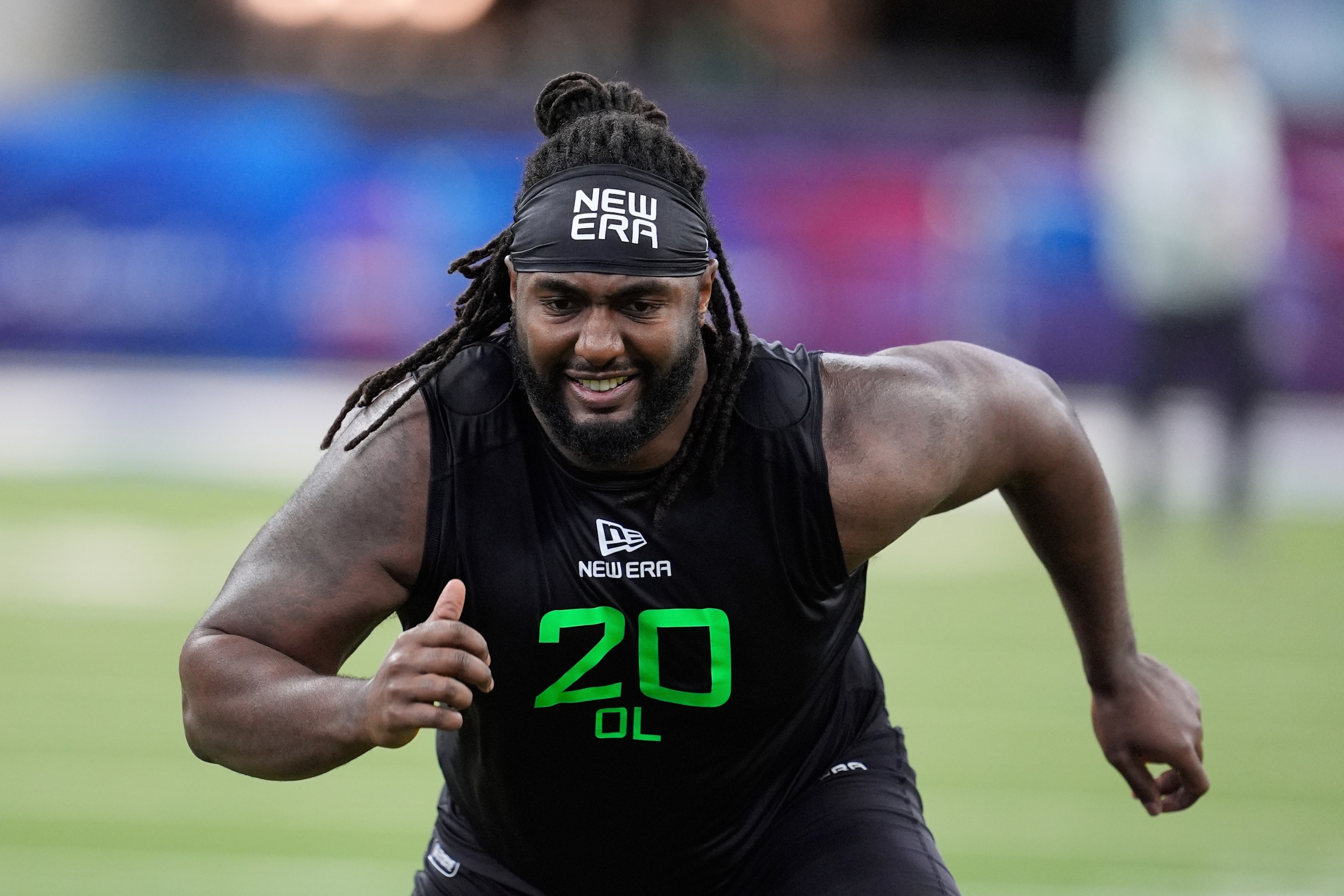
Round 1 (No. 24): IOL Donovan Jackson, Ohio State
Round 3 (No. 102): WR Tai Felton, Maryland
Round 5 (No. 139): DL Tyrion Ingram-Dawkins, Georgia
Round 6 (No. 201): LB Kobe King, Penn State
Round 6 (No. 202): TE Gavin Bartholomew, Pittsburgh
Despite entering draft weekend with only four total selections, the Vikings opted to take Ohio State offensive lineman Donovan Jackson at No. 24 instead of trading down in Round 1.
Both the 25th and 26 selections were dealt, by the Texans and Rams, respectively.
Presumably, Minnesota felt it could struggle to find quality offensive-line help later in the draft, so it scooped up Jackson, who was only the 51st-ranked prospect on the B/R board. While his selection at No. 24 may have been a reach, the logic behind it was sound.
The Vikings are looking to turn the offense over to J.J. McCarthy in 2025 and needed to revamp their offensive interior. Jackson will join Ryan Kelly and Will Fries as additions who should help solidify Minnesota's blocking unit.
Minnesota did move down in Round 3, grabbing the 102nd and 142nd picks by sending the 97th and 187th picks to the Texans. With the 102nd pick, the Vikings grabbed Maryland receiver Tai Felton, who could be a very strong complement to Justin Jefferson and Jordan Addison.
"If paired with a true No. 1 receiver, he can find success on the lesser defenders on the opposing defense," Dame Parson of the B/R Scouting Department wrote.
The Vikings also found their veteran quarterback insurance to pair with McCarthy by acquiring Sam Howell from the Seattle Seahawks.
Howell shouldn't be a threat to McCarthy as the starter but will provide solid depth in the quarterback room.
Day 3 prospects Tyrion Ingram-Dawkins, Kobe King and Gavin Bartholomew figure to be pure depth and may struggle to make the final 53-player roster. All in all, though, general manager Kwesi Adofo-Mensah did a nice job of maximizing Minnesota's limited draft capital.
Grade: C+
New England Patriots
23 of 33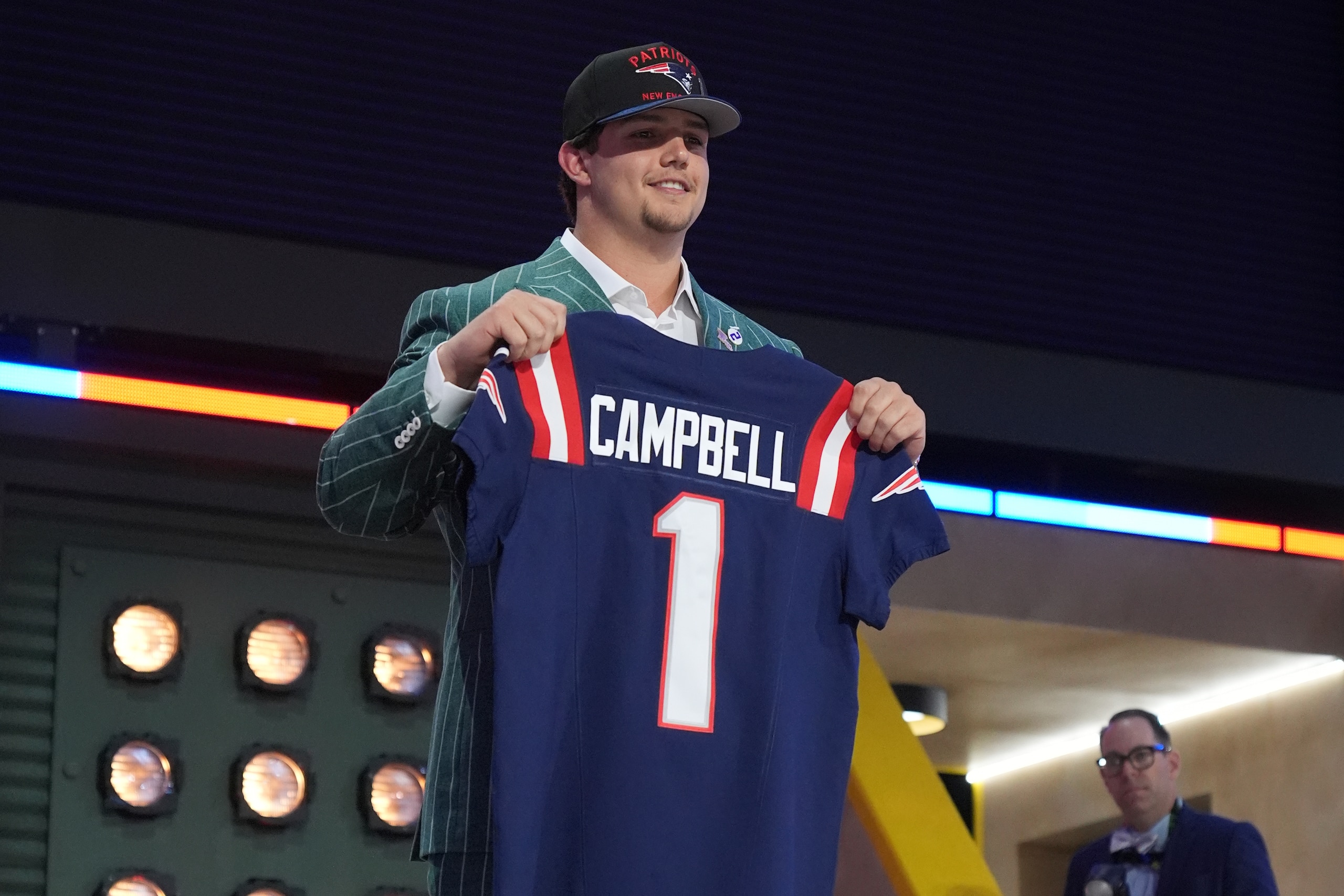
Round 1 (No. 4): OL Will Campbell, LSU
Round 2 (No. 38): RB TreVeyon Henderson, Ohio State
Round 3 (No. 69): WR Kyle Williams, Washington State
Round 3 (No. 95): IOL Jared Wilson, Georgia
Round 4 (No. 106): S Craig Woodson, California
Round 4 (No. 137): DL Joshua Farmer, Florida State
Round 5 (No. 146): EDGE Bradyn Swinson, LSU
Round 6 (No. 182): K Andres Borregales, Miami
Round 7 (No. 220): OT Marcus Bryant, Missouri
Round 7 (No. 251): LS Julian Ashby, Vanderbilt
Round 7 (No. 257): DB Kobee Minor, Memphis
LSU offensive lineman Will Campbell always felt like the right pick for the New England Patriots at No. 4. While he didn't draw as much attention as Travis Hunter, Abdul Carter and Cam Ward entering the draft, he's a high-floor prospect who will thrive as a tackle or guard in New England.
"We spent a lot of time, and we looked at a lot of other players and worked a lot of other players out. He made a huge impact on us, and we're excited about adding him," head coach Mike Vrabel told reporters after the pick.
The Patriots are looking to build a strong offense around second-year quarterback Drake Maye, and finding an instant-impact starter along the offensive line was a wise way to begin the draft.
New England continued building its offense on Day 2, using the 38th pick on Ohio State running back RB TreVeyon Henderson.
Henderson should make an immediate impact as a ball-carrier and as a pass-catcher. He'll add some much-needed home run ability to the Patriots offense. He will pair with Rhamondre Stevenson to create a backfield that should concern opposing defensive coordinators this season.
Kyle Williams should give Maye an explosive target who can generate big plays before or after the catch.
Defensive prospects Craig Woodson and Joshua Farmer should get opportunities to contribute early. Of course, the goal in this draft was to improve Maye's supporting cast, and the Patriots did a wonderful job of doing just that.
Grade: A+
New Orleans Saints
24 of 33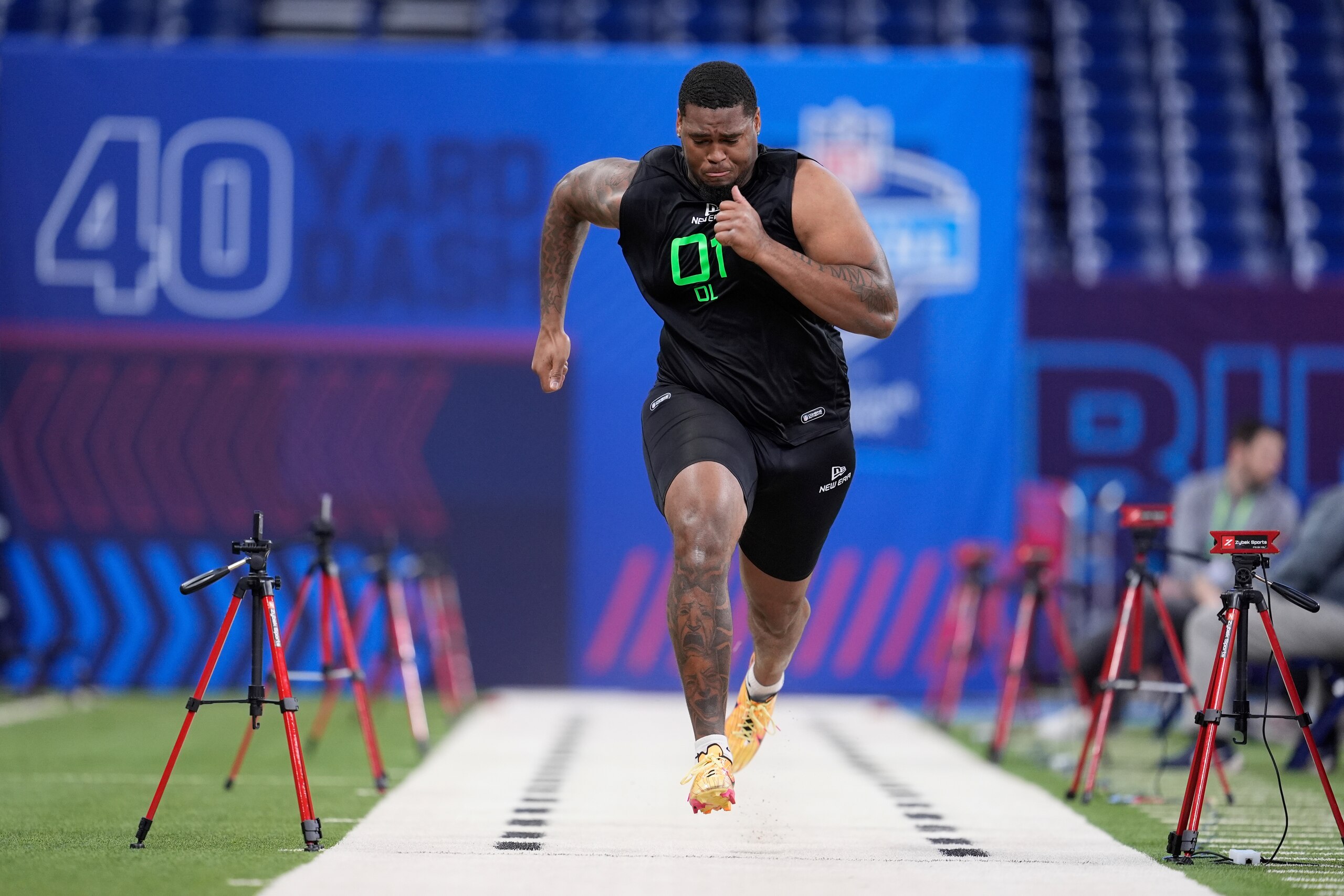
Round 1 (No. 9): OL Kelvin Banks Jr., Texas
Round 2 (No. 40): QB Tyler Shough, Louisville
Round 3 (No. 71): DL Vernon Broughton, Texas
Round 3 (No. 93): S Jonas Sanker, Virginia
Round 4 (No. 112): LB Danny Stutsman, Oklahoma
Round 4 (No. 131): CB Quincy Riley, Louisville
Round 6 (No. 184): RB Devin Neal, Kansas
Round 7 (No. 248): TE Moliki Matavao, UCLA
Round 7 (No. 254): Edge Fadil Diggs, Syracuse
There was plenty of buzz connecting the New Orleans Saints and quarterbacks like Colorado's Shedeur Sanders entering draft weekend. This, in no small part, was a result of the shoulder injury that "threatens" incumbent starter Derek Carr's availability in 2025, according to NFL Media's Ian Rapoport.
However, the Saints didn't draft a quarterback with the ninth pick. Instead, they reached for Texas lineman Kelvin Banks Jr., who was the 33rd-ranked prospect on the final B/R board.
According to Brent Sobleski of the B/R Scouting Department, who gave New Orleans an "F" grade for the Banks selection, New Orleans simply reacted to the mistakes it has already made along the line:
"Trevor Penning still isn't an NFL-caliber pass-blocker. Taliese Fuaga never should have been moved to left tackle. Banks isn’t necessarily a tailor-made left tackle despite playing the position in college. Questions remain about whether he can stay on an island and remain effective."
Ninth overall was too high for Banks, plain and simple.
The Saints did come back for their quarterback in Round 2, using the 40th overall pick on Louisville's Tyler Shough.
While Shough comes into the NFL with durability concerns, his combination of size, athleticism, maturity and arm talent makes him a strong fit for Kellen Moore's offense—if he can put everything together.
"The talent and potential are there, but he needs more consistency," Dame Parson of the B/R Scouting Department wrote of Shough.
In Round 3, the Saints added some intriguing pieces to their 30th-ranked defense in Vernon Broughton and Jonas Sanker. Getting Danny Stutsman, another defensive addition, in Round 4 was solid value.
Stutsman was the seventh-ranked linebacker on the B/R board.
Unfortunately, the Saints didn't do the best job of maximizing value early in the draft, and it's fair to wonder if taking Shough over quarterbacks like Shedeur Sanders and Jalen Milroe was a massive mistake.
New Orleans may need to prove a lot of people wrong for its draft to be considered a big win.
Grade: D+
New York Giants
25 of 33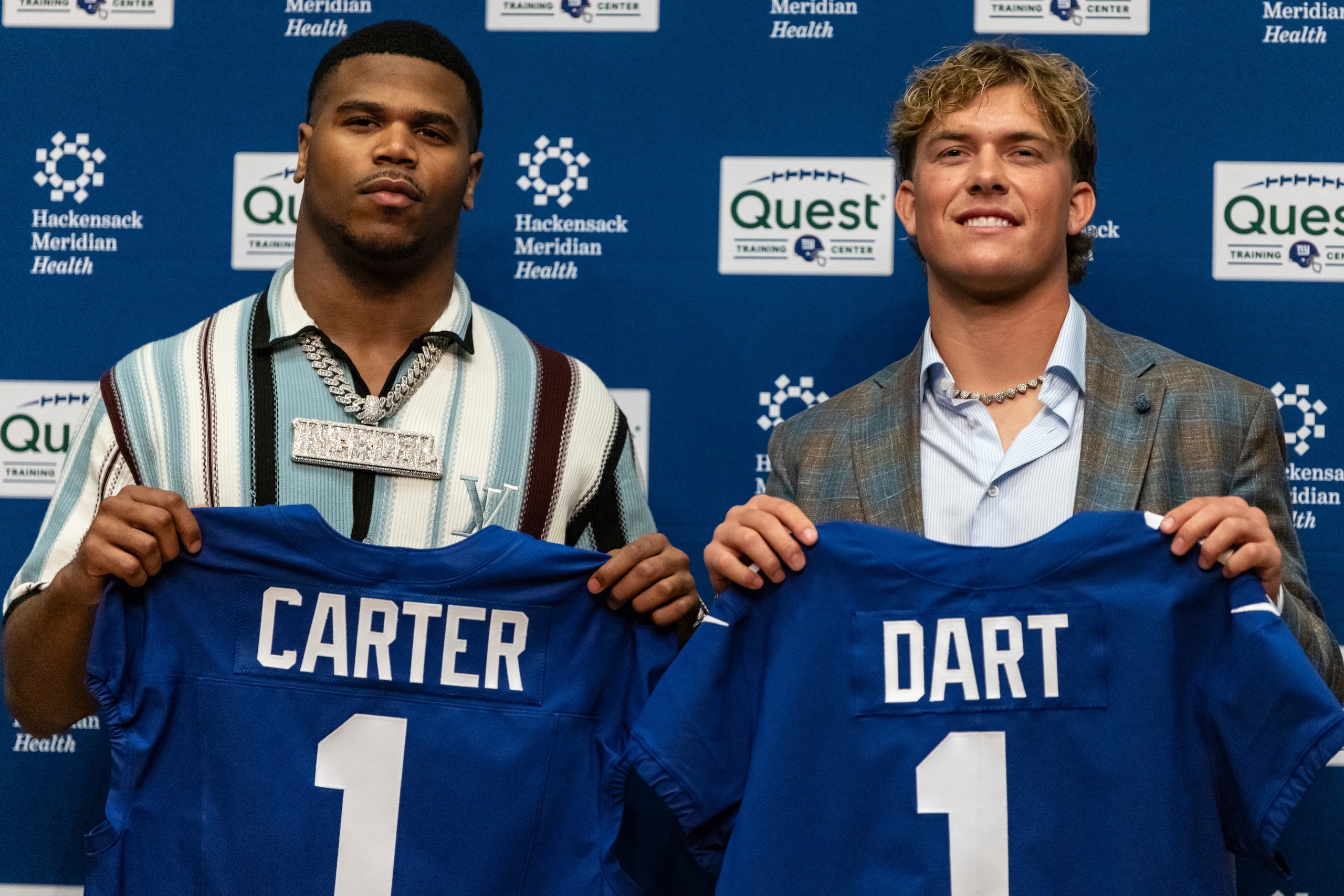
Round 1 (No. 3): EDGE Abdul Carter, Penn State
Round 1 (No. 25): QB Jaxson Dart, Ole Miss
Round 3 (No. 65): DL Darius Alexander, Toledo
Round 4 (No. 105): RB Cam Skattebo, Arizona State
Round 5 (No. 154): OT Marcus Mbow, Purdue
Round 7 (No. 219): TE Thomas Fidone II, Nebraska
Round 7 (No. 246): CB Korie Black, Oklahoma State
It's hard not to love what the Giants accomplished on opening night. General manager Joe Schoen didn't panic in his search for a quarterback of the future but landed him anyway by staying patient.
At the top of Round 1, the Giants simply let the draft's best pure defender fall to them at No. 3. Penn State pass-rusher Abdul Carter, the second-ranked overall prospect on the B/R board, should be an immediate difference-maker.
There should now be some questions, however, about what the future holds for Kayvon Thibodeaux in New York.
Schoen then traded back into Round 1 to snag Mississippi quarterback Jaxson Dart. While Dart was ranked below Colorado's Shedeur Sanders by the B/R Scouting Department, seeing Dart become the second signal-caller off the board was not surprising. His big arm, athleticism and scrambling ability always made him a sensible fit for Biran Daboll's offense.
"I’m told Daboll was a key driving force behind New York trading back into the first round to take him," Fox Sports insider Jordan Schultz posted to X on Thursday.
Trading back into Round 1 without surrendering a future first-round pick—the move cost Schoen the 34th and 99th picks, along with a 2026 third-rounder—should be seen as a big win.
Darius Alexander should add valuable depth to New York's defensive front, while Cam Skattebo could help reshape the team's offensive identity.
"Be prepared for Skattebo to make regular appearances on Angry Runs. The first-team All-American plays with a level of power and passion that can't be denied," Bleacher Report's Brent Sobleski wrote while giving the Giants an "A" grade for the Skattebo pick.
The Giants did a great job of finding players who can contribute early while adding a quarterback of the future. Of course, it remains to be seen whether that'll be enough to save the jobs of Schoen and Daboll beyond this season.
Grade: A
New York Jets
26 of 33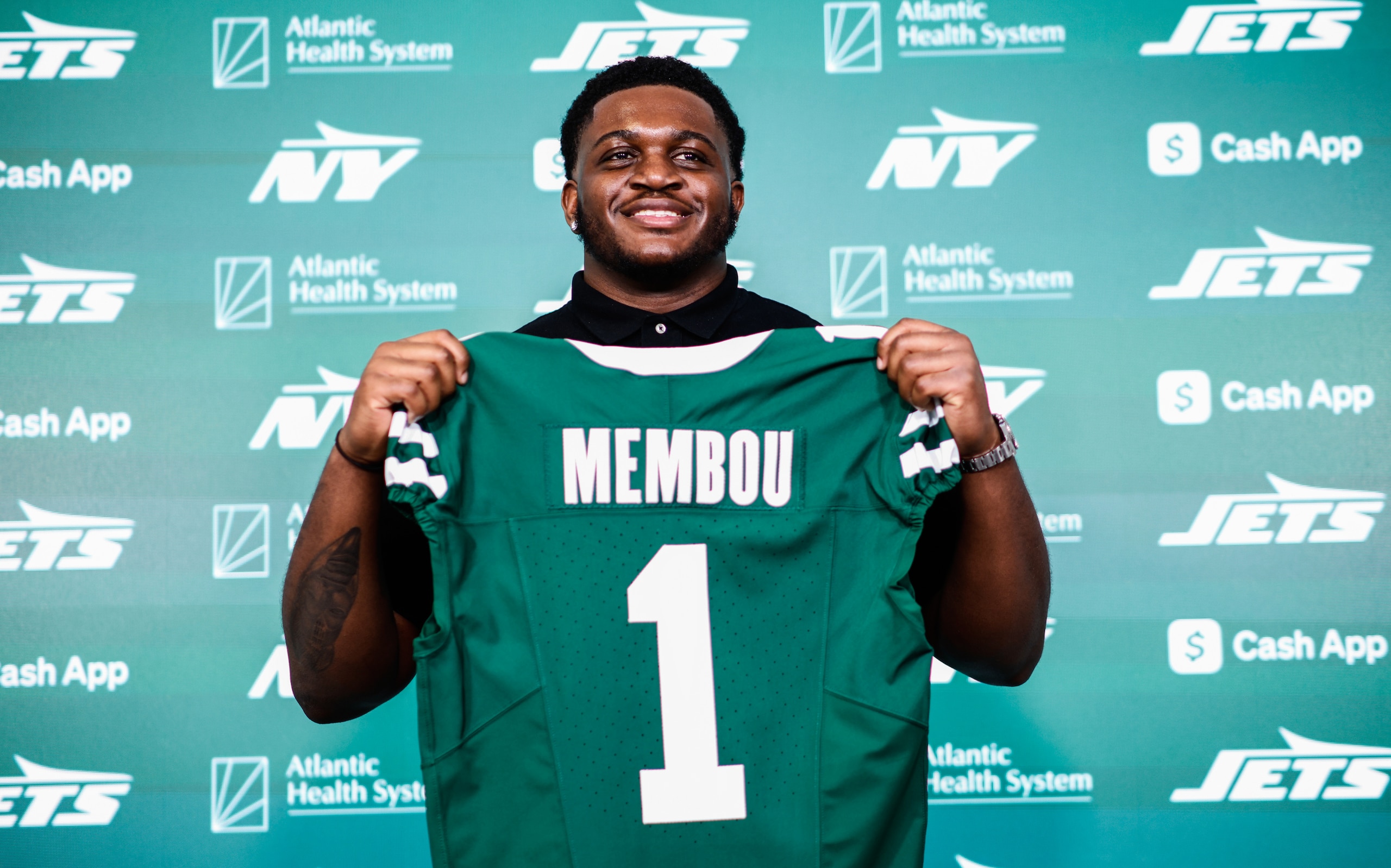
Round 1 (No. 7): OT Armand Membou, Missouri
Round 2 (No. 42): TE Mason Taylor, LSU
Round 3 (No. 73): CB Azareye'h Thomas, Florida State
Round 4 (No. 110): WR Arian Smith, Georgia
Round 4 (No. 130): S Malachi Moore, Alabama
Round 5 (No. 162): LB Francisco Mauigoa, Miami
Round 5 (No. 176): EDGE Tyler Baron, Miami
A year after taking Olu Fashanu in Round 1, the New York Jets kicked off their draft with another offensive tackle.
Fashanu should enter 2025 as the team's starting left tackle, leaving the right side open for Missouri's Armand Membou. Right tackle is Membou's natural position, so fans should see the rookie start early in the season.
While New York could have considered other prospects at No. 7, including tight end Colston Loveland and linebacker Jalon Walker, Membou was a very sensible selection.
The 10th-ranked player on the B/R board was also perhaps the cleanest line prospect in the 2025 class. With Membou in the fold, the Jets should be able to get an accurate look at what they have in free-agent quarterback Justin Fields.
And while the Jets passed on an offensive skill player in Round 1, they got one near the top of Round 2. LSU tight end Mason Taylor should give New York the dynamic pass-catching tight end it hasn't had in recent years.
Cornerback Azareye'h Thomas has the potential to be a quality starter early in his career. Taking Arian Smith represented a solid gamble on explosive traits, though the Georgia product is a boom-or-bust prospect.
It was a surprise to see the Jets ignore quarterbacks who could be developed behind Fields or eventually push him for the QB1 role. Darren Mougey could have done much worse in his first draft as New York's general manager, though.
Grade: B
Philadelphia Eagles
27 of 33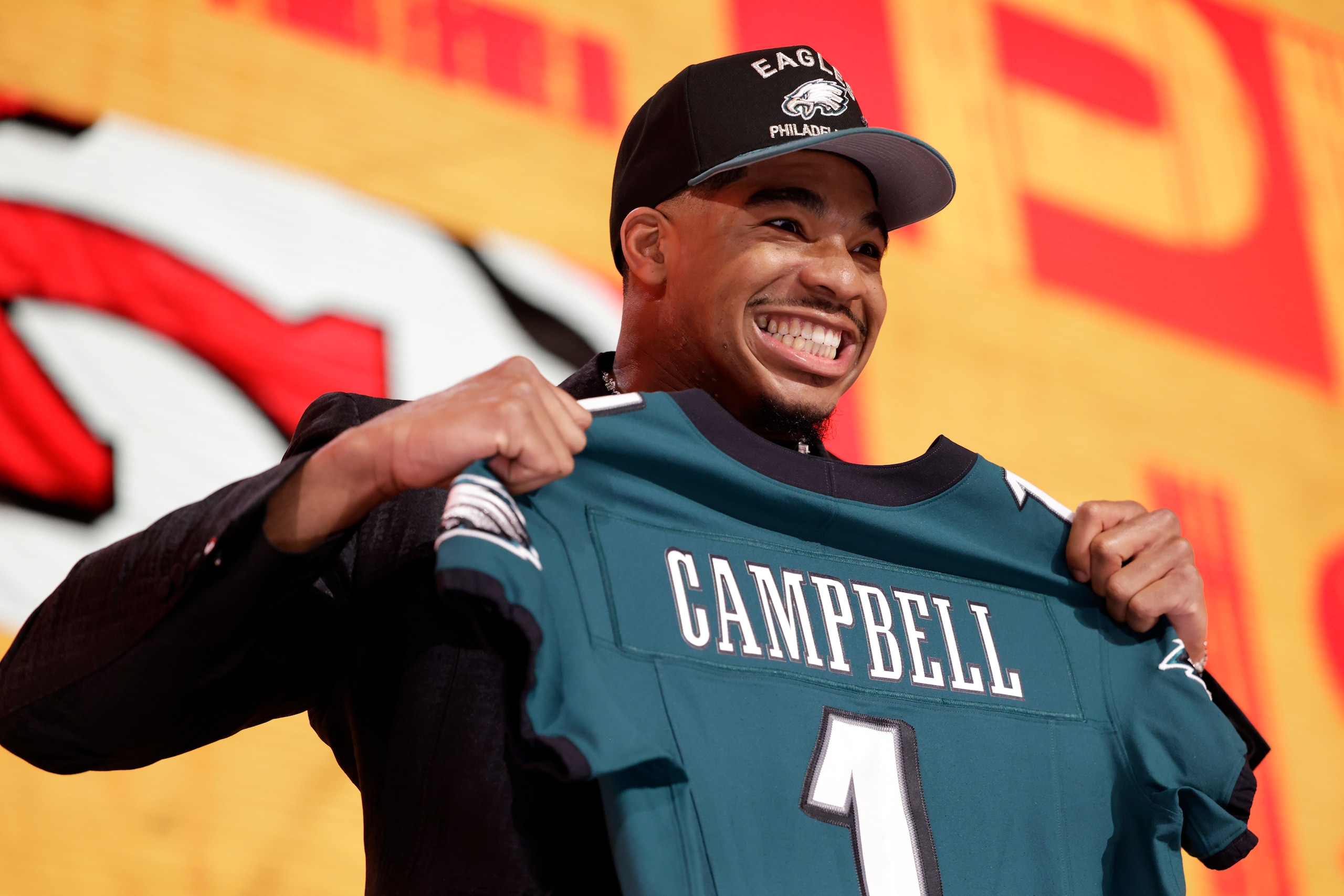
Round 1 (No. 31): LB Jihaad Campbell, Alabama
Round 2 (No. 64): S Andrew Mukuba, Texas
Round 4 (No. 111): DL Ty Robinson, Nebraska
Round 5 (No. 145): CB Mac McWilliams, UCF
Round 5 (No. 161): LB Smael Mondon, Jr., Georgia
Round 5 (No. 168): IOL Drew Kendall, Boston College
Round 6 (No. 181): QB Kyle McCord, Syracuse
Round 6 (No. 191): OT Myles Hinton, Michigan
Round 6 (No. 207): OT Cameron Williams, Texas
Round 6 (No. 209): EDGE Antwaun Powell-Ryland, Virginia Tech
Eagles general manager Howie Roseman may not always land the best players in the draft, but it sure seems like he consistently finds the perfect prospects for his franchise.
Alabama's Jihaad Campbell is a wonderful combination of edge-rusher and off-ball linebacker who should give defensive coordinator Vic Fangio fresh options. He and 2024 All-Pro Zack Baun will be a nightmare for opposing offenses sooner than later.
And while Philly did surrender the 164th pick to move up only one spot for Campbell, Roseman wasn't about to risk another team trading up to get him.
"This was a top-10 player on our board," Roseman said, per ProFootballTalk's Michael David Smith.
Campbell was the 19th-ranked prospect on the B/R board and was well-worth moving up to secure.
At the end of the second round, the Eagles grabbed some secondary help in the form of Texas defensive back Andrew Mukuba. He should contribute early as a versatile rotational player who can help Philly replace trade departure C.J. Gardner-Johnson.
Roseman primarily focused on depth on defense and along the defensive line on Day 3. Offensive tackle Cameron Williams, who was the 86th-ranked prospect on the B/R board, was a particularly good value in the sixth round.
The Eagles also got a developmental quarterback in Kyle McCord.
Roseman and the Eagles tend to shine on draft weekend, and it would seem that they've done it again in 2025.
Grade: A
Pittsburgh Steelers
28 of 33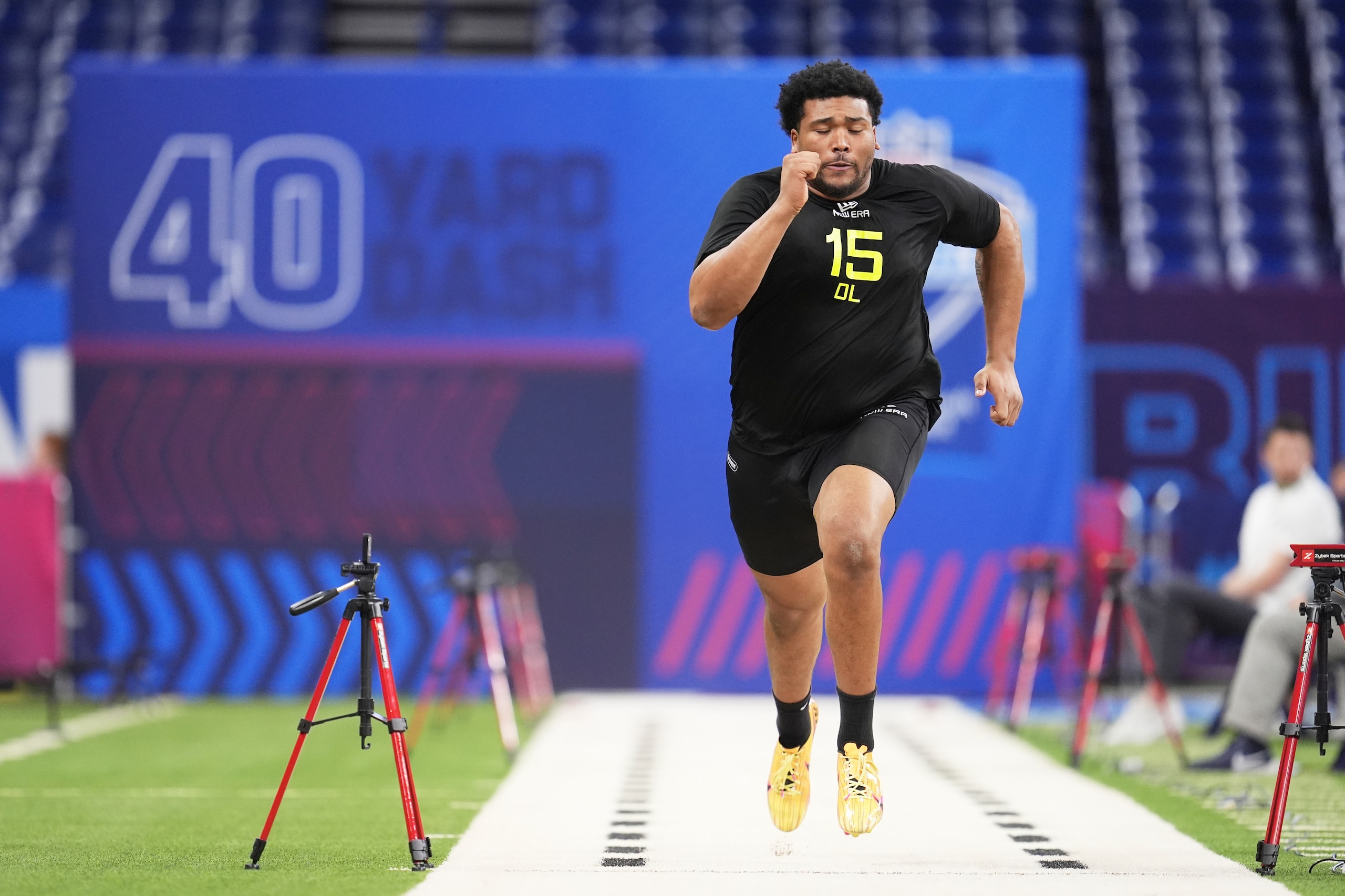
Round 1 (No. 21): DL Derrick Harmon, Oregon
Round 3 (No. 83): RB Kaleb Johnson, Iowa
Round 4 (No. 123): EDGE Jack Sawyer, Ohio State
Round 5 (No. 164): DL Yahya Black, Iowa
Round 6 (No. 185): QB Will Howard, Ohio State
Round 7 (No. 226): LB Carson Bruener, Washington
Round 7 (No. 229) CB Donte Kent, Central Michigan
The Pittsburgh Steelers had their chance to select a quarterback like Shedeur Sanders or Jaxson Dart with the 21st pick. Despite not having a long-term answer at the position—Pittsburgh may eventually reach an agreement with a 41-year-old Aaron Rodgers for the 2025 season—the Steelers opted for Oregon defensive lineman Derrick Harmon instead.
Harmon, the third-ranked defensive tackle on the B/R board, does make sense for the Steelers. He's a big (6'5", 313 lbs), disruptive interior defender, and 35-year-old Cameron Heyward can't man the middle forever.
"We were on the clock," head coach Mike Tomlin said Thursday night, per ESPN's Brooke Pryor. "We got the player that we wanted."
Pittsburgh filled another need on Day 3, grabbing Iowa running back Kaleb Johnson in the third round—the Steelers sent their second-round pick to Seattle for wide receiver DK Metcalf.
The Steelers needed a physical running back to pair with the shifty Jaylen Warren. They got exactly that in Johnson. Edge-rusher Jack Sawyer also fills Pittsburgh's need for a situational edge-rusher, and he provided good value in the fourth round.
Sawyer was the 84th-ranked prospect on the B/R board.
This was a very Steelers-like draft, and most of their picks should mesh with Pittsburgh's locker room culture. The biggest issue is that the team desperately needed a long-term quarterback plan but didn't draft a signal-caller before taking a sixth-round flier on Will Howard.
Including Metcalf as part of the draft haul keeps the Steelers from getting a more disappointing grade.
Grade: C
San Francisco 49ers
29 of 33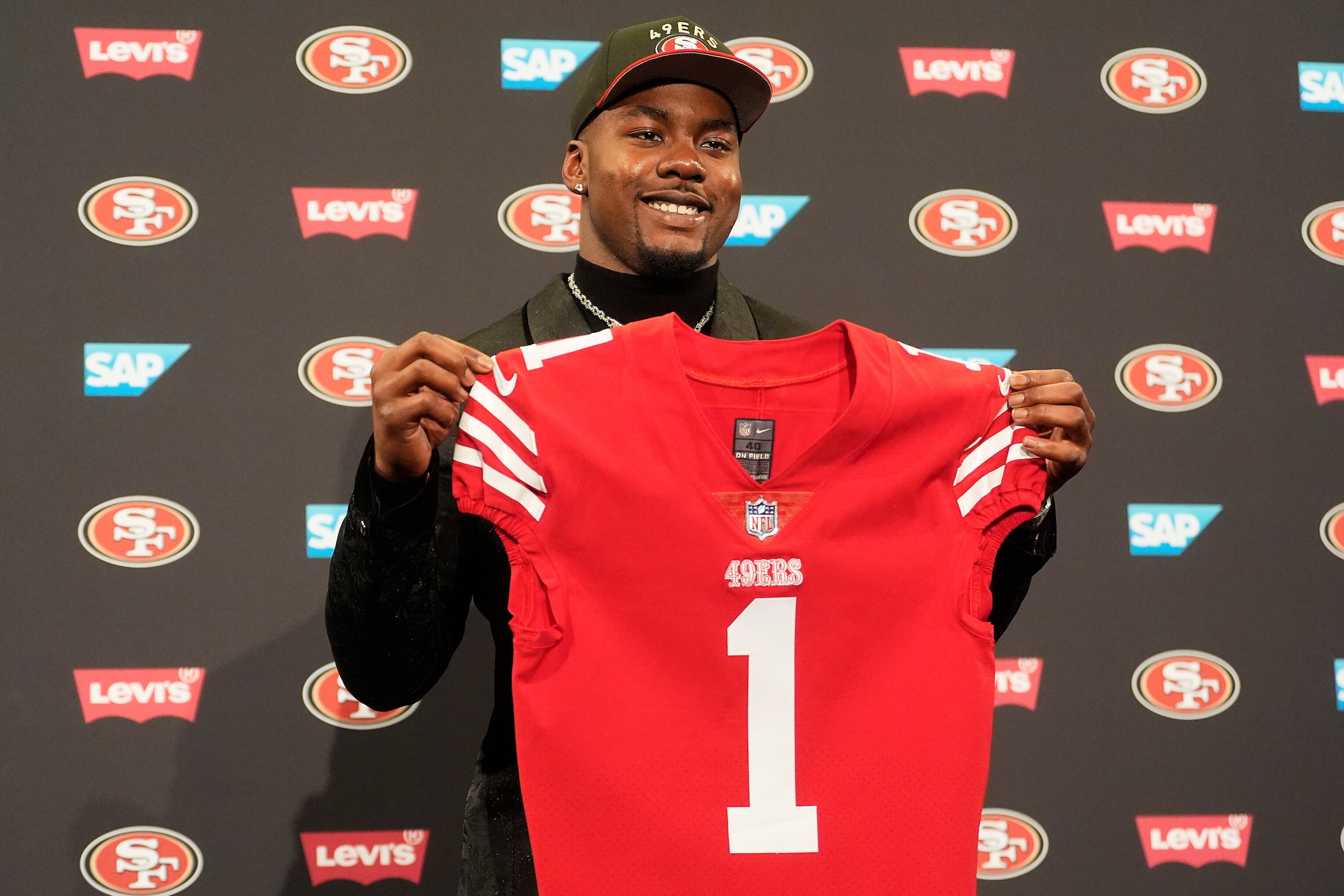
Round 1 (No. 11): EDGE Mykel Williams, Georgia
Round 2 (No. 43): DL Alfred Collins, Texas
Round 3 (No. 75): LB Nick Martin, Oklahoma State
Round 3 (No. 100): CB Upton Stout, Western Kentucky
Round 4 (No. 113): DL CJ West, Indiana
Round 4 (No. 138): WR Jordan Watkins, Ole Miss
Round 5 (No. 147): RB Jordan James, Oregon
Round 5 (No. 160): S Marques Sigle, Kansas State
Round 7 (No. 227): QB Kurtis Rourke, Indiana
Round 7 (No. 249): IOL Connor Colby, Iowa
Round 7 (No. 252): WR Junior Bergen, Montana
In a vacuum, the San Francisco 49ers' selection of pass-rusher Mykel Williams made sense. San Francisco is experiencing a bit of a roster overhaul this offseason—not a full-on rebuild, but key players like Dre Greenlaw and Charvarius Ward did depart—and it has long needed a high-end edge-rusher opposite Nick Bosa.
Williams may eventually be that top-tier complement. However, the Georgia product is on the raw side.
"The Bulldog's traits are worth betting on for a team that uses a lot of even fronts and is looking for a hand-in-the-ground defensive end," Matt Holder of the B/R Scouting Department wrote. "But he'll likely take a year or two to flesh out his game and become an impact, every-down player."
Teams typically prefer cleaner prospects in the top half of Round 1.
San Francisco continued reloading its defensive front in Round 2, taking Texas defensive tackle Alfred Collins with the 43rd pick. A massive (6'6", 332 lbs) interior defender, Collins should help fill the void created when the 49ers released Javon Hargrave early in the offseason.
The run on defenders continued in the middle rounds, and prospects like Upton Stout, Nick Martin and CJ West should have opportunities to compete for early playing time. It was an unsurprising approach for a team that ranked 29th in points allowed last season and is looking to revitalize the defense under former/new coordinator Robert Saleh.
At the end of Round 4, the 49ers took a flier on speedy (4.37-second 40-yard dash) receiver Jordan Watkins.
In the latter rounds, John Lynch largely targeted depth—though Jordan James may find a backfield role after Jordan Mason was traded to Minnesota earlier in the offseason.
San Francisco also took a flier on Indiana quarterback Kurtis Rourke, who may have backup value behind Brock Purdy.
Overall, this draft was about replacing departed players and turning over a roster that couldn't stay healthy in 2024.
Grade: C+
Seattle Seahawks
30 of 33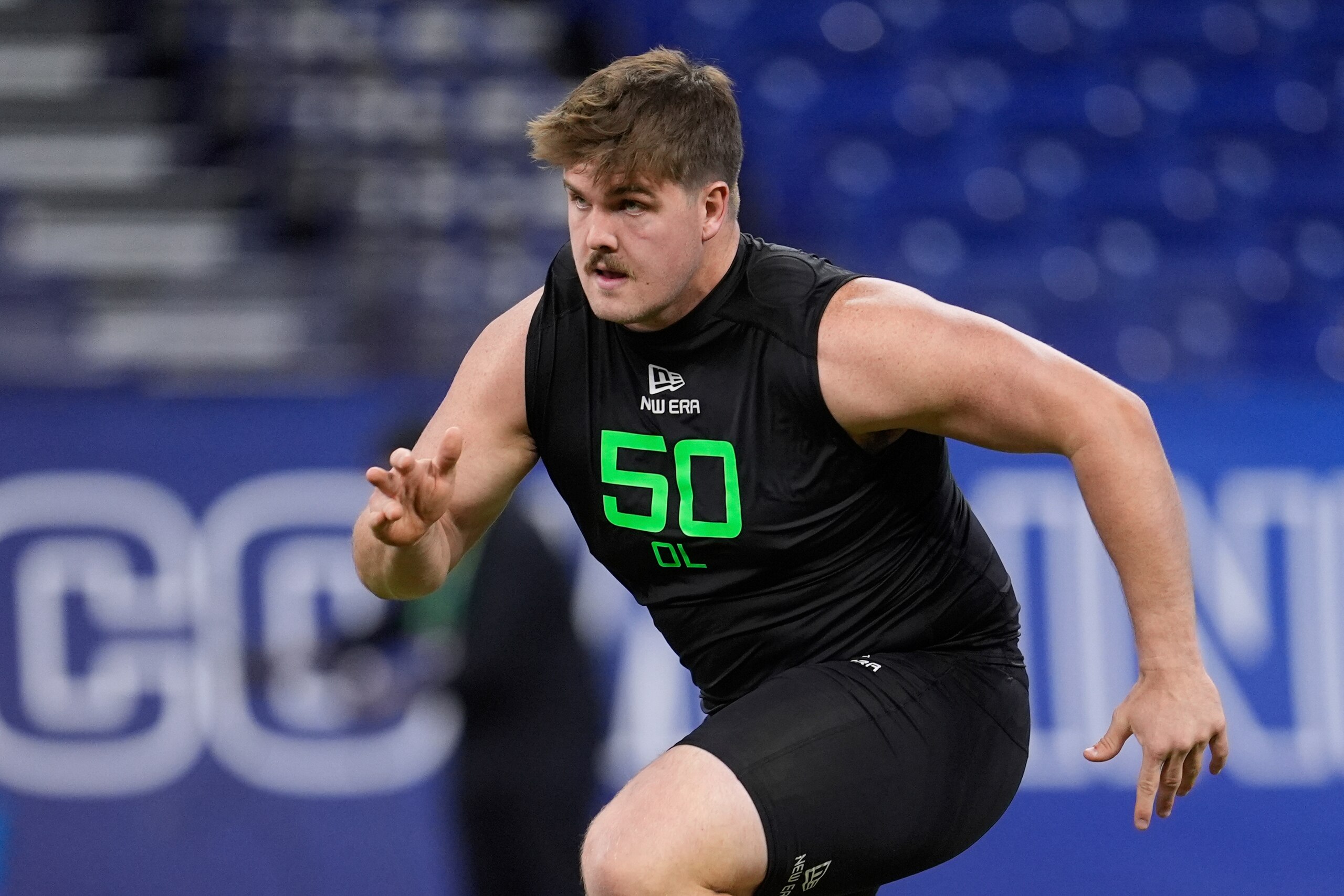
Round 1 (No. 18): IOL Grey Zabel, North Dakota State
Round 2 (No. 35): S Nick Emmanwori, South Carolina
Round 2 (No. 50): TE Elijah Arroyo, Miami
Round 3 (No. 92): QB Jalen Milroe, Alabama
Round 5 (No. 142): DL Rylie Mills, Notre Dame
Round 5 (No. 166): WR Tory Horton, Colorado State
Round 5 (No. 175): TE Robbie Ouzts, Alabama
Round 6 (No. 192): OT Bryce Cabeldue, Kansas
Round 7 (No. 223): RB Damien Martinez, Miami
Round 7 (No. 234): OT Mason Richman, Iowa
Round 7 (No. 238): WR Ricky White III, UNLV
The Seattle Seahawks had a solid tackle tandem in Charles Cross and Abraham Lucas, but their interior line was a significant liability in 2024. Unsurprisingly, Seattle addressed that need with its first opportunity.
The Seahawks settled on North Dakota State interior lineman Grey Zabel, a smaller-school prospect with big-time physical tools.
"Zabel shows starter-level physical tools with refined run blocking skills and understanding of leverage that signal he can become an immediate role player and potential starter within his first year or two with center likely being his best fit," Brandon Thorn of the B/R Scouting Department wrote.
Fans don't usually get excited when a team adds an interior lineman. New Seahawks quarterback Sam Darnold, though, should be thrilled to have Zabel on the roster.
The Seahawks got terrific value early on Day 2, trading up to No. 35 and snagging safety Nick Emmanwori, who was the 28th-ranked prospect on the B/R board.
Seattle also grabbed Miami tight end Elijah Arroyo in the second round. He's a talented deep threat at tight end who should complement Noah Fant or potentially replace him if the Seahawks plan to move on from the 27-year-old. Arroyo and fifth-round receiver Tory Horton should have chances to improve the passing attack as rookies.
The Seahawks grabbed an intriguing developmental quarterback in Jalen Milroe, who could threaten Darnold's long-term future in Seattle. Getting Milroe in Round 3 was great value.
After adding Milroe, the Seahawks dealt Sam Howell as part of a move up to grab Rylie Mills in the fifth round.
It was a bit surprising that Seattle didn't invest even more into its offensive interior, but it was a sensible draft otherwise. The Seahawks added a few early contributors, got something in return for a quarterback they no longer wanted and added a signal-caller with, perhaps, the highest upside in the class.
Grade: B
Tampa Bay Buccaneers
31 of 33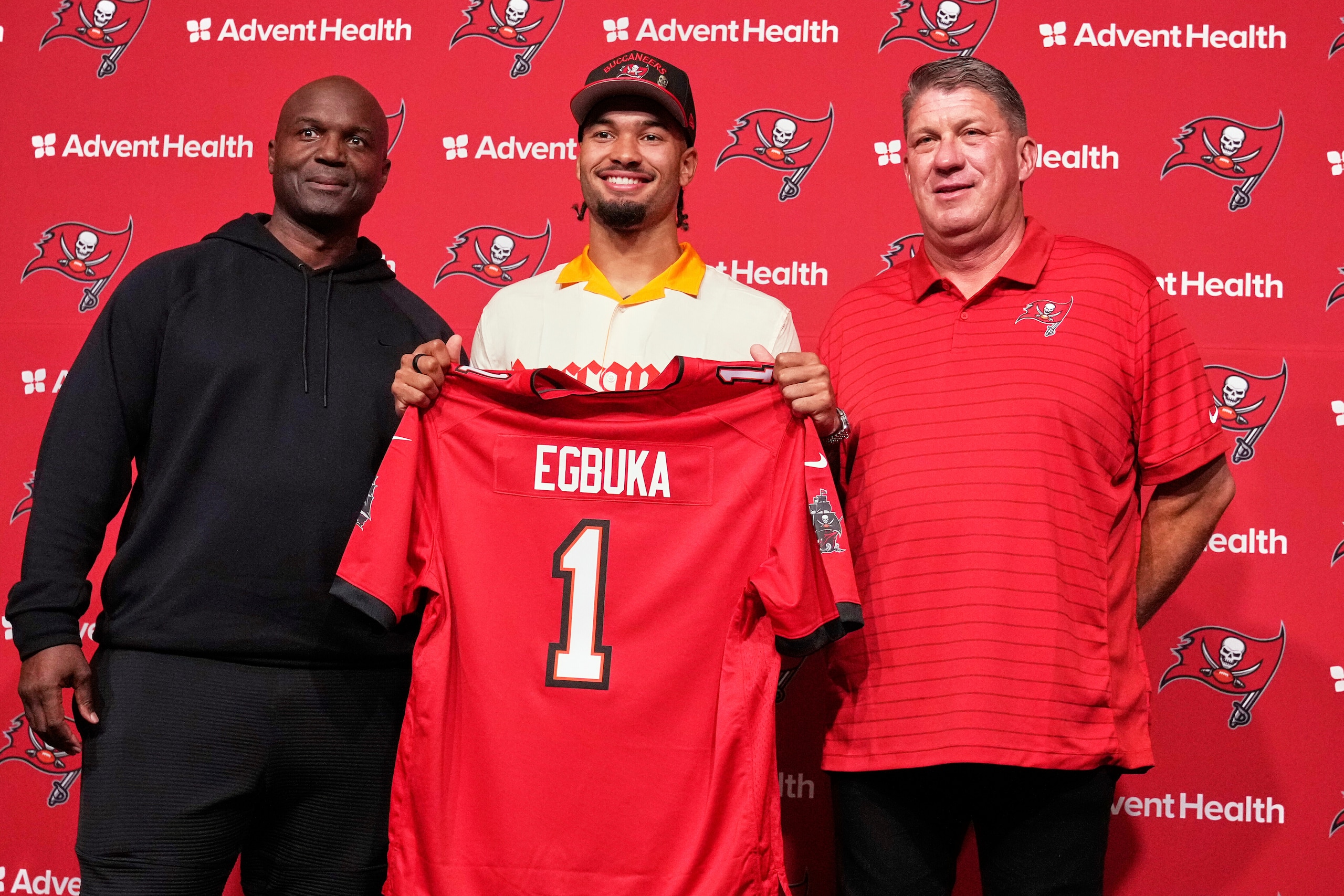
Round 1 (No. 19): WR Emeka Egbuka, Ohio State
Round 2 (No. 53): CB Benjamin Morrison, Notre Dame
Round 3 (No. 84): CB Jacob Parrish, Kansas State
Round 4 (No. 121): EDGE David Walker, Central Arkansas
Round 5 (No. 157): DL Elijah Roberts, SMU
Round 7 (No. 235) WR Tez Johnson, Oregon
The Buccaneers were widely expected to address their 18th-ranked defense in the first round, though head coach Todd Bowles made it clear that he didn't want to target needs alone.
"I would like to have some defensive players if that presented itself, but by no means will I bypass a very good offensive player just to satisfy my needs on defense," Bowles said before the draft (h/t ProFootballTalk's Josh Alper).
Wide receiver Emeka Egbuka won't help improve Tampa's defense. He will, however, help ensure that Baker Mayfield and the Bucs offense continue to hum in 2025.
The Buccaneers re-signed wideout Chris Godwin in free agency, but as he continues to recover from a dislocated ankle that required surgery, Egbuka provides insurance. He'll add a whole new dimension to Tampa's offense when he, Godwin and Mike Evans can all take the field together, and Egbuka's blocking ability makes him a perfect fit for the team's identity.
In Round 2, the Bucs addressed a more immediate need by scooping up Notre Dame cornerback Benjamin Morrison.
Morrison, the 31st-ranked prospect on the B/R board, probably would have gone in Round 1 if not for the hip injury that impacted him during the 2024 season. He has the potential to be a dependable starter within his first couple of seasons.
General manager Jason Licht continued targeting the defense in the middle rounds, adding promising prospects like Jacob Parrish, David Walker and Elijah Roberts.
The strategy of adding an immediate contributor at receiver and then throwing multiple darts at the defense was logical. Whether that plan will allow the Buccaneers to repeat as NFC South champions (again) remains to be seen. However, it was another solid draft outing by a front office that has gotten good at identifying and adding young talent.
Grade: A
Tennessee Titans
32 of 33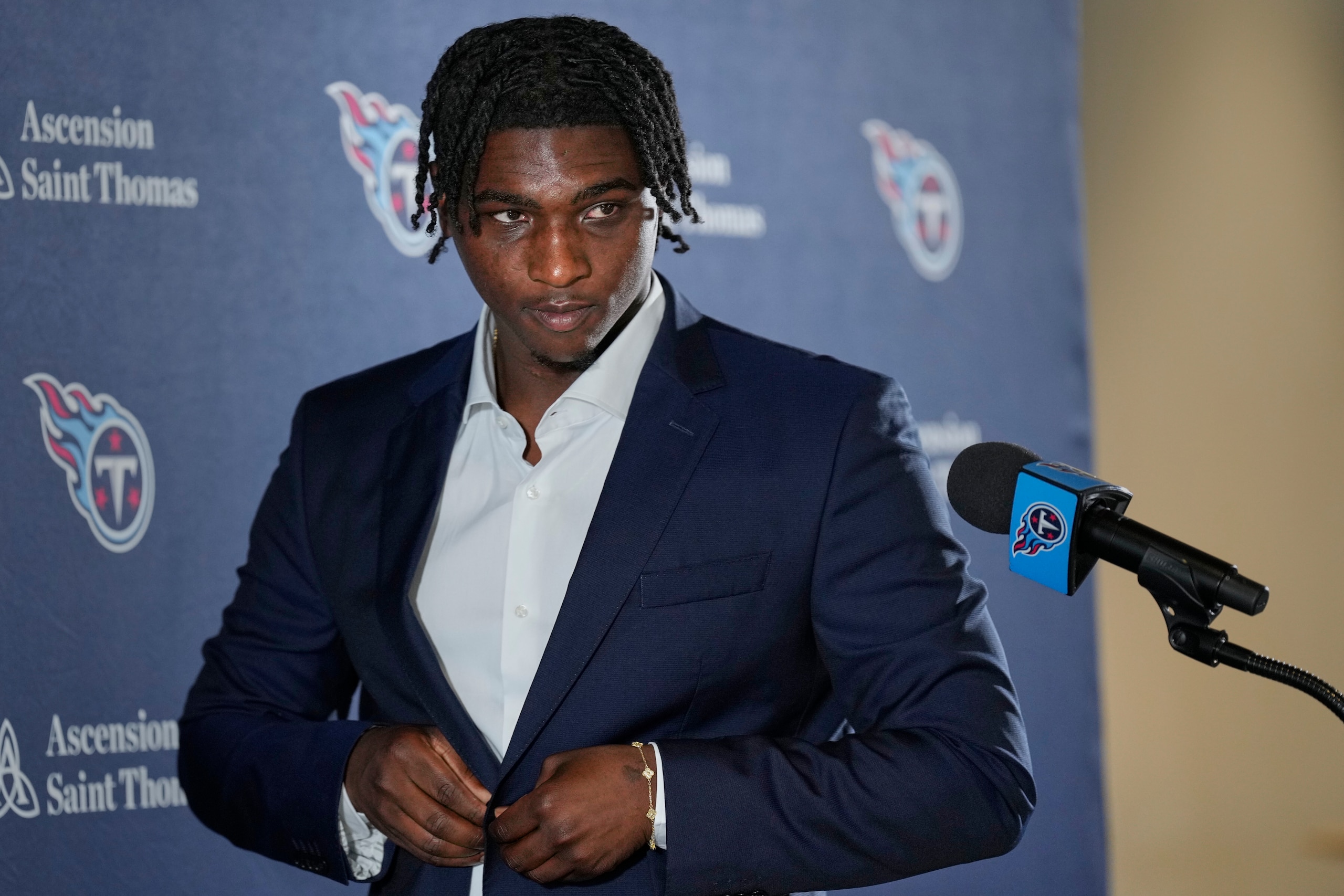
Round 1 (No. 1): QB Cam Ward, Miami
Round 2 (No. 52): EDGE Oluwafemi Oladejo, UCLA
Round 3 (No. 82): S Kevin Winston Jr., Penn State
Round 4 (No. 103): WR Chimere Dike, Florida
Round 4 (No. 120): TE Gunnar Helm, Texas
Round 4 (No. 136): WR Elic Ayomanor, Stanford
Round 5 (No. 167): IOL Jackson Slater, Sacramento State
Round 6 (No. 183): CB Marcus Harris, California
Round 6 (No. 188): RB Kalel Mullings, Michigan
Yes, the Tennessee Titans passed on a potentially elite prospect like Travis Hunter or Abdul Carter to take Miami quarterback Cam Ward No. 1 overall. No, that doesn't mean that general manager Mike Borgonzi made a mistake.
The Titans needed a true franchise quarterback. They got the best QB prospect in the draft—or, at least, the top-ranked QB on the Bleacher Report Scouting Department's final draft board.
"The combination of arm talent, mobility/athleticism, and accuracy is what the NFL is looking for in potential franchise QBs," Dame Parson of the B/R Scouting Department wrote of Ward. "He has superstar potential if he can cut down on mistakes/risky decisions."
Ward may not be a totally finished product. However, he's a terrific high-upside project for head coach Brian Callahan, who landed the Tennessee job after working with Joe Burrow in Cincinnati.
Tennessee then waited until the 52nd overall pick to make its second selection of the draft—after adding the 52nd and 82nd picks in a trade down with the Seahawks. With that selection, the Titans grabbed UCLA edge-rusher Oluwafemi Oladejo.
Oladejo should partner with free-agent additions Dre'Mont Jones and Cody Barton to help bolster Tennessee's pass rush. Safety Kevin Winston Jr., the 45th prospect on the final B/R board was a bargain in Round 3.
Incoming players Chimere Dike, Gunnar Helm, Elic Ayomanor and Kalel Mullings should help Ward adjust to life in the NFL. The most important thing, though, is that Tennessee got its guy at quarterback.
Grade: A
Washington Commanders
33 of 33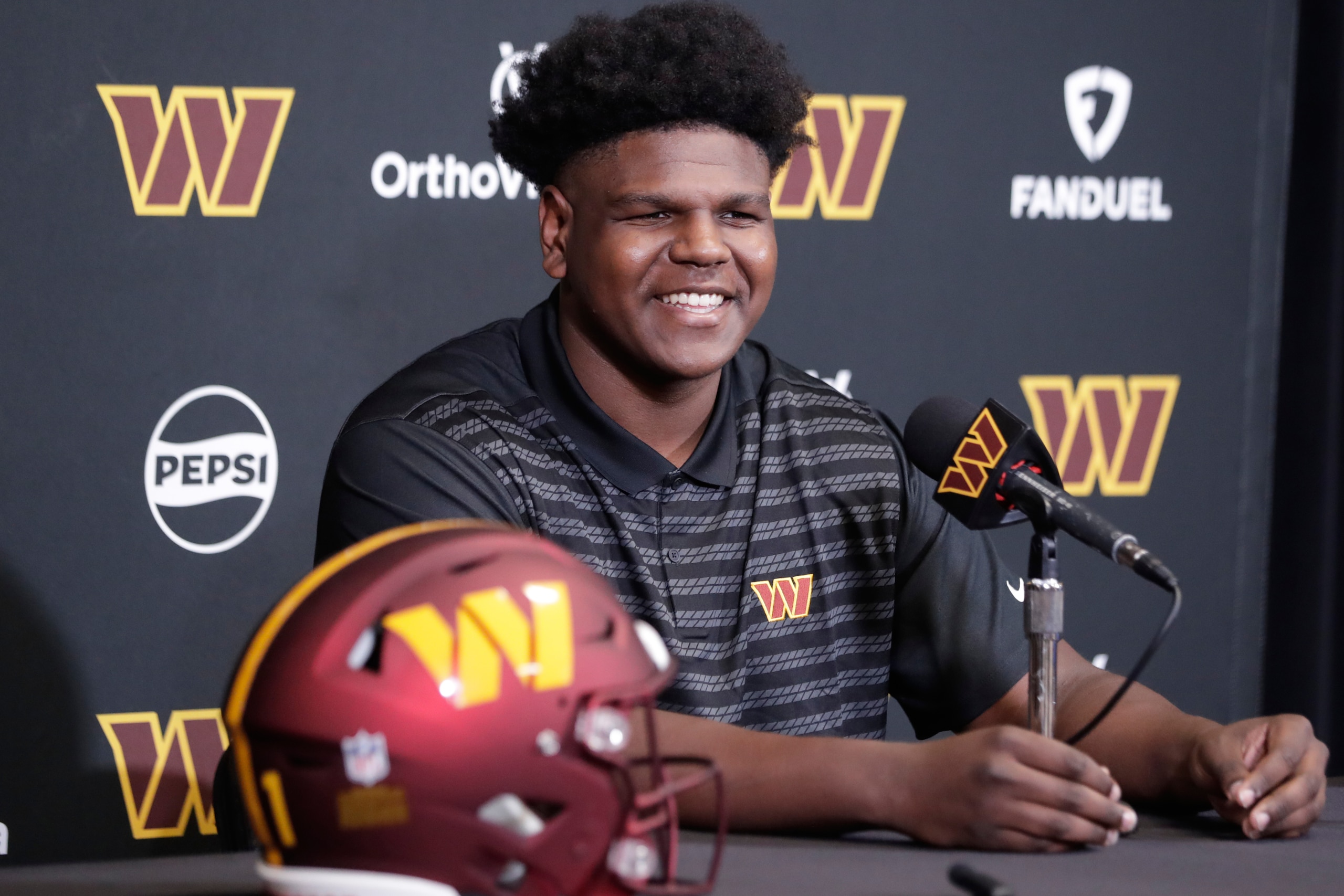
Round 1 (No. 29): OT Josh Conerly Jr., Oregon
Round 2 (No. 61): CB Trey Amos, Ole Miss
Round 4 (No. 128): WR Jaylin Lane, Virginia Tech
Round 6 (No. 205): LB Kain Medrano, UCLA
Round 7 (No. 245): RB Jacory Croskey-Merritt, Arizona
The Washington Commanders found their franchise quarterback when they took Jayden Daniels second overall in last year's draft. A year later—thanks in no small part to Daniels' rookie success—Washington selected near the bottom of the draft order.
Daniels is the key to the Commanders' future, so protecting him should be a top offseason priority. After trading for left tackle Laremy Tunsil, Washington used its first-round pick on Oregon's Josh Conerly Jr.
Conerly should have a chance to compete at right tackle as a rookie, though his collegiate experience came on the right side. He may also be viewed as an heir to Tunsil at left tackle, as Tunsil is only under contract through 2026.
There's nothing wrong with investing in the trenches, though Washington may have reached a bit for Conerly, who was the 40th-ranked prospect on the final B/R board.
Late in the second round, the Commanders added to an already respectable secondary—Washington ranked 10th in net yards allowed per pass attempt last season—by taking Mississippi cornerback Trey Amos.
Amos, 2024 trade acquisition Marshon Lattimore and 2024 second-round pick Mike Sainristil could give the Commanders a championship-caliber cornerback trio. Amos was the 44th-ranked overall prospect on the B/R board.
It was largely depth after those two, though Virginia Tech receiver Jaylin Lane could see some early playing time as a rotational slot receiver. Of course, Washington didn't have a ton of draft capital with which to work. Getting two likely starters in Conerly and Amos should be viewed as a win.
Grade: B
.jpg?w=2560 "Chargers Chiefs Football")
.jpg?w=2560 "Bills Rams Football")