

The first round of the 2025 NFL draft in Green Bay held intrigue because of a few high-profile names along with the overall perception of this year's class.
Colorado's Travis Hunter and Shedeur Sanders are the biggest names in this year's draft. The former is still viewed as an enigma based on how he'll be utilized positionally, while the latter is still waiting to hear his name called on Day 2 of the draft.
Last year, anonymous general managers were raving about the first-round talent and a "loaded" top 10. This year, there's expected to be a quick drop-off in talent.
"Multiple teams have said the player who will be drafted at No. 10 is the same quality as the player drafted at No. 32," ESPN's Adam Schefter reported. "It will be about each team's preference, but in the opinion of multiple personnel people, there is not a tremendous amount of difference."
Bleacher Report graded every selection from Thursday's first round to see how each team handled itself through the uncertainty.
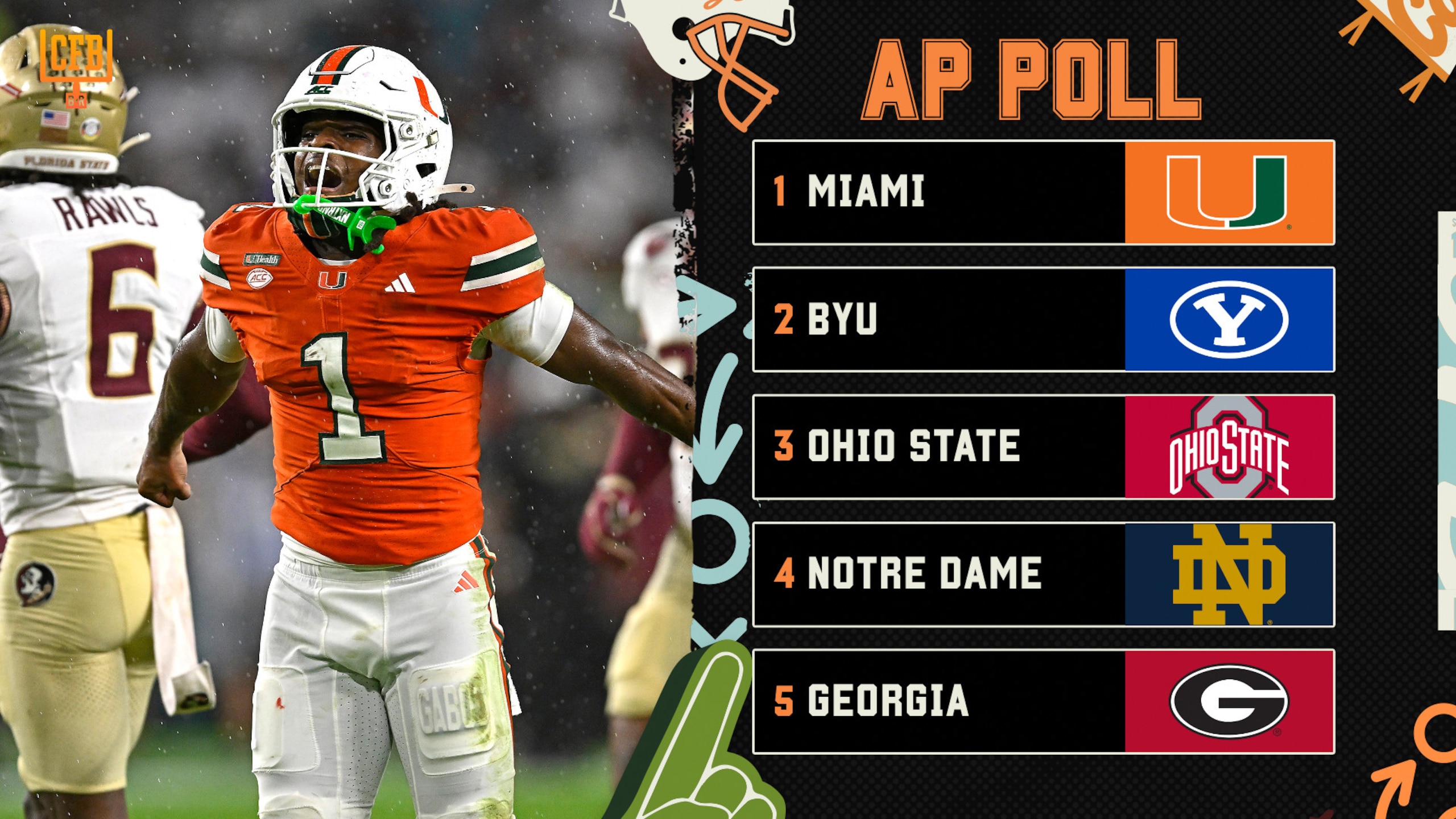
1. Tennessee Titans: Cam Ward, QB, Miami
1 of 32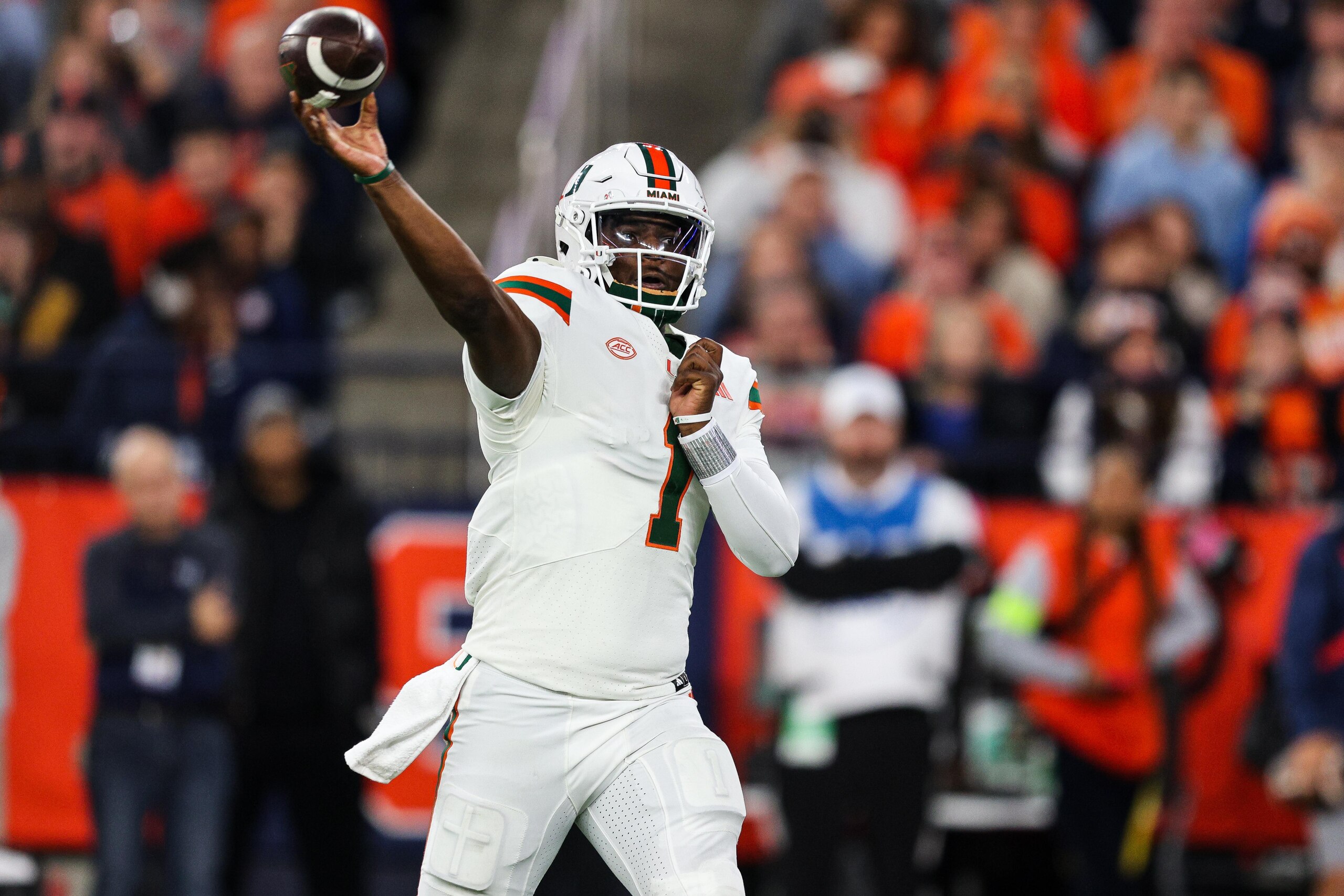
Strengths: Creates easy velocity from multiple arm angles, outstanding improvisational skills, experienced starter with in-depth pre-snap understanding of defenses
Weaknesses: Tendency to play hero ball and attempts throws he shouldn't, strong arm compensates for lackluster anticipation, better pocket management
Grade: A
The first pick of the 2025 NFL draft is appropriate since Cam Ward’s growth over the last five years created a titan on the field.
The Tennessee Titans understood the assignment after landing the No. 1 overall pick. To win at the highest level, a team needs a playmaking quarterback. Will Levis proved he wasn’t capable of leading the team long-term, so new general manager Mike Borgonzi immediately placed his stamp on this organization by getting head coach Brian Callahan his franchise quarterback.
Callahan earned his current position based on his work with Cincinnati Bengals signal-caller Joe Burrow, the 2020 No. 1 overall pick. Ward is different from Burrow and shouldn’t be utilized in the same fashion. He's far more creative outside of structure.
The Titans now must add more weapons around their newly minted quarterback. That’s OK. Ward knows what it takes to overcome and continue to produce.
Ward is this year's version of Baker Mayfield in that he established himself as the QB1 of this class because of the gigantic boulder on his shoulder. The fellow Texan worked his way up through the ranks to earn his standing.
The former 0-star recruit originally joined Incarnate Word, an FCS program, and won the Jerry Rice Award in 2020 and the Southland Conference Offensive Player of the Year in 2021. He transferred to Washington State and threw for 3,736 yards and 25 touchdowns during his first season at the FBS level. Finally, he transferred to Miami, where he set the Hurricanes' single-season passing records for yards and touchdowns.
The reigning Davey O'Brien and Manning Award winner improved at every stop, showing off his electric arm talent and natural playmaking ability.
2. Jacksonville Jaguars (from CLE): Travis Hunter, WR/CB, Colorado
2 of 32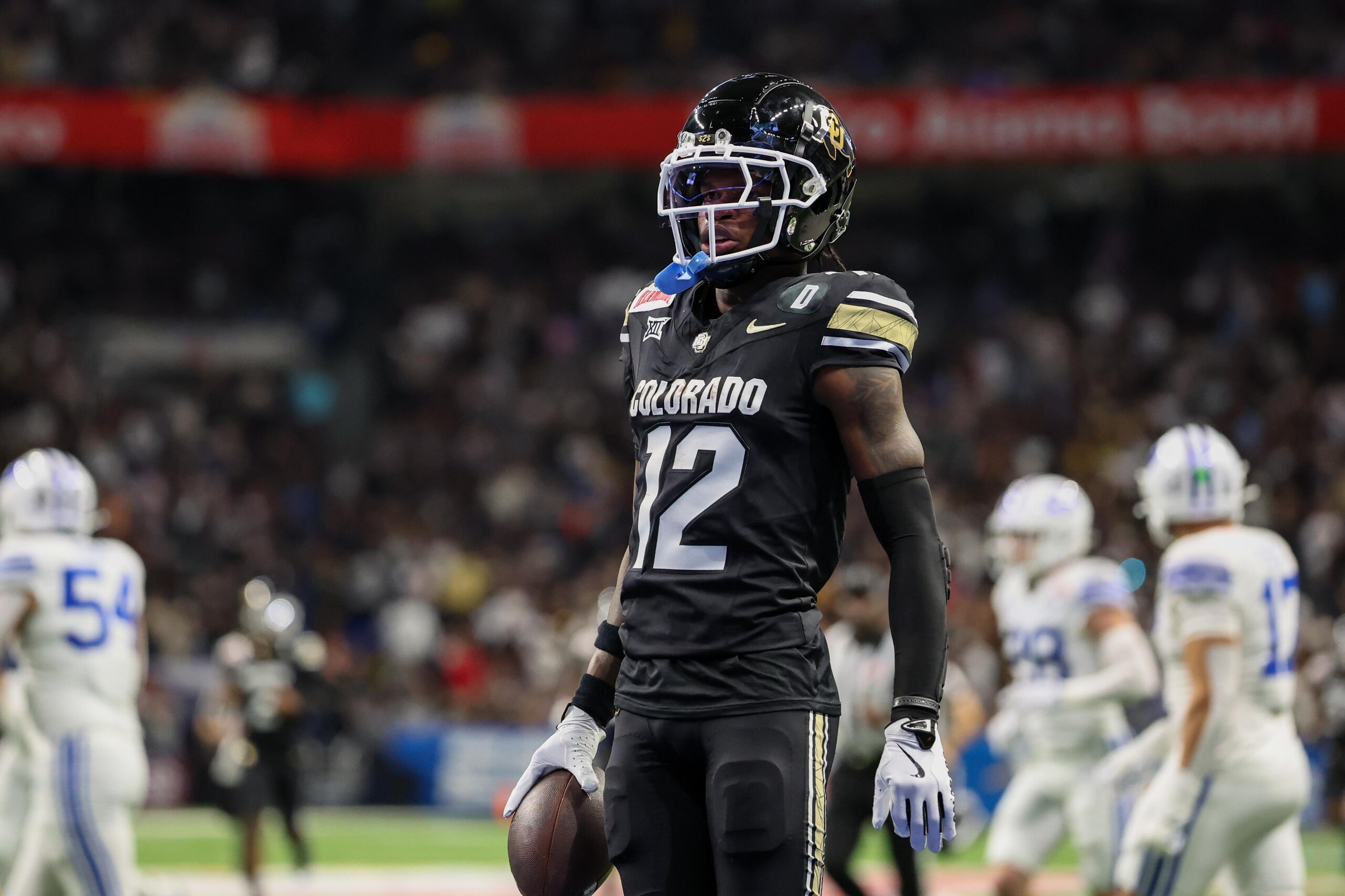
Strengths: Elite wide receiver and cornerback traits, elite ball skills, indefatigable, high-IQ performer in regards to situational football
Weaknesses: Lacks polish because he's never concentrated on one position, lean frame
Grade: A
The Jacksonville Jaguars paid a steep price, but the No. 1 overall talent in the class is well worth it. Colorado’s Travis Hunter is now heading to Duval County, where the answer to where he plays is simple: both wide receiver and cornerback.
Throughout the entirety of the predraft process, Hunter remained steadfast in his desire to play both positions on a full-time basis. He should get the chance in Jacksonville.
Last season, the Jaguars fielded the NFL’s second-worst pass defense. Hunter is now their best corner and gives them a bookend for Tyson Campbell, who signed a contract extension prior to last season.
On offense, the Jaguars continue to help quarterback Trevor Lawrence in hopes of getting the most out of the 2021 No. 1 overall pick. Hunter won’t be the best wide receiver on Jacksonville's roster, but he should pair extremely well with Brian Thomas Jr., who took the NFL by storm with 1,282 receiving yards and 10 touchdowns as a rookie. Hunter is the perfect complementary piece as someone who can work magic underneath and create after the catch.
The reigning Heisman Trophy winner is the most unique talent in the entire 2025 class, if not in recent history. His ability to legitimately play on either side of the ball hasn't been seen in the modern era. In each of the last two seasons, he eclipsed over 1,000 total snaps.
"They say nobody has ever done it the way I do it," Hunter told reporters at the NFL Scouting Combine. "I tell them, I'm just different."
To understand just how special Hunter was this past season, opponents actively avoided throwing in his direction when he lined up as a cornerback. He had the second-lowest target rate among Power Five corners with 300 or more coverage snaps, and he finished among the top five of all collegiate wide receivers in receptions (96), yards (1,258) and touchdown catches (15).
No matter which position Hunter plays in the NFL or how much, he has the tools to be a top-shelf talent at either one.
3. New York Giants: Abdul Carter, EDGE, Penn State
3 of 32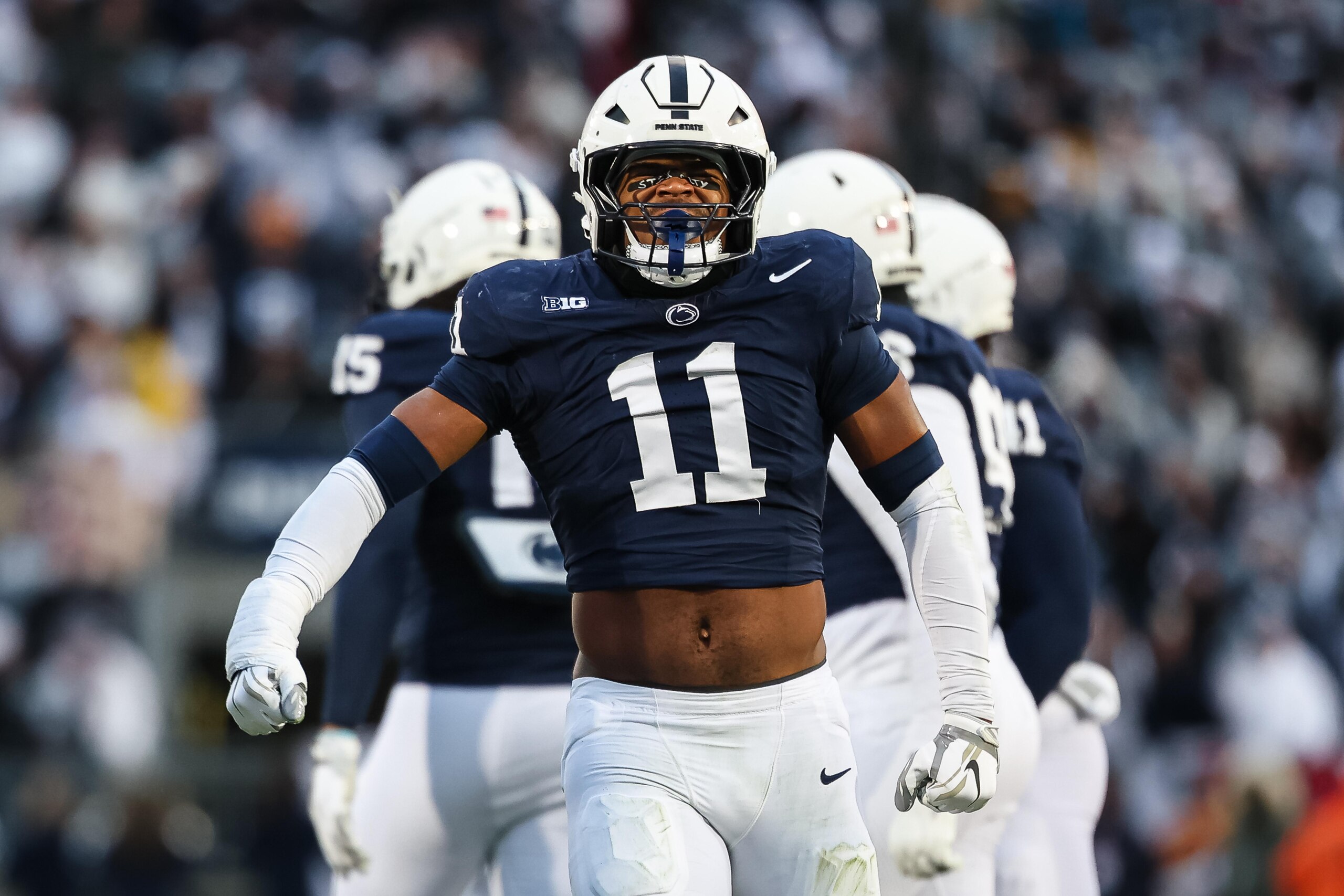
Strengths: Elite first-step quickness, explosive athlete, physical and aggressive, excellent flexibility to dip the shoulder and turn the edge
Weaknesses: Raw as a full-time edge defender, developmental pass-rush repertoire, block recognition
Grade: A
The New York Giants avoided the allure of taking Colorado quarterback Shedeur Sanders. Instead, they selected Abdul Carter, the one player who had an argument as the class’ best player over Travis Hunter, whom the Jacksonville Jaguars selected one pick earlier.
A year ago, the Giants made a big play for Brian Burns to inject some life into their pass rush. With Carter playing opposite Burns and Dexter Lawrence wrecking the middle of an offensive line, New York’s old identity is new again. The G-Men will be built around a mega-talented defensive front.
Kayvon Thibodeaux could be in that mix as well, or the Giants could look to flip the 2022 first-rounder to add another pick later in the draft. Either way, Carter is an elite talent. He was one of the few prospects who made it palatable for the Giants to pass on a quarterback here.
Carter continually rose throughout B/R's rankings throughout the season. The linebacker convert grew more comfortable as the year went on and the Nittany Lions made it to the Big Ten championship game and the College Football Playoff, although he's still a developmental prospect in terms of being a full-time edge-rusher.
Carter still graded out as the top edge defender in college this past season, per Pro Football Focus. Coupled with his elite athletic profile, he has more upside than any other prospect in this year's class.
.jpg?w=2560 "Cardinals Giants Football")
.jpg?w=2560 "Saints Giants Football")
.jpg?w=2560 "Broncos 49ers Football")
4. New England Patriots: Will Campbell, OT, LSU
4 of 32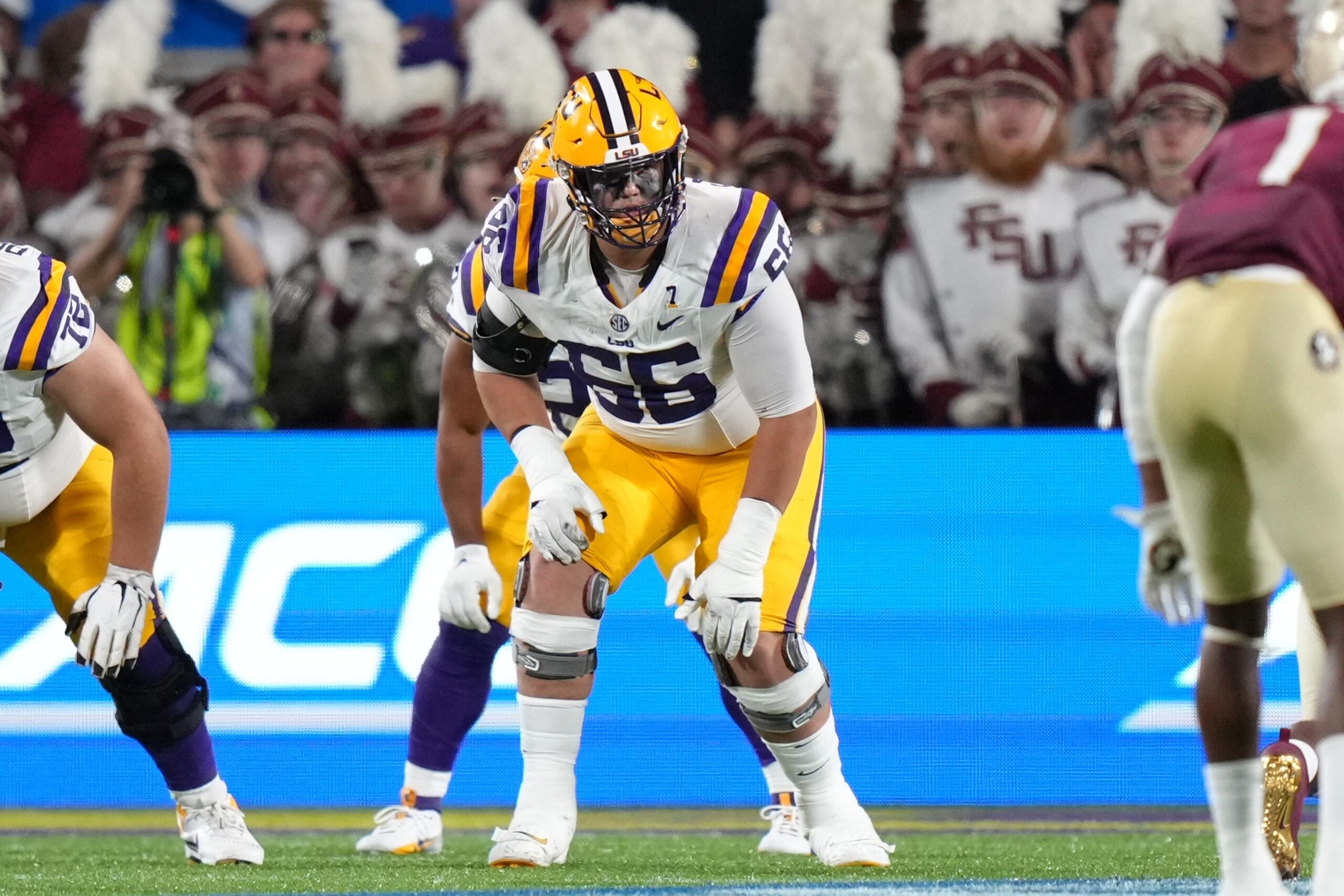
Strengths: Excellent play strength, strong base, anchors well, good bend and feel in run game
Weaknesses: Some tendency and have a weak post leg when setting on an island, length less than ideal
Grade: B
The New England Patriots did the expected by taking LSU offensive tackle Will Campbell with the No. 4 overall pick. There’s nothing wrong with that approach.
Sure, an offensive lineman isn’t a sexy pick in the top five. But Campbell is exactly what the Patriots need considering their massive hole at left tackle.
This offseason has been about building around quarterback Drake Maye after his outstanding rookie campaign. In free agency, New England added wide receiver Stefon Diggs, center Garrett Bradbury and right tackle Morgan Moses. Campbell completes the Patriots’ front five by taking over Maye’s blind side.
Some analysts, including Bleacher Report scout Brandon Thorn, didn’t view left tackle as Campbell’s best position. Some think he’ll be better suited at guard despite playing tackle his entire collegiate career, starting from his true freshman campaign.
Campbell's arm length was a constant discussion point after he measured in at 32⅝" at the combine. (He later measured at 33 inches at LSU's pro day.)
"For two years, nobody had any measurements on me and nobody said anything about my play," Campbell told reporters after LSU's pro day. "So now all of a sudden, an arm length decides if I'm a good player or not? I think it's BS."
He’ll get a chance to prove himself as a tackle in New England. If he doesn't pan out there, the Patriots will still have a quality blocker somewhere along the offensive line.
5. Cleveland Browns (from JAX): Mason Graham, DT, Michigan
5 of 32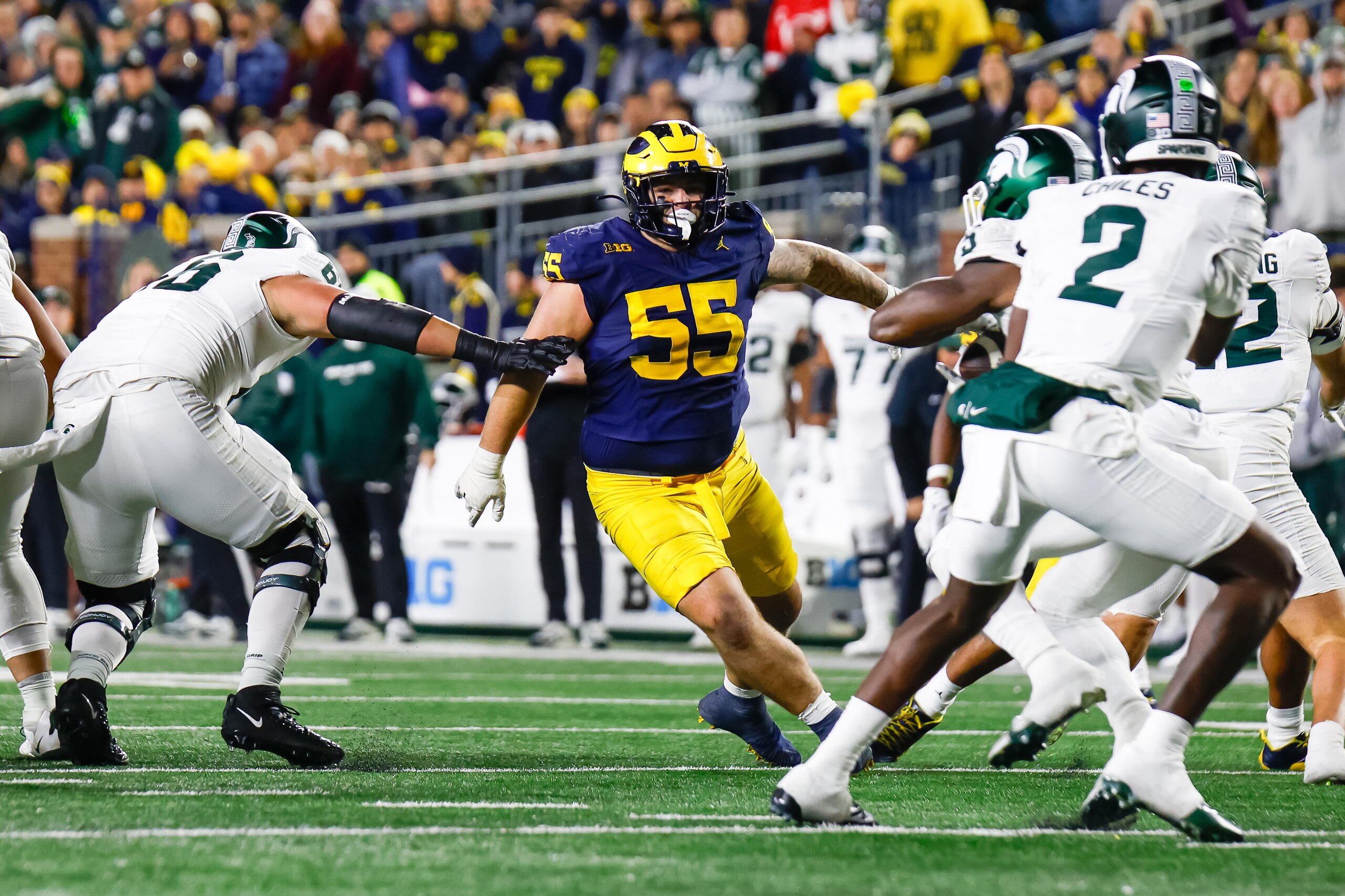
Strengths: Every-down defensive tackle, outstanding lateral movement, holds the point of attack, consistently disruptive
Weaknesses: Lacks length, pad level gets high at times, developing pass-rush repertoire
Grade: B
The Cleveland Browns will be questioned about their maneuvering to start the 2025 draft. They traded down from the No. 2 overall pick and passed on an opportunity to select Travis Hunter, but they netted an extra second-round pick this year and first-round pick in 2026 to do so. Those extra picks help soften the blow, but not entirely.
Quarterback remains a huge question mark for the Browns, but they didn't address it by selecting Colorado's Shedeur Sanders. While Sanders hasn't been viewed as an elite talent, Michigan defensive lineman Mason Graham has.
Graham entered the draft as Bleacher Report’s No. 3 overall prospect. So, the Browns moved down three spots, added multiple picks and still landed an elite prospect who can come in and wreck shop along the interior and make life easier on Myles Garrett working off the edge.
Defensive tackles who can thrive in both phases of the game are more rare than anything else at the NFL level. How many defensive tackles are capable of being a strong run defender and consistent pass-rushing threats? Only seven interior defenders managed at least eight sacks last season.
Planet theory applies here: Only so many men walking this planet are big enough, strong enough and athletic enough to be truly disruptive three-down players. Graham is one of them.
6. Las Vegas Raiders: Ashton Jeanty, RB, Boise State
6 of 32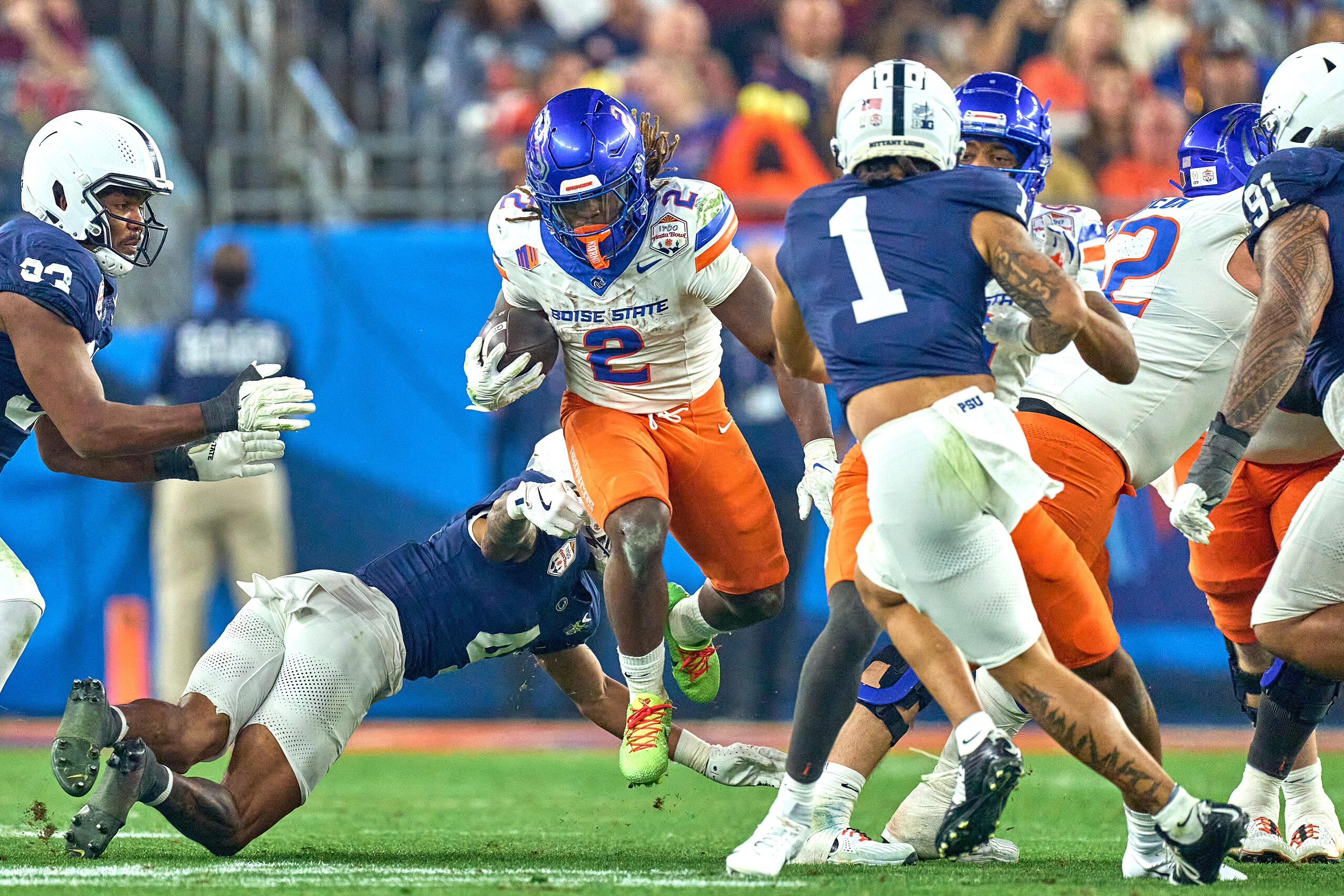
Strengths: Elite contact balance, thickly built lower body to break tackles, good patience, excellent lateral agility
Weaknesses: Large collegiate workload, taken significant amount of hits with upright running style, pass protection needs improvement
Grade: A
A Bronco-quake is rumbling in Sin City. With the selection of Boise State running back Ashton Jeanty, Las Vegas Raiders head coach Pete Carroll should have dreams of Marshawn Lynch 2.0 becoming the focal point of his offense.
Lynch and Jeanty do have stylistic differences as runners. The former just wanted to run over defenders, while the latter has uncanny balance that makes him elite at gaining yards after contact.
Jeanty will immediately take pressure off veteran quarterback Geno Smith, the Raiders' marquee offseason acquisition. He’s truly a special runner and should feast in Chip Kelly’s running back-friendly scheme. Everyone make sure to update their fantasy football rankings, because Jeanty should now be very high on those lists.
Over the last 10 years, only five running backs have been selected in the top 10. However, Jeanty looked every bit the part of a top-10 talent, especially coming off a near-record-setting junior campaign.
The reigning Doak Walker Award winner took a run at Barry Sanders' all-time single-season rushing mark and ended up only 28 yards short of the feat (not counting Sanders' bowl effort, which didn't add to his total).
Any time Sanders' name is invoked, everyone understands a special talent is involved. Jeanty may not be quite on par with the likes of Saquon Barkley or even Bijan Robinson as a prospect, but he has elite traits to emerge as a top-notch NFL ball-carrier.
7. New York Jets: Armand Membou, OT, Missouri
7 of 32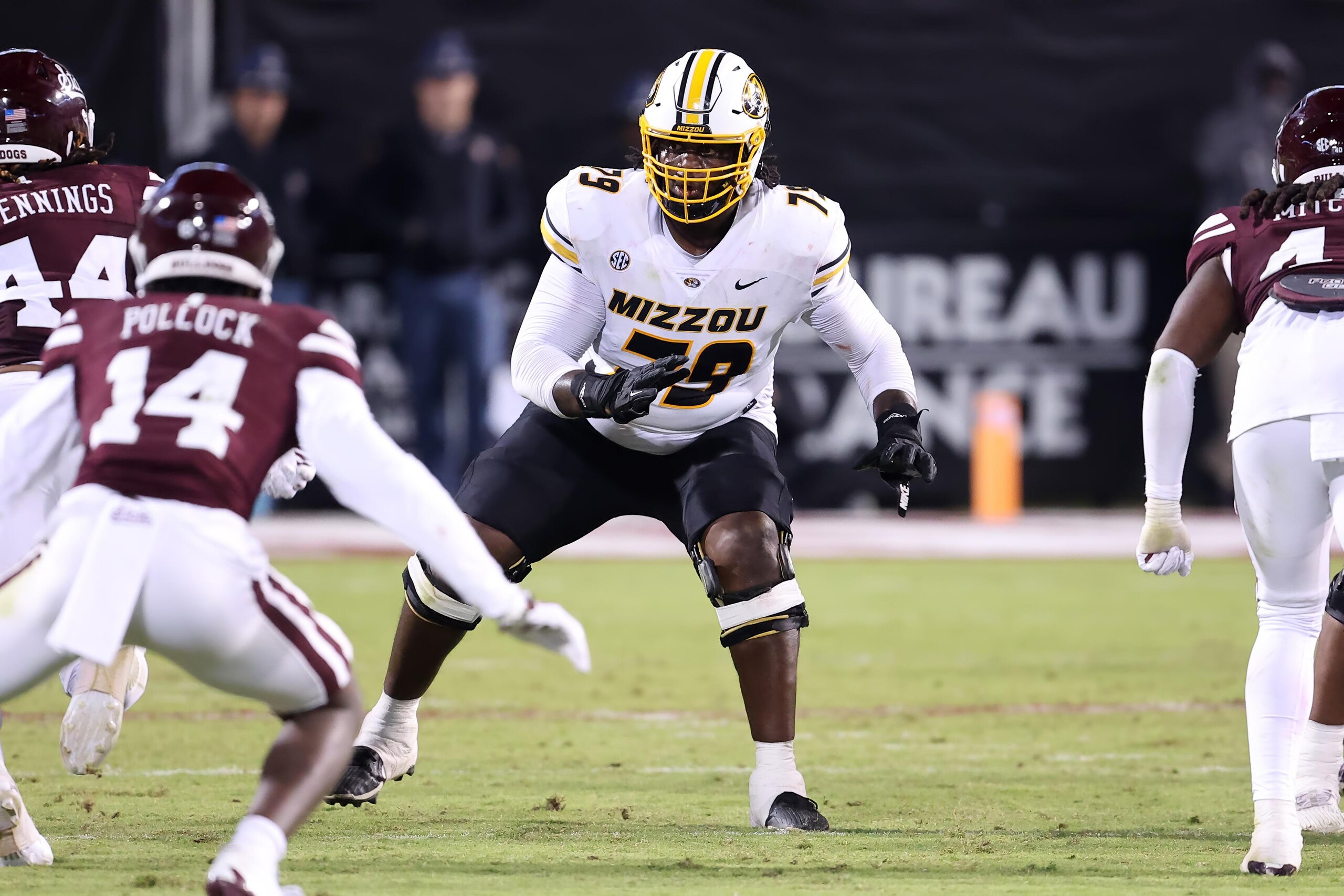
Strengths: Explosive mover, powerful frame, length and range to hit pass-set landmarks, finishes in run game
Weaknesses: Gets overaggressive and takes poor run angles, long arms can mess with strike timing, all starts at RT
Grade: A
The New York Jets did what must be done, even though they have continually spent early-round picks on their offensive line. The unit now might finally be complete after the addition of Missouri’s Armand Membou.
The projected starting unit should feature three former first-round picks, a second-rounder and a free-agent acquisition in left guard John Simpson.
The Jets may be the most comfortable landing spot for Membou because he won’t need to move from his natural spot at right tackle. With Olu Fashanu set to take over at left tackle full-time, he and Membou can form an impressive set of young bookends.
An offensive line prospect who's built like Membou is typically projected to be a guard in the NFL. However, the 6'4", 332-pound blocker is something altogether different. Despite having such a wide, sturdy base, his movement skills are something to behold.
Membou effortlessly moves about the field, which showed up in his predraft testing with a 9.89 relative athletic score, per Kent Lee Platte. Those movement skills are also represented in his performance, as he allowed zero sacks and quarterback hits this past season, according to Pro Football Focus.
The 21-year-old did everything right on the field and throughout the predraft process to earn his standing as the class' top pure offensive tackle prospect.
8. Carolina Panthers: Tetairoa McMillan, WR, Arizona
8 of 32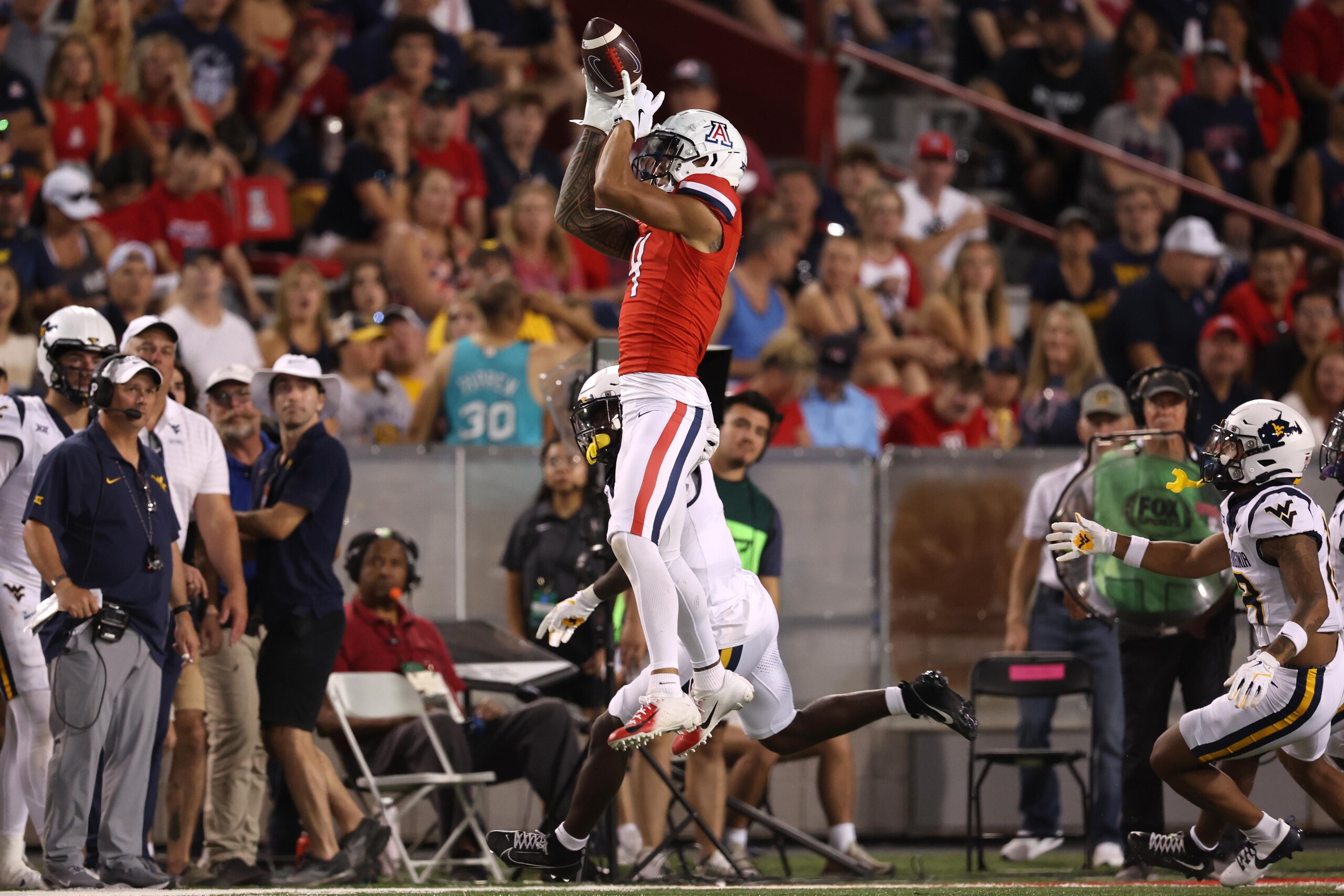
Strengths: Huge frame and catch radius, fluid athlete, excellent after the catch, rare body control
Weaknesses: Marginal route-runner, can be better against the jam, lacks elite top-end speed
Grade: A
Throughout the draft process, Arizona’s Tetairoa McMillan had his supporters and detractors. Clearly, the Carolina Panthers see a WR1 in this year’s eighth overall pick.
Last season, 34-year-old wideout Adam Thielen led the Panthers with 615 yards. That’s not good enough for any NFL team in an offense-driven league.
Carolina is still hoping that Bryce Young develops into a franchise quarterback after he got benched early last season, but he needs more receiving help for that to happen. What’s better than a 6'4" target for an undersized quarterback?
The Panthers traded up to select fellow wideout Xavier Legette in the first round last year, but McMillan has a completely different skill set. He’s a true X-receiver who can eat up targets in volume.
Whenever a bigger receiver is viewed as a potential high first-round pick, some will inevitably say they're too stiff and can't separate. The same tired arguments against McMillan made their rounds prior to this year's draft.
McMillan is 6'4" and 219 pounds. As for the supposed separation issues, he ranked third among this year's top wideout prospects in open-target rate against single coverage, according to Pro Football Focus' Max Chadwick. Who finished above him? The class' best pure route-runner, Emeka Egbuka, and the most explosive target, Matthew Golden.
But the size advantage is important in this evaluation, because McMillan has outstanding body control, vice-grip hands and excels playing through contact, especially when asked to high-point. His fluidity for his size is merely the icing on the cake for Carolina.
9. New Orleans Saints: Kelvin Banks Jr. IOL, Texas
9 of 32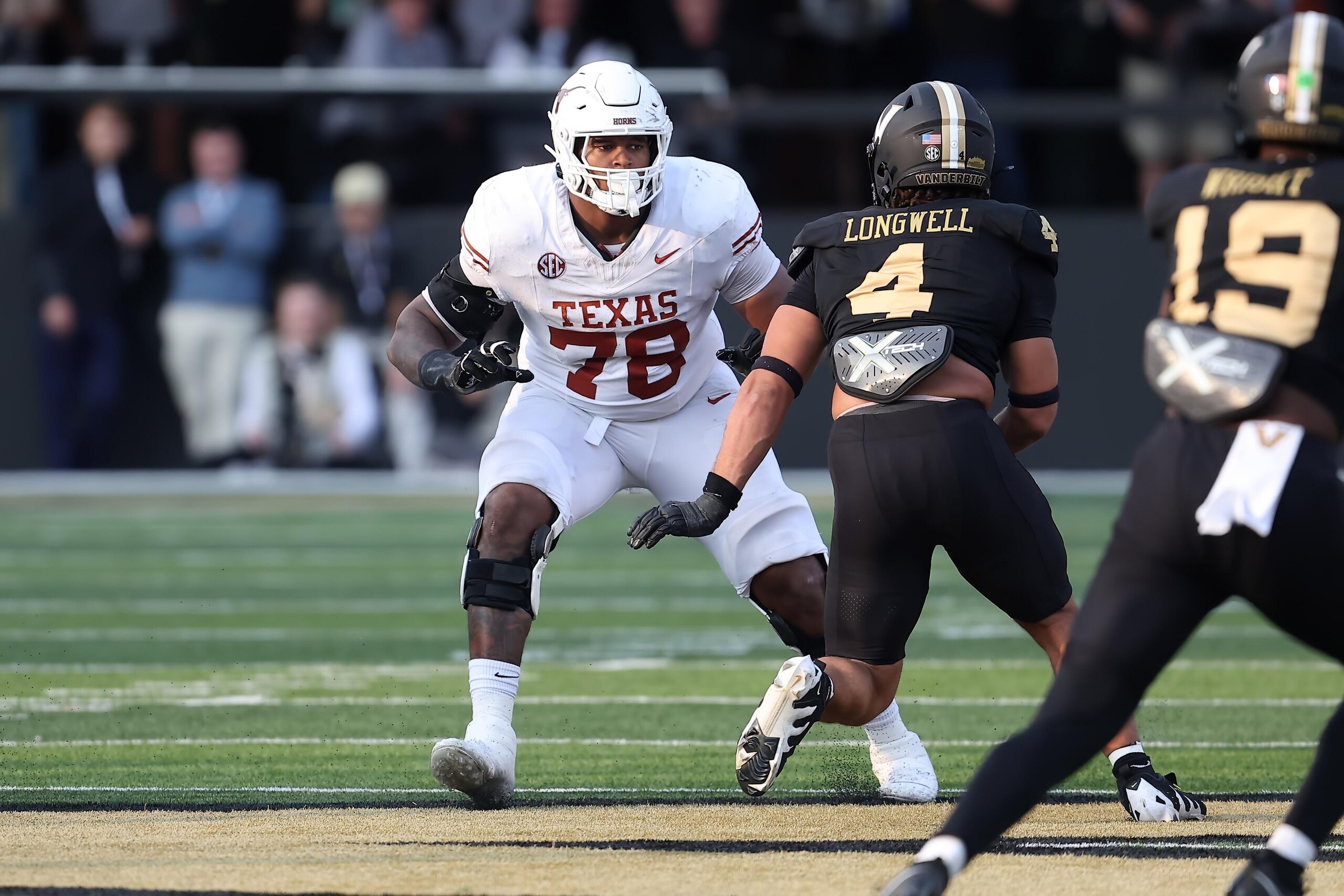
Strengths: Effortless mover to reach his aiming points, outstanding hand usage, weapon when working in space, good initial run fits
Weaknesses: Gets overextended when asked to sustain blocks and falls off them, erratic footwork at times
Grade: F
The New Orleans Saints passed on Colorado quarterback Shedeur Sanders despite a screaming need at quarterback after Derek Carr’s shoulder injury came to light. On Bleacher Report’s final big board, Banks was lower than Sanders.
The Saints had to address their offensive line, but the Banks selection is merely covering up previous mistakes.
Trevor Penning still isn't an NFL-caliber pass-blocker. Taliese Fuaga never should have been moved to left tackle. Banks isn’t necessarily a tailor-made left tackle despite playing the position in college. Questions remain about whether he can stay on an island and remain effective.
Despite everything, Banks is the reigning Outland Trophy winner as the nation's best interior lineman. He originally entered the Longhorns program as a 5-star recruit. He mostly lived up to those expectations and helped Texas reclaim its status as a premier program.
The unanimous All-American was viewed as a potential top-10 pick entering this past season. However, some flaws became evident in his game, as sporadic footwork and angles can cause him to lose reps or fall off blocks.
Still, Banks' natural ability is obvious, regardless of whether he sticks at left tackle or eventually moves inside to guard.
10. Chicago Bears: Colston Loveland, TE, Michigan
10 of 32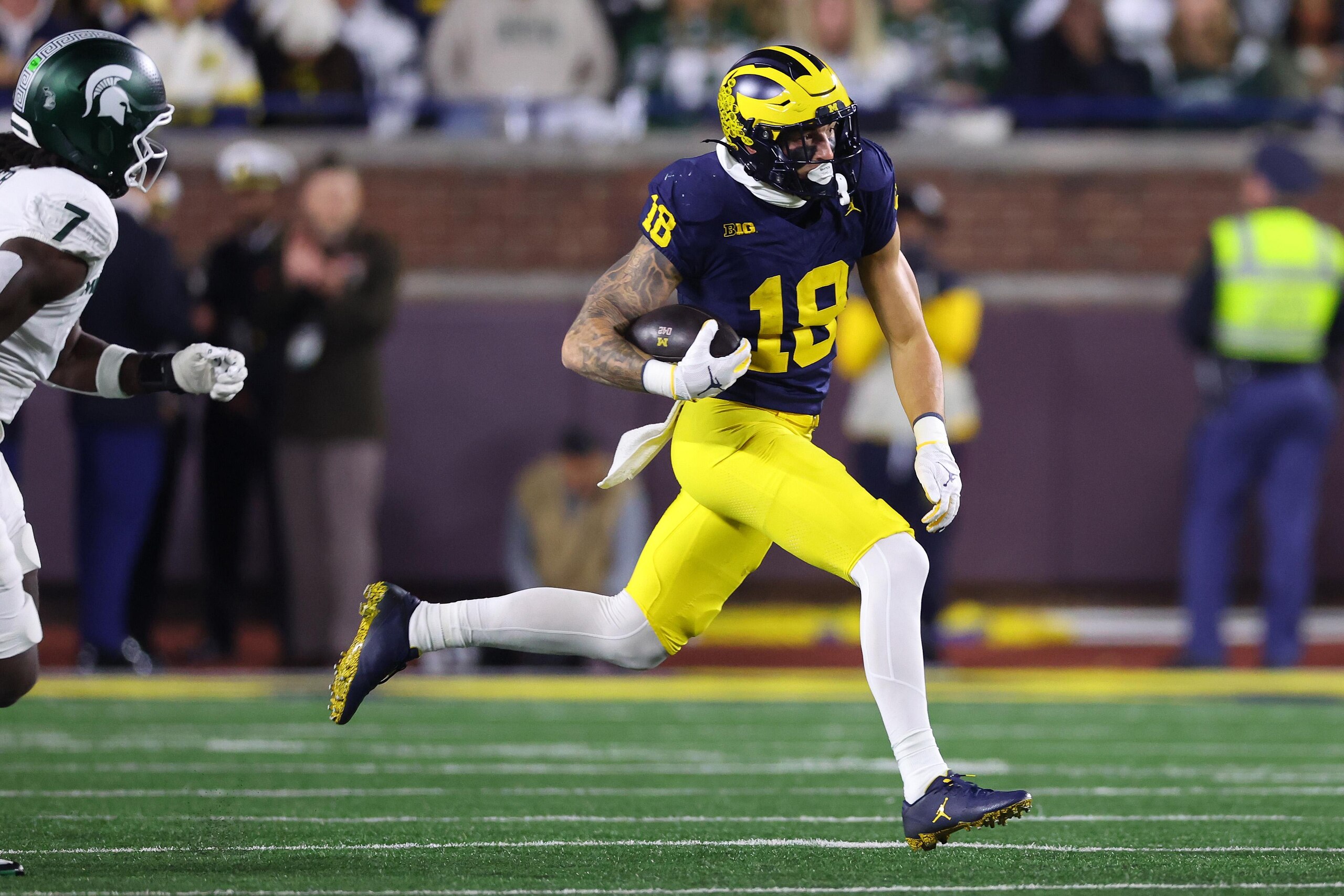
Strengths: Vertical speed and burst to threaten seam and create after the catch, expansive catch radius, extensive experience working inline
Weaknesses: Injury concerns, needs to add some bulk, concentration drops
Grade: A
The Chicago Bears continue to build around quarterback Caleb Williams, last year’s No. 1 overall pick. Prior to the draft, Chicago acquired offensive linemen Joe Thuney, Drew Dalman and Jonah Jackson to secure the interior. Now, the Bears added an extension to the offensive line in Michigan tight end Colston Loveland.
The second-team All-American should be an integral part of new Bears head coach Ben Johnson’s offense. He comes from a traditional pro-style offense, which allows him to be a big part in 12 personnel alongside Cole Kmet.
When Johnson was the Detroit Lions' offensive coordinator, Sam LaPorta became a major pass-catching weapon. Loveland could follow in his footsteps.
Loveland was the B/R Scouting Department's TE1 throughout the season, not Penn State's Tyler Warren. The reasoning was simple: Loveland has the same upside as a playmaker, but he's a more well-rounded tight end, particularly when used as a Y-option.
Loveland did deal with injuries throughout the 2024 campaign that slowed him and cost him three games. He then had corrective shoulder surgery this offseason, which prevented him from working out prior to the draft. Even so, he remained a top tight end prospect and should add versatility to the Bears' offense.
11. San Francisco 49ers: Mykel Williams, EDGE, Georgia
11 of 32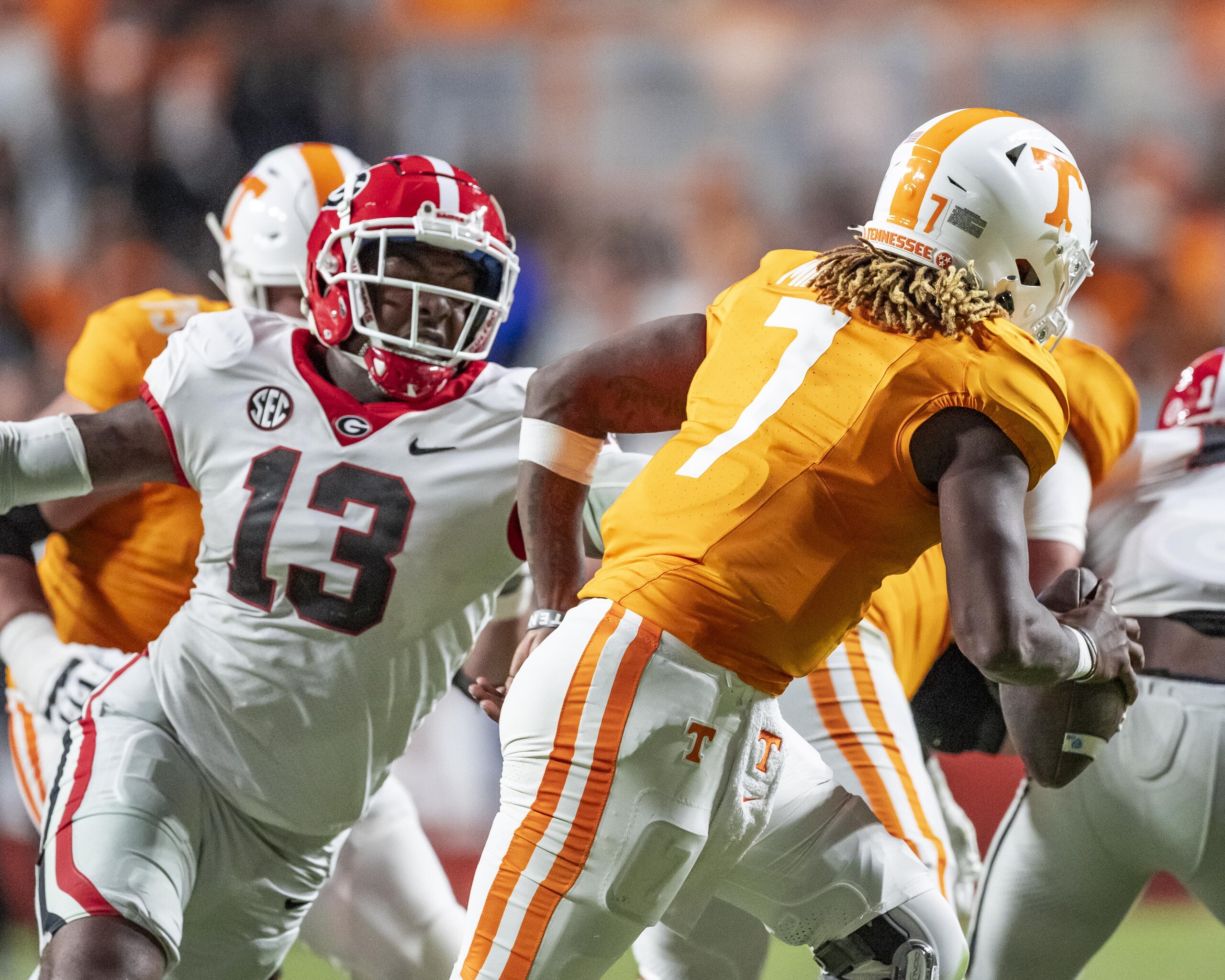
Strengths: Long, well-proportioned frame, strong hands and upper body to control and shed blocks, good movement skills
Weaknesses: Lack of polish and production as pass-rusher, lacks burst off the snap, must learn to work half-a-man, poor overall recognition
Grade: C
Georgia’s Mykel Williams is far from a finished prospect. He and Nick Bosa could form a dynamic edge-rusher duo one day, but Williams isn’t that player yet.
The San Francisco 49ers lost plenty on defense this offseason, including their second-leading sack artist in Leonard Floyd. Williams and Floyd couldn’t have more different skill sets. The veteran always built his game around quickness off the snap and flexibility to bend and flatten the edge, whereas Williams’ game is power-based.
This is the epitome of a boom-or-bust selection. The 49ers could have gone with better and more natural pass-rushers with the 11th overall pick. But San Francisco is banking on defensive coordinator Robert Saleh and defensive line coach Kris Kocurek getting the most out of a developmental option.
Expectations built for Williams before the 2024 season even began. Much like former Bulldog Travon Walker, the potential of what he could become overstepped what he actually was.
Williams made the full-time transition from interior to edge defender with the idea that his athletic profile would allow him to become a force. That didn't exactly happen. He finished with five sacks on the season after racking up 4.5 in both 2022 and 2023.
At the very least, Williams can be a top-notch run-defender for the Niners right away.
12. Dallas Cowboys: Tyler Booker, IOL, Alabama
12 of 32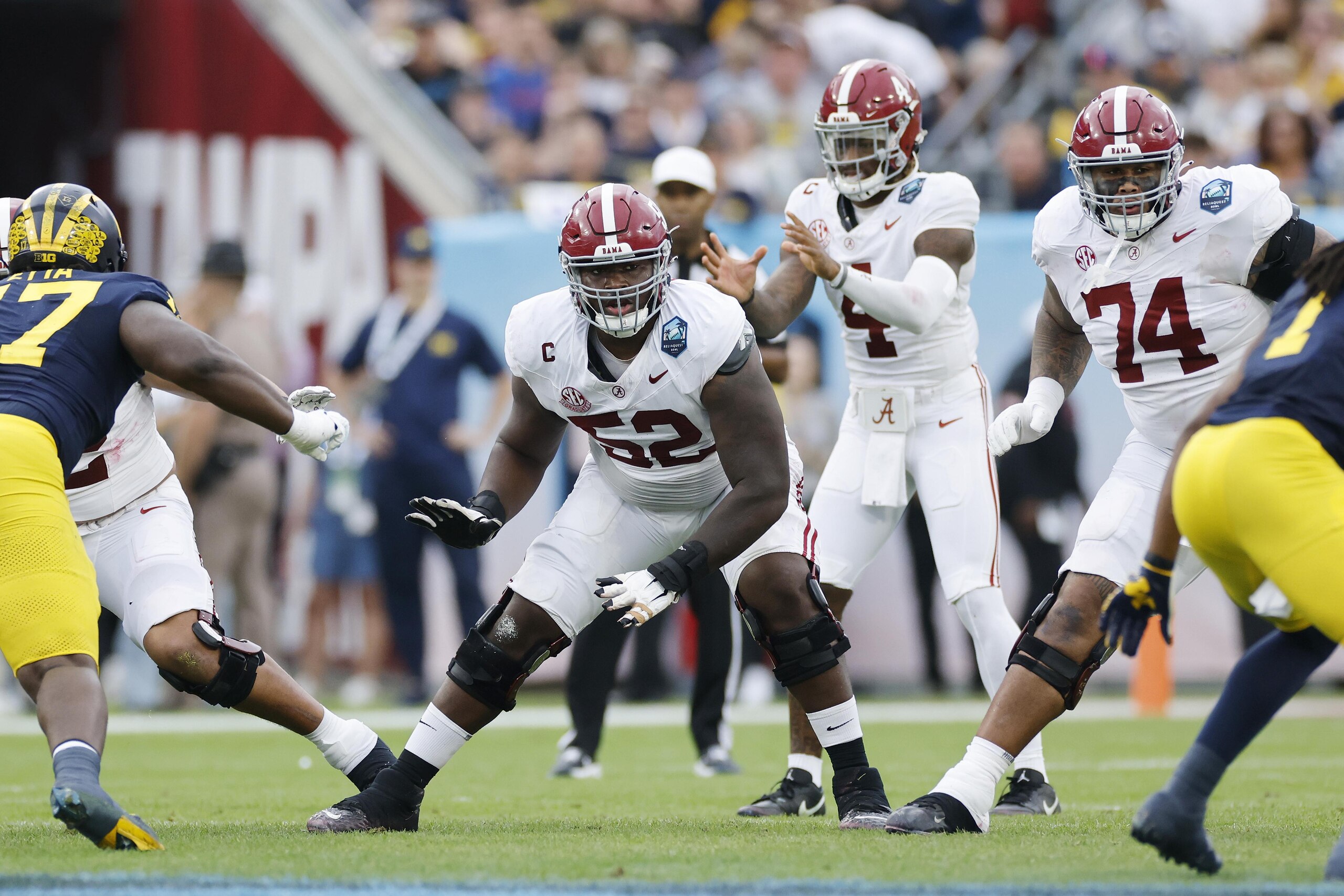
Strengths: Thickly built, powerful, people-mover, strong anchor, willingness to bury defenders
Weaknesses: Marginal movement skills, can struggle to recover after initial contact or a loss
Grade: A
Alabama’s Tyler Booker should never be compared to Zack Martin. The latter is an all-time great and future Hall of Famer.
With that said, the Dallas Cowboys made the right move by replacing the retired Martin with a tailor-made right guard who will immediately take over as the alpha in the room and a tone-setter on the field.
The Cowboys are at their best when they invest heavily in their offensive line. It’s been true since Jimmy Johnson led the team. That draft approach may not match the typical glitz and glamour of the franchise, but it’s been successful time and again.
To fully understand Booker's approach to the game, check out his description of his playing style.
"Everybody loves to play football when it is easy, but who loves to play it when it is hard," he told reporters at the NFL Scouting Combine. "I feel like that is what separates the good guys to the great guys in the game of football. Ultimately, I love the aggressiveness and the tenacity of the game of football.
"It's legal assault out there. I love football because the brand of football I play, I make other guys not love football anymore. I do that every down by giving it my all."
13. Miami Dolphins: Kenneth Grant, DL, Michigan
13 of 32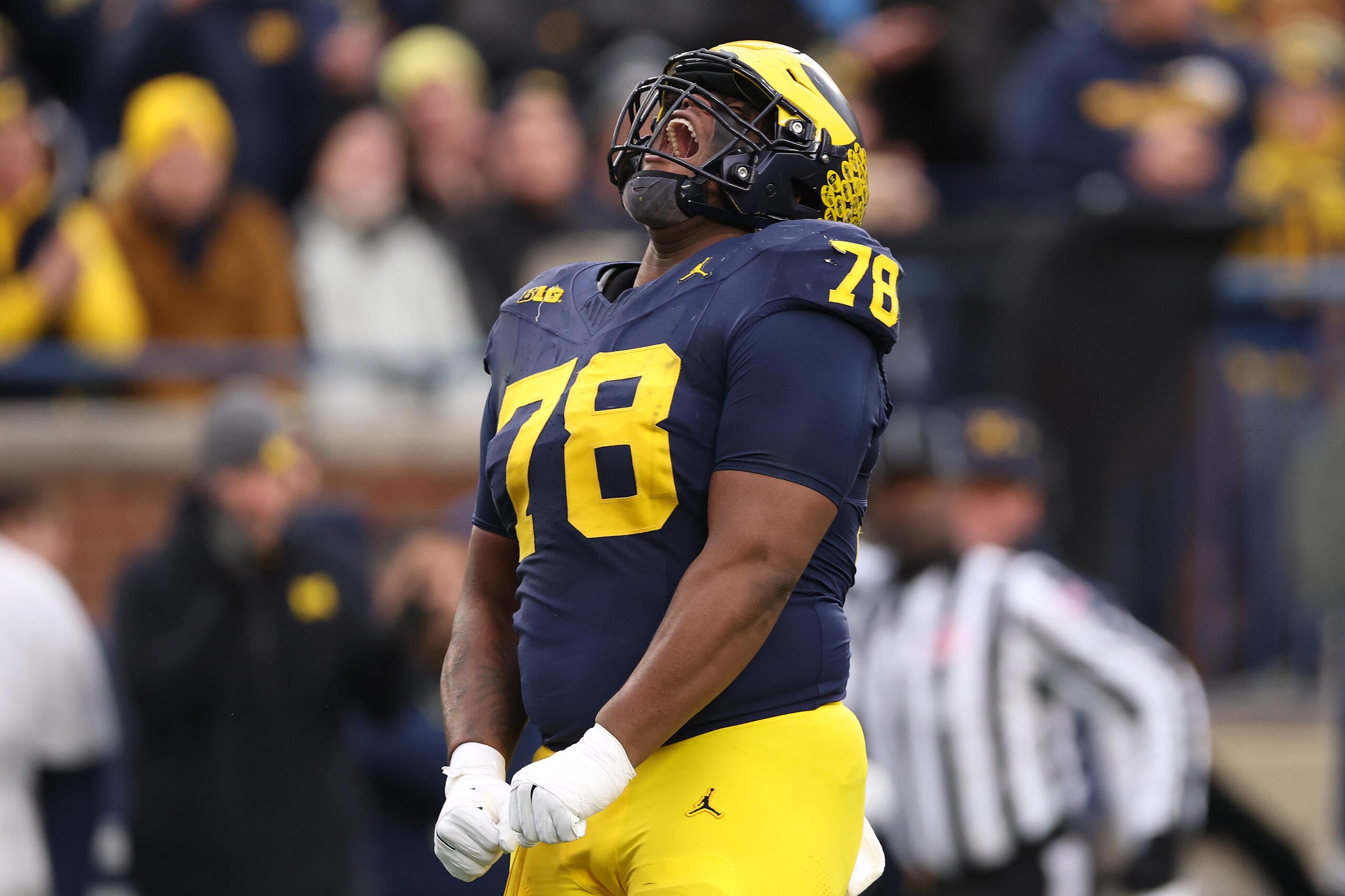
Strengths: Explosive athlete, good mover for 330-plus-pounder, holds point of attack well, makes some plays in the backfield
Weaknesses: Inconsistent pad level, poor hand usage, pass-rush effectiveness runs hot and cold
Grade: D
The Miami Dolphins are paper thin along their defensive line, which is exactly why they spent the 13th overall pick on Michigan’s Kenneth Grant.
Grant has the potential to be a wall in the middle of their defense and provides some toughness along the Dolphins' interior. Zach Sieler definitely needs help.
At the same time, the Dolphins just picked a nose tackle with far less upside as a pass-rusher than Dexter Lawrence, who entered the league as the 17th overall pick in the 2019 draft. Grant isn’t a Haloti Ngata-caliber prospect, either, and he went 12th overall.
Is Grant a great athlete? Absolutely. The potential is oozing off this mammoth of a man. But he’s not a three-down defender, and he may never be.
Still, size matters for NFL prospects. Grant didn't dominate the way that he should have in college, but he has the physical tools that every NFL team wants in its defensive linemen.
"For 350 pounds, he has the best conditioning level of any big man that I've ever been around," former Michigan defensive line coach Mike Elston told Bruce Feldman of The Athletic this past summer. "He's just scratching the surface. I love the way he studies the game. He's going to be absolutely phenomenal."
14. Indianapolis Colts: Tyler Warren, TE, Penn State
14 of 32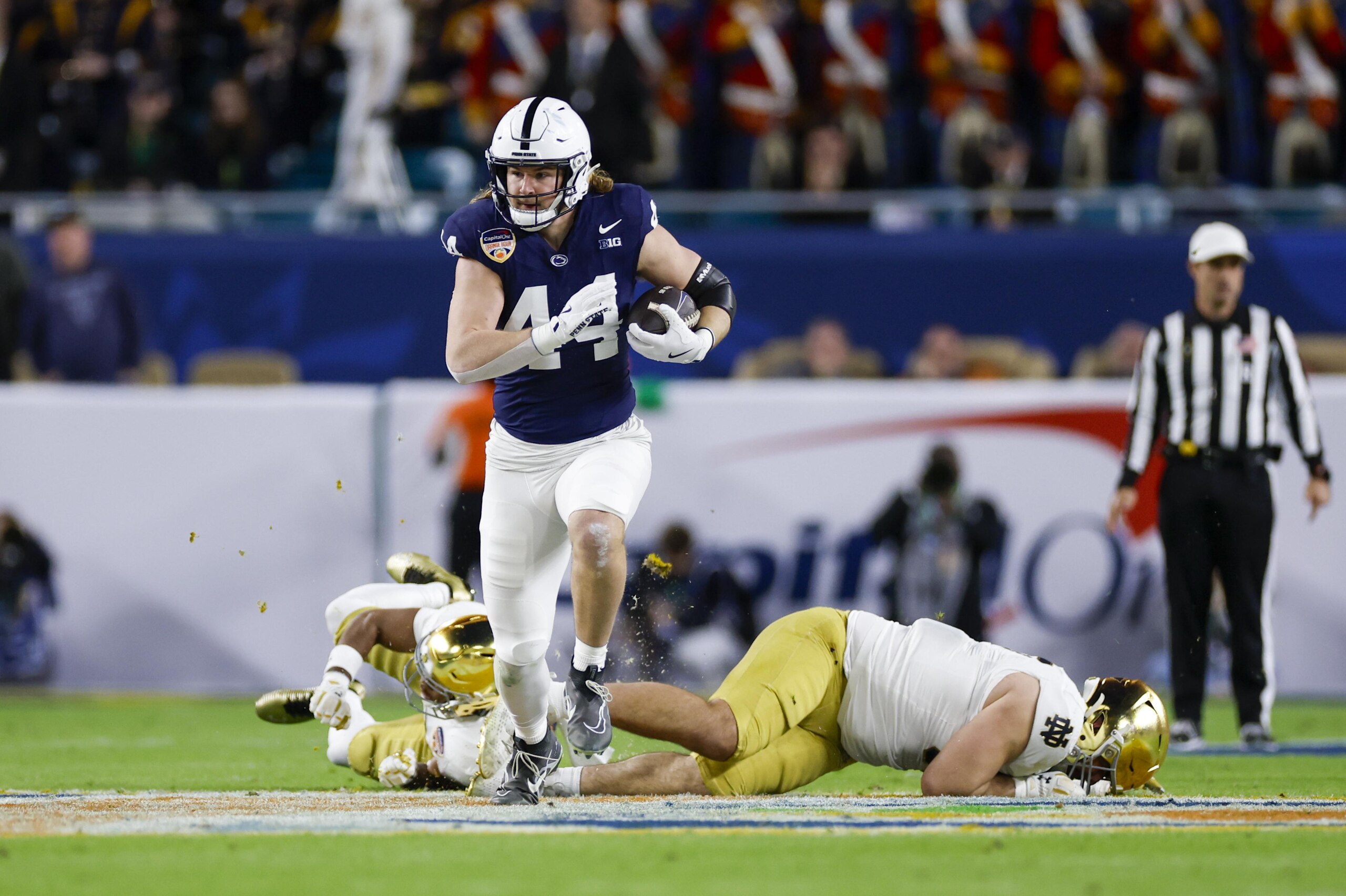
Strengths: Formational flexibility, huge catch radius, creates after the catch
Weaknesses: Not a strong in-line option, needs to build up speed, more of a playmaker than a nuanced route-runner
Grade: A
The Indianapolis Colts’ need for a tight end hasn’t been a secret. In fact, general manager Chris Ballard openly discussed it at this year's NFL Scouting Combine.
“Our inability to control the middle of the field," Ballard said, "which we've gotta be able to do, I’ve got to be able to give Shane [Steichen] and them a guy that can really control the middle of the field, that teams have to account for and defend.”
Ballard tried to hedge in his predraft press conference by saying there was tight end depth throughout the draft. But Penn State’s Tyler Warren fell right into the Colts' lap at No. 14. He's the perfect fit to help the development of third-year quarterback Anthony Richardson.
The NFL draft often makes some people prisoners of the moment. Warren is an excellent tight end prospect, but one NFL scout took it a step further when he told Go Long's Bob McGinn that the Penn State product is "better than Brock Bowers."
In a vacuum, Warren might be more versatile than Bowers. After all, he can line up pretty much anywhere in the formation and be productive. However, Bowers just posted the greatest rookie tight end season of all time after being the most decorated tight end ever at the collegiate level.
The fact that the two can be mentioned in the same breath does say a lot about what Warren brings to the table, though.
15. Atlanta Falcons: Jalon Walker, LB, Georgia
15 of 32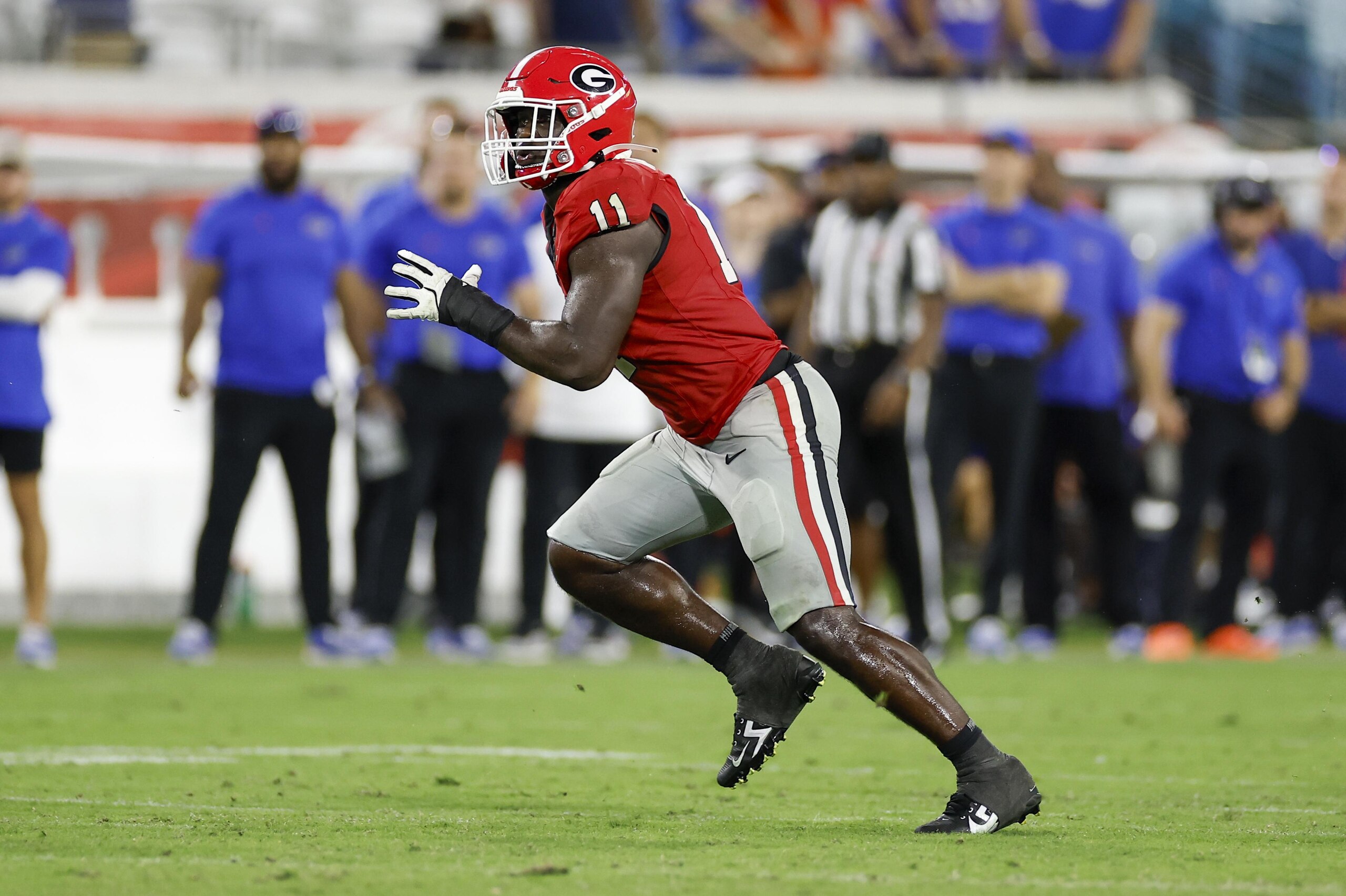
Strengths: Versatile defensive weapon, flies downhill, natural blitzer and pass-rusher, decent in both man and zone coverage
Weaknesses: One-year starter, slow recognition, can be engulfed by blockers
Grade: A
The Atlanta Falcons finally drafted a defensive prospect after four straight years of spending top-10 picks on their offensive skill positions. Making matters better, Georgia’s Jalon Walker fills a huge hole on the Falcons’ roster.
Atlanta hasn’t had a pass-rusher register at least 10 sacks since the 2016 campaign. Walker isn’t a traditional edge-rusher, but he packs a lot of punch in pressure packages.
The Falcons already have a similar talent in Kaden Elliss, an off-ball linebacker who's often used as a pass-rusher/blitzer. Elliss finished the season strong with 151 total tackles and five sacks. He and Walker can become interchangeable pieces used all over the Falcons defense.
Walker is havoc personified. Whenever anyone watched the Bulldogs this past season, the reigning Butkus Trophy winner could be seen screaming to the football either as an off-ball linebacker or edge-defender. Throughout the predraft process, too many people got caught up in what position he'll play in the NFL.
"I'm a ball player," Walker told reporters at the NFL Scouting Combine. "Just being on the field is my favorite position. Just being everywhere, where you just don't know. The anticipation of being the outside 'backer one snap, the inside 'backer one snap, being the star one snap—it gives me comfort knowing they (the offense) doesn't know where I'm going to be."
As long as the Falcons have a plan in place to properly deploy Walker, he's going to make plays.
16. Arizona Cardinals: Walter Nolen, DL, Ole Miss
16 of 32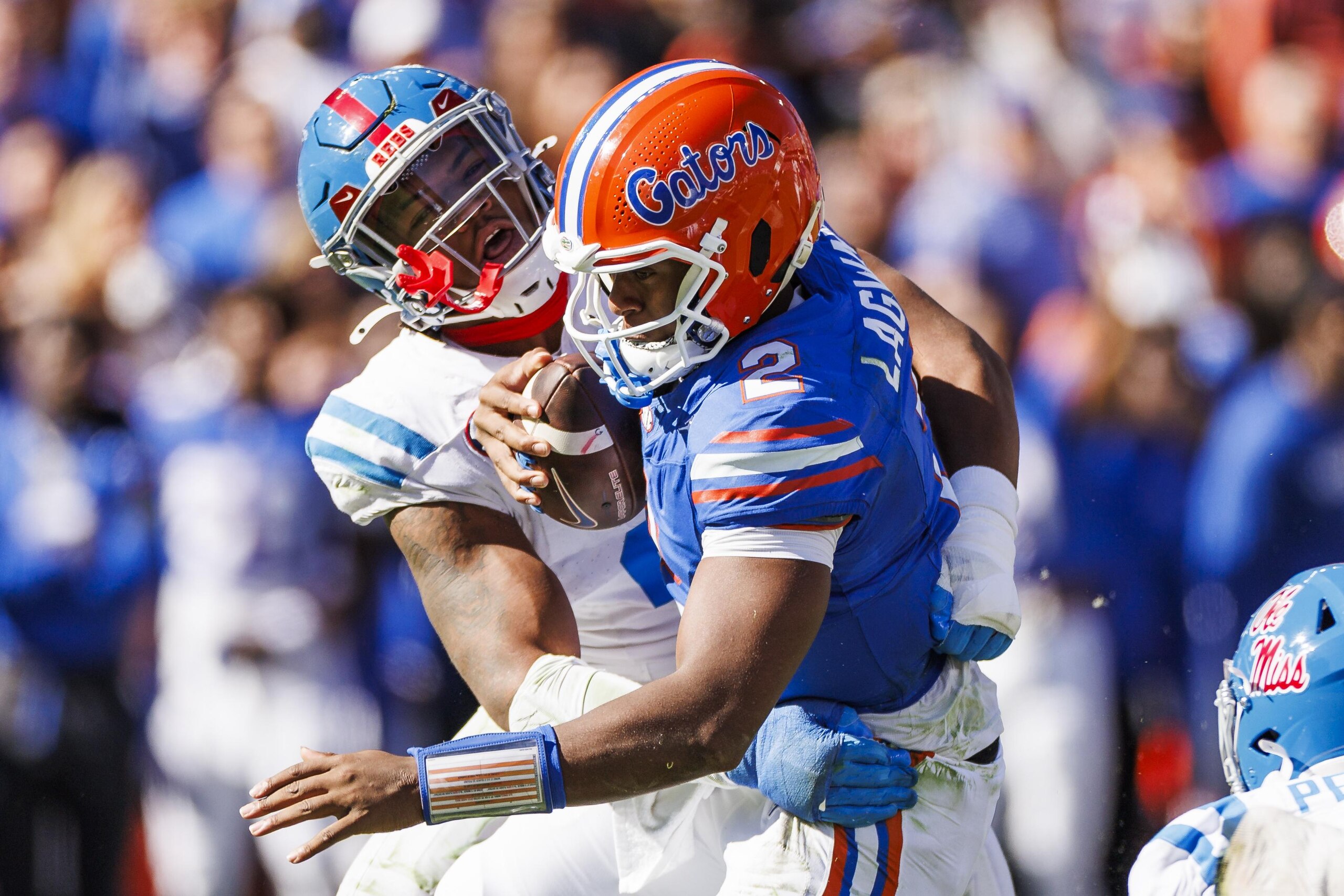
Strengths: Natural pass-rusher along interior, excellent at shooting gaps, strong base at point of attack
Weaknesses: Pad-level consistency, needs to shoot hands and gain control quicker, suspect countermoves
Grade: A
Arizona Cardinals head coach Jonathan Gannon cut his teeth as the Philadelphia Eagles' defensive coordinator. He understands the value of coming at opposing quarterbacks in waves, as the Birds just proved in their Super Bowl victory earlier this year.
Last offseason, the Cardinals brought in Justin Jones and Bilal Nichols and drafted Darius Robinson with their second first-round pick to bolster their defense. Those additions weren’t nearly enough, though. So this offseason, they brought in Josh Sweat, Dalvin Tomlinson, Calais Campbell and now Ole Miss’ Walter Nolen.
When the light finally turns on for a 5-star recruit, it's often a sight to see. Nolen flashed his potential during his two seasons with the Texas A&M Aggies, but he didn't emerge as a full-blown force until last season at Ole Miss. The defensive tackle registered a career-high 14 tackles for loss and 6.5 sacks.
More importantly, Nolen looked the part as a future game-wrecker. His quickness and lateral legibility make him a top-shelf run-stuffer, and he's able to win as a pass-rusher when working up and down the line of scrimmage.
Few prospects in this year's class have as much natural upside and game-changing ability as Nolen, who has similar qualities to former Eagle defensive tackle Milton Williams. He should fit right in along the Cardinals' defensive line.
17. Cincinnati Bengals: Shemar Stewart, EDGE, Texas A&M
17 of 32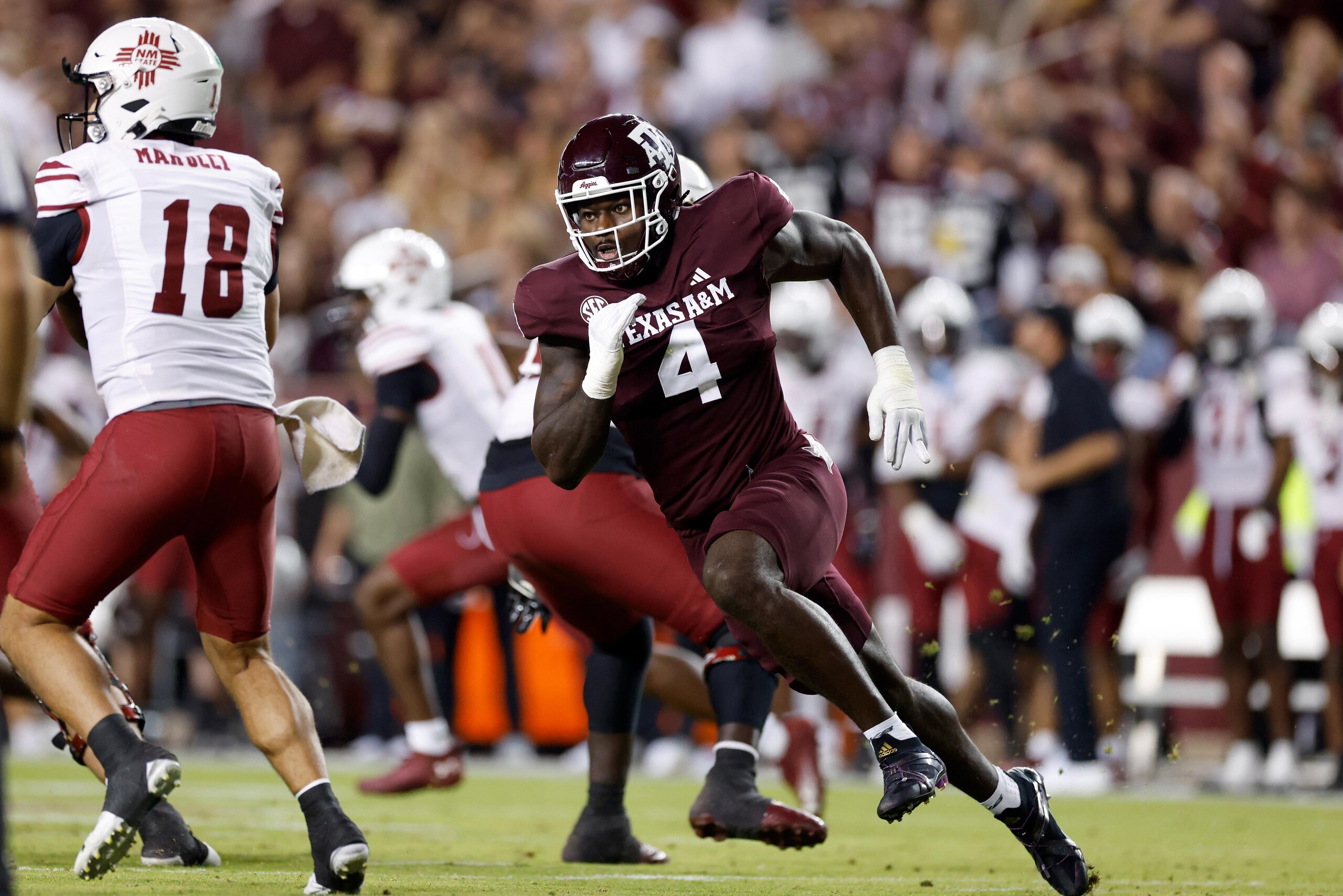
Strengths: Uber-athlete, ideal frame and length, good lateral movement, converts speed to power with ease
Weaknesses: Lack of production, inconsistent hand usage, bit of stiffness when trying to bend
Grade: C
The Cincinnati Bengals require a massive defensive overhaul after finishing 25th in both total defense and points allowed last season. Plus, they had been looking to replace defensive end Sam Hubbard, who retired this offseason. Trey Hendrickson’s continued discontent with his contract has been well-documented, too.
So, the selection of Texas A&M’s Shemar Stewart makes sense on paper. However, Stewart is still more a concept than a finished product. Everything's in place for him to succeed, but he hasn’t developed to reflect his natural ability.
The former 5-star recruit managed all of 4.5 sacks in his three seasons at Texas A&M. Some can point to his usage in the Aggies system and not being a full-time edge. At the same time, his physical tools should have led him to be a more consistent presence as a pass-rusher and run defender.
But the tools are what they are. Stewart is a 6'5", 267-pound defender with 34-plus-inch arms and a relative athletic score that topped all defensive ends since 1987, per Kent Lee Platte.
The Bengals should have considered finishing their offensive line to build upon a strength instead of trying to use duct tape to repair a gaping hole in their defense. They just added an NBA-like prospect who needs to be a better pro than collegiate player.
18. Seattle Seahawks: Grey Zabel, IOL, North Dakota State
18 of 32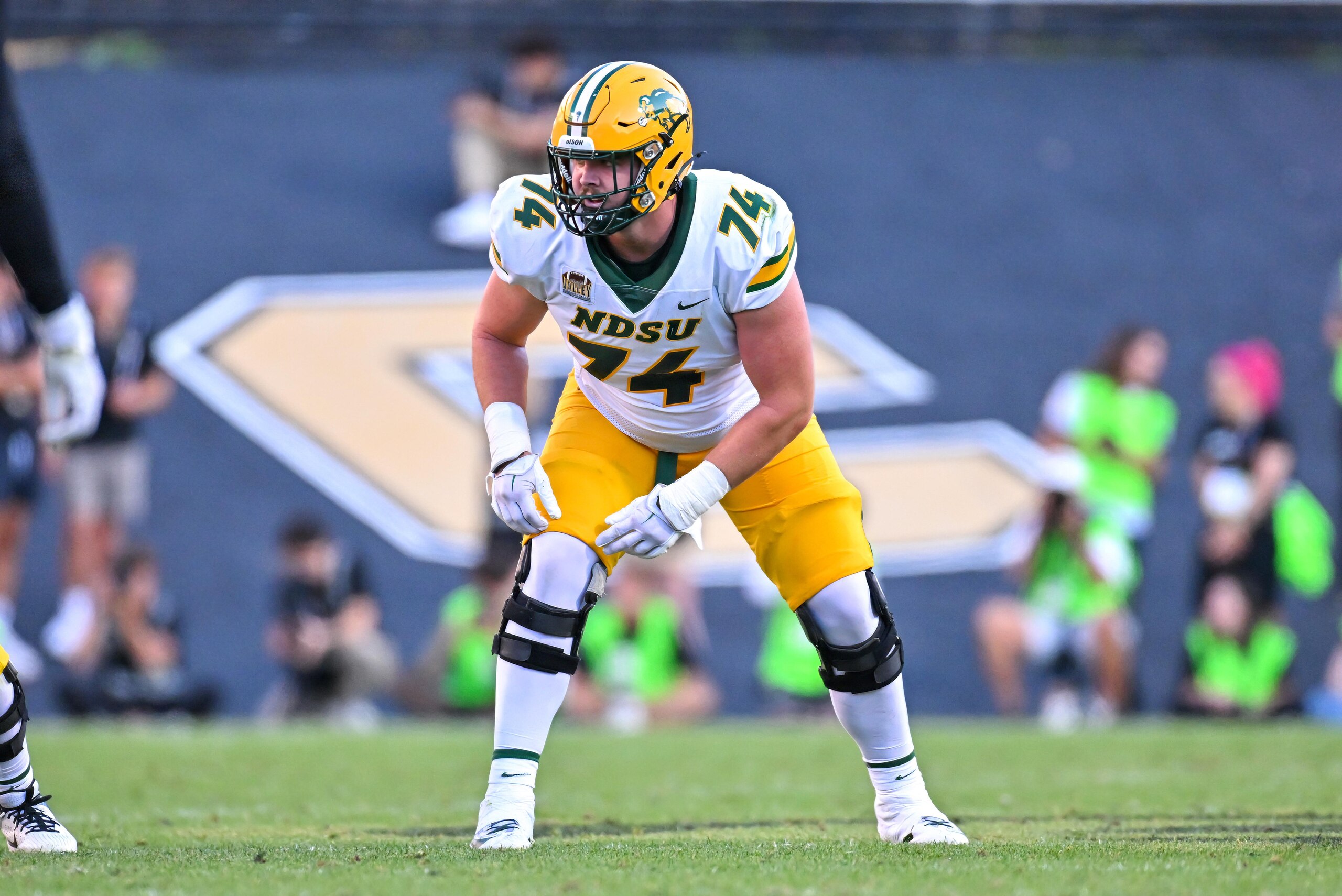
Strengths: Can start anywhere along the O-line, excellent pad level and lower-body flexibility, strong punch, good movement skills
Weaknesses: Lacks length, can give up edge as a tackle, must finish better
Grade: A
The Seattle Seahawks are set at offensive tackle with Charles Cross and Abe Lucas, at least for now. Their offensive interior is a mess, though.
North Dakota State’s Grey Zabel is simultaneously instant-starter material and a long-term play. The 6’6”, 312-pound blocker can move up and down the line of scrimmage, although he figures to slot in at right guard immediately.
However, Lucas has had injury problems, while Cross is due for a contract extension. It’s quite possible that Zabel eventually bumps out to offensive tackle. Whatever the case, the Seahawks seemingly understand that they need a strong offensive line to maximize their investment in quarterback Sam Darnold, whom they signed as a free agent this offseason to replace Geno Smith.
North Dakota State has become a pipeline for NFL talent, as the powerhouse FCS program has won 10 national championships since the start of the 2011 campaign. The offensive line is a particular point of pride since Billy Turner, Joe Haeg, Dillon Radunz, Cordell Volson and Cody Mauch were drafted over the past decade.
Zabel might be the best of the bunch. The first-team All-American and two-time national champion is a truly positionless blocker. The incoming lineman has experience at all five offensive line spots, which could make him into a modern-day Bruce Matthews.
19. Tampa Bay Buccaneers: Emeka Egbuka, WR, Ohio State
19 of 32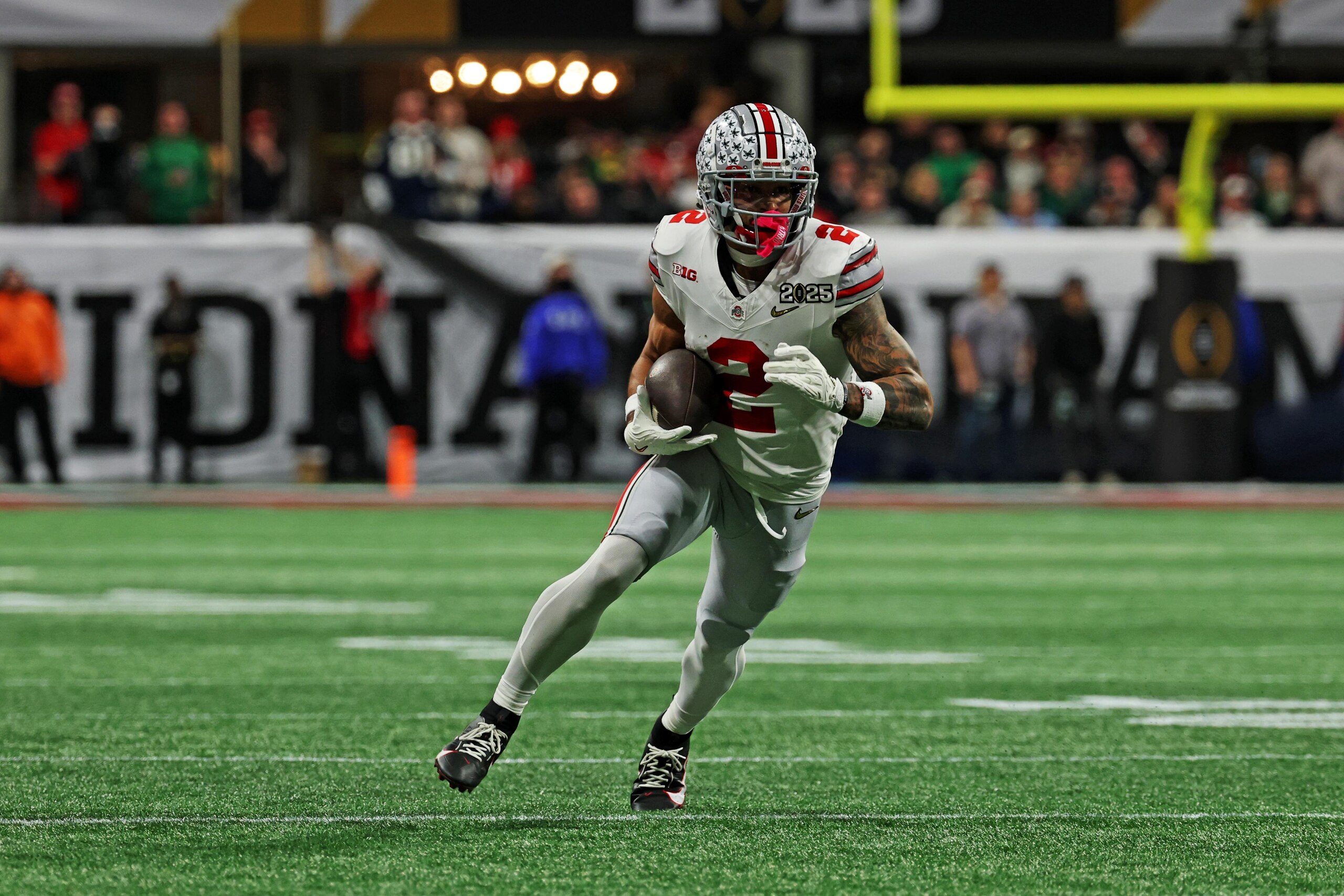
Strengths: Precise route-runner, juice off the stem, comfortable weaving through traffic, tailor-made slot receiver
Weaknesses: Lacks elite speed and burst, can be rerouted off the jam, doesn't play big
Grade: A
Tampa Bay Buccaneers quarterback Baker Mayfield went from undesirable to undeniable after bouncing from the Cleveland Browns to the Carolina Panthers to the Los Angeles Rams and finally landing in Tampa.
Mayfield has posted back-to-back 4,000-yard campaigns. His confidence is at an all-time high, and the Bucs’ stacked wide receiver corps is a big reason why. Mike Evans is a future Hall of Famer. Chris Godwin decided to re-sign with the Bucs this offseason. Jalen McMillan flashed last season. Now, Ohio State’s Emeka Egbuka adds another complementary skill set to Tampa’s already potent offense.
Egbuka is the best route-runner in this year's class. He’s going to get open and provide Mayfield with a security blanket while everyone around him continues to make the Bucs' offense explosive.
"When it comes to the draft, you're not gonna find a more reliable receiver than me," Egbuka said in an interview with NFL Network's Stacey Dales.
Some wide receivers' reputation is built on size and physicality. Others are speed merchants. But the best tend to be the most reliable. The receiver who's going to be in the right spot and in rhythm with his quarterback can be counted on at all times.
Egbuka is the most pro-ready receiver in this year's class because he fits that last category. That should be music to Mayfield's ears.
20. Denver Broncos: Jahdae Barron, CB, Texas
20 of 32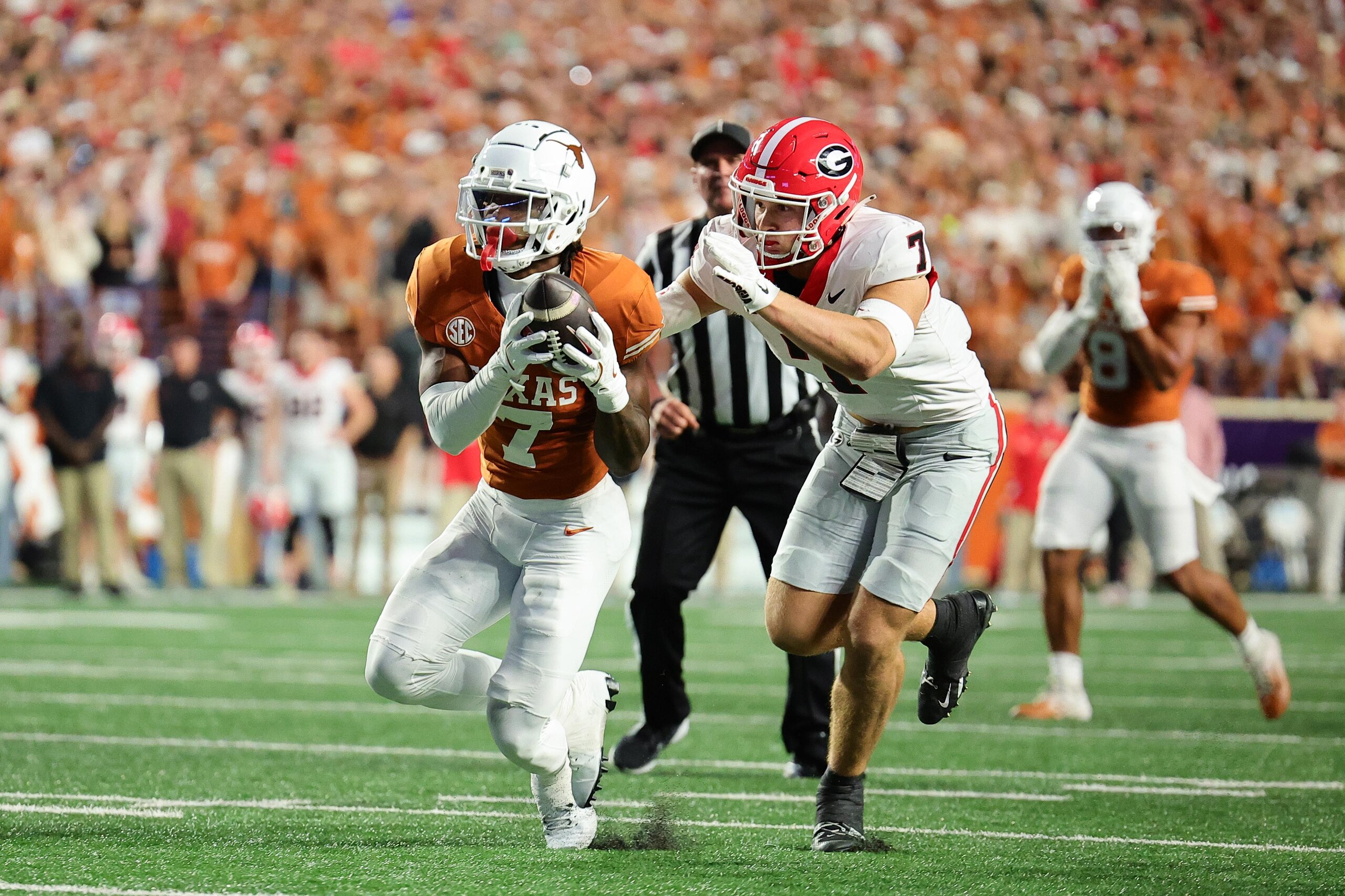
Strengths: Versatility to play anywhere in the secondary, no issue sticking his nose into run game, consistently plays through the ball
Weaknesses: Slight frame, doesn't always trust his eyes
Grade: A
The Denver Broncos know what they’re doing. They’re building on a strength by adding a dynamic young defensive back in Texas’ Jahdae Barron.
Last season, the Broncos finished third in scoring defense. However, they finished 19th in pass defense despite featuring star cornerback Patrick Surtain II, who was named the NFL's Defensive Player of the Year.
The Broncos' problem is that they didn't have strong complementary cornerbacks. Barron immediately solves that issue, regardless of where Denver wants to play him.
One of the best compliments an athlete can receive is that everyone should want to coach them because of their attitude and how they play the game. Barron is one of those prospects.
Barron listened to Texas head coach Steve Sarkisian and came back for a fifth season with the Longhorns. He improved his game, became a consensus All-American and won the Jim Thorpe Award as the nation's best defensive back.
Barron can serve as a Swiss army knife in Denver's secondary. He's capable of playing outside corner, over the slot and some safety. Wherever he's lined up, he'll be around the ball and making plays.
21. Pittsburgh Steelers: Derrick Harmon, DL, Oregon
21 of 32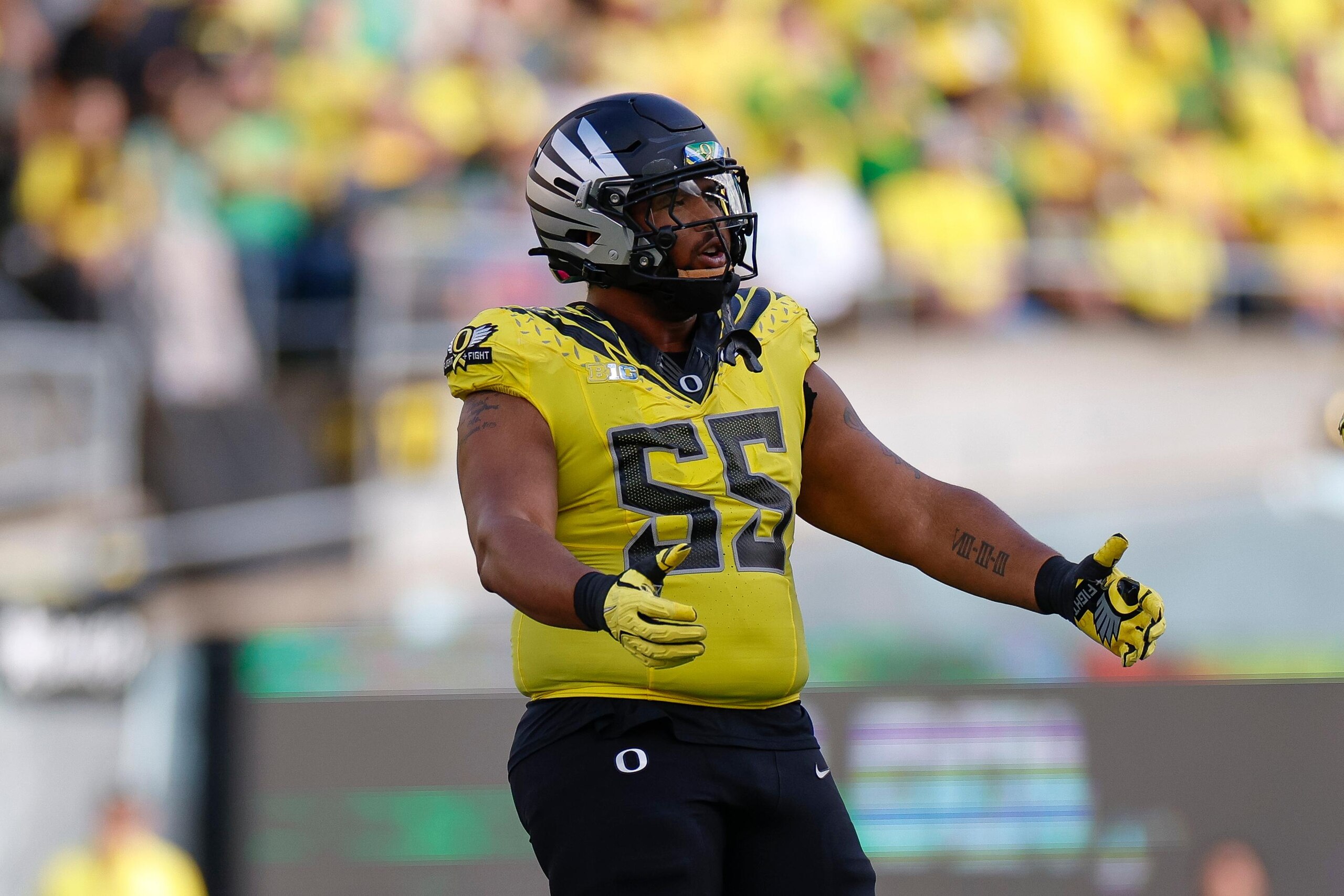
Strengths: Control blockers as a run defender, athletic enough to shoot gaps for TFLs or QB pressures, powerful hands
Weaknesses: Straight-line athleticism, suspect hand placement, gap discipline varies, needs countermoves
Grade: C
Derrick Harmon is such a Pittsburgh Steelers pick that it should have been announced at a Primanti Bros.
Harmon immediately fills the void left by Larry Ogunjobi, who joined the Buffalo Bills in free agency. He is also the type of interior defensive lineman who's capable of growing into a similar player as Cameron Heyward. He’ll now get the opportunity to learn from the four-time first-team All-Pro.
Yet the question remains: Who will start at quarterback in the Steel City? The Steelers shouldn't put much stock in Aaron Rodgers eventually deciding to join them. Mason Rudolph already showed he’s not capable of leading them. Harmon needs to be a major disruptive force for the fanbase to forget about passing on Colorado’s Shedeur Sanders.
That could happen. After Harmon transferred to Oregon, he turned into an absolute force. He finished with 11 tackles for loss and five sacks en route to being named to the All-Big Ten second team.
Sometimes, the right setting can help unlock a prospect's upside. During Harmon's three years at Michigan State, it took time for him to become a starter and make any kind of impact.
The 21-year-old's upward trajectory gives him the potential to become an elite interior defender early in his NFL career.
22. Los Angeles Chargers: Omarion Hampton, RB, North Carolina
22 of 32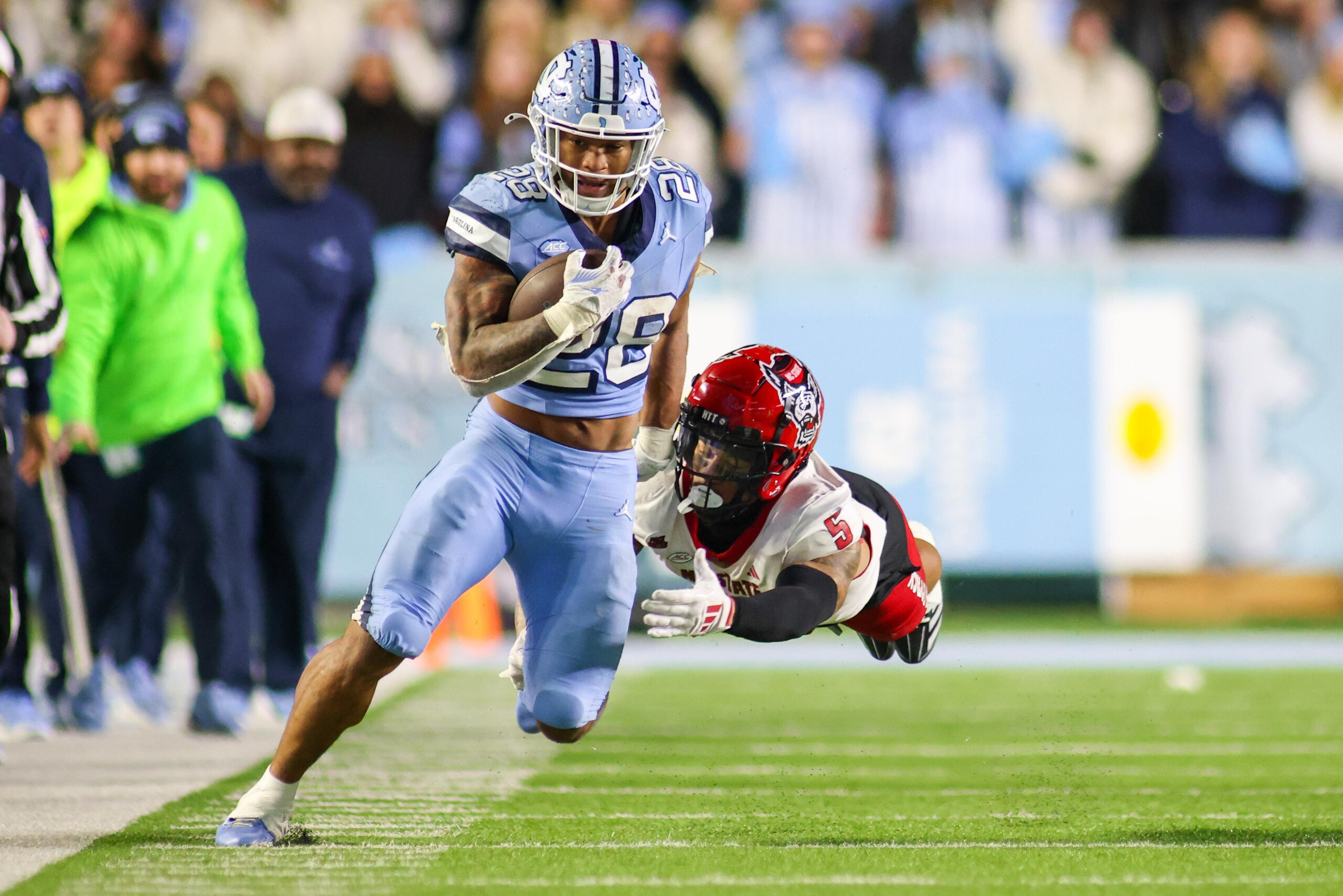
Strengths: Runs behind pads and through tacklers, good vision and patience, sub-4.5-second 40-yard-dash speed
Weaknesses: Straight-line athlete, lacks open-field elusiveness, can improve in pass protection
Grade: A
Jim Harbaugh originally brought intellectual brutality to the Stanford Cardinal. He’s always been a run-first coach who emphasizes a power running game. Well, no back is better prepared to play in the Los Angeles Chargers’ offense than North Carolina’s Omarion Hampton.
Although Boise State's Ashton Jeanty was a Heisman Trophy finalist and near-record-breaking runner, Hampton established himself as a legitimate first-round talent and a force unto himself in the deepest running back class in recent memory.
As Pro Football Focus noted, the two-time first-team All-American finished second in rushing yardage (3,160) and yards after contact (2,294) over the last two seasons. The 221-pound back is a powerful, downhill runner with the juice to create chunk plays in the run game, which makes him a rarity among collegiate options.
The Chargers did sign fellow running back Najee Harris in free agency, but Hampton is far more explosive than him. Besides, they need more than one power back to shoulder the workload.
JK Dobbins did an excellent job in the offense last season, but he’s always been injury-prone. The Chargers chose not to re-sign him this offseason. Instead, their backfield is getting bigger, stronger and more powerful to batter opponents.
23. Green Bay Packers: Matthew Golden, WR, Texas
23 of 32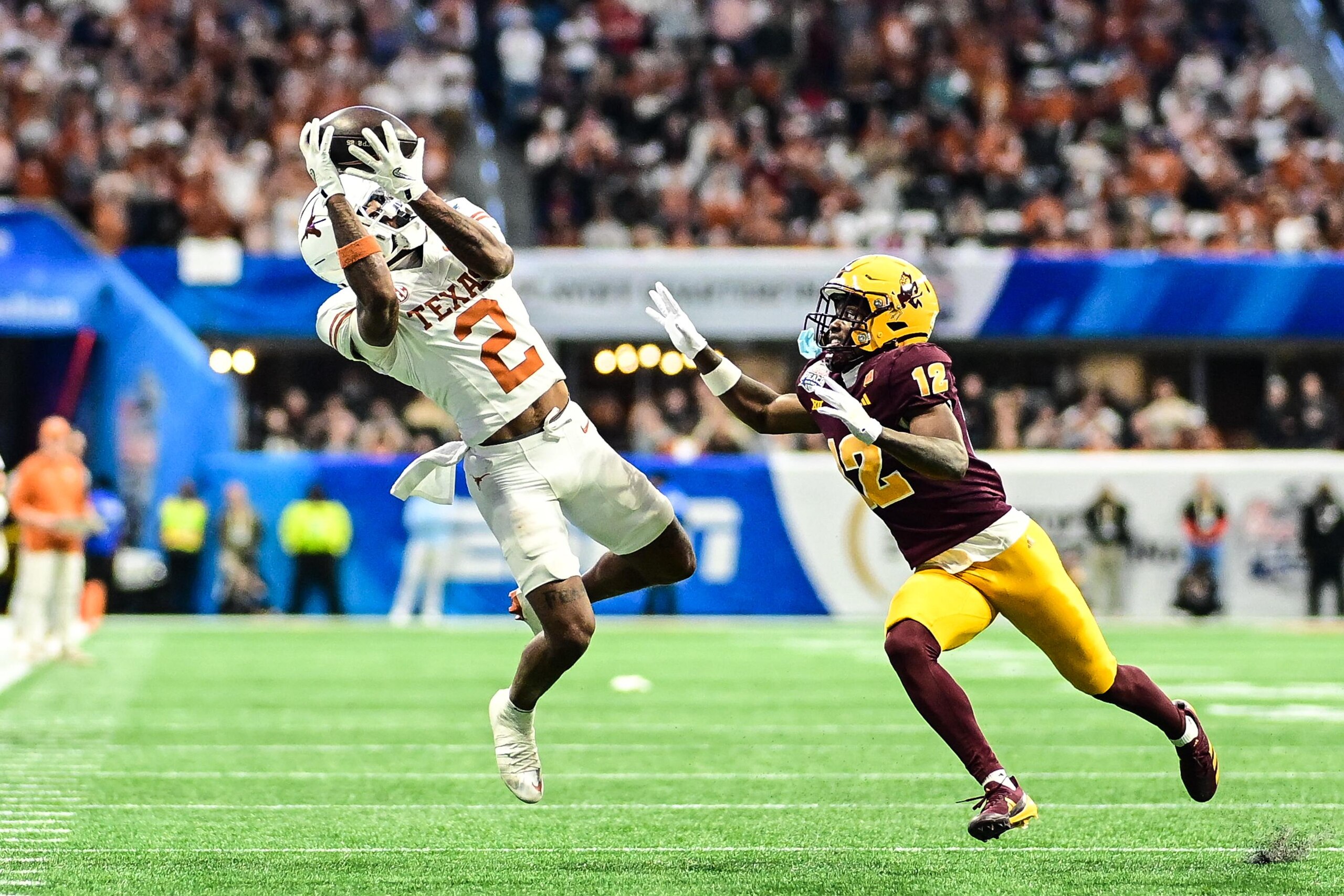
Strengths: Explosive speed to create separation, crisp route-runner, tempos routes, competitive at catch-point despite slight frame
Weaknesses: Inconsistent hands through contact, few drops, play-strength
Grade: B+
Javon Walker can finally rest, because the Green Bay Packers finally took a wide receiver in the first round for the first time in 23 years.
Christian Watson hasn’t quite worked out for the Packers. The 2022 second-round draft pick has consistently dealt with injuries and just tore his ACL in January. He’s unlikely to give the Packers much during the 2025 season even if he’s medically cleared.
In Watson's absence, the Packers need someone who can possibly take over as the X-receiver. Texas’ Matthew Golden isn’t a traditional X, but he's arguably the most explosive option in this year’s class with a 4.29-second 40-yard dash.
Golden joined the Longhorns after two seasons with the Houston Cougars and took full advantage of playing for the high-profile program. Despite not eclipsing 38 catches or 584 yards during either of his two seasons in Houston, Golden emerged as Texas' WR1 and a top-flight recruit.
"You earn trust with consistency and time," Texas head coach Steve Sarkisian told reporters in January. "I think there's a level of consistency in Matthew's game that he's earned a lot of trust from myself and [quarterback Quinn Ewers] that in a lot of critical moments it's easy to try to find him because you know he's going to be in the right spot, you know he's going to be competitively tough and make those plays."
24. Minnesota Vikings: Donovan Jackson, IOL, Ohio State
24 of 32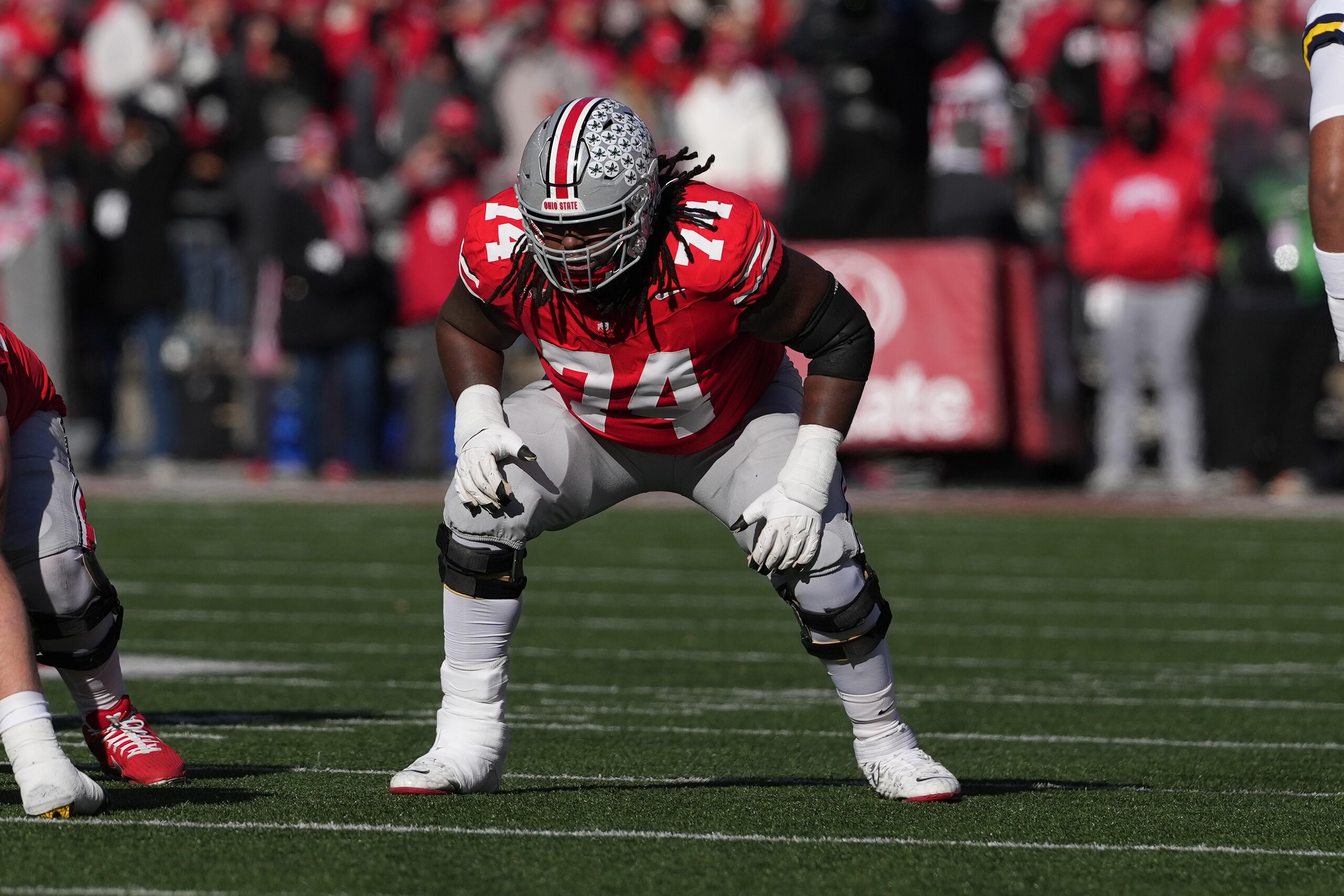
Strengths: Thickly built, muscular and powerful, heavy hands, anchors well, experienced guard with some positional flexibility
Weaknesses: Inconsistent footwork, suspect lateral movement at times
Grade: B
The Minnesota Vikings made massive investments in their offensive interior this offseason. They spent a combined $105.7 million on center Ryan Kelly and right guard Will Fries, both of whom left the Indianapolis Colts. Left guard was still questionable, but it’s not any longer.
Ohio State’s Donovan Jackson will immediately slot into the final guard spot as a ready-made starter despite the difficult circumstances he faced last season during the Buckeyes’ title run. Ironically, he’ll now be blocking for a Michigan man in J.J. McCarthy, who needs a strong pocket as a first-year starter since he missed all of his rookie season with a torn meniscus.
Jackson is a guard by trade and a good one. But his senior performance at Ohio State exemplified the importance of positional versatility.
The first-team All-Big Ten selection started 31 straight games before bumping out to left tackle after Josh Simmons suffered a season-ending torn patellar tendon. Jackson didn't look out of place, to the point where some started to wonder if he could be an NFL left tackle.
Jackson is a plug-and-play guard, but that level of versatility can be critical for an offense, as it was for the national champions.
25. New York Giants (from HOU): Jaxson Dart, QB, Ole Miss
25 of 32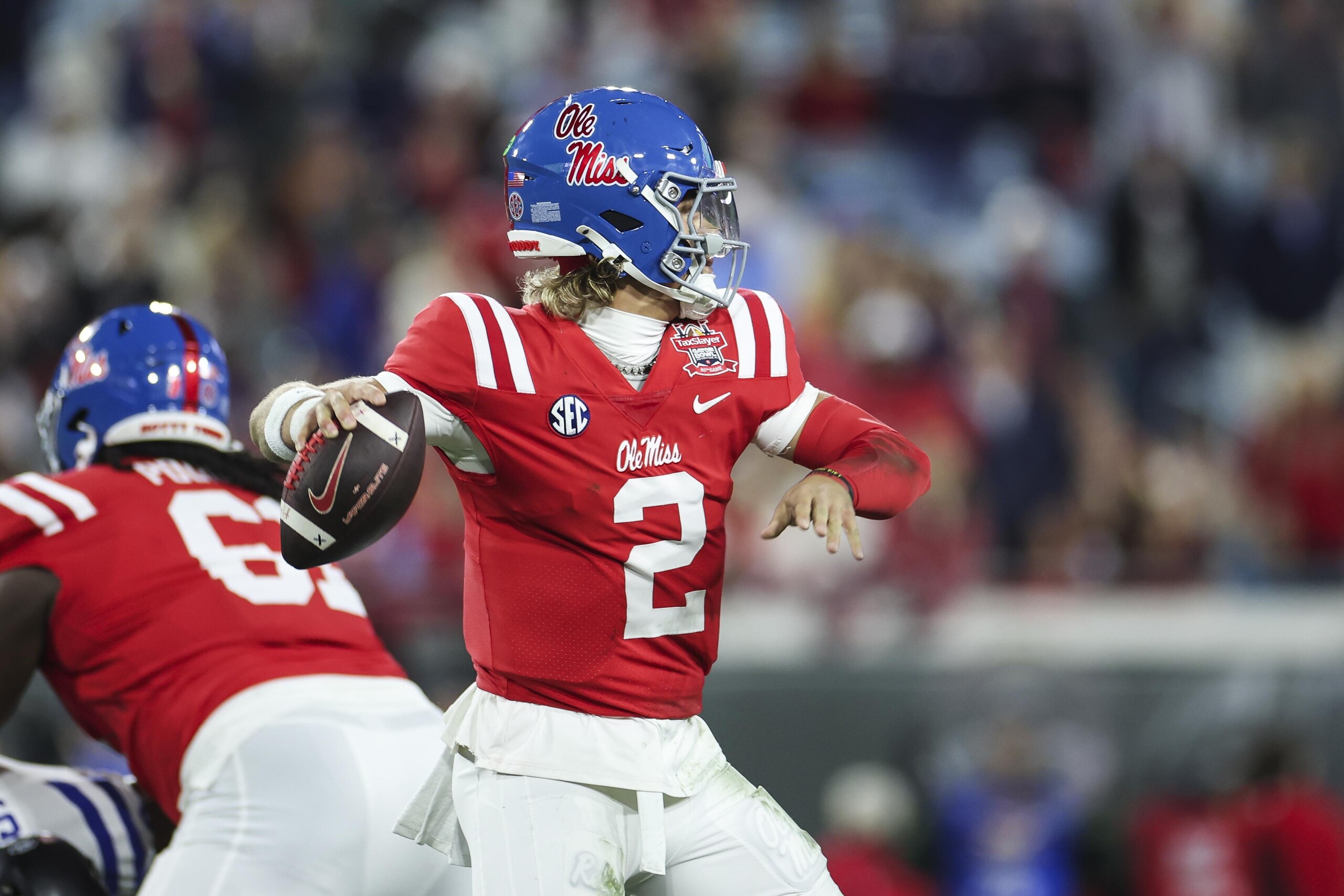
Strengths: Good touch, quick release, throws with different tempos, functional athlete
Weaknesses: Simplified collegiate offense, slow post-snap processor, shaky anticipation
Grade: C+
The New York Giants got their guy. They just wanted a different quarterback than many expected.
At no point during the predraft process was Ole Miss’ Jaxson Dart viewed as a better prospect than Colorado’s Shedeur Sanders. Beauty is in the eye of the beholder, though. If the Giants thought Dart can be their long-term answer under center, trading up for him makes sense.
Much like Michael Penix Jr. and Bo Nix last year, Dart went much higher than he was generally graded. Those two have worked out for their respective teams thus far, so this move can’t be completely slammed. However, one can easily argue giving up a pair of Day 2 picks to trade up for B/R's 57th overall prospect is a hefty price.
Dart is the enigma of this year's draft class, at least among quarterbacks. His traits signal a top-notch thrower who could become an NFL-caliber passer. His usage at the collegiate level doesn't entirely translate to the next level, though.
The first-team All-SEC selection shredded the conference this past season with 4,279 yards, which ranks sixth all-time in SEC history (ahead of former first-round draft picks Tim Couch, Johnny Manziel and Tua Tagovailoa). He can clearly throw the rock, but he may need time to expand on his consistency making the proper pre- and post-snap reads.
Luckily, the Giants have Russell Wilson and Jameis Winston to serve as stopgaps until Dart is ready to take over.
26. Atlanta Falcons (from LA Rams): James Pearce Jr., EDGE, Tennessee
26 of 32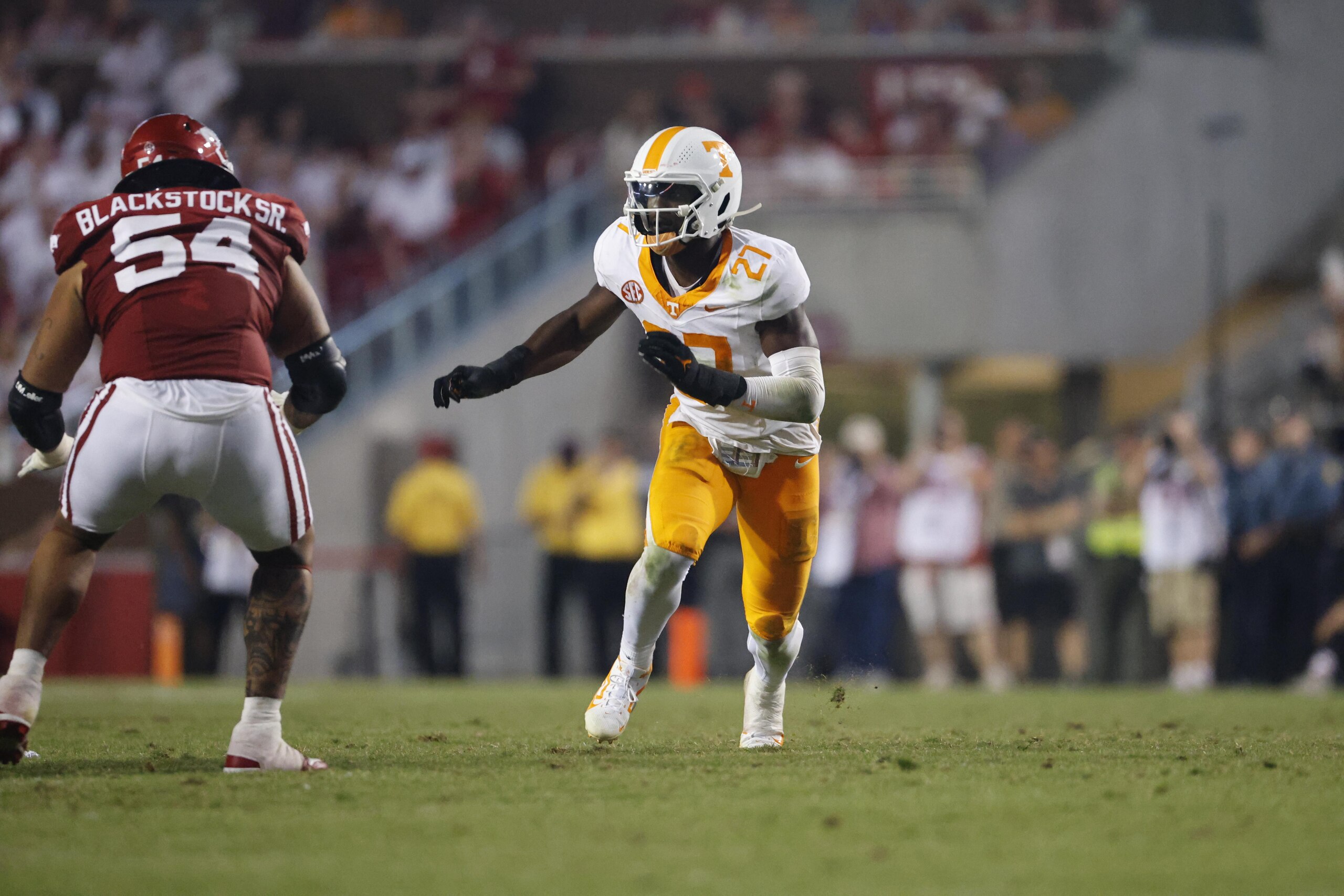
Strengths: Quickness to win off the snap, bends the edge, plays stronger than sub-250-pound frame indicates
Weaknesses: Can still fill out frame, pass-rush repertoire could use more variety, poor run keys
Grade: C+
The Atlanta Falcons aren’t messing around in this year’s draft. After taking Georgia’s Jalon Walker with the 15th overall pick, they traded up for Tennessee’s James Pearce Jr. at No. 26. They now have two explosive edge-defenders after not having one for nearly a decade.
Pearce and Walker are steps in the right direction to solving a massive problem. However, the Falcons gave up their 2026 first-round pick to trade up, which is an exorbitant price to pay.
Fresh off an 8-9 campaign in which they had a legitimate shot to win the NFC South, the Falcons must believe they can win now with Michael Penix Jr. under center. It’s time to take full advantage of all the talent they feature on offense. To do so, Atlanta's front office apparently decided to go all-in on this year’s front-seven prospects.
Go back and look at early 2025 mock drafts. Pearce was often viewed as the potential No. 1 overall pick. However, two issues arose throughout the predraft evaluation period.
First, Pearce failed to build upon his elite sophomore campaign. He arguably regressed. At the very least, he didn't show the level of play consistent with an elite talent.
Second, questions about attitude continued to come up prior to the draft. Sources told Daft on Draft's Cory Kinnan that Pearce was "uncoachable" and gave coaches "little incentive to place him on the field full time" because he had "one foot out the door already this season."
That makes Pearce a high-risk, high-reward gamble for Atlanta.
27. Baltimore Ravens: Malaki Starks, Safety, Georgia
27 of 32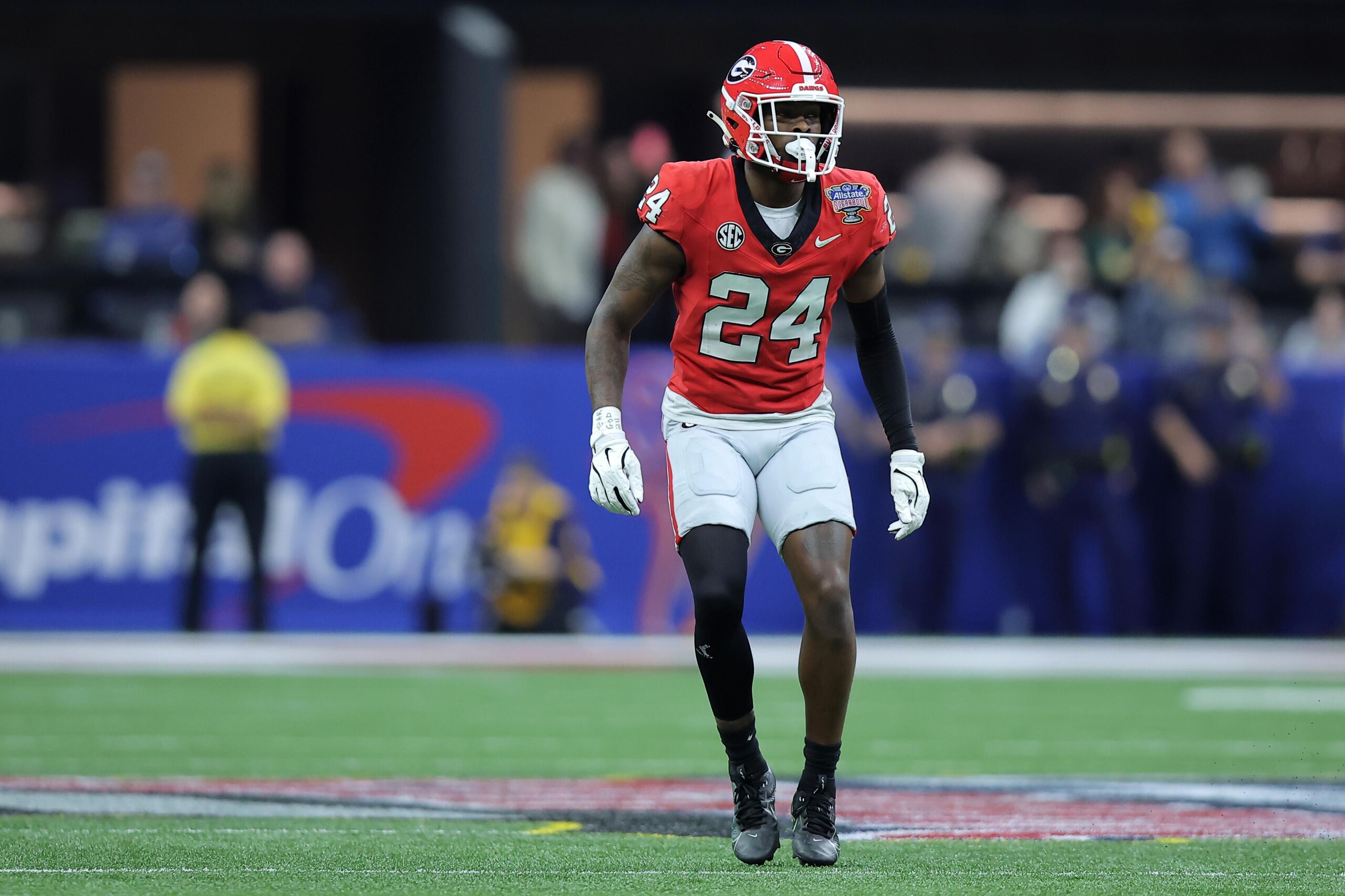
Strengths: Outstanding ball skills, quick trigger downhill, wrap-up tackler, great recognition in zone coverage
Weaknesses: Lacks elite athleticism, can take some poor angles
Grade: A
The Baltimore Ravens standing pat and landing an elite talent is completely on brand.
The B/R NFL Scouting Department had Georgia safety Malaki Starks as the No. 4 overall prospect in this year's draft. Positional value pushes him down to a degree, and he didn’t run quite as well as hoped prior to the draft, but he's silky smooth working the backline and in coverage.
Starks is a classic example of seeing an athletic profile after watching a player for years, then realizing the two don't exactly match up. The former shouldn't completely override the latter, especially when the prospect isn't a poor athlete by any means.
Starks posted a middling relative athletic score during predraft testing, per Kent Lee Platte. However, Starks' score compares to those of Earl Thomas, Xavier McKinney and Brian Branch.
The two-time first-team All-American is an elite talent and playmaker along the back end. Three years of high-end performance in the nation's toughest conference, including starting as a true freshman, shows he's more than deserving of a high draft grade and ready to take on the NFL.
Last season, the Ravens defense improved once Kyle Hamilton moved from strong to free safety, but they still finished 31st in pass defense. The addition of Starks will allow Baltimore to use Hamilton all over the field because he thrives when working against the pass. The fact he was available with the 27th overall pick is nothing short of stealing.
28. Detroit Lions: Tyleik Williams, DL, Ohio State
28 of 32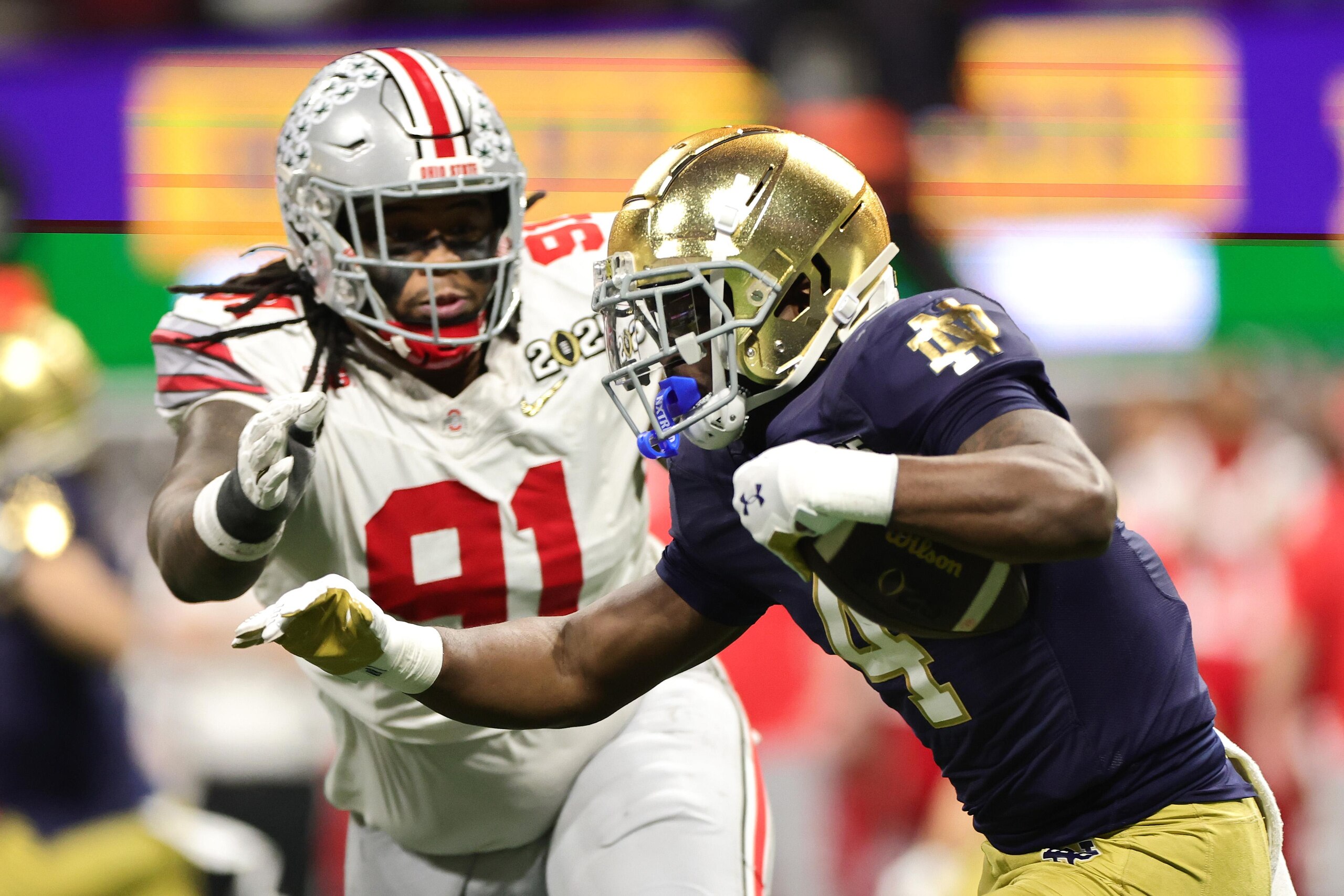
Strengths: Powerful enough to easily stack and shed blocks, moves well for size with some initial burst, pass-rush potential
Weaknesses: Inconsistent pad level and block recognition, hit-or-miss hand usage, lacks length
Grade: B
The Detroit Lions have a type. Ohio State’s Tyleik Williams fits the mold.
Williams can start his career working behind DJ Reader before taking over in the near future. Reader is turning 31 in July and is entering the final year of his contract.
The consensus All-American has the flexibility to play 3-technique, as he proved at Ohio State. However, Detroit already has Alim McNeill in place. Still, Williams can contribute as part of the Lions' defensive line rotation and provide quality depth along the interior.
On a unit that featured two future NFL defensive ends in JT Tuimoloau and Jack Sawyer, Williams was often the most disruptive player among the group.
An interior defender's stats aren't going to stack up against those of top college edge prospects. But Williams consistently ate up blocks, reset the line of scrimmage in the run game and provided some interior pass-rush presence.
The 6'3", 334-pound Williams should immediately help the Lions' run defense, and he has the potential to develop into an every-down defender.
29. Washington Commanders: Josh Conerly Jr., OT, Oregon
29 of 32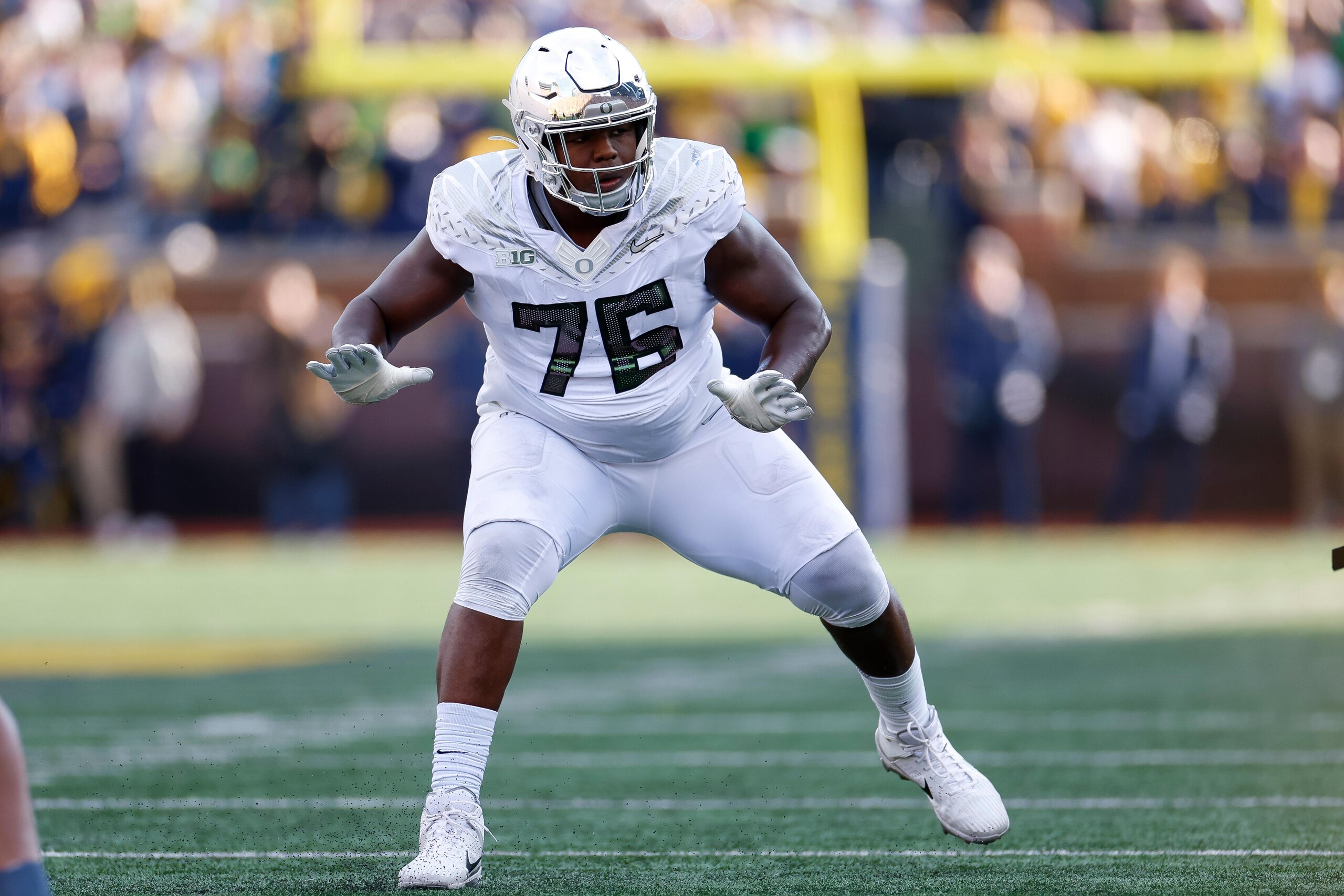
Strengths: Fluid pass protector, beats defenders to his spot, nimble feet, lateral movement
Weaknesses: Lacks power, wall-off run-blocker
Grade: C+
During Jayden Daniels’ collegiate career, he often looked like a crash-test dummy. His aggressive nature as a runner and unwillingness to slide subjected him to some monster hits from defenders.
The Washington Commanders seem to have coaxed that out of him to a degree. But they further bolstered the protection for their young quarterback by selecting Oregon's Josh Conerly Jr. with the No. 29 overall pick.
Washington already traded for Laremy Tunsil earlier this offseason to take over at left tackle. Conerly thus should compete to start at right tackle, even though he only started on the left side in college.
If Conerly proves to be comfortable on the strong side, Andrew Wylie can slide inside to start or provide excellent depth. Whatever the case, the Commanders are definitely better in the trenches than they were to start the offseason.
Play strength is an undefinable trait that's vital for an offensive lineman. Someone like Conerly, who excels in so many areas, will likely still struggle to a degree as he tries to improve his play strength in the NFL.
Conerly has excellent movement skills and looks natural on an island at left tackle. He moves his feet well, redirects, disrupts counters and plays well in space. However, he can set a soft post leg as a pass protector and isn't a drive-blocker in the run game.
30. Buffalo Bills: Maxwell Hairston, CB, Kentucky
30 of 32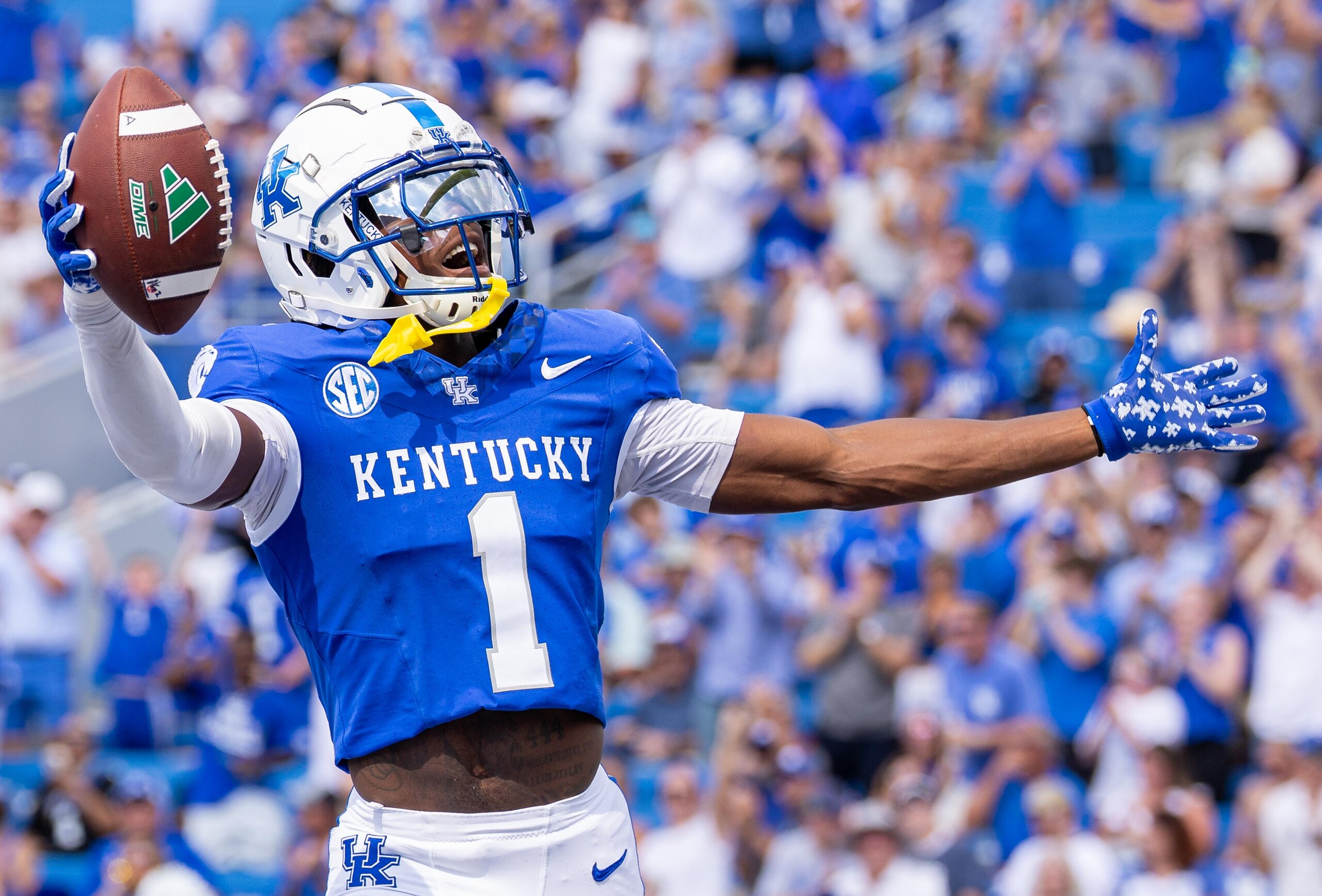
Strengths: Excellent vision as a zone defender, elite speed to drive on the ball, fluid mover
Weaknesses: Slight frame and avoids physicality, gets caught looking in the backfield and reading the quarterback's eyes
Grade: B
The Buffalo Bills must find a way to eventually overcome what’s been an insurmountable opponent in the Kansas City Chiefs. With Patrick Mahomes behind center, the Chiefs will always feature a potent passing attack.
A cornerback to help slow opponents and upgrade at one spot opposite Christian Benford makes all of the sense in the world, especially after Buffalo finished 24th in pass defense last year. Kentucky’s Maxwell Hairston has the physical ability to cover anyone in the league.
Hairston does have a little Deion Sanders in him. He's an elite athlete with tremendous movement skills, but he definitely isn't a fan of getting physical.
The two-time second-team All-SEC honoree ran the fastest confirmed 40-yard dash among this year's class at 4.28 seconds. His overall athletic profile is among the best in the class, too. He has the raw coverage skills to shadow top receivers and potentially lock them down and/or thrive in zone-heavy schemes.
To his credit, Hairston doesn't miss too many tackles. He just doesn't like to stick his nose where he doesn't believe it should be.
31. Philadelphia Eagles (from KC): Jihaad Campbell, LB, Alabama
31 of 32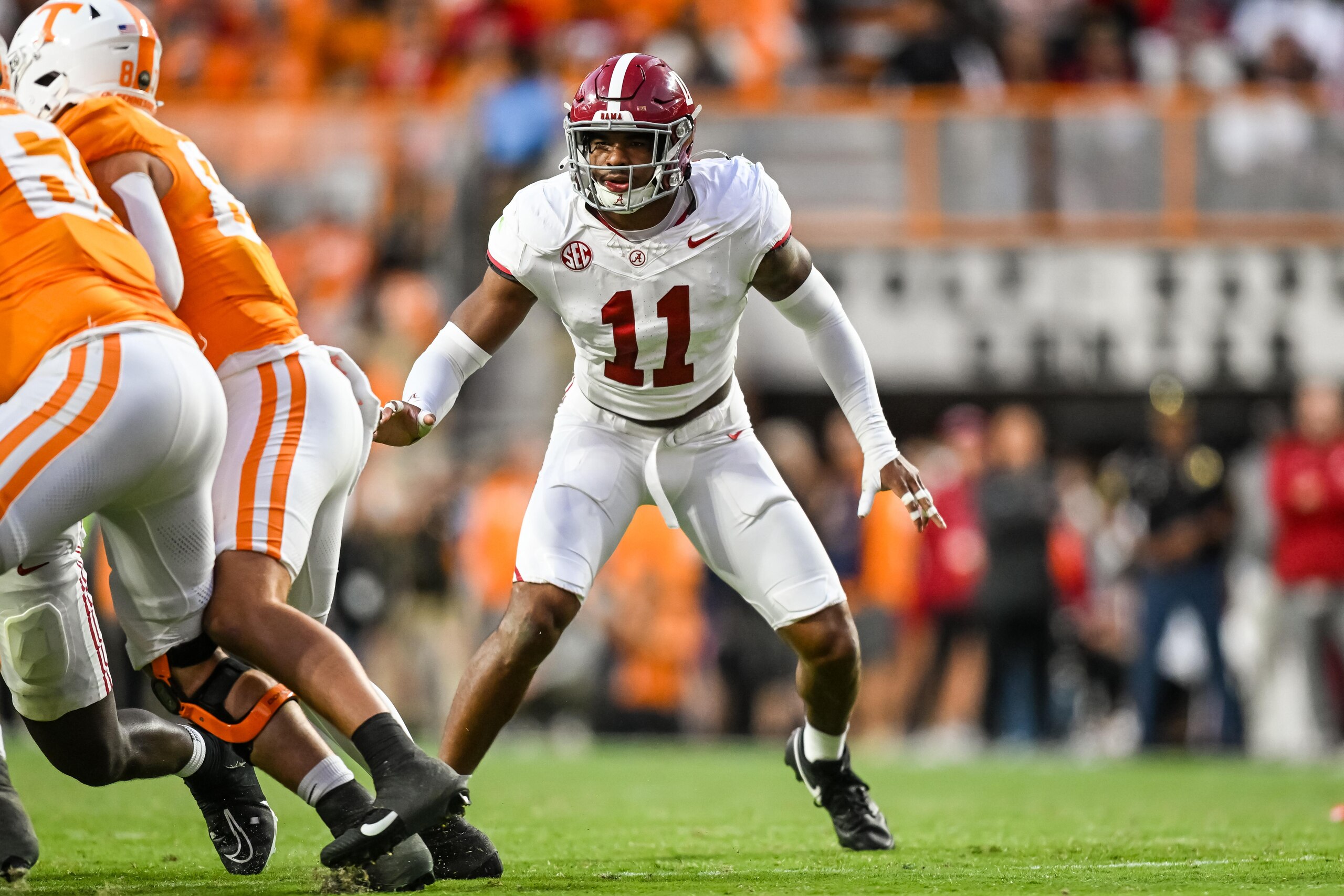
Strengths: Outstanding athlete with good explosion and range, comfortable dropping into space, reliable tackler, plus pass-rusher
Weaknesses: Inconsistent eyes, poor hand usage when taking on blocks, can get upright and negate explosiveness
Grade: A+
The Philadelphia Eagles never invest in linebackers. Except this year, apparently.
Not only did the Eagles draft Alabama linebacker Jihaad Campbell, but they even traded up one spot and surrendered a fifth-round pick to make sure they landed Campbell.
If not for a shoulder injury that required surgery to repair a torn labrum after the season, Campbell easily could have been a top-15 pick. With Nakobe Dean recovering from a torn patellar tendon, Campbell should make an already talented defense even more so.
Campbell is an interesting fit in Philly, too, because he’s not a pure linebacker prospect. He and Zack Baun will expand Vic Fangio’s defensive scheme even more than it already is.
The transition from off-ball linebacker to full-time pass-rusher has become increasingly common, as was the case for Micah Parsons, Abdul Carter and possibly even Jalon Walker. Campbell went in the opposite direction and greatly benefited from the move.
The 21-year-old arrived at Alabama as the top edge-rusher in his recruiting class. At times, he still plays like he's used to being on the edge instead of being fully comfortable as an off-ball linebacker.
Still, Campbell does have both the traits to develop into an elite NFL linebacker and the versatility to be used all over the front seven. In fact, his pressure rate last season eclipsed the likes of Abdul Carter, Mike Green, Shemar Stewart, Mykel Williams and Walker, albeit in limited opportunities.
32. Kansas City Chiefs (from PHI): Josh Simmons, OT, Ohio State
32 of 32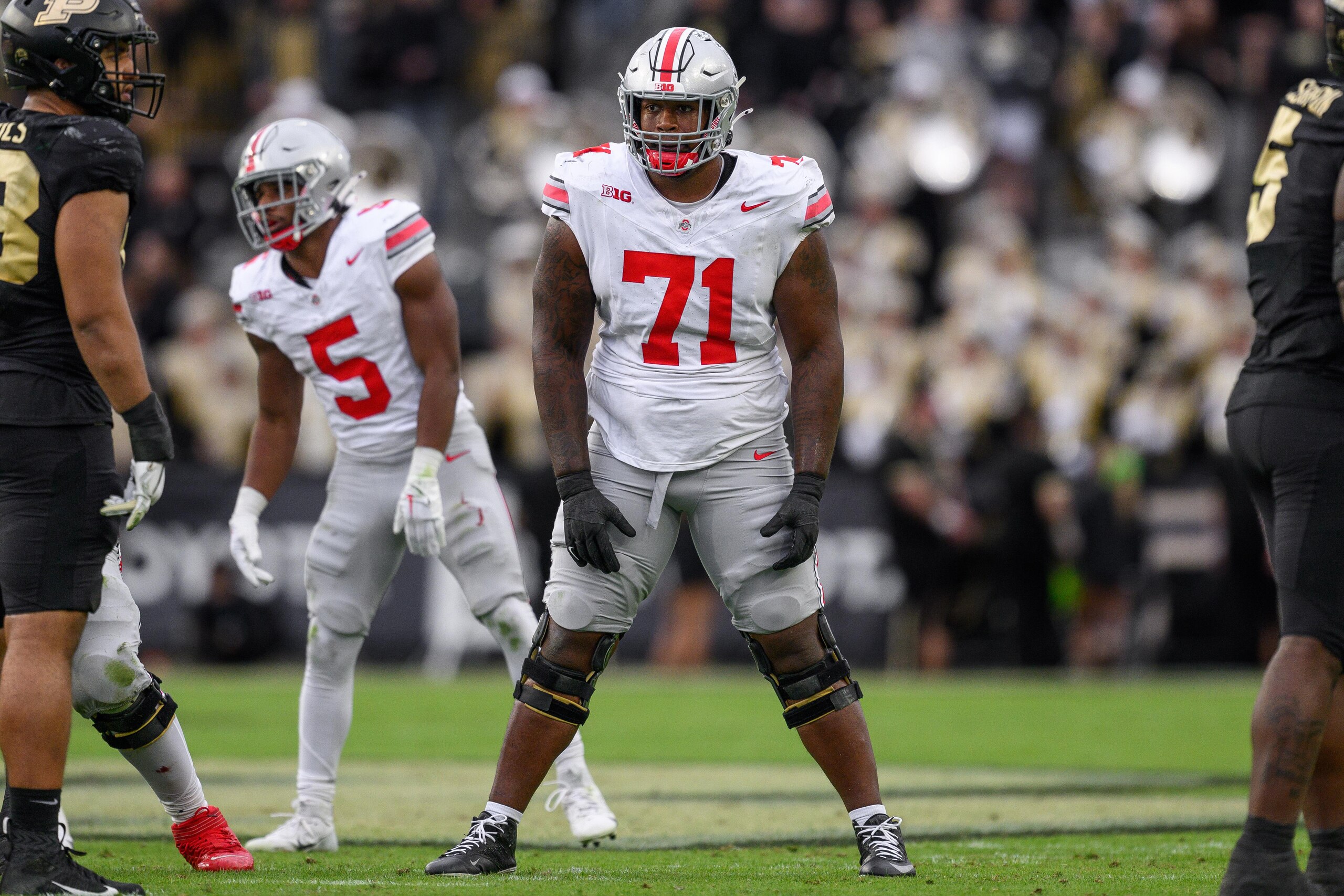
Strengths: Fluid movement vertically and laterally, good balance, quick into his pass set, varied hand usage
Weaknesses: Coming off major knee injury, gets overextended in run game
Grade: A+
The Kansas City Chiefs have lost two Super Bowls because their offensive line couldn’t protect quarterback Patrick Mahomes.
When they lost Super Bowl LV to the Tampa Bay Buccaneers, they made an immediate overcorrection by bringing in the likes of Orlando Brown Jr., Joe Thuney, Creed Humphrey and Trey Smith. Half of those linemen are no longer with the team.
Left tackle has been the most difficult for the Chiefs to address, at least on a consistent basis. Last year, they drafted Kingsley Suamataia in the second round. He opened the season at left tackle before getting benched because he wasn’t ready.
The Chiefs brought in Jaylon Moore this offseason, but he’s never been a full-time starter in the NFL. They had a rare opportunity to get a top-flight left tackle prospect at the back end of the first round in Ohio State’s Josh Simmons, and they took full advantage.
Had Simmons not torn his patellar tendon in October, he easily could have been the class' top offensive tackle, especially with his experience on the left side.
"You do everything right, you make a big improvement from ‘23 to ‘24, and then something like that happens; you definitely kind of get the reality of anything can happen, so just take advantage of everything that you have in front of you," Simmons told reporters at the NFL Scouting Combine. "... I was going to not only win the national championship but personal goals, like the Outland Trophy, all that stuff.
"You just got to put it in the tank, right? It's just a little speed bump. Once you get all that in your mindset, that you're going to come back a lot stronger, wake up the demons inside you kind of, you know there's no way to stop you."
.jpg?w=2560 "Chargers Chiefs Football")
.jpg?w=2560 "Bills Rams Football")