

The drama of the NFL draft's third day is usually reserved for lesser-known prospects hoping to realize their dreams by hearing their names called. The feeling has been amplified by one million this year, considering quarterbacks Shedeur Sanders and the national championship-winning Will Howard remain available after seeing the likes of Tyler Shough, Jalen Milroe and Dillon Gabriel come off the board during Day 2.
Sanders' slide is something the NFL has never quite seen, as he was viewed as a first-round talent nearly unanimously by those on the outside. At worst, everyone felt the legacy prospect couldn't fall any further than the draft's second day. Yet NFL teams have made a statement by not selecting him through 102 slots.
Howard's standing isn't as drastic. At best, he was viewed as a Day 2 pick. When the Browns drafted Gabriel with the 94th overall pick, many had to do a double-take and make sure they heard the announcement correctly since he's such a limited prospect and projected long-term backup.
More intrigue abounds right now than any previous Day 3 in recent memory. All the while, it remains the event's most important day because of the number of picks that are made and how many of these players become integral parts of NFL rosters.
Bleacher Report will grade every single selection along the way to see which organization navigated all of the narratives to get the best return on their investments.
Fourth Round
1 of 4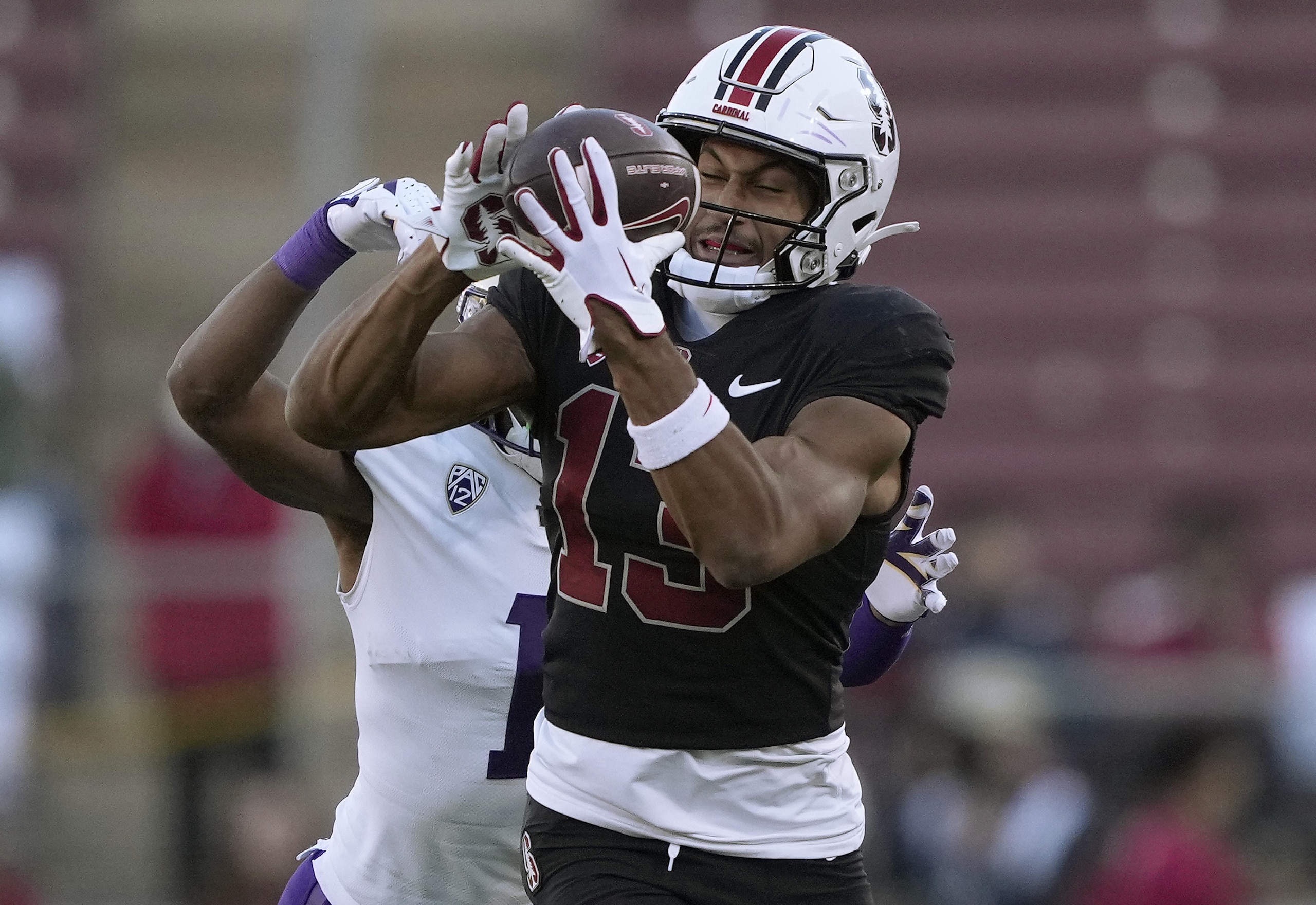
103. Tennessee Titans
Chimere Dike, WR, Florida
Grade: B
The Tennessee Titans opened Day 3 of the NFL draft by helping this year’s No. 1 overall pick, quarterback Cam Ward. Florida’s Chimere Dike is a good athlete who didn’t benefit from quality quarterback play at the collegiate ranks. This pick could eventually pave the way for Treylon Burks’ departure from the Titans roster if he doesn’t finally show up and look like a former first-round pick.
104. Jacksonville Jaguars (from CLE)
Bhayshul Tuten, RB, Virginia Tech
Strengths: Sprinter speed, electric in open field, low center of gravity, understands how to throttle his pace
Weaknesses: Too reliant on speed at times, wants to bounce out too many runs, fumble issues
Grade: B
Interestingly, the Jacksonville Jaguars added Virginia Tech’s Bhayshul Tuten. The thought entering the draft centered on the Jags looking for a more powerful every-down back to possibly replace Travis Etienne. Instead, Jacksonville adds another home run threat to the backfield.
Tuten is an explosive bundle of dynamite. The 5'9", 206-pound ball-carrier was the fastest running back in this class with a 4.32-second 40-yard dash, but he also finished fifth among this year's top prospects in average rushing yards after contact, per The 33rd Team.
Only Boise State's Ashton Jeanty, Miami's Damien Martinez, Ohio State's TreVeyon Henderson and Iowa's Kaleb Johnson averaged more than Tutan's 4.4 yards after contact per carry. Three of those four weigh over 210 pounds.
105. New York Giants
Cam Skattebo, RB, Arizona State
Strengths: Undeniable downhill runner, excellent contact balance, strains for every single yard, viable receiving threat
Weaknesses: Not an explosive or shifty runner, lacks top gear
Grade: A
Arizona State’s Cam Skattebo is the perfect complement to what the New York Giants already have in their backfield. Tyrone Tracy Jr. is a converted wide receiver. Devin Singletary is reliable but doesn’t have any special traits. Skattebo gives them a bulldozer in the backfield.
Be prepared for Skattebo to make regular appearances on Angry Runs. The first-team All-American plays with a level of power and passion that can't be denied. He put the Sun Devils on his shoulders and led them to a College Football Playoff appearance this past season.
But Skattebo isn't simply the thunder to someone else's lightning as part of a running back rotation. The 5'9½", 219-pound back is also a viable and natural receiver out of the backfield, with 69 receptions over the last two seasons. Last season, he created 571 yards after the catch.
106. New England Patriots
Craig Woodson, Safety, California
Strengths: Loose hips, quick downhill tigger, deep range, good ball skills in man coverage
Weaknesses: Not as comfortable or effective working in zone coverage, can get caught up in traffic
Grade: B
The New England Patriots finally went away from offense after four straight picks on that side of the ball. Cal’s Craig Woodson can immediately enter the safety rotation alongside Kyle Dugger and Jabrill Peppers. The rookie may even be the best pure safety of the group.
Even with how well Woodson played last season–he was among the nation's best safeties in 2024–he became overlooked to a degree by the play of his teammates last season. After all, cornerback Nohl Williams led the FBS with seven interceptions, while linebacker Teddye Buchanan managed 114 total tackles as a first-team All-ACC selection.
Still, Woodson has the requisite size, speed and tenacity to be a quality strong safety in the NFL.
107. Jacksonville Jaguars
Jack Kiser, LB, Notre Dame
Strengths: Smart, good instincts, reliable tackler, uses hands well, positive when blitzing
Weaknesses: Marginal athlete, not a lot of power when he strikes or takes on blocks, turns 25 as a rookie
Grade: C
Notre Dame’s Jack Kiser brings a traditional element to the Jacksonville Jaguars linebacker room. Former first-round pick Devin Lloyd thrived as a hybrid linebacker who could play at the line of scrimmage. He can bounce around the formation while Kiser steps in to play alongside Foyesade Oluokun.
Few prospects become as synonymous with their alma maters as Kiser did at Notre Dame. He spent six years with the Fighting Irish and started games in each of the past four seasons. His extensive experience prepared him for what’s yet to come.
“Teams want to figure out how fast you can memorize or recall certain things, so I’m drawing up the entire defense, from safeties to the defensive ends, and explaining their roles and how I impact them,” Kiser told The Athletic’s Pete Sampson. “That’s everything I’ve ever dreamed of, telling someone everything I can do on the field.”
108. Las Vegas Raiders
Dont'e Thornton, WR, Tennessee
Strengths: Elite height-speed combination, tracks deep balls well, uses frame to win 50-50 balls
Weaknesses: Minimal route tree, straight-line athlete, low production
Grade: C
Al Davis is smiling down on the Las Vegas Raiders organization because general manager John Spytek just drafted the type of wide receiver that Davis always loved. Jack Bech, who was selected earlier, provides a reliable target to work with underneath. Tennessee’s Dont’e Thornton is the vertical threat.
Thornton set career highs last season with 26 receptions for 661 receiving yards. Yes, you read those numbers correctly. He was the only wide receiver with at least 25 receptions to average 25-plus yards per catch.
The Oregon transfer epitomizes a height-weight-speed prospect. The 6'5" wideout runs a 4.30-second 40-yard dash. He posted a 9.85 relative athletic score during the predraft process, per Kent Lee Platte.
His selection is all about upside and what he could become.
109. Buffalo Bills (from CHI)
Deone Walker, DL, Kentucky
Strengths: Massive frame, moves well despite girth, impossible to move when playing low, continues to work as a pass-rusher
Weaknesses: Far too inconsistent, takes too many plays off, pad level is a consistent issue, struggles to get leverage in short-yardage situations
Grade: C-
The Buffalo Bills needed to get bigger and more physical along their defensive interior. They certainly got bigger with the addition of Kentucky’s Deone Walker. They didn’t necessarily get more physical, and the team used an extra fifth-round draft pick to trade up and select one of the more frustrating players to watch in the 2025 class.
No prospect in this year's class experienced a fall quite like Walker.
Prior to the start of the 2024 season, the 6'7", 331-pound prospect often garnered top 10-15 projections. His combination of size, 7.5 sacks in 2023 and back-to-back second-team All-SEC nods helped build significant buzz.
Unfortunately, the 21-year-old completely underwhelmed during his final season on campus. Smaller offensive linemen pushed him around too often. He played too high. His production as a pass-rusher dropped. Walker didn't perform to the level his size and talent indicated.
Still, he's young and has the natural tools to succeed with the right coaching.
110. New York Jets
Arian Smith, WR, Georgia
Grade: D
Georgia’s Arian Smith is a 50/50 prospect. No, it’s not a 50/50 chance when he has to go up for a jump ball. It’s a 50/50 proposition whenever the ball is thrown his way, because Smith has some of the class’ worst hands. But, hey, he’s fast enough to give the New York Jets a vertical threat.
111. Philadelphia Eagles (via CHI)
Ty Robinson, DL, Nebraska
Grade: C
The Philadelphia Eagles investing in their defensive front is old hat. They know what they lack and continue to add those types of players. Nebraska’s Ty Robinson is a lunch-pail type who’s a better athlete than expected after seeming a somewhat tight athlete on the field. He can provide some reps as a base end, but his real strength is a relentless motor working along the defensive interior.
112. New Orleans Saints
Danny Stutsman, LB, Oklahoma
Strengths: NFL build and speed, quick to diagnose, productive, extensive starting experience
Weaknesses: Not as comfortable working in space, gambler with run fits, plays high upon contact
Grade: B
The New Orleans Saints just found their eventual replacement for the 36-year-old Demario Davis. Davis has been awesome and a true leader in the Saints defense. Oklahoma’s Danny Stutsman has the potential to assume that role in a year or two while being used as a versatile sub-package piece as a rookie.
A prospect's ability to take on wearing the green dot–making him the communicator between the coordinator on the sidelines and his on-field teammates–is vastly overlooked.
Stutsman has the experience (47 career starts), production and athleticism to instantly lead a defense.
"I think accountability, consistency are kind of the three things I learned under Coach [Brent] Venables and that system," Stutsman told Forbes Sports' DJ Siddiqi. "You just gotta be the same person every single day. You can't be a Jekyll and Hyde. You have to show up with the right attitude and just keep that every single day."
113. San Francisco 49ers
CJ West, DL, Indiana
Grade: C
The San Francisco 49ers are systematically addressing every problem area of their defense after taking massive hits in free agency. So far, the Niners have added defensive end Mykel Williams, defensive tackle Alfred Collins, linebacker Nick Martin and cornerback Upton Stout.
CJ West’s inclusion is interesting because he brings a redundant skill set in the same class as Collins. However, San Francisco doubling up on powerful defensive tackles at the point of attack signals the team wants to be a bully in the trenches.
114. Carolina Panthers (from DAL)
Trevor Etienne, RB, Georgia
Grade: C
The Carolina Panthers have a bell-cow back in Chuba Hubbard who finished eighth in rushing yards last season. The team also invested a second-round pick in Jonathon Brooks, though he’s still dealing with a knee issue. Rico Dowdle is in the lineup, too. Georgia’s Trevor Etienne feels like an insurance plan who has enough burst and juice to be a solid complementary piece as part of the current rotation.
115. Arizona Cardinals
Cody Simon, LB, Ohio State
Grade: C+
The Arizona Cardinals are all about defense this year to finally help head coach Jonathan Gannon realize his vision. Walter Nolen, Will Johnson and Jordan Burch provide huge upsides as the Cards’ first three picks. Ohio State linebacker Cody Simon doesn’t have the same type of ceiling, but he can be a reliable piece along the second line of defense at a position that’s not exactly settled with Mack Wilson and Akeem Davis-Gaither as the starting options.
116. Houston Texans (from MIA)
Woody Marks, RB, USC
Strengths: Immediate contributor as third-down back thanks to his receiving skills, patient runner, effortless in and out of cuts
Weaknesses: Not a powerful runner, doesn't play through contact, turns 25 at end of December
Grade: B
How much did the Houston Texans want to get Woody Marks on their roster? They gave up a 2026 third-round pick to acquire him. He’s a perfect complementary piece to work alongside Joe Mixon.
In a loaded running back class, any skill set that differentiates a prospect provides an advantage. NFL teams are always searching for specific traits that can help them win.
Marks is an exceptional receiver with 261 receptions over his collegiate career, which began at Mississippi State as part of Mike Leach's Air Raid offense. A transfer to USC during his final season in college allowed Marks to become a workhorse back with a career-high 198 carries for 1,133 rushing yards.
117. Los Angeles Rams (from IND)
Jarquez Hunter, RB, Auburn
Grade: C+
The Los Angeles Rams couldn’t hold their water, so they traded up to get Auburn’s Jarquez Hunter, who is a slashing runner with home-run potential. His explosive skill set will fit well alongside Kyren Williams and Blake Corum, who are good runners but lack juice when they get to the second and third levels.
118. Atlanta Falcons
Billy Bowman Jr., Safety, Oklahoma
Strengths: Instinctual, fluid hips, no problem running the alley to defend the run
Weaknesses: Small frame can be an issue in coverage and tackling, doesn't always trigger quickly enough
Grade: B+
The Atlanta Falcons now feature a fascinating group of safeties, with Jessie Bates III, Jordan Fuller and third-round addition Xavier Watts. Oklahoma’s Billy Bowman Jr. may be projected as more of a slot defender among this group.
Bowman's size (5'10", 192 lbs) makes him a modern-day ‘tweener in the secondary. Or if you prefer a silver lining, he's a hybrid who's capable of playing multiple roles.
Technically, both of those are true. Bowman is a safety by trade, but his best spot may be at nickel corner, where he has the fluidity and coverage skills to handle the position.
These days, NFL teams prefer players who don't come off the field. Bowman has the skill set to move around the secondary depending on the situation.
119. Cincinnati Bengals
Barrett Carter, LB, Clemson
Strengths: Impressive working in space, can cover man or zone, understanding of where quarterback wants to go with the ball
Weaknesses: Poor run instincts, gets stuck on blocks, not a striker when tackling
Grade: B
The Cincinnati Bengals are reshaping their linebacker corps. The organization already drafted South Carolina’s Demetrius Knight Jr. in the second round. Clemson’s Barrett Carter brings starter potential even as the 119th overall pick. With Germaine Pratt on the trade block and Logan Wilson turning 30 next year, the Bengals are once again preparing for the future.
Overexposure tends to be a negative when it comes to prospect evaluation. Teams tend to be more excited about untapped potential than what's seen on multiple years of tape.
Carter was a three-year starter at a premium program and even generated some first-round buzz two years ago. But as he developed, he proved to be not as fast or physical as scouts had hoped.
The first-team All-ACC selection is still a quality prospect, but he didn't generate nearly as much excitement leading into this year's draft.
120. Tennessee Titans (from SEA)
Gunnar Helm, TE, Texas
Strengths: Ball-winner, will find openings in coverage and exploit them, excellent red-zone target
Weaknesses: Good but not elite athlete, could be more physical as an in-line option and receiver working through contact
Grade: B
The Tennessee Titans continue their Day 3 play by adding another offensive weapon in Texas’ Gunnar Helm to help rookie quarterback Cam Ward. Dike and Helm can immediately contribute in the passing game. The latter provides an in-line option as part of 12 personnel packages.
There were times when Helm was the deadliest weapon in Texas' offense, which included wide receivers Matthew Golden and Isaiah Bond, as well as running back Jaydon Blue. He's a crafty receiver and ball-winner.
Helm ran a surprisingly slow 4.84-second 40-yard dash at the NFL Scouting Combine. But he tweaked his ankle during a false start in the 40, which explained the disappointing time. Despite that, he managed to finish his entire positional workout.
121. Tampa Bay Buccaneers
David Walker, EDGE, Central Arkansas
Grade: C+
As long as a person knows how to get to a quarterback, it doesn’t matter how he’s built. Elvis Dumervil was one of the league’s best pass-rushers even at 5’11”. Central Arkansas’ David Walker isn’t quite that short, but he’s a sawed-off edge defender who amassed 63 tackles for loss and 31 sacks over the last three seasons.
122. Carolina Panthers (via DEN)
Lathan Ransom, Safety, Ohio State
Strengths: Strong, physical defender, is a presence against the run, loves to trigger and play downhill, constantly looks to get in on the action
Weaknesses: Not as effective when asked to turn and run in coverage, tight when asked to work in space
Grade: A
The Carolina Panthers invested heavily in safety Tre’von Moehrig in free agency. Ohio State’s Lathan Ransom could step in immediately as the Panthers’ other starting safety since Nick Scott is currently the squad’s best option.
Ransom proved to be a quality safety during his five years at Ohio State and became a critical part of the Buckeyes secondary. He also had to deal with two significant injuries.
Ransom broke his leg in the 2022 Rose Bowl, which required a rod and screws to be inserted to set the fracture. He also dealt with a Lisfranc injury to his left foot in 2023.
"Through all the adversity and all the ups and downs, it has made me a better person and has given me perspective," Ransom said, per Justin Spears of Tucson.com. "For the NFL, it's going to teach me adversity and never give up. It's also going to teach me how to be a football player and how to be a man."
123. Pittsburgh Steelers
Jack Sawyer, EDGE, Ohio State
Strengths: Physical run defender, powerful pass-rusher, consistent motor
Weaknesses: Lacks burst and bend off the edge, hand usage needs to improve
Grade: C-
The Pittsburgh Steelers are having the most Pittsburgh Steelers draft ever. The team has continually passed on a quarterback and added to positions where they’ve traditionally thrived.
Oregon’s Derrick Harmon gives them another playmaker along the defensive line. Running back Kaleb Johnson could easily develop into a workhorse ball-carrier. Ohio State’s Jack Sawyer will be the latest in the Steelers’ long line of outside linebackers, though he previously struggled in that role at Ohio State.
He entered the program as a 5-star recruit. In his sophomore season, Ohio State's coaching staff wanted him to show more versatility and dropped him into space often, where he wasn't comfortable. He returned to being a full-time edge over the last two seasons and saw tangible progress while registering 15.5 sacks.
The two-time second-team All-Big Ten selection never turned into a game-changer in college, but he's as reliable of an every-down prospect as an NFL prospect gets.
124. Green Bay Packers
Barryn Sorrell, EDGE, Texas
Grade: B
The Green Bay Packers initially addressed the offense with their first three picks. General manager Brian Gutekunst finally turned to the other side of the ball with Texas’ Barryn Sorrell.
Sorrell was still in the green room in Green Bay. He was there for Days 1 and 2, and he chose to come back for Day 3. His tenacity and leadership skills seen at Texas, as well as his patience to hear his name called, speak volumes about the person and player the Packers are getting. Plus, he has some legitimate upside as a pass-rusher.
125. Los Angeles Chargers
Kyle Kennard, EDGE, South Carolina
Strengths: First-step quickness, ability to bend the edge, shoots hands and gets extension when defending the run
Weaknesses: Lacks power, tends to take long way around blocks, inconsistent pass-rush plan
Grade: B
The Los Angeles Chargers moved on from Joey Bosa this past offseason and didn’t replace him in free agency. The team still has Khalil Mack and Tuli Tuipulotu to man those positions. However, the Chargers now have a quality rotational option in South Carolina’s Kyle Kennard.
In a conference that featured the likes of Jalon Walker, Malaki Starks, Jahdae Barron, Walter Nolen and Jihaad Campbell, Kennard emerged as the 2024 SEC Defensive Player of the Year. He also captured the Bronko Nagurski Trophy, which goes to the nation's top defensive player.
The South Carolina product led the SEC with 11.5 sacks, although he benefited greatly from playing for a very talented defense. He lined up opposite Dylan Stewart, who looks like a future top-five pick.
Kennard plays with a relentless motor and makes plays. Too often, he did so for the Gamecocks without much resistance.
126. Cleveland Browns (from JAX)
Dylan Sampson, RB, Tennessee
Strengths: Explosive plays, excellent feel for blocking schemes and when to cut, lateral agility
Weaknesses: Not a powerful runner, has had some fumble issues
Grade: A
If the Cleveland Browns’ desire to be a running team wasn’t already obvious, general manager Andrew Berry added Tennessee’s Dylan Sampson alongside the second-round selection of Ohio State’s Quinshon Judkins. They have perfect complementary skill sets.
Blink, and Sampson could be gone for a touchdown. The 20-year-old has the ideal combination of patience to wait for the hole to develop, footwork to slice through a defense and top-end speed to turn any run into a big play.
Sampson led the SEC last season with 1,491 rushing yards. He doesn't have the frame or physicality to his game to serve as an every-down back. But when he is in the game, he's a constant threat.
127. Indianapolis Colts (from LAR)
Jalen Travis, OT, Iowa State
Grade: C
The Indianapolis Colts needed to build offensive line depth after dealing with the free-agent losses of center Ryan Kelly and right guard Will Fries. Second-year blockers Tanor Bortolini and Matt Goncalves should move into those slots. However, Braden Smith’s long-term status as the team’s right tackle remains in question. Iowa State’s Jalen Travis gives the Colts a developmental option to eventually replace Smith.
128. Washington Commanders (from HOU)
Jaylin Lane, WR, Virginia Tech
Grade: C+
The Washington Commanders already brought in Deebo Samuel to take some pressure off their top wide receiver, Terry McLaurin, and give the offense a playmaker, particularly after the catch. Lane provides a separator with legit 4.34-second 40-yard-dash speed. He can be the jitterbug to consistently win at the line of scrimmage and get open quickly for quarterback Jayden Daniels.
129. Baltimore Ravens
Teddye Buchanan, LB, California
Grade: C+
The Baltimore Ravens already feature arguably the league’s best off-ball linebacker in Roquan Smith. The other spots aren’t quite settled. Trenton Simpson is expected to take on a larger role in his second season. California’s Teddye Buchanan can push for that job because he’s tough, ultra-productive and usually found around the football. At minimum, he’s the downhill player, while Simpson can be the coverage option.
130. New York Jets (from PHI)
Malachi Moore, Safety, Alabama
Strengths: Deep range, ball skills, reliable open-field tackler, scheme-diverse
Weaknesses: Lacks physicality to be a real factor when playing in the box, not a shutdown tackler
Grade: B+
Alabama’s Malachi Moore has the experience to start as a rookie for the New York Jets, who have an underwhelming safety depth chart that includes Andre Cisco, Tony Adams, Jarius Monroe and Jaylin Simpson.
Moore is one of those prospects who feels like they've been in college forever. He was a four-year starter and a two-time team captain with the Crimson Tide. He even started on Alabama's 2020 national championship team, which feels like a lifetime ago.
But the defensive back's experience shows up in his game.
Moore can execute everything a safety prospect is asked to do, though he does have a slight frame, which may prevent him from regularly moving into the box. The 23-year-old is far more comfortable working in coverage.
131. New Orleans Saints (From WAS)
Quincy Riley, CB, Louisville
Strengths: Fluid, patient in coverage, understands angles and leverage, good awareness and ball skills
Weaknesses: Marginal athlete, eyes will stray a bit, slow into breaks
Grade: A
Alontae Taylor and Kool-Aid McKinstry give the New Orleans Saints a good, young cornerback duo. But the position group doesn’t feature a ton of depth. Louisville’s Quicy Riley is a perfect third outside corner who can flex over the slot if need be.
Certain prospects just know how to play the game. Riley is one of them.
The 23-year-old will never be mistaken for the biggest, fastest or most athletic cornerback. But his coverage skills are excellent because he understands the assignment.
"Every rep I get, I want to compete," Riley said in an interview with the Draft Network's Ryan Fowler. "I want to show that you can't beat me. If you do beat me, it's gonna be a helluva catch."
132. Chicago Bears (from BUF)
Ruben Hyppolite II, LB, Maryland
Grade: D
The Chicago Bears are banking on massive upside with the fourth-round selection of Maryland’s Ruben Hyppolite II. The linebacker prospect has 4.42-second 40-yard-dash speed. He’s not just a developmental athlete with upside. Hyppolite amassed 132 total tackles and 10 tackles for loss over the last two seasons. He’ll start his career as a core-four special teamer and add significant athleticism to the second line of the Bears defense as a rotational linebacker.
133. Kansas City Chiefs
Jalen Royals, WR, Utah State
Strengths: Dynamic with the ball in his hands, creates quick separation, good long speed
Weaknesses: Still recovering from a foot injury, can be rerouted due to inconsistent releases and play strength
Grade: A
The Kansas City Chiefs landed a top-50 prospect, according to the Bleacher Report Scouting Department, with the 133rd overall selection. Beyond the excellent value, the Chiefs are still searching for a reliable wide receiver who can stay on the field and provide a consistent option in the passing game. Royals can be that receiver.
Royals is built for today's NFL passing attacks because he can line up anywhere and is dangerous after the catch. As The 33rd Team noted, Royals was one of five FBS wide receivers to average at least 3.0 yards per route run and 7.5 yards after catch this past season.
Unfortunately, a foot injury derailed Royals' final season on campus after a strong start to the campaign. It also affected his predraft preparation, as he wasn't able to piece together a full workout prior to the draft.
134. Denver Broncos (from PHI)
Que Robinson, EDGE, Alabama
Grade: C
Nik Bonitto is going to get paid, whether it’s in Denver or elsewhere. The second-team All-Pro broke out with 13.5 sacks last season. Obviously, the Broncos will prefer to keep Bonitto. But it’s always good to hedge your bet and make sure you have talent waiting in the wings.
Alabama’s Quandarrius Robinson never fully emerged as a consistent and dangerous pass-rush presence because he had to wait to become a regular contributor. The potential is there, though. Right now, he knows how to contribute in a rotation.
135. Las Vegas Raiders
Tonka Hemingway, DL, South Carolina
Grade: C+
A fourth-round defensive tackle doesn’t usually mean much when a draft pick is initially made. In this case, the Las Vegas Raiders need significant help along their defensive interior. Christian Wilkins has some injury concerns. Jonah Laulu was a seventh-round castoff last season. Adam Butler and Leki Fotu are what they are. South Carolina’s Tonka Hemingway has a pathway to start sooner rather than later.
136. Tennessee Titans
Elic Ayomanor, WR, Stanford
Strengths: Pacing with routes, penchant for making difficult catches, strong going up and after catch, persistent blocker
Weaknesses: History of drops, not as explosive as athletic testing indicates
Grade: A
The Tennessee Titans are putting in work to build around this year’s No. 1 overall pick, quarterback Cam Ward. Over their three draft picks to start Day 3 of the draft, Tennessee added two wide receivers and a tight end, with Stanford’s Elic Ayomanor taken with the 136th selection. Ayomanor gives the Titans a nice big-bodied target who’s going to win contested passes.
NFL prospects can fly under the radar by playing on a bad team despite being one of the nation's best players. Case in point, Ayomanor produced some big games against top competition over the last two years, including a 294-yard, three-touchdown performance in Colorado two seasons ago.
Stanford managed all of six wins during that stretch. But the Canadian took full advantage of playing at the high-profile institution after giving up his first love, hockey.
"I started playing hockey when I was young," Ayomanor told reporters at the NFL Scouting Combine. "At some point in middle school, I really started falling in love with football. … I dumped hockey because I wanted to play at the highest level."
137. New England Patriots
Joshua Farmer, DL, Florida State
Strengths: Quickness off the snap to penetrate into the backfield, strong enough to handle blockers, consistent effort as a pass-rusher
Weaknesses: Plays too high, doesn't use hands well, gets displaced at the point of attack
Grade: C+
The New England Patriots have two legitimate difference-makers along the defensive line in Milton Williams and Christian Barmore. Florida State’s Joshua Farmer adds more talent to provide legitimate depth, which was sorely lacking. Though Farmer has to answer the call from a tough coaching staff.
What a difference a year makes.
A year ago, Florida State was coming off an undefeated regular season, and Farmer made the All-ACC second team while being named the Seminoles' most improved defensive player. This past season, Florida State tanked and Farmer didn't continue on his upward trajectory.
Instead, consistent concerns about his performance at the point of attack and against the run continued. With that said, he still brings some juice as an interior pass-rusher.
138. San Francisco 49ers
Jordan Watkins, WR, Ole Miss
Grade: C
The San Francisco 49ers were finally comfortable enough not to select a defensive prospect after doing so with five straight prospects.
Ole Miss’ Jordan Watkins provides some legitimate juice to Kyle Shanahan’s offense. He brings legitimate 4.37-second 40-yard-dash speed, which is something entirely different among the Niners’ current targets. He can attack the third level to help create space in the short and intermediate areas.
Fifth Round
2 of 4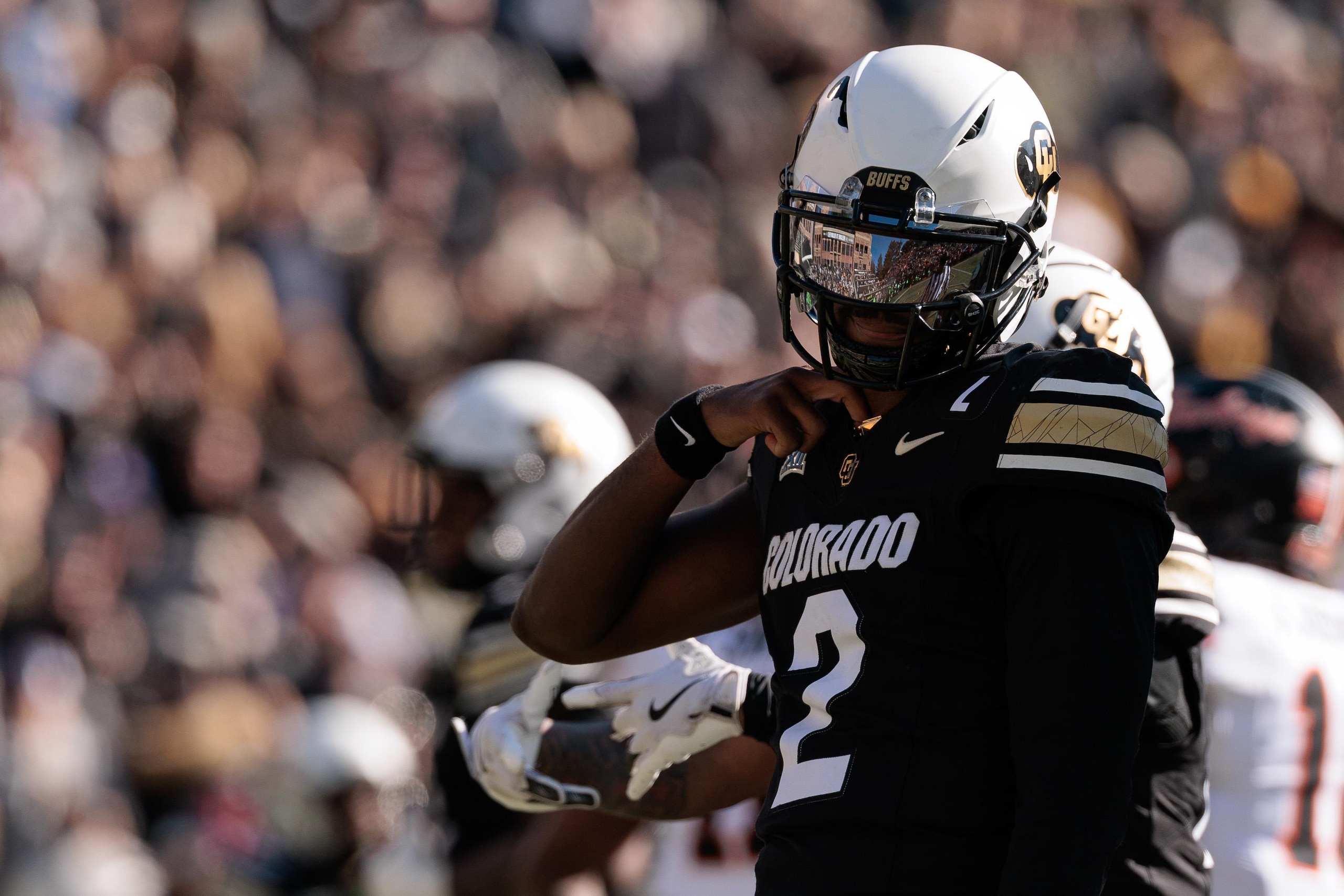
139. Minnesota Vikings (from CLE)
Tyrion Ingram-Dawkins, EDGE, Georgia
Grade: C
The Minnesota Vikings had already done an excellent job adding to their defensive line with the free-agent additions of Jonathan Allen and Javon Hargrave. Georgia’s Tyrion Ingram-Dawkins provides the perfect type of flexible depth based on his ability to play up and down the line of scrimmage. He’s used to playing on a loaded defensive line.
140. Carolina Panthers (from NYG)
Cam Jackson, DT, Florida
Grade: C
The Carolina Panthers spent the draft’s second day beefing up their edge presence with the additions of Nic Scourton and Princely Umanmielen. The fifth-round selection of Cam Jackson gives the team another space-eater to play in a rotation with Derrick Brown, Bobby Brown III and Shy Tuttle.
141. Baltimore Ravens (from TEN)
Carson Vinson, OT, Alabama A&M
Grade: B
Ronnie Stanley’s injury history is troublesome. The Baltimore Ravens know this, thus the selection of Alabama A&M’s Carson Vinson. Vinson is a project with a capital P. He also has legitimate left tackle traits to develop. At worst, the Ravens can use Vinson as a swing tackle to back up both positions, as long as he cleans up his technique.
142. Seattle Seahawks (from MIN)
Rylie Mills, DT, Notre Dame
Strengths: Impressive strength, stacks and sheds, improved as pass-rusher
Weaknesses: Not an explosive athlete, poor lateral movement, can play high and get pushed off the ball, coming off major knee injury
Grade: B
Leonard Williams and Jarran Reed are 30 and 32 years old, respectively. The team did add Byron Murphy II in last year’s first round. Notre Dame’s Rylie Mills brings a completely different and complementary skill set to Murphy.
Mills saved his best for last during his final season on campus. He started to look like a game-wrecker, but an ACL tear ended his collegiate career prematurely.
“While I may be limited physically now, what really matters is the tape,” Mills told reporters at the NFL Scouting Combine. “If you watch my tape, I think my production and what I achieved on the field speaks for itself.”
The defensive lineman plans to be ready for training camp but acknowledged he’ll be on the team’s timeline.
143. Miami Dolphins (from LVR)
Jordan Phillips, DL, Maryland
Strengths: Explodes off the snap, resets line of scrimmage, controls gap, huge weight-room strength
Weaknesses: Can play top-heavy, slow reading keys, lacks production as pass-rusher
Grade: A
The Miami Dolphins took nose tackle Kenneth Grant earlier than he should have been selected in the first round. However, the team desperately needed interior defensive line upgrades. Maryland’s Jordan Phillips is yet another outstanding athlete who is nearly impossible to move at the point of attack. This time, the Dolphins got outstanding value in the fifth round. So, the two selections even out.
The idea of Phillips supersedes who he currently is as a prospect.
Right now, the 6'2", 312-pound Maryland product is primarily viewed as a pure nose tackle who can immediately contribute as part of a rotation. However, his athletic profile suggests he has far more upside in his skill set that still needs to be unlocked.
Phillips is one of the most powerful and explosive athletes in this year's class, yet he didn't register a single sack during his collegiate career. He's only 20 years old, though. Plenty more should be expected from Phillips as he continues to develop.
144. Cleveland Browns (from SEA)
Shedeur Sanders, QB, Colorado
Strengths: Precise and accurate passer, doesn't crumple under pressure or late-game situations, extends plays
Weaknesses: Displays poor pocket awareness, can improve anticipatory reads, ample but not elite arm strength
Grade: C
Deion Sanders stated his son would end up being a top-five draft pick. Instead, he ended up as a fifth-round pick.
The selection almost feels like damage control at this point. Is it great value with the 144th overall pick? Absolutely. No one would have blinked had Cleveland taken Sanders in the first or second rounds.
At this point, though, the team clearly doesn’t believe in him after passing six different times AND selecting another quarterback prospect in Dillon Gabriel, who many believe was a much lesser option. Good pick but poor process.
Clearly, Sanders won’t be immediately forced into the starting lineup unless he earns the spot, and he'll get to learn from an established veteran in Joe Flacco. In Kevin Stefanski's quarterback-friendly scheme, Sanders can thrive.
Sanders isn't the same type of athlete as his father, who was one of the greatest playmakers in NFL history, even as a cornerback. He's more of a point guard on grass. He's a distributor. His game is predicated on precision and accuracy.
To Sanders' credit, he didn't cave under the pressure of expectations. He went to Jackson State and dominated at the FCS level by throwing for 70 touchdowns over two seasons. Despite roster limitations at Colorado after transferring, Sanders still threw for over 7,300 yards in two seasons and became the 2024 Big 12 Offensive Player of the Year.
145. Philadelphia Eagles (from NYJ)
Mac McWilliams, CB, UCF
Grade: C
Once again, the Philadelphia Eagles dipped into the secondary market with the selection of UCF cornerback Mac McWilliams. The team already drafted safety Andrew Mukuba three rounds earlier. The team potentially has four long-term pieces in place with Quinyon Mitchell, Cooper DeJean, Mukuba and McWilliams. The fifth-round rookie fits nicely because of his competitive nature and aggressiveness.
146. New England Patriots (from CAR)
Bradyn Swinson, EDGE, LSU
Strengths: Good bend and power, varied hand usage, never stops his pass rush, plays with good leverage against run game
Weaknesses: Lacks elite first-step quickness, needs to play more physical and violent overall
Grade: B+
The New England Patriots are crushing this year’s draft process under their new leadership group. They’re identifying areas where they can improve and are consistently checking them off in each round while adding good value and legitimate talent. LSU’s Bradyn Swinson just may be the team’s second-best edge-rusher.
Swinson finally came into his own at his second collegiate stop and final season on campus. The Oregon transfer became a highly disruptive player at LSU and finished second among edge-rushers in this year's draft class with a 20.1 percent pressure rate, per The 33rd Team.
Swinson's consistent motor and hand usage went a long way in making him a second-team All-SEC selection.
147. San Francisco 49ers (from WAS)
Jordan James, RB, Oregon
Strengths: Strong zone runner, decisive cuts, runs behind his pads, willing blocker
Weaknesses: Lacks top gear, sometimes predetermines aiming points, lacks shiftiness, marginal receiver
Grade: B
It’s impossible to doubt a running back draft pick by Kyle Shanahan. The Shanahan system is well-known for its ability to churn out quality ball-carriers. Oregon’s Jordan James is next in line. His run style is a perfect fit in this scheme.
In a world where advanced metrics have become commonplace, it's hard to overlook when a prospect does well on the field but his production doesn't match his athletic profile.
James tested poorly prior to the draft, but he's coming off a season where he ran for 1,267 yards against Big Ten competition. What the 21-year-old lacks in explosive traits, he makes up for with decisive movements, short-area burst and powerful runs.
148. Los Angeles Rams (via CHI)
Ty Hamilton, DL, Ohio State
Grade: C+
Kobie Turner and Braden Fiske are two-thirds of an impressive Los Angeles Rams starting defensive line. Tyler Davis is a smaller option working over the center. Yet the Rams replicated that option with Ohio State’s Tyler Hamilton. Clearly, the team has a type. Furthermore, both of those latter names provide flexibility to play multiple techniques along the front.
149. Dallas Cowboys
Jaydon Blue, RB, Texas
Strengths: Elite top-end speed, dynamic outside-zone runner, viable target out of the backfield
Weaknesses: Small frame, lacks power as a runner, history of fumbles
Grade: B
The Dallas Cowboys were smart not to go into the 2025 season with Javonte Williams and Miles Sanders as their primary options at running back. Texas’ Jaydon Blue may not be lead-back material, but he gives the Cowboys a different type of weapon in the backfield.
Blue is fast. He may not be as fast as he thinks he is, but he is still plenty fast.
The 21-year-old prospect didn't crack the 4.2-second barrier in the 40-yard dash. However, his 4.38-second effort was the second-fastest among running backs at the NFL Scouting Combine.
Blue later found out that he was dealing with a Grade 2 groin strain at the time, which means he may have even more juice when he's back to full strength.
150. Miami Dolphins
Jason Marshall Jr., CB, Florida
Grade: C
The Miami Dolphins didn’t have a lot of early draft capital and decided to spend their two early picks on securing the trenches. The continued to do so earlier in the fifth round with the selection of Maryland’s Jordan Phillips. But the squad’s secondary needed help, too, especially if Miami eventually trades Jalen Ramsey. Florida’s Jason Marshall Jr. isn’t an immediate replacement as a fifth-round pick. He does bring size and physicality to the position just in case.
151. Indianapolis Colts
DJ Giddens, RB, Kansas State
Grade: C
Jonathan Taylor is the focal point of the Indianapolis Colts offense. He’ll continue to be. The Colts had significant issues with the depth behind their starting ball-carrier, though. Kansas State’s D.J. Giddens is a shifty back who amassed 2,569 yards over the last two seasons. He’ll be viewed as the change-of-pace when Taylor needs a breather.
152. Dallas Cowboys (from ARI)
Shemar James, LB, Florida
Grade: C+
The Dallas Cowboys defense is the island of misfit toys. It’s where failed first-rounders tend to go. Case in point, Kenneth Murray Jr. is projected as a starting linebacker this year. He’s always been a physical defender. The same applies to fellow Cowboy Jack Sanborn (undrafted in 2022). Florida’s Shemar James has athletic limitations as well, but he provides another option among a patchwork group.
153. Cincinnati Bengals
Jalen Rivers, IOL, Miami
Strengths: Thickly built, long arms, large hands, strong anchor, moves people in the run game
Weaknesses: Tends to play upright and stiff, extensive injury history
Grade: A
Don’t be surprised if Miami’s Jalen Rivers finds his way into the Cincinnati Bengals’ starting offensive line as a rookie, not as an injury-replacement either. The Bengals currently have Cordell Volson and Cody Ford as their projected starters at guard. Both can be upgraded. Rivers has a chance to do so.
If North Dakota State's Grey Zabel is the most versatile offensive lineman in this year's draft, Rivers isn't far behind him. He started games at guard and left tackle during his collegiate career.
"All of them. All five, including center," Rivers said when asked at what position he started beginning in high school. "When you go from right to left, you have to flip the field in your head. Your foot placement is the opposite, and the hand movement initially is different right off the snap. It does take time to get down.
154. New York Giants (from SEA)
Marcus Mbow, IOL, Purdue
Strengths: Hand usage, adept at multiple pass sets, aggressive blocker with a nasty streak
Weaknesses: Average build and length, middling lower-body strength
Grade: B
The New York Giants’ selection of Purdue’s Marcus Mbow can possibly upgrade either spot along the right side of the offensive line. Mbow is a right tackle by trade, but his best position could very well be right guard. The Giants are weak at both positions.
Mbow is a developmental prospect who had evaluators and NFL teams all over the board when it came to his long-term position.
"Sometimes, they've asked me if I've played guard before," the junior prospect said in interview with SB Nation's Jacob Infante. "They've asked me if I can snap. Some teams want me at tackle. I know I can play pretty much all three. I feel good about the position, and I feel like I'm the best at tackle."
155. Miami Dolphins (from DEN)
Dante Trader Jr., Safety, Maryland
Strengths: Good feet and change-of-direction movements, standout run defender, quick downhill trigger, solid coverage with ball in front of him
Weaknesses: Not an explosive athlete with speed concerns, allows too much separation
Grade: B
Five picks earlier, the Miami Dolphins addressed cornerback with the selection of Florida’s Jason Marshall Jr. to possibly offset the loss of Jalen Ramsey. Ramsey isn’t gone, though. Safety Jevon Holland is after signing a free-agent deal with the New York Giants. Maryland’s Dante Trader Jr. brings a completely different skill set compared to Holland, but he’s a physical presence to help fill the void at safety.
Trader was a two-sport athlete at the University of Maryland. The gridiron standout also joined the lacrosse team during the 2023 campaign and finished third on the squad with 14 caused turnovers (that's 20 total between the two sports, for those who might be counting).
"I'll lay it out here for anybody that wants to do it, is considering it or just wants to know and get the elephant out of the room," Trader said two years ago after going back to lacrosse and playing again. "This is one of the harder things I've done, mentally and physically."
156. Kansas City Chiefs (from PIT)
Jeffrey Bassa, LB, Oregon
Strengths: Comfortable working in space, fluid hopes to drop into coverage, decent at slipping blocks
Weaknesses: Uncertain when to trigger downhill, can be engulfed by blockers
Grade: A
Oregon’s Jeffrey Bassa can immediately assume a role in the Kansas City Chiefs’ defense as a sub-package linebacker to get Leo Chenal off the field and help in coverage.
Bassa was recruited as a safety. He converted to linebacker as a true freshman. His style of play reflects the transition.
Even at 232 pounds now, Bassa easily falls into the category of a run-and-chase linebacker. He's not going to be mistaken for an old-school ‘backer who's going to demolish ball-carriers as a downhill defender. But he can carry a tight end and even some slot receivers all the way down the seam in pass coverage. Therein lies the tradeoff when it comes to Bassa's play style.
157. Tampa Bay Buccaneers
Elijah Roberts, EDGE, SMU
Grade: C+
The Tampa Bay Buccaneers’ Day 3 selections of David Walker and SMU’s Elijah Roberts are both listed as edge-defenders. But they’re completely different talents. Walker is a pass-rusher who is going to harass opposing quarterbacks. Roberts is more likely to play defensive end, similar to Logan Hall. He can be a 4i- or 5-technique in Todd Bowles’ system.
158. Los Angeles Chargers
KeAndre Lambert-Smith, WR, Auburn
Grade: B
KeAndre Lambert-Smith’s inclusion to the Los Angeles Chargers’ lineup may be the beginning of the end for former first-round pick Quentin Johnston. Ladd McConkey is a slot superstar. Fellow rookie Tre Harris can come in and be the team’s X-receiver. Lambert-Smith brings a vertical presence, with his 4.37-second 40-yard-dash speed. Johnston should be looking over his shoulder.
159. Green Bay Packers
Collin Oliver, LB, Oklahoma State
Grade: C
The Green Bay Packers listed Oliver as a linebacker. He’s an edge-defender. Oliver played in only two games last season because of an injury. However, he posted 16 tackles for loss and six sacks in 2023. The former Cowboy even posted 11.5 sacks during the 2021 campaign. The Packers are taking a shot on that previous version showing up and getting after quarterbacks.
160. San Francisco 49ers (from MIN)
Marques Sigle, Safety, Kansas State
Grade: C+
After back-to-back picks on the offensive side of the ball, the San Francisco 49ers return to their previous plan of addressing the defense at nearly every turn. The Niners do have Ji’Ayir Brown and Malik Mustapha at safety after losing Talanoa Hufanga in free agency. Richie Grant joined the team this offseason as well. Kansas State’s Marques Sigle can bring the type of physical presence it lost in Hufanga.
161. Philadelphia Eagles (from HOU)
Smael Mondon Jr., LB, Georgia
Grade: C+
The Philadlephia Eagles have now drafted a pair of linebackers. Let’s take a moment to let the shock wear off since the organization rarely prioritized the position in the past. But that approach is clearly changing with the Eagles’ financial investment in Zack Baun, then a first-round selection of Alabama’s Jihaad Cambell. Granted, Nakobe Dean is still on the roster as well. But general manager Howie Roseman couldn’t resist selecting another Georgia defender in Smael Mondon Jr., who provides a coverage option.
162. New York Jets (from PIT)
Francisco Mauigoa, LB, Miami
Grade: C
Miami’s Francisco Mauigoa brings legitimate physicality to the New York Jets linebacker corps. He’s not the best all-around athlete, but he’s a smart and instinctual player. He fits in as a linebacker very similar to Chazz Surratt, who hasn’t given the team much through the first three years of his Jets career.
163. Carolina Panthers (from BAL)
Mitchell Evans, TE, Notre Dame
Strengths: Plays through contact, strong hands, uses body well to box out defenders, adequate in-line option
Weaknesses: Not overly explosive, marginal threat after the catch, significant injury history
Grade: A
The Carolina Panthers waited, but they may have landed their next starting tight end in the fifth round. Notre Dame’s Mitchell Evans should pair nicely with Ja’Tavion Sanders since the former can actually play in line.
At the start of the 2023 season, Evans looked like a future first-round pick. Unfortunately he suffered a torn ACL eight games into the campaign, which limited him through the early portion of the ‘24 schedule.
Evans never quite built upon his previous momentum. He pieced together a solid 2024 campaign, but he looked like a less dynamic threat. He caught 14 more passes than he did the year prior, yet he finished with one fewer yard.
Being two years removed from the injury should provide a proper indication of what the tight end can become.
164. Pittsburgh Steelers (from KC)
Yahya Black, DL, Iowa
Grade: C+
With the additions of Derrick Harmon in the first round and Iowa’s Yahya Black in the fifth, the Pittsburgh Steelers are going to be significantly bigger and stronger along their defensive line. Keeanu Benton is a talented, young nose tackle. He’s not a traditional Steelers nose, though. Black can be, because he has the power and length to eat up space, stack blockers and shed violently.
165. Los Angeles Chargers (from PHI)
Oronde Gadsden II, TE, Syracuse
Strengths: Former wide receiver with expanded route tree, big and athletic target over the middle, catches through contract
Weaknesses: Not much of an in-line option, doesn’t have much wiggle when working in space
Grade: B
Tight end was viewed as a major need area for the Los Angeles Chargers during the predraft process. The organization waited until the fifth round and found a legitimate weapon in Syracuse’s Oronde Gadsden II.
Gadsden grew into a tight end. Syracuse’s system still allowed him to be a glorified wide receiver as a power slot, but the two-time All-ACC selection did officially make the transition in 2022, where he went from 215 pounds to 243 pounds.
Gadsden enters the league as a bigger and more productive prospect than his father, who ended up playing seven years in the NFL as a wide receiver.
166. Seattle Seahawks (from CLE)
Tory Horton, WR, Colorado State
Strengths: Smooth route-runner, speed creates threat at every level, punt return value
Weaknesses: Lacks strength to consistently win against more physical corners or in contested situations
Grade: B
The Seattle Seahawks wide receiver group will look so drastically different this fall. The team moved on from DK Metcalf and Tyler Lockett. However, Tory Horton’s game is reminiscent of Lockett’s coming out of Kansas State.
Had Horton flipped his junior and senior seasons, he may have been more highly regarded throughout the draft cycle.
In 2023, Horton finished fifth in the nation with 96 receptions. He also posted his second of back-to-back 1,100-receiving-yard campaigns.
Unfortunately, the two-time first-team All-Mountain West selection suffered a knee injury in 2024 that limited him to only six games. However, he still ran a 4.41-second 40-yard dash at the NFL Scouting Combine.
167. Tennessee Titans (from KC)
Jackson Slater, IOL, Sacramento State
Strengths: Good lower-body flexibility coupled with strong base, quick off the ball, moves well in space
Weaknesses: Lack of length compounded by poor hand placement, quick losses
Grade: C
The Tennessee Titans are covering their bases along the offensive interior, specifically center after veteran Lloyd Cushenberry III suffered a torn Achilles in Week 9 of last season. Sacramento State’s Jackson Slater provides the team with a backup plan.
Slater called his shot prior to the draft. He plans to play center in the NFL despite primarily playing left guard in college. He also has left tackle experience.
“I think center will be my best position going forward, a mix of desirable measurements and football IQ,” he told Field Gulls’ Alexandre Casto. “I think it’s a place I’ll thrive.”
168. Philadelphia Eagles
Drew Kendall, IOL, Boston College
Strengths: Moves well, good body control, understands how to play the position
Weaknesses: Lacks power, can be thrown around a bit, only started at center
Grade: C
Cam Jurgens just signed a contract extension with the Philadelphia Eagles. They’re not looking for another starting center. However, Boston College’s Drew Kendall can come in, back up all three of the interior spots and give the Eagles a well-coached and NFL-ready option just in case.
If Kendall's last name sounds familiar, it's because his father, Pete, played 13 seasons in the NFL with the Seattle Seahawks, Arizona Cardinals, New York Jets and Washington Football Team.
"So ever since fourth grade through the end of high school, he was my offensive line coach." Kendall said of his father prior to last season. "Just being able to soak in that knowledge from him, I think, has really helped me advance my game from such a young age."
169. Chicago Bears
Zah Frazier, CB, UTSA
Grade: C
The Chicago Bears are bringing in an elite height-weight-speed athlete in UTSA cornerback Zah Frazier. The 6’3” cornerback ran a 4.36-second-yard dash at this year’s NFL Scouting Combine. Frazier started only one full season at the FBS level, though he capitalized with six interceptions.
170. Buffalo Bills
Jordan Hancock, CB, Ohio State
Grade: C
With Jordan Hancock’s selection, the Buffalo Bills have now taken two cornerbacks in this year’s class, include first-rounder Maxwell Hairston. Depth was a significant corner entering the weekend with Christian Benford and Taron Johnson being the top two options and the latter is a nickel. Hairston will move in as Benford’s bookend, while Hancock should be the team’s fourth option.
171. Detroit Lions (from NE)
Miles Frazier, IOL, LSU
Strengths: Powerful and wide frame to anchor in pass set and move defenders in run game, excellent short-area puller, positional versatility
Weaknesses: Middling overall movement skills, overextended at times, doesn't always use hands effectively
Grade: A
Once again, the Detroit Lions know what they like. LSU’s Miles Frazier is exactly what they like, because he’s another physical and versatile blocker to create even more quality depth along an elite offensive line.
Frazier had to go from New Jersey to Florida to Louisiana to find his way to the NFL.
The 6'6", 317-pound blocker originally played for the Florida International Panthers, where he spent two seasons as a left tackle. He then transferred to LSU and found a home at guard.
While Frazier is best-suited at guard, he does bring starting experience at both guard and tackle spots. His journey may have not been a straight and obvious path, but Frazier arrived at the same destination because he earned the right to get there.
172. Los Angeles Rams
Chris Paul Jr., LB, Ole Miss
Strengths: Good athlete with excellent range, natural ball skills, reliable tackler
Weaknesses: Lacks length and lower-body strength, need to trust eyes in coverage
Grade: A
The Los Angeles Rams simply know how to draft. They’ve been one of the best in the league during Les Snead’s tenure at finding quality talent and contributors in the middle-to-late rounds. Ole Miss’ Chris Paul Jr. is another in a long line of quality picks. Paul has a good chance at starting.
Don't mistake Paul for a basketball player. In fact, don't call him Chris at all. He goes by "Pooh."
"My friends started picking on me for like two weeks straight," Paul told The 33rd Team's Tyler Brooke. "As I got older, the nickname started growing on me, and now everyone refers to me as Pooh."
The nickname extends beyond familial ties. It's shaped who he is as a person and player.
"My [six older] sisters really helped mold me into the man I am today by showing me not to be afraid to express feelings towards anyone," Paul said. "And to just never be shameful of who I am and to just be myself. Even when I go home, they're always making sure to tell me to keep being myself.
173. Buffalo Bills
Jackson Hawes, TE, Georgia Tech
Grade: C
The Buffalo Bills wanted a blocking tight end, and they landed the best one with the 173rd overall pick. Georgia Tech’s Jackson Hawes won’t provide a lot as a receiver, but he’s going to do his job and do it very well–which is the dirty work at a position where doing so doesn’t hold much value.
174. Arizona Cardinals
Denzel Burke, CB, Ohio State
Strengths: Smooth mover, physical against the run, scheme diverse
Weaknesses: Far too aggressive at times and takes unnecessary risks, sometimes high through breaks
Grade: B
The Arizona Cardinals have made five draft picks. All five fall on the defensive end of the ball. The Cardinals are taking big swings as cornerback after drafting Michigan’s Will Johnson in the second round. Burke has similar upside.
Burke looked like a potential first-round pick after an outstanding junior campaign where he was named first-team All-Big Ten. Instead, he decided to return to school for another year, which turned out to be a great decision since the Buckeyes won the national championship.
However, Burke didn't maintain his draft status throughout the process. Instead, he seemed to take a half-step back this past season and looked much more like the 2022 version of himself.
Burke is still plenty talented, but he had a chance to be one of the top cornerbacks in the class.
175. Seattle Seahawks
Robbie Ouzts, TE, Alabama
Grade: C
The run on blocking tight ends has officially started early. With the Buffalo Bills taking Georgia Tech’s Jackson Hawes two picks earlier, the Seattle Seahawks decided to add Alabama’s Robbie Ouzts while they could. Although in this case, the Seattle Seahawks plan to move Ouzts to fullback where he can be a lead blocker.
176. New York Jets (from BAL)
Tyler Baron, EDGE, Miami
Grade: C
The New York Jets have now addressed all three levels of their defense, beginning with defensive backs Azareye’h Thomas and Malachi Moore, as well as linebacker Francisco Mauigoa. Miami’s Tyler Baron provides some pass-rush punch. He’s not the most explosive or flexible option, though he has a solid plan and technique to create pressure.
Sixth Round
3 of 4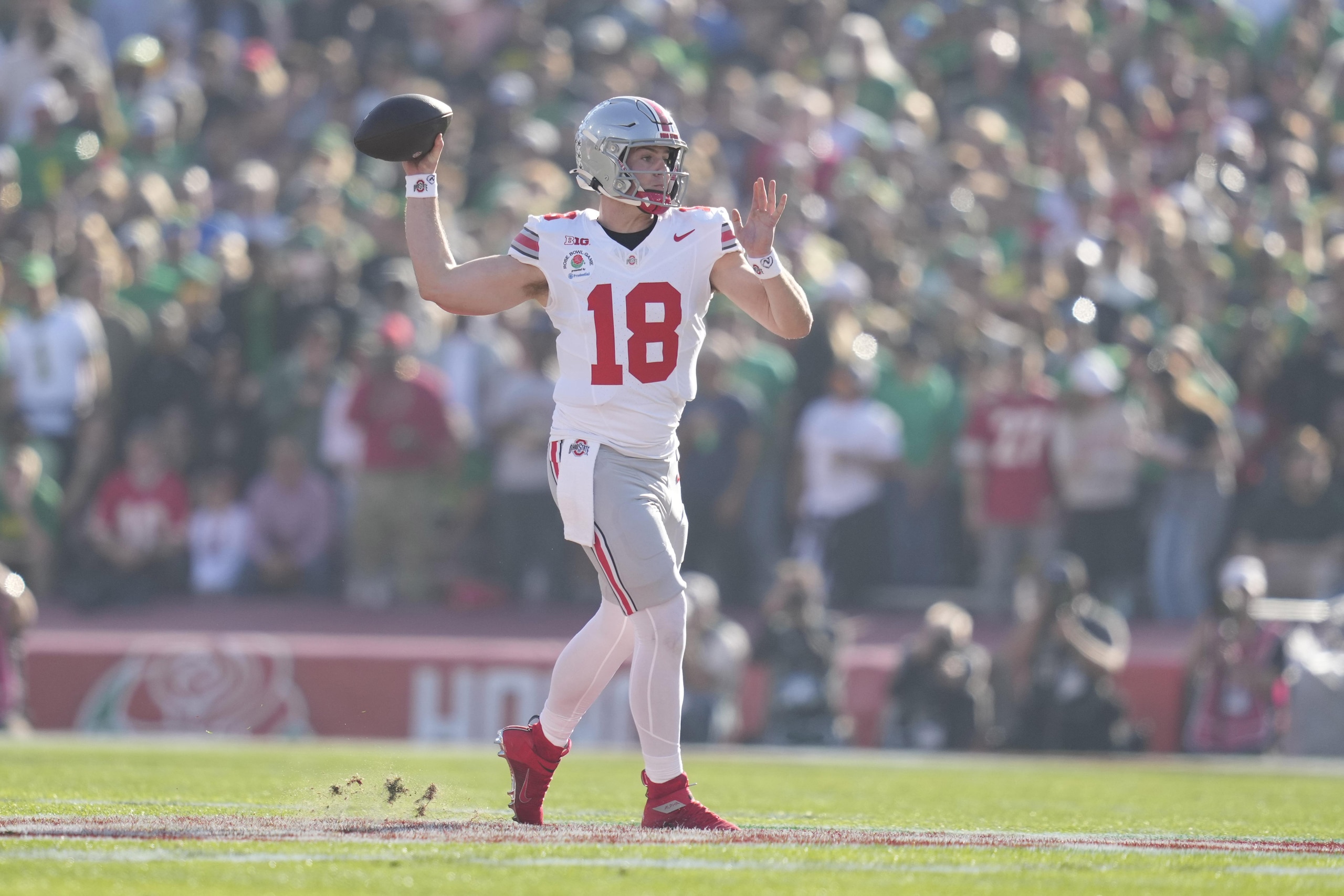
177. Buffalo Bills (from NYG)
Dorian Strong, CB, Virginia Tech
Strengths: Strong in press-man, redirects receivers, always looking to make plays on the ball, secure tackler
Weaknesses: Can play high through his transitions, grabby, takes too many ill-advised chances
Grade: B
The Buffalo Bills aren’t messing around in the secondary. They’ve now selected three cornerbacks after grabbing Virginia Tech’s Dorian Strong at the top of the sixth round. General manager Brandon Beane saw a problem area and has thoroughly addressed it.
Today's game allows some leeway in how cornerbacks play.
At one time, everyone wanted to be the next Deion Sanders or Darrelle Revis—pure shutdown corners who can match anyone in one-on-one coverage. Today's game relies far more heavily on rerouting wide receivers, particularly in the contact zone, and dropping into elaborate coverages in an attempt to confuse opposing quarterbacks.
Fortunately, Strong thrives in each of those areas.
178. Baltimore Ravens (from TEN)
Bilhal Kone, CB, Western Michigan
Grade: C
The Baltimore Ravens started this draft off by selecting defensive back Malaki Starks in the first round. At the start of the sixth, the team doubled back to land Western Michigan cornerback Bilhal Kone. Kone is 6’1”, but he also has legit top-end speed and short-area quickness. The Baltimore Ravens are an aggressive defense, though Kone can thrive in zone situations.
179. Miami Dolphins (from HOU)
Ollie Gordon II, RB, Oklahoma State
Strengths: Powerful and punishing running style, buildup speed, viable receiving option
Weaknesses: Often gets shut down when he can't get downhill, doesn't have much wiggle
Grade: C
Fit is vital in a player's success or failure at the highest level. Oklahoma State’s Ollie Gordon II isn’t the most explosive runner. However, the Miami Dolphins’ zone scheme should negate his lack of twitch and allow him to pick and choose his way through the defense.
Imagine going from being the nation's leading rusher to producing almost less than half the following season while looking nowhere near as effective. That was Gordon's situation last year.
In 2023, Gordon was the Doak Walker Award winner and a unanimous All-American after rushing for 1,732 yards. He didn't even manage 900 yards as a junior.
Oklahoma State finished 115th nationwide in rushing yardage last season, which signals issues with the entire unit. But Gordon didn't help elevate his offense, either.
180. Las Vegas Raiders
JJ Pegues, DL, Ole Miss
Strengths: Strong base and upper body, holds the point well, uses hands, fullback flexibility
Weaknesses: Lacks explosive get-off, poor pad level, marginal pass-rush upside
Grade: B
The 309-pound JJ Pegues is the lesser-known two-way player coming into this year's draft class. Travis Hunter went second overall to the Jacksonville Jaguars. Pegues had to wait until the sixth round. The Las Vegas Raiders can use him on both sides of the ball. .
The 23-year-old is a legitimate defensive tackle prospect and a top fullback option. Last season, he ran for seven touchdowns while racking up 42 total tackles and 3.5 sacks. The idea of Ashton Jeanty running behind Pegues is frightening.
181. Philadelphia Eagles (via LAC)
Kyle McCord, QB, Syracuse
Strengths: Operates offense efficiently, compact and quick release, pure pocket passer
Weaknesses: Not much of a playmaker, struggles when facing pressure, compounds mistakes by trying to do too much
Grade: B
The Philadelphia Eagles appeared set at quarterback with Jalen Hurts as the starter and Tanner McKee earning the backup job. Kyle McCord’s selection creates flexibility. McKee could be traded eventually and get an opportunity elsewhere, while the incoming rookie can build his profile as the Eagles’ backup.
McCord became the de facto scapegoat after the Ohio State Buckeyes suffered a disappointing 2023 campaign. He then transferred to Syracuse as a result.
While the Buckeyes did win the national championship this past season with Will Howard leading the way, McCord rebounded strongly by leading the FCS with 4,779 passing yards. That helped him answer a lot of his previous critics.
182. New England Patriots (via DET)
Andres Borregales, PK, Miami
Grade: C
The first specialist in the 2025 NFL Draft came off the board with the 182nd overall pick. Miami’s Andres Borregales is now a member of the New England Patriots. Clearly, the Patriots are looking to get better in every single area. Borregales went 15-of-19 over the last two seasons on field-goal attempts over 40 yards.
183. Tennessee Titans (via BAL)
Marcus Harris, CB, California
Grade: C
The Tennessee Titans waited until the sixth round to address cornerback despite serious depth issues at the premium position. Marcus Harris may have been the third-best defensive back on Cal’s roster this past season with Nohl Williams and Craig Woodson already being drafted. However, he brings good burst and ball skills to the lineup.
184. New Orleans Saints (from WAS)
Devin Neal, RB, Kansas
Strengths: Patient, good vision, downhill runner, productive, three-down potential
Weaknesses: Lacks top gear, won’t make too many miss, not an overly creative runner
Grade: A
In an absolutely loaded running back class, the New Orleans Saints found an outstanding backfield option in Kansas’ Devin Neal. The rookie can legitimately take pressure off the aging Alvin Kamara and possibly steal some reps.
When a player leaves a program as its all-time leading rusher, everyone should take notice. That's particularly the case when that program also featured Gale Sayers and John Riggins.
Neal’s 4,343 yards easily surpassed anyone who previously wore a Jayhawks uniform. The 21-year-old posted three-straight 1,000-yard campaigns during his four seasons and ran for 1,200-plus yards and 16 touchdowns in each of the last two.
185. Pittsburgh Steelers (from SEA)
Will Howard, QB, Ohio State
Strengths: Sturdy frame and functional mobility, experienced starter, throws well on the move
Weaknesses: Streaky passer, can miss throws because of poor lower-body mechanics, will try to force passes even if nothing is available
Grade: C
The Pittsburgh Steelers should have been in the quarterback market earlier. A sixth-round selection isn’t going to truly challenge for the starting job. Though Ohio State’s Will Howard certainly fits what Pittsburgh likes at quarterback with his big frame, work ethic and toughness as a runner.
It's difficult to look at Howard and not see a quarterback whom coaches instantly love.
At 6'4" and 236 pounds, Howard has a traditional quarterback frame. The 23-year-old is a physical and capable runner, with 577 rushing yards and 16 touchdown runs over the last two seasons. He's also experienced with 43 career starts. He understands what he's seeing with opposing defenses and situational football. And Howard capably led the nation's most talented roster to a national championship this past season.
From the pocket, Howard improved each year. He's not always consistent with his ball placement, but he made some big throws throughout his collegiate career.
186. Baltimore Ravens (from NYJ)
Tyler Loop, PK, Arizona
Grade: C
The Baltimore Ravens choosing Arizona’s Tyler Loop signals the end for Justin Tucker. Tucker’s play slipped on the field, and the off-field allegations likely hastened this move.
Loop has a big leg, going 6-of-9 from over 50 yards last season, including a 62-yard conversion.
187. Houston Texans (from MIN)
Jaylen Reed, Safety, Penn State
Grade: C
The Houston Texans seemingly struck gold last season with the selection of Calen Bullock, who has some bright flashes as a rookie. The team also brought in C.J. Gardner-Johnson this offseason, but he’s also been a hybrid as a safety/nickel. Penn State’s Jaylen Reed brings more traditional safety traits to eventually replace Jimmie Ward or M.J. Stewart.
188. Tennessee Titans (from DAL)
Kalel Mullings, RB, Michigan
Grade: C
Kalel Mullings emerged as the true lead back in Michigan last season despite the more heralded Donovan Edwards in the same backfield. Mullings saw a vastly increased workload and nearly eclipsed 1,000 rushing yards. For the Tennessee Titans, he gives head coach Brian Callahan more options in the backfield alongside Tony Pollard and Tyjae Spears.
189. Indianapolis Colts
Riley Leonard, QB, Notre Dame
Strengths: Mobility, works the middle of the field relatively well, shows good touch to layer throws
Weaknesses: Lacks lower-body mechanics and arm strength to drive ball outside numbers, gets rattled by pressure
Grade: C
The Indianapolis Colts understand they’re not settled at quarterback. Anthony Richardson’s development will likely decide if general manager Chris Ballard and head coach Shane Steichen remain in place after this season. So, the duo are hedging their bets by bringing in veteran Daniel Jones and Notre Dame’s Riley Leonard, who fits the same archetype at the position.
Notre Dame's offensive approach in the College Football Playoff said a lot about where the program currently stands and who Leonard is as a player.
The quarterback ran the ball 49 times against the Georgia Bulldogs, Penn State Nittany Lions and Ohio State Buckeyes. Leonard became the focal point of the offense, especially early in those contests.
That approach speaks to his toughness and how he can be a playmaker thanks to his mobility. However, it also underscores that Leonard has marginal arm talent and isn't a premium thrower.
190. Indianapolis Colts (from LAR)
Tim Smith, DL, Alabama
Grade: C
Whenever Grover Stewart is off the field, the Indianapolis Colts struggle greatly to hold the point of attack. Alabama’s Tim Smith provides the team with a powerful 1-technique to provide depth.
However, Smith’s strength is erratic. If he plays low and relies on his technique, he’s nearly impossible to move. When he tries to do more and gets caught looking in the backfield, he can be easily moved off his spot.
191. Philadelphia Eagles (from DEN)
Myles Hinton, OT, Michigan
Grade: C
One of the reasons the Philadelphia Eagles are always so good in the trenches is they’re never content with what’s already on the roster. General manager Howie Roseman already drafted center Drew Kendall earlier in the class. But Kendall can’t play offensive tackle. Michigan’s Myles Hinton can and gives the team another developmental option behind Jordan Mailata and Lane Johnson.
192. Seattle Seahawks (from CLE)
Bryce Cabeldue, IOL, Kansas
Grade: C
The Seattle Seahawks began their draft by selecting the class’ most versatile blocker in North Dakota State’s Grey Zabel. He’ll likely settle at guard. The inclusion of Kansas’ Bryce Cabeldue provides guard/tackle flexibility. Left tackle Charles Cross should be looking for a massive contract extension, while Abe Lucas’ injury history at right tackle is a tad scary. The Seahawks needed more than one new blocker and have gotten two (so far).
193. Cincinnati Bengals
Tahj Brooks, RB, Texas Tech
Grade: C+
The Cincinnati Bengals like a certain type of running back and Texas Tech’s Tahj Brooks is a big, physical back to fit in their heavy man-gap blocking scheme. He’s a near-220-pound ball-carrier with over 3,000 combined rushing yards over the last two seasons.
194. Jacksonville Jaguars (from SEA)
Jalen McLeod, LB, Auburn
Grade: C
Auburn’s Jalen McLeod adds to a linebacker room that will also feature rookie Jack Kiser. In this particular case, McLeod has a history playing off the edge with 22.5 sacks over his collegiate career, which should provide more punch to the Jaguars’ pass rush.
195. Chicago Bears (from LAR)
Luke Newman, IOL, Michigan State
Grade: C
The Chicago Bears already did so much to improve their offensive interior with the acquisitions of Joe Thuney, Drew Dalman and Jonah Jackson. The team also got itself a swing tackle in Ozzy Trapilo with its second of three second-round picks. Michigan State’s Luke Newman has a chance to provide quality depth along the rebuilt interior. He’s not the most powerful blocker, but he understand angles and working in a zone scheme.
196. Detroit Lions (from TB)
Ahmed Hassanein, DL, Boise State
Strengths: Multidimensional athlete, powerful, plays with good pad level, constant effort
Weaknesses: Not explosive off the snap, can get better shedding blocks, hand usage needs plenty of work
Grade: A
Boise State’s Ahmed Hassanein became the first Egyptian drafted into the NFL after racking up 33 tackles for loss and 22 sacks over the last two seasons. His nonstop motor, toughness and immense upside make him an ideal fit for the Detroit Lions defense.
"I left the United States when I was about seven years old,” the two-time first-team All-Mountain West selection told The Draft Network’s Justin Melo. “When I went to Egypt, I had to learn how to speak Arabic. I started speaking the language and learning the Arabic way.
“When my half-brother visited Egypt, it had been about 10 years. … He saw me and asked me to come play high school football for him in America. He was a high school football coach and English teacher. I was doing neither of those things at that time.
“I started playing football at 18 even though I didn’t speak any English yet.”
197. Houston Texans (from DEN)
Graham Mertz, QB, Florida
Grade: D
The Houston Texans wanted a backup quarterback and got one in Florida’s Graham Mertz. Here’s the problem: Other quarterbacks at least provided more upside–whether we’re discussing Texas’ Quinn Ewers, Memphis’ Seth Henigan, Indiana’s Kurtis Rourke or North Dakota State’s Cam Miller.
198. Green Bay Packers
Warren Brinson, DL, Georgia
Grade: C
Surprisingly, the Green Bay Packers waited into the sixth round to address the defensive line despite losing TJ Slaton in free agency and uncertainty surrounding former first-round picks Devonte Wyatt and Lukas Van Ness. Georgia’s Warren Brinson isn’t necessarily a replacement for Slaton since he’s at his best when he’s able to shoot gaps and reestablish the line of scrimmage.
199. Los Angeles Chargers
Branson Taylor, OT, Pittsburgh
Grade:C
A season ago, rookie right tackle Joe Alt missed a few games for the Los Angeles Chargers because of a high ankle sprain. Two seasons ago, left tackle Rashawn Slater suffered a season-ending rupture biceps. Obviously, the Chargers are set with stud bookeneds. However, the team needed a swing tackle just in case something were to happen again. Pittsburgh’s Branson Taylor fills the void.
200. Jacksonville Jaguars (from CLE)
Rayuan Lane III, Safety, Navy
Grade: C
Every team knows exactly what they’re going to get when drafting a prospect from one of the service academies. Each is disciplined, tough and intelligent. They had to balance a heavy academic workload as well as the daily grind of being a Division I athlete.
The Jacksonville Jaguars’ selection of Navy safety Rayuan Lane brings good instincts as well as the potential of being a four-core special teamer.
201. Minnesota Vikings (from LAR)
Kobe King, LB, Penn State
Grade: C
The Minnesota Vikings came into the draft with the league’s lowest number of picks. They’ve already addressed the trenches and wide receiver. Penn State’s Kobe King provides depth at linebacker behind Ivan Pace and Blake Cashman.
202. Minnesota Vikings (from LAR)
Gavin Bartholomew, TE, Pittsburgh
Grade: C
The Minnesota Vikings are officially done for the 2025 NFL draft with back-to-back picks toward the end of the sixth round. The team decided it couldn’t leave the event without Pittsburgh tight end Gavin Bartholomew, who can immediately come in as the backup behind T.J. Hockenson and over Josh Oliver.
203. Baltimore Ravens
LaJohntay Wester, WR, Colorado
Grade: B
With all of the discussion surrounding Colorado teammates Travis Hunter and Shedeur Sanders, LaJohntay Wester didn’t receive much attention despite producing 2,099 yards over the last two seasons. He’s quick off the line to create separation, which should fit in well with the Baltimore Ravens’ RPO game.
204. Dallas Cowboys (from BUF)
Ajani Cornelius, OT, Oregon
Grade: C
The Oregon Ducks had awesome offensive tackle bookends over the last two seasons. Josh Conerly Jr. found his way into this year’s first round, while right tackle Ajani Cornelius fell to the sixth. Cornelius has a clear pathway to eventually becoming a starter with the Dallas Cowboys, though. If the Cowboys need to create salary-cap space, as they seemingly do every offseason, right tackle Terence Steele could very well be released, thus giving Cornelius an opportunity. Cornelius alongside Tyler Booker is the Cowboys’ likely starting right side at some point in the future.
205. Washington Commanders
Kain Medrano, LB, UCLA
The Washington Commanders got value in two phases with one sixth-round pick. UCLA’s Kain Medrano is an outstanding athlete. He posted a 9.83 relative athletic score prior to the draft, according to Kent Lee Platte. He’s arguably the class’ best special team performer, too. The ability to help on special teams is vital this late in the process.
206. Buffalo Bills
Chase Lundt, OT, UConn
Strengths: Impressive range, movement skills and overall mobility, thrived in a wide-zone offense
Weaknesses: Play strength can be improved, lacks lower-body power when trying to anchor, gives up chest in pass set
Grade: B
The Buffalo Bills saw an opportunity to upgrade their depth behind left tackle Dion Dawkins and right tackle Spencer Brown with a sixth-round pick and jumped at the opportunity. Besides, Dawkins turned 31 on the day the team drafted Connecticut’s Chase Lundt.
"He has the size (6'7½", 304 lbs), the athletic ability to be really successful at a lot of places," UConn offensive coordinator Gordon Sammis said, per Roger Cleaveland of CT Insider. "With the NFL, a lot of it is about fit. With his preparation and how hard he works, I think he has a chance to be a long-term pro for sure."
Today's NFL blocking schemes tend to be mix-and-match, but teams often typically have a preference toward one or the other. Regarding Sammis' comment about fit, Lundt is an advanced zone-blocker.
207. Philadelphia Eagles (from NYJ)
Cameron Williams, OT, Texas
Strengths: Long and powerful, overwhelms defenders as pass protector and at point of attack, fluid mover
Weaknesses: Needs to improve aiming points in pass set, feet are often too wide, overall footwork is erratic
Grade: A
If any NFL franchise were to get the most out of Texas’ Cameron William, it would be the Philadelphia Eagles, who chose the offensive tackle prospect with the 207th overall pick.
Williams has all of the pieces to be a good NFL offensive tackle. They just haven't all come together quite yet.
The 21-year-old started only one season for the Longhorns. Physically, he's an impressive 6'6", 317-pound athlete with 34.5-inch arms. At times, he looks ready to be inserted into an NFL lineup. Other times, his technique can be a mess and lead to an easy loss.
Anyone can see the natural upside that Williams brings to a roster. He should eventually work his way into the starting lineup.
208. Carolina Panthers (from DEN)
Jimmy Horn Jr., WR, Colorado
Grade: B
The Carolina Panthers are building a varied wide receiver room to give quarterback Bryce Young the best chance to succeed and realize his full potential as a former No. 1 overall pick. The organization already chose Arizona’s Tetairoa McMillan with the eighth overall pick. They also added Colorado’s Jimmy Horn Jr. in the sixth round. Horn is a waterbug who can complement the massive McMillan. He’ll add a completely different dynamic even when Xavier Legette and Adam Thielen are added to the equation.
209. Philadelphia Eagles (from LAC)
Antwaun Powell-Ryland, EDGE, Virginia Tech
Grade: B
The Philadelphia Eagles decided to trade Haason Reddick last offseason. The front office continues to bring in similar talents, with Virginia Tech’s Antwaun Powell-Ryland being the latest. The former Hokie is another undersized edge-rusher. But he has the explosive qualities to threaten offensive tackles by beating them with speed and flattening to the quarterback, hence 25.5 sacks over the last two seasons.
210. Baltimore Ravens
Aeneas Peebles, DL, Virginia Tech
Grade: B
Virginia Tech’s Aeneas Peebles easily has some of the best tape to watch from this past season, and it’s an absolute blast to see him blow up an opposing backfield. However, the first-team All-ACC performer measured under 6’1” and weighs less than 290 pounds at defensive tackle.
The Baltimore Ravens typically like massive and long prospects along their defensive front. The Peebles selection speaks to how good he is, even though he doesn’t fit the team’s preferred traits.
211. Arizona Cardinals (from DAL)
Hayden Conner, OG, Texas
Grade: C
The Arizona Cardinals finally decided to move away from the defensive side of the ball with their sixth draft selection. Once they did, the organization smartly invested in the trenches. Texas’ Hayden Conner started three straight seasons and has the potential to take over at guard for Evan Brown or Royce Newman.
212. Baltimore Ravens
Robert Longerbeam, CB, Rutgers
Grade: C
The Baltimore Ravens just draft an outlier in defensive tackle Aeneas Peebles two picks early before doing the same with Rutgers cornerback Robert Longerbeam. However, it makes more sense to bring in Longerbeam at 175 pounds since the team drafted the 173-pound Nate Wiggins in the first round of last year’s draft. Despite the slight frame, Longerbeam is physical and constantly competes in coverage, as a run defender and as part of special teams units.
213. Las Vegas Raiders
Tommy Mellott, WR, Montana State
Grade: C
Montana State’s Tommy Mellott obliterated competition at the FCS level, winning the 2024 Walter Payton Award. Last season, the collegiate quarterback threw for over 2,700 yards and ran for 1,050 more, with 46 total touchdowns. The Las Vegas Raiders now plan to convert him to wide receiver to see how his athleticism and toughness translate. Mellott did post an unofficial 4.39-second 40-yard dash, with a 9.68 relative athletic grade, prior to the draft.
214. Los Angeles Chargers
R.J. Mickens, Safety, Clemson
Strengths: Excellent understanding of what an offense wants to do, often in correct position, reliable and solid tackler
Weaknesses: Buildup speed, struggles a bit with sudden movements, gets caught up in traffic
Grade: A
Jim Harbaugh and the Los Angeles Charges apparently like prospects with NFL bloodlines. During the draft’s third day, the organization drafted tight end Oronde Gadsden II and safety R.J. Mickens.
Mickens is another legacy player in this year’s class. His father, Ray, played 10 seasons in the NFL, primarily with the New York Jets.
So it should come as no surprise that the 23-year-old understands how to be a rock-solid and reliable defensive back. He finished with a 92.4 grade from Pro Football Focus over his five seasons in Clemson.
215. Las Vegas Raiders
Cam Miller, QB, North Dakota State
Grade: C
The North Dakota State Bison are a sneaky quarterback factory, especially for an FCS program. Carson Wentz and Trey Lance were well-known high picks. But Easton Stick is now in his seventh professional season. Cam Miller is next in line after the Las Vegas Raiders selected him to back up Geno Smith. Miller is coming off career highs with a 73.5 completion percentage, 3,251 passing yards, 631 rushing yards and 45 total touchdowns.
216. Denver Broncos (from HOU)
Jeremy Crawshaw, Punter, Florida
Grade: C
Jeremy Crawshaw is the latest in the ever-growing list of Australian specialists. Crawshaw has excellent hang time and doesn't get many returns on his punts, which will only be elevated to potentially elite levels as a member of the Denver Broncos.

.jpg?w=2560)
.jpg?w=2560 "49ers Player Shooting Arrests Football")
Seventh Round
4 of 4
217. Dallas Cowboys (from NE)
Jay Toia, DL, UCLA
Grade: B
Mazi Smith hasn’t developed as the Dallas Cowboys hoped, which creates issues at the point of attack. UCLA’s Jay Toia is a 342-pound wall. If the team’s 2023 first-round draft pick doesn’t up his game, Toia could easily take over as the Cowboys’ starting 1-technique.
218. Atlanta Falcons (from LAC)
Jack Nelson, OT, Wisconsin
Grade: C
Atlanta Falcons left tackle Jake Matthews may be infused with the rare Matthews blood that allows him to not miss games throughout his career, but he’s not getting any younger. He turned 33 earlier this year. Not that the Falcons are looking to replace Matthews anytime soon. Wisconsin’s Jack Nelson, who started 37 games at left tackle, provides the team with quality depth.
219. New York Giants
Thomas Fidone II, TE, Nebraska
Strengths: Big, long frame, shows flashes of being major receiving threat, consistent effort as blocker
Weaknesses: Can add build and play strength, needs to improve route-running, injury history
Grade: B
The New York Giants already have Theo Johnson and Daniel Bellinger. Neither has completely secured their status in the team’s lineup, though. Nebraska’s Thomas Fidone II won’t join the roster and immediately push to start. He has the potential to do so, though.
It's easy to look at Fidone and think that he's built exactly like an NFL tight end should be. He's 6'5" with 34-inch arms and massive hands (10⅝ inches). He's also an excellent athlete, as evidenced by the 9.49 relative athletic score that he earned in predraft testing, per Kent Lee Platte.
The Cornhuskers didn't use Fidone much, though. Granted, he dealt with knee issues during his first two seasons on campus before contributing 633 receiving yards over the final two.
He has the potential to be even better in the NFL than he was in college.
220. New England Patriots
Marcus Bryant, OT, Missouri
Grade: C
Armand Membou became the seventh overall pick despite not playing left tackle for the Missouri Tigers. Marcus Bryant was the reason. The SMU transfer started 42 games between his two collegiate stops.
While the New England Patriots began the draft by selecting Will Campbell with the fourth overall pick, Bryant gives the team another young tackle to develop. He could be a long-term swing option or even start at right tackle when the aging Morgan Moses moves on.
221. Jacksonville Jaguars
Jonah Monheim, IOL, USC
Grade: C
The Jacksonville Jaguars aren’t entire set along their offensive interior, particularly at center. Robert Hainsey and Luke Fortner both have starting experience. USC’s Jonah Monheim enters the lineup as one of the draft class’ best snappers. A veteran could be pushed off the roster as a result.
222. Las Vegas Raiders
Cody Lindenberg, LB, Minnesota
Grade: B
Elandon Roberts and Devin White are established linebackers for the Las Vegas Raiders, but they’re also limited. Both are absolute units when working downhill. Neither is all that good working in space with any regularity. Minnesota’s Cody Lindenberg may not have the best movement skills, but he understands zone coverage and works well in space.
223. Seattle Seahawks (from PIT)
Damien Martinez, RB, Miami
Strengths: Powerful downhill runner, consistently gains yardage after initial contact, has some wiggle when working through traffic
Weaknesses: Lacks top gear, adds little as a pass-catcher
Grade: A
The Seattle Seahawks may have found their new lead back in the seventh round. Kenneth Walker III and Zach Charbonnet have yet to prove that they are reliable options. Miami’s Damien Martinez is the perfect power back to allow the Seahawks to play a strong ground-and-pound style of offense.
Martinez is a hammer as a runner. His game doesn't include a lot of flash or flare. The two-time 1,000-yard back is going to make a decisive cut, get downhill and probably run through a few attempted tackles along the way.
The 21-year-old is a throwback in that regard, which can also be viewed as a negative. Martinez isn't the type of back whom an offense wants on the field for third down since he's not a viable target out of the backfield. He does stick his nose in as a pass protector, but he's far from a natural receiver when called upon in the passing game.
224. Houston Texans (from MIA)
Kyonte Hamilton, DL, Rutgers
Grade: C
The Houston Texans finally looked at their defensive interior during the seventh round and decided it needed help, particularly strength at the point of attack. What makes the 300-pound Kyonte Hamilton so intriguing is his wrestling background. Coaches love former wrestlers, because they understand leverage, hand placement and torque. Hamilton should give the Texans a bit of what the roster still needed.
225. Arizona Cardinals (from KC)
Kitan Crawford, Safety, Nevada
Grade: B
Kitan Crawford left the Texas Longhorns program to give him a better chance to shine and play in a system that prepared him for the professional ranks. He did so, finishing with 76 total tackles and seven defended passes. More importantly, he’s an outstanding and fluid athlete adding to the Arizona Cardinals defense. Arizona features a fantastic group of safeties, and the group is deep.
226. Pittsburgh Steelers (from KC)
Carson Bruener, LB, Washington
Grade: C
The Pittsburgh Steelers organization has always been about family, and the front office can reset those ties when an opportunity arises to bring a legacy player into the fold.
Thirty years ago, the Steelers drafted tight end Mark Bruener in the first round of the NFL draft. In this year’s seventh round, Pittsburgh selected his son, Carson Bruener.
The selection does provide the Steelers with linebacker depth since Payton Wilson is expected to move into the starting lineup on a full-time basis.
227. San Francisco 49ers
Kurtis Rourke, QB, Indiana
Strengths: Stands tall in the pocket, throws with anticipation, works through progressions, understands coverages
Weaknesses: Poor movement skills, lacks top-tier arm strength, coming off ACL surgery, turns 25 during rookie season
Grade: C+
Despite finally acquiring Mac Jones this offseason, San Francisco 49ers head coach Kyle Shanahan thought more could be added to his quarterback room, hence the selection of Indiana’s Kurtis Rourke.
Rourke is a throwback and an odd fit for the Shanahan’s offense. A few decades ago, he may have even been in the first-round conversation as a statue-esque 6'4", 220-pound pocket passer.
Rourke's toughness can't be questioned after he played through the 2024 campaign on a partially torn ACL that required surgery after the season. Despite the injury, he led the Big Ten with a 176 passer rating and an average of 9.5 yards per pass attempt.
Two weeks prior to the draft, the 24-year-old told On3's Kyler Staley that he just got back to full reps and throwing again.
228. Kansas City Chiefs (from NE)
Brashard Smith, RB, SMU
Grade: B
The rest of the NFL has to be thinking, “Oh great, the Kansas City Chiefs just got another offensive weapon.”
SMU’s Brashard Smith is a converted wide receiver who became the focal point of the SMU Mustangs offense as a running back. During his first year in the backfield, Smith carried the ball 235 times for 1,332 yards.
229. Pittsburgh Steelers (from PHI)
Donte Kent, CB, Central Michigan
Grade: B
Donte Kent entering the Pittsburgh Steelers’ lineup, even as a seventh-round draft pick, seems to speak to the job Beanie Bishop did as the nickel corner last season. Kent is a far more impressive athlete when comparing the two, and the incoming rookie has the traits to be one of the Steelers’ top three cornerbacks sooner rather than later.
230. Detroit Lions (from DEN
Dan Jackson, Safety, Georgia
Grade: B+
The same thing can be said with every Detroit Lions pick: Culture, attitude and play-style are very important for the organization. Dan Campbell’s culture helped shape the Lions into a legitimate Super Bowl contender. Each and every draft pick must fit that culture. Georgia’s Dan Jackson certainly does as a hard-nosed strong safety who is going to blast wide receivers.
231. Miami Dolphins
Quinn Ewers, QB, Texas
Strengths: Works well within structure, can deliver from different arm angles, playmaking ability when he breaks the pocket
Weaknesses: Nonexistent pocket presence, marginal arm strength, lower-body mechanics
Grade: B
In the seventh round, the Miami Dolphins got a steal by adding Texas quarterback Quinn Ewers. Ewers was never the player everyone thought he’d been when he entered the collegiate ranks. Yet he’s far more talented than a typical seventh-round pick to backup Tua Tagovailoa. Sorry, Zach Wilson.
Ewers' collegiate career can be seen two ways. He's an elite talent who never quite lived to the hype. He also helped the Longhorns reenter the national conversation, only to come up short when the games mattered the most.
When the No. 1 overall recruit in the 2021 class is working in rhythm and getting the ball out to his first read, he looks every bit the part of a top quarterback prospect. He even has plenty of improvisational skills.
However, there were too many instances where he didn't see the field well enough, made too poor throws and struggled with his pocket awareness.
232. Indianapolis Colts
Hunter Wohler, Safety, Wisconsin
Grade: B
Wisconsin’s Hunter Wohler looks like a linebacker, but he’s athletic enough to stay at safety. He posted a 9.55 relative athletic score, according to Kent Lee Platte. Obviously, the Indianapolis Colts liked his athletic profile. He should stay at safety, though the Colts do have a history of converting defensive backs to sub-package linebackers. Either way, Wohler can contribute, especially on special teams.
233. Chicago Bears (from CIN)
Kyle Monangai, RB, Rutgers
Strengths: Compact, powerful build, tremendous feet in and through his cuts, elusive in space, finishes runs
Weaknesses: Lacks top gear, not much of a pass-catcher or pass protector
Grade: A
D’Andre Swift had to breathe a sigh of relief through the majority of this year’s draft, because head coach Ben Johnson doesn’t look like he wants to move past his starting running back for a second time. Swift shouldn’t be content, though, because Rutgers’ Kyle Monangai is not someone to be taken lightly.
Forget the fact that Monangai ran a 4.6-second 40-yard dash at the NFL combine. He’s one of the class’ best pure runners, and he runs with authority. He displays tremendous lower-body flexibility with the ability to make tight cuts and finish through contact.
The 22-year-old ran for over 2,500 yards and averaged 5.1 yards per carry over the last two seasons in the Big Ten.
234. Seattle Seahawks
Mason Richman, OT, Iowa
Grade: C
The Iowa Hawkeyes know how to produce NFL offensive linemen and have done so for a long time under the direction of head coach Kirk Ferentz. Richman started 27 straight games at left tackle for the Hawkeys offense, which further provides the Seattle Seahawks with tackle options beyond Charles Cross and Abe Lucas.
235. Tampa Bay Buccaneers
Tez Johnson, WR, Oregon
Strengths: Sudden change of direction, dynamic after the catch, creates space even in small areas
Weaknesses: Thin frame, won't win many contested catches or thrive working through traffic, drops
Grade: A
The Tampa Bay Buccaneers are vying to become the NFL’s No.1 overall offense after adding first-rounder Emeka Egbuka and seventh-rounder Tez Johnson to a wide receiver room that already featured Mike Evans, Chris Godwin and Jalen McMillan.
The NFL has become far more forgiving when it comes to smaller wide receivers. Coaches find ways to utilize talented targets who know how to get open and create after the catch. However, smaller receivers have to overcome their physical limitations to make an impact.
The 5'10" Johnson weighed only 154 pounds at this year's NFL Scouting Combine. He has a varied release package and sets up his stems to create separation on a consistent basis. However, cornerbacks can rattle him by playing a physical brand of football.
"I know what my weight is," Johnson told reporters. "Everybody knows what my weight is. Go watch the film. It speaks for itself."
236. Jacksonville Jaguars (from HOU)
LeQuint Allen, RB, Syracuse
Strengths: Knows how to run routes, plus pass-blocker, smooth cuts
Weaknesses: Upright running style with thin frame, lacks top gear
Grade: B
The Jacksonville Jaguars already chose Virginia Tech’s Bhayshul Tuten in the fourth round before doubling-down at running back with Syracuse’s LeQuint Allen in the seventh round. Allen immediately provides a different skill set, even if he’s fourth on the depth chart.
NFL coaches often feel like they can’t trust rookie running backs because they don’t know how to pass-block, which makes them a liability on third downs. That isn't the case with Allen. He can be an immediate contributor on money downs thanks to his natural receiving skills–he led all FBS running backs with 64 receptions in 2024–and aggressive blocking nature.
The 20-year-old also posted back-to-back 1,000-yard campaigns to show he could develop into a featured offensive weapon.
237. Green Bay Packers (from PIT)
Micah Robinson, CB, Tulane
Grade: C
The Green Bay Packers found a strong nickel option last season in rookie Javon Bullard. The additon of Tulane’s Micah Robinson is interesting because he primarily plays over the slot as well. However, the seventh-round draft pick may carve a role for himself in dime packages.
238. Seattle Seahawks (from NE)
Ricky White III, WR, UNLV
Grade: C
The refurbishment of the Seattle Seahawks wide receiver corps continued with the seventh-round selection of UNLV’s Ricky White III. Two seasons ago, White looked like an all-world option with 1,483 receiving yards. His production dropped slightly this past season, though he still eclipsed the 1,000-yard plateau.
239. Dallas Cowboys (from TEN)
Phil Mafah, RB, Clemson
Strengths: Punishing runner, runs behind his pads, powerful frame, effective outlet receiver
Weaknesses: Straight-line, downhill runner, lacks wiggle to make defenders miss
Grade: B
If Jaydon Blue is eventually going to be the lighting in the Dallas Cowboys backfield, Clemson’s Phil Mafah will bring the thunder. Neither is projected as a starting option, but the Cowboys were compelled to take both and give the team options.
No one should question Mafah's toughness. The 234-pound ball-carrier is one of the most physical runners in the class, and he played through a shoulder injury in 2024 that required surgery after the season.
Mafah was clearly hampered by the issue late in the season, yet he still finished with a career-high 1,115 rushing yards. The NFL will likely encounter a different version of him once he's fully healthy and unleashed in the pros.
240. Buffalo Bills (from CHI)
Kaden Prather, WR, Maryland
Grade: C
Maryland’s Kaden Prather didn’t take off like expected during his final season on campus. Instead, teammate Tai Felton, who was drafted in the third round, became the clear WR1 on the Terrapins roster. Prather is still a big target with plenty of upside. His skill set should push Keon Coleman to serve in that role.
241. Denver Broncos (from HOU)
Caleb Lohner, TE, Utah
Grade: C
Denver Broncos head coach Sean Payton knows all about turning a former collegiate basketball player into a quality tight end. Utah’s Caleb Lohner shouldnt’ be compared to Jimmy Graham, because that’s completely unfair at this point. Still, he’s going into the right situation to build upon one season on the gridiron, where he caught all of four passes.
242. Los Angeles Rams (from ATL)
Konata Mumpfield, WR, Pittsburgh
Grade: C
The Los Angeles Rams are known for finding wide receiver gems in the NFL draft. Cooper Kupp and Puka Nacua can attest. Jordan Whittington may get a bigger role this fall, too. Pittsburgh’s Konata Mumpfield is the newest addition after a career-high 813 receiving yards during his final season on campus. He’s a short-area target who can shake free in the underneath-to-intermediate passing games.
243. Baltimore Ravens
Garrett Dellinger, IOL, LSU
Grade: C+
Garrett Dellinger’s selection by the Baltimore Ravens in the seventh round is very simple. The Ravens front office is covering all its bases. Two-time Pro Bowl center Tyler Linderbaum could become a free agent after this season if he chooses not to sign a contract extension and the team doesn’t exercise its club option for the 2026 season.
244. Detroit Lions
Dominic Lovett, WR, Georgia
Grade: B
The Detroit Lions drafted a big, physical wide receiver in Arkansas’ Isaac TeSlaa in the third round to give them what the team previously lacked on the outside. Georgia’s Dominic Lovett adds even more speed to the group with his 4.4-second 40-yard dash. He’s going to thrive on short passes and using his quickness to create after the catch.
245. Washington Commanders
Jacory Croskey-Merritt, RB, Arizona
Grade: B
NFL teams had to go back to 2023 to watch Jacory Croskey-Merritt, because he only played in one game last season due to eligibility issues. During the ‘23 campaign, Croskey-Merritt ran for nearly 1,200 yards with the New Mexico Lobos. He gives the Washington Commanders a more explosive option, which the team needed.
246. New York Giants (from BUF)
Korie Black, CB, Oklahoma State
Grade: C
Thanks to the Paulson Adebo free-agent signing this offseason, the New York Giants didn’t need to force a pick on a cornerback earlier in the draft process. Instead, the team waited until the seventh round to select Oklahoma State’s Korie Black. Black is an experienced starting coming out of Mike Gundy’s program, but he still needs to refine his technique.
247. Dallas Cowboys (from CAR)
Tommy Akingbesote, DL, Maryland
Grade: C
Earlier, the Dallas Cowboys sent a message with the selection of Jay Toia. Maryland’s Tommy Akingbesote only adds further pressure. Dallas decided it needed to be bigger and stronger along the defensive interior. The Cowboys certainly are now with their pair of seventh-round defensive tackles.
248. New Orleans Saints (from WAS)
Moliki Matavao, TE, UCLA
Grade: C
Neither Juwan Johnson nor Taysom Hill are traditional tight ends by any stretch of the imagination. UCLA’s Moliki Matavao is. Granted, the seventh-round rookie isn’t a powerful in-line option, but he has experience working in-line while giving the team a target capable of creating after the catch.
249. San Francisco 49ers
Connor Colby, IOL, Iowa
Grade: B
Mike Shanahan’s outside-zone scheme has been the basis for the Iowa Haweyes offense ever since Kirk Ferentz became the head coach in 1999. So Connor Colby should have a natural transition, even though both systems have grown and evolved over the last two decades. Colby may have a shot to push for a starting spot at left guard.
250. Green Bay Packers
John Williams, OT, Cincinnati
Strengths: Board with long arms and huge hands, uses hands well, can hit landmarks with his pass set as a tackle
Weaknesses: Often rises through blocks to lose leverage, aiming points can improve especially with initial strikes
Grade: B
The Green Bay Packers organization loves to draft collegiate left tackles and convert them to different positions. Case in point, the team announced the seventh-round selection of John Williams as a guard.
It's easy to be overlooked as a prospect when you don't play for a Power Four program, even after starting 24 straight games at left tackle. It's even easier when you share the same name as the most famous composer in cinematic history.
But invites to the Shrine Bowl and NFL Scouting Combine helped the 6'4", 322-pound Williams get recognized.
251. New England Patriots (from KC)
Julian Ashby, LS, Vanderbilt
Grade: C
The special teams overhaul continues in New England with the Patriots selecting Vanderbilt long snapper Julian Ashby in the seventh round. The Pats broke the seal by selecting kicker Andres Borregales in the sixth round.
252. San Francisco 49ers
Junior Bergen, WR, Montana
Grade: C
The San Francisco 49ers drafted Montana’s Junior Bergen in the seventh round to bolster their return capabilities. Bergen may be listed as a wide receiver, but he returned eight punts for touchdowns during his collegiate career. He also has kickoff return experience.
253. Miami Dolphins
Zeek Biggers, DL, Georgia Tech
Grade; C
The Miami Dolphins knew they had next-to-nothing along their defensive line when the NFL draft opened for business. Since then, the team drafted Kenneth Grant, Jordan Phillips and Georgia Tech’s Zeek Biggers. Bigger is also over 320 pounds. The Dolphins have to be thrilled with their weighty contributions.
254. New Orleans Saints
Fadil Diggs, EDGE, Syracuse
Grade: C
Syracuse’s Fadil Diggs is a perfect seventh-round investment by the New Orleans Saints. The Saints love to draft developmental edge-rushers who are long and lean. Diggs is a 6’4”, 257-pound edge, with arms over 33 inches. Yet he never managed more than 7.5 sacks in a season during his collegiate career.
255. Houston Texans (from CLE)
Luke Lachey, TE, Iowa
Grade: B
Luke Lachey looked like a future high-round draft pick. Unfortunately, he suffered a season-ending ankle injury during the 2023 campaign. He didn’t quite look the same last season with 28 receptions for 231 yards. But the Houston Texans are banking on his upside as a receiver while getting a solid blocker in the meantime.
256. Los Angeles Chargers
Trikweze Bridges, CB, Florida
Grade: C
Late seventh-round picks are as much about ensuring a certain talent lands on the roster as it is about his potential. Teams often used these selections if they think they’ll lose a guy in undrafted free agency. The Los Angeles Chargers saw significant potential in the 6’2”, 196-pound defensive back who can be used in a variety of manners and possibly even move to safety.
257. New England Patriots (from KC)
Kobee Minor, CB, Memphis
Grade: C
The New England Patriots ensured they owned the NFL draft’s 257th overall pick and chose Memphis’ Kobee Minor as the 2025 Mr. Irrelevant. Minor gives the Patriots a project at cornerback after not addressing the position earlier. Truth be told, he may be needed sooner rather than later, because the Patriots don’t have much depth behind Christian Gonzalez, Carlton Davis III and Marcus Jones.

.jpg?w=2560 "Bills Rams Football")