

Arizona Football: Strengths, Weaknesses and Secret Weapons
With less than two months until it opens defense of its Pac-12 South title, Arizona heads into a season where it hopes to continue doing what it does best while finding ways to improve in other areas. Along the way, the Wildcats would also like to stand out from the crowd through continued innovation from their schemes and formations.
Will this translate into another big year? That still remains to be seen, but what we know at this point are the things Arizona has going for it as well as where it's lacking. There could be some surprises in store too, depending on how head coach Rich Rodriguez and his staff utilize their personnel.

Here's a quick look at the Wildcats' strengths, weaknesses and potential secret weapons for 2015:
Strengths
First and foremost, Arizona's speed and depth at the receiver position are its greatest positives. This was a key to 2014, when seven players caught at least 23 passes. And with all but one of them returning, it was possible to shift one wideout (DaVonte' Neal) to cornerback to help that unit.

The receivers come in all shapes and sizes, from big and strong guys such as 6'3", 215-pound junior Cayleb Jones and 6'4", 215-pound senior David Richards to small but speedy slot targets such as juniors Samajie Grant, Trey Griffey and Nate Phillips. They'll all be catching passes from Anu Solomon, who was stellar as a redshirt freshman and with continued work this offseason on his decision-making should be even better.
"It's going to be hard to work all of the receivers in, but it's a good problem to have for Rich Rodriguez," Gabe Encinas of SB Nation wrote. "There are so many different combinations to be used to throw a wrinkle at opposing defenses."
Arizona also has two capable running backs to turn to, led by sophomore Nick Wilson, who ran for 1,375 yards and 16 touchdowns last season, as well as senior Jared Baker.
Additional strengths can be found on special teams, as punter Drew Riggleman ranked fourth in yardage in 2014, and kicker Casey Skowron has proved to be a reliable weapon when Arizona comes up short in the red zone.
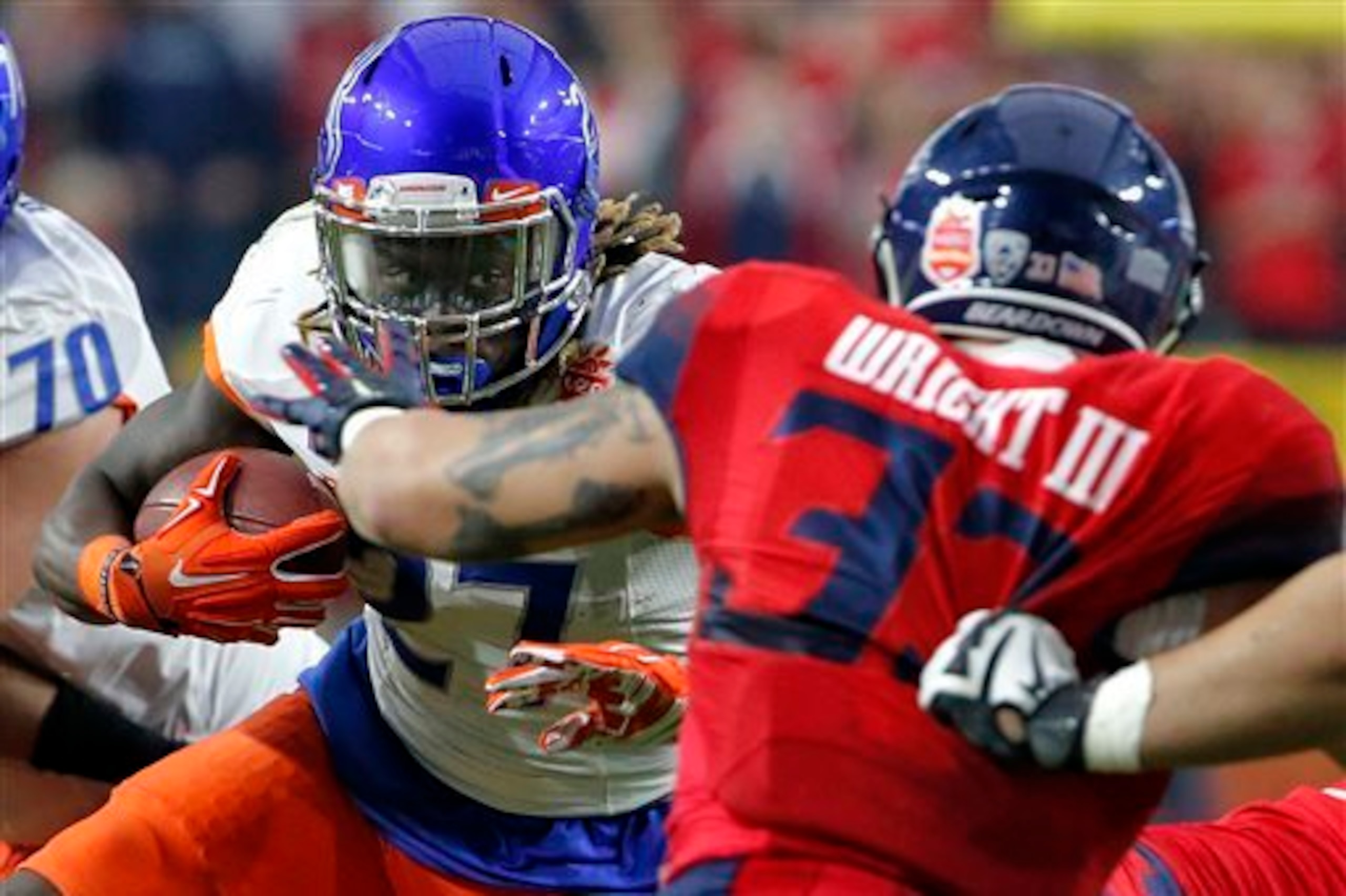
And then there's Arizona's single most important player, junior Scooby Wright. The reigning Bednarik, Lombardi and Nagurski award winner and national leader in tackles, tackles for loss and forced fumbles will again be the focal point of the defense, and not surprisingly he begins the year on every preseason All-American team and major award watch list.
Weaknesses
As great as Wright is for Arizona's defense, he can't do it all himself. That was evident last season, as his great numbers still weren't enough to keep the Wildcats from giving up far too many big plays and get off the field quickly. The problems started up front, where the lack of a pass rush and very little production from the defensive line enabled opposing quarterbacks to wait for openings in the secondary.
Wright had 14 of the team's 38 sacks, and only nine came from the defensive line. That group wasn't particularly strong against the run either, yielding 200-plus yards in five games.
Arizona's best defensive unit was its secondary, but that group could only do so much given the lack of support up front.
Regularly using five defensive backs—and upping that to six or seven on passing downs—it wore down as the season went along and now has to replace both starting corners and bandit safety Jared Tevis. The Wildcats addressed this deficiency in the 2015 recruiting class and the move of Neal over from the offense, but it's still an area of major concern.
The most significant offensive weakness involved red-zone efficiency. Arizona's 80 percent success rate was below-average, and its rate of only scoring touchdowns on 33 of 60 trips ranked 86th nationally. The Wildcats are hoping to fix this by mixing things up more with the use of their skill players, including more attention toward the tight end spot that in the past three years had been almost nonexistent.
Secret Weapons
Look for Arizona to shift its personnel all over, mixing and matching with receivers getting the ball in the backfield and tight ends lining up out wide, all in an effort to keep the field as spread out as possible and ramp up the tempo even more.
That means increased involvement from the likes of sophomore receiver Tyrell Johnson, who recorded the third-fastest 100-meter time (10.41 seconds) of any FBS football player this spring, per the U.S. Track and Field and Cross Country Association. Johnson was used mostly as a kick returner last season, but this year he'll be used as a ball-carrier and to catch passes from the slot.
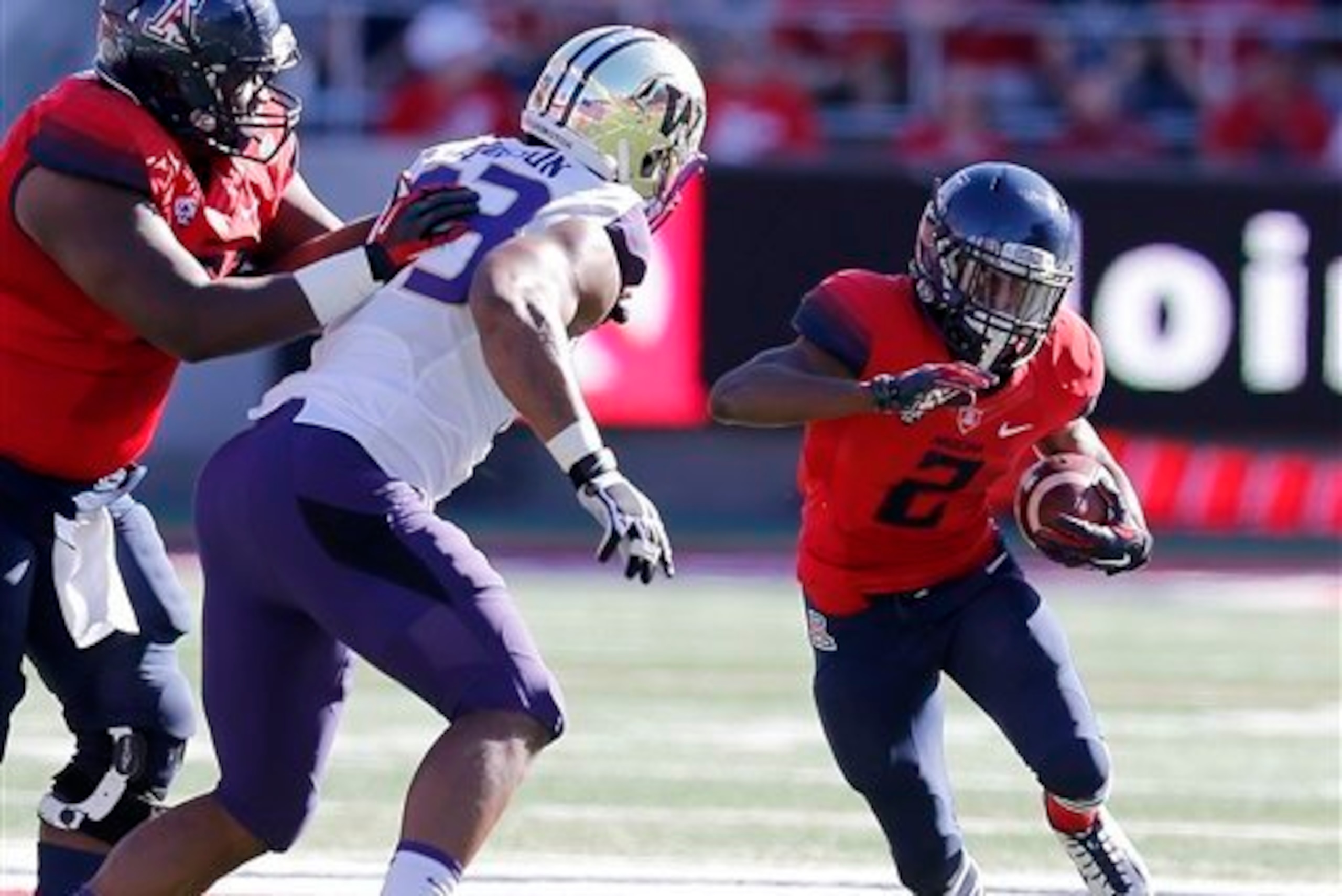
Arizona is at its best when it's not taking a breath, having led the nation with 1,139 offensive snaps in 2014. Those 81.4 plays per game came in just over 27 minutes per game, meaning the Wildcats hiked it roughly every 20 seconds on offense. If it's possible to reduce that interval, they'll try.
"I think we can play faster than we have before," Rodriguez told Bleacher Report in April following Arizona's spring game.
All quotes obtained firsthand and stats courtesy of cfbstats.com unless otherwise noted.
Follow Brian J. Pedersen on Twitter at @realBJP.
.jpg?w=2560 "Cam Ward Says He's Not A Loser")
.jpg?w=2560 "Chargers Fall to 0-5 🤢")
.jpg?w=2560 "🚨 Texans Trade for MHJ")
.jpg?w=2560 "Grading MHJ Trade 📝")
.jpg?w=2560 "MHJ Bought Own Jugs Machine")