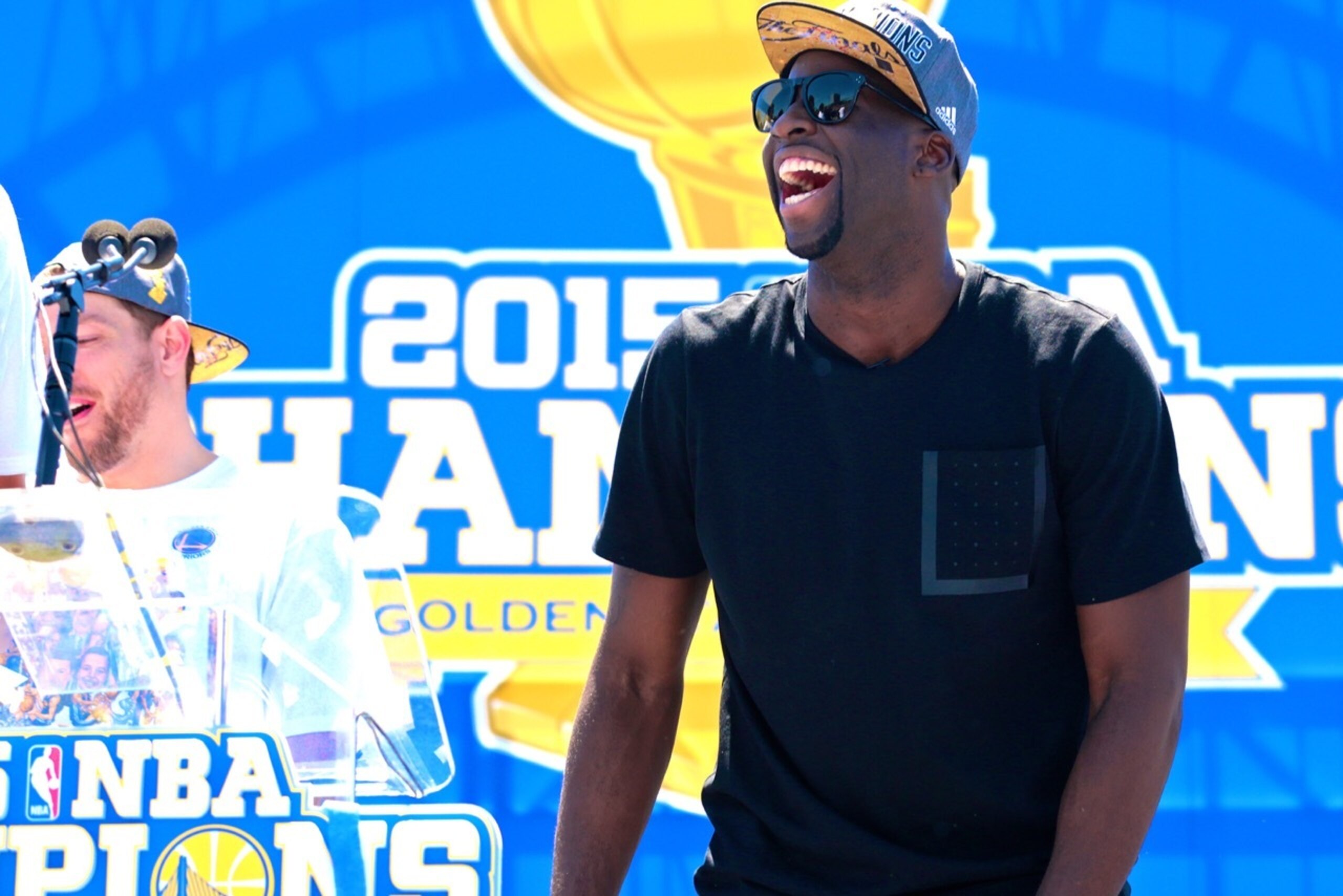

Golden State Warriors Show Maturity in Draymond Green Negotiations
The Golden State Warriors once again resisted their first impulse. Result, once again: success.
Just as the Warriors considered trading shooting guard Klay Thompson for Kevin Love last summer until wiser heads prevailed, sources say the Warriors considered taking a hard line in negotiations with restricted free agent Draymond Green this summer.
It apparently only took them a couple of hours to change their minds. As a result, Golden State locked up Green with a five-year, $85 million deal less than 24 hours after the NBA free-agency period began.
TOP NEWS
KAT's Contract News Quote 😬

1 Player Every Team Should Trade 🔀
Most Fascinating Players This Season 😲
That, though, was not its initial plan.
The team brain trust, led by owner Joe Lacob and general manager Bob Myers, met with Green and his agent, B.J. Armstrong, in Los Angeles when free agency began Wednesday night, 9 p.m. Pacific Time. No actual figures were discussed because the Warriors intended to let the market dictate exactly how much they’d have to pay Green to keep him.
That meant monitoring deals for similar restricted free agents such as Chicago Bulls shooting guard Jimmy Butler, San Antonio Spurs forward Kawhi Leonard and Cleveland Cavaliers forward Tristan Thompson. They could have also forced Green to present an offer sheet from a team with the salary-cap room to acquire him.
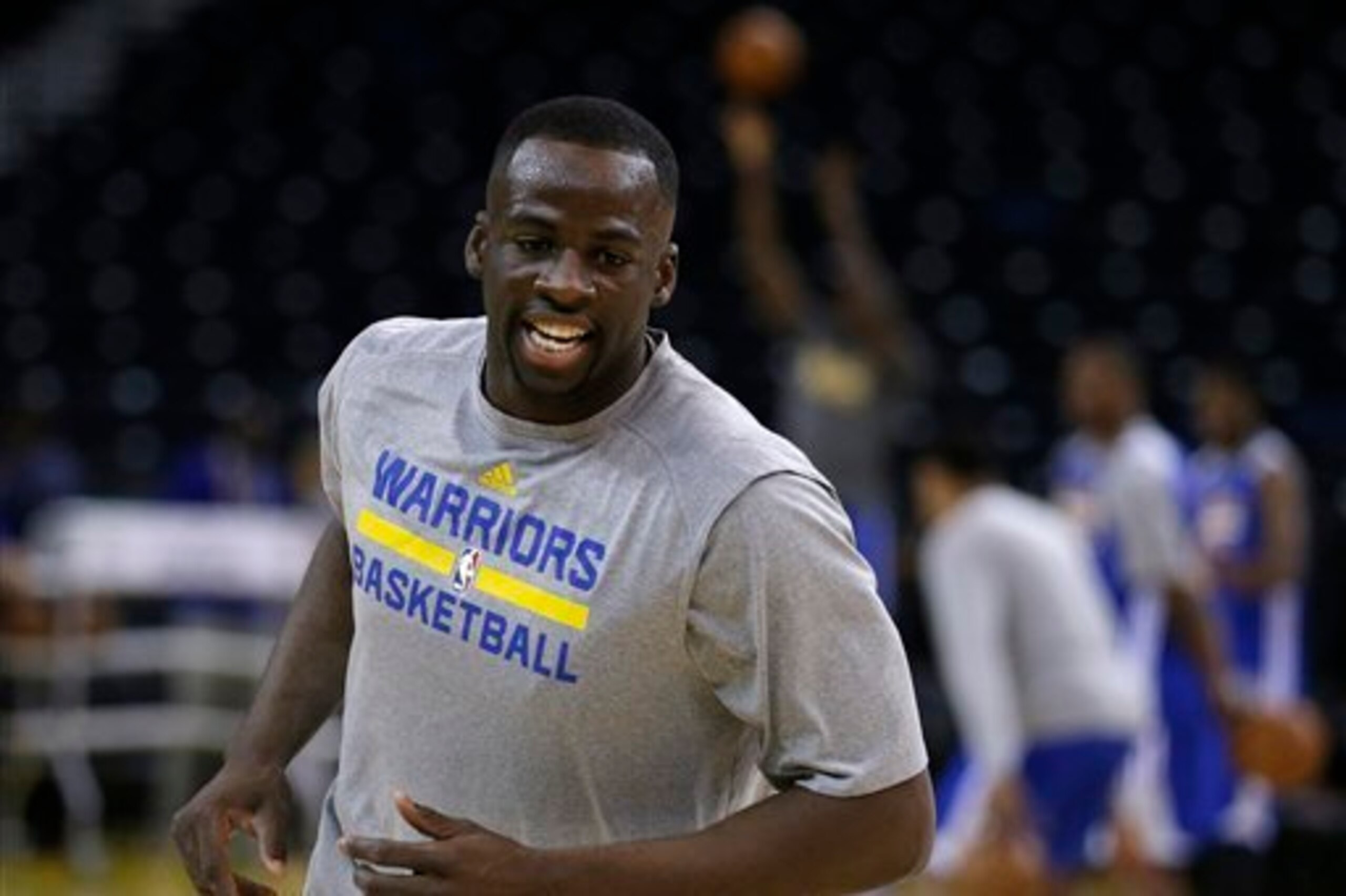
Maybe the Warriors believed Green’s status as a second-round pick, his ‘tweener-forward reputation or his less than gaudy statistics—particularly in comparison to Leonard’s and Butler’s—might allow them to save a few dollars. This for a player who already had pledged his allegiance before free agency began by indicating he would take a little less to stay, something players so rarely admit.
Green, sources say, reiterated that to team officials at the start of free agency. He wanted to make sure they had financial wiggle room to replenish the team’s talent moving forward.
In other words, Golden State considered being greedy with someone who decided he wouldn’t be, thereby almost assuring the process would take longer and potentially risk some hard feelings being created where there were none.
Who or what convinced the Warriors not to drag their feet is not clear, but it only took a few hours for them to come to their senses. Maybe it was Leonard and Butler's agreements to maximum deals of at least $90 million each. Maybe it was learning that $80 million was being dangled in front of Tristan Thompson, as reported by ESPN.com's Marc Stein. Thompson had a surprisingly good season, but in no way is he as versatile and valuable as Green.
Maybe it was Detroit Pistons forward Greg Monroe's agreeing to a deal with the Milwaukee Bucks, a pact reported by Yahoo's Adrian Wojnarowski, thereby paving the way for Pistons owner and Green’s fellow Michigan State alum Tom Gores to lure the Saginaw native home with a maximum-salaried offer sheet.
Or maybe it was recognizing that Green’s rare quality of producing star-like performances but retaining a firm understanding that his role is to fit in around the team’s other top talent is extremely difficult to find. Most players who have the kind of year Green had would want to cash in every way possible—more money, more attention, bigger role, maybe even a bigger market. Not Green. He has demonstrated since he arrived in the Bay Area that all that matters to him is what he must do for the team to win.
Whatever the reason, the Warriors gave Green exactly what he wanted, thereby earning the gratitude of their vocal and emotional leader, their toughest defender and arguably their hardest worker, seeing as he finished second both as Defensive Player of the Year and Most Improved.

Meanwhile, it’s a perfect deal for Green as well; had he been paid the same as Leonard and Butler, there assuredly would’ve been comparisons and expectations and a chance, at least statistically, that he would be viewed as overpaid. Now it’s Tristan Thompson, who, according to ESPN's Brian Windhorst, supposedly is not enthralled with that $80 million offer, who risks looking either greedy and/or facing the pressure of proving he’s as important as a Finals MVP (Kawhi) and an All-Star (Butler).
Once upon a time not that long ago, the Warriors exercised their first impulse, which was to amnesty Charlie Bell and his $4 million contract to pursue Tyson Chandler. That proved to be a big mistake.
Give them credit for this: Even if their first impulses haven’t improved, what they ultimately do with them clearly has. They remain a big, happy championship family because of it.
Ric Bucher covers the NBA for Bleacher Report. Follow him on Twitter @RicBucher.

.jpg?w=2560 "Cam Ward Says He's Not A Loser")
.jpg?w=2560 "🚨 Texans Trade for MHJ")
.jpg?w=2560 "Grading MHJ Trade 📝")
.jpg?w=2560 "Chargers Fall to 0-5 🤢")
.jpg?w=2560 "MHJ Bought Own Jugs Machine")