Every NFL offseason is filled with a flurry of moves as team executives scramble to make improvements to their respective teams.
While wading through the free-agent pool and navigating the draft are responsibilities of every team decision-maker, some executives like to gamble on moves with the potential for a big payday. A little risk, after all, can often times bring massive rewards.
Risky moves, however, can also backfire—even if they seem brilliant at first blush.
Today, we're going to take a look at 10 offseason moves that appear smart but carry the potential for major disappointment. These are the moves that many critics have seemed to love but may end up hating by season's end.
Moves are ranked according to risk, from least to greatest.
10. Cowboys Spend 2nd-Round Pick on Randy Gregory
1 of 10
The Dallas Cowboys decided to take a risk on Nebraska pass-rusher Randy Gregory in the second round of this year's draft.
This selection is a risk.
Gregory has had numerous positive drug tests over the years and even failed a test administered at this year's scouting combine. Not only does this suggest a drug problem, but it also suggests a problem with decision-making. Players know that there is going to be a drug test at the combine.
Fox Sports NFL insider Jay Glazer suggested during an appearance on The Dan Patrick Show (h/t Fox Sports) that Gregory's issues are severe enough that he "wouldn't touch him" in the draft. He added the following:
"He's probably the most talented guy in the Draft, but when a guy smokes a lot of weed, you gotta understand why. Does he just love weed, or are there other issues..from what teams say, there are other issues.
"
There has to be some real concern with Gregory's marijuana problem, because everyone in the league just watched Cleveland Browns receiver Josh Gordon miss 10 games in 2014 and receive a yearlong suspension this offseason because of his pot habit.
If Gregory's problem follows him to the NFL, he could face a similar fate to that of Gordon. This is a lot of risk for a guy drafted in the second round.
Of course, everyone deserves an opportunity to prove he can overcome his problems. This risky move lands at the bottom of our list because if Gregory's troubles keep him off the field, the only significant repercussion for the Cowboys is a wasted draft pick.
9. Jaguars Give Julius Thomas $46 Million Deal
2 of 10
After his disastrous rookie season, it quickly became clear that quarterback Blake Bortles is going to need some help around him in order to succeed. This is precisely why the Jacksonville Jaguars went out and grabbed him a promising pass-catcher in tight end Julius Thomas.
In one aspect, the move makes a lot of sense. Thomas is a highly rated tight end (ranked 13th overall among tight ends by Pro Football Focus in 2014) and has 24 touchdown receptions over the past two years.
The problem with the move is that Thomas is still not entirely a proven product, and the Jaguars just gave him a five-year, $46 million deal with $24 million guaranteed.
The Portland State product appeared in just nine games and logged one reception over the first two years of his career. He logged 1,277 yards over the next two year but also missed five games due to injury.
What Jacksonville has to wonder is how much of Thomas' success can be attributed to the presence of Denver Broncos quarterback Peyton Manning and what his numbers will look like with someone like Bortles throwing him the ball.
According to Pro Football Focus, Bortles was the worst quarterback in the entire NFL last season. Thomas should help Bortles improve, but Bortles' struggles are also likely to hurt Thomas' production.
Can Thomas stay healthy for 16 games a season and live up to his hefty contract? It's going to cost Jacksonville at least $24 million to find out. If he proves to be a product of Denver's offense, then this move is more likely than not to backfire—at least in a financial sense.
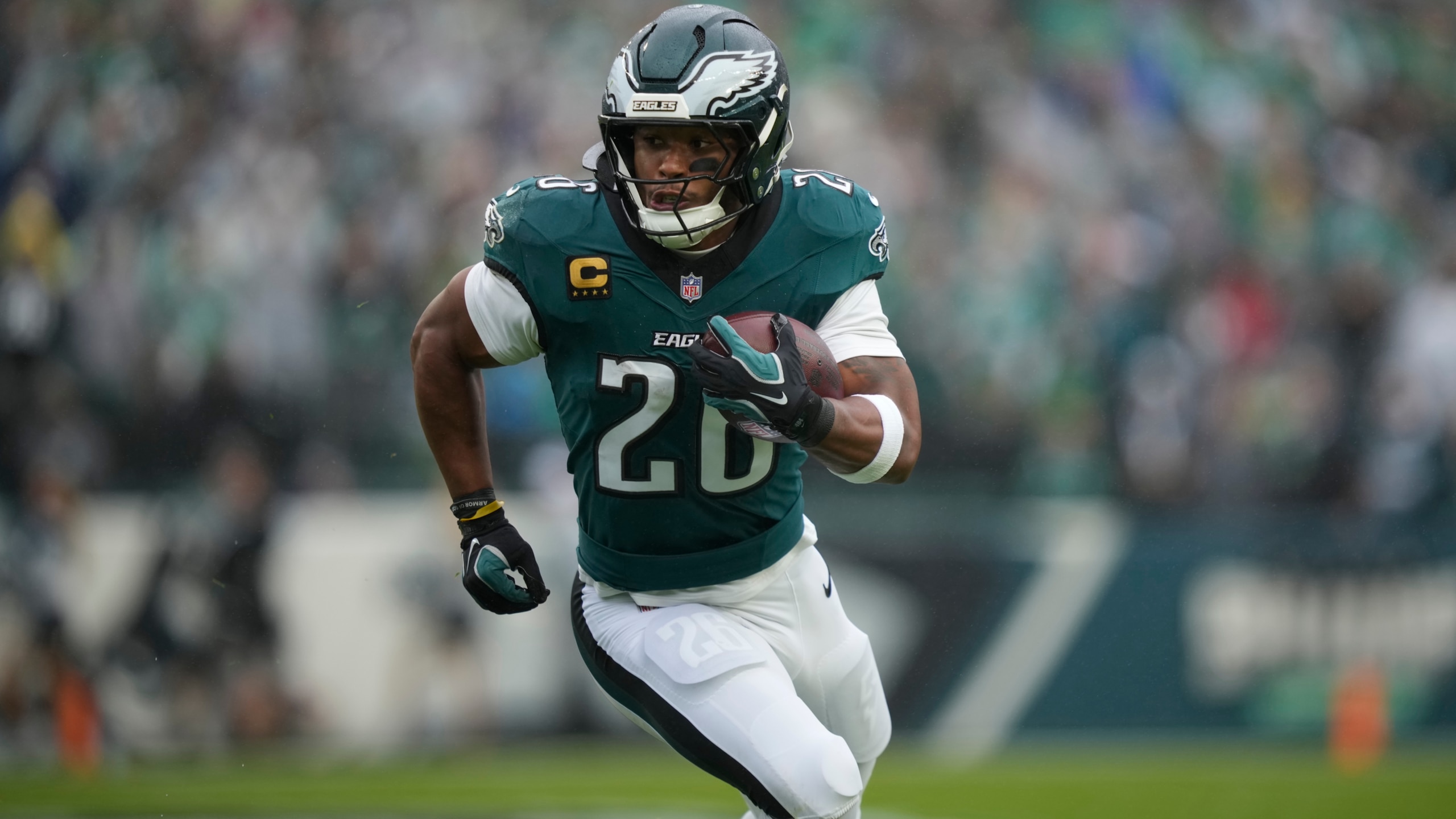
8. Seahawks Trade for Jimmy Graham
3 of 10
A goal-line interception cost the Seattle Seahawks a Super Bowl victory earlier this year. Naturally, the team's reaction was to go out and grab a top-tier goal-line target.
Seattle kicked off the new league year by trading for Pro Bowl tight end Jimmy Graham. This gives quarterback Russell Wilson a dangerous weapon in the passing game and a guy who can come up big in goal-to-go situations.
The catch here is that the Seahawks had to send Pro Bowl center Max Unger and a first-round draft pick to the New Orleans Saints in order to acquire Graham.
Unger was rated fourth overall among centers by Pro Football Focus last season.
Seattle also lost starting guard James Carpenter in free agency. By trading Unger, Seattle ensures that two-fifths of its starting line is gone. For a run-based offense, losing two interior blockers is a risk.
The Seahawks also gave up a chance to draft a young pass-catcher—like Michigan's Devin Funchess or Missouri's Dorial Green-Backham—late in the first round.
In order for this move to be a complete success, Graham will have to prove he can be productive enough that Seattle doesn't lament losing a draft pick and one of the best young centers in the league.
If Graham, or the rushing attack of the Seahawks, stumbles this season, this move isn't going to look as smart as it did during the offseason.

.jpg?w=2560 "Seahawks Chiefs Football")
7. Browns Sign Josh McCown to Be Their Starting Quarterback
4 of 10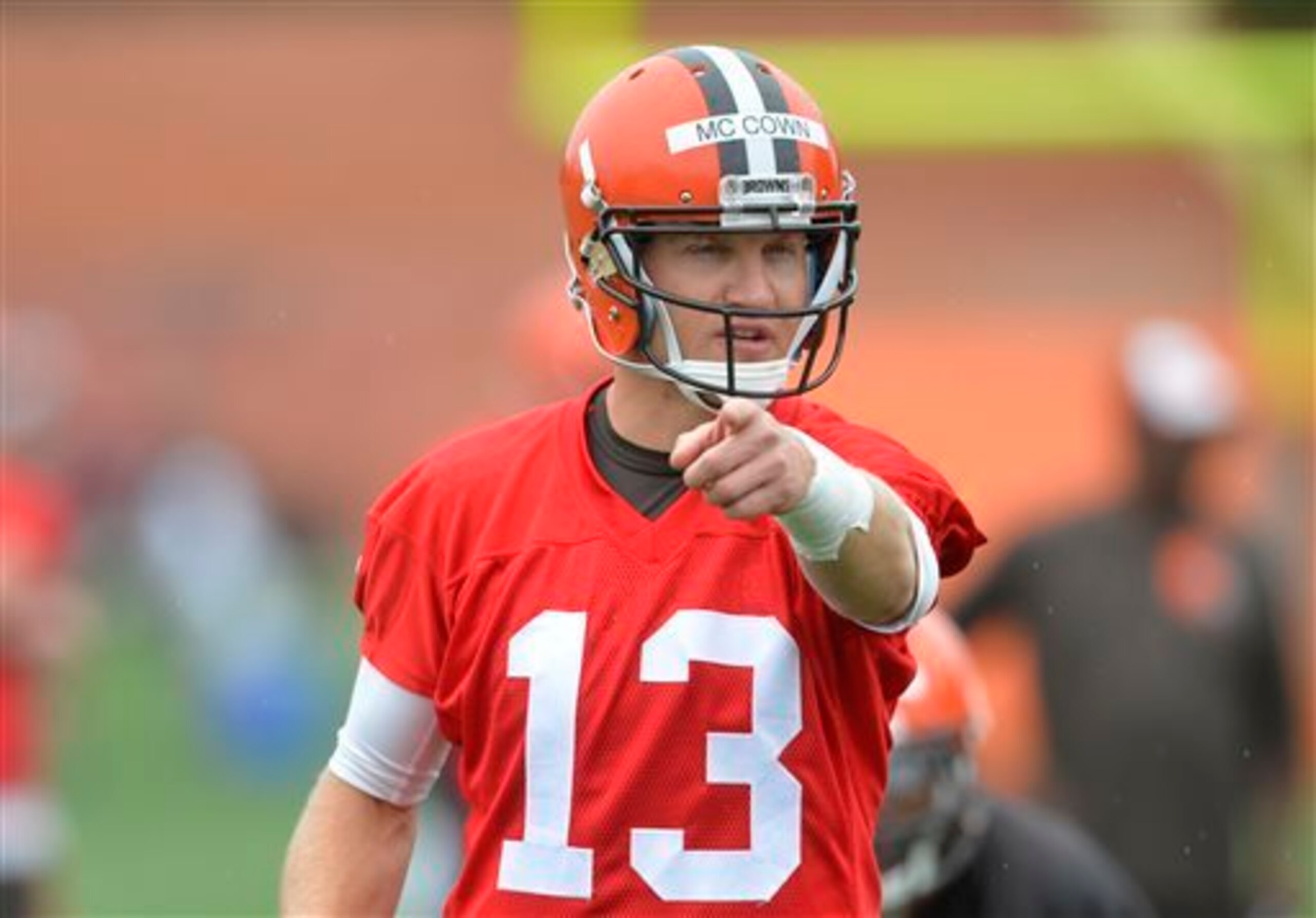
This offseason, the Cleveland Browns tabbed journeyman quarterback Josh McCown as the next contestant in their annual quarterback-for-a-year contest.
Yes, McCown is about to turn 36 and has a career passer rating of just 76.1. Sure, he went a dismal 1-10 as a starter with the Tampa Bay Buccaneers last season. Yet, the Browns don't seem to be joking about having him as the No. 1 under center over 2014 first-round pick Johnny Manziel.
"We're not going to start talking competition," head coach Mike Pettine said earlier this offseason, per Scott Petrak of the Chronicle-Telegram. "Josh will more than likely be the starter going into camp, and in the foreseeable future I don't see that changing."
This could backfire on the Browns for two reasons. For one, McCown has never been able to prove he can be an effective starter for an entire season. Secondly, McCown being on the field means that developing quarterbacks Manziel and Connor Shaw won't be.
Instead of finding out what the team has in its young quarterbacks (to be fair, Manziel didn't show much last season), Cleveland is looking at another veteran stopgap.
If there's a reason for the Browns to remain positive, it's that the team managed to win seven games in 2014 with Brian Hoyer, who was actually rated one spot below McCown by Pro Football Focus for the season.
6. Bills Bring in Matt Cassel as 'Competition' for EJ Manuel
5 of 10
Former first-round draft selection EJ Manuel has had a difficult time as a member of the Buffalo Bills. He has a career passer rating of just 78.5, was benched in favor of Kyle Orton after four games in 2014 and ranked 69th out of 70 total quarterbacks in Pro Football Focus' 2013 ratings.
Orton led Buffalo to a 9-7 record, but he retired after the season.
The Bills saw an influx of offensive talent during the offseason (running back LeSean McCoy, tight end Charles Clay, receiver Percy Harvin) and added an experienced head coach in Rex Ryan. Buffalo can likely be a legitimate contender if it can get even average play from the quarterback position.
Unfortunately, the veteran quarterback who has joined the team isn't looking like the answer.
Buffalo traded to acquire Matt Cassel from the Minnesota Vikings in an effort to strengthen the quarterback room. According to Mike Rodak of ESPN.com, Cassel has been so bad in the early offseason that he might not even make the final roster.
This would likely leave the job to Manuel, former Baltimore Ravens backup Tyrod Taylor or Matt Simms.
The free-agent market certainly wasn't great this offseason (highlighted by the likes of Brian Hoyer, Michael Vick and former Bills passer Ryan Fitzpatrick). However, choosing Cassel might be a move that Buffalo comes to regret.
5. Bills Trade for LeSean McCoy, Then Sign Him to Massive Deal
6 of 10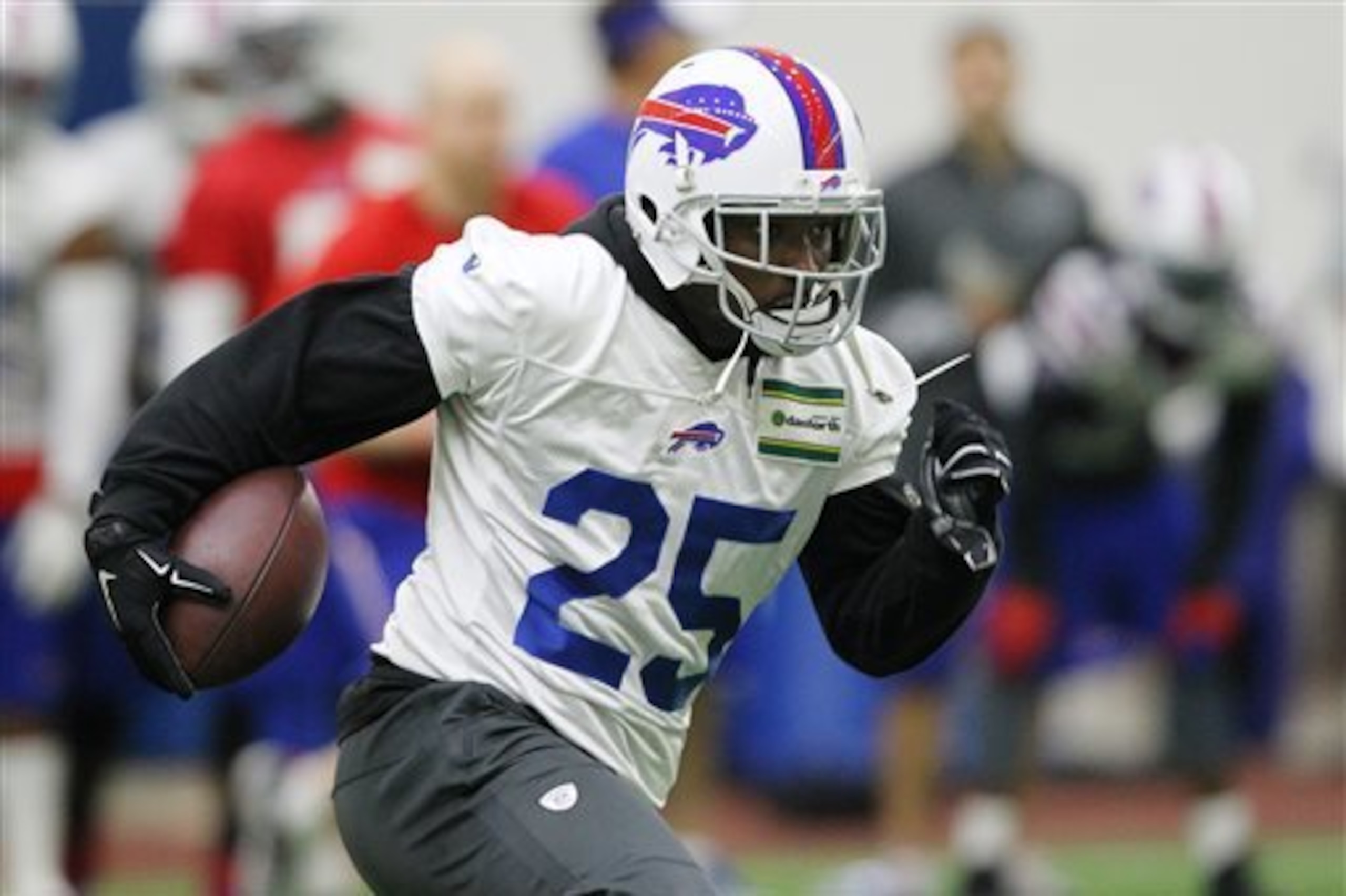
Shortly after the start of the new league year, the Buffalo Bills made a trade to acquire running back LeSean McCoy from the Philadelphia Eagles. Buffalo then inked McCoy to a shiny new five-year, $40 million deal that includes $26.5 million guaranteed.
This is a lot of guaranteed cash for a six-year veteran coming off back-to-back 300-carry seasons.
Between receptions and carries, McCoy has touched the football 706 times over the past two years. He also has 1,461 carries in the regular season over the course of his career. Even more worrisome is the reality that McCoy wasn't overly efficient a season ago.
According to Pro Football Focus, McCoy ranked just 55th overall among running backs in 2014.
The Bills are paying McCoy to be a workhorse running back, and there should be legitimate concerns about his ability to serve in that role over the next five years.
The risk here is largely financial, of course, as McCoy essentially replaces C.J. Spiller, who produced just 300 yards in nine games last season.
However, the Bills did send talented linebacker Kiko Alonso to the Eagles in exchange for McCoy. If Alonso returns to the the form he showed before missing all of 2014 with a knee injury (he ranked ninth overall among inside linebackers in 2013, per Pro Football Focus) and McCoy struggles, then you can say this move backfired.
4. Saints Trade Away Jimmy Graham and Kenny Stills
7 of 10
We've already mentioned how Seattle's trade to acquire tight end Jimmy Graham is risky. Now we have to explain why the trade could backfire for the New Orleans Saints, as well.
New Orleans seems to have made the decision this offseason to put more focus on defense and the running game. In theory, switching philosophies makes sense, as teams that run hard and play great defense have thrived in the NFC over the past few years.
In order to make the transition, Saints general manager Mickey Loomis traded away Graham and wide receiver Kenny Stills (to the Miami Dolphins). In return for the team's top two receivers (148 combined receptions) from a year ago, the Saints got first- and third-round draft picks, linebacker Dannell Ellerbe and center Max Unger.
New Orleans also brought in running back C.J. Spiller and spent its two acquired draft picks on defensive players.
The moves the Saints have made this offseason have the potential to make this a more balanced and overall stronger team. However, the team traded away two young players who were a big part of last year's first-ranked offense (411.4 yards per game).
Sure, Drew Brees is a fantastic signal-caller (Pro Football Focus rated him second overall last season), but getting rid of his top two targets carries a lot of backfire potential.
3. 49ers Hire Jim Tomsula as Head Coach
8 of 10
The San Francisco 49ers had a huge void to fill this offseason after head coach Jim Harbaugh left to coach the Michigan Wolverines.
The 49ers picked defensive line coach Jim Tomsula to plug the hole.
On one hand, the move makes sense because Tomsula has been with the team since 2007 and will bring a sense of continuity. On the other hand, there is going to be ton of pressure to succeed this season, and an experienced head coach would probably be better equipped to handle that pressure.
Aside from a one-game stint as interim head coach in 2010, Tomsula has only been a head coach once at any level. He served as head coach of the Rhein Fire during the 2006 NFL Europe season. Tomsula's only experience as a coordinator also came with the Fire.
Not only will Tomsula have to deal with the lofty expectations Harbaugh (who made three NFC Championship appearances and one Super Bowl trip in four seasons) left with the team, but he will also have to deal with the exodus of talent that occurred this offseason.
Running back Frank Gore, cornerback Perrish Cox and cornerback Chris Culliver all left via free agency. Defensive end Justin Smith, offensive lineman Anthony Davis, linebacker Patrick Willis and linebacker Chris Borland all entered retirement.
Only time will tell if Tomsula is the right man for the job—if he is a figurehead coach for CEO Jed York and general manager Trent Baalke, or if he is simply a stopgap option. If he struggles in 2015, however, this could well be another wasted season for the 49ers.
2. Cowboys Allow DeMarco Murray to Walk in Free Agency
9 of 10
The Dallas Cowboy reached the playoffs last season largely behind the hard running of DeMarco Murray.
Murray plowed over defenders to the tune of 1,845 rushing yards in 2014. He caught passes out of the backfield (57 receptions for 416 yards) and scored touchdowns (13). He even played with a broken hand in Week 16.
Naturally, owner Jerry Jones and the Cowboys rewarded the free-agent running back with a fat new contract, right?
Nope.
Dallas allowed Murray to sign a five-year, $40 million deal with the Philadelphia Eagles. Even worse than losing Murray is the fact that the Cowboys will have to face him twice a year in the regular season.
There also doesn't seem to be a clear-cut plan to replace Murray in Dallas. The Cowboys didn't draft a running back and instead brought in Oakland Raiders castoff Darren McFadden to compete with former backup Joseph Randle.
Not only does this decision carry the potential for a serious decline in Dallas' running game, but it also brings along the risk of Murray actively thrashing the Cowboys' playoff chances on the football field.
1. Eagles Trade for Quarterback Sam Bradford
10 of 10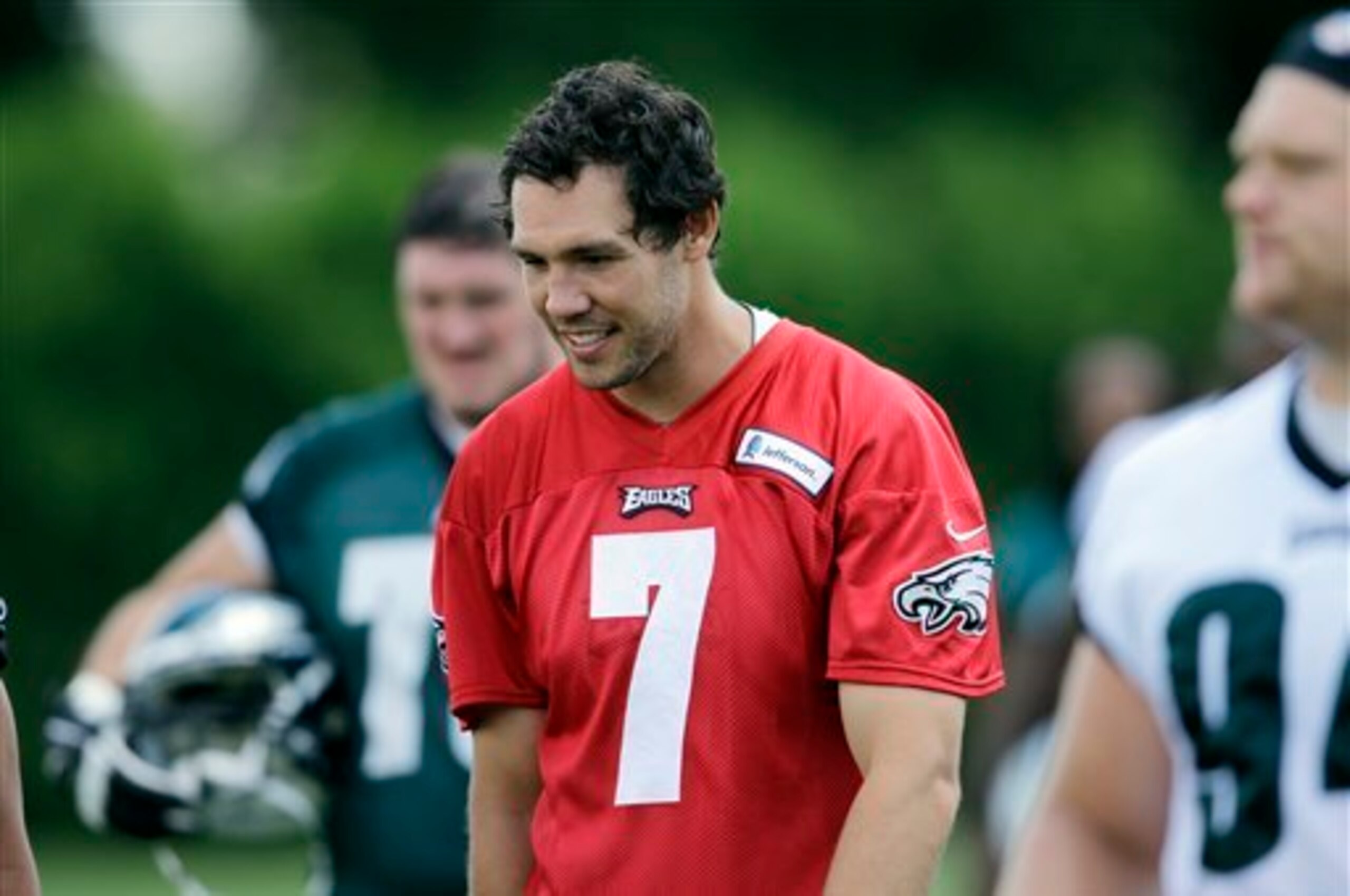
Philadelphia Eagles head coach Chip Kelly must really like the idea of having Sam Bradford as his franchise quarterback. In order to acquire him from the St. Louis Rams, Kelly parted with quarterback Nick Foles, a fourth-round pick in this year's draft and a second-round pick in next year's draft. Philadelphia will get a fifth-round pick from St. Louis.
Saying this move is risky is like saying Michael Bay loves watching things explode.
There are a number of reasons why this move can completely blow up in Kelly's face. For starters, Bradford is an injury risk. He missed all of 2014 with a torn ACL and missed nine games the previous year with a separate ACL injury. He also missed six games in 2011 with an ankle injury.
There's also no guarantee that Bradford is an upgrade over Foles in Kelly's system. Chip seems to think so, or else he wouldn't have made the deal. However, Foles' career passer rating (94.2) is significantly higher than Bradford's (79.3). This could simply be a result of Foles being in a better situation with a better supporting cast, of course, but it's not like the Eagles just traded in Tim Tebow for Peyton Manning.
Lastly, Bradford is going to cost Philadelphia nearly $13 million for this season, and this is the only season the Eagles have him under contract.
If Bradford suffers another serious injury, is outplayed by Foles during the season or causes major contract issues following the season, then the Eagles can come out looking like big losers in this trade (they're out a second-round pick, regardless).
In fact, it feels like the only way the Eagles win here is if Bradford has a terrific season, stays healthy and signs an agreeable long-term extension. Otherwise, this move backfires.
.jpg?w=2560)