NBA Draft 2015: Start Time, Order, Prospects Guide and Mock Draft Predictions
It's finally here. After months of research, countless hours of film study and a cascade of rumors washing over the basketball landscape, the 2015 NBA draft gets underway Thursday night.
Some things are set in stone. The Minnesota Timberwolves will select Kentucky's Karl-Anthony Towns with the No. 1 pick. At least six New York Knicks fans will be hospitalized because of broken vocal cords following the team's pick regardless of the player. And ESPN's Jay Bilas will troll the nation by mentioning the word "wingspan" as many times as possible.
| Start Time | 7 p.m. ET |
| Network | ESPN |
| Stream | WatchESPN |

Other things are much more up in the air.
The Los Angeles Lakers will likely select Duke center Jahlil Okafor, but that near-certainty has become much less so with each passing second. Joel Embiid's injury status has made what looked like a straightforward Philadelphia 76ers pick become much more interesting. A dude named Kristaps Porzingis, whom many casual fans had not heard of until this week, may swing the entire scope of the first round.
With the answers all coming in a few hours, I figure now is the best possible time to unload everything in the draft chamber. What follows is a complete emptying of my 2015 draft notebook, highlighting what you need to know before Adam Silver steps up to the podium.
Draft Order
Prospect Guide/Big Board
1. Karl-Anthony Towns, PF-C, Kentucky
Strengths: Shooting, Post Fluidity, Shot Blocking, Basketball IQ
Weaknesses: Lateral Quickness, Second-Jump Ability
The more I've watched Towns, the more he pulls away as the draft's best prospect. It really isn't that close. Only Kristaps Porzingis has as many translatable NBA skills, and Towns comes with far less inherent risk.
A fluid 7-footer with rapidly developing post skills, Towns reminds me of an evolutionary Andrew Bynum. His ability to stretch the floor could be next-level someday, even if it isn't now. Towns has the fluidity in his shot to become a real threat from deep, just not the confidence. He took exactly eight three-pointers last season at Kentucky, none of which came in the Wildcats' last 16 games.
Concern about his rawness isn't valid here because his potential floor is still a league-average starter. If Towns develops on the defensive end—a spot where he struggled at Kentucky and will continue to do so for his first couple of NBA seasons—he has multi-All-Star potential.
2. D'Angelo Russell, SG, Ohio State

Strengths: Vision, Playmaking, Three-Point Shooting, Offensive IQ
Weaknesses: Shot Selection, Top-End Leaping Ability, Defensive Consistency
Russell isn't the best player in this class. He has, however, become my favorite. There is so much about this kid's offensive skill set to love. He's a left-handed Brandon Roy who can create shots for himself off the dribble anywhere on the court and is willing to make the right basketball play.
While I've long been a part of Team D'Angelo Russell Is Not a Point Guard, he can excel in a James Harden-like combo spot. Russell is probably a better pure shooter than Harden, which will atone for his somewhat-low free-throw rate and sketchy finishing at the rim. Given the direction NBA guard play is headed, Russell is the exact type of player you'd want to build around.
Work ethic will be key here, especially on the defensive end. He floated and made needless gambles all last season. With a much better supporting cast around him at the next level, Russell will need to be better.
3. Jahlil Okafor, C, Duke
Strengths: Low-Post Maven, Better Shooter Than Advertised, Post Passing, True NBA Size
Weaknesses: Lateral Quickness, Leaping, Nearly Everything Defense-Related
Unfair. That's the only word that can properly describe the draft process for Okafor. Listed as the No. 1 prospect in this class for nearly the entire college basketball regular season, he has seen his game—particularly his defense—picked apart relentlessly since winning the national title.
Problem is, the dude is the same player he has always been. He's a classic back-to-the-basket center who would have been a superstar in another era but is seen much more critically in the pace-and-space NBA. I haven't seen the fluidity and sophistication of his post game in a prospect in years. DeMarcus Cousins is the only player who even comes close, and even Boogie is much more reliant on brute strength.
Okafor is not a good defender. His physical skills aren't ideal, particularly against the pick-and-roll, and his effort was inconsistent at best. Duke teammate Justise Winslow told me he wasn't concerned about Okafor's defensive ability. I am.
It's a win if he winds up developing into an average player on that end. With scouts telling Grantland's Ryen Russillo (note: some NSFW language) that there are concerns about Okafor's willingness to put in the work to improve, I'm skeptical he'll make those improvements.
4. Kristaps Porzingis, PF, Latvia
Strengths: Fluid Athlete, Good Shooter, Uses Length Well on Both Ends, Elite Two-Way Potential
Weaknesses: Big Strength Concerns, Everything Post-Related
Porzingis is the It Man of the 2015 class. He's impressed enough in workouts to have teams reconsidering their entire draft strategy. Once, the Towns-Okafor-Russell draft order seemed like a lock. Now, Porzingis has an outside shot of going No. 2 and might wind up in Philly at No. 3.
You can't say enough about his skill set. An athletic 7-footer who strokes three-pointers, passes well and swats shots at the rim? That sounds more like an NBA 2K15 create-a-player than actual basketball player. Porzingis on paper has the highest potential of any player this side of Towns.
Detractors can rightfully highlight Porzingis' lack of strength as a draft-day deterrent. He's not strong (230 lbs), is probably never going to be strong and will have to develop post turnarounds and other moves to compensate for his beanpole stature.
His lateral quickness and the NBA's general shrinking at the power forward position mean his defense probably won't reach a breaking point, but switches could become a problem against post brutes.
5. Emmanuel Mudiay, PG, China

Strengths: Big-Time Athlete, Elite Finisher at the Rim, Lightning Quick, NBA Body
Weaknesses: Can't Shoot, More Combo Guard Than Point Guard, A Lot of Mental Errors
Mudiay is one of the biggest swing choices near the top of the lottery. If he doesn't go to the Knicks at No. 4, he could drop as low as No. 8 to the Detroit Pistons. That's a bit surprising for a player who was considered every bit Okafor's equal coming out of high school.
It's not as if Mudiay forgot how to play basketball in his Chinese stint. He averaged 18.0 points, 6.3 rebounds and 5.9 assists in 12 games, adding in 1.6 steals. His dynamic open-court ability and defensive disruptiveness were on display, but so too were his shortcomings. Mudiay shot a disconcerting 57.4 percent from the free-throw line and 34.2 percent from distance.
We should probably throw out the idea that he'll ever become an above-average shooter and hope it doesn't turn into a Rajon Rondo-level issue. Mudiay has the John Wall/Russell Westbrook uber-athletic gene that could make him a two-way dynamo at the point guard spot. At the very least, I don't see how he winds up worse than a Reggie Jackson-type playmaker.
6. Justise Winslow, SF, Duke
Strengths: NBA Body, Aggressive Lockdown Defender, Good Stationary Shooter, Excellent Athlete
Weaknesses: Can't Shoot Off Dribble, Would Like an Extra Inch or Two of Height
Most statistical models love Winslow, who projects as one of the safest picks in this class. Working through the scenarios that could play out, almost none end with him being anything short of a regular starter.
Winslow is an excellent on-ball defender who can guard three positions and relishes in doing the dirty work. Not since Michael Kidd-Gilchrist has there been a prospect so guaranteed to anchor a perimeter defensive effort.
Whereas MKG entered the NBA with a broken jumper, Winslow's is serviceable—especially if it comes off an assist. He shot a surprisingly stellar 41.8 percent from three last season. All but three of those long-range jumpers came off an assist, per Hoop-Math.com. Winslow is much shakier off the dribble, where he'll either get to the rack or turn the ball over.
The Harden comparisons are strange. Winslow's best comparison has always been Kawhi Leonard.
7. Mario Hezonja, SF, Croatia
Strengths: Brilliant Shot-Creator, Good Athlete, Unshakable Confidence
Weaknesses: That Whole Defense Thing, Has Never Played Major Minutes, Sometimes Too Confident
This probably sums up everything that makes Hezonja so captivating and scary at once:
Dude can light it up from anywhere. He has a fluid, consistent three-point stroke, above-average dribble skills for his position and elite athleticism that should allow him to develop into a solid rim finisher. His confidence level is unshakable. There won't be any fear of the NBA spotlight.
That could be his star-making quality or his undoing. Hezonja is going to take a ton of bad shots. A ton. How his coaching staff reacts and how he takes in that reaction will be vital to his development. It's possible a headstrong coach will plant him to the end of the bench, and that will be that. It's equally possible Hezonja thrives in the free-flowing NBA environment and becomes a 20-point scorer.
8. Willie Cauley-Stein, C, Kentucky
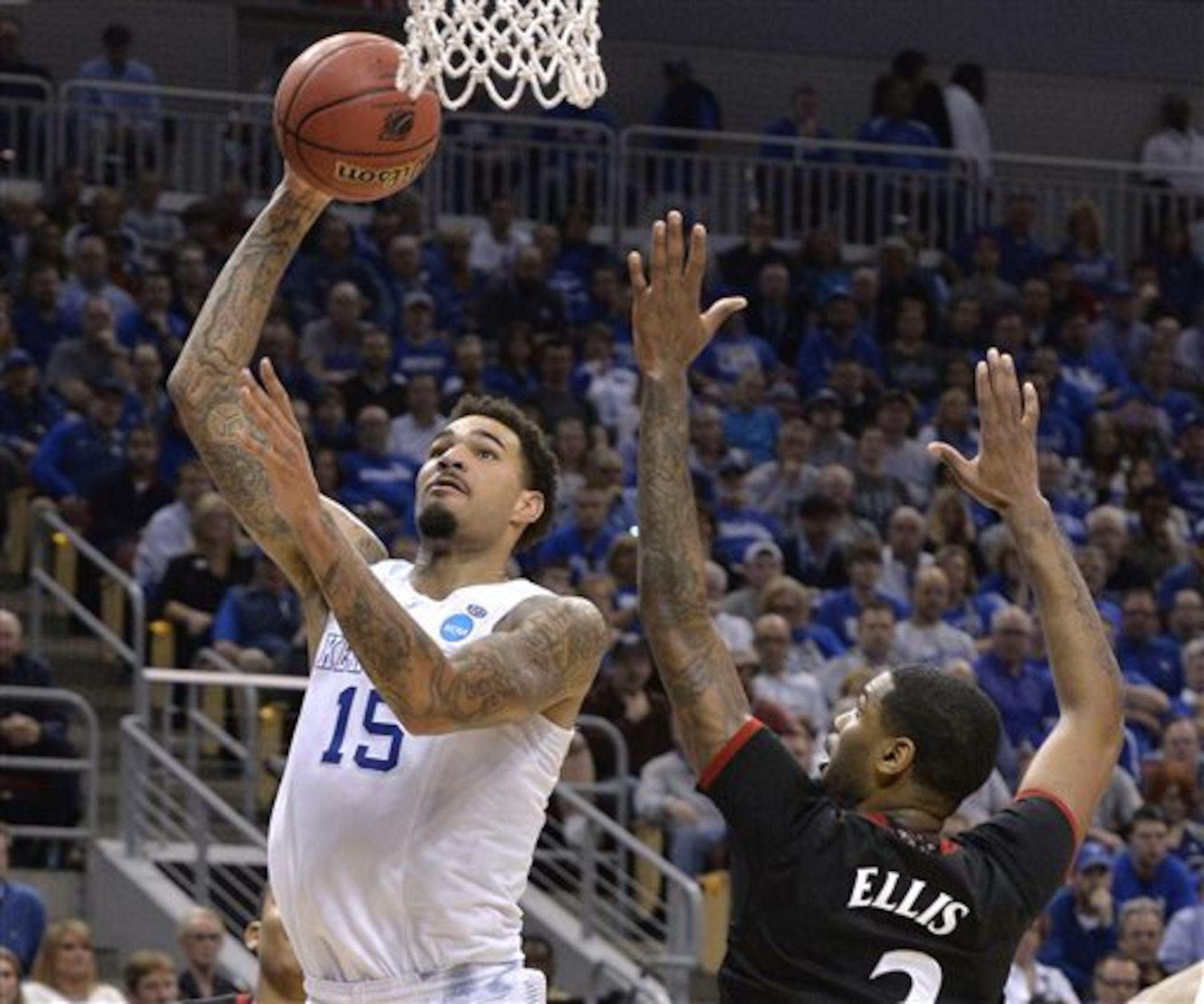
Strengths: Elite Athlete, Possibly Best Defender in Class, Great Shot-Blocker
Weaknesses: Borderline Broken Offensively, Unsure How Much Better He'll Get, Below-Average Rebounder
With Cauley-Stein, I keep coming back to the misperceptions about his supposed potential. He's been discussed like he's an underclassman despite being just a few months younger than Frank Kaminsky. We watched Cauley-Stein for the last three years; he is who he is.
There is a ton of good in his game. He has the potential to be a generational defender. A 7'1" center who can stick with Jerian Grant in the open court is glitch-in-the-human-gene-pool stuff. Cauley-Stein won't have trouble switching against pick-and-rolls once he gets the intricacies of NBA defense down, and he's the type of rim protector who can hide perimeter deficiencies.
There's also little to like about him offensively. Cauley-Stein doesn't have a post game to speak of, doesn't pass well after taking entry passes and struggles with his touch on paint shots away from the rim. He made 33.3 percent of his shots taken outside the restricted area last season, per Hoop-Math.com.
Best-case scenario is that Cauley-Stein develops into a pick-and-roll beast in the mold of Tyson Chandler.
9. Stanley Johnson, SF, Arizona
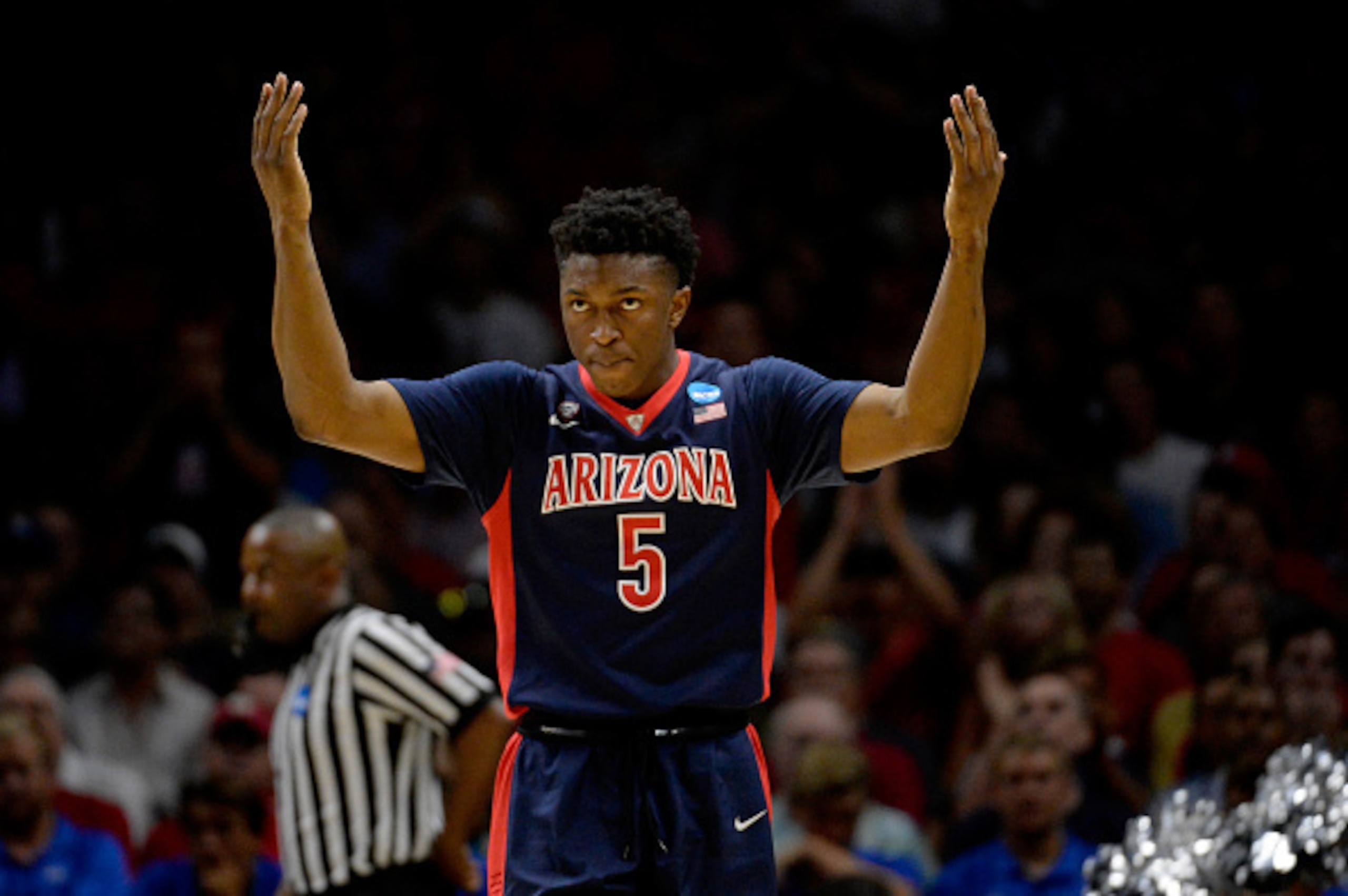
Strengths: NBA Body, Committed, Smart Defender, Better Shooter Than Advertised
Weaknesses: Not an Elite Leaper, Unpolished Offensively
Johnson checks many of the same boxes as Winslow but is slightly inferior in every category. His lack of elite lateral quickness gives him a lower defensive ceiling, his shot is worse from a form and percentage standpoint, and he doesn't have quite the same feel as a creator.
Don't mistake those for major criticisms. Johnson is still a fine prospect who is safer than nearly everyone else in this range. He defends like a young Ron Artest, using his big body to aggressively poke and prod opposing wings. While measured at 6'6" in shoes at the combine, Johnson has a 7-foot wingspan that helps him make up for being undersized.
It's strange to call a 19-year-old easily projectable, but Johnson is an exception to the rule. He has a future as a third banana on a playoff team.
10. Myles Turner, PF/C, Texas
Strengths: Shot-Blocking, Massive Wingspan, Developing Jumper
Weaknesses: Going to Get Overpowered in Post, Inconsistent Production, More Project Than Player
Turner has the tools of an excellent modern big man. He is a good athlete with a 7'4" wingspan who has shown a willingness, if not quite an ability, to stretch beyond the three-point arc. Even if shooting 27.4 percent from long range is less than ideal, it's promising that Turner is unafraid to work beyond his comfort zone.
That said, it's unclear if he's ever going to become great in any one category. His elite shot-blocking should translate from Texas, where he swatted nearly five shots per 40 minutes. Otherwise, he's a moldable piece of clay who could develop into a Serge Ibaka type two-way star or end up superglued to the bench.
Turner needs to add strength and be more willing to play underneath the basket to excel as a defender. He'll also have to prove his improved running form won't regress whenever he gets tired. The tools are here regardless.
11. Cameron Payne, PG, Murray State

Strengths: Off-the-Dribble Creator, Good Enough Shooter, Super-High Basketball IQ
Weaknesses: Plays Below Rim, Below-Average Defender Who Takes Plays Off
Payne will join Damian Lillard, C.J. McCollum and Elfrid Payton as the fourth straight small-school guard to force his way into the lottery. The Murray State mixes a bit from all three predecessors. He's an off-the-bounce creator like Lillard, trends more toward Payton's pure point guard tendencies and works largely under the rim like McCollum.
It was a bit of a surprise to see Payne declare after his sophomore season—especially after Murray State failed to make the tournament. The gamble wound up paying off, as he's impressed enough teams that No. 14 should be the bottom of his draft stock.
Whichever team that selects him will have to hope he reaches his offensive potential because it won't be there on the other end. Payne never really played with a sense of defensive urgency and isn't the type of springy athlete who can suddenly turn it on. OKC is a perfect fit because he's best served to get a couple of years as a backup, where his deficiencies won't generate a ton of attention.
12. Devin Booker, SG, Kentucky
Strengths: Maybe the Best Shooter in Class, Better Athlete Than Advertised, Takes Smart Shots
Weaknesses: Lacks Aggression at Times, Doesn't Fill Stat Sheet
The Kentucky product was quietly one of the biggest combine winners. He had the best shuttle and lane agility times of any participant, flipping the "unathletic" narrative on its head. Posting a 34.5-inch vertical didn't wow anyone, but it's not as if Booker has cinder blocks attached to his feet; he's a mediocre leaper with elite lateral quickness.
The latter trait could turn him into a dynamic two-way piece if he ever learns to dribble. All but one of his threes were assisted last season at Kentucky, per Hoop-Math.com, and film shows he's not confident creating for himself once he puts the ball on the floor. Klay Thompson is probably the easiest comparison here, but Thompson was a star in college; Booker was a cog who spaced the floor and took smart shots.
As the youngest player in this class, Booker has plenty of room to develop. He doesn't turn 19 until October and has already flashed a veteran shot-selection mentality and the ability to stretch the floor. If the lateral quickness he showed at the combine eventually translates defensively, Booker will be a late-lottery steal.
13. Sam Dekker, SF, Wisconsin
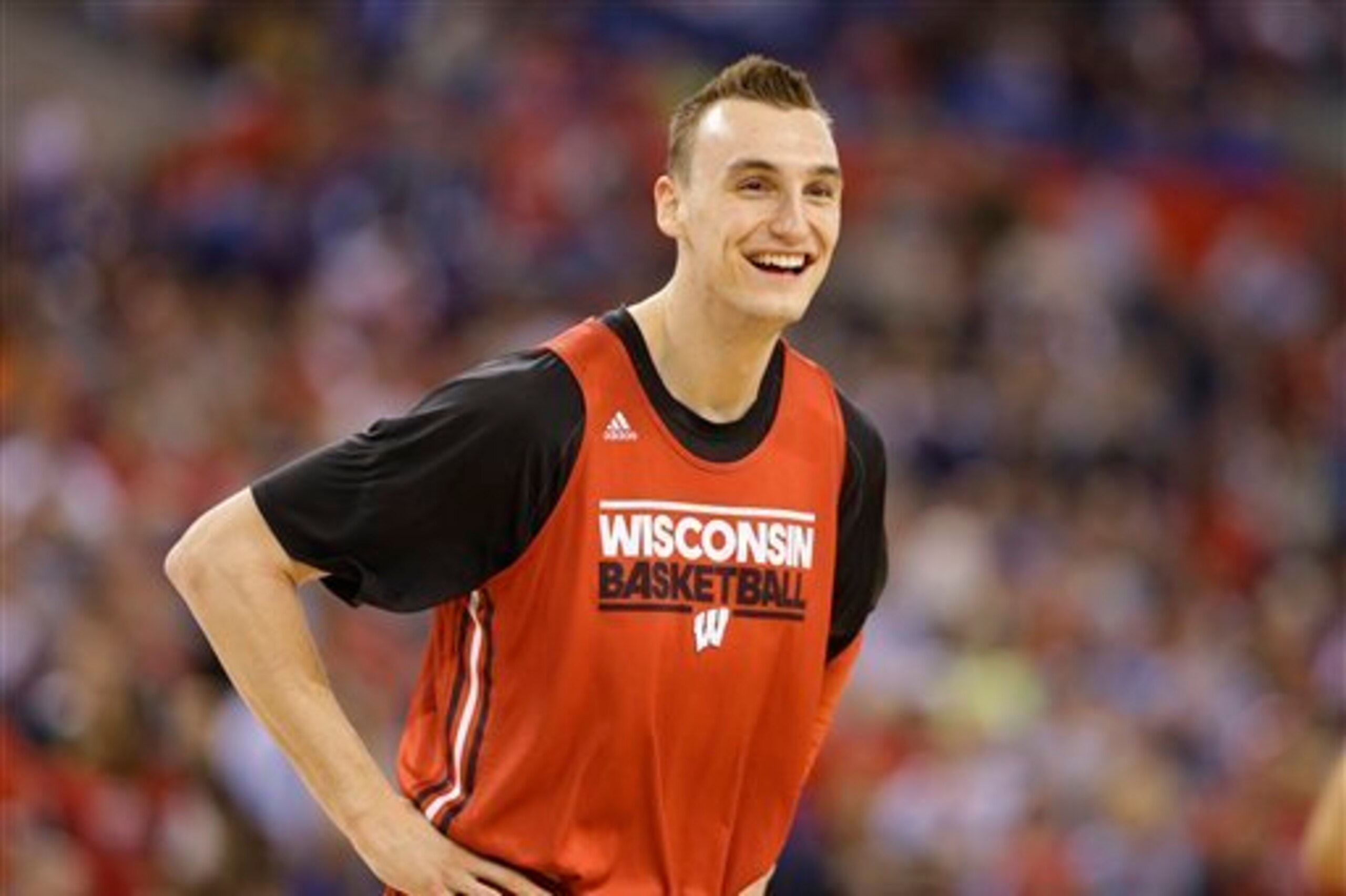
Strengths: Good Athlete, Better Shooter Than Percentages Show, Makes His Own Shots
Weaknesses: Lacks Consistent Production, Inattentive at Times Defensively
Dekker is a player I wish would have come out after his freshman season. He probably would have been a late first-rounder rather than angling for a late-lottery slot, but the two seasons of NBA experience would have been invaluable. Rather than learning how to grind a basketball game down to its nub at Wisconsin, Dekker could have been in an environment where his unique skills could flourish.
He fits the pro game. He's an athletic wing who can attack off the dribble and shoots well enough to keep his defender honest. His ability to attack and finish through contact is particularly impressive for a kid who doesn't stand out as strong.
Defensive fundamentals and consistency are paramount to his development. Had Tournament Dekker shown up all regular season, he'd be a no-doubt-about-it top-10 selection.
14. Trey Lyles, PF, Kentucky
Strengths: Good Shooter, Solid Passer out of High Post, Very Fluid Offensively
Weaknesses: Not a Good Athlete, Mostly Anonymous at Kentucky
There are so many good things about Lyles' game. His ability to stretch the floor, his improving post skills, his passing vision and his basketball intelligence are all graded somewhere above average. At issue is whether Lyles has any elite skills, or if merely being good at a bunch of stuff will turn him into a career backup.
There is no question he has an NBA future. He's a skilled offensive talent who has developing range out to the three-point line and a great feel for the game—two things you want from any big as the positionless basketball movement continues.
Where Lyles struggles is in the production standpoint. Having three-point range is great until you make 14 percent of them. Having a 7'2" wingspan is dope until you can't muster a half-block per game and look lost at times defensively. I like Lyles, but he's been ascending up draft boards entirely too fast based on his film.
15. Frank Kaminsky, PF/C, Wisconsin
Strengths: Fluid Post Game, Consistent Three-Point Range, Intelligent
Weaknesses: Unathletic, (Relatively) Short Wingspan, Thin Frame
One of the most polarizing prospects in this class. His forward growth will be minimal. Your read of him as a prospect depends on whether you think his skills can all translate to the NBA level.
I change my mind just about every day. His career followed a typical Bo Ryan through line, as Kaminsky sat as an underclassman before flourishing the last two years. For all intents and purposes, we have one full season of Kaminsky looking like a first-round prospect and doing so after his 21st birthday.
That's usually a bad mix, and Kaminsky has skill flaws that could hamper his development. Whichever team that selects him will need to pound the verticality rule into his head so he doesn't become unusable defensively. His lack of lateral quickness is going to be a problem against pick-and-rolls, so he needs to find a niche and stick to it.
Offensively, Kaminsky can really play. His array of post moves is better than anyone in this class outside of Okafor, and he has worked hard at becoming a great shooter. Channing Frye doesn't sound like an ideal result when you're talking about a likely lottery pick, but Kaminsky's selection will look better in a few years than it will now.
16. Jerian Grant, PG, Notre Dame

Strengths: Elite Athleticism, Good Size, Quick, Good Open-Court Vision
Weaknesses: Limited Upside, Below-Average Shooter
If Grant weren't turning 23 in October, we'd be talking about a top-10 selection. The Notre Dame product fits perfectly in line with the NBA's evolution at point guard, mixing elite athleticism with combo guard size (6'4") and a love for pushing the pace. He's also a committed defender with a long enough wingspan to be fine against shooting guards.
Problem is, Grant is turning 23 in October. Outside of small-school prospects who would have never received national attention without a multiyear stretch of dominance, the recent history of collegiate seniors is far from promising. Since the one-and-done rule change was implemented, Roy Hibbert is probably the best senior drafted who played in a power conference.
That's going to scare off teams. Grant is still raw as a jump shooter, and there is natural skepticism the skill won't develop after failing for four years at Notre Dame. Take away the shooting and age factors, though, and his game doesn't have many holes.
17. Kelly Oubre, SF, Kansas
Strengths: Superior Length, Good Athlete, Ton of Projectable Skills
Weaknesses: Few Actual Skills, Jumper Is Overrated, Inconsistent
If you were looking for a place to be underwhelmed by supposed top prospects, Kansas was a gold mine last season. Cliff Alexander and Oubre arrived in Lawrence as top-10 picks. Oubre is now clinging to the lottery for dear life, while Alexander might be available at the top of Round 2.
Of the two, Oubre has the higher upside. He's an athletic wing with a 7'2" wingspan who projects as a potential lockdown defender if he puts in the full commitment. Though ball-handling isn't a major strength, Oubre can put it on the deck and finishes well above the rim.
He only had two or three games where he put all those tools together against legitimate opponents. Watching him play almost left me feeling hollow. His shot, while decent enough from a percentage perspective, is going to be reworked by NBA coaches who desire consistent mechanics.
18. Tyus Jones, PG, Duke
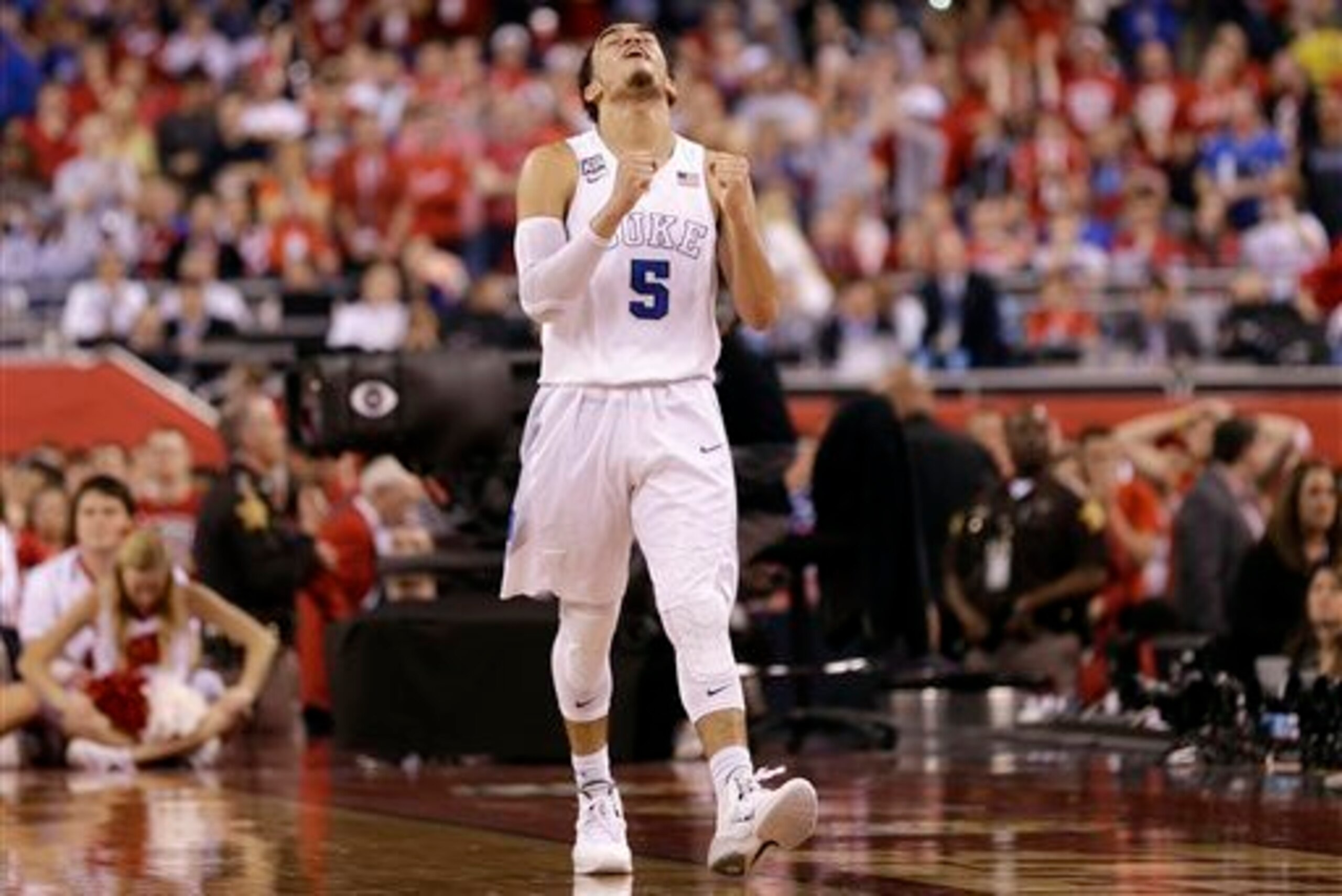
Strengths: Off-the-Charts Basketball IQ, Great Passer, Developing Shooter
Weaknesses: Lacks Top-End Leaping Ability and Lateral Quickness, Average On-Ball Defender
We're at the point where faith a player will be a consistent rotation cog is a compliment. Jones lacks superstar physical traits, but he's perhaps the best pure point guard in this class. He's an excellent passer who makes smart decisions with the ball and thrives in a leadership role. To some, his breakout in the national championship game was a surprise; to anyone who has paid attention to his young career, it's par for the course.
There is little chance Jones ever reaches full superstardom, but it's easy to envision him as a better D.J. Augustin type. He's going to stick in this league for a long time.
19. Kevon Looney, PF, UCLA
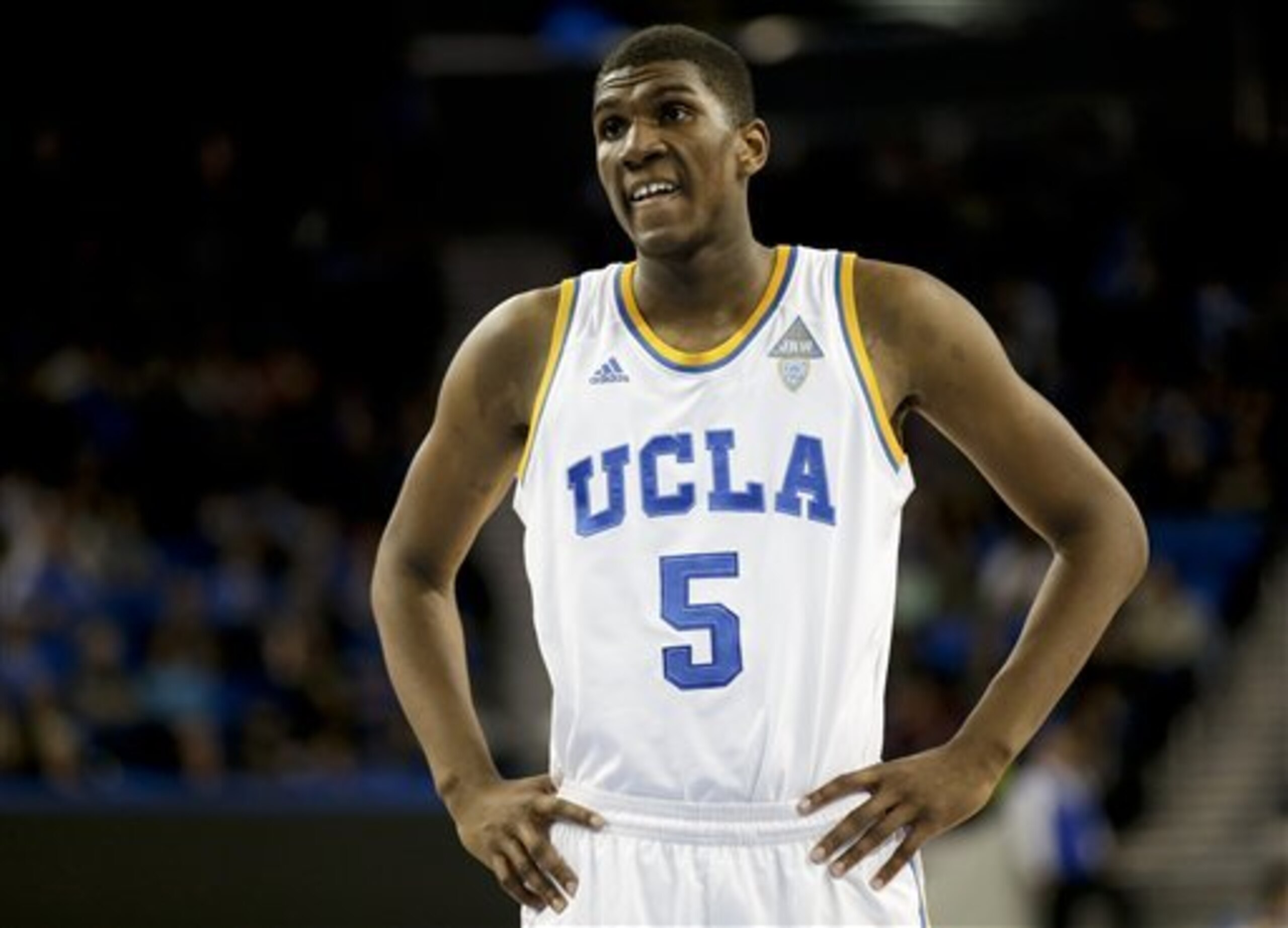
Strengths: Great Rebounder Given Strength Limitations, Improving Range on Jumper, Solid Passer
Weaknesses: Tweener, Needs to Add Strength, Below-Average Finisher
Looney is one of the more polarizing prospects in this class. Optimists see a Lamar Odom type whose ball-handling and passing skills make him an interesting swing forward. Pessimists see a beanpole stuck between two positions who isn't offensively skilled enough to be Kevin Durant or strong enough for a full-time power forward role.
The truth is somewhere in the middle. Looney isn't on Odom's level as a passer; a far more realistic comparison would be slightly better version of Thaddeus Young, adding a bit of three-point range and some better passing. The strength concerns are real, and he'll have to decide whether he wants to develop at the 3 or 4 spot.
"Playmaking" 4s are all the rage, and Looney can be a solid player if he commits to the role.
20. R.J. Hunter, SG, Georgia State
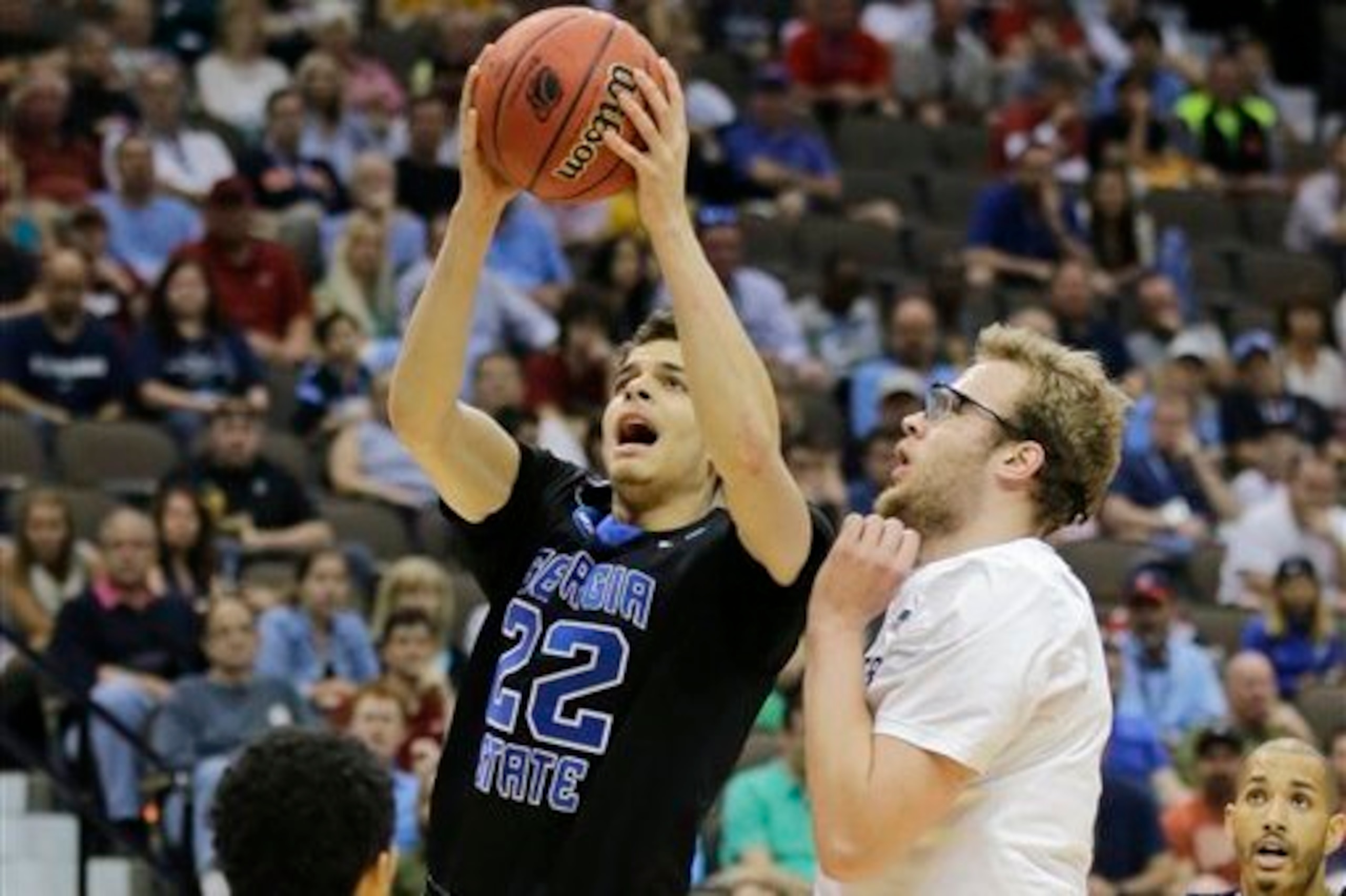
Strengths: Better Shooter Than Percentages Show, Good Off-the-Dribble Creator, Good Length
Weaknesses: Lacks Defensive Instincts, Mostly Plays Below Rim
From a statistical standpoint, Hunter's junior year was concerning. He shot 30.5 percent from three in a weak conference, chucking up a ton of contested shots before the shot clock necessitated it. You could go far as to say his stat line was Marshall Henderson-like.
Fortunately for Hunter, statistics are not the only scouting tool we have at our disposal. Kid spent the entire season with defenders draped all over him. Very few of his shots came via assist, as he was often thrown the ball and told to create for himself. Hunter is capable of putting up big scoring numbers, but it's hard to be efficient in those circumstances.
He might actually be better when surrounded by NBA talent.
The shooting slump also looks like an outlier when juxtaposed against his first two seasons. Hunter almost hit at a 40 percent rate as a sophomore and was at 36.5 as a freshman. He has a future in a sixth man role, even if he's never going to be much of a defender.
21. Bobby Portis, PF, Arkansas
Strengths: Promising Outside Shot, Good Post-Up Game, Plays Hard
Weaknesses: Has No Dominant Traits, Below-Average Lateral Quickness, No Second Jump
Portis projects as a role player, a Brandon Bass type who brings a quite a few solid offensive traits but doesn't offer much defensively outside of effort. The most encouraging thing in his favor is his emerging range, which showed improvement when he broke it out. Being able to take those couple of extra steps will be the difference between Portis bringing real NBA value or being a fungible eighth man.
Outside of some yet-to-be-unveiled surgery to make him faster and jump higher, Portis will probably always be a bit of a defensive liability. Teaching him how to use his 7'2" wingspan should be the first thing his next coach does; the easy blocks he picked up at Arkansas are a thing of the past.
22. Rondae Hollis-Jefferson, SF, Arizona
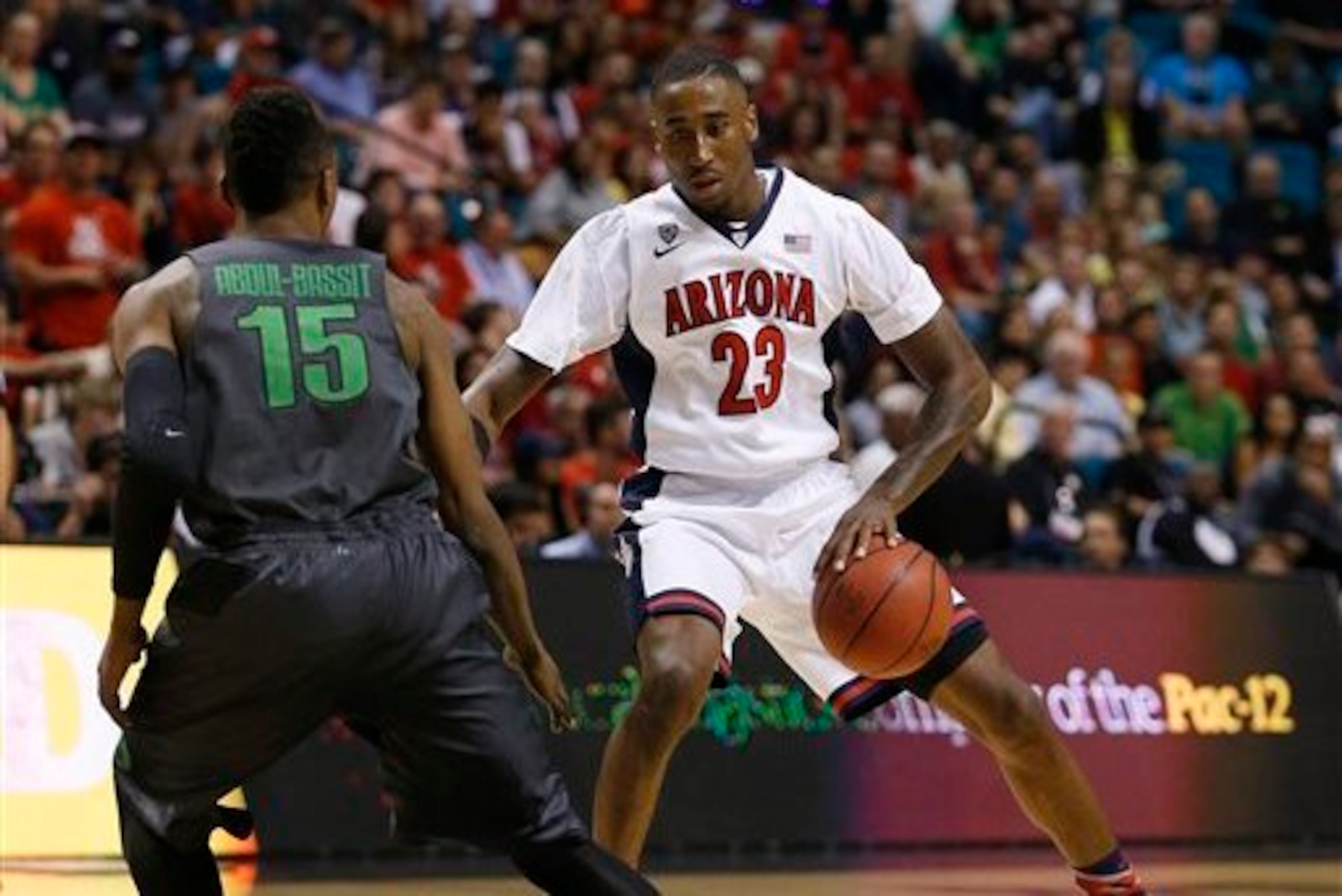
Strengths: Elite Defender, Good at Attacking the Basket, Great Length for Size
Weaknesses: Jumper, Jumper, Jumper
Hollis-Jefferson is entering the NBA at about the worst possible time. Now more than ever, teams are valuing the floor spacing they get from wings who can stretch the floor. The days of lockdown defenders getting minutes without an offensive skill set is nearing an end. The Grizzlies were consistently better without Tony Allen, perhaps the league's best on-ball defender, in the playoffs because teams ignore him.
Hollis-Jefferson is probably headed toward a similar fate. He projects as one of the best defenders in the class. His length atones for his 6'7" size, and he's a good athlete with a constantly running motor and aggression. It's too bad the jumper appears almost irreparable.
23. Montrezl Harrell, PF, Louisville
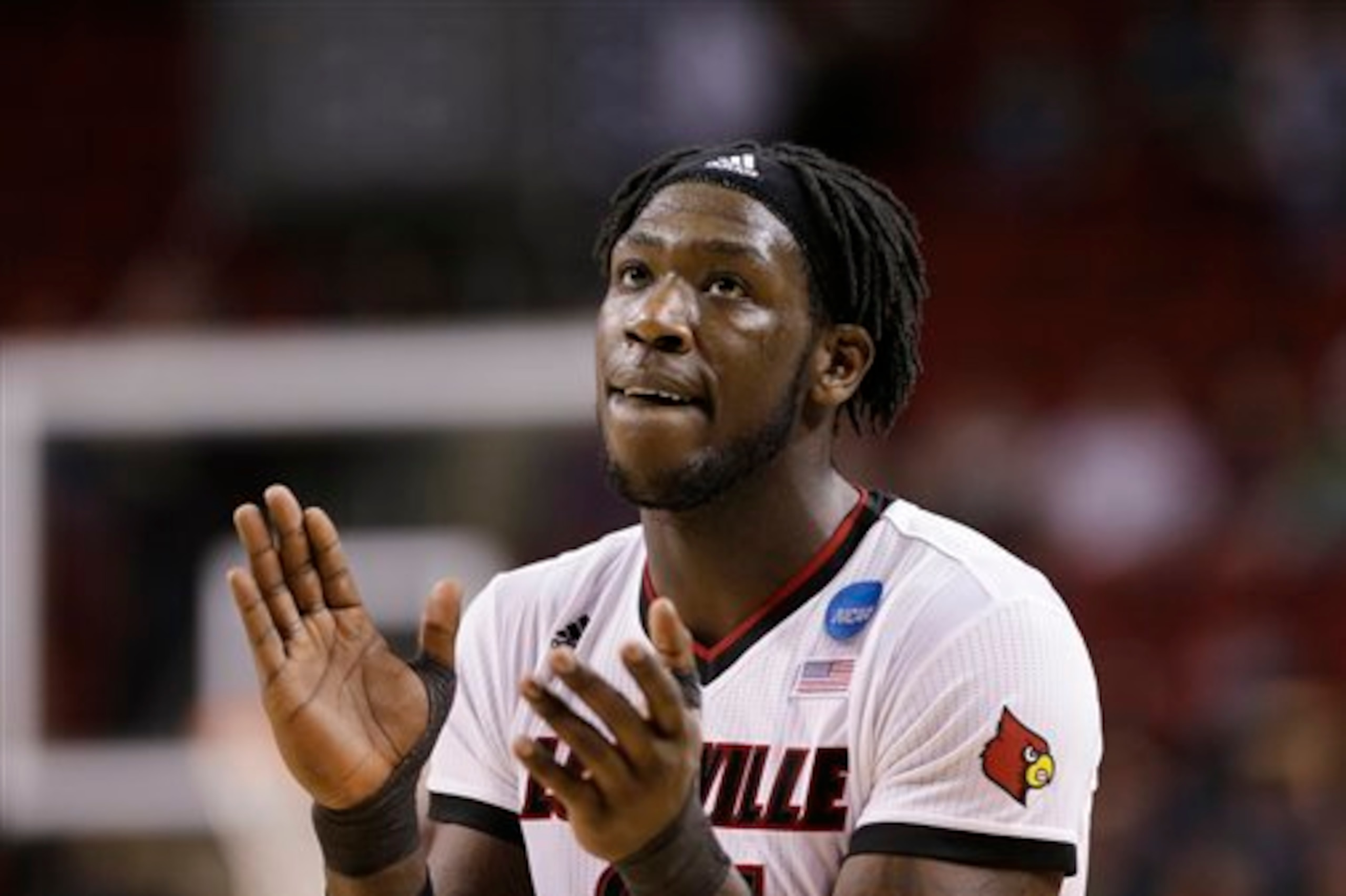
Strengths: Human Wrecking Ball of Energy, Super Athletic, Works Hard on Both Ends
Weaknesses: No Shooting Stroke, Can't Teach Height (Or Lack Thereof)
Change a few nouns, and you could probably copy and paste a majority of the Hollis-Jefferson section for Harrell. He works every second he's on the floor. He plays with constant activity on the defensive end and knows how to use his athleticism to his advantage offensively. After being viewed as a raw athlete for at least his first year at Louisville, Harrell has developed a passable post game that helped increase his scoring averages.
You know where this is headed. Harrell cannot shoot. He started shooting threes a bit last season, which was cute but didn't really go anywhere. The real savior for Harrell's draft stock was his surprising 7'4" wingspan. That alone assuaged some concerns about his less-than-ideal height. It's at least possible he'll develop into an above-average rim protector.
24. Justin Anderson, SG/SF, Virginia
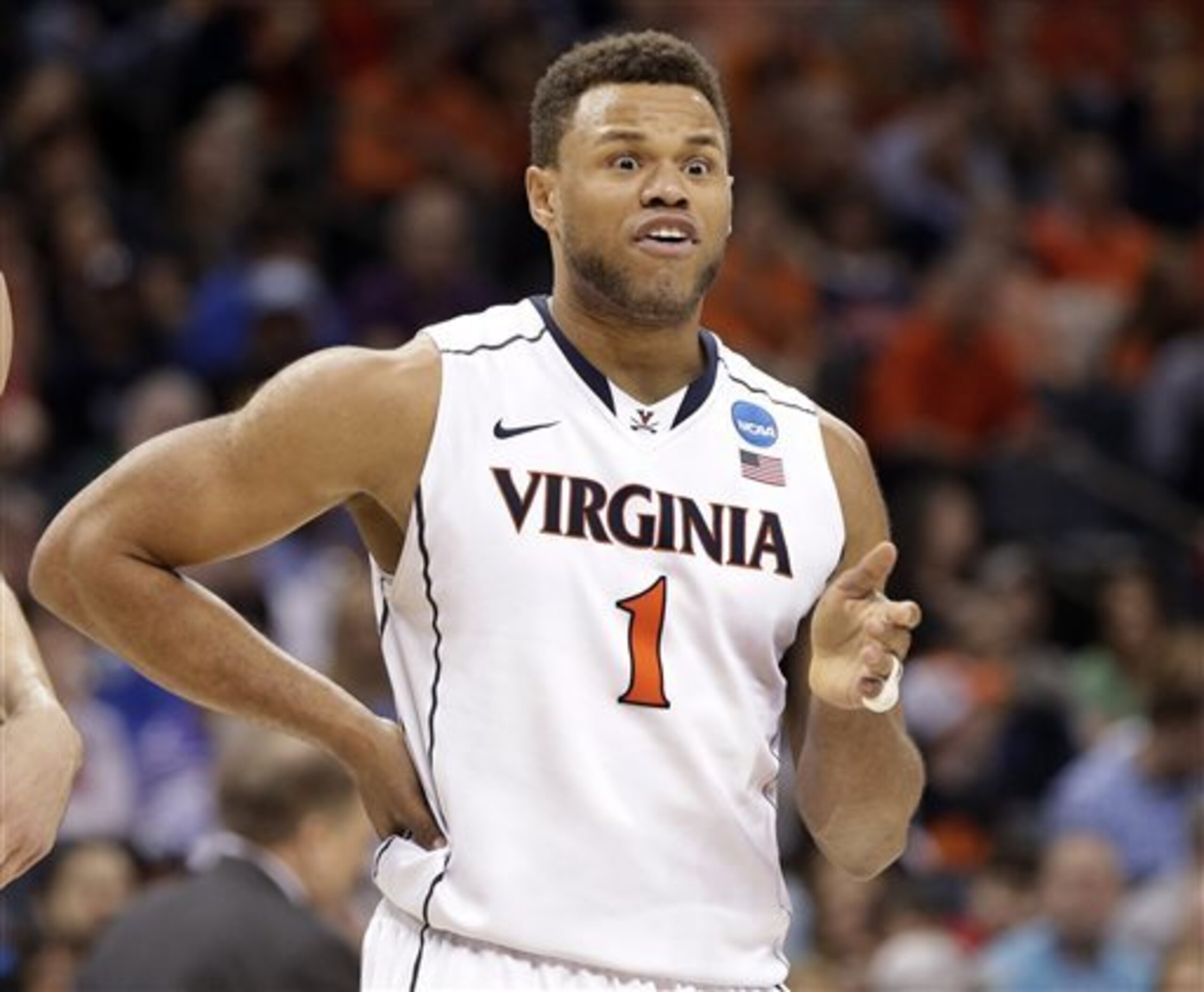
Strengths: Improving Shooter, Big-Time Athlete, Solid Two-Way Potential
Weaknesses: Shooting Numbers May Be Outlier, Can't Create for Himself, Can Lack Aggression
Anderson is one of the most underrated prospects in this class. He made a massive shooting improvement as a junior, has the athleticism to project as a good defender and never played in a system that allowed him to flourish. Three-and-D wingmen aren't the hot trending topic they were a year ago; they're just an expectation. Anderson can fill that role if his shooting improvement is for real.
The first two seasons of his career suggest 2014-15 was a bit of an outlier. He's made mechanical improvements that show up on film, but no one makes a 16 percent leap without some of it being subject to regression. Continuing those improvements, even if the percentages don't show it, will be Anderson's main goal as a rookie.
25. Rashad Vaughn, SG, UNLV
Strengths: Good Scorer with Three-Point Range, Athletic Finisher at Rim
Weaknesses: Not Much Defensive Interest, Takes Too Many Bad Shots, Doesn't Fill Stat Sheet
Falling in love with a prospect like Vaughn is easy as the process progresses. He's 18. He already has a good stroke that stretches to the NBA three-point line. He has no fear of scoring in any situation. When you're talking picks in the 20s, Vaughn is one of the few prospects with real boom potential.
Going back and watching film is more underwhelming. Vaughn doesn't really do anything but shoot at this point. He's disappointingly below-average as a free-throw shooter, plays intermittent defense and tends to look for his own rather than creating for others. There is also the whole thing where he might have a chronically injured knee already.
The top end of his potential to me is as a sixth man, Nick Young type.
26. Delon Wright, PG, Utah

Strengths: Tall for Position, Checks Every Stat Box, Grades Well Analytically
Weaknesses: Lacks Upside, Inconsistent Jumper
Losing three years in community college sucks a bit of excitement out of Wright's status. He's already 23. Rakeem Christmas is the only other player Wright's age who is a guarantee to be drafted. There's no use in rehashing the reason behind the NBA's age bias; it just exists.
Wright has been quietly excellent the last two seasons. He's a good rebounder and passer, averaging 5.8 rebounds and 5.2 assists to go along with his 15 career points per game at Utah. At 6'6", he has elite size (6'6") for a point guard and can defend 2s when the situation calls for it.
27. Cliff Alexander, PF, Kansas
Strengths: Physically Ready for NBA Grind, Excellent Athlete, Good Rebounder
Weaknesses: Lacks Offensive Polish, Had Mostly Dreadful Collegiate Stay
Being higher on Alexander than most is largely faith in the pre-college system. He was considered a top-five player in his high school class by every major publication. He and Oubre were viewed as the replacements for one-and-done Kansas stars Joel Embiid and Andrew Wiggins. Suffice it to say the sequel is never as good as the original.
Alexander nonetheless remains an intriguing prospect. He and Harrell share a lot of similar qualities, only Alexander is two years younger. If he would have returned to Kansas and received extended minutes, I have no doubt he would have brought himself back into the top-20 conversation. Alexander hasn't quite won over NBA scouts in workouts either, so some team is going to get a steal if he's there in Round 2.
28. Terry Rozier, PG, Louisville
Strengths: Dribble-Drive Game, Good Athlete with Length, Quick in Open Floor
Weaknesses: Passing Ability/Willingness, Shot Selection
We live in an era of positional fluidity, so saying Rozier isn't a point guard can be construed however you'd like. Rest assured that he cannot play a traditional 1 spot at the NBA level. The willingness to push teammates into the action has not been there for two years, and Rozier's court vision generally seems lacking.
When Rozier is on, he's an explosive scorer who defends well and can leap out of the gym. The Louisville product is one of the two or three quickest players in this class; he was at or near the top of most combine speed drills. Teams looking for a score-first energizer should consider Rozier. Teams looking for a guard with traditional point guard skills should not.
29. Christian Wood, PF, UNLV

Strengths: High-End Rim Protector, Great Athlete for His Size, Potential in Pick-and-Rolls
Weaknesses: Lacks Strength, Inconsistent Production, Took Too Many Threes
Two or three years down the line, we could wonder how Wood fell to the bottom of the first round. Of course, it'll take that long because he is two or three years away from being a usable NBA player.
His length and athleticism combo along with his willingness to stretch beyond the arc makes him an intriguing prospect. His inability to knock down those threes and slight frame create concern for his decision-making and ability to defend in the post. There is about a 50-50 chance Wood becomes a solid NBA role player; the other 50 percent is what is scaring off teams.
30. Robert Upshaw, C, Washington

Strengths: Massive Center with NBA-Ready Body, Crazy Hops, Dominant at Times Defensively
Weaknesses: Anything That Doesn't Involve Dunking on Offense, An Array of Off-the-Court Problems
Another roll of the dice on talent in this spot. Upshaw might have been a lottery pick if he'd been able to keep his nose out of trouble. Seven-footers who average 7.2 blocks per 40 minutes don't come around too often. Upshaw has the size, speed and athleticism to at least be comparable to Cauley-Stein, though WCS is quicker on his feet.
Unfortunately, NBA teams have to account for the other stuff. Upshaw was dismissed from Fresno State and Washington for off-the-court issues, some of which are known and some of which are not. He's an enigmatic personality who is going to need a team with solid infrastructure to thrive.
| 31 | Nikola Milutinov | C | Serbia |
| 32 | Joseph Young | SG | Oregon |
| 33 | Chris McCullough | PF | Syracuse |
| 34 | Andrew Harrison | PG | Kentucky |
| 35 | Guillermo Hernangomez | C | Spain |
| 36 | Jarell Martin | PF | LSU |
| 37 | Cedi Osman | PG | Macedonia |
| 38 | Dakari Johnson | C | Kentucky |
| 39 | Rakeem Christmas | C | Syracuse |
| 40 | Anthony Brown | SG/SF | Stanford |
| 41 | Pat Connaughton | SG | Notre Dame |
| 42 | Jordan Mickey | PF | LSU |
| 43 | Tyler Harvey | SG | Eastern Washington |
| 44 | Michael Frazier II | SG | Florida |
| 45 | Arturas Gudaitis | C | Lithuania |
| 46 | Mouhammadou Jaiteh | C | France |
| 47 | Vince Hunter | SF | UTEP |
| 48 | Quinn Cook | PG | Duke |
| 49 | Luka Mitrovic | SF | Serbia |
| 50 | Jonathan Holmes | SF | Texas |
| 51 | Norman Powell | SG | UCLA |
| 52 | Michael Qualls | SG | Arkansas |
| 53 | George de Paula | PG | Brazil |
| 54 | Richaun Holmes | PF | Bowling Green |
| 55 | T.J. McConnell | PG | Arizona |
| 56 | Chris Walker | PF | Florida |
| 57 | Olivier Hanlan | SG | Boston College |
| 58 | Larry Nance | PF | Wyoming |
| 59 | Daniel Diez | SF | Spain |
| 60 | J.P. Tokoto | SF | North Carolina |
Mock Draft
| 1 | Minnesota Timberwolves | Karl-Anthony Towns, C, Kentucky |
| 2 | Los Angeles Lakers | Jahlil Okafor, C, Duke |
| 3 | Philadelphia 76ers | D'Angelo Russell, PG/SG, Ohio State |
| 4 | New York Knicks | Emmanuel Mudiay, PG, China |
| 5 | Orlando Magic | Kristaps Porzingis, PF, Latvia |
| 6 | Sacramento Kings | Mario Hezonja, SF, Croatia |
| 7 | Denver Nuggets | Justise Winslow, SG/SF, Duke |
| 8 | Detroit Pistons | Stanley Johnson, SF, Arizona |
| 9 | Charlotte Hornets | Devin Booker, SG, Kentucky |
| 10 | Miami Heat | Frank Kaminsky, PF/C, Wisconsin |
| 11 | Indiana Pacers | Willie Cauley-Stein, C, Kentucky |
| 12 | Utah Jazz | Myles Turner, PF/C, Texas |
| 13 | Phoenix Suns | Kelly Oubre, SF, Kansas |
| 14 | Oklahoma City Thunder | Cameron Payne, PG, Murray State |
| 15 | Atlanta Hawks (via Brooklyn Nets) | Trey Lyes, PF, Kentucky |
| 16 | Boston Celtics | Sam Dekker, SF, Wisconsin |
| 17 | Milwaukee Bucks | Kevon Looney, PF, UCLA |
| 18 | Houston Rockets (via New Orleans Pelicans) | Jerian Grant, PG, Notre Dame |
| 19 | Washington Wizards | Bobby Portis, PF, Arkansas |
| 20 | Toronto Raptors | Rashad Vaughn, SG, UNLV |
| 21 | Dallas Mavericks | R.J. Hunter, SG, Georgia State |
| 22 | Chicago Bulls | Tyus Jones, PG, Duke |
| 23 | Portland Trail Blazers | Christian Wood, PF, UNLV |
| 24 | Cleveland Cavaliers | Rondae Hollis-Jefferson, SF, Arizona |
| 25 | Memphis Grizzlies | Delon Wright, PG, Utah |
| 26 | San Antonio Spurs | Rakeem Christmas, PF/C, Syracuse |
| 27 | Los Angeles Lakers (via Houston Rockets) | Cliff Alexander, PF, Kansas |
| 28 | Boston Celtics (via Los Angeles Clippers) | Robert Upshaw, C, Washington |
| 29 | Brooklyn Nets (via Atlanta Hawks) | Justin Anderson, SG/SF, Virginia |
| 30 | Golden State Warriors | Nikola Milutinov, C, Serbia |
Follow Tyler Conway (@tylerconway22) on Twitter
All measurements are courtesy of the NBA. All statistics are via Sports-Reference unless otherwise stated.


.jpg?w=2560 "Chiefs, Steelers Eye WR Trades")