

Every NBA free-agent signing is one expensive roll of the dice.
Production doesn't always carry over from one season to the next, let alone transition to a different system. Chemistry can be hard to maintain in the face of change. Past injury problems can resurface and new ones might emerge.
In other words, there is risk involved with any acquisition. But it's not evenly dispersed among players.
The 2015 free-agent class is a perfect example of that. While not overloaded with star power—LeBron James is technically a member, but he's not going anywhere—it's packed to the brim with worthwhile investments.
But it's not without its red flags. Some are flying for current or former health problems. Others have been raised due to declining statistics. Play style is also a cause for concern in some cases, as a few players' strengths seem less relevant and weaknesses more alarming in today's pace-and-space game.
The five players featured here could all wind up looking like shrewd additions. Or their signings could be remembered as colossal missteps.
The stakes are as high as you'd expect for what these players are: multimillion-dollar gambles.
Point Guard: Rajon Rondo
1 of 5
At the Boston Celtics training camp in September, Rajon Rondo was asked if he thought he's a max-contract player. He responded swiftly and confidently, "Yes, I do," via ESPN.com's Baxter Holmes.
It didn't sound outlandish then. But imagine the reaction if he made a similar declaration now.
The Celtics unloaded the four-time All-Star onto the Dallas Mavericks less than two months into the season. Rondo's stint there seemed to fall outside the realm of a worst-case scenario.
He inherited a then-historically potent offense and brought it to a screeching halt. The Mavs were pumping in 113.6 points per 100 possessions prior to Rondo's late-December debut. That number plummeted to 104.1 over the rest of the season and sank to 101.7 with Rondo on the floor.
The Mavs effectively cut ties with Rondo midway through their second playoff game. He played the first 34 seconds of the third quarter, picking up two personal and one technical foul during that stretch. He never suited up for Dallas again, initially ruled out with a mysterious back injury that sources later told ESPN Dallas' Tim MacMahon was merely an attempt "to help [Rondo] save face."
Rondo hasn't looked the same since suffering a torn ACL in January 2013, shooting just 41.8 percent from the field and posting a below-average 14.2 player efficiency rating over the past two seasons.
Both his ball-dominant style and perimeter shooting woes are problematic in today's free-flowing NBA. He's still an expert passer and an effective defender when he's engaged, but his disastrous run in Dallas did nothing to lessen concerns about his attitude.
There are enough teams with cap space and point guard vacancies (cough, Los Angeles Lakers) for someone to give Rondo a look. But whoever signs him will likely be crossing their fingers underneath the negotiating table.
Shooting Guard: Wesley Matthews
2 of 5
Wesley Matthews' 2014-15 performance didn't put him on this list.
In fact, he looked like one of the 2015 free-agent class' safest investments with a wildly productive set of three-and-D skills. Despite only playing 60 games, he finished with the ninth-most three-point makes (173) while hitting 38.9 percent of his long-range looks. His 2.27 defensive real plus-minus was second-highest among shooting guards who averaged at least 20 minutes per game, via ESPN.com.
If Matthews wasn't a max-contract candidate, he looked very close to it.
But his season—and that of the Portland Trail Blazers—changed in the worst possible way on March 5. That's the night he tore his left Achilles tendon, casting a dark cloud of uncertainty over his short-term and long-term future.
"Many players have had their career ruined by an Achilles tear," wrote Basketball Insiders' Alex Kennedy. "Some players don't play in the NBA again. ... Some players return, only to end their career shortly after because they struggle and can't stay healthy. ... Some players continue playing, but never return to their same pre-injury level."
Matthews' outlook doesn't have to be defined by history. He's an incredibly hard worker—he went undrafted in 2009 but has still started more than 86 percent of his career games—and he's younger than a lot of NBA players who suffered the same injury before him.
But no one knows how his body will respond and won't have that information before the free-agent market opens. He could opt for a one-year "prove it" deal and re-enter 2016 free agency (just in time for the new TV money), but teams might throw longer contract offers at him in the hope of signing him for cheap.
If his body cooperates, it could be an invaluable signing. But if the injury lingers, someone could pay for his past production without receiving it in the future.
Small Forward: Tobias Harris
3 of 5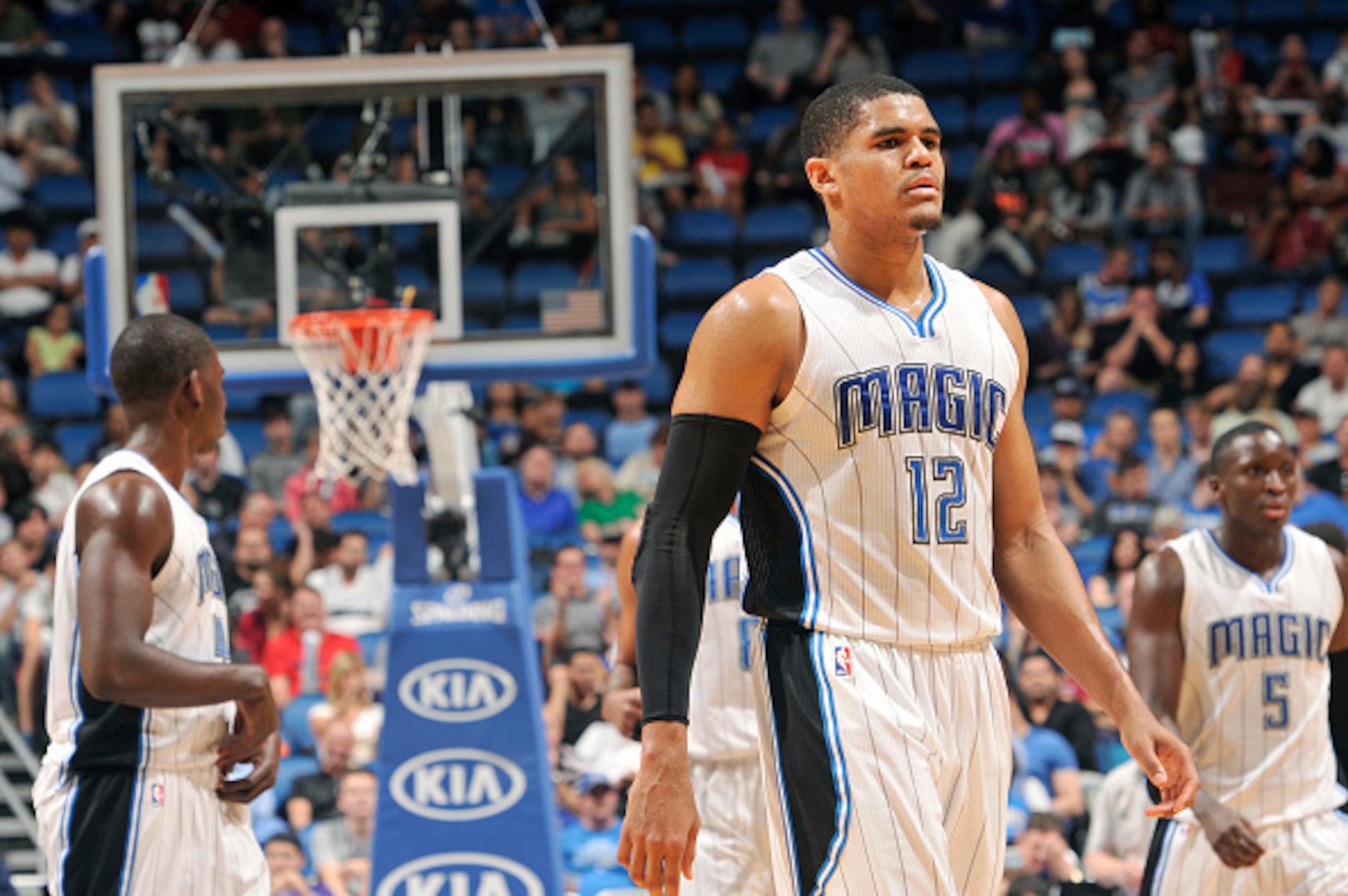
There's so much to like about Tobias Harris.
He has the versatility needed to seamlessly shift between either forward position. He can shred nets from distance, create scoring chances off the dribble and finish plays around the rim.
The stat sheet paints him as a unique talent. He was one of only six players to average at least 17 points, six rebounds and one three-pointer per game. Add a nightly steal to the equation, and Harris had a stat line only LeBron James, Russell Westbrook and Carmelo Anthony could match.
The 22-year-old has the numbers teams want to see in a potential target. But every suitor has one crucial question to ask: Should Harris' production be trusted?
"On one hand he's shown limitations in his game, excelling in certain areas and struggling in others that are arguably more important," wrote Bleacher Report's Michael Pina. "On the other, for someone so young to put up such impressive numbers, you can only shake your head."
Harris' box scores have some glaring holes. His 1.8 assists per game this season were a career high. They were also the fifth fewest of the 52 players who averaged at least 30 minutes and a had a 22-plus usage percentage. That's a scary bit of tunnel vision for someone whose career PER sits a tick above the average mark of 15.0 (16.3).
Scoring is his current specialty, but he was only third on the 25-win Orlando Magic at 17.1 points per game. The Magic were also 2.4 points per 100 possessions better when he didn't play.
If he can expand his offensive arsenal and improve his defensive focus, he could be a good player. He certainly has the time to develop. But if his raw numbers drive his price up, someone will have to pay a hefty price without knowing how dependable his stats really are.

Power Forward: Greg Monroe
4 of 5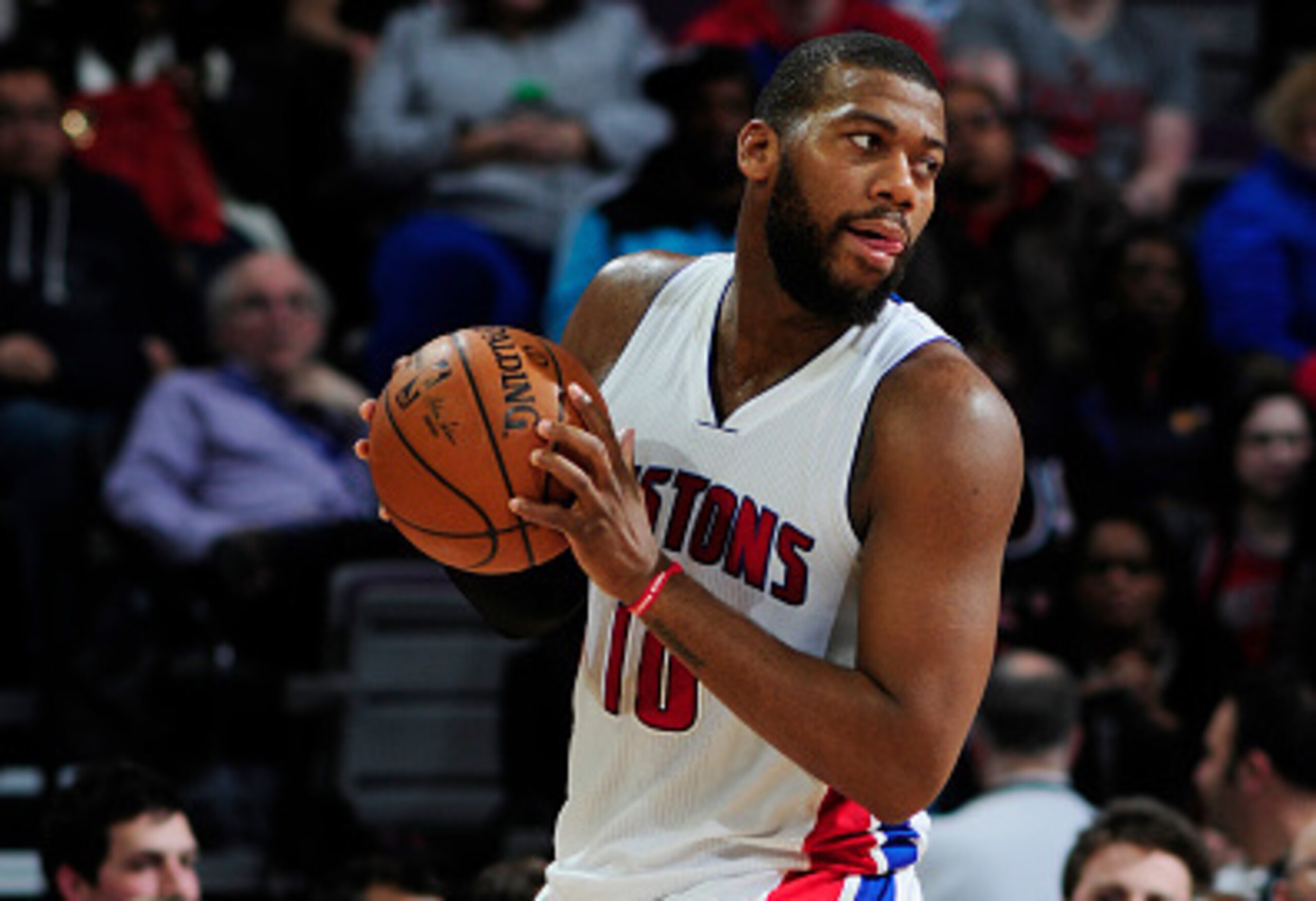
Greg Monroe shouldn't have trouble generating significant interest as an unrestricted free agent.
He has averaged at least 15 points, nine rebounds and two assists in each of the last four seasons. Kevin Love is the only other player who his hit those marks over the same stretch. Monroe's career field-goal percentage sits a hair above 50 percent, and his free-throw accuracy rate falls just below 70 percent. He's had a top-10 offensive rebounding total during three of his five NBA seasons.
His numbers alone should net him a major salary. And at 25 years old, his best basketball is presumably ahead of him. But his old-school back-to-the-basket style is an awkward fit for almost any team.
"Monroe is a tricky player around which to build," Grantland's Zach Lowe wrote. "An ideal roster would surround him with at least one big man who can both shoot from range and protect the basket, and there are maybe a half-dozen guys who can do both of those things at an elite level. They are expensive and very hard to get."
Monroe isn't a floor-spacer. More than 86 percent of his career field-goal attempts have come within 10 feet of the basket and 57.4 percent have been taken from three feet or closer. He's not a rim protector either. His 1.3 block percentage was tied for the sixth worst among the 43 players 6'11" or taller who averaged at least 20 minutes.
He doesn't have the quickness to blow up pick-and-rolls or chase stretch forwards off of the perimeter. He plays below the rim on both ends of the floor. He's the proverbial slow-and-steady tortoise, but teams are dominating this league with sharpshooting, lightning-quick hares. The Detroit Pistons just traded for stretch forward Ersan Ilyasova, almost certainly pulling themselves out of the Monroe race.
It's not a knock on the Moose's game, but rather the recognition that his specific style isn't what a lot of teams want or need right now.
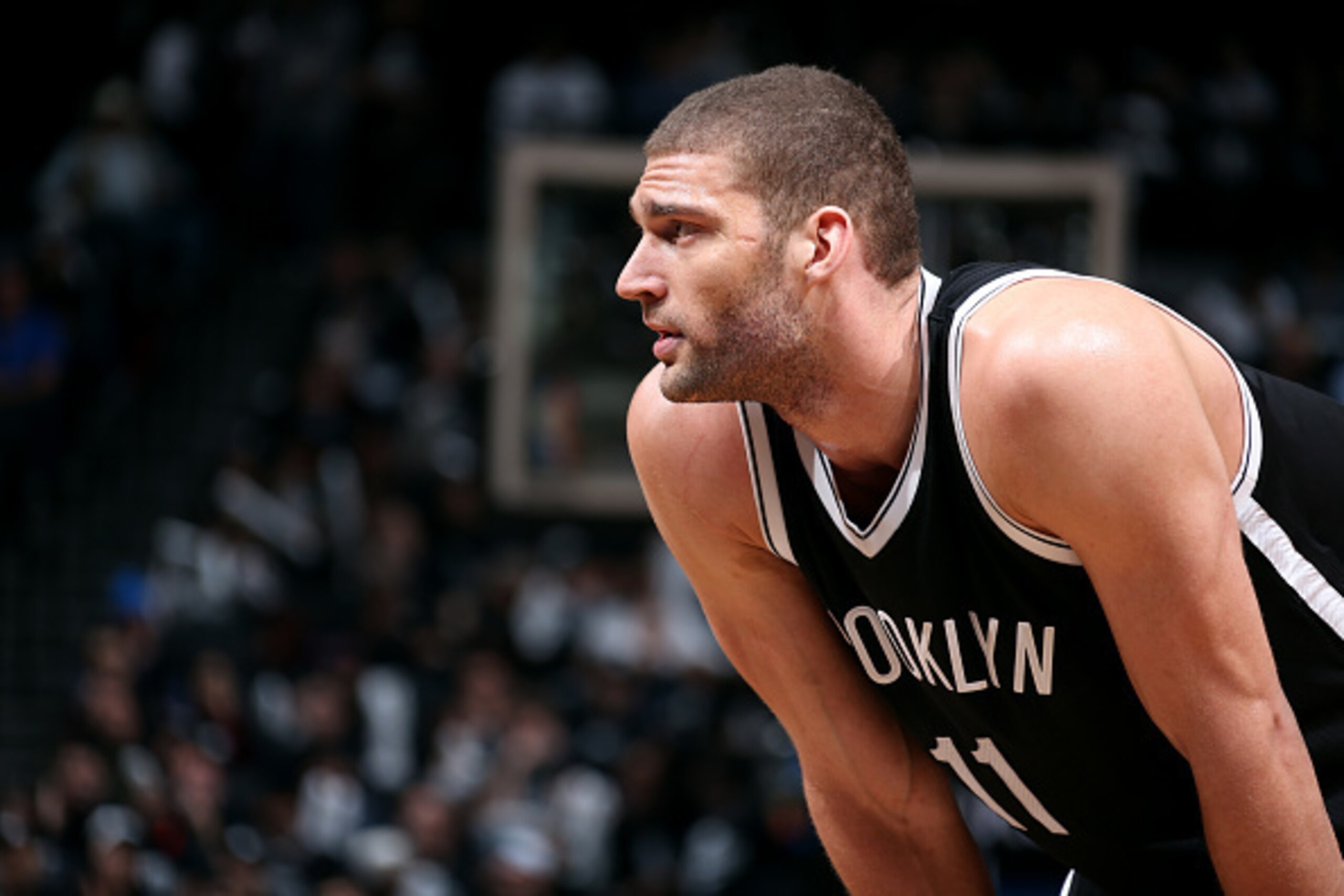
Center: Brook Lopez
5 of 5
Brook Lopez has to hope that most front-office members have a short memory.
In December, Grantland's Zach Lowe brought word that most executives thought Lopez would pick up his $16.7 million player option for 2015-16. It sounded like a no-brainer decision then. Injuries and rebounding issues—two ongoing themes in Lopez's NBA story—had cost him his starting spot for the Brooklyn Nets. He didn't look like an eight-figure player.
But he eventually forced his way back into the opening lineup, then steamrolled through the second half of the season. He put up 19.7 points and 9.2 rebounds a night after the All-Star break, helping the Nets rally to clinch the East's No. 8 seed.
By April, Lowe was hearing the exact opposite from execs who now expected Lopez to decline the option. Taking things a step further, one opposing general manager told the New York Post's Fred Kerber that it will take max money for the Nets to keep Lopez.
Think about that for a second. A few months back, Lopez looked fortunate to be getting $16 million next season. Now, he could be closing in on a $100 million payday.
Lopez is a super-skilled scorer in the low post and a comfortable shooter out to the mid-range. But he's also a 7-footer with a history of foot problems who just had his best rebounding year in five seasons—by grabbing 7.4 per game. He's a plodder, so teams can't push the pace when he's manning the middle. And he's far from what one would consider a defensive anchor.
There aren't many 20-point, 10-rebound guys in this league. Only three players cleared both marks this season: LaMarcus Aldridge, Anthony Davis and DeMarcus Cousins. The chance to get those numbers from Lopez is enough for someone (probably Brooklyn) to give him a max deal.
But his next employer has to hope his rebounding activity stays high, his injury problems are kept in the past and his lack of mobility isn't too much of an issue in this up-and-down game.
Unless otherwise noted, statistics used courtesy of Basketball-Reference.com and NBA.com.

.jpg?w=2560 "Chiefs, Steelers Eye WR Trades")
.jpg?w=2560 "Cowboys Handle Eagles on MNF 🤠")
