San Francisco 49ers: Will the Deep-Passing Game Be Better in 2015?
One commonly stated assumption for the San Francisco 49ers’ 2015 season is that the addition of Torrey Smith should in turn add the deep pass back to the 49ers’ passing game. Colin Kaepernick has said that the 49ers are dedicated to going deep, saying that he “feels more accurate than he’s ever been” and saying that the 49ers have spent time working on, as well, according to Matt Barrows of the Sacramento Bee.
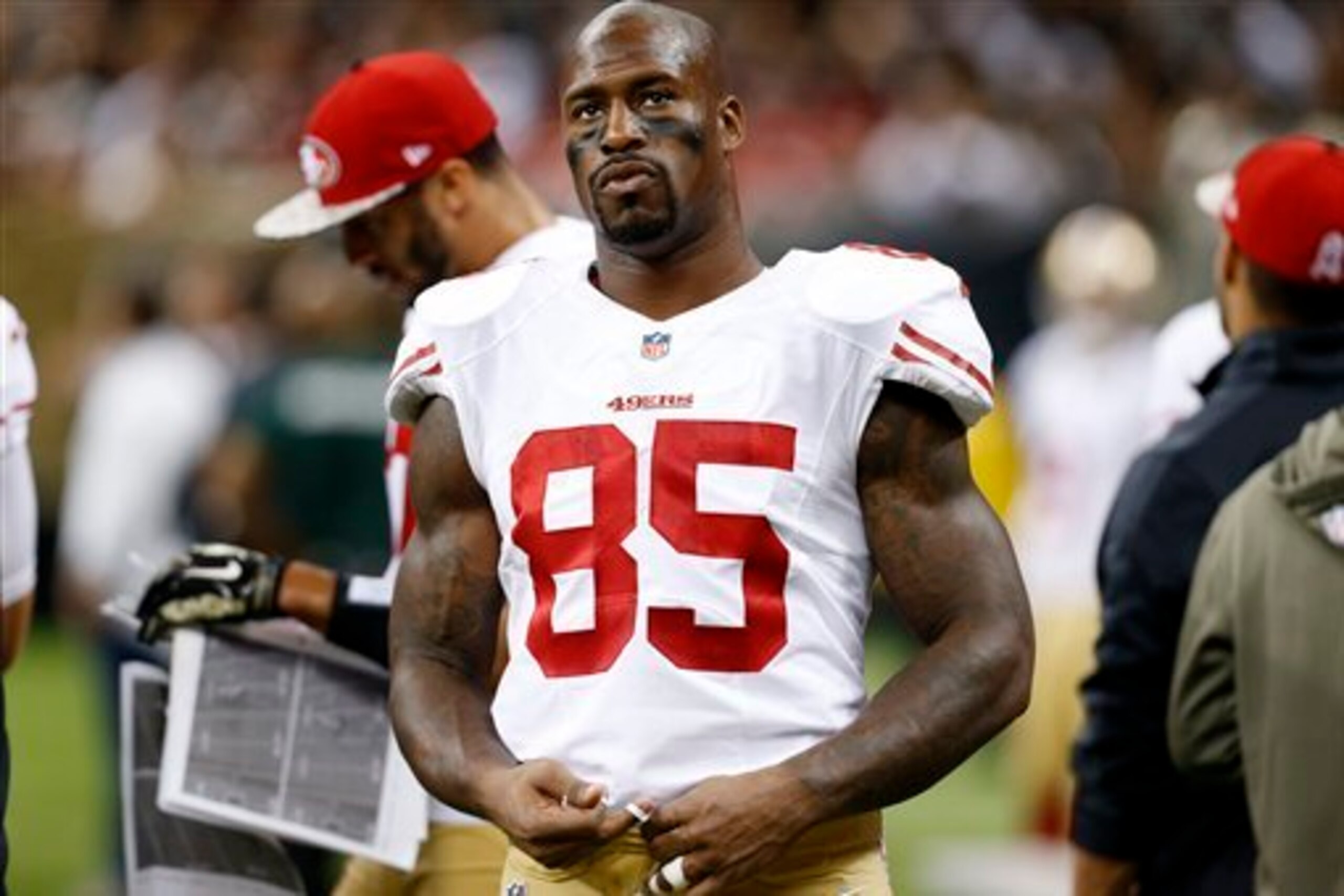
It is true that Kaepernick’s yards per attempt and yards per completion dropped to career-low levels last season, to 7.0 and 11.7, respectively. That effect was spread out among the wide receiving corps, as well. Anquan Boldin’s 12.8 yards per reception was his lowest total since 2009, while both Michael Crabtree’s 10.3 yards per reception and Vernon Davis’ 9.4 YPR were the lowest in their respective careers. Clearly, something wasn’t working right last season.


.jpg?w=2560 "Seahawks Chiefs Football")
However, it’s inaccurate to say that the 49ers simply got away from the deep ball last year. According to Pro Football Focus, the 49ers completed 22 passes targeted 20 or more yards downfield in 2014, tied for 17th most in the NFL. They attempted 72 said passes, tied for 11th most in the NFL. No, the 49ers weren’t chucking the ball downfield like the Indianapolis Colts or Philadelphia Eagles, but nor were they as conservative as the Kansas City Chiefs or Seattle Seahawks.
So, if they attempted a decent number of deep passes, why did everyone’s yardage rates drop?
Simply put, it was a lack of accuracy. While the 49ers actually attempted more deep passes than they had in recent years, Kaepernick’s performance on them dropped to career lows.
| 2012 | 33 | 19 | 1 | 595 | 5 | 1 | 15.1 | 60.6 |
| 2013 | 57 | 21 | 5 | 683 | 6 | 2 | 13.7 | 45.6 |
| 2014 | 69 | 22 | 1 | 689 | 4 | 5 | 14.4 | 33.3 |
It is concerning that Kaepernick’s accuracy on the deep ball has dropped off every season. The 60 percent accuracy rating he put up in 2012 in half a season was, frankly, unsustainable over the long run. Only one quarterback has put up more than 60 percent deep-ball accuracy over a substantial sample size since PFF started charting in 2007, and that’s Aaron Rodgers in his 20qq MVP season. Expecting any quarterback to complete more than 60 percent of his deep passes is simply wishful thinking.
Kaepernick’s 33.3 percent completion rate, however, simply isn’t good enough. No, it wasn’t the lowest in the league—in fact, it matched Tom Brady’s percentage and was tied for 17th out of 25 qualifying quarterbacks—but when coupled with the number of attempts Kaepernick made, the mark is not good.
Only three quarterbacks threw deep more frequently than Kaepernick did last year, and all three had better accuracy, as did the four quarterbacks right behind Kaepernick in terms of attempts percentage. Considering how frequently Kaepernick’s bombs fell incomplete, they actually should have been throwing the deep ball less.
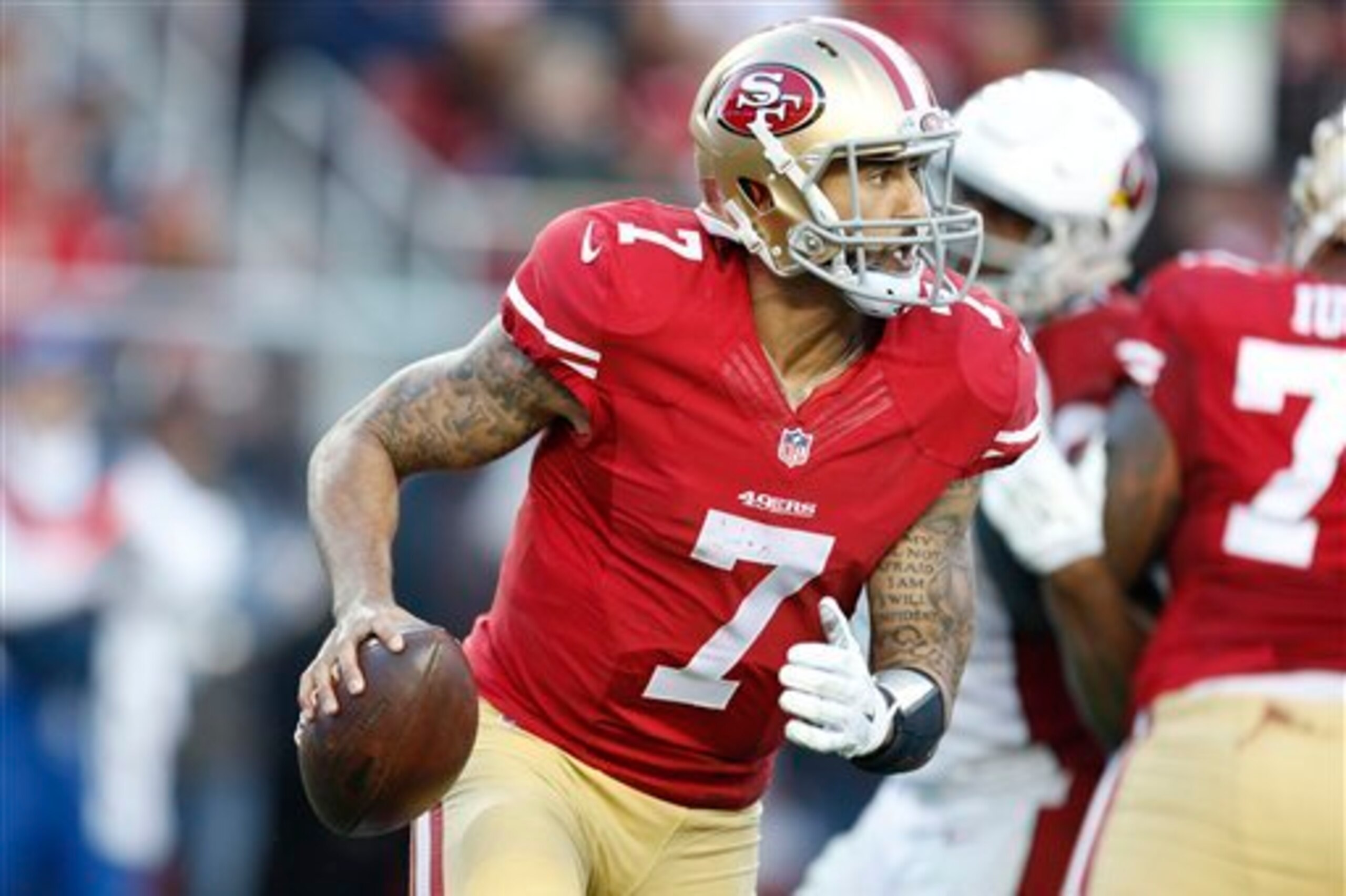
What explains the drop-off from 2013 to 2014? Well, the fact that the team wasn’t as good likely has quite a bit to do with it. With the 49ers spending less time nursing leads, opposing defenses would know that the 49ers were more likely to try to get a big play through the air and could key defenses against it. It’s tougher to throw deep against defenses that are expecting it than it is to use it as a surprise play.
Kaepernick did not respond well to tighter coverages last year. Kaepernick has never been the most accurate quarterback. His career accuracy percentage on all passes, prior to the 2014 season, was 59.8 percent, 32nd best among quarterbacks with at least 100 attempts over that time period, whereas his rank among deep-ball throwers was much higher. It is possible that his early-career deep-ball accuracy was simply a product of a small sample size and was returning to what his "true" value should be.
I don’t fully buy into that. While there is some correlation between overall accuracy and deep-ball accuracy, I find it difficult to believe that all of Kaepernick’s 2012 and 2013 success can be chalked up to good luck. Instead, I think the lower quality of offensive line play, resulting in less protection, and the higher number of plays when trailing, allowing defenses to key in on the deep pass, exacerbated a different problem of Kaepernick’s, and one that’s shown up in both the short- and long-passing games—poor decision-making.
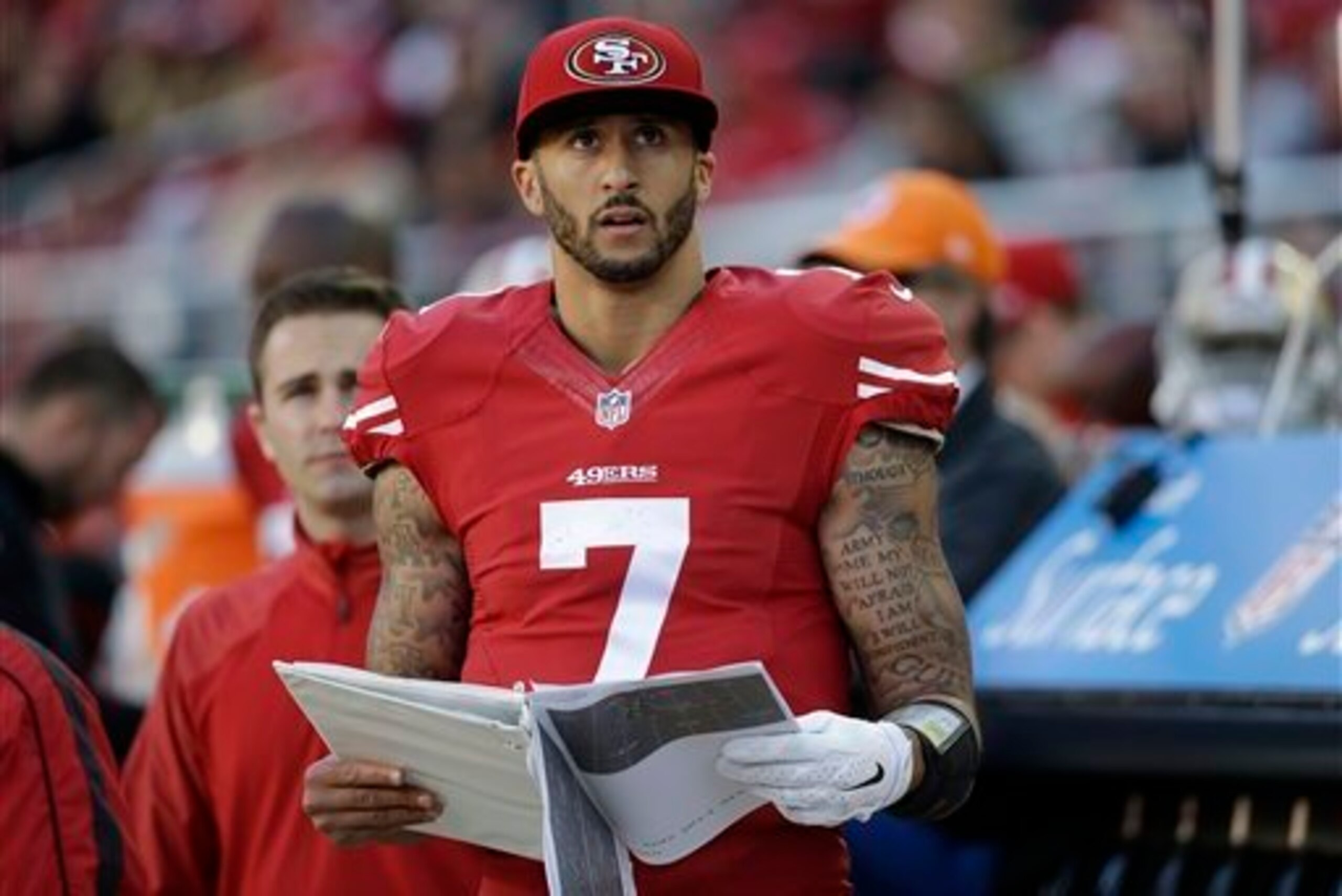
Kaepernick has the frustrating tendency, at times, to lock in on a receiver or a play to the exclusion of all others. This is tendency people look at when they call him a “primitive field-reader," as Andy Benoit said, or a “remedial passer," according to Trent Dilfer. Both of these takes are overly reductive, but they certainly have a basis in fact.
The most famous instance of Kaepernick locking in on one receiver is probably the interception at the end of 2013’s NFC Championship Game, where Kaepernick passed up two open receivers in favor of a long bomb to Michael Crabtree in the end zone, but it’s a tendency that shows up with alarming regularity overall.
This, along with his overall mechanics, was one thing Kaepernick has been working on with Kurt Warner and Dennis Giles this offseason. From all reports, he’s looked better in shorts at OTAs, but will his improvements hold up in pads in actual game situations? We’ll have to wait to see.
Fortunately, the situation around Kaepernick also seems poised to improve. First of all, the switch from Greg Roman to Geep Chryst is likely to create a more imaginative passing offense. The criticism of Roman perhaps got too intense last year, but the deep pass was never his strong point. The 49ers ran sideline fades, double posts and vertical routes…and not much else in the deep-passing game.
The use of a lot of isolation routes was particularly confusing, because the 49ers didn’t really have a deep-receiving weapon who could consistently win one-on-one matchups downfield. We don’t know much about Chryst’s offensive style, as his only previous offensive coordinator experience came with Ryan Leaf in San Diego, but surely, the 49ers’ deep-passing offense can’t get less creative.

And then we come back to the addition of Torrey Smith. Smith will not be a panacea for the team’s deep-passing woes, but he’s the first starting-class deep-threat receiver Kaepernick has really had access to in his NFL career. Yes, Brandon Lloyd and Randy Moss have been on the roster, but they were very much specialized weapons and not every-down players; Smith’s the first deep-ball threat the 49ers will have in their starting lineup since the Mike Nolan era.
The impact of having a deep threat is seen in more than just receptions and touchdowns.
Deep threats like Dez Bryant or DeSean Jackson force safeties to play further back and drag coverage down the field. That leaves more space in the short and intermediate routes, which should allow Anquan Boldin and company more room to work. I fully expect Boldin to remain the No, 1 receiver in terms of targets in 2015, but Smith’s presence should allow him to become more effective on a per-play basis.
However, while Smith’s career 16.9 yards per reception represents a definite threat, he shouldn’t be considered a sure-handed lock for big plays. In 2014, he dropped five deep passes, according to PFF, the most in the NFL. It’s not a one-year fluke, either—he dropped three in 2013 and two in 2012.
Overall, he had the second-worst drop rate in the NFL last season. When he does catch the ball, he puts up great numbers, but too often last season, he simply did not complete the catch. Coupling a receiver with a history of drops with a quarterback with a history of inaccuracy isn’t the best situation a team could be in.
It’s certainly more likely than not that Kaepernick’s accuracy will improve and Smith’s drop rate will come back toward league-average levels in 2015, so it’s not quite as dire as last year’s statistics would indicate. You could also say that a quarterback with a huge arm, like Kaepernick, and a receiver with blazing speed, like Smith, is a match made in heaven.
The right expectations, in all likelihood, are somewhere in between. Kaepernick’s not going to bounce back to being a 60 percent deep-ball quarterback, but nor is Smith going to lead the NFL in deep-pass drops again. The addition of Torrey Smith isn’t going to turn the 49ers into a Philadelphia-esque deep-ball unit, but his addition, coupled with Kaepernick’s offseason work and a more creative offensive philosophy, should see the yards-per-attempt numbers rebound somewhat from an awful 2014.
Bryan Knowles is a featured columnist for Bleacher Report, covering the San Francisco 49ers. Follow him @BryKno on Twitter.



.jpg?w=2560 "Latest Peyton-Colts Rumors")