

The Best 5 Players from Every NBA Draft Since 2005
Over the last decade, every single NBA draft class has produced star players or contributors who look like they'll join that group after gaining more experience at the sport's highest level. But not all of them were initially viewed as top-tier prospects.
In fact, of the 50 players who will be featured throughout these year-by-year countdowns, eight were selected in the second round of their draft. Plenty more fell outside the lottery.
So while it may seem like Karl-Anthony Towns, Jahlil Okafor, D'Angelo Russell and the other presumptive top picks on June 25 will turn into the best finds from the 2015 class, it's a safe assumption that someone will turn out to be a late gem.
Maybe even more than one player.
To drive that point home, we're looking at the best five players from every class of the last 10 years. Not the best careers, mind you, but the best players right now, based on overall level of play if we had to stick a healthy version of them on the court today. Potential is as irrelevant as the past.
Keep your chins up if your team is drafting outside the lottery this year. As you'll soon see, teams can find the top players anywhere.
2005
1 of 10
5. Deron Williams, PG, Brooklyn Nets (picked No. 3 by Utah Jazz)
At his best, Deron Williams was one of the NBA's premier point guards. He spent years competing with Chris Paul for the positional throne, carrying the Utah Jazz into the playoffs and asserting himself as a two-way player with a devastating crossover.
But injuries have taken their toll and left Williams looking like a shell of his old self.
Of course, when the old self was as good as vintage Williams, the shell can still be a quality asset. Though he's by no means a star with the Brooklyn Nets and is dramatically overpaid for his limited services, this floor general can still be a positive contributor.
4. Andrew Bogut, C, Golden State Warriors (picked No. 1 by Milwaukee Bucks)
Can Andrew Bogut score effectively? Nope. Can he space out the court or stay healthy? See the answer to the previous question.
While the Australian big man is very much a specialist, he's one of the best in his role. Bogut is a fantastic defensive presence who thrives on the glass and consistently improves his team when he's on the court. Thanks to that point-preventing prowess, his ability to set hard screens and his deft passing touch, the Dubs were actually 9.5 points per 100 possessions better when he played.
Plus, he deservedly receives quite a bit of attention for his defensive accomplishments. In this year's Defensive Player of the Year voting, only five players—Kawhi Leonard, Draymond Green, DeAndre Jordan, Anthony Davis and Rudy Gobert—finished ahead of him.
3. Marcin Gortat, C, Washington Wizards (picked No. 57 by Phoenix Suns)
Though Marcin Gortat isn't as effective on either side of the ball as Bogut is on defense, the 31-year-old big man is a more well-rounded contributor for the Washington Wizards. After signing a five-year extension to stay in D.C., he averaged 12.2 points, 8.7 rebounds, 1.2 assists, 0.6 steals and 1.3 blocks while playing some of the best defensive basketball of his career.
Gortat is not a glamorous player. He's just effective night in and night out.
Whether he's protecting the hoop, smothering pick-and-rolls or serving as an elite roll man, he's capable of making a positive impact every time he steps onto the floor. He may not be viewed as a star in the eyes of any basketball fan, but he doesn't have to be one in order to serve as the No. 3 current contributor in this draft class.
2. Monta Ellis, SG, Dallas Mavericks (picked No. 40 by Golden State Warriors)
Much like Gortat, Monta Ellis wasn't exactly viewed as one of the elite prospects in the 2005 NBA draft. In fact, the Golden State Warriors drafted him at No. 40—taken directly between Von Wafer and Roko Ukic. The Warriors struck, well, gold and kept him around as a seemingly perennial All-Star snub before he started the team-hopping phase of his career.
Whether that continues or he stays with the Dallas Mavericks this offseason (either by opting out and re-signing or just opting in), he's become a fairly known commodity.
Ellis isn't particularly potent from the perimeter, but his knack for penetration and finishing around the hoop helps him maintain value, even as he struggles on defense. Though he needs the right talents around him in order to make up for his own weaknesses, the strengths are impressive enough.
1. Chris Paul, PG, Los Angeles Clippers (picked No. 4 by New Orleans Hornets)
Is there any doubt?
Chris Paul remains in the thick of the "best point guard alive" conversation. He's a future Hall of Famer. He's one of the most valuable players in the league, even if his resume remains inexplicably devoid of an appearance in the postseason's penultimate round.
Whether Paul is the best player drafted since 2005 is a better question than whether he's the best from 2005 alone.
Honorable Mentions: Brandon Bass, Boston Celtics; Amir Johnson, Toronto Raptors; Lou Williams, Toronto Raptors
2006
2 of 10
5. Rajon Rondo, PG, Dallas Mavericks (picked No. 21 by Phoenix Suns)
Rajon Rondo didn't exactly finish the 2014-15 campaign on a high note. Instead, he was so ineffective and unenthused while playing for the Dallas Mavericks that he team basically dismissed him before the first-round playoff series came to a conclusion.
But while plenty of legitimate criticisms exist, it's tough to deny that Rondo is still a quality player.
He can't shoot and is not always locked into games when in an unfavorable situation, but the floor general is one of the most talented distributors in the Association. His defense helps make up for the lack of a jumper, and he does have a knack for improving whenever the spotlight is shining on him.
4. Rudy Gay, SF/PF, Sacramento Kings (picked No. 8 by Houston Rockets)
We're past the days of Rudy Gay leaving teams, their immediately improving and the change feeling more like causation than correlation.
Now, the versatile forward has settled into his role with the Sacramento Kings, and he's thriving. His jumper is becoming a bit more effective, he's more committed to working in the post and playing to his strengths, his defense remains solid, and he's been valuable to the team before he departs rather than after. During the 2014-15 campaign, the Kings were four points better per 100 possessions when he played.
Next year, he'll work "more at the 4," as he said on SiruisXM’s NBA Radio, per Tony Xypteras of Sactown Royalty, and that will only help him continue playing more to his strengths. This might be strange for a player who will turn 29 this offseason, but Gay is still getting better.
3. Kyle Lowry, PG, Toronto Raptors (picked No. 24 by Memphis Grizzlies)
This is what Toronto Raptors general manager Masai Ujiri asked Kyle Lowry before the start of the 2013-14 season, per Grantland.com's Jonathan Abrams:
"Do you want to be a $3 million player, $2 million player for the rest of your career and become a minimum player or do you want to be a $10 million player or more? Talent says you are that type of player, but the attitude and the way you carry yourself says the other. You can be so much better.
"
Since then, Lowry has taken the message to heart. At the beginning of the 2014-15 campaign, he looked the part of a bona fide MVP candidate before injuries, exhaustion and inevitable regression took their collective toll, culminating in an embarrassing postseason loss to the Washington Wizards.
But even when he was declining, Lowry showed his value. He's a tenacious two-way player who can do just about anything on the basketball court, and an offseason of rest will allow him to shine once more.
2. Paul Millsap, PF, Atlanta Hawks (picked No. 47 by Utah Jazz)
Even though Paul Millsap was a dominant rebounder at Louisiana Tech, no one could have expected him to turn into an NBA All-Star. The scouting reports at the time didn't offer even a hint of that type of upside.
For example, here's the conclusion from DraftExpress' initial look in 2006, one year before he was selected:
"His stock will fluctuate greatly depending on how he finishes up the season at La Tech, whether he can help them get the automatic bid to the NCAA tournament, how he measures out in Orlando and how well he performs in private workouts. His upside is not off the charts, but it’s very obvious that Millsap is going to be a rebounding force no matter where he ends up, which is something that has to be attractive to NBA teams.
"
Needless to say, he's become a bit more than just a rebounding force.
1. LaMarcus Aldridge, PF, Portland Trail Blazers (picked No. 2 by Chicago Bulls)
Now one of the biggest names in the free-agency pool, LaMarcus Aldridge just continues to assert himself as arguably the game's best true power forward. He doesn't shift over to the 5 as often as someone such as Anthony Davis does, but his work at the 4 is nearly unsurpassed.
Aldridge has impressed as a rebounder over the last few seasons while showing that he can help anchor a defense with his one-on-one interior play. Nonetheless, it's still mostly about offense here, as his mid-range jumper consistently finds nothing but twine, while he posts gaudy scoring totals.
The Blazers basically used the No. 2 pick on this big man from Texas back in 2006 when they traded Viktor Khryapa and Tyrus Thomas to the Chicago Bulls for him and a second-round pick. Since then, he's proved worthy of the selection—especially when you look back at that draft board and see Andrea Bargnani's name right above his.
Honorable Mentions: Randy Foye, Denver Nuggets; J.J. Redick, Los Angeles Clippers; Thabo Sefolosha, Atlanta Hawks
2007
3 of 10
5. Joakim Noah, C, Chicago Bulls (picked No. 9 by Chicago Bulls)
When he's healthy, Joakim Noah is one of the NBA's more unique players. He's a center by trade and lives up to the name by protecting the basket with aplomb, but he's also brimming over with versatility on both sides of the ball.
Defensively, he's quick enough to switch onto smaller players and suffocate them with his length. On offense, even if he's a limited scorer, he's capable of running the fast break and challenging for triple-doubles with his passing chops.
Noah's 2014-15 campaign was disappointing—injuries to his lower extremities limited him throughout the year—but let's not forget about just how good he is at 100 percent.
4. Mike Conley, PG, Memphis Grizzlies (picked No. 4 by Memphis Grizzlies)
Is it time to drop the underrated label?
Though he didn't get to strut the full extent of his stuff during the 2015 postseason, held back by a facemask and a litany of injuries, the world is still becoming fully in tune with what Mike Conley brings to the table. The southpaw is a terrific defensive presence for the Memphis Grizzlies, and his ability to function as either a scorer or high-quality distributor helps make the offense go on Beale Street.
He's not a glamorous player, sure. But glamour doesn't win basketball games.
3. Al Horford, C, Atlanta Hawks (picked No. 3 by Atlanta Hawks)
"When he's healthy, he's one of the top 25 players in this league. He plays both ends of the court, and that's what separates him from some of the other big men," an anonymous NBA executive told ESPN Insider Jeff Goodman about Al Horford during the early portion of the 2014-15 season. "Sure, Dwight Howard is better defensively—but he can't really score. Kevin Love is a better offensive player, but he doesn't guard. Horford does it all."
This year served as validation for Horford as one of the league's most underrated superstars. Yes, superstars, not merely that word without the "super" prefix.
The former Florida Gator served as the heart and soul of the Eastern Conference's No. 1 seed, thriving on both ends of the floor and contributing in just about every way imaginable. Whether he's using his unorthodox mid-range jumper, attacking in the post or barking out defensive signals, he's always effective.
2. Marc Gasol, C, Memphis Grizzlies (picked No. 48 by Los Angeles Lakers)
The Los Angeles Lakers didn't know it when they traded Marc Gasol to the Memphis Grizzlies for his older brother, but they had unearthed one heck of a gem with the No. 48 pick of the 2007 NBA draft.
After getting himself into proper shape, developing on offense and displaying his fundamental understanding of defensive positioning, this Spanish 7-footer quickly emerged as one of the best at his position.
Gasol doesn't put up big numbers, but that's perfectly fine. Instead, he's one of the leaders of the no-stats All-Stars, thriving when he's able to involve his teammates, set brutally effective screens, impact a game with his point-preventing ability and do so much more that doesn't show up in the box score.
1. Kevin Durant, SF, Oklahoma City Thunder (picked No. 2 by Seattle SuperSonics)
Eight years after there was legitimate debate about whether Greg Oden or Kevin Durant should be the first overall selection in this draft, this is about as obvious as it gets. While the actual No. 1 pick is fighting to get back into the NBA after so many knee injuries and one unfortunate setback after another, Durant has already established himself as a future Hall of Famer.
He's piled up scoring titles, won league MVP for his efforts during the 2013-14 campaign, improved in just about every area and emerged as one of the few players who can legitimately challenge LeBron James for the individual throne in the Association.
This past season was disappointing, as Durant's foot betrayed him, eventually knocking him out for the season and leading to a lottery finish for the Oklahoma City Thunder—who were still known as the Seattle SuperSonics when he was drafted. But with an offseason of rest, there's little doubt that he's going to reassume his spot at the forefront of this class, doing so with plenty of room to spare.
Honorable Mentions: Arron Afflalo, Portland Trail Blazers; Jeff Green, Memphis Grizzlies; Thaddeus Young, Brooklyn Nets

2008
4 of 10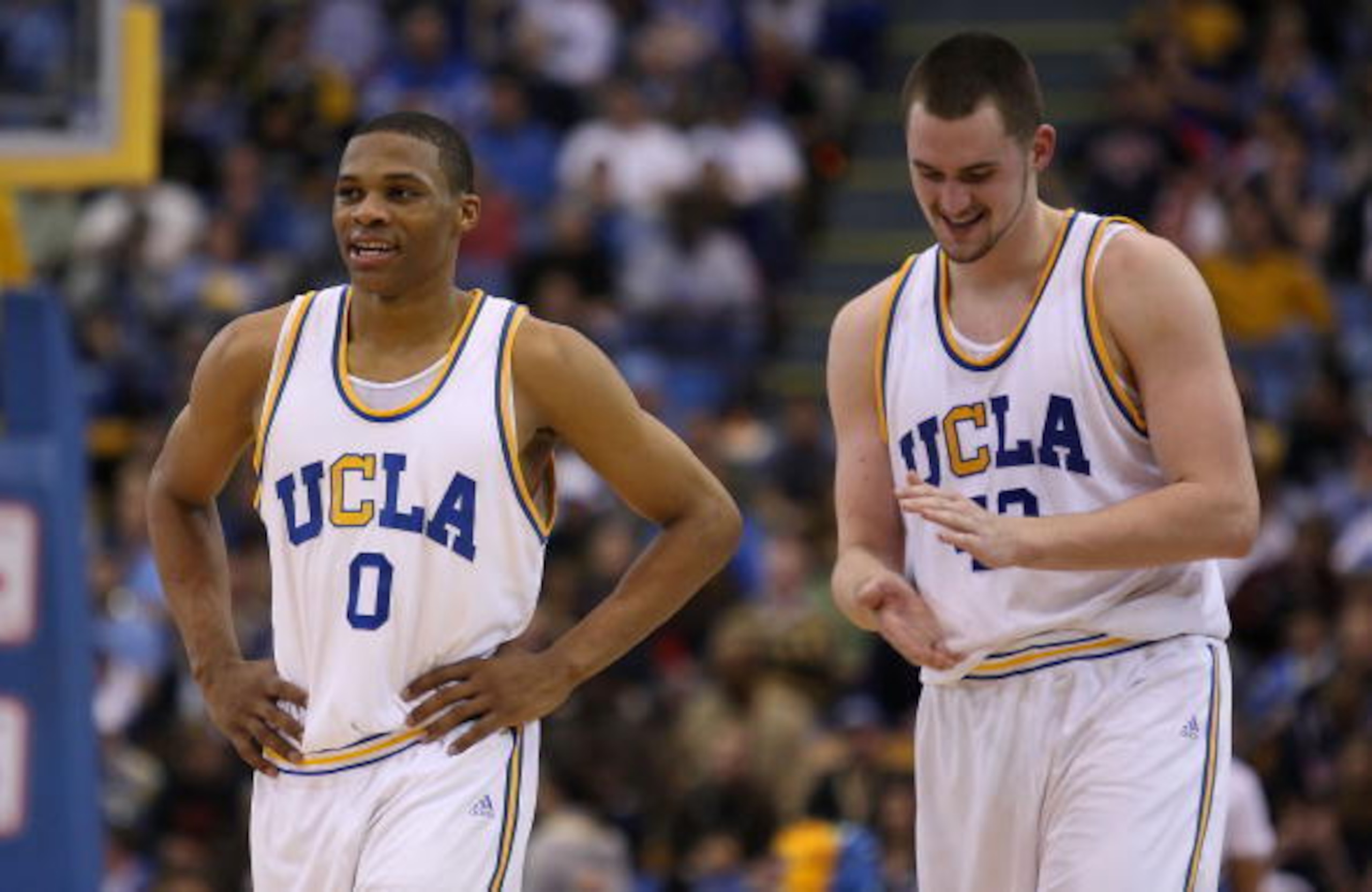
5. Goran Dragic, PG/SG, Miami Heat (picked No. 45 by San Antonio Spurs)
Goran Dragic was never supposed to be this good.
Need proof? The San Antonio Spurs selected him at No. 45 in the 2008 NBA draft, taken between Ante Tomic and Trent Plaisted, who never played in the Association. Two days later, they traded him to the Phoenix Suns for Malik Hairston, a 2009 second-round pick that would become DeJuan Blair and some spare cash.
That's it.
But years later, he's established himself as a candidate for All-NBA and All-Star teams, showing off his slithery offensive capabilities while putting together a remarkable combination of shot-creating skills and shooting efficiency. He couldn't live up to his 2013-14 contributions this year, but some continuity will help him get back to that level—assuming he chooses to stay in South Beach and doesn't leave the Miami Heat this summer for another new squad.
4. Serge Ibaka, PF, Oklahoma City Thunder (picked No. 24 by Seattle SuperSonics)
After establishing himself as a key cog for the Oklahoma City Thunder, Serge Ibaka has asserted himself as a steal from the 2008 draft class. After all, 23 players were taken ahead of him, and few have become as impactful as the Congolese big man.
On offense, Ibaka is capable of stretching out the floor with a deadly mid-range jumper and an expanding range that now leaves him able to knock down shots from beyond the arc. He made a career-best 77 triples in 2014-15 while connecting from downtown at a 37.6 percent clip. And on defense, Ibaka is impressive, thanks to his shot-swatting ability and overall mobility.
In many ways, the most impressive part of Ibaka's rise is that he's gone from coming off the board at No. 24 in 2008 to feeling like a bit of a disappointment in 2015. He's become such a high-quality player that it's strange he hasn't yet developed into a star capable of carrying a team when other key pieces are missing.
3. DeAndre Jordan, C, Los Angeles Clippers (picked No. 35 by Los Angeles Clippers)
It's almost like a 6'11" monster of a man with springs in his legs can thrive on an NBA court.
While DeAndre Jordan took a while to develop into a basketball player rather than an athlete playing basketball—that may seem like semantics, but it's a huge distinction—he's definitely arrived after a breakthrough 2014-15 campaign.
No player in the league is better at cleaning the glass, and his ability to anchor a defense improved dramatically, though not necessarily enough that he should have received so much Defensive Player of the Year attention.
Jordan is obviously still a flawed player. Free throws are always adventures, and his offense is limited to taking and making shots from the restricted area. But at this point, the strengths trump the limitations, giving the Clippers more than they possibly could have expected from a second-round pick in 2008.
2. Kevin Love, PF, Cleveland Cavaliers (picked No. 5 by Memphis Grizzlies)
Sure, Kevin Love struggled to adjust to his new digs, but that's a natural response when going from playing the part of leading man to working as a third fiddle. Sure, he had to watch from the sidelines as the Cleveland Cavaliers experienced great postseason success without him, but there's no way to know if they'd have been even better with him on the floor.
Actually, we can probably guess that they would have.
Even though it appeared Love was less effective than normal, the Cavs were still considerably better when he was on the floor during the regular season. According to my FATS model (based on historical comparisons and explained in full here), they played like a 48.8-win team with Love and a 29.8-win squad without him.
1. Russell Westbrook, PG, Oklahoma City Thunder (picked No. 4 by Seattle SuperSonics)
Given what Russell Westbrook and Love have become, it's a bit insane that the UCLA Bruins didn't manage to win the NCAA tournament in 2008 while the two were teammates, especially since they played alongside Darren Collison and Luc Richard Mbah a Moute. Even with so much talent, that collegiate squad lost to Derrick Rose's Memphis Tigers by 15 points in the national semifinals.
But that setback hasn't prevented Westbrook from becoming a bona fide MVP candidate in the NBA.
He served as such while carrying a crippled Oklahoma City Thunder squad to the brink of the playoffs in the tough Western Conference this year, attacking the rim with ferocity and racking up triple-doubles at historic rates. Westbrook is by no means an old-school point guard, and for him, that's a good thing.
Honorable Mentions: George Hill, Indiana Pacers; Brook Lopez, Brooklyn Nets; Derrick Rose, Chicago Bulls
2009
5 of 10
5. Jrue Holiday, PG, New Orleans Pelicans (picked No. 17 by Philadelphia 76ers)
When healthy, Jrue Holiday is capable of playing like an elite point guard. He's a tenacious defensive presence who should be considered one of the best in on-ball situations, and his diverse offensive skills only add to his value.
The issues are the injuries he's suffered since the New Orleans Pelicans traded him to the Philadelphia 76ers. They've prevented him from playing anything close to a full season by the bayou—just 74 appearances over a two-year stretch—and that's left him rather underrated.
Holiday's career has been less impressive than what's been produced by each of the three honorable mentions from this draft class. But we're looking at current ability here, and Holiday is the best of the bunch when his body is in working order.
4. Jeff Teague, PG, Atlanta Hawks (picked No. 19 by Atlanta Hawks)
When Jeff Teague was at his best, the Atlanta Hawks were difficult to beat during their 60-win campaign. His improvements in the lane were substantial, leaving him quite deadly when using his quickness to burst around defenders and create space for his on-target floaters and runners.
Averaging 15.9 points, 2.5 rebounds, 7.0 assists, 1.7 steals and 0.4 blocks per game might not sound inordinately impressive. In a vacuum, it's a good line, but it might not qualify as a great one.
However, context helps Teague. He was never asked to take over games but instead orchestrate a ball-sharing offense that provided equal opportunities for everyone on the floor. And while doing exactly that, he still managed to throw up those numbers.
3. Blake Griffin, PF, Los Angeles Clippers (picked No. 1 by Los Angeles Clippers)
Though he ultimately wore down, leading to some ineffective games and uninvolved play in the fourth quarter, the 2015 playoffs showed off just how much Blake Griffin could do. At full strength, this former Oklahoma Sooner was virtually unstoppable on the offensive end.
After years of hard work, he can capably spread out the court with a passable mid-range jumper, and his post moves are continuing to improve. They may be unorthodox and a bit ugly at times, but you can't argue with the results as the ball consistently drops through the net.
When he's playing his best basketball, Griffin is one of the 10 best players in the Association. And somehow, he still lags behind two members of his own draft class.
2. James Harden, SG, Houston Rockets (picked No. 3 by Oklahoma City Thunder)
If you're basing an analysis of James Harden on his last game against the Golden State Warriors, just stop. That's not even remotely fair to this bearded 2-guard, even if there's no denying that he left for summer vacation on a low note.
Throughout the rest of the season, Harden was phenomenal. He improved a bit on defense, though there's still plenty of work left on that end of the floor. He challenged for triple-doubles on a regular basis, thanks to his knack for reading caroms and his uncanny court vision.
And above all else, he thrived as a scorer. No one has a better step-back jumper these days, and Harden's ability to contort his body and draw contact makes it just about impossible to properly officiate possessions where he looks to score. His never-ending parade of foul shots might get tedious, but it's fully justified.
1. Stephen Curry, PG, Golden State Warriors (picked No. 7 by Golden State Warriors)
Stephen Curry edged out James Harden for the 2015 MVP award, so it's only natural that he finish one spot ahead in these rankings as well. But who could have expected such a meteoric rise?
In just a matter of years, Curry has transformed from a scrawny, baby-faced shooter who thrived against collegiate opponents into a bona fide NBA superstar. He's overcome ankle injuries, consistently strengthened his body and added tools each offseason, to the point that he's now emerged as the best shooter in the history of this sport, as well as one of the better defenders at his position.
Yes, it's true. Get rid of your preconceived notions and stop looking at the past. Curry might not have the physical profile of a stopper or boast a point-preventing reputation, but he consistently served as a huge asset on the less glamorous end throughout his MVP campaign.
As Ethan Sherwood Strauss wrote for ESPN.com while explaining how Curry underwent such a metamorphosis, "Thanks to some clever new defensive principles, and despite his spindly frame, Curry has blossomed to become one of the NBA's most effective defenders—ranking fifth among point guards in defensive real plus-minus."
Honorable Mentions: DeMar DeRozan, Toronto Raptors; Tyreke Evans, New Orleans Pelicans; Ty Lawson, Denver Nuggets
2010
6 of 10
5. Gordon Hayward, SF, Utah Jazz (picked No. 9 by Utah Jazz)
Gordon Hayward's game-winning half-court attempt against the Duke Blue Devils in the 2010 NCAA tournament might have missed by a narrow margin, but he hasn't let that hold him back. Instead, he's continued to improve and spent the 2014-15 campaign serving as an effective featured option for the Utah Jazz.
This small forward is no longer a young-looking player with upside. He's gotten rid of the bowl cut, matured and officially arrived as a star, one who will only get better as the Jazz continue to improve around him.
During his first year without Al Jefferson and Paul Millsap in Salt Lake City (2013-14), Hayward struggled to handle the increased defensive attention he faced on a nightly basis, and his shooting percentages dipped dramatically. But now, he's far more comfortable in that No. 1 role, and he's still only 25 years old.
4. Eric Bledsoe, PG/SG, Phoenix Suns (picked No. 18 by Oklahoma City Thunder)
There may not be a more underrated star in the league right now.
Eric Bledsoe—who was drafted by the Oklahoma City Thunder and immediately traded to the Los Angeles Clippers for a 2012 first-round pick that would become Fab Melo, of all people—is a stud on both ends of the court.
He's a tenacious and physical defender who can wreak havoc both on and off the ball, though he does have a habit of watching the action unfold and losing track of his man. He's a strong rebounder who doesn't mind contact. He's a dynamic offensive creator who can get to the rim against most defenders, even if he needs to work on maintaining his balance and not falling after a shot attempt that creates an ensuing four-on-five situation for the other team.
In other words, he's close to becoming a complete player, despite public perception lagging behind.
3. Paul George, SG/SF, Indiana Pacers (picked No. 10 by Indiana Pacers)
Before Paul George destroyed his knee while training for Team USA last summer, he was one of the sport's biggest up-and-coming superstars. Now, he should be ready to get back on that track, especially after he unexpectedly suited up for the Indiana Pacers during the stretch run, beating his timetable by a significant margin.
Granted, he averaged only 8.8 points, 3.7 rebounds, 1.0 assists, 0.8 steals and 0.2 blocks during his six appearances in 2014-15. He shot just 36.7 percent from the field, and his player efficiency rating was a below-average 13.0, per Basketball-Reference.com.
Still, there were momentary flashes of brilliance, and another offseason of rest, rehabilitation and training will do wonders for his game. This swingman isn't going to fall off the map.
2. John Wall, PG, Washington Wizards (picked No. 1 by Washington Wizards)
It almost doesn't matter that John Wall's jumper is still a work in progress. He's gotten by without a threatening perimeter stroke for years, and while it would behoove him to continue putting in the time and effort, he's still become one of the league's best floor generals.
Keeping Wall out of the paint is virtually impossible. He's quick as lightning with the ball in his hands, and he can do so much after he's worked his way past the initial defender. Whether he's scoring on his own or kicking the ball out to another member of the Washington Wizards, he's going to create offense.
Throw in some fearsome defense—even if he plays rather upright and relies on recoveries—and Wall has justified the No. 1 pick D.C.'s team spent on him a half-decade ago.
1. DeMarcus Cousins, C, Sacramento Kings (picked No. 5 by Sacramento Kings)
Remember how it was inconceivable that the combination of Kevin Love and Russell Westbrook couldn't produce a collegiate title? Well, it's even crazier that the Kentucky combination of Wall, Bledsoe, DeMarcus Cousins, Patrick Patterson and other future NBAers couldn't even make it to the Final Four, instead losing to West Virginia in the regional finals.
At least the Wildcats found more success in the Association than those Mountaineers did. In particular, Cousins has become a stud, emerging as the league's best center during the 2014-15 campaign.
Defense is still a work in progress, but the combination of finesse and physicality that Cousins boasts on the offensive end is virtually unmatched in recent NBA history, especially when coupled with some deft passing skills.
Honorable Mentions: Derrick Favors, Utah Jazz; Greg Monroe, Detroit Pistons; Patrick Patterson, Toronto Raptors
2011
7 of 10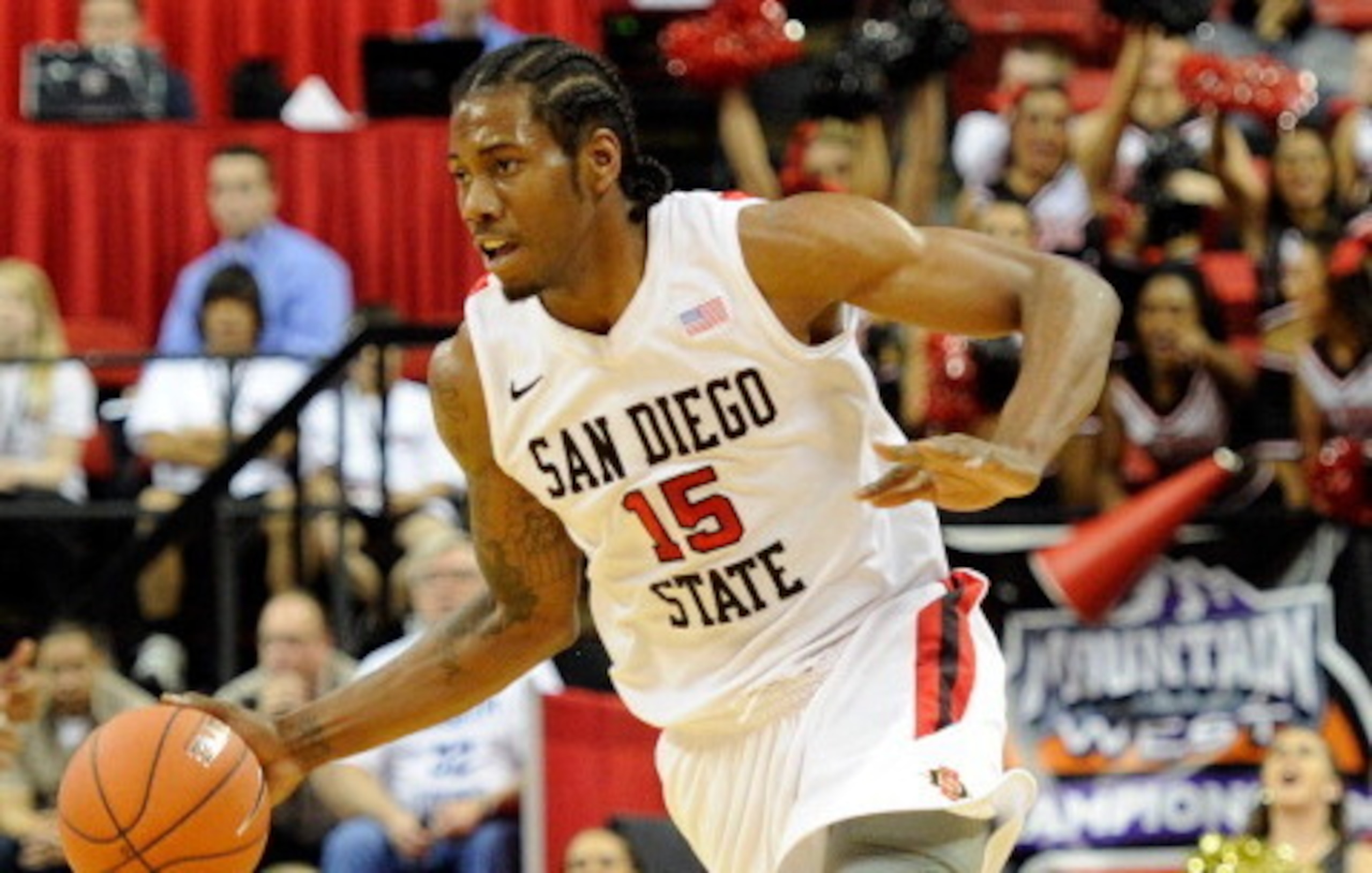
5. Nikola Vucevic, C, Orlando Magic (picked No. 16 by Philadelphia 76ers)
While many of the players at the top of 2011 draft boards have underwhelmed, there's a substantial number of talents taken lower in the order who have turned into high-quality rotation players. Nikola Vucevic is chief among them after developing into a nightly double-double (and 20/10) threat for the Orlando Magic.
But if Vucevic wants to keep rising and join the list of stars from the 2011 class, he'll have to show some substantial improvement on the defensive end. He did get better under interim head coach James Borrego, but his rotations and feet are both slow, and that doesn't allow him to overcome his limited athleticism.
For now, he remains a producer of gaudy statistics and limited wins. But that could still change in the near future.
4. Kyrie Irving, PG, Cleveland Cavaliers (picked No. 1 by Cleveland Cavaliers)
It may seem crazy to have Kyrie Irving behind three other players and still say that he's justified the No. 1 pick the Cleveland Cavaliers spent on him, but that's the reality of his situation.
Irving is a superstar. There's no doubt about that, even as he watches the rest of the NBA Finals with his kneecap healing. Few players (if any) have better handles throughout the Association, and his offensive capabilities have made him a nice fit next to LeBron James on the Eastern Conference representatives.
He's admittedly improving on the defensive end, but it's that side of the court that will ultimately determine how many of the players yet to come he'll jump in coming years. Irving can still be a bit porous, after all.
3. Klay Thompson, SG, Golden State Warriors (picked No. 11 by Golden State Warriors)
The second of the Golden State Warriors' Splash Brothers, Klay Thompson has outperformed his draft slot. We can only find two players in this draft class who still rank ahead of him, though 10 were selected prior to his own walk across the stage to shake former NBA Commissioner David Stern's hand. And interestingly enough, each of those two were drafted behind him.
Thompson's most visible skill is his shooting ability. He can connect from virtually any spot in the half-court set, using his picture-perfect form and quick release to torture defenders who are late to close out. Highlighted by his record-setting 37-point quarter, Thompson is as explosive a scorer as any perimeter threat in the NBA, and there's still more to his game than marksmanship.
I'm not just talking about his undersold athleticism. He remains a terrific defender, just as he was when entering the league out of Washington State. Having a player who can cover the other team's best wing player was quite a luxury for head coach Steve Kerr throughout the Dubs' historic 2014-15 campaign.
2. Jimmy Butler, SG/SF, Chicago Bulls (picked No. 30 by Chicago Bulls)
Two summers ago, Jimmy Butler was overhyped and then underperformed. Last summer, the opposite was true, as the Chicago Bulls swingman had become a post-hype breakout candidate and then did exactly that—break out.
He remains one of the more effective defenders in the league, even if he declined a bit on that end as he took on more offensive responsibility in the Windy City. It's that latter facet of his game that was so special this year. Butler was a perimeter threat who could create some of his own looks and attack the hoop to keep defenders on their toes, and he looked comfortable serving as one of Chicago's key offensive cogs.
Blasphemous as it might seem while a certain point guard is still on the Bulls roster, Butler has become the team's best player and clear-cut franchise cornerstone.
1. Kawhi Leonard, SF, San Antonio Spurs (picked No. 15 by Indiana Pacers)
When Kawhi Leonard was coming into the league, his oversized hands, well-rounded play and possible defensive impact made him an intriguing commodity, but it was tough to think of him as a potential superstar. That changed when the San Antonio Spurs traded George Hill to the Indiana Pacers for him, Davis Bertans and Erazem Lorbek.
All of a sudden, the Midas touch of the San Antonio organization made him all the more promising.
Since then, Leonard has only improved...and improved some more. Now, he's the reigning Defensive Player of the Year and spent the stretch run developing into a go-to offensive player so talented that Gregg Popovich was willing to let him play outside the typical confines of the Spurs offensive system. That, in and of itself, is crazy.
Honorable Mentions: Kenneth Faried, Denver Nuggets; Chandler Parsons, Dallas Mavericks; Tristan Thompson, Cleveland Cavaliers
2012
8 of 10
5. Bradley Beal, SG, Washington Wizards (picked No. 3 by Washington Wizards)
If Bradley Beal plays like he did during the Washington Wizards' playoff venture, he's only going to keep moving up these rankings as his career progresses. After all...
| Regular Season | 15.8 | 3.8 | 3.1 | 1.2 | 0.3 | 52.1 | 14.0 |
| Postseason | 23.4 | 5.5 | 4.6 | 1.6 | 0.7 | 51.8 | 17.9 |
It's not that Beal was bad during the first 82 games, though he might have ranked behind Khris Middleton without the playoffs factored in. He just wasn't as special as he looked during the league's second season.
4. Andre Drummond, C, Detroit Pistons (picked No. 9 by Detroit Pistons)
Does Andre Drummond have plenty of work left to do? Sure. As detailed here, he needs to continue improving his defensive positioning while working to become less predictable on the offensive end of the floor.
Fortunately, he knows that he's not a finished product. He told Vince Ellis of the Detroit Free Press as much, pointing to his conditioning as an area in which he needs to improve:
"I'm just so tired of losing that it comes down to me and what I'm doing on the floor and that if I'm not in the best condition, the best playing shape, I can't do nothing for my team.
I'm willing to take this summer real seriously to really become a better leader and show everybody that I'm here to get the program where it needs to be.
"
Drummond already has plenty of strengths. He's a terrific alley-oop threat on pick-and-roll sets, he feasts on the offensive glass, and his hands allow him to wreak havoc on the defensive end, even if his positioning often leaves something to be desired. What's scary is how much better he can still get.
3. Draymond Green, SF/PF, Golden State Warriors (picked No. 35 by Golden State Warriors)
Coming out of Michigan State, Draymond Green was too old to have much upside. He was too small to play power forward consistently. He wasn't skilled enough to line up at the 3 on a consistent basis.
His ridiculous passion for the game and never-ending reserves of energy have proved that none of those criticisms matter. Green has gone from watching 34 prospects celebrate before him during the 2012 NBA draft to competing for Most Improved Player and Defensive Player of the Year in 2015.
Oh, and he's a vital part of the Golden State Warriors, who won a franchise-record 67 games during the regular season before advancing out of the Western Conference in the playoffs.
This former Spartan doesn't rub everyone the right way, and he doesn't have to. No matter what anyone thinks of him, he's of the opinion that he's phenomenal, and he'll fight tooth and nail to prove it whenever he steps onto the court.
2. Damian Lillard, PG, Portland Trail Blazers (picked No. 6 by Portland Trail Blazers)
Though it's frustrating that Damian Lillard has stagnated on defense, his offense still makes him quite dangerous. Stephen Curry's overall dominance simply doesn't allow this Rip City guard to get as much credit for his shooting as he should.
During his third professional go-round out of Weber State, Lillard drilled 196 triples for the Portland Trail Blazers. That's the No. 51 single-season mark in the history of the NBA, and it's not even his highest spot on the leaderboard. Lillard made 218 triples one season earlier, and that remains a top-25 total.
Curry is the best ever at knocking down deep looks off the dribble. But already, Lillard isn't far behind. Three years into his professional career, he's the only player in NBA history to make at least 170 threes in each of his first three seasons.
1. Anthony Davis, PF/C, New Orleans Pelicans (picked No. 1 by New Orleans Hornets)
This is easy.
Anthony Davis was the best player in the NBA during his age-21 season, posting ridiculous numbers, carrying the New Orleans Pelicans into the No. 8 seed in the Western Conference, earning some MVP attention and posting the 11th-best PER in NBA history despite not functioning as a volume scorer.
When you're the best in the league, you're obviously the best in your draft class. This spot isn't even up for debate.
Honorable Mentions: Harrison Barnes, Golden State Warriors; Michael Kidd-Gilchrist, Charlotte Hornets; Khris Middleton, Milwaukee Bucks
2013
9 of 10
5. Michael Carter-Williams, PG, Milwaukee Bucks (picked No. 11 by Philadelphia 76ers)
This point guard may have won Rookie of the Year while playing in an uptempo Philadelphia 76ers system that allowed him to chase counting stats and forget about playing defense, but that doesn't mean he's going to emerge as the best player in the class. Plenty of others landed in situations that required more time for development or were injured throughout the 2013-14 campaign.
To his credit, Carter-Williams has improved since he was traded to the Milwaukee Bucks. His jumper remains ineffective, but he's making strides on the defensive end and starting to use his length advantageously under head coach Jason Kidd.
This former Syracuse player still has time to justify his first major award.
4. Nerlens Noel, PF/C, Philadelphia 76ers (picked No. 6 by New Orleans Hornets)
Nerlens Noel was drafted along with the other players featured here, but the prolonged recovery from his ACL tear at Kentucky forced him to play out his rookie season in 2014-15, not 2013-14. He's a year behind most others in the 2013 draft class.
That's still not going to hold him back.
Noel improved substantially at the end of his first professional campaign, especially on the offensive end. He was always an impactful defender in plenty of different situations, but it was the development of a moderately consistent mid-range jumper and more confidence in the post that allowed him to make a Rookie of the Year surge during the stretch run.
Though it was unsuccessful, it offers hope that Noel is going to be more than another asset for general manager Sam Hinkie to deal during his lengthy rebuilding plan in the City of Brotherly Love.
3. Victor Oladipo, PG/SG, Orlando Magic (picked No. 2 by Orlando Magic)
The positive: Victor Oladipo is improving quickly on offense, becoming a quality combo guard who can create for himself and his teammates while knocking down shots from the outside. Based on his work at Indiana, it's almost inconceivable that he was able to shoot even 33.9 percent from beyond the arc while taking 3.4 deep attempts per game, as he did this past season.
The negative: Hailed as a defensive game-changer, Oladipo hasn't lived up to that reputation. The Orlando Magic allowed an additional 4.5 points per 100 possessions when he was on the floor in 2014-15, and his defensive box plus/minus was in the negatives, indicating that the team would have been less porous with a league-average defender on the floor in his place.
Oladipo has the tools necessary to become a star, but there's still a long way to go.
2. Giannis Antetokounmpo, SG/SF/PF, Milwaukee Bucks (picked No. 15 by Milwaukee Bucks)
This Greek phenom is still so raw and young that he won't turn 21 years old until the 2015-16 season is already underway. But Giannis Antetokounmpo has already asserted himself as a present contributor, not just a player with unrealized potential.
Though this positionless player can't threaten defenses from the perimeter, the rest of his tools are there. He can create his own shots and open things up for teammates with his long strides and quick movements toward the basket. He's a fearless defender who loves taking on tough defensive assignments, and his ridiculous length leads to the occasional highlight that leaves jaws on the floor.
Oh, and he's driven to get better, as he made clear in an interview with EuroHoops.net's Nikos Varlas:
"The same things I worked hard on in the season that just ended, and even more. I believe I can do everything on the court. I aim to further improve my body, get stronger. Also, I’m going to work hard on improving my shot. Another aspect that is scheduled to work on in individual training is to introduce more moves in the low post. If the opponent learns a move in the low post and he’s ready to stop you, you have to dig up a new one you’ve worked on and surprise him.
"
Antetokounmpo is already a high-quality player. And there's no way he's done improving.
1. Rudy Gobert, C, Utah Jazz (picked No. 27 by Denver Nuggets)
Talk about a late-season breakout. After the All-Star break, Rudy Gobert, who was drafted at No. 27 by the Denver Nuggets and subsequently traded to the Utah Jazz for Erick Green, averaged a remarkable 11.1 points, 13.4 rebounds, 1.8 assists, 1.0 steals and 2.6 blocks while shooting 57.6 percent from the field.
But even as he thrived on the glass and improved on offense, it was Gobert's rim-protecting skill that stood out most. His lanky arms and instincts around the hoop made it virtually impossible for opponents to finish plays in the restricted area.
Per NBA.com's SportVU data, 83 players faced at least five shots per game at the rim during the regular season. Not a single one of them was stingier than Gobert, who held opponents to 40.4 percent shooting in the area.
Honorable Mentions: Steven Adams, Oklahoma City Thunder; Gorgui Dieng, Minnesota Timberwolves; Ben McLemore, Sacramento Kings
2014
10 of 10
5. Marcus Smart, PG, Boston Celtics (picked No. 6 by Boston Celtics)
Marcus Smart's rookie season was a bit confounding.
Throughout his collegiate career at Oklahoma State, the point guard bullied smaller guards and attacked the basket with his excess size and physicality. But with the Boston Celtics, Smart worked on one of his biggest weaknesses and developed into a spot-up shooter who could actually force defenses to pay attention to him.
That bodes well for his future development, especially because he already looks the part of a quality defender at the sport's highest level.
4. Jordan Clarkson, PG/SG, Los Angeles Lakers (picked No. 46 by Washington Wizards)
How's this for a draft-day gem? The following players were drafted from pick No. 45 through the 50th selection of the night:
- No. 45: Dwight Powell (0.6 win shares)
- No. 46: Jordan Clarkson (2.4 win shares)
- No. 47: Russ Smith (minus-0.1 win shares)
- No. 48: Lamar Patterson (didn't play in NBA)
- No. 49: Cameron Bairstow (minus-0.1 win shares)
- No. 50: Alec Brown (didn't play in NBA)
And here's another fun fact for a player who actually made the All-Rookie First Team: By himself, Jordan Clarkson earned 2.4 win shares for the Los Angeles Lakers. The combined total for the rest of the second round? Only 2.6.
3. Elfrid Payton, PG, Orlando Magic (picked No. 10 by Philadelphia 76ers)
Though Elfrid Payton's rookie season didn't feature much versatility on the offensive end, it was clear that this Louisiana-Lafayette product belonged in the Association as a franchise point guard. Not only could he capably feed the ball to his teammates and rebound well for his position, but he thrived when attacking the basket during the second half of the season.
Still, it was all about Payton's defense.
Only Kyle O'Quinn had a better defensive box plus/minus on the Orlando Magic roster. The team allowed 0.4 fewer points per 100 possessions when Payton was on the floor. And according to FATS, the Magic improved by 6.2 wins when he was playing—largely because they were so much better on the defensive end.
2. Jabari Parker, SF/PF, Milwaukee Bucks (picked No. 2 by Milwaukee Bucks)
Before Jabari Parker went down with a torn ACL, he looked like the presumptive favorite for Rookie of the Year. After all, he was averaging 12.3 points and 5.5 rebounds while shooting 49 percent from the field, and no other member of the 2014 class was keeping pace.
But the injury destroyed his chances at the award, keeping him out for the rest of the year as the Milwaukee Bucks still made the playoffs in the weak Eastern Conference. Now, he's fighting to come back from the injury at 100 percent, and he should only continue to improve after he makes his official return.
Months going by without Parker stepping onto a basketball court in uniform haven't made us forget just how talented this forward is.
1. Andrew Wiggins, SG/SF, Minnesota Timberwolves (picked No. 1 by Cleveland Cavaliers)
Who else could it be?
Andrew Wiggins didn't enjoy a transcendent first year with the Minnesota Timberwolves, as he struggled to remain efficient until he started attacking the basket with ferocity and frequency during the second half of his inaugural season. But he was still the best this class had to offer, thanks to his defensive tendencies and ability to create highlights on offense.
It already seems as if Wiggins is destined for stardom, even if he's not quite there yet.
Honorable Mentions: Rodney Hood, Utah Jazz; Jusuf Nurkic, Denver Nuggets; Julius Randle, Los Angeles Lakers
All stats, unless otherwise indicated, come from Basketball-Reference.com.
Adam Fromal covers the NBA for Bleacher Report. Follow him on Twitter: @fromal09.



.jpg?w=2560 "Chiefs, Steelers Eye WR Trades")



.jpg?w=2560 "Latest Peyton-Colts Rumors")