
The Position That Needs Most Improvement for Every Power 5 College Football Team
There's always room for improvement. If that weren't the case, college football coaches might actually get to take some time off during the spring and summer.
Instead, they spent whatever part of the offseason that wasn't occupied with recruiting looking for ways to shore up any deficiencies their teams have. It could be a minor issue, a glaring weakness or something in between, but every team has something it could improve.
Most of the time, there's a certain position where improvement is needed more than anywhere else. Here's a look at where all 65 power-conference teams (including Notre Dame) are most desperate for some better play in 2015.
Alabama
1 of 65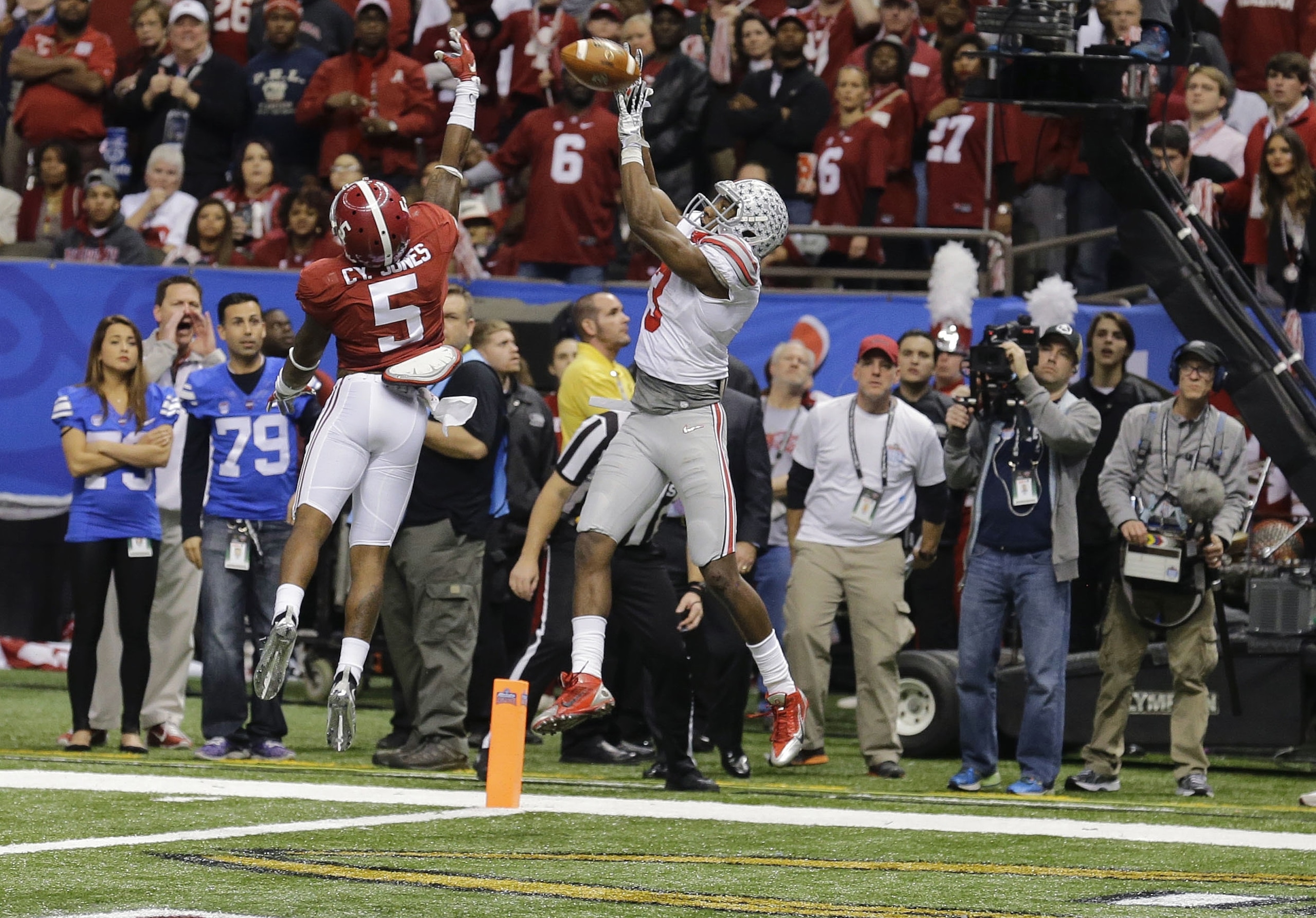
Secondary
Alabama had the nation's 12th-best defense in 2014, which helped it reach the semifinals. But look closer, and you'll see the Crimson Tide managed to get that far in spite of a pass defense that was routinely burned on obvious throwing downs.
Of the 268 completions that opponents had last year, 43 of them went for at least 20 yards, and 19 were good for 30 or more. And not all of those came against uptempo opponents such as Auburn or West Virginia, as Missouri had five of its 16 completions go for 25-plus yards, including ones of 47 and 63 yards.
The Tide had a second-round pick in safety Landon Collins back there, but now he's gone. The revamped unit has been a focus of defensive coordinator Kirby Smart all offseason, and while Alabama's front seven is going to be among the best in the country, it will still need the back line to hold its own.
Arizona
2 of 65
Defensive line
Arizona linebacker Scooby Wright was the best individual defensive player in the country last season, leading the nation in tackles (163), tackles for loss (29) and forced fumbles (six) en route to winning three national awards. But he couldn't do it all, and the Wildcats ranked very low overall in terms of defensive production.
The most glaring deficiency Arizona had was in terms of pass rush—or a lack thereof. Wright had 14 of the team's 38 sacks, and only nine came from defensive linemen.
The return of Reggie Gilbert for an extra year of eligibility will provide a boost up front, but in general, the Wildcats still need to get more pressure on the quarterback in order to keep Wright from having to do everything—he can just do most of it.
Arizona State
3 of 65
Punt returner
Arizona State has already made adjustments to its offense to provide a strong balance of running and passing for 2015, shifting D.J. Foster to the slot after he rushed for 1,000 yards in 2014. This will help provide new starting quarterback Mike Bercovici with a reliable target and allow the Sun Devils to consistently move the ball down the field.
If only they could get some better field position.
ASU averaged fewer than 3.7 yards on punt returns last season, sixth worst in FBS. It only attempted returns on 15 of 75 punts it fielded, and only two of those went for 10 or more yards.

Arkansas
4 of 65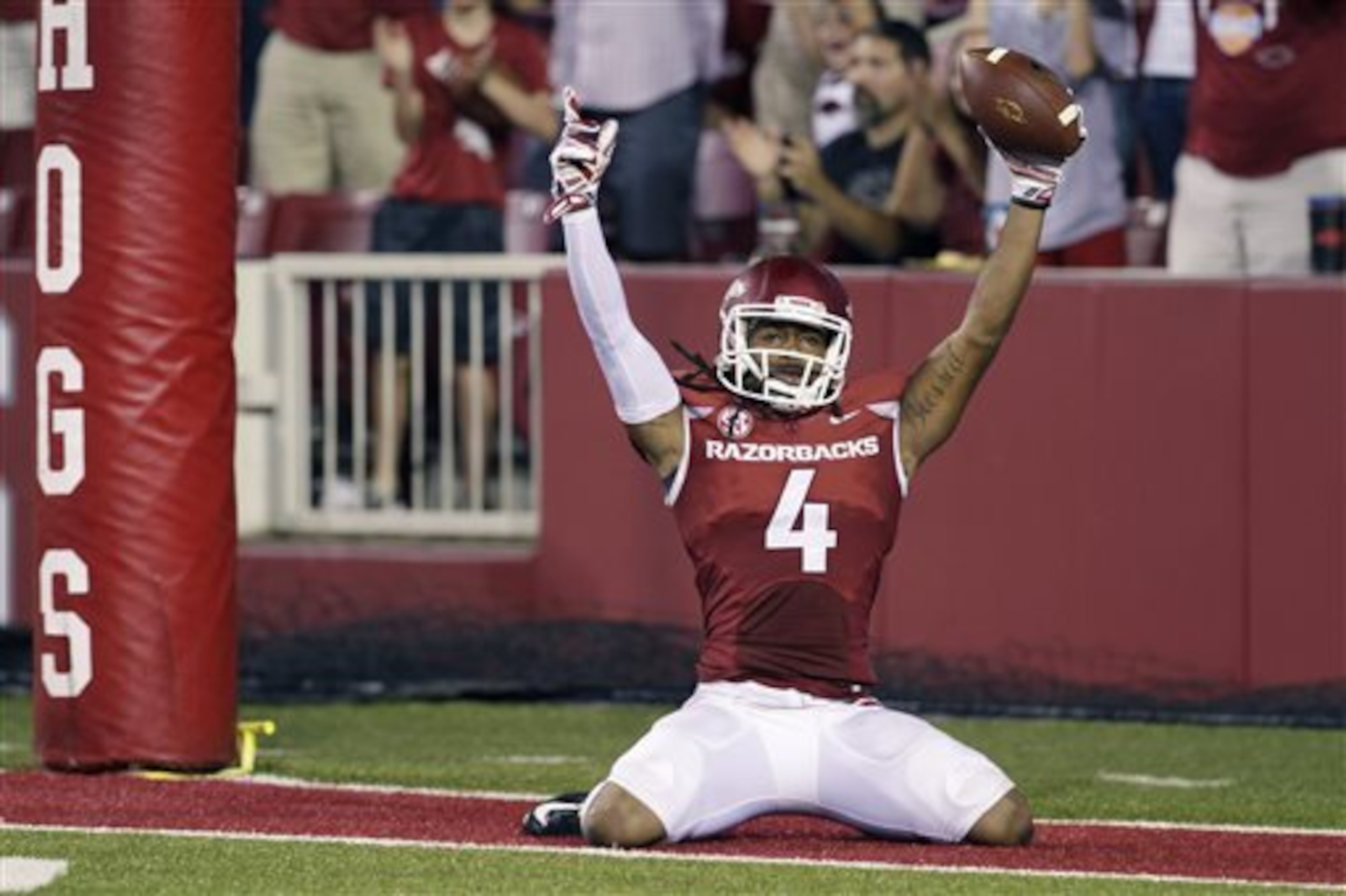
Wide receiver
With an NFL-sized line, a pair of 1,000-yard rushers and a quarterback who kept getting better with every snap he took, Arkansas' offense was one of the most improved in the country last season. If it had also had a complementary receiving corps to go with those other pieces, the Razorbacks could have done so much more.
But Arkansas had the nation's 102nd-ranked pass offense, averaging 188 yards per game. Though quarterback Brandon Allen had a strong 20-to-5 ratio of touchdowns to interceptions, he only averaged 6.7 yards per attempt.
Take out the production of tights ends, running backs and offensive linemen catching passes on trick plays, and Arkansas' wide receivers averaged just over eight receptions per game and scored only 12 TDs. Keon Hatcher (43 catches, 558 yards, six TDs) nearly did that all himself, as no other wideout had more than 18 receptions, 220 yards or two scores.
Auburn
5 of 65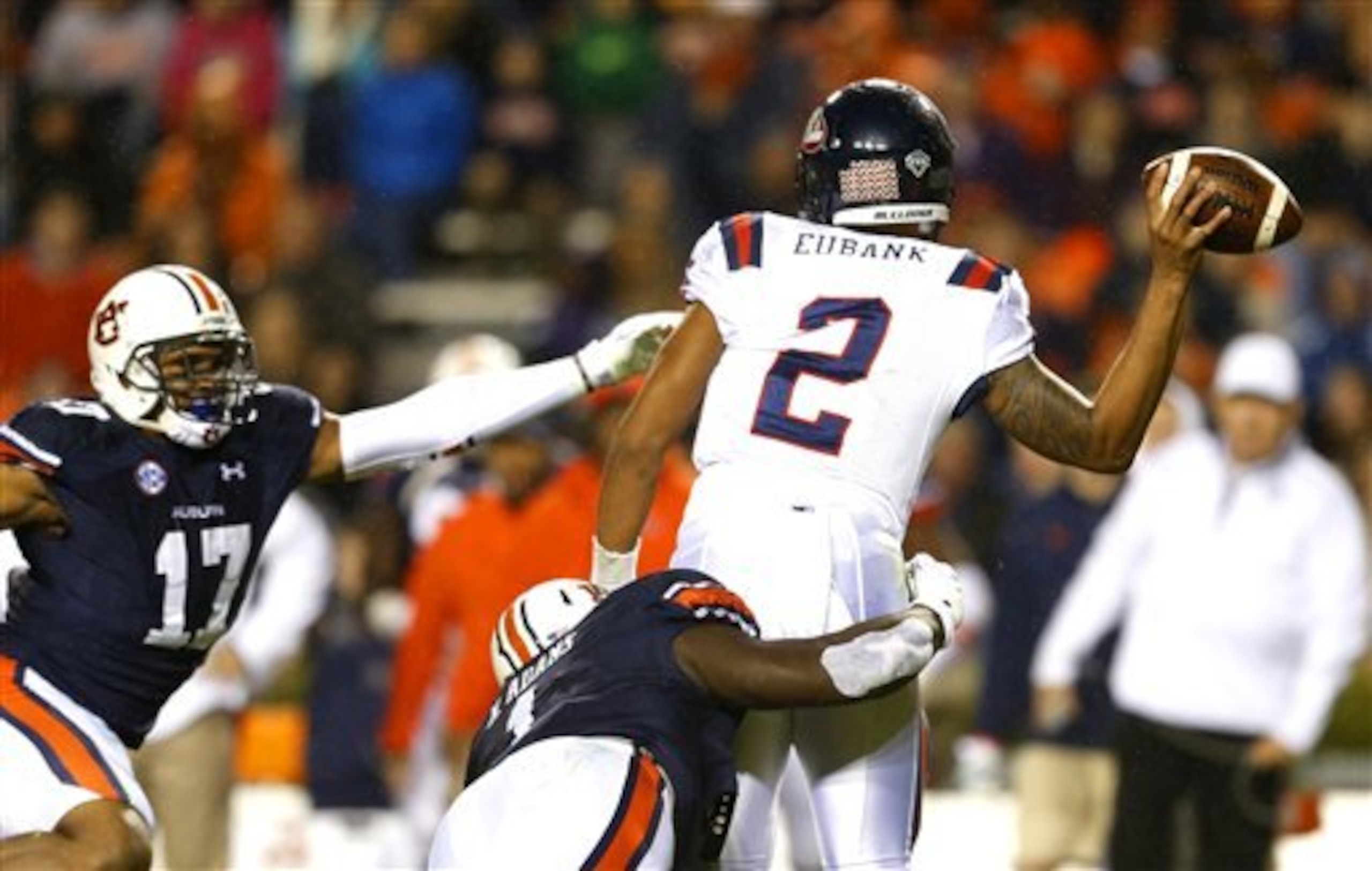
Defensive line
Auburn's entire defense was ridiculed last season, but many of the issues could be tied to what went on closest to the line of scrimmage—or, rather, what did not happen.
The loss of defensive end Carl Lawson to a torn ACL the previous spring and subpar performances from the rest of the Tigers' down linemen led to the team recording only 21 sacks in 2014. As Bleacher Report's Barrett Sallee put it, Auburn's pass rush was so nonexistent that it "left opposing quarterbacks enough time to pitch a tent in the pocket, take a nap, wake up and find open receivers."
And without much of a pass rush, the rest of Auburn's defense couldn't hold up.
A trio of factors could lead to a major boost in performance this season. First is the return of Lawson from injury, and he should work well with new defensive coordinator Will Muschamp. There's also the arrival of touted defensive end recruit Byron Cowart, who is expected to make an immediate impact up front.
Baylor
6 of 65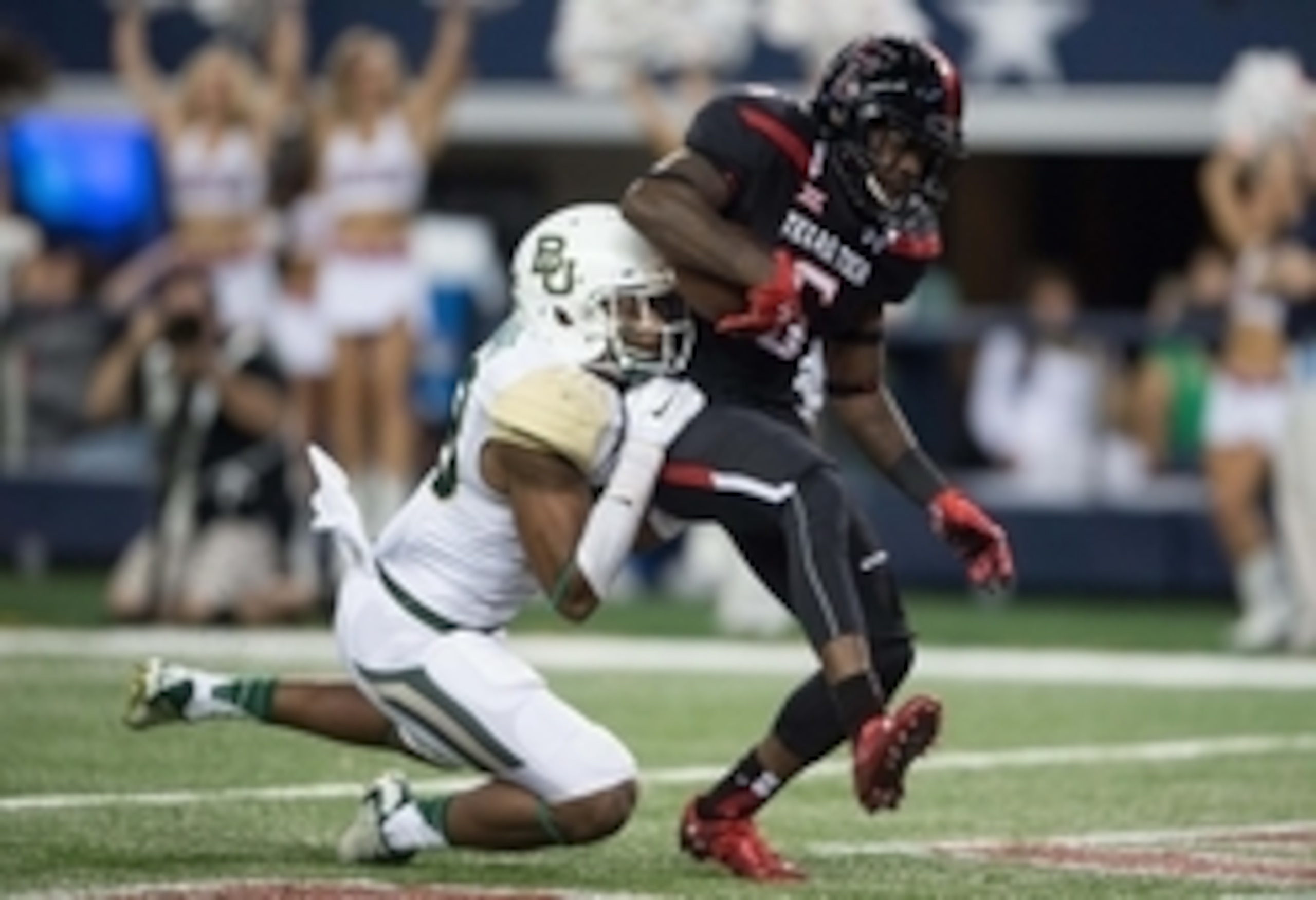
Secondary
With an offense that can score at will, and in seemingly no time at all, Baylor's defense doesn't need to be a top-10 unit to be considered successful. But something better than one of the 20 worst units against the pass would have been preferred in 2014.
While teams regularly had to throw against Baylor while playing catch-up, and it only allowed opponents to complete 54.6 percent of their passes, it was an overall poor effort by the Bears defensive backs that made some games that should have been blowouts become quite tense at the end. They turned one seemingly in-the-books win into a massive collapse.
Oklahoma State, Texas Tech and Kansas State all kept close in the second half by tearing apart Baylor's secondary, with Tech throwing for more than 600 yards and rallying from down 42-17 to make it a 48-46 game at the end. Then there was the Cotton Bowl loss to Michigan State, with Baylor going up 41-20 at the end of the third quarter, only to lose 42-41.
Boston College
7 of 65
Kicker
Boston College's six losses in 2014 included four that were by four points or fewer. And in those defeats, the Eagles kickers missed two field goals and two extra points, including a shanked PAT in overtime that accounted for the margin of defeat against Penn State in the Pinstripe Bowl.
The trio of seniors Alex Howell and Joey Launceford and freshman Mike Knoll combined to miss seven extra points and make just 12 of 19 field goals last season. Knoll had the miss in the bowl game, while Howell (who was also BC's punter) missed a 43-yard field goal in the fourth quarter of what ended up being a 20-17 loss to defending national champion Florida State.
California
8 of 65Secondary
California made a huge leap forward from Sonny Dykes' first season in 2013 to last year, improving from 1-11 to 5-7 behind a potent offense that averaged more than 38 points and 495 yards per game. But because the team's pass defense was roughly the equivalent of a paper towel trying to hold back a busted pipe, the Golden Bears couldn't get over the hump and into a bowl game.
Ranked last overall in FBS in passing yards allowed (4,406) and touchdowns given up through the air (42), Cal had no answer for when opponents threw the ball. It allowed at least five passing TDs in five different games, yielded more than 400 yards four times (including an FBS single-game record 734 to Washington State's Connor Halliday) and blew second-half leads against Arizona, UCLA and BYU.
The Arizona loss was probably the most painful, since Cal held an 18-point lead entering the fourth quarter and then yielded 36 points in the final period (including a Hail Mary TD pass as time expired) to lose 49-45.
Clemson
9 of 65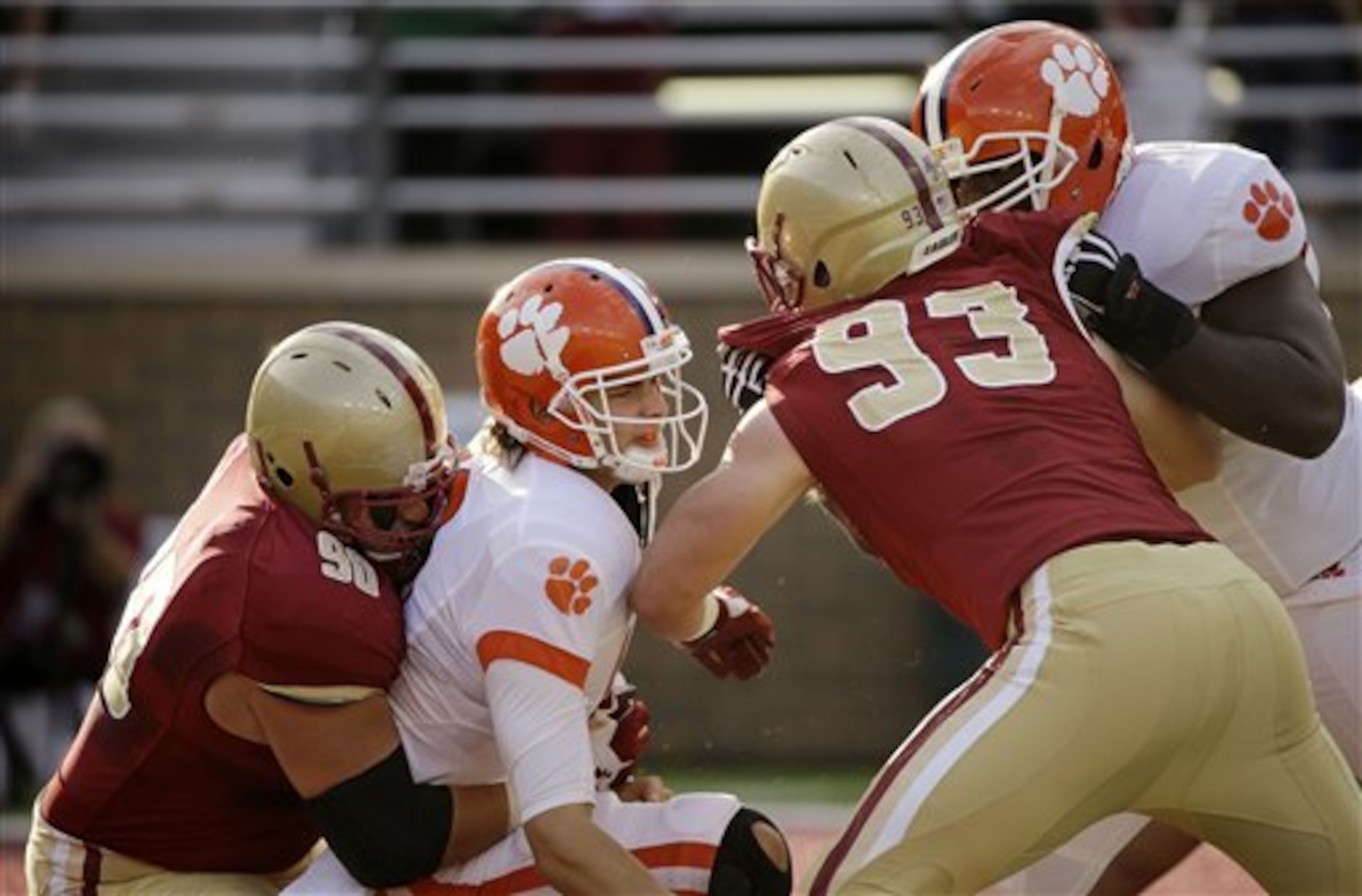
Offensive line
When freshman quarterback Deshaun Watson was on the field, Clemson's offense operated efficiently and consistently, but when he was injured, it struggled under senior Cole Stoudt's guidance. This could easily be blamed on Stoudt, but the Tigers offensive line was just as much to blame.
While Watson's mobility made it possible for him to elude defenders and create with his legs, the more pro-style Stoudt was sacked 17 times (compared to eight for Watson). Despite starting three seniors, Clemson's line wasn't able to hold up long enough to allow Stoudt time to operate.
Colorado
10 of 65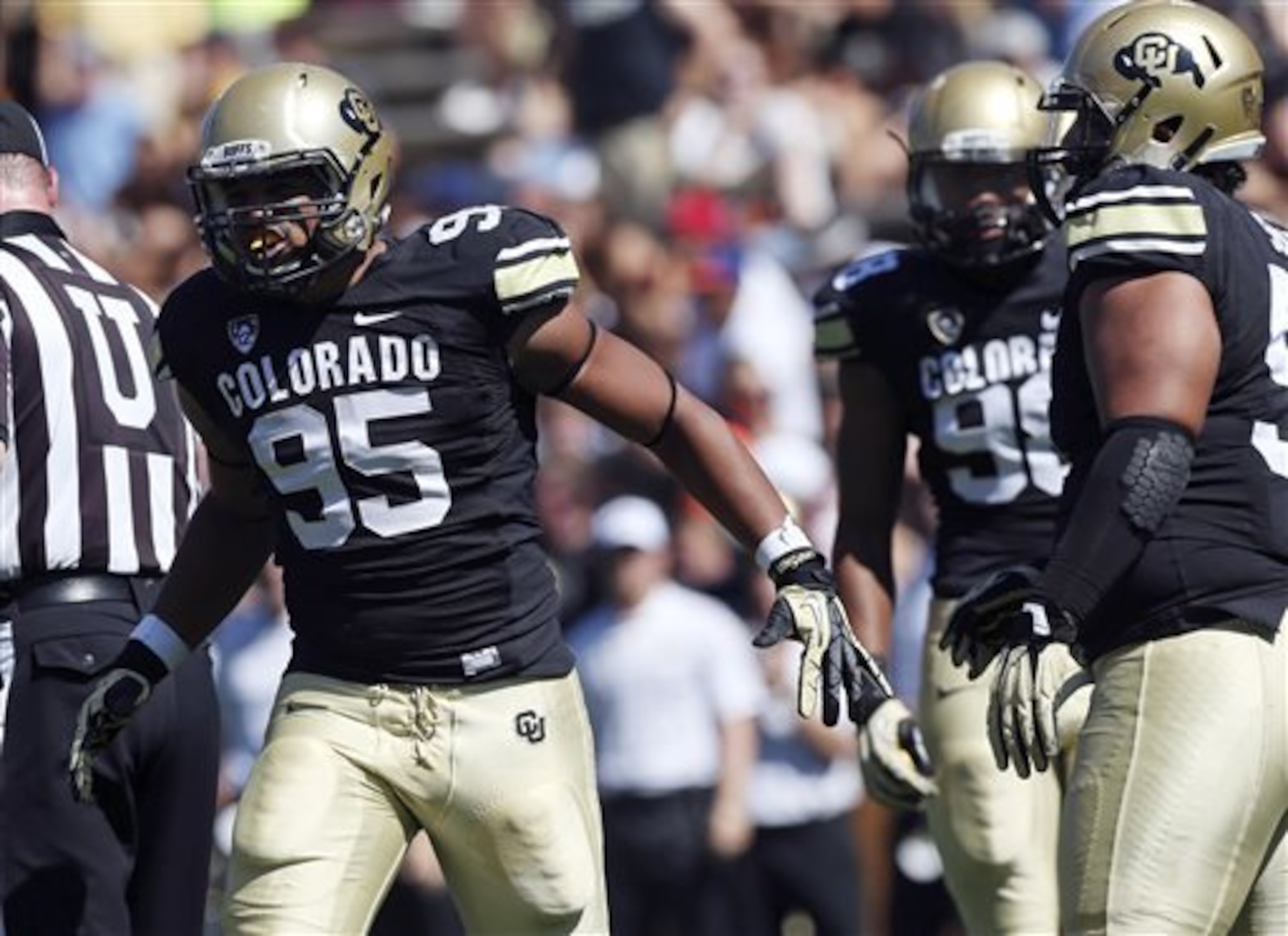
Defensive line
Colorado returns nine starters on defense this fall, tied for fifth most in FBS, according to Phil Steele. Among power-conference teams, only Notre Dame brings back more defensive starters, but in the Buffaloes' case, that could be a detriment rather than a positive.
Three of four starters are back from a defensive line that allowed more than 200 rushing yards per game and 27 rushing touchdowns in 2014. That group also had only 5.5 of Colorado's 19 sacks.
Duke
11 of 65
Running back
With more than 180 rushing yards per game last season, Duke had a pretty solid overall ground game that helped it reach nine wins for the second year in a row. But the Blue Devils lacked consistency from its running backs, since none of them could manage to take command and be a go-to ball-carrier.
The trio of Shaquille Powell, Josh Snead and Shaun Wilson combined for 1,616 yards and 10 touchdowns, and each had a game with at least 100 yards. Wilson ran for a school-record 245 yards and three TDs against Kansas, then averaged 26.4 yards per game and scored only twice more the rest of the season.
The most dependable of the group was Powell, who had a team-high 618 yards but didn't score after the fifth game of the year.
Florida
12 of 65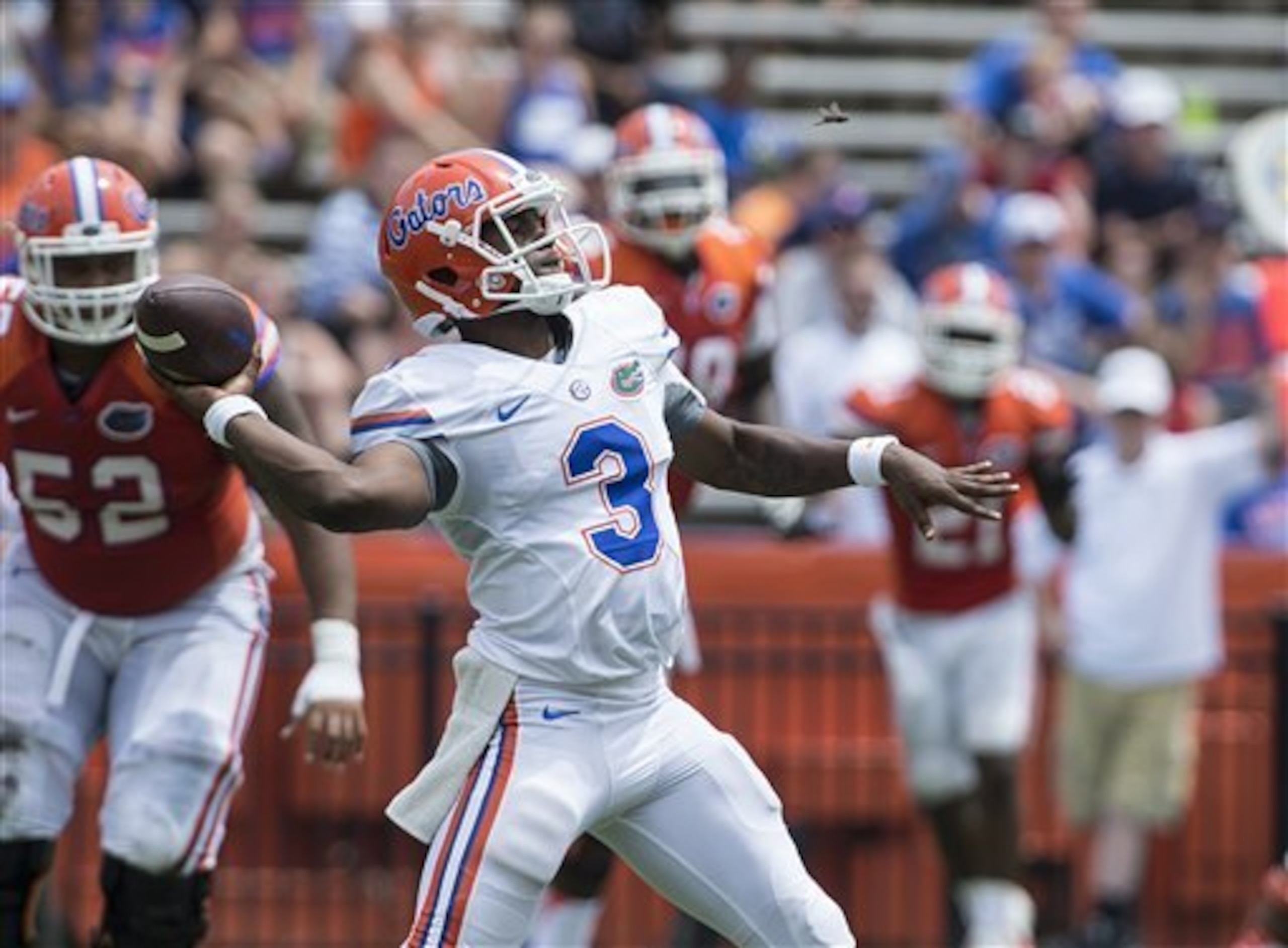
Quarterback
In his short tenure at Colorado State, Jim McElwain turned Garrett Grayson into an NFL-caliber quarterback who ended up getting drafted in the third round in May by the New Orleans Saints. If he's able to make similar headway with the passers he's inherited at Florida, he's apt to win SEC Coach of the Year in 2015.
The Gators averaged fewer than 180 passing yards per game last year, throwing just 18 touchdown passes against 14 interceptions.
Treon Harris took over as Florida's starter midway through last season, and the run-first quarterback showed some flashes but still lacked consistency. Jeff Driskel, who lost his job to Harris, had nine TDs and 10 interceptions and failed to reach 100 passing yards in three starts.
This season, it'll either be Harris or Will Grier, a redshirt freshman. Florida was in the hunt for Notre Dame transfer Everett Golson, a sign that McElwain wasn't too keen on his existing quarterback options.
Florida State
13 of 65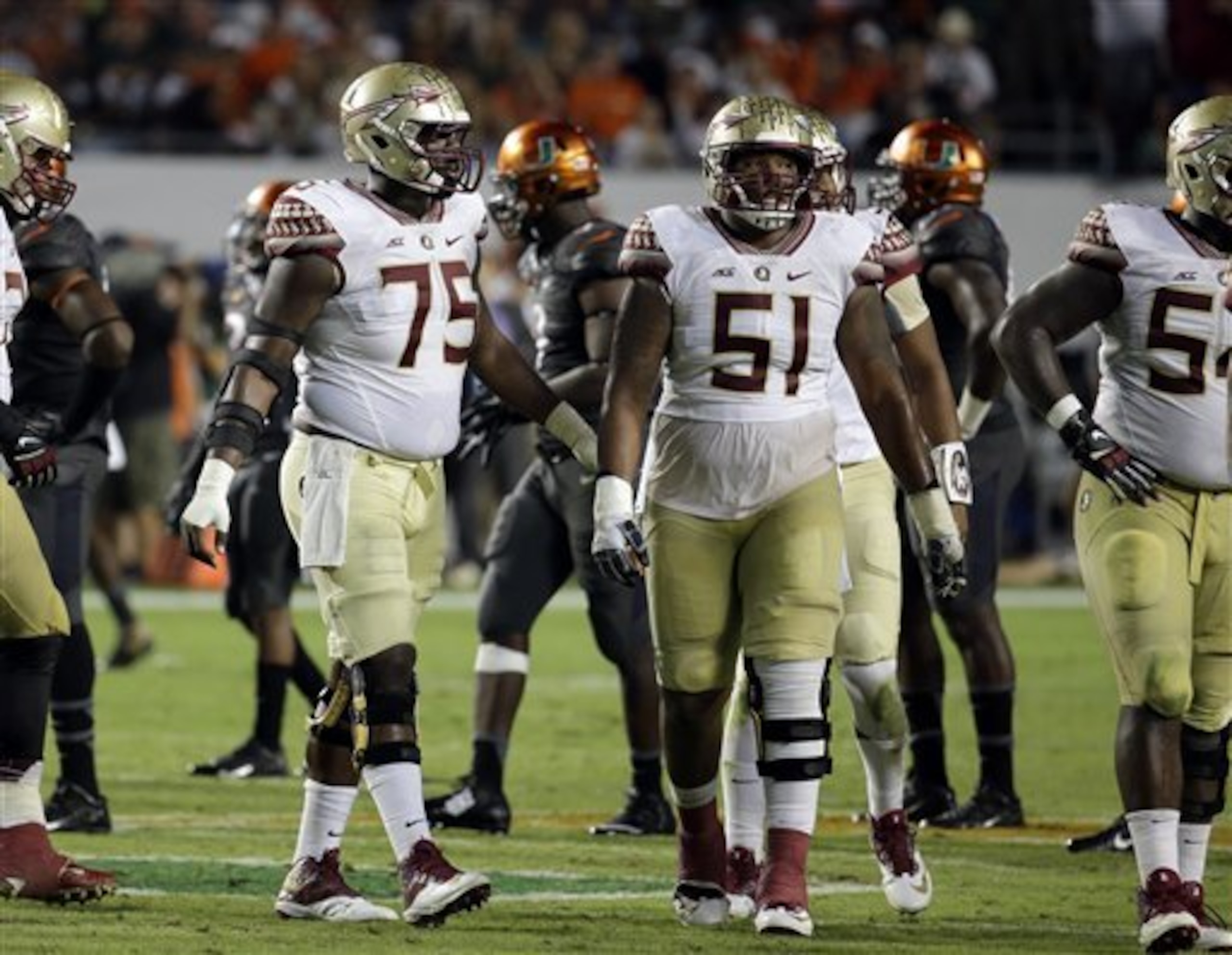
Offensive line
For a team that had 11 players taken in this year's NFL draft, it's hard to imagine that Florida State had any positions that were lacking in 2014. The Seminoles went unbeaten through the regular season before losing to Oregon in the Rose Bowl.
But even though FSU had three starting offensive linemen drafted this year, that group did struggle, especially when compared to how it performed the season before. The Seminoles went from averaging 51.6 points and 519 yards per game during their national title run in 2013 to 33.7 points and 441 yards last fall.
The line allowed fewer sacks in 2014 (23, compared to 33 the year before) but still had difficulty holding things together. Now a nearly all-new line is tasked with protecting a new quarterback and providing enough time for a young group of skill players to create.
Georgia
14 of 65
Defensive line
The first season under defensive coordinator Jeremy Pruitt has to be considered a major success for Georgia, which went from 45th in yards allowed in 2013 to 17th last year. But in key contests, when that unit's improvement should have mattered most, the Bulldogs failed to come through.
This was most evident on the defensive line, where either as a base 3-4 set or a hybrid 4-2-5 alignment the Bulldogs were often deficient against the run. They allowed 331 rushing yards per game in their three losses, and while the 399 given up to Georgia Tech's option attack was acceptable, that wasn't the case in allowing South Carolina to run for 176 yards and two touchdowns or for Florida to explode for 418 yards and five scores.
"Georgia's run defense wasn't up to par in key games last year, and a lot of that had to do with not setting the edge well," Seth Emerson of Macon.com wrote.
With that in mind, Georgia will look to slide some of its wealth of linebackers up closer to the line to help on the outside, while the arrival of No. 1 overall recruit Trent Thompson can help solidify the interior.
Georgia Tech
15 of 65
Defensive line
If Georgia Tech could develop defensive linemen on a regular basis like it does offensive ones, the Yellow Jackets would be even more difficult to beat. But the standouts stopping the run aren't nearly as strong on a regular basis as those blocking for it, as was the case in 2014.
While Tech's option run game produced the second-most rushing yards of any team in FBS, at 342.1 per game, the Yellow Jackets also gave up more than five yards per carry. Take out a strong performance against Virginia, and that average jumps to 5.2 per carry.
With only 61 tackles for loss as a team, and only 41 on run plays, Tech was pushed back more than it pushed forward on defense.
Illinois
16 of 65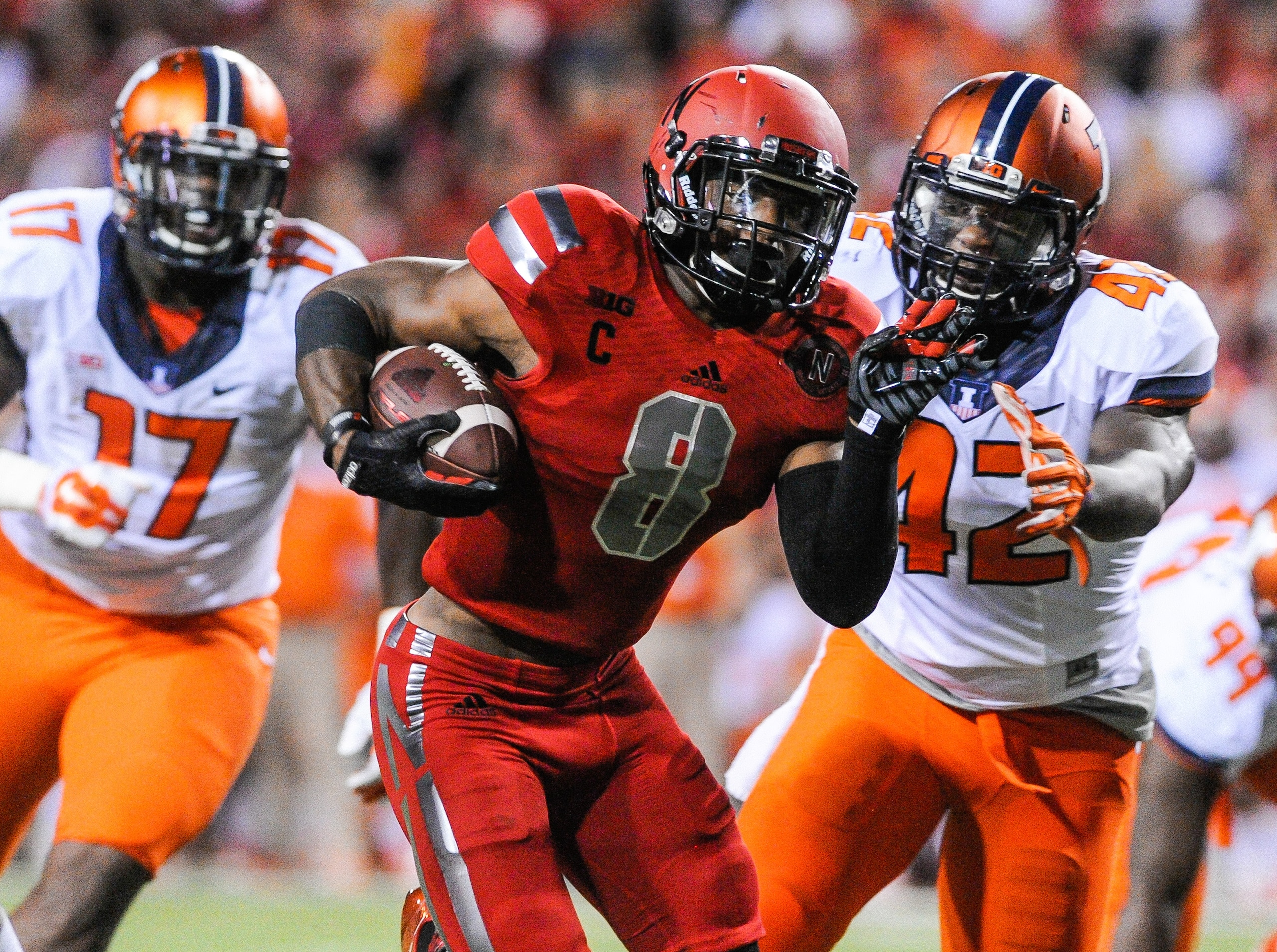
Defensive line
We're only slightly exaggerating when we say Illinois' run defense was so bad last season that it resembled a bullfighter without a red cape. But the analogy still fits, because the Fighting Illini were picked apart on the ground, and hardly any opponent was shy about doing so.
"Opponents ran the ball five percent more frequently than the national average on standard downs and 14 percent more on passing downs," SB Nation's Bill Connelly wrote. "Running was not risky at all, and opponents knew that."
Illinois allowed 239.15 rushing yards per game, a figure that jumped to 288.1 per game against Big Ten foes.
Indiana
17 of 65
Quarterback
Indiana's Tevin Coleman ran for 2,036 yards last season, the 15th-best performance in FBS history, yet the Hoosiers won only four games and ranked 90th in scoring at 25.1 points per game. This was because the Hoosiers lacked any offensive balance because they couldn't get strong play from the quarterback position.
Whether it be Nate Sudfeld or injury replacement Zander Diamont, neither passer did much in terms of passing, so to speak. Sudfeld averaged 191.8 yards per game, with six touchdowns, while Diamont was even worse by completing only 48.5 percent of his throws with one TD against four interceptions.
Coleman was forced to run into, through and around overloaded boxes because of this, which might explain why he had to spend much of the season playing on a broken foot.
Iowa
18 of 65
Punter
For as vanilla and unimaginative of an offense as Iowa tends to use, and for all of the jokes that tend to get thrown out regarding coach Kirk Ferentz's fondness for punting and field position, you'd think the Hawkeyes would excel on special teams. Far from it.
Iowa averaged fewer than 38 yards per punt in 2014, which ranked 114th in FBS. And while only three of 65 kicks resulted in touchbacks, only 19 landed inside the 20-yard line, so it wasn't as if the Hawkeyes' numbers were skewed by trying to pin opponents deep.
Iowa State
19 of 65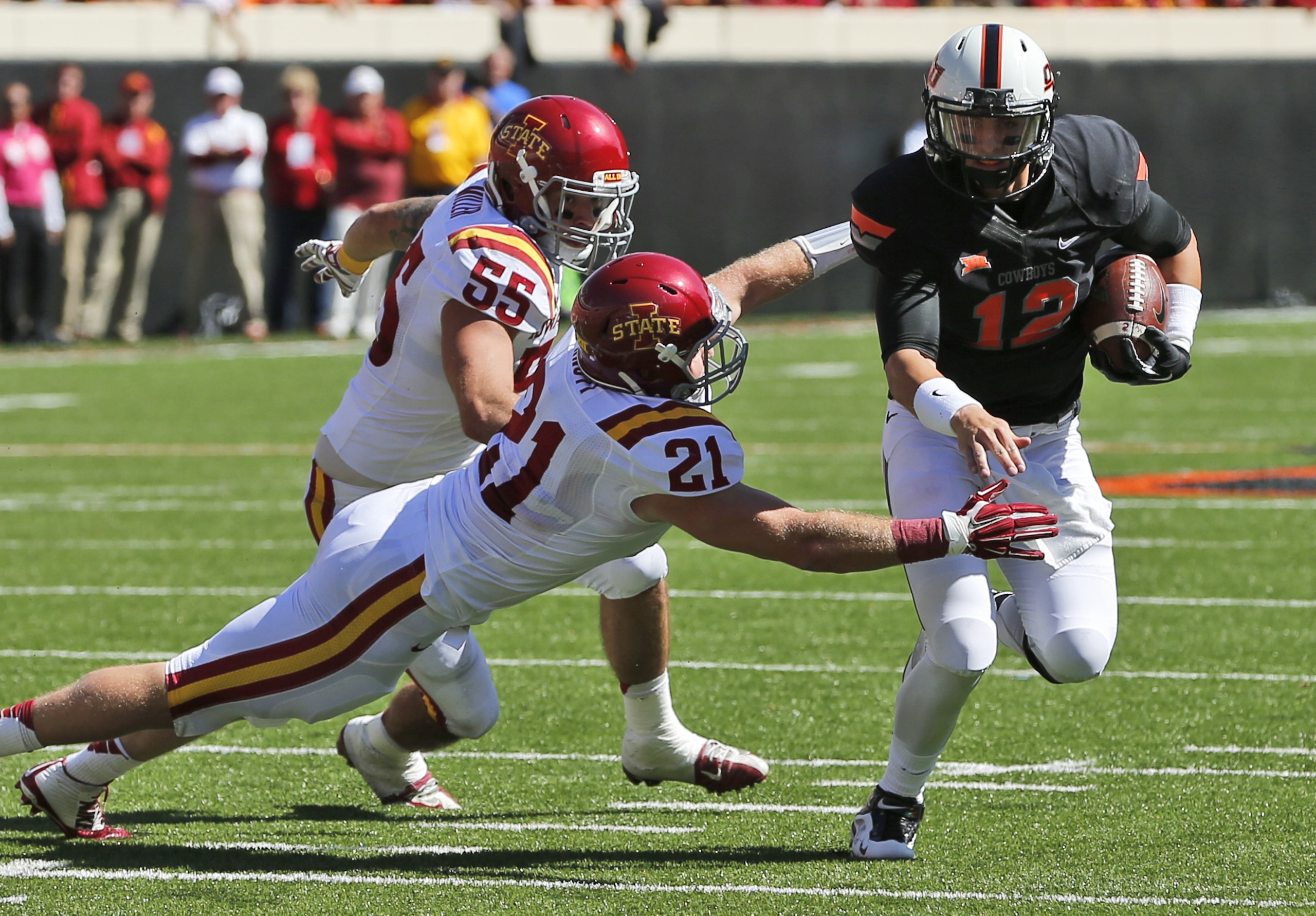
Linebacker
With the worst defense in the country last year, one that allowed more than 528 yards per game and was a big reason that Iowa State was 2-10, there's not one single part of that unit that was more responsible than another for the horrible performance. But we had to pick one, and the linebackers have drawn our ire.
The grouping of Jared Brackens, Drake Ferch, Luke Knott and Kane Seeley combined for 253 tackles, but 15.5 of those were for negative yardage. Usually, the Cyclones' middle defenders were forced to make plays far from the line of scrimmage and ended up not getting the job done on the initial touch.
Kansas
20 of 65
Running back
Prior to quarterback Michael Cummings getting injured in the spring game, Kansas was hoping to be able to put together a strong offense built around him and an uptempo passing attack that new coach David Beaty brought with him from Texas A&M. While that could still happen, the Jayhawks don't have the same confidence they can run the ball effectively to balance things out.
Last year Kansas averaged just over 3.1 yards per carry with just 11 rushing touchdowns, failing to reach 100 yards in six of nine Big 12 games. Freshman Corey Avery showed promise at times, such as when he went for 103 yards and a TD in the win over Iowa State, but a suspension this spring puts his status in doubt and makes it unlikely Kansas will be able to improve on the ground.
Kansas State
21 of 65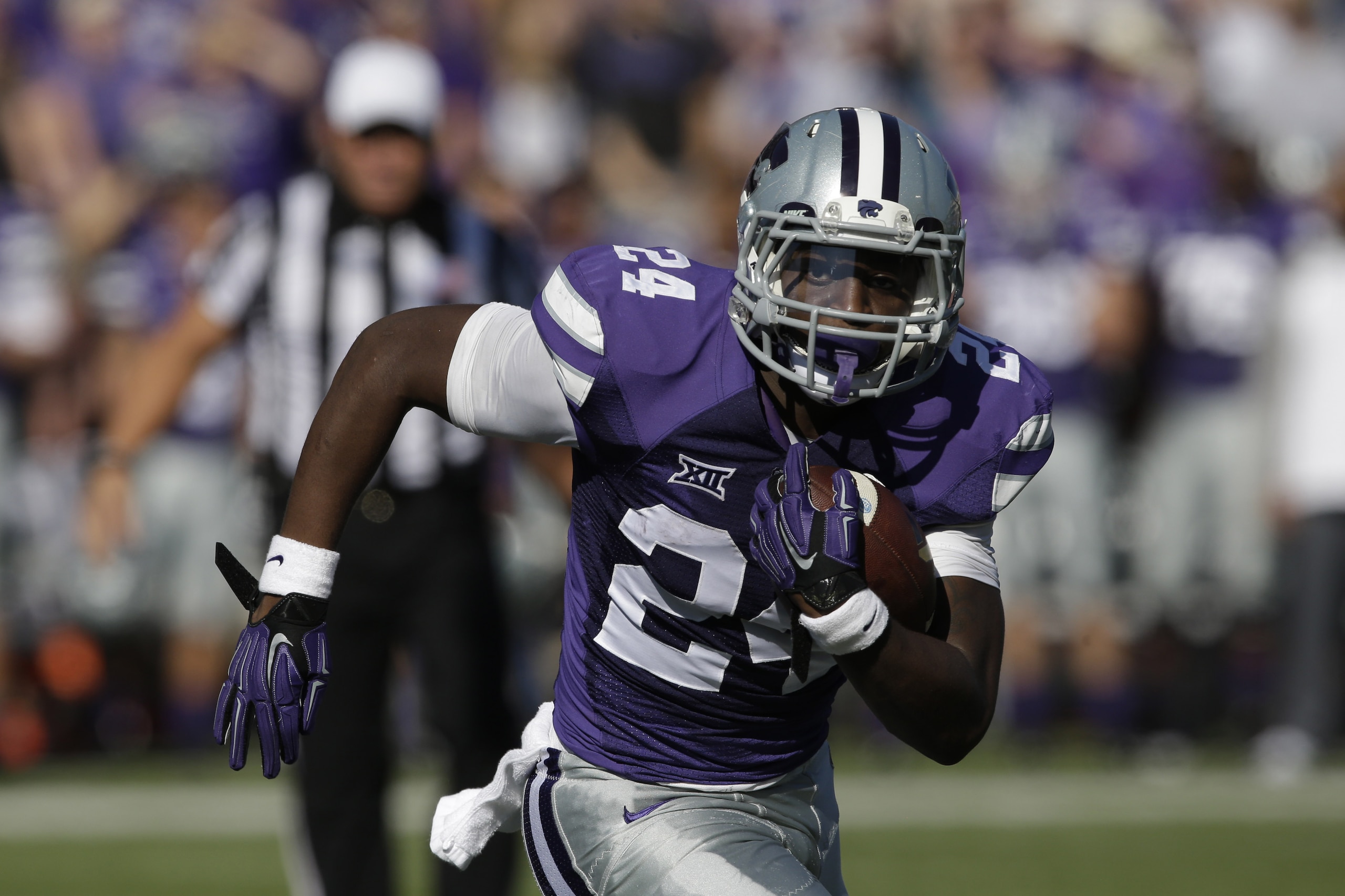
Running back
Kansas State was fortunate to have two stellar veteran wide receivers and an experienced quarterback who could get them the ball last year, otherwise its offense would have been forced to turn to a run game that was strong in the red zone but not anywhere else.
The Wildcats had 30 rushing touchdowns in 2014, with 29 of those coming in the red zone. But 12 of those came from quarterbacks Jake Waters and Joe Hubener, who often got the call close to the goal line because Charles Jones and DeMarcus Robinson struggled to pick up key yards.
While Hubener is in line to replace Waters as the starter and will again be available to pick up first downs and red-zone TDs, he will need more from those he's handing off to, especially with a much younger receiving corps to work with.
Kentucky
22 of 65
Wide receiver
The work that Neal Brown did as Kentucky's offensive coordinator and quarterbacks coach the past two years helped him land his first head coaching job for 2015, at Troy. His success was tied more to how he helped develop quarterback Patrick Towles and got Drew Barker prepared to compete for the starting job this season than how he improved the play of the Wildcats receivers, though.
Last year Kentucky didn't have a wideout catch more than 45 passes, the second straight year that happened. The Wildcats' best top pass-catchers all surpassed 500 receiving yards, but they also combined to only have three 100-yard individual outputs.
Kentucky will again have an Air Raid-style coordinator in ex-West Virginia assistant Shannon Dawson, and his first task will be to get more out of his receivers.
Louisville
23 of 65
Offensive line
The 3.6 yards per carry that Louisville averaged on the ground last season was the worst for a Bobby Petrino-coached team since 2008, his first season at Arkansas. And the 40 sacks that Cardinals quarterbacks suffered in 2014 were more than all but nine other teams gave up.
If not for a great defense full of NFL draft picks that previous coach Charlie Strong left behind, Louisville might have finished far worse than its 9-4 record because of the poor job that its offensive line did. Even with tackle Jamon Brown and guard John Miller going in the third round last month, that unit massively underachieved.
LSU
24 of 65
Quarterback
Since Les Miles came to LSU he has produced three quarterbacks who were drafted into the NFL. A lot can still happen, but at this point the two passers the Tigers used last year (and appear stuck with choosing between in 2015) aren't going to add to that total.
Brandon Harris and Anthony Jennings combined to complete only 50 percent of their passes for fewer than 2,100 yards along with 17 touchdowns.
LSU was mentioned as a possible destination for several graduate transfer quarterbacks, even ones that didn't end up leaving their schools, but instead Harris and Jennings are all that Miles has at his disposal this fall.
"Unlike last year, though, this year's edition of the quarterback battle is met with more cynicism than optimism," Bleacher Report's Barrett Sallee wrote.
Maryland
25 of 65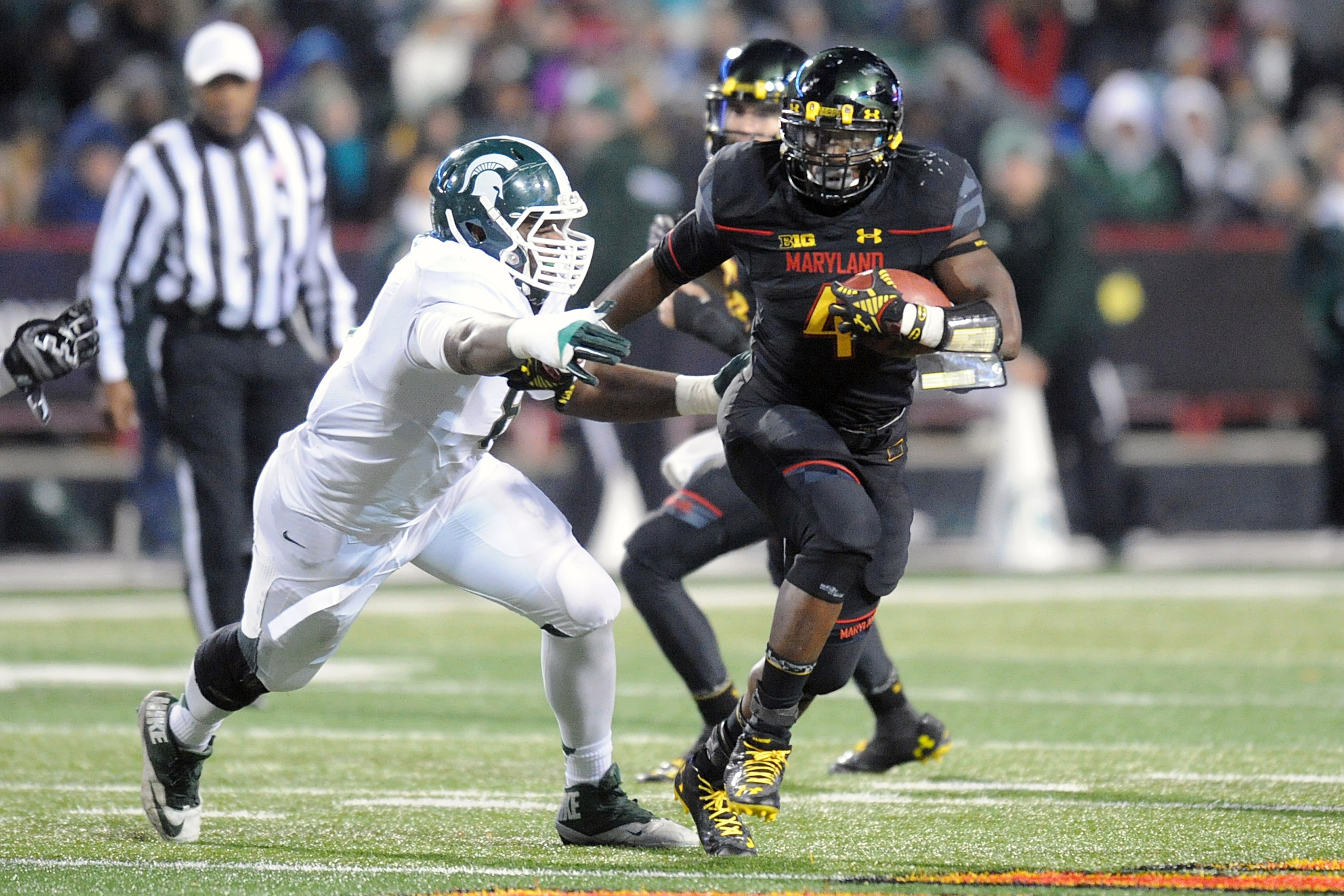
Running back
Maryland ranked 111th nationally in rushing in 2014, at 121.85 yards per game. That figure is even less impressive when you consider quarterback C.J. Brown was far and away the Terrapins' best option with the ball, leading the team with 539 yards and eight of their 21 touchdowns.
The tandem of Wes Brown and Brandon Ross averaged fewer than 60 yards per contest, but they only carried the ball a total of 188 times in 13 games. When given a chance, though, neither did much to warrant getting more touches.
Miami (Florida)
26 of 65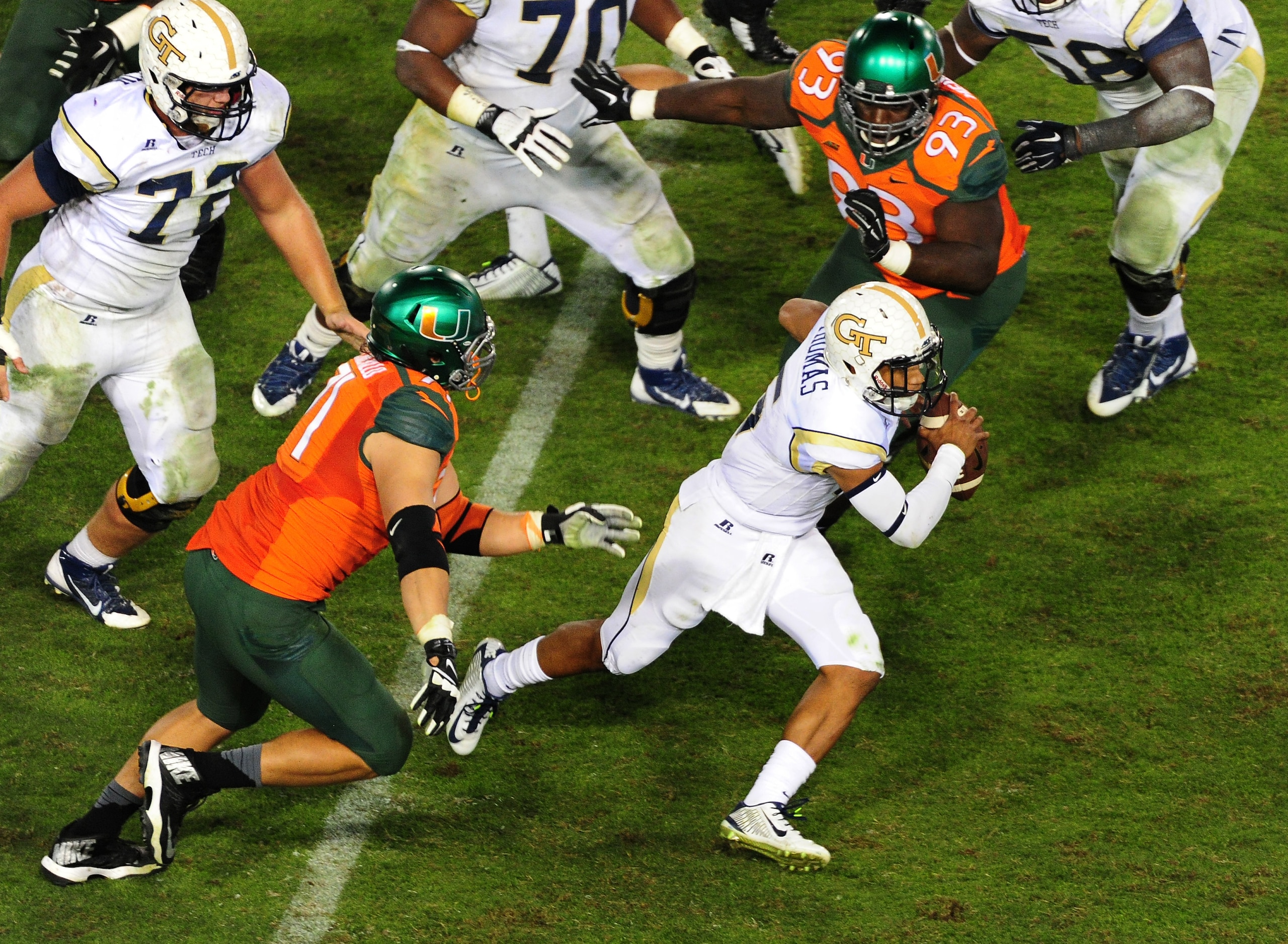
Defensive line
Standout linebacker Denzel Perryman was the focal point of Miami's defense last year, and his numbers showed. But they also indicated how reliant the Hurricanes were on him because of a lack of performance from their defensive line.
Miami's tackles and ends only managed seven sacks and 14.5 tackles for loss in 2014, yet the Hurricanes were still 14th nationally in yards allowed. They won't have Perryman to lean on this year, though, so much more will have to come from the front line or another 6-7 season might be this team's ceiling.
Michigan
27 of 65
Quarterback
Michigan's new coach, Jim Harbaugh, is one of the most accomplished quarterbacks in program history. He's also someone who has had a great passer at every place he's coached, both professionally and in college, yet with the Wolverines he might have inherited his worst QB scenario yet.
The Wolverines were 112th nationally in passing in 2014, at 170.2 yards per game, and their quarterbacks threw 18 interceptions against just 10 touchdowns. All that's left from that group is Shane Morris, who in limited action completed only 35 percent of his throws and didn't have a TD.
Morris, two freshmen (Alex Malzone and Zach Gentry) and Iowa graduate transfer Jake Rudock are Harbaugh's choices for 2015. Someone from that group needs to emerge and do much more from that position than Michigan got a year ago.
Michigan State
28 of 65
Secondary
For a school that had acquired a nickname for the position, Michigan State's "No Fly Zone" secondary got burned quite a bit in 2014.
Though the Spartans' defensive backs were credited with 14 interceptions, with RJ Williamson returning a pair for touchdowns, by the end of the season wide receiver Tony Lippett had been shifted over to that side of the ball to provide extra support for a group that ended up yielding 15 pass plays of 40 or more yards.
Both Ohio State and Oregon threw for 300 or more yards against MSU, while Baylor went for 603 yards through the air in the Cotton Bowl. All three opponents averaged more than 11 yards per pass attempt.
Minnesota
29 of 65
Wide receiver
With a massive target like tight end Maxx Williams out there catching anything thrown his way, and a 1,600-yard rusher churning out work in the backfield, Minnesota wasn't in need of much from its wide receivers in 2014. And that's just what it got from them.
Williams and running back David Cobb combined for 52 of the Golden Gophers' 127 receptions, with Williams responsible for two-thirds of the touchdown catches. No receiver had more than 18 catches, and only four had at least 10.
Minnesota's offense wasn't designed with downfield passing in mind, but that was also because it didn't have the tools in place for that to be a possibility.
Mississippi State
30 of 65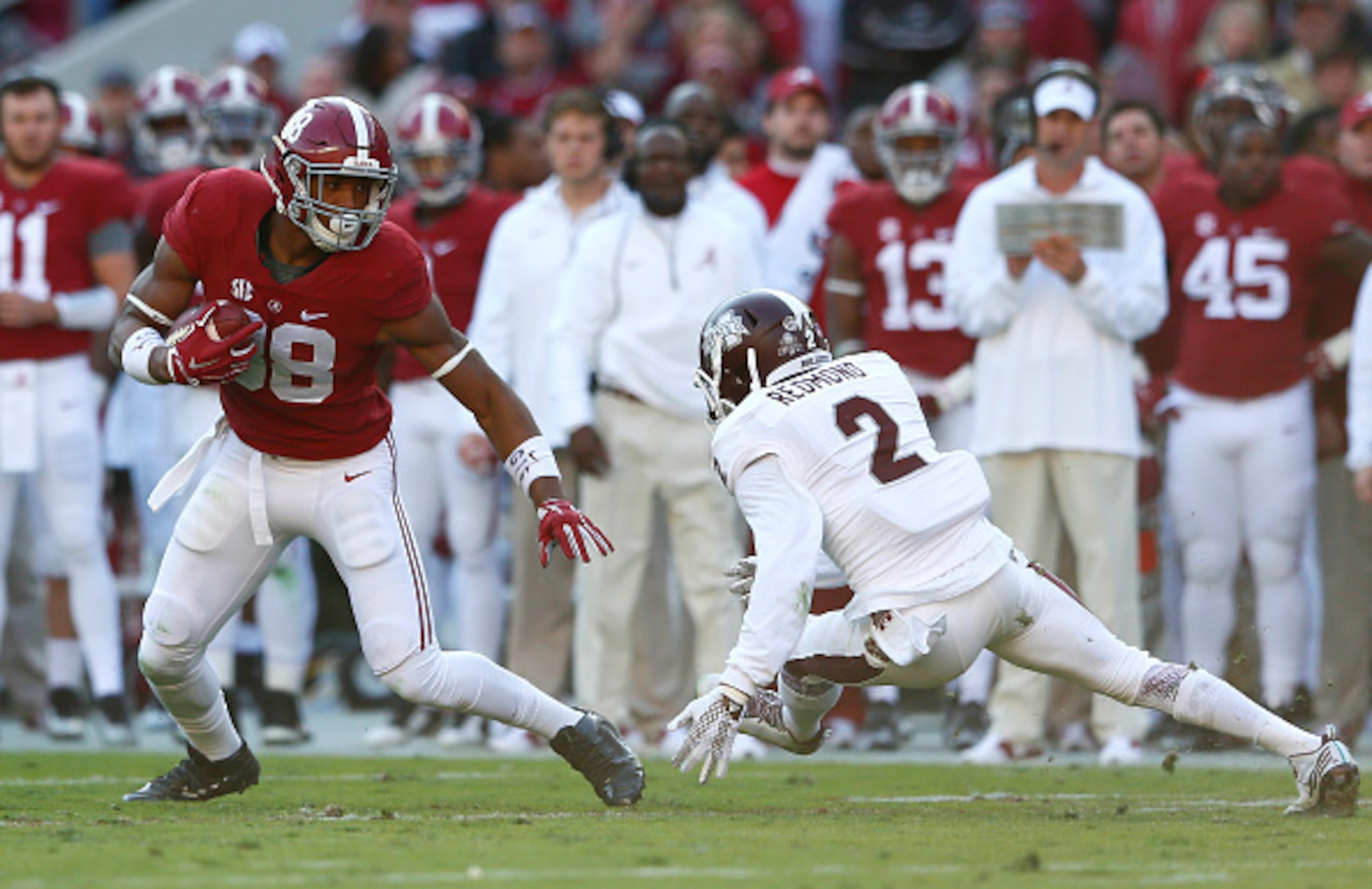
Secondary
Mississippi State's breakout season in 2014 was the product of a dynamic quarterback and a strong front seven on defense, but also in spite of a secondary that rarely was able to handle its assignments.
The Bulldogs ranked 117th in passing defense, giving up more than 272 yards per game. Opponents didn't complete a high percentage of their throws, but when they did they tended to go for big yardage. That includes nine receptions for 50 or more yards, tied for seventh worst in the nation.
That poor pass defense nearly contributed to some losses in games that seemed put away during MSU's 9-0 run, such as the win at LSU in which the Bulldogs led 31-10 in the fourth quarter but then gave up three touchdowns in the final 12 minutes.
Missouri
31 of 65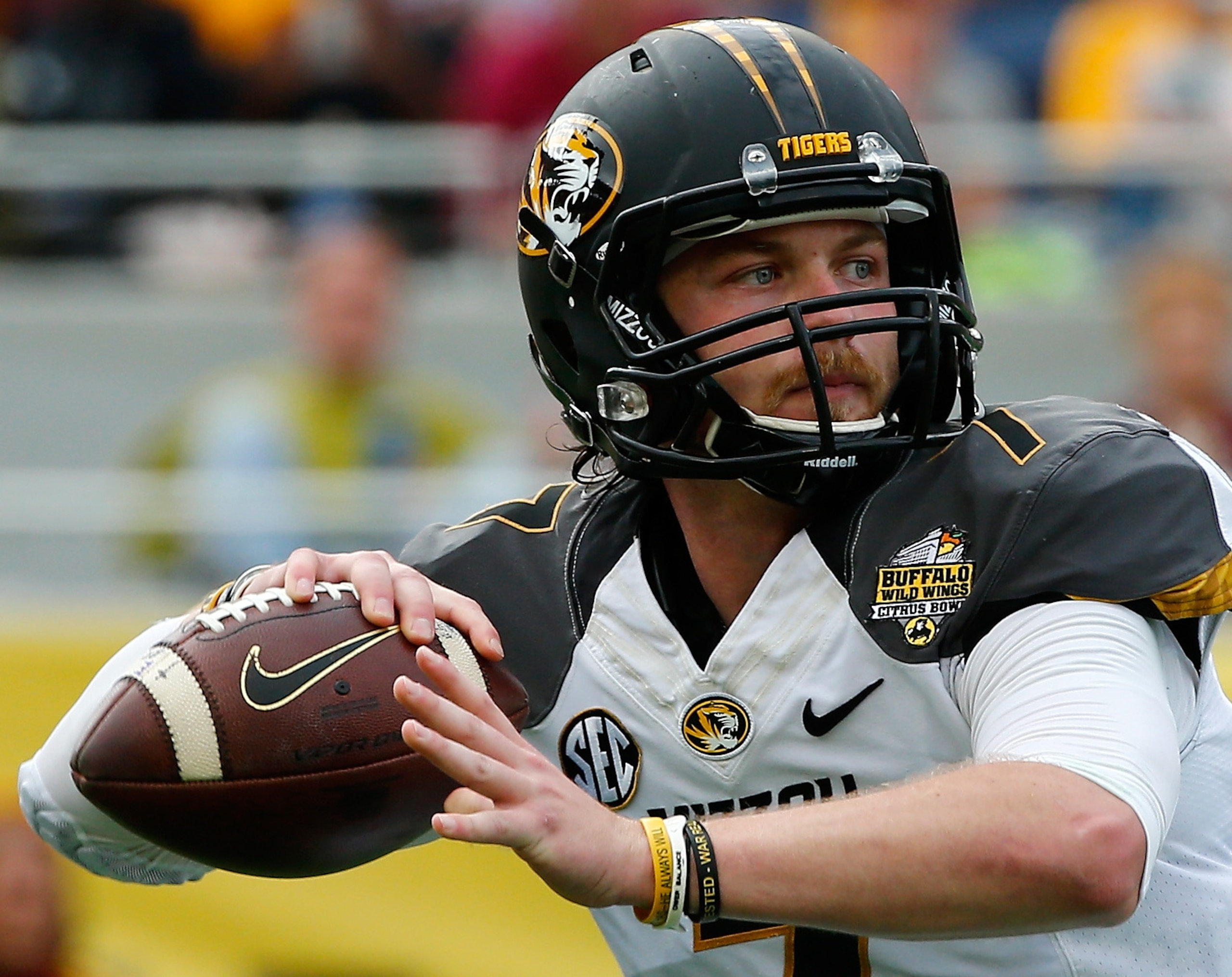
Quarterback
There have been few teams that have managed to win a division in a major conference, like the SEC East, that have had such a glaring weakness as the Missouri team from 2014. The Tigers somehow overcame some of the most uneven quarterback play ever seen last year to win their second consecutive division title, but it's unlikely they'll be able to three-peat without Maty Mauk improving.
Or, possibly, getting replaced by true freshman Drew Lock.
Mauk completed only 53.4 percent of his passes for 189.1 yards per game, and while he threw 25 touchdowns he was also intercepted 13 times. The sophomore had five games with at least 250 passing yards, but also five with fewer than 150 and three that didn't reach triple digits. He was particularly woeful during a three-game stretch in September and October when he was just 27 of 63 for 249 yards and five interceptions with zero TDs.
"Right now, I want to do whatever I can do to step my game up to the next level, but at the same time I gotta do whatever I can do to help Mizzou win football games," Mauk told ESPN's Edward Aschoff.
Nebraska
32 of 65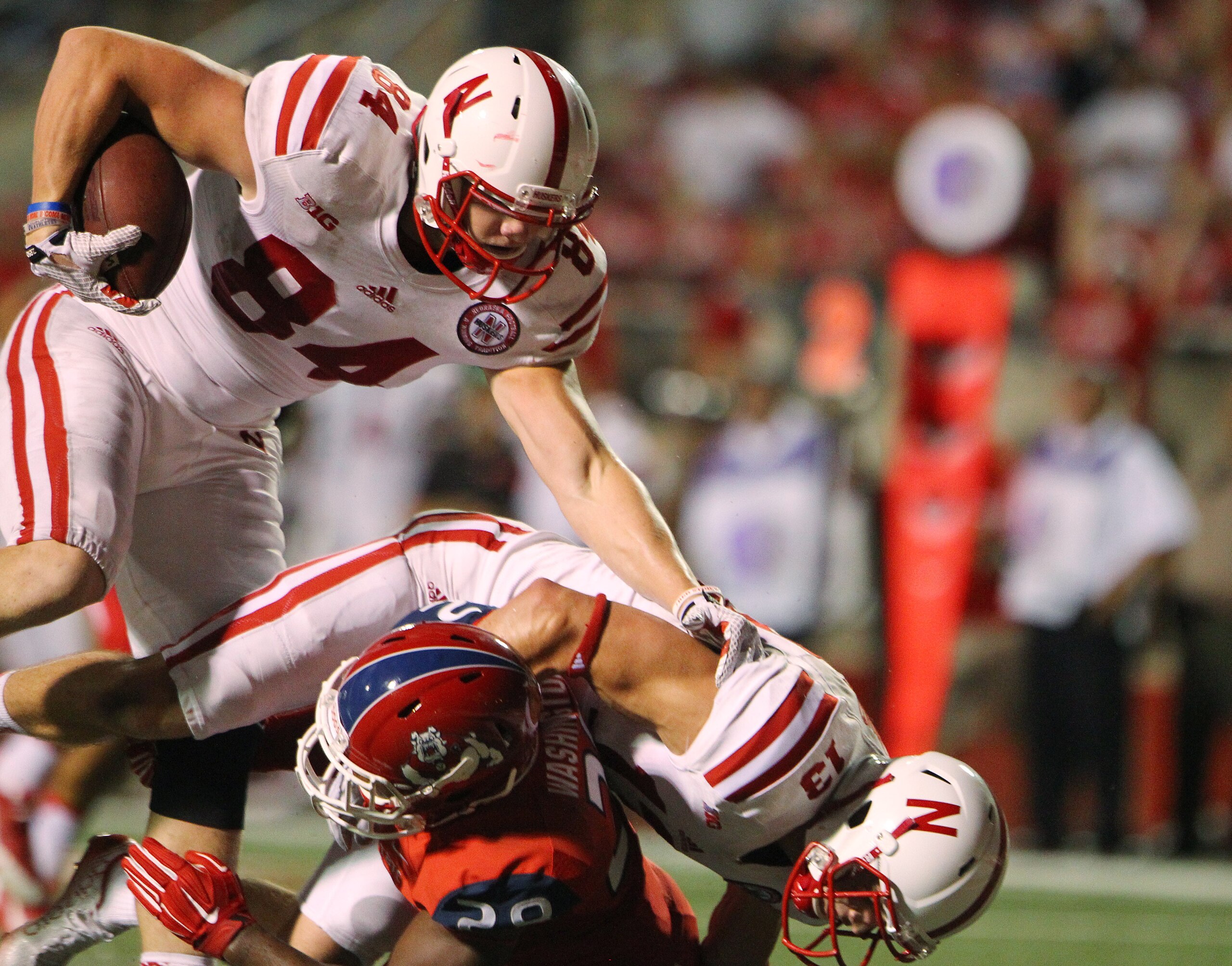
Tight end
Not every offense utilizes the tight in a way that gets maximum production out of the position, especially ones that are wide open and involve a lot of downfield passing or quick throws. Ones that run the ball and do a lot more close to the line of scrimmage tend to involve the tight end more, yet Nebraska bucked that trend last season.
Either because no one was capable of handling the task or Bo Pelini's staff not wanting to give the Cornhuskers' tight ends a shot, but in 2014 they combined to catch just 10 passes for 145 yards. That did include three touchdowns, two by Sam Cotton, but in six games no tight end had a reception.
North Carolina
33 of 65
Defensive line
Of the few teams that allowed more rushing yards per game last season than North Carolina, none of them finished with a winning record or even came close to being bowl eligible. The Tar Heels somehow managed to get into a bowl despite a defensive line that was heavily responsible for yielding 240.5 rushing yards per game and 33 touchdowns on the ground.
Five different opponents eclipsed the 300-yard rushing mark, including a Rutgers team that averaged only 162 for the season but churned out 340 yards and three TDs in the Quick Lane Bowl.
The Heels brought in former Iowa State and Auburn coach Gene Chizik to be their new defensive coordinator, and while he returns two starters up front he still has a lot of work to do.
North Carolina State
34 of 65
Kickoff returner
Less than one-third of the 128 FBS teams that played last season managed to return a kickoff for a touchdown, so it's not a feat that failing to achieve should be looked at as a disappointment. But North Carolina State's kick-return unit didn't even come close to breaking one in 2014, and for the year it only averaged 18.3 yards per try.
Matt Dayes and Dakwa Nichols split the return duties, but neither averaged more than 20 yards on their 32 returns.
Northwestern
35 of 65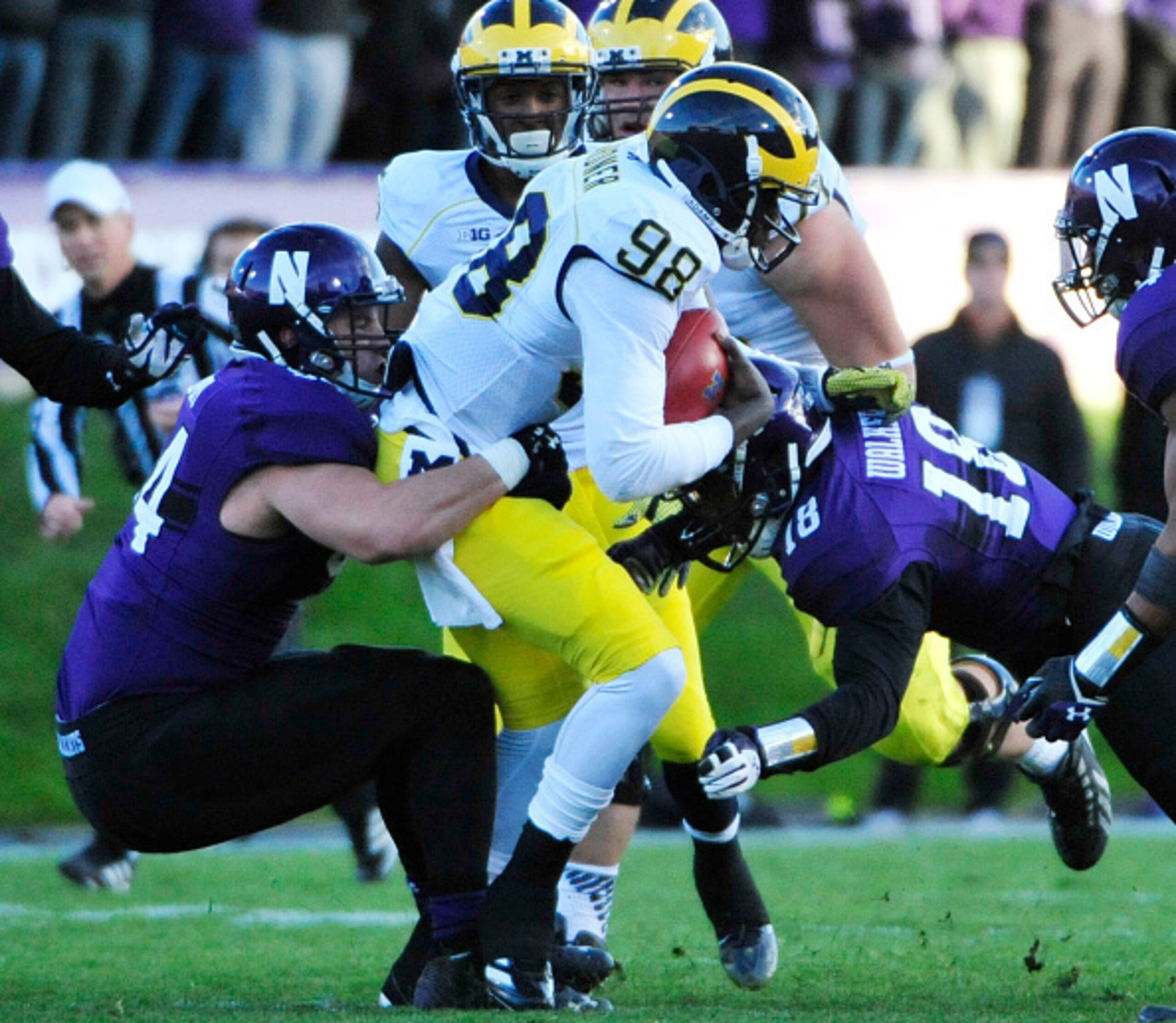
Defensive line
With 14 sacks in their first six games, Northwestern's defense seemed like it was on pace to have a strong year in 2014 in terms of getting pressure on the quarterback. Then the Wildcats' defensive line became almost nonexistent when it came to messing with the pocket, registering only three more the rest of the season.
All of those came in a win over Purdue, which ended a four-game stretch where Northwestern failed to record a sack against the likes of Nebraska, Iowa, Michigan and Notre Dame. Not surprisingly, it lost three of those four games.
Dean Lowry was Northwestern's team leader in sacks, with four.
Notre Dame
36 of 65
Kicker
The final of Notre Dame's 2014 season saw Kyle Brindza kick a game-winning 32-yard field goal as time expired to beat LSU in the Music City Bowl. That helped end a four-game losing streak and also give a positive end to what was a pretty poor year for Brindza.
The senior made just 14 of 24 field goals, with six of those misses coming over his final 10 attempts. Brindza had made more than 75 percent of his kicks in the previous two seasons.
Ohio State
37 of 65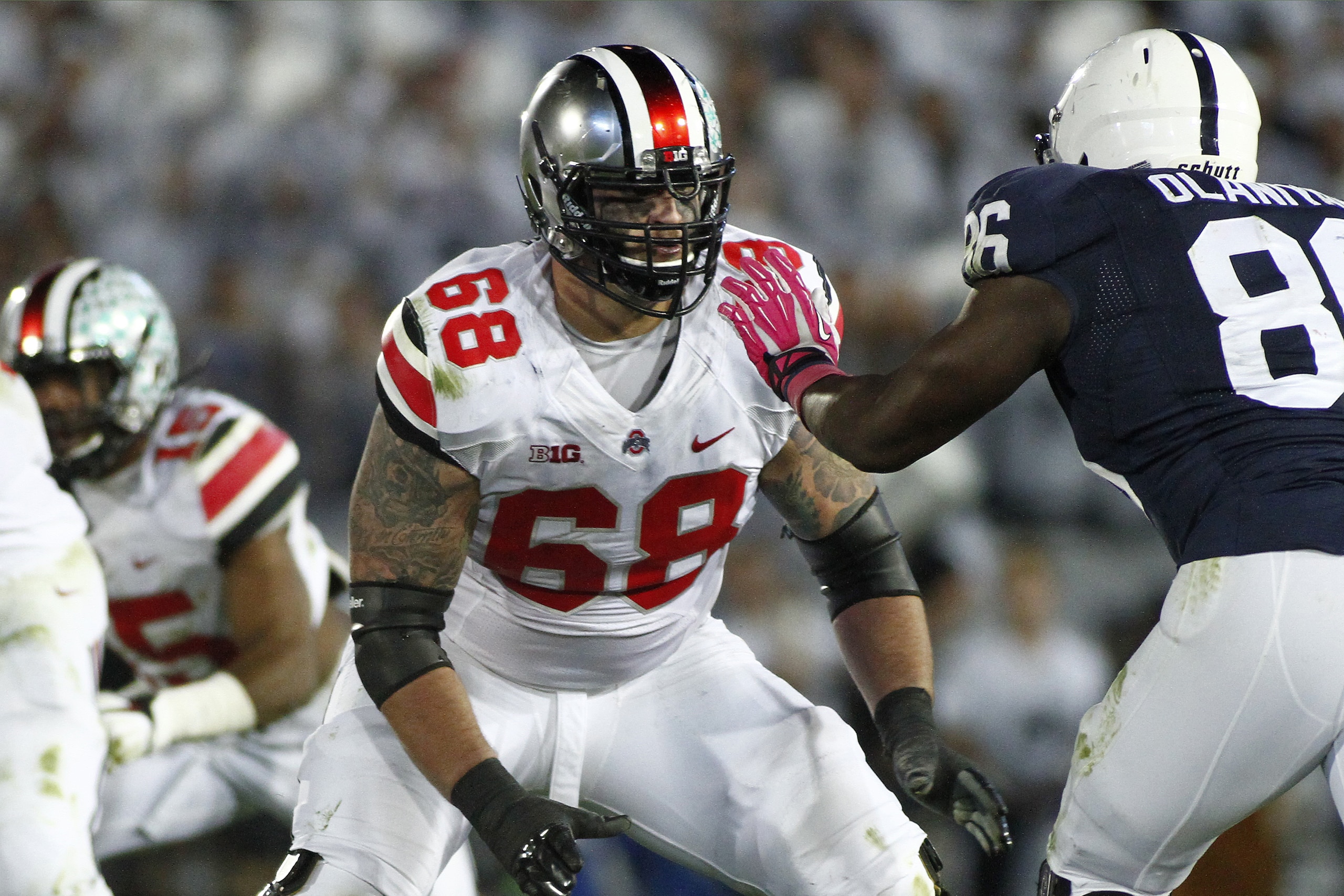
Offensive line
As mentioned in the intro, every team has an area it can get better in, even the national champions who looked unbeatable for most of the season. In Ohio State's case, the position that could stand to improve the most from 2014 to 2015 is the one that was responsible for its lone loss last year.
The Buckeyes' offensive line only allowed 28 sacks last year, but its adjusted sack rate of 96.9 ranked 74th in FBS, according to Football Outsiders. This stat measures how often a quarterback is taken down, based on the number of snaps that resulted in pass plays or scrambles by the passer.
If not for the mobility of J.T. Barrett and Cardale Jones, Ohio State might have fared far worse in that area. Those quarterbacks helped avoid sacks and keep plays alive, whereas had the line held up better they might have been able to hit the first read without needing to scramble.
Oklahoma
38 of 65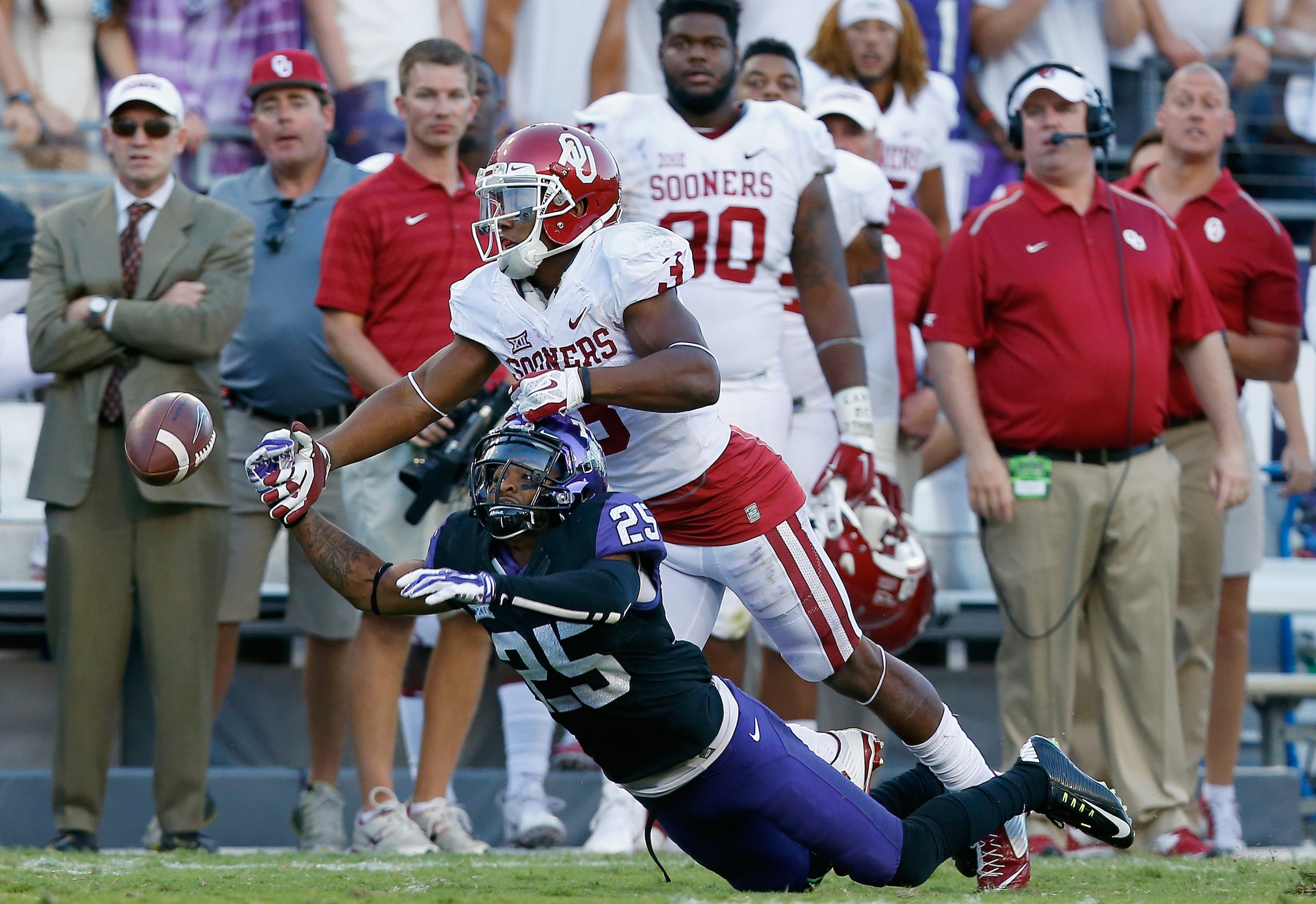
Wide receiver
Oklahoma's passing offense was at an all-time low in terms of efficiency and performance last season, at least in the Bob Stoops era. And while quarterback Trevor Knight and backup Cody Thomas were given most of the blame for this, the Sooners' receiving corps was plenty at fault as well.
The loss of Sterling Shepard to a groin injury early in November did more than take away Oklahoma's best pass-catching weapon; it essentially rendered the rest of the group useless since defenses didn't have to overload on Shepard. He still ended up leading the team in receptions, yards and touchdowns, despite missing four games and snagging only two catches in the final six contests.
With the move back to an Air Raid offense in 2015, far more is needed from Oklahoma's receivers. Per the Tulsa World's Eric Bailey, new coordinator Lincoln Riley mentioned using as many as eight wideouts in a rotation this season, when last year only four (plus a tight end) had at least 16 receptions.
Oklahoma State
39 of 65
Offensive line
After finishing among the top five in the country in total offense from 2010-12, Oklahoma State dipped to a tie for 85th in yards produced last season. Youth at the skill positions had something to do with this drop-off, but so too did a poor effort by the Cowboys offensive line.
Oklahoma State started two sophomores and a redshirt freshman on the line last year, and that group struggled to open holes for Desmond Roland and other ball-carriers (who combined to average only 3.51 yards per rush) or properly protect the trio of quarterbacks the Cowboys had to use. That group was sacked 40 times.
Coach Mike Gundy brought in a new offensive line assistant, former Buffalo Bills tight ends coach Greg Adkins, for 2015. He's the third line coach in as many seasons in Stillwater.
Ole Miss
40 of 65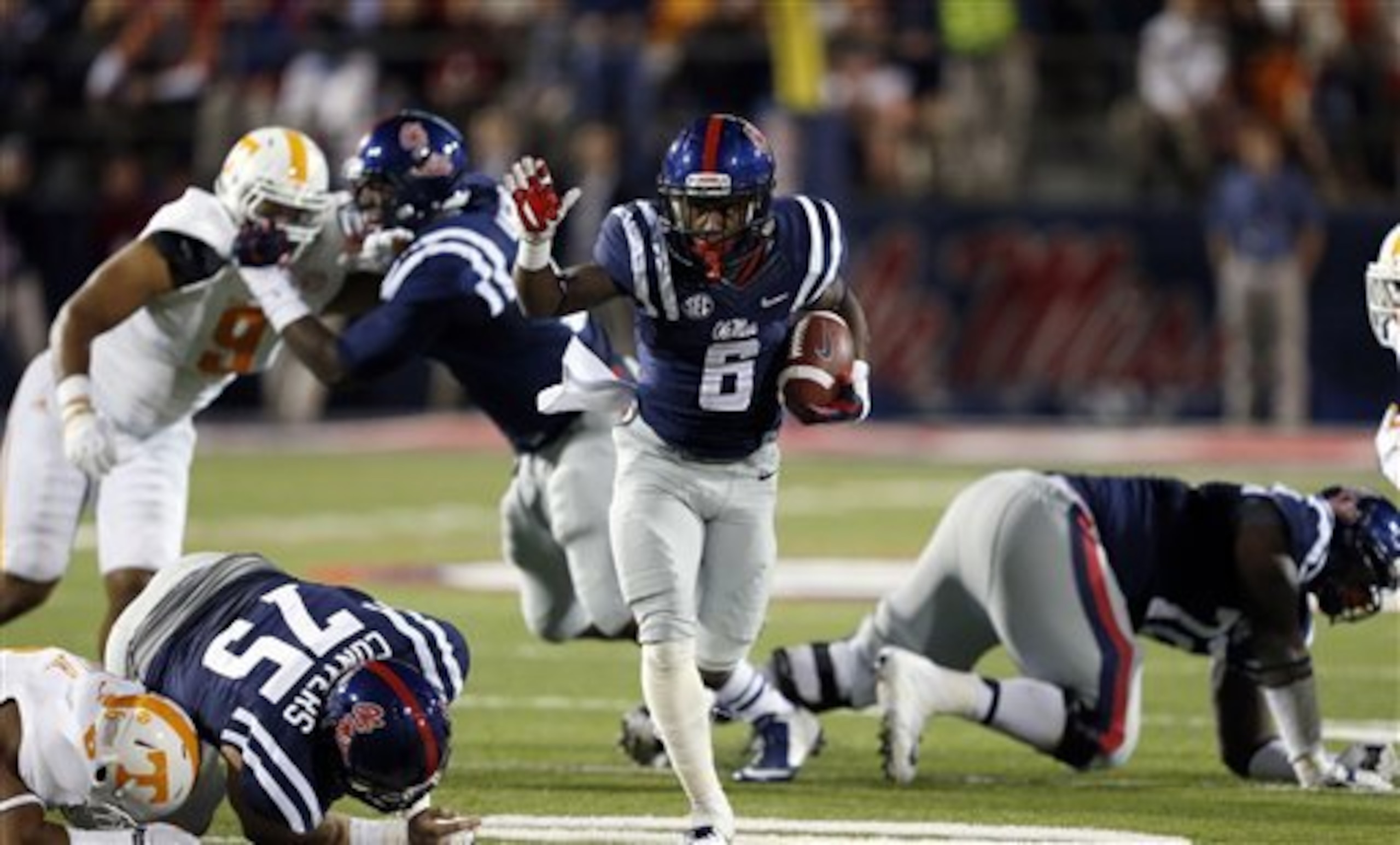
Running back
There's no more Bo Wallace roaming the pocket for Ole Miss in 2015, and while that means there's less likelihood that a gunslinger will handle the quarterback position, it also puts more pressure on the Rebels to have a real running game unlike last season.
Ole Miss averaged more than 155 rushing yards per game, yet there was a clear difference in the production in wins and losses. It got 185.1 per game in the nine victories, but in the four losses just 88.75 yards. There are also the 402 yards against FCS Presbyterian that skewed the overall numbers, a game that saw backups Jordan Wilkins and Mark Dodson gain 299 yards and score three touchdowns on 13 carries.
With Wallace getting replaced by an untested passer and top wideout Laquon Treadwell still coming back from a bad leg injury, further emphasis will be placed on the run game this fall.
Oregon
41 of 65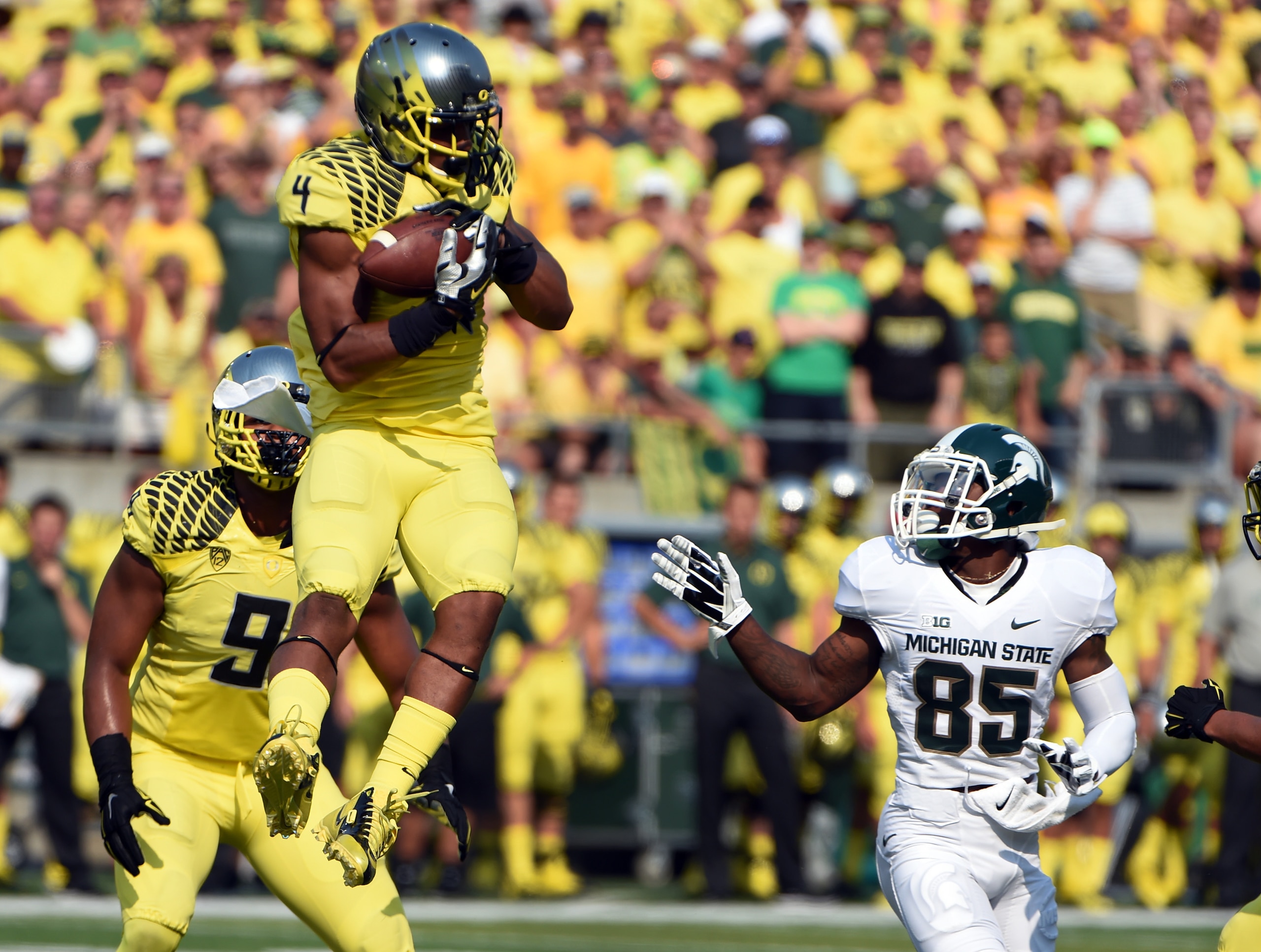
Secondary
The presence of shutdown corner Ifo Ekpre-Olomu in Oregon's secondary gave that unit a strong reputation, even though the numbers didn't back that up.
The Ducks yielded more than 264 passing yards per game, and the 155 plays of 10 or more yards were fourth most in FBS in 2014. Ekpre-Olomu did some good things at cornerback. But his senior year wasn't nearly as productive as past ones, and he wasn't the best member of the group.
That was safety Erick Dargan, who had seven interceptions, but overall the Ducks defense on the back line was one of feast or famine.
Oregon State
42 of 65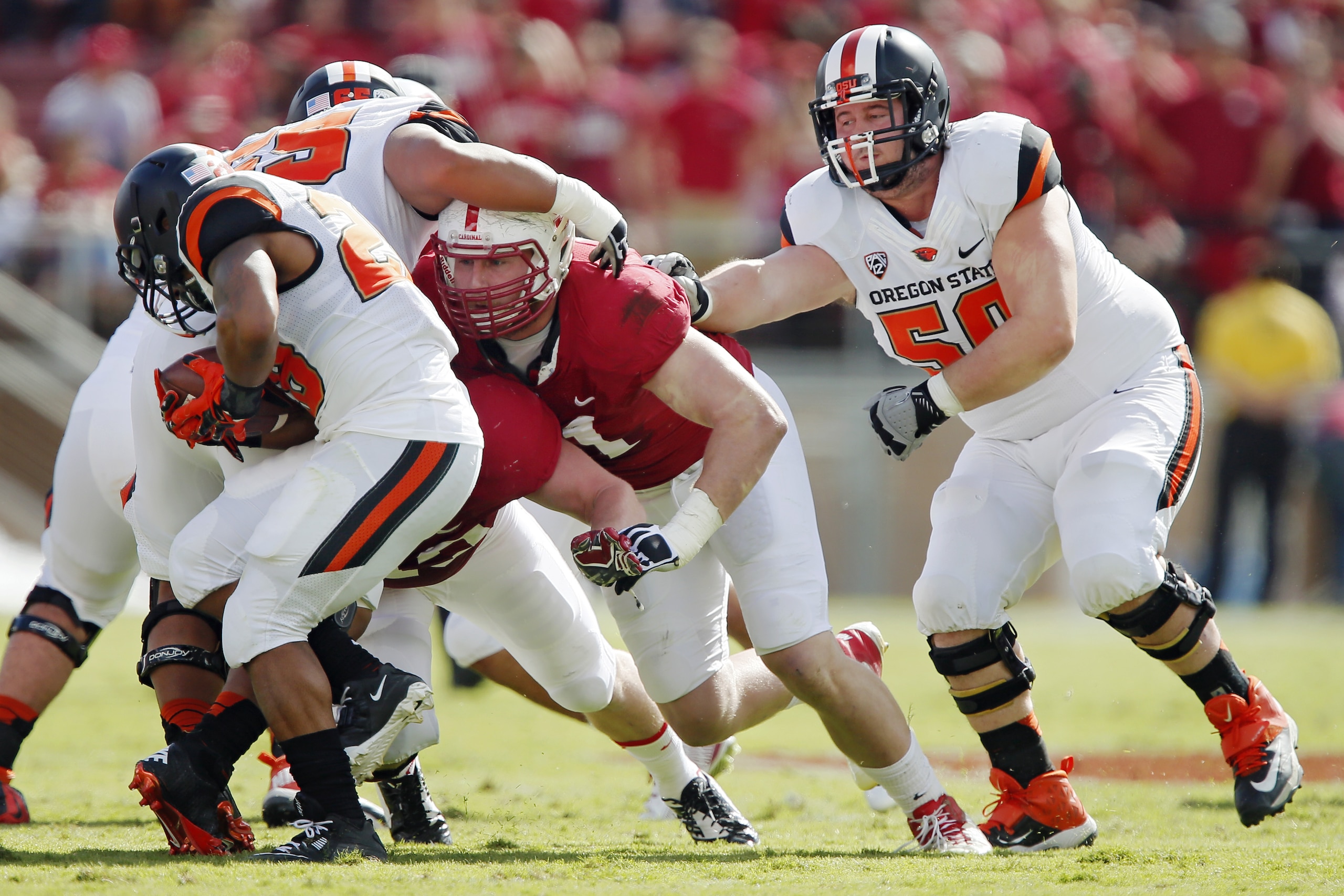
Running back
It stands to reason that new Oregon State coach Gary Andersen is going to turn the Beavers offense into a completely different unit. But that will require more than just shifting formations and putting more emphasis on the run than in previous years, since those who will be carrying the ball aren't used to getting that many touches.
Storm Woods and Terron Ward each averaged better than five yards per carry in 2014, but they also only averaged 25 carries per game between themselves. Many of OSU's best runs came on sweeps, but overall it averaged only 118 yards per contest.
Penn State
43 of 65
Offensive line
After a stellar freshman season, Penn State quarterback Christian Hackenberg's stock was soaring, and the hype of him being a potential No. 1 NFL draft pick seemed dead-on. Then his sophomore year happened, and with each breakdown up front—and each subsequent sack that led to or bad throw it caused—that promising player's star became more and more tarnished.
The Nittany Lions offensive line was dreadful in 2014, allowing 44 sacks. Only SMU (1-11) and Wake Forest (3-9) gave up more.
Hackenberg ended up throwing for only 22 yards more than in 2013, despite an extra game, and had just 12 touchdowns to go with 15 interceptions.
Pittsburgh
44 of 65
Defensive line
Pressure up front is key to the success of any defense, and Pittsburgh didn't have much of that in 2014. With only 19 sacks, and another 21 quarterback hurries, per cfbstats.com, the Panthers' defensive linemen weren't adept at disrupting and forcing the issue.
Not having a superstar on the line like Aaron Donald—who had 27.5 sacks in the previous three seasons—had something to do with that, but the by-committee approach should have also proved to be effective. It was a very young and inexperienced group that started for Pitt in 2014, and that showed.
"I expect us to establish a standard and then work to surpass that standard every day," defensive line coach Tony Sims told SB Nation's Cardiac Hill blog.
Purdue
45 of 65
Quarterback
No team threw as much as Purdue and had as poor a passing efficiency as the Boilermakers in 2014, a combination that doesn't bode well for a program trying to build itself back up after bottoming out. The duo of Austin Appleby and Danny Etling only completed 53.7 percent of their 434 passes, converting that into 16 touchdowns with 16 interceptions for a 102.02 passer rating.
Purdue's website proudly boasts of the school being a "cradle of quarterbacks," where the likes of Drew Brees, Kyle Orton, Bob Griese and Jim Everett played. But the Boilermakers haven't had a quarterback top 3,000 yards since Joey Elliott had 3,026 in 2009.
Rutgers
46 of 65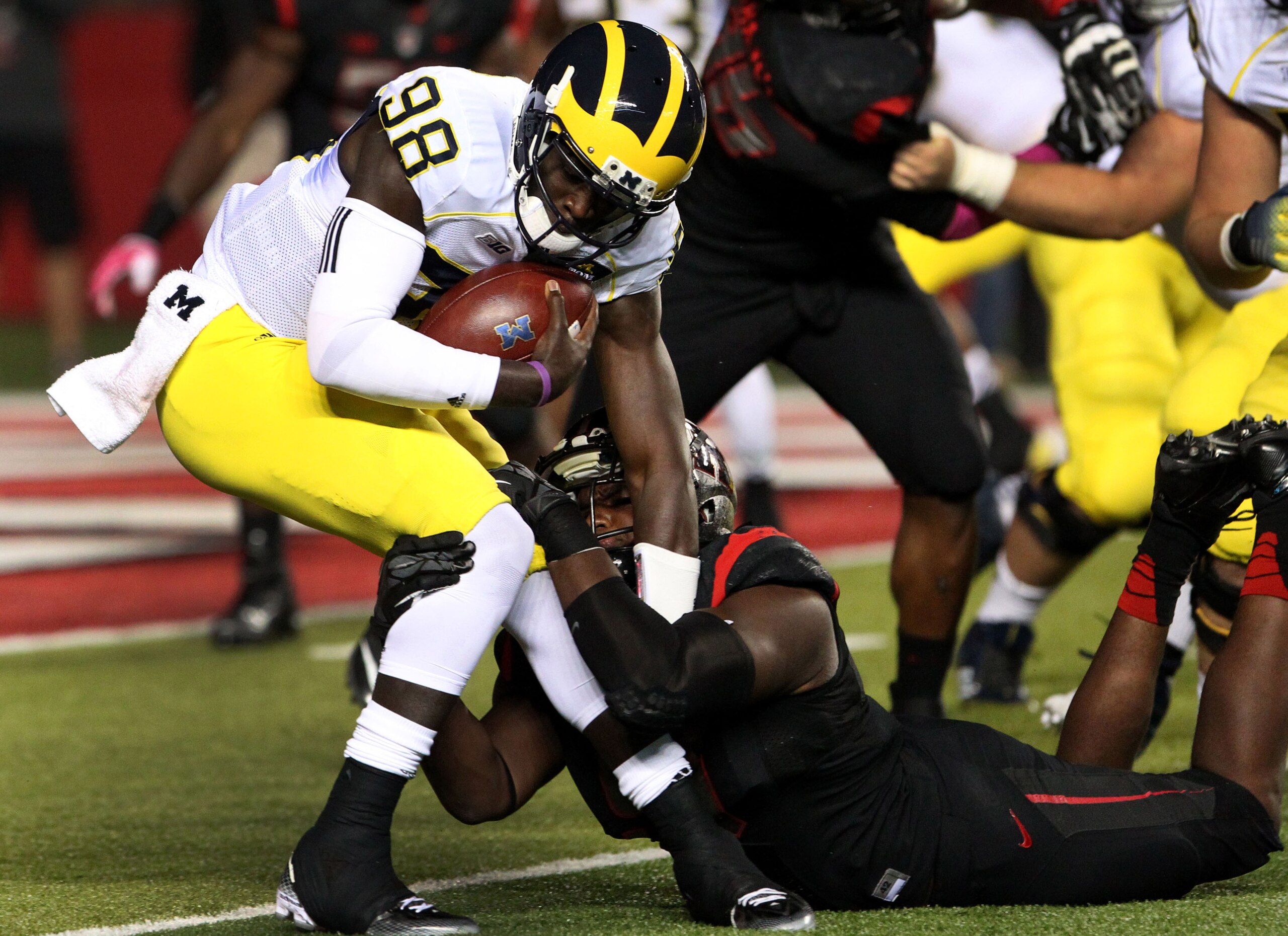
Defensive line
It's a wonder that teams didn't run more on Rutgers last season, seeing as the Scarlet Knights rarely made a big stop when the ball was handed off. At 5.52 yards per carry and 3.61 on third-down runs when three or fewer yards were needed, per cfbstats.com, opponents could have run for days.
Rutgers allowed 100 runs of 10 or more yards in 2014, and 25 of those went for at least 20 yards. Seven opponents scored at least three touchdowns on the ground, and its last six foes all topped 200 yards for the game.
South Carolina
47 of 65
Defensive line
There were three individual players who had as many or more sacks as South Carolina registered as a team in 2014. The Gamecocks only managed to take down the quarterback 14 times in 13 games, with no player getting credited for more than two sacks on his own.
It was a far cry from the imposing defensive front that South Carolina sported the previous years, such as in 2013, when Jadeveon Clowney, Kelcy Quarles and Chaz Sutton made for a fearsome group. The Gamecocks' linemen didn't strike much fear in opponents last year, and coach Steve Spurrier recognized this early on.
"We needed some defensive ends," Spurrier said on national signing day in February, per Connor Tapp of 247Sports. "Hopefully we've got some on the way. ... We feel like we've got some help on the ends. Some inside guys too. We'll have them coming from everywhere."
South Carolina signed seven defensive ends in its 2015 recruiting class.
Stanford
48 of 65
Running back
The workhorse running back has been a staple of Stanford's pro-style offense for several years, but it was noticeably absent from the equation last season. Consequently, the Cardinal were not a very efficient team in the red zone since they lacked the ability to turn to a rusher when close to the goal line.
Stanford's ground game looked like it was turning a corner toward the end of 2014, with three consecutive 200-yard performances. But leading rusher Remound Wright, whose 601 yards were far below the 1,717 that Tyler Gaffney had the year before, only had 46 carries in those games.
Wright and Stanford's three other most used running backs combined for fewer carries than Gaffney had in 2013 or Stepfan Taylor churned out as the primary back in 2012.
Syracuse
49 of 65
Quarterback
Even before Terrel Hunt broke his leg midway through the 2014 season, Syracuse was struggling with its quarterback play. But when they lost the mobile threat for the year and called AJ Long into today, things went from bad to worse for the Orange.
When the year was over, Syracuse ranked second worst in FBS in passing efficiency at 98.79. Only SMU, which won one game, had a lower rating.
Hunt, Long and other backups combined to complete only 54 percent of their passes and throw six touchdowns with 17 interceptions. Hunt was by far the best of the group, but even he struggled with just one TD and four picks in five games.
TCU
50 of 65
Punter
TCU's offense had a major breakthrough in 2014 with the shift to a more uptempo attack that allowed quarterback Trevone Boykin to use his talents and become a star. And because the offense was so potent, it didn't need to play the field-position game that teams with struggling offenses are apt to do.
That's a good thing, since the Horned Frogs saw their punting take a dip for a second straight year.
Ethan Perry averaged only 39.2 yards per kick last season, down from 40.3 in 2013 and 44.5 as a freshman. TCU made up for this deficiency by having a great punt coverage team, as opponents only had eight returns all season, and three of those went for negative yardage.
Tennessee
51 of 65
Offensive line
Tennessee coach Butch Jones didn't turn to Joshua Dobbs at quarterback midway through last season just because he felt he was the Volunteers' best option at the position; he also had to in order to ensure he didn't get anyone else injured behind that porous offensive line.
Starter Justin Worley was knocked all over the place in the first seven games, suffering 29 of the 43 sacks Tennessee's line allowed before getting shut down because he needed shoulder surgery. Dobbs was sacked 12 times in his six games, but it would have been more had he not been able to escape pressure quite often when the pocket collapsed.
The Vols have seven players with a combined 64 career starts (with 58 coming last season) returning this year, so improvement should happen. If not, even Dobbs might not be able to escape all of the pressure.
Texas
52 of 65
Quarterback
There were a lot of things about Texas offense last season that need to be better this year in order for Charlie Strong's program to continue moving forward. But without having that improvement come first and foremost from the quarterback position, nothing else can really rise.
David Ash's concussion early in the season ended his career and forced Texas to go to Tyrone Swoopes again. He had some good moments, such as in wins over Iowa State and Oklahoma State, but also plenty that indicated he might not be the answer for the future.
Swoopes and redshirt freshman Jerrod Heard battled this spring for the starting job, and Swoopes showed signs he can handle the switch to a spread offense, per 247Sports' Jeff Howe. Whomever Strong chooses for the position will be asked to do a lot this year.
Texas A&M
53 of 65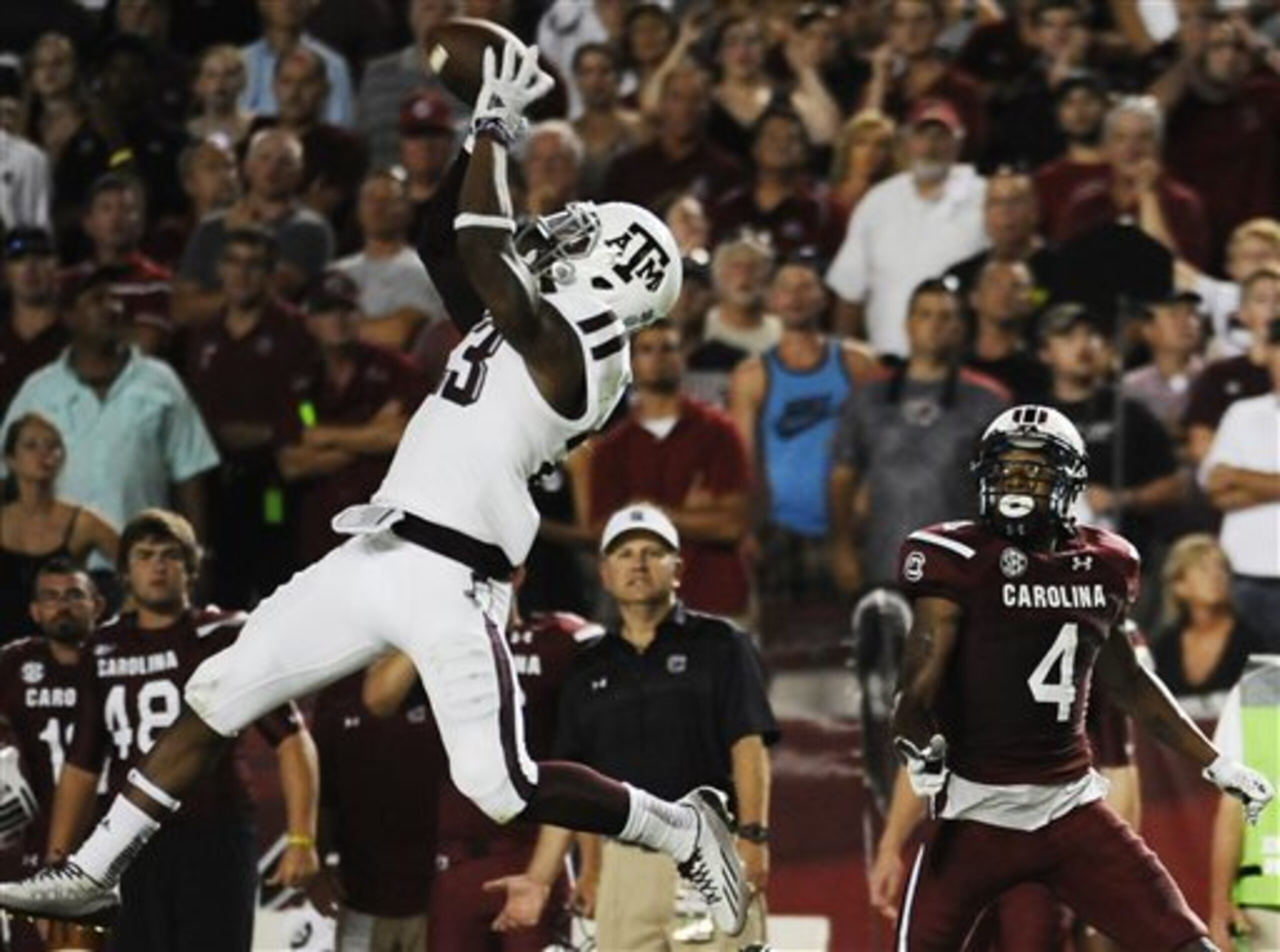
Secondary
With the way freshman Myles Garrett performed on the defensive line last season, Texas A&M's defense should continue to get better. But the Aggies will remain one of the worst teams in overall defense as long as they struggle to get consistent play in the secondary.
In 2014 A&M intercepted only five passes on 431 attempts by opponents, and only one of those picks came in the second half or overtime. The Aggies allowed seven red-zone touchdown passes on 41 throws.
There's promise back there in the form of safety Armani Watts, who had three interceptions and eight pass breakups, per cfbstats.com. But A&M needs more than just one good defensive back to be successful.
Texas Tech
54 of 65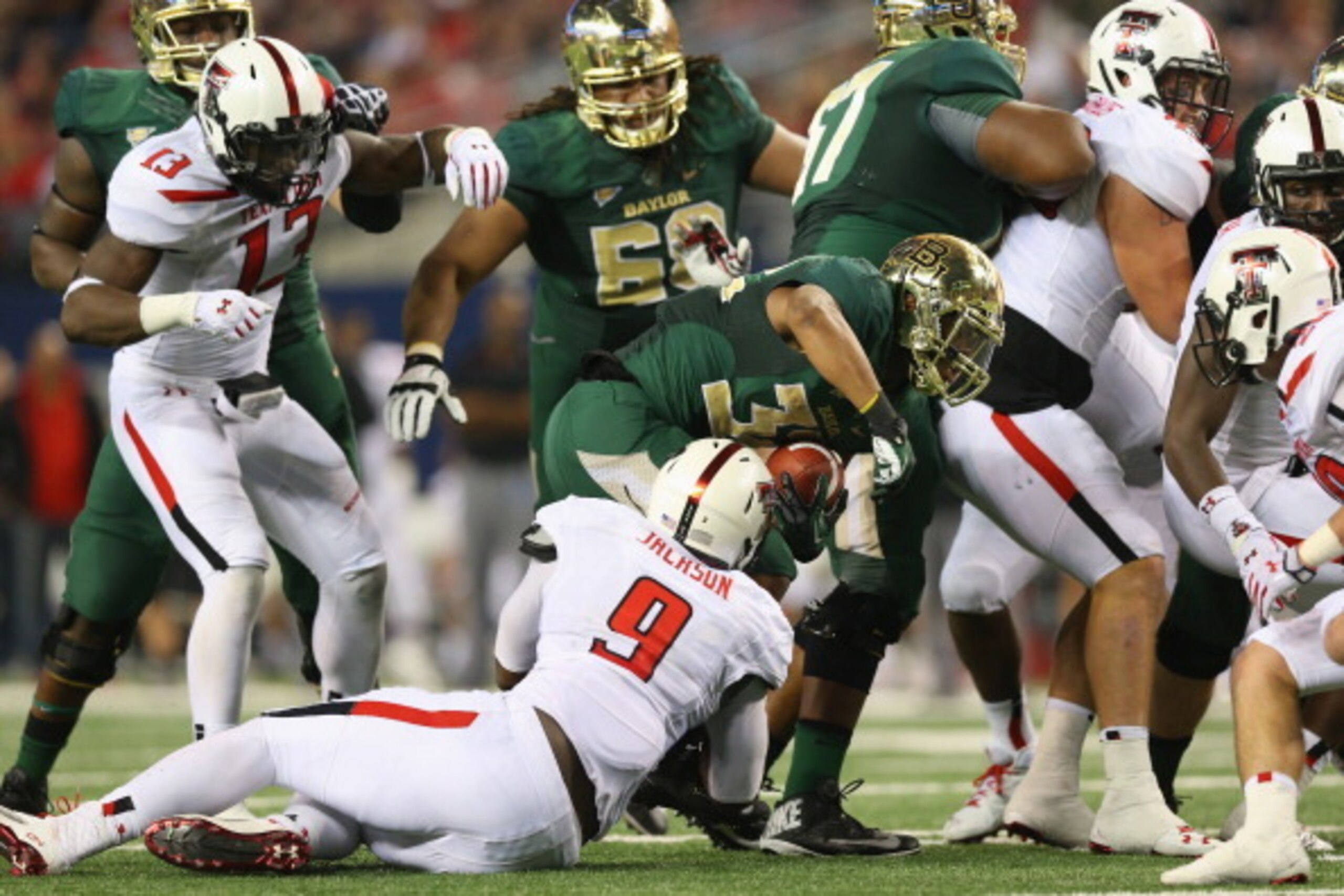
Defensive line
To give an idea of how much teams loved to run on Texas Tech last season, consider this: The opponents had more rushing attempts (600) in 12 games than the Red Raiders did passes (559). And Tech is regularly one of the most pass-happy teams in the country, ranking third in that category in 2014.
At 259.5 rushing yards allowed per game, Tech was abysmal at stopping the run. All but one opponent topped 150 yards during the year, and only TCU chose to throw it more than rush against the Raiders.
This deficiency enabled opponents to keep Tech's offense off the field for long periods of time, resulting in its defense being on the field for nearly 34 minutes per game.
UCLA
55 of 65
Offensive line
UCLA began last season as a trendy playoff pick thanks to a bunch of playmakers on defense and a dynamic quarterback in Brett Hundley. All of that still remained throughout 2014, but Hundley wasn't able to make as much of an impact as projected because he spent too much time running for his life.
Hundley and backup Jerry Neuheisel were sacked 40 times last year, including 10 times by Utah in a shocking home loss that pushed the Bruins out of the postseason picture in early October and five times against Stanford in a defeat that cost them the Pac-12 South title. This wasn't a surprise, however, since UCLA's line had allowed 128 sacks over the past three seasons.
Injuries got in the way last year, contributing to the struggles, but now UCLA brings back all five starters and has plenty of depth to go with those returners.
USC
56 of 65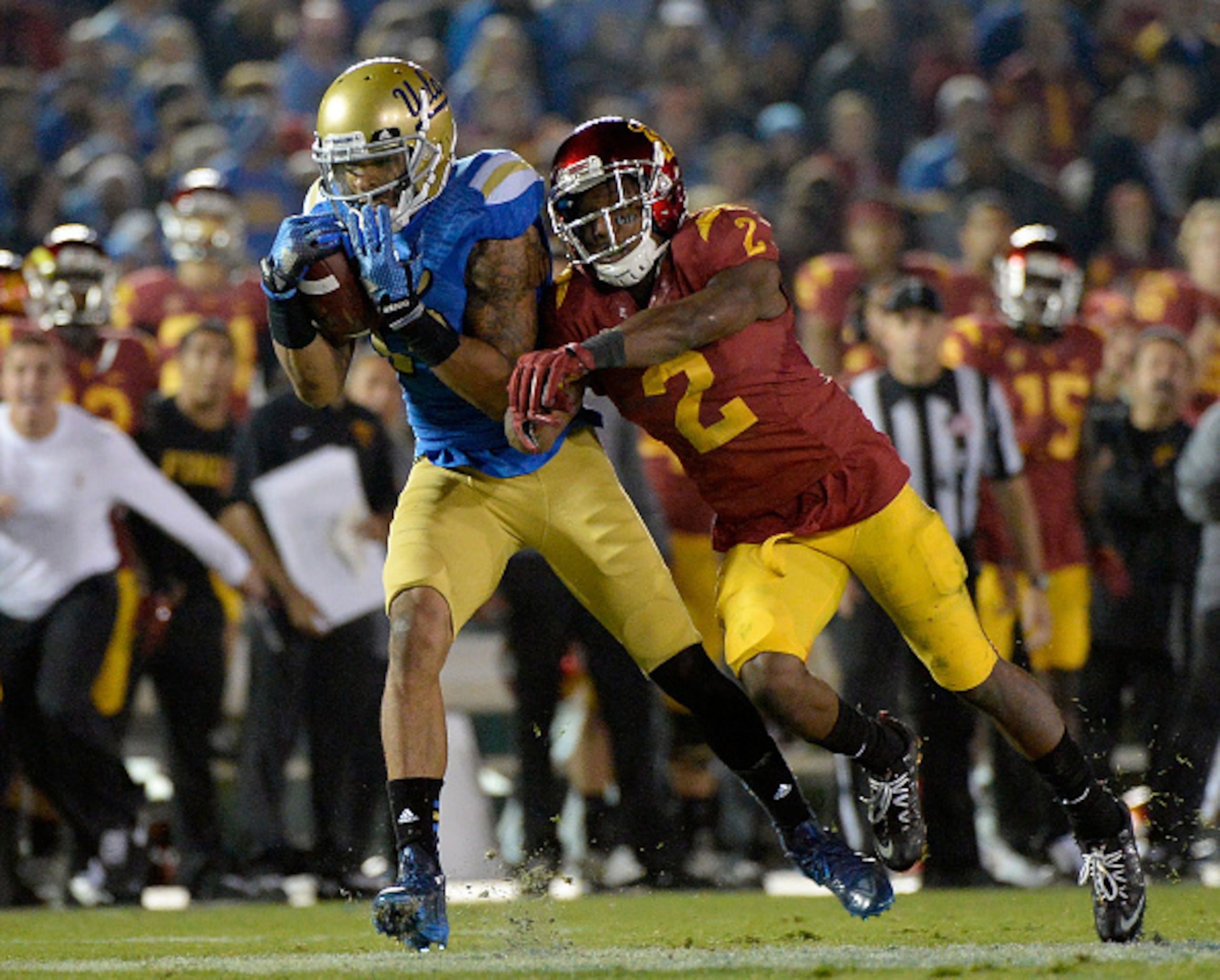
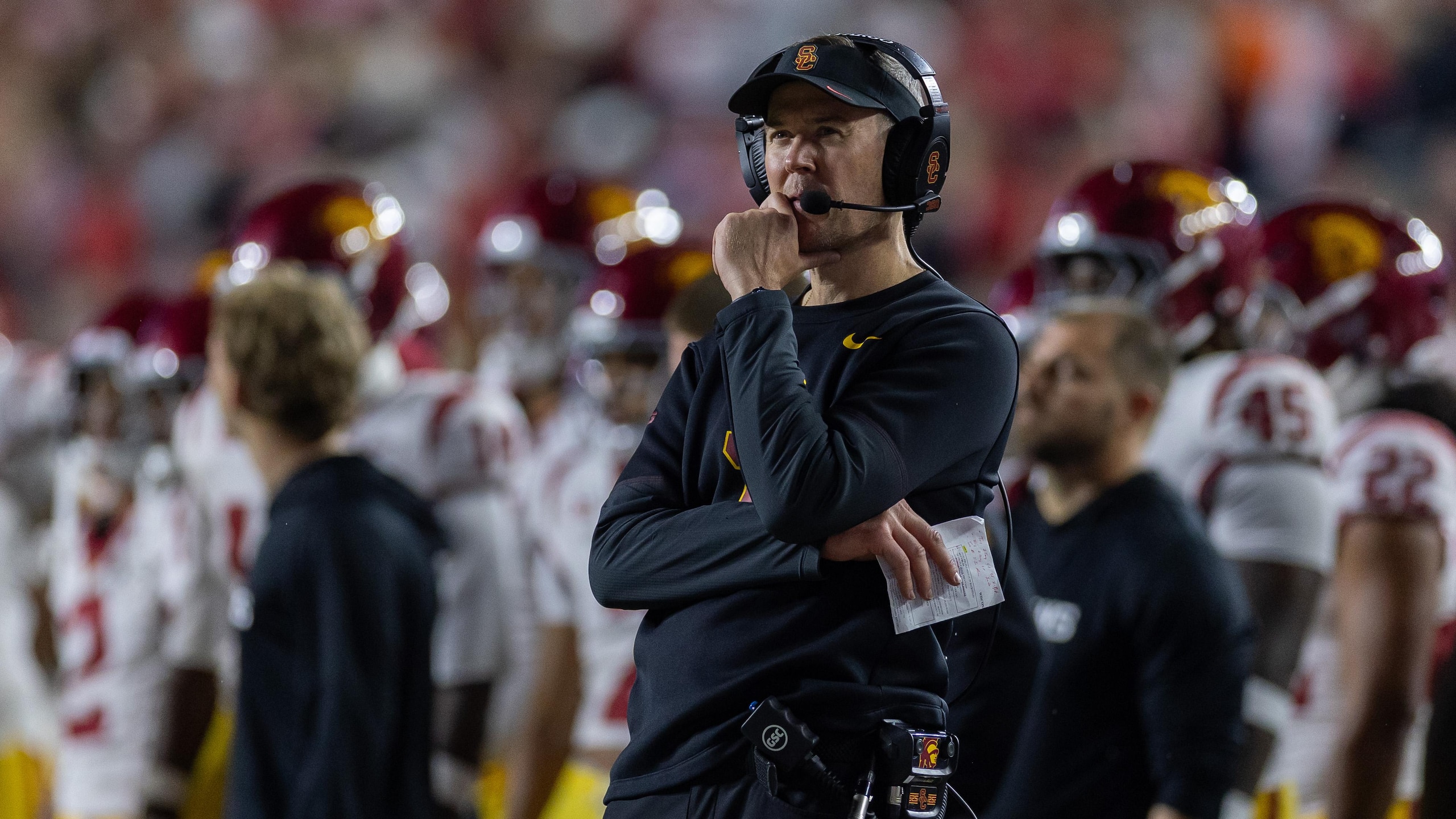
Secondary
What will now be a very deep and experienced back line in 2015 wasn't anywhere close to that for much of last season, when USC's cornerbacks and safeties were routinely beat in pass coverage late in games.
USC ranked 118th in FBS in pass defense a year ago, giving up 274.5 yards per game. This was despite having a monster on the defensive line in first-round NFL draft pick Leonard Williams as well as a superb linebacker corps that was boosted by the move of Su'a Cravens from safety.
The secondary, though, was young, and it showed, registering only one of its 14 interceptions in the fourth quarter of games while yielding eight touchdowns. That group infamously stood around as Arizona State connected on a Hail Mary to beat the Trojans.
"The reps they got a year ago and the growing pains we had to ensure a year ago are making us a better defense today," USC coach Steve Sarkisian said during spring practice, per Michael Castillo of FanSided.
Utah
57 of 65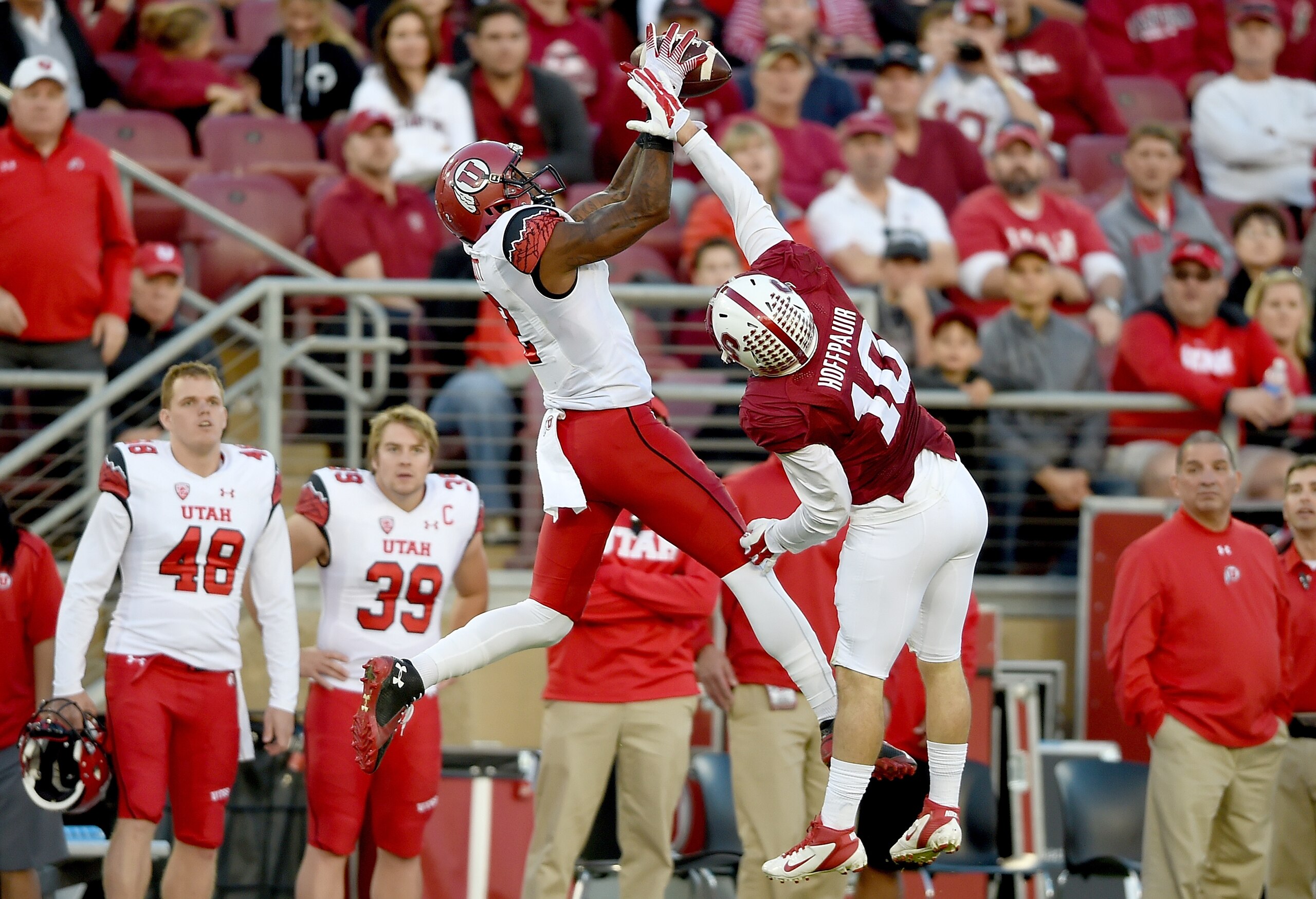
Wide receiver
Utah broke through in 2014 to become one of the Pac-12 South's many strong teams, and it did so with a hard-nosed run game and an aggressive defense that led the nation in sacks. What it did not have was the weapons to open up the offense and do more than just ground-and-pound with running back Devontae Booker.
The Utes averaged fewer than seven pass plays of 10 or more yards per game, with more than 61 percent of the team's 229 receptions going for less than 10 yards. Dres Anderson, the only wideout to average better than 13 yards per catch, missed the final six games with injury.
For Utah to take the next step, it needs to be able to throw the ball and stretch the field.
Vanderbilt
58 of 65
Quarterback
Not much of anything worked on offense for Vanderbilt during Derek Mason's first season as coach, but the passing game somehow still stood out among all that ineptitude. It didn't seem to matter which quarterback was out there for the Commodores—and for the record, there were four who saw significant action—the results weren't pretty.
All told, the quartet of Wade Freebeck, Johnny McCrary, Stephen Rivers and Patton Robinette threw 19 interceptions and completed just over 50 percent of its throws.
There aren't nearly as many people in contention for the quarterback job this year, as Rivers and Robinette left the program, but freshman Kyle Shurmur is also getting added to the mix this summer.
Virginia
59 of 65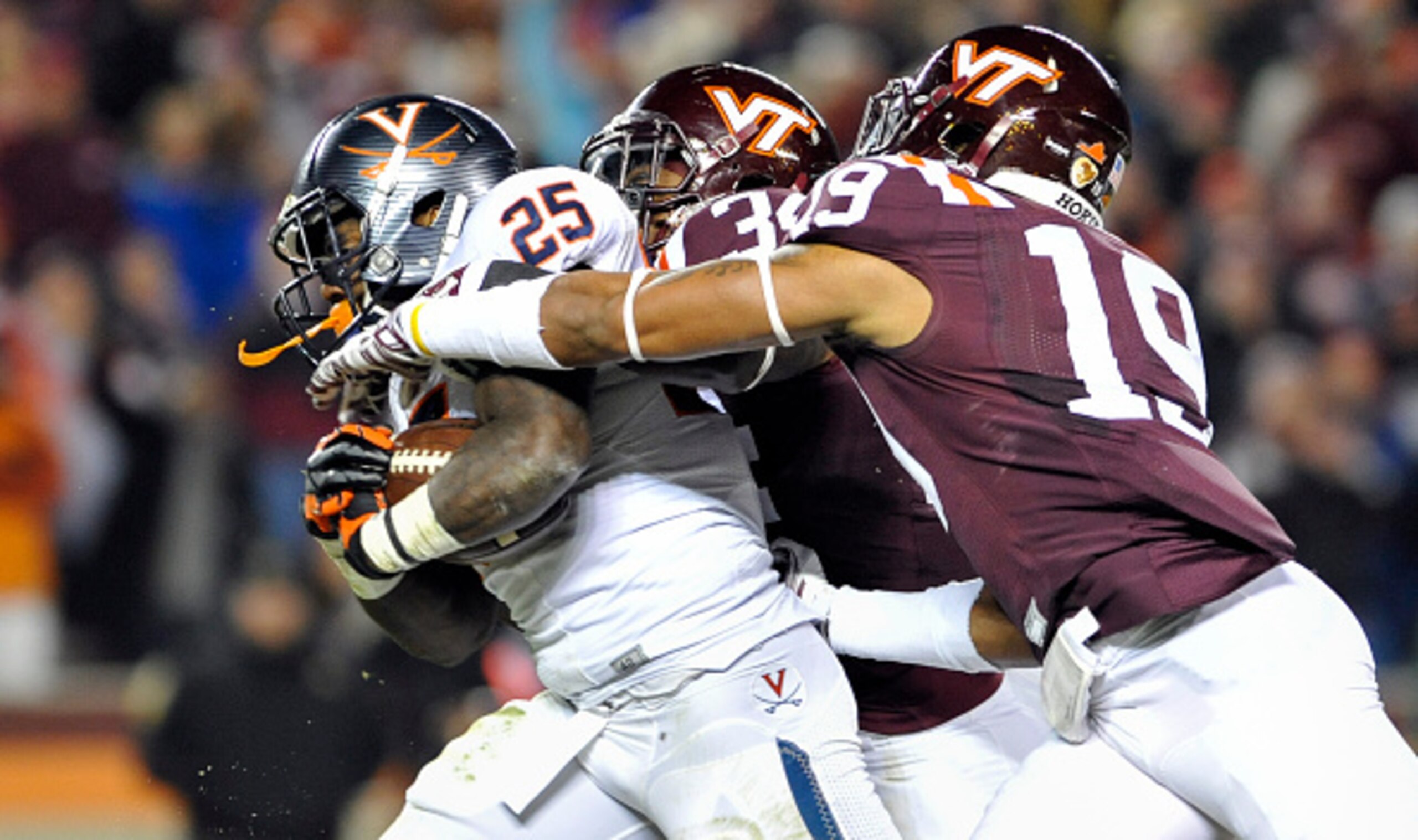
Running back
Virginia wasn't alone in its struggles in the red zone in 2014, but the Cavaliers took things to another level when they got the ball close to the goal line. Their inability to finish, especially with the ground game, led to far too many missed opportunities.
The Cavs had only 12 TDs and six first downs on 84 carries in the red zone, and four-year starter Kevin Parks was the most to blame for that inefficiency. He averaged 3.94 yards per carry with just four touchdowns for the season, and only one of his 26 red-zone runs resulted in a first down.
Virginia Tech
60 of 65
Quarterback
Virginia Tech hasn't had a top-flight quarterback in more than a decade, but Michael Brewer was expected to change that after transferring from a pass-friendly program (Texas Tech) for the 2014 season. He did well at times but also struggled mightily to be consistent.
Brewer threw 15 interceptions to go with 18 touchdowns, with 11 of those picks coming in the first six games of the year. After that point, Tech tried to tweak its offense and focus more on the run, which lessened the number of attempts Brewer had, but that also resulted in lower completion rate.
The Hokies don't need much from their quarterback to succeed, but they do need that player to be able to do more good than bad. Brewer had as many (or more) interceptions than TDs in seven games, which isn't a formula for success.
Wake Forest
61 of 65
Running back
It would seem like being able to fall forward at first contact would get a running back at least two or three yards on each carry. And if that were true, it would mean that Wake Forest's ball-carriers weren't even able to fall forward effectively in 2014.
The Demon Deacons averaged fewer than 40 rushing yards per game last season or 1.25 yards per carry. Of the three backs who had the most touches, the best of the group (freshman Dezmond Wortham) had a 2.86 average. Fellow freshman Isaiah Robinson, who had a team-leading 98 carries, averaged only 1.79 yards per carry.
Washington
62 of 65
Secondary
Washington's pass defense was so in need of help last season that coach Chris Petersen had to resort to taking his best offensive weapon and moving him to the secondary midway through the year.
John Ross averaged nearly 22 yards per reception as a wide receiver and was also a superb kick returner, but his athleticism was desperately needed to help shore up a unit that gave up more than 286 passing yards per game.
Even when Ross became a cornerback for the final five games of the season, the Huskies allowed 300 or more yards four times. Opponents completed more than 63 percent of their throws despite Washington possessing three players in its front seven who ended up going in the first two rounds of the NFL draft.
Ross injured his knee in spring ball and thus won't be able to help again in the secondary.
Washington State
63 of 65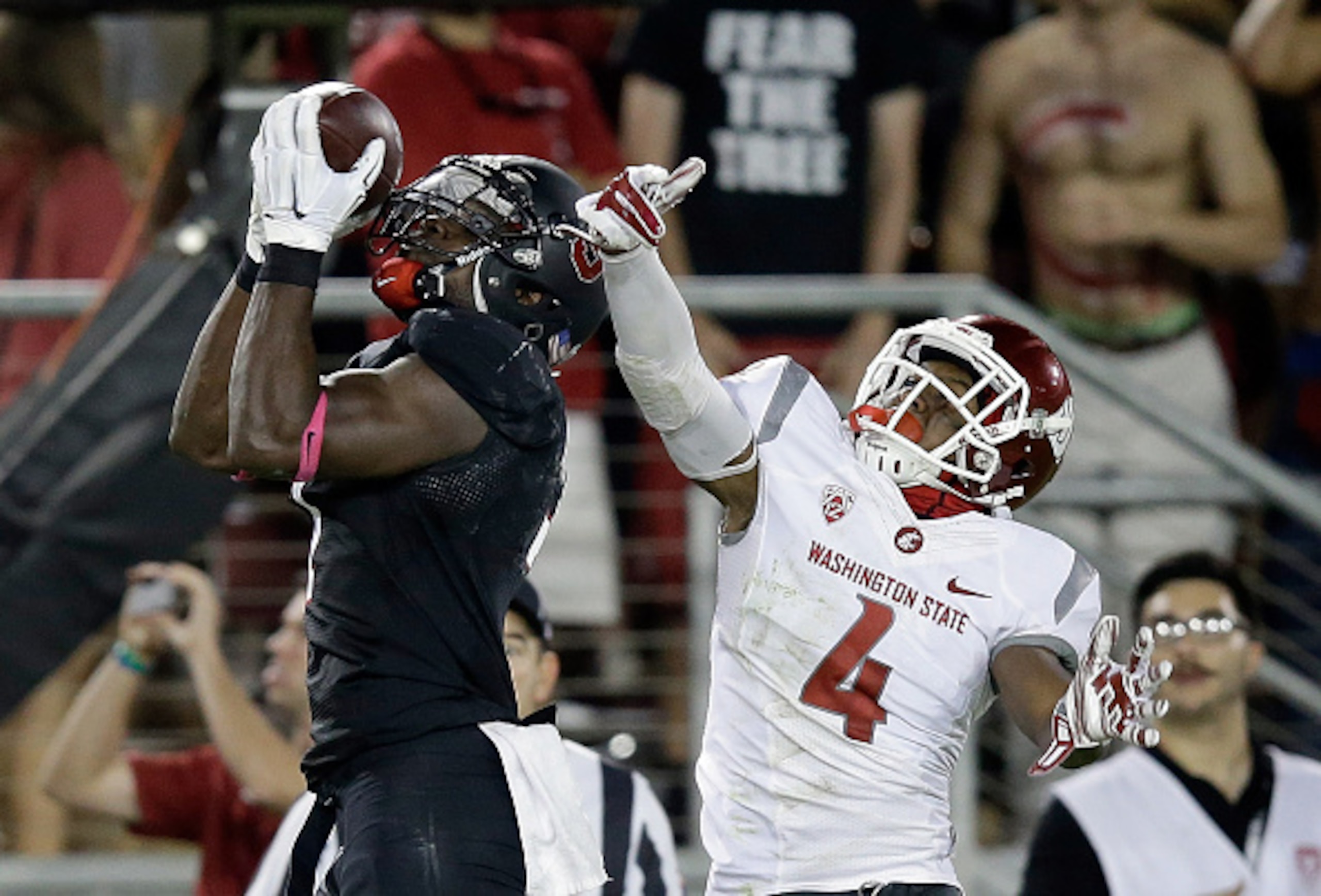
Secondary
For a team that is so adept at passing the ball, you would think that Washington State's defensive backs would have plenty of practice dealing with the pass. The results have said otherwise.
The Cougars were second-worst in FBS in passing defense, allowing 296.6 yards per game with 33 touchdowns and only three interceptions. Basically, if teams wanted to throw on WSU, they could and did quite easily.
Only Utah failed to complete at least 50 percent of its passes against Washington State, while nine opponents topped 60 percent.
West Virginia
64 of 65
Punt returner
Try as it might, West Virginia just could not do much on punt returns in 2014. The Mountaineers attempted 25 returns and got a whopping 78 yards out of them.
Jordan Thompson was the primary returner, getting 12 tries that resulted in 52 yards and included a season-best 30-yard return. Vernon Davis had a 16-yard bring-back and had two yards on the other six tries.
Because West Virginia had a strong enough offense to overcome a lack of field position, this deficiency didn't have too much of an impact. But the Mountaineers lost their main quarterback and top two receivers from 2014, so it could this fall.
Wisconsin
65 of 65
Quarterback
Having a 2,500-yard rusher can make up for a lack of a passing game, but not in games when yards and points need to come quickly. This is why Wisconsin didn't have many comebacks that revolved around throwing the ball last season.
Melvin Gordon's running often masked the problem caused by the tandem of Joel Stave and Tanner McEvoy struggling to throw the ball. That duo paced a passing attack that had fewer than 150 yards per game and was particularly weak in key situations.
Ten of the Badgers' 16 interceptions came in the third or fourth quarters.
Follow Brian J. Pedersen on Twitter at @realBJP.
.png?w=2560)
.png?w=2560)




.jpg?w=2560 "Latest Peyton-Colts Rumors")