

Phillip Cocu: Why PSV Eindhoven's Boss Is the Coming Man of European Management
As a player, Phillip Cocu took his time to reach his full, glorious potential; he took his time to just settle on his preferred position and certainly took his time before gracing one of the biggest clubs in the world.
As a manager, well, only time will tell whether his path ends up treading a familiar route. After a false start and a couple of detours along the way, Cocu has this season turned the club perhaps closest to his heart, PSV Eindhoven, into Dutch champions—for the first time in seven years.
As a player, a combative midfielder with an eye for a pass and a goal or two, Cocu helped PSV to similar glory in two spells with the Eredivisie side. In the interim, he ventured to Spain and Barcelona, where he would become the club’s most capped foreign player—at least until a young Argentinian called Lionel Messi came along.
TOP NEWS

Final Men's Ballon d'Or Rankings 📊
Highlights and Viral Moments 🍿

J-Dub Suffers Gruesome Injury
Great players do not always become great coaches, but the early signs are that Cocu, 44, may well have what it takes to make the grade. Beloved by Barcelona as a player, the question now is whether he will soon be coveted by them as a manager too.

There always seems to be a next big thing emerging in Dutch football, but with every recipient of the tag, the only guarantee is that the individual in question will not hold it for too long.
That is not just because there is always another promising prospect coming through—although that increasingly is the case—but also because individuals feted in such a way invariably end up pursuing their ambitions in richer, larger European leagues.
That transition is not always successful—for every Ruud van Nistelrooy there is an Afonso Alves—but the strike rate is usually pretty good. Liverpool certainly struck gold when they lured Luis Suarez from Ajax in 2011, while Manchester United will be hoping they have been similarly prescient with their capture of PSV’s Memphis Depay.
The Netherlands is not only regarded as a hotbed of footballing talent but a cradle for tactical insight, a reputation fostered in part by Rinus Michels and then Johan Cruyff, two men who helped evolve the game significantly with their coaching methods and general perception of how it should be played.

Over the past two decades, Dutch coaches, like Dutch players, have traveled throughout Europe and the rest of the world imparting their wisdom, from Louis van Gaal and Guus Hiddink to Frank Rijkaard and Ronald Koeman.
The managerial merry-go-round is even more unpredictable than the playing one, however, with reputations rising and failing with often unpredictable haste.
In the last few seasons, Ajax manager Frank de Boer has been linked with some of the biggest jobs in Europe—Liverpool and Tottenham Hotspur, to name but two—thanks primarily to his run of four successive Eredivisie titles. This summer, however, his name has been featured less heavily, presumably because Ajax failed to win the title.
They were pipped by a Memphis-inspired PSV, a dominant victory that has made Cocu, the mastermind of it all, the feted man of the Eredivisie.
With a title under his belt to go with a previously won Dutch Cup, a history of working with younger players and a strong CV as a player, Cocu seems to possess all the basic qualities desired of the modern big-club manager. It did not take long for another side to steal away Memphis, the jewel in PSV’s crown. When might they also come in for the manager, and what might it take to lure him away?
A Player of Quality
As a player, Cocu was a combative midfielder with few equals. His versatility was perhaps his biggest strength, something he was always happy to accept: “The only positions I've not played in [are] goalkeeper and right-back.”
Heavily left-footed, Cocu was often the calming presence for both club and country, the one who stuck a foot in to win possession and retained his side’s positional structure as those around him were released to play with greater attacking freedom.
“Cocu's a great passer, has a good shot and could almost be another Bryan Robson,” former Manchester United boss Ron Atkinson told the Guardian in 2001, tipping the Dutchman as a player his old club should try to sign. “He may not be quite so prolific a goalscorer, but he's tremendous in the air arriving in the box and has a lot of those ingredients.
“He's more than capable of contesting midfield and is so versatile that he can not only fill virtually any position but play it as a world player.”
The intelligence Atkinson spotted was always a feature of his game. Born in Eindhoven in 1970, Cocu’s family left the city for Alkmaar when he was a toddler. His first experiences of organized football came with De Graafschap before he ultimately signed terms with AZ as a 16-year-old.
He was a winger at this point in his career—indeed, a left-footed tyro who lifted the crowd with his technique and attacking flair. After two seasons at the club, he joined Vitesse Arnhem, where, after overcoming a broken leg early in his stay, he would slowly convert to a more central role.
He would also begin to garner international attention, narrowly missing out on Dick Advocaat’s squad for the 1994 World Cup at the age of 23. "I thought it was great that Advocaat had me on his list of the first 25 [players],” Cocu later reflected to Trouw. “Too bad I just didn’t make it. But I was still young [and would have another chance].”
In the end, he would have to wait another two years to make his international debut.
At 24, he finally returned to Eindhoven after PSV met the release clause in his contract. Feyenoord met the clause as well, but Cocu’s mind was long since made up. He duly helped PSV to cup success in 1996 before the Rood-witten lifted the league title 12 months later.
Cocu was a player of greater ambition, however, and in 1998, he allowed his contract with PSV to expire. By this time an established Netherlands international, he attracted interest from around Europe. Barcelona eventually beat out the likes of Real Madrid, Lazio and Inter Milan to secure his signature.

Cocu had cheered for Barcelona as a boy—at that time, they were a club with a heavy Dutch influence—so joining the Blaugrana was something of a dream for the midfielder. He would make the most of it, playing 292 games for the club over the course of six seasons to make the most appearances by a foreign player in its history.
Since then only two non-Spaniards have beaten Cocu’s mark: Messi and full-back Dani Alves, reported by Barca's official website.
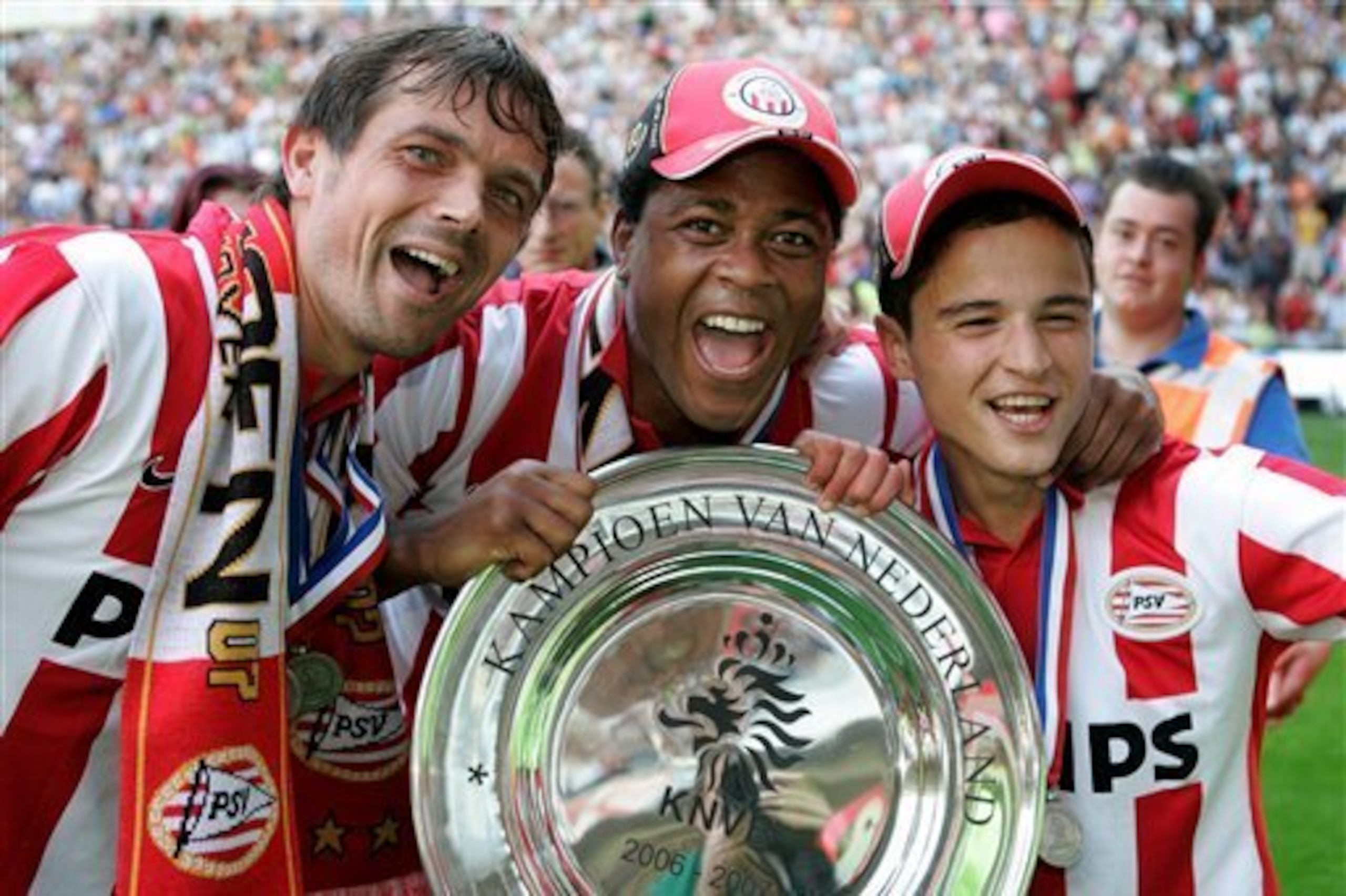
In 2004, at the age of 33, Cocu returned to PSV for a final three-year spell at the club, adding three successive league titles and one Dutch cup to his collection. During that period, the club also reached the Champions League semi-finals, only to be denied by AC Milan. In a 3-3 aggregate draw—Milan progressed on away goals—Cocu scored twice.
After a one-season, presumably money-spinning, stay at Middle East side Al Jazira, Cocu retired in 2008 and immediately turned his attention to coaching.

First Forays into Coaching
If backroom coaching jobs are the footballing equivalent of summer internships prior to finally getting on that graduate scheme in the city, then Cocu’s list of experiences is something to behold. Since retiring as a footballer, he has worked under Bert van Marwijk, Huub Stevens and Dick Advocaat, learning from the best with both the Netherlands national team and PSV.
His first taste of actual management came in March 2012, when he was appointed caretaker manager at PSV following the dismissal of Fred Rutten. Cocu’s initial impact was underwhelming, although the club did win their final five games of the season and lifted the KNVB Cup.
Nevertheless, the club opted to appoint a familiar face, Dick Advocaat, in the summer, with Cocu—perhaps considered too raw for the top job at that time—deciding to ditch his assistant role with the national team and focus exclusively on managing PSV’s under-19 squad.
This was an astute move from both club and coach. With PSV having realised, as almost all Dutch clubs now have, that focusing on producing their own players is the only way to survive and thrive, Cocu was suddenly perfectly placed to succeed Advocaat when he departed. When Advocaat left the club after a disappointing season, Cocu was finally handed the reins on a permanent basis.

Cocu immediately set about overhauling the squad, changing the profile of a club that had allowed itself to slip some way off the pace of Ajax, a club that made its famous Toekomst academy the central tenet of its footballing identity. The new coach promised that the club would again contend for the Eredivisie but that there might be some growing pains to endure first.
"We are going to build a new team,” Cocu said, relayed by the Associated Press (h/t ESPN FC). “There will be changes in the squad. PSV will always go for the title but there is time enough.”
He added: "I am someone who likes to learn step by step and don't want to go too fast. I also think you're never too old to learn.
"I'm ready to take this step. It is a long-term thing but I am someone who, if he start something, wants to do well."
They seemed like the words of a man keen to dampen expectations, to reduce pressure, but they proved to be a precise analysis of how he saw the future. Having promoted young winger Memphis Depay to the first team during his intermediary spell in charge, Cocu set his stall out from the start to build his new squad around the young players the club was producing—players he had learned a lot about over the previous 12 months.
When PSV emerged for the start of the 2013/14 season, the team's average age was well below 23—not necessarily remarkable for the Eredivisie but a significant shift for the club itself.
Initially, results were good, with the club going seven games unbeaten to start the season, and Cocu’s tenure, in perfect fashion. But then came a run of losses that sparked fears about the new adventure.
"Crisis? panic? You could also say that they are growing pains," PSV’s sporting director, Marcel Brands, told Dutch newspaper Algemeen Dagblad (via FourFourTwo). "We knew at the time [of appointing Cocu, setbacks could happen], but not when the first setback would come. In July and August we performed just above expectations.
"You know a relapse in this process is logical with a completely new team. As management and staff we were already prepared."
That faith was important for Cocu, because things were to get worse before they get better. At one point, midway through the season, PSV slipped to 10th in the 18-team table before a strong finish to the campaign saw the side eventually finish fourth, securing a Europa League spot. It was a learning experience for all concerned, although Cocu was also going through something much tougher.

Health Scare Alters Perspective
Midway through that season, a routine medical scan revealed a sizeable lump on Cocu’s back, near his spine. Doctors were immediately worried; they did not know if the lump was cancerous, but if it was, the chances were reasonable that it had already spread.
"I had sometimes vague complaints, problems with my back after beach football, or I felt a strange stiffness if I had played football with my friends in the team room,” Cocu told Helden Magazine in a rare interview.
He kept putting off getting it checked out: “After the scan I was told that there was probably a tumor in my back. I was still quite sober until I saw the photos themselves from the MRIs.
“For a long time I was still optimistic, perhaps against their better judgement.”
Cocu only told his team two days before he underwent surgery at the end of March, passing control of the squad to his assistant, Ernest Faber, for the remainder of the campaign. Surgery went successfully, and subsequent tests showed the lump was not malignant, giving Cocu the all clear.
He returned to the club in time for the start of pre-season training ahead of the new campaign.
"Mentally I was pretty fast to recover, and I always believed that it would be okay, that from the start of the new season I could immediately return and do my job,” Cocu added. “But when I got the green light in September, it did feel very liberating. I feel that I can do everything again. My body has finally returned to normal."
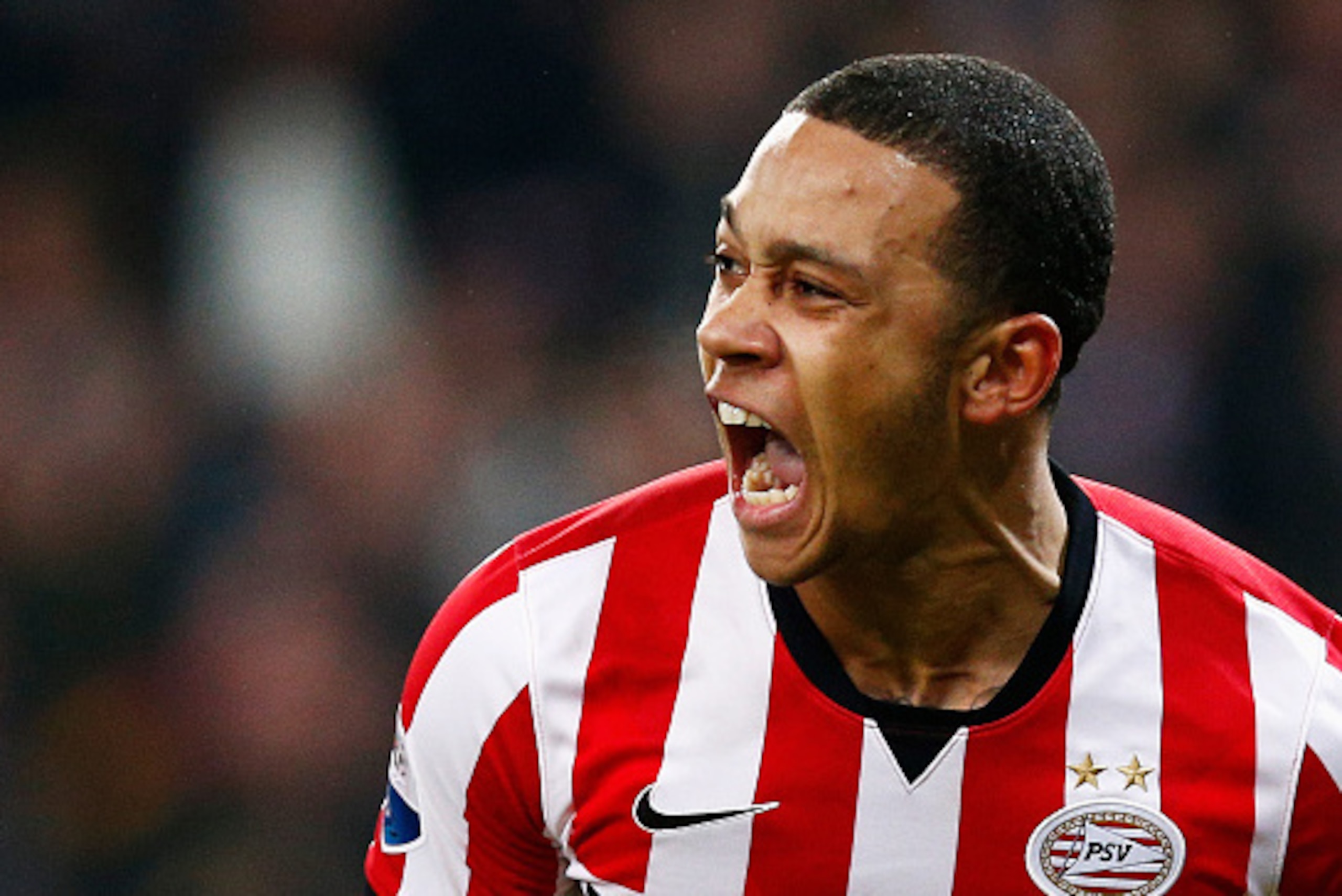
After that scare, the 2014/15 season saw the realisation of Cocu’s vision. A squad based on the pace and attacking threat of Memphis Depay, the midfield skill of Georginio Wijnaldum and the defensive resilience of Karim Rekik and Jeffrey Bruma was always going to be well-equipped for the Eredivisie, although the loan signing of Andres Guardado—an experienced professional, a converted winger with a bit of bite about his play in the middle of the park—underlined the nuanced understanding of his squad Cocu had.
The Mexican added an extra balance to the side that was missing, making them an irresistible force.
Third in the table after the opening round of the campaign, PSV moved into top spot after their second game and never relinquished the spot. They won emphatically in some games, ground out victories in others—the mark, some would say, of a well-drilled side. By the end of the season, they finished a mammoth 17 points ahead of closest rivals Ajax, having been 12 points adrift of them just 12 months earlier.
It was as emphatic a turnaround as has been seen in recent years.
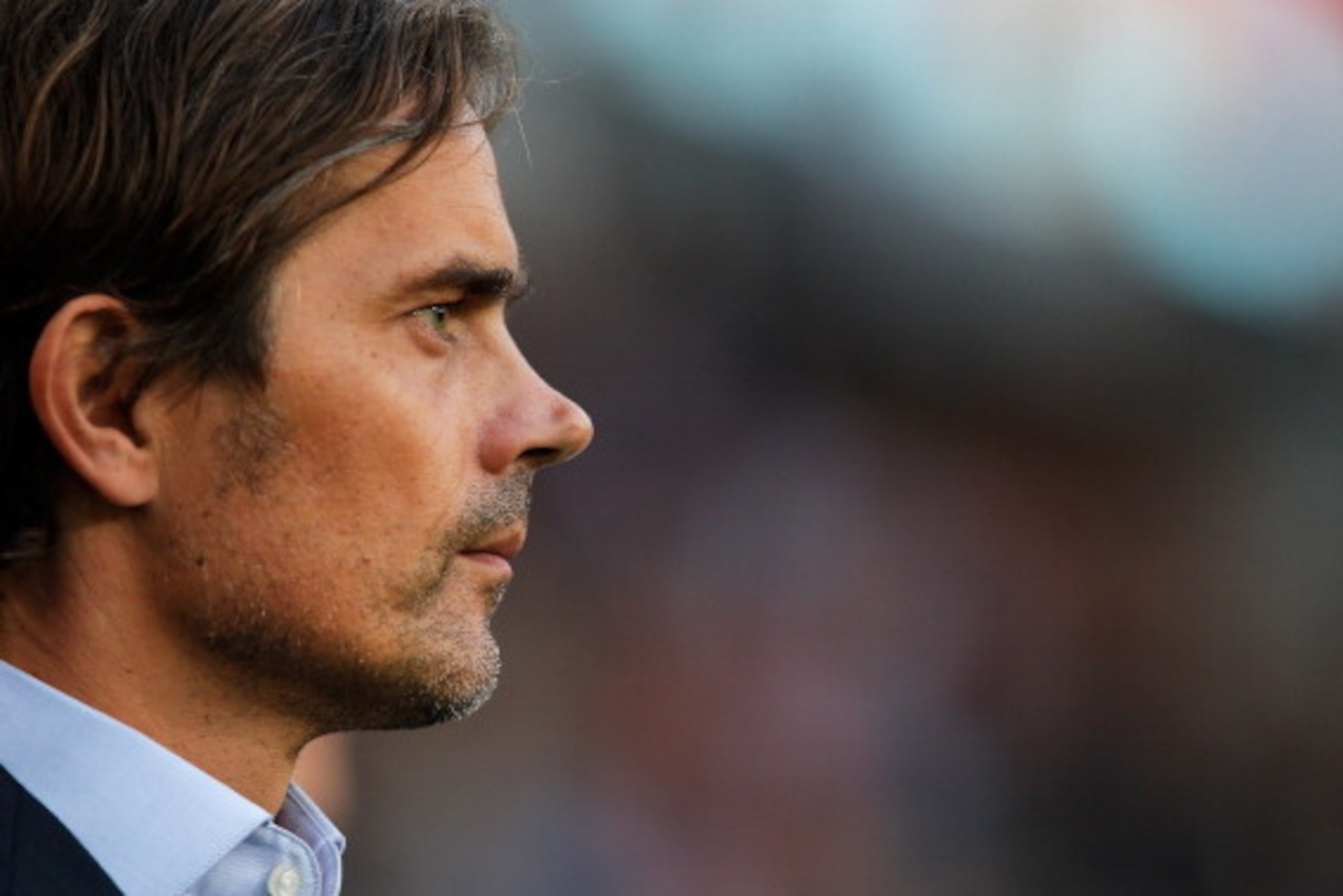
"This is great, to celebrate the title today at home," Cocu said, per UEFA. "My players really deserved this. We had a clear goal and we achieved it. We worked for this all year and now today we can feel it for real.
“These are the moments you do it for. This is a title the whole club has been longing for for quite some time."
The subsequent transfer of Memphis to Manchester United, and his status as the league’s top scorer, may suggest that victory was built on the brilliance of one player, but perhaps the player’s emergence was just the most obvious example of a long-term project coming to fruition.
"I've learned so much at PSV, not only on the pitch but also as a person," Depay said after his final game for the club, per the Daily Telegraph. "I’m proud of winning the title with PSV. It’s something the fans deserved, and something I wanted so bad as well.
"I wish the club all the best for coming season, and hopefully they’re lifting a trophy again next year."
Depay’s departure, however, has led many to fear the end result of PSV’s success: the sale of all their most talented products. Brands said of the deal, per CNN:
"We are very proud of this upcoming transfer. Memphis has gone through all the teams of the PSV youth academy and has played an important part in the national title this year.
He's a wonderful exponent of our training and will make a nice transition to a magnificent club in a beautiful competition. Regarding sports, we lose obviously a fantastic player, which is of great value to the team. But very happily PSV grants him these wonderful step.
"
Other players may follow, but then other players are coming through. The question now, perhaps, is when will it be Cocu for whom a big club comes knocking?
The Future?
It seems almost certain that Cocu will be linked with another European club before too long, just as his “good friend” De Boer has been recently. Ronald Koeman, managing Feyenoord last season, showed the transition Dutch managers can make with his impressive first season at Southampton. It is just a matter of where Cocu sees his future.
As a player, Cocu never really fancied the opportunities he had to go to England or Italy.
“If the trainer wants me, it is clear. I stay,” Cocu said, per Sky Sports back in 2000, when his Barcelona contract was on the verge of expiring and Arsenal were rumoured to be interested.
"I rejected several English offers after the European Championships.
"It is true that the club has not made any moves to renew my contract but I am not in a hurry. I like Spanish soccer. It is more fun than, for example, the Italian league."
If that opinion still holds, then it would seem Spain would again be his most likely landing spot—though the money on offer in the Premier League may now be a persuasive factor.
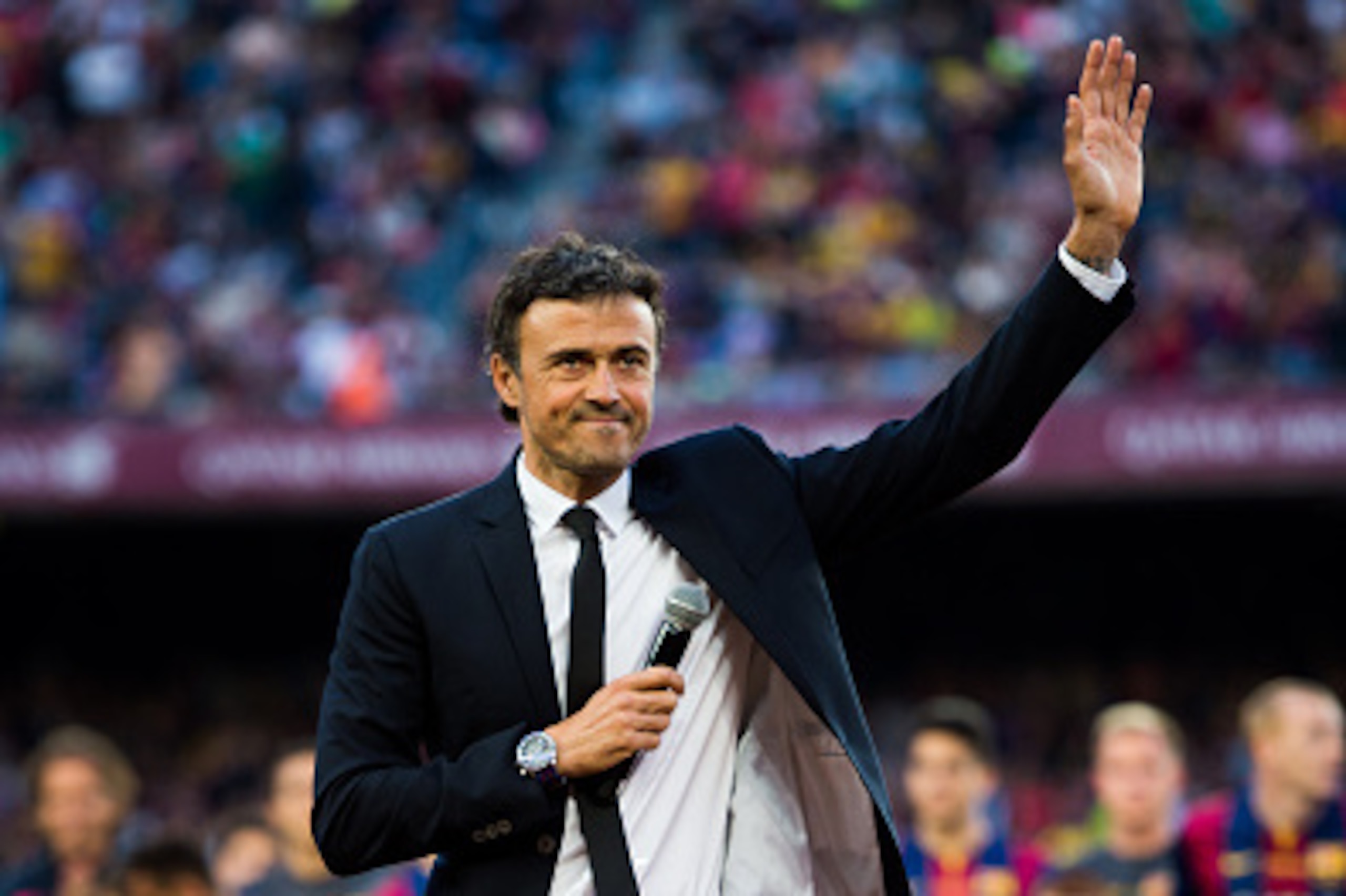
The obvious answer, perhaps too obvious, is Barcelona. He played for the club, he retains contacts there, and widespread reports suggest the club tried to lure him to manage the B team back in 2011, a post that has proved to be a fast track to the top job in the last decade.
Having sat in the stands at Camp Nou once already this season, mere metres from the club president, is it really too much of a leap to speculate that Cocu is on whatever managerial shortlist the club may have already drafted?
The failed tenure of Gerardo Martino aside—an appointment, it would seem, driven by the personal desires of Lionel Messi—over the past decade, Barca have always tried to appoint coaches with a pre-existing history with the club over and above any achievements they might have accomplished elsewhere.
Cocu may have opted not to manage Barcelona B, but he has proved his credentials nonetheless. If Luis Enrique leaves this summer—and it remains a big if, especially with a treble on the cards—it would not be that surprising if the club sounded out Cocu about the vacancy.
Perhaps, for Cocu’s sake, it would be better if Luis Enrique stays. In that case, the Dutchman would be able to lead PSV back into the Champions League and gain the additional experience that comes with that challenge.
Nevertheless, it seems that, just as he was as a player, Cocu the manager will soon be coveted by plenty of clubs throughout Europe.
.jpg?w=2560 "Rams Raiders Football")


.jpg?w=2560 "Rodgers Iced Out on Plane 💎")
.jpg?w=2560 "Packers Safety Slams Refs 🤬")

.jpg?w=2560 "🚨 Week 8 AP Top 25 Poll")
