By and large, the 2015 NBA draft will be a cause for celebration. Teams across the league will have new hope for the future, while those prospects they select will be knee-deep in the joy that comes with moving one giant step closer to fulfilling a lifelong dream.
But there will inevitably be a dark side to this draft. There are only 450 roster spots to fill at any given moment, and if all 60 draftees are to settle into the Association, 60 current members will have to lose their jobs.
Granted, it's rare—if not entirely without precedent—for every draftee in a particular class to actually set foot in the NBA. Likewise, not everyone who's adversely affected by the incoming group will do so at the expense of employment in the world's best basketball league.
For some, the arrival of the newest batch of rookies will push incumbent players out of their current roles and into unfamiliar ones.
Chances are, these five veterans will have to grapple with those and other concerns as they attempt to hold on to starting gigs ahead of talented and hard-charging newbies.
Nikola Pekovic, C, Minnesota Timberwolves
1 of 5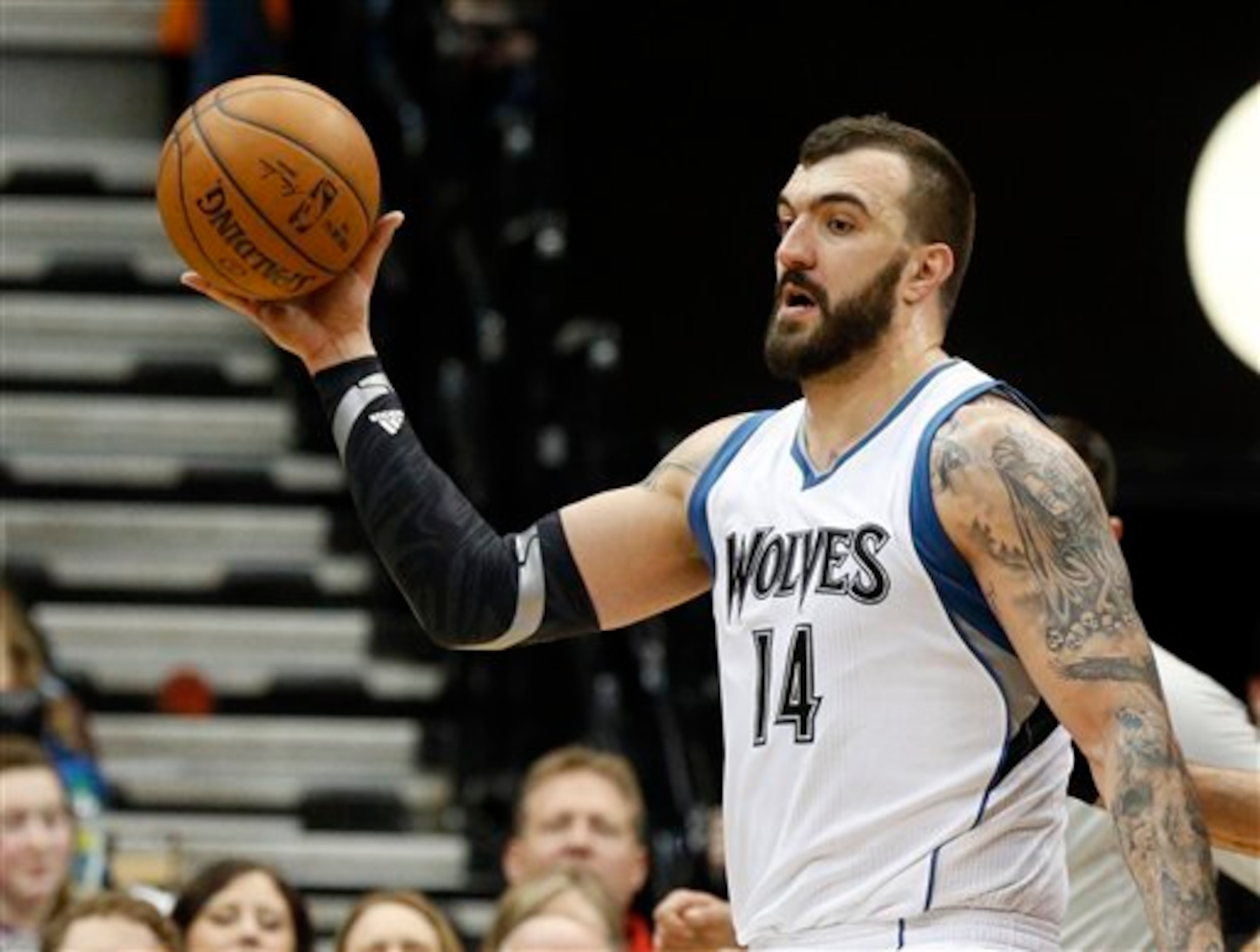
Whether the Timberwolves take Karl-Anthony Towns or Jahlil Okafor with the No. 1 pick in the 2015 NBA draft, they'll have to clear some minutes at center—even if head coach/team president Flip Saunders insists that the new guy earns every morsel.
To that end, Nikola Pekovic appears to be the most likely loser. The fifth-year big man out of Montenegro has started 145 of the last 147 games he's played for the Wolves.
The thing is, those 147 games came over the course of the last three seasons. Along the way, Pekovic missed 99 more to myriad injuries.
His 2014-15 campaign was particularly troubling. Pekovic appeared in just 31 games before Achilles' surgery ended his season in mid-March, posting career lows in field-goal percentage (42.4 percent) and blocks per game (0.4) therein. A six-month recovery would put the 29-year-old back on the court in time for the start of the 2015-16 schedule.
Pek, for his part, is concerned about what his ongoing injury woes might mean for his future.
"Of course I am," he told the Minneapolis Star Tribune's Kent Youngblood. "I’m pretty much worrying about how this is going to affect my life in 10 years. I mean, I’m still thinking about basketball [too]. But when you deal so much with something like this. ... It’s a big deal, I think."
It could be an even bigger deal if it costs Pekovic his starting role in Minnesota. Then again, he'll take home the $35.8 million left on his contract whether he starts, comes off the bench or doesn't play at all.
And it's not as though playing Pek, healthy or otherwise, alongside another center would bode well for the Wolves' desires to ramp up their three-point shooting and clamp down defensively. As Bleacher Report's Adam Fromal wrote:
"Pekovic certainly can't play at the 4, as he's an interior-dwelling center with no jump-shooting range or passing skills to speak of. This past year, only 7.9 percent of his shots came from outside 10 feet, and that's actually the highest percentage of his NBA career.
"
Saunders won't be without solutions to this potential logjam between players and development timetables. If anything, he could elect to bring both of his top bigs along slowly—one from the collegiate ranks, the other from an unfortunate spate of physical setbacks.
Jordan Hill, PF/C, Los Angeles Lakers
2 of 5
Whichever of the two blue-chip bigs the Timberwolves don't draft figures will likely land with the Lakers—and perhaps leave Jordan Hill without a starting job.
Hill was one of the few players to improve his own profile within the context of L.A.'s franchise-worst campaign in 2014-15. He posted career highs in points (12.0), rebounds (7.9), assists (1.5), minutes (26.8) and starts (57), all the while justifying the two-year, $18 million deal the Lakers gave him when Pau Gasol split for Chicago.
Hill, though, seems better suited to a reserve role on a competitive club. He plays with tremendous energy and physicality to the extent that he's been known to burn out when afforded ample on-court time. Hill doesn't quite have the skill to compensate, though he's molded himself into a passable mid-range shooter.
In all likelihood, the 27-year-old University of Arizona product won't have the same leeway to play big minutes under Byron Scott next season that he did last. Both Towns and Okafor will need time to acclimate to the NBA game, but either one may already have surpassed Hill in terms of skill and talent.
And if the Lakers are to make a big splash in free agency this summer, they may not have the luxury of hanging on to Hill by way of the $9 million team option on his deal. As the Los Angeles Times' Eric Pincus explained:
"To maximize their cap space, the Lakers would need to let Hill go, while renouncing the rights to free agents like Jeremy Lin, Carlos Boozer, Wesley Johnson, etc.)...
The Lakers could look to trade Hill, but only if he is opted into his salary for next season. If they do decline his option, the Lakers have the ability to re-sign him — should both parties have interest in a return.
"
There figures to be some interest on the Lakers' part in keeping Hill. He's fashioned himself into a solid role player during his three-and-a-half seasons in L.A., and the Lakers will need depth up front to make sure they don't have to overload their next great big from the opening tip.
Just don't expect Hill or his dread-bun to stand in the way of L.A.'s No. 2 pick.
Jose Calderon, PG, New York Knicks
3 of 5
The Knicks suffered a tough blow on lottery night when the pingpong balls dropped New York from No. 2 to No. 4 in the order and effectively did the reverse for the Lakers.
But it's not as though the Knickerbockers can't or won't get a good young prospect out of this year's draft. Like L.A. with this class' top bigs, New York figures to snap up whichever of the most promising point guards—be it Ohio State's D'Angelo Russell or the well-traveled Emmanuel Mudiay—the Philadelphia 76ers don't select at No. 3.
That is unless team president Phil Jackson and his front office decide to go in a different direction. If the Sixers go with Russell, the Knicks may find Mudiay to be far from an ideal fit with the Zen Master's basketball philosophies, as Bleacher Report's Jonathan Wasserman explained:
"Mudiay is at his best when breaking down defenses—carving them up in the pick-and-roll and drive-and-kick games, as well as in transition. But the triangle may not give him the freedom to play to his strengths as a creator and playmaker.
If the Knicks prioritize adding talent and show a willingness to alter the playbook or just ignore fit, Mudiay will be the pick. But Jackson hasn't built lineups in the past with scoring point guards. And given the small window of opportunity this team has, it wouldn't be overly shocking if Jackson chose to pass on adding an inexperienced floor general.
"
Should the Knicks add a teenaged ball-handler to the mix, they'll have to weigh how they feel about Jose Calderon. The 33-year-old Spaniard, once the prized product of a trade involving Tyson Chandler, proved to be a dud in New York this past season. He missed 40 games due to injury and was often a sore spot amid the Knicks' horrific defense when he was fit to play.
Calderon's veteran savvy and three-point shooting (41.5 percent from deep last season, 41.2 percent for his career) will come in handy as the Knicks look to rebound from an embarrassing campaign. In truth, though, the Knicks would probably be better-served if they can deploy Calderon as a mentor and situational reserve rather than as a full-time starter.



Jason Thompson, PF, Sacramento Kings
4 of 5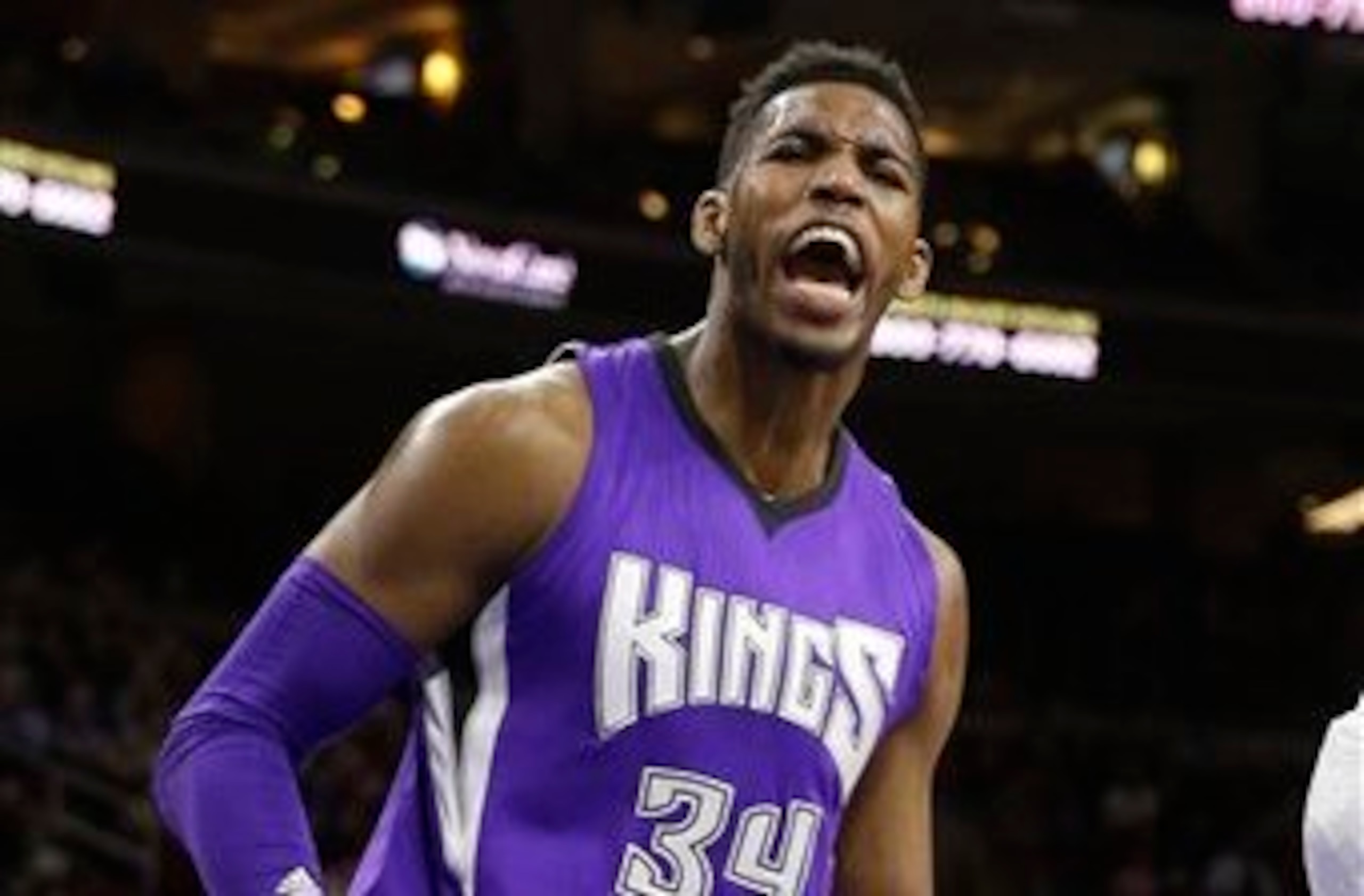
The Kings haven't so much as sniffed the playoffs in nine years, and have spent the better part of that time attempting to replace Jason Thompson at power forward. As Grantland's Riley McAtee detailed:
"The Kings brought in Carl Landry in 2010 to replace him (didn’t work), traded for J.J. Hickson in 2011 (a disaster), drafted Thomas Robinson in 2012 (ditto), and then tried to bring in Landry again in 2013 (didn’t work, again). One year the Kings even tried starting the season with Patrick Patterson in the starting role (nope). Despite starting in 76 percent of the games he’s played for the Kings, Thompson has only been the starter on opening night three times.
So of course the first thing George Karl did in his first game as head coach was bench Thompson in a “reshuffling” of the lineup. Thompson was back playing with the starting unit by halftime and has started every game since.
"
Just because Thompson is now the longest-tenured Sacramento King ever doesn't mean his grip on a starting spot is ironclad. He's coming off the least productive season of his seven-year NBA career (6.1 points, 6.5 rebounds, 47 percent shooting in 24.6 minutes) and has never been a clean fit next to DeMarcus Cousins up front.
What the Kings need at the 4 is a three-point shooter to open up the floor for Boogie, a shot-blocker to cover for him defensively or, ideally, someone who provides both.
With the No. 6 pick in the draft, Sacramento could add a surefire rim protector—albeit one without any noteworthy shooting range—in Kentucky's Willie Cauley-Stein or roll the dice on Latvia's Kristaps Porzingis, an athletic 7-footer who can shoot but physically looks like he'd have trouble withstanding a stiff wind.
Whoever gets the nod from the Kings' next round of crowdsourcing—if Draft 3.0 is still a thing—will have the unenviable task of trying not to get swallowed whole by the same swamp that's consumed all of the recent challengers to Thompson's resilient (if underwhelming) throne beside Boogie.
Gerald Henderson Jr., SG, Charlotte Hornets
5 of 5
What Thompson is to the Kings, Gerald Henderson has become to the Hornets: a solid, if unspectacular, player who's proved peskier to replace than an old peacoat.
Since Charlotte drafted him with the 12th pick in 2009, Henderson has fended off more than a few competitors on the wing, with Ben Gordon and Lance Stephenson as the most notable ones. Each time, Henderson has come out ahead, though those challengers haven't put up much of a fight thus far.
Not that Henderson's been terrible by any means. He's averaged better than 12 points per game over his last four seasons and has knocked down just over a third of his long-range looks across his last three.
But Henderson's more of a slasher than a sharpshooter, and if the Hornets are ever to cobble together a decent offense around Al Jefferson and Kemba Walker, they'll need someone who can reliably pull defenders away from the middle.
At No. 9, the Hornets should be in prime position to pick up just such a prospect. Kentucky's Devin Booker, among the youngest players in this draft and arguably the best pure shooter on the board, may still be available by then. If Mario Hezonja, a gifted wing from Croatia, doesn't get snapped up sooner, he too could get a long look from Hornets general manager Rich Cho.
And if Charlotte doesn't mind doubling down on defensive-minded wings, with Michael Kidd-Gilchrist already at small forward, it could add Arizona's Stanley Johnson or opt for the abundant upside of Kansas' Kelly Oubre.
The Hornets will have other needs to fill, particularly up front, so Henderson's ouster is no sure thing. But if ever there were a year for Charlotte to find new blood at the 2, this might be it.
Josh Martin covers the NBA for Bleacher Report. Follow him on Twitter.

.jpg?w=2560 "Raiders Could Start Mendoza")

.jpg?w=2560 "Rodgers Iced Out on Plane 💎")
.jpg?w=2560 "Packers Safety Slams Refs 🤬")
.jpg?w=2560 "🚨 Week 8 AP Top 25 Poll")